

You are learning a language and would be eager to use it when you are in the country where it is spoken. But what if everybody switches to English the second they hear you are not from there?
This is a typical problem in Holland and Scandinavia, where most people speak English well, and the fact that English will simply always work better and be the easiest option prevents you from attempting at speaking anything else.
I have had experiences with Dutch, Swedes, Swedes and Norwegians in various contexts and with the given language being at various levels at different times, and these are a few tips to exercise the language if you are not (or do not feel) fluent yet:
1. important information in English, smalltalk and chitchat in local language
Sometimes you just have to be sure you know what is going on and what you need to do, other times you can miss some parts of a dialogue without causing yourself any damage – in the latter give a go at your target language, you’ll never understand 100% anyway if you never practice.
example: Last time I was in Denmark, I heard a confusing announcement on the train. As i wanted to be 100% sure my train would reach my destination, I first asked that in English to the person sitting next to me, to switch to Danish right after having received that piece of information, (saying that I actually did speak Danish) and had a nice conversation in it.
If your level is still basic, do make sure to (be able to) say small things like hi/thanks/sorry/excuse me/good evening etc. You’ll get those small expression stuck in your head, and give yourself and others the feeling you do speak the language, which is a better start than not using it at all.
3. Prepare what you want to say in advance, or fake it until you make it.
Sometimes you can look up how to properly say something in advance, as in shops and restaurants – things like ‘do you have a free table’ ‘i would like to this and that’, or even look up some extra vocabulary for a conversation of which you already know the topic.
Also: in given contexts like shops the things you get asked tend to be standard, as ‘do you want a bag?/receipt..’ , so you know what words might be pronounced, anticipating what you’ll be asked, and be less scared you will not understand.
example: I had to talk to a Norwegian client on the phone, so I wrote down what I would say, and looked up vocabulary I needed: that means learning new words and getting to practice with them!
3. Find ‘comfort zones’ and people with whom you stick to the language
If your level in a language is not very high, you might not dare making attempts with strangers. I am a quite shy person myself, other than a perfectionist, so I know that feeling well. But you learn a language by practicing it (and making mistakes), and as soon as you have someone or somewhere to freely practice -no matter how off your grammar is, how many gaps you have in your vocabulary, how many times you ask for repetitions – do it. Having active conversations is also important to absorb the language yourself and learn from your language partner.
With strangers you can stick to English if you feel uncomfortable otherwise, but it is good to have a situation in which you’ll always stick to the language (This counts also when chatting online!). Or at least often enough that your default language is Swedish, Finnish, etc. You learn to swim by swimming – but it does not have to be in the open sea from moment one.
Other options if you do not know anybody, you can use find tandem partners on apps such as hellotalk, tandem etc. and give yourself the rule to rather use translators, but never use English. Events as language cafés are also great occasions to practice if you find any!
keypoint: sometimes it is a matter of self-confidence more than language level
The thing with Swedish, Dutch, Danish etc. is, you might be pretty good at them, but if you are a bit insecure, allowing yourself to use them language over English will be hard. In countries where the average level of English is poor, that is of course completely different.
So you’ll just exercise your Italian, Japanese, Spanish, etc. without thinking much about whether you are good enough at it. You might barely know how to order a drink in Italian or Japanese, but still, you’ll do it, because they will understand it better than in English, even with bad pronunciation or grammar. Maybe they will be relieved they can use their language with you, while the Dutch either want to help you by using a language you are more fluent in or just want to have a smooth communication.
It does take some self-confidence to stick to a language if the counterpart easily switches to English! Even if it does not necessarily mean you are bad at it. It is all about finding contexts and people to use the language, broadening them gradually as you get more comfortable or fluent enough to use it for everything.
How I have done it: First I would use Dutch only in written form and with given people, then I got to the point I’d dare using it with strangers, in shops, but not at an airport desk, then I started using it even for formal things like registering at the municipality , but I did not switch back to Dutch if people switched to English. Now i stick to Dutch, always. With Danish I am in the phase where I could use it in formal context but do not always dare due to fear of not understanding. But I did ask for information in Danish at a museum desk, which I did not do one year ago.
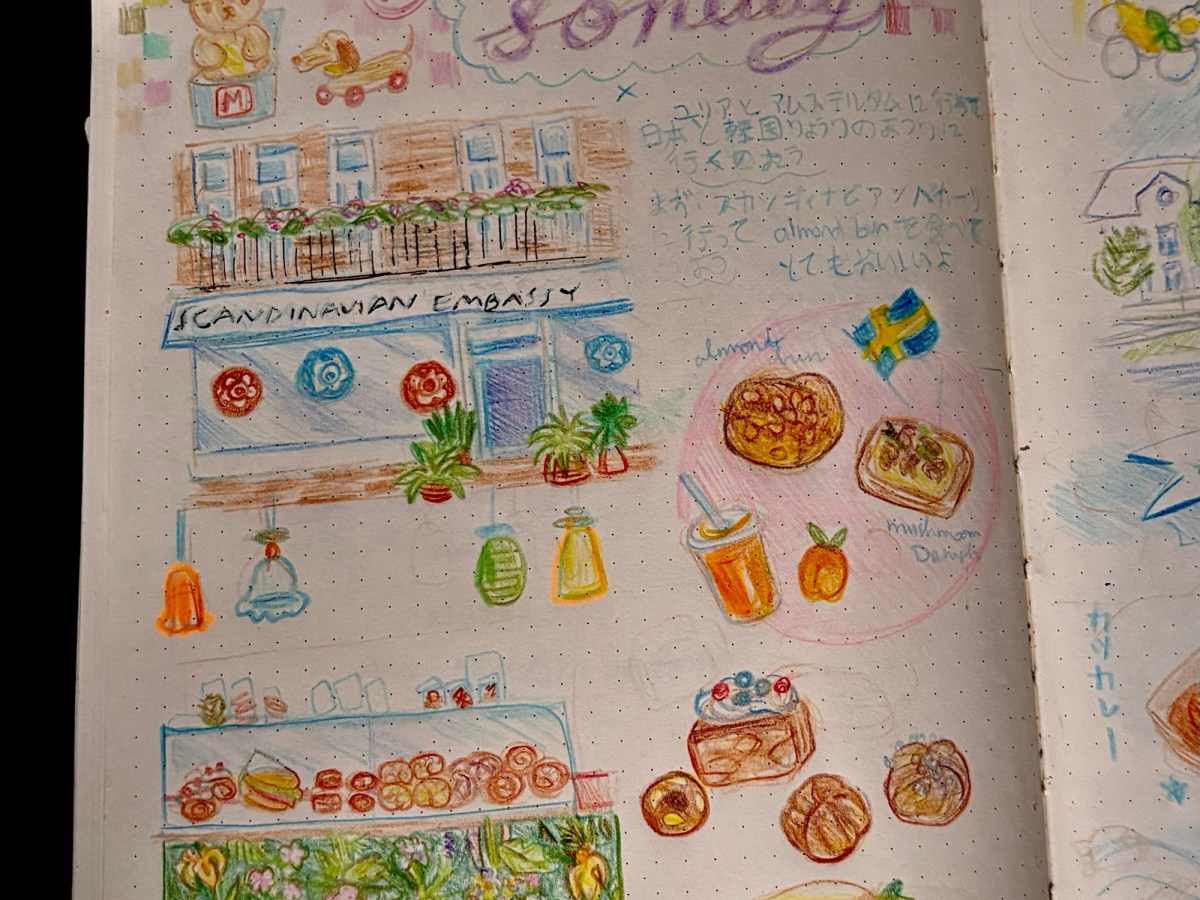
Scandinavian Embassy‘s bakery and cafe in Amsterdam zuid
On a trip to Amsterdam, I decided to test Scandinavian Embassy and both of its two locations, starting with the bakery in europaplein. The two locations are in Amsterdam zuid: Saphatipark and Europaplein: in the former, a more central location, you can sit but it has fewer items than the bakery in Europaplein. The bakery,…

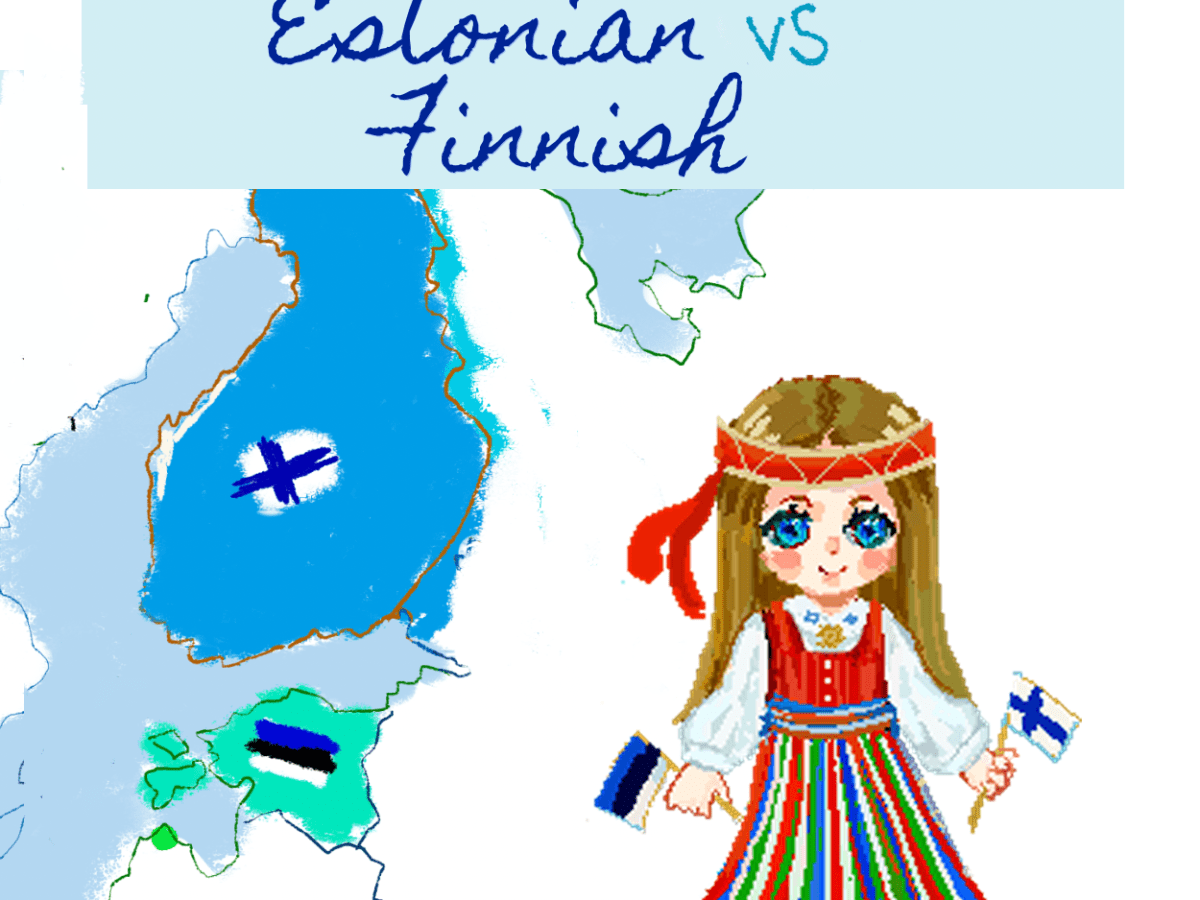
An introduction to Estonian: sister language of Finnish
Estonian is a Finnic language, sharing many similarities with its ‘bigger’ sister Finnish, while being unrelated to all their bigger language neighbours
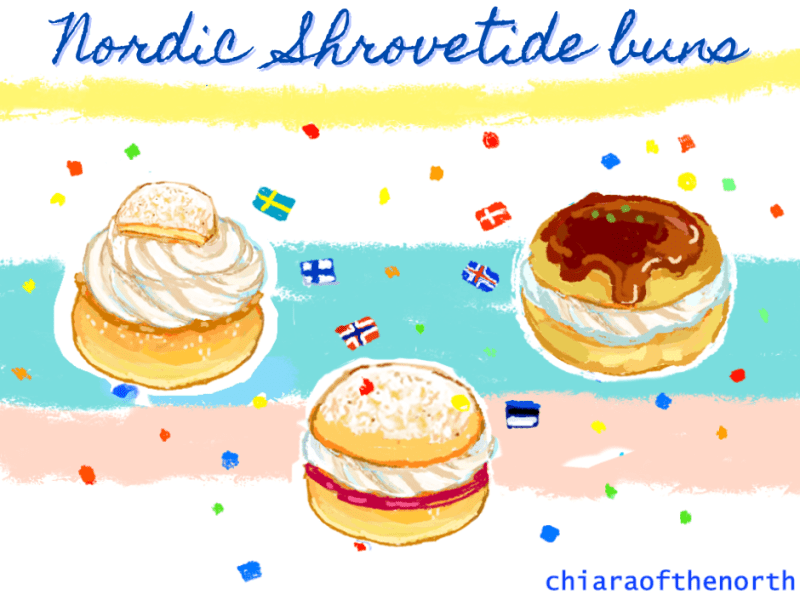
Scandinavian carnival buns (and where to eat them in the Netherlands)
Cream buns are enjoyed in Nordic and Baltic countries during shrovetide, between January and February. Sweden’s classic semla has almond paste, while other countries variations include jam, vanilla cream, and chocolate icing top.
 a Polyglot illustrating Scandinavia