Faroese vs Icelandic: Old Norse and its daughters

Discover Faroese – today spoken by about 80,000 people in the North Sea archipelago- as Icelandic still has much in common with Old Norse in grammar and vocabulary

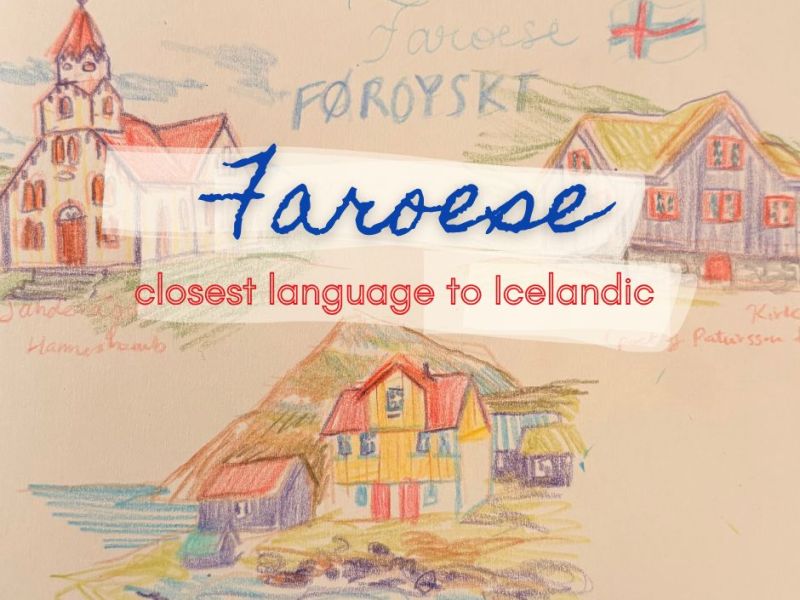
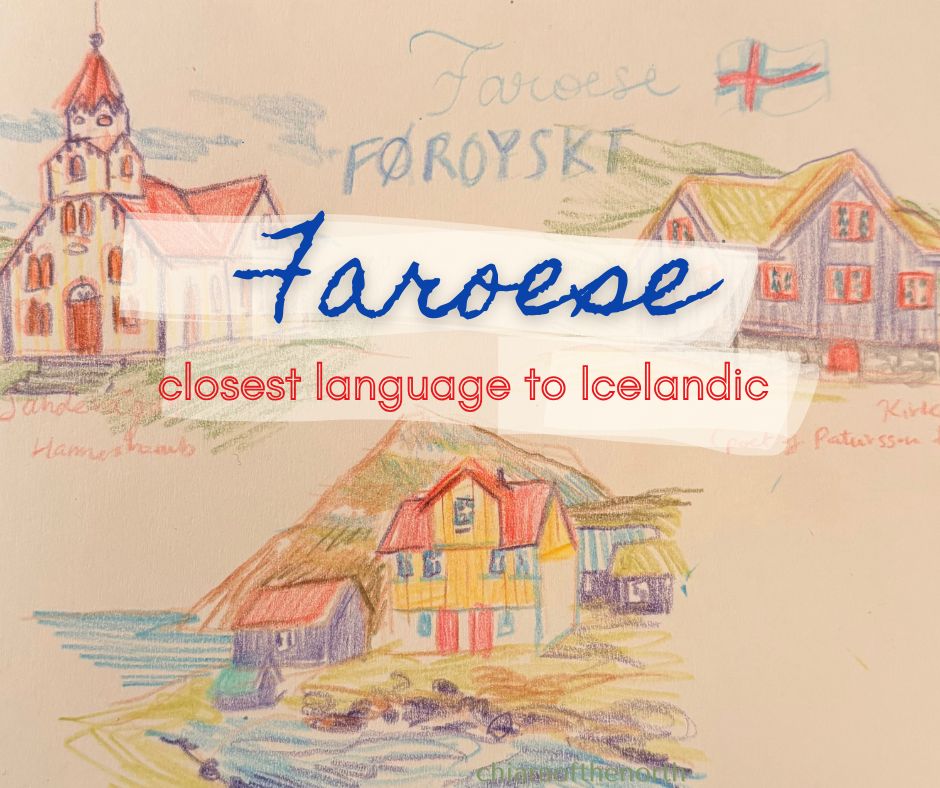
Faroese (Føroyskt) is the language spoken in the Faroe Islands (Føroyar), located between Scotland, Norway and Iceland. Faroese people’s ancestors were Norsemen, and despite centuries of Danish rule, they managed to preserve their language through oral tradition. Faroese and Icelandic are closely related to Scandinavian languages, but still look much more like the language of their ancestors.

How similar is Faroese to Icelandic, and Scandinavian languages?

As follows, some basic expressions in Faroese, Icelandic, and Swedish/Danish/Norwegian. Although Faroese and Icelandic are closer, you can easily see that they belong to the same language group.

FaroeseIcelandicScandinavian
yes/noja/neijá/neija/ nej/nei
thank youtakktakktak(k)
excuse meorsakaafsakaðuse:ursäkta / no,dk:un(d)skyld
sorryumskyldafyrirgefðuse:förlåt/ no:beklager
here you go/you’re welcomeger so vælgjörðu svo velvarsågod
what’s your name hvussu eitir tú?hvað heitir þú?(h)va(d) heter/hedder du?
good daygóðan dagingóðan daginngod dag

Faroese-Icelandic Differences in Spelling: tell them apart

Faroese has a written form based on etymology, making it look much closer to old Norse (and Icelandic), than its pronunciation.

  • No Þ (thorn) in Faroese: þ, pronounced as English th in mouth, is not present in the Faroese alphabet. Where Icelandic has a Þ, Faroese usually has a T: tú (you); tað (this) vs þú, það. In Scandinavian languages this is usually a D: du, det
  • No é in Faroese: Faroese alphabet does have just like Icelandic and unlike Scandinavian languages several accented vowels: Á Í Ó Ú Ý, It does however not have é (‘I’ in Faroese: eg, Icelandic: ég)
  • Faroese Ø/ Icelandic Ö
  • -ggj ending in Faroese: oyggjar, nýggj, kríggj (islands, new, war)

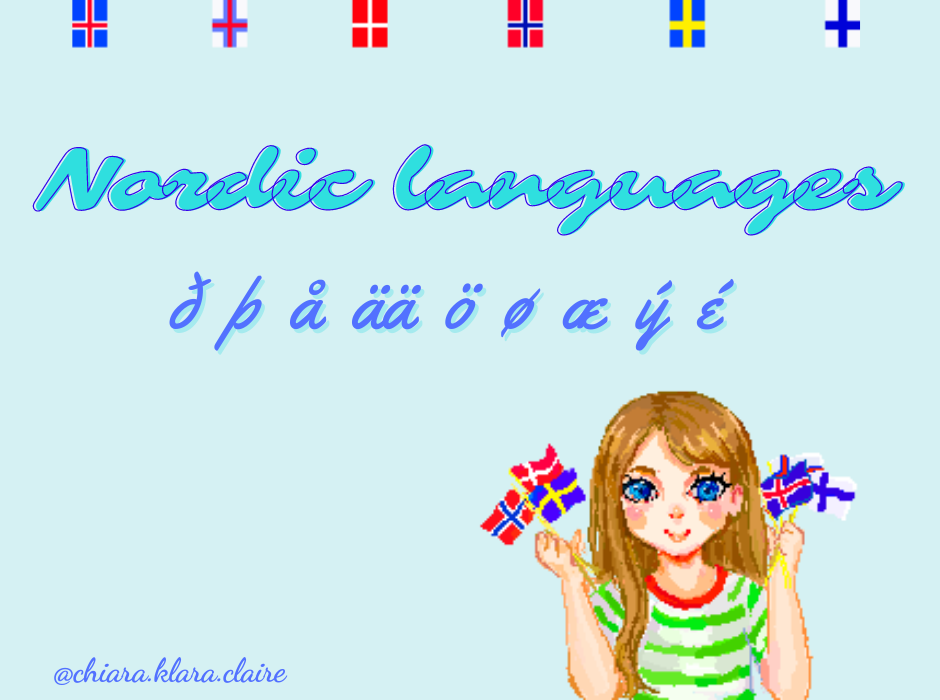
Learn to tell Iceland and Faroese apart from all Nordic languages

FaroeseIcelandicScandinavian
þ?x
þú, það
usually T:
tú, tað
often turned into a D:
du, det
ð?x
hvað, við
x
(silent, sometimes T: hvat, vit)

usually D/T/silent: (h)va(d)
é?x
ég (I)

eg
á, í, ó, ú, accented yxxno accents
ö/øøödk/no: ø/ se: ö
æ/äæædk/no: æ/ se: ä
å?
often á when Scandinavian has å: ár, fá, blá

often á when Scandinavian has å: ár, fá, blá
X
år, få, blå,

Faroese vocabulary: Language purism, Danish loanwords, and a sprinkle of Irish

A language committee has invented words to prevent more influential languages to take over Faroese, similarly to Icelandic language purism. The Faroese Jóhan Hendrik W. Poulsen (1934-2022) invented words as:

  • Telda (computer), Fartelda (laptop), Far­tele­fon (mobile phone) – In Icelandic (far)tölva and (far)sími
  • Tal­gild­­ur (digital), fløga (CD) ‘thick slice’
  • tyrla (helicopter) – in Icelandic þyrla from tiril=whirl, Far­støð (terminal) ‘distance/travel place’
  •  flogbóltur (volleyball), ‘fly ball’
  • Gosbað (jacuzzi) ‘air bath’

At the same time, being under the Kingdom of Denmark, Faroe islanders incorporated loanwords form Danish in their language: snakka, forstanda – speak, understand – are used colloquially instead of tosa and skilja (Icelandic tala, skilja). Bike is súkkla (cykel in Danish, reiðhjól in Icelandic), War is kríggj (krig in Danish, lögregla in IS)

Faroese vocabulary is of course North Germanic, but as Norsemen brought Celtic women from their settlements in the Irish Sea, you also find a few traces of that, mainly regarding cattle and fields apparently.

Grammar: genders, declensions, verbs

Faroese and Icelandic are Insular North Germanic languages- and thanks to their isolation they retained many aspects of Old Norse that Swedish, Danish and Norwegian dropped.

FaroeseIcelandicScandinavian
genders/articles3 (m/f/n)3 (m/f/n)2 (m/n)
cases3 (often 2 when spoken)4
verb endings (present)3/4: -i,-r,-a/u (plural=1 ending)5/6: -,-t, -r,-um,-ið,-a/u1: -r

Here are explanations regarding the table above:

Genders

Both Icelandic and Faroese have masculine, feminine and neuter gender.

in Scandinavia, only Norwegian partially kept the masculine/feminine distinction, while Swedish and Danish have only general and neuter – Norwegian was actually grouped as West- North Germanic together with Faroese and Icelandic before shifting towards the languages in the continent. What is neuter in Icelandic and Faroese usually is also in Scandinavian, as feminine when used in Norwegian. There is some overlap also with German and Dutch, so speaking multiple Germanic languages helps when in doubt!

The gender can be often assumed from the endings:

  • Masculine: -UR, -I: dagur, matur (day, food)- Scandinavian languages lost the ending: dag, mat; tími
  • Feminine: -, -A: bók, nátt/nótt; kirkja, gøta/gata (book, night, church, street). A often stays in Swedish, but is an E in Danish: kyrka/kirke, gata/gade
  • Neuter: -, -I, A: barn, hús, stykki, kaffi, eyga/auga, eyra/oyra, hjarta (child, house, piece, eye, ear, heart)

In addition, Faroese and Icelandic have declesions for numbers until 3 (Faroese) and 4 (Icelandic). The number changes depending on the gender: ein maður/kona, eitt barn; tveir menn, tvær konur, tvey børn and so on. This does happen in Scandinavian languages only for one/a: en bok, ett barn.

FaroeseIcelandic
1/a man, woman, childein maður/kona, eitt barneinn maður, ein kona, eitt barn
2 men, women, childrentveir menn, tvær konur, tvey børntveir menn, tvær konur, tvö börn
3tríggir, tríggjar, tryyþrir, þrjar, þrjú
4fjórir, fjær, fjogur

What about articles?: there is no undetermined article. ‘a man’ is simply maður. As in all North Germanic languages, the determined form is made by adding a suffix to the substantive, which varies by gender:
-in, -n, -ið: Masculine maðurin(n) (the man), feminine-n konan (the woman), neuter-: husið (the house).

in Scandinavian you do have en/ett as undetermined article, becoming -en, -et for the determined form: ett hus, huset. Norwegian might also have feminine ei as ei bok (a book), becoming boka, the book. Another interesting common trait with some varieties of Norwegian is that the possessive adjective can be put after the noun: boka mibókin min vs min bok/bog in Swedish and Danish.

Cases

In Faroese and Icelandic, a noun changes depending on the grammatical case according to its gender/number, and the prepositions it follows.

  • Faroese: Bátur(in): (the) boat – eg síggi bátin: i see a boat
  • Icelandic: bátur(inn) – ég sé bát

Icelandic retained 4 cases: Nominative (subject), accusative (object), dative, genitive, as for example German does – while Faroese 3, dropping the genitive, considered obsolete, very formal, or only in fixed expressions- or even 2, as in spoken Faroese the accusative is often used instead of dative!

So the name of the Faroe Islands is Føroyar, but: í Føroyum (in the Faroes), and you have the Føroya Banki (Bank of the Faroes); the Faroese language is called Føroyskt, but in Faroese is á føroyskum.

How to Learn Faroese?

You find resource to learn Faroese, Icelandic and all Scandinavian languages in my free language resources list – many of these are free!

  • Faroese is now available on google translator, though the Faroe Islands started their own translation service Faroe Islands Translate in 2017, with sentences human-translated.
  • talkinfaroese.com has a lifetime subscription for 97 USD.
  • some publishing company Sprotin has online dictionaries. Listen to Faroese with public radio KVF. The crime drama TROM is set in the Faroe islands
  • You can join Faroese language summer courses at the Faroe islands university!

Sources for this article:

  • Faroese – a language course for beginners – J. Adams, P. P. Petersen
  • talkinfaroese.com
  • setur.fo
  • Discoverfaroeislands, Guide to faroe islands

Thanks to @ malmedmatze for reminding me of some points!
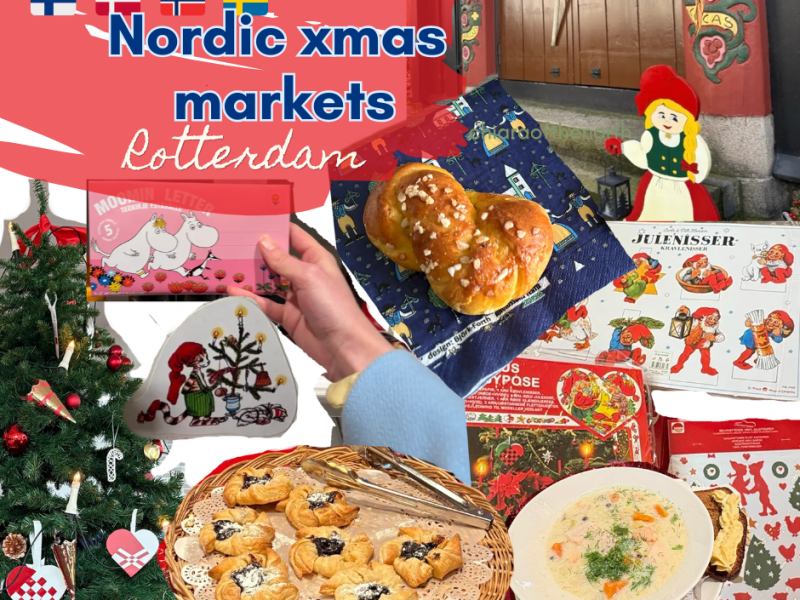
Scandinavian Embassy bakery and cafe in Amsterdam zuid

On a trip to Amsterdam, I decided to test Scandinavian Embassy and both of its two locations, starting with the bakery in europaplein. The two locations are in Amsterdam zuid: Saphatipark and Europaplein: in the former, a more central location, you can sit but it has fewer items than the bakery in Europaplein. The bakery,…

How I learn all Germanic languages: tips and insights

What I’ve learned through my language learning journey trying to master many Germanic languages, from German to Faroese through Dutch and Swedish among others.

This article is derived from my Instagram post on my language learning instaram @chiaraspeaksnordic inspired by @haluska.langs with her slavic version. I had also made a post about learning multiple similar languages in the past!

I speak to different degrees most of the main Germanic languages, including being familiar with a few lesser known ones as West-Frisian and Faroese.

I gradually added more and more of them through the years, starting from English and German at school, then self studying more since I was about to finish high school.

As English was heavily influenced by French and uses many words with latin roots it sometimes feels weird to include it in the Germanic languages family, but it does have plenty of traits in common with for example Scandinavian grammar: just think of är in Swedish = are, and the fact that verbs have att gå in the infinitive form as English to go. On the other hand, German might be very useful for vocabulary.

Method

Don’t learn more than 2 similar languages at once, if very similar and from scratch keep that at one. You might be dying for the other for a while, but the path will be downhill and you’ll be less confused.

I learned Norwegian and Danish more or less simultaneously but it wad 95% just exposure, as I already spoke Swedish. That means I knew well what I was dealing with and most importantly I didn’t have to learn a grammar system from zero, but mostly only how to adapt it to Danish and Norwegian, same for how spelling behaves in both. The proficiency you acquire then depends on how much time you spend on each. My Danish is better and I don’t have to check words as much as in Norwegian because I happened to use Danish more because of friends and such, but I used to write letters in Danish/Norwegian and basically check every other word on google, while the grammar structure was as good as done with some exposure on top of speaking Swedish.

Getting a little exposure is always fine, you will just get to know the other languages a bit more, preparing yourself for a more serious approach when you are ready. With some effort you’ll then split from the “rely on X language” phase and speak it independently.

Dutch and German are maybe almost as similar as Scandinavian languages to each other, but not as much, and if you learned Dutch first you’ll have to deal with cases and an additional gender, not quite the same as just adapting it and only learning from immersion.

Nevertheless, give love to all your target languages through frequent immersion, scheduling study sessions for those which require help.

Advantages of learning multiple Germanic languages

Easy to learn vocabulary

Knowing languages related to each other can cause interferences but can also come very handy at times! Besides all words sharing a common root, You will understand and easily remember cognates and words which are everyday vocabulary in one language and seldom used ones in another one.

  • In Danish jeg spiser is “I eat”, you might easily remember this word as Speisekarte means “menu” in German. In the closely related Swedish you say “jag äter”, which however resembles eat, eten etc.
  • Despite my Swedish being more advanced, Danish and Norwegian helped me with understanding right away obsolete words in Swedish while reading an old book: Danish pige and Norwegian jente are the word for “girl”, while piga/jänta are “maid” in Swedish, not a word you’d learn in an everyday context.

Easy to learn Irregular verbs

All Germanic languages have irregular verbs, which mean learning lists of paradigms present-past perfect-past participle. Once you have learned them for one, it’s all downhill to learn the others, as not only you already know how the verb system works but many are very similar across different languages (and the set of verbs being irregular is more or less the same), or follow similar patterns:

  • ate=aß/at/åt; saw=sah/zag/så(g)/sá
  • drink-drank-drunk: drinken-dronk-gedronken/ trinken-trank-getrunken/ dricka-drack-druckit

Easier to guess the gender

Germanic languages, except for English, have different genders, whether masculine, feminine, neuter as German, Icelandic, and partially Norwegian, or general + neutral as Swedish, Danish and Dutch*. Being from the same family in many cases genders are usually the same for words with the same root:

  • House is neutral: das Haus/het huis/ett hus/husið;
  • Earth is feminine, sky is masculine: die Erde, der Himmel (German) /jörðin, himinn (Icelandic) /jorda, himmelen (Norwegian)

The closer the language the safest the bet: Dutch and German are more likely to have words with the same gender than them and North Germanic languages: book is neutral in West Germanic languages but feminine/general in North Germanic – het boek, das Buch (n) / boka, bókin (f).

A little fact: in Germanic languages “moon” is masculine and “sun” is feminine, while in romance languages it is the opposite! I can see why if you look at the weather and daytime in North vs South Europe 🙂

*Neutral exists in all but English, while In Dutch, Swedish and Danish masculine & feminine merged. However, they are sometimes still visible, for example in pronouns for objects: hij/zij as he/she in Dutch (knowing German can give you great advantage compared to natives!); to tell the time in Swedish you say “hon är..” (she is..) because klocka (clock) was feminine! Norwegian does have feminine, even though in some Norwegian dialects feminine (book: ei bok, boka) and masculine are not distinct and general en is used (having en bok, boken which would be masculine).

Disadvantages of learning multiple Germanic languages – Mixing them up

When learning multiple related languages, it is easy to end up mixing them up in one way or another. The more fluent you are in one, the less it is likely that you let yourself get influenced by another, this is way reaching a good level in onee language before learning another one in the same family is important. Moreover, you will be very familiar with much of its grammar and vocabulary, and you might rely way too much on your first language of that family. Using Spanish words when speaking Italian might not be the best, but you’ll be much better off than only knowing more distant related languages locals hardly speak.

There are a lot of false friends and words which would “fit” in the other language used without even realizing it. Some examples are short words existing in multiple languages but with different usage/meaning:

  • en means “and” in Dutch, “a(n)” in Scandinavian languages, and “but” in Icelandic!
  • om means “about” something in Scandinavian languages, while it’s usually “(in order) to” in Dutch
  • A false friend example is Icelandic að kenna meaning teach; while kennen/känna/kjenne/kende all mean “know (usually someone)”!
  • a funny fact about interferences is that I once used mensen talking in Swedish, “people” in Dutch, but “the menstruation” in Swedish!

Verb order is very vulnerable to interferences when learning multiple Germanic languages, at least at first: with subordinate clauses in German you have “..that I something done have“, in Dutch “..that I something have done“, in North Germanic languages ” ..that I have done something” as it is in English.

At first I would instantly use the German verb order with Swedish (for no apparent reason since the order in Swedish is supposed to be the most natural for me..), that doesn’t happen anymore, however, I still mess up it with Dutch and German since they only have the very last part switched! I hate it, but that’s what you pay for speaking both I guess…

To avoid interferences one of the most useful things is getting corrected or being aware of them, detecting the mistake is the first step to stop making it.

MY JOURNEY

To conclude, it took several years to (kind of) master all these languages, and this is how I have done it, in order:

  • I started English in primary school, and was always quite excited about learning it, wishing to have more hours for it every year.
  • My second Germanic language arrived much later, I choose German over Spanish in high school, but it had been fascinating me for many years, trying to learn random words of it here and there, I did learn the first word on cornflake boxes: Zutaten (“ingredients”).
  • During my last year of high school, after 5 years of English, French and German, I started self-learning Swedish and Dutch simultaneosly, using exclusively Duolingo for months. I theorically dowloaded duolingo for Swedish, but I loved Dutch too so i immediately started the course and used duolingo basically every day for a good year. I had a strong knowledge of German to begin with, it heavily helped me and made a lot of grammar and vocabulary instantly clear/recognizable, but also meant having interferences (see below), for example it ruled the verb order making me place verbs where it made no sense in Swedish nor English nor my mother tongue…
    • Two years later I wanted to learn some Danish and Norwegian: exposure, writing “adjusting” my Swedish with the help of online translators, but the effort to learn grammar and vocabulary was 70% done. learning Danish and Norwegian together without knowing Swedish would have been bad, you wouldn’t know when you are learning one or the other, but with a good Swedish knowledge and some exposure for both it’s manageable. Needless to say, focusing on one will make you better at it than splitting time/energies for both.
  • During the first corona lockdown in spring 2020, I started learning Icelandic with textbooks and online resources. I had actually read about pronunciation in a mountain hut in summer 2018, but didn’t understand much or took the time to process it at haha.
  • In the last few years I’ve been also getting some exposure to Faroese and West Frisian (which i can understand to a given extent thanks to other languages as Dutch and Icelandic) and casually learning them.

5 symbols of Sami culture

Sámi people, indigenous people of North Scandinavia, have a distinct culture, symbolised by its unique flag and traditional clothing, and part of it are Duodji handicrafts and unique musical expression through yoik.

Tell Apart Nordic Languages

Learn quickly how to distinguish and identify all Nordic languages!

As a language lover I tend to take for granted that certain languages are clearly different from others or recognizable from certain features. Some time ago my sister asked what was the language I was reading in, and I was expecting her to know that with ð’s it has to be Icelandic. But if language learning is not your hobby, Dutch and Swedish might as well be the same thing, purely because you never get to see them. I still remember reading about differences between Danish and Norwegian and finding it really useful, so I decided to make a summary of features and differences that can come in handy as a guide for those who would enjoy being able to distinguish all Nordic languages without actually studying or knowing much.

Please note that I’m mostly writing about the written form, as nuances of the spoken language can be much harder to describe. For what concerns the oral form, you just have to listen to them a lot, and as a Swedish friend once told me:

Swedish is up ‘n downs, Norwegians is all ups, Danish is all downs.

And well, it makes sense.

How similar are Nordic languages to each other?

Swedish, Norwegian, Danish, Icelandic and Faroese belong to the North Germanic language family. Their cousins are German, Dutch and English. If you speak two of these three a big amount of vocabulary and grammar will be familiar to you.

Swedish, Svenska; Norwegian, Norsk; and Danish, Dansk, are the languages of Scandinavia, (yes, the Scandinavian paeninsula is made up of only these three countries) could be considered siblings (or twins?) because they are mutually intelligible, a Swede and a Norwegian will likely converse in their own language without recurring to English, the same goes with a Dane although Danish can be more problematic…But you can read about that later. Their unique letter is Å, which is roughly pronounced as O. So yeah, remember that when you talk about songs by Måneskin…

Icelandic, Íslenska, is essentially old Norse – the ancestor of all North Germanic languages – that got crystallized in the middle of the North Atlantic. Because of this Icelanders find it pretty easy to read old viking sagas than the Scandinavians, who don’t really understand Icelandic. Faroese, Føroyskt, spoken in the Faroe islands – between Iceland, Norway and Scotland – is similar to Icelandic in the written form, but the spoken language is quite different. They are classified as Insular languages of the North Germanic family, its distinguishing letter is ð (called in Icelandic and edd in Faroese, capital Ð), pronounced as th in this. Both have æ, á í ó ú in their alphabets. I have also written more in detail about Faroese and Icelandic in comparison with Scandinavian languages.

Swedish and Danish would be classified as East-North Germanic, while Norwegian and Icelandic West-North Germanic, the bound between Icelandic and Norwegian is is noticeable in some Norwegian dialects, but the geographical distance made Norwegian become more intelligible with the eastern branch instead.

However, there’s an odd one out of the Nordic languages. Not only Finnish, Suomi, does not belong to the North Germanic family, but it is not even indo-european. That means Hindi is potentially closer than its neighbour Swedish. Finnish belongs to the Finno-ugric family and is completely different grammar-wise, but has quite a lot of loanwords and cultural influence from Swedish. You can recognize it by very frequent double letters with combinations as yy and ää, double consonants after another consonant: tsemppiä, pankki. Finnish does not have B, G, D in its alphabet.

The Sámi, indigenous people of north Scandinavia, have their own languages, which are related to Finnish as they belong to the Uralic language family, this article i wrote focuses on them.

And now let’s go into detail!

Swedish vs Danish & Norwegian

Norwegian and Danish look very much alike in the written form, but if you hear them you will be more likely to think Swedish and Norwegian sound similar while Danish stands out for its “weirdness”, It is said that Danes speak as if they had potatoes in their mouths, if you want to know more look up the stød linguisti phenomenon.

  • Swedish: Ö, Ä / Norwegian & Danish: Ø, Æ: The first and easiest difference
  • CK/KK: ck is found in Swedish, usually K or KK in the other two: lycka/lykke (luck); tack/takk, tak (thanks).
  • -A/-E: Swedish tends to have a lot of -a endings, while you have E’s in Norwegian and Danish. See the example above of lycka/lykke, also in plural adjectives: mina/mine (my) goda/gode (good).
  • HV/V is not found in Swedish, which got rid of the H: vad, vem/hvad, hvem; (what, who)
  • X an Q sometimes occur in Swedish, only in foreign names in the other two: exempel/eksempel (example).

To sum up:

  • Swedish ä ö ck: jag, och, vem, -a, lycka, exempel
  • Danish & Norwegian: æ ø, hv: jeg, og, hvem, -e, lykke, eksempel

Danish vs Norwegian

Modern written Norwegian was based off Danish so it can be extremely similar and if you have a very short text it might even be all spelt the same way, but a few features will signal which of the two you are reading:

  • ØJ/ØY: øj in Danish while øy in Norwegian: tøj/tøy (clothes)
  • MIG/MEG: Norwegian Bokmål uses E in deg/meg/seg, while Danish has mig as in Swedish
  • K/KJ: kj an b found frequently in Norwegian while Danish has directly a vowel after K: kære/kjære (dear); at kende/ å kjenne (to know)
  • TION/SJON: Norwegian’s spelling in words of foreign origin is more “tamed” to the language, for instance words ending in-tion, where Danish keeps the -tion ending and Norwegian has -sjon: international/internasjonal; chokolade/sjokolade (chocolate).

Tendencies:

  • D, G, B/ T, K, P: Danish tends to have much more D, G, and B’s (it could be compared to Spanish vs Italian I think?). bog/bok (book); nouns in -hed/het; at vide/å vite (to know); peberkager/pepperkaker (gingerbread). Swedish and Norwegian are usually more similar for what concerns this.
  • Norwegian got rid of many “unnecessary” letters (often D’s, G’s) to its pronounciation: at sige/å si (to say); vidste/visste (knew), sagde/sa, -ld, -nd endings trold/troll (troll); end/enn (than)
  • Æ frequence: Danish tends to have a lot more Æ, where Norwegian has a ‘simple’ E: næsten/nesten (almost); at tænke/å tenke (think). at hjælpe/ å hjelpe (help). Swedish usually has an Ä here: att hjälpa, nästan, att tänka.

To sum up:

  • Danish: øj, ld, nd, mig/dig; bog, rlighed, mænd, legetøj, ud, chokolade, revolution
  • Norwegian: øy, kj, sj, meg/deg; bok, kjærlighet, menn, leketøy, ut, sjokolade, revolusjon

Norwegian could be further divided into Bokmål and Nynorsk, which are just two different ways to spell it. Bokmål “book language”, is fundamentally Danish with adjustments to the Norwegian language and the most widespread one, while Nynorsk “New Norwegian” was an attempt to create a more Norwegian-Norwegian, and it is more frequent in the west part of the country, used by about 12% of Norwegians. I won’t go into detail with Nynorsk, but ein, eit indicates Nynorsk, while en, et are Bokmål.

Icelandic vs Faroese

Faroese and Icelandic pronounciations contrast with their similar spelling, that is because Faroese was given an ethymological ortography to resemble its ancestor Old Norse. On top of that, Faroese adopted some words of Danish origin because of its history.

  • Þ/T: Only Icelandic has Þþ (þorn in Icelandic) which corresponds to English th in mouth, Icelandic words with Þ have T in Faroese: þú/ (you); það/tað (it).
  • Ö/Ø: Icelandic uses ö while Faroese adopted ø.
  • Icelandic has accented E’s, É, not present in the Faroese alphabet: ég/eg (I).

Finnish: the outsider

As previously mentioned, Finnish is completely unrelated to the North Germanic family, it belongs to the Ugro-Finnic family and its closest language is Estonian.

some loanwords from Swedish:

  • katu – gata (street)
  • koulu – skola (school)
  • sokeri – soker (sugar)
  • tuoli – stol (chair)
  • suklaa – choklad (chocolate)
  • pankki – bank

Language comparison

SwedishNorwegianDanishIcelandicFaroeseFinnish
thankstacktakktaktakktakkkiitos
whatvadhvahvadhvaðhvatmikä/mitä
someonenågonnoennogeneinhveronkrumjoku
appleäppleepleæbleepliepliomena
to sayatt sägaå siat sigeað segjaat sigasanoa
to helpatt hjälpaå hjelpeat hjælpeað hjálpaat hjálpaautaa

Article 1 from the Universal Declaration of Human Rights :

  • Swedish: Alla människor är födda fria och lika i värde och rättigheter.
  • Danish: Alle mennesker er født frie og lige i værdighed og rettigheder. 
  • Norwegian bokmål: Alle mennesker er født frie og med samme menneskeverd og menneskerettigheter; Nynorsk: Alle menneske er fødde til fridom og med same menneskeverd og menneskerettar.
  • Faroese: Øll menniskju eru fødd fræls og jøvn til virðingar og mannarættindi.
  • Icelandic: Hver maður er borinn frjáls og jafn öðrum að virðingu og réttindum.
  • Finnish: Kaikki ihmiset syntyvät vapaina ja tasavertaisina arvoltaan ja oikeuksiltaan.

mylanguagebreak.com, but my advice is to just expose yourself to the languages, and experience all the differences yourself. 🙂 Here you can briefly read about even more languages used in the Nordic countries.

if you want to see an even more succint summary of all this, you can check out my post on instagram.

💛💙❤️

sources:

  • mylanguagebreak.com: How to Tell Scandinavian Languages Apart
  • Wordminds.com: Nordic languages: What’s the difference between all of them?

Who are Greenlanders? 3 symbols of Greenlandic culture

Discover Greenland, home to the Inuit Kalaallit, and its most iconic aspects as its flag, language and folk costumes. The biggest island of the world has a rich history of indigenous culture intertwined with Norse colonization and later Danish rule.