Swedish Café in Utrecht: Broodnodig

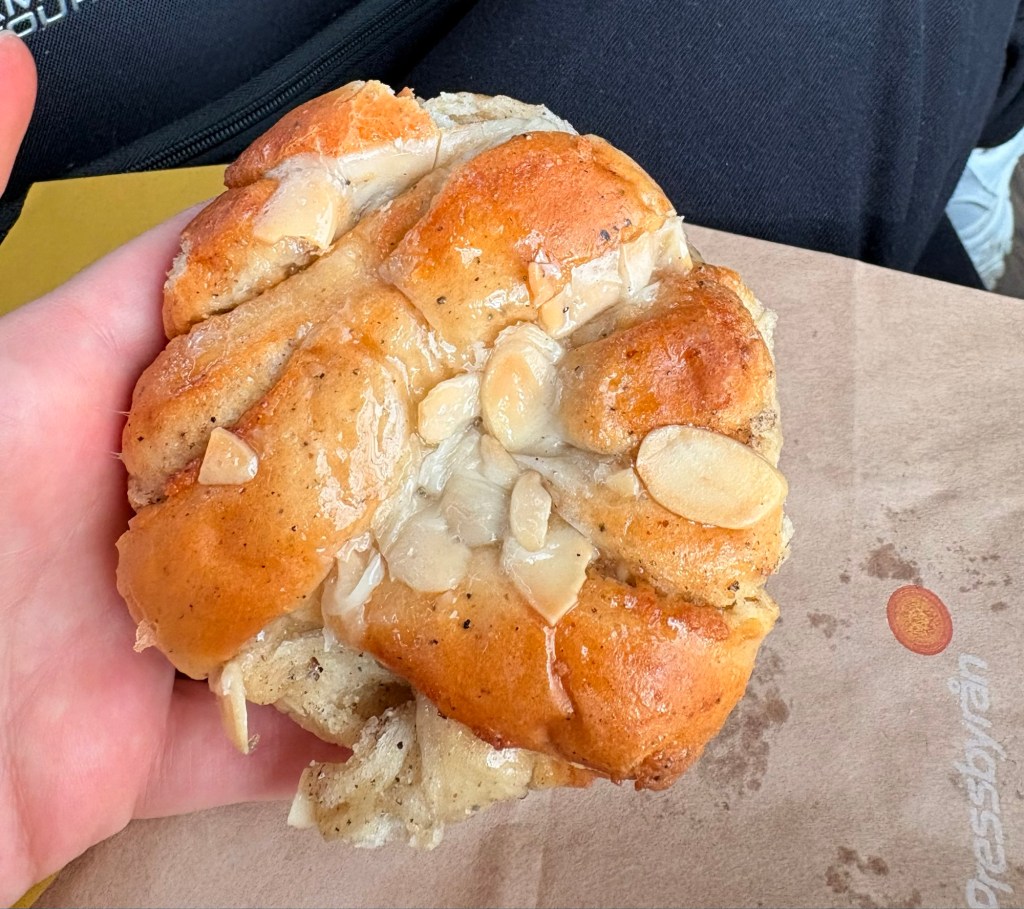
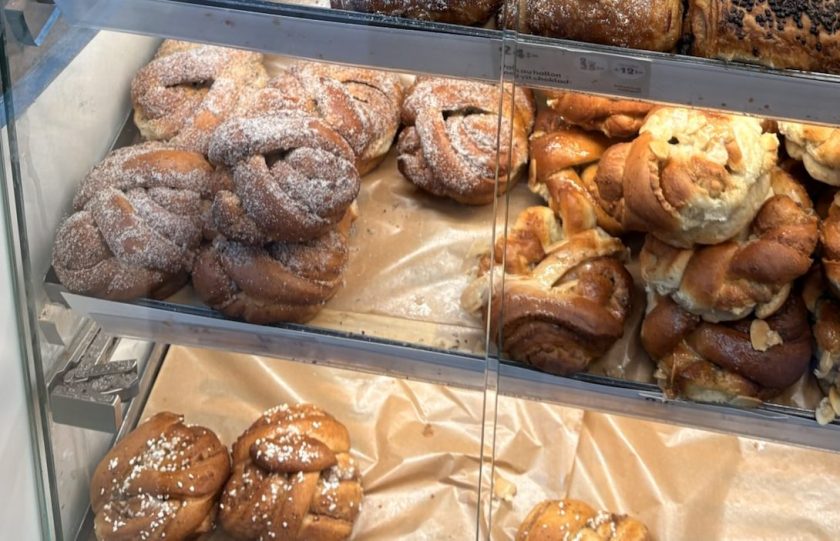
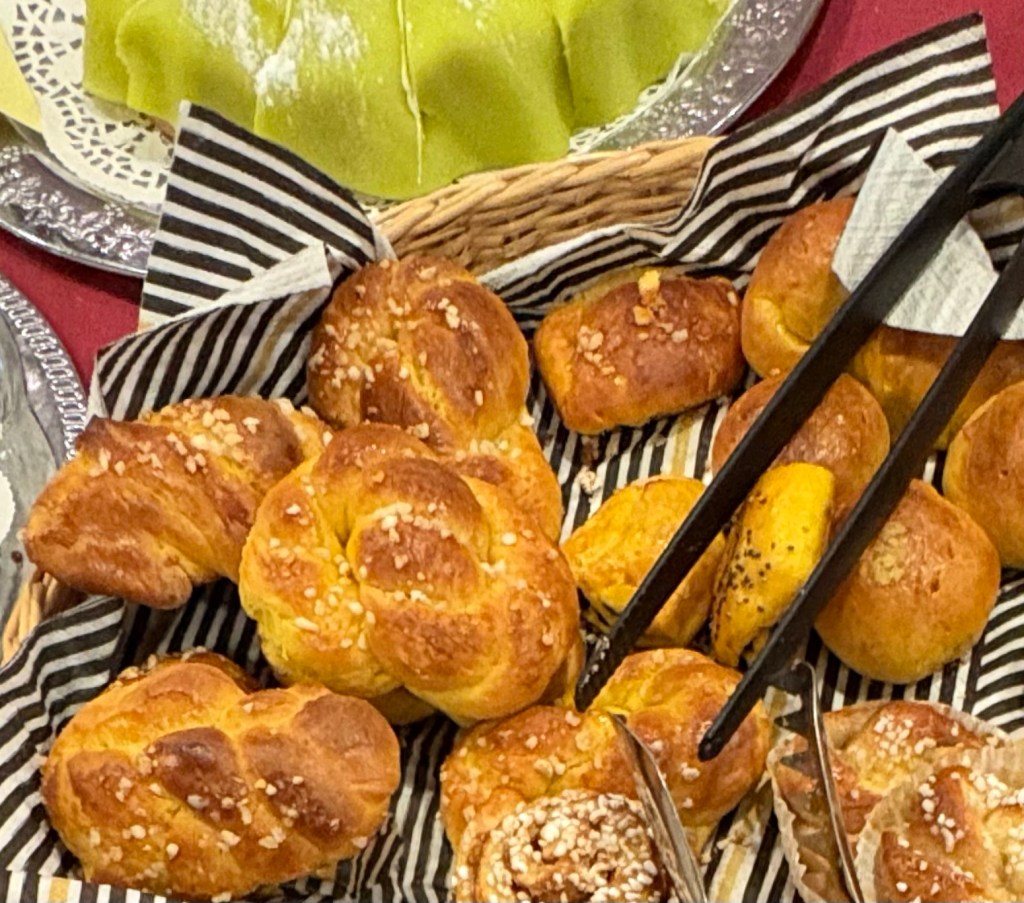
In Utrecht, the cafe Broodnodig serves Swedish pastries and cakes as cinnamon and cardamom buns, kladdkaka, smulpaj and Scandinavian seasonal treats as semlor and saffron buns.

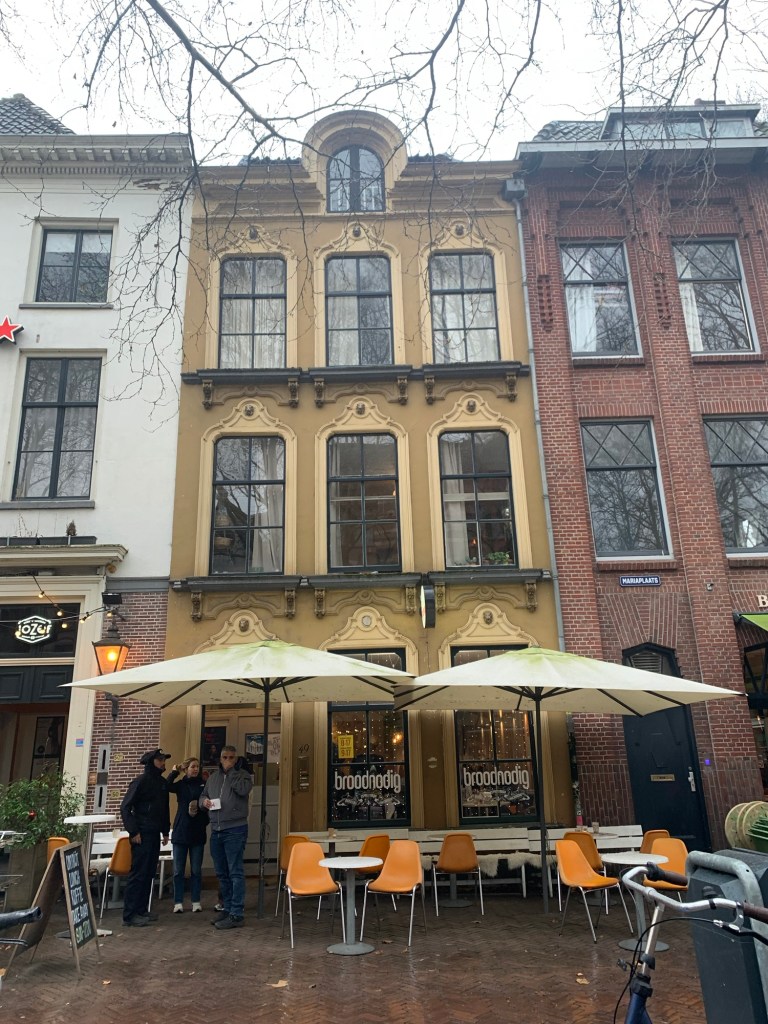
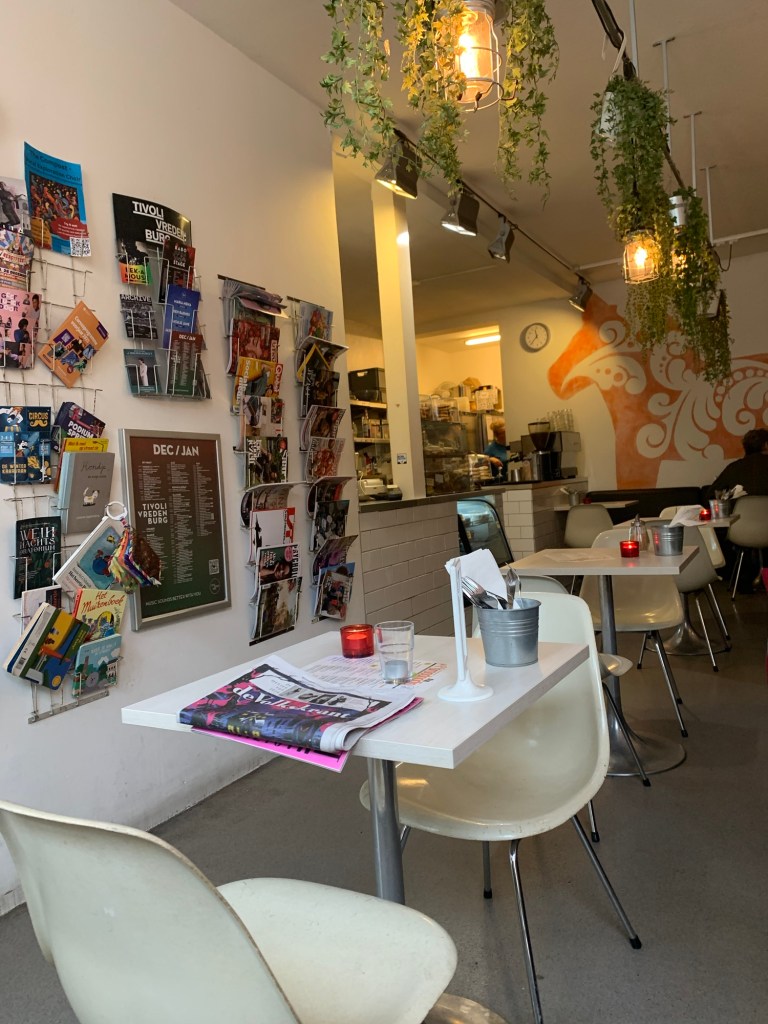
in 2024, during my quest to find Lussekatter, I found the Swedish-inspired cafe in the centre of Utrecht: Broodnodig .

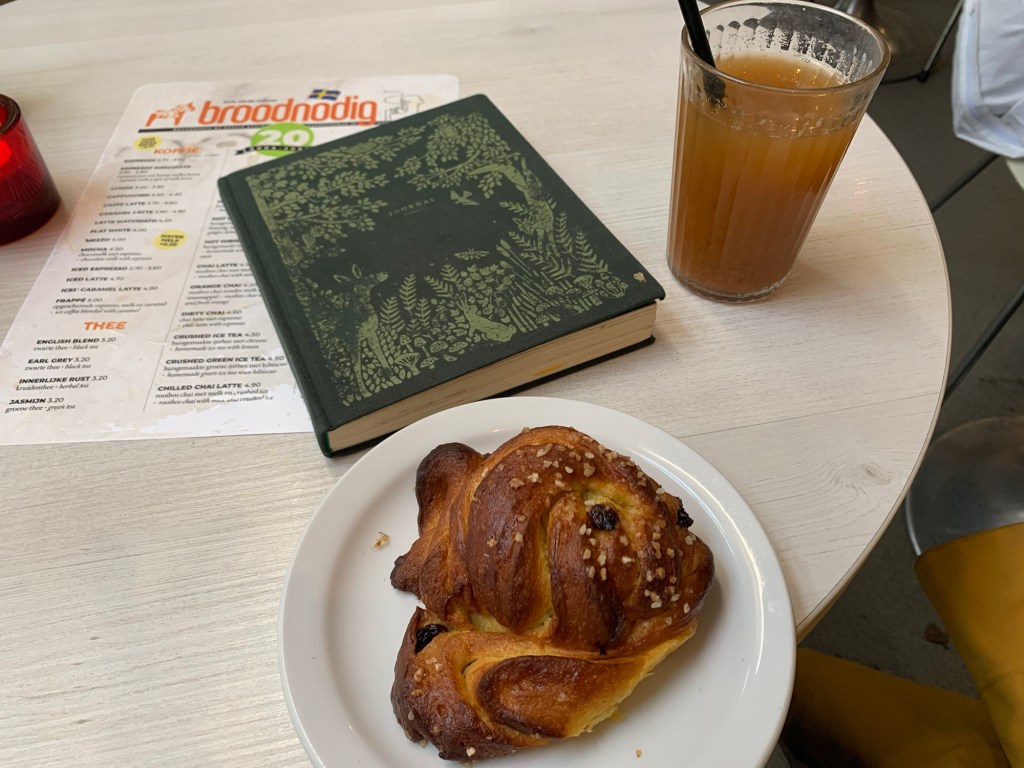
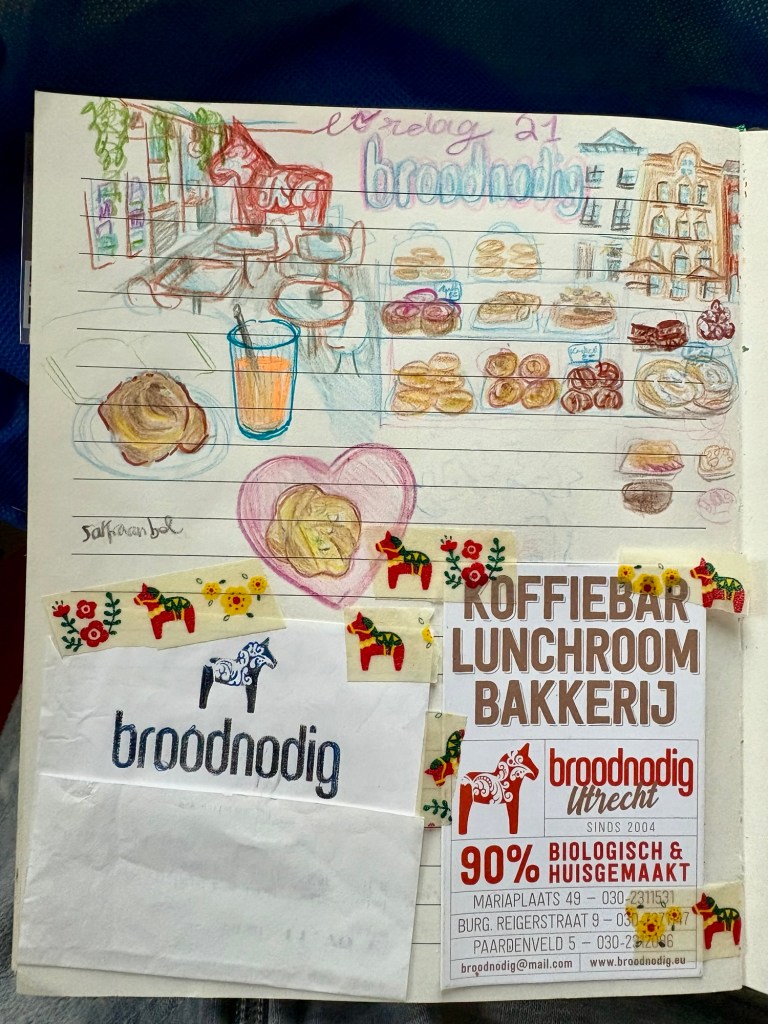
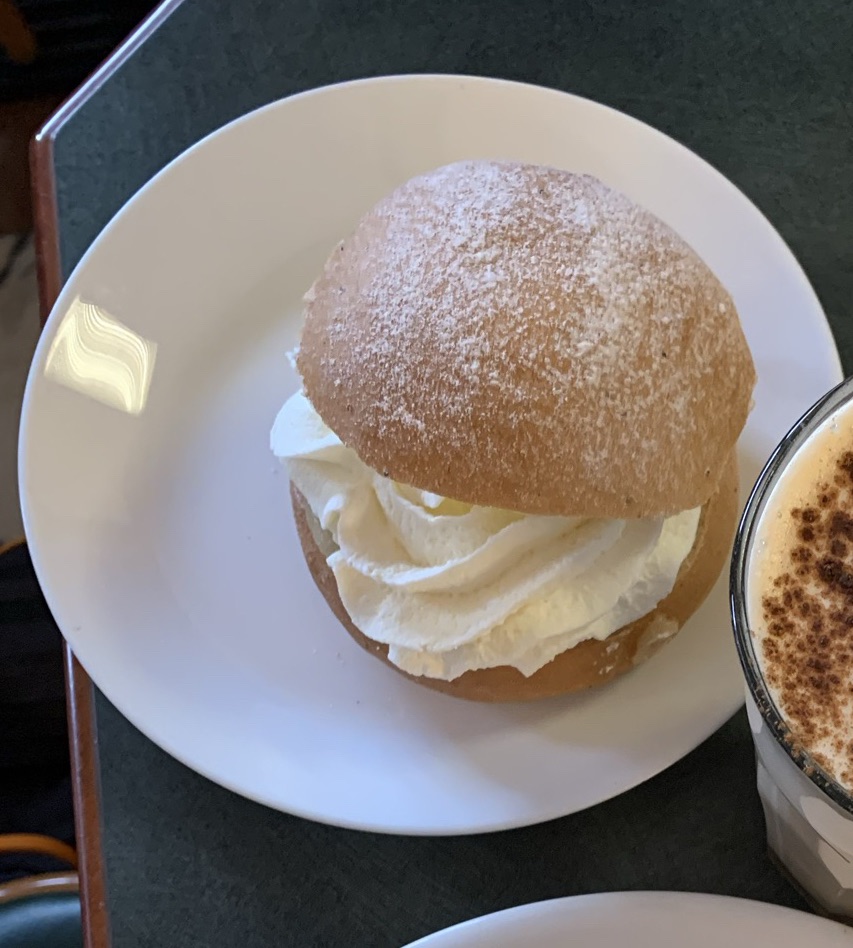
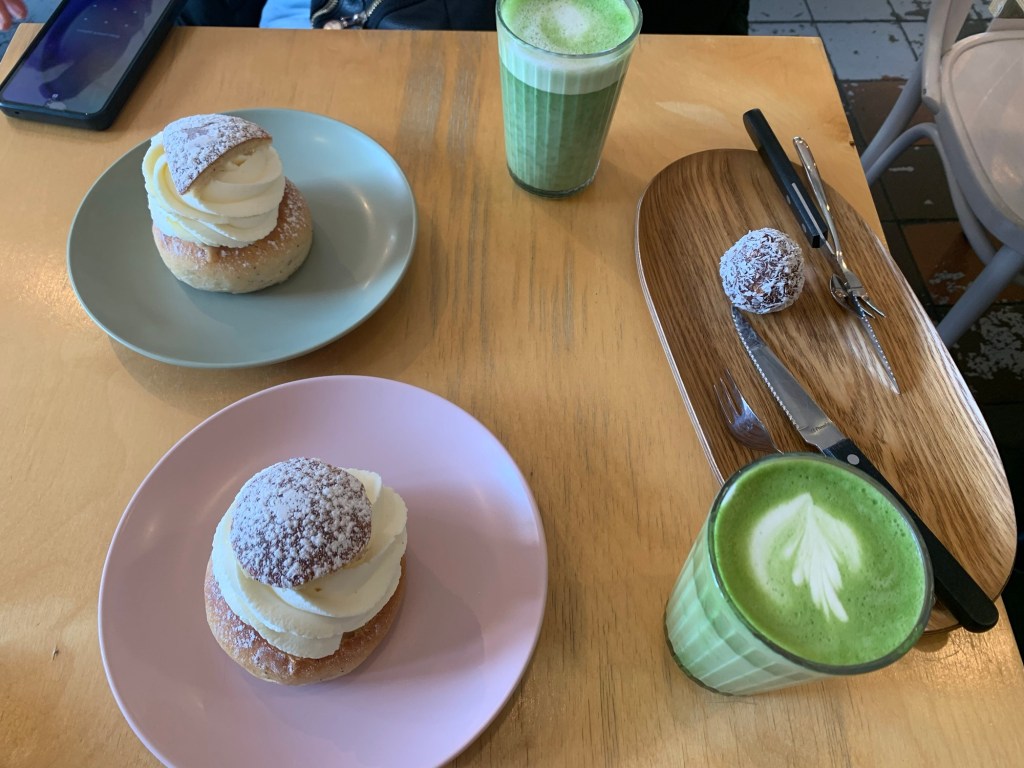
I have returned a few times and enjoyed Swedish seasonal treats as saffron buns and a Semla among others! Besides that, Kanelbullensdag (cinnamon bun day, 4th October) is celebrated with discounted kanelbullar. last October the deal was € 2,50 for a kaneelbol.

Broodnodig has 2 locations in Utrecht: I went to Mariaplaats, 5 minutes from Utrecht centraal station, and Paardenveld. Paardenveld is bigger, but closed on weekends! There used to be a location in Reigerstraat too, which closed in 2025.

Sweet Fika

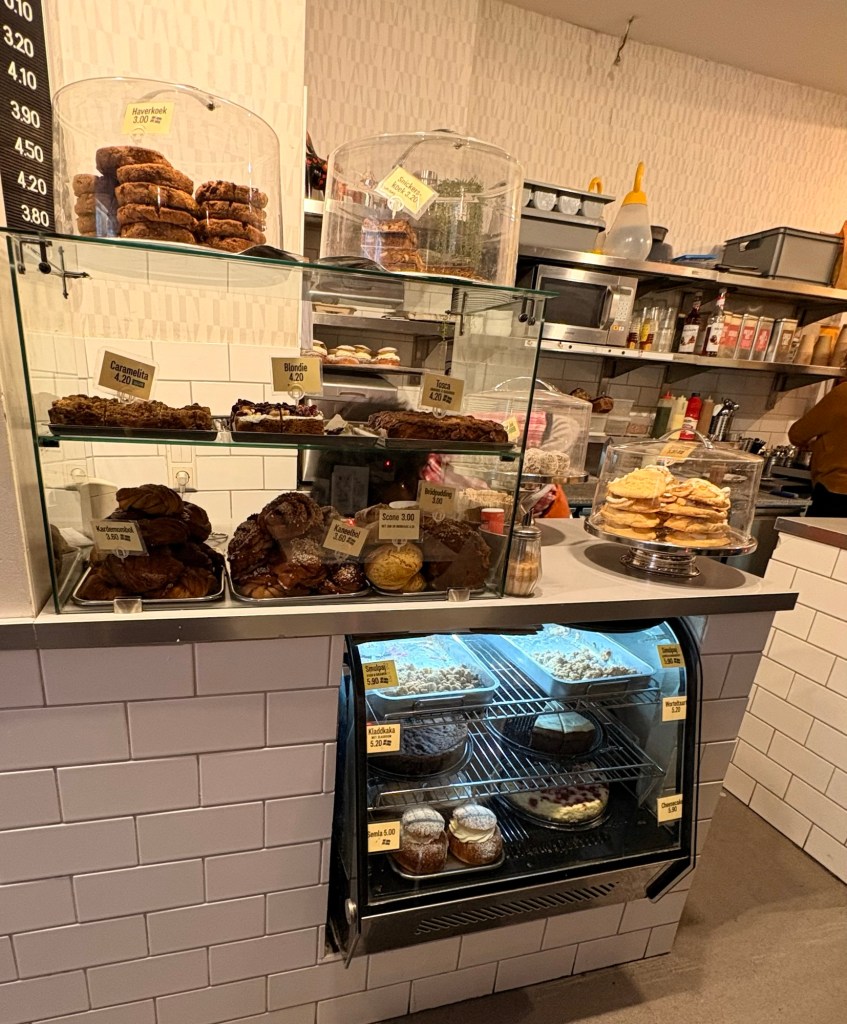
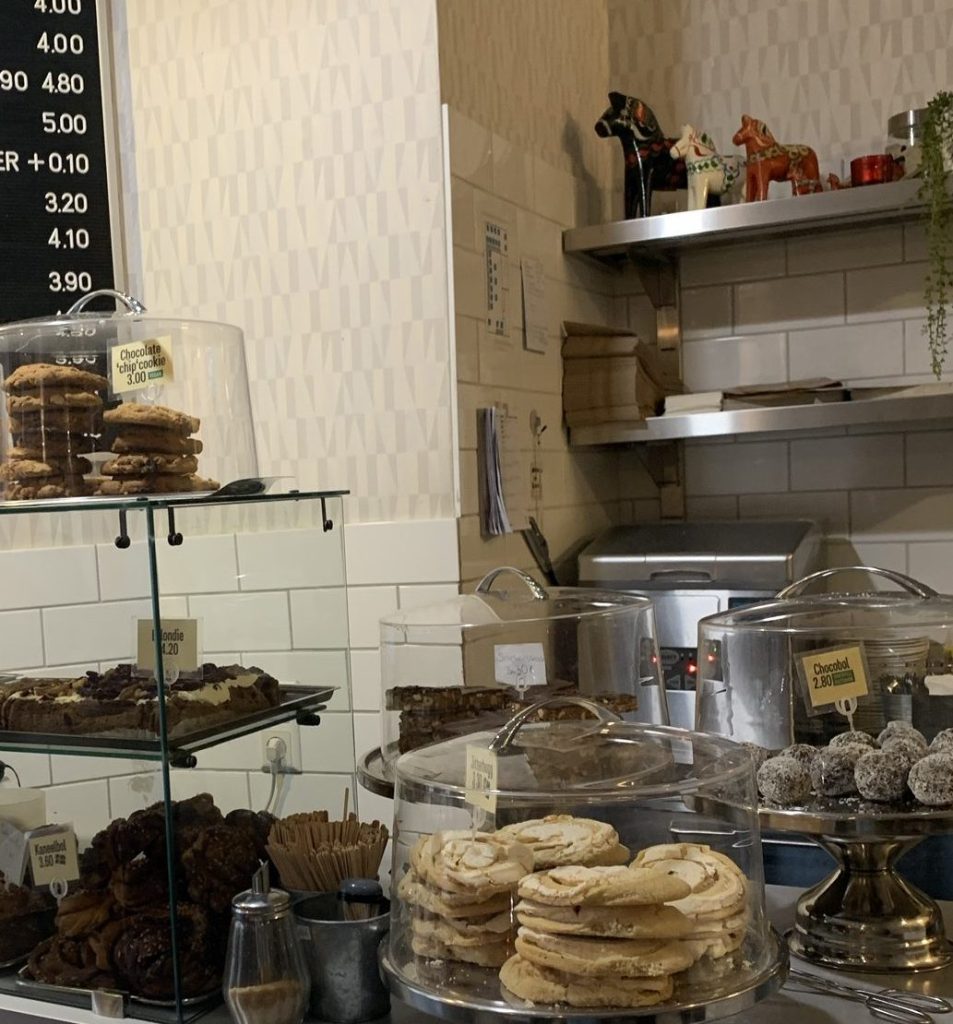
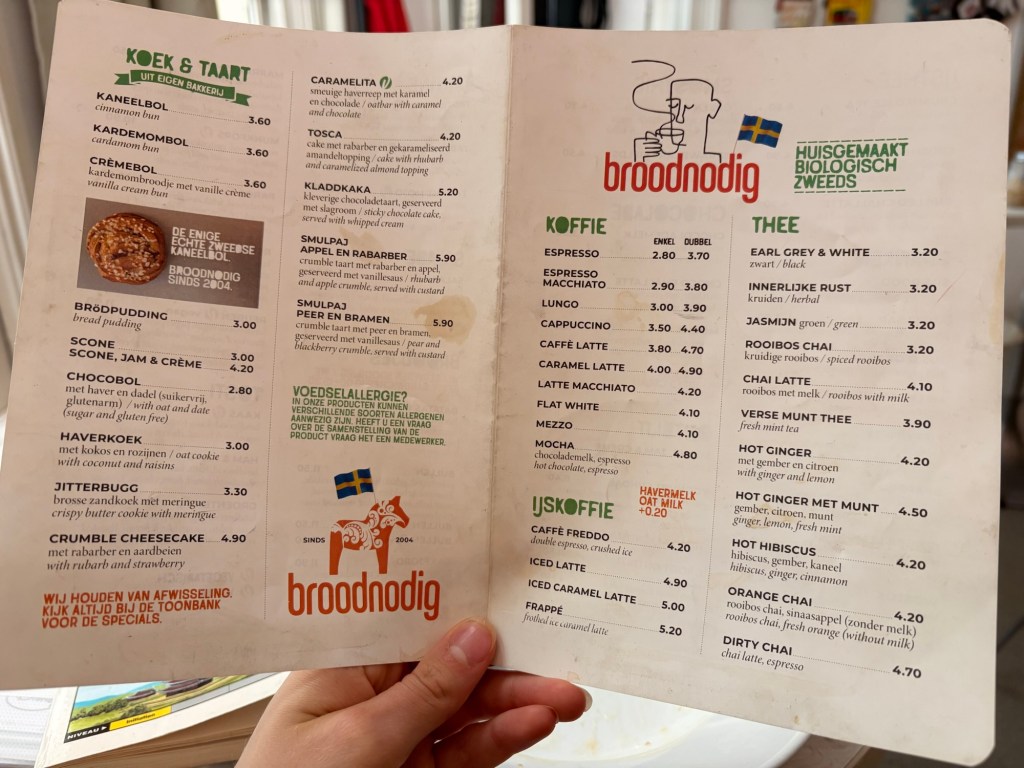
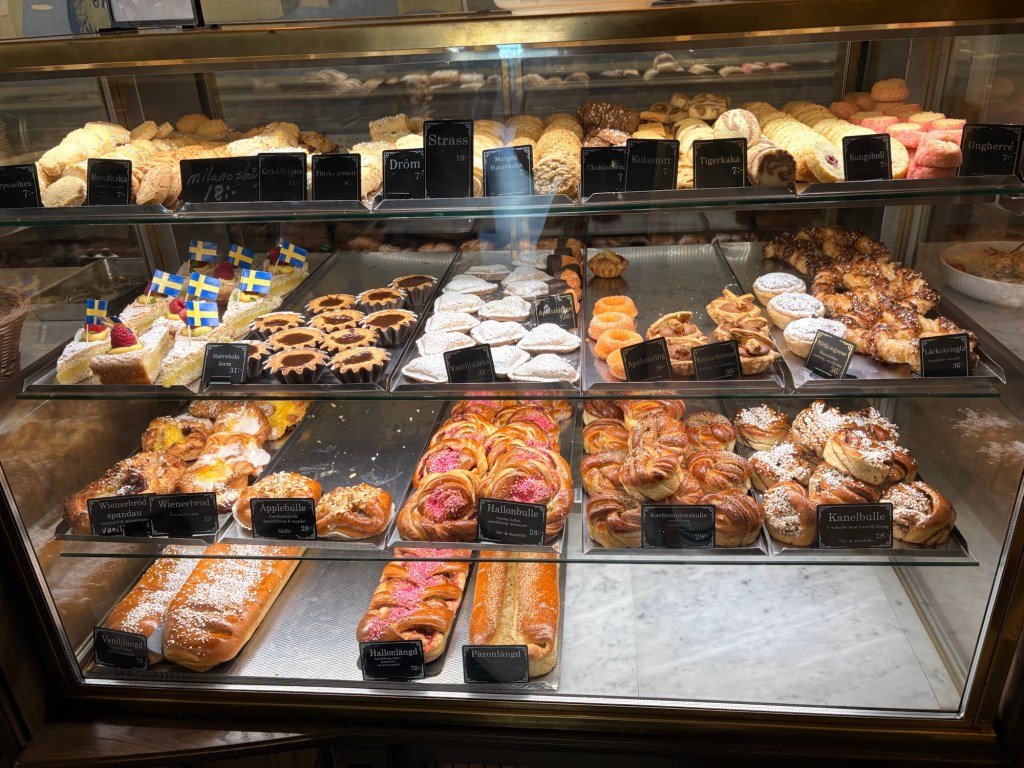
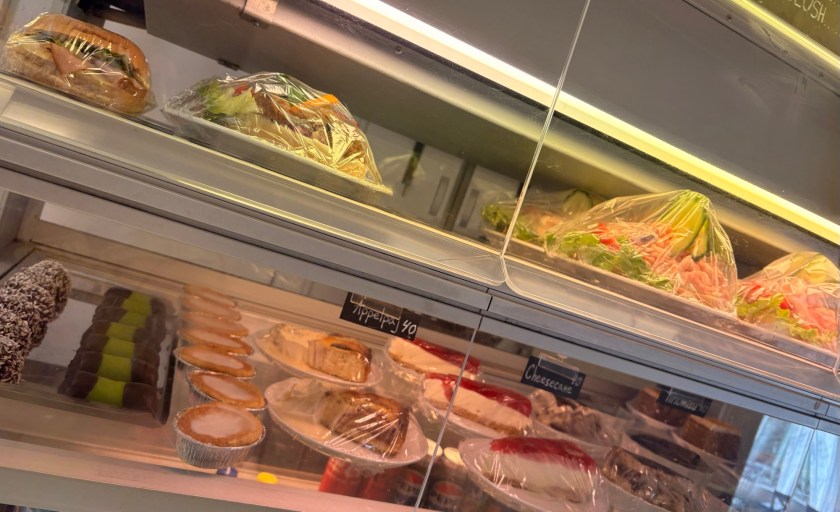
Broodnodig serves a number of typical Swedish fika treats (I liked how typical Swedish things in the counter were marked with a little flag next to the name) including:

  • Buns: cinnamon buns/kaneelbollen and cardamom buns/kardemombollen, since recently crème bol is also on the menu – a cardamom bun with vanilla cream).
  • Chokladbollar/Chocobol
  • Jitterbugg (shortbread snail with meringue)
  • Rulltårta (roll cake)
  • Smulpaj (crumble cake)- apple & rhabarber / pear & blackberries
  • Tosca (almond cake) with rhabarber
  • Kladdkaka (gooey chocolate cake)

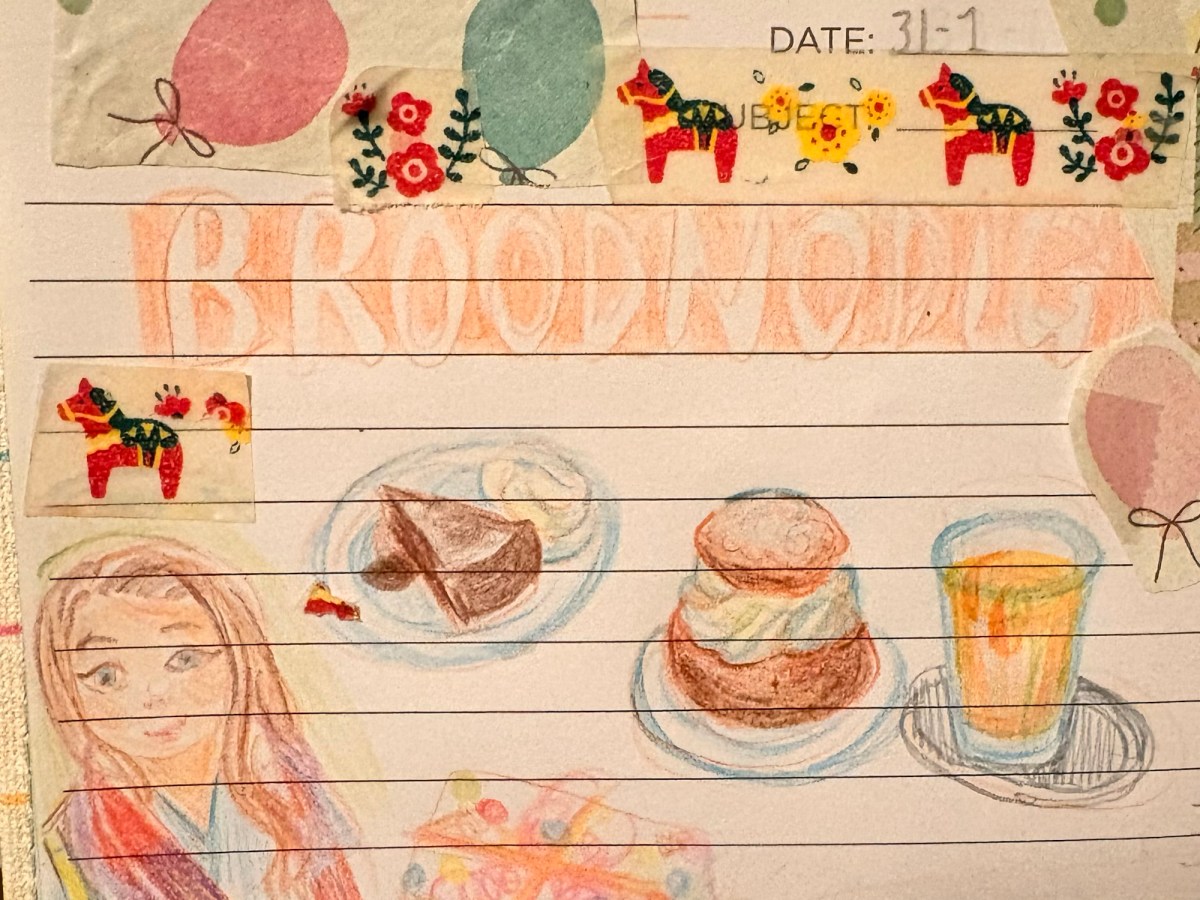
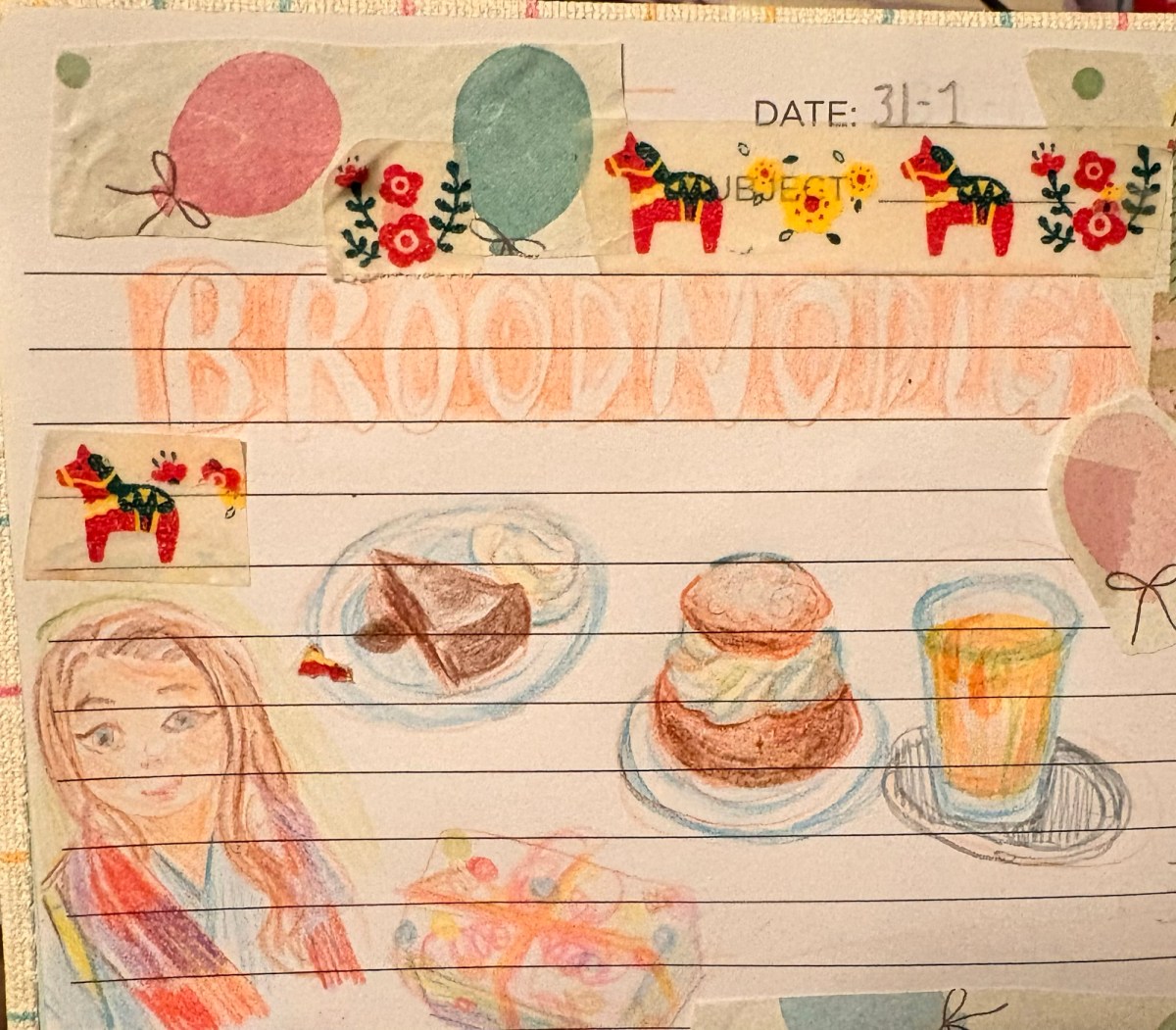
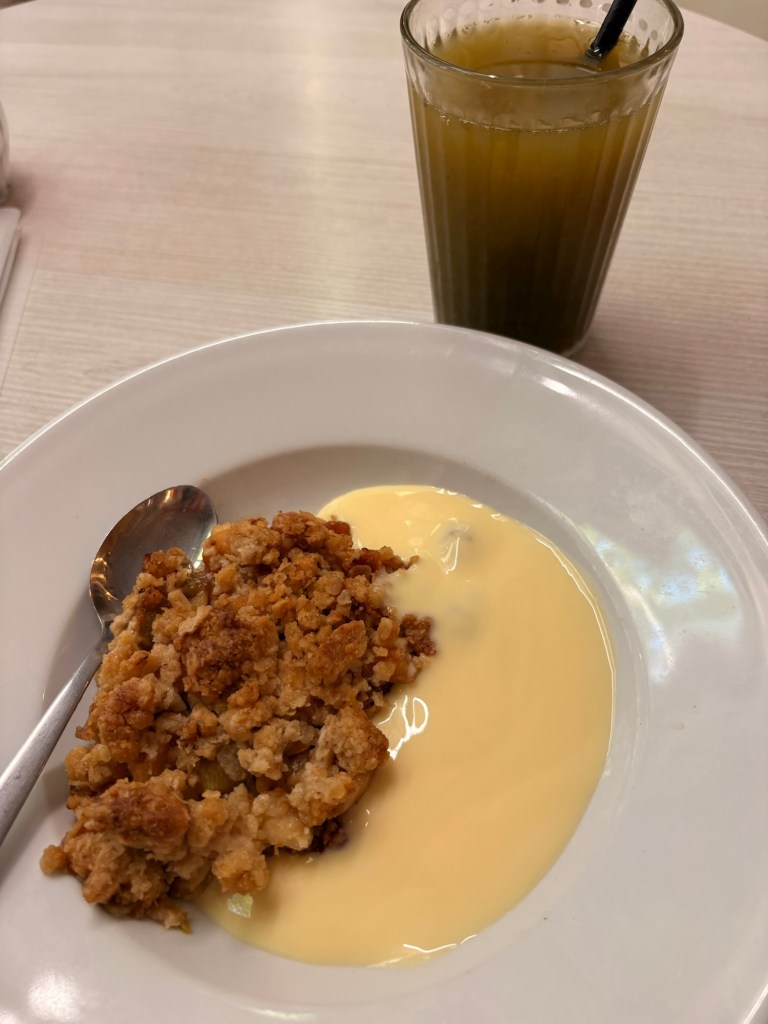
Broodnodig used to have Oscarstårta (lemon, merengue and almond cake) in summer, which was why I passed by last time. But they have unfortunately discontinued it. So i took a Apple & rhabarber smulpaj instead – served with vanilla sauce as the tradition commands.

Lunch options

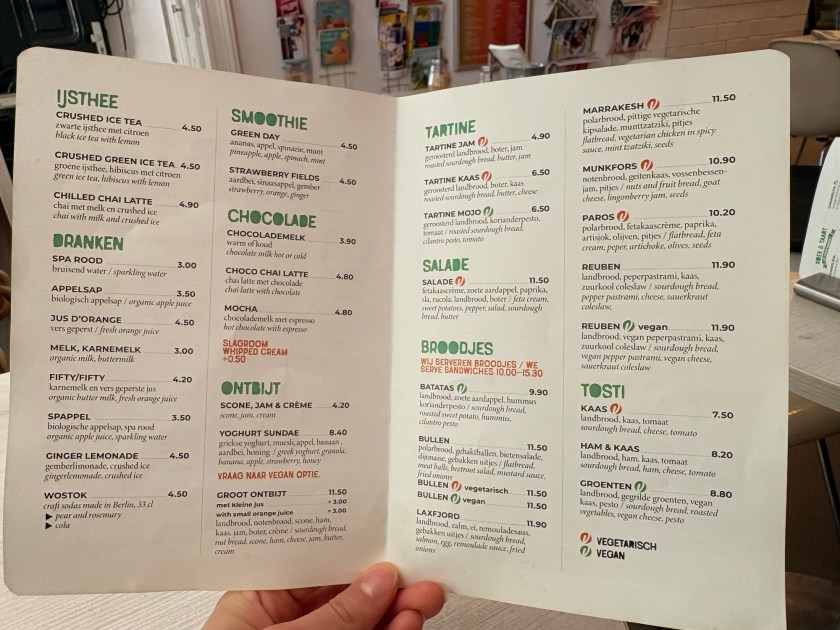
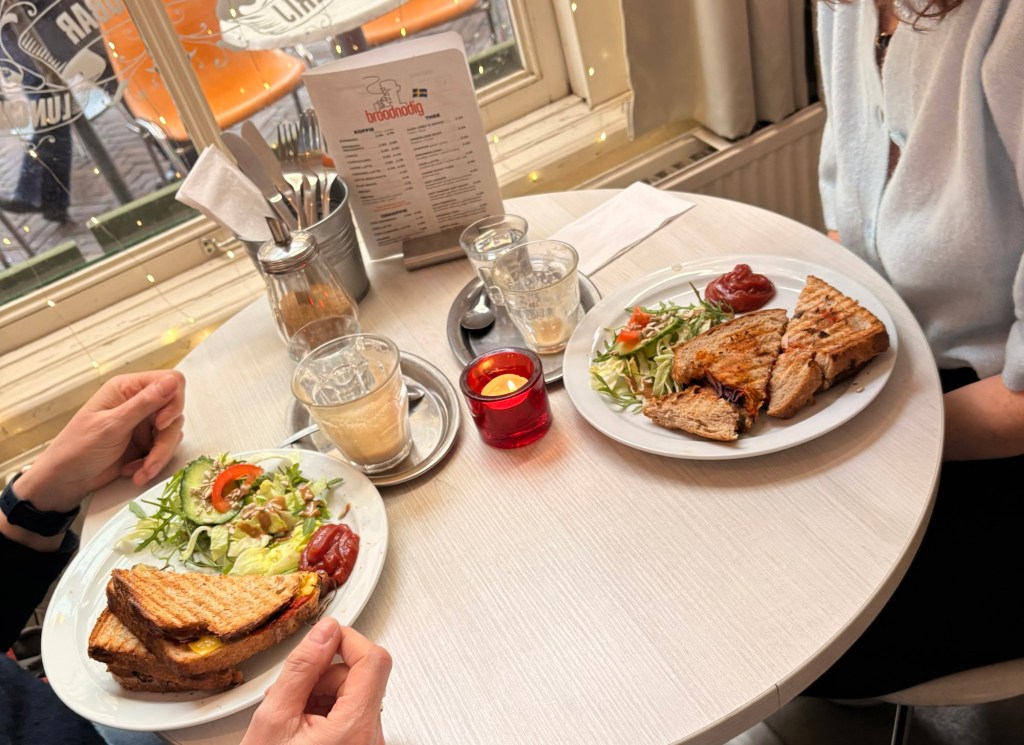
Broodnodig makes several sandwiches with polarbread and sourdough bread. I will try them one day!

Among more typical Swedish options:

  • Bullen: polar bread, meatballs, beet salad, dijonaise sauce, onions.
  • Laxfjord, salmon, egg, remoulade sauce.

Swedish seasonal treats

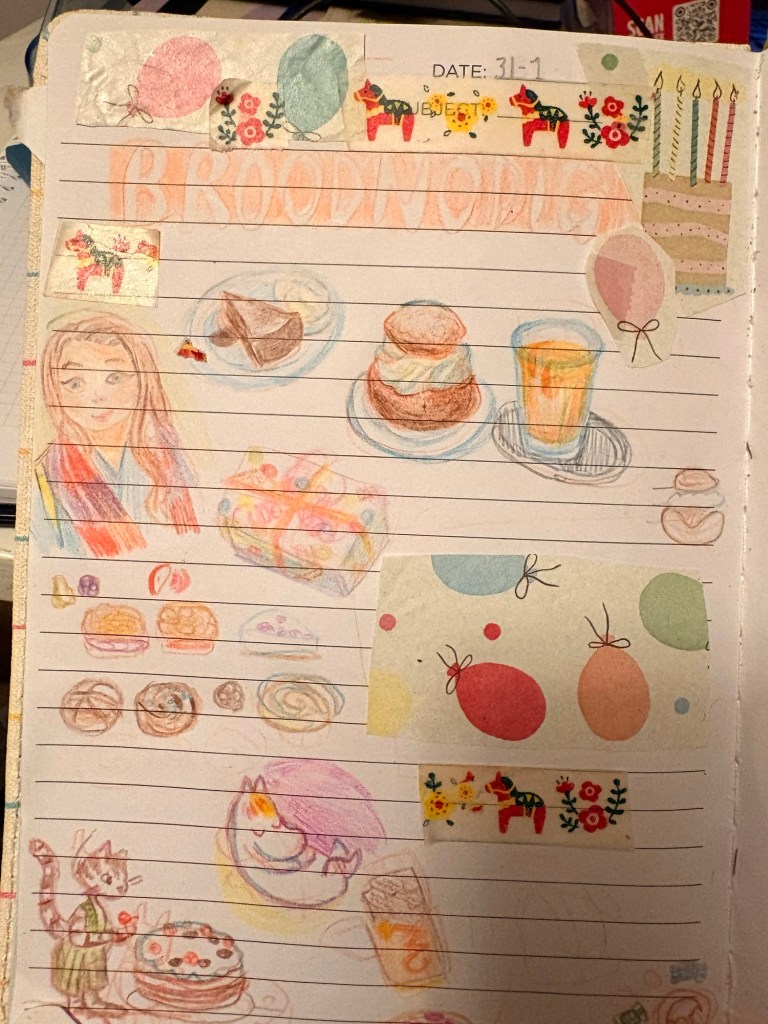
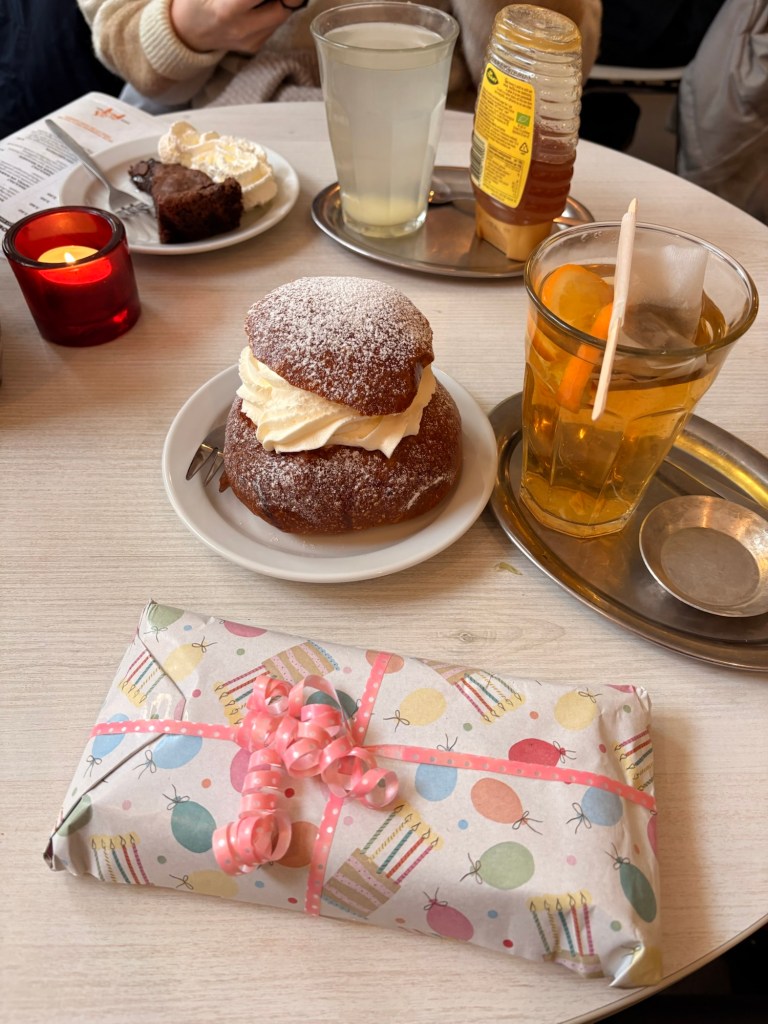
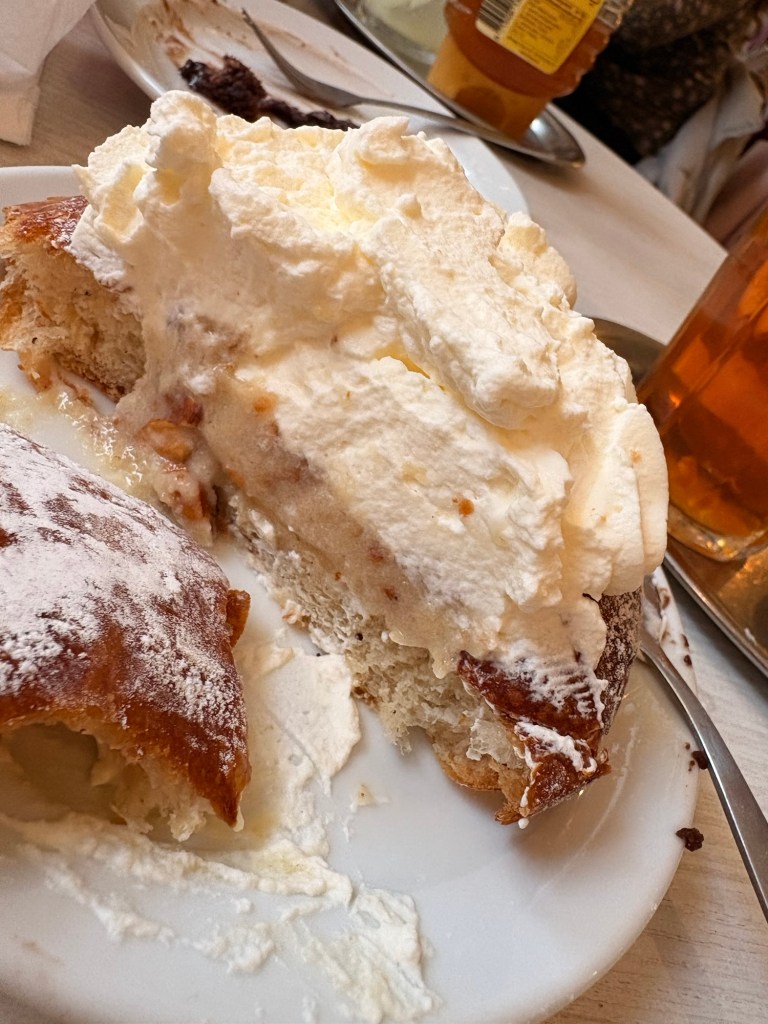
As already mentioned, at Broodnodig you can find typical Swedish treats according to the season. December for a yuletide saffron bun, and january/february around Carnival for a Semla! I love both of them, and got to taste them in their Utrecht version.. They did not disappoint!

As i cannot miss them anymore, I have tried these in several Scandinavian cafes in the Netherlands.

More posts:

Swedish Café in Utrecht: Broodnodig

In Utrecht, the cafe Broodnodig serves Swedish pastries and cakes as cinnamon and cardamom buns, kladdkaka, smulpaj and Scandinavian seasonal treats as semlor and saffron buns.

Illustrated Guide to Swedish Fika

Fika is a cherished Swedish tradition involving a coffee and cake break. Discover various Fika treats, from classic kanelbullar (cinnamon buns), cakes and cookies to savory options.

Illustrated Guide to Swedish Fika

Fika is a cherished Swedish tradition involving a coffee and cake break. Discover various Fika treats, from classic kanelbullar (cinnamon buns), cakes and cookies to savory options.

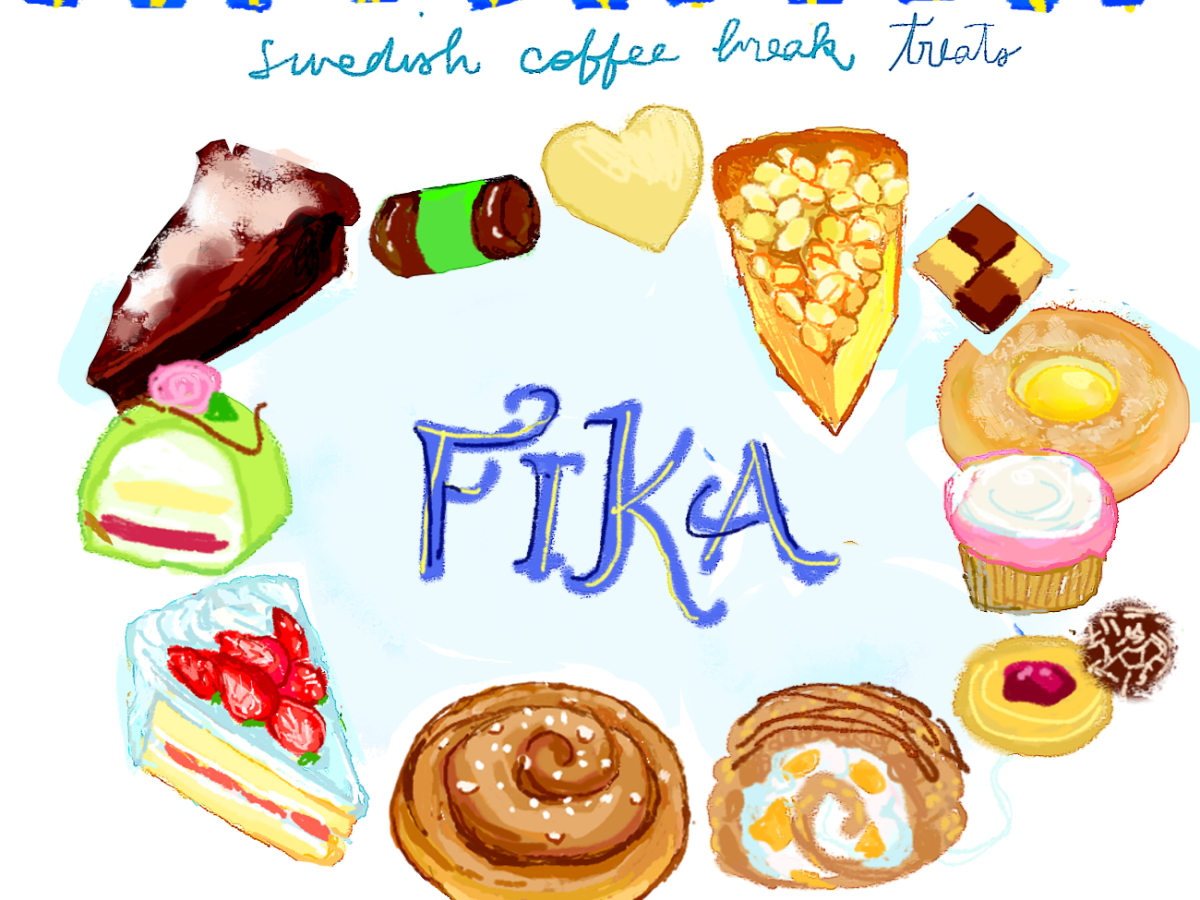
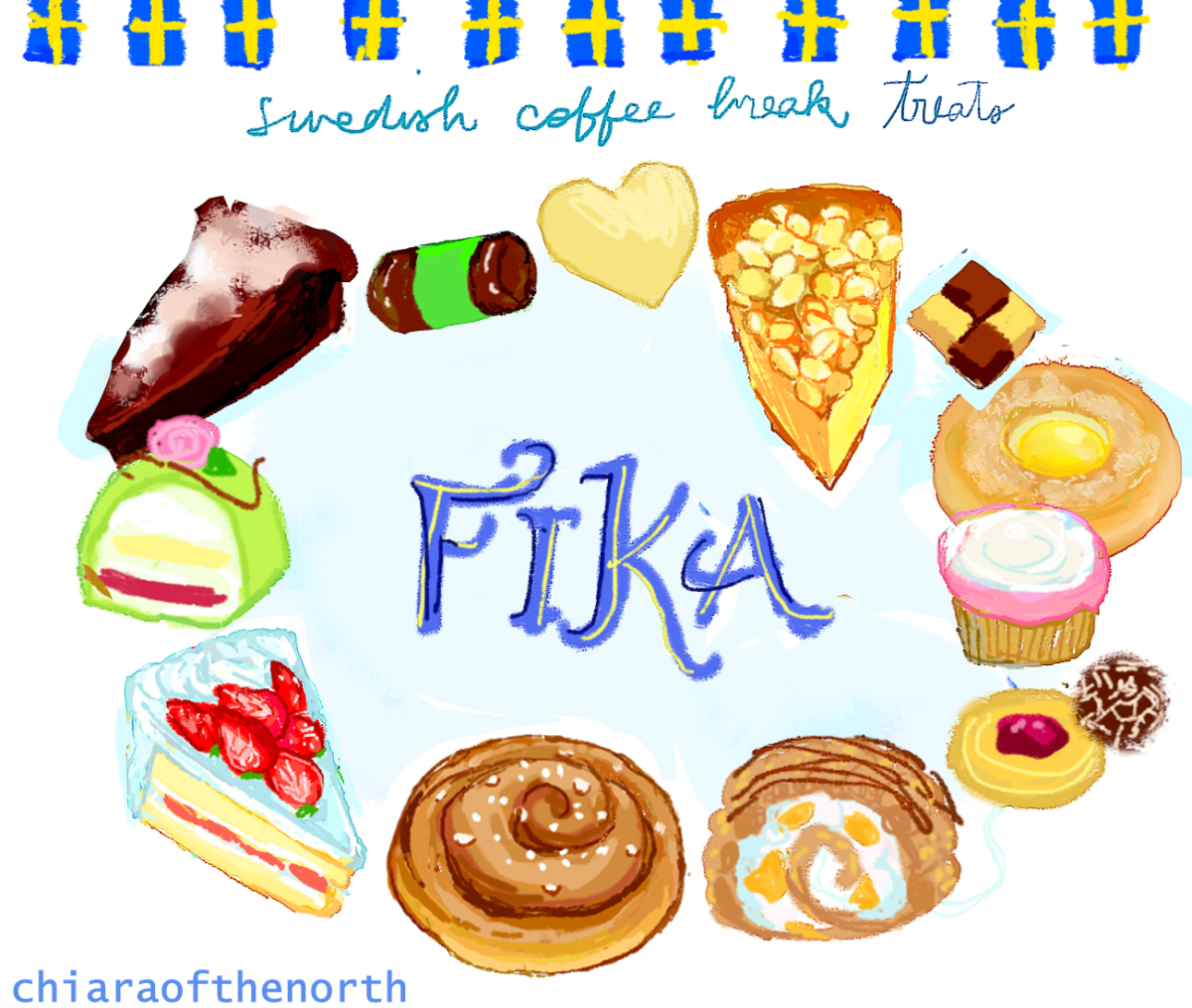
Fika is a very important Swedish tradition: a cozy coffee-and-cake break you can either take home, at the office or in cafes/bakeries perfectly equipped for it. All that matters is that you relax, drink and eat something. Fika=reversed version of ka-fi (kaffe/coffee).

There are quite a few fika treats that became classics – including buns, cakes and cookies. Common ingredients are cardamom, almond, marzipan, raspberry jam and coconut flakes. You will see kola, which has nothing to do with coca cola as I used to think – that would be something caramel flavored.

fikabröd: sweet buns

swedish scandinavian buns illustration

Bullar, buns are everywhere to be found in Sweden, and belong to the category of Fikabröd, fika breadstuff. The most common sweet bun is the iconic kanelbulle, – the Swedish cinnamon bun: with pearl sugar on top and no icing, less fatty than American ones. There is even a cinnamon bun day in Sweden! The second most common is the cardamom bun, kardemummabulle, which could be described as slightly ‘spicy’.
Toscasnäcka is a ‘shell’ covered in almonds. Anything called Tosca in Sweden means it has almonds.
Other buns are vanilj- or solbullar with vanilla custard, and sometimes chocolate-coated as well.
Längd is basically a big and long bun.

Kafferep cookies and small treats

scandinavian swedish cookies fika kafferep illustration
  • chokladboll: one of the simplest and most iconic Fika treats, no-bake small chocolate balls usually covered in shredded coconut.
  • dammsugare hoover. green marzipan and chocolate ends. They’re also known as punschrullar (punch rolls) if they contain punsch liqueur. The name either comes from their shape or the custom of using leftover biscuit crumbs in bakeries. The Danes call their own version -white where you have green in dammsugare – is Træstamme, tree trunk. Which is a marrowbone, mergpijp, for the Dutch.
  • biskvi/sarah bernhardt: Biskvi are chocolate cones with an almond cookie base, filled with buttercream. The Sarah Bernhardt (named after a French actress) is basically a biskvi with a chocolate truffle filling. Sarah Bernhardt’s are apparently very popular around Christmas in Iceland!

  • mazarin is a small, round shortcrust pastry originated in the 17th-18th century, filled with almond paste, and distincted by white or pink icing on top.
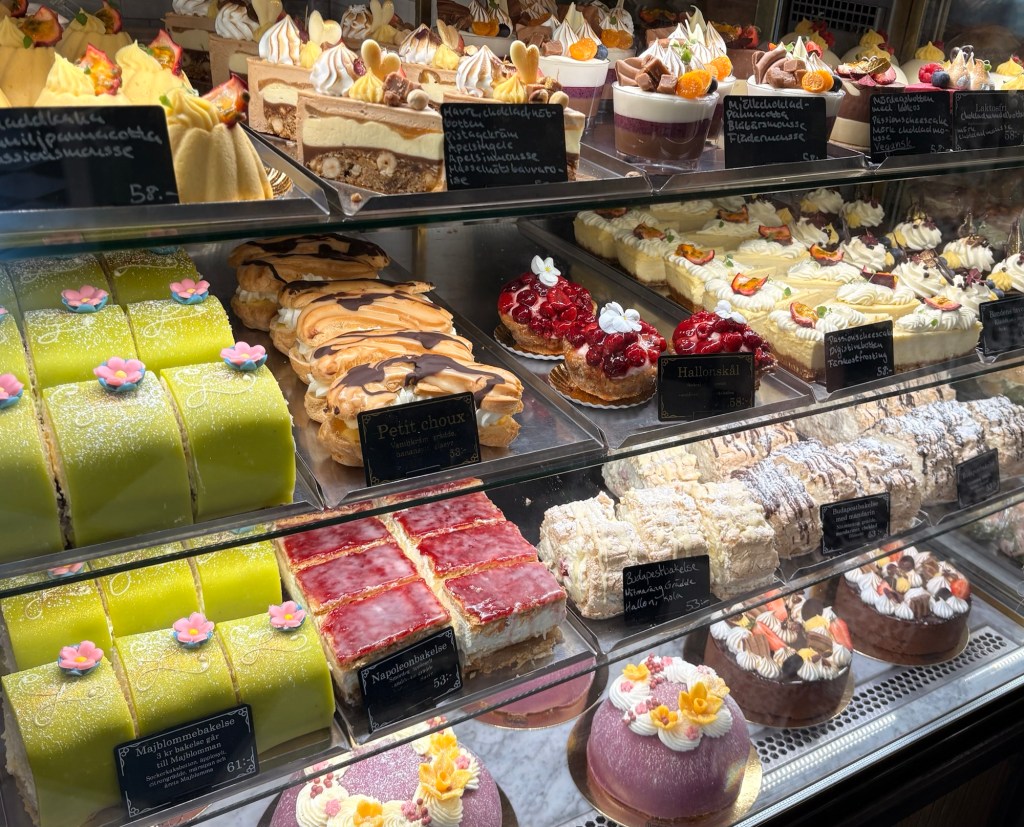
  • Napoleon, very similar to Dutch iconic tompouce, except the latter is either pink or orange for special occasions, while I’ve seen Napoleons having a darker red icing
  • Vaniljhjärta: personal addition because I find this lovely. A tender heart-shaped shortcrust pastry filled with vanilla cream.
  • Jitterbug is a buttery spiral-shaped cookie with merengue.

kafferep was a tradition which developed in the 19th century, before Fika name and concept emerged. There are IKEA cookies called Kafferep! It consisted in gatherings that included eating cookies, kakor – seven types to be precise, called sju sorters kakor. Baking seven types of cookies is actually also a Norwegian Christmas tradition. They include: Hallongrottor: vanilla cookies where the ‘cave’ in the middle is filled with raspberry jam. Chokladsnittar: rectangular ‘chocolate slices’. Brysselkakor: round vanilla ‘Brussels cookies’ circled by a pink coating. Drömmar meringue-like vanilla round cookies, melting in your mouth like ..’dreams’. Havrekakor: crunchy ‘oat biscuits’, Nötkakor: little balls with a whole hazelnut. Schackrutor chocolate-vanilla ‘chessboard’ square cookies

cakes

swedish cakes fika illustration

in Sweden you have Tårtor, kakor and paj. A tårta typically has whipped cream and looks fancier than a basic kaka, while a paj is.. a pie.

  • Kladdkaka: iconic Swedish gooey chocolate cake, or mud cake, the name means sticky cake.
  • Toscakaka: moist cake with crispy caramel almonds on top.
  • Smulpaj: crumble cake. Typical fillings are rhabarber, apples and blueberries! Blueberry pie, blåbärspaj paired with vanilla sauce, vaniljsås!
  • Prinsesstårta is the princess of Swedish cakes, often served for birthdays! First featured in the early 20th century Princesses’ cookbook  Prinsessornas kokbok, it is very recognizable by being a green dome with a pink rose on top. It is made of layers of sponge, whipped cream and raspberry jam, covered by green marzipan. There are variations with other colors (and meanings): yellow –prinstårta (prince cake), pink – operatårta (opera cake). Prinsesstårta can also be made as a roll and served in slices.
  • An iconic Swedish rollcake holds the name of Hungary’s capital: Budapest: with whipped cream in the roll and coated in an almond crumble with a chocolate swirl, it usually has mandarin inside. I tried a pear version the first time though!
  • Other notable cakes are Silviakaka (a sponge cake with coconut on top) and Oscarstårta (almond and cream cake)
  • Carrot cake, morotkaka, is also very common

savory fika ‘ sandwiches

swedish sandwiches illustration svenska mackor

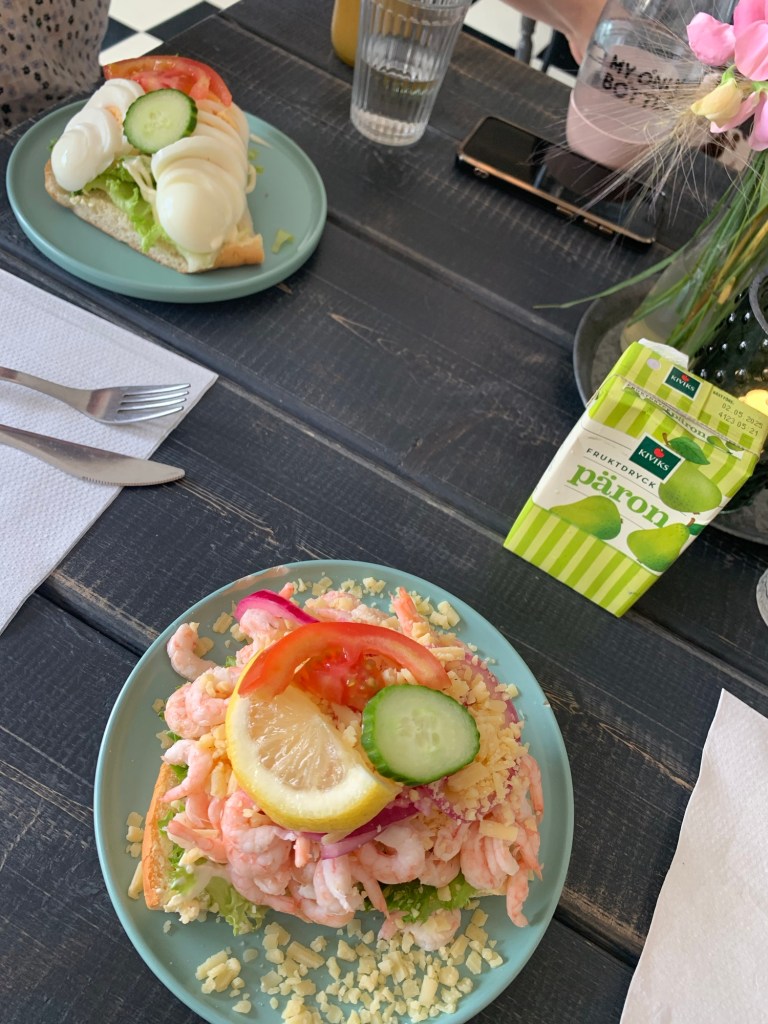
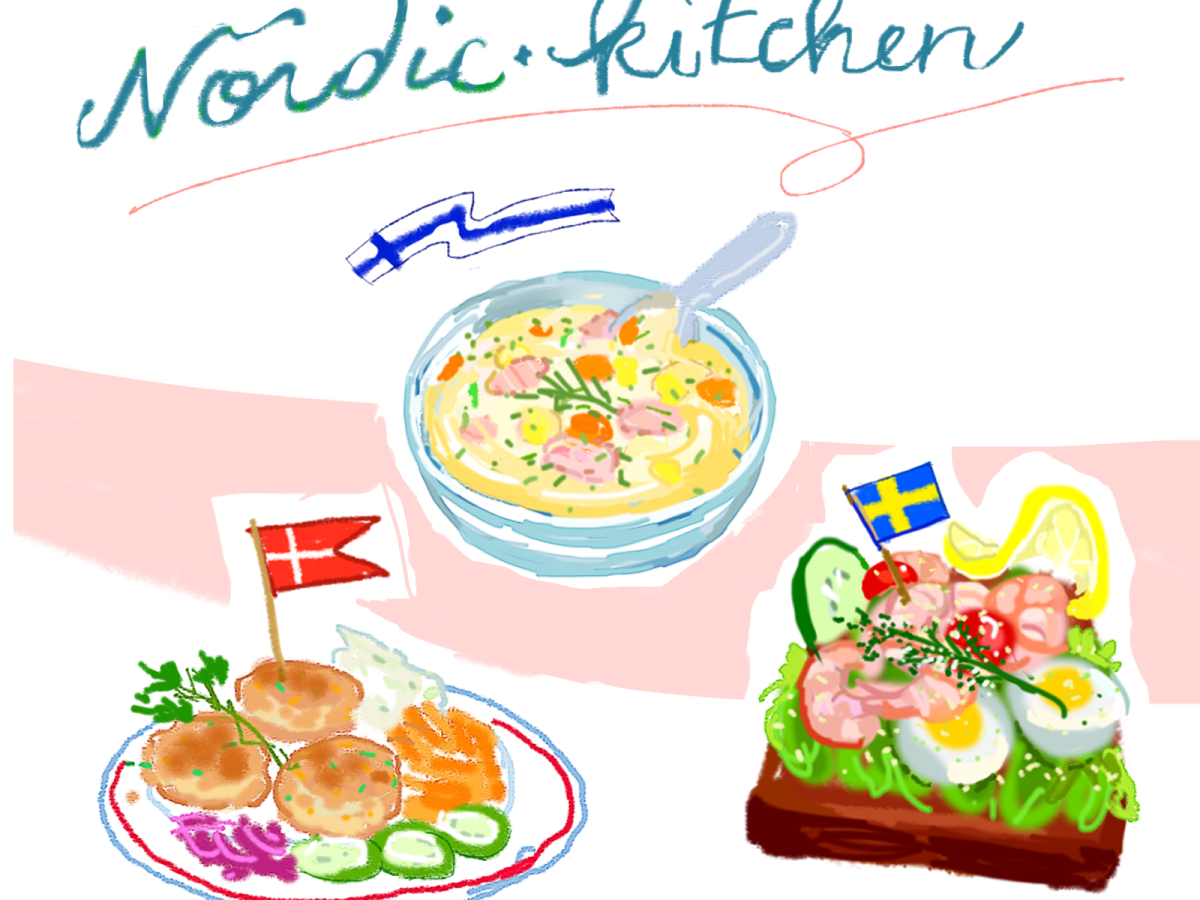
Sweet fika is great, but sometimes you cannot risk a sugar crash: there are plenty of nice options for a savory fika, with open Sandwich (macka) options! The most iconic ones are the shrimp sandwich (räkmacka, often accompanied by eggs) and meatballs on redbeet salad (kötbullemacka). It is quite easy to make these Swedish sandwiches at home too.

A round, closed sandwich is called Fralla.

Sources:

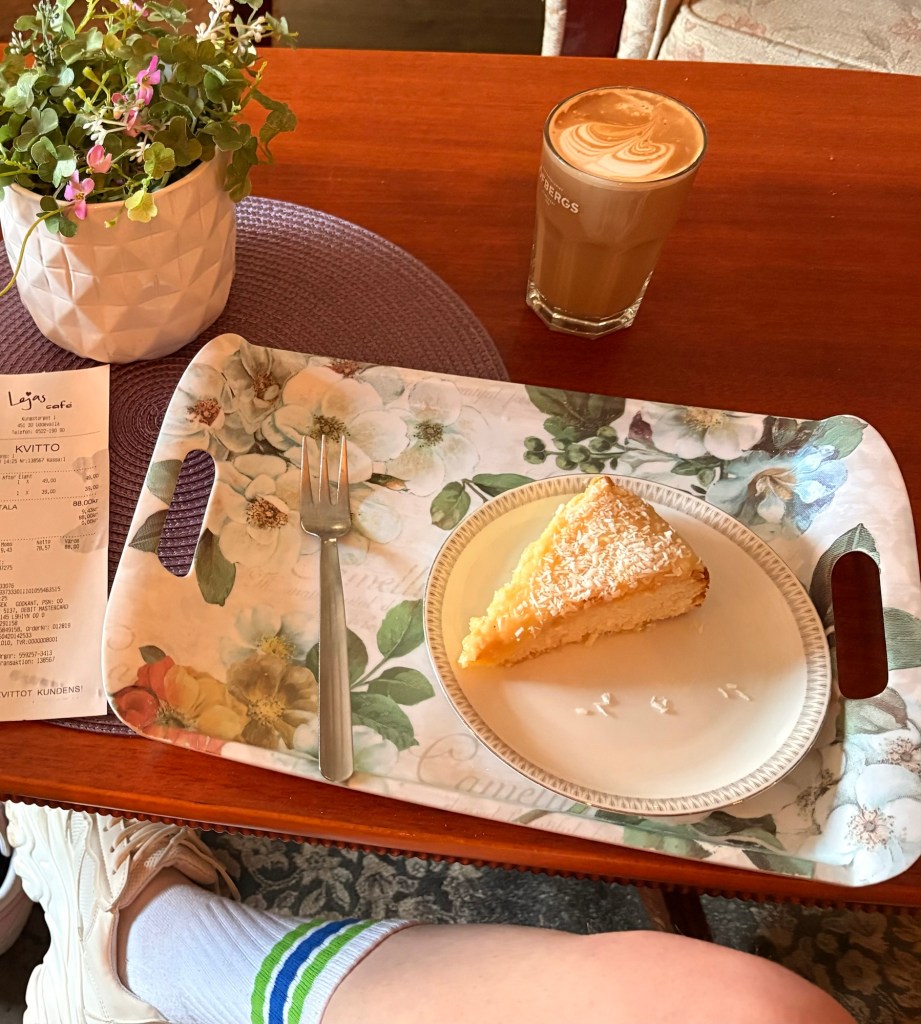
  • Pictures from: Conditori Norpolen (Vara), Mormor (Lund), Lejlas (Uddevalla), Nordfelts (Vänersborg), Kakeria (Trollhättan)
  • visitsweden.com
  • fikatrail.com

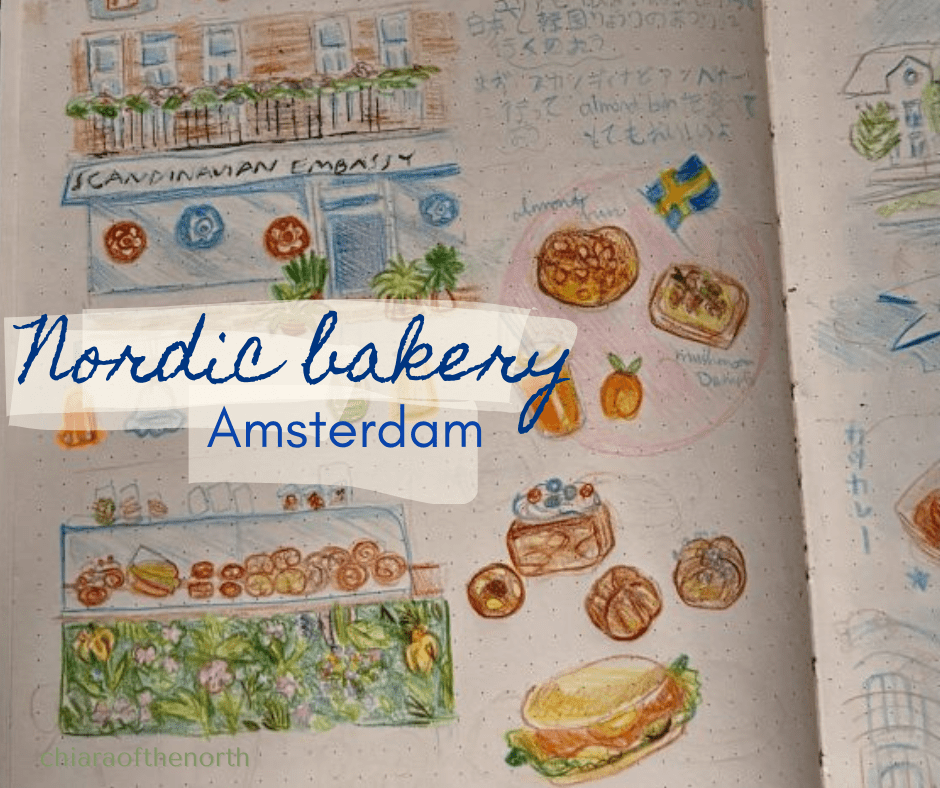
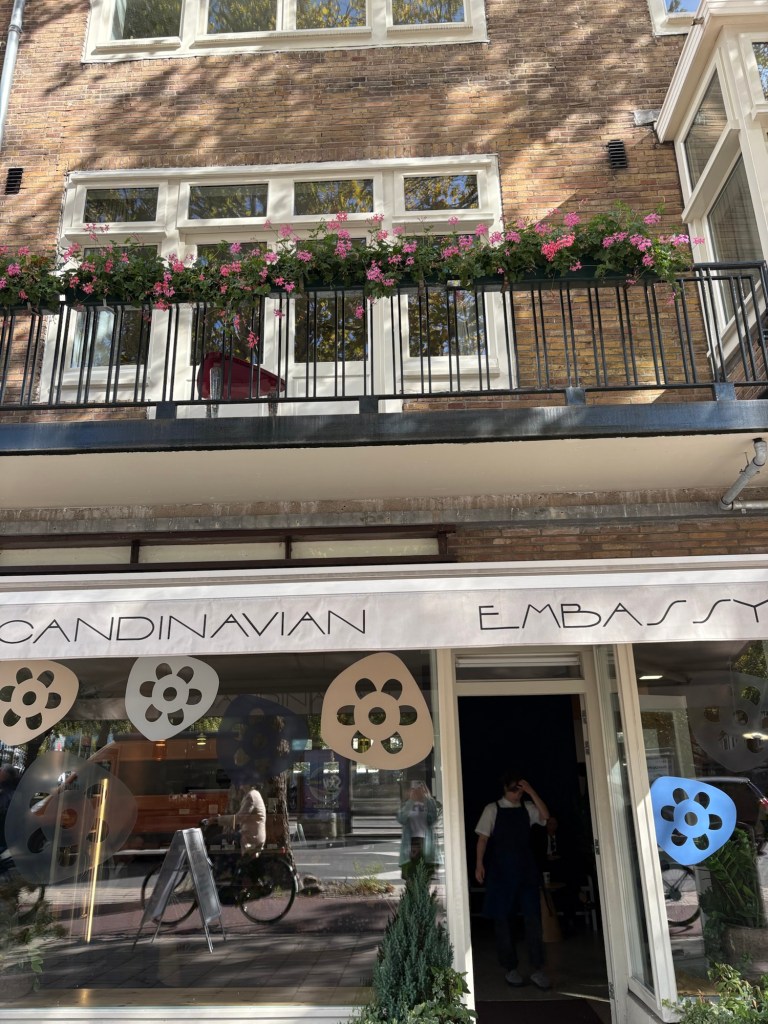
Scandinavian Embassy bakery and cafe in Amsterdam zuid

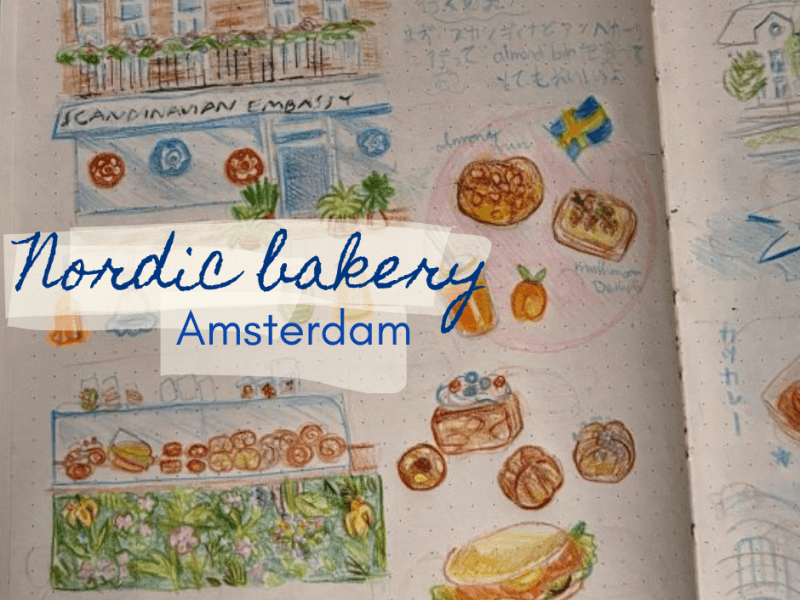
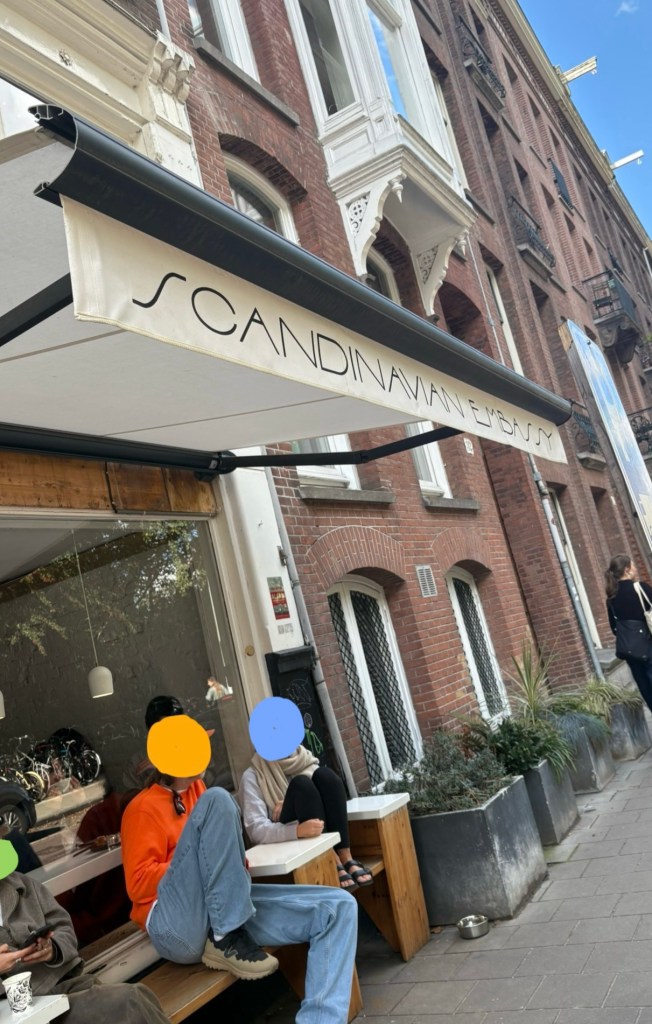
On a trip to Amsterdam, I decided to test Scandinavian Embassy and both of its two locations, starting with the bakery in europaplein.

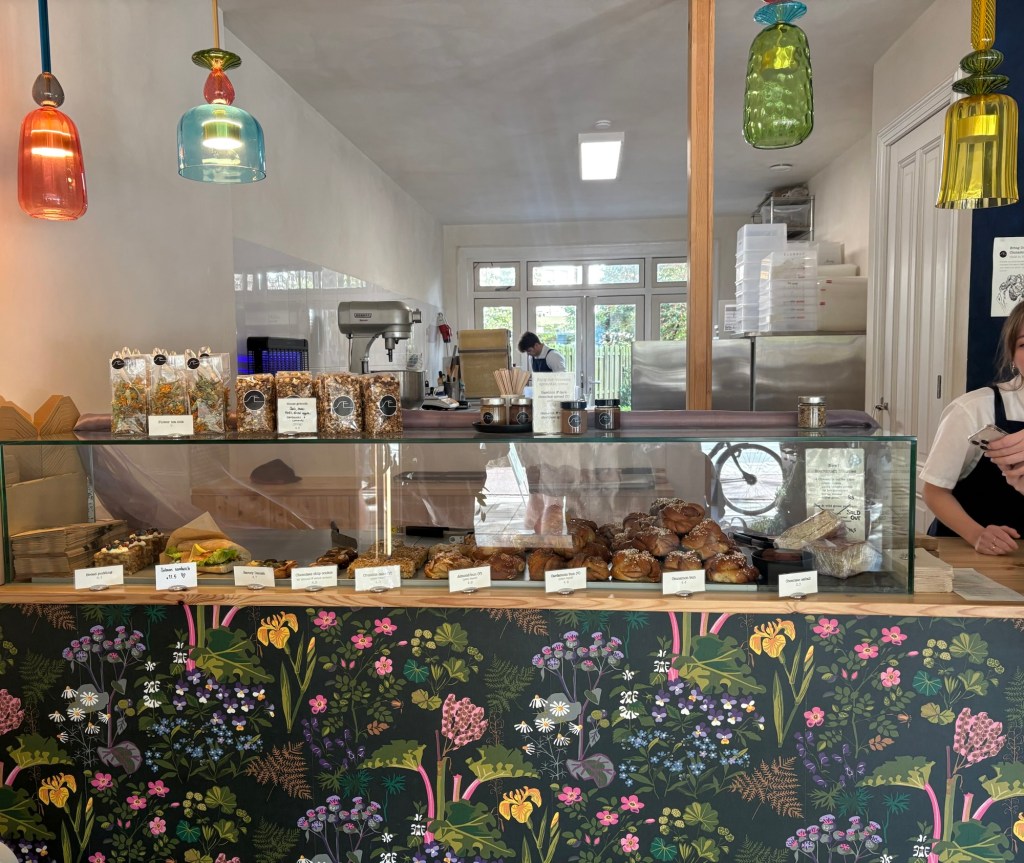
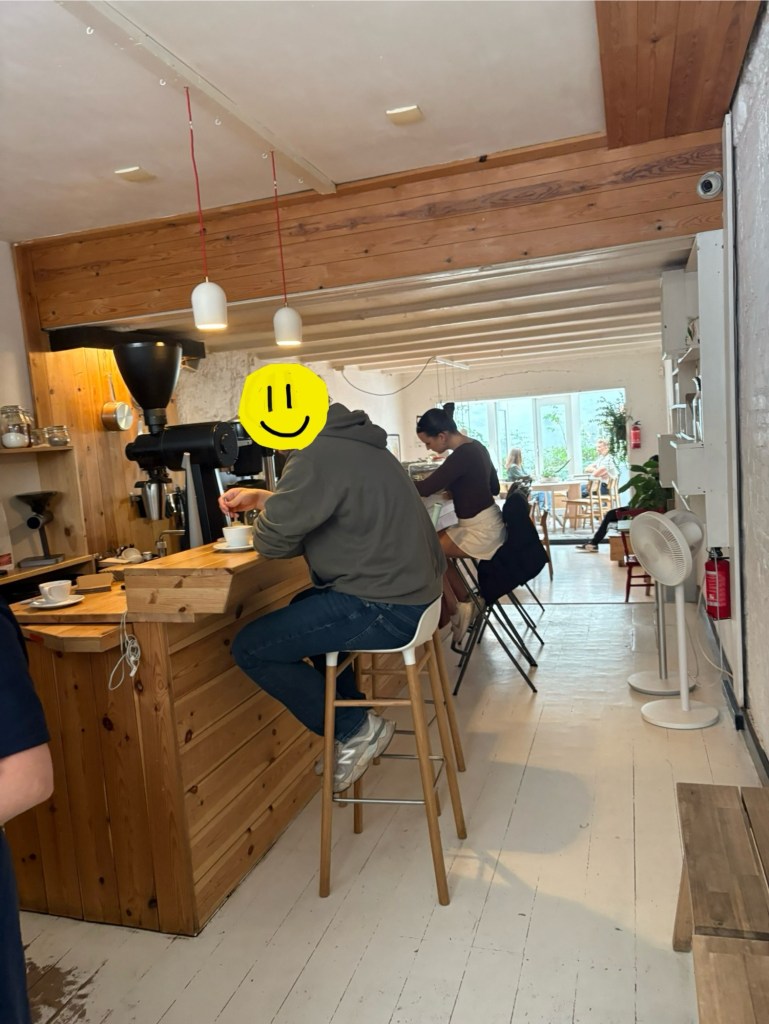
The two locations are in Amsterdam zuid: Saphatipark and Europaplein: in the former, a more central location, you can sit but it has fewer items than the bakery in Europaplein. The bakery, on the contrary, barely has any places to sit.

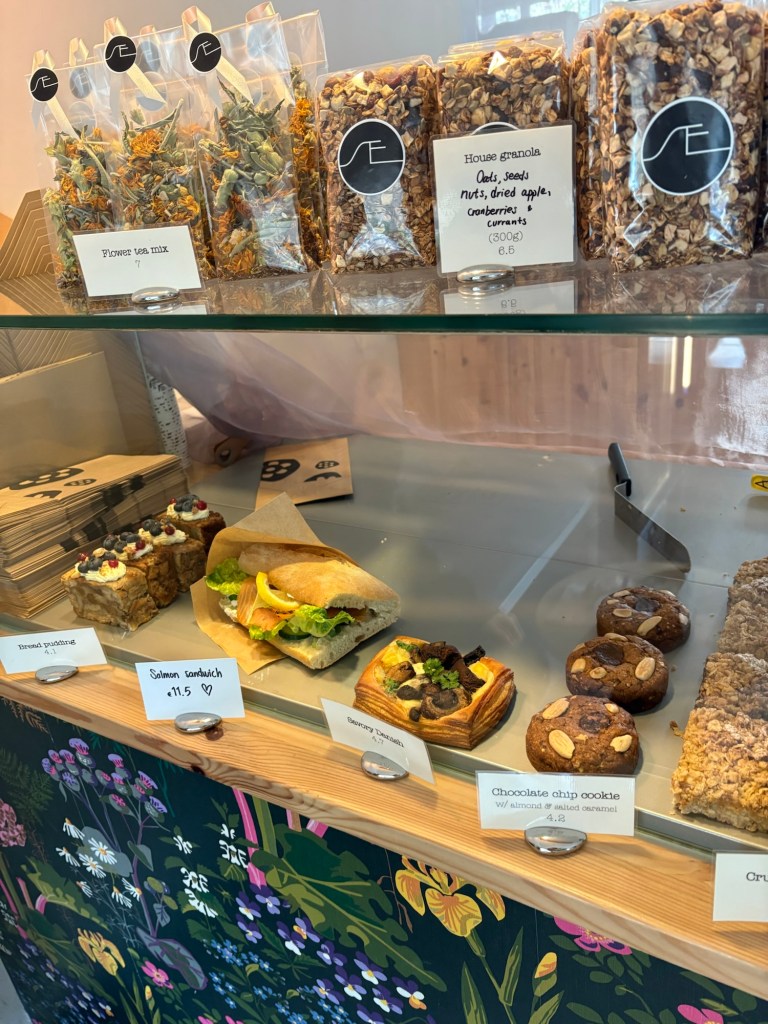
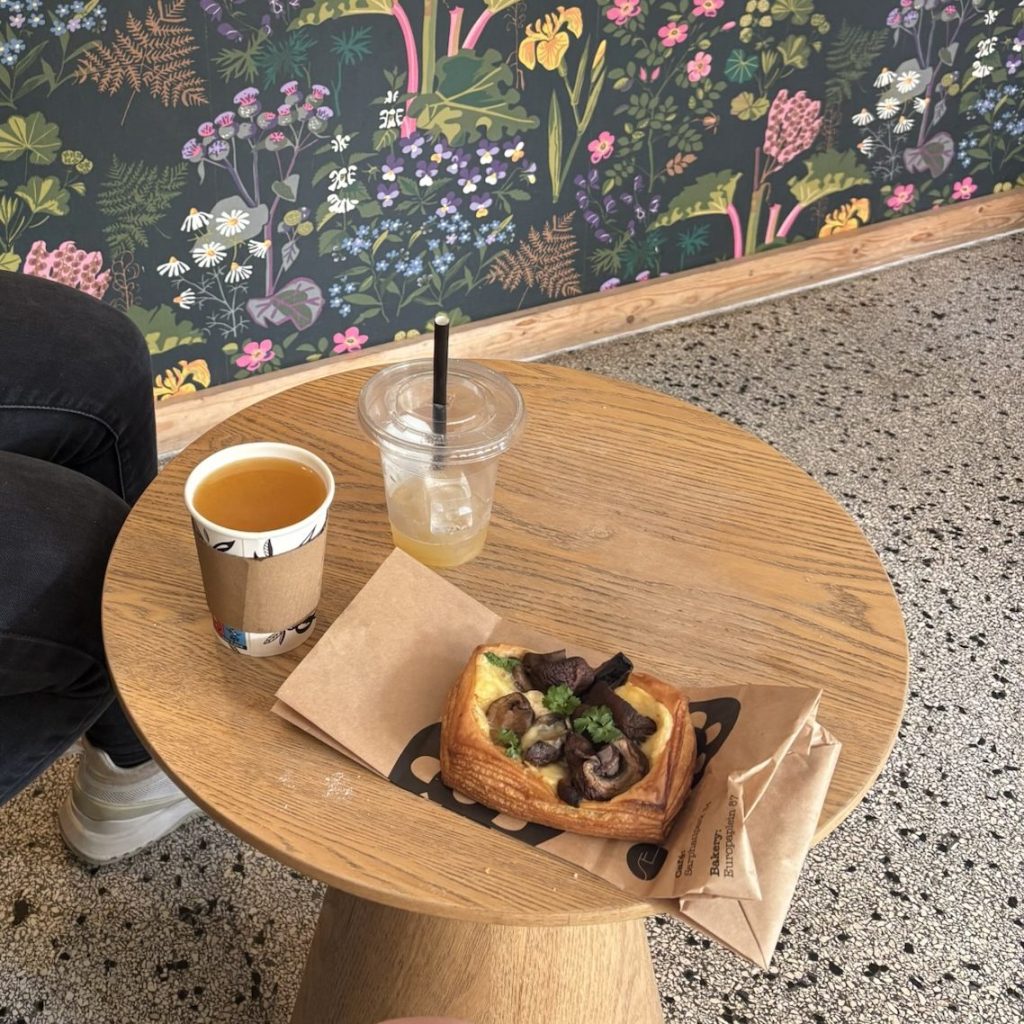
First we got an almond bun, that was delicious!then, for the savory part, we got a mushroom & cheese danish, and apricot drinks!

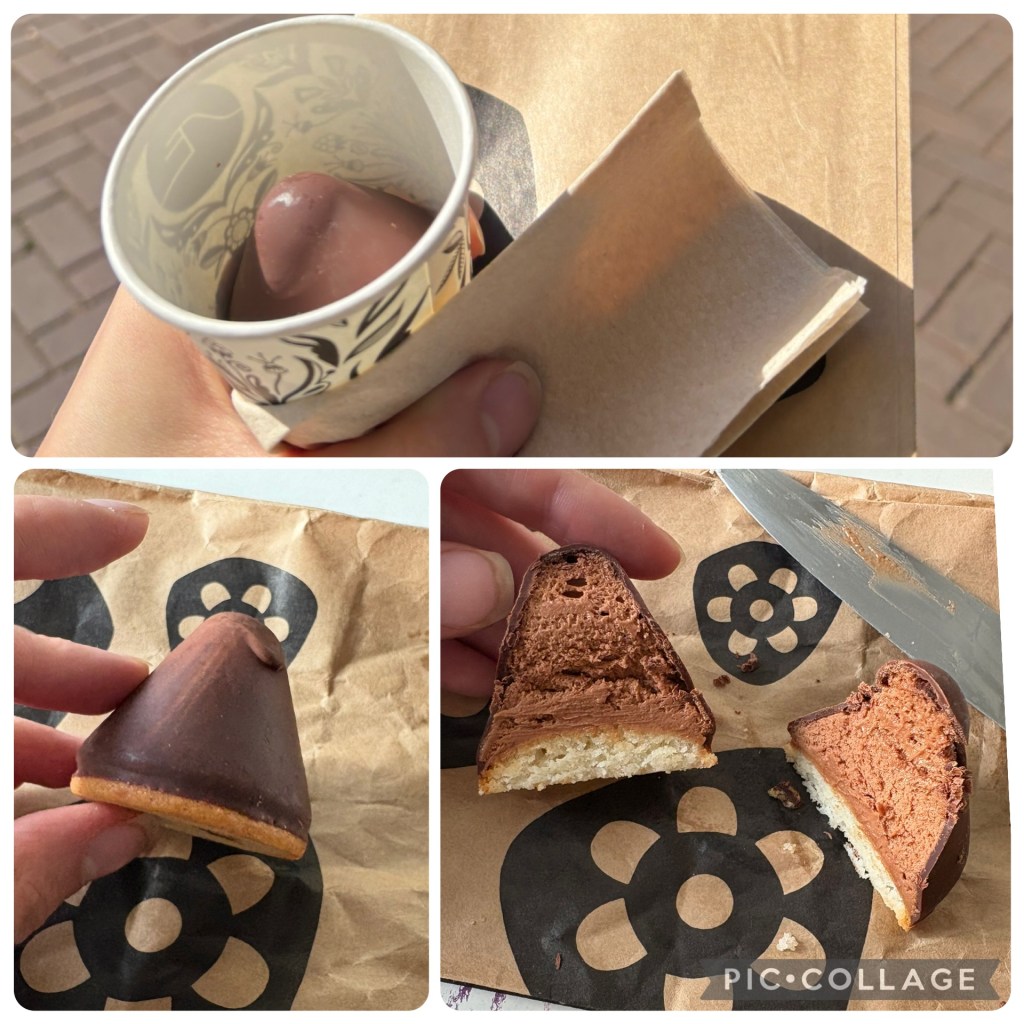
Afterwards we decided to check out the cafe too, where I got a biskvi, served in a paper cup to-go 🙂

i had wanted to try their biskvi for a while, and I did at the cafe, slightly closer to the centre! so here it is

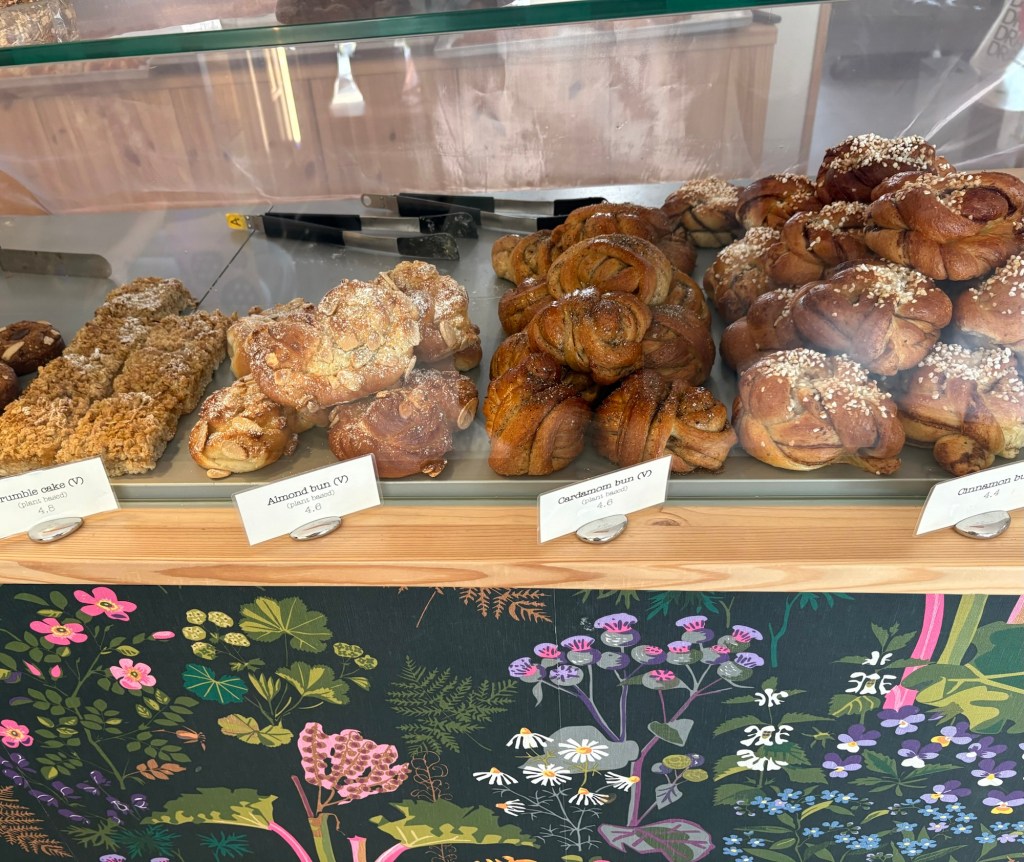
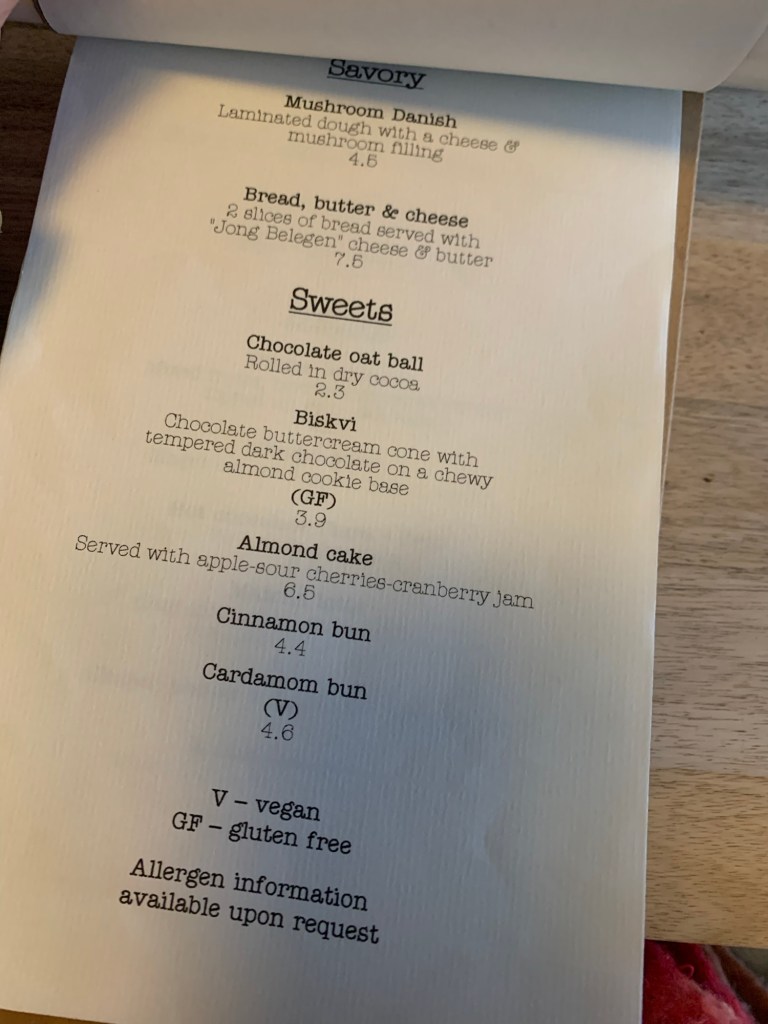
The classic cinnamon and cardamom bun were on the sweets menu as well, as the chocolate balls and an almond cake (toscakaka?)

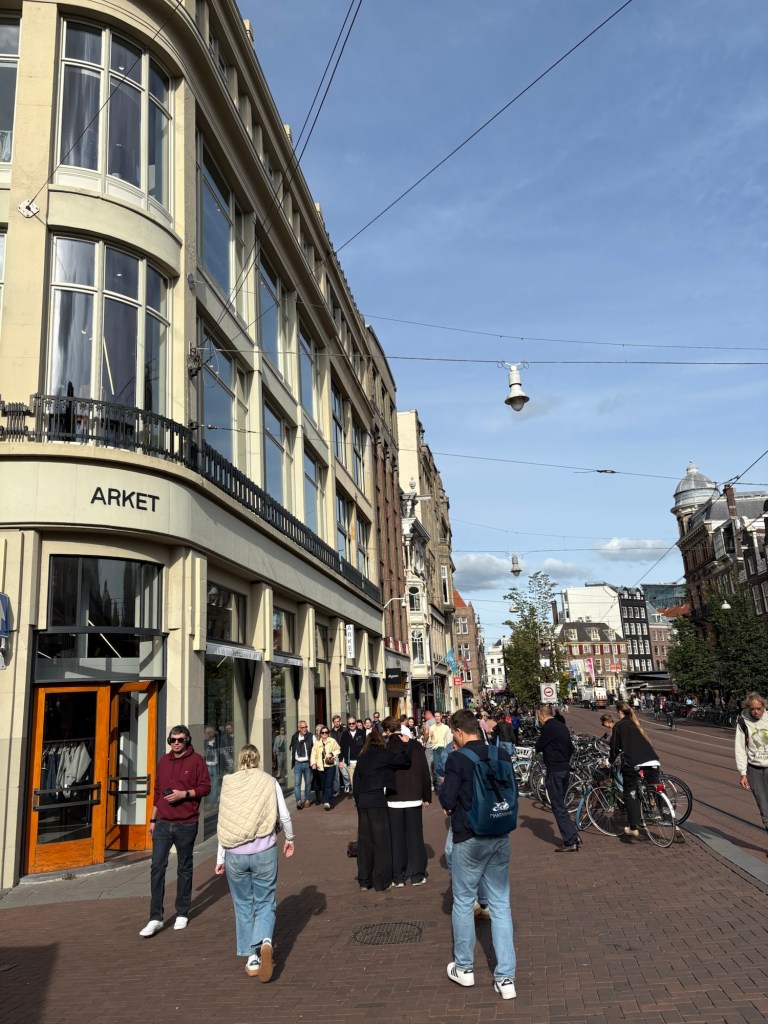
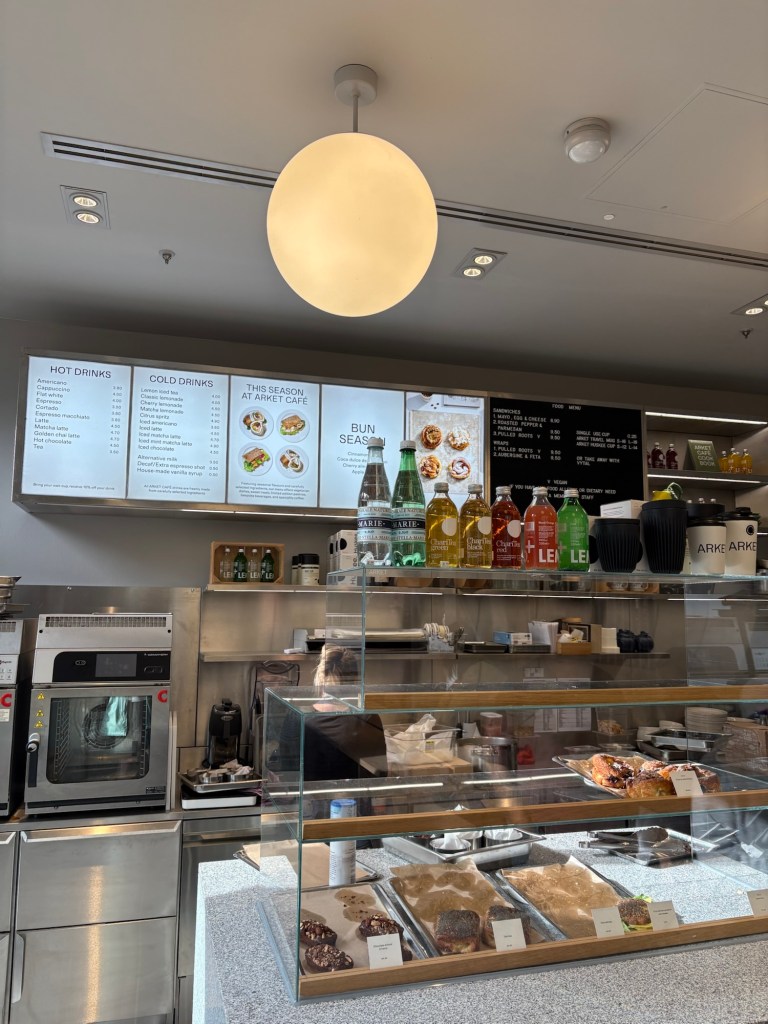
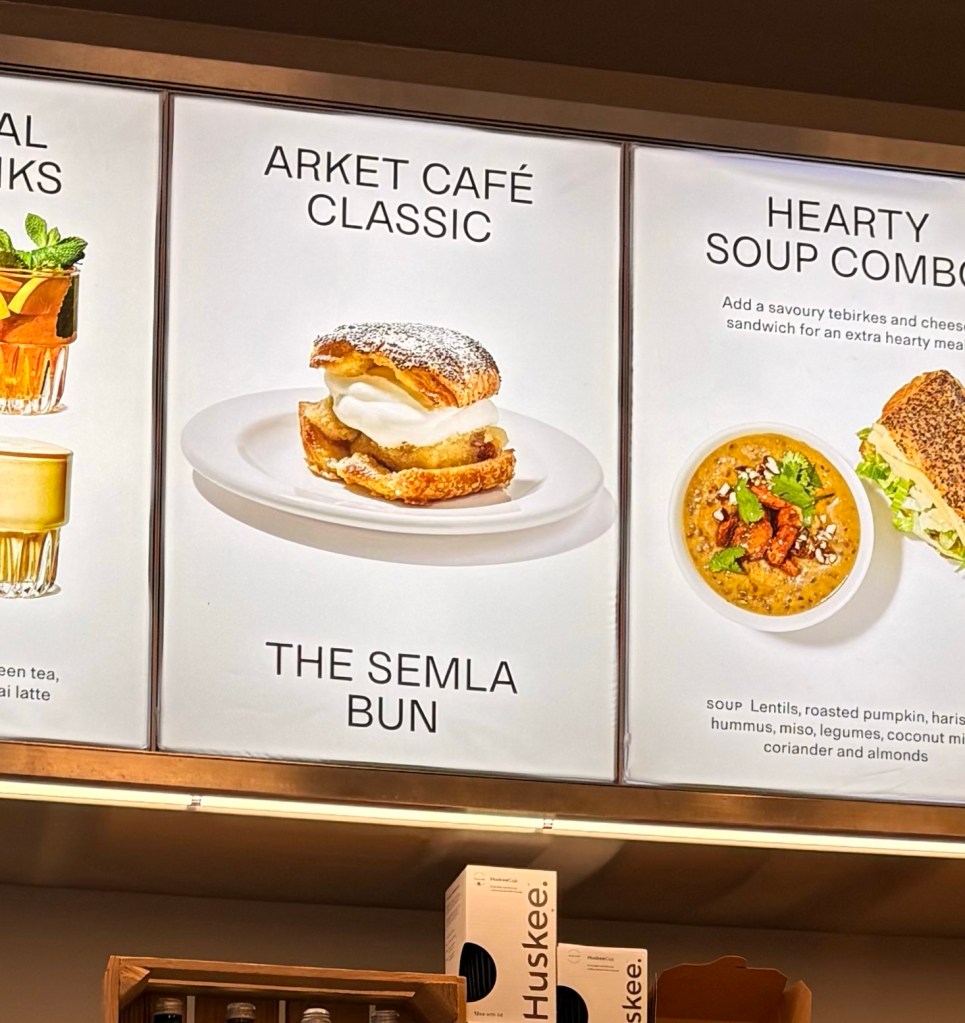
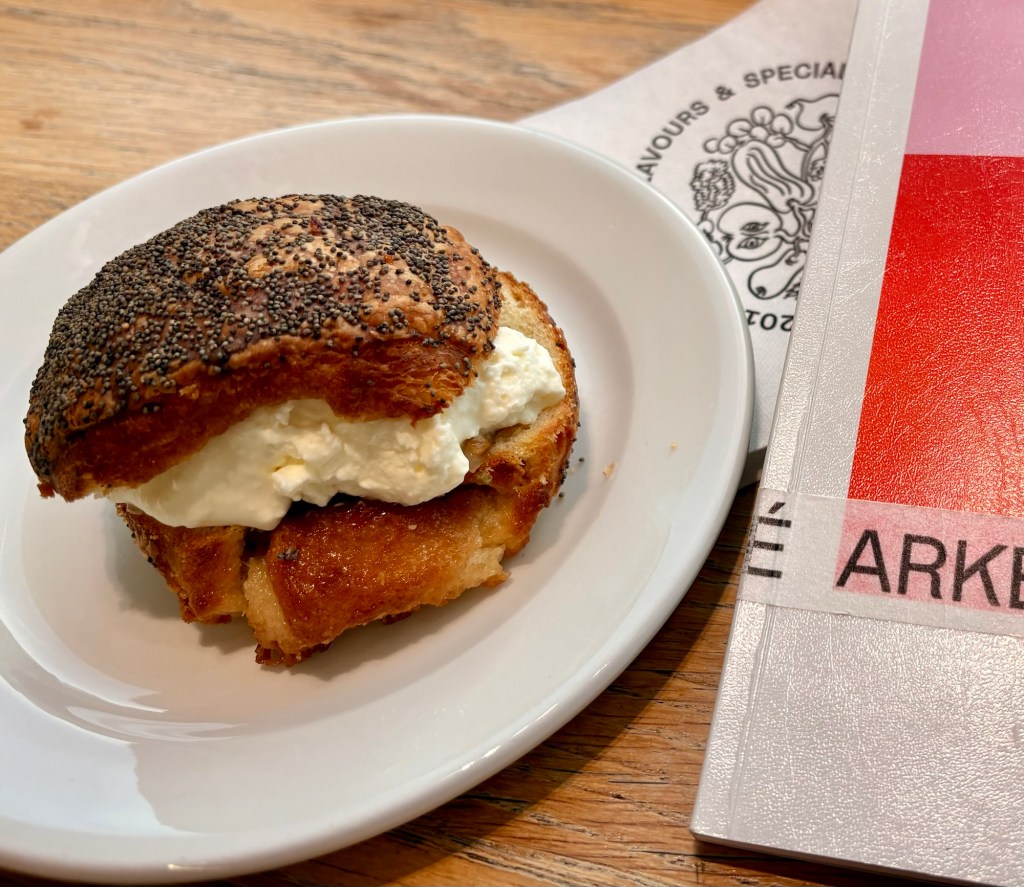
We happened to pass by Arket later, which had special buns and tebirkes

Scandinavian Embassy also serves typical seasonal Swedish treats as semlor and lussekatter! Subscribe to see more

Scandinavian Embassy bakery and cafe in Amsterdam zuid

On a trip to Amsterdam, I decided to test Scandinavian Embassy and both of its two locations, starting with the bakery in europaplein. The two locations are in Amsterdam zuid: Saphatipark and Europaplein: in the former, a more central location, you can sit but it has fewer items than the bakery in Europaplein. The bakery,…

Scandinavian carnival buns (and where to eat them in the Netherlands)

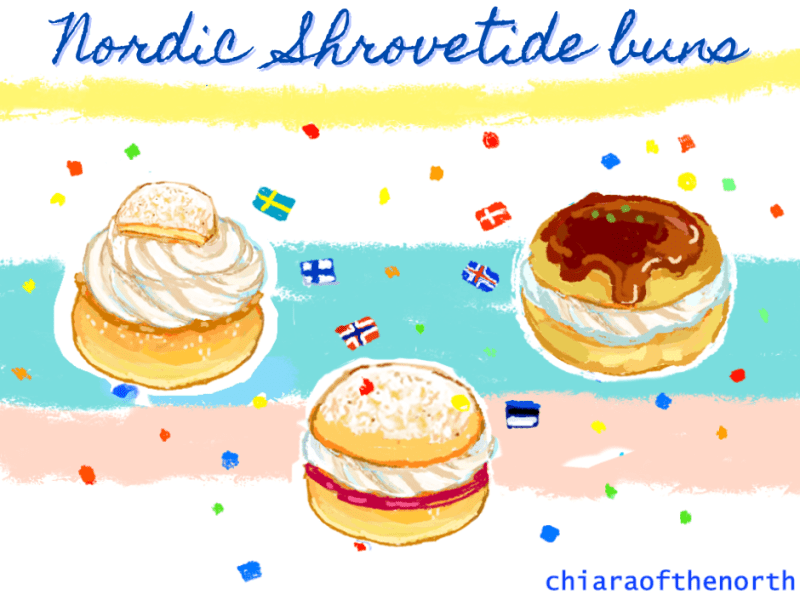
Cream buns are enjoyed in Nordic and Baltic countries during shrovetide, between January and February. Sweden’s classic semla has almond paste, while other countries variations include jam, vanilla cream, and chocolate icing top.

Whipped cream-filled buns are eaten and baked in Nordic countries during shrovetide (carnival for catholics), Fastelavn in Danish/Norwegian, Laskiainen in Finnish. This period would anticipate the lent before Easter, and culminates on Fat Tuesday – Fettisdagen in Sweden, or Shrove Sunday.

Lent was abolished with the reformation, but the buns stayed! To the point that Icelanders call the day when you eat bollur, shrove Monday, bolludagur, ‘bun day’.

National Variations of Shrovetide buns

In Sweden the semla is filled with almond paste and whipped cream. It is traditional to eat it soaked in hot milk, known as hetvägg. Swedish King Adolf Frederick died from digestion problems after eating 14 hetvägg!


in Finland, Laskiaispulla – or fastlagsbulle in Swedish-speaking Finland – instead of almond paste you find jam. Estonian Vastlakukkel is more simple, genereally only with whipped cream, but sometimes also contain jam, and Norwegian fastelavnsboller can be filled with vanilla cream, jam, chocolate and almond paste.

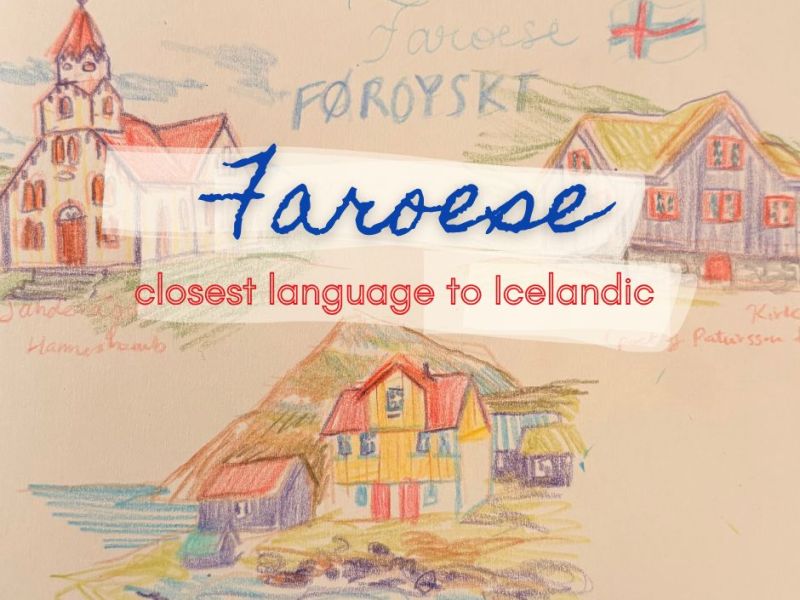
Danish fastelavnsboller, similar to bollur in Iceland and Føstulávintsbolli in the Faroe, are made from puff and choux pastry, often with chocolate icing on top and besides whipped cream filled with vanilla cream, whipped cream and jam.

Besides the traditional version named above, there are more and more variations including liquorice, pistache and so on, with curious semlor made up each year.

Mentioning Dutch culture, a Danish/Icelandic fastelavnsbolle reminds me of a Bossche Bol, although the latter are completely coated in chocolate. I believe Italian Maritozzo is very similar to a plain semla, without almond paste.

Where to try them in the Netherlands

In Amsterdam, Selma’s Nordic bakery and Scandinavian Embassy make Semlor. Selma was also serving Finnish-style laskiaispulla in 2025, with a fruit compote, and a Danish fastelavnsbolle in 2026!

I also tried Broodnodig’s classic almond paste semla in 2026, a very big one!

In Den Haag semlor are also available Norvolk (in Scheveningen)

Arket made an interesting Danish-Swedish twist, with the classic wienerbrød Tebirkes cut and filled with whipped cream and almond paste like a semla!

subscribe for more Scandinavian treats..!

sources:

5 symbols of Sami culture

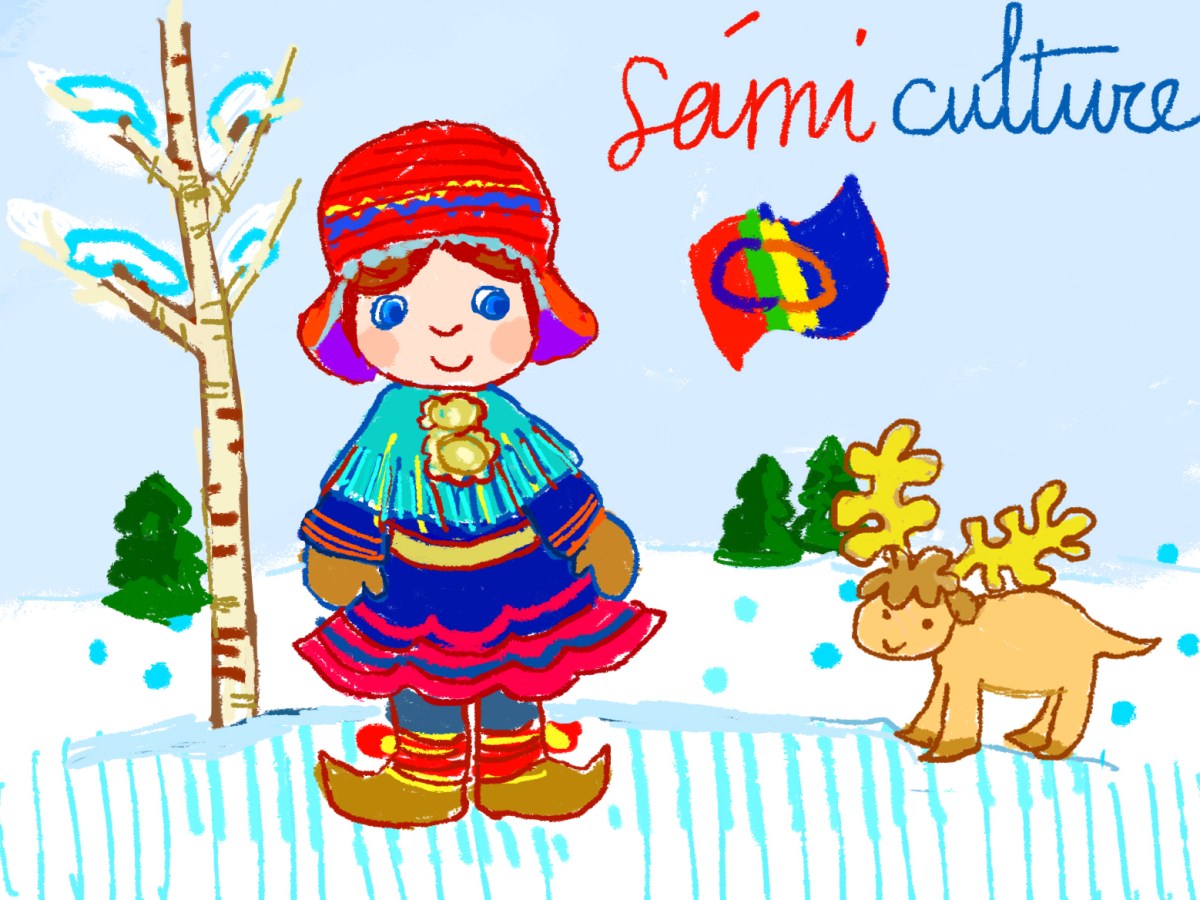
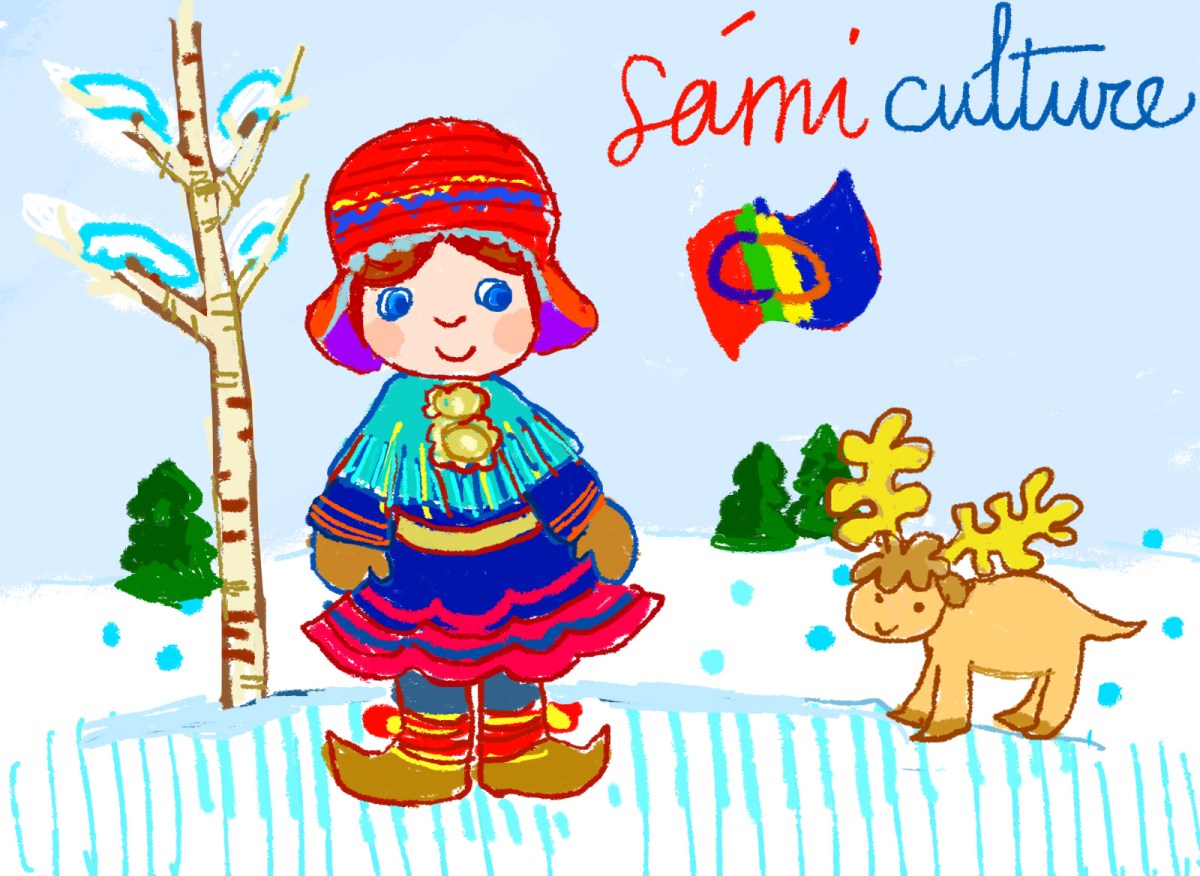
Sámi people, indigenous people of North Scandinavia, have a distinct culture, symbolised by its unique flag and traditional clothing, and part of it are Duodji handicrafts and unique musical expression through yoik.

5 symbols of Sami culture

Sámi people, indigenous people of North Scandinavia, have a distinct culture, symbolised by its unique flag and traditional clothing, and part of it are Duodji handicrafts and unique musical expression through yoik.

The Sámi are an indigenous people inhabiting Sápmi, Northern Scandinavia. The Sámi have historically been known as Lapps or Laplanders, offensive terms. There are about 100,000 Sámi people, who share a common history, culture and languages across borders.

Sami flag

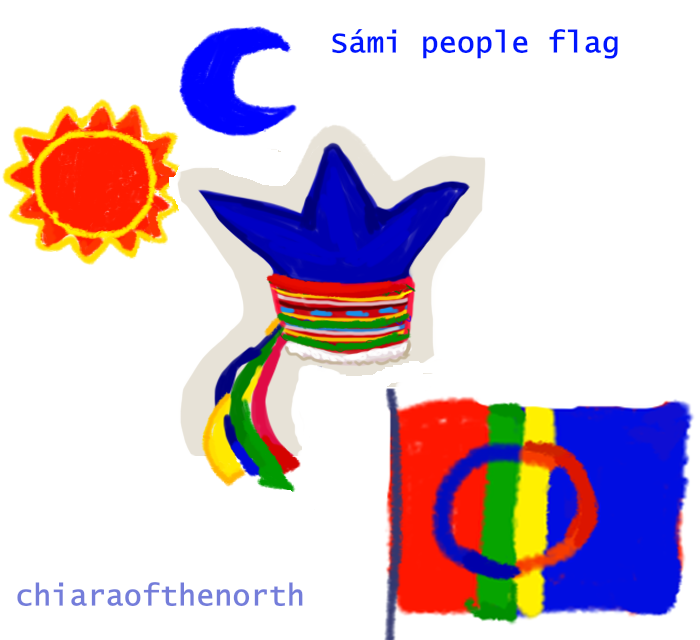
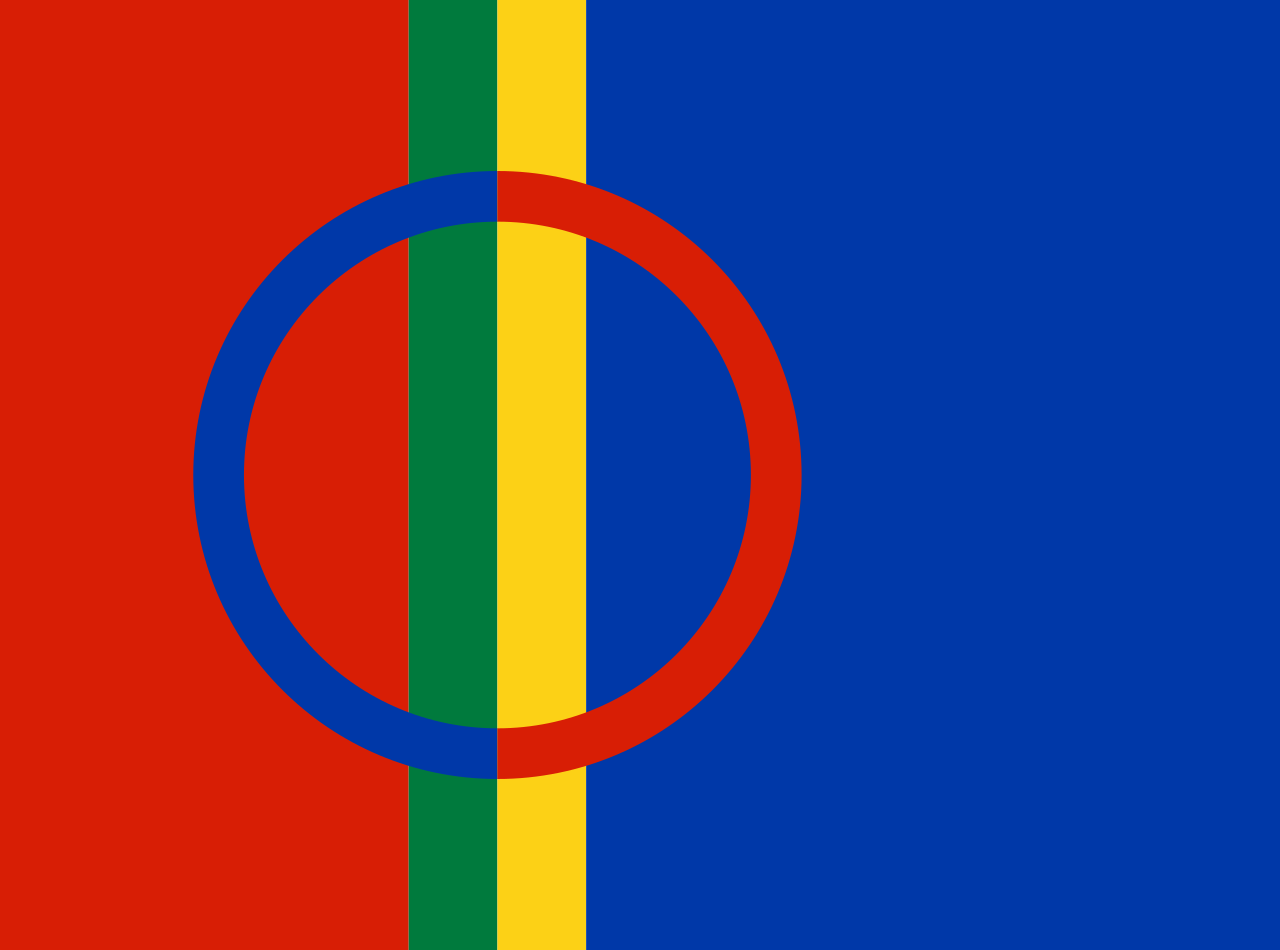
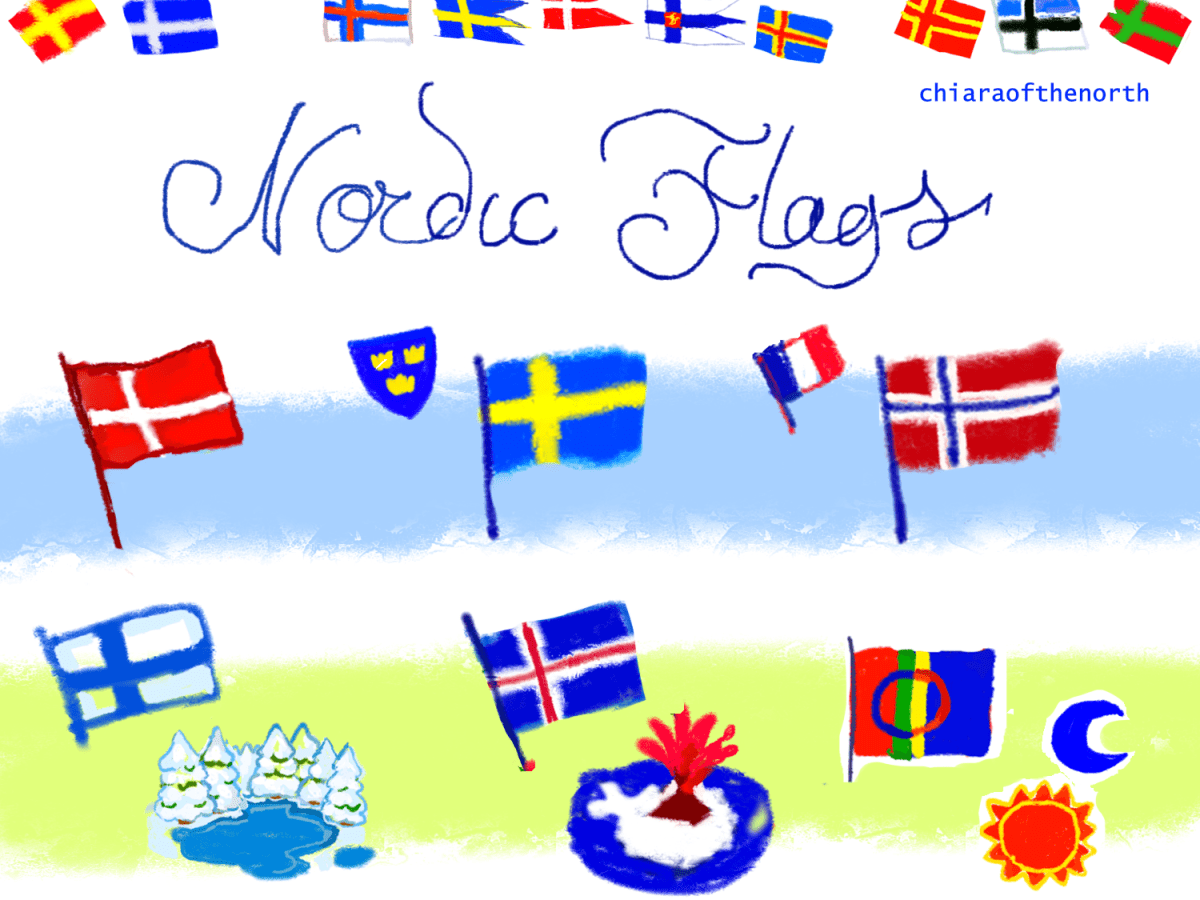
The colors found in Sami clothing inspired the Sámi flag – designed by Astrid Båhl, from Skibotn, Norway, and approved by the Nordic Sámi Council in1986. The circle is a symbol for the sun (red) and the moon (blue), emphasizing Sami people’s connection to nature.
The colors found in Sami clothing inspired the Sámi flag

Reindeers

One of the most typical traits of Sami culture is the central role of reindeers: around 10% of Sámi practice reindeer herding nowadays, which in some parts of the Nordic countries can be practiced only by Sámis.

Sami languages

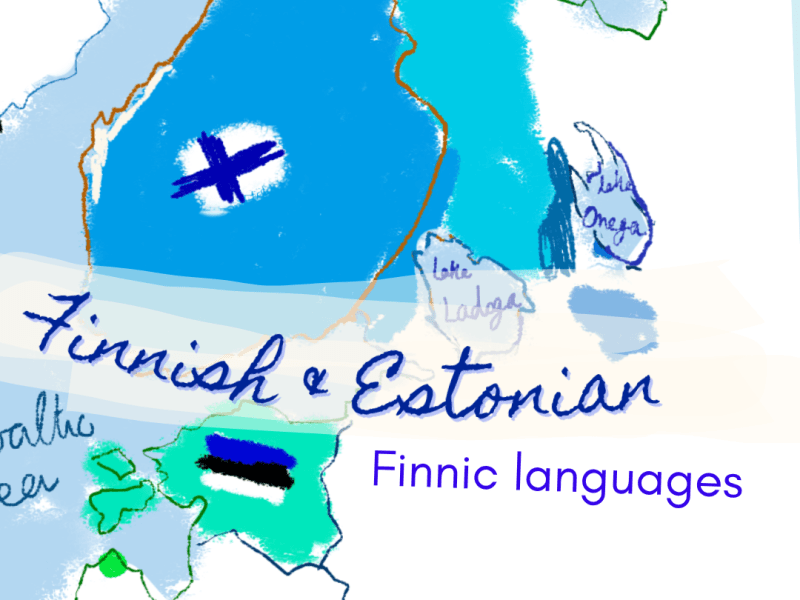
There is no single Sámi language, but a group of around 10 distinct Sámi languages which belong to the Ugro-Finnic language family (as Finnish and Estonian). Sami languages are relatively closely related, but not mutually intelligible to each other. North Sámi is the most widely used language and is spoken in all the four countries.

traditional clothing

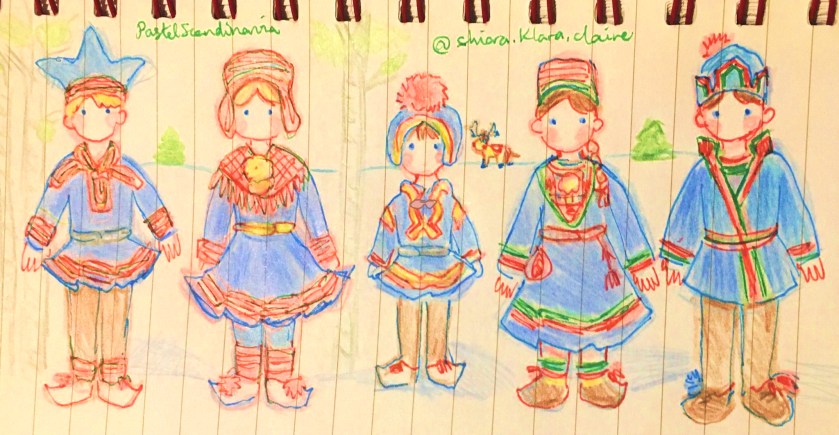
The Sami traditional clothing, gákti/gapta/gábdde in Sami languages, kofte/kolt in Norwegian and Swedish, is well dinstinguished from Norwegian bunads and Swedish national dresses. It is worn at important occasions and varies depending on the gender, family, area one is from and status.

handicrafts: duodji•

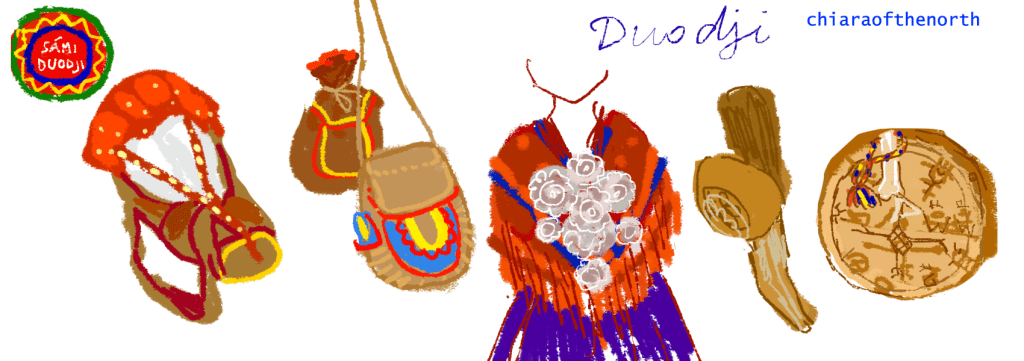
Important parts of Sami culture are Sami handicrafts, known as duodji, which include accessories, clothing, various objects – from drums to infant beds and knives. There is a Duodji certificate to prove that what you are buying is made by a Sami.

Yoik

Another unique cultural element is the Yoik (or jojk), a traditional song-chant, with different functions, and can be about each other, places and animals. it is however inappropriate to sing a yoik about oneself, as this would be a form of self-flattery. Sami national jojk is Sámi eatnan duoddariid by Nils-Aslak Valkeapää, who modernised the yoik tradition. A famous example of yoik is Daniels jojk by Jon Henrik, a yoik tied to his late friend, which was sung at tv-show Sweden’s got talent.

Who are Greenlanders? 3 symbols of Greenlandic culture

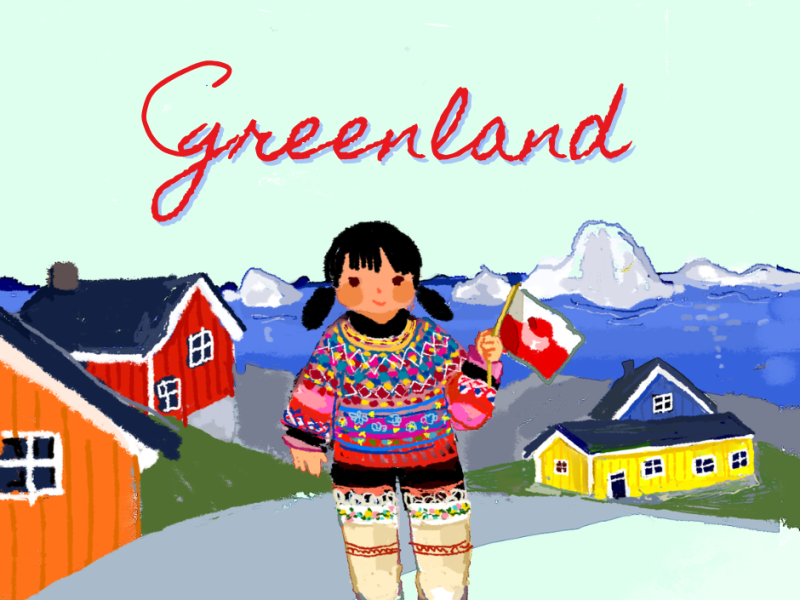
Discover Greenland, home to the Inuit Kalaallit, and its most iconic aspects as its flag, language and folk costumes. The biggest island of the world has a rich history of indigenous culture intertwined with Norse colonization and later Danish rule.

7 fun facts about Lucia, Sweden’s pagan saint

Lucia brings light in the darkest night of the year and is a mix of pagan and christian traditions. It is celebrated in Scandinavia with processions, saffron buns and church concerts.
Who are Greenlanders? 3 symbols of Greenlandic culture

Discover Greenland, home to the Inuit Kalaallit, and its most iconic aspects as its flag, language and folk costumes. The biggest island of the world has a rich history of indigenous culture intertwined with Norse colonization and later Danish rule.

Many have heard of Greenland lately because of what is going on in the world. Here is an introduction to its culture and history, with iconic aspects from this Arctic nation.

Greenland – Kalaallit Nunaat – an Inuit nation between the Vikings and Colonisation

Most of Greenland’s population – the Kalaallit – are Inuits, the indigenous peoples of the Arctic, from North America to Siberia. Although the current Greenlanders’ ancestors, the Thule people, migrated from Alaska around 1000 years ago, Inuits were already present in Greenland in 2500 BC.

Greenland also had Norse inhabitants for a while – Its norse name Grønland, ‘green land’ was given by Erik den Røde, arriving around 1000 a.D after being exiled from Iceland. Norsemen left around 1400, probably due to the worsened climate conditions of the little ice age. A sign of the Norse settlement are the ruins of the Hvalsey church.

The Scandinavians returned with the Danish colonization from the 1700s, beginning with an expedition to find remaining Norse inhabitants. This time led to suppression and attempts to westernize its people, and despite this, Greenland now proudly preserves its Inuit culture, with its language, traditional clothing, and in its flag.

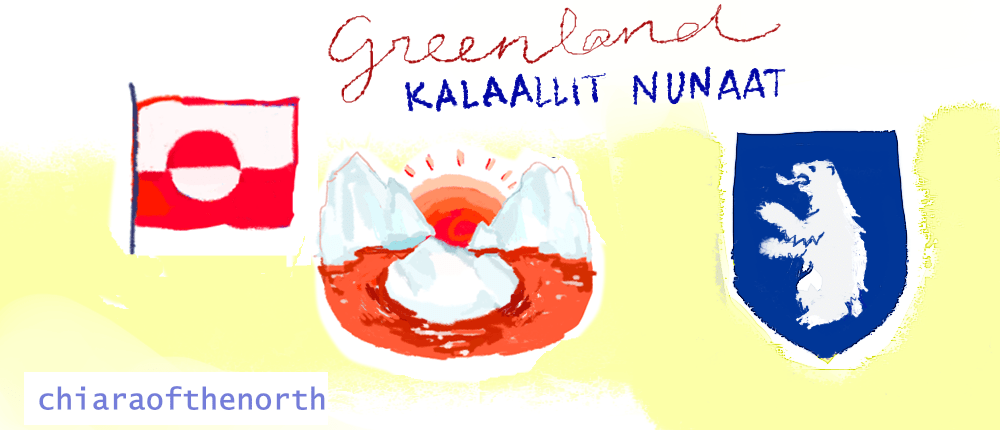
Flag and coat of arms of Greenland

The Greenlandic flag is called Erfalasorput (‘our flag’) and was introduced in 1985, flying for the first time on Greenland’s national day, Summer Solstice.

It symbolizes the sun rising in the arctic Greenlandic landscape, on a light midsummer sky. The red-white colors reference the Danish flag.

It was designed by the Greenlandic artist Thue Christiansen (1940-2022), and was voted as the winner among many other concepts, in particular against a Nordic cross.

Greenlandic Language

the Greenlandic Inuit language, Kalaallisut, is spoken by around 50.000 people – the majority of Greenland’s population – While Danish is taught and spoken as a second language. Greenlandic belongs to the Eskimo-Aleut languages, spoken by indigenous peoples of the arctic area. Loanwords from Greenlandic present in all languages are kayak and anorak.

A distinctive feature is that a single word can express what in English and most European languages would be an entire sentence: Silagissiartuaarusaarnialerunarpoq means “The weather will slowly and gradually become good again”…

Greenlandic incorporated many loanwords from the Danish language (and western culture): biili (bil – car), iipili (æble – apple), juulli (jul – Christmas), as well as greeting as“kumoorn” (god morgen – good morning).

A more detailed post about the Greenlandic language will follow!

Greenlandic national costume

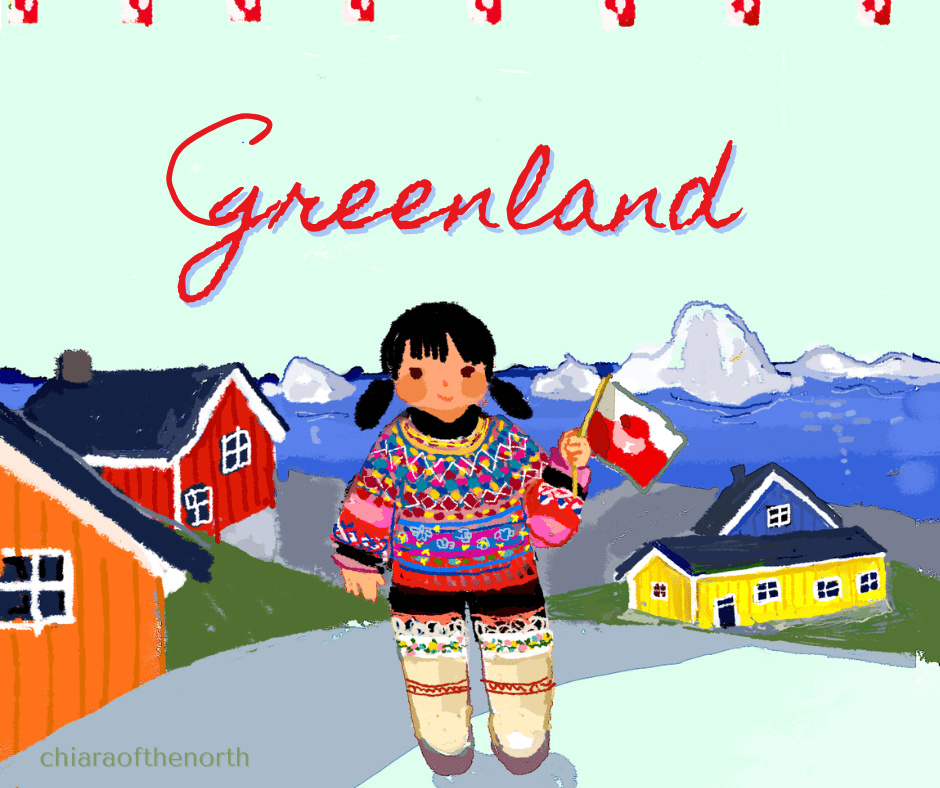
The Greenlandic national costume – probably the only women’s folk costume in the world with pants instead of a dress or skirt! – is worn on special occasions and is a symbol of Greenlandic identity.

Besides festive days as Christmas/Easter, Weddings, confirmations and Birthdays (on a child’s first birthday in particular), the national costume is worn on Greenland’s National Day (21st June, summer Solstice), and typically by children on their First day of school.

The national costume features a top, pants, and kamik boots. Anorak is the name of the top’s outer! Much is made with sealskin, which was the only material used for clothing until fabric were introduced by Europeans in the 17th Century.

Follow for more info about the culture and language of Greenland!

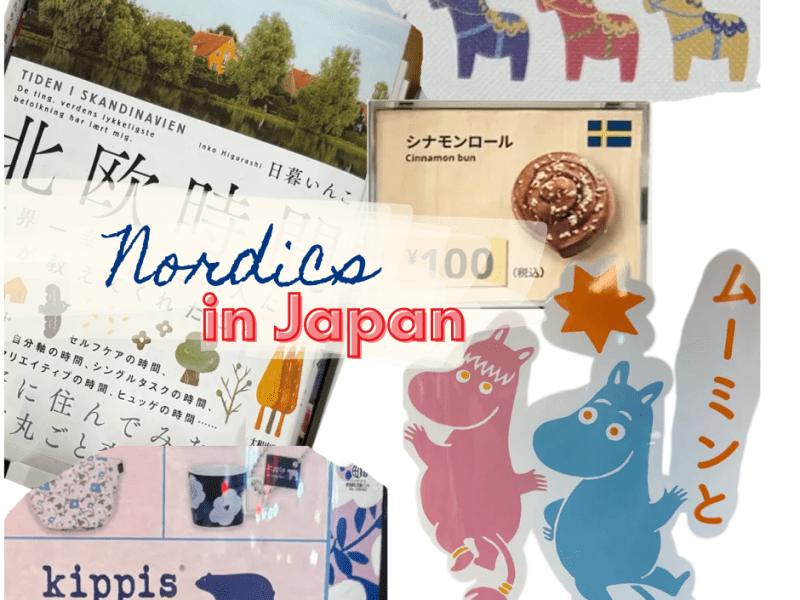
Nordic findings in japan

Nordic culture experienced in Japan: Moomins, Dala horse stationery, Nordic-inspired foods and books about Scandinavia seen by the Japanese.

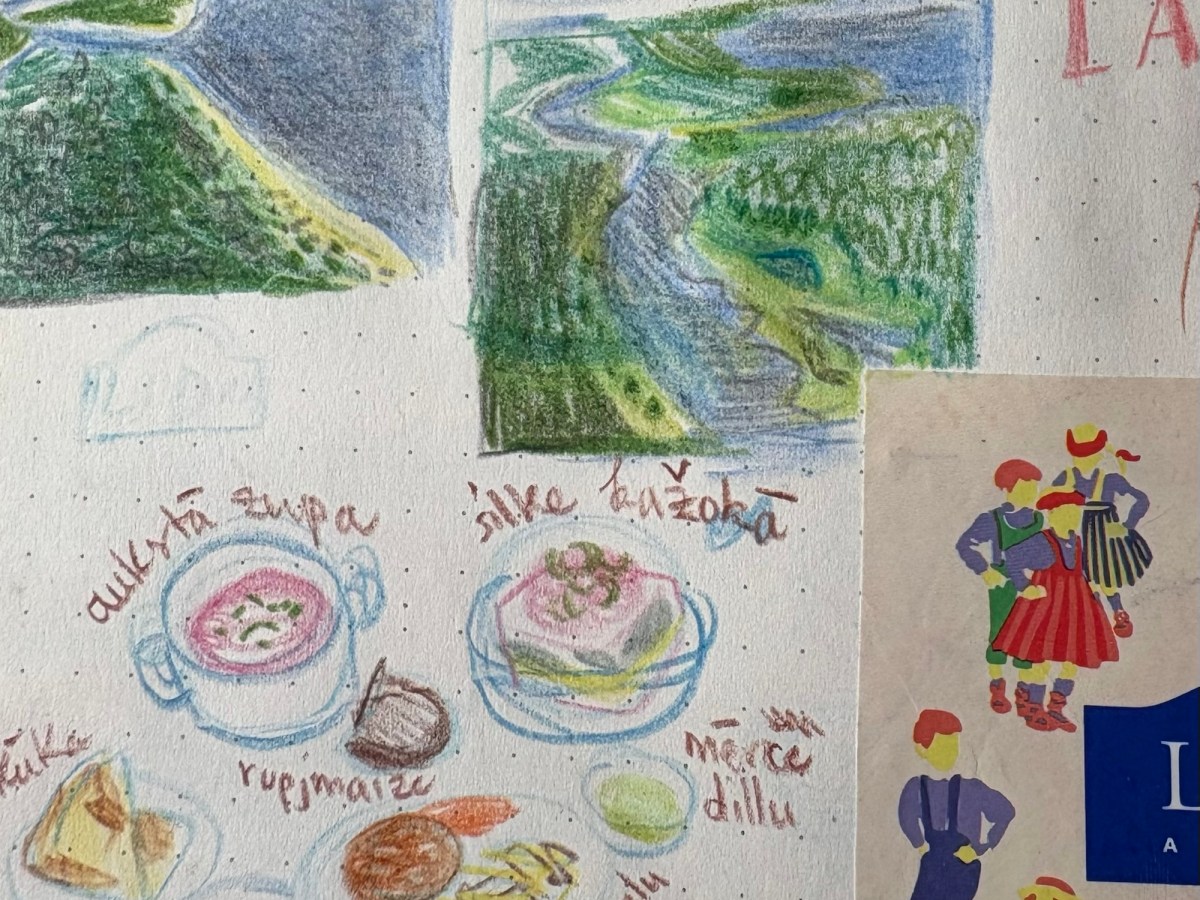
How Nordic are Baltic countries

Are Baltic countries Nordic at all? I explored Latvia and Estonia, noting their ties to Nordic culture, from languages to Rye bread and Midsummer.

sources:

  • guidetogreenland.com
  • lex.dk
  • Preciosa-Ornela.com
  • Nunatta Katersugaasivia Allagaateqarfialu – Greenland National Museum & Archives
  • omniglot
  • wiktionary

7 fun facts about Lucia, Sweden’s pagan saint

Lucia brings light in the darkest night of the year and is a mix of pagan and christian traditions. It is celebrated in Scandinavia with processions, saffron buns and church concerts.

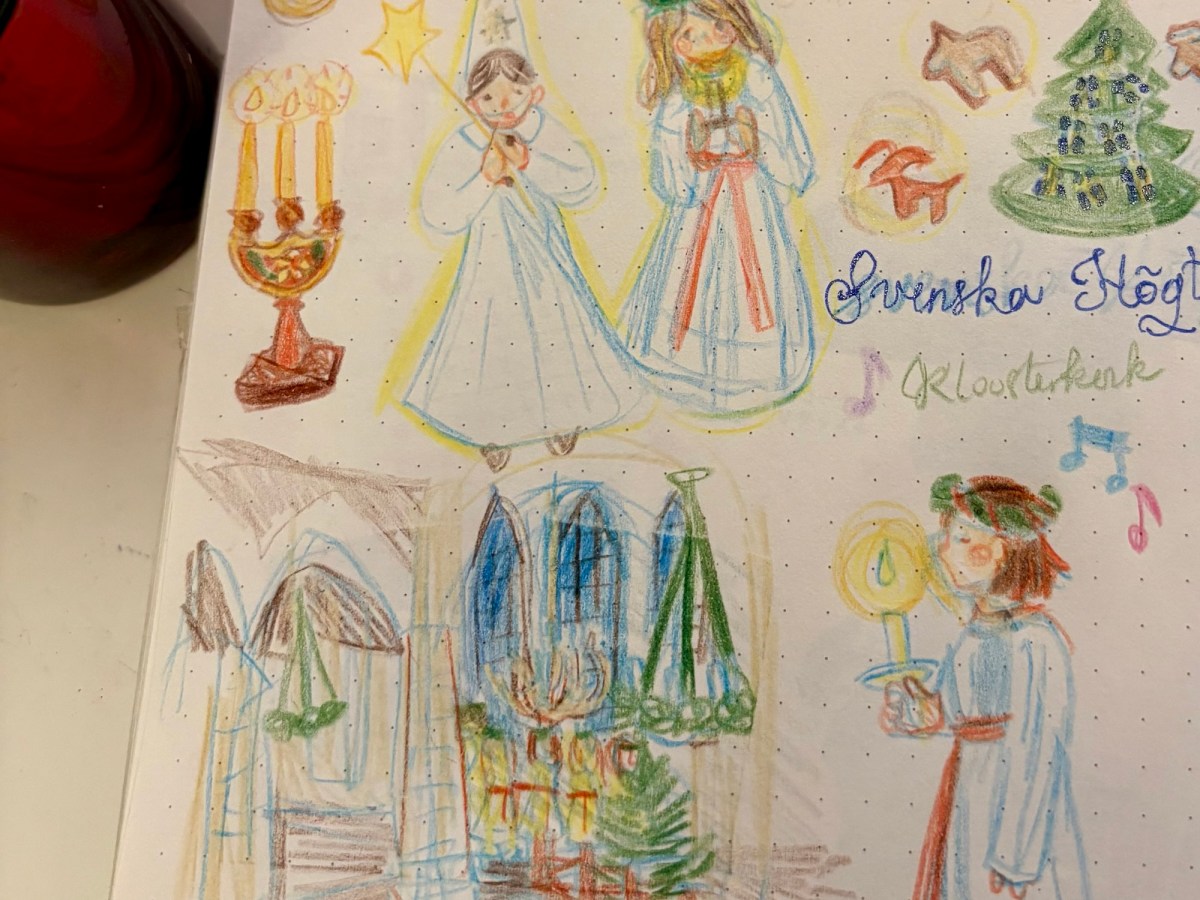
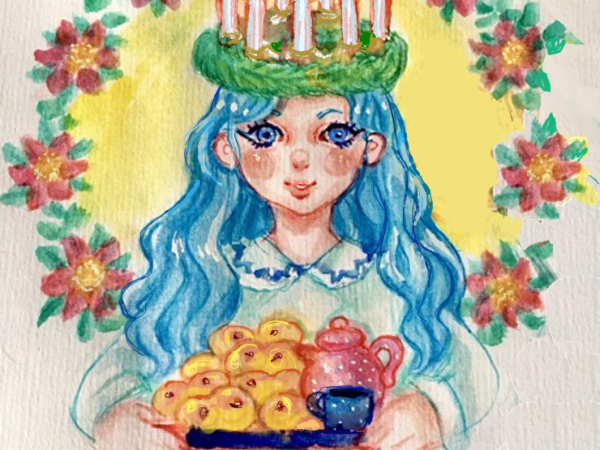
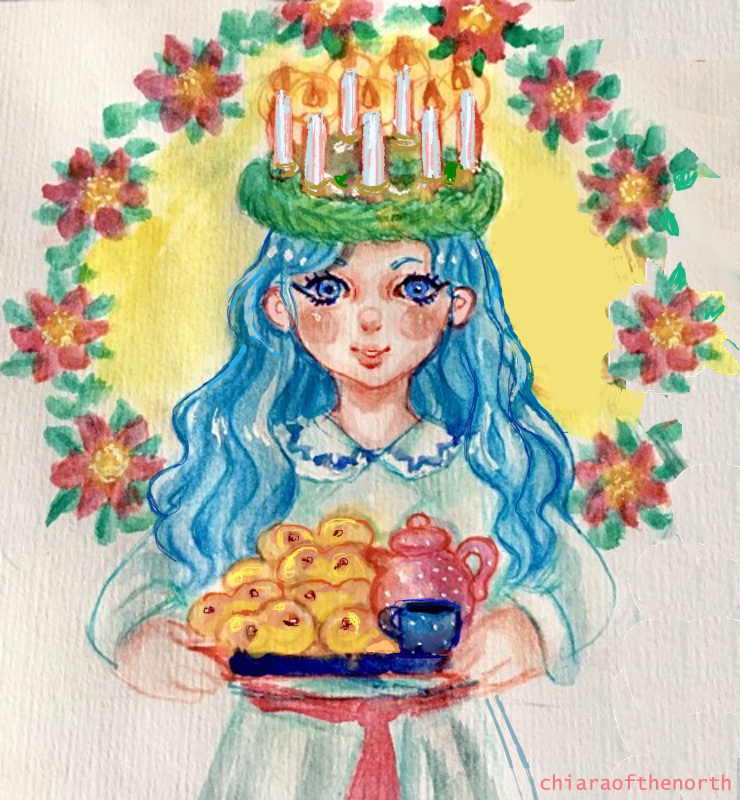
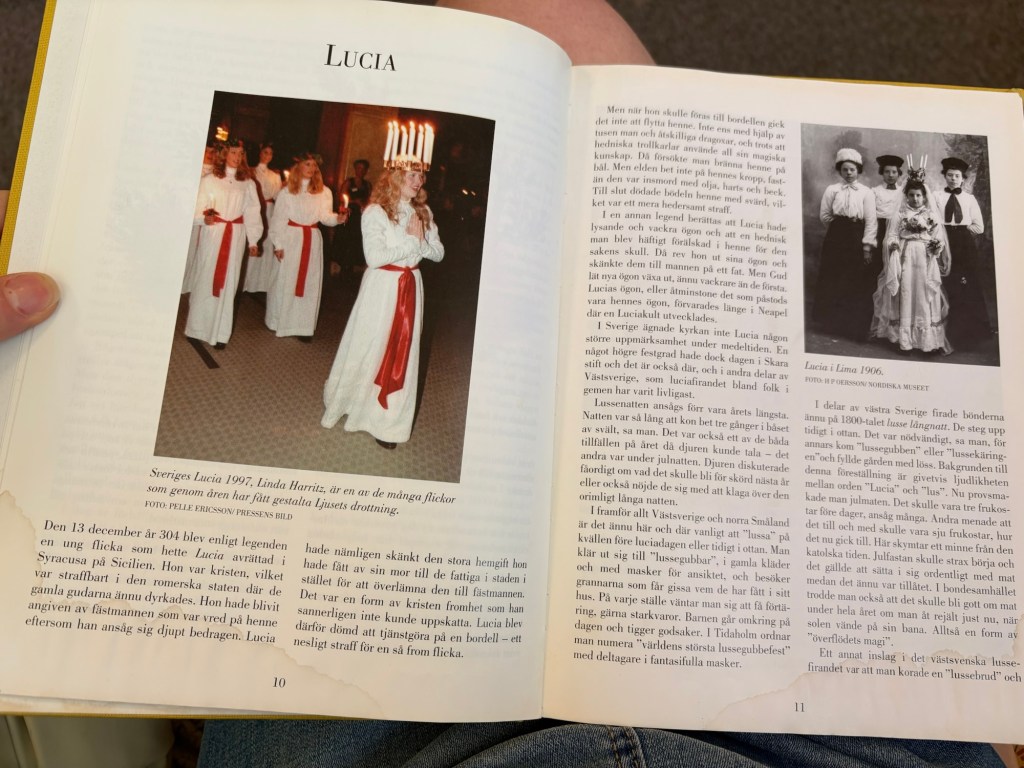
Luciadagen is celebrated in Scandinavia, especially in Sweden, on 13th December, marking the start of Nordic Christmas, Jul, season. Sankta Lucia is typically depitcted with a wreath of candles.

1. Lucia was a dangerous night…– the pagan origin

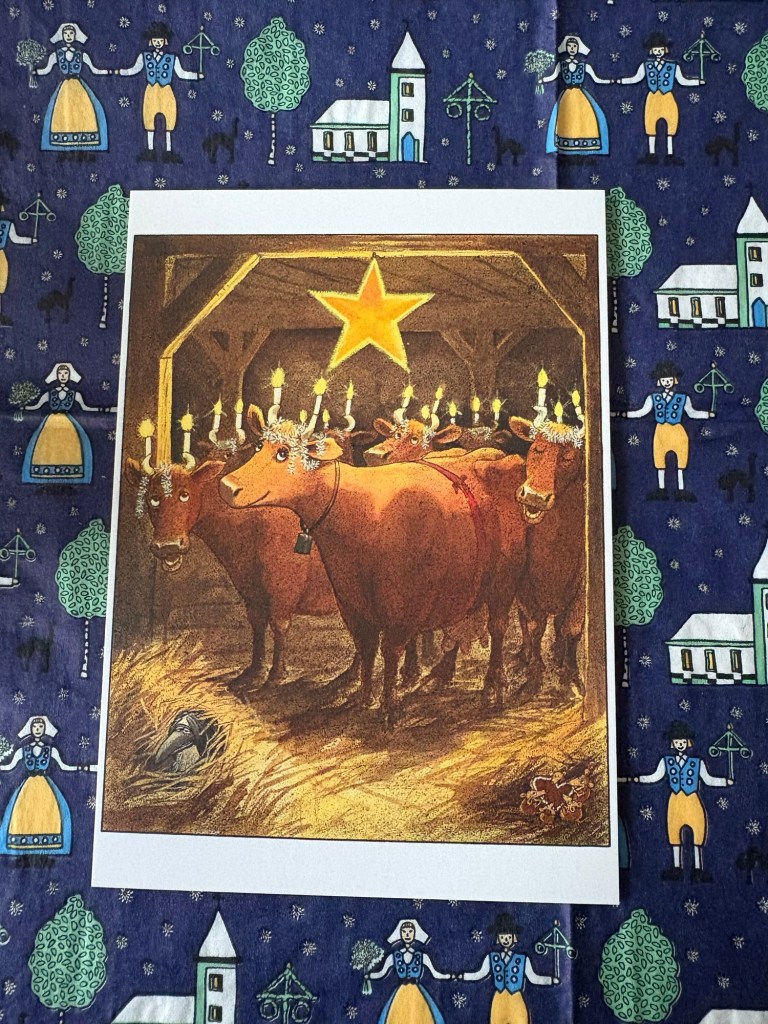
Lussinatta was observed between Norway and Sweden. On that magic night, Lussi, a dark, female creature, would come with witches and trolls, punishing those who misbehaved or did not observe Yule preparations -also by going down the chimney (reminds me of somebody…) and blowing up the house… To protect oneself, it was necessary to stay indoors and respect the tradition of Lussevaka, staying awake and watching out on the longest night of the year. Candles would also help protect.

2. The real Lucia was Sicilian – the christian origin

Saint Lucy was a Syracusan martyr of the 4th century AD. Some say she brought food to Christians hidden in the Roman catacombs, with candles on her head to have her hands free. A figure who brings light in the darkness, much needed in the Northern winter, replaced the dark creatures of Lussinatta!

3. Lucia’s modern look came from Germany

The current celebration of Lucia is derived from the German tradition of Kindchen Jesus or Christkind (child Jesus).

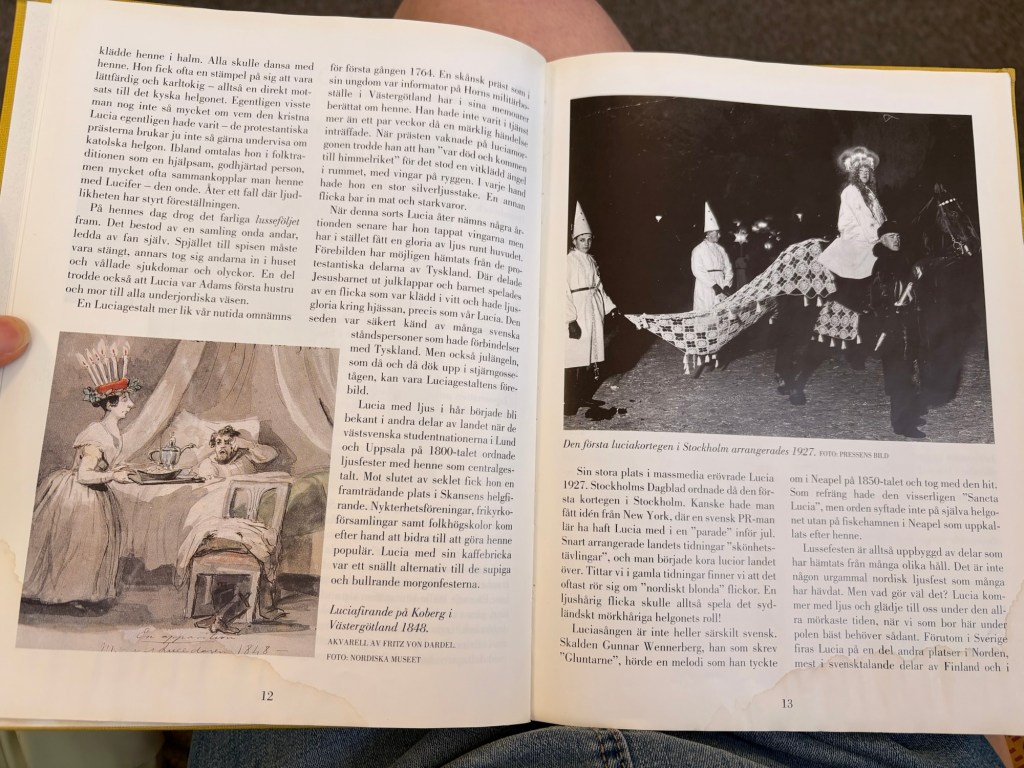
The Christkind was represented by a girl dressed in white, wearing a crown and lights, who handed out gifts to children. The tradition was brought to Sweden in the 1700s, where the name became Kinken Jes and spread from southwestern Sweden. It became common among wealthy families that a girl dressed as Lucia would serve breakfast in the 1800s.

4. A Lucia is elected each year

The girls representing local Lucias in processions are elected each year, as is one national Lucia for whole Sweden. The first public procession in Sweden took place in 1927, when a newspaper in Stockholm elected an official Lucia of that year for Stockholm. There used to be Lucia contests, but nowadays it is more about children processions, with schools which often let chance decide who’s to be Lucia, for example by organising a draw.

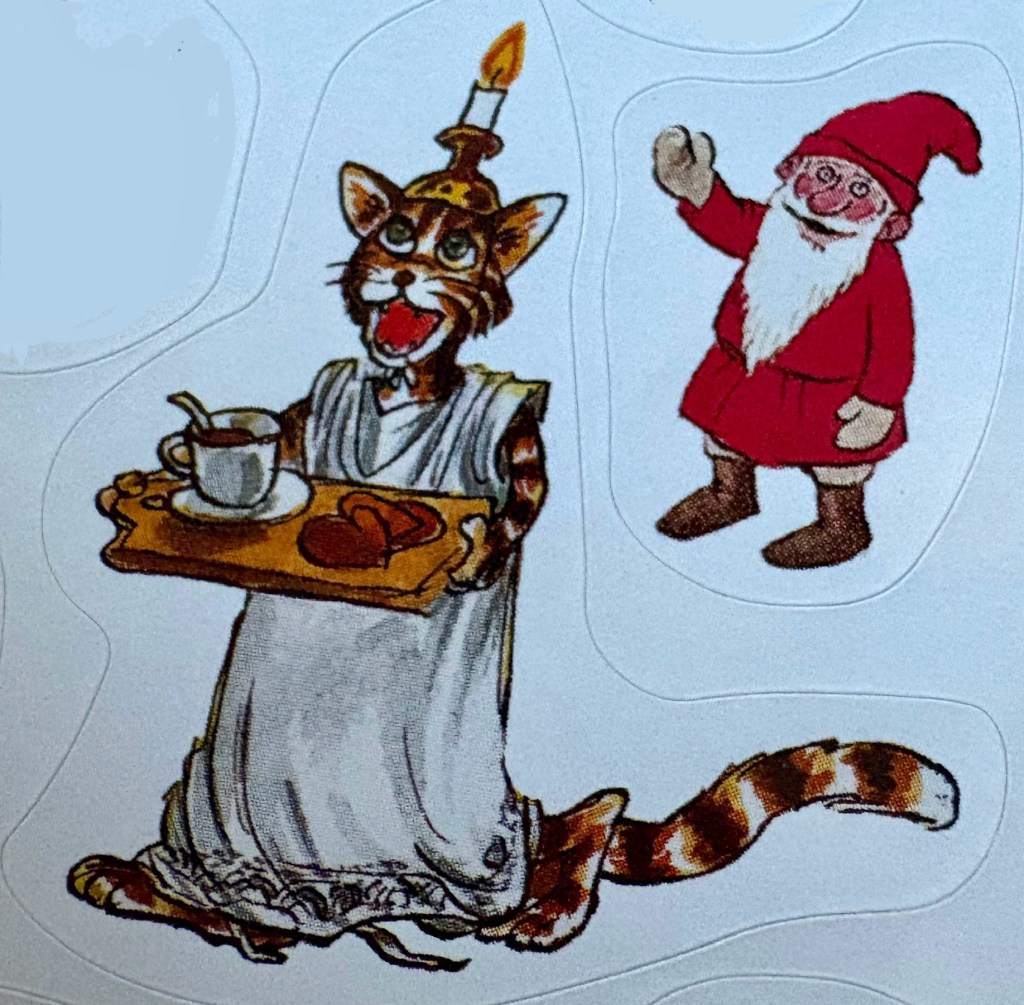
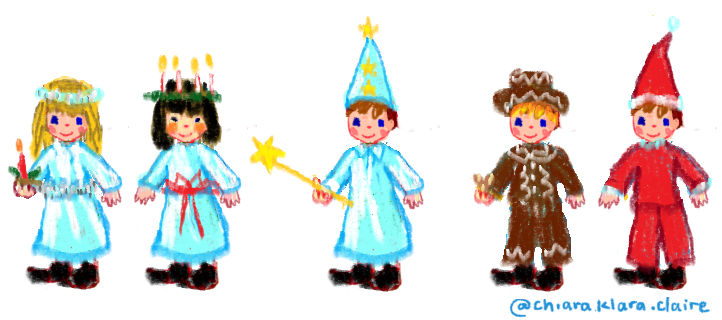
5. Lucia’s male counterparts are Star boys, gingerbread men and christmas elves

The processions include the Lucia at the head, giving out sweets, accompanied by other angel girls and boys dressed as stjärngossar “star boys”, in white, wearing a cone hat with golden stars and holding a star stick. They are linked to stjärngossespel, a tradition from middle ages consisting in ‘star’ children going door to door singing songs, representing the Three Kings.
Other children are pepparkaksgubbar (gingerbread men) and tomtenissar (Christmas elves). Lucia songs as are sung, as Natten går tunga fjät “the night comes heavily”. It is actually based off a song by a Neapolitan composer.

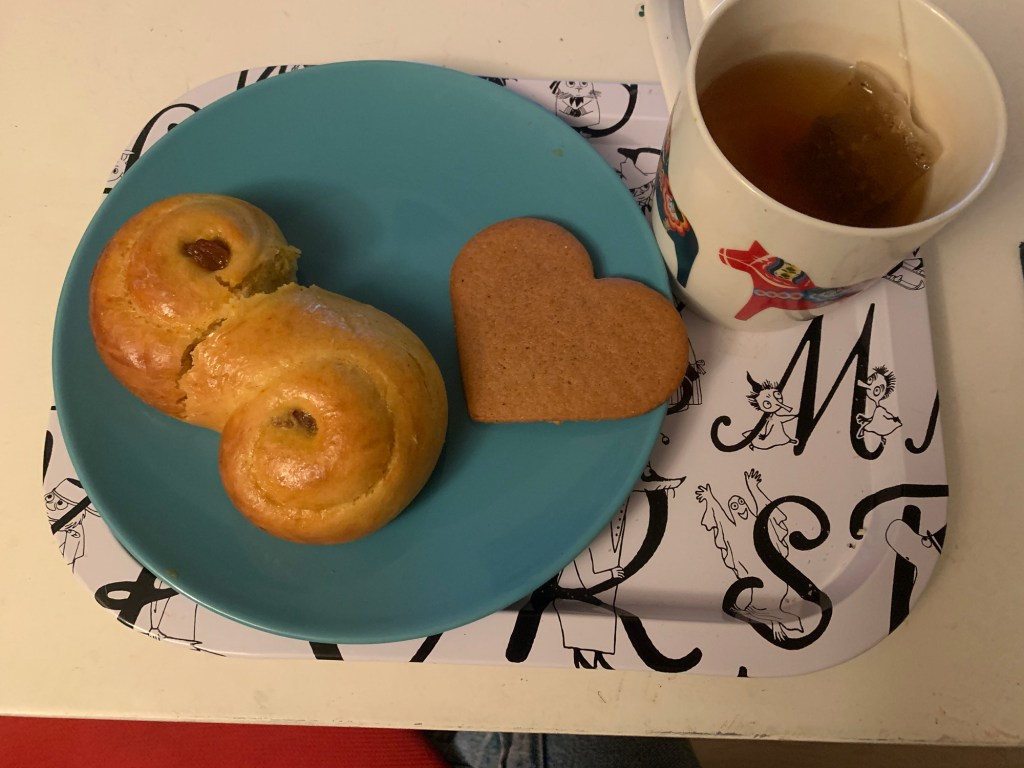
6. Lucia’s treats: Saffron buns

Around Advent time Sweden is full of Saffron buns, especially the classic Lussekatter, shaped like an S with raisins, which would be shaped as curled-up cats with some fantasy.

Other Advent-time treats as pepparkakor (spiced cookies) and glögg (mulled whine) are also commonly linked to Lucia traditions.

7. Lucia is celebrated in the rest of Scandinavia…and Italy

The Swedish-speaking population of Finland celebrates Luciasfester. Finland elects its Lucia since 1949, when she was elected and crowned in the cathedral of Helsinki, but the very first Finnish Lucia might have been elected in a school in Åbo/Turku in 1898.
In Denmark and Norway, Lucia started being celebrated during and after WW2, and it is mostly celebrated in schools and kindergartens. In 1944, the tradition was brought to Denmark with the first procession in Copenhagen, as a way to strengthen common Nordic traditions in the dark times of German occupation.

Some parts of Italy also celebrate Lucia! That is mostly around Bergamo, North Italy, where Lucia comes on a donkey and brings presents in the night, and children leave some treats as cookies for her. The 13th is also a special day in schools! It is also celebrated in Sicily, where it is more christianity-centered.

Sources:

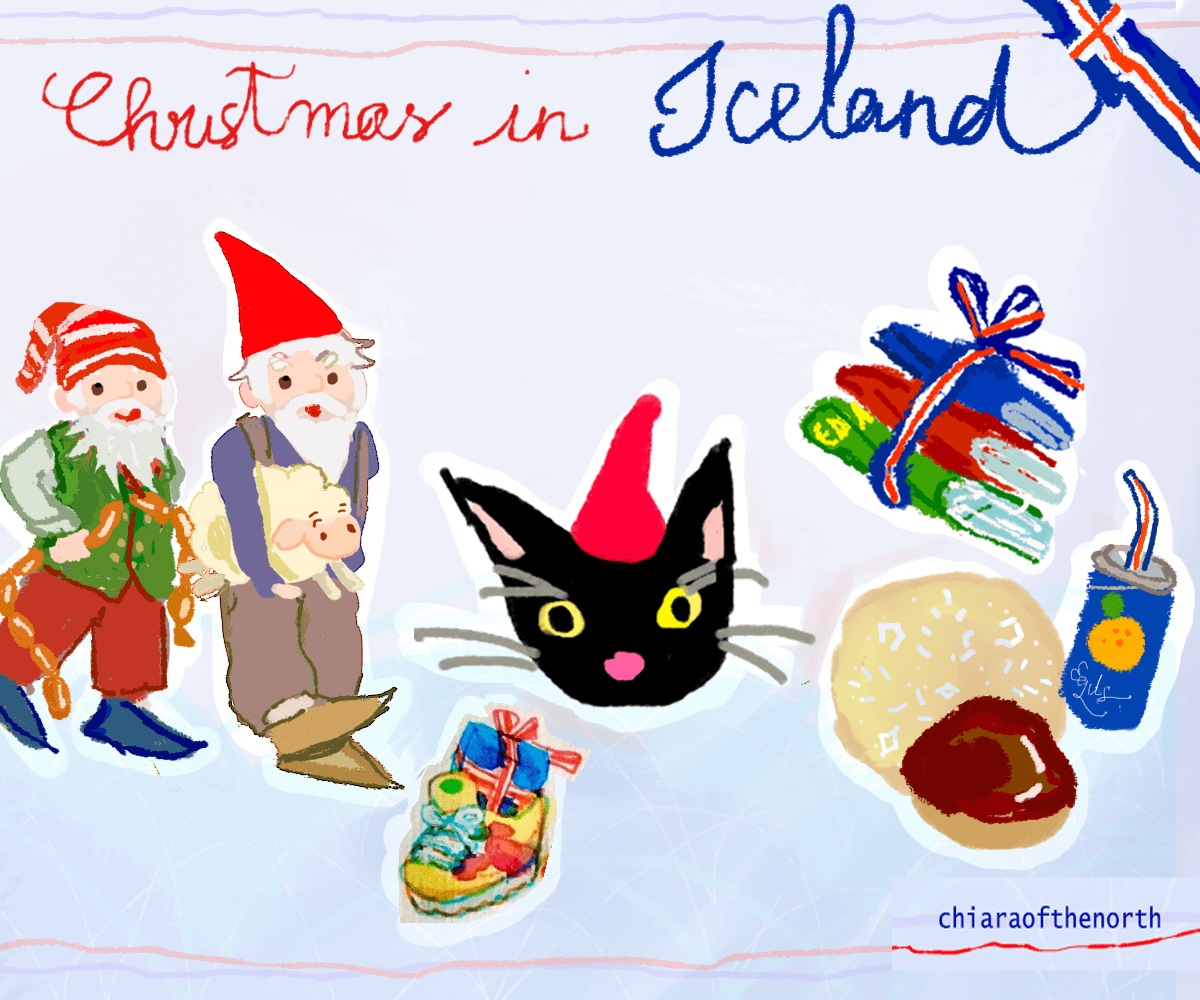
5 peculiar symbols of Christmas in Iceland

Iceland’s Christmas, Jól, involves 13 mischievous elves, a black cat, orange-beer, and a lot of books.

After Norwegian, Danish, and Finnish Christmas fun facts, this time is Iceland’s turn! As Iceland is fairly isolated from mainland Europe, Icelandic christmas, Jól, is characterized by a few more or less curious things, especially who brings gifts…

13 naughty elves

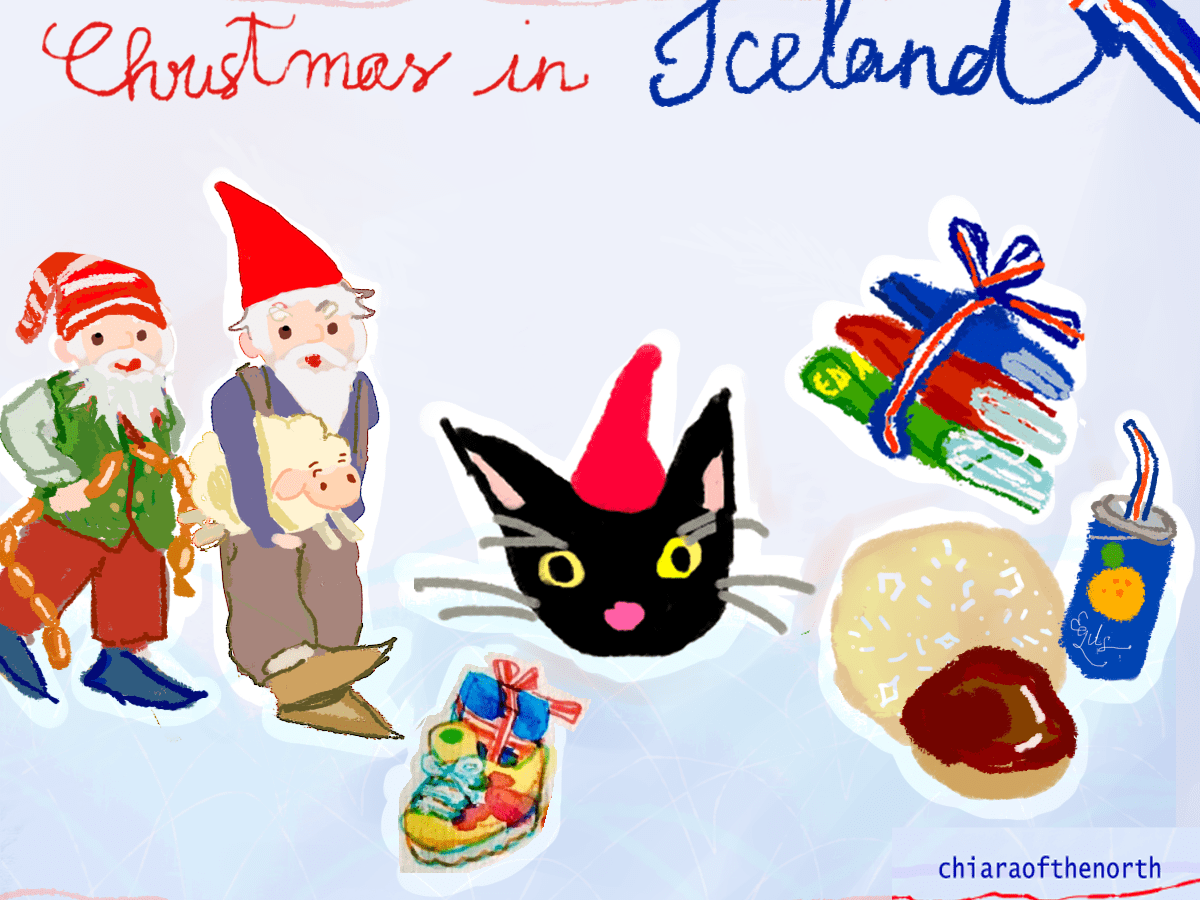
In Iceland the Christmas gift bringer is not one, but 13 elves, Jólasveinarnir -‘Yule lads’, who start coming 13 days before Christmas, one each day. Icelandic kids leave their shoes on the window sill every evening, so that the yule lads can leave a present inside them. According to the tradition they come from the mountains to annoy the population, each of them has a different name, related to what they do: Hurðaskellir “door slammer”, Skyrgámur “skyr gobbler”, Bjúgnakrækir “sausage stealer”, Stekkjarstaur “sheep harasser“ among others.

A black cat that will eat you *if you have old clothes

In Iceland you also have the Christmas Cat, Jólakötturinn, who eats people who have not received new clothes. During Christmas time you can admire a big sculpture of the cat in Reykjavik.

Books, books, books

Iceland has the highest number of books published (and probably read) per capita, and nearly everyone gives and receives books as Christmas presents. Around 80% of book sales happen during the so-called Jólabókaflóð “Christmas book flood”, in the two months before Christmas. Candles and playing cards are other traditional gifts.

Bread with patterns

An Icelandic Christmas tradition is making a thin and round fried bread laufabrauð “leaf bread”, with patterns cut into it. It kind of end up looking like bread snowflakes! Laufabrauð is often paired with hangikjöt, Icelandic smoked lamb.

Orange soda-beer mix

As it is during Jul period in other Nordic countries, Icelanders have their own Christmas beer. In Iceland, it is orange flavored! Jólaöl is a mix of malt extract and orange soda, from the orange soda brand Egils.

Cookies named after a French actress

Sarah Bernhardt cookies are a common Christmas treat in Iceland, typically home baked. Commonly called Sörur – Icelandic plural of Sara – they are chocolate dipped cookies, invented in Denmark in 1911 in honour of French actress Sarah Bernhardt.

sources -Guidetoiceland.is

Subscribe for more fun facts!

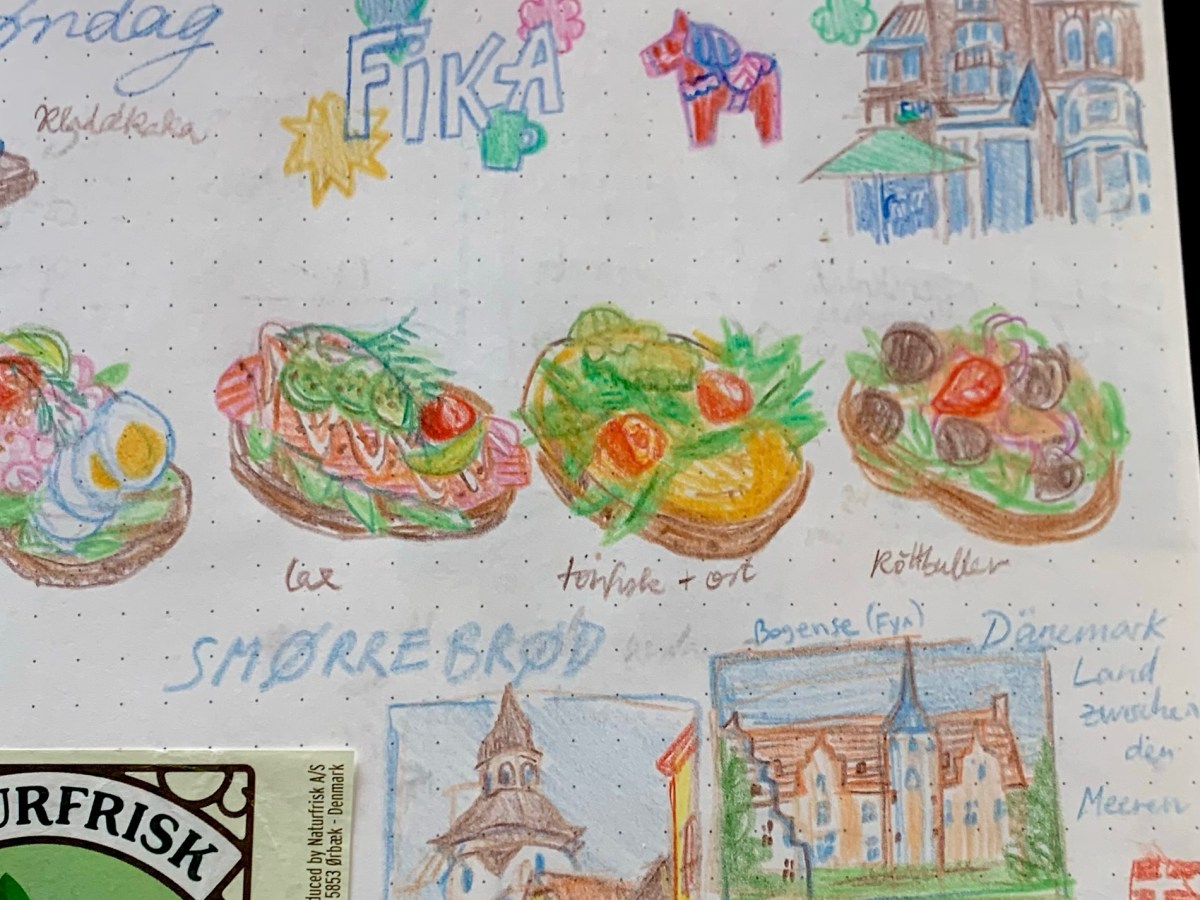
Fika in Nijmegen, lunch with smørrebrød

Fika in Nijmegen is a cafe/lunchroom with Scandinavian vibes: smørrebrød, knäckebröd, buns, cakes and books!

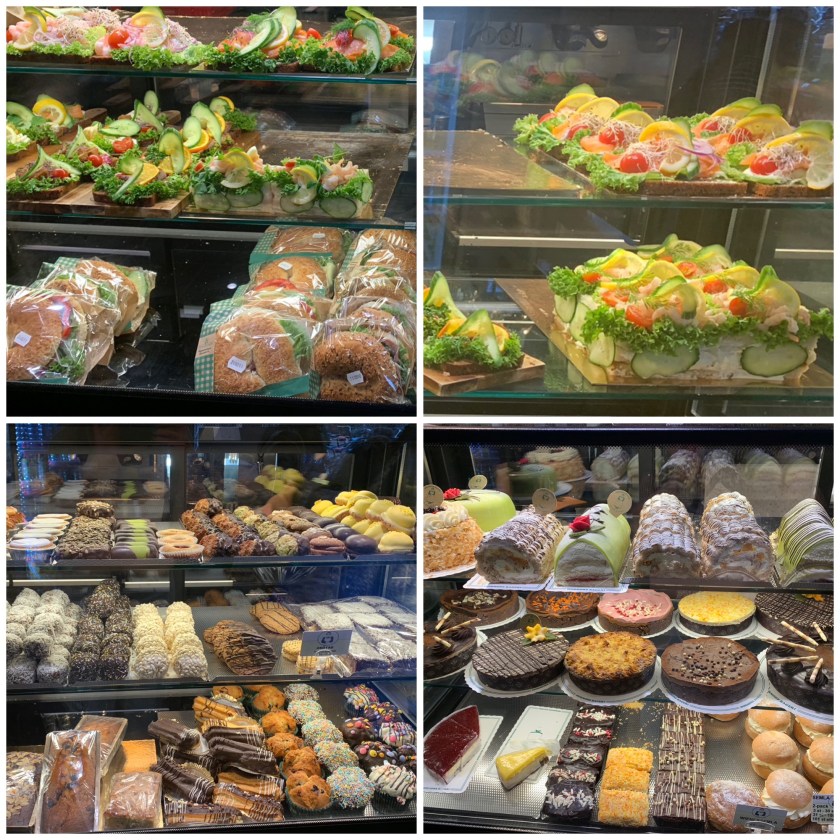
Some time ago I went to Fika in Nijmegen, a Scandinavian inspired Café / Lunchroom, focused on open-face sandwiches. high fika with friends. It is also possible to use your laptop at certain times for remote working! Next to the café you have the Fika Kiøsk for a treat and drink on the go.

NL: Een tijdje geleden ben ik bij Fika geweest in Nijmegen. Daar kun je lunchen met skandinavische boterhammen, een lekkere koffiepauze hebben met kardemombollen of cakejes, en zelfs een gezellige ‘high fika’ met vrienden boeken. Andere Zweedse broden als Knäckebröd en polar brood kan je hier ook eten.
Fika heeft een ruime ‘smørrebrød’ selectie: boterhammen van meergranen desembrood met vis, vlees en vega opties. Borrelsnacks met wat skandinavisch gevoel zijn er ook.
Je mag hier ook je laptop gebruiken, aparte flexwerk-ruimte.

Here is what you can eat at Fika:

A highlight of the café is the wide ‘smørrebrød’ selection: multigrain sourdough open-face sandwiches with fish, meat and vegan options. Shrimp salad and köttbullar (meat- or vegan balls) among others.

For a sweet break, of course you can have a fika at Fika – some classic Scandinavian treats to choose from are buns, cardamom or almond; and Kladdkaka (Swedish chocolate cake with gooey filling).

Other snacks to share I noticed on the menu are cheese and meat/vegaballs with a cranberry sauce; knäckebröd with goat cheese and veggies; mini Polar pizza – polar bread with mushroom or salmon; and dill potato chips!

Something I like was the good assortment of Naturfrisk Danish drinks they have!

If you are with friends, it is also possible to book a ‘high fika’, what they call a High Tea elsewhere here. For 26,- euros per person you will get warm drinks and:
  • a soup
  • small open face sandwiches
  • polarbread pizza with mushrooms
  • small cakes
  • skyr
  • fresh fruit

Being with someone else, I managed to try quite a few Smørrebrød, the fish versions- tuna-cheese, salmon, shrimp – and one with mixed vegan- and meatballs. They might not be on the ‘proper’ Danish rye bread, but they did look and taste good! I advised my friend to try the Elderflower Naturfrisk drink.

Before entering the backyard to sit outside, I saw a nice collection of Scandinavia-related books: novels by Nordic authors (translated or in the original version, travel guides, and more.
Underneath there were some toys, and I found one featuring a dammsugare, I am a sucker for this small details.
After checking out the books, it was time for dessert. I really wanted to mke my friend try cardamom buns and try an almond bun myself (Swedes would call it a Tosca), but unfortunately there were not any left, so we went for another Dessert lemon velvet, and a Matcha-mango latte. Not particularly Nordic but good.

I loved how the café has a lot of maps of Scandinavia hanging here and there as well!

And here is the journal spread for this smørrebrød fika experience in Nijmegen!

We left, with me being kind of disappointed the buns were already finished when we were there, and because of that I had and even bigger craving for a kardemummabulle…

Since you never know, we went to the Albert Heijn to Go to see if they had the more Swedish-looking cinnamon knot. They did not only have that, but CARDAMOM knot too!! Sometimes life surprises you. Not sure if this is only a temporary promotion for Wereldse Smaken – international treats together with miso cookies and pandan muffins.

Volg de blog voor meer Skandinavisch eten aanraders in Nederland:

Guide to Ice Creams in Scandinavia

Discover Ice creams to try in Denmark, Sweden, and Norway: all-time classics,
Popular flavors, and curious novelties.

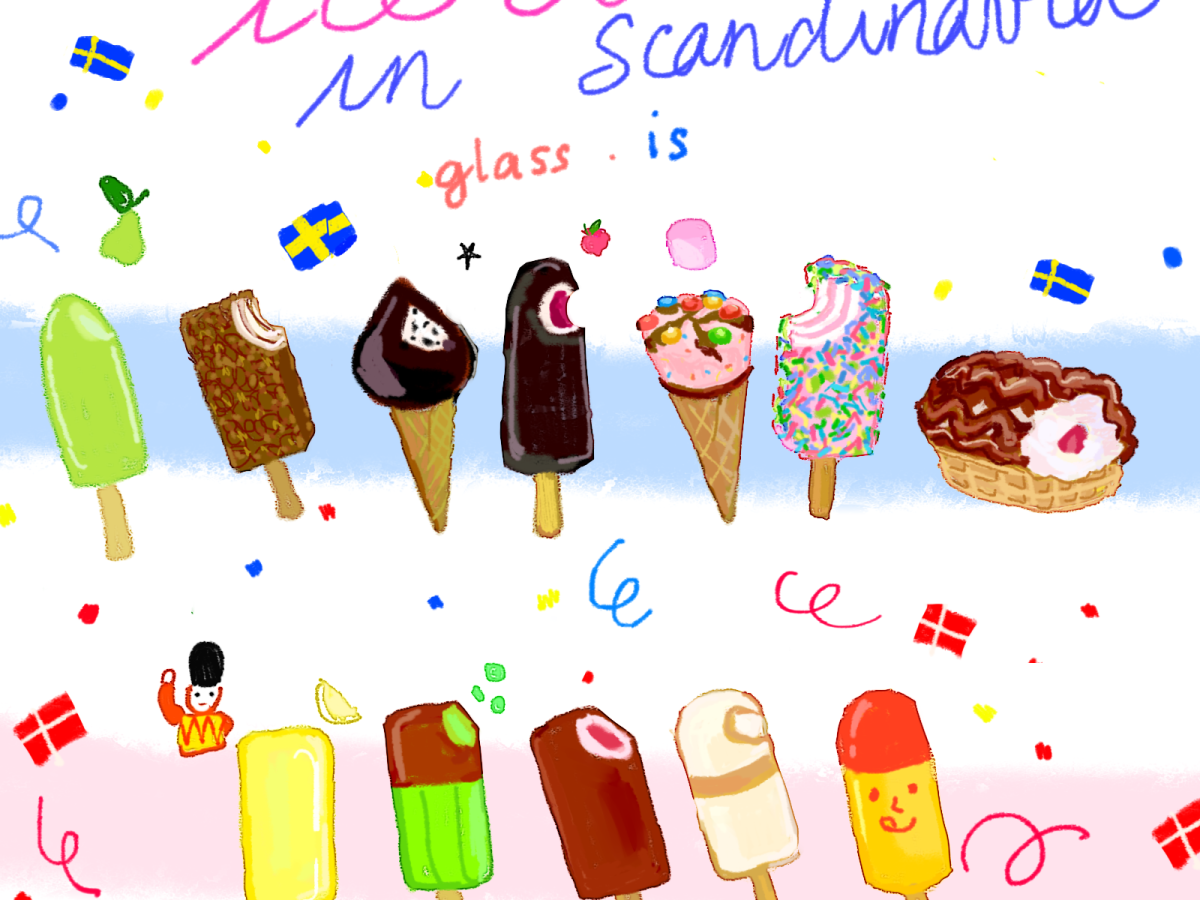
Since travelling to Scandinavia for the first time, i got quite acquainted with ice lollies available there, they have of course the magnum ice creams you see everywhre, but also quite a few interesting national classics, which vary. Here is a guide, so you are prepared..

Typical nordic flavours – Liquorice, pear and berries

  • One thing you see everywhere in Nordic countries that is not as common elsewhere is liquorice as ice cream flavour: lakrits/lakrids. In Scandinavia you find a round DAIM chocolate covered cream cone with a few variations, which also come in a salt liquorice version! During a Denmark-Sweden holiday I tried a berry-liquorice lolly in Sweden.
  • Pear flavour very common in Sweden (Piggelin is GB pear ice lolly). A friend told me it probably is because you cannot grow many other fruit..
  • Solbær – blackcurrant- is a berry I’ve seen quite a lot in Denmark

The Danish Classic ice creams

Frisko in Denmark, GB Glace in Sweden is the ice cream brand with the heart symbol present everywhere with different names, and many Ice creams I will mention are sold by it. Denmark has a set of all-time favourites, some have been around since the 50s!


Københavner stang is just a plain lemon flavor but with the cute royal guard logo; Champagne Brus – I love the contrast of fizzy, acid green lemonade flavour and chocolate on top; Solbær – which changed name from Kæmpe Eskimo for political correctness – is cream and blackcurrant under chocolate. Kung Fu is lime and liquorice, Filur is the cute smiley orange-raspberry water ice cream.

Premier IS is a brand which also features ice creams with black currant, liquorice, and the stang. On the ship between Germany and Denmark I saw Hansens ice creams as well – special mention for the rhabarber ice cream!

Sweden: the most creative ice creams?

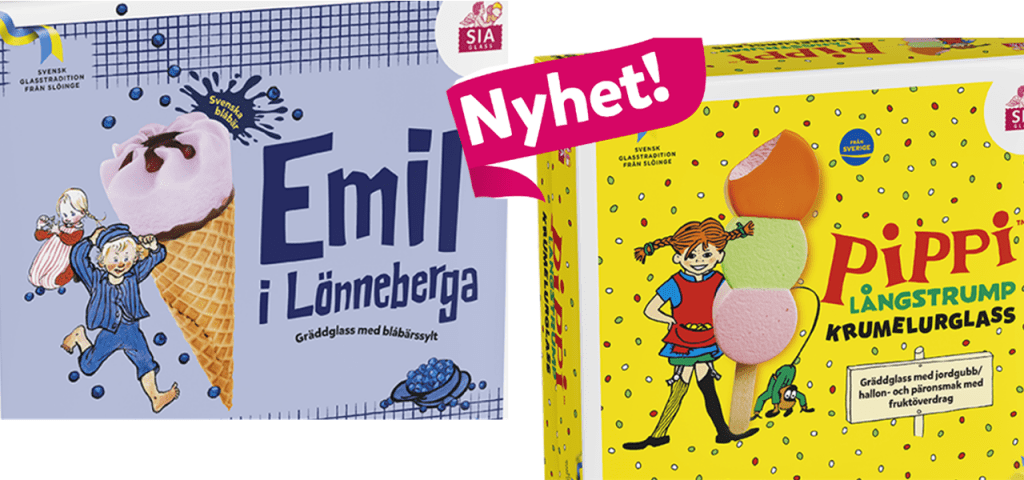
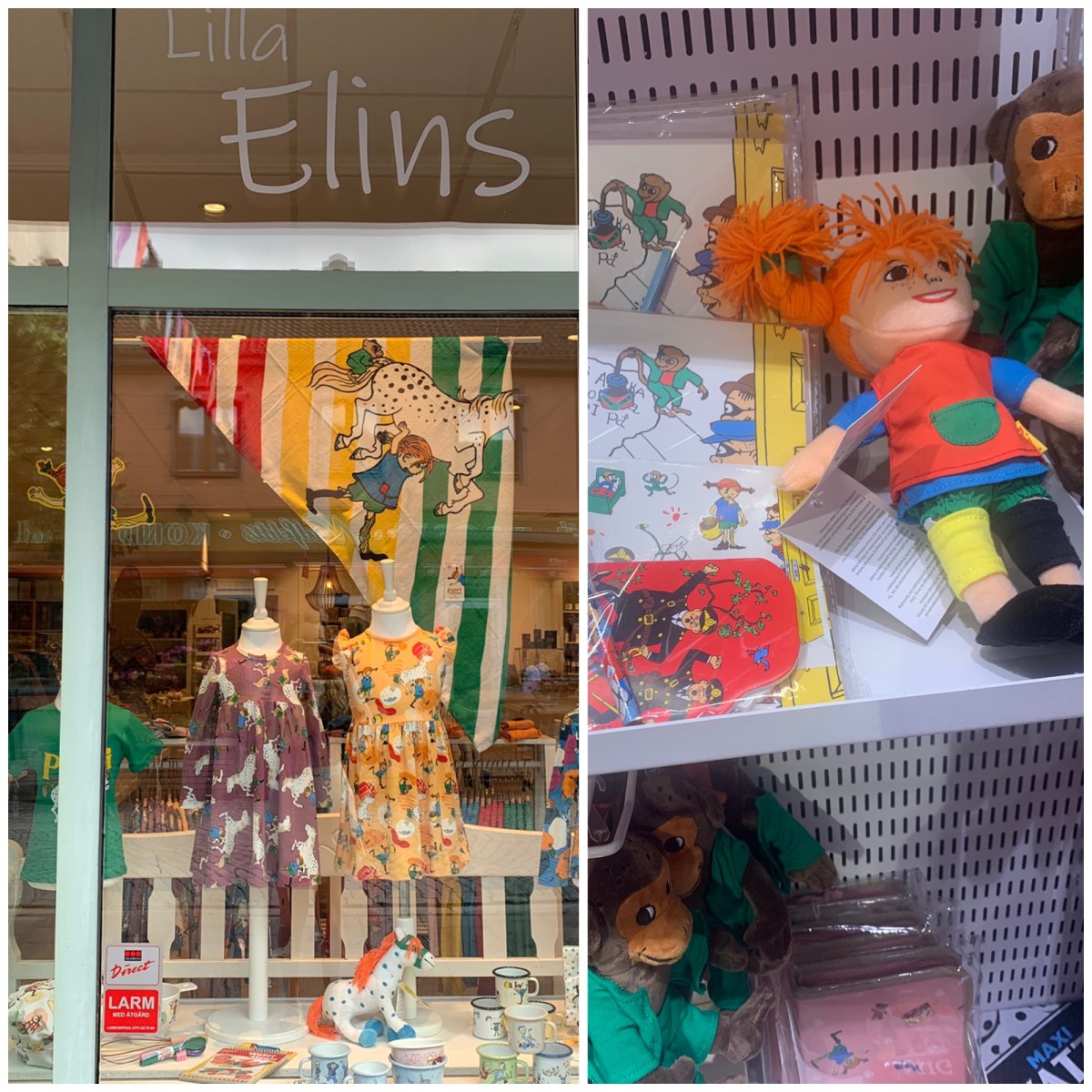
SIA is the main competitor of GB in Sweden I guess, based in Halland. notable ice creams are Emil and Pippi ice creams, the Glassbåt (‘ice cream boat’), and of course there is a pear and a liquorice ice lolly.

SIA ice creams for summer 2026

I would have also tried a Hilda, marshmallow/strawberry-ish? ice cream covered in rainbow sprinkles, or Godisregn (‘candy rain’), basically the same concept but in a cone.

pictures (c) SIA Glass

Emil and Pippi ice creams were 2025 novelties!! The former is Krumelurglass, made of 3 fruity ice cream flavours (which i got in the original candy form last year, krumelurpiller), while Emil is a blueberry and cream cone.

More interesting and very Swedish ice creams I have seen around are:

  • Konfetti gul & blå (blue-yellow as the Swedish flag) from Hemglass, lemon and blueberry ice creams with sprinkles on them.
  • Punschrulleglass, inspired by the green and chocolate dammsugare pastry. Hence it looks like a Danish Champagne Brus.
  • a Kanelbulle and a kladdkaka flavour one
  • Geisha ice cream- ice cream version of the famous chocolate candy by not Japanese, but Finnish Fazer.

The usual GB ice creams are a thing also in Sweden of corse – but a Swedish all-time favourites are the 88, read åttioåtta. Shoutout to my friend Linda & her husband who made me try it.

Norway’s 17 mai ice creams

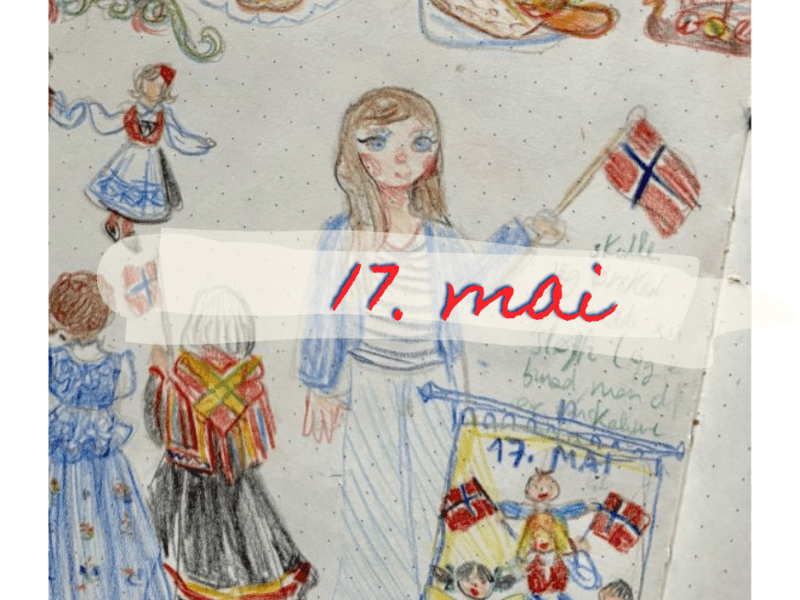
In Norway you see Diplom-Is or Hennig Olsen instead, not sure if Unilever is still behind them – Whatever. There are ‘regular’ strawberry or chocolate and cream cones, which around May get fancier for the National Day, 17 Mai, with bunad-like patterns.

I have not eaten any ice creams in Norway, but I have to say I saw nothing that stood out compared to the other countries! Please invite me to Norway to prove me wrong, haha.

Ice creams in the Baltics

I have noticed noticed particular similarities with the Nordics and the Baltics in ice creams, I did just notice they have a brand called VIVA making chunky ice creams

That was all for now, I will update this post in the future summers…Or add it for Finland and Iceland and hopefully try out their ice creams!!

So subscribe to stay update on Scandinavian Ice creams:

Read more: