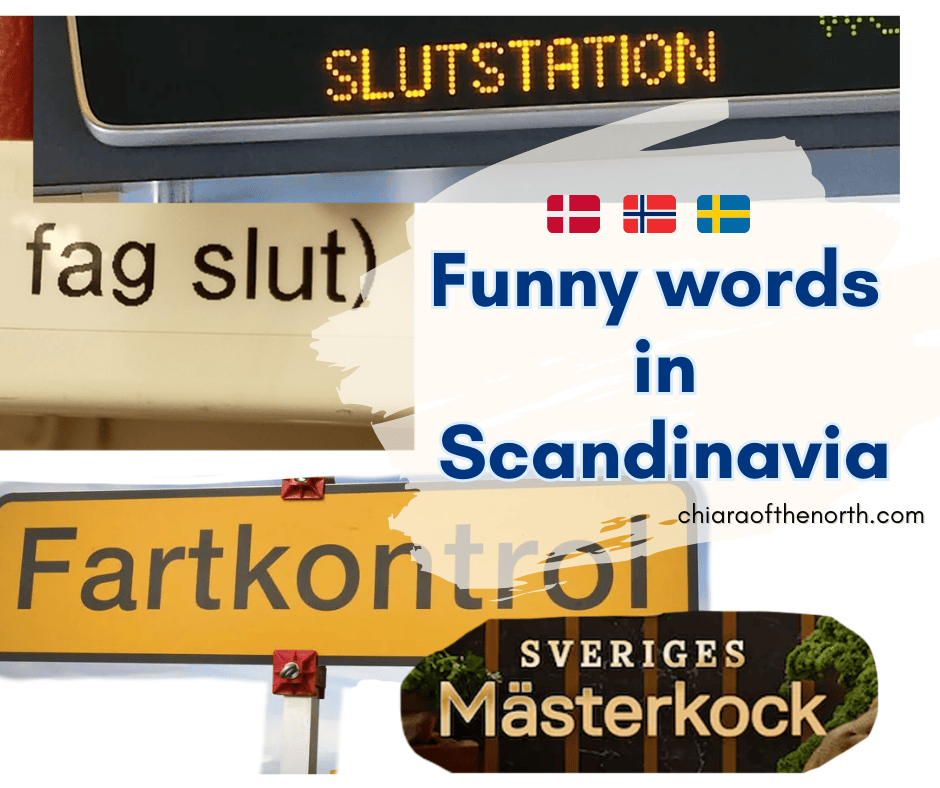
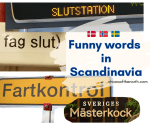
Take a train in Scandinavia to reach a “slutstation” or see”fartkontrol” signs while driving. Kiss and killing also mean something you were not expecting!
English and Scandinavian languages have, just like other languages, false friends and homonyms – words which look similar despite having different meanings.
You might see and hear fart, fagperson, and pussi which do not mean what you’d think – Continue reading to avoid embarrassing confusion if you will travel to the Nordics!
Do not feel insulted if you hear these words in Scandinavia!
Slut – end
et Fag (Danish) – used to mean a specific topic or specialization, as German Fach.
Tvätt (Swedish)- washing
Slags – kind/type
Normal stuff, with misleading names
En Kock (Swedish) – a cook/chef
En Puss – a kiss; Pussi (Finnish) – a bag
Fart – speed
Bra – just ‘good’!
En Killing – A young goat in Sweden. Or a kitty if you are in Denmark.
Mad (Danish) – food.
Words that do not mean what it looks like… but in a bad way
Kiss – Do not be happy to receive kiss in Sweden. That means ‘pee’.
Gift – Do not accept a free gift in Scandinavia, you might get poisoned.
Full – Maybe it makes sense as you are full..of alcohol.
Dog – died (verb)
Even funnier combinations you’ll see when travelling in Scandinavia
Slutstation – You are not ending up in a bad neighborhood.. It is just the last stop.
Fartkontrol(l) – Nobody is gonna do weird checkups on you, but be careful when driving…
A Fagskole is a vocational school in Denmark. Fagpersonis an expert in a given field. Fagslut at a Danish library is just the end of a specific topic on an aisle.
Sveriges Mästerkock is not a contest for the biggest **** in Sweden. It is the Swedish name of the cooking show Masterchef . It is a family-friendly show there as well, I promise!
Bonus false friends for speakers of Italian and German
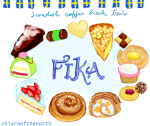
Fika – a very recurring words in Both Swedish and Italian. Except that in Sweden it is a popular coffee break tradition involving pastries, whereas in italy a popular part of the female body.
Fickkalender (Swedish) – a pocket calendar sounds like a calendar for something else in German.
árslok – not an insult for Germans, but the end of the year in Icelandic.
Sources: Scandikitchen, Goetheinstitut on Instagram, Tayo826 on reddit, fartkontrol, archivegeo on tumblr (fagslut)
That was all for now. but more funny Scandinavian language facts will come.. so stay tuned.
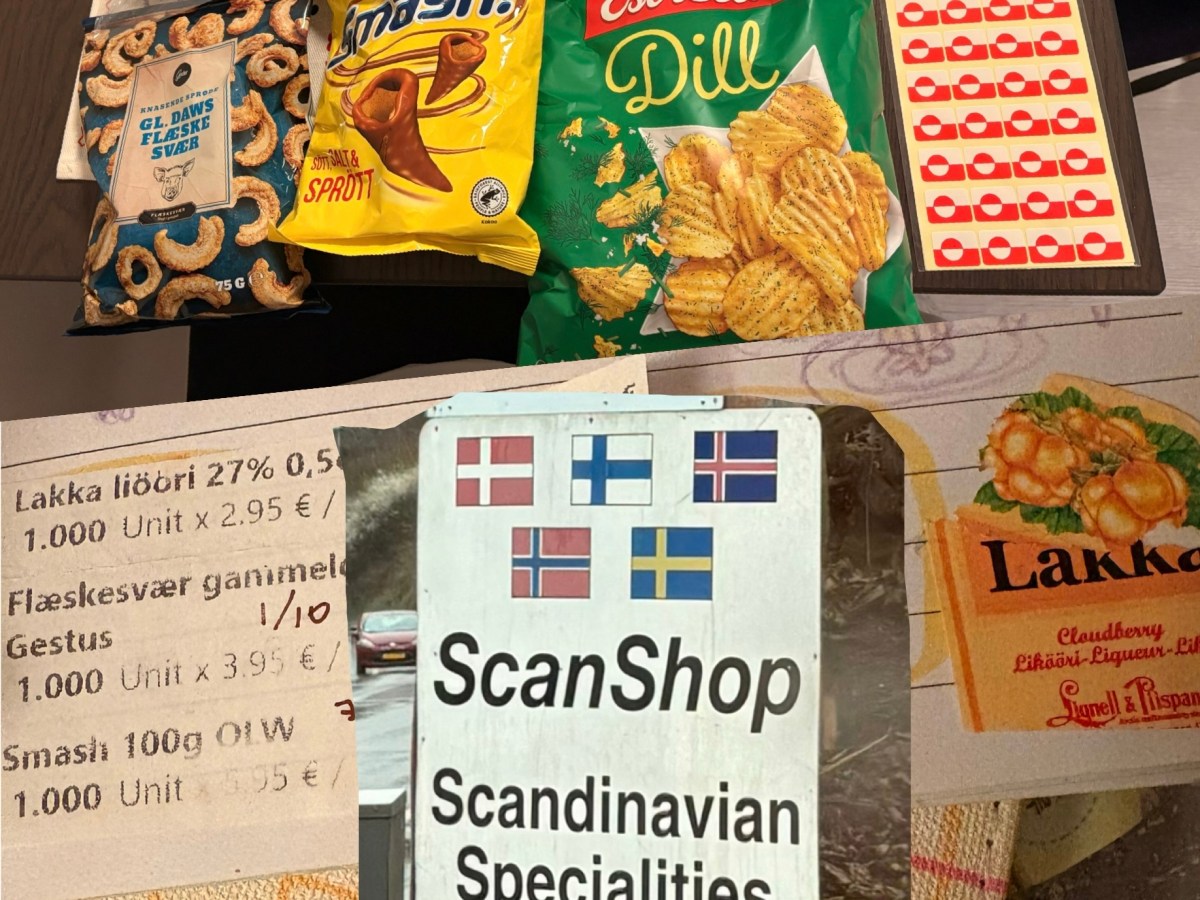
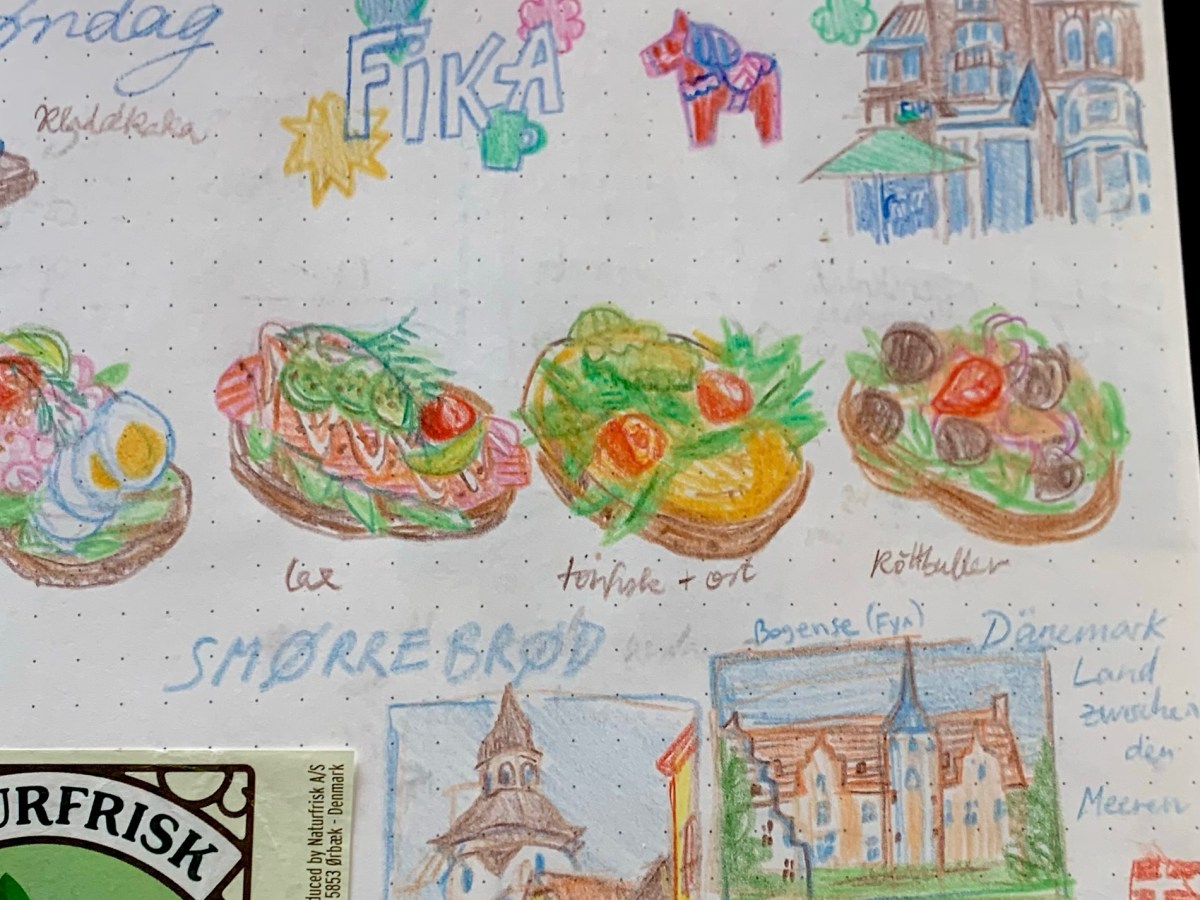
I visited Scanshop, a supermarket for Nordic expats in Luxembourg and Belgium. It offers a wide range of Scandinavian food products, including rye bread, fish, and sweets, alongside flags and tableware.
Take a train in Scandinavia to reach a “slutstation” or see”fartkontrol” signs while driving. Kiss and killing also mean something you were not expecting!
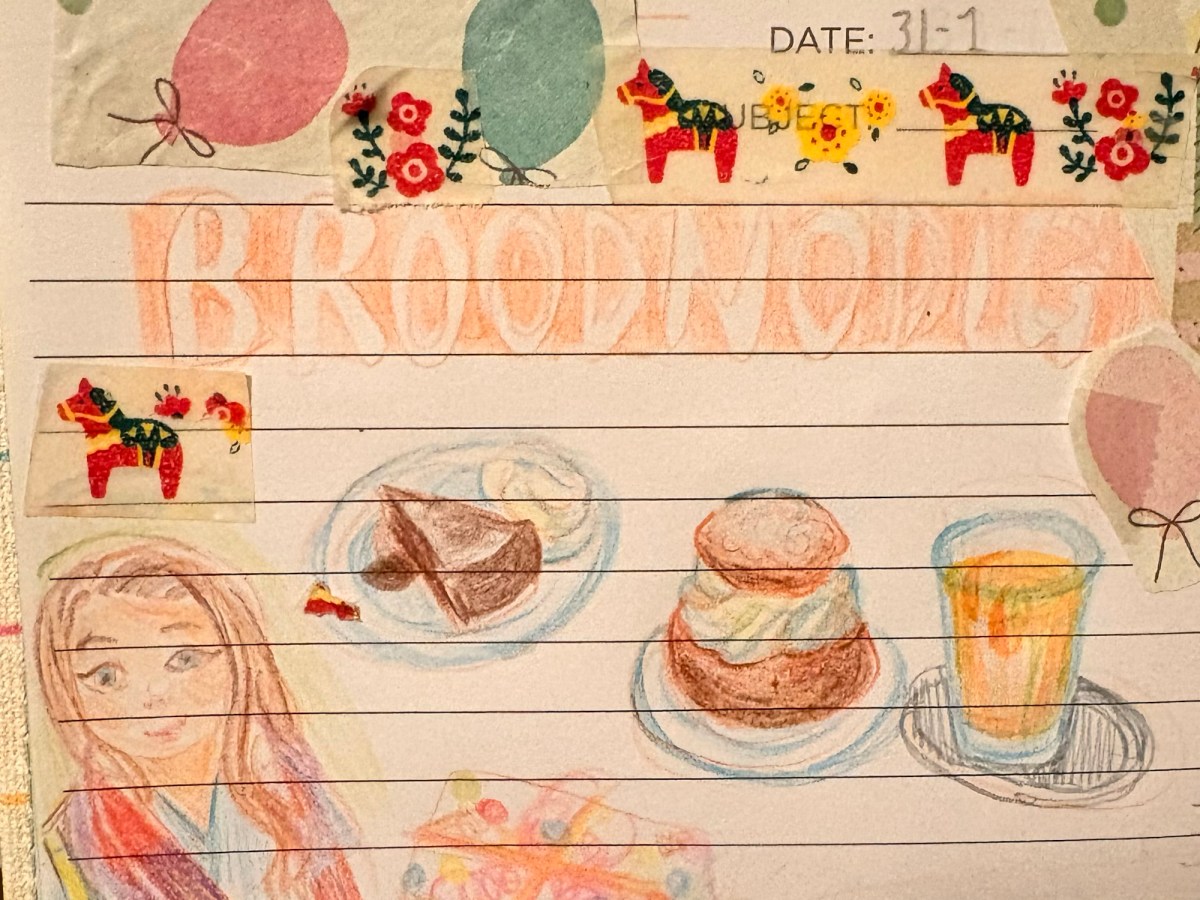
In Utrecht, the cafe Broodnodig serves Swedish pastries and cakes as cinnamon and cardamom buns, kladdkaka, smulpaj and Scandinavian seasonal treats as semlor and saffron buns.
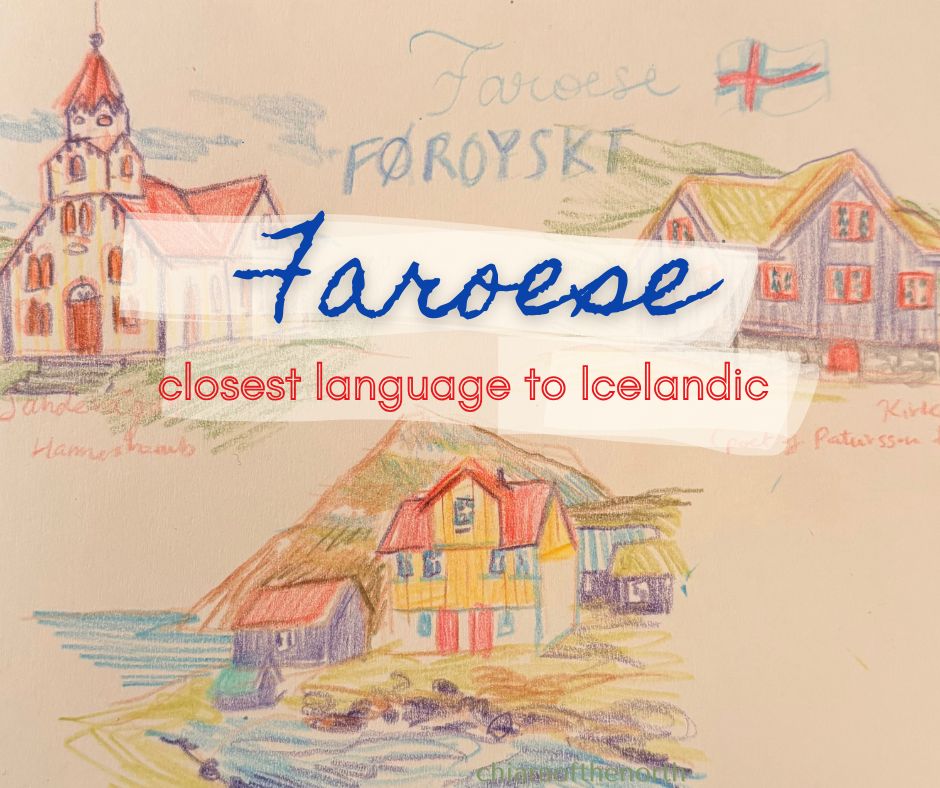
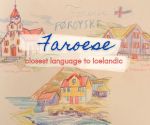
Discover Faroese – today spoken by about 80,000 people in the North Sea archipelago- as Icelandic still has much in common with Old Norse in grammar and vocabulary
Faroese (Føroyskt) is the language spoken in the Faroe Islands (Føroyar), located between Scotland, Norway and Iceland. Faroese people’s ancestors were Norsemen, and despite centuries of Danish rule, they managed to preserve their language through oral tradition. Faroese and Icelandic are closely related to Scandinavian languages, but still look much more like the language of their ancestors.
How similar is Faroese to Icelandic, and Scandinavian languages?
As follows, some basic expressions in Faroese, Icelandic, and Swedish/Danish/Norwegian. Although Faroese and Icelandic are closer, you can easily see that they belong to the same language group.
Faroese
Icelandic
Scandinavian
yes/no
ja/nei
já/nei
ja/ nej/nei
thank you
takk
takk
tak(k)
excuse me
orsaka
afsakaðu
se:ursäkta / no,dk:un(d)skyld
sorry
umskylda
fyrirgefðu
se:förlåt/ no:beklager
here you go/you’re welcome
ger so væl
gjörðu svo vel
varsågod
what’s your name
hvussu eitir tú?
hvað heitir þú?
(h)va(d) heter/hedder du?
good day
góðan dagin
góðan daginn
god dag
Faroese-Icelandic Differences in Spelling: tell them apart
Faroese has a written form based on etymology, making it look much closer to old Norse (and Icelandic), than its pronunciation.
No Þ (thorn) in Faroese:þ, pronounced as English th in mouth, is not present in the Faroese alphabet. Where Icelandic has a Þ, Faroese usually has a T: tú (you); tað (this) vs þú, það. In Scandinavian languages this is usually a D: du, det
No é in Faroese: Faroese alphabet does have just like Icelandic and unlike Scandinavian languages several accented vowels: Á Í Ó Ú Ý, It does however not have é (‘I’ in Faroese: eg, Icelandic: ég)
Faroese Ø/ Icelandic Ö
-ggj ending in Faroese: oyggjar, nýggj, kríggj (islands, new, war)
Faroese vocabulary: Language purism, Danish loanwords, and a sprinkle of Irish
A language committee has invented words to prevent more influential languages to take over Faroese, similarly to Icelandic language purism. The Faroese Jóhan Hendrik W. Poulsen (1934-2022) invented words as:
Telda (computer), Fartelda (laptop), Fartelefon (mobile phone) – In Icelandic (far)tölva and (far)sími
Talgildur (digital), fløga (CD) ‘thick slice’
tyrla (helicopter) – in Icelandic þyrla from tiril=whirl, Farstøð (terminal) ‘distance/travel place’
flogbóltur (volleyball), ‘fly ball’
Gosbað (jacuzzi) ‘air bath’
At the same time, being under the Kingdom of Denmark, Faroe islanders incorporated loanwords form Danish in their language: snakka, forstanda – speak, understand – are used colloquially instead of tosa and skilja (Icelandic tala, skilja). Bike is súkkla (cykel in Danish, reiðhjól in Icelandic), War is kríggj (krig in Danish, lögregla in IS)
Faroese vocabulary is of course North Germanic, but as Norsemen brought Celtic women from their settlements in the Irish Sea, you also find a few traces of that, mainly regarding cattle and fields apparently.
Grammar: genders, declensions, verbs
Faroese and Icelandic are Insular North Germanic languages- and thanks to their isolation they retained many aspects of Old Norse that Swedish, Danish and Norwegian dropped.
Faroese
Icelandic
Scandinavian
genders/articles
3 (m, f, n)
3 (m, f, n)
2* (m/f, n)
cases
3 (often 2 when spoken)
4
–
verb endings (present)
3/4: -i,-r,-a/u (plural=1 ending)
5/6: -,-t, -r,-um,-ið,-a/u
1: -r
Here are explanations regarding the table above:
Genders
Both Icelandic and Faroese have masculine, feminine and neuter gender.
*in Scandinavia, only Norwegian partially kept the masculine/feminine distinction, while Swedish and Danish have only general and neuter – Norwegian was actually grouped as West- North Germanic together with Faroese and Icelandic before shifting towards the languages in the continent. What is neuter in Icelandic and Faroese usually is also in Scandinavian, as feminine when used in Norwegian. There is some overlap also with German and Dutch, so speaking multiple Germanic languages helps when in doubt!
The gender can be often assumed from the endings:
Masculine: -UR, -I: dagur, matur (day, food)- Scandinavian languages lost the ending: dag, mat; tími
Feminine: -, -A: bók, nátt/nótt; kirkja, gøta/gata (book, night, church, street). A often stays in Swedish, but is an E in Danish: kyrka/kirke, gata/gade
In addition, Faroese and Icelandic have declesions for numbers until 3 (Faroese) and 4 (Icelandic). The number changes depending on the gender: ein maður/kona, eitt barn; tveir menn, tvær konur, tvey børn and so on. This does happen in Scandinavian languages only for one/a: en bok, ett barn.
Faroese
Icelandic
1/a man, woman, child
ein maður/kona, eitt barn
einn maður, ein kona, eitt barn
2 men, women, children
tveir menn, tvær konur, tvey børn
tveir menn, tvær konur, tvö börn
3
tríggir, tríggjar, tryy
þrir, þrjar, þrjú
4
–
fjórir, fjær, fjogur
What about articles?: there is no undetermined article. ‘a man’ is simply maður. As in all North Germanic languages, the determined form is made by adding a suffix to the substantive, which varies by gender: -in, -n, -ið: Masculine maðurin(n) (the man), feminine-n konan (the woman),neuter-ið: husið (the house).
in Scandinavian you do have en/ett as undetermined article, becoming -en, -et for the determined form: ett hus, huset. Norwegian might also have feminine ei as ei bok (a book), becoming boka, the book. Another interesting common trait with some varieties of Norwegian is that the possessive adjective can be put after the noun: boka mi – bókin min vs min bok/bog in Swedish and Danish.
Cases
In Faroese and Icelandic, a noun changes depending on the grammatical case according to its gender/number, and the prepositions it follows.
Faroese: Bátur(in): (the) boat – eg síggi bátin: i see a boat
Icelandic: bátur(inn) – ég sé bát
Icelandic retained 4 cases: Nominative (subject), accusative (object), dative, genitive, as for example German does – while Faroese 3, dropping the genitive, considered obsolete, very formal, or only in fixed expressions- or even 2, as in spoken Faroese the accusative is often used instead of dative!
So the name of the Faroe Islands is Føroyar, but: í Føroyum (in the Faroes), and you have the Føroya Banki (Bank of the Faroes); the Faroese language is called Føroyskt, but in Faroese is á føroyskum.
How to Learn Faroese?
You find resource to learn Faroese, Icelandic and all Scandinavian languages in my free language resources list – many of these are free!
Faroese is now available on google translator, though the Faroe Islands started their own translation service Faroe Islands Translate in 2017, with sentences human-translated.
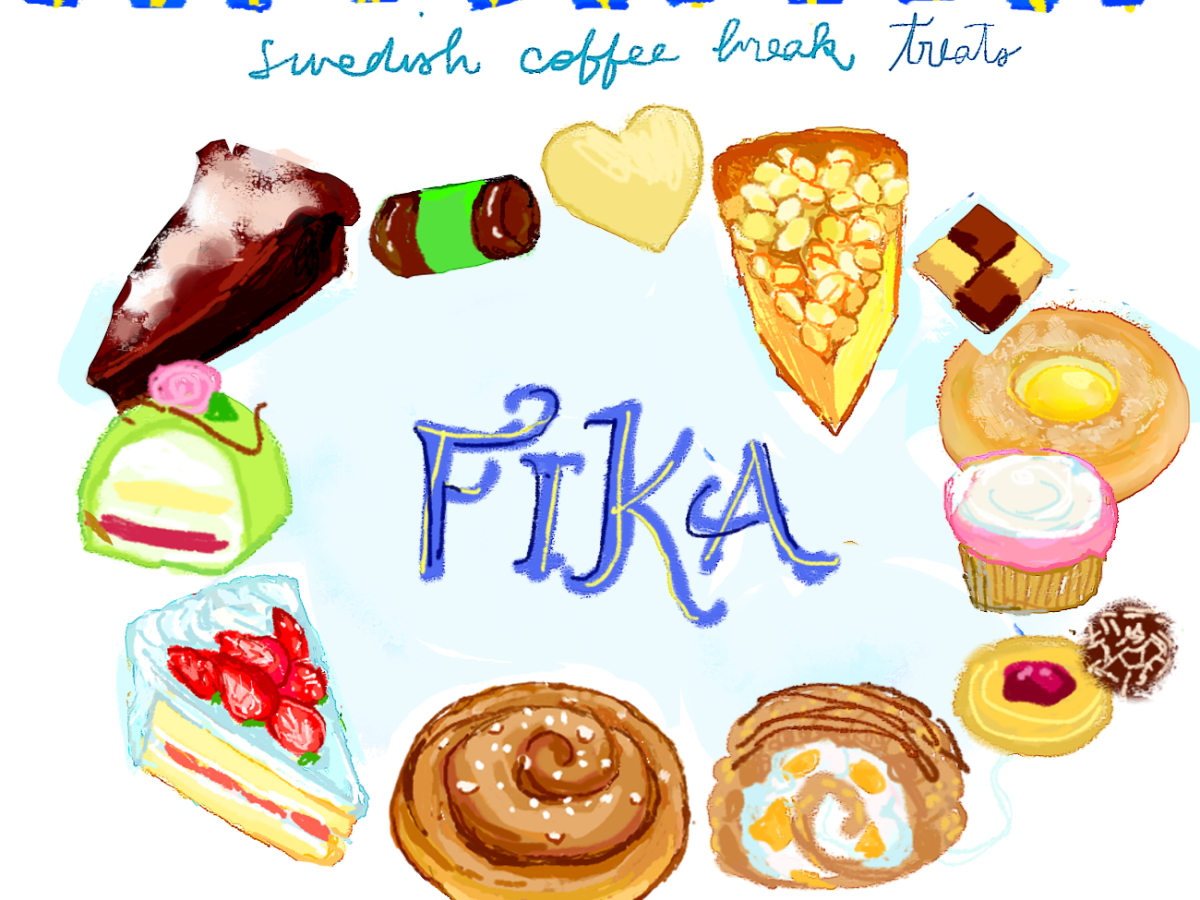
Fika is a cherished Swedish tradition involving a coffee and cake break. Discover various Fika treats, from classic kanelbullar (cinnamon buns), cakes and cookies to savory options.
Discover Faroese – today spoken by about 80,000 people in the North Sea archipelago- as Icelandic still has much in common with Old Norse in grammar and vocabulary
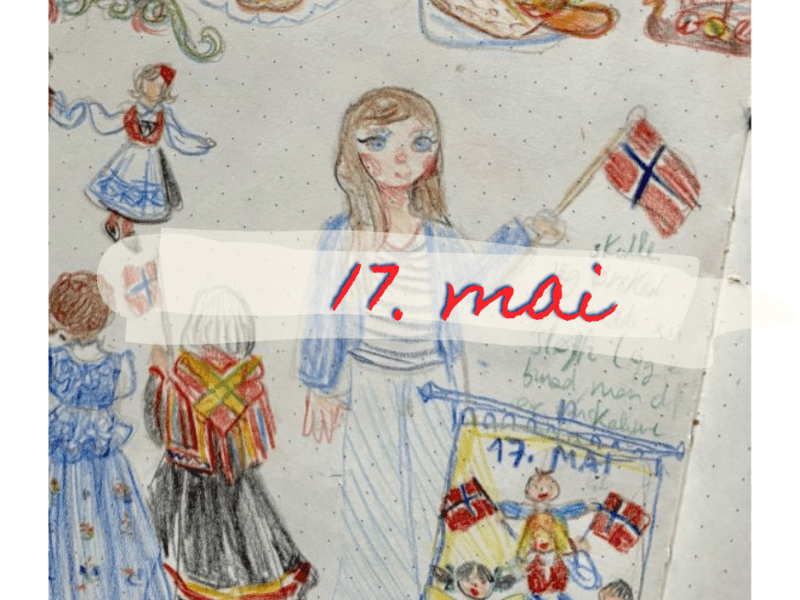
Norwegian Seamen Churches all over the world host 17th May celebrations. I attended the festivities in Rotterdam, joining the parade and eating a pølse i lompe!
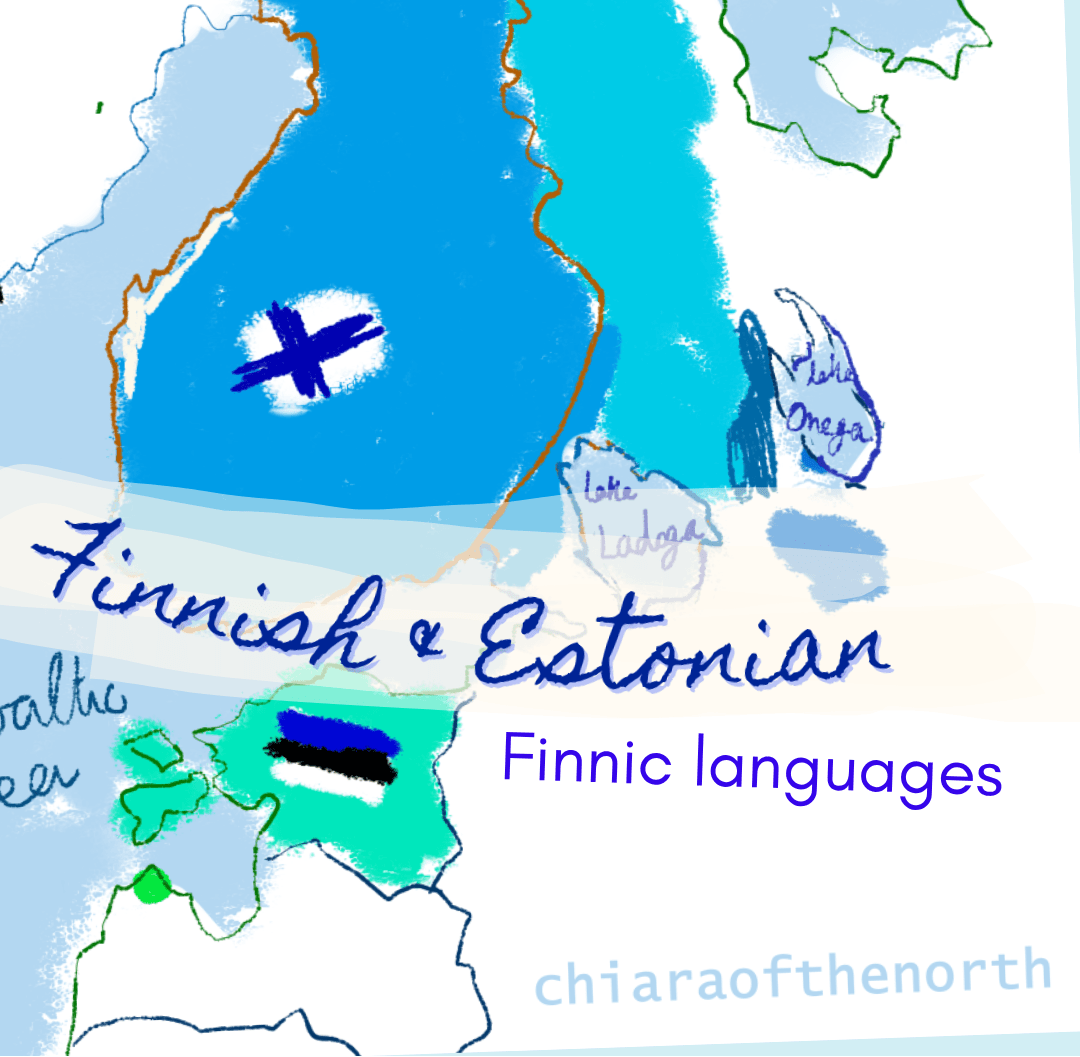
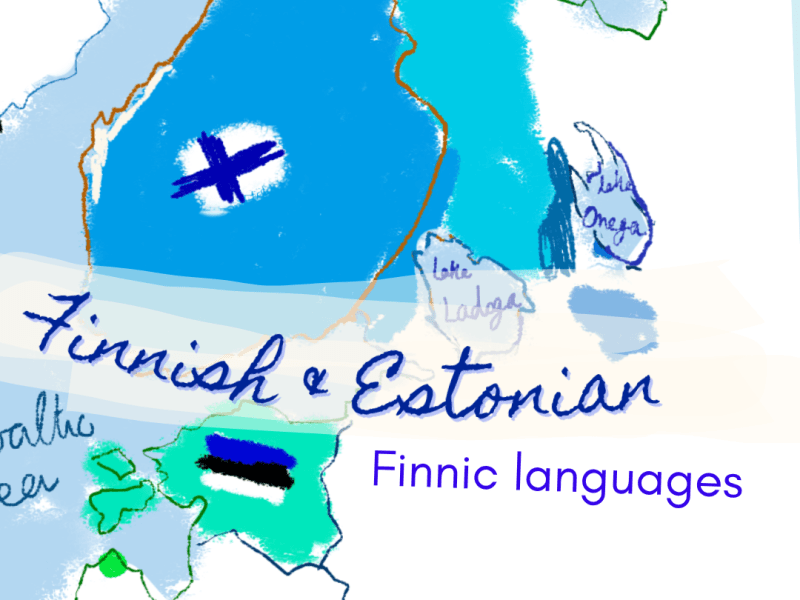
Estonian is a Finnic language, sharing many similarities with its ‘bigger’ sister Finnish, while being unrelated to all their bigger language neighbours
24th February is Estonian Independence Day! To celebrate, here is some info on one of the closest relatives of Finnish and insight on Uralic languages.
Finnish and Estonian are both Uralic languages, belonging to a different family than most languages spoken in Europe, from Icelandic to Italian, which are all Indo-European languages. Find out more about Finnish compared to other Nordic languages. I already wrote in Estonian culture in general compared to Finland after my trip to the Baltics last summer.
Finnish and Estonian: Finnic sister languages
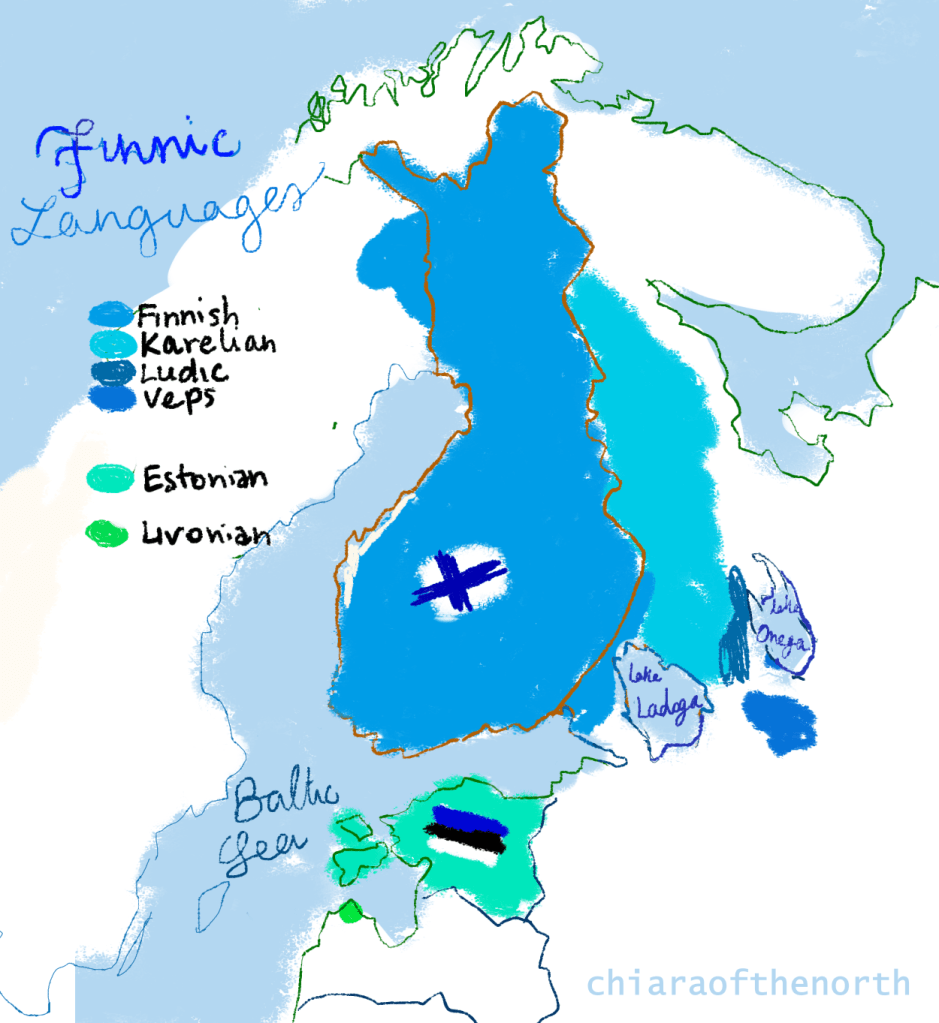
Estonian is the second biggest Finnic language after Finnish , spoken by around 1 million people, (Finnish has 5 millions). Other related languages exist in the Baltics, although most have very few speakers left: võro, Livonian (in Latvia).
There are many similarities exist betwenn Finnish and Estonian. Although they are not always mututally intelligible, Finns and Estonians can often understand each other, particularly in written form. Estonians in particular used to be able to understand Finnish very well thanks to access to Finnish media they had access to during the Soviet occupation.
Unique Finnic language features
Gender-neutral pronoun: The English third person pronoun has a gender distinction – he/she. Finnish and Estonian have only one, neutral version: “hän” in Finnish and “ta” in Estonian.
Vowel Length (2 in Finnish, 3 in Estonian): Both Finnish and Estonian have short and long vowels: you often see double ones when bumping into these languages – aa, ää , ee, oo, ii etc. For example: mutta ‘but’ vs muuttaa ‘to change’ in Finnish. Estonian, has however not two, but three vowel lengths: kala (fish) Long: kaala (weigh), kaalla (with a neck).
14-15 inflections of grammatical cases (simplified in Estonian): Both languages often convey meaning through inflection: I go to Estonia – Tulen estii Finnish stayed more conservative, while Estonian started using more prepositions instead and dropped the accusative case.
Finnish and Estonian vocabulary
There is a large Finnic common vocabulary: the following words are the same in Finnish and Estonian, unrelated to indoeuropean languages:
water: vesi
moon: kuu
money: raha
tree: puu
snow: lumi
hand: käsi
expensive: kallis
sea: meri
Countries around Finnic people got similar, distinct names in their languages, notice the following: Finland, Sweden, Germany, Russia, Denmark:
Finnish: Suomi, Ruotsi, Saksa, Venäjä, Tanska
Estonian: Soome, Rootsi, Saksamaa, Venemaa, Taani. Maa means ‘Land’ also in Finnish
Finnish got many loanwords from Sweden, being its neighbor and ruling power. Similarly, Estonian has borrowed as much from German. As a common Finnic feature, many words which originally had S with another consonant after it, dropped the S.
Finnish
Estonian
Swedish
German
school
koulu
kool
skola
Schule
chair
tuoli
tool
stol
Stuhl
to paint
maalata
maalima
måla
malen
ham
kinkku
sink
skinka
Schinken
cake
kakku
kook
kaka
Kuchen
kitchen
keittiö
köök
köket
Küche
mirror
peili
pegeli
spegel
Spiegel
Tell Finnish and Estonian apart
Estonian and Finnish look similar, so if you’re not familar with any you can tell if it is Estonian instead for these features:
Estonian has the unique letter Õ, and – unlike Finnish – uses Ü, B and G in native Finnic words (Finnish only in foreign words). Š and Ž can also be rarely seen in words of foreign origin in Estonian, although not officially part of the alphabet
diphthongs not present in Finnish: if you see two different vowels next to each other, that cannot be Finnish – but if it looks like it, it might be Estonian: päev.
No vowel harmony in Estonian: In Finnish, words contain vowels from only front or back vowels – so ä, y, ö cannot be together in the same word with a, u, o. In Estonian, mixing them is possible.
Spoken Estonian tends to sound softer and more fluid, while Finnish pronunciation is more rythmic. This might be due to dipthongs and consonant length distinction in pronunciation, stricter in Finnish, where the difference between short and long consonants is stronger.
Finnish and Estonian language days
Both countries have a day dedicated to their respective languages.
Estonian language day, also Mother Tongue day, Emakeelepäev, is celebrated on 14th March since 1999, birthday of the poet Kristjan Jaak Peterson. Poetry readings including a 12-hours reading marathon mark the day.
Finnish language day is on 9th April in honour of Michael Agricola, a 1500s clergyman considered the father of written Finnish for having published the first book in this language.
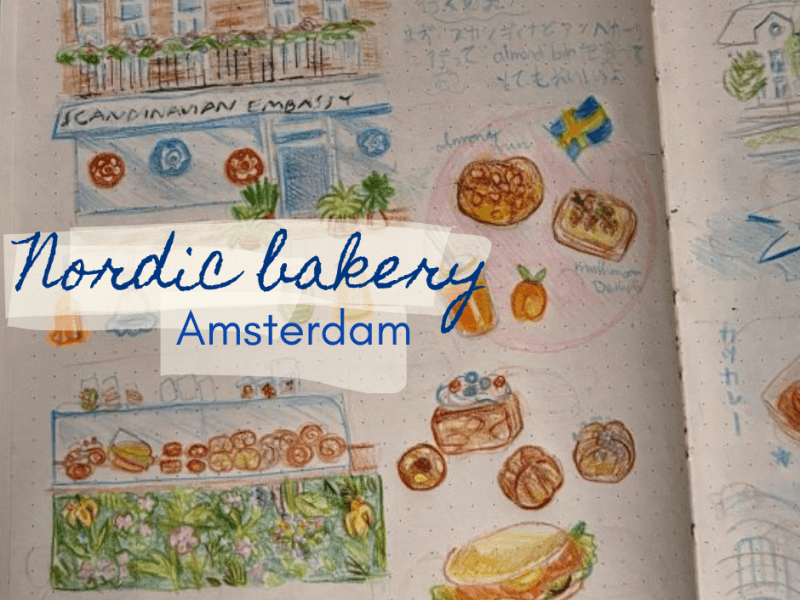
On a trip to Amsterdam, I decided to test Scandinavian Embassy and both of its two locations, starting with the bakery in europaplein. The two locations are in Amsterdam zuid: Saphatipark and Europaplein: in the former, a more central location, you can sit but it has fewer items than the bakery in Europaplein. The bakery,…
Estonian is a Finnic language, sharing many similarities with its ‘bigger’ sister Finnish, while being unrelated to all their bigger language neighbours
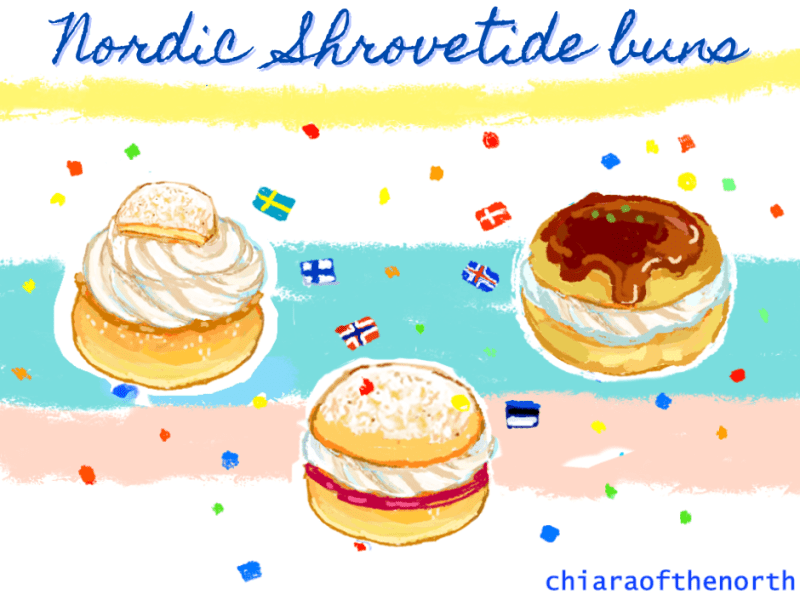
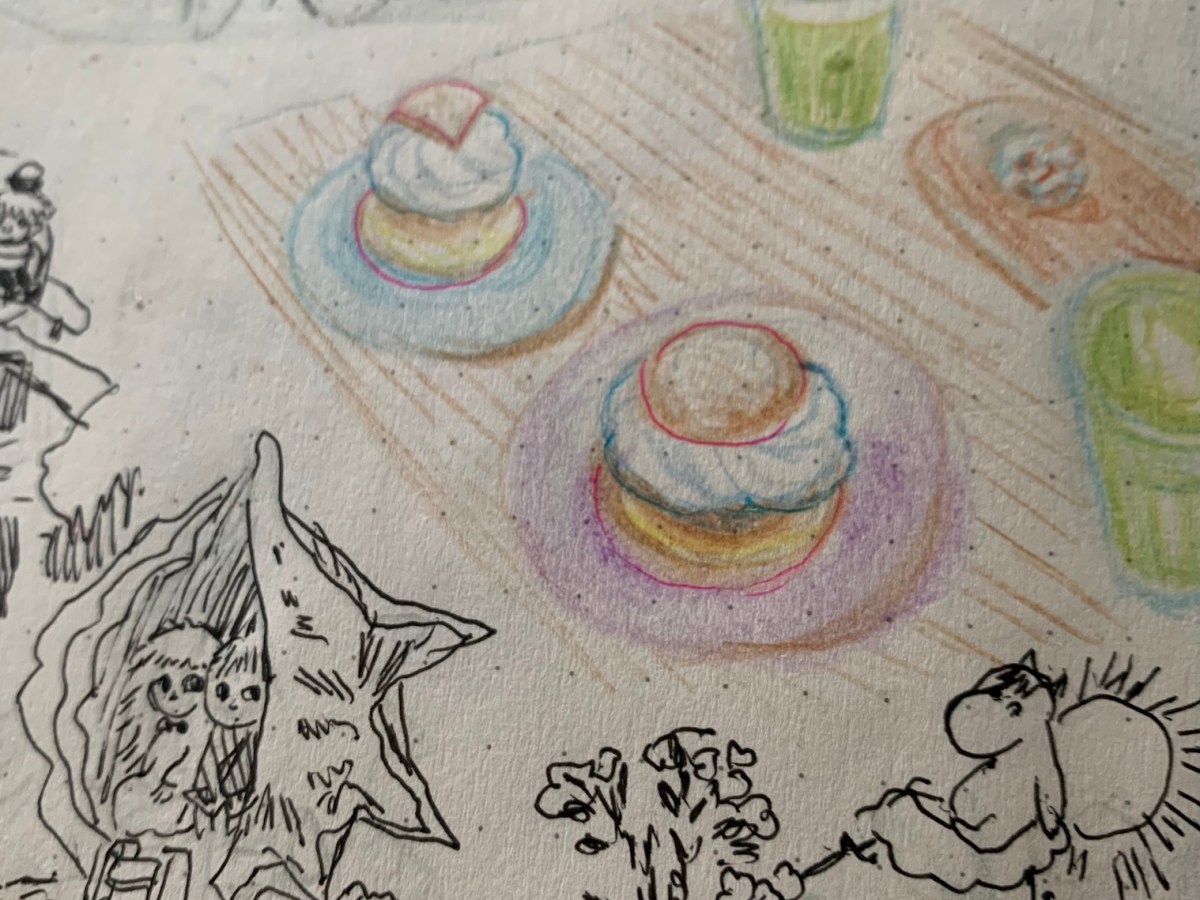
Cream buns are enjoyed in Nordic and Baltic countries during shrovetide, between January and February. Sweden’s classic semla has almond paste, while other countries variations include jam, vanilla cream, and chocolate icing top.
How to choose the language to study among Swedish, Danish and Norwegian
Many people interested in learning languages of North Europe probably start with this question, Which, among Swedish, Norwegian and Danish, is the best language to study?
Surprise surprise, there is of course no answer, but you can pick one or the other depending on some factors which make one more “suitable” to your interests and goals.
You can first of all learn about general features and learn how totell Scandinavian languages apart. Do not start all or two of them at the same time if you do not have solid knowledge of one, you can read how I managed to study all Germanic languages.
Some factors you might take into account
The next points can be considered for any language you want to study, with some specific information regarding the three Scandinavian languages:
#1 – Your personal interest
The first factor to consider is personal: is there a reason that makes a country/language more special than the other to you – A travel destination? Friends from there? Some book you would like to be able to read in the original language? Regardless what the reason is, it is good to have something motivating you, whether it is needing it to live somewhere or because you like how ø looks.
#2 – the language that opens the most doors
It is generally handy to speak a language that will give you “access” to the most other languages. The three Scandinavian languages are quite similar to each other, so it won’t make a huge difference. The one having a bit more than the others in common with the other two could be Norwegian: Danish and Norwegian have a more similar spelling due to historical reasons, but Norwegian sounds similar to Swedish, while Danish is….Danish.
Norwegian is theorically a West-North Germanic language as Icelandic, as opposed to Swedish and Danish which are grouped as East-North Germanic. There are traces of that in some Norwegian dialects, but for geographical and historical reasons Norwegian got a lot closer to Swedish and Danish. Icelandic (unfortunately?) retained its heavy grammar. More about the Icelandic grammar
#3 – the language which allows you to reach most people
Another factor people often take into consideration when starting a new language is how many people you will be able to communicate with. All Scandinavian languages are pretty small (all three make in total around 20 million speakers) but Swedish is significantly more spoken than all other languages of Nordic countries (as big as Danish and Norwegian together), and is present in Finland as well.
Some more or less tricky features
Grammar
Their grammar is very similar and essentially equally hard, with maybe the exception that Norwegian has the feminine gender too, although not used everywhere.
Pronunciation
Danes speak as if they have potatoes in their mouth. (While it is said Norwegian and Swedish sound like singing…) Some sounds like stød can be hard for foreigners to reproduce, saying rødgrød med fløde is a classic. Swedish Pronounciation has a sound similar to German ch in Bach, try this tongue twister: Sju Sjuka sjömän med sju sjuka sköterskor. People from Skåne, Sweden’s southernmost region, might sound to you like Danes speaking Swedish…Centuries ago, Skåne was actually a part of Denmark!
Language variation
Norwegian is famous for its dialects, “I” can be written/pronounced in a number of ways: jeg, Æ, eg.. Being already used to jump from a Scandinavian language to the other, hearing a new Norwegian dialect is not too scary I guess.. And it has two written standards, bokmål and nynorsk. Bokmål is far more popular than Nynorsk though.
This would mean Norwegian is probably the most convenient to learn: vocabulary/spelling lean towards Danish and Pronounciation to Swedish, while you will spare yourself the (for most people) struggle of learning how to pronounce Danish.
My journey
I personally started with Swedish and still keeping it as my “main”, although i learned the others on the way, I look at Swedish as my Scandinavian mother tongue or something, haha. There was no particular reason for this, Sweden and Swedish culture were just somehow more present in my mind and knowledge than the other two, and I just felt like learning Swedish without thinking much.
Truth to be told, many people are not particularly found of the sound of Danish. Not me though, pronouncing Danish is a guilty pleasure of mine.
If you find all of them interesting, just be patient and once you got to a decent level with one you can start picking up the others just by immersion!
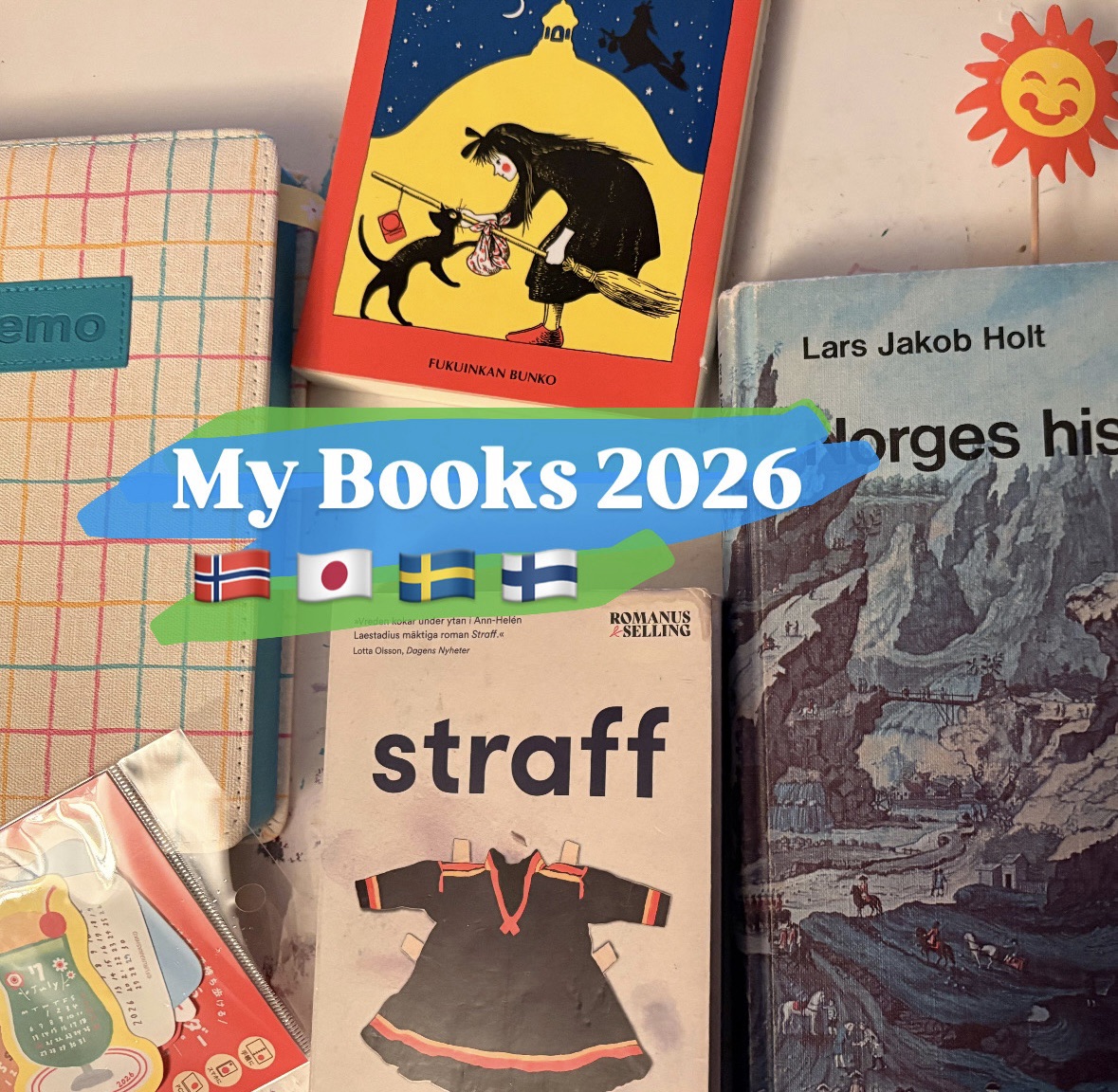
my 2026 language plans with books: continue reading Swedish novels and Norwegian non-fiction, and studying Finnish.
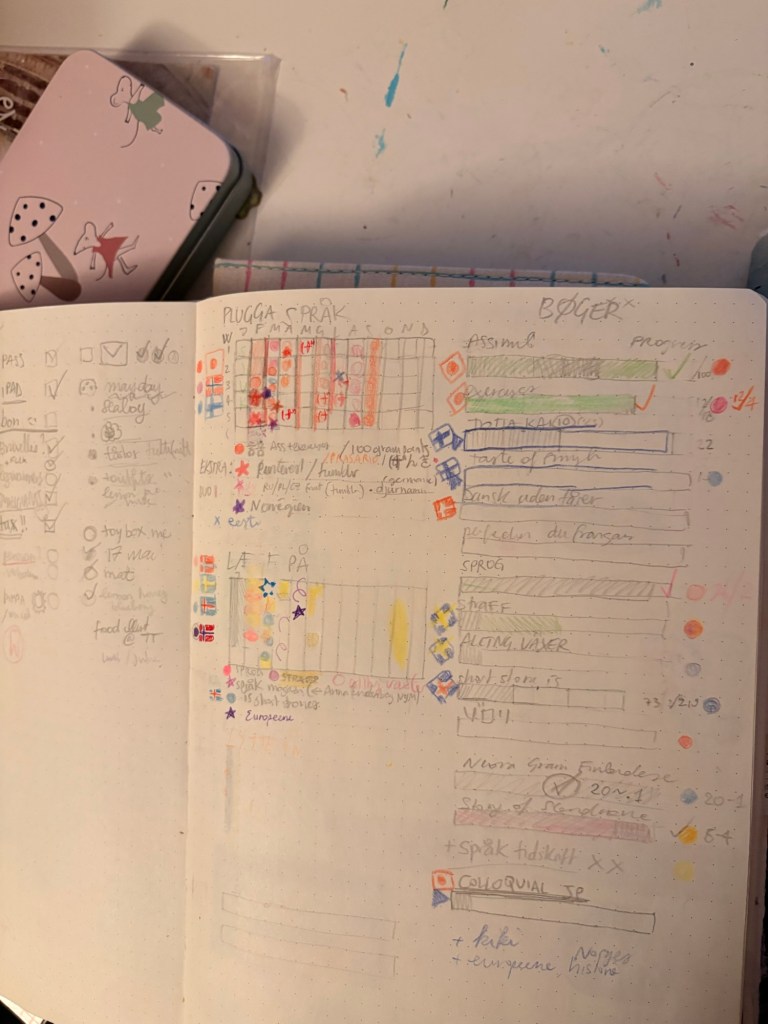
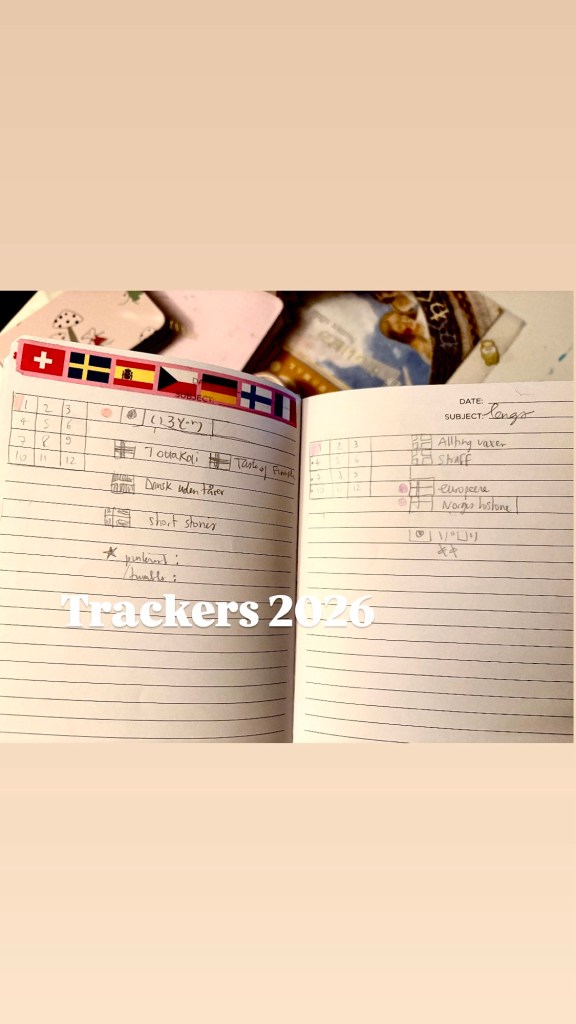
As I did for my Nordic books 2025, here is an updated list of books I will be reading and textbooks I want to use in 2026
Below my trackers for 2025 and 2026: in 2025 I mostly studied Japanese and read Swedish novels
Book I am reading in Swedish and Norwegian
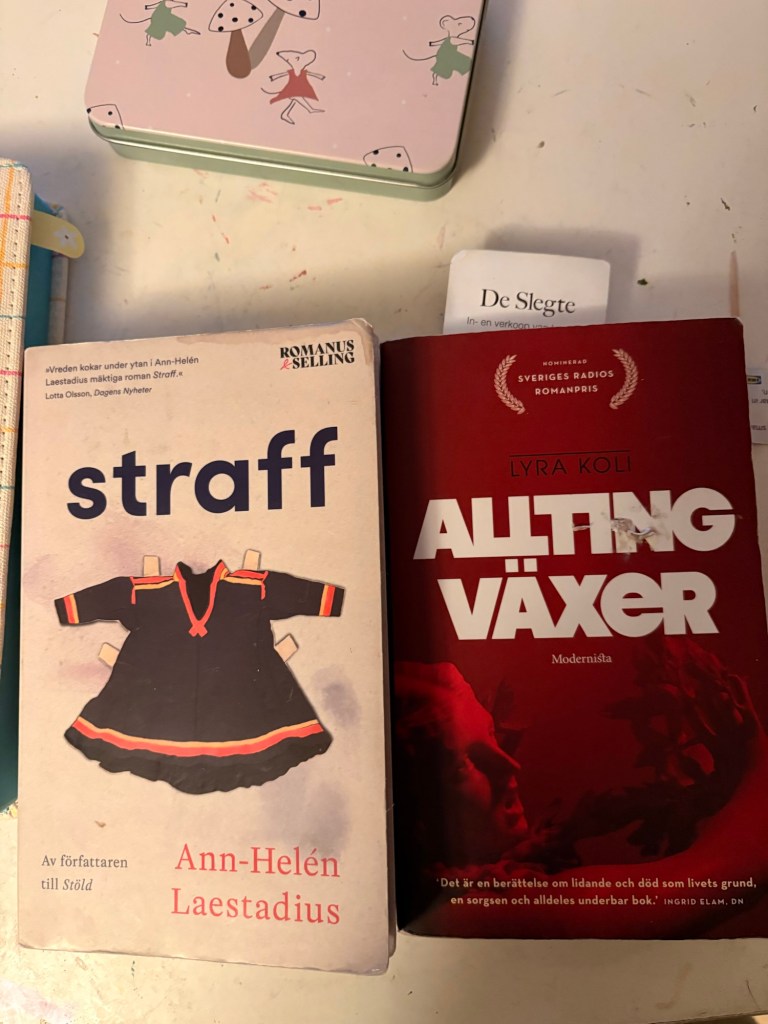
Novels to finish
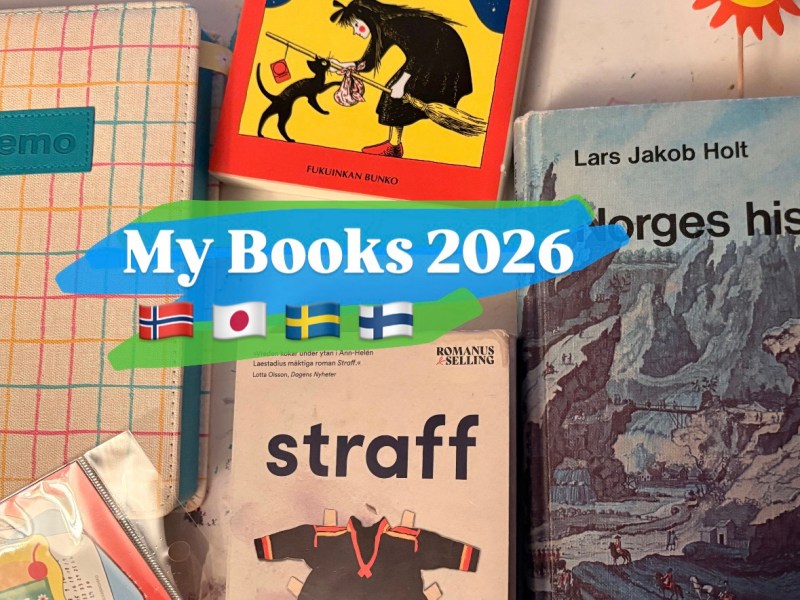
Straff, Ann-Helen Laestadius – Sami kids taken away from their families to a Sami-hostile environment, who meet again 30 years later.
Allting växer, Lyra Koli – dystopic novel about a Scandinavian girl set in a post- world war and climate catastrophe world.
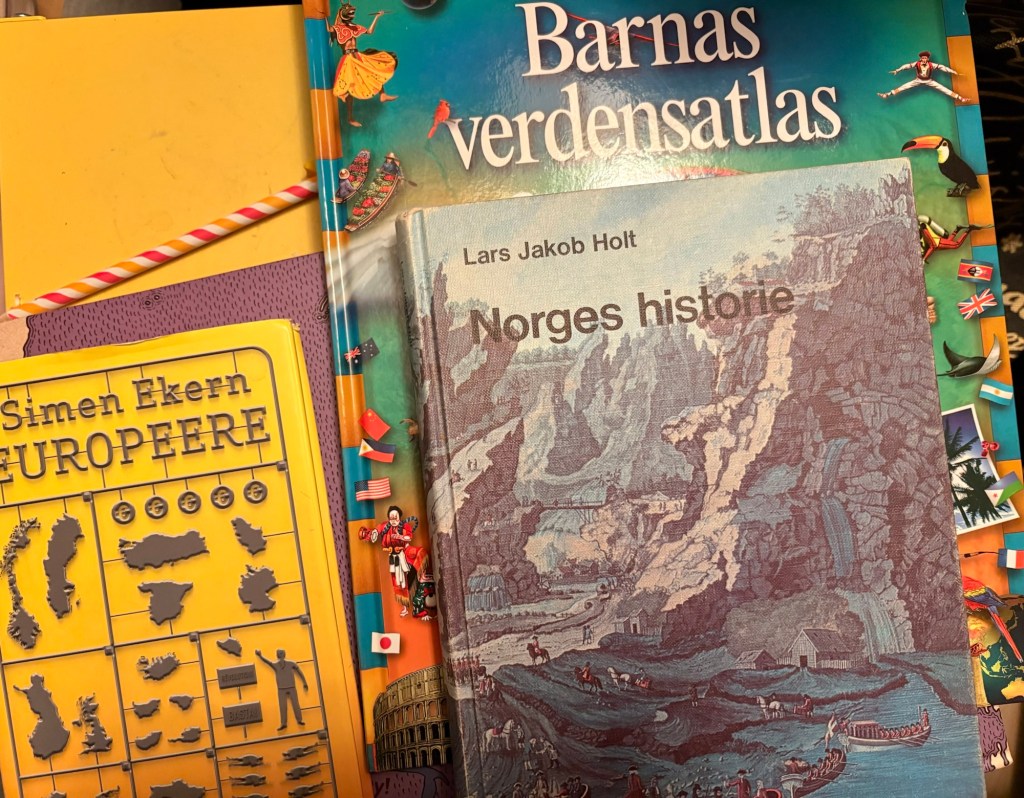
Norwegian books got from the thrift book shelf at the Norwegian Seamen Church
Europeere, Simen Ekern – an essay on the European Union, written around 10 years ago. This was how I opened my 2026 readings!
Norges Historie – encyclopedia-ish book on Norwegian History, from Vikings to the 70s, when it was published
Books to study Finnish
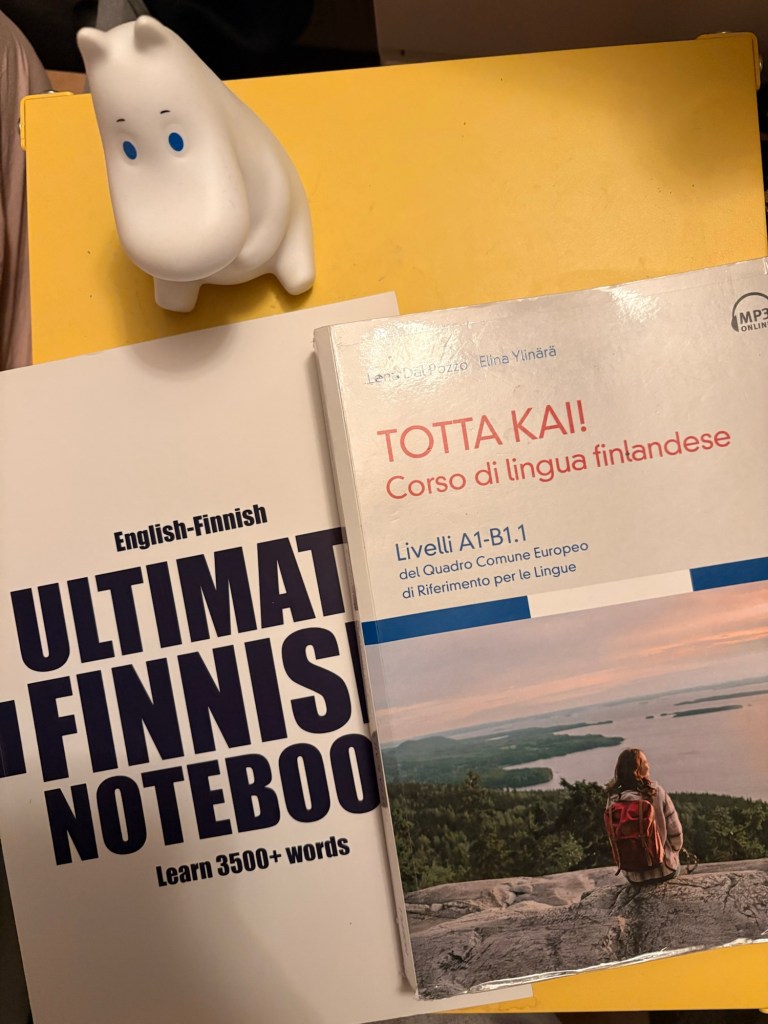
Later this year, I want to try focusing on Finnish for a while. I still have my coursebook I purchased a couple years ago, and can work on vocabulary thanks to the Ultimate Finnish Notebook (get a discount on such books for a lot of languages! – code ChiaraBeretta)
Due to my limited time, i had no time for Finnish last year, also because I tried to fully focus on studying Japanese (as for Japanese – I will use Irodori/いろどりfree online textbooks/resources). I recently purchased an Assimil book for Finnish, which should make learning Finnish while commuting easier thanks to it’s compact format and bite-size lessons
Icelandic and Danish for fun
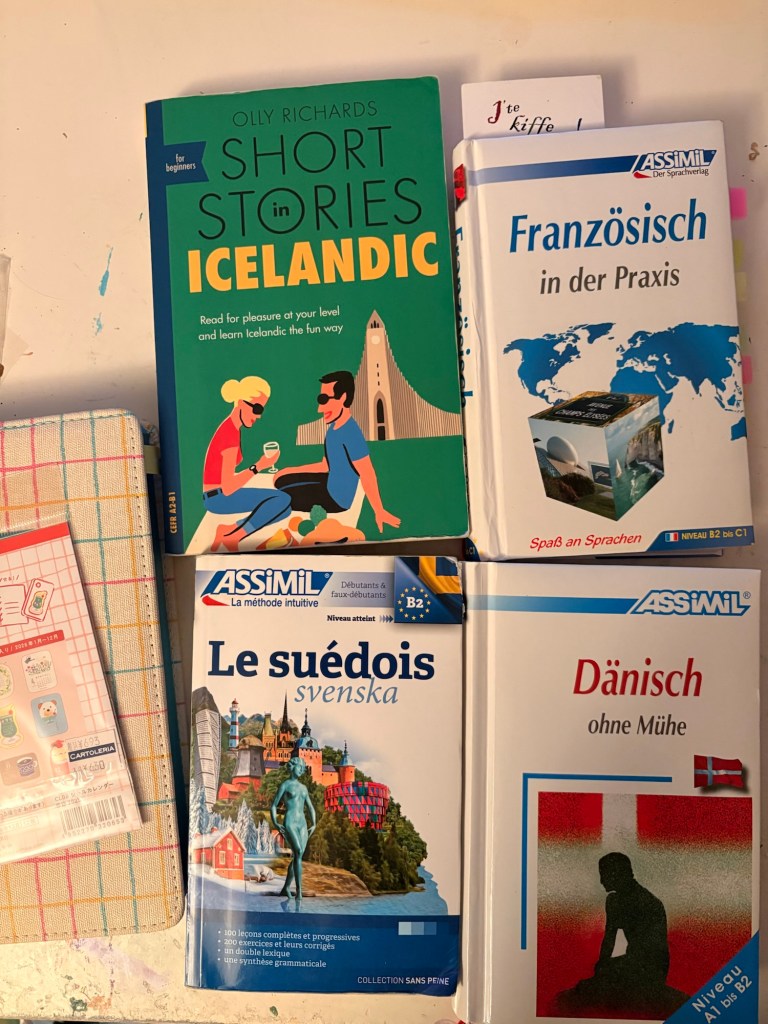
As I wrote last year, I might try to improve my Danish with the German Assimil edition. Other books, as Swedish assimil and Short Stories in Icelandic, were started in the past and I might continue (for Icelandic) or review (for Swedish) them later.
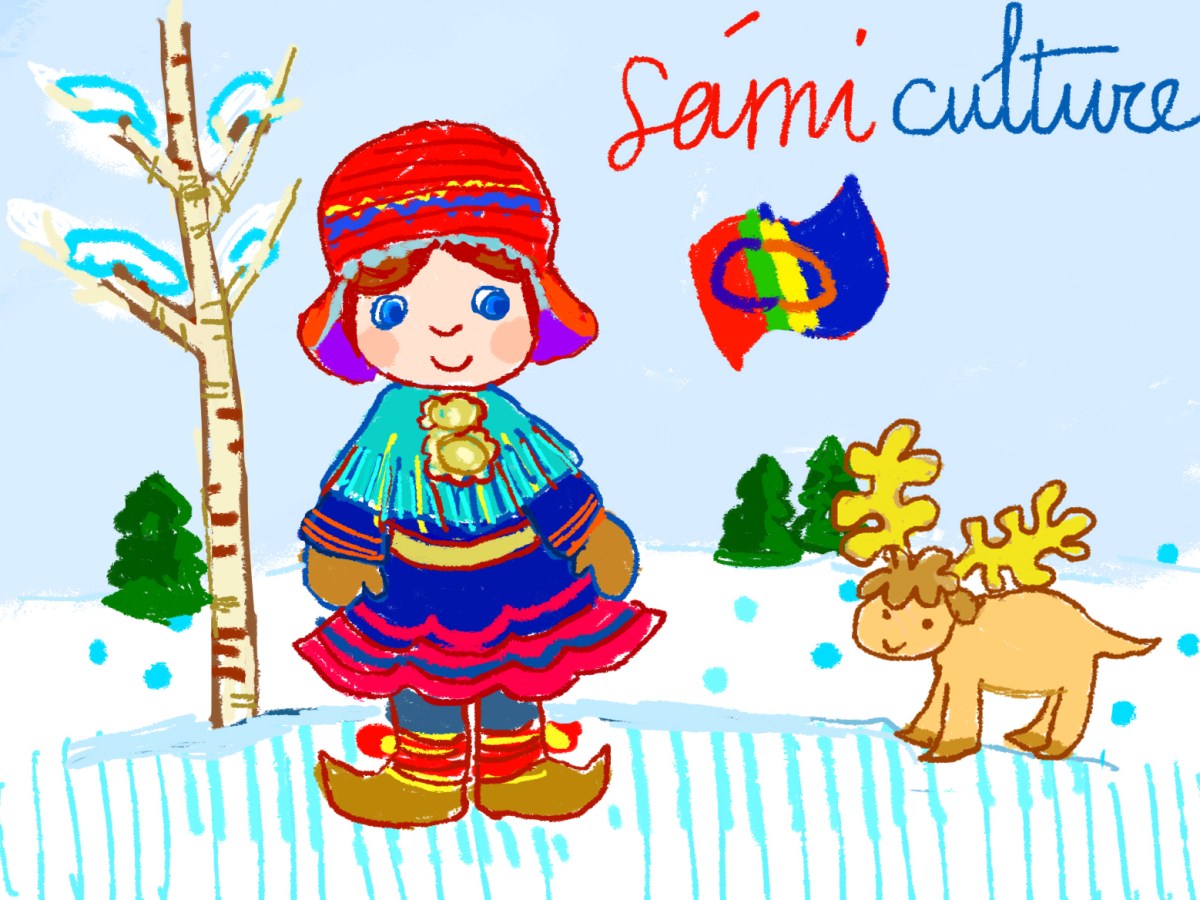
Sámi people, indigenous people of North Scandinavia, have a distinct culture, symbolised by its unique flag and traditional clothing, and part of it are Duodji handicrafts and unique musical expression through yoik.
Discover Greenland, home to the Inuit Kalaallit, and its most iconic aspects as its flag, language and folk costumes. The biggest island of the world has a rich history of indigenous culture intertwined with Norse colonization and later Danish rule.
Many have heard of Greenland lately because of what is going on in the world. Here is an introduction to its culture and history, with iconic aspects from this Arctic nation.
Greenland – Kalaallit Nunaat – an Inuit nation between the Vikings and Colonisation
Most of Greenland’s population – the Kalaallit – are Inuits, the indigenous peoples of the Arctic, from North America to Siberia. Although the current Greenlanders’ ancestors, the Thule people, migrated from Alaska around 1000 years ago, Inuits were already present in Greenland in 2500 BC.
Greenland also had Norse inhabitants for a while – Its norse name Grønland, ‘green land’ was given by Erik den Røde, arriving around 1000 a.D after being exiled from Iceland. Norsemen left around 1400, probably due to the worsened climate conditions of the little ice age. A sign of the Norse settlement are the ruins of the Hvalsey church.
The Scandinavians returned with the Danish colonization from the 1700s, beginning with an expedition to find remaining Norse inhabitants. This time led to suppression and attempts to westernize its people, and despite this, Greenland now proudly preserves its Inuit culture, with its language, traditional clothing, and in its flag.
Flag and coat of arms of Greenland
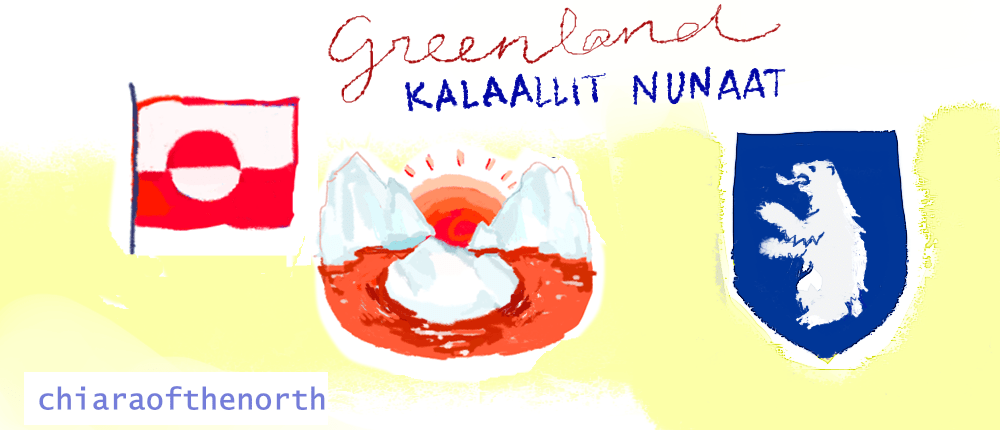
The Greenlandic flag is called Erfalasorput (‘our flag’) and was introduced in 1985, flying for the first time on Greenland’s national day, Summer Solstice.
It symbolizes the sun rising in the arctic Greenlandic landscape, on a light midsummer sky. The red-white colors reference the Danish flag.
It was designed by the Greenlandic artist Thue Christiansen (1940-2022), and was voted as the winner among many other concepts, in particular against a Nordic cross.
Greenlandic Language
the Greenlandic Inuit language, Kalaallisut, is spoken by around 50.000 people – the majority of Greenland’s population – While Danish is taught and spoken as a second language. Greenlandic belongs to the Eskimo-Aleut languages, spoken by indigenous peoples of the arctic area. Loanwords from Greenlandic present in all languages are kayak and anorak.
A distinctive feature is that a single word can express what in English and most European languages would be an entire sentence: Silagissiartuaarusaarnialerunarpoq means “The weather will slowly and gradually become good again”…
Greenlandic incorporated many loanwords from the Danish language (and western culture):biili (bil – car), iipili (æble – apple), juulli (jul – Christmas), as well as greeting as“kumoorn” (god morgen – good morning).
A more detailed post about the Greenlandic language will follow!
Greenlandic national costume
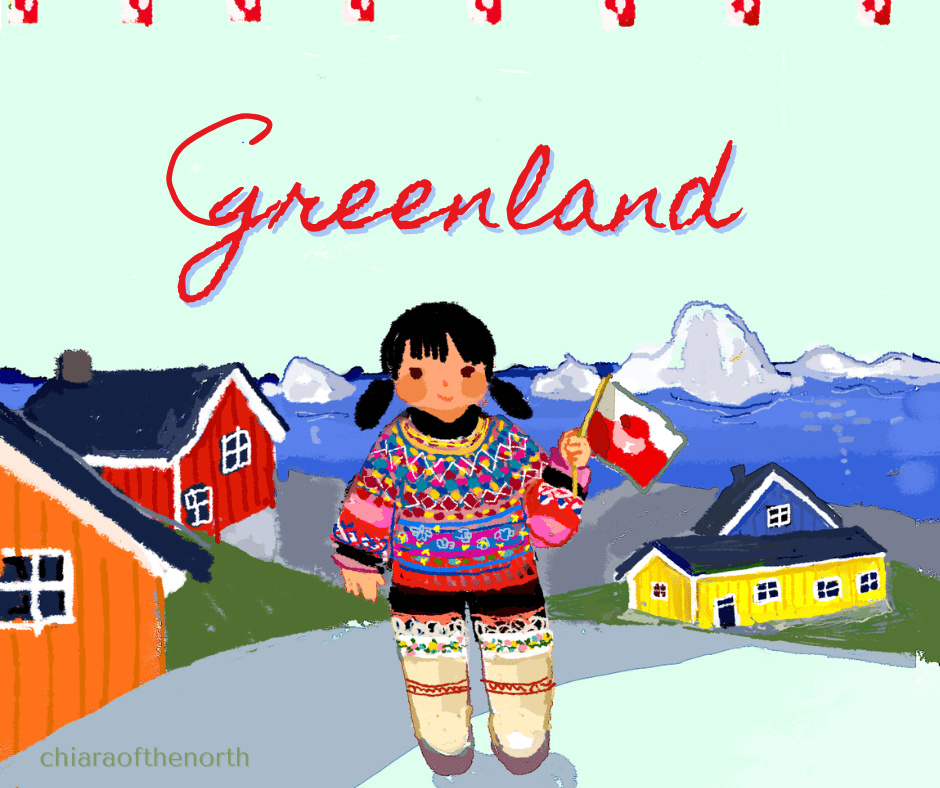
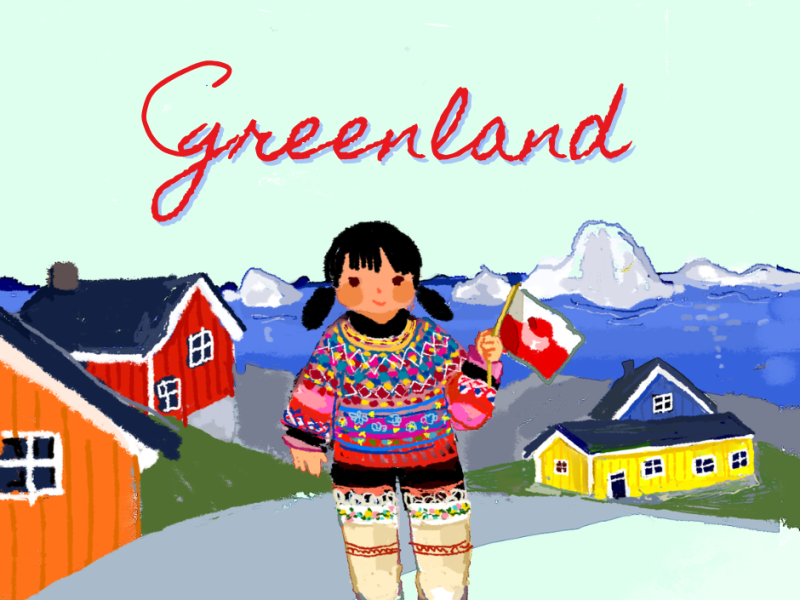
The Greenlandic national costume – probably the only women’s folk costume in the world with pants instead of a dress or skirt! – is worn on special occasions and is a symbol of Greenlandic identity.
Besides festive days as Christmas/Easter, Weddings, confirmations and Birthdays (on a child’s first birthday in particular), the national costume is worn on Greenland’s National Day (21st June, summer Solstice), and typically by children on their First day of school.
The national costume features a top, pants, and kamik boots. Anorak is the name of the top’s outer! Much is made with sealskin, which was the only material used for clothing until fabric were introduced by Europeans in the 17th Century.
Follow for more info about the culture and language of Greenland!
Discover Greenland, home to the Inuit Kalaallit, and its most iconic aspects as its flag, language and folk costumes. The biggest island of the world has a rich history of indigenous culture intertwined with Norse colonization and later Danish rule.
Lucia brings light in the darkest night of the year and is a mix of pagan and christian traditions. It is celebrated in Scandinavia with processions, saffron buns and church concerts.
False friends in Danish, Norwegian, Swedish and Icelandic that can lead to misunderstandings and funny situations between Scandinavians.
False friends are a very common thing in similar languages, and they can cause funny or weird situations, from calling someone calm instead of fun and pastries becoming headaches. Or insulting a girl by calling her girl.
So here is a list to find out curious false friends and keep yourself safe from incoveniences. As you will notice, Danish and Norwegian often have the same meaning opposed to Swedish, but not always.
(se-dk-no) word
Swedish meaning
Danish meaning
Norwegian meaning
rolig
fun (calm=lugn)
calm
calm
artig
polite
funny
funny
frukost/frokost
breakfast (lunch=lunch)
lunch (breakfast=morgenmad)
breakfast (lunch=lunsj)
blomma/e
flower (plum=plommon)
plum (flower=blomster)
plomme=plum (flower=blomster)
varelse/værelse
(living) being (room=rum)
room
room
by
town/village (city=stad)
city (town=landsby)
city (town=landsby)
stad/sted
city
place
place
semester
holiday (semester=termin)
semester (holiday=ferie)
semester (holiday=ferie)
lov
summer break , promise (law=lag)
law (a promise=et løfte, but to promise=at love)
law (a promise=et løfte, but to promise=at love)
rar
weird (nice=snäll)
nice, friendly
weird (nice=snill)
konstig/kunstig
weird
artificial (weird=mærkelig, underlig)
artificial (weird=rar, merkelig)
snål
stingy
–
weird, odd
le
smile (laugh=skratta)
laugh (smile=smile, read smeeleh)
laugh (smile=smile)
grina/e
weep, cry, also gråta
laugh (cry=græde)
cry (laugh=le, also gråte)
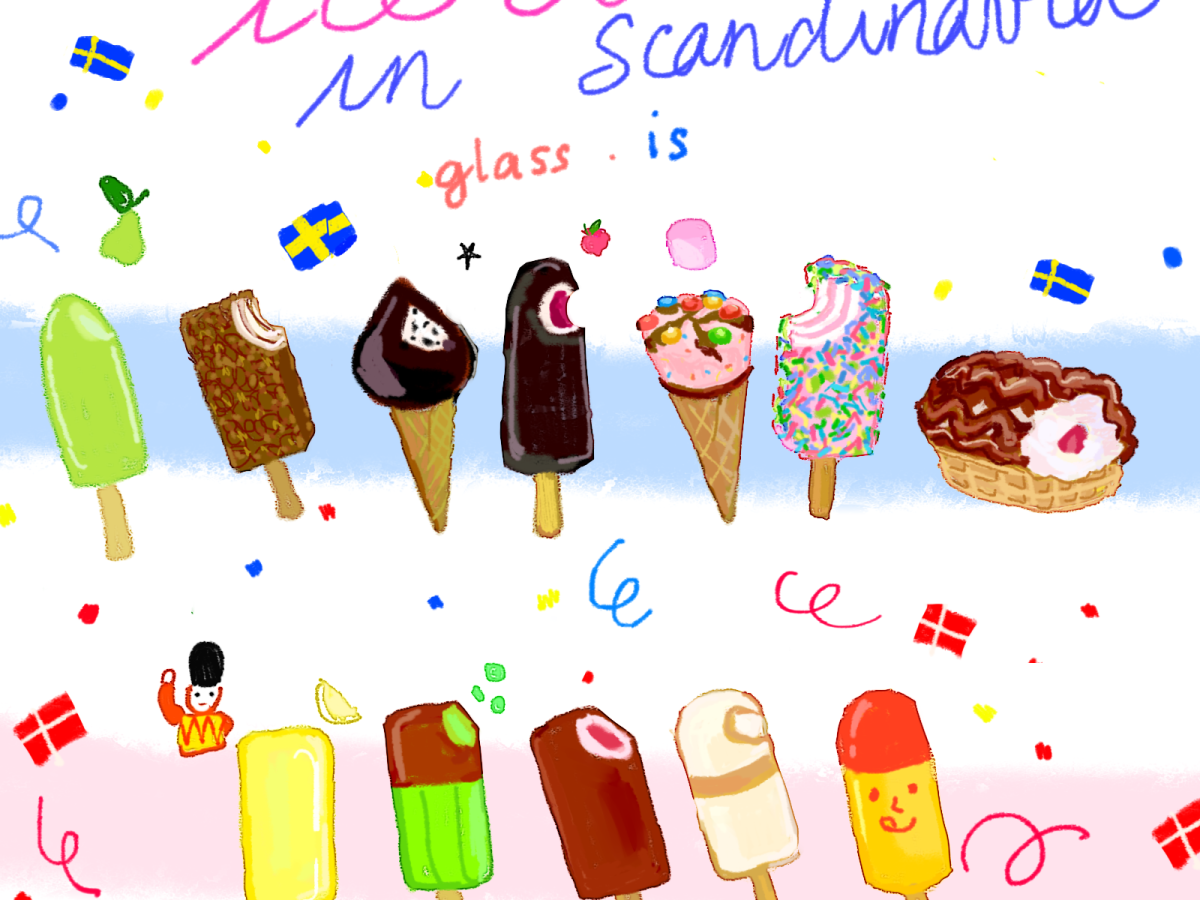
glass
ice cream (glass=glas)
glass (ice cream=is)
glass (ice cream=is)
kjol/kjole
skirt (dress=klänning)
dress (skirt=nederdel)
dress (skirt=skjørt)
killing
young goat
kitten*
geitekilling=young goat
bums
immediately, at once
pimple
–
kryddsill/krydsild
spiced herring
crossfire (spiced herring=kryddersild)
-, spiced herring=kryddersild)
tallrik/talrig
plate
numeous (plate=tallerken)
-, plate=tallerken
hurtig
cheeky
fast
fast
anledning
reason
reason
opportunity
bedrift
achievement
company
company
stygg
naughty
ugly
fly
escape
airplane
flight
tillbud/tilbud
incident
offer
offer
tull
customs
– (customs=told)
joke/nonsense (customs=toll)
snort
snot
lace, cord
driva/e med
joking with/kidding
doing
måste/må jeg…
do I have to?
may I?
do i have to?
and here special section with Naughty words…. Pay attention
Swedish meaning
Danish meaning
Norwegian meaning
skede
phase
vag**a
tös/tøs
girl
girl
sl*t
bolla/e
play boll (to f8&k=knulla)
to f*ck
en bolle=bun pastry, å bolle seg=chill, have fun (to f8&k=knulle)
kneppe
–
to f**k (button=knappe
button (fuck=pul3)
mås
seagull
butt (seagull=måge)
– (seagull=måke)
svans
tail
fag**t
–
källing/kælling
kitten*
b**ch
–
kuk
d1ck
cuckoo , mess (d*ck=p1k)
d1ck
bärs/bæ,sj
slang for a beer
poop
icelandic also has a few interesting cases:
Swedish
Icelandic
hugga
chop
console
bakverk
pastry
backache
That’s all for now, I will keep this updated in the future!
The ‘anchor’ language concept allowed me to learn Swedish, Dutch, Danish, Norwegian easily starting from studying properly only one language. This approach helps prevent confusion and builds a solid foundational understanding of language structures.
At the Polyglot Gathering 2025 – an event to connect with fellow language lovers and attend talks on language-related topics – Richard Simcottmentioned an interesting concept during his talk Language Bubble. Replying to a question about learning many closely related languages (and avoid confusion) he talked about relying on an ‘anchor’ language. And I realized i actually used that method without being fully aware of it.
As I mentioned while talking about learning all Germanic languages simultaneously, I did not start 5 languages at once. It was a gradual journey. And I relied on different languages at different stages. First on German, then on Swedish, and that is how I gradually studied/learned all Scandinavian languages. My experience as follows.
How I learned Scandinavian languages together
My first Scandinavian language was Swedish, which I picked out of feeling. Sweden was probably just slightly better represented in my head than Denmark and Norway. I started it after having studied English and German for years, and that helped me significantly, vocabulary and grammar wise. The same goes for Dutch, which I started at the same time as Swedish – they are related, but not that closely. When I started, I could make a lot of assumptions and give things for granted thanks to my German knowledge: verb position, past verb paradigm, vocabulary I could understand etc. Back then, German could be loosely defined as my Anchor language for both.
Then, after having focused myself only on Swedish for 2 years, I started trying to write in Danish. I could not express myself but all i needed was figuring out how to modify my Swedish. The grammar works In the exact same way for most things, vocabulary is often very similar and has recurring spelling differences. After a while just google translating you see the patterns, and learn fast because of how similar they are.
Similarly, as I happened to chat with more Danes than Norwegians, I expanded a lot my Danish skills, making it more ‘independent’ from my Swedish. For Norwegian I have been relying on both, being aware of typical Norwegian features. I believe the key when attempting to speak is learning well filler words. The listener will be impressed about it before you recycle a word in another language – fake it until you make it they say.
Knowing Scandinavian languages surely did not have the same role as an anchor language when learning Icelandic, but I guess I could/can still use them as a ”reference”. German similarly when it came to Icelandic grammar in the beginning.
Anchor language concept In a nutshell
This concept consists in one language being on a higher level than the rest, To know something also means to know what distinct it from the rest, and for that you need a solid base you can rely on and use as reference. At some point, you will rely less and less on the anchor language.
Pick a language and focus only on it and no new closely related ones for a while. You do not need to become fluent, but you need to know the language structure well: how grammar works, general vocabulary etc. So you are sure of what is Swedish, and do not mix it with what isn’t when learning.
Get exposure in other related languages: start getting to know the other members of the family. Just like in a real family you do not remember the names of everybody after first introductions with many new people, so you have to have contact with them again here and there to actually be acquainted.
Start using the other languages. As the passive language skills are already there due to language intellegibility, and you can use what you naturally absorb after a while, also by searching words you do not know and grammar concepts that might be different in your anchor language.
you can also see it as writing two essays: it works better to first write and finish one with a defined structure, then take that structure for a different topic and slightly modify it, than starting two different essays simultaneously, adding bits to both now and then, ending up with two randomly written texts.
The same can be applied for Romance languages, though my Anchor language is my native language, which I obviously have a strong base of to begin with…
I do plan to focus on Finnish to be able to make it my anchor language in order to easily learn/understand Estonian. It already helps with absorbing grammar features and some words I have randomly encountered, but to be a proper anchor there is work to do!
The ‘anchor’ language concept allowed me to learn Swedish, Dutch, Danish, Norwegian easily starting from studying properly only one language. This approach helps prevent confusion and builds a solid foundational understanding of language structures.
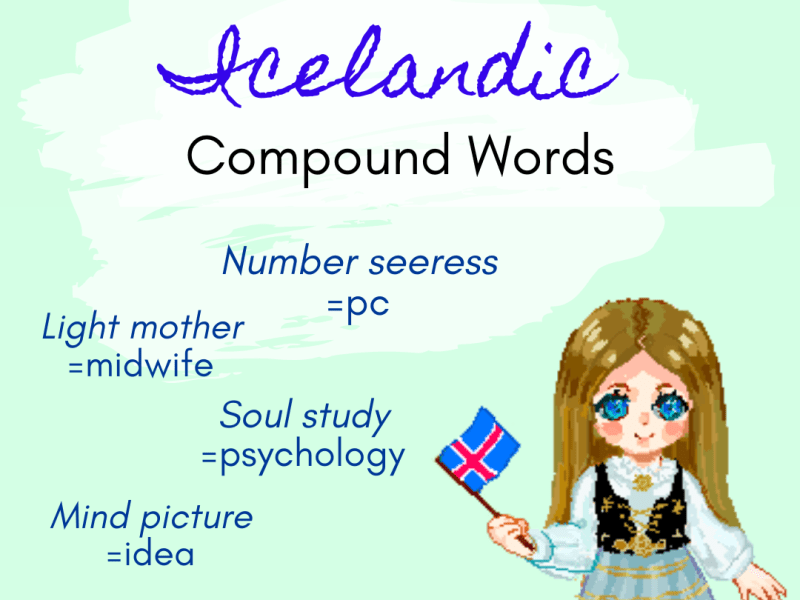
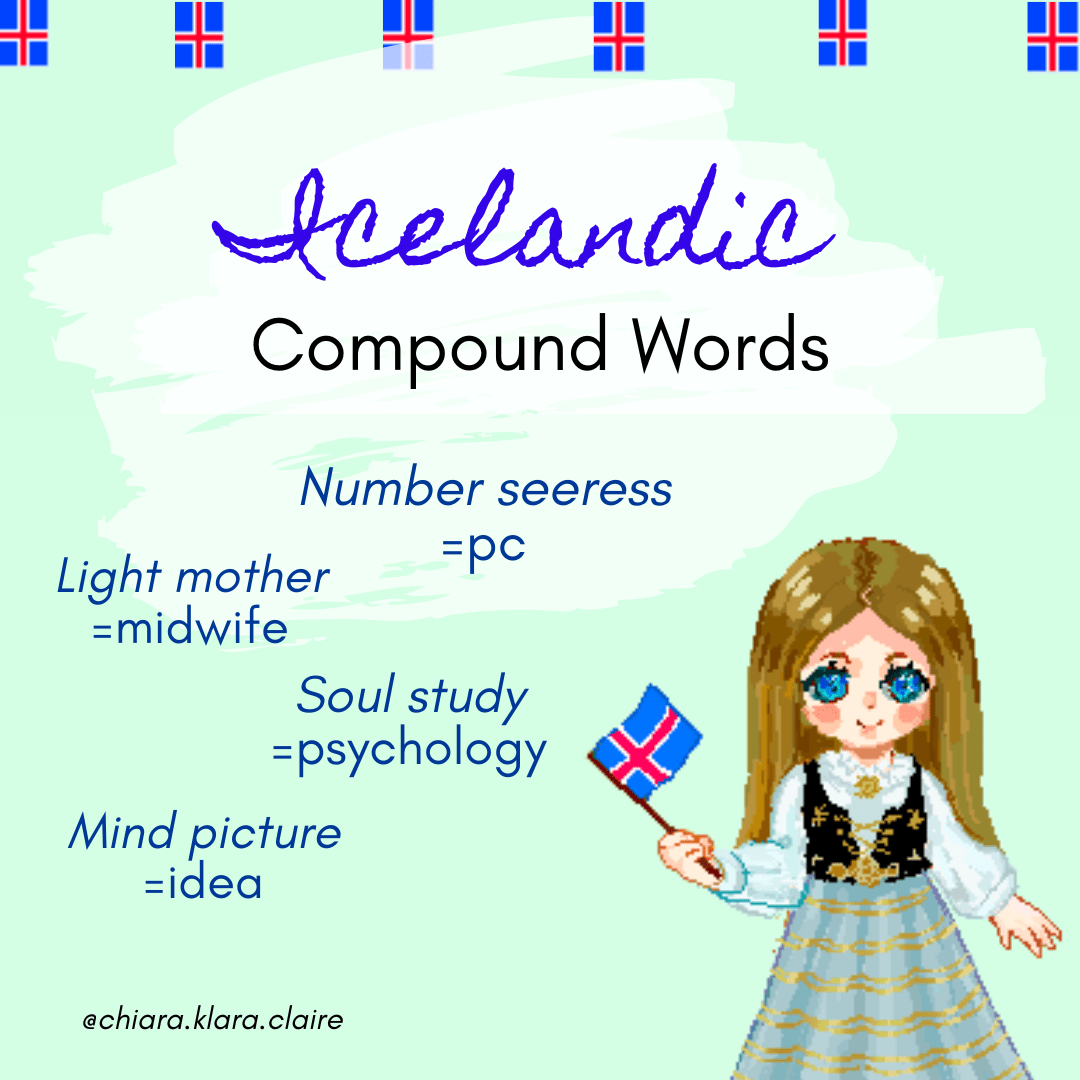
curious Icelandic compound words, from unique Icelandic words as ‘number prophetess’ for computer to ‘light pear’ for lightbulb.
Icelandic, like other languages, has a lot of compound words, expressing a concept with multiple other words. For new concepts, for example technology-related vocabulary, Iceland has a committee inventing new words for new concepts, by assembling existing Icelandic words. This is to follow the language purism policy, and avoid just adapting foreign words or using loanwords.
Here are some Icelandic compound words I like. Can you guess the meaning by looking at the literal translation?
words unique to Icelandic:
Icelandic
literal meaning
meaning
tölva
Number-Prophetess (tala+völva)
computer
ljósmóðir
light-mother
midwife
bergmál
rocks-language
echo
tónlist
sound-art
music
hugmynd
mind-picture
idea
ástfanginn
Love-captured
be in love
hugfanginn
mind-captured
fascinated
sálfræði
soul-study
psychology
málfræði
language-study
grammar
Viðskiptavinur
business-friend
customer
Hunangsfluga
Honey–Fly
bee
Mörgæs
Fat-Goose
penguin
spékoppar
naughty cups
cheek dimples
smokkfiskur
condom-fish*
squid
leigubíl
rent-car
taxi
Compound words that also exist in other languages
Icelandic also took words that are jut adaptions of the original Greek words, literally translating into Icelandic, and shares quite a few with other (Germanic) languages, which are still curious if you are not a speaker of any of them.
Icelandic word
literal meaning
English/most European languages from Greek/Latin
ljósmynd
light-picture
photography (phos+graphe: light+writing)
Reikistjarna
wandering-star
planet (planḗtēs, “wanderer”, ellipsis of astéres planêtai, “wandering stars”)
rafmagn
amber-power
electricity (ēlektron: amber)
flóðhestur*
river-horse
hippo (hippopotamos)
Nashyrningur*
nose-horn
rhino (rhinocerus)
Legkaka*
Womb-Cake
placenta (literally “flat cake”, ellipsis of placenta uterī “womb cake”)
Innblástur
In-Breeze
inspiration…(yes, you’re welcome)
*As in Scandinavian languages flodhest/häst or ‘Nile-horse’ in German and Dutch Nipferd/nijlpaard; similarly Noshörning, neshorn, Nashorn, Neushoorn ‘nose horn’. *Scandinavian mo(de)rkake, ‘mother cake’.
Some curious combination are present in other languages as well:
Icelandic word
literal meaning
same as
English
eldfjall
fire-mountain
火山 (Japanese)
volcano
Gæsalappir
Goose-Feet
Gänsefüßchen (German, besides Anführungszeichen)
Quotation Marks
Ljósapera
Light-Pear
Glühbirne (German), lyspære (Norwegian)
lightbulb
vínber
wine-berry
viinamarjad (Estonian)
grapes
sources:
Article by Silvia Cosimini on Passenger Islanda, Iperborea. Reddit thread: /r/linguisticshumor/comments/17k5ivl/whats_the_most_ridiculous_example_of_semantic/ guidetoiceland.is ‘s Icelandic Language iverview Boredpanda.com
Snailmail is a great way to practice languages at your own pace, make friends and get creative at the same time!
I have been into penpalling/snailmail since my early teenage years, and I started using this hobby more recently as a way to practice languages.
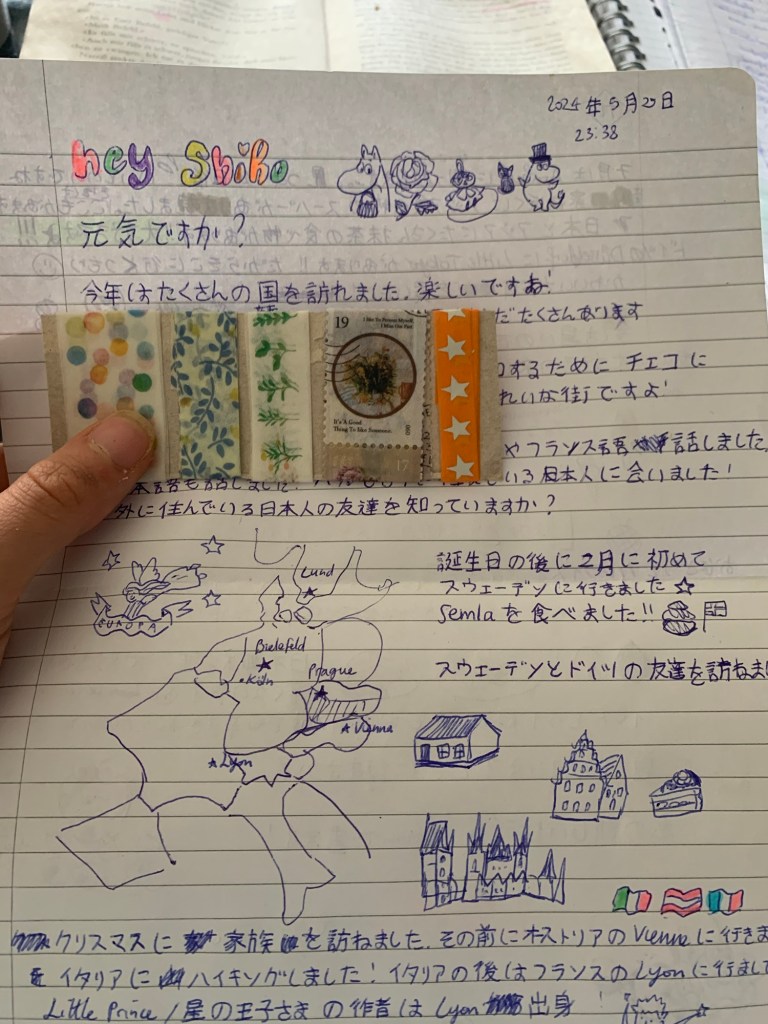
I actually started learning Danish and Norwegian by writing letters in them. I spoke decent Swedish already and could read them, but had to look for a lot of words and correct grammar forms, and that was a boost, learning actively while having fun and being creative! At the moment, I am actively using my Finnish and Japanese with my penpals from Finland and Japan.
How to find penpals: hashtags, communities, websites
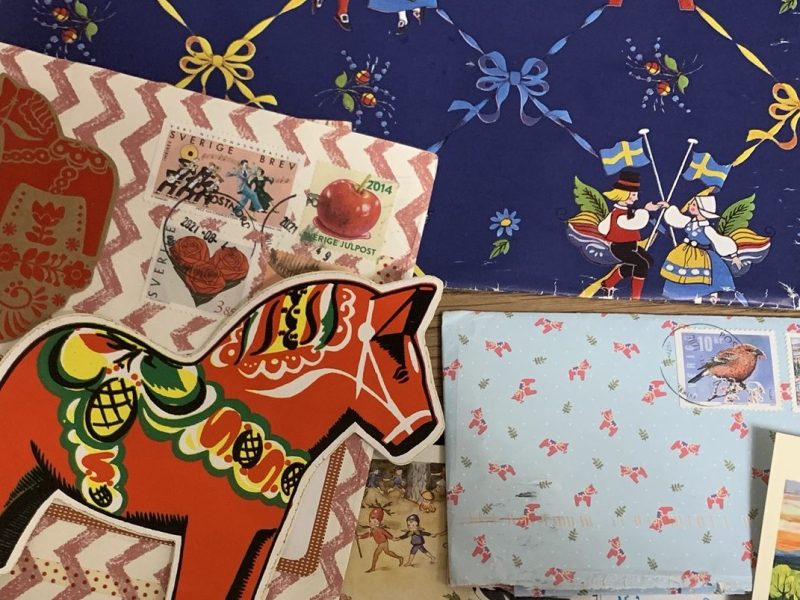
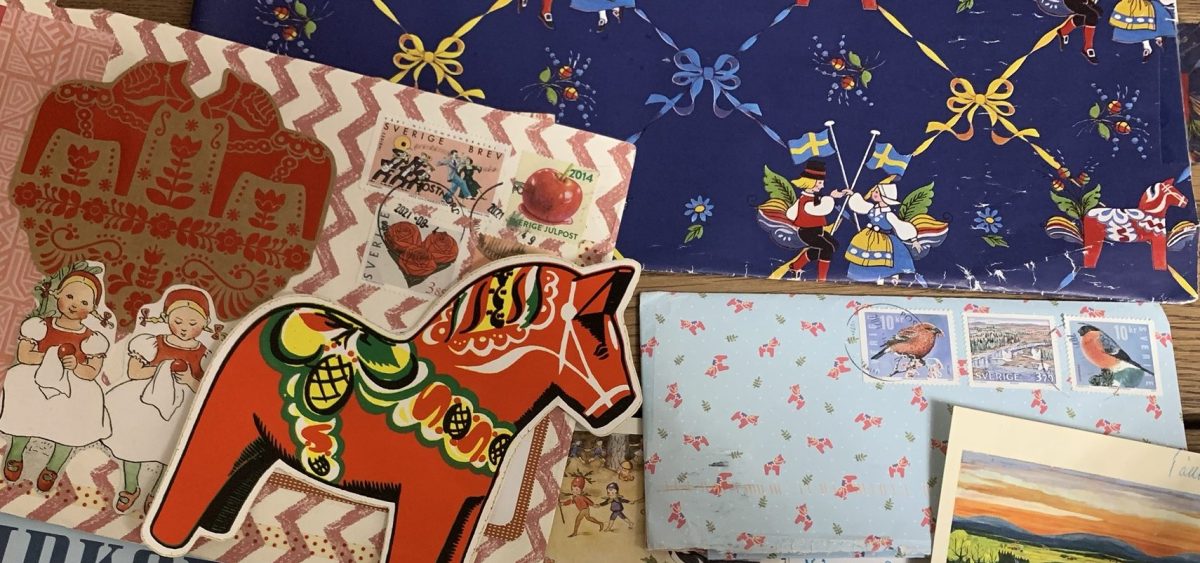
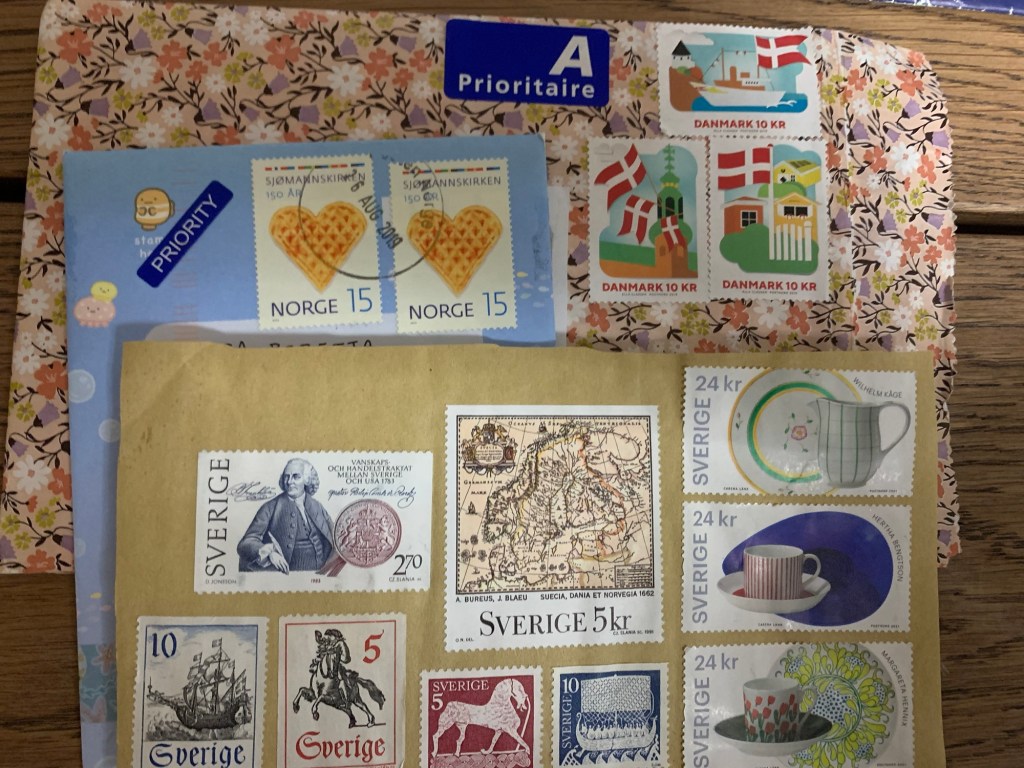
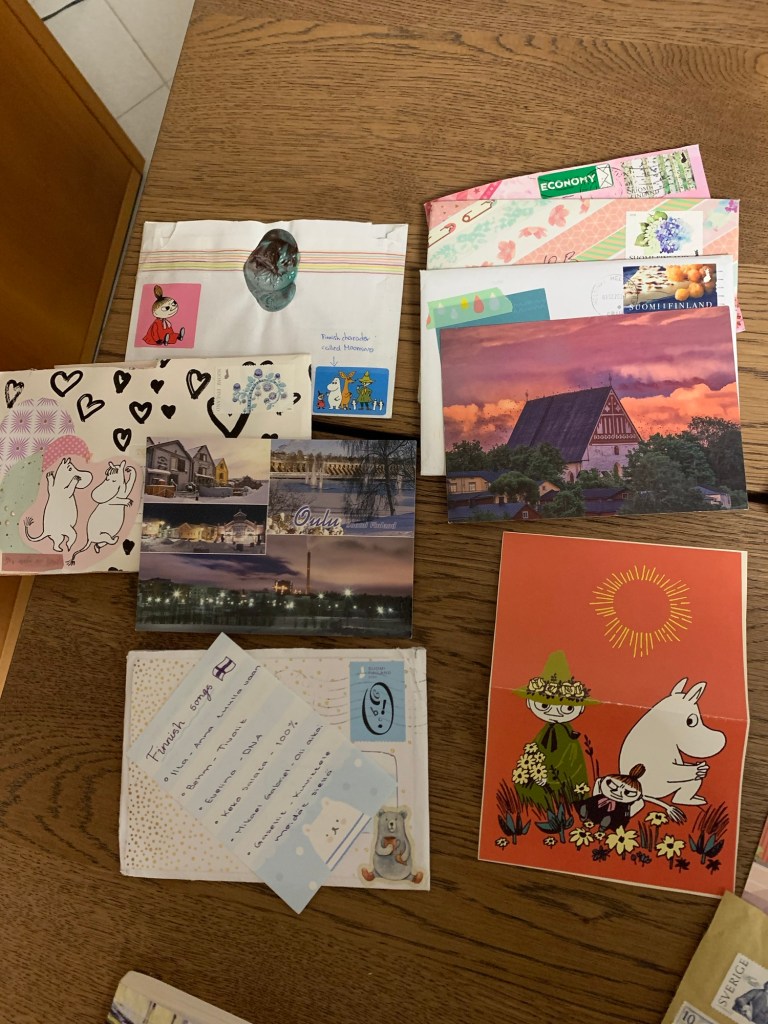
Pretty stamps from Scandinavia!From a Finnish penpal
One of the ways to find other people interested in penpalling is searching with the right hashtags on social media as instagram and tiktok. For example #penpalswanted , #lookingforpenpal, etc. In some cases snailmail accounts give a chance to comment and introduce themselves under a post to those looking for a penpal.
There are also websites made for people looking for a penpal, for example Global Penfriends, interpals.net... Here you can select a country and age to find your future penpals! Other websites are country-specific as Pen friends clubs of Japan.
introduce youself with a video or post adding the hashtags above, or interact and send messages to other penpal-wannabes. Talk about your interests, your aesthetic, show your letters and. No creativity, special things you’d send as stickers, postcards..
Get creative: material you need & ideas. pinterest board
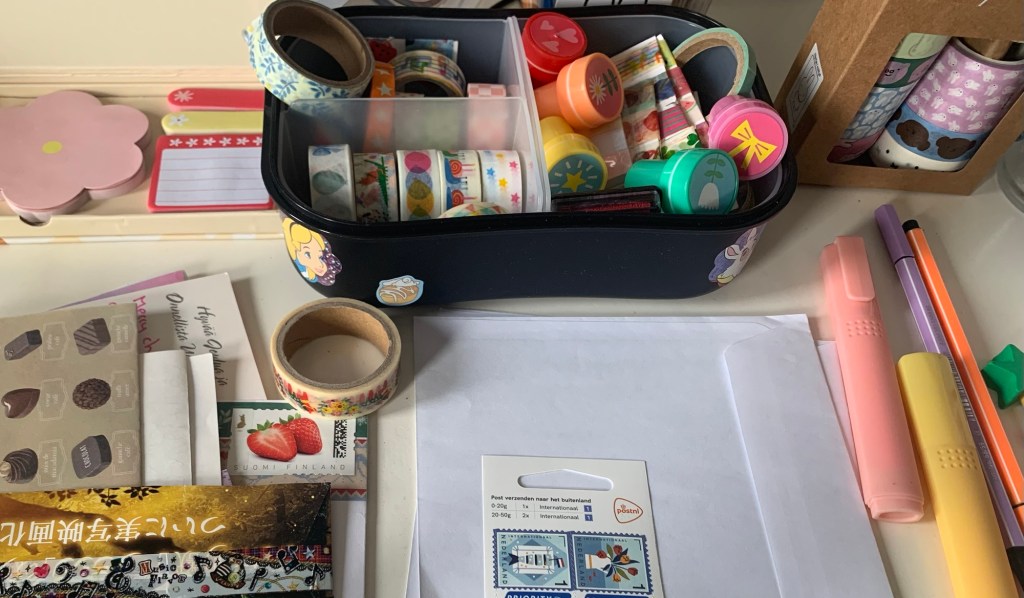
Some of my snailmail material: washi tapes, stamps and pretty sticky notes
There are no right or wrong things to include in a letter, but usually, the more things you include in it, the nicer it is for your penpal receiving it!
In this Pinterest board I add inspirational pictures for my letters. Some ideas:
washi samples, stickers
memo notes
postcards
cutouts (pictures from magazines..)
Questions for your penpal
songs
Similar the length of your letter is up to you. When practicing languages, the longer the more space to improve! It can be as personal as you want it to.
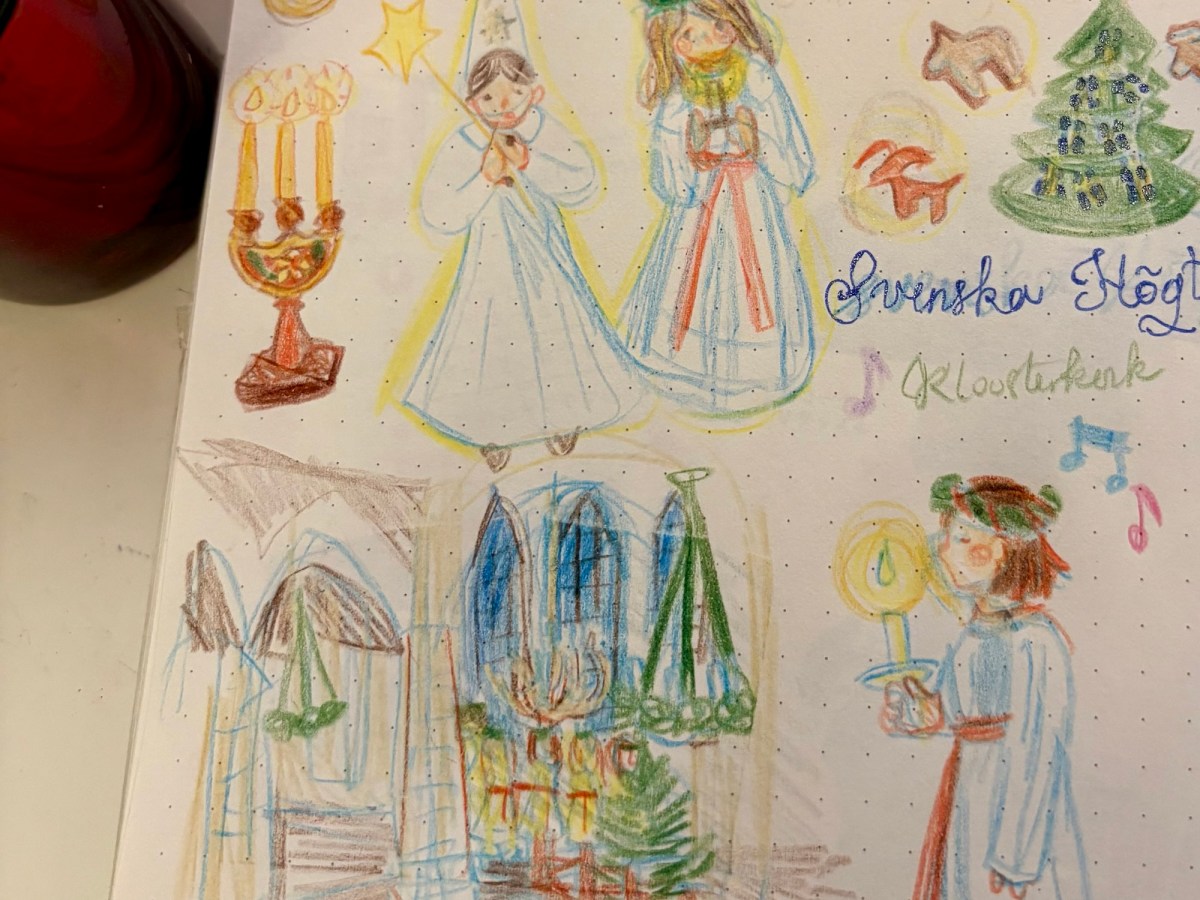
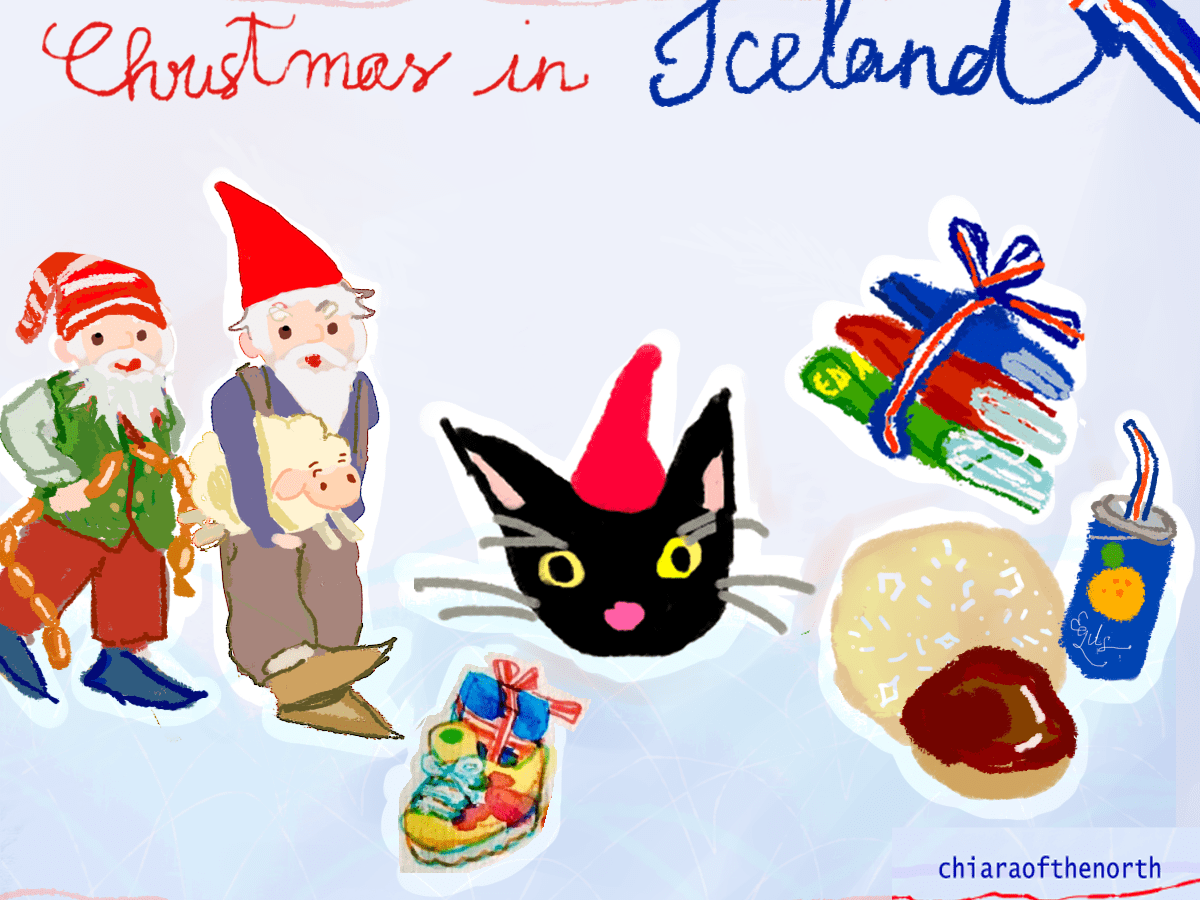
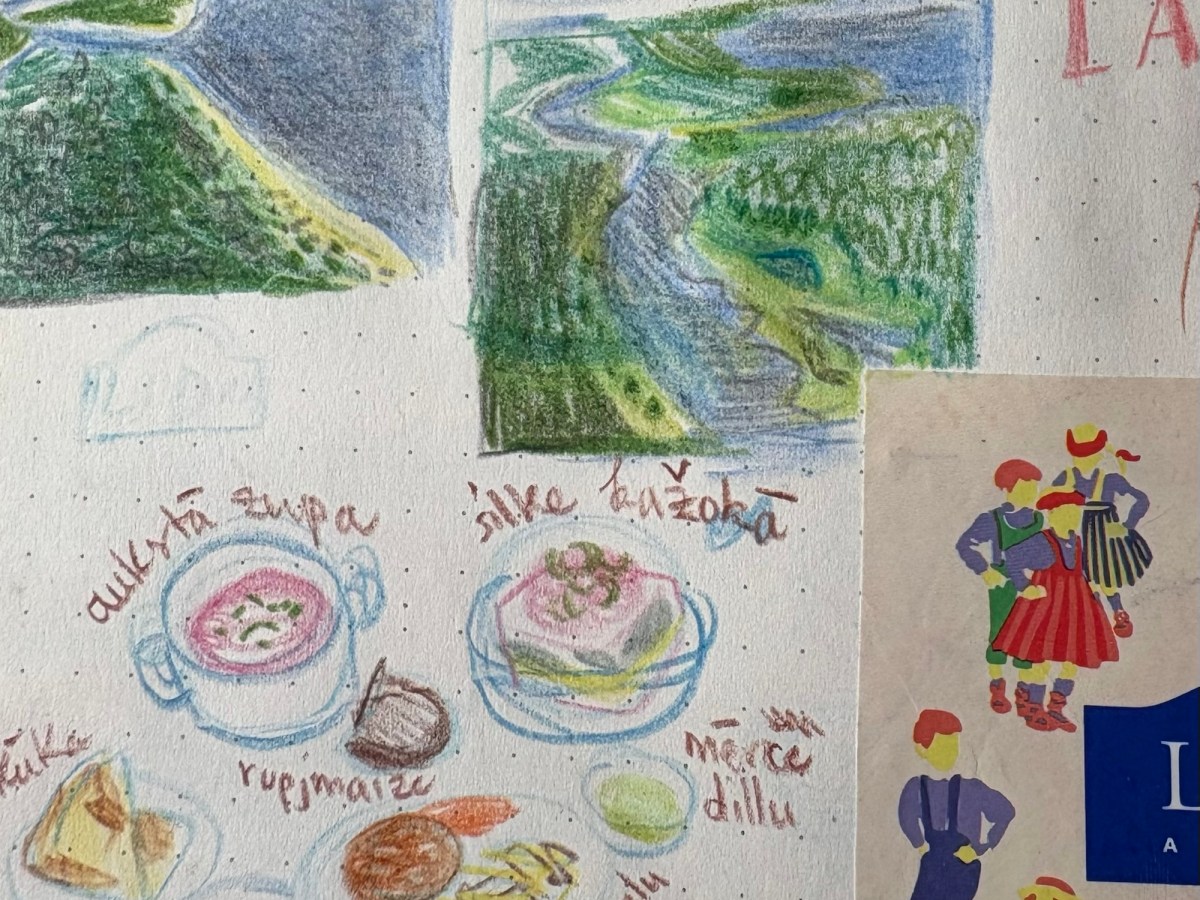
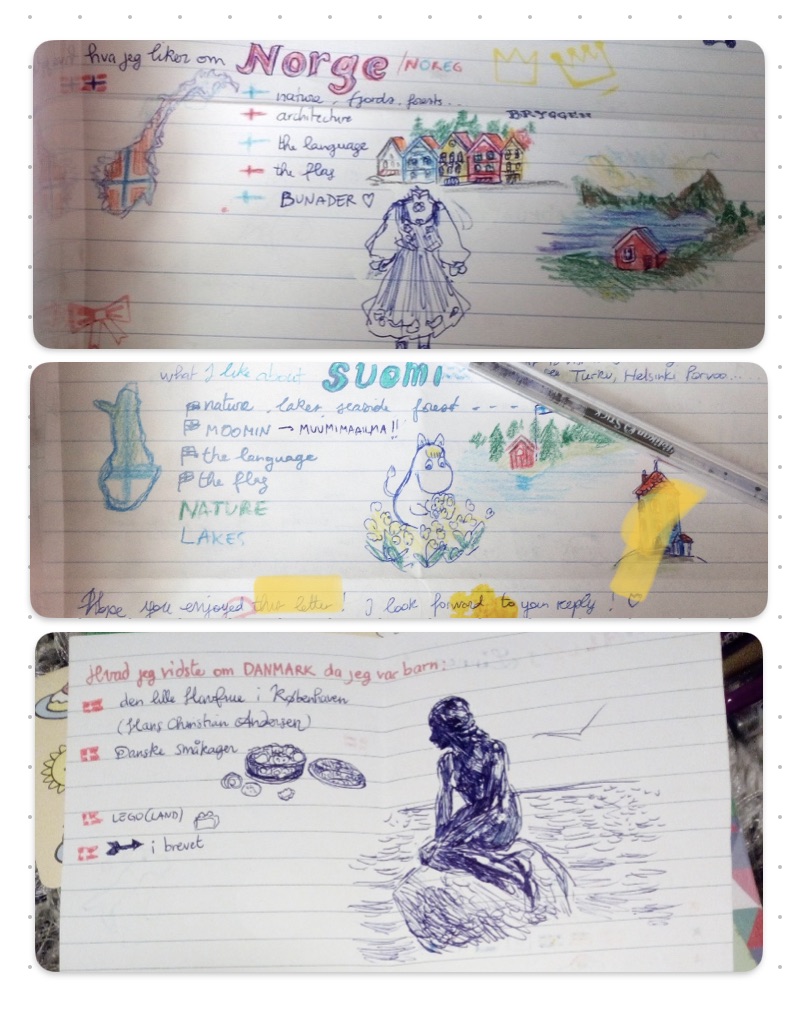
fun fact: When writing to a new penpal, I always write/doodle about things I like or know about the other person’s country, copying illustrations from books I had as a child among others 🙂
Stick to the language
As I mentioned in my blog post about practicing a language spoken in a country with high English proficiency, it is important to find a space whee you force yourself to use that language no matter what – and writing letters is a perfect solution for that. It is a relaxed, fun way to practice taking your time, both when reading others’ letters and writing your own. You can look up words, and exercise writing in other scripts too if needed! Just handwriting å, æ or ð feels quite satisfaying to me.
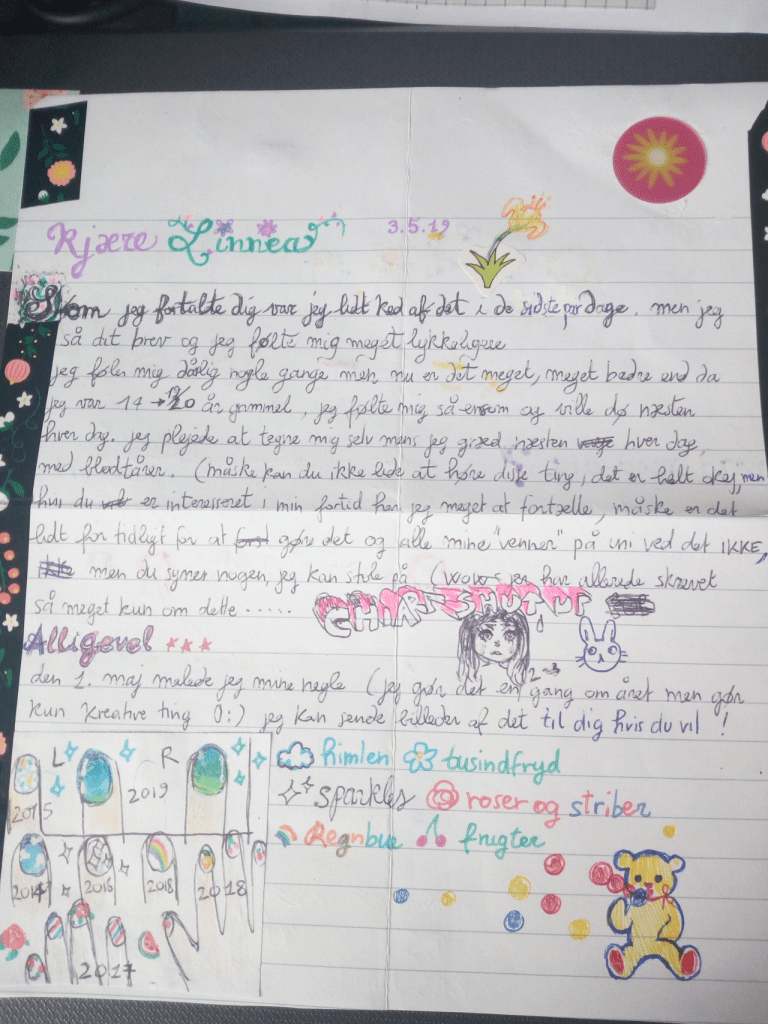
For a Japanese penpalFor a Danish penpal
Penpal etiquette
If you are the one asking to become penpals and get a yes – write first. It is also possible to do swaps – one-shot mail exchanges where you send more things than in an ordinary penpal letter. In that case, sending it at the same time would be a fair option if you inform yourselves about what the other person likes to begin with.
In the first letter, introduce yourself and your interests, what you like/dislike..
Try to put similar effort in letters as your penpals do, or ask them what they’d like to receive – it would be a bit unfair if someone uses a lot of materials, decorations and small gifts while you send a half empty sheet in a blank envelope.
If you do not feel like continuing writing to a penpal – that’s totally okay, but let the penpal know.