Iceland’s Christmas, Jól, involves 13 mischievous elves, a black cat, orange-beer, and a lot of books.
After Norwegian, Danish, and Finnish Christmas fun facts, this time is Iceland’s turn! As Iceland is fairly isolated from mainland Europe, Icelandic christmas, Jól, is characterized by a few more or less curious things, especially who brings gifts…
13 naughty elves
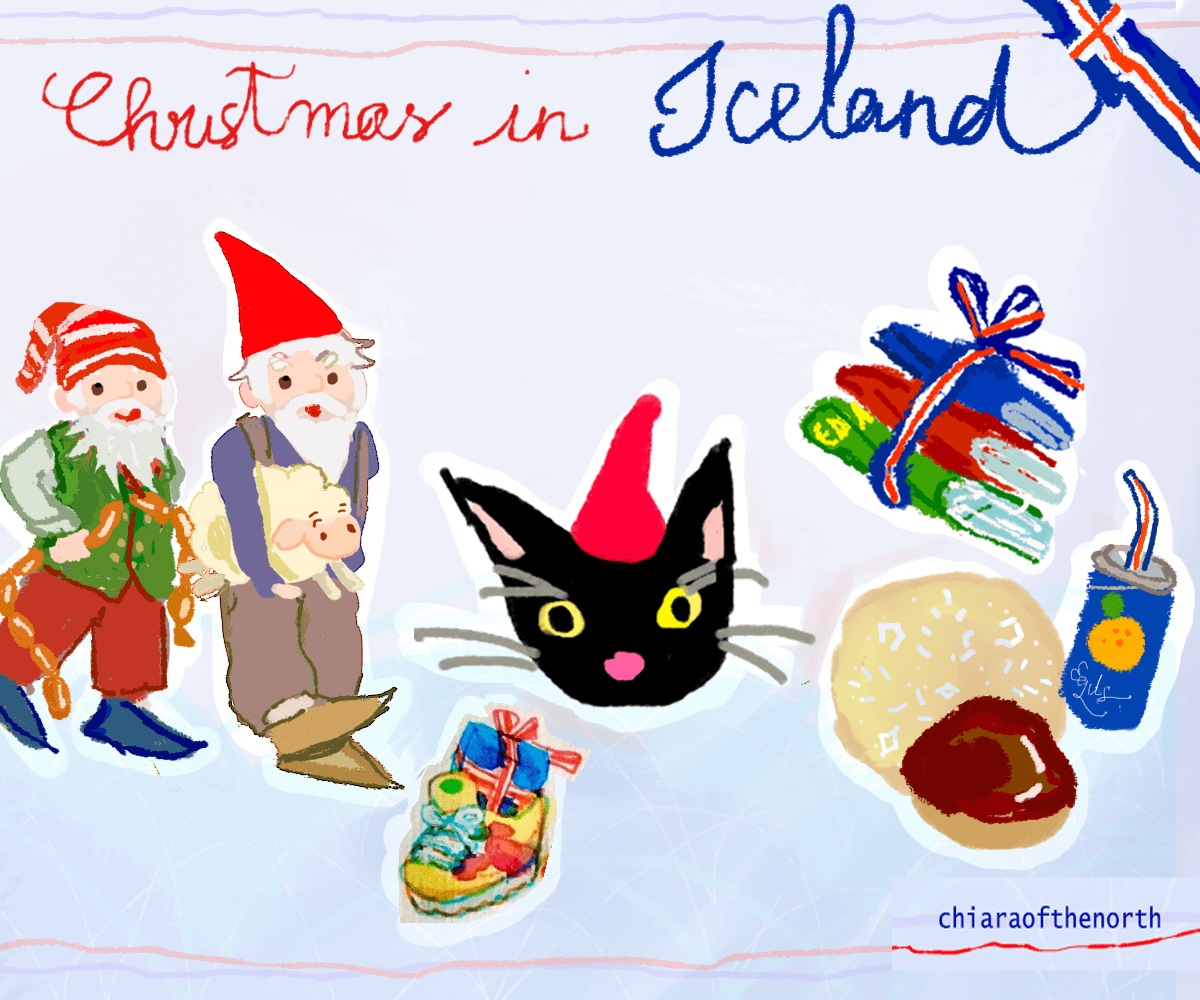
In Iceland the Christmas gift bringer is not one, but 13 elves, Jólasveinarnir -‘Yule lads’, who start coming 13 days before Christmas, one each day. Icelandic kids leave their shoes on the window sill every evening, so that the yule lads can leave a present inside them. According to the tradition they come from the mountains to annoy the population, each of them has a different name, related to what they do: Hurðaskellir “door slammer”, Skyrgámur “skyr gobbler”, Bjúgnakrækir “sausage stealer”, Stekkjarstaur“sheep harasser“ among others.
A black catthat will eat you *if you have old clothes
In Iceland you also have the Christmas Cat, Jólakötturinn, who eats people who have not received new clothes. During Christmas time you can admire a big sculpture of the cat in Reykjavik.
Books, books, books
Iceland has the highest number of books published (and probably read) per capita, and nearly everyone gives and receives books as Christmas presents. Around 80% of book sales happen during the so-called Jólabókaflóð “Christmas book flood”, in the two months before Christmas. Candles and playing cards are other traditional gifts.
Bread with patterns
An Icelandic Christmas tradition is making a thin and round fried bread laufabrauð “leaf bread”, with patterns cut into it. It kind of end up looking like bread snowflakes! Laufabrauð is often paired with hangikjöt, Icelandic smoked lamb.
Orange soda-beer mix
As it is during Jul period in other Nordic countries, Icelanders have their own Christmas beer. In Iceland, it is orange flavored! Jólaöl is a mix of malt extract and orange soda, from the orange soda brand Egils.
Cookies named after a French actress
Sarah Bernhardt cookies are a common Christmas treat in Iceland, typically home baked. Commonly called Sörur– Icelandic plural of Sara – they are chocolate dipped cookies, invented in Denmark in 1911 in honour of French actress Sarah Bernhardt.
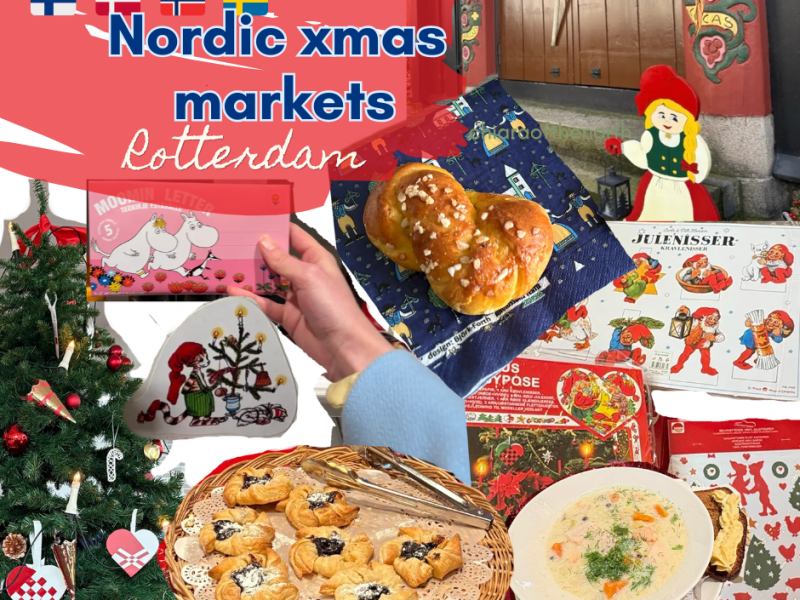
Norwegian, Danish, Finnish and Swedish Christmas markets in Rotterdam. Christmas decorations, imported typical Nordic products for sale, a cafe with lunch and cakes in each of them!
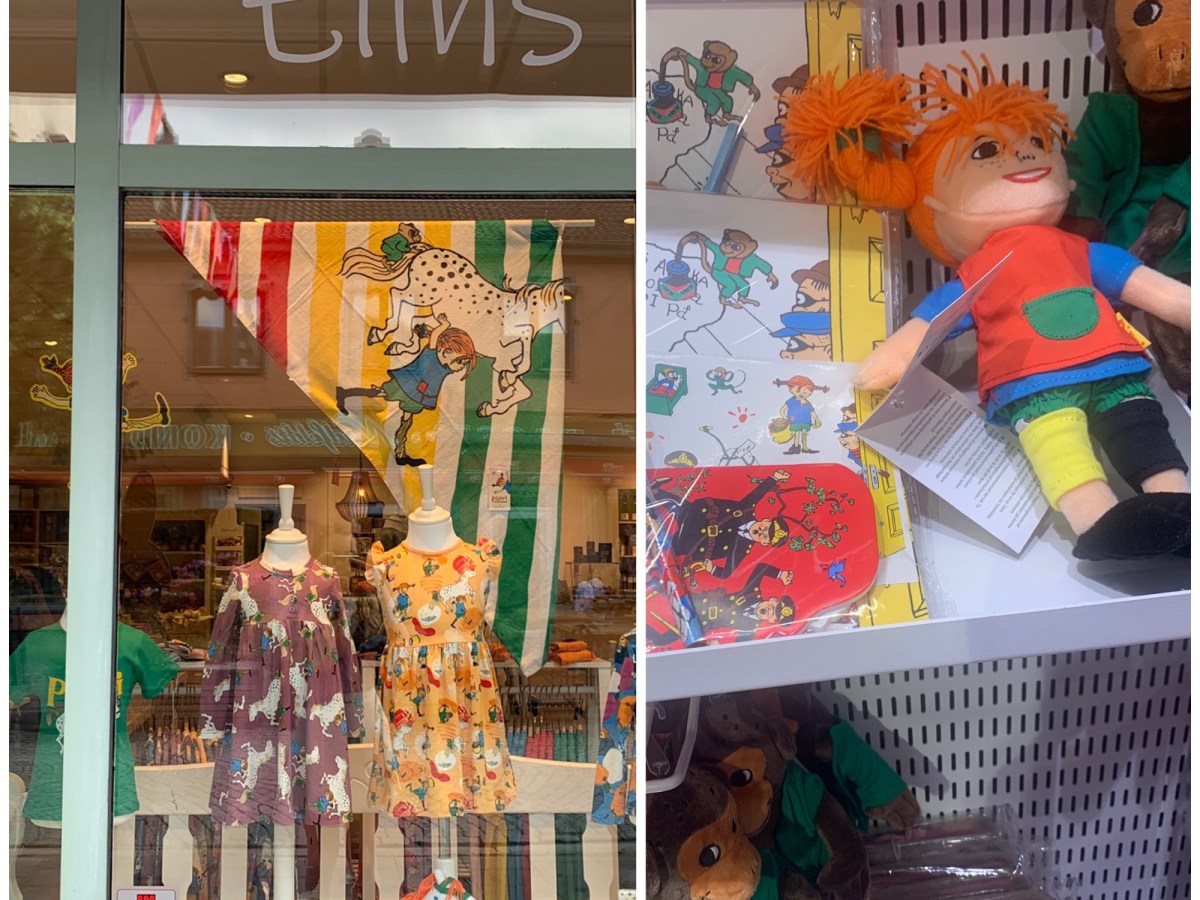
In Sweden, Pippi Longstocking objects can be a lovely souvenir. Pippi is on sweets and various children’s items a well, as sometimes other Astrid Lindgren’s characters, which have also cherished cultural impact as a part of Swedish identity.
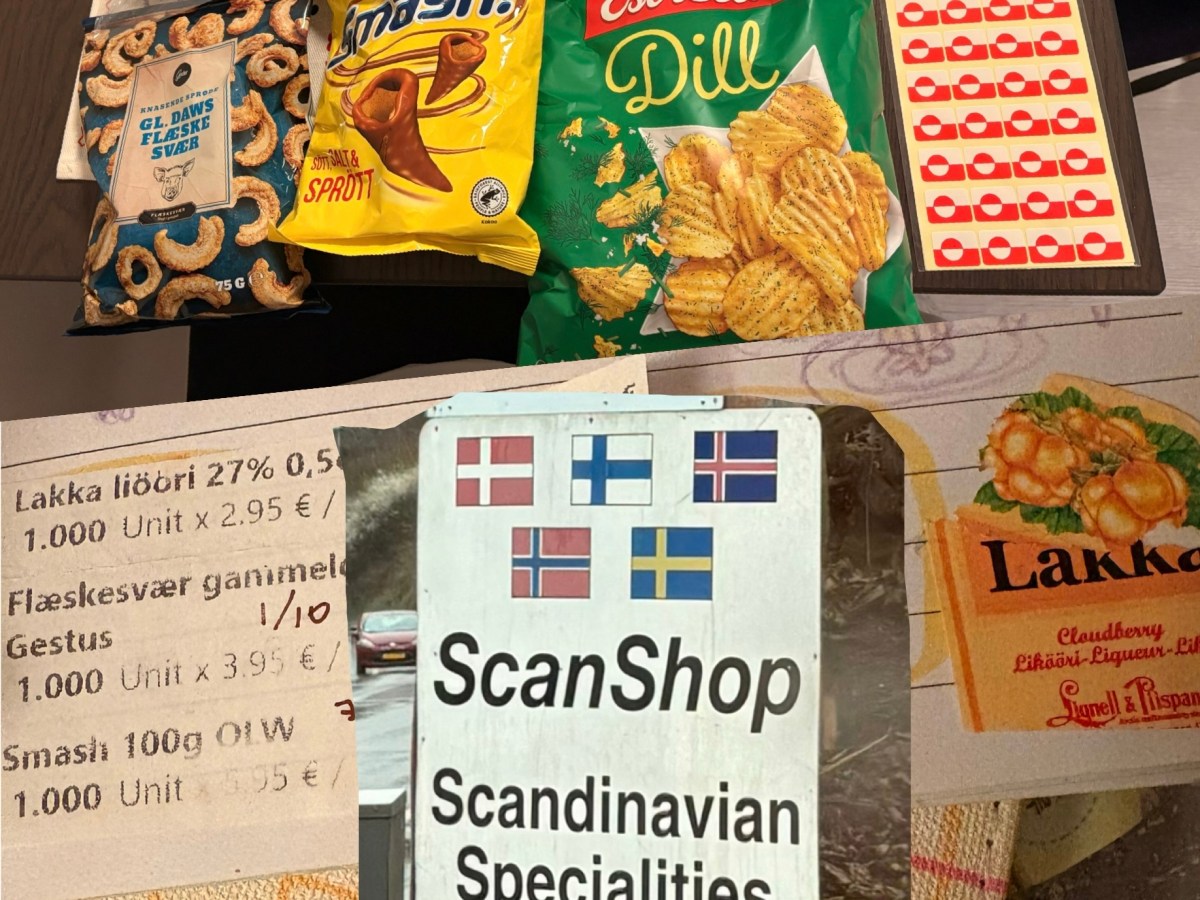
I visited Scanshop, a supermarket for Nordic expats in Luxembourg and Belgium. It offers a wide range of Scandinavian food products, including rye bread, fish, and sweets, alongside flags and tableware.
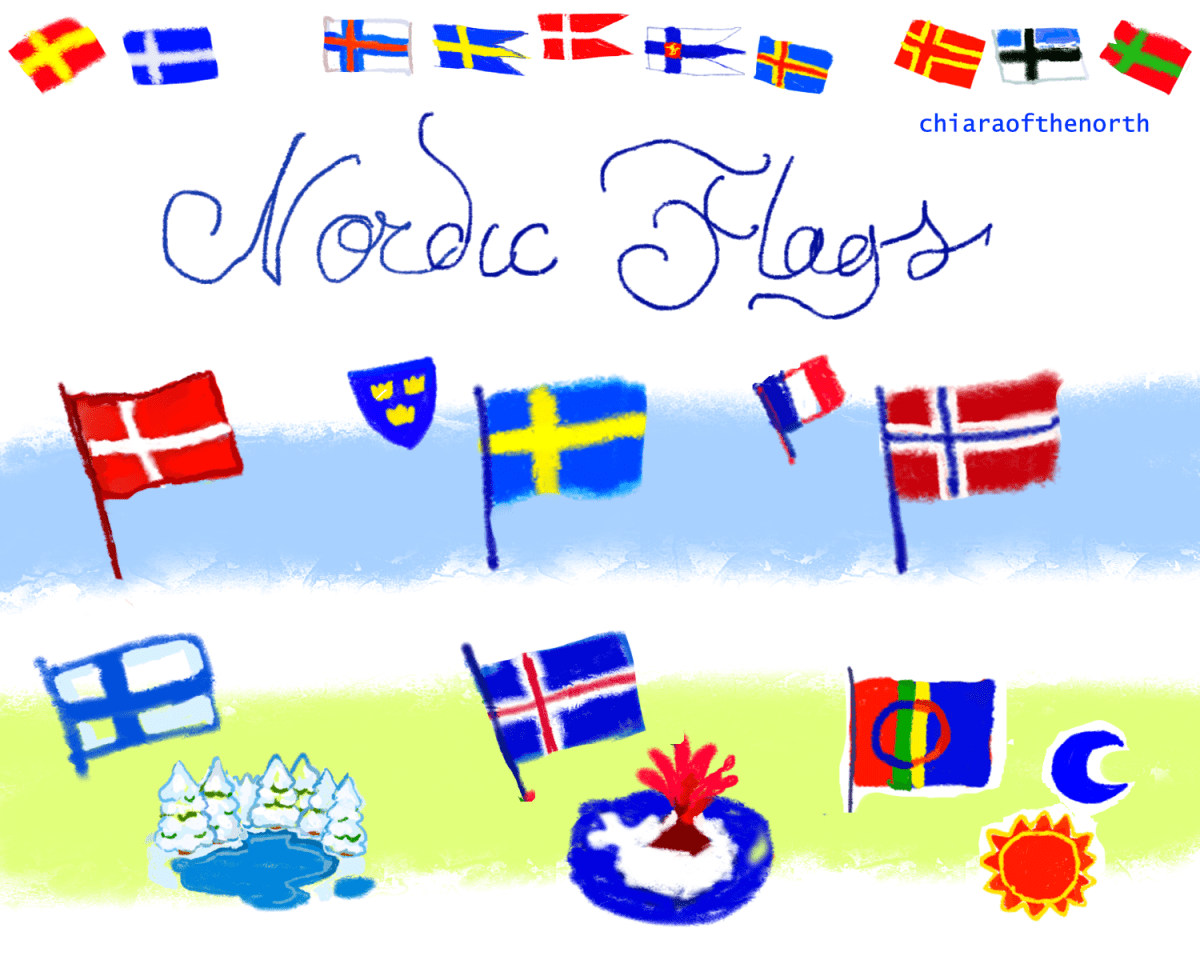
Origin and meaning of Nordic flags and other Nordic cross flags explained
Tomorrow, 23 March, is Nordic day, on this day the Helsinki treaty, establishing the Nordic Council, was signed in 1962. Its member are all Nordic countries and autonomous regions – includingÅland, the Faroe Islands and Greenland.
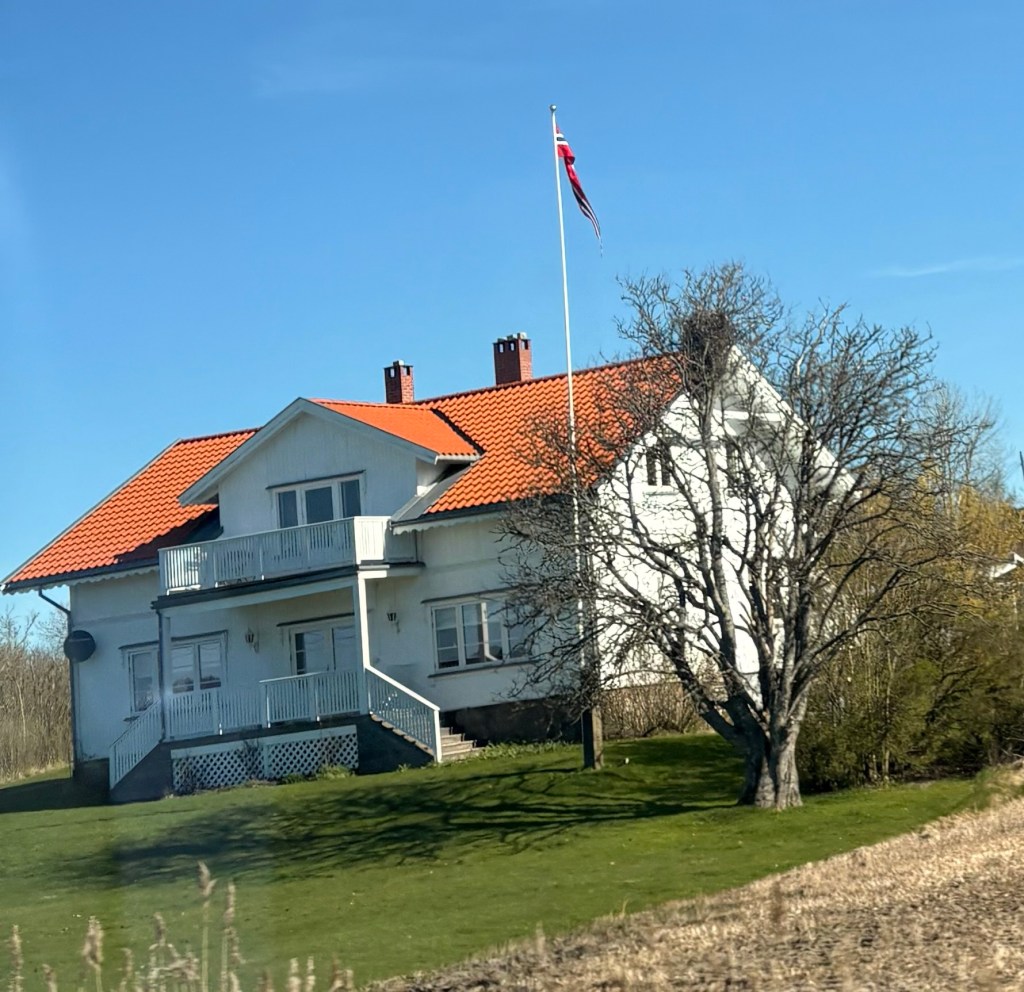
In honour of this occurence, I am writing this post explaining Nordic (cross) flags. Scandinavians and Nordic peoples in general really like to use their flag, which are common to see in various forms and occasions, from pennants to wooden table flags, as decoration for a birthday or on a Christmas tree. But let’s go back to history!
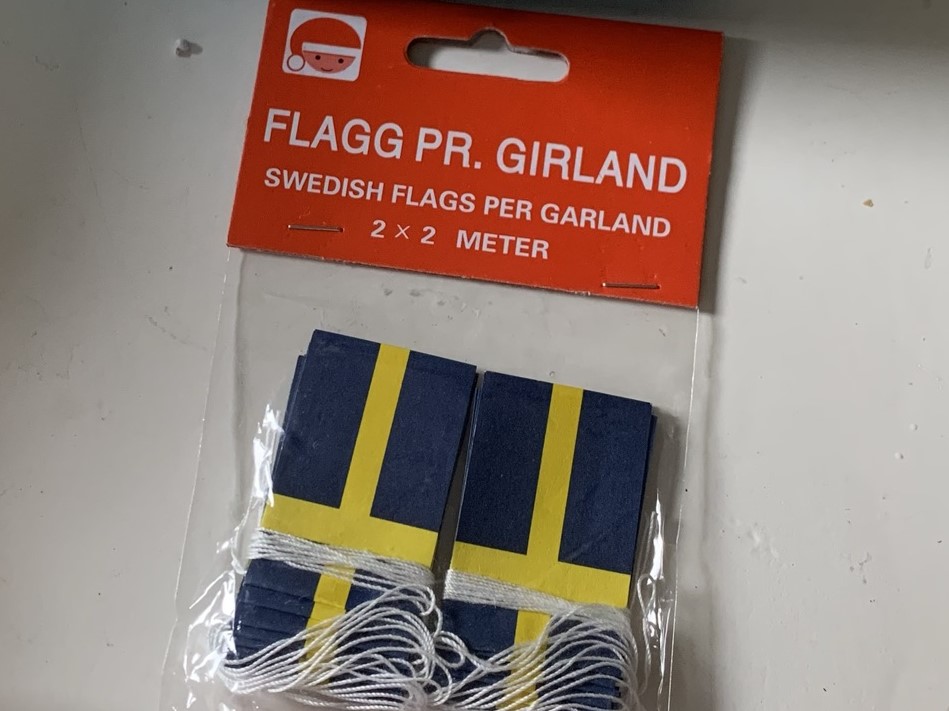
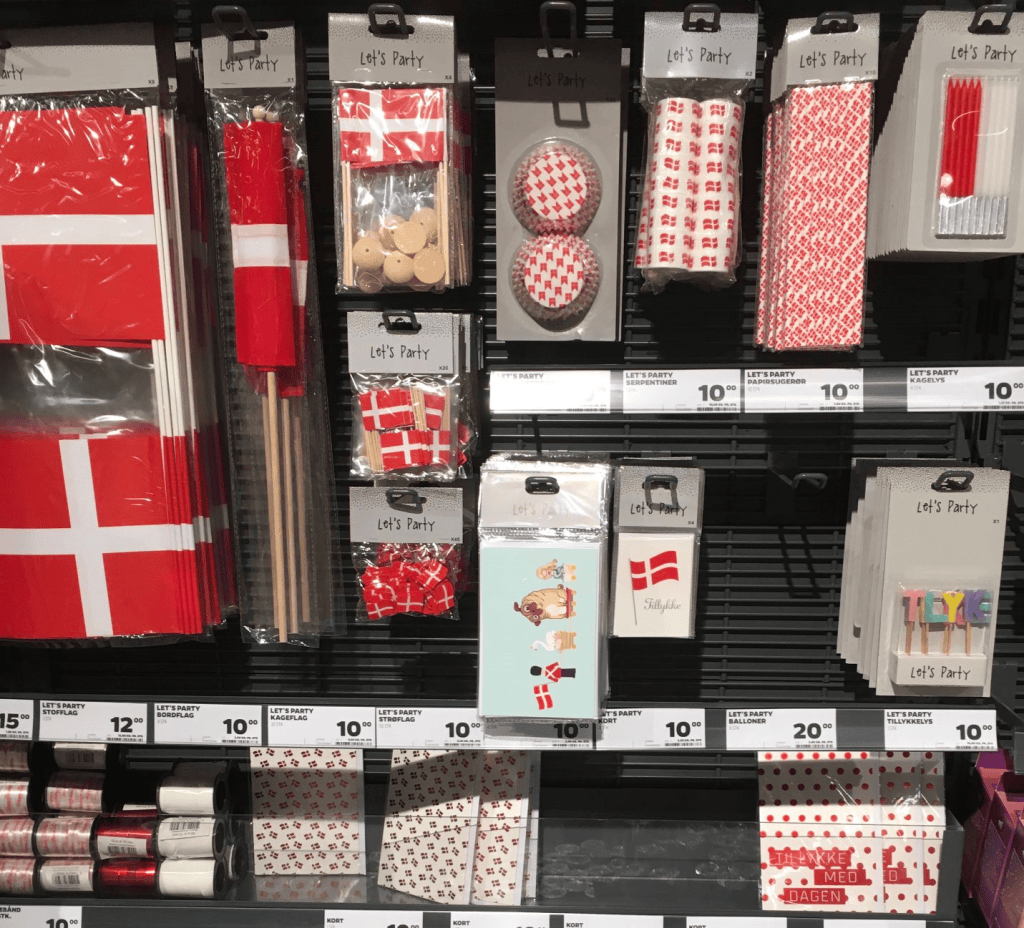
Swedish flag garlandflag party aisle, a standard at every Danish supermarkethousehold pennant (vimpel) in Norway
Where Nordic flags come from: Dannebrog, the oldest flag in the world
Danish flag
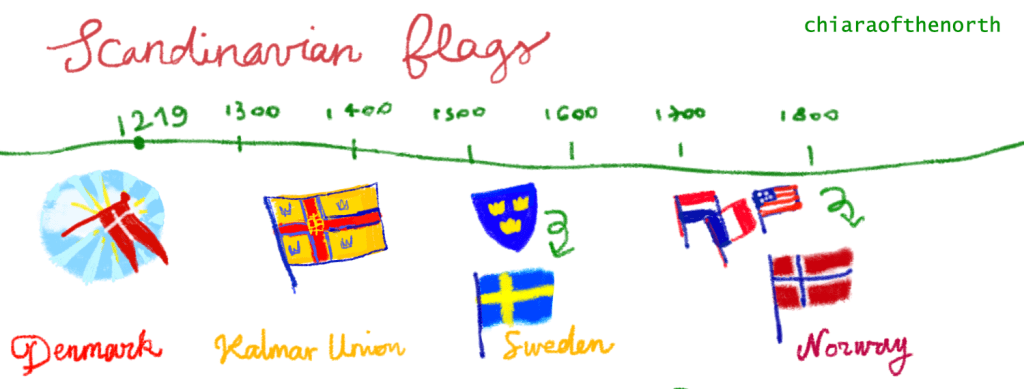
the Nordic cross flags originated from the Danish flag, the oldest flag in the world! Also called Dannebrog, according to the legend it fell from the sky during a battle in Lyndanisse (today’s Estonian capital Tallinn) in 1219, turning 800 years old few years ago! 15th June is celebrated as Valdemarsdag in Denmark, from Valdemar Sejr,the king who fought in that battle.
The flag of the Kalmar Union, union of Scandinavia (or Denmark and Sweden, with Denmark reigning over Norway) 1397-1523, also had a Nordic cross. The Danish flag then became the model for fellow Scandinavian countries:
Swedish flag
Sweden officially got its flag 300 years later, with a design from the 16th century, with the colors -yellow and blue – taken from the coat of arms dating back to 1275. The day on which the flag is celebrated is 6th June, Svenska flaggans dag.
Norwegian flag
Norway‘s current flag appeared in 1821 – picked among a few different flag design proposals. It was the first Nordic flag with 3 colors, maybe inspired by the French revolution wanting to get rid of the Danes…parliament member Fredrik Meltzer from Bergen said ‘it means freedom, as the French flag, and in the Flags of the Dutch and Americans, and the Union of the English’. You will see a sea of flags everywhere on 17th May, Norway’s constitution day
2oth century Nature-inspired Iceland and Finland, Faroe islands and Åland
Icelandic flag
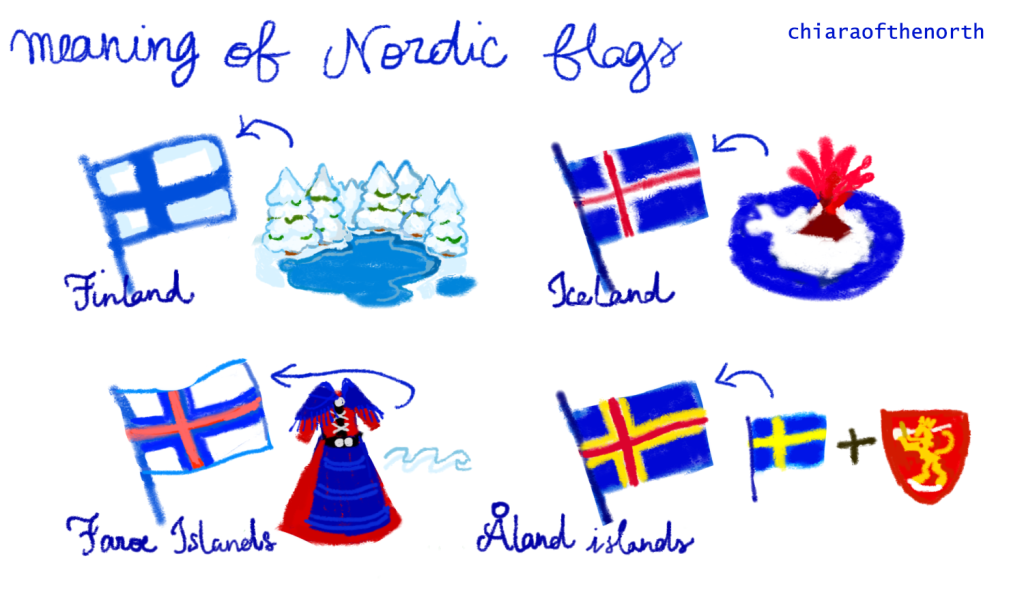
Iceland‘s official flag became official in 1915, based off its nature: according to the Flag Act the flag colours are “sky blue”, “fire red” and “snow white”. Iceland had previously an unofficial flag called Hvítbláinn, the ‘white-blue’, used by Icelandic nationalist activists from 1897 and after 1915 partly abandoned due to its similarity to other flags. Today it is still used by the Icelandic Youth Association among others.
Finnish flag
Finland‘s flag, called Siniristilippu“blue cross flag”, was adopted in 1917. The colors would represent the lakes Finland is rich of and snow. Finland has a Day of the Flag, Suomen lipun päivä, which also happens to be Midsummer (or Juhannus in Finnish), a very important day for the Nordics! On this day the Finnish flag is raised on Midsummer eve on 6pm, until 9pm of midsummer itsself.
Faroese flag
Faroe Islands flag is called Merkið “drape / mark”, with a white background symbolizing the foam of the sea and the pure, radiant sky of the Faroe Islands, while the old Faroese blue and red colours are reminiscent of other Scandinavian and Nordic flags, also reminding the colors of traditional Faroese clothing. Faroese students in Denmark strongly felt the need to have their own flag, and in 1919 their newly created flag was hoisted for the first time by a student in his home village. On 25 April 1940, the British Authorities officially recognised the Merkið as the Marine Flag of the Faroe Islands. This day became later the Faroese flag day, Flaggdagur.
Åland flag
Åland islands, the autonomous Swedish-speaking archipelago belonging to Finland, mixes Sweden and Finland in its flag, where the red cross represented Finland as the color of its coat of arms. The red cross used to be blue, with the colors taken from a song festival in the capital Mariehamn. Since 1954 it has been the official flag of Åland, April’s last Sunday is the flag day, Ålands flaggas dag.
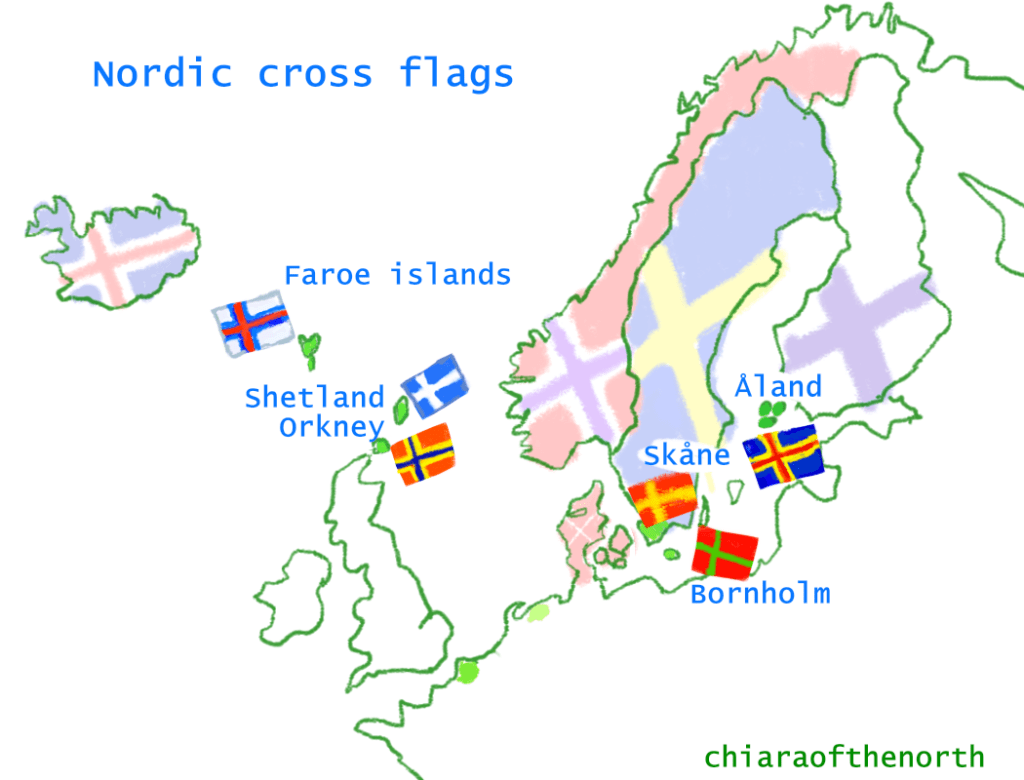
On this map I added official or widely used flags, not adding therefore Normandy and proposed flags
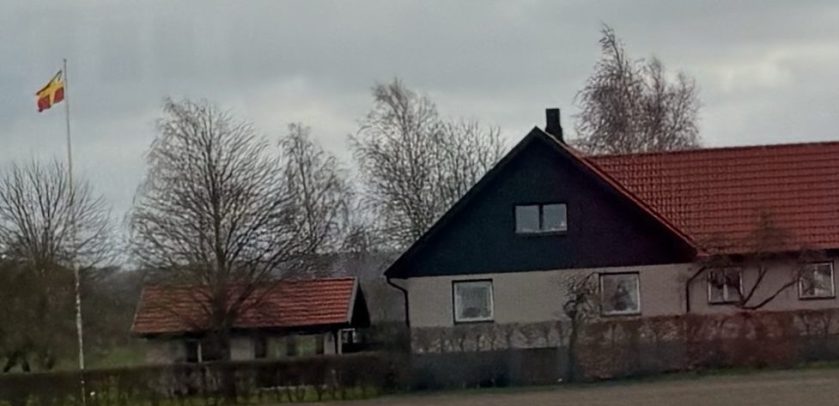
Skåne flag
The flag of Scania, Sweden’s southernmost county, is actually quite old, and has its origin in the historical coat of arms of Lund’s (Danish) archibishop of Lund, older than the Danish Dannebrog! The Nordic cross flag was made up in the 1800s though. The third Sunday of July is Skåne flag day.
Bornholm flag
Bornholm is a Danish island in the Baltic Sea, it has an unofficial flag from the 70s, designed by Bent Kaas. Green would represent the nature on the Danish island. It is mainly used in tourism and to mark local products.
Finnish Swedes and Swedish Finns flags
Finnish/Swedish minority: Flag mixes – Finland’s Swedes (looks actually the same as Skåne flag, red stands for Finland as above for Åland) and Swedish Finns, Finland’s flag with a yellow lining around the cross.
Flags of other Swedish regions: Norrland, Bohuslän, Småland, Öland, Gotland
Unofficial Nordic cross flags have been created for Swedish regions as Norrland, Bohuslän, Småland among others, and the Swedish Baltic Sea islands of Öland, and Gotland, although these are not really used.
Nordic cross flags of Nations with Nordic ties
Shetland and Orkney flags
for their Nordic heritage, historical and cultural ties of the Scottish islands with Scandinavia. Shetland‘s flag was created in the 60s for the 500 years since its transfer to Scotland from Norway (after belonging to Norway for as long). A Nordic cross with Scottish colors. Orkney‘s flag was chosen in 2007, after a public consultation (all proposed flags were a Nordic cross). Yellow and red from Scottish and Norwegian royal coats of arms, Blue representing Scotland and the Sea.
Normandy flag
Normandy‘s Saint Olaf flag: mainly used by regionalists movements, its name comes from the Norwegian kind Olaf Haraldson, probably baptised in Rouen, remarking the region’s viking origin.
Estonian proposed flags
Nordic cross flags were also proposed for Estonia in 1919, to remark its Nordic (rather than Baltic) identity and historical ties.
Frisia proposed flag
A cool Nordic cross flag was also proposed for Frisia, probably due to the part of Scandinavian heritage Frisian people (scattered between the Netherlands, Germany and Denmark) have.
Nordic indigenous nations without Nordic cross: Greenland and Sami people
Greenlandic flag
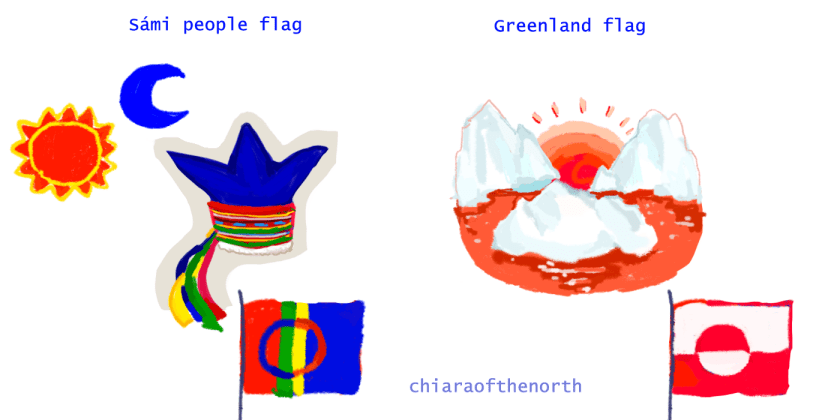
Greenland and Sami people have a flag since 1985 and 1986, both Inuit and Sami people adopted a sun/moon symbol instead of a cross, more typical of indigenous people and their connection to nature. the sun symbol was kept however in the same left-aligned position as Nordic crosses. Greenland has had a Nordic cross flag proposal – you might guess, green was in it- , but the Greenlandic iceberg landscape-inspired design by Tue Christiansen was eventually chosen instead. its name is Erfalasorput,”our flag”.
Sami flag
In the Sami flag sun and moon are represented as a circle. The first Sami flag, designed in 1977 by Synnøve Persens, was the simpler, red and blue with the yellow line, inspired by Sami traditional clothing. Astrid Båhl added the Green line (color more present in South sami clothing) and the circle.
Subscribe for more fun facts about Nordic cultures
sources
Norway: stortinget.no – Det Norske Flagg – et flagg i frihetens farger
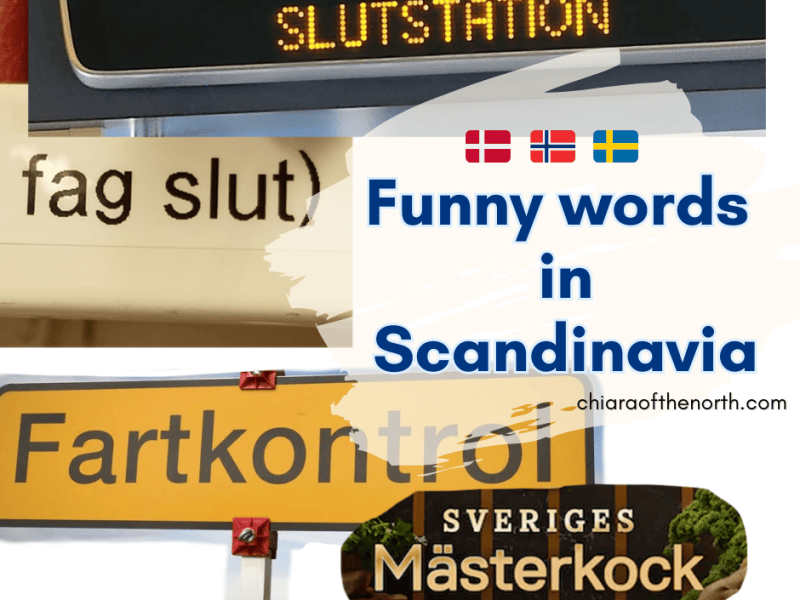
Take a train in Scandinavia to reach a “slutstation” or see”fartkontrol” signs while driving. Kiss and killing also mean something you were not expecting!
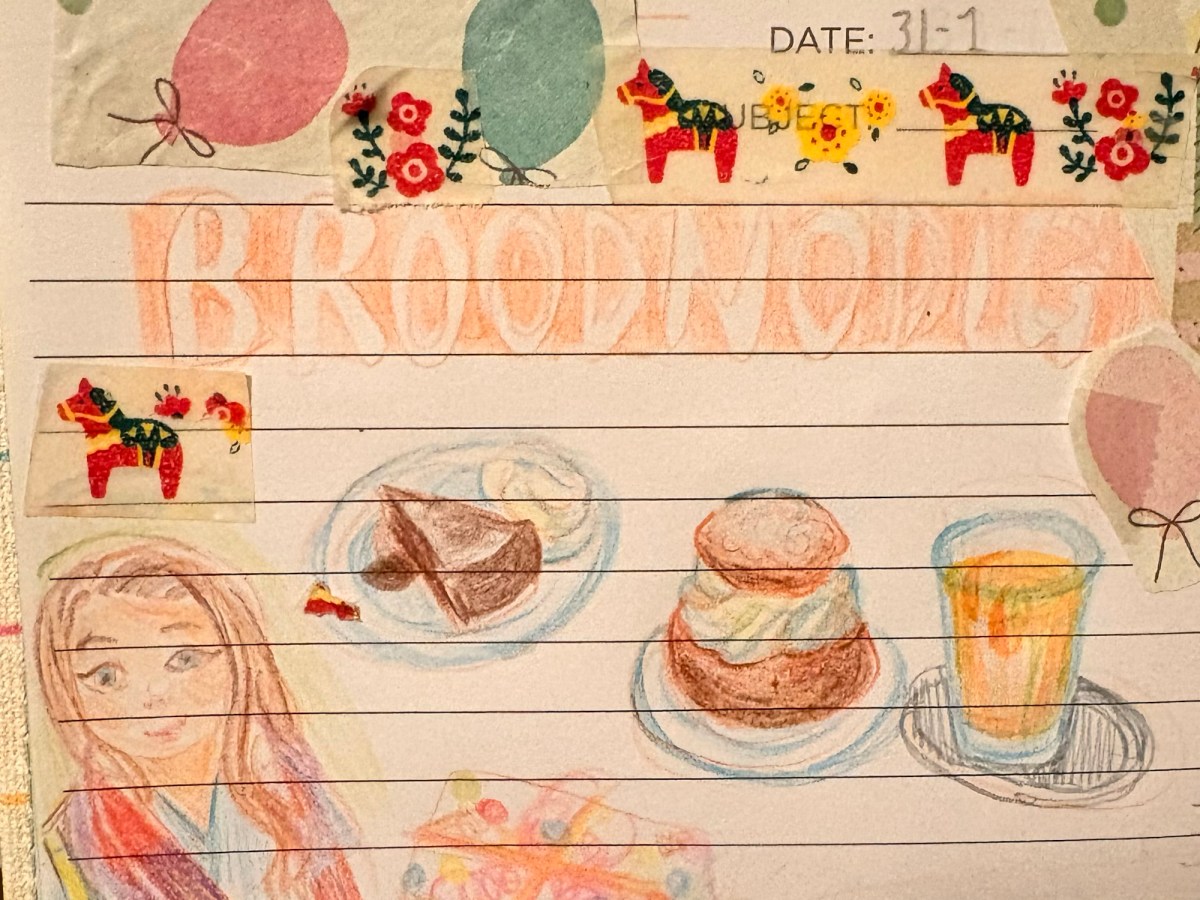
In Utrecht, the cafe Broodnodig serves Swedish pastries and cakes as cinnamon and cardamom buns, kladdkaka, smulpaj and Scandinavian seasonal treats as semlor and saffron buns.
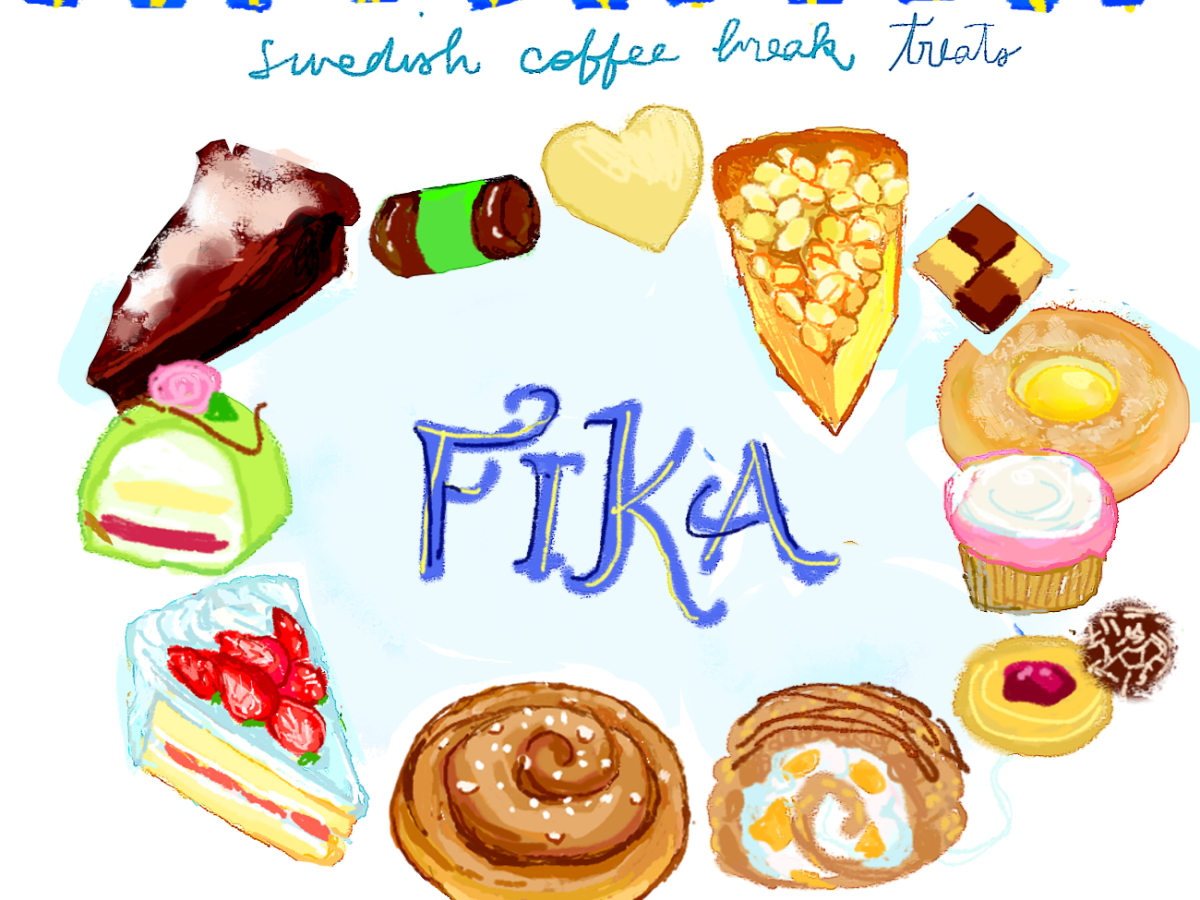
Fika is a cherished Swedish tradition involving a coffee and cake break. Discover various Fika treats, from classic kanelbullar (cinnamon buns), cakes and cookies to savory options.
The Fjallkona is the personification of Iceland and has a big role in the Icelandic national day, between poetry and parades
June, 17th, is Iceland’s national day, Þjóðhátíðardagurinn. The day was established after Iceland’s independence from Denmark in 1944, on the independentist Jón Sigurðsson’s birthday.
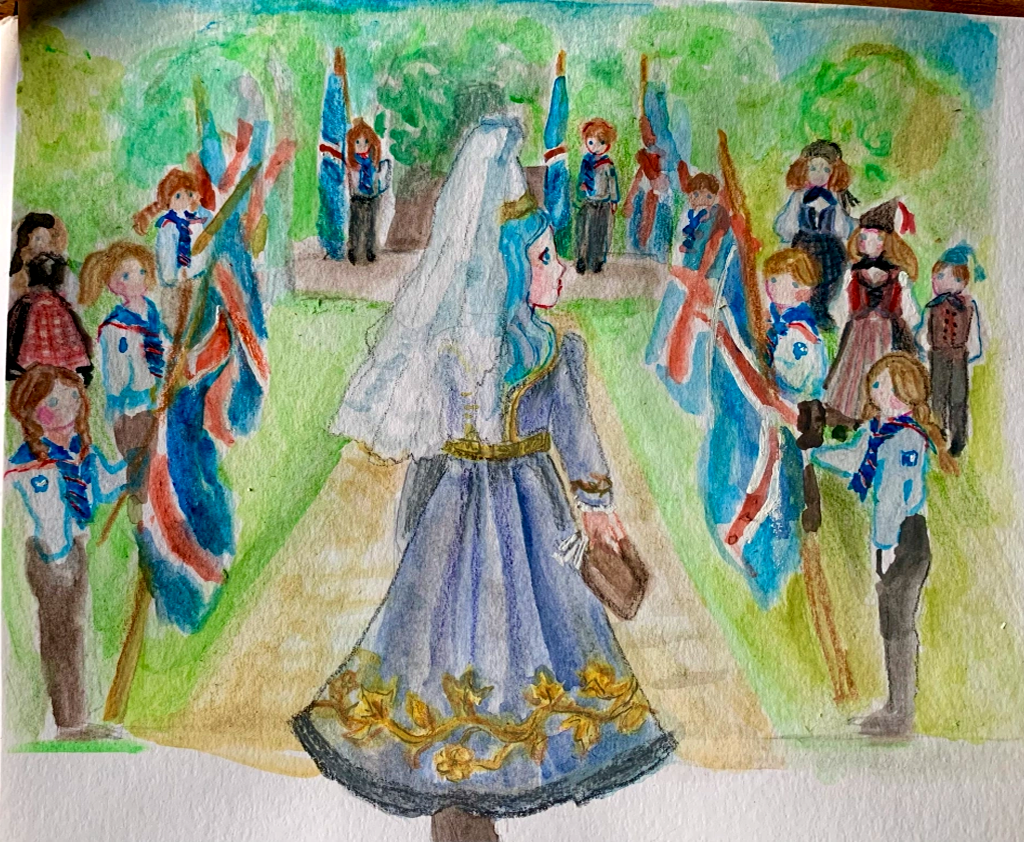
The day is marked by parades, with marching bands and flag-bearing troops from the national scout movement. After the parades, it’s time for the town’s elected ‘lady of the mountain’ to recite a poem. Her identity is however secret until the ceremony. Before that, authorities and freshman students in Reykjavík have laid wreaths to honour Jón Sigurðsson. You can see the program for 17 júní in Reykjavík.
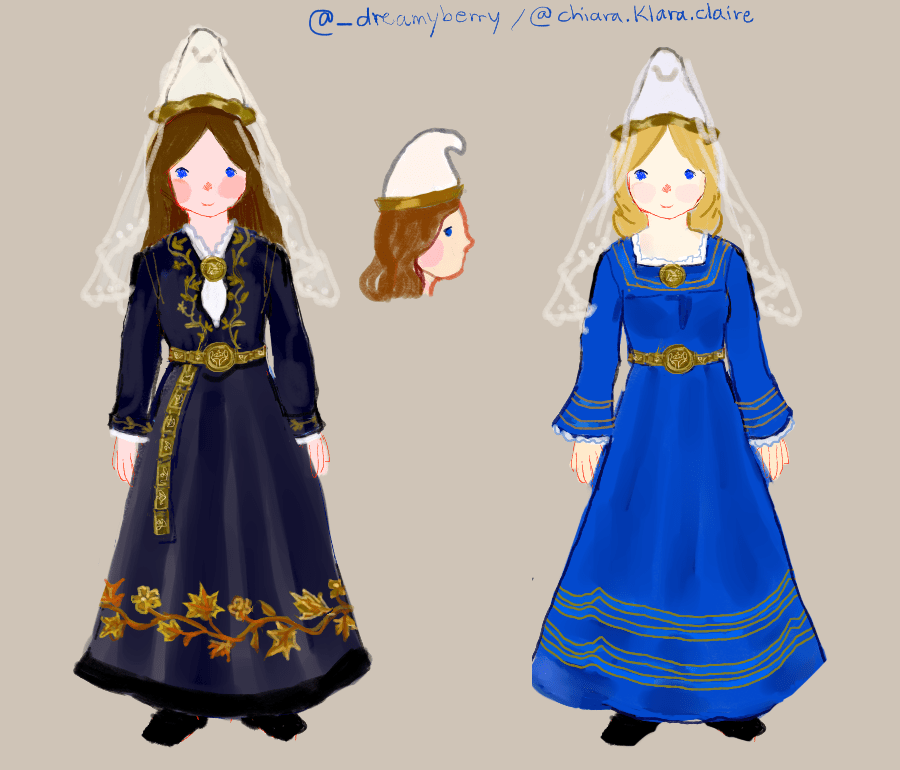
The woman representing the fjallkona, literally ‘lady/maid of the Mountain’, wears the skautbúningur, dark dress with golden embroidery and a sort of horn-shaped headgear, inspired by the ancient krókfaldur with a veil. The first time a woman represented the fjallkona with a skautbúningur was actually in Winnipeg, Canada in 1924, where many Icelanders migrated in the 1870s.
skautbúningur and kyrtill dresses are worn by the fjallkona, both designed by Sigurður Guðmundsson in the 19th century
Icelanders are encouraged to wear a folk costume on the national day, Þjóðbúningur. There are officially several types among which the Upphlutur for women and Hátíðarbúningur for men, not too different from other Nordic folk costumes as Norwegian Bunads and Swedish Folkdräkter, often black but also in colours as red or blue. part of the outfit is a tail cap.
Icelandic national day feels to me kind of a mix between Norway’s 17 (!) mai, with national dresses, parades and marching bands, and Lucia, with its elected Lucia/Fjallkona!
Where does the Fjallkona come from?
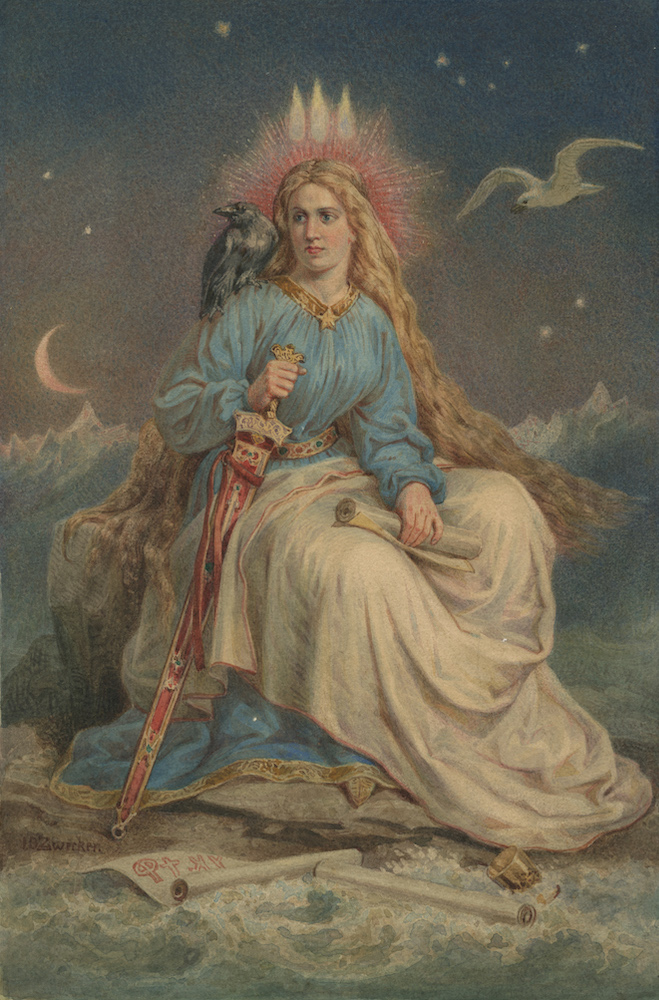
the Fjallkona is the female personification of Iceland. She represents Iceland’s spirit and its nature. Its name appears in the poem Eldgamla Ísafolda.k.a. Íslands minni by Bjarni Thorarensen in the early 19th century. Its most popular depiction is the painting by German painter Johann Baptist Zwecker in 1866.
Eldgamla Ísafold/ ástkæra fósturmold/ fjallkonan fríð!/ mögum þín muntu kær/ meðan lönd gyrðir sær og gumar girnast mær/ gljár sól á hlíð.
(Ancient land of ice / beloved nurturing soil / fair mountain woman. /May you love your sons, while countries barricade their waters / and men yearn for maidens / the sun glistens on a hillside.)
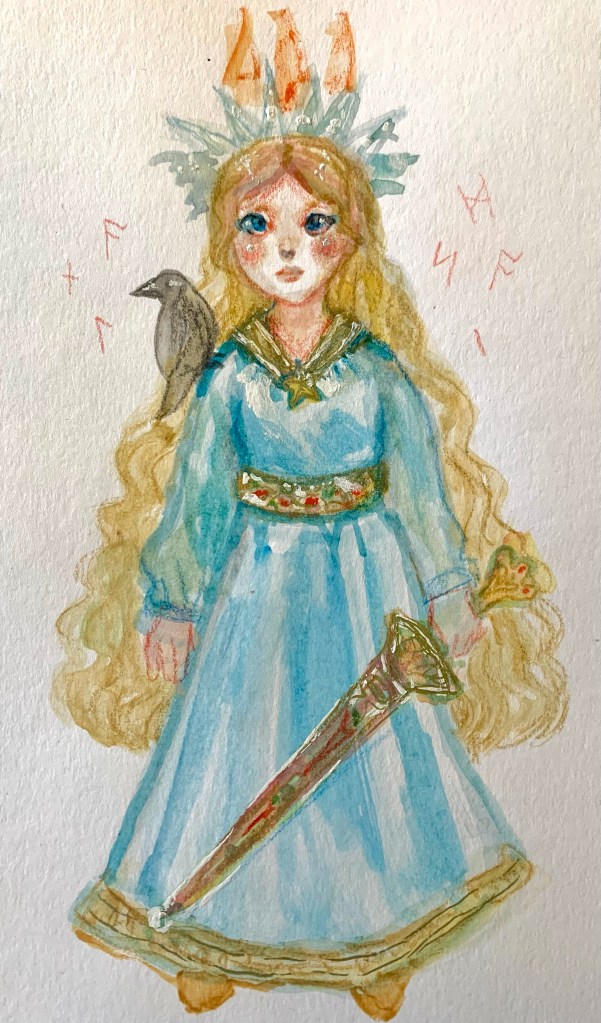
In Zwecker’s painting, made for the last volume of a collection of Icelandic folk tales, Icelandic Legends, the fjallkona has a crown of ice from which fires erupt, representing Icelandic nature with its glaciers and geysers. On her shoulder is a raven, symbol for the god Odin and norse mythology, and runes on a parchment, representing Icelandic culture.
It then gained popularity as symbol for the motherland, sometimes opposed to theDanish King as father under the Danish rule.
Icelandic patriotic poems
On the occasion of the institution of the Republic in 1944, a poem contest was held. Hver á sér fegra föðurland (who has a lovelier fatherland) and Land Míns Föður (My father’s land) were the winning poems. An extract from the two follows:
Hver á sér fegra föðurland / með fjöll og dal og bláan sand / með norðurljósa bjarmaband / Og björk og lind í hlíð? […]
Við heita brunna, hreinan blæ / og hátign jökla, bláan sæ / hún uni grandvör, farsæl, fróð / Og frjáls – við ysta haf.
Hulda (Unnur Bedediktsdóttir Bjarklind), ‘Hver á sér fegra föðurland’
Who has a lovelier fatherland / with fells and dales and bluest sand, with northern lights up aloft, and birch and lime on hilltops? […] With hot springs of a pure hue / majestic glaciers, a sea of blue / she remains thoughtful, peaceful, sage / and free, in the farthest sea.
Hvíslað var um hulduland / hinst í vestanblænum / hvítan jökul, svartan sand / söng í hlíðum grænum. / Ýttu þá á unnarslóð / Austmenn, vermdir frelsisglóð / fundu ey og urðu þjóð / úti´í gullnum sænum. […]
Hvort sem krýnist þessi þjóð / þyrnum eða rósum / hennar sögur, hennar ljóð / hennar líf vér kjósum. / Ein á hörpu íss og báls / aldaslag síns guðamáls / æ hún leiki,ung og frjáls / undir norðurljósum.
Jóhannes úr Kötlum, ‘Land Míns Föður’
There were whispers of a hidden land / hinst in the western blues / white glacier, black sand / singing on green slopes. / Push them on a path of success / Men of the East, warmed by the embers of freedom / found an island and became a nation / out in the golden seas. […] Whether this nation is crowned / with thorns or roses / its stories, its poetry / its life we choose. / Alone on the land of ice and fire / the eternal sound of her divine language / forever she moves, young and free / under the northern lights.
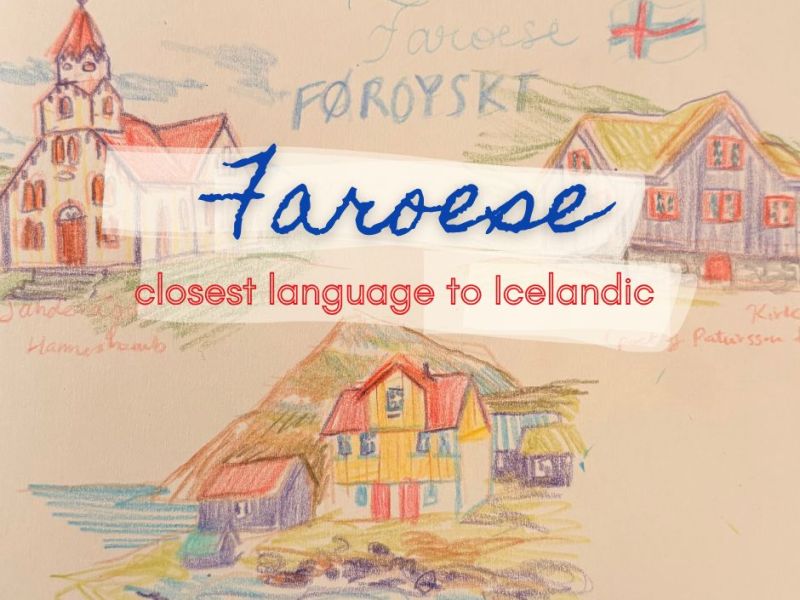
Discover Faroese – today spoken by about 80,000 people in the North Sea archipelago- as Icelandic still has much in common with Old Norse in grammar and vocabulary
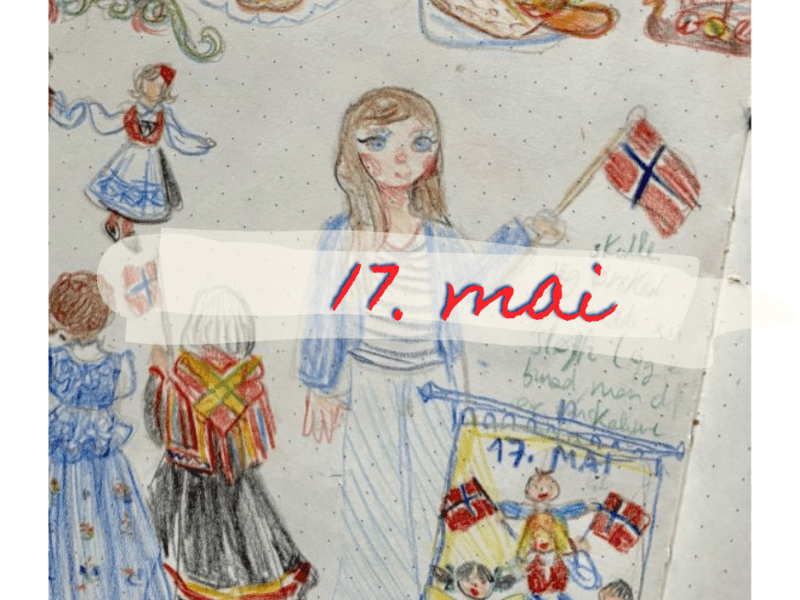
Norwegian Seamen Churches all over the world host 17th May celebrations. I attended the festivities in Rotterdam, joining the parade and eating a pølse i lompe!
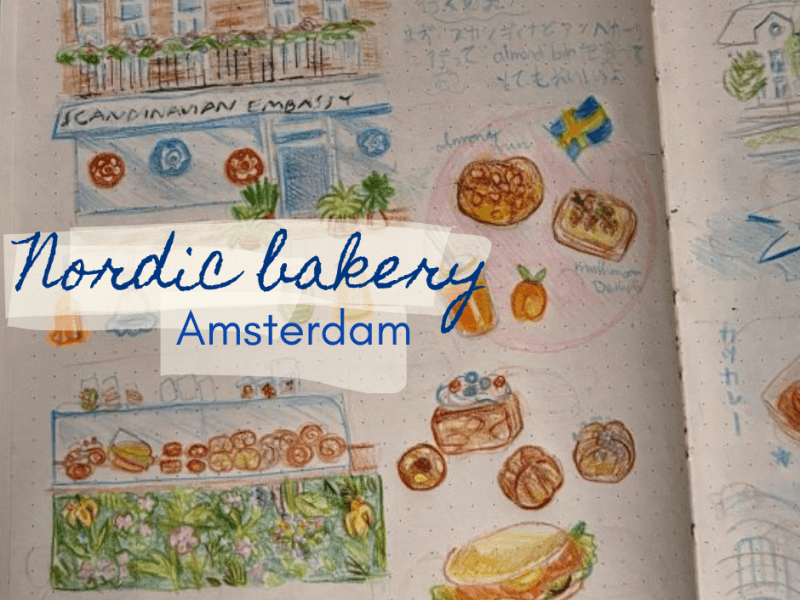
On a trip to Amsterdam, I decided to test Scandinavian Embassy and both of its two locations, starting with the bakery in europaplein. The two locations are in Amsterdam zuid: Saphatipark and Europaplein: in the former, a more central location, you can sit but it has fewer items than the bakery in Europaplein. The bakery,…
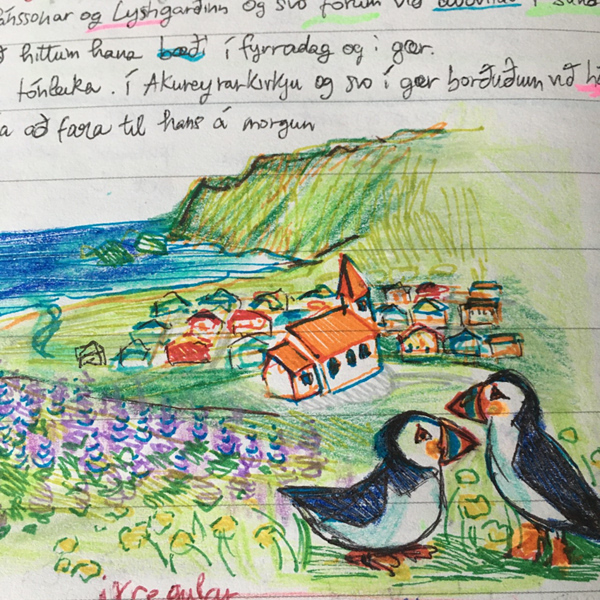
The lovely sea parrot living around the North Atlantic coasts, symbol of Iceland and the Faroe Islands.
The Atlantic puffin, Lundi in Icelandic and Faroese, is a species of seabird in the auk family.
It populates the North Atlantic coasts of Iceland, the Faroe Islands, the Shetland and Orkney Islands, Norway, Greenland, Canadian coasts of Newfoundland and Labrador. Colonies in Iceland alone are home to 60% of the world’s Atlantic puffins, in particular Westman islands (Vestmannaeyjar).
Atlantic puffins are in danger, threatened by pollution, and the introduction of predators in islands use for nesting, the risk of drowning in fishing nets among others. Based on current trends, the European population will decline an estimated 50–79% between 2000 and 2065.
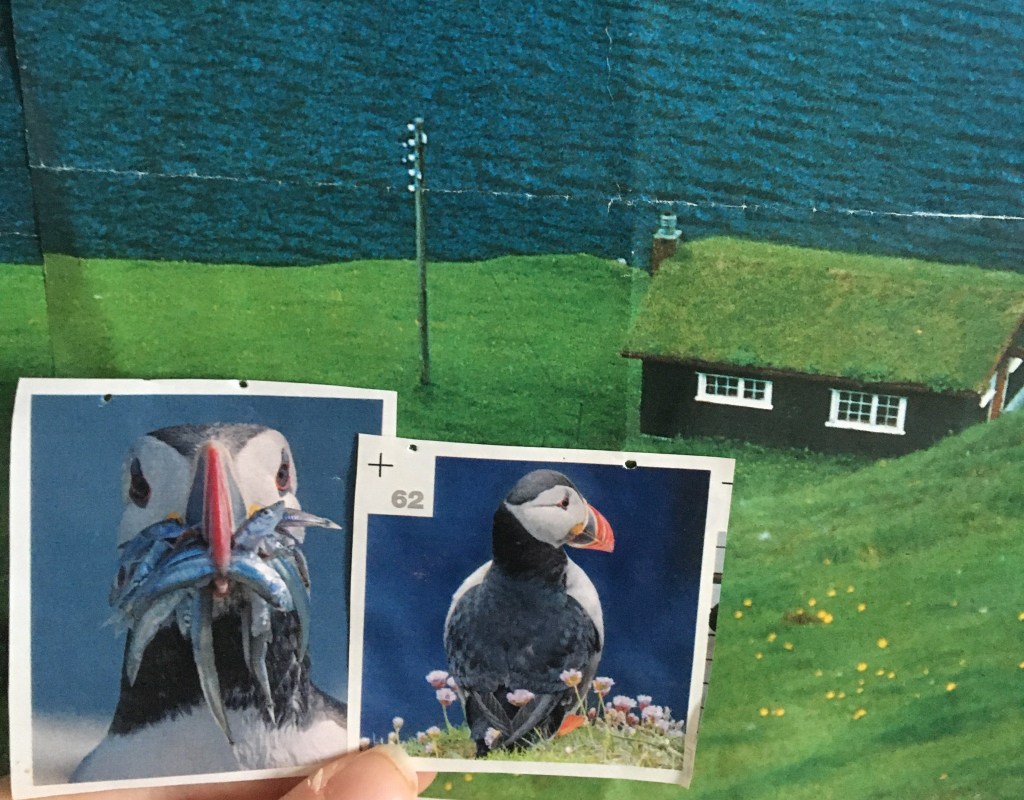
Cutouts of a Faroese landscapes and its puffins! The beak of this 30 cm-tall bird can contain 13 fish!
Name origin of the Puffins
The scientific name Fratercula Artica comes from the Medieval Latin fratercula, “friar”, a reference to the black and white plumage which resembles monastic robes. “Puffin” comes from puffed in the sense of swollen.
The bird’s most distinctive feature, its colorful beak, and its funny appearance have given rise to nicknames associating it to a parrot: for example DanishSøpapegøj “sea parrot” and Dutch papegaaiduiker “parrot diver”.
Puffins in Icelandic and Faroese history
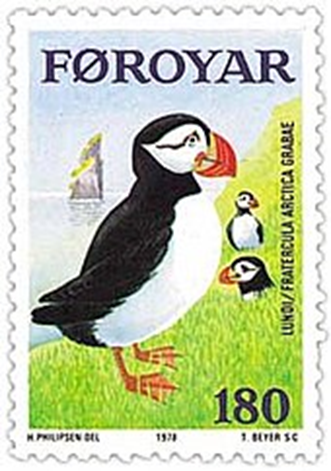
Faroe islands 1978 postal stamp by Holger Philipsen
Puffins have been hunted by man since time immemorial, coastal communities and island dwellers with few natural resources at their disposal didn’t have much else to hunt besides fish and seabirds.
They are still caught and eaten in Iceland and the Faroe Islands A typical device used in the Faroes to catch them was a fleyg. This was a long pole with a neton the end. a skilled hunter could gather 200–300 in a day!
Puffins are now protected by legislation, and where hunting is still permitted, strict laws prevent overexploitation.
A tradition exists on the Icelandic island of Heimaey (part of Westman islands) for the children to rescue young puffins, a fact recorded in Bruce McMillan’s photo-illustrated children’s book Nights of the Pufflings (1995). The fledglings emerge from the nest and try to make their way to the sea, but sometimes get confused, perhaps by the street lighting, ending up by landing in the village. The children collect them and liberate them to the safety of the sea.
Puffins as Icelandic and Faroese ambassador in the world
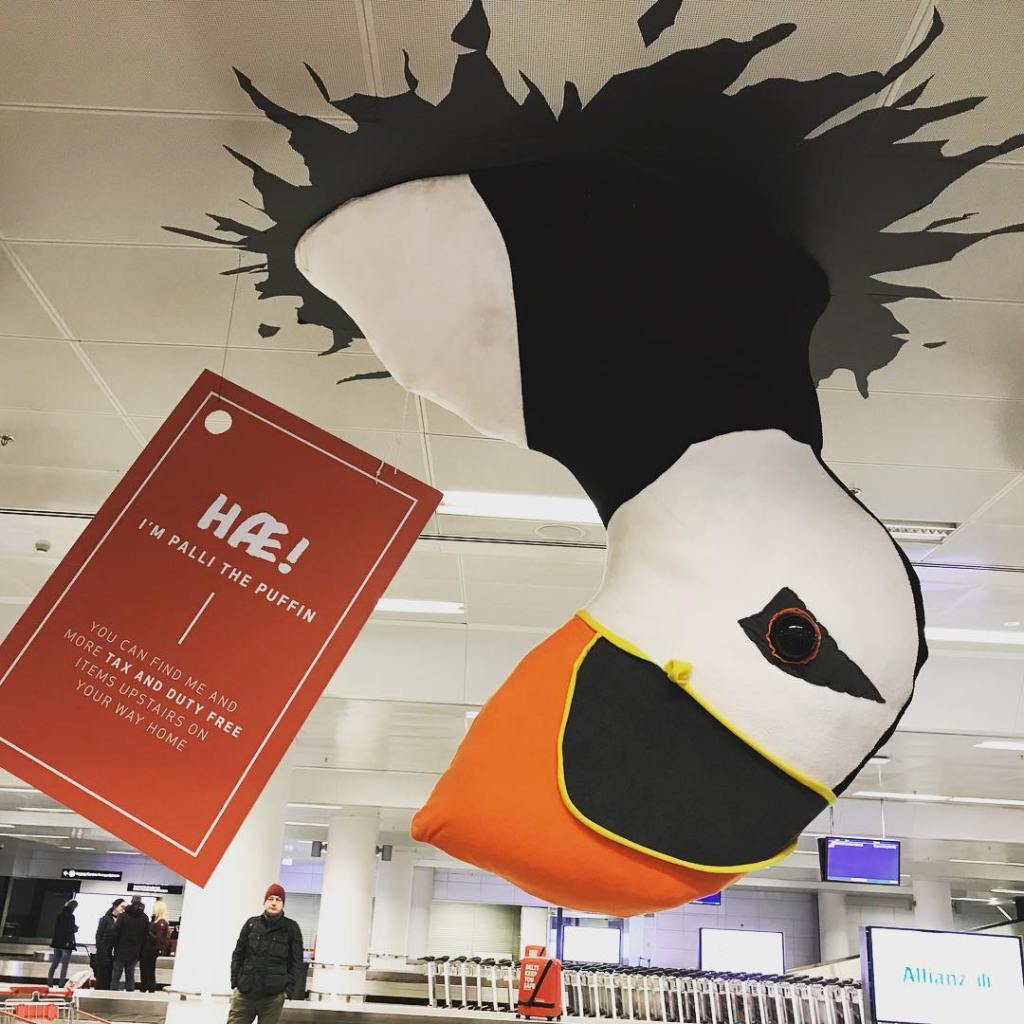
Palli the Puffin greeting travellers coming to Iceland in Reykjavik airport (picture by Mundi Lundi, page about a puffin who was found injured in the Icelandic capital and the nursed back to health)
A puffin named Piddi was the mascot for the Island Games in the Faroes in 1989. In 2023 The UK channel island of Guernsey chose a puffin for its island games mascot as well – Jet the Puffin.
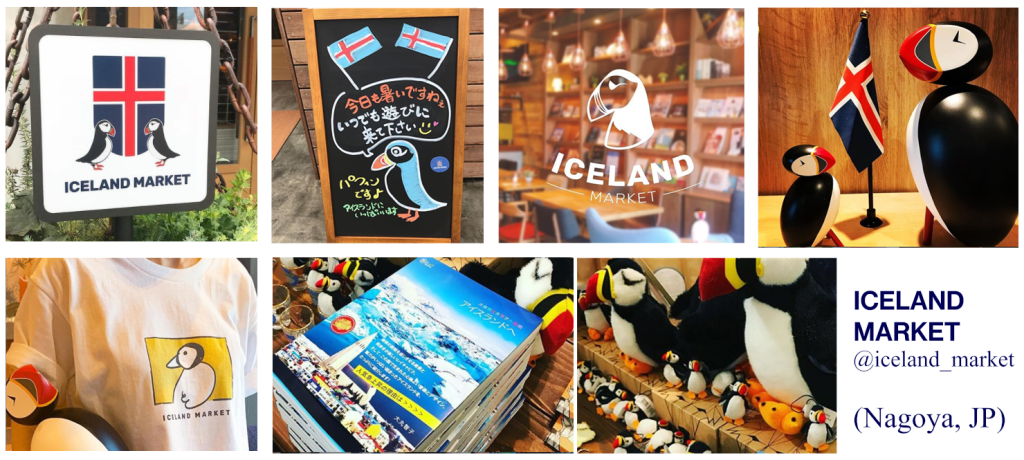
Puffins are often used to promote these Nordic islands, especially where cuteness is highly valued as in East Asia. ICELAND MARKET in Nagoya, Japan, used to be a cafe with puffins in its logo and merch, proudly representing Iceland.
FRAMTAK, a Faroese site, now inactive, promotes the Nordic archipelago and has a section with comics about Ludvík Lundi (“the puffin with glasses”), ideal if you want to practice Faroese!
Puffins in logos, symbols and pop culture elsewhere
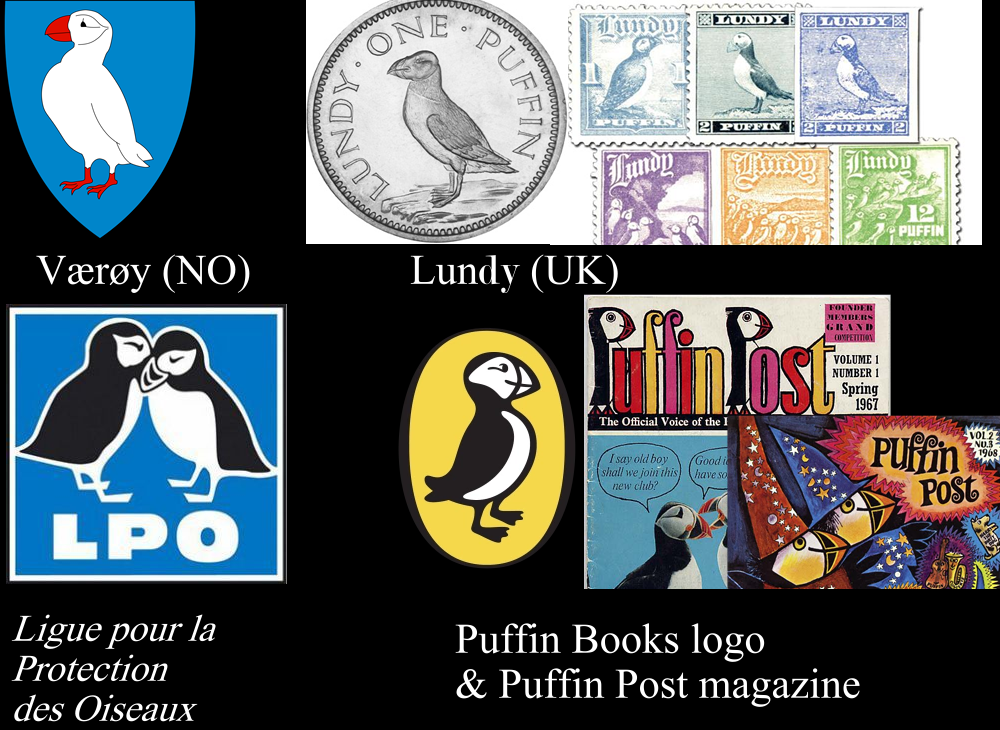
Puffins are a bird very typical of Iceland and the Faroe Islands, but they can of course be found on other countries’ North Atlantic shores. Therefore, they appear in logos, stamps and as mascots from the British isles (channel islands particularly), Norway and North America too.
The Norwegian island municipality of Værøy, part of the Lofoten, has an Atlantic puffin as its civic emblem.
the name of the island of Lundy (UK) might come from Norse lund-ey or “puffin island”.The Vikings might have found the island a useful refuge and restocking point after their depredations on the mainland . The island issued its own coins, and in 1929, its own stamps with denominations in “puffins”.
The paperbook publisher Penguin Books introduced a range of books for children under the Puffin Books brand in 1939. The demand was so great that a children’s magazine called Puffin Post was established, Puffin Post. Oscar Puffin was the mascot of the UK Channel Islands broadcast IVT Channel television. the star of the birthday greeting programme Puffin’s pla(i)ce
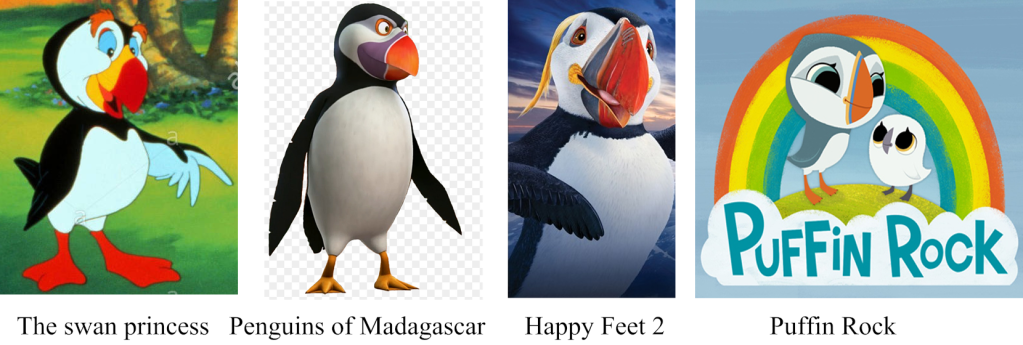
The Swan Princess -Puffin
Madagascar – Hans
Happy Feet 2 – Sven is a puffin who pretends to be a penguin
Puffin Rock – A Netflix original cartoon about the puffin Oona and her little brother Baba
Puffins (2020) – spinoff series of Arctic Dogs (2019). A group of puffins working for a walrus.
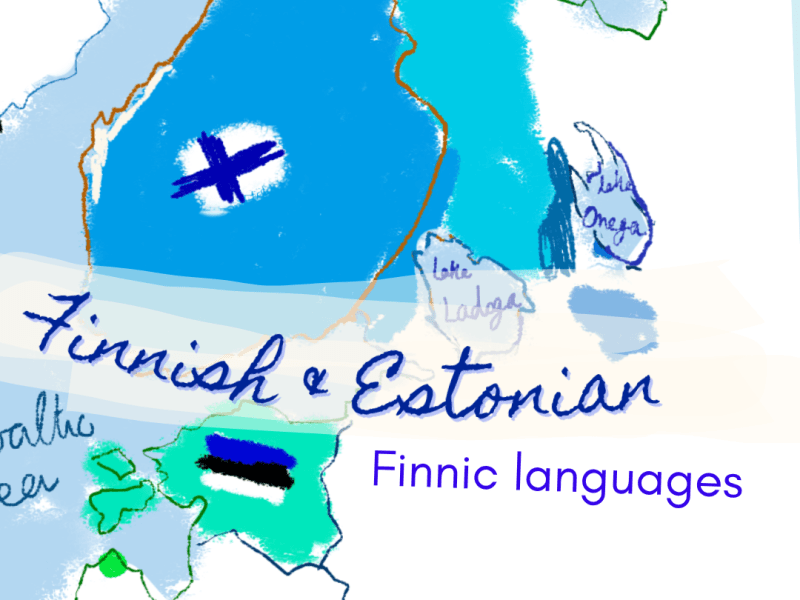
Estonian is a Finnic language, sharing many similarities with its ‘bigger’ sister Finnish, while being unrelated to all their bigger language neighbours
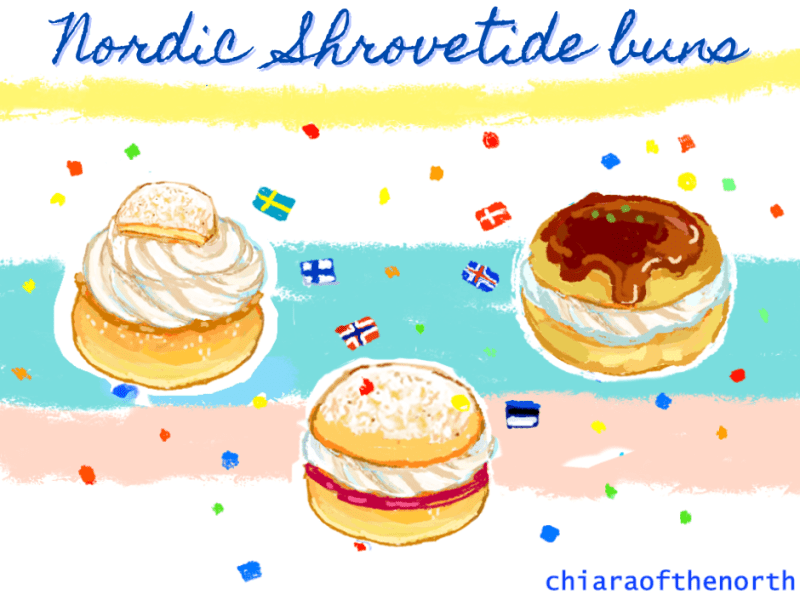
Cream buns are enjoyed in Nordic and Baltic countries during shrovetide, between January and February. Sweden’s classic semla has almond paste, while other countries variations include jam, vanilla cream, and chocolate icing top.
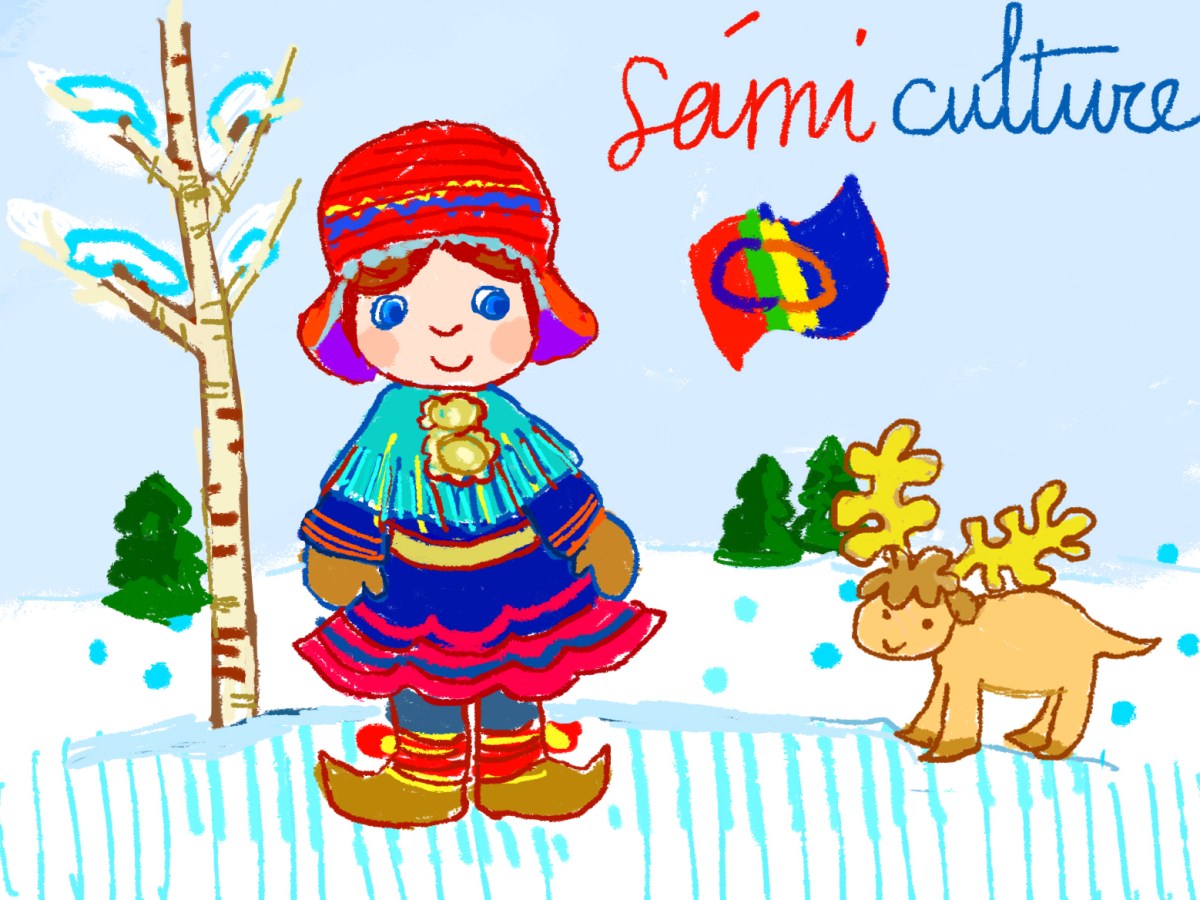
Sámi people, indigenous people of North Scandinavia, have a distinct culture, symbolised by its unique flag and traditional clothing, and part of it are Duodji handicrafts and unique musical expression through yoik.
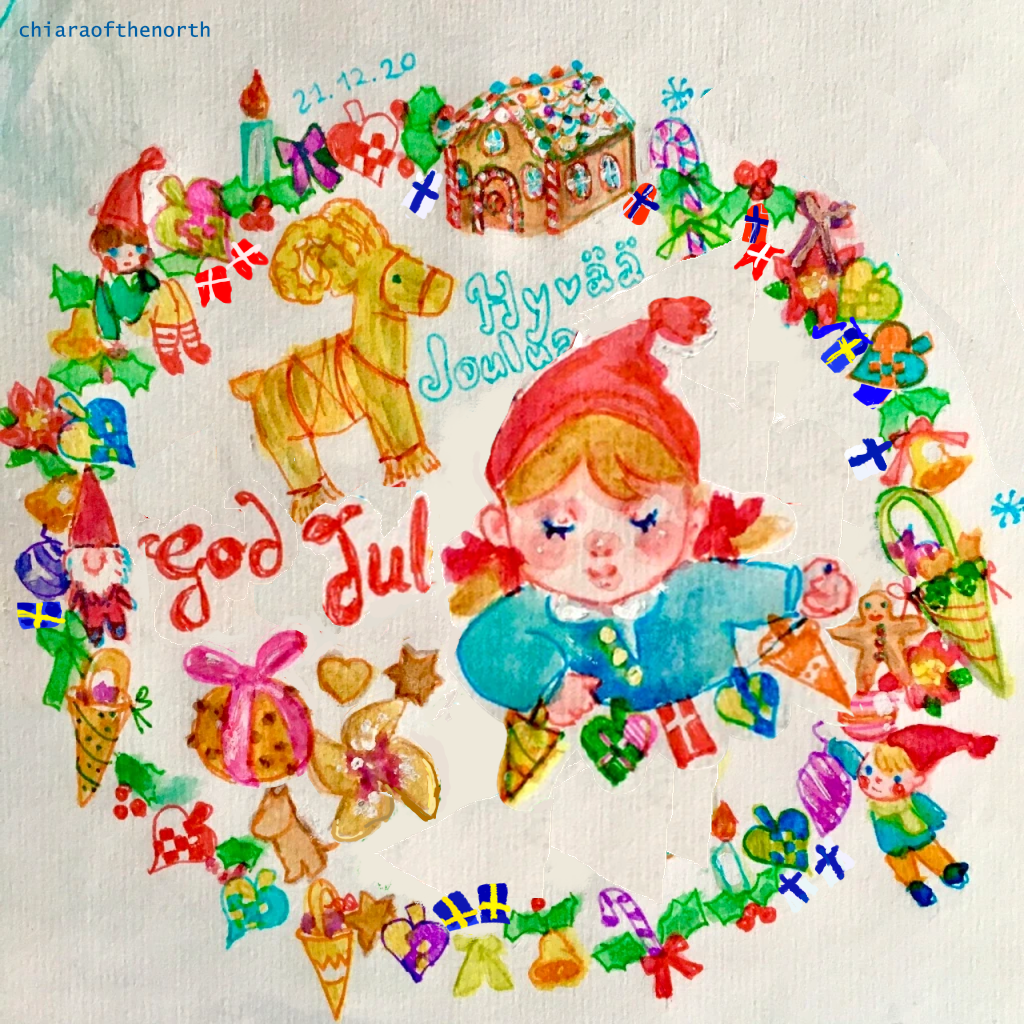
Nordic Christmas, or Yule, means among others flag tree decorations, a pinwheel-shaped pastry, and gnomes.
Nordic countries share quite a lot Christmas customs and symbols, whether it is Christmas tree decorations, gnomes and elves instead of Santa Claus, and of course spiced cookies. Let’s see what a Scandinavian Christmas looks like!
1. Scandinavian Santa Claus: Gnomes and pixies
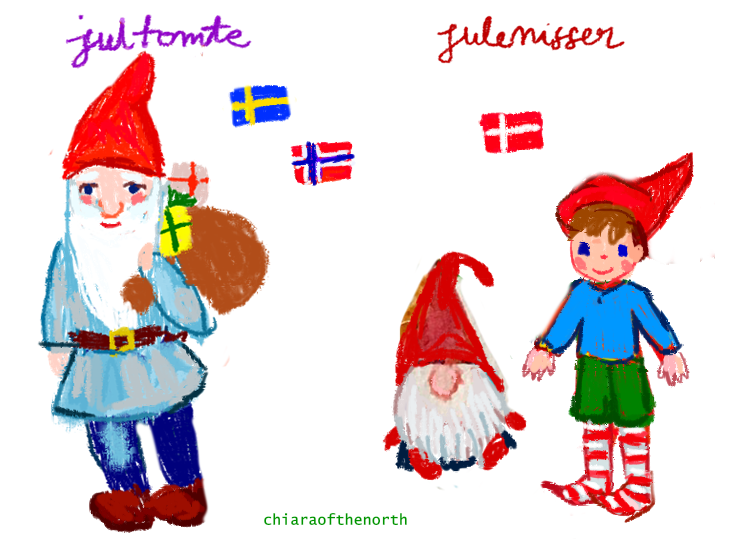
In Scandinavia, the main Christmas figures are a (santa Claus-ish looking) gnome and nisser, pixie-like creatures:
Giftbringer
portrayed as
Sweden
Jultomte
gnome
Denmark
Julemanden+Julenisser
santa+pixies
Faroes
Jólamaðurin
santa
Norway
Julenisse
gnome
Finland
Joulupukki
santa (originally the Yule goat)
Iceland
the 13 Jólasveinarnir
old, naughty elves
According to the tradition the Jultomte lives in farms and takes care of the household while the family is sleeping, Bringing presents if the family treated him and the farm animals well. InNorway, an adult disguises himself as Julenisse and gives out presents to children, often greeting them by saying Er det noen snille barn her? (“is there any good child here?”).
In Denmark (Jule)nisser are Christmas pixie/elf-like creatures, believed to live in barns and attics. Children leave rice pudding for the Nisser, who find it delicious accoring to popular belief. Julemanden (literally Christmas man) is more similar to the Santa Claus everybody knows, and arrives on a sleigh with reindeers and nisser as helpers.
Initially the gift bringer was the Julbocken/Julebukk goat mentioned above, so in Finnish Santa Claus is calledJoulupukki…
2. Christmas Decorations: straw goats, pleated hearts and flags
Yule Goat
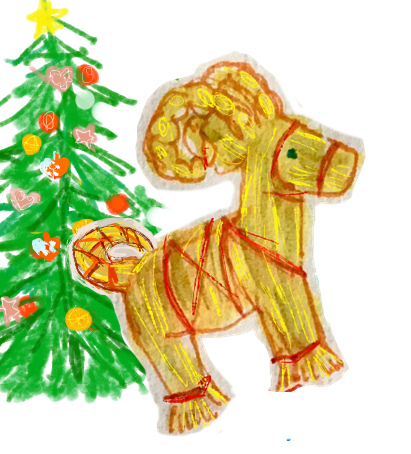
A common Christmas symbol and decoration is a straw goat, Julbocken/Julebukk, often put under the Christmas tree. It goes back to the Viking times and it was a household protector, representing Thor’s magical goats, who lead him in the night sky. Bigger versions can be found in town centres – this tradition started in the Swedish town of Gävle in the 60s, and every year this traditions is repeated with a Julbock as tall as around 10 metres.
Christmas hearts
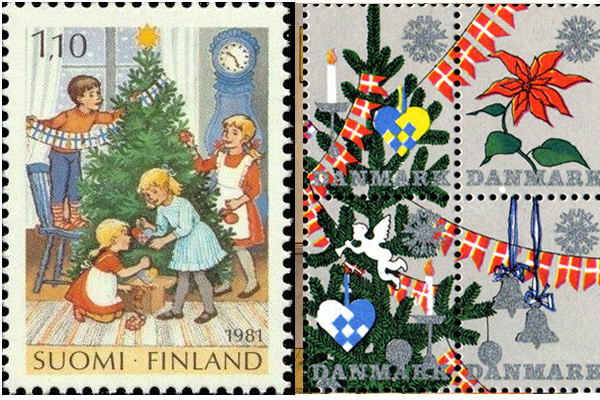
Julehjerter are pleated hearts, very common and in Denmark and Norway (Norwegians call them Juletrekurv “Christmas tree baskets”), but also present in other Nordic countries as a typical Christmas symbol. Children make them with their family with paper of different colours, although they are often red and white.
Flag garlands
Decorating Christmas trees with flags originated in Denmark and it can be seen in all Nordic countries, although it was more common in themid-20th Century. A survey showed that one in three Norwegians thinks flag garlands are suitable Christmas tree decorations, while only 3 % and 5 % is of the same opinion in Sweden and Finland. Nonetheless, I bought a Christmas tree flag ornament in Sweden…
3. Christmas treats
Gingerbread cookies
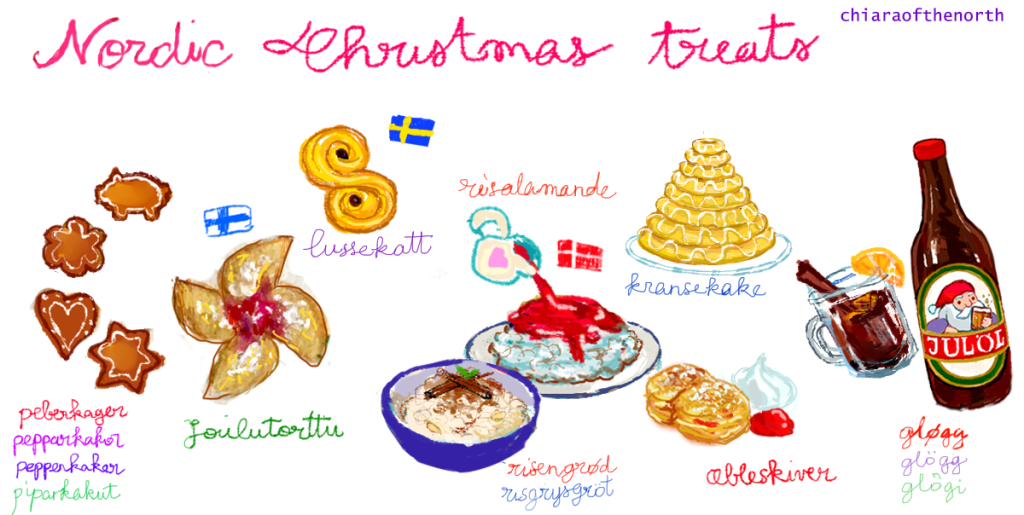
Baking gingerbread cookies is a typical Christmas time family activity: Pepparkakorin Swedish, Pepperkaker in Norwegian and Peberkager in Danish, piparkakut in Finnish are a common and popular Christmas treat all over the Nordics.
Rice porridge
Hiding an almond in rice porridge with a prize for who finds it is a common things in Nordic countries. in Sweden the rice pudding is called risgrysgröt. In Denmark you have the Risalamande (from French ris à l’amande, just because French sounded fancy), It is served cold with a warm cherry sauce,kirsebærsovs. The lucky person who finds the entire almond in it wins a marzipan pig!
National Christmas treats
country
name meaning
Norway
Sweden
Lussekatter
‘Lucia cats’
saffron S-shaped buns, (supposed to remind a cat shape)
Denmark
Æbleskiver
‘apple slices’
round pancakes, served with jam and powder sugar. Apples are not an ingredient!
chocolate covered cookies, common in the Nordics but typical of Christmas in Iceland
Kransekage/kransekake ‘crown cake’ is an almond cookie rings tower, typical of festive occasions in general in Norway, but especially eaten on New Year’s Eve in Denmark!
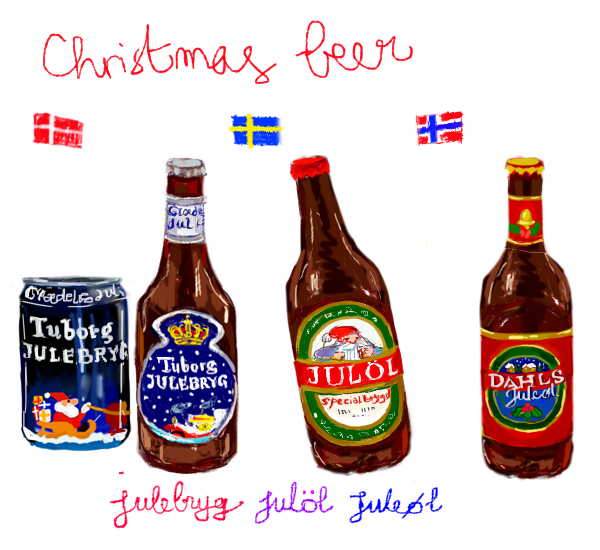
Mulled wine, glögg, is a classic, with spices as cinnamon, cardamom and ginger, but you can also drink Chistmas beer! It is darker and spicier than the usual ones.
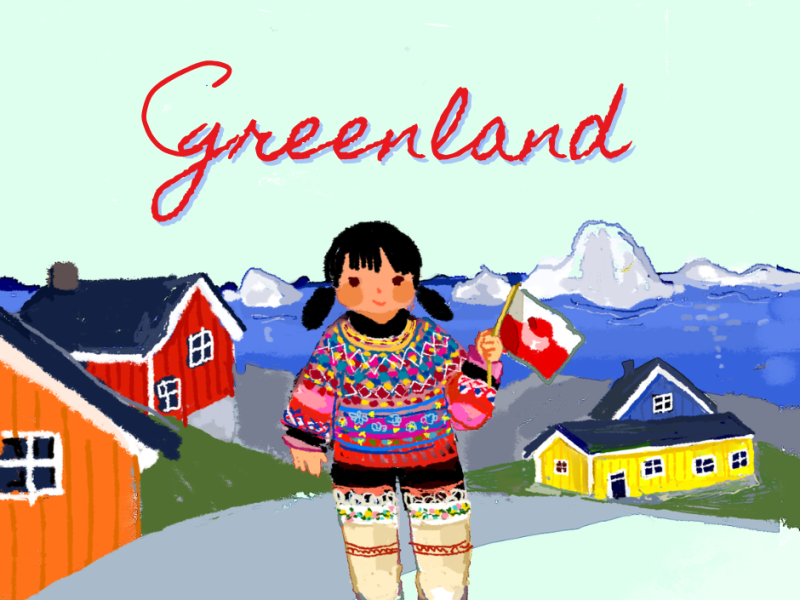
Discover Greenland, home to the Inuit Kalaallit, and its most iconic aspects as its flag, language and folk costumes. The biggest island of the world has a rich history of indigenous culture intertwined with Norse colonization and later Danish rule.