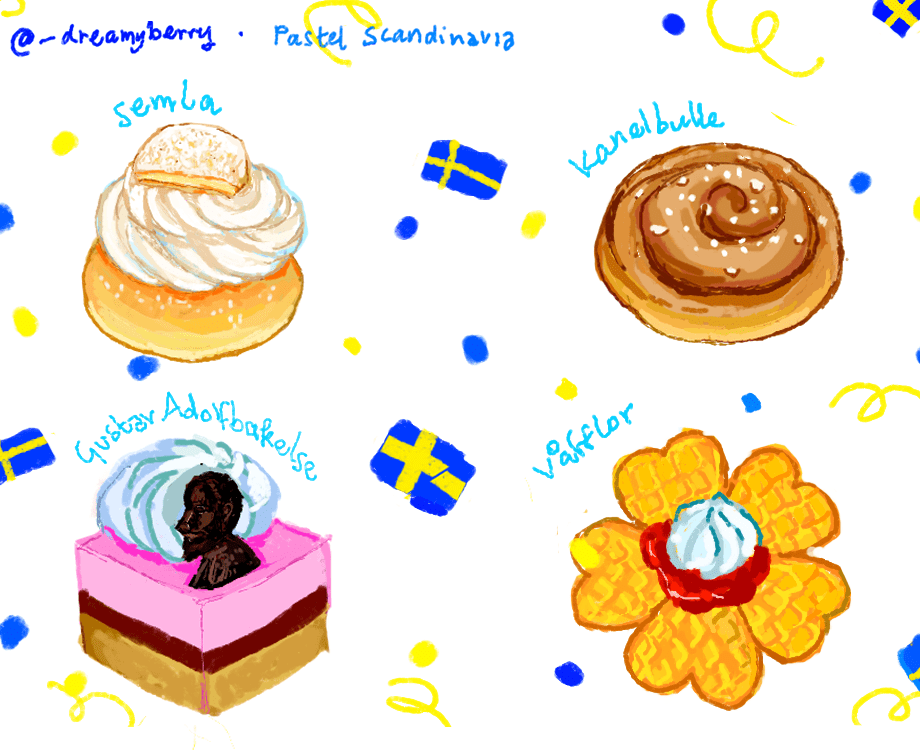
Swedes have a few days dedicated to eating a specific thing. Whether it started to honour a king or just as an excuse to bake, mark these days on your calendar!
Semlor: February/March – Fettisdagen
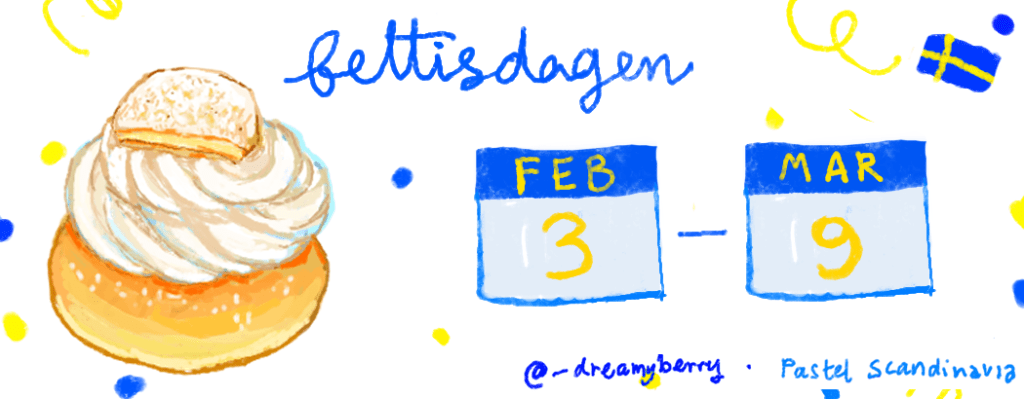
On Shrove/fat Tuesday (fettisdagen), between January and February, tons of of semlor are purchased in Sweden. A semla is a cardamom-spiced bun with almond paste and whipped cream – traditionally conceived as a rich treat to enjoy before Lent. Slightly different versions of semlor exist in the other Nordic countries too, and they are usually eaten on Shrove Monday or Sunday instead: Fastelavnboller in Denmark/Norway, Bollur in Iceland, laskiaispulla in Finland.
Prinsesstårta: first Thursday of March (Småland)- Fössta Tössdan i Mass
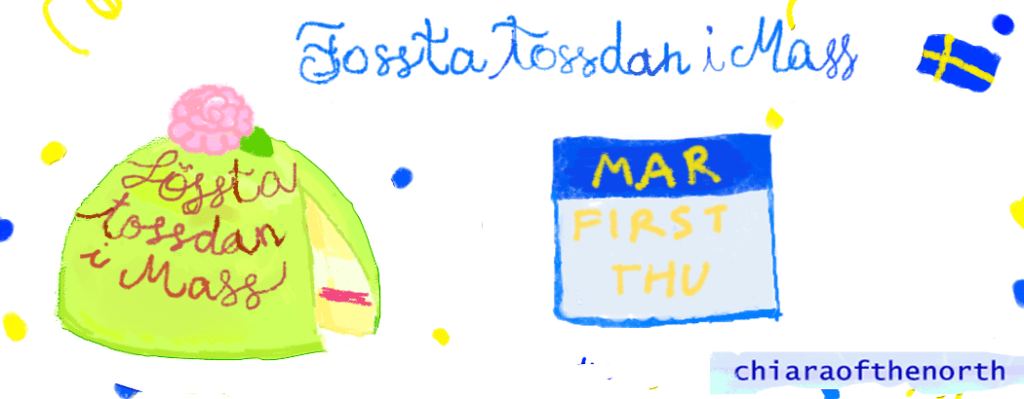
in Småland region accent, R’s are not really pronunced. first Thursday of March, Fössta Tössdan i Mass, is celebrated with the famous green massipantåta, marzipan cake, also known as Princess cake!
There was an attempt to make a Skåne version of this: people from Skåne have a tungrots-R, a Danish (or typical French, German) R, not rolling as most Swedes. So fjäRde fRedag i febRuaRi (4th Friday of February) was celebrated with a rollcake, RulltåRta, by Anna Gartz of Café Smulan in Brösarp.
Waffles: 25 March – Våffeldagen
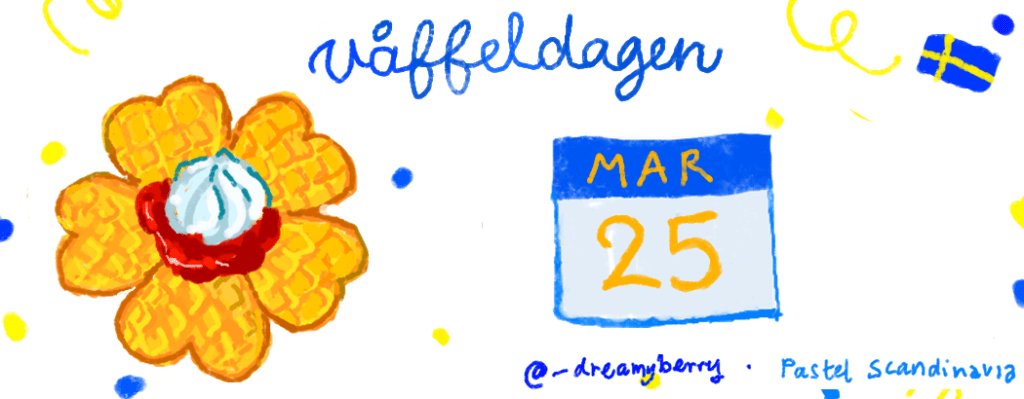
The christian feast of the Annunciation, in Swedish Vårfrudagen, lit. “Our Lady’s Day”, ended up becoming for most Swedes the similar-sounding våffeldagen (“waffle day”). This turned a religious day into a chance to eat heart-shaped waffles! It is also ”observed” In Norway and Denmark!
Cinnamon buns: 4 October – Kanelbullensdagen

Cinnamon bun day has been celebrated since 1999, and it was actually invented for commercial reasons: the person who made it up, Kaeth Gardestedt, was at the time working for an association of baking products producers. After almost 25 years people still bake cinnamon buns on 4th October!
Gustav Adolf pastry: 6 November – Gustav Adolfsdagen
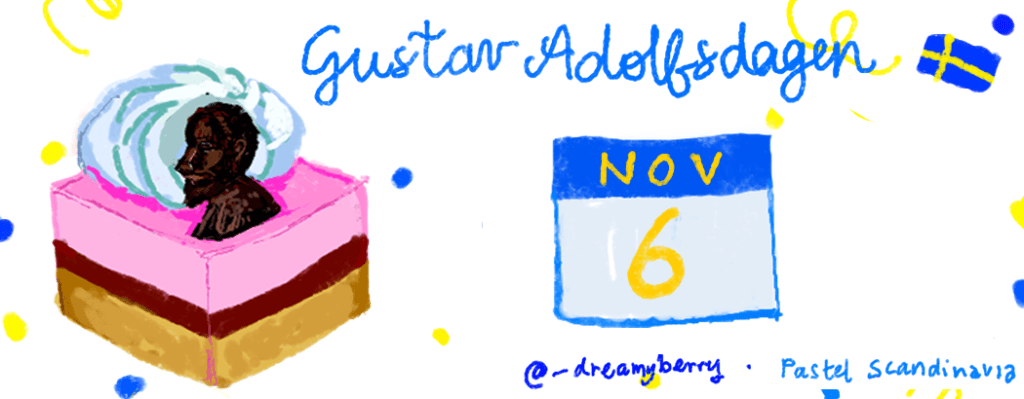
6th November is the date of the Swedish king Gustav II Adolf’s death in 1632. The king was very generous with universities as the one of Gothenburg, where a pastry was invented in his remembrance: Gustav Adolfsbakelse. It has been popular since the late 1800s. You can see it in a lot of variations, but what makes it a Gustav Adolf pastry is the chocolate bust of the king on top!
Gingerbread biscuits: 9 December – Pepparkakansdag
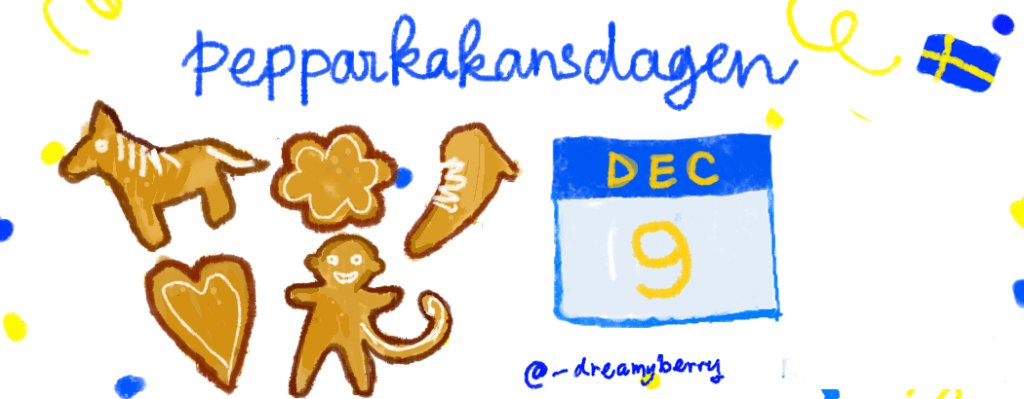
Gingerbread cookies, known as pepparkakor in Sweden, probably originated in Nuremberg, Germany, in the middle ages. Mentioned in Swedish in 1444 for the first time, the word pepper was used to mean spices in it, as pepper was the most common spice at the time. Baking them became a typical Christmas thing in Sweden and other countries, remember the episode of Pippi were she cuts them in the shape of her horse and monkey? Pepparkakansdag was, similarly to Kannelbullensdag, invented in 1996 by gingerbread maker Annas Pepparkakor.
Apparently there is also a Polkagrisensdag (candy cane day) on 20th April, but it mostly promoted in Gränna, near the Vättern lake. There Amalia Eriksson invented the polkagrisstång in 1859, the red-white peppermint candy cane, and many local shops celebrate this day.
Does your country have any days like these?
More articles:
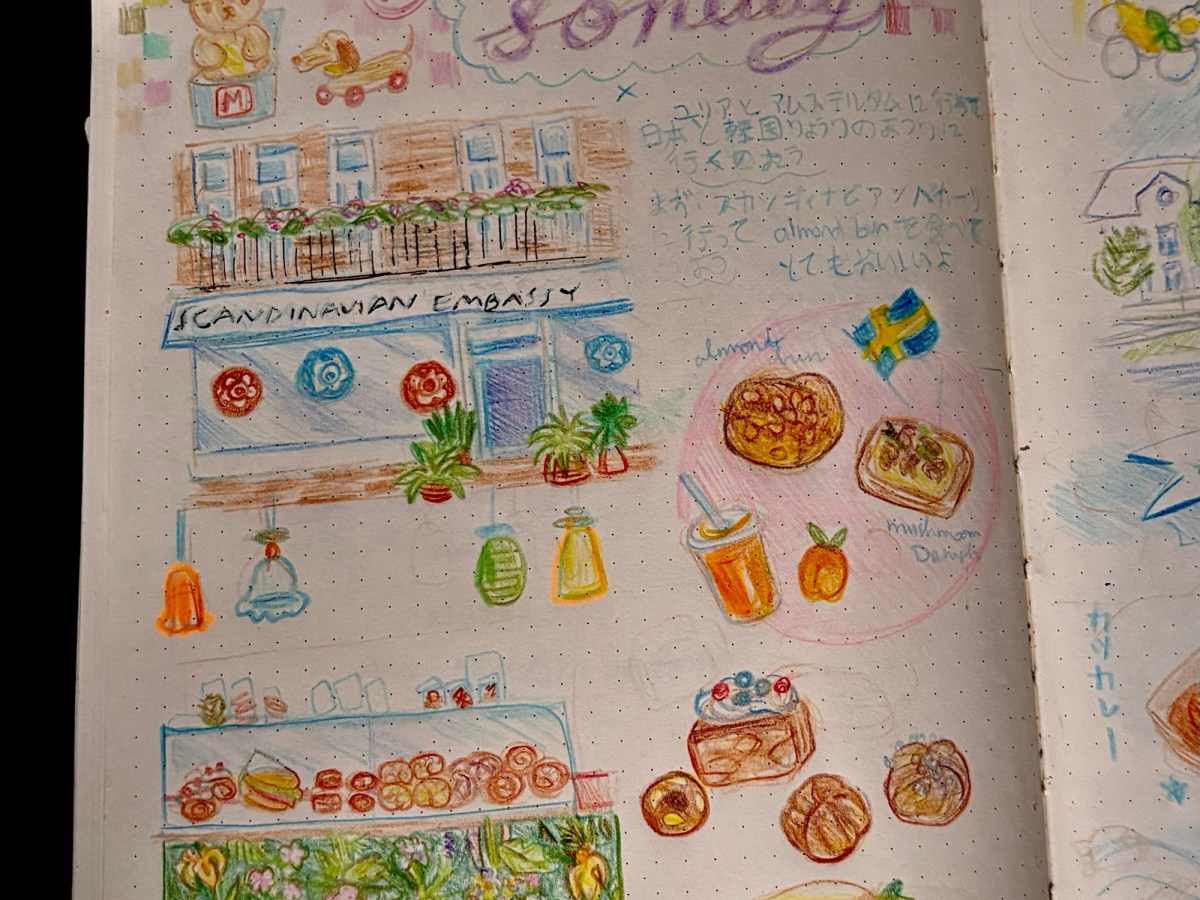
Scandinavian Embassy‘s bakery and cafe in Amsterdam zuid
On a trip to Amsterdam, I decided to test Scandinavian Embassy and both of its two locations, starting with the bakery in europaplein. The two locations are in Amsterdam zuid: Saphatipark and Europaplein: in the former, a more central location, you can sit but it has fewer items than the bakery in Europaplein. The bakery,…

An introduction to Estonian: sister language of Finnish
Estonian is a Finnic language, sharing many similarities with its ‘bigger’ sister Finnish, while being unrelated to all their bigger language neighbours
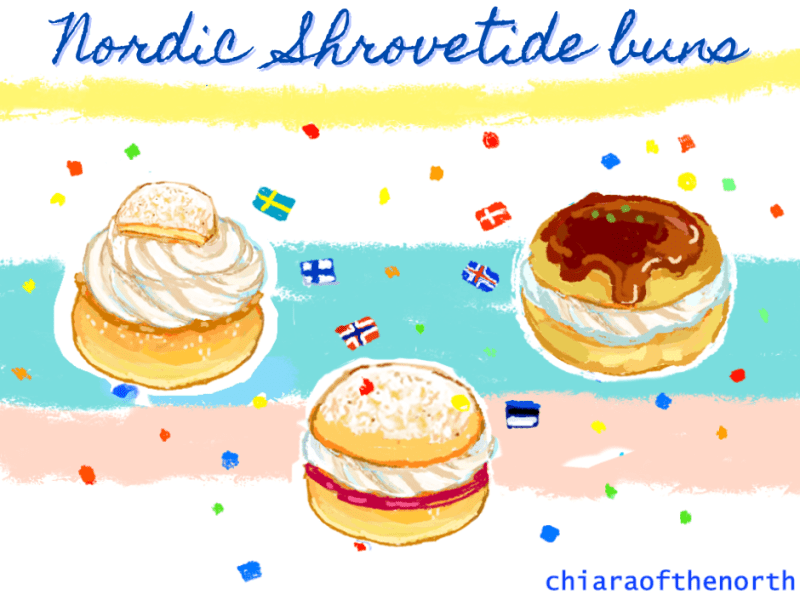
Scandinavian carnival buns (and where to eat them in the Netherlands)
Cream buns are enjoyed in Nordic and Baltic countries during shrovetide, between January and February. Sweden’s classic semla has almond paste, while other countries variations include jam, vanilla cream, and chocolate icing top.
 a Polyglot illustrating Scandinavia
One thought on “Sweden’s sweet calendar: 6 food-themed days from cinnamon buns to waffles”