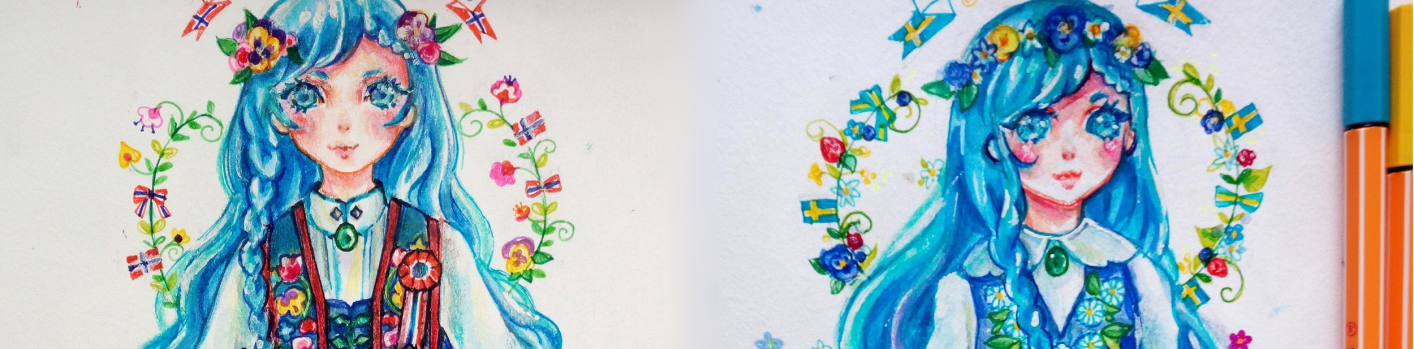

This article is derived from my Instagram post on my language learning profile inspired by @haluska.langs with her slavic version. I had also made a post about learning multiple similar languages in the past!
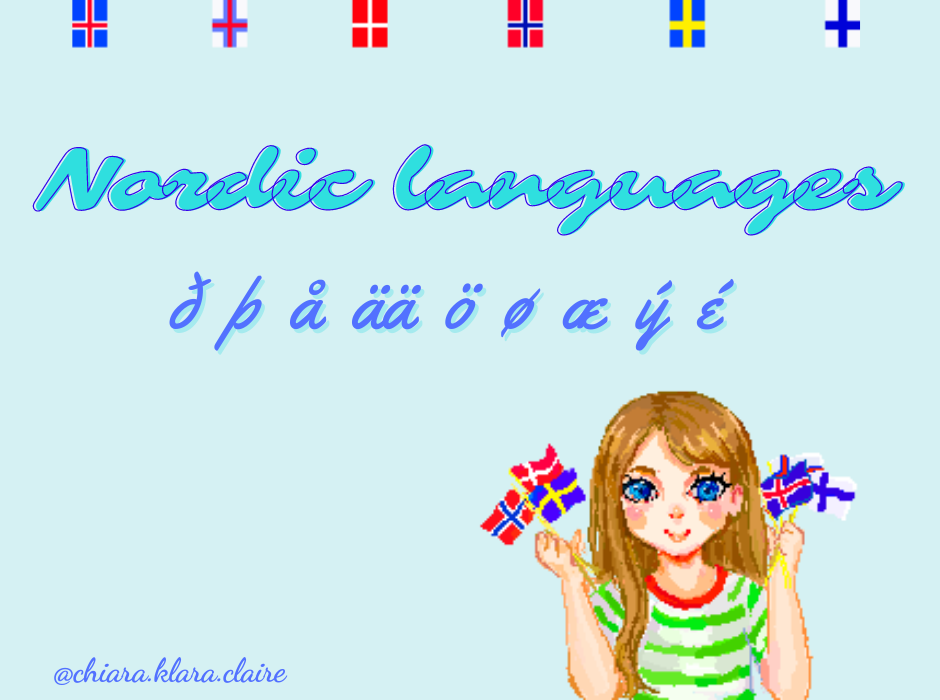
I speak to different degrees most of the main Germanic languages, including being familiar with a few lesser known ones as West-Frisian and Faroese.
I gradually added more and more of them through the years, starting from English and then German at school, then self studying more since I was about to finish high school.
As English was heavily influenced by French and uses many words with latin roots, besides the fact that it just feels like a given-for-granted language everybody speaks, it sometimes feels weird to include it in the Germanic languages family, but it indeed helped understanding for example to instantly recognize är in Swedish as the verb are, and the fact that verbs have att – in the infinitive form makes sense as English has to –.
However, When i started Swedish and Dutch simultaneosly in the now distant April 2017, it was German that made a lot of things easier than it would have perhaps been without it.
MY JOURNEY
- I started English in primary school, and was always quite excited about learning it, wishing to have more hours for it every year.
- My second Germanic language arrived much later, I choose German over Spanish in high school, but it had been fascinating me for many years, trying to learn random words of it here and there, I did learn the first word on cornflake boxes: Zutaten (“ingredients”).
- During my last year of high school, after 5 years of English, French and German, I started self-learning Swedish and Dutch simultaneosly, using exclusively Duolingo for months. I theorically dowloaded duolingo for Swedish, but I loved Dutch too so i immediately started the course and used duolingo basically every day for a good year. I had a strong knowledge of German to begin with, it heavily helped me and made a lot of grammar and vocabulary instantly clear/recognizable, but also meant having interferences (see below), for example it ruled the verb order making me place verbs where it made no sense in Swedish nor English nor my mother tongue…
- Two years later I wanted to learn some Danish and Norwegian: exposure, writing “adjusting” my Swedish with the help of online translators, but the effort to learn grammar and vocabulary was 70% done. learning Danish and Norwegian together without knowing Swedish would have been bad, you wouldn’t know when you are learning one or the other, but with a good Swedish knowledge and some exposure for both it’s manageable. Needless to say, focusing on one will make you better at it than splitting time/energies for both.
- During the first corona lockdown in spring 2020, I started learning Icelandic with textbooks and online resources. I had actually read about pronunciation in a mountain hut in summer 2018, but didn’t understand much or took the time to process it at haha.
- In the last few years I’ve been also getting some exposure to Faroese and West Frisian (which i can understand to a given extent thanks to other languages as Dutch and Icelandic) and casually learning them.
MIXING THEM UP
When learning multiple related languages, it is easy to end up mixing them up in one way or another. The more fluent you are in one, the less it is likely that you let yourself get influenced by another, this is way reaching a good level in onee language before learning another one in the same family is important. Moreover, you will be very familiar with much of its grammar and vocabulary, and you might rely way too much on your first language of that family. Using Spanish words when speaking Italian might not be the best, but you’ll be much better off than only knowing more distant related languages locals hardly speak.
There are a lot of false friends and words which would “fit” in the other language used without even realizing it. Some examples are short words existing in multiple languages but with different usage/meaning:
- en means “and” in Dutch, “a(n)” in Scandinavian languages, and “but” in Icelandic!
- om means “about” something in Scandinavian languages, while it’s usually “(in order) to” in Dutch
- A false friend example is Icelandic að kenna meaning teach; while kennen/känna/kjenne/kende all mean “know (usually someone)”!
- a funny fact about interferences is that I once used mensen talking in Swedish, “people” in Dutch, but “the menstruation” in Swedish!
Verb order is very vulnerable to interferences when learning multiple Germanic languages, at least at first: with subordinate clauses in German you have “..that I something done have“, in Dutch “..that I something have done“, in North Germanic languages ” ..that I have done something” as it is in English.
At first I would instantly use the German verb order with Swedish (for no apparent reason since the order in Swedish is supposed to be the most natural for me..), that doesn’t happen anymore, however, I still mess up it with Dutch and German since they only have the very last part switched! I hate it, but that’s what you pay for speaking both I guess…
To avoid interferences one of the most useful things is getting corrected or being aware of them, detecting the mistake is the first step to stop making it.
BONUS POINTS
Easy to learn vocabulary
Knowing languages related to each other can cause interferences but can also come very handy at times! Besides all words sharing a common root, You will understand and easily remember cognates and words which are everyday vocabulary in one language and seldom used ones in another one.
- In Danish jeg spiser is “I eat”, you might easily remember this word as Speisekarte means “menu” in German. In the closely related Swedish you say “jag äter”, which however resembles eat, eten etc.
- Despite my Swedish being more advanced, Danish and Norwegian helped me with understanding right away obsolete words in Swedish while reading an old book: Danish pige and Norwegian jente are the word for “girl”, while piga/jänta are “maid” in Swedish, not a word you’d learn in an everyday context.
Easy to guess the gender
Germanic languages, except for English, have different genders, whether masculine, feminine, neuter as German, Icelandic, and partially Norwegian, or general + neutral as Swedish, Danish and Dutch*. Being from the same family in many cases genders are usually the same for words with the same root:
- House is neutral: das Haus/het huis/ett hus/husið;
- Earth is feminine, sky is masculine: die Erde, der Himmel (German) /jörðin, himinn (Icelandic) /jorda, himmelen (Norwegian)
The closer the language the safest the bet: Dutch and German are more likely to have words with the same gender than them and North Germanic languages: book is neutral in West Germanic languages but feminine/general in North Germanic – het boek, das Buch (n) / boka, bókin (f).
*Neutral exists in all but English, while In Dutch, Swedish and Danish masculine & feminine merged. However, they are sometimes still visible, for example in pronouns for objects: hij/zij as he/she in Dutch (knowing German can give you great advantage compared to natives!); to tell the time in Swedish you say “hon är..” (she is..) because klocka (clock) was feminine! Norwegian does have feminine, even though in some Norwegian dialects feminine (book: ei bok, boka) and masculine are not distinct and general en is used (having en bok, boken which would be masculine).
Easy to learn Irregular verbs
All Germanic languages have irregular verbs, which mean learning lists of paradigms present-past perfect-past participle. Once you have learned them for one, it’s all downhill to learn the others, as not only you already know how the verb system works but many are very similar across different languages (and the set of verbs being irregular is more or less the same), or follow similar patterns:
- ate=aß/at/åt; saw=sah/zag/så(g)/sá
- drink-drank-drunk: drinken-dronk-gedronken/ trinken-trank-getrunken/ dricka-drack-druckit
Method
Don’t learn more than 2 similar languages at once, if very similar and from scratch keep that at one. You might be dying for the other for a while, but the path will be downhill and you’ll be less confused.
I learned Norwegian and Danish more or less simultaneously but it wad 95% just exposure, as I already spoke Swedish. That means I knew well what I was dealing with and most importantly I didn’t have to learn a grammar system from zero, but mostly only how to adapt it to Danish and Norwegian, same for how spelling behaves in both. The proficiency you acquire then depends on how much time you spend on each. My Danish is better and I don’t have to check words as much as in Norwegian because I happened to use Danish more because of friends and such, but I used to write letters in Danish/Norwegian and basically check every other word on google, while the grammar structure was as good as done with some exposure on top of speaking Swedish.
Getting a little exposure is always fine, you will just get to know the other languages a bit more, preparing yourself for a more serious approach when you are ready. With some effort you’ll then split from the “rely on X language” phase and speak it independently.
Dutch and German are maybe almost as similar as Scandinavian languages to each other, but not as much, and if you learned Dutch first you’ll have to deal with cases and an additional gender, not quite the same as just adapting it and only learning from immersion.
Nevertheless, give love to all your target languages through frequent immersion, scheduling study sessions for those which require help.
A little fact in conclusion: in Germanic languages “moon” is masculine and “sun” is feminine, while in romance languages it is the opposite! I can see why if you look at the weather and daytime in North vs South Europe 🙂
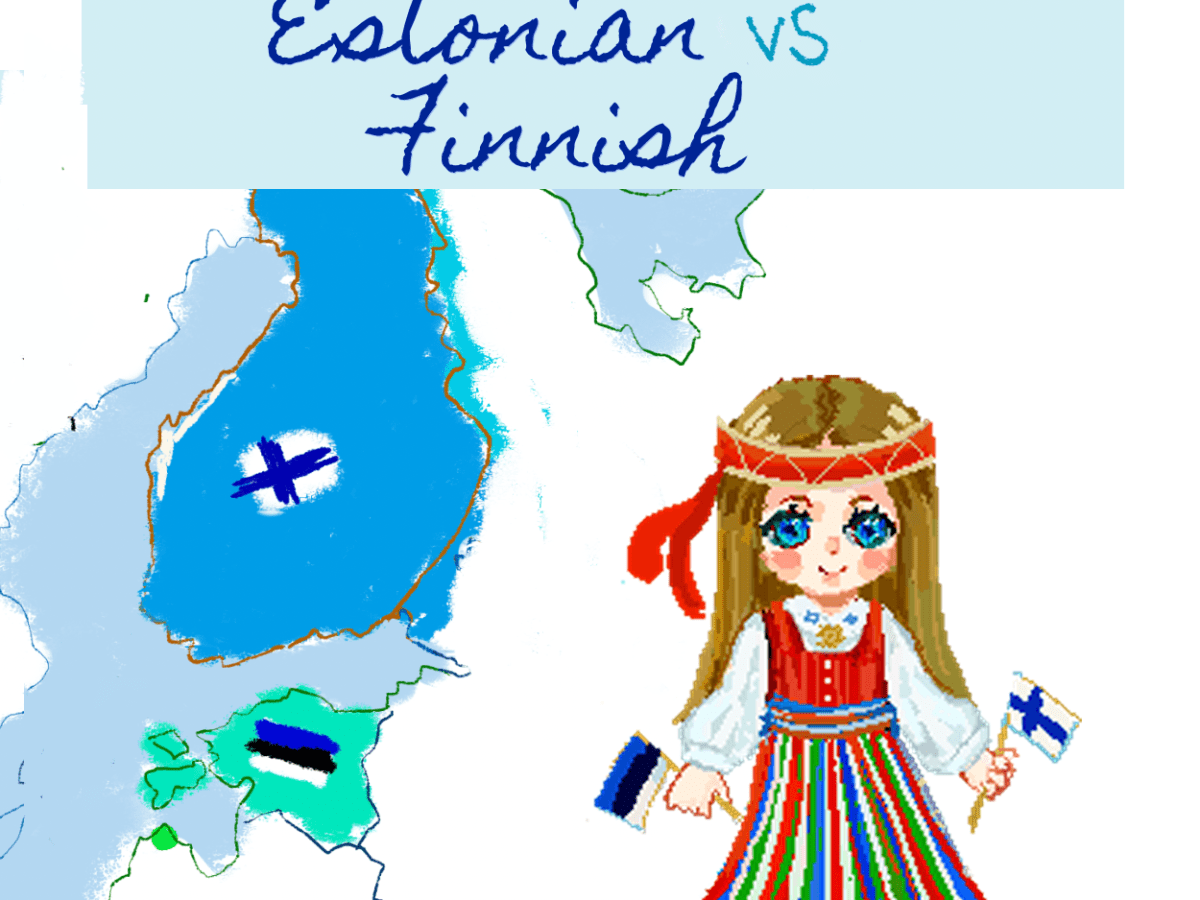
An introduction to Estonian: sister language of Finnish
Estonian is a Finnic language, sharing many similarities with its ‘bigger’ sister Finnish, while being unrelated to all their bigger language neighbours

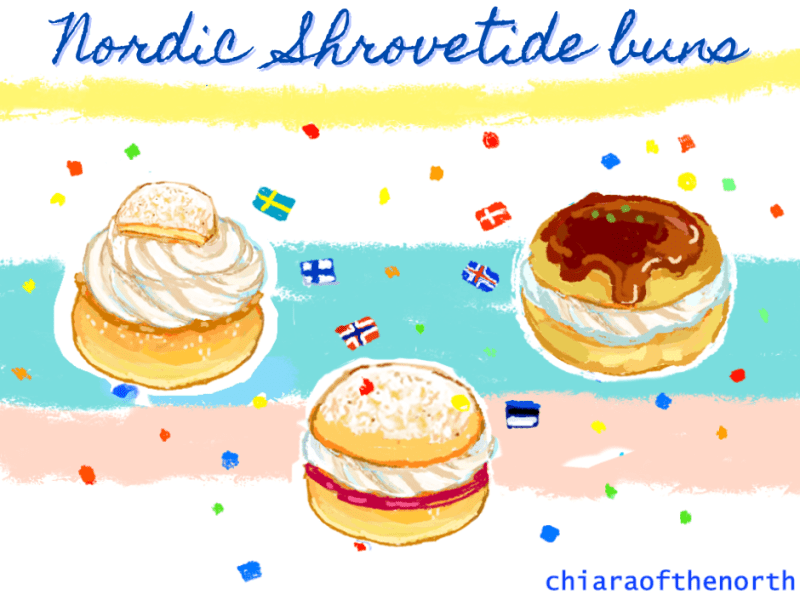
Scandinavian carnival buns (and where to eat them in the Netherlands)
Cream buns are enjoyed in Nordic and Baltic countries during shrovetide, between January and February. Sweden’s classic semla has almond paste, while other countries variations include jam, vanilla cream, and chocolate icing top.
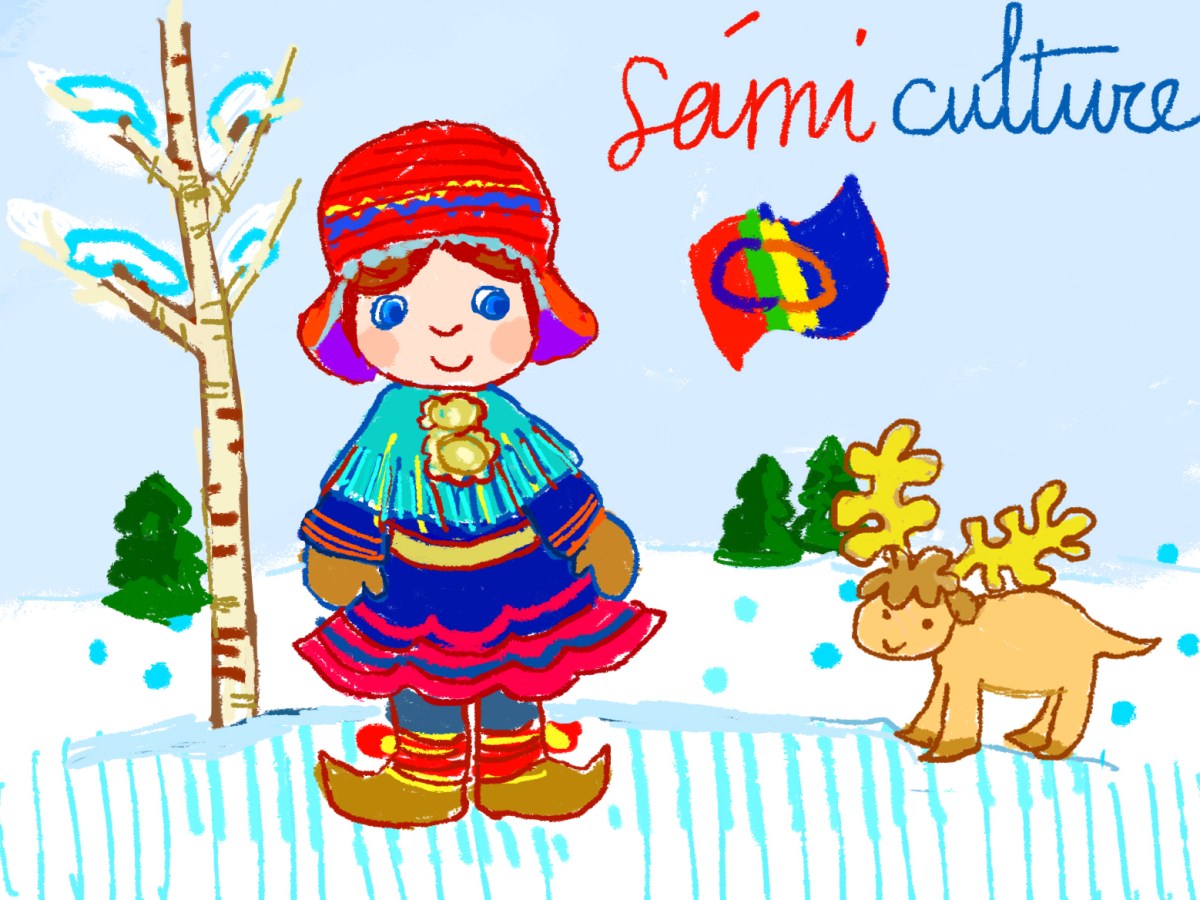
5 symbols of Sami culture
Sámi people, indigenous people of North Scandinavia, have a distinct culture, symbolised by its unique flag and traditional clothing, and part of it are Duodji handicrafts and unique musical expression through yoik.
 a Polyglot illustrating Scandinavia