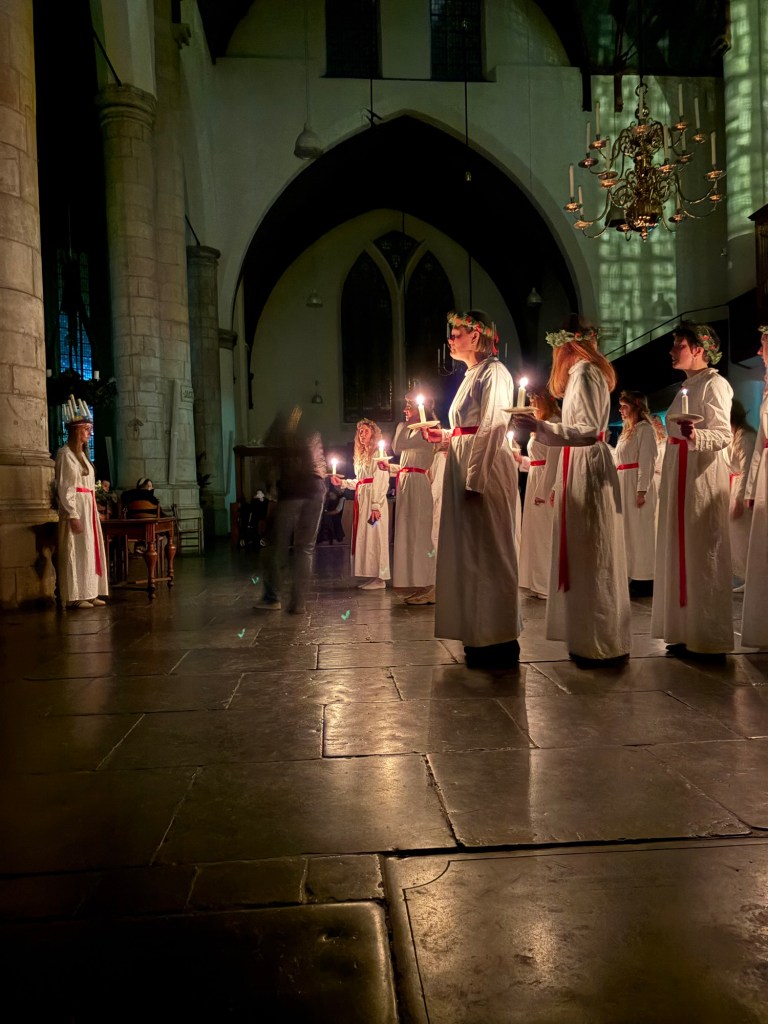
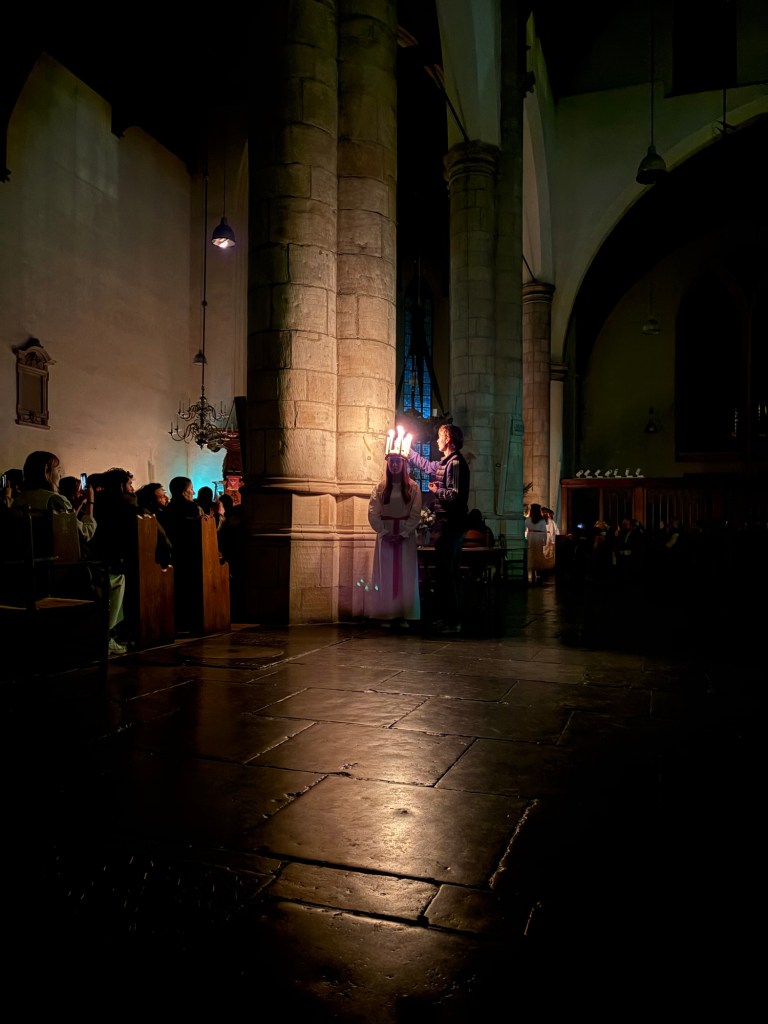
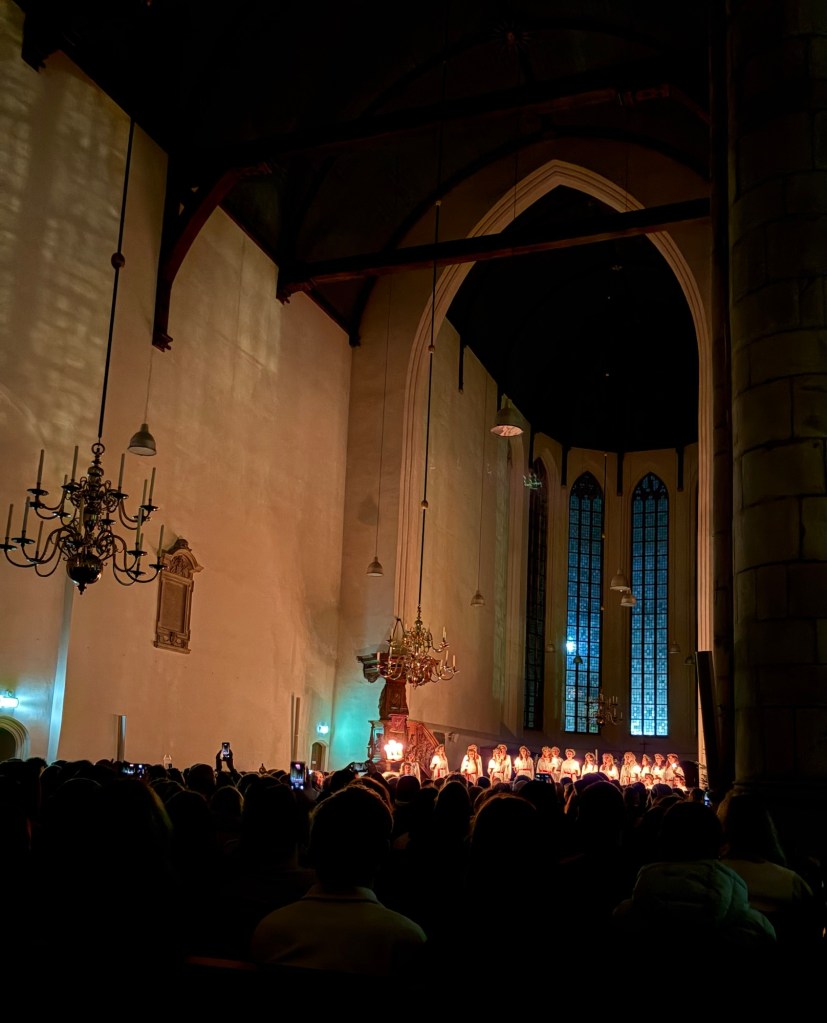
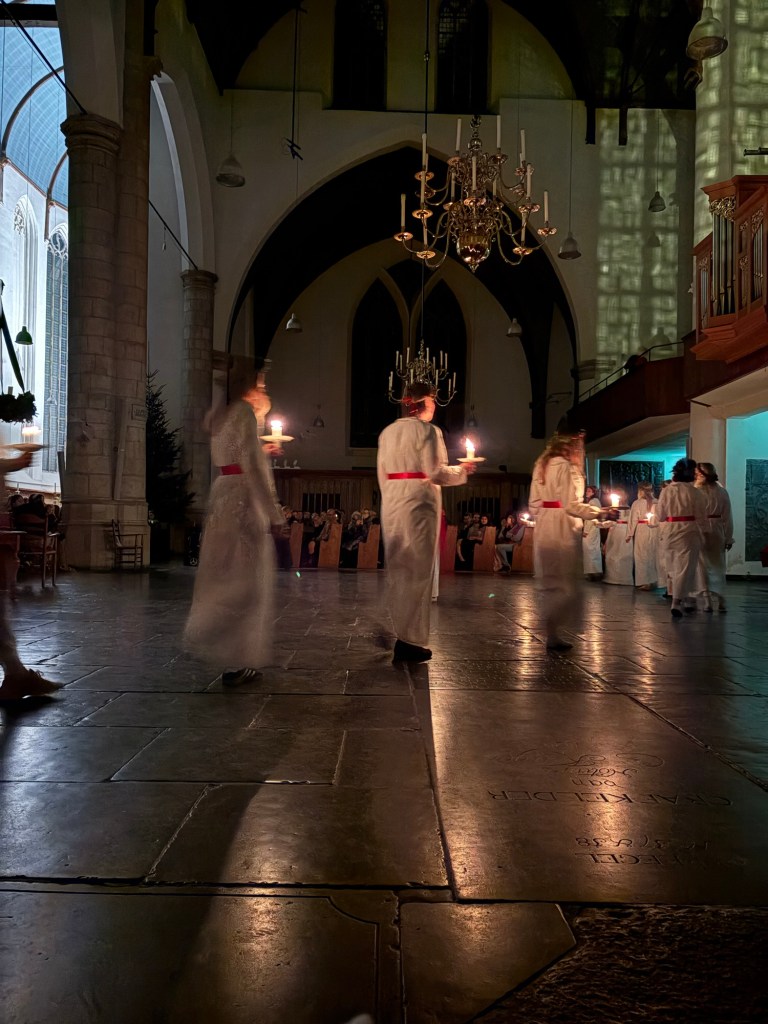
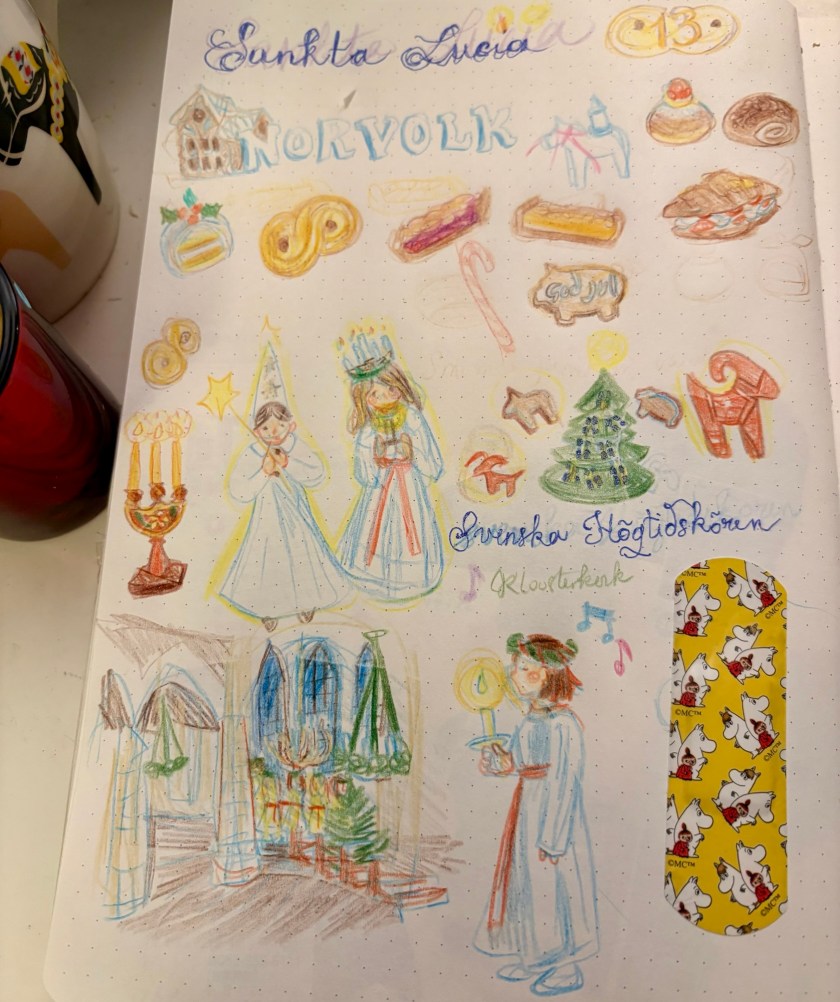
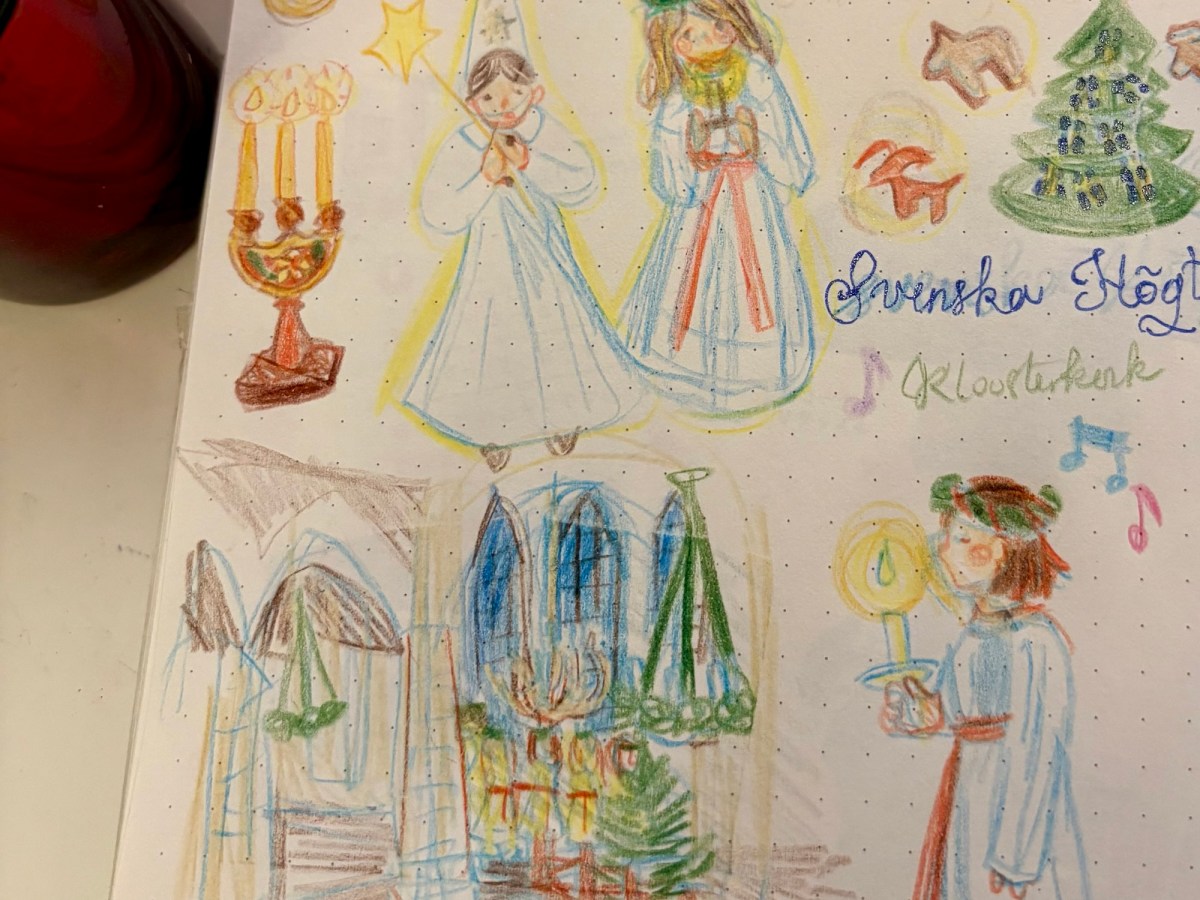
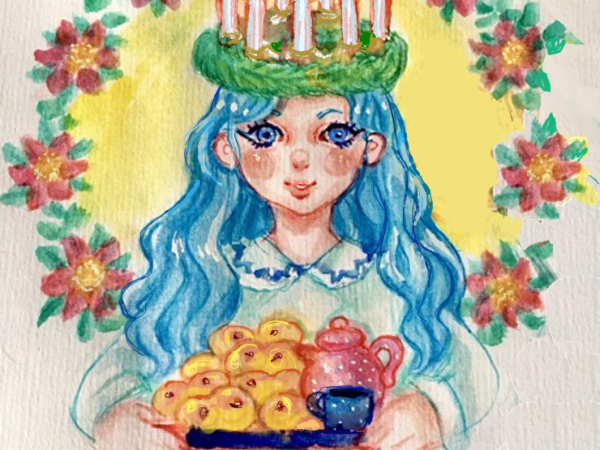
This year, I celebrated Lucia in the Hague by eating a Lussekatt at Scandinavian bakery Norvolk, and attending a Lucia church concert.
13th December is Luciadagen in Sweden and Scandinavia, this year on a Saturday, so I could attend a Lucia concert in the Hague!
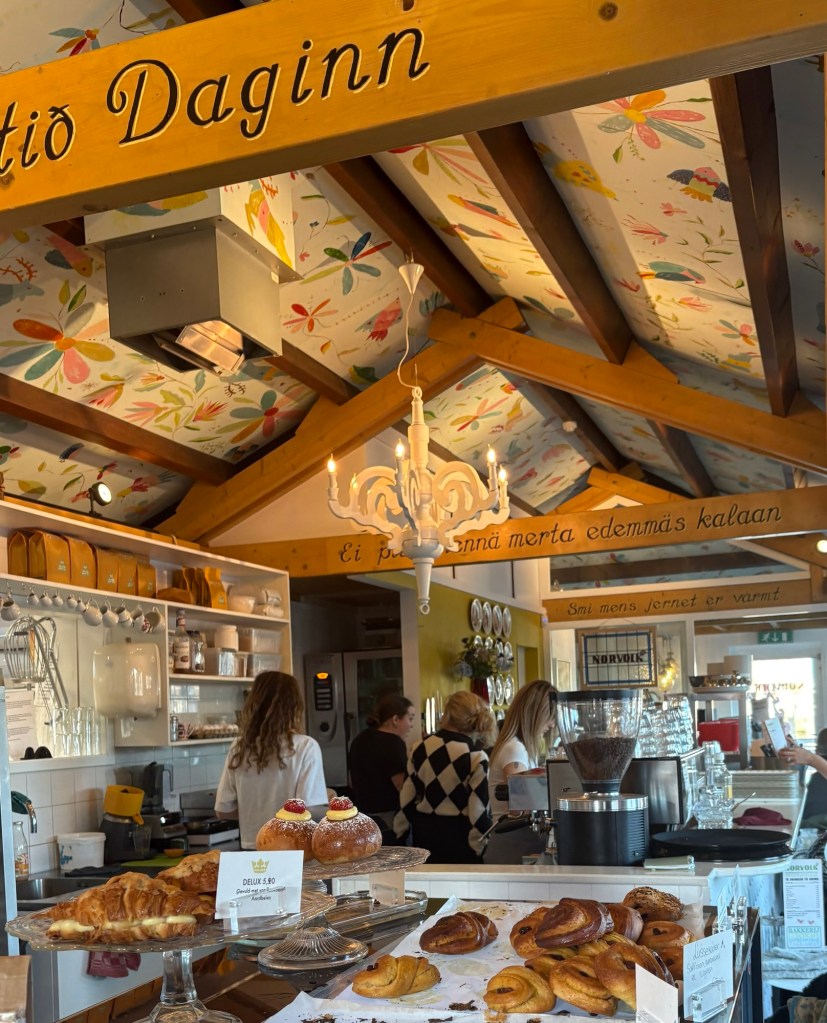
I started my day in the Hague going to Norvolk, a Scandinavian bakery in Scheveningen, which I had been to for a lussekatt last year as well.
Last year it really had the classic S shape, this year it look slightly different, but still with raisins!
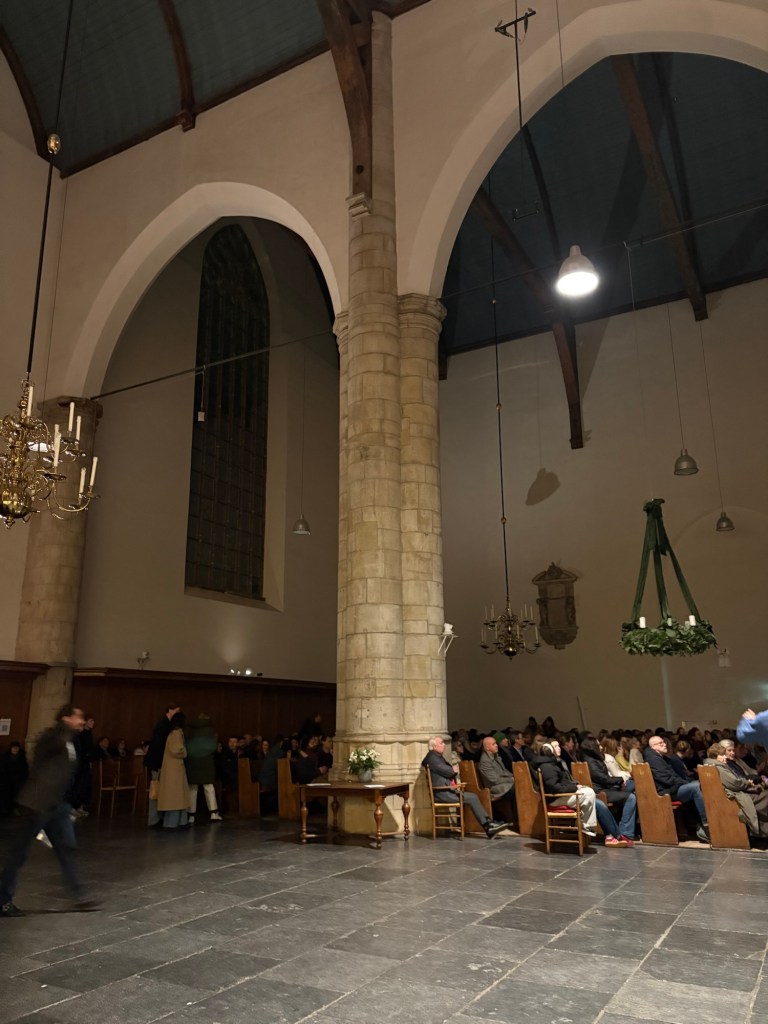
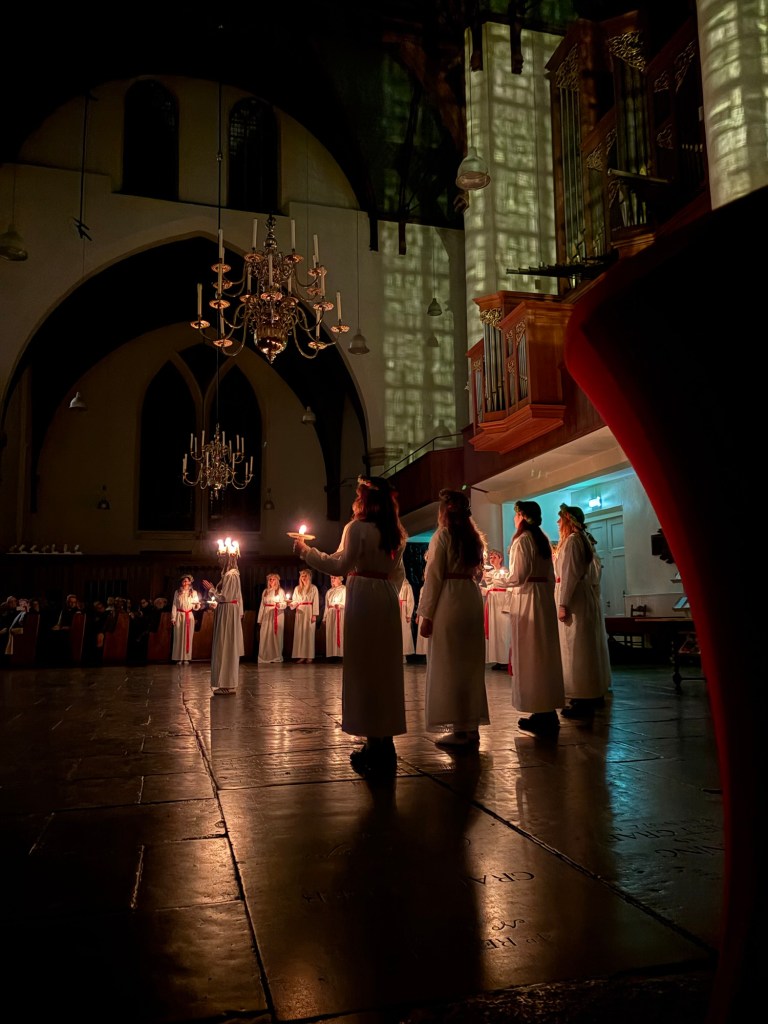
In the evening I went with a friend to the Kloosterkerk in The Hague, where a Swedish choir – Svenska Högtidskören held a Lucia concert, as you see them in Scandinavia. They hold concerts elsewhere in the Netherlands too!
It began in the darkness, with all the girls in the processions holding a candle and walking in a line to where they would stand and sing.
The concert started at 19:30 and lasted one hour.
One of the highlights was Lucia’s having the candles on her crown lighted – behind the pillars, but I could see it well from where I was sitting! It felt so magical.
They sung traditional Swedish songs of course, but also Stille Nacht/ Silent night in German and English.
Then, they walked back, with Lucia in front, and stood all in a circle with her in the middle.
It was possible to give money for a charity – a food bank in Amsterdam in this case.
It was a whimsical experience and definitely among other things that makes me enjoy Christmas time!
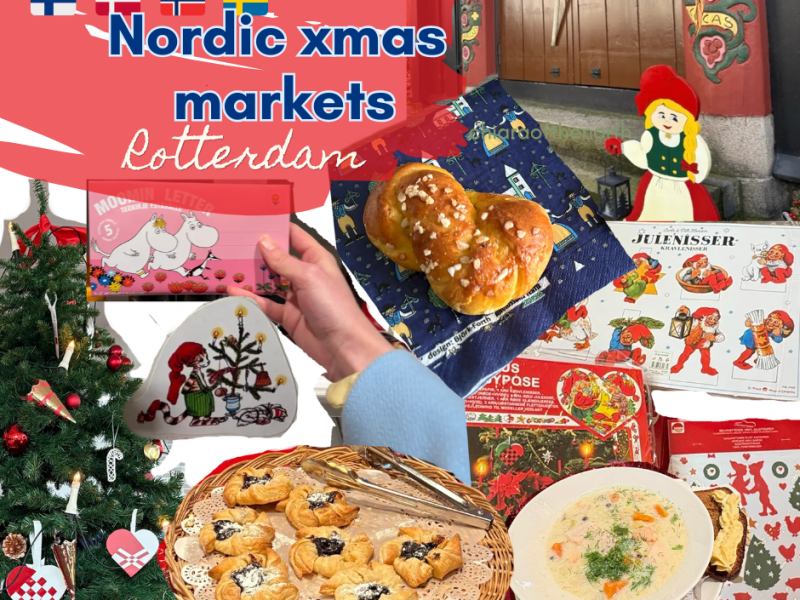
Norwegian, Danish, Finnish and Swedish Christmas markets in Rotterdam. Christmas decorations, imported typical Nordic products for sale, a cafe with lunch and cakes in each of them!
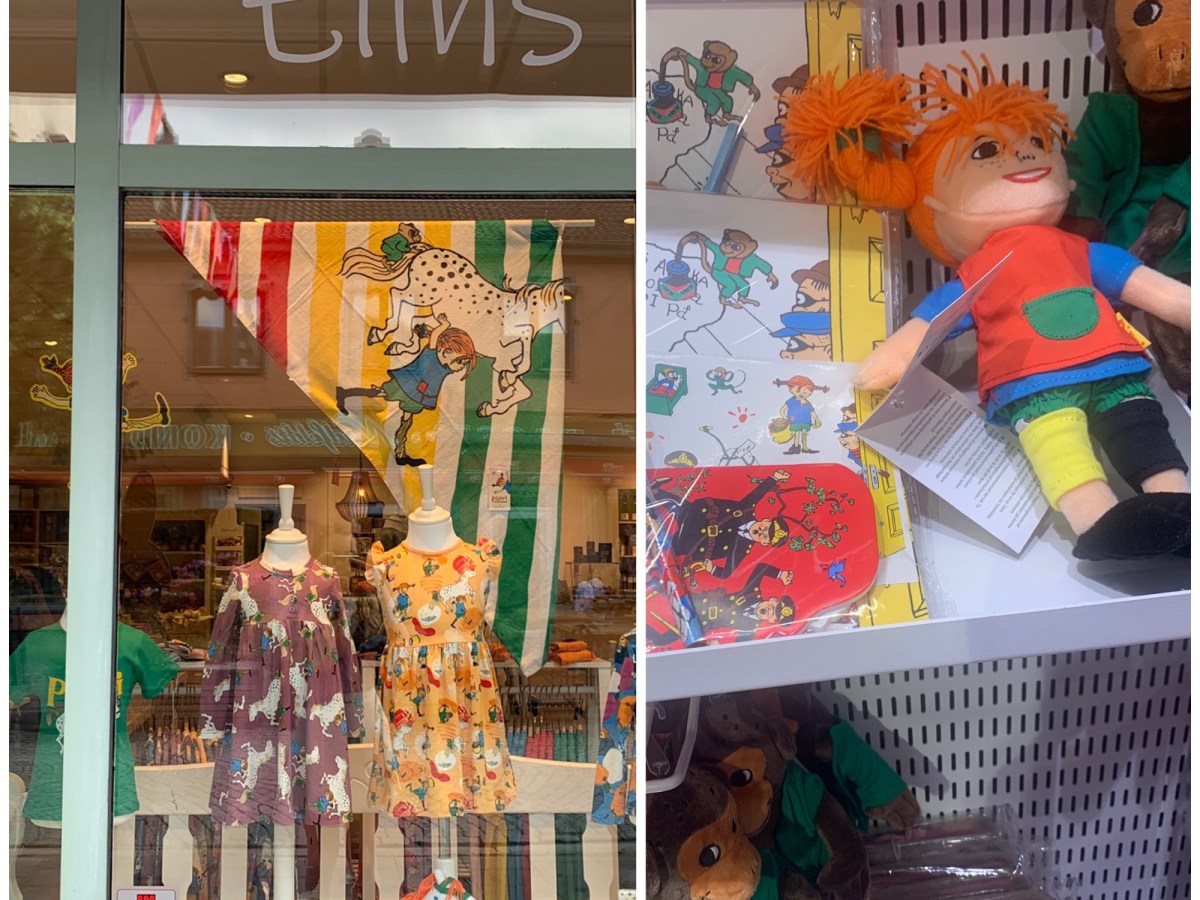
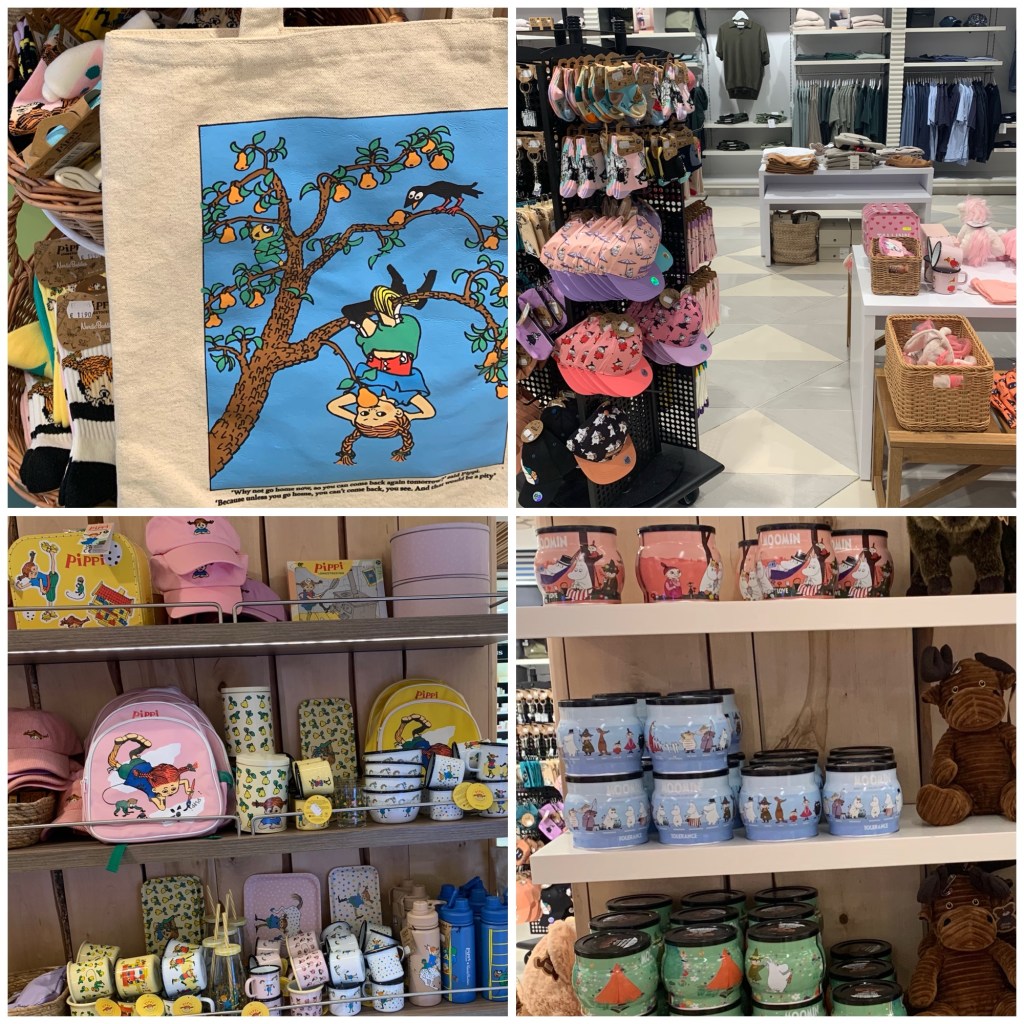
In Sweden, Pippi Longstocking objects can be a lovely souvenir. Pippi is on sweets and various children’s items a well, as sometimes other Astrid Lindgren’s characters, which have also cherished cultural impact as a part of Swedish identity.
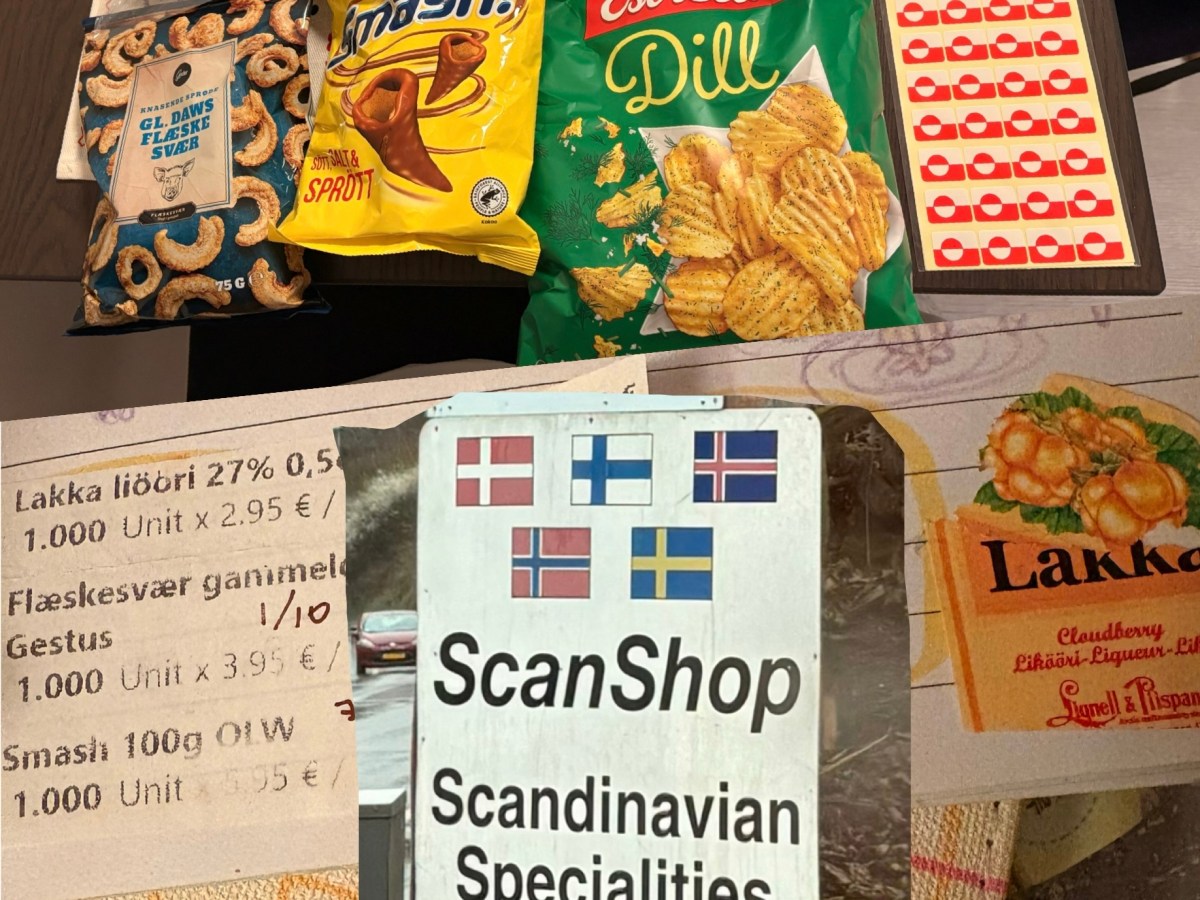
I visited Scanshop, a supermarket for Nordic expats in Luxembourg and Belgium. It offers a wide range of Scandinavian food products, including rye bread, fish, and sweets, alongside flags and tableware.
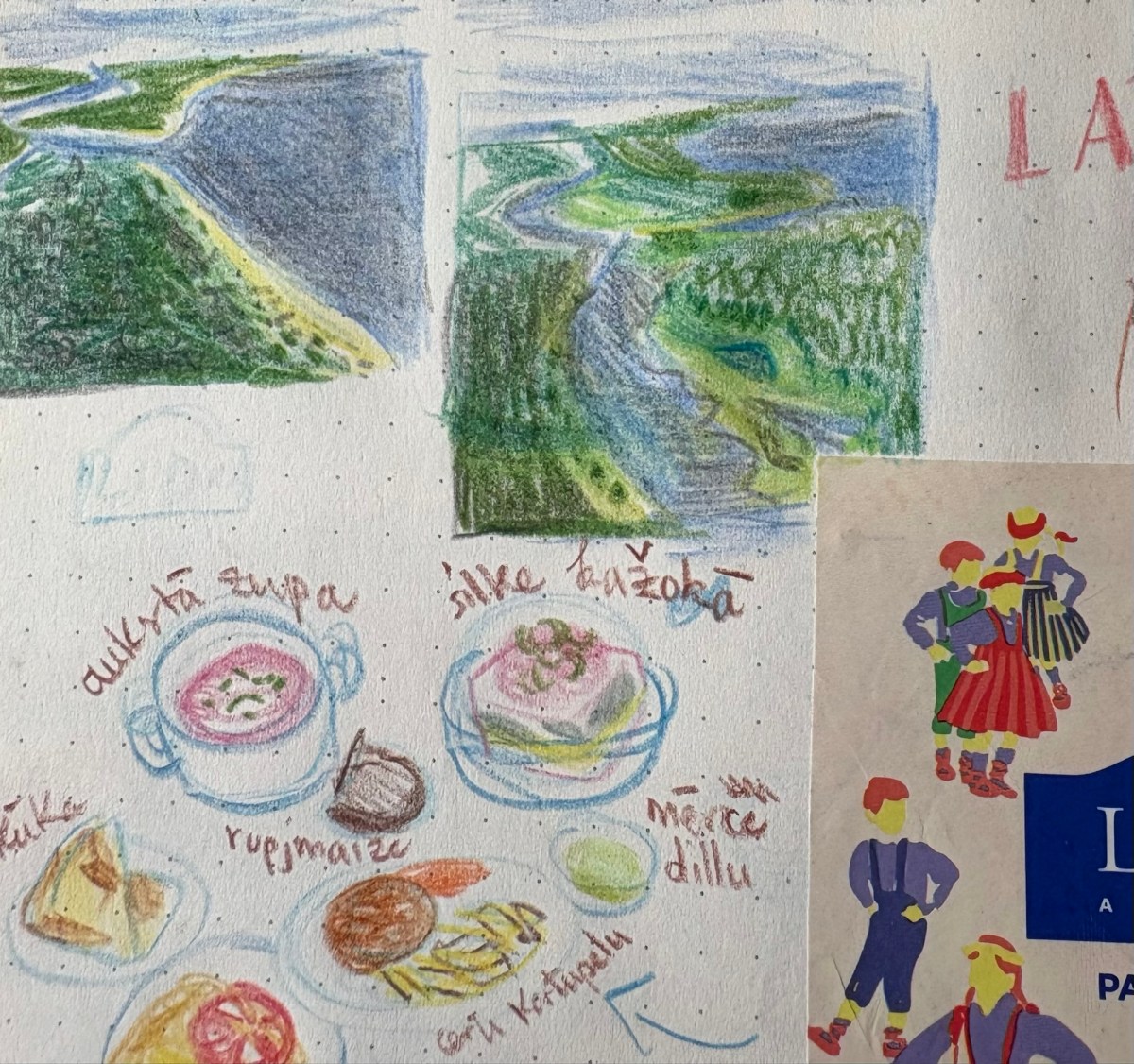
Are Baltic countries Nordic at all? I explored Latvia and Estonia, noting their ties to Nordic culture, from languages to Rye bread and Midsummer.
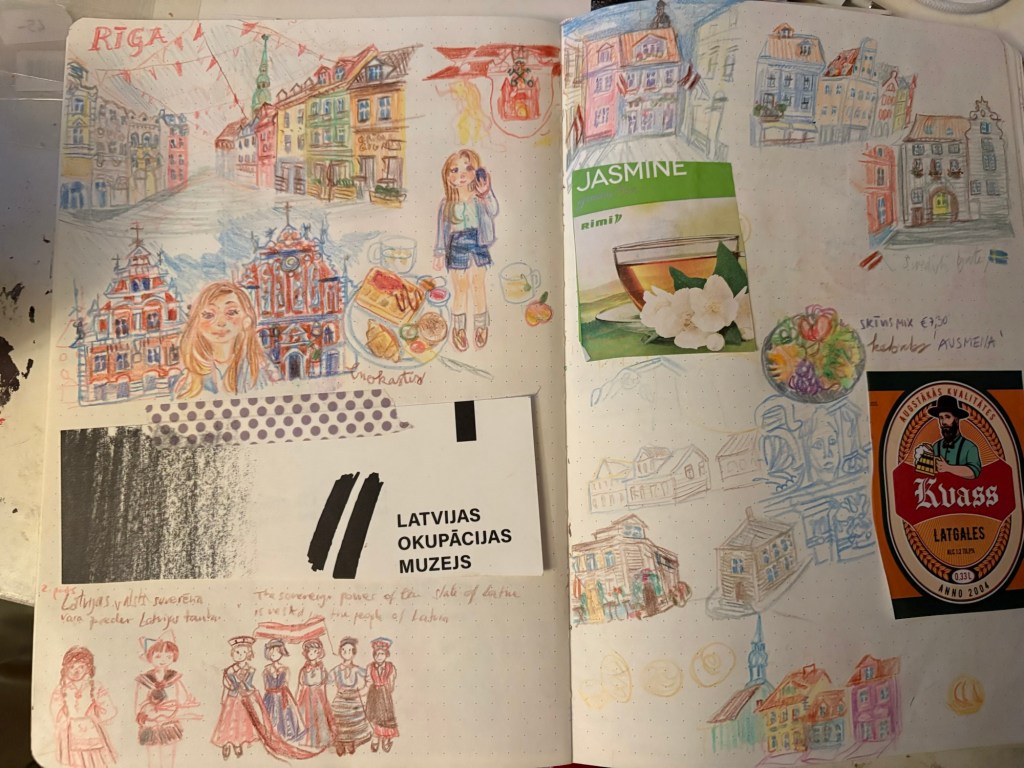
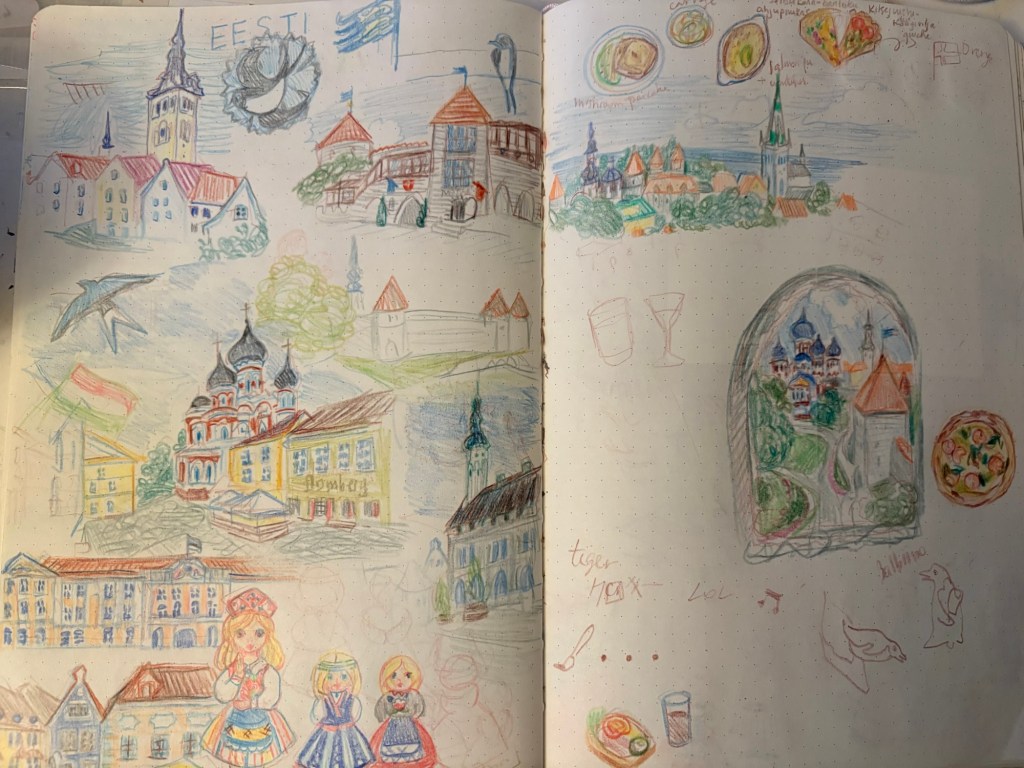
Last summer i visited Latvia and Estonia. They are not too far from Scandinavia, and I was curious to find what they have in common with Nordics.
1. language and identity in the Baltics
While Latvians and Lithuanians are Baltic people – speaking an Indo-European language, related to Slavic languages- Estonians are Finnic, and their language is very close to Finnish, making Estonia the most ‘Nordic’ of the Baltic countries. Livonians are a small Finnic minority in Latvia. Estonia in particular has deep ties with Scandinavia – it used to be under Swedish and Danish rule. Though you can find a Swedish gate in Riga too!
There is actually a Swedish minority in Northern Estonia and coastal areas, that has existed since the 13th Century: eestirootslased or rannarootslased in Estonian, estlandssvenskar or aibofolket in Swedish, similarly to Finlandssvenskar, Finland’s Swedes. Its number shrinked however significantly due to the USSR occupation in the 20th century, that urged many to flee to Sweden, being very small today.
There is also significant proficiency in Finnish in Estonia, thanks to its linguistic proximity with Estonian and exposure to Finnish broadcasts during the Soviet era. Nowadays, young Estonians are not as exposed to Finnish media as older generations were during those times, and Finnish is not as intelligible for them as it used to be for their parents.
According to a poll done in 2013, about half of the young Estonians considered themselves Nordic, and about the same number viewed Baltic identity as important.
2. Baltic cuisine
Rye bread is king! As dark as night! Rye bread chocolate is a things both countries!! Says enough..
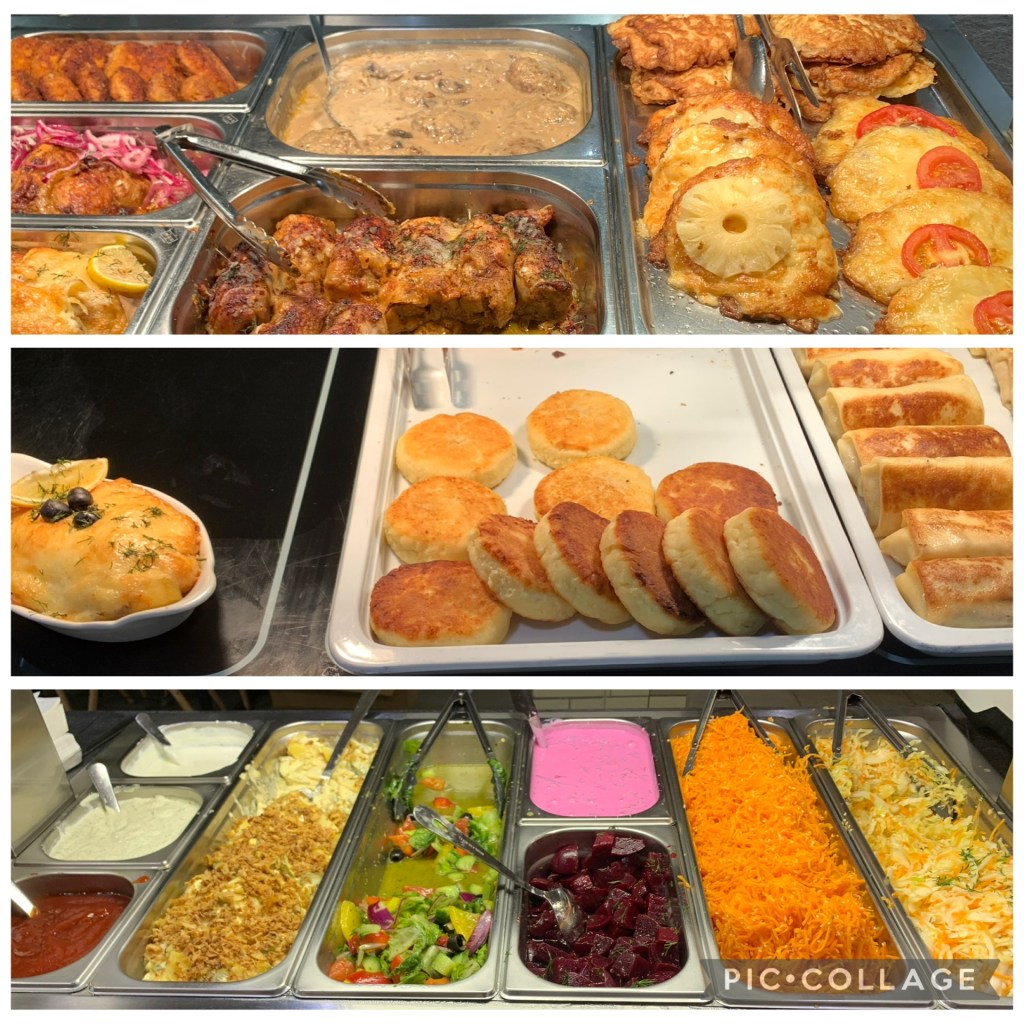
Herring, Redbeet, (potato) pancakes are staples – all stuff to be found at LIDO chain self-service restaurants, Latvian of origin.
Soups in Latvia are a very common part of meals as in Slavic countries, notably the redbeet cold soup. Something typical Latvian are the dumplings Pelmeni, similar to Polish Pierogi etc.
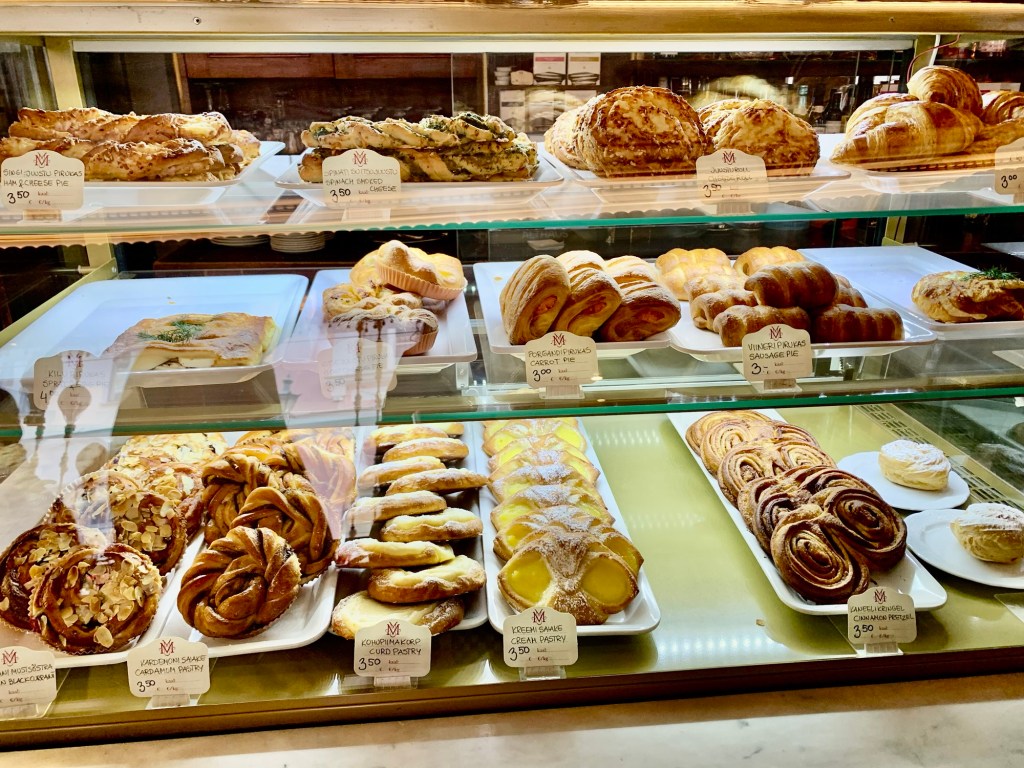
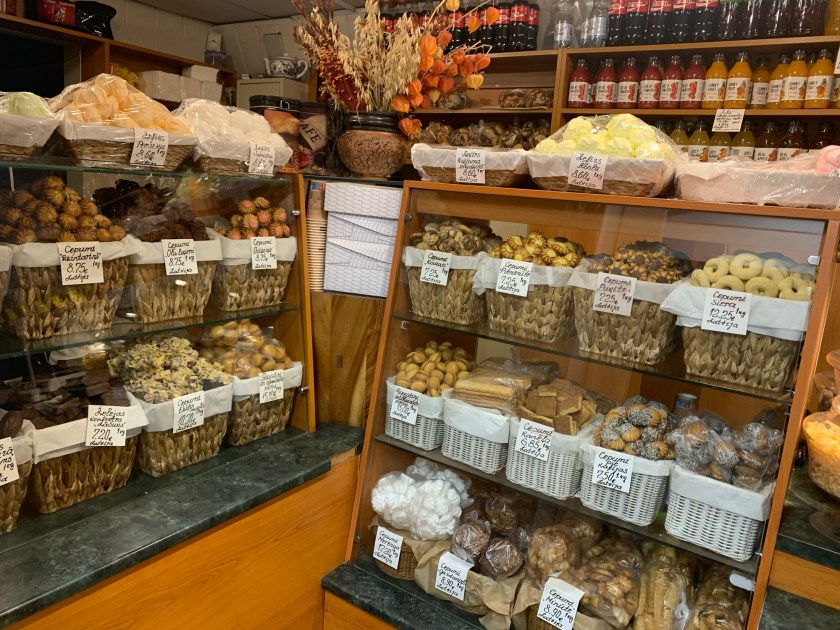
A galore of Baked goods were everywhere in Latvia, maybe not as much in Estonia. Nordic style buns were in both! Something that seemed very common were custard buns, and coconut coated buns. Latvians seem to love cookies.
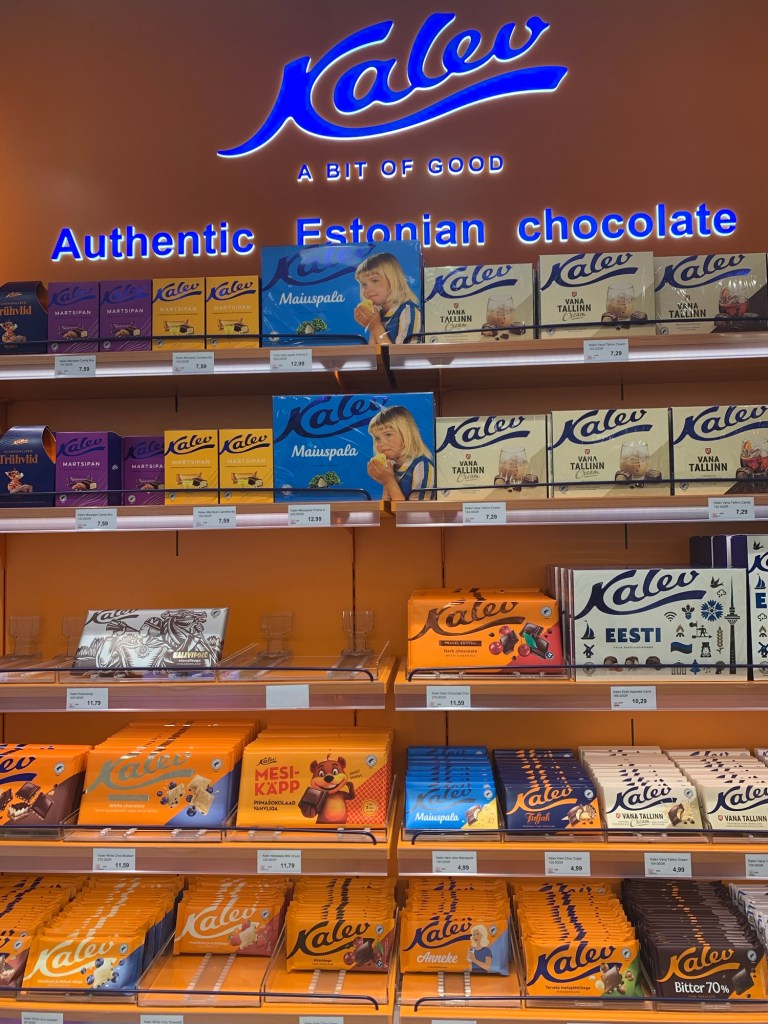
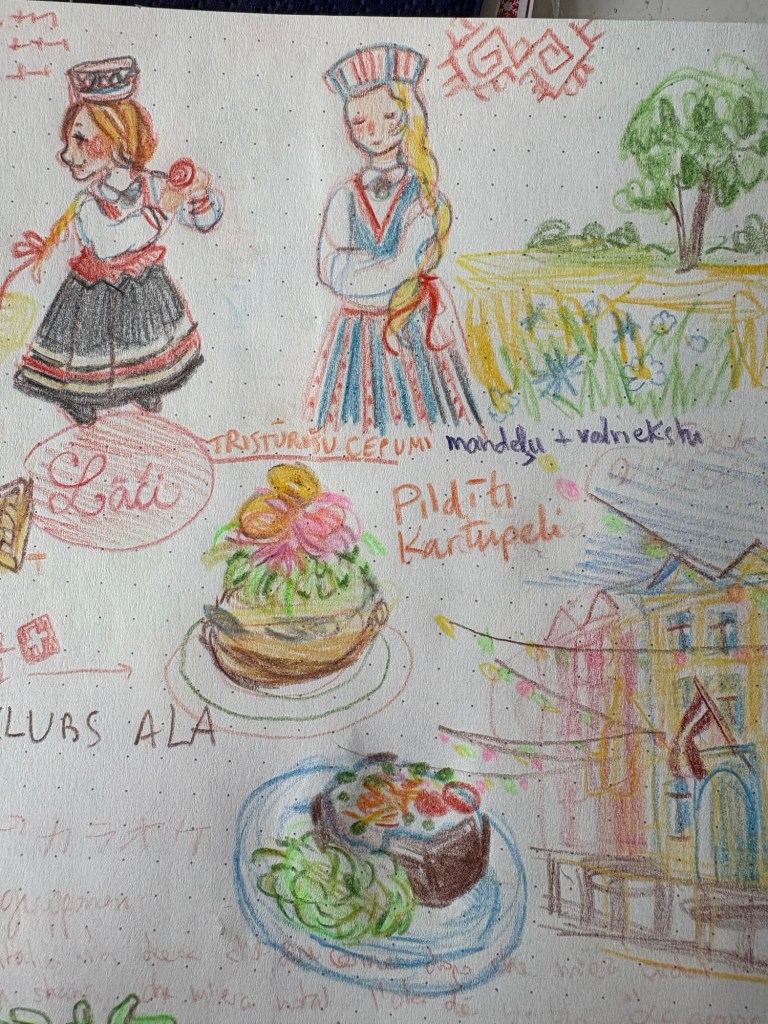
Kalev is Estonia’s chocolate brand, Latvia also has its national confectionery brand Laci.
3. Nordic stores and products in Baltic
Stockmann department stores are present in both countries – you can find a lot of Nordic stuff, including Norwegian Brunost and carelian pastries!! Though I saw carelian pastries in Estonian supermarkets, and ICA cloudberry and lingon jam at a Rimi supermarket.. Finnish fast food chain Hesburger is present in the Baltics – I have to say I did not see any special items from it though…
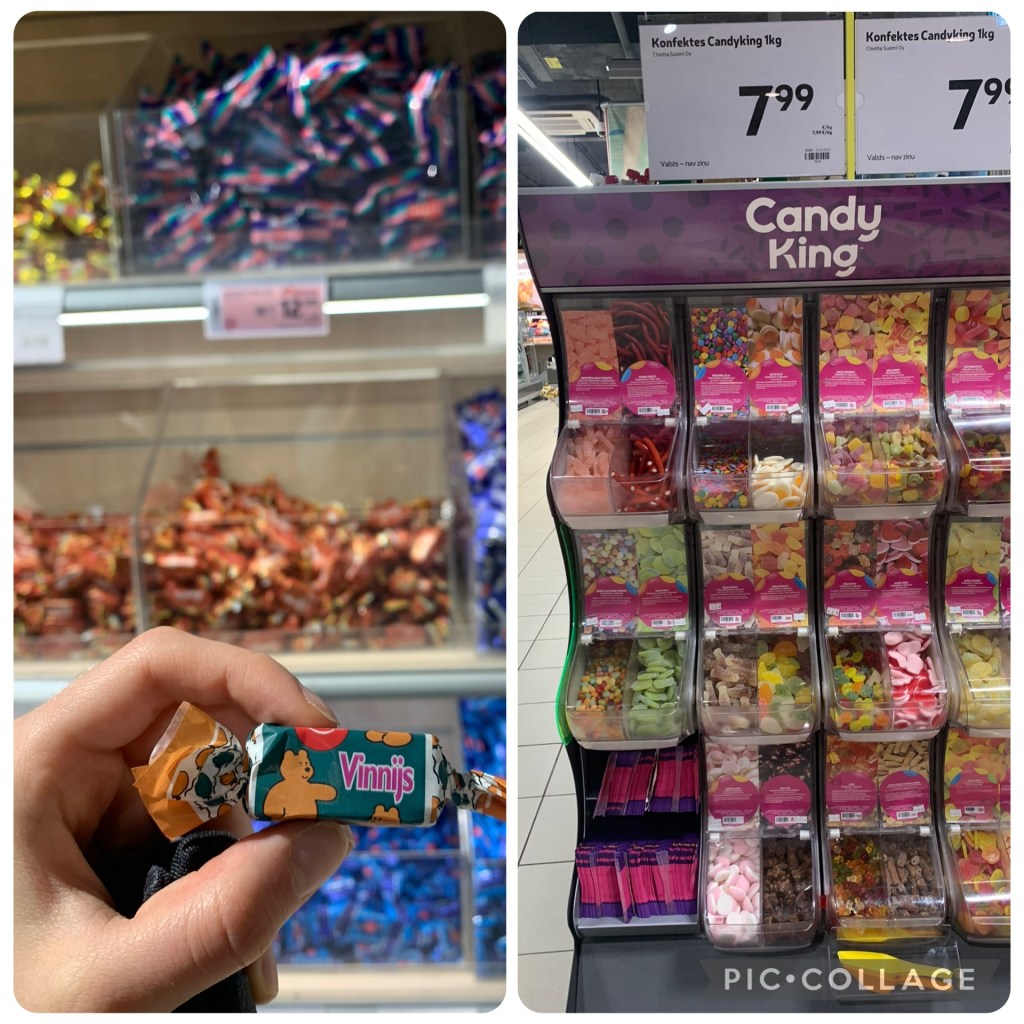
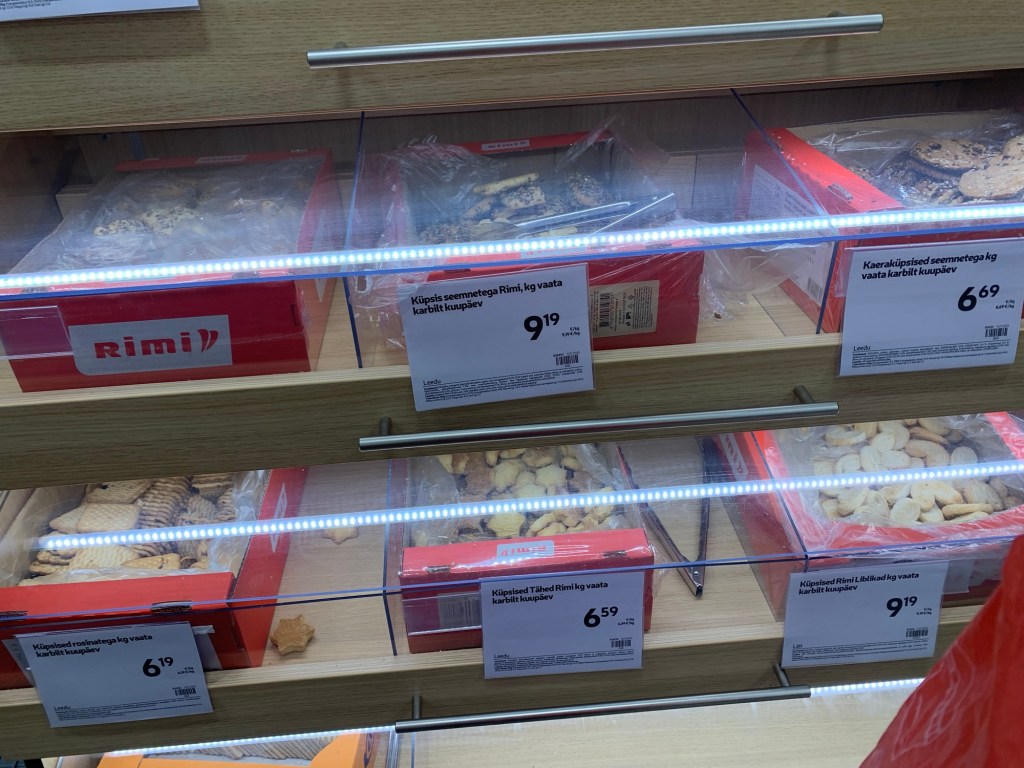
You can get bulk candy in supermarkets like in Nordics. But it seems in the Baltics they enjoy bulk cookies as well!
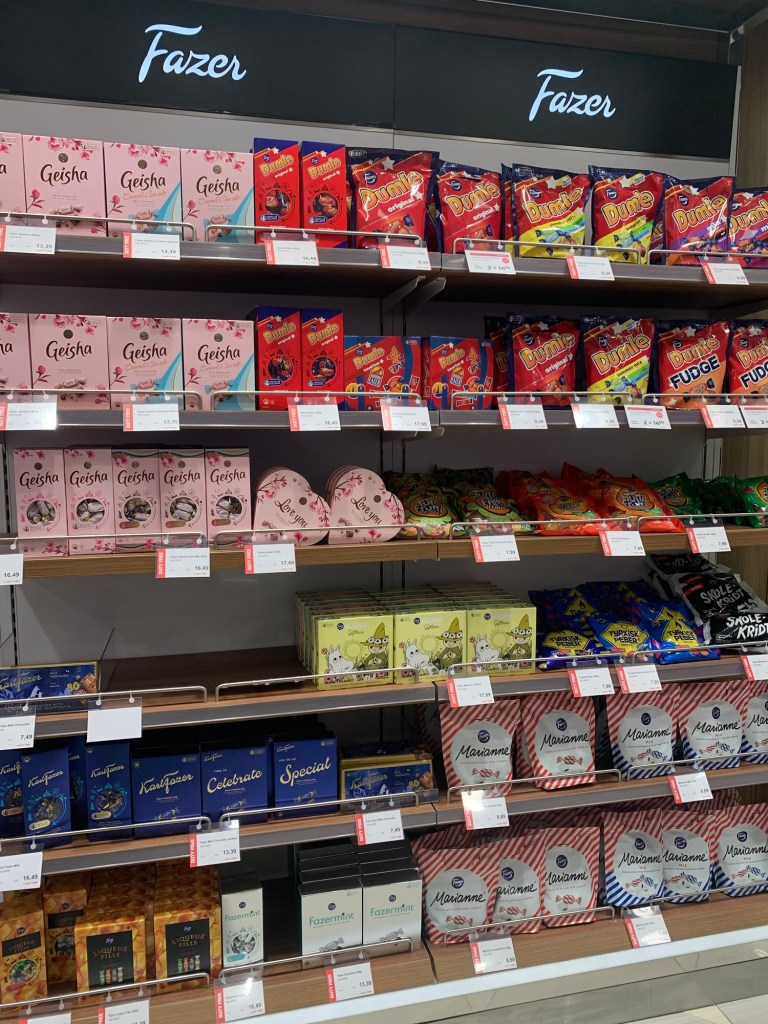
Finnish brands as Fazer chocolate and some moomin stuff is common in Estonia. At Tallinn airport they had a whole selection of more Finnish and Swedish candy brands, and even a Pippi + moomin merch corner!!
4. architecture
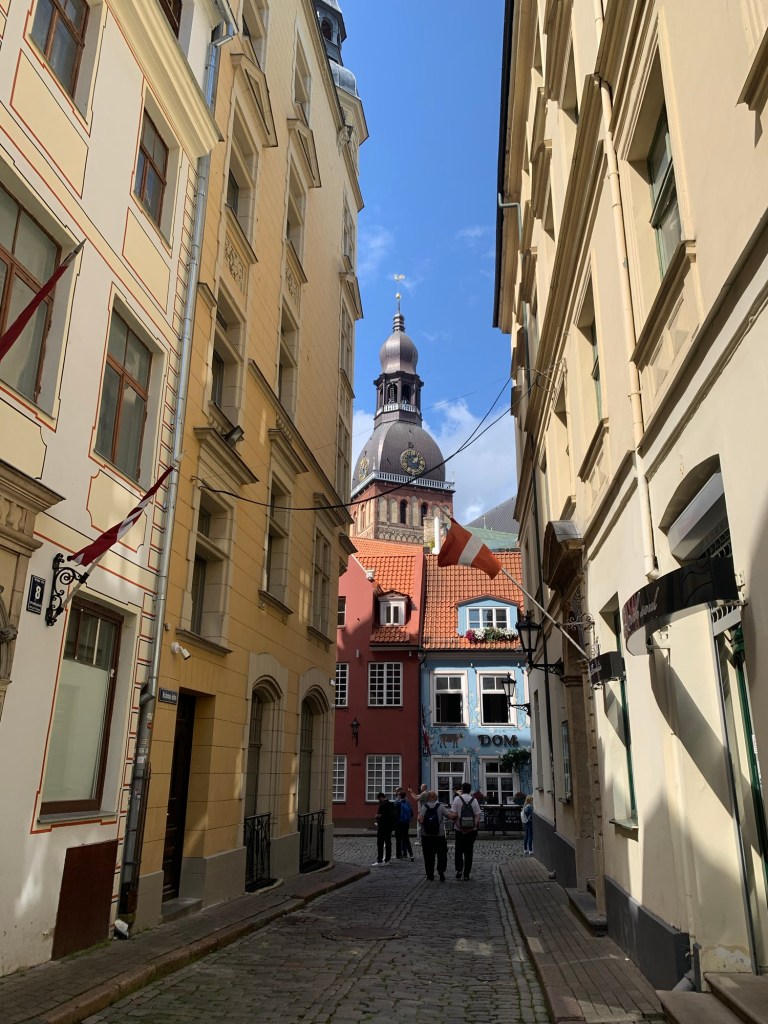
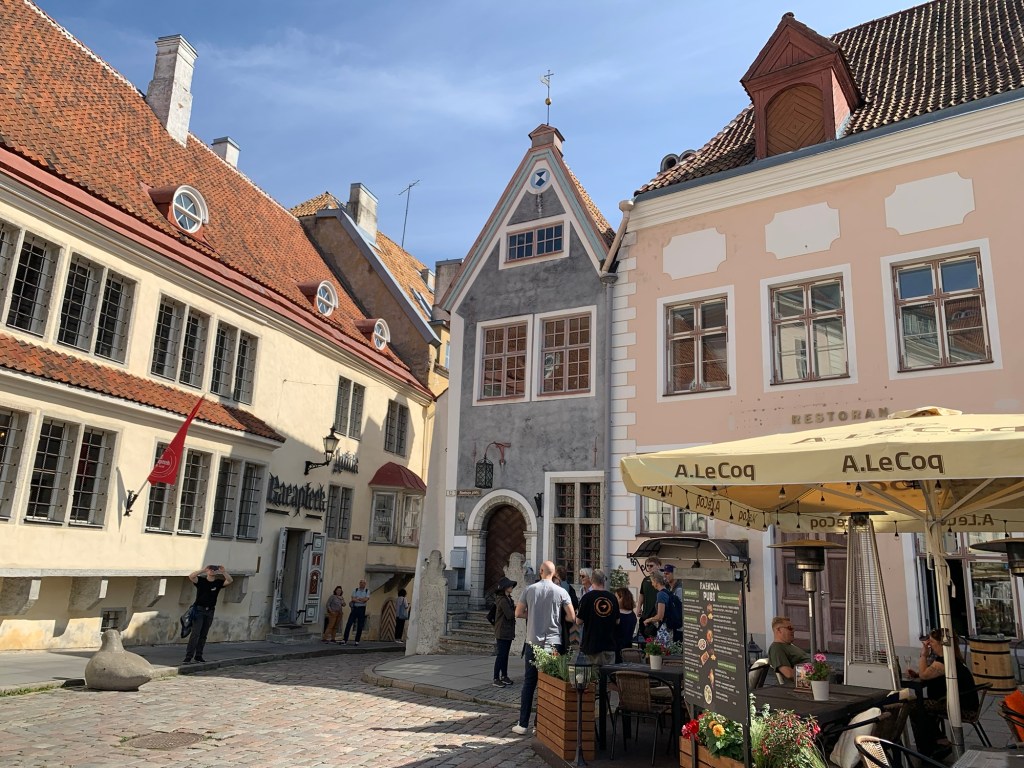
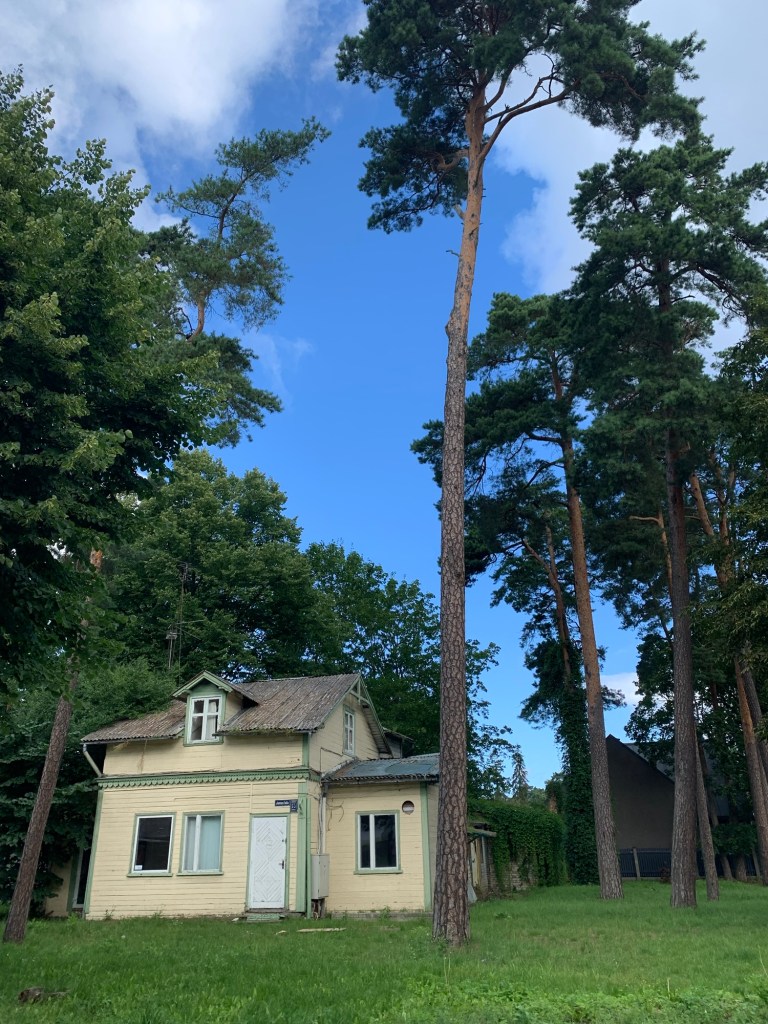
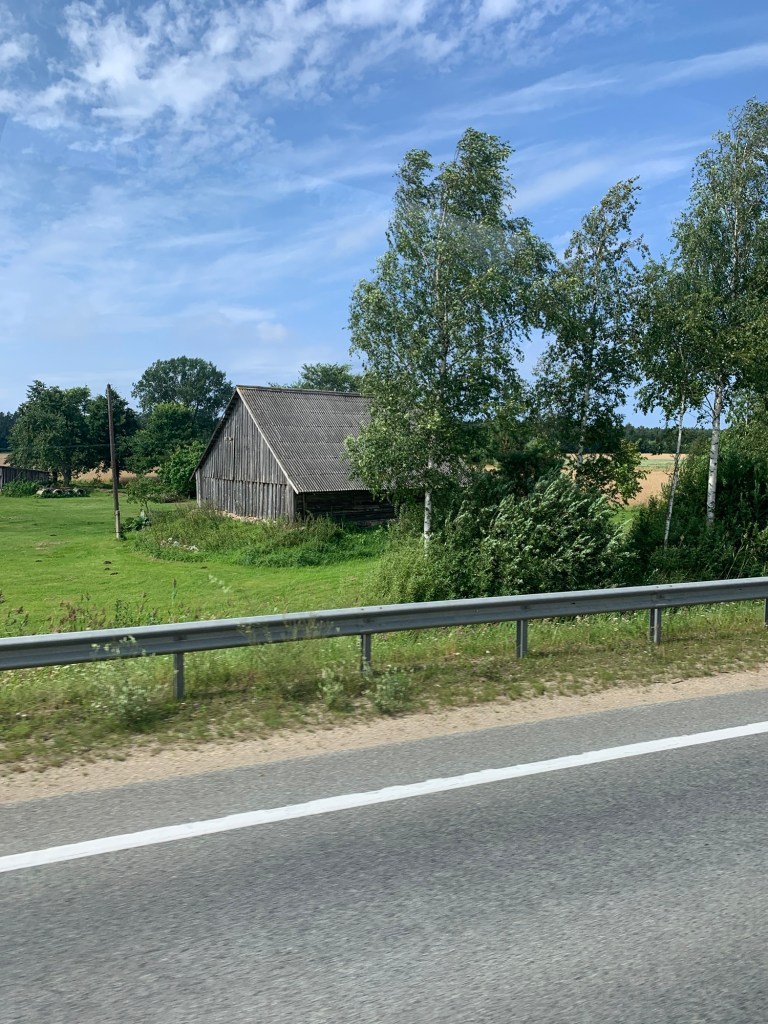
Looking at some buildings, you could be in Scandinavia, though others make you think of Eastern European cottages.
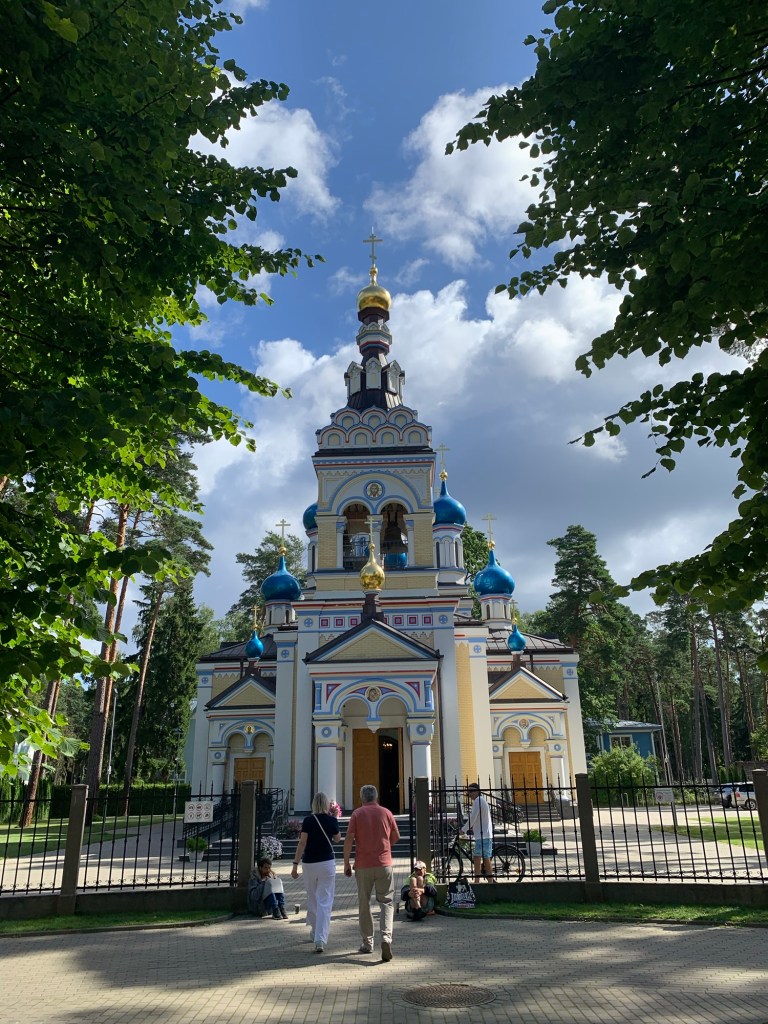
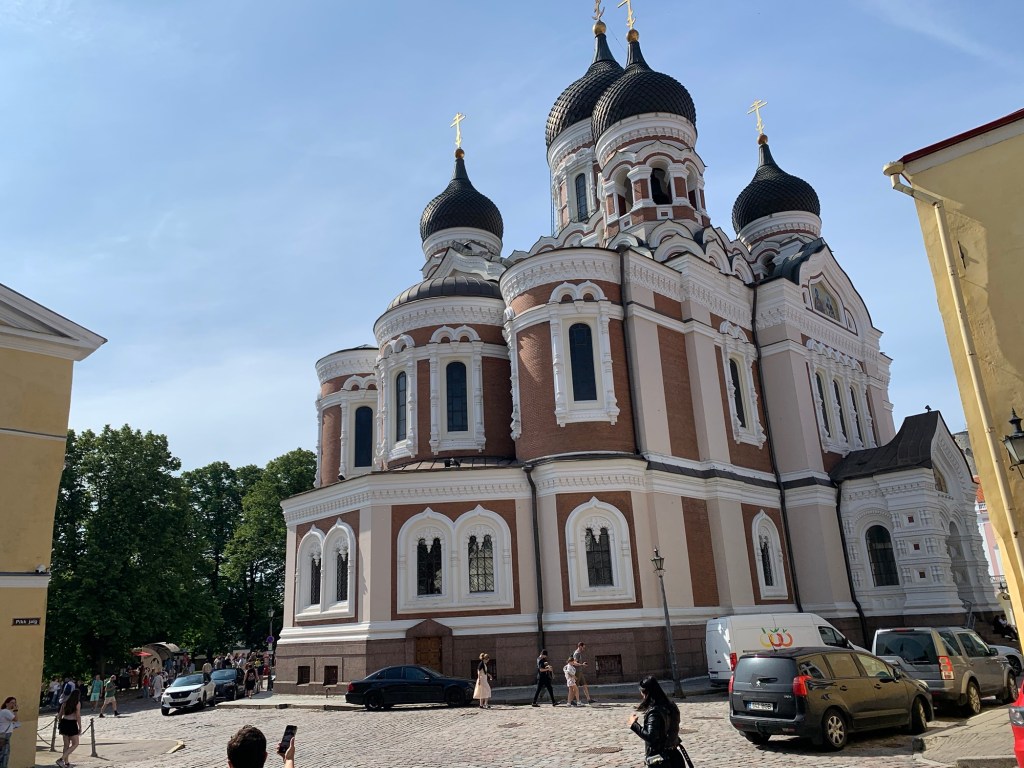
Old buildings in the centre of Riga and Tallinn. I think these could be mistaken for Danish or from Stockholm?Countryside houses in Jūrmala and in Estonia. I guess these look more like Eastern European cottages. Birch trees give a pretty Nordic vibe though. Orthodox churches in Jūrmala and Tallinn
Folk Culture
As in Sweden and Finland among others, Baltic celebrate the Summer Solstice, a.k.a. Midsummer – or Saint John’s night – jääni in Estonian, Jāņi in Latvia. People go to the countryside to gather and eat, drink, sing and take part to old pagan traditions. Among others lighting a bonfire and gather herbs to make flower crowns and oak leaves wreaths!
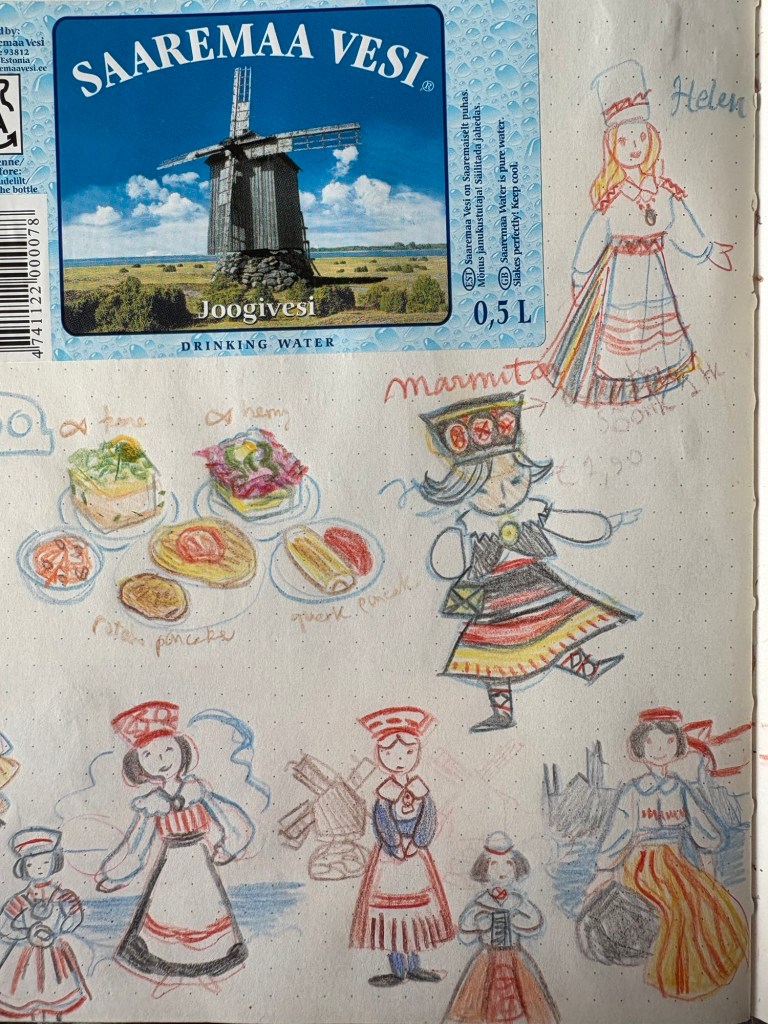
Folk costumes are also quite distinct from Scandinavian ones, and are often characterized by a headgear in both Latvia and Estonia.
Subscribe for more about Nordic and Baltic countries!
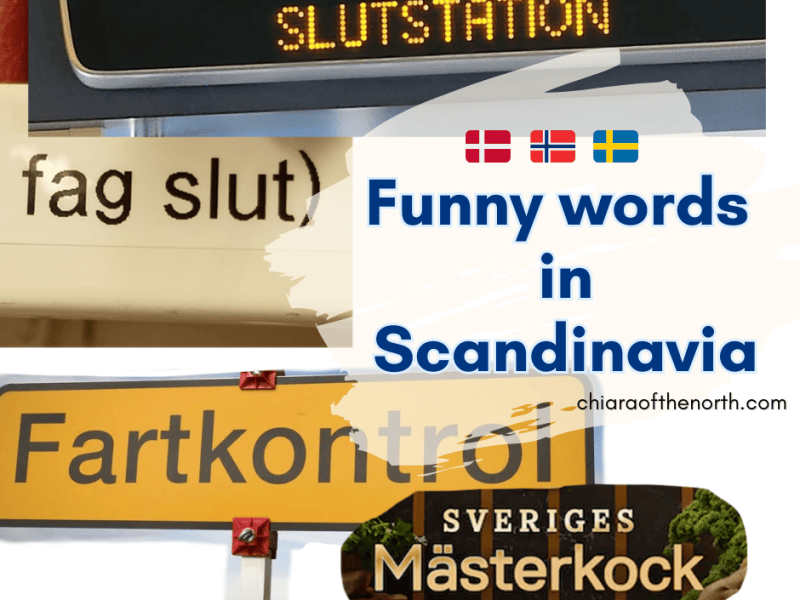
Take a train in Scandinavia to reach a “slutstation” or see”fartkontrol” signs while driving. Kiss and killing also mean something you were not expecting!
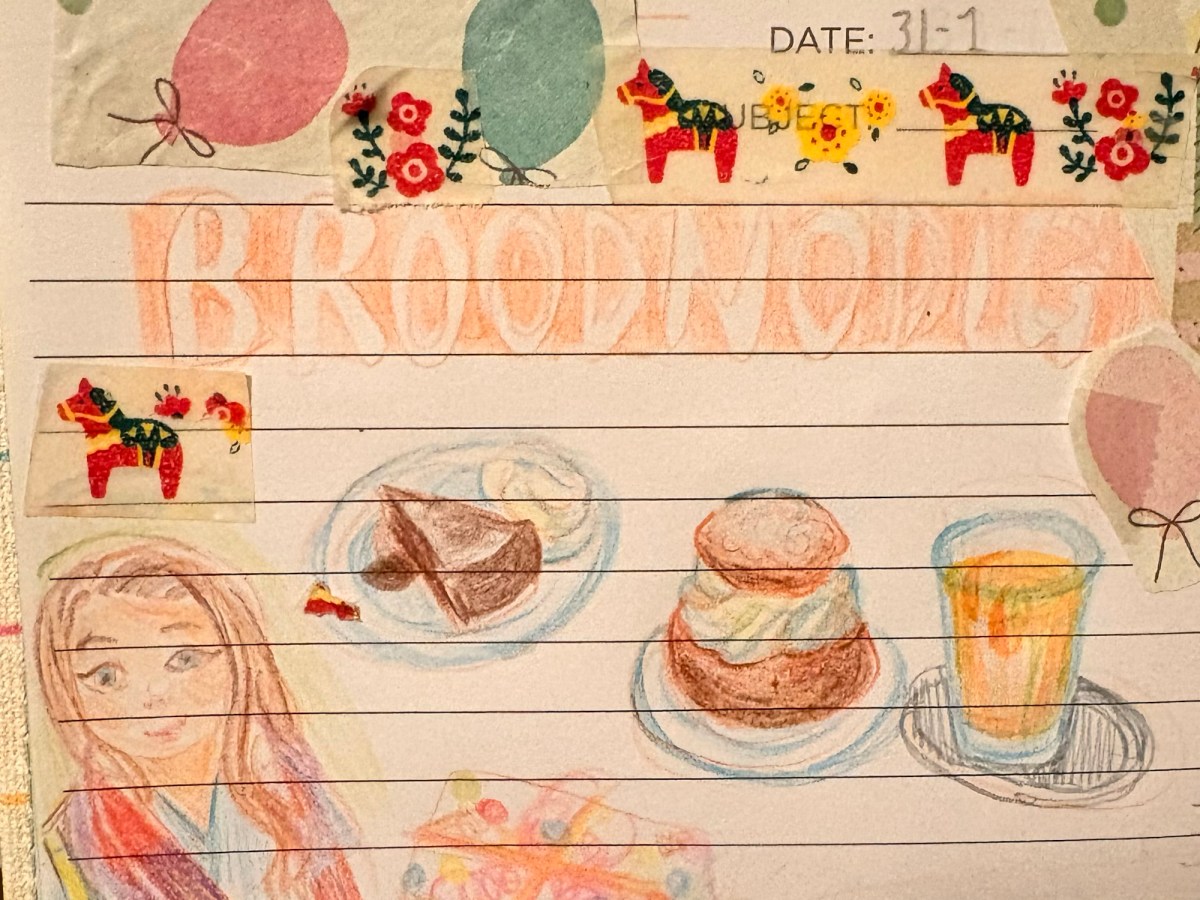
In Utrecht, the cafe Broodnodig serves Swedish pastries and cakes as cinnamon and cardamom buns, kladdkaka, smulpaj and Scandinavian seasonal treats as semlor and saffron buns.
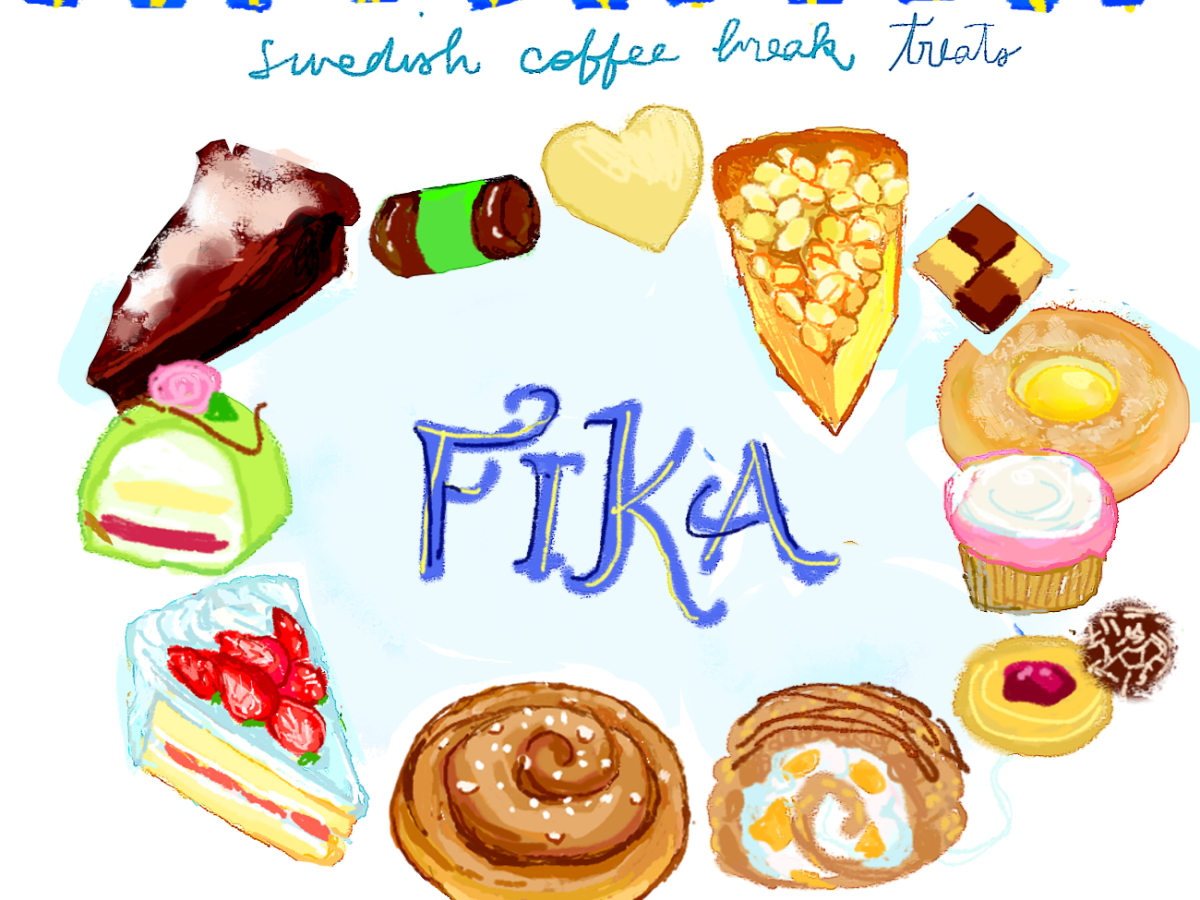
Fika is a cherished Swedish tradition involving a coffee and cake break. Discover various Fika treats, from classic kanelbullar (cinnamon buns), cakes and cookies to savory options.
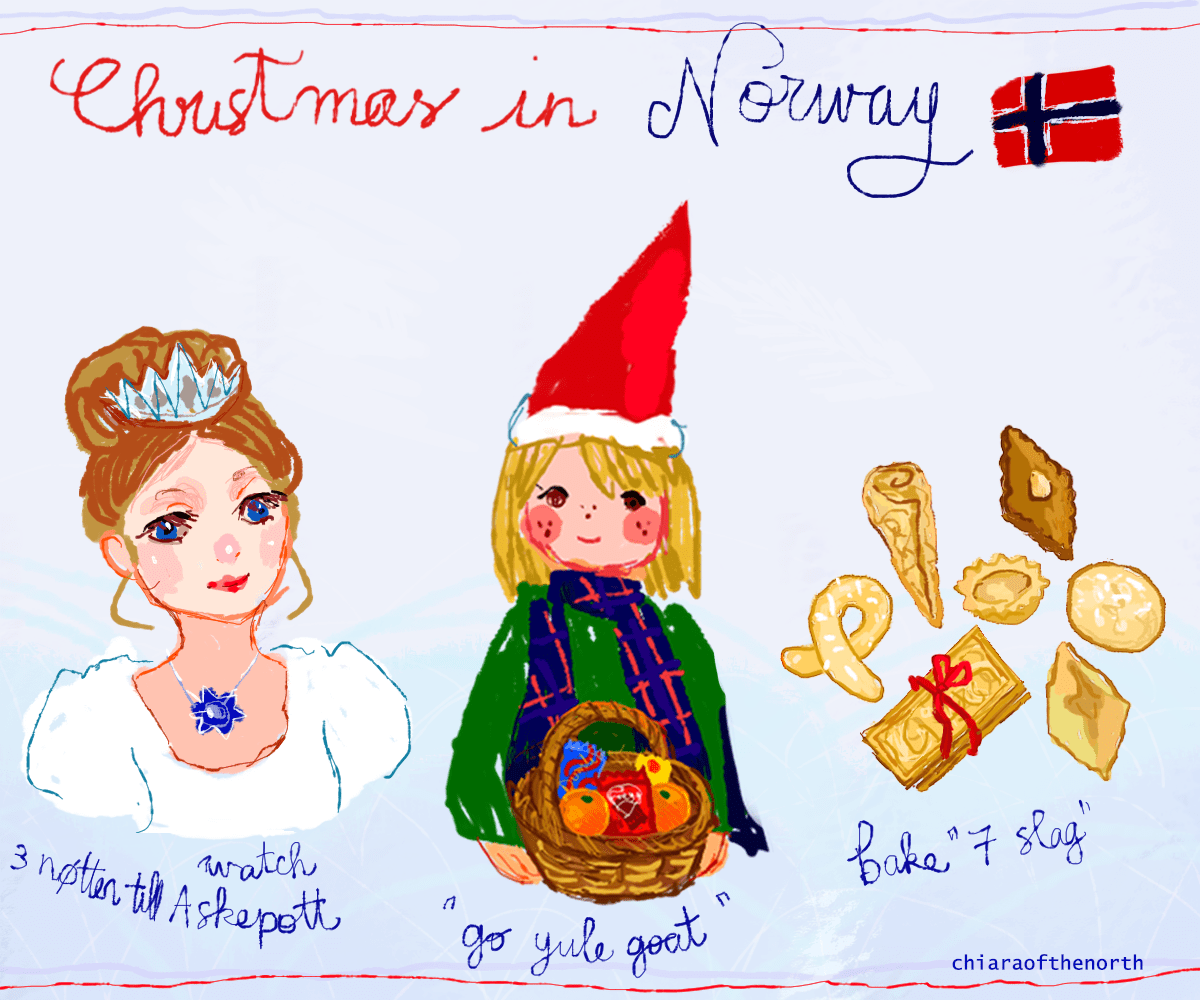
Traditions and popular things to do in Norway around and on Christmas day: from movies to cookies
After Scandinavian Christmas Traditions and Finnish Christmas facts, I am continuing this series with Norway!
Watching Czech Cinderella
An iconic Christmas movie In Norway is actually Czech, from 1973: 3 nøtter til Askepott (3 wishes for Cinderella), broadcasted on Christmas eve in Norway since 1996 – Norwegians made a remake in 2021 though. Another popular Christmas movie in Norway is Reisen til Julestjernen (journey to the Christmas Star), a Norwegian production from 1976, in which a princess disappears to look for the Christmas Star…
‘Going Yule goat’ or Christmas trick-or-treating
In the period of Romjul, between Christmas and New Year, some Norwegian children go around with a Nisselue (Santa hat), with red cheeks and freckles painted on their face, or as angels, shepherds and other Christmas figures, singing Christmas Carols from door to door, in exchange for sweets. This is called å gå julebukk – to go Yule Goat..a sort of christmasy halloween. According to the Store Norske Leksikon it 14% of interviewed Norwegians or their children was going julebukk in 2017.
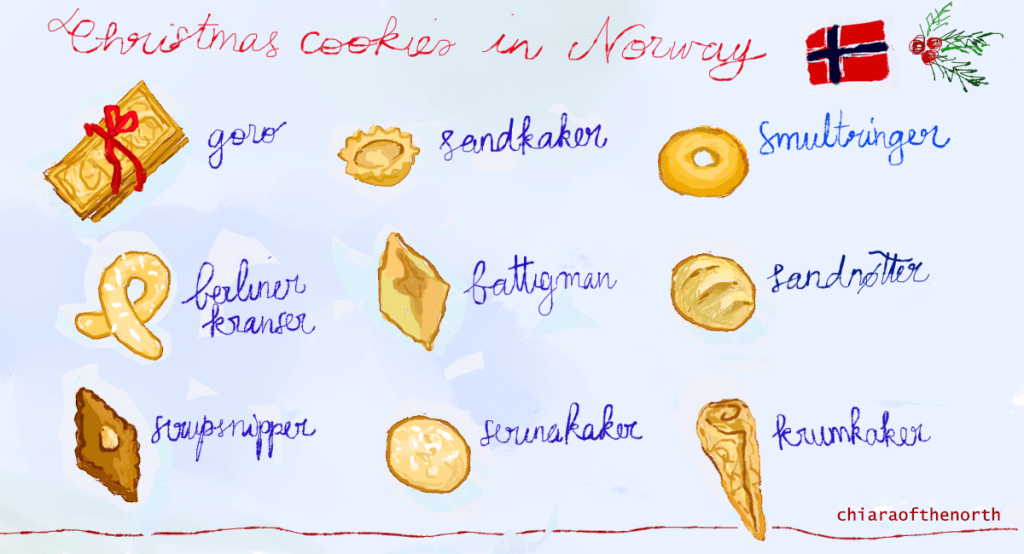
Baking 7 cookies
Some Norwegians bake the ‘Seven types’ – 7 different type of cookies, deSyv slag in Norwegian. Baking seven different types of cookies is a tradition that exists also in Sweden. There is no fixed list, but the classical types are Sandkaker, Pepperkaker (gingerbread cookies), Fattigmann ‘poor man’, Goro from Danish god raad, one of the oldest types from the 1800s- made with an iron press with patterns – Krumkaker, Berlinerkranser, Serinakaker.
Kransekake, kokosmakroner, sirupsnipper, sandnøtter and smultringer are also popular to be included in the syv slag according to godt.no.
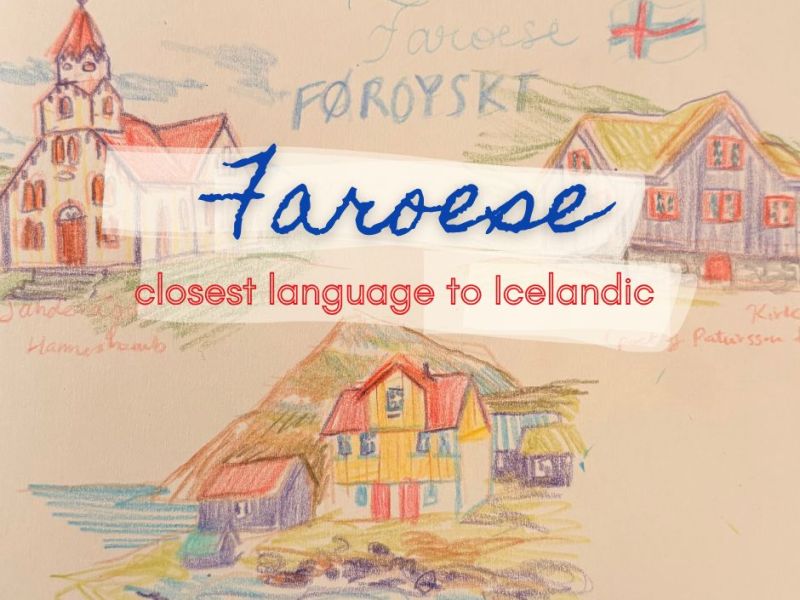
Discover Faroese – today spoken by about 80,000 people in the North Sea archipelago- as Icelandic still has much in common with Old Norse in grammar and vocabulary
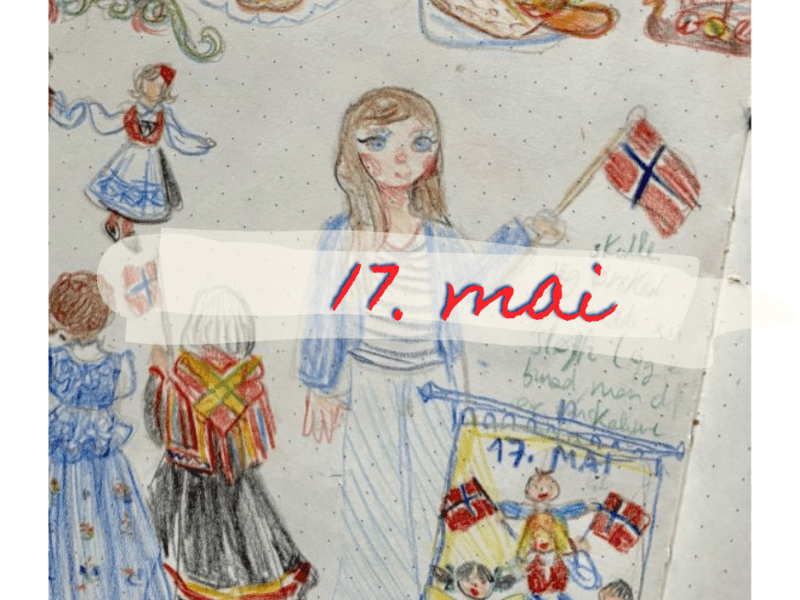
Norwegian Seamen Churches all over the world host 17th May celebrations. I attended the festivities in Rotterdam, joining the parade and eating a pølse i lompe!
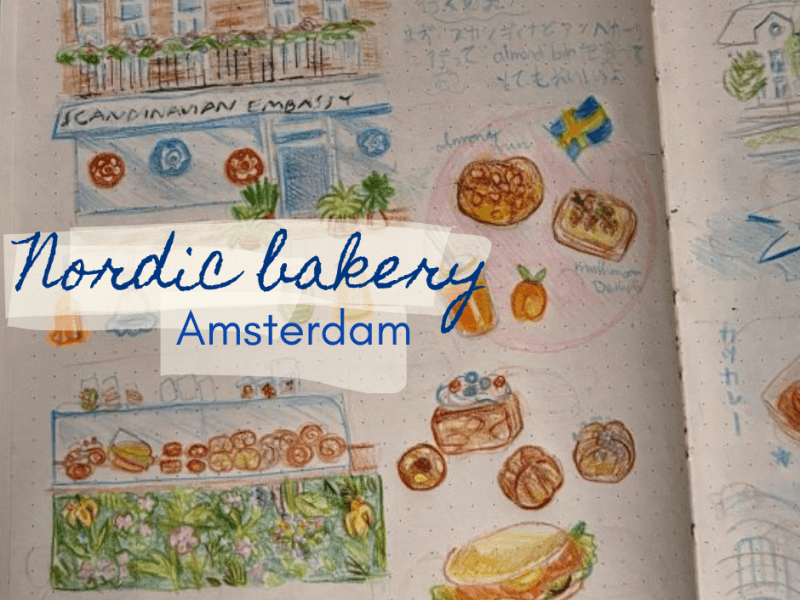
On a trip to Amsterdam, I decided to test Scandinavian Embassy and both of its two locations, starting with the bakery in europaplein. The two locations are in Amsterdam zuid: Saphatipark and Europaplein: in the former, a more central location, you can sit but it has fewer items than the bakery in Europaplein. The bakery,…
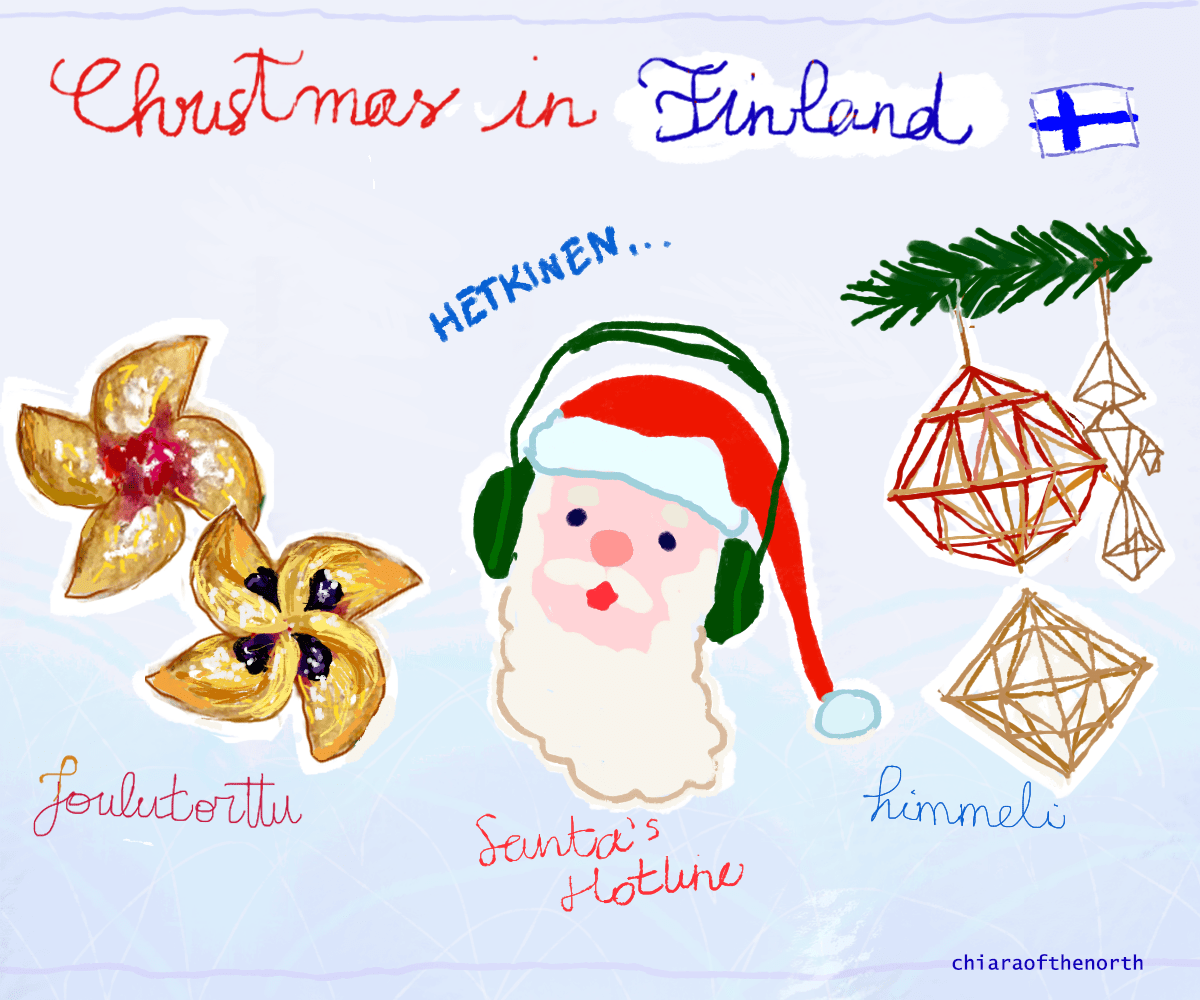
3 typical unique Christmas symbols and traditions in Finland
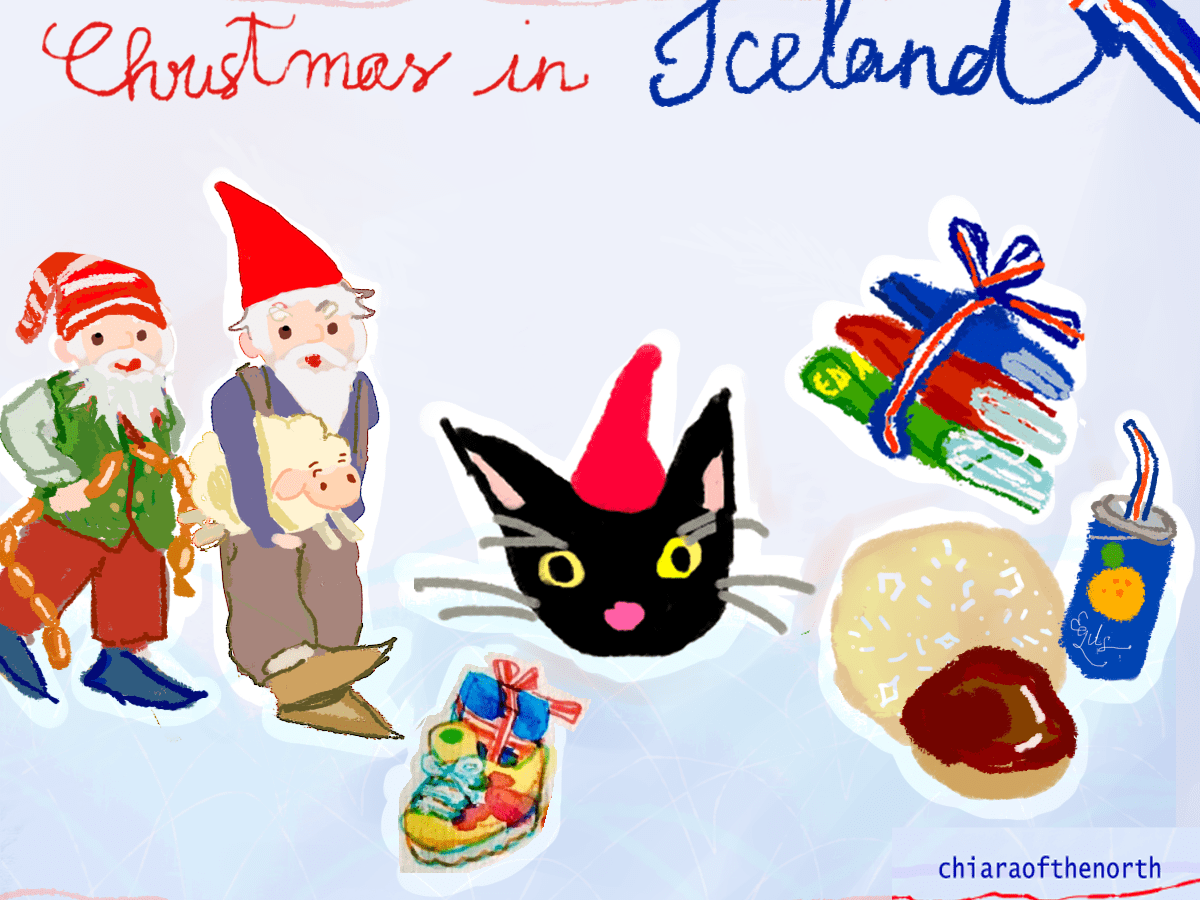
Here are country-specific facts about how Christmas is celebrated in Nordic countries, after an overview of Scandinavian Christmas I actually keep updating… Next up will be Norway and Iceland, so stay tuned!
Joulutorttu: pinwheel pastry
Also called tähtitorttu “star cake”. it has the shape of a star or pinwheel, with apple or plum filling. It was already mentioned in the 1830s by Zacharias Topelius (Swedish-speaking Finnish writer), and it still is a Christmas classic in Finland, being present on 76% of Finnish tables on Christmas eve.
the Santa Claus Hotline
In Finland they have had the Joulupukin kuumalinja ‘Santa Claus Hotline’ for 33 years on tv. Here is the Finnish tv program for the day in 2024: There are breaks between one Christmas-themed cartoon and the other, where children can call, elves will take the call and some lucky children will be able to talk to Santa..It is also possible to send pictures, and some of these will be shown!
Himmeli Christmas decoration
Himmeli are wooden straw geometrical pendants, of various sizes, decorating Finnish houses. It comes from himmel, sky/heaven in Swedish and Germanic languages. Himmeli traditionally hung above dining tables until summer to ensure a good crop, as Finlandi.fi mentions.
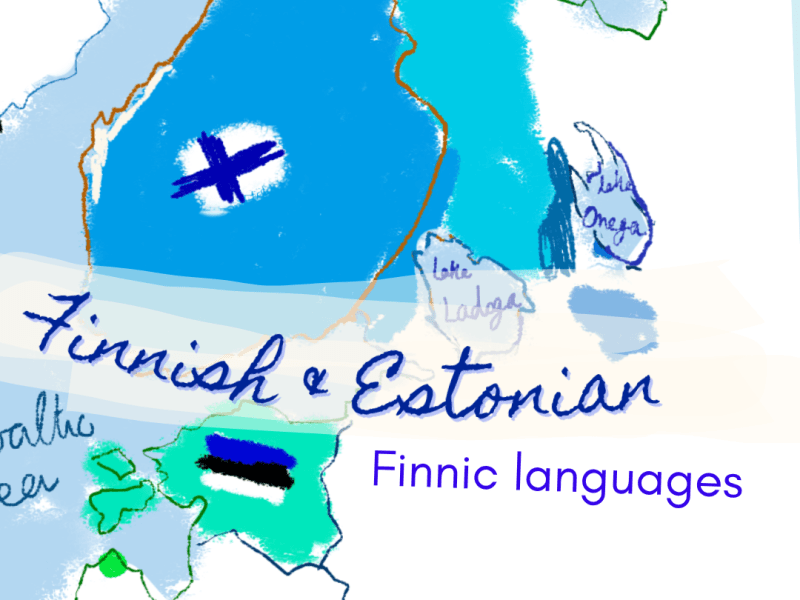
Estonian is a Finnic language, sharing many similarities with its ‘bigger’ sister Finnish, while being unrelated to all their bigger language neighbours
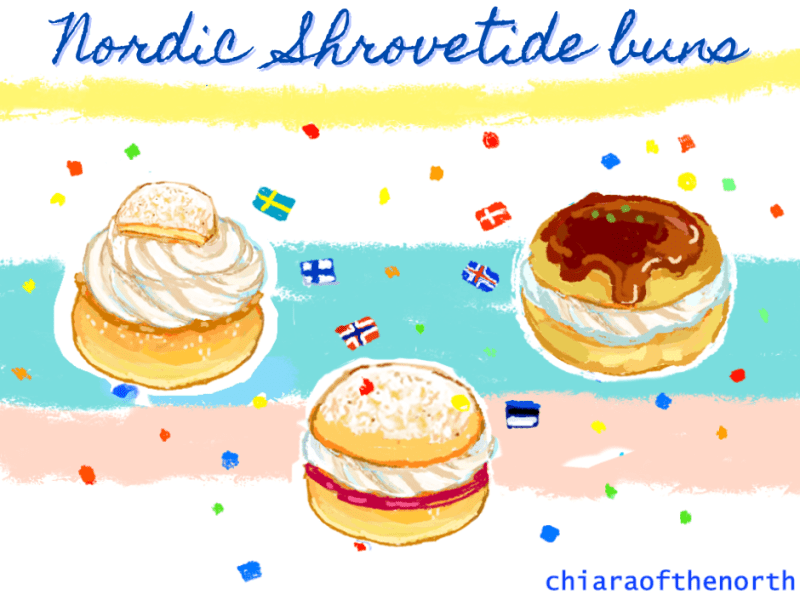
Cream buns are enjoyed in Nordic and Baltic countries during shrovetide, between January and February. Sweden’s classic semla has almond paste, while other countries variations include jam, vanilla cream, and chocolate icing top.
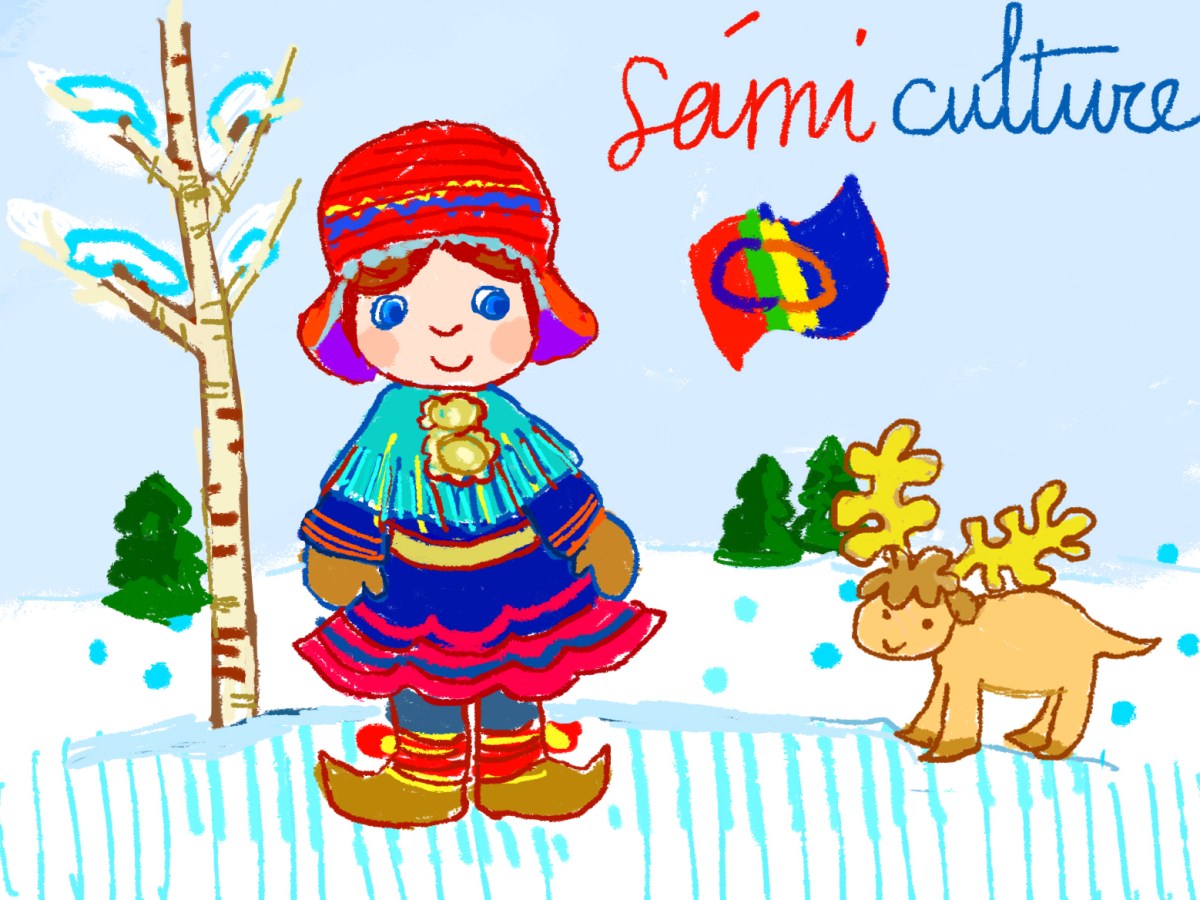
Sámi people, indigenous people of North Scandinavia, have a distinct culture, symbolised by its unique flag and traditional clothing, and part of it are Duodji handicrafts and unique musical expression through yoik.
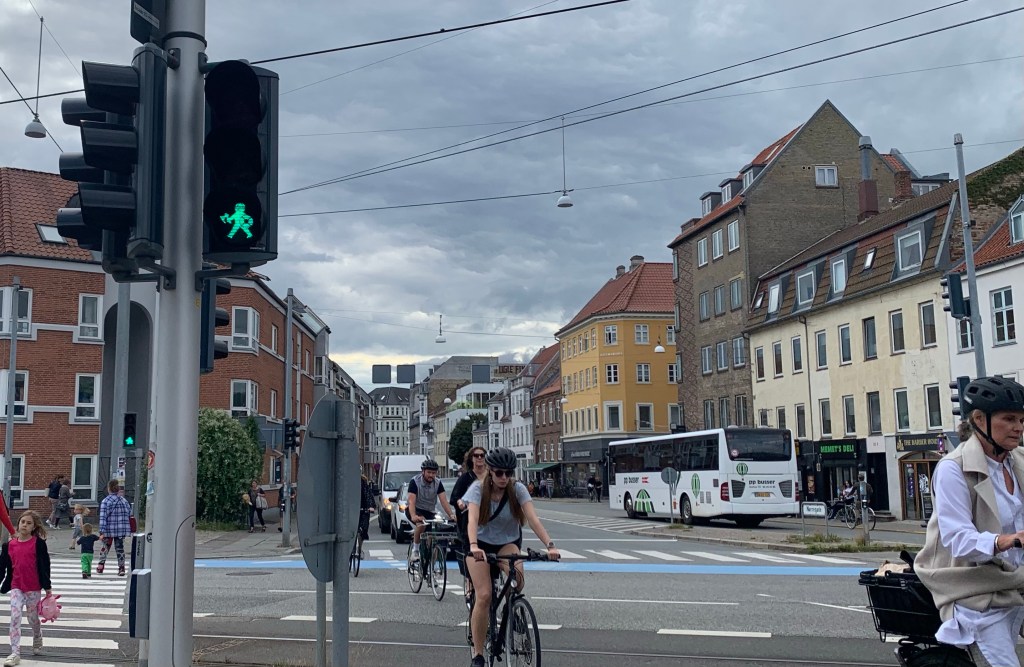
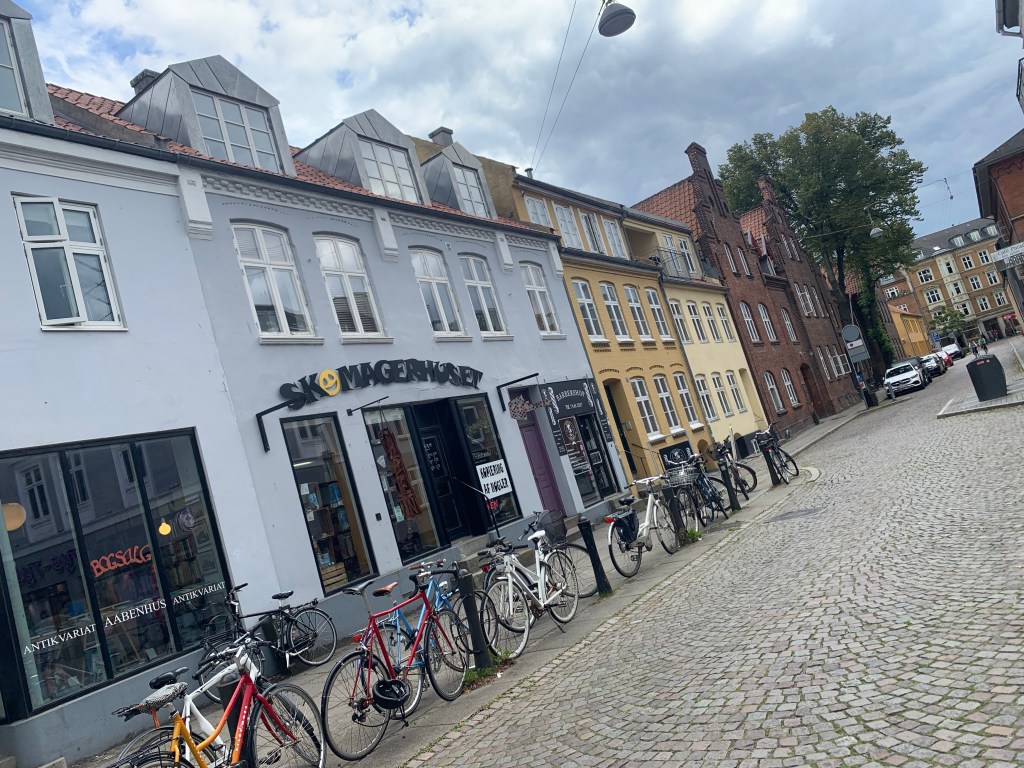
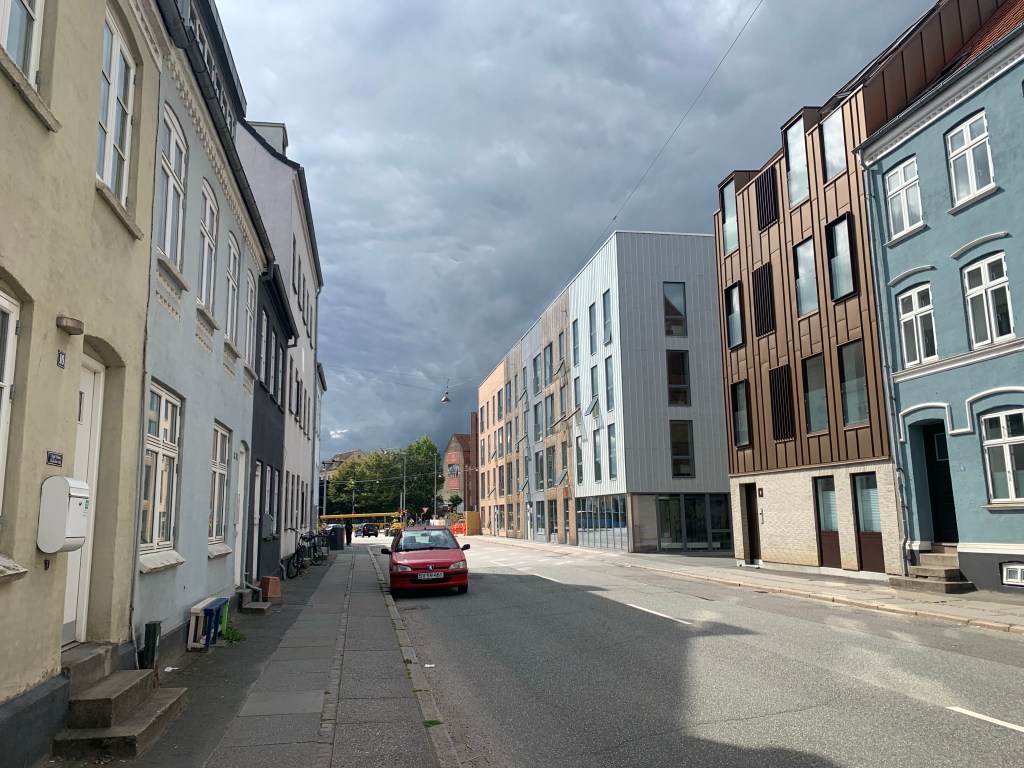
I went on an interrail trip and had a stop in Denmark, back to Grenaa and Aarhus
Last summer I wanted a little holiday for myself, and as I already had to go home to Italy, I realized I could just do that by train and visit people on the way. My first idea was going to Sweden, and stop by in Denmark, the Germany and eventually Italy. However, I ended up not going to Sweden, that will be for another time.
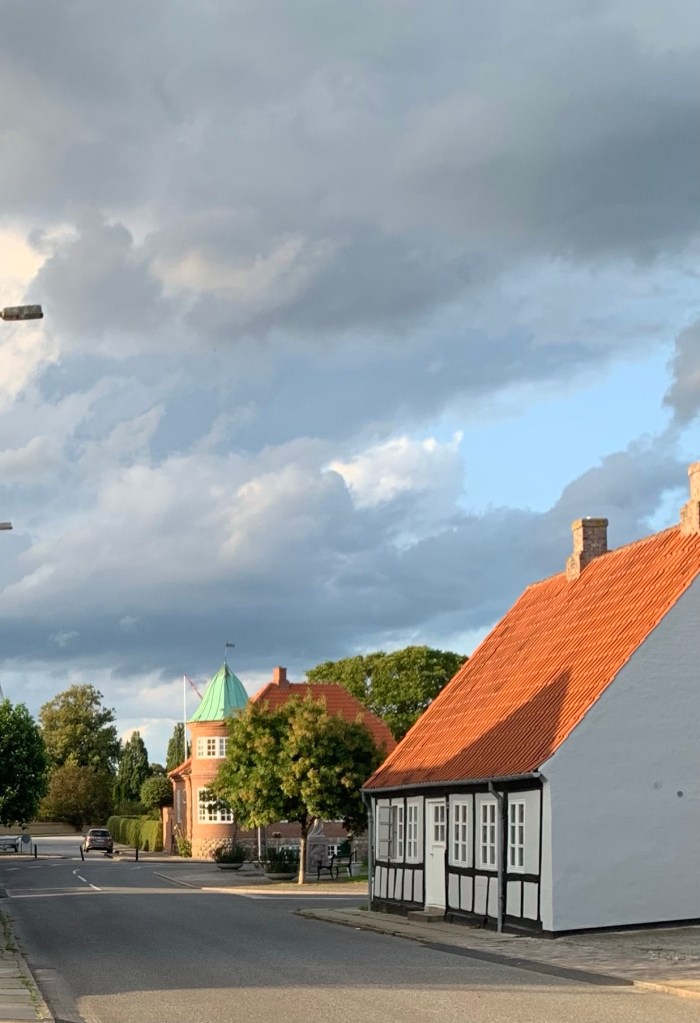
I returned to the places I went to 2 years ago, in Djursland! I unfortunately did not get to see everybody I had met there back then, but i have a very cozy 3 full days stay, and one one of these I went to Aarhus, exploring the city a bit further.
Starting from Eindhoven I went up through Germany: > Venlo (border NL-DE)> Wuppertal > Hamburg >(border DE-DK)> Fredericia > Aarhus > then the letbane (local train) till Grenaa: 5 trains!
I took the first train at 7:40 and arrived at 20:50: 13 hours! Long journey, but I enjoyed it! Besides the initial delays in Germany, the train to Hamburg was 35 minutes late when I was supposed to have 39 minutes waiting time for my train into Denmark …. Still lucky enough..
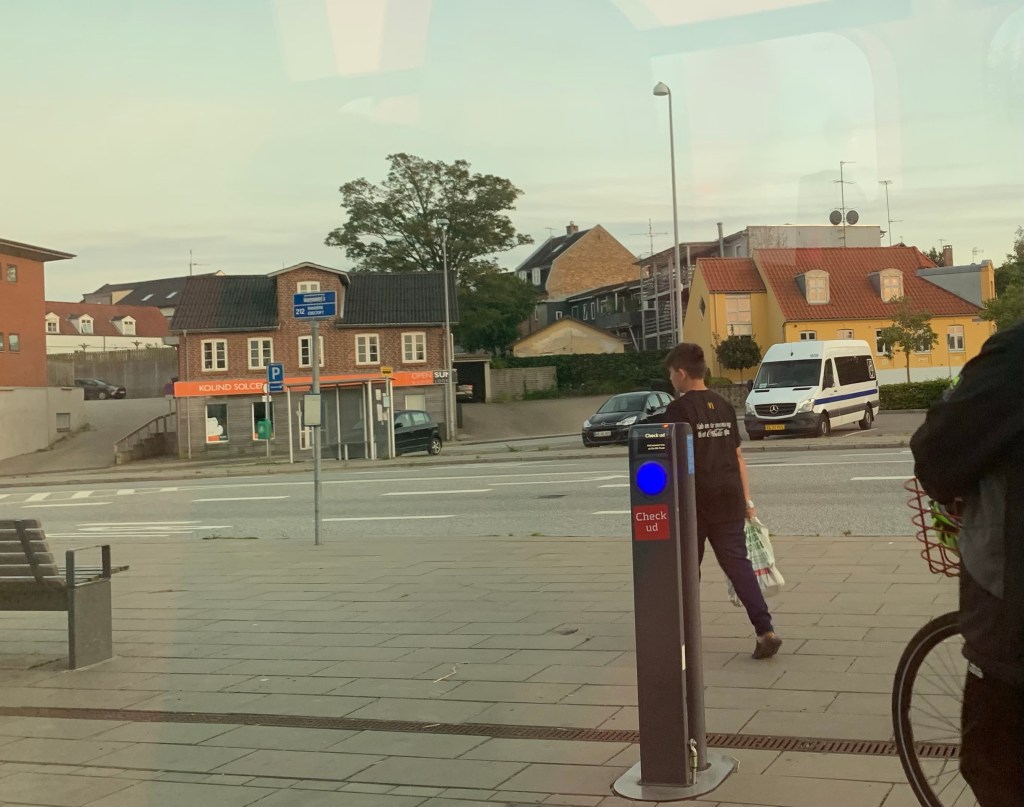
Kolind
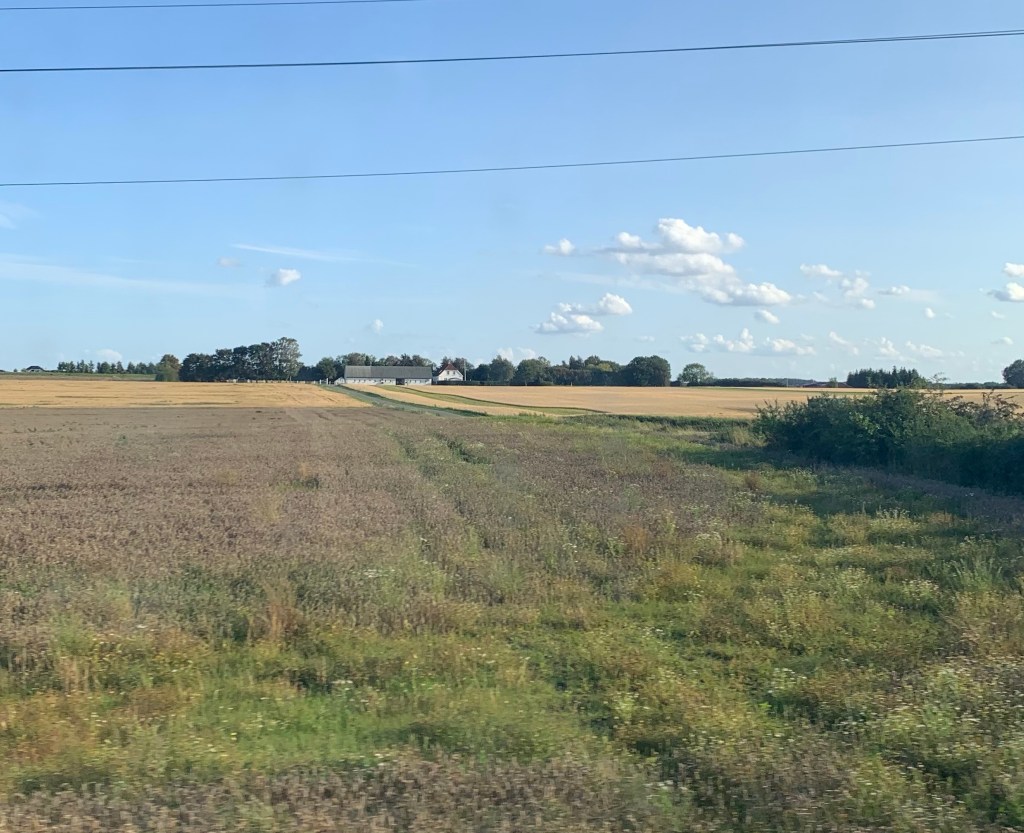
At the Aarhus station I saw the entrance into the letbane platform, which I couldn’t find when I was looking for it ending up going to dokk1 haha… It was cool to see places the letbane rides by again! I hopped of in Trustrup and my friend, picked me up, the air was cool but going through the Danish countryside was sooo nice. The place I stayed at was a village of some 20 people probably.
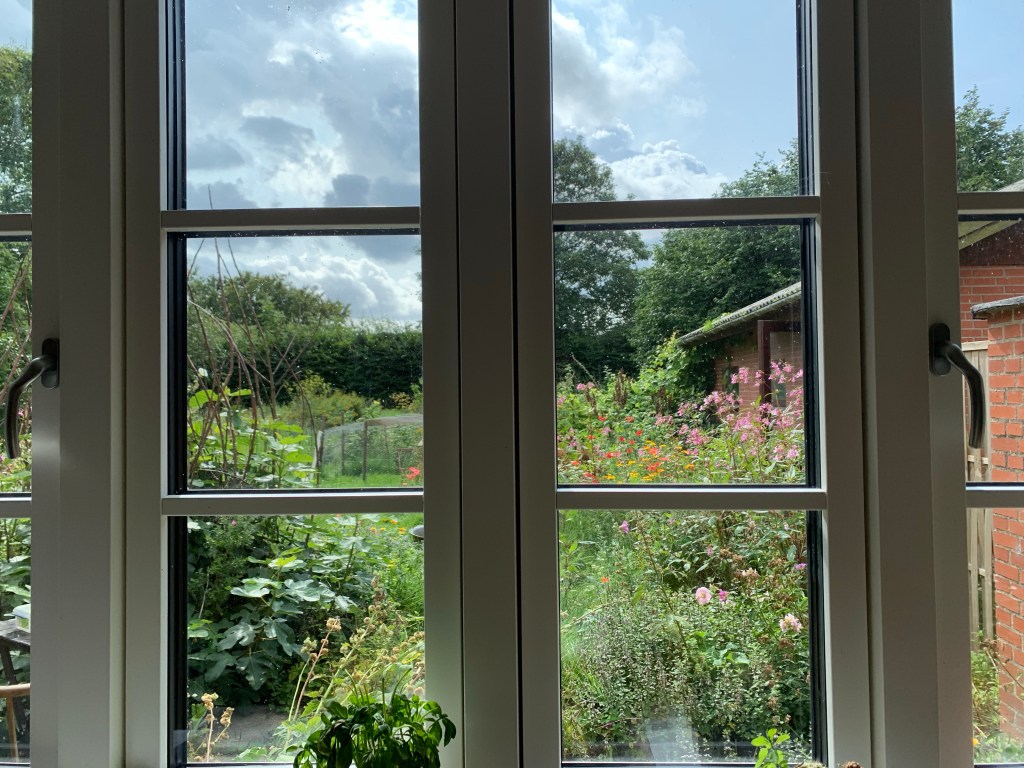
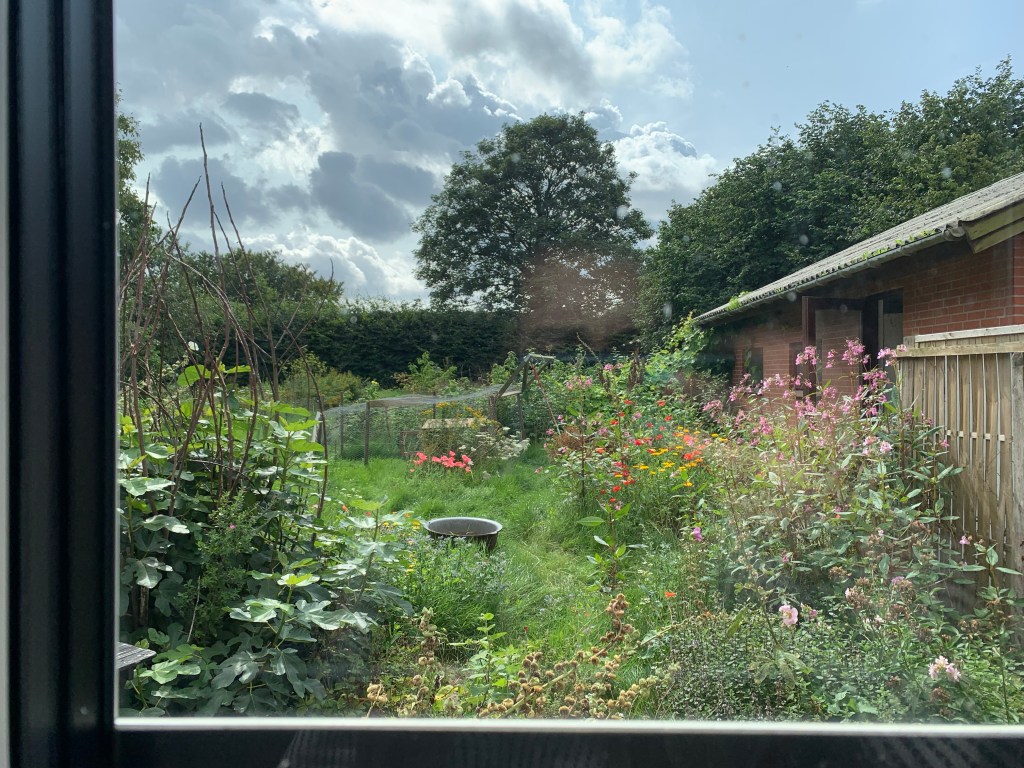
I ate fish and couscous for dinner and the Dutch stroopwafels I brough as gift myself! The house was super cozy -Typical Danish, with a nice garden! I kind of miss its smell 🙂
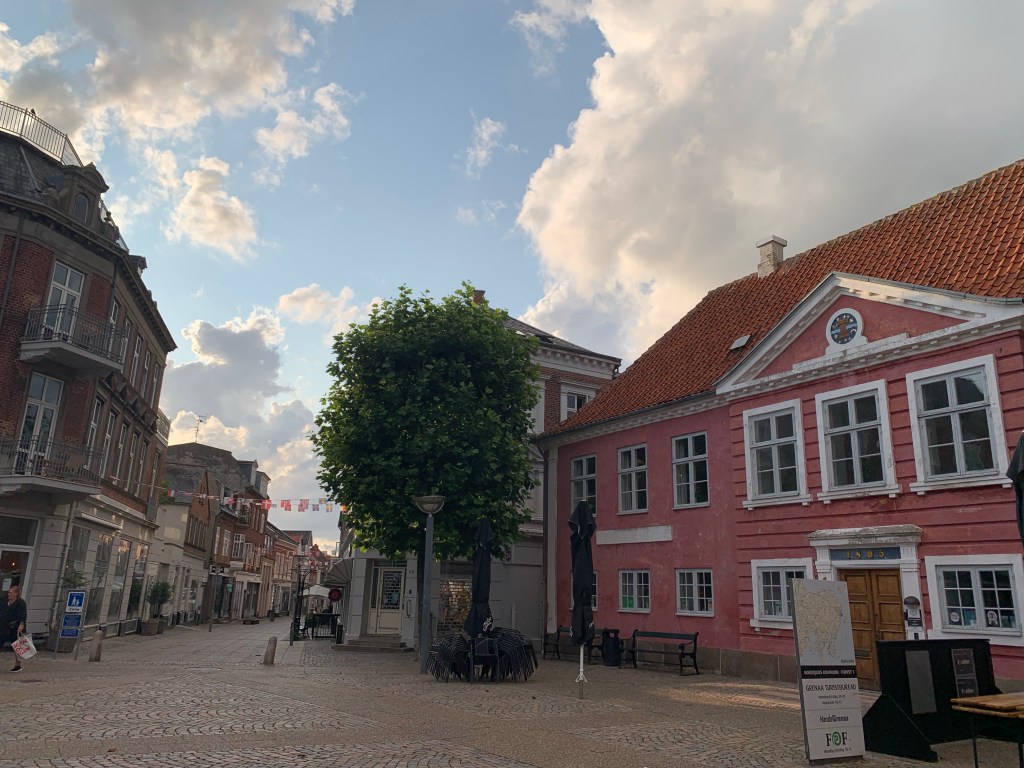
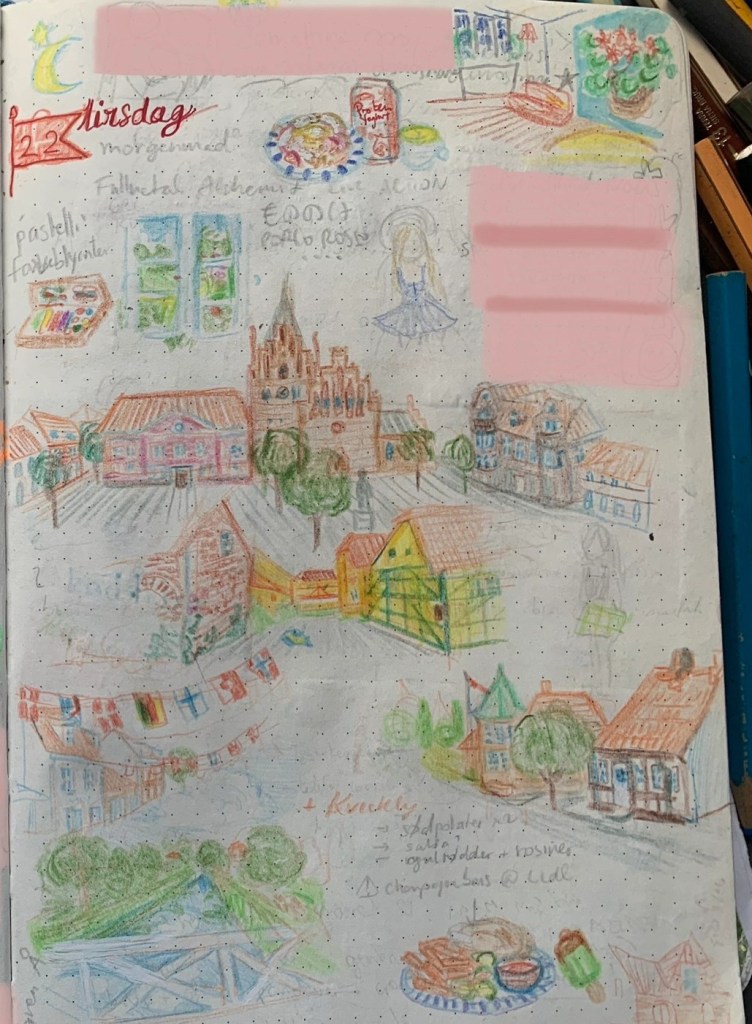
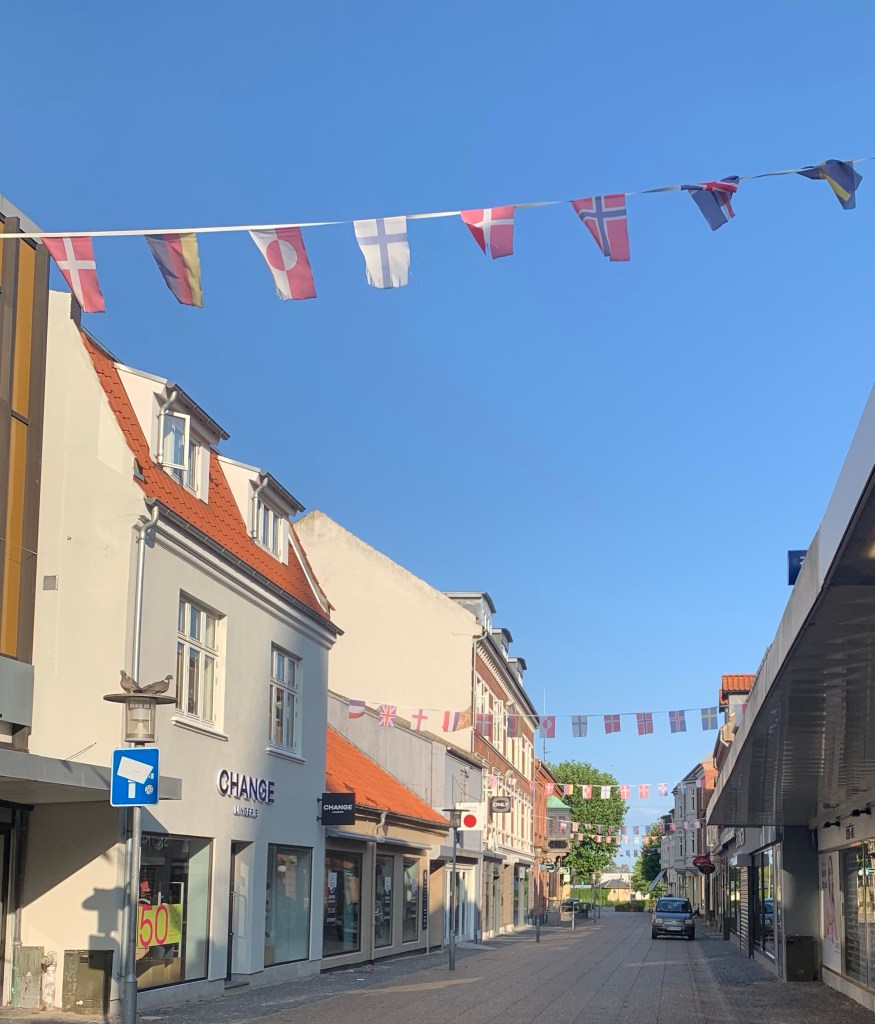
Grenaa town centre
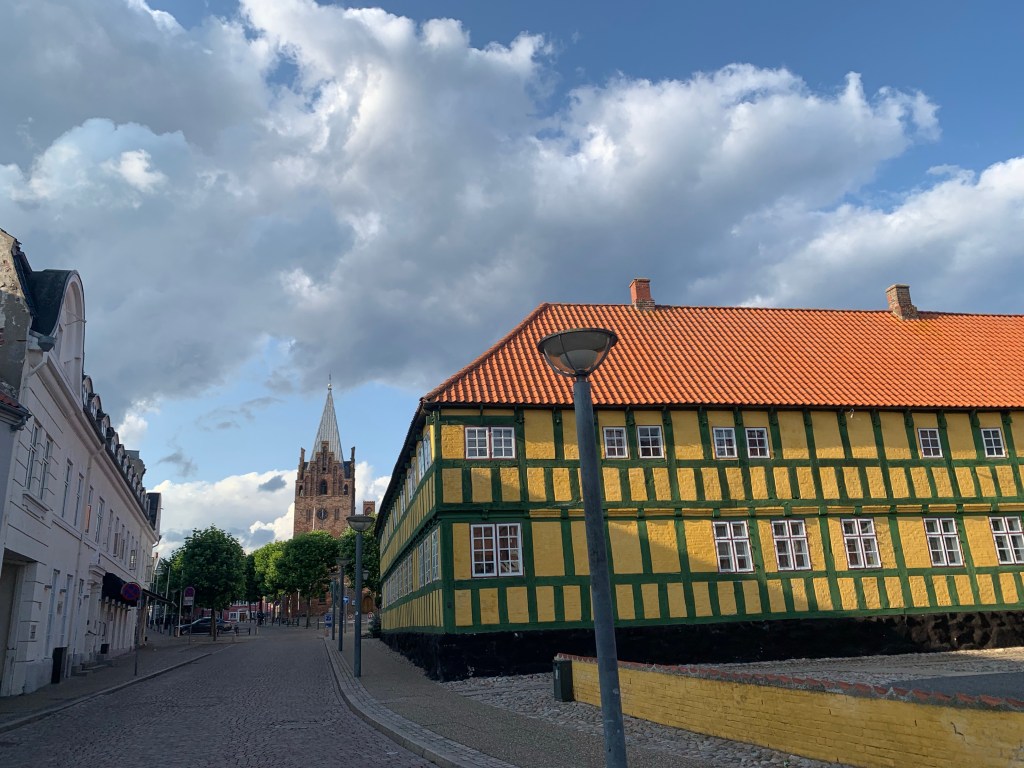
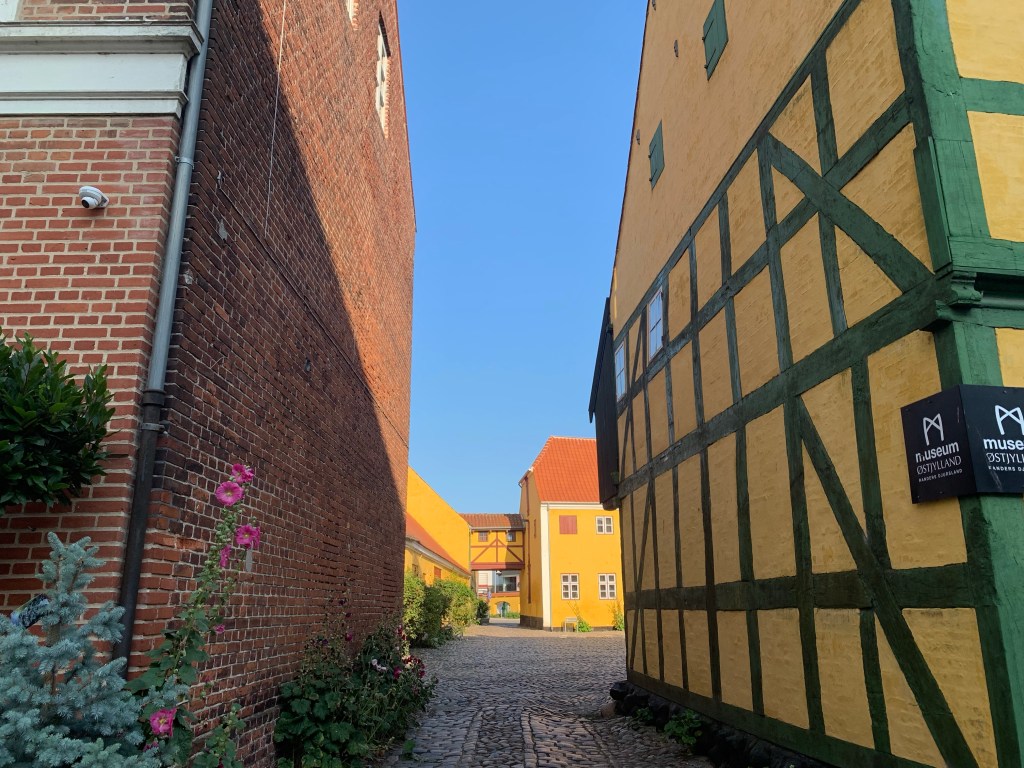
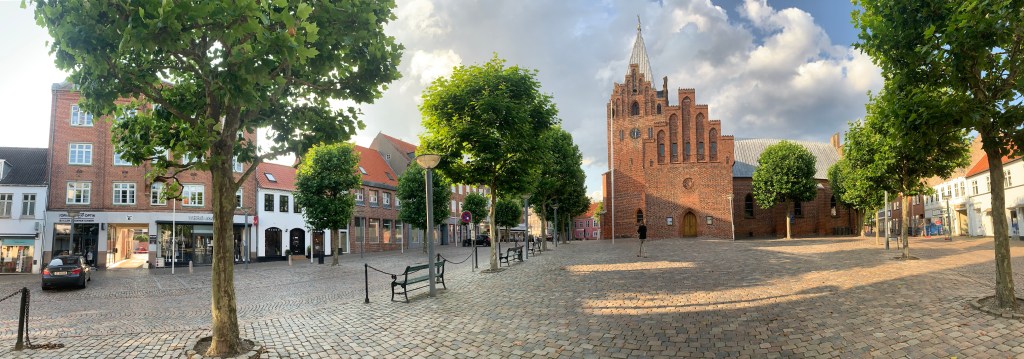
The following day I got my wish granted – seeing the centre of Grenaa I had totally missed back in 2021!!
We got food for the dinner – chicken with sweet potato fries and carrots with rasins 🙂 Then a discount version of Champagne Brus, one of the classic Danish ice lollies – eating one again was my second wish!
Centre of Grenaa
Aarhus and Den Gamle By
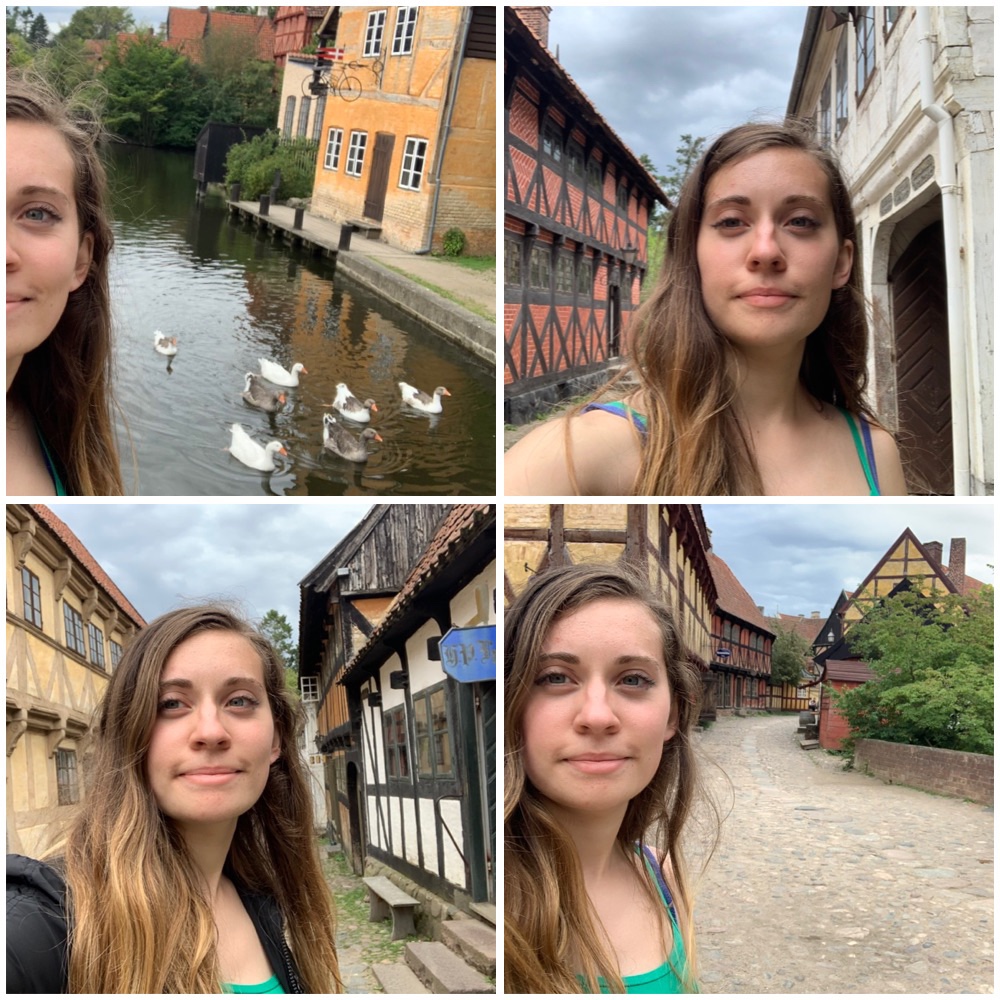
On 23rd August I went to Aarhus according to my plan! Main reason was meeting another friend 2 years later :). It started kind of bad, I could use my friend’s bike, but the saddle was way too high for me, so I first went on foot, which meant walking 1,5 hours. But I enjoyed the place and for once it was okay. Then I realized I should have taken the phone charger, and went all the way back. At that point walking again would take too long.. So I took the bike. Well, that wasn’t the most hyggelig thing. But despite falling once (I had to bike with the tip of my feet) I got to the letbane stop 30 secs before the train arrived!! Just in time to lock the bike..
Once in Aarhus I went to my friend’s place, her dad arrived in the meantime and we chatted a little. They convinced me to go to Den Gamle By, even though there wasn’t so much time left before the closing time.
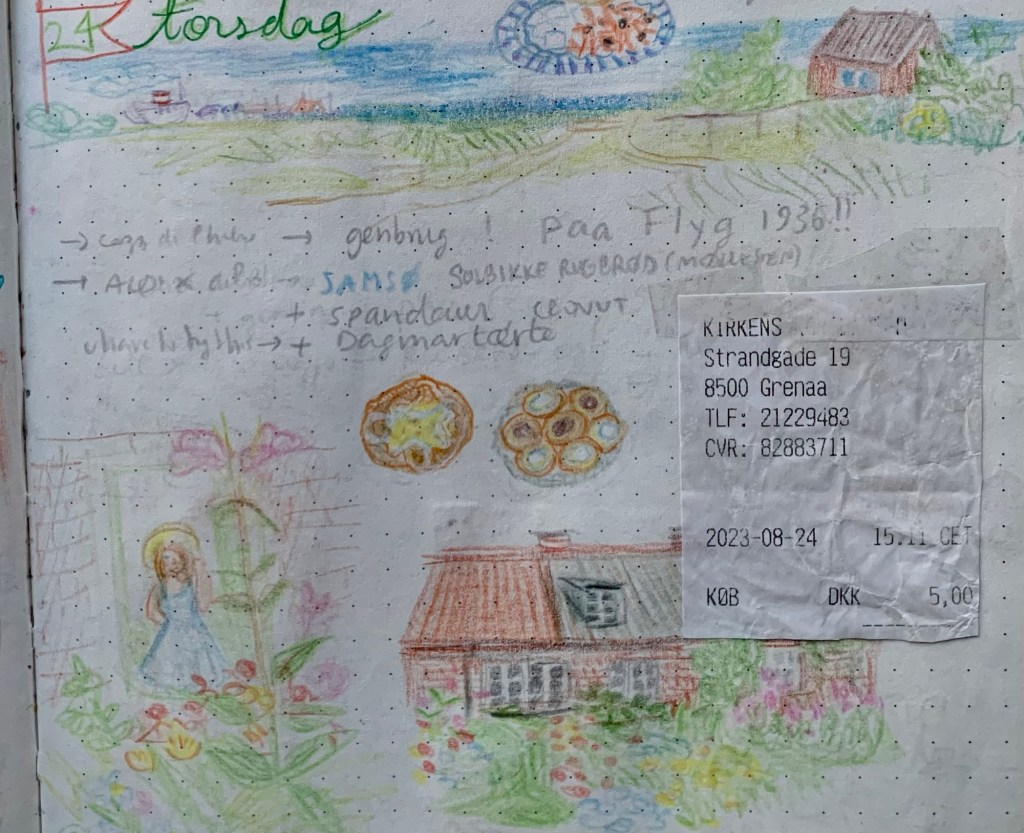
I walked headed there, and on the way I entered a second hand shop (genbrug) where I found a nice green-white striped tshirt, for just 20 DKK (3€), the brand was Finnish Marimekko, so a bonus point.
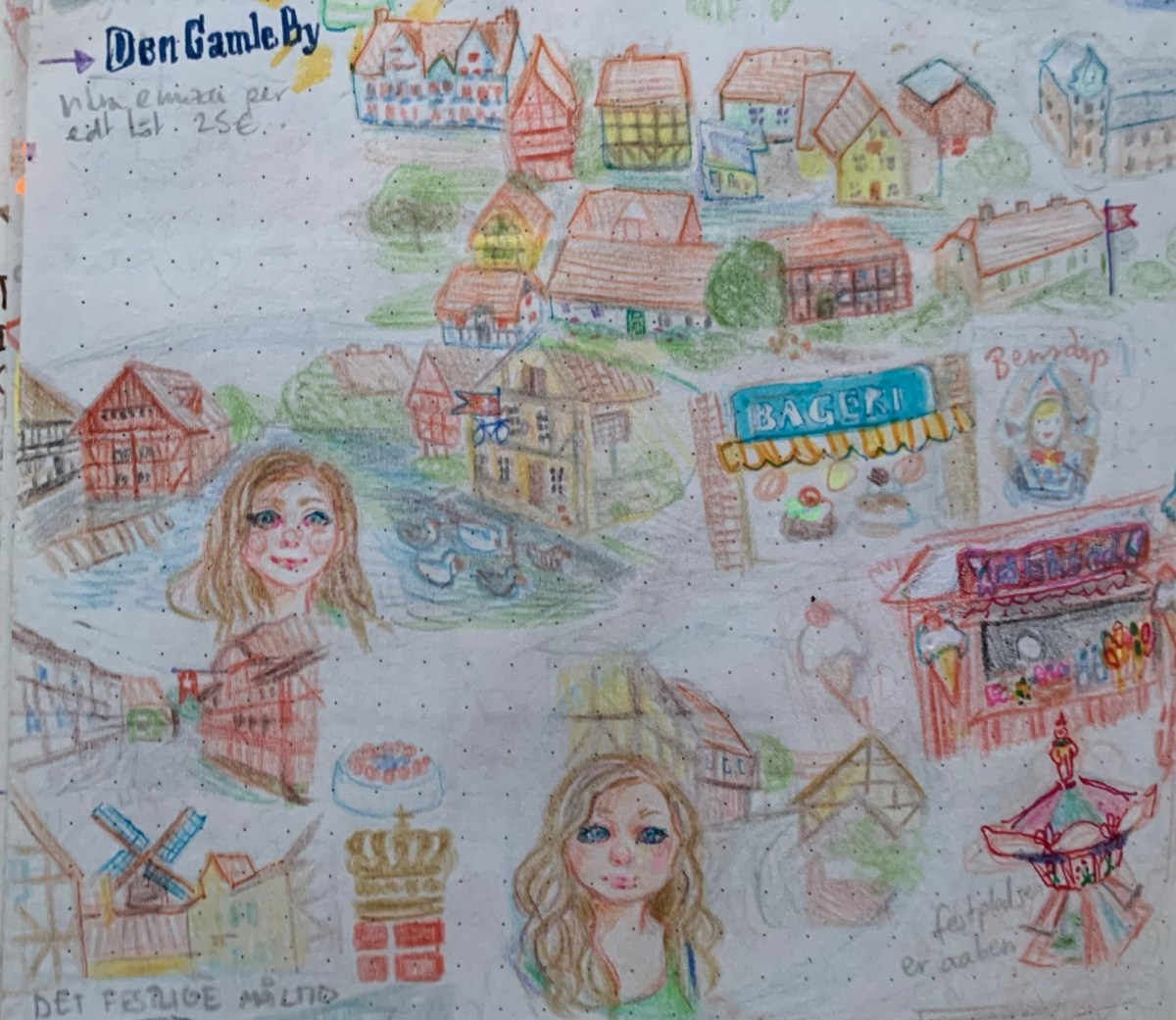
I reached Den Gamle By and went through it very fast, though I didn’t have the time to read most signs.. oh well. It did cost me 25€ but I wouldn’t be there soon again… – I ended up visiting again 3 years later though, and for free!
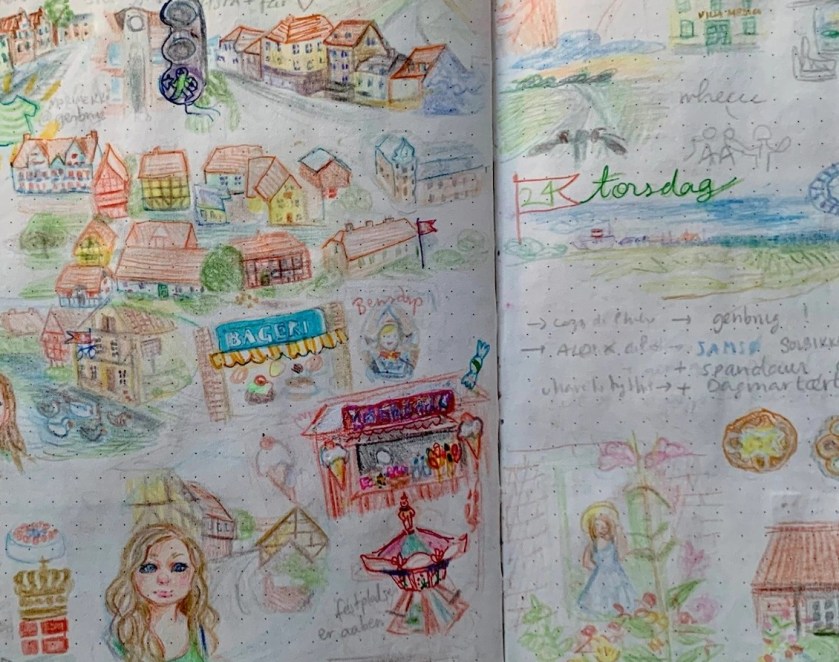
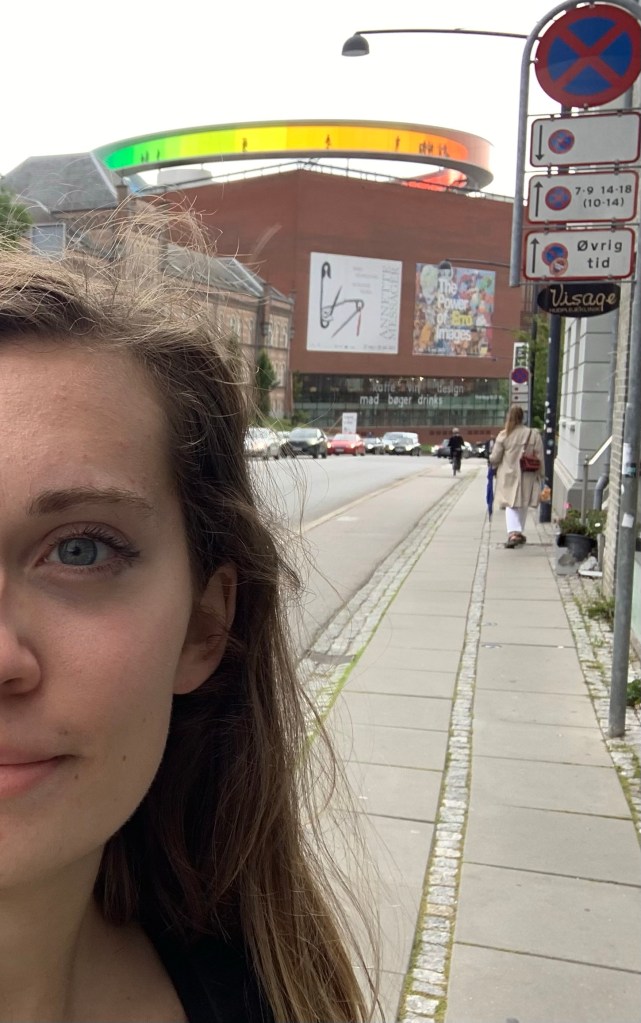
Once i got out I decided to head to AroS, the art museum, although I didn’t enter it nor walked in the rainbow circle. – I did visit Aarhus rainbow museum again one year later though!
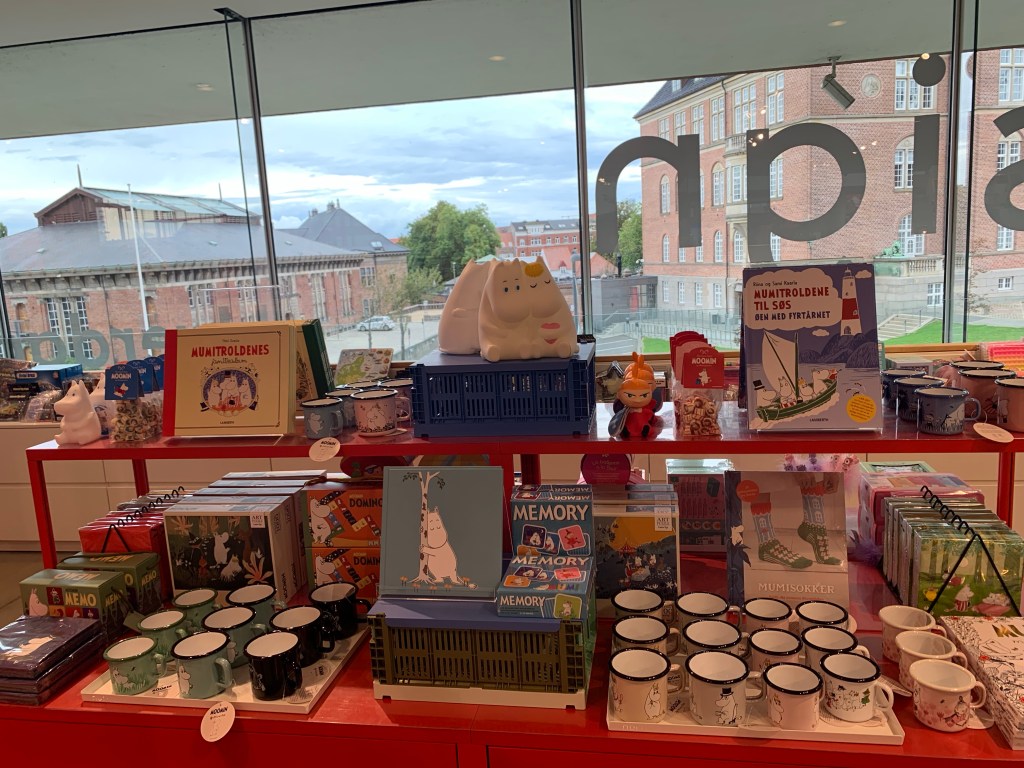
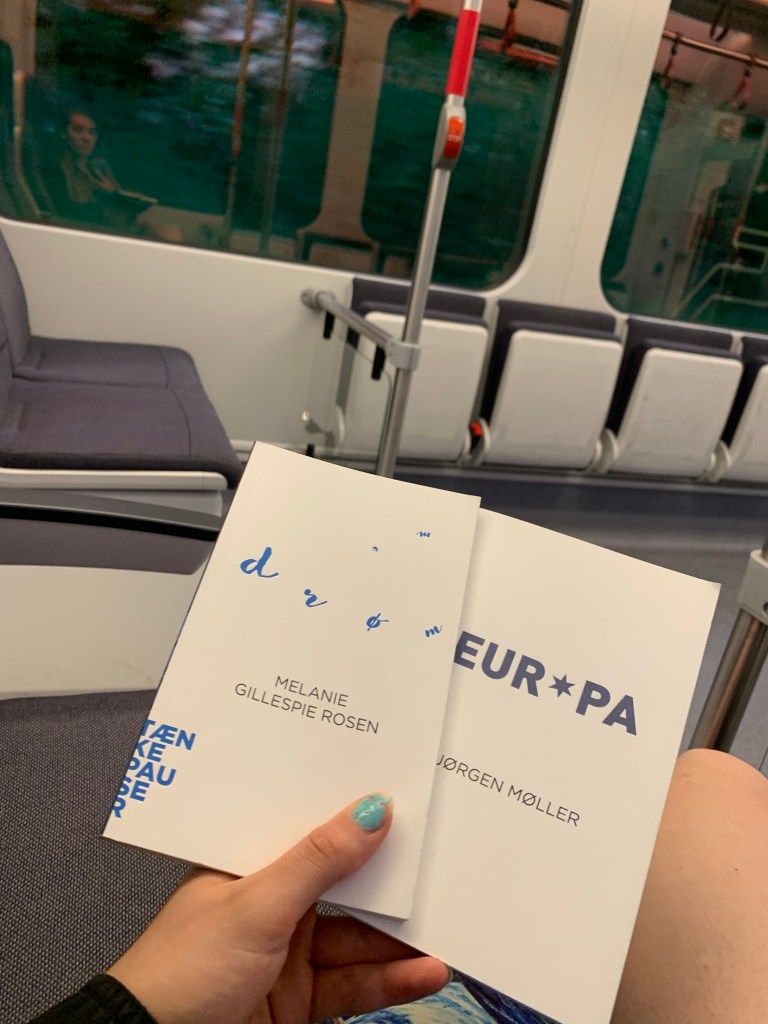
What I did was going up the stairs and then straight to the museum shop! I got my first books in Danish, written by Aarhus university professors, from a series of booklets called Tænke Pauser (‘Breaks to think’: one about Dreams (Om Drøm) and one about Europe (Europa). The museum sold also quite a lot of Moomin and Pippi Longstocking (in Danish Pippi Langstrømpe) things… But i resisted..
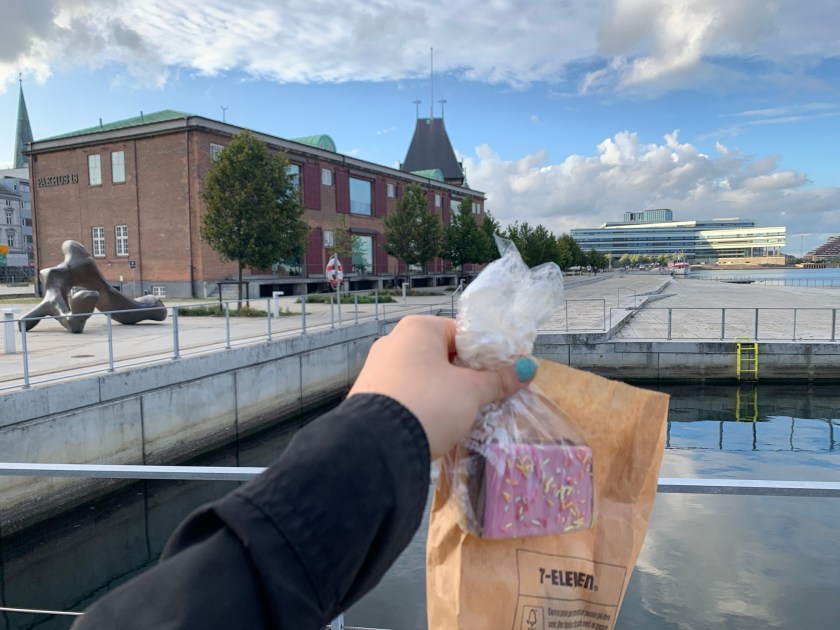
Then, super hungry and a bit tired after an intense day, I wanted to eat something. I got into a 7-Eleven and had to get Wienerbrød (Danishes, which Danes call ‘Viennese bread’), so I went for a Tebirkes and also bought a Danish chocolate/berry ice lolly I had wanted to try for a while: Solbær – which used to be called Kæmpe Eskimo. I quickly ate up the lolly and got into a Netto, getting a Studenterbrød pastry!! So I had the exact same things my friend brought me to welcome me on my very first trip to Denmark 2 years before, and I sat at the same place to eat them, Dokk1!
I lwould be there every summer evening if only I could! I then got the Letbane home and biked again home, really enojoyed that even though the bike comfiness was what it was!
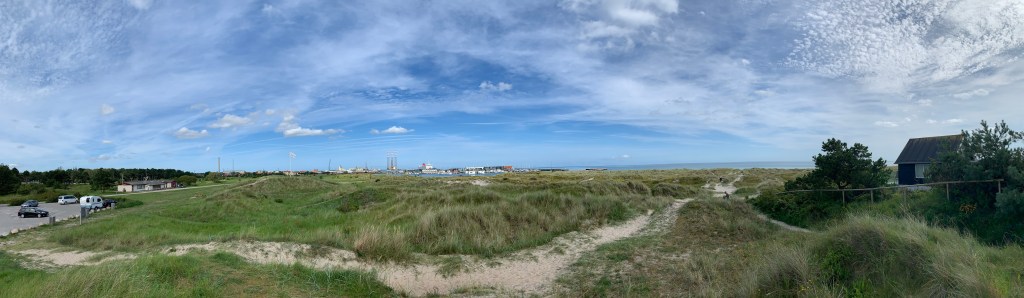
Grenaa beach
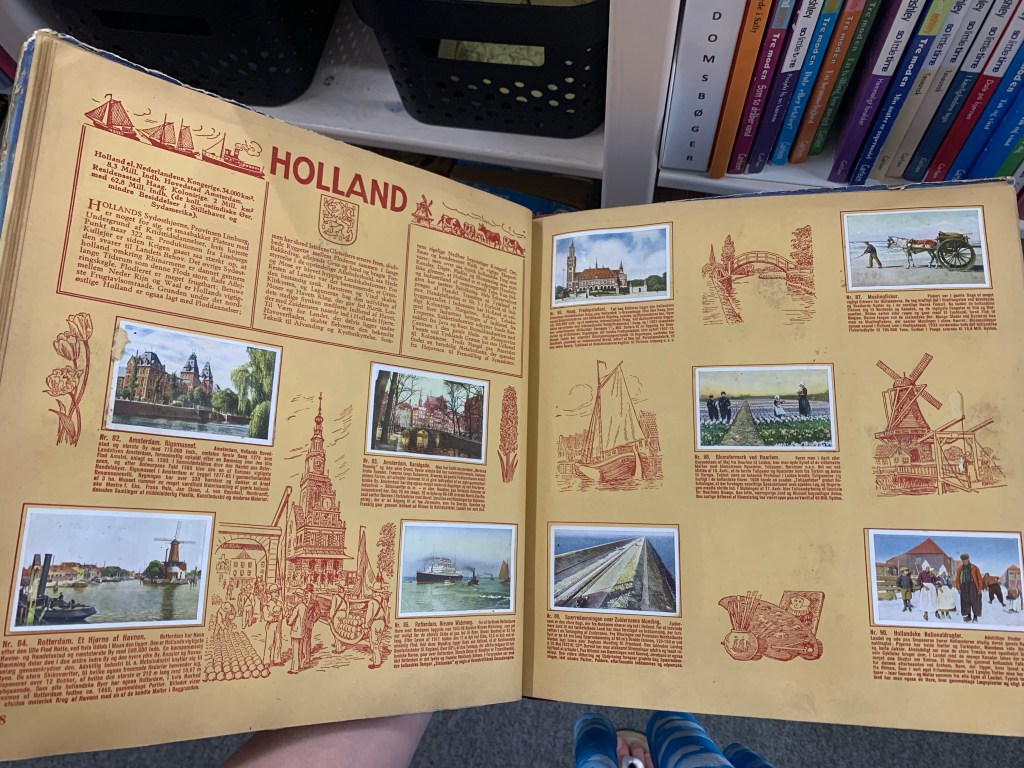
On my last full day in Denmark We went to Grenaa’s beach, Another thing I longed to do again. Later we went into the town and in another Second hand shop I found a 1936(!!) figurine album about all European countries, so cool! Besides Soviet Union, Yugoslavia and all that it even had Gdansk/Danzig …
I had to get food for the journey of the following day. We went to a Lidl (I guess cheaper than Kvickly?) and of course I got Rugbrød , cheese and a Spandauer, – the most iconic Wienerbrød? My friend told me I had to try the Dagmartærte too. I also bought a cronut. Not really Danish but I had yet to try that..
We watched a Danish series called Equinotium, Not my thing, but watching stuff in other languages is always a good idea. Also some random tv-reality shows. I had a lot of trouble understanding my friend’s sarcastic comments in Danish though, gotta improve.
So I am glad I got to fulfill some wishes I have had for a while – Seeing the centre of Grenaa, Eating Danish Ice lollies, Wienerbrød and getting books in Danish!
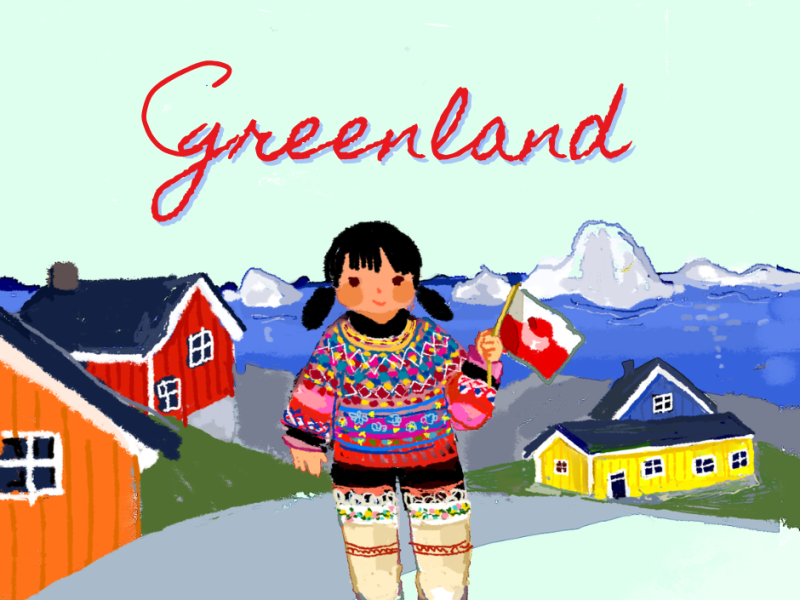
Discover Greenland, home to the Inuit Kalaallit, and its most iconic aspects as its flag, language and folk costumes. The biggest island of the world has a rich history of indigenous culture intertwined with Norse colonization and later Danish rule.
Days on which the Finnish language, suomenkieli, and culture is celebrated in Finland, on birthdays of Finnish poets and artists
Finland celebrates its language and culture during special days chosen for birthdays of Poets and artists. Most are flag days in the country, on which the Finnish flag Siniristilippu(“blue cross flag”) shall fly.
Runeberg day – 5 February
In Finnish Runebergin päivä, it is the birthday of the national poet Johan Ludvig Runeberg (1804–1877). The highlight of the celebration is eating Runeberg’s torte (Finnish: Runebergintorttu; Swedish: Runebergstårta).
Runeberg lived in Porvoo/Borgå and although he is considered the national poet of Finland, he only wrote in Swedish! His Vårt land (“Our Land”, Maamme in Finnish) became an unofficial Finnish national anthem.
Runeberg ate the torte now carrying his name everyday, baked by his wife Fredrika. it is an almond and rum flavoured pastry with raspberry jam, and a ring of icing on top. You can find it in shops from the beginning of January until 5 February. The exception to this is Runeberg’s hometown Porvoo, where you can enjoy the torte the whole year round!
Kalevala day – 28 February
InFinnish Kalevalan päivä, it also known as Finnish Culture Day because of the central role Kalevala has as the national epic of Finland and Karelia. EliasLönnrot (1802 – 1884), a Finnish physician and philologist, compiled it in the 19th century by collecting traditional Finnic oral folklore in Finland, Karelia, the Kola Peninsula and the Baltic countries.
Kalevala means land of Kaleva, and its main character is Väinämöinen, a sort of godlike shaman with a magical voice, and it tells about the hero’s search for a wife.
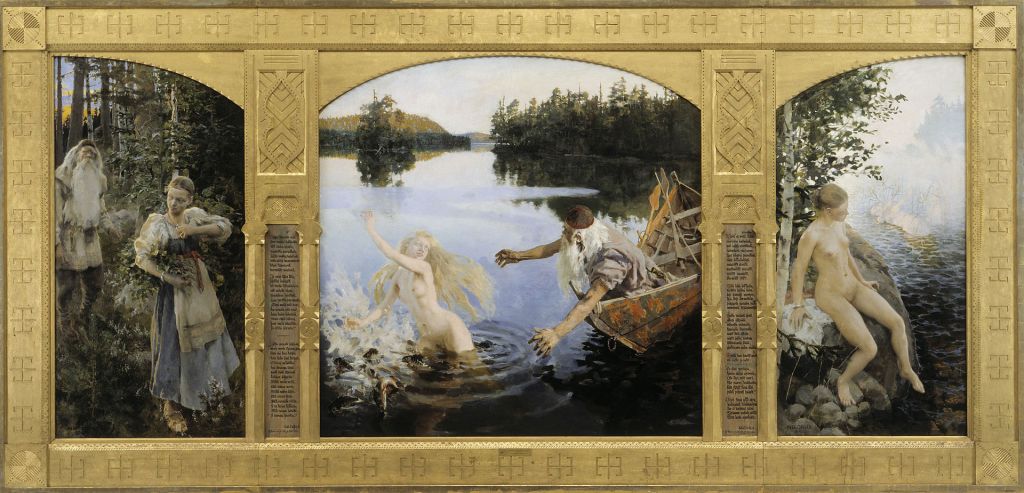
As a symbol of Finnish culture and history, Kalevala has inspired many Finnish artists, among others the classical composer Jean Sibelius and the painter Akseli Gallen-Kallela.
A. Gallen Kallela, Aino Myth, Triptych, 1891
Something as old and quintessentially Finnish can be described as kalevalainen “Kalevala-esque”!
Finnish Language day – 9 April
On 9 April Mikael Agricola, the “father of literary Finnish” died, and Elias Lönnrot was born. For this reason it is celebrated as Finnish language day, suomen kielen päivä.
While the previously mentioned Elias Lönnrot compiled the Kalevala, Mikael Agricola was a Bishop and scholar who created Finnish as a written language in the 1500s, with all its lovely double vowels.
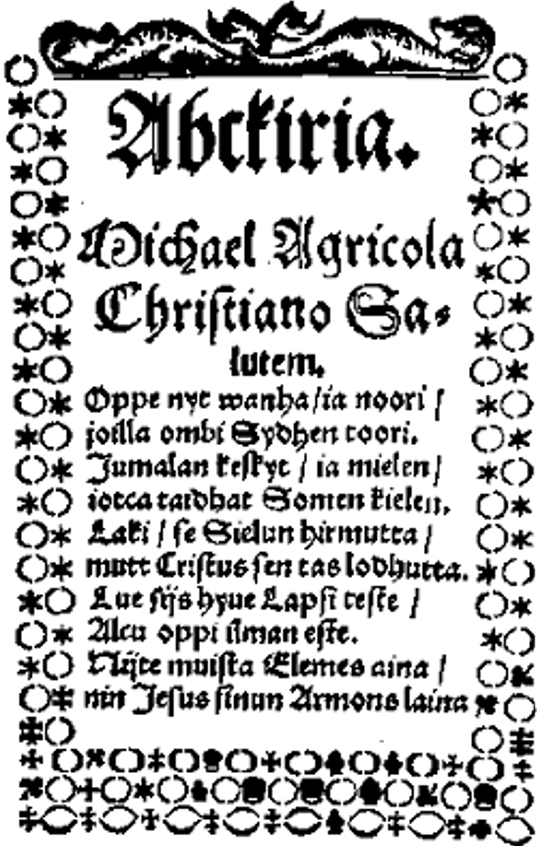
Agricola’s role for the Finnish language was similar to that of Luther for German. Both translated the bible into their people’s language. He did that with other Finns while living in Wittenberg, Luther’s town. Agricola also wrote theAbckiria (ABC Book), the first piece of literature in Finnish.
Other important days for Finnish culture
3 February – Day of Finnish architecture and design, Arkkitehtuurin ja muotoilun päiviä. It is the birthday of Alvar Aalto
12 may – Day of Finnish Identity, suomalaisuuden päivä, birthday of the statesman Johan Vilhelm Snellman
9 August – Tove Jansson day, Since 2020 this day, Tove Jansson’s birthday, is a flag day in Finland, celebrating Finnish art. Tove Jansson was a painter and illustrator, most known as the creator of Moomintrolls. Her novels and other written work have been translated into more than 50 languages
8 December – John Sibeliusday, Birthday Jean Sibeliuksen päivä/ also day of Finnish music
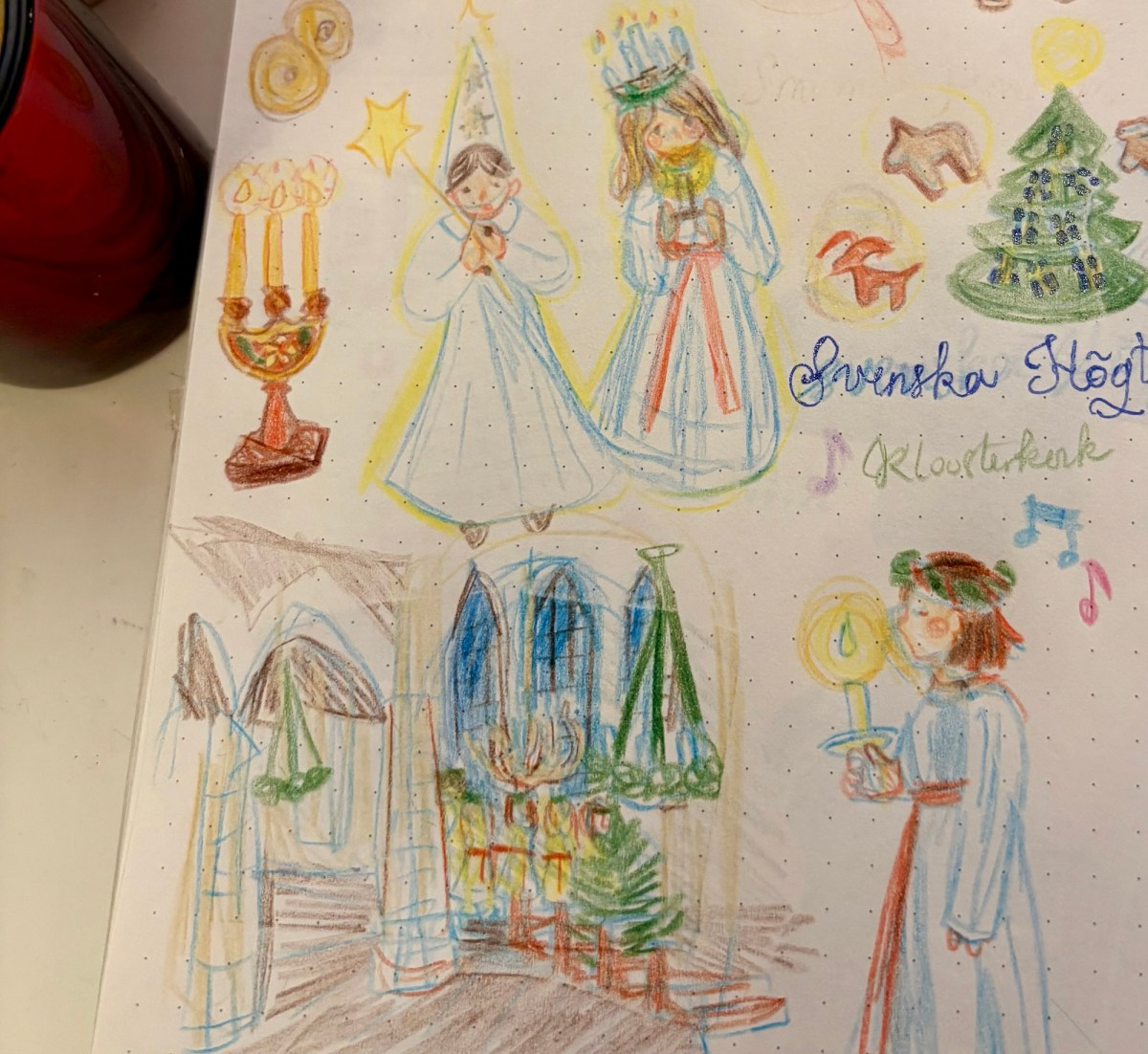
Lucia brings light in the darkest night of the year and is a mix of pagan and christian traditions. It is celebrated in Scandinavia with processions, saffron buns and church concerts.