A while ago a follower of my langstagram asked: Hi Chiara, I was thinking about starting Icelandic, what are your thoughts on the difficulty of the language? I already know swedish on B1 level, is that helpful?
Generally speaking, good knowledge of Scandinavian languages will certainly help, but Icelandic is to be taken as a very distinct language, for which you’ll need to spend quite a lot of time for both grammar and vocabulary, even if many things will look familiar.
As follows my impressions and experience with my prior knowledge of Scandinavian languages:
Learning grammar
Needless to say now, the trickiest part is the grammar and the inflections, it’s something you have to practice with and get used to. For that aspect knowing some German might help you more than knowing Swedish honestly. Just like they told me Latin would help me understand how German works. And I think it did, even if it was just to understand what cases are at all. German and Icelandic belong however to the same language family, and as fellow Germanic languages there are still some endings they vaguely share. They also use the same 4 cases: Nominative, Accusative, Dative, Genitive. This is clear by looking at the personal pronouns: while you only have I-me in the rest of Germanic languages, from Swedish to Dutch, Icelandic and German have the dative version: ich-mich-mir and ég-mig-mér.
| Icelandic | Scandinavian | German | English | |
| case inflections | 4 cases used in nouns, adjectives | – only personal pronouns (I-me, he-him.. forms) | 4 cases used in articles, adjectives, personal pronouns | -only personal pronouns (2 forms) |
| verb conjugations (examples with present tense) | a couple conjugations with similar endings: -/a,-(u)r/-(s)t/ð, -(u)r/-; -um, -ið, -a/u | always same ending for all people (-a/er) | always same endings (with some irregularities in root vowels): -e,-st,-t;-en,-t, -en | no ending except for third person -s |
| word order | as in English +verb in 2nd position rule | as in English +verb in 2nd position rule | verb in 2nd position, conjugated verb at the end after given connectors |
To put it simply, I could say Icelandic is like an overcomplicated version of something you might be familiar with. Of course there are unique features Icelandic shares with its cousin languages, like:
- definite article at the end of the word: (a) boy, strákur, becomes strákurinn when you want to say the boy. the ending is -n for the feminine and ,-ið for the neuter, and gets a bit more complicated in the plural. But once you got how it works that’s it.
- passive/reflexive verb form made with the Middle Voice, formed by the addition of the ending -st to the Active verb, in any tense: við sjáumst, vi ses = we see each other; Hann kallast – han kallas = he is called.
Learning vocabulary
Scandinavian languages might come in handy for vocabulary. There are a lot of cognates and things which will remind you of something you already know, although not used in the same way. However, generally speaking I would say knowing any other Germanic language is often as helpful, maybe just slightly less similar, but to a smaller extent for English, which has a significant higher share of romance vocabulary due to its history.
| Icelandic | Scandinavian | English | German | Dutch |
| blóm | blomma/blomst | flower | Blume | bloem |
| maður, kona | man, kvinna/kvinde *kone in Danish=wife | man, woman | Mann, Frau | man, vrouw |
| jarðarber | jordgubbe, jordbær.. | strawberry | Erdbeer | aardbei |
| höfuðborg | huvud/hovedstad | capital city | Hauptstadt | hoofdstad |
| eða | eller | or | oder | of |
But still, quite often you will encounter obscure words, for which most other languages use the same word, for instance háskoli for university (literally ‘high school’, just higher than high school in Icelandic 😉 , or tölva for computer. You can check out many others in an article with a comparison between Icelandic and Finnish.
Sometimes you won’t recognize some related words instantly but once you’ve realized the connections with Swedish/Danish/Norwegian they will be much easier to remember (I had this some time ago with keyra (to drive), köra/køre in Swedish/Danish).
| Icelandic | Scandinavian | English | German |
| hvað heitir þu? | (h)va(d) heter/hedder du? | What’s your name | wie heißt du? |
| ég tala ekki ensku | jag/jeg pratar/snakker inte/ikke engelsk(a) | I don’t speak English | ich spreche kein Englisch |
| hvað ert þú gamall? | hur/hvor gammal/el är/er du? | how old are you? | wie alt bist du? |
- English: All human beings are born free and equal in dignity and rights.
- Scandinavian: Alla/e människor/mennesker är födda/født fria/e och lika/lige i värde och rättigheter/værdighed og rettigheder.
- Icelandic: Hver maður er borinn frjáls og jafn öðrum að virðingu og réttindum.
- German: Alle Menschen sind frei und gleich an Würde und Rechten geboren.
As follows the plot of the movie Nói Albinói. words in bold are similar in Scandinavian languages, underlined ones in other Germanic languages as well, meaning that knowing the given language(s) spared me from the pain of looking them up. Words in italic are unique to Icelandic, and I had to copy-paste them somewhere…:
Myndin gerist um vetur í smábæ úti á landi. Nói er ungur strákur í menntaskóla. Hann býr hjá ömmu sinni. Pabbi Nóa býr einn, hann er þunglyndur og drekkur mikið. Nói er sérstök persóna, hann er gáfaður en hann er ekki duglegur í skóla. Hann er oft einn og hann er ekki félagslyndur. En ung stúlka, Íris, flytur í bæinn. Hún er úr Reykjavík. Nói kynnist henni og þau verða vinir. (text from IcelandicOnline)
Is it useful to learn a Scandinavian language before starting Icelandic?
Of course speaking a Scandinavian language will make your journey with icelandic a bit easier, but definitely not as much as Norwegian/Swedish/Danish with each other. So learn a Scandinavian language before or after Icelandic to have fun, but do not think Icelandic will be easy after it. On the other hand, Learning them simultaneously might confuse you a little bit but in my opinion they are different enough to not mess up too much.
Learning Icelanding before a Scandinavian language will make the latter feel a lot easier. Similarly to what it is like to first learn German and then Dutch, when finding yourself with a simplified version of a known grammar, instead of the opposite.
Icelanders learn Danish in school but the chances that that will make it any more convenient to speak Danish in Iceland are probably very low.
Some dialects of Norwegian have more in common with Icelandic though, mostly in the pronounciation, with hva being pronounced as ka, similarly to Icelandic hv-words. But that’s more a language geek thing than something actually helping you learn Icelandic I guess?
My experience
Although learning it not too consistently and keeping it as an “extra”, I started picking it up a couple years ago. I already spoke Swedish and more casually learned Danish and Norwegian, and Icelandic was my missing puzzle, the living ancestor of these three, with its unique þ and ð and the obscure grammar. I was first mainly interested in just understanding its grammar, the same I had with Finnish, and my current goal is becoming conversional. In the meantime, I gained a good insight on how the language works and challenges it gives.
I am currently using Icelandic Online and reading Short Stories to keep up with Icelandic (not consistently enough, unfortunately), and I do often find cognates which help me recognizing words, but that’s mostly due to having studied all the main Germanic languages than just Scandinavian ones. Probably also because of this my experience learning Icelandic goes more smoothly than Finnish, which belongs to a separate language family.
Beautiful Finnish Idioms that do not exist in other languages
Unique Finnish expressions emphasizing typical traits of Finnish culture, as its connection to nature and a melancholic feeling.

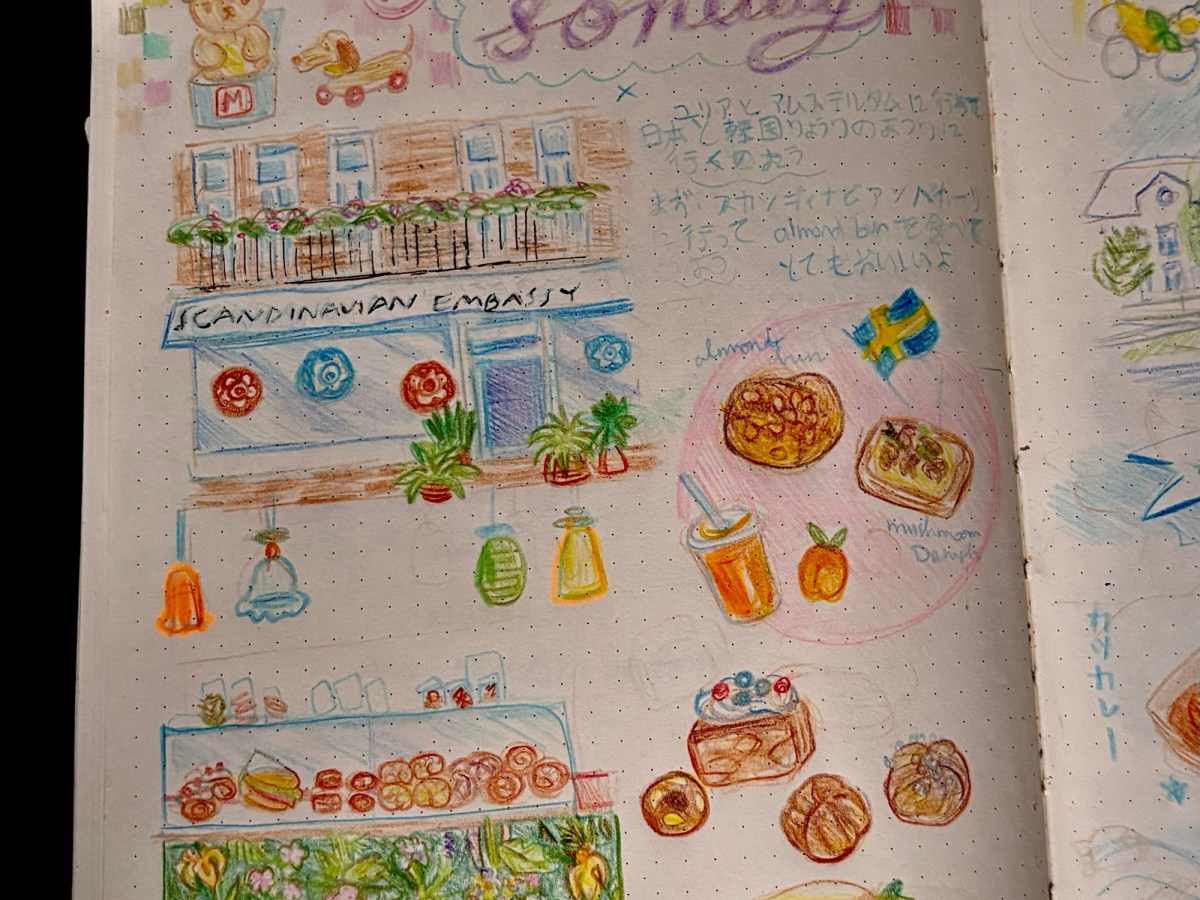
Scandinavian Embassy‘s bakery and cafe in Amsterdam zuid
On a trip to Amsterdam, I decided to test Scandinavian Embassy and both of its two locations, starting with the bakery in europaplein. The two locations are in Amsterdam zuid: Saphatipark and Europaplein: in the former, a more central location, you can sit but it has fewer items than the bakery in Europaplein. The bakery,…
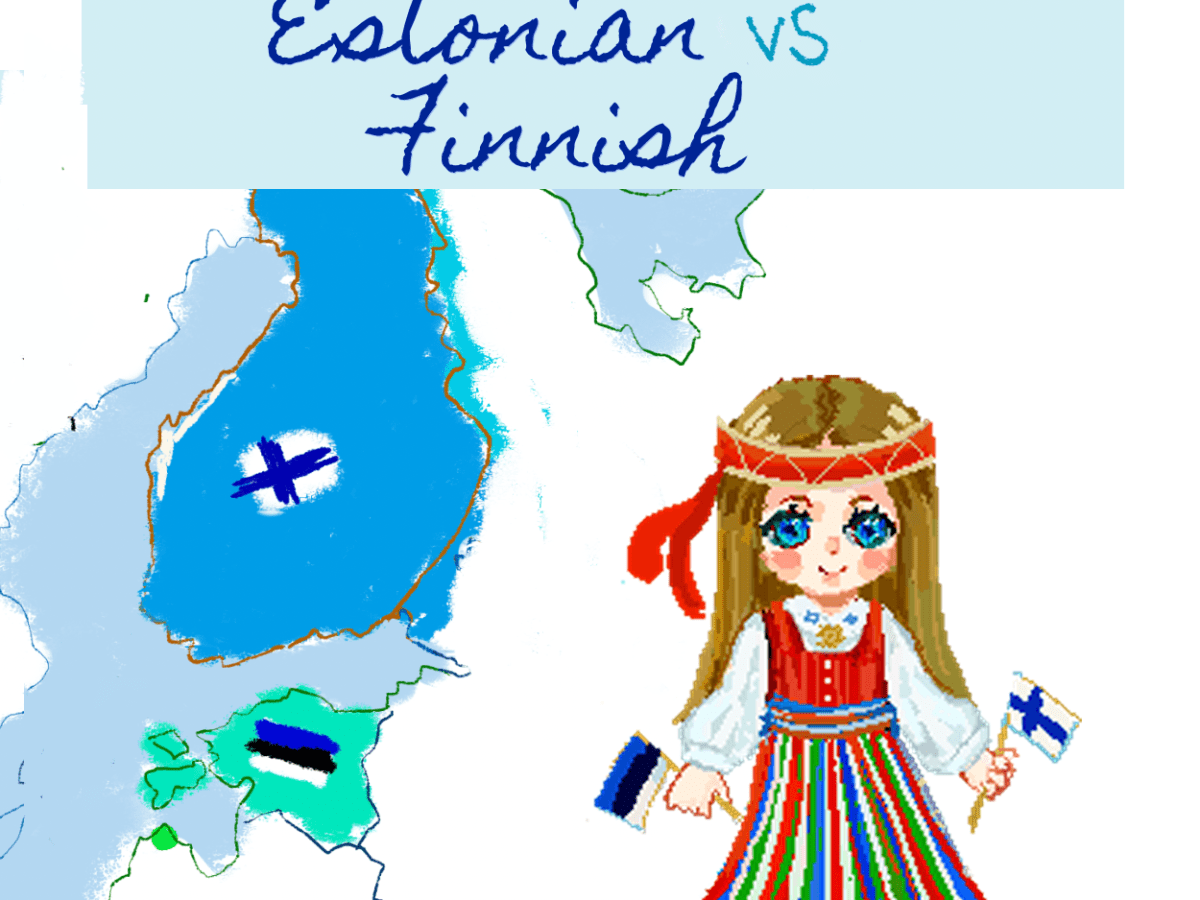
An introduction to Estonian: sister language of Finnish
Estonian is a Finnic language, sharing many similarities with its ‘bigger’ sister Finnish, while being unrelated to all their bigger language neighbours
 a Polyglot illustrating Scandinavia
I know that Finnish is a very different language family. But I ask myself how the contact between Finnish and Germanic Scandinavian languages has influenced both.
LikeLike
Finnish has many words from Germanic languages due to its history under the Swedish kingdom and geographical proximity to Sweden among others for example tuoli (chair) from stol. You can find a list here: https://en.wiktionary.org/wiki/Category:Finnish_terms_borrowed_from_Swedish
LikeLiked by 1 person
Sounds interesting!
LikeLike
What you say about Icelandic is very interesting. If we learn an older language we can better understand the nature of many modern languages, like Latin and many European languages and Old Arabic languages and Modern Arabic languages and so on.
LikeLike
Thanks for your comment! That definitely gives us a better insight on languages
LikeLiked by 1 person
As you say English is a Germanic language but it has a large number of Romance loan words.
LikeLike