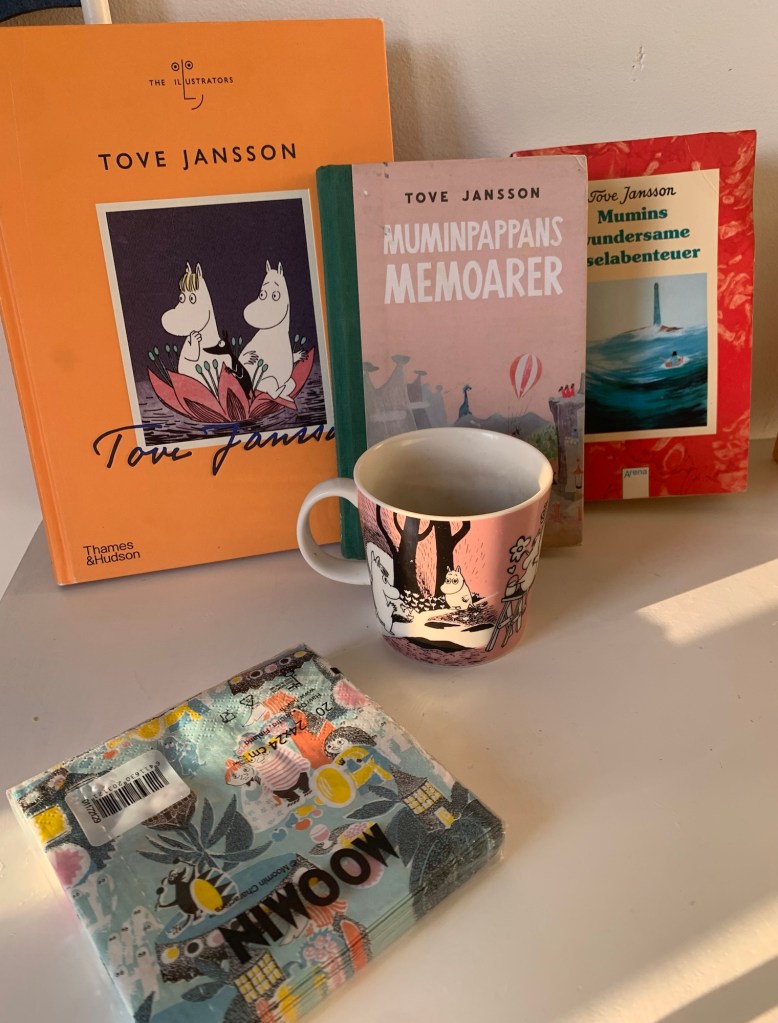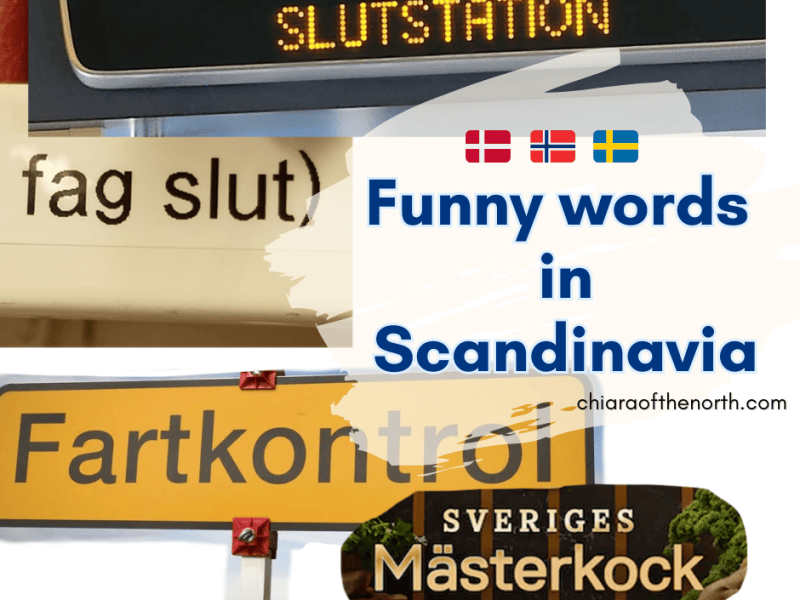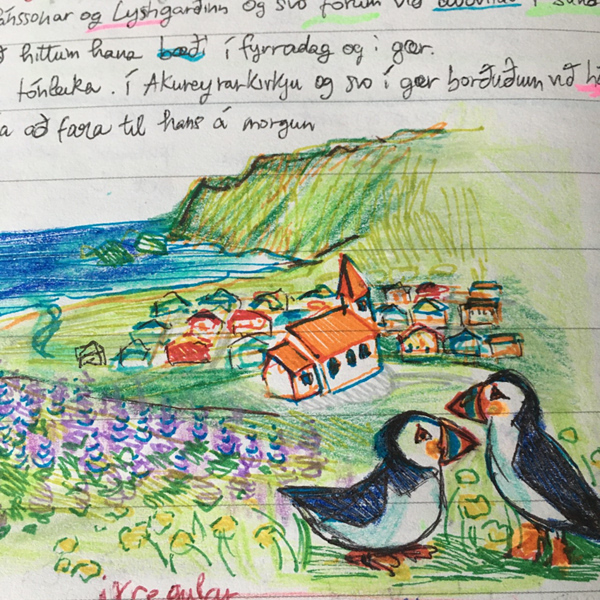
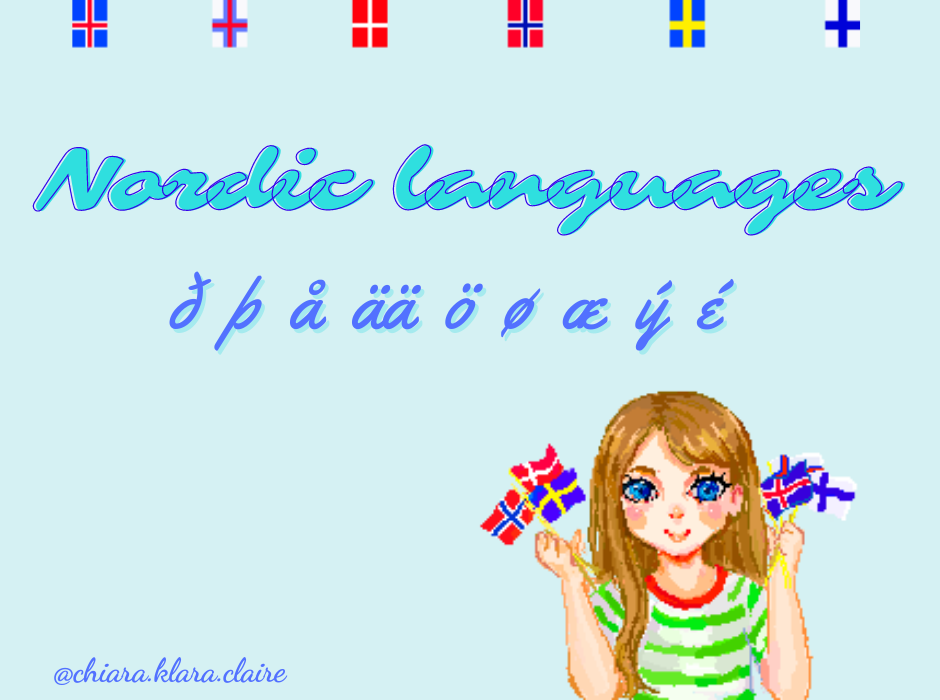
One day my sister asked what language I was reading in – I was surprised she could not assume it was Icelandic from all the ð’s. That gave me the idea to make a list of distinctive features to quickly learn to tell apart all Nordic languages without actually studying any. I still remember reading about differences between Danish and Norwegian and finding it really useful. So continue reading for thi handy guide!
Please note that I’m mostly writing about the written form, as nuances of the spoken language can be much harder to describe. For what concerns the oral form, you just have to listen to them a lot, and as a Swedish friend once told me:
Swedish is up ‘n downs, Norwegians is all ups, Danish is all downs.
And well, it makes sense.
How similar are Nordic languages to each other?
Swedish, Norwegian, Danish, Icelandic and Faroese belong to the North Germanic language family. Their cousins are German, Dutch and English. If you speak two of these three a big amount of vocabulary and grammar will be familiar to you.
Swedish, Svenska; Norwegian, Norsk; and Danish, Dansk, are the languages of Scandinavia, (yes, the Scandinavian paeninsula is made up of only these three countries) could be considered siblings (or twins?) because they are mutually intelligible, a Swede and a Norwegian will likely converse in their own language without recurring to English, the same goes with a Dane although Danish can be more problematic…But you can read about that later. Their unique letter is Å, which is roughly pronounced as O. So yeah, remember that when you talk about songs by Måneskin…
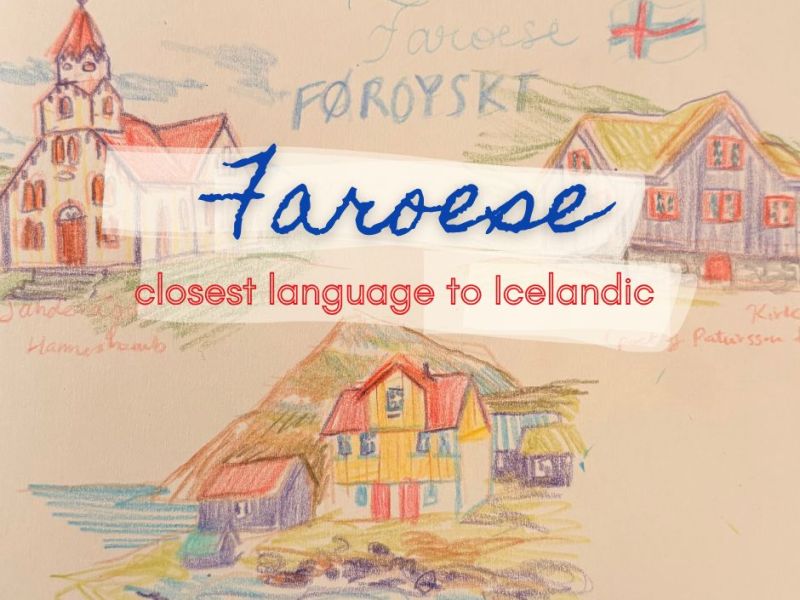
Icelandic, Íslenska, is essentially old Norse – the ancestor of all North Germanic languages – that got crystallized in the middle of the North Atlantic. Because of this Icelanders find it pretty easy to read old viking sagas than the Scandinavians, who don’t really understand Icelandic. Faroese, Føroyskt, spoken in the Faroe islands – between Iceland, Norway and Scotland – is similar to Icelandic in the written form, but the spoken language is quite different. They are classified as Insular languages of the North Germanic family, its distinguishing letter is ð (called eð in Icelandic and edd in Faroese, capital Ð), pronounced as th in this.
Swedish and Danish would be classified as East-North Germanic, while Norwegian and Icelandic West-North Germanic, the bound between Icelandic and Norwegian is is noticeable in some Norwegian dialects, but the geographical distance made Norwegian become more intelligible with the eastern branch instead.
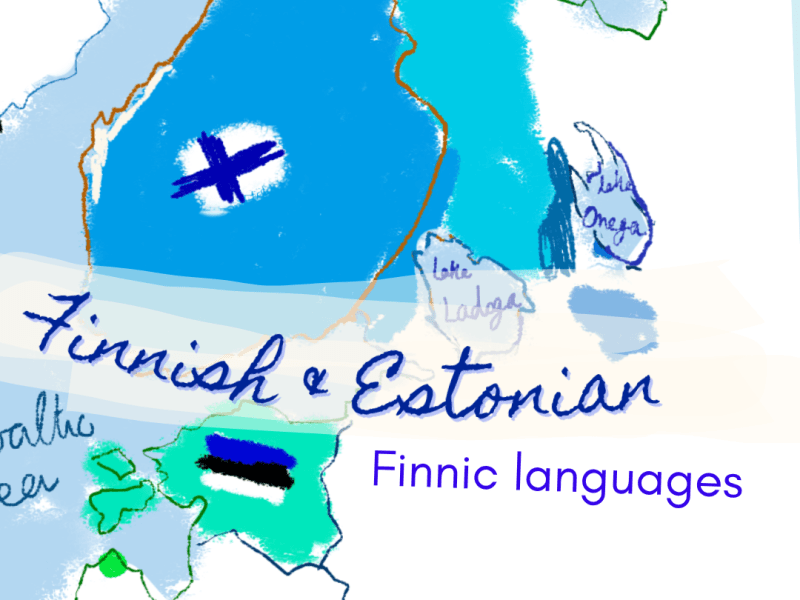
However, there’s an odd one out of the Nordic languages. Not only Finnish, Suomi, does not belong to the North Germanic family, but it is not even indo-european. That means Hindi is potentially closer than its neighbour Swedish. Finnish belongs to the Finno-ugric family and is completely different grammar-wise, but has quite a lot of loanwords and cultural influence from Swedish. You can recognize it by very frequent double letters with combinations as yy and ää, double consonants after another consonant: tsemppiä, pankki. Finnish does not have B, G, D in its alphabet.
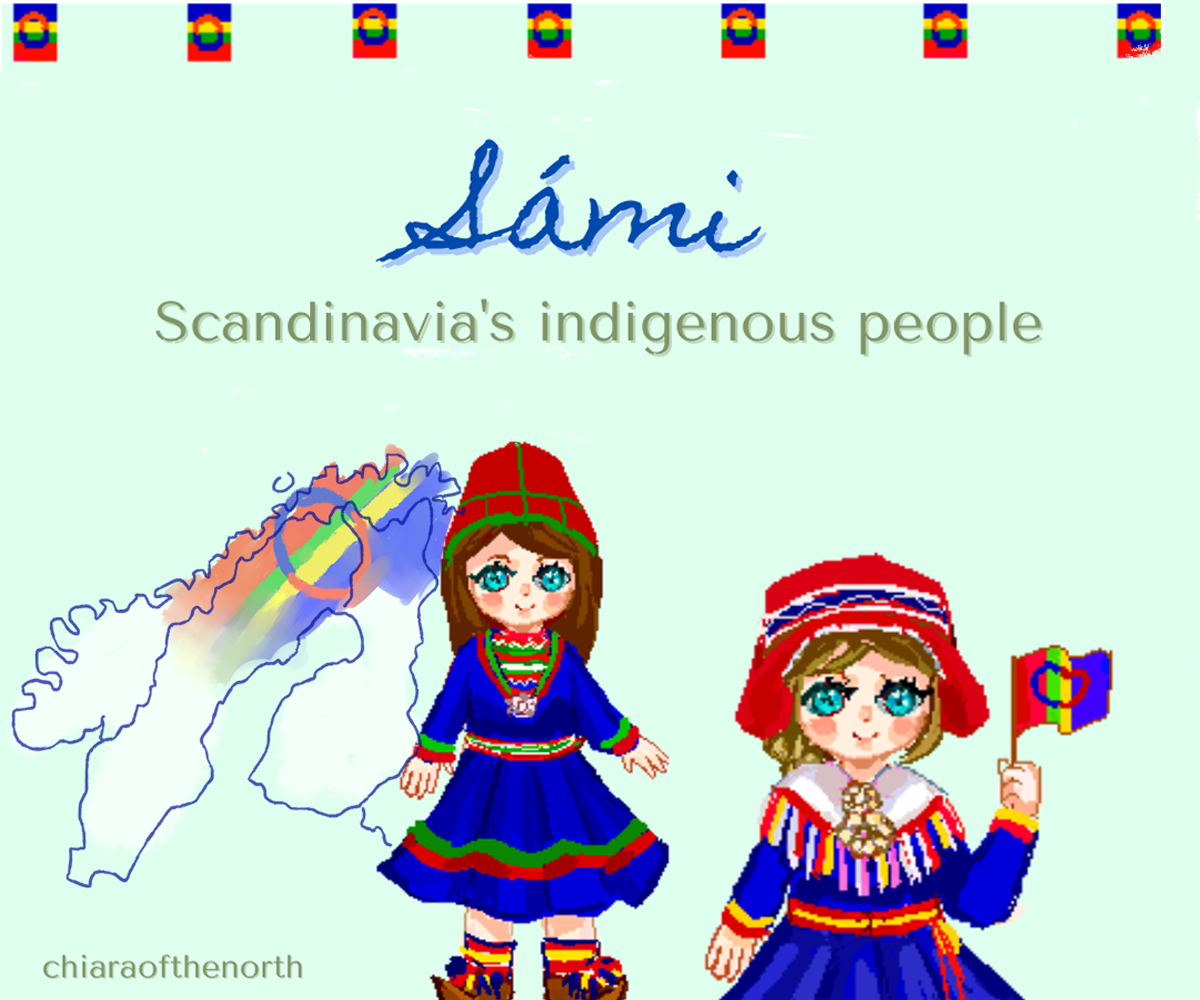
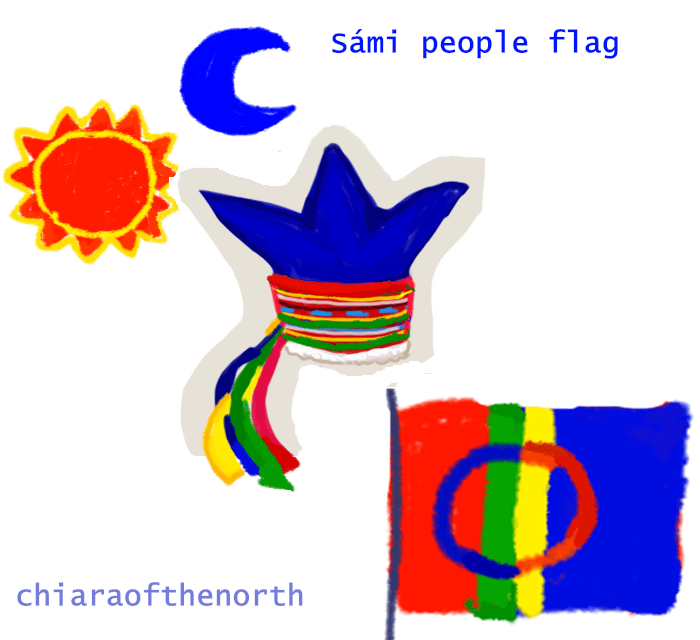
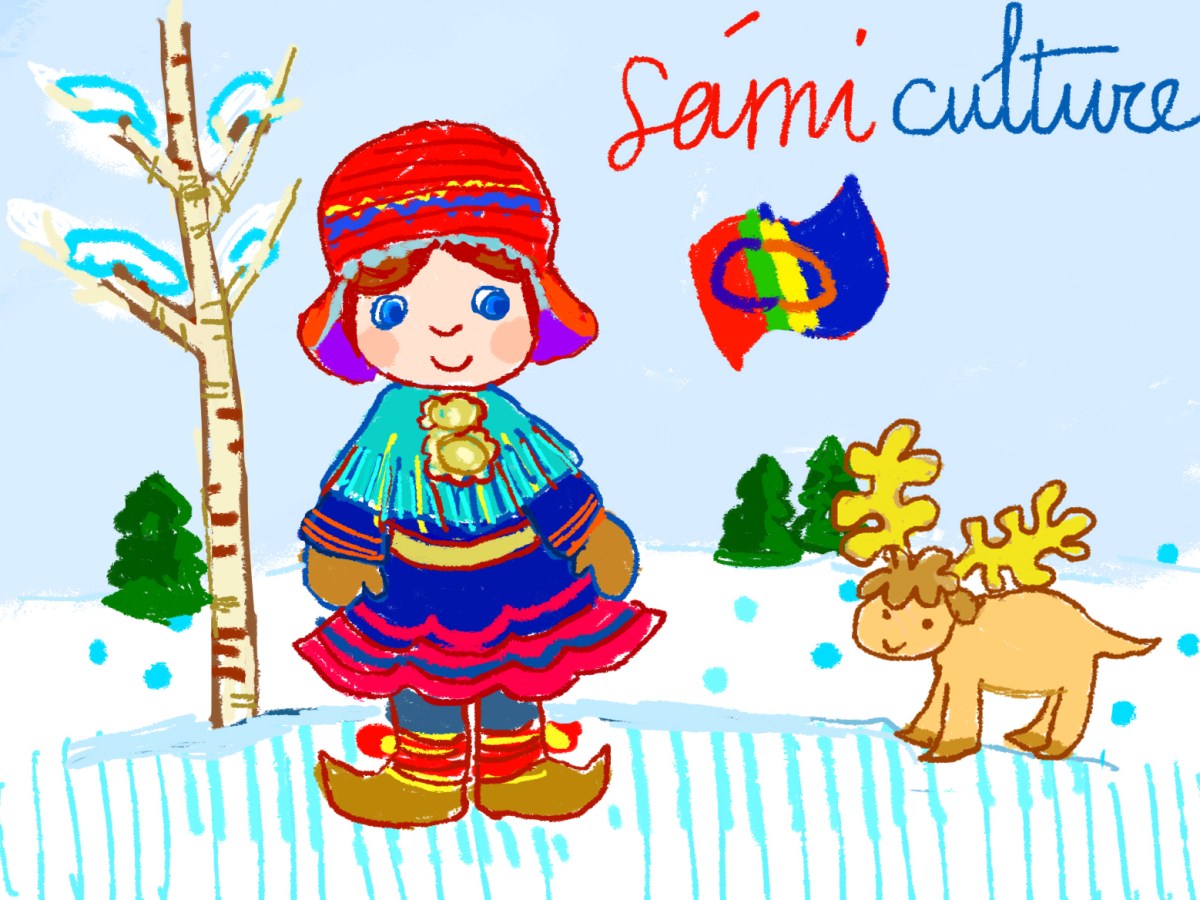
The Sámi, indigenous people of north Scandinavia, have their own Sámi languages, which are related to Finnish as they belong to the Uralic language family.
And now let’s go into detail!
Swedish vs Danish vs Norwegian
To sum it up, Norwegian and Danish are more similar in written form and often vocabulary. By hearing the Scandinavian languages, on the contrary, you will notice how similar Swedish and Norwegian can sound, with the typical ‘singing’ tones, while Danish stands out: They say Danes speak as if ‘they had potatoes in their mouths’.
Speaking about the written form, Although each Scandinavian language has its distinctive traits, the fastest language to rule out will be Swedish. You will for example instantly notice that Swedish uses Ä and Ö, that correspond to Ø and Æ in Norwegian and Danish.
| Swedish | Danish, Norwegian |
| Ä | Æ |
| Ö | Ø |
| NO HV-: vad, vem | HV: hvad, hvem |
| CK: lycka | KK: lykke |
| endings in -a | endings in -e |
| uses X: exempel, lax, sax | eksempel, laks, saks |
Danish vs Norwegian
Modern written Norwegian was based off Danish – they literally wrote in Danish – but a few features will signal which of the two you are reading, the one that will instantly signal which of the two it is is ØY vs ØJ, the former being Norwegian: tøj/tøy (clothes), øje/øye (eye). And some more features which distinguish either from the rest:
Danish distinctive traits in spelling
| Danish | Swedish, Norwegian | |
| extra L or D in Danish | trold, mand | troll, man |
| G in Danish vs k | bog, kage | bok, kaka/e |
| D in Danish vs t | ud, gade | ut, gata/e |
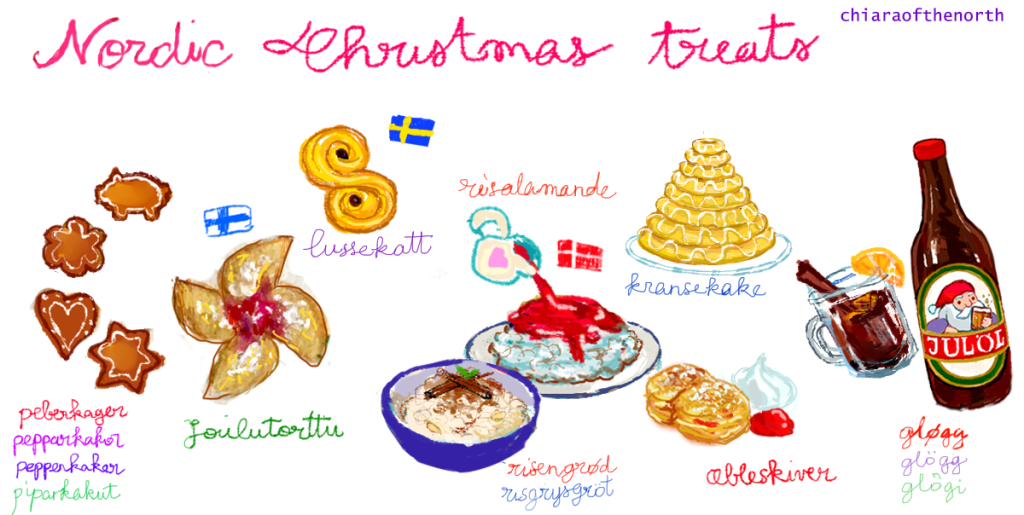
| B in Danish vs P | peberkage | pepperkake/a |
Norwegian distinctive traits in spelling
| Norwegian | Danish, Swedish | |
| SJ, S in Norwegian vs CH in loanwords | lunsj, sentral stasjon | lunch, central station |
| meg | mig | |
| -I in Norwegian vs -J | hei | hej |
| more double KK, NN | matematikk | matematik |
You have some words/sounds which present themselves with the same pattern: the same word will be spelled as kø in Danish, kjø in Norwegian, kö in Swedish. Though Swedish and Norwegian will both sound roughly as sh of show, while Danish as a hard K.
| Danish | Norwegian | Swedish | |
| kø vs kjø vs kö | kød, at køre, kære | kjøtt, å kjøre, kjære | kött, att köra, kära |
| Æ vs E vs Ä | æble, mænd, at hjælpe, at tænke, næsten | eple, menn, å hjelpe, å tenke, nesten | äpple, män, att hjälpa, att tänka, nästan |
Norwegian could be further divided into Bokmål and Nynorsk, which are just two different ways to spell it. Bokmål “book language”, is fundamentally Danish with adjustments to the Norwegian language and the most widespread one, while Nynorsk “New Norwegian” was an attempt to create a more Norwegian-Norwegian, and it is more frequent in the west part of the country, used by about 12% of Norwegians. I won’t go into detail with Nynorsk, but ein, eit indicates Nynorsk, while en, et are Bokmål.
Icelandic vs Faroese
Faroese and Icelandic pronounciations contrast with their similar spelling, that is because Faroese was given an ethymological ortography to resemble its ancestor Old Norse. On top of that, Faroese adopted some words of Danish origin because of its history as a nation under the Kingdom of Denmark.
While both languages mantained Ð/ð in their alphabet along accented vowels á, é, í, ó, ú, ý and æ (but no é in Faroese), Only Icelandic has þ, the thorn (þorn in Icelandic) which corresponds to English th in mouth.
| Icelandic | Faroese |
| thorn: Þ: það, þú | no thorn: tað, tú |
| Ö | Ø |
| é: ég | no é: eg |
Finnish: the outsider
As previously mentioned, Finnish is completely unrelated to the North Germanic family, it belongs to the Ugro-Finnic family and its closest language is Estonian. See the following table to notice how they all belong to the same language family but Finnish!
| Swedish | Norwegian | Danish | Icelandic | Faroese | Finnish | |
| thanks | tack | takk | tak | takk | takk | kiitos |
| what | vad | hva | hvad | hvað | hvat | mikä/mitä |
| someone | någon | noen | nogen | einhver | onkrum | joku |
| apple | äpple | eple | æble | epli | epli | omena |
| to say | att säga | å si | at sige | að segja | at siga | sanoa |
| to help | att hjälpa | å hjelpe | at hjælpe | að hjálpa | at hjálpa | autaa |
Article 1 from the Universal Declaration of Human Rights :
| Swedish | Alla människor är födda fria och lika i värde och rättigheter. |
| Danish | Alle mennesker er født frie og lige i værdighed og rettigheder. |
| Norwegian bokmål | Alle mennesker er født frie og med samme menneskeverd og menneskerettigheter. |
| Nynorsk | Alle menneske er fødde til fridom og med same menneskeverd og menneskerettar. |
| Faroese | Øll menniskju eru fødd fræls og jøvn til virðingar og mannarættindi. |
| Icelandic | Hver maður er borinn frjáls og jafn öðrum að virðingu og réttindum. |
| Finnish | Kaikki ihmiset syntyvät vapaina ja tasavertaisina arvoltaan ja oikeuksiltaan. |
Finnish, however, does have quite a few loanwords from Swedish due to its history and geographical proximity:
| Finnish | Swedish | English |
| katu | gata | street |
| koulu | skola | school |
| sokeri | socker | sugar |
| tuoli | stol | chair |
| suklaa | choklad | chocolate |
| pankki | bank | bank |
My advice is to just expose yourself to the languages, and experience all the differences yourself. 🙂 Here you can briefly read about even more languages used in the Nordic countries.
if you want to see an even more succint summary of all this, you can check out my post on instagram.
💛💙❤️
sources:
- mylanguagebreak.com: How to Tell Scandinavian Languages Apart
- Wordminds.com: Nordic languages: What’s the difference between all of them?
More Articles:
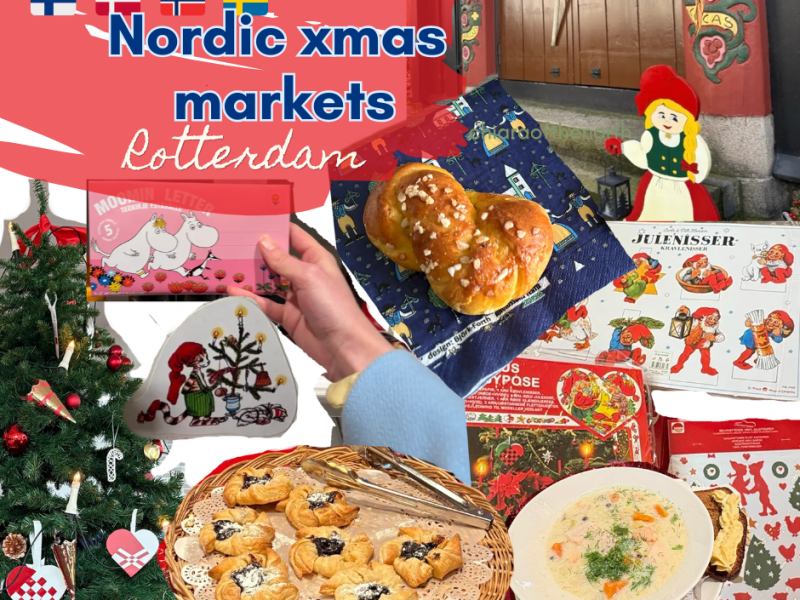
My visit to Nordic Christmas markets in Rotterdam
Norwegian, Danish, Finnish and Swedish Christmas markets in Rotterdam. Christmas decorations, imported typical Nordic products for sale, a cafe with lunch and cakes in each of them!

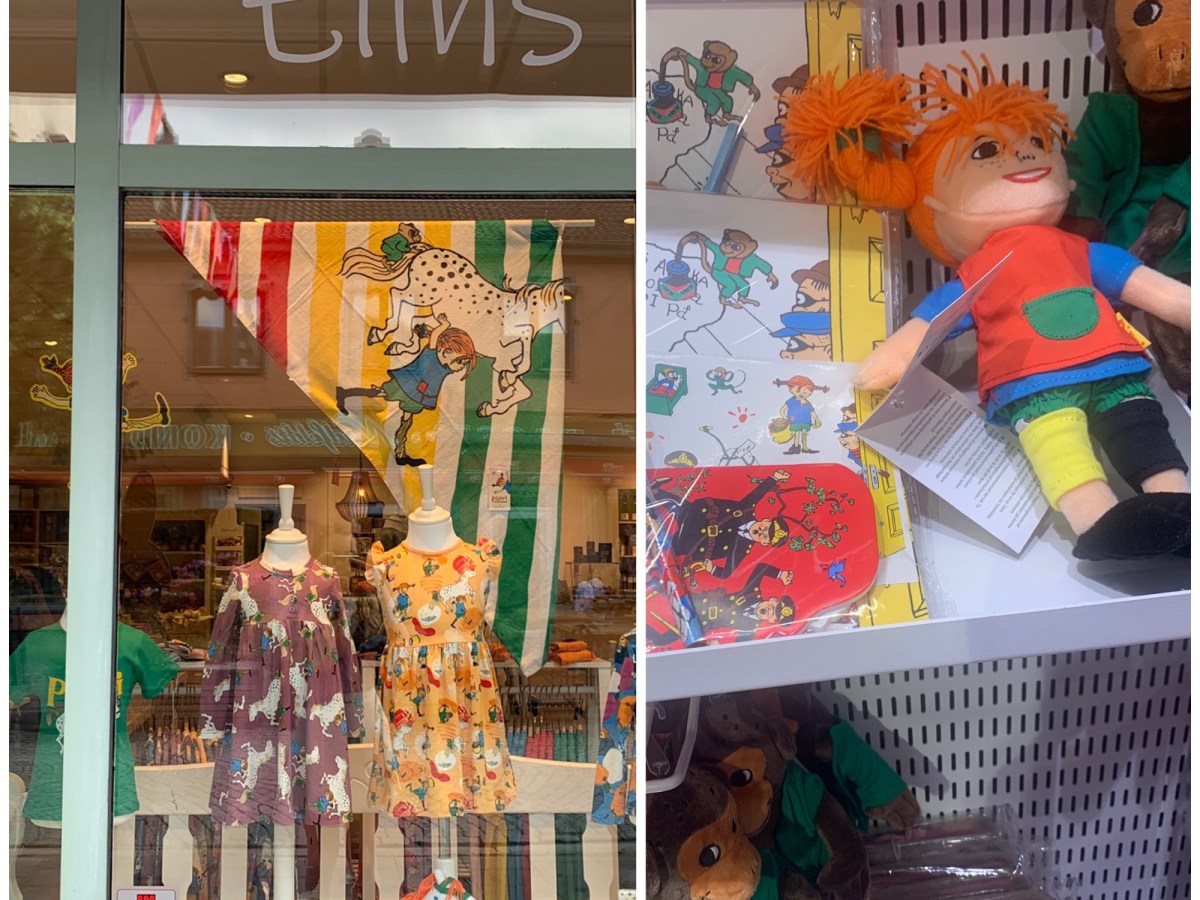
Favourite souvenirs from Sweden: Pippi and Astrid Lindgren characters merch
In Sweden, Pippi Longstocking objects can be a lovely souvenir. Pippi is on sweets and various children’s items a well, as sometimes other Astrid Lindgren’s characters, which have also cherished cultural impact as a part of Swedish identity.
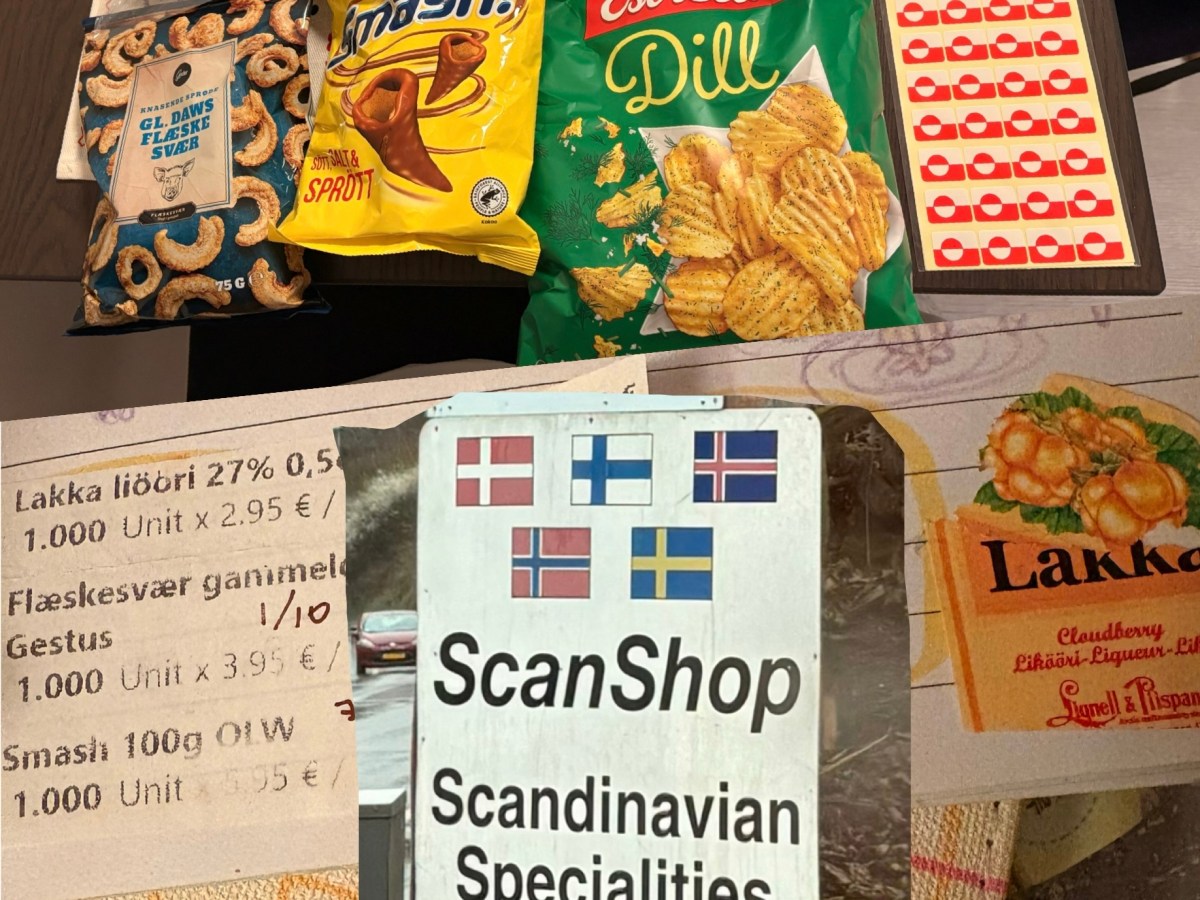
ScanShop: Nordic supermarket in Luxemburg
I visited Scanshop, a supermarket for Nordic expats in Luxembourg and Belgium. It offers a wide range of Scandinavian food products, including rye bread, fish, and sweets, alongside flags and tableware.