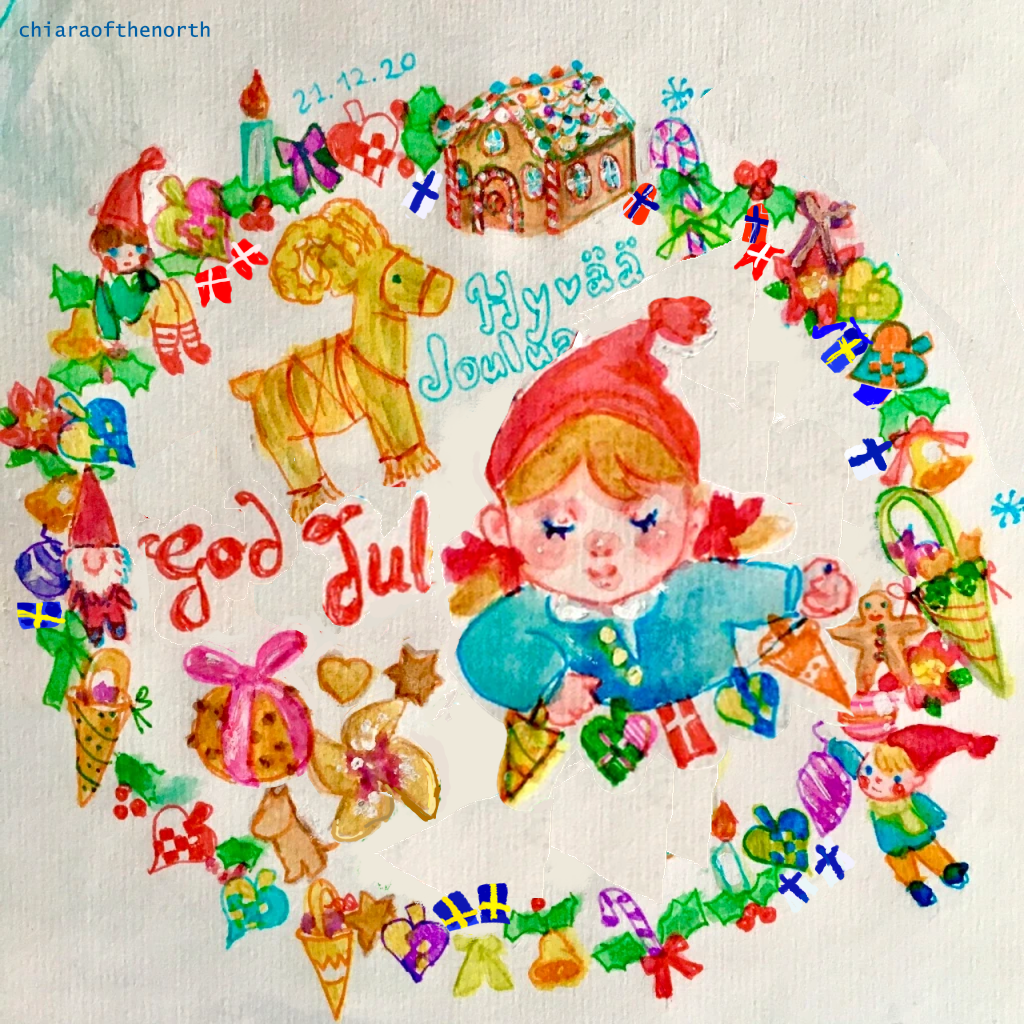
Nordic countries share quite a lot Christmas customs and symbols, whether it is Christmas tree decorations, gnomes and elves instead of Santa Claus, and of course spiced cookies. Let’s see what a Scandinavian Christmas looks like!
1. Scandinavian Santa Claus: Gnomes and pixies
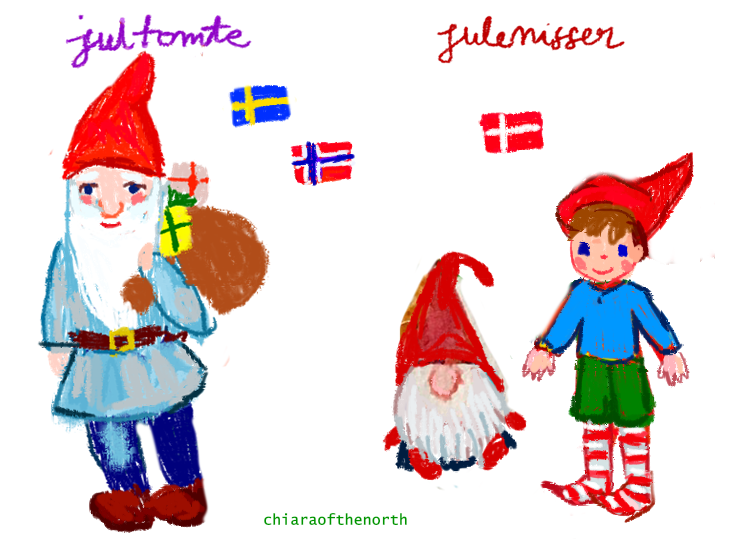
In Scandinavia, the main Christmas figures are a (santa Claus-ish looking) gnome and nisser, pixie-like creatures:
| Giftbringer | portrayed as | |
| Sweden | Jultomte | gnome |
| Denmark | Julemanden+Julenisser | santa+pixies |
| Faroes | Jólamaðurin | santa |
| Norway | Julenisse | gnome |
| Finland | Joulupukki | santa (originally the Yule goat) |
| Iceland | the 13 Jólasveinarnir | old, naughty elves |
According to the tradition the Jultomte lives in farms and takes care of the household while the family is sleeping, Bringing presents if the family treated him and the farm animals well. In Norway, an adult disguises himself as Julenisse and gives out presents to children, often greeting them by saying Er det noen snille barn her? (“is there any good child here?”).
In Denmark (Jule)nisser are Christmas pixie/elf-like creatures, believed to live in barns and attics. Children leave rice pudding for the Nisser, who find it delicious accoring to popular belief. Julemanden (literally Christmas man) is more similar to the Santa Claus everybody knows, and arrives on a sleigh with reindeers and nisser as helpers.
Initially the gift bringer was the Julbocken/Julebukk goat mentioned above, so in Finnish Santa Claus is called Joulupukki…
2. Christmas Decorations: straw goats, pleated hearts and flags
Yule Goat
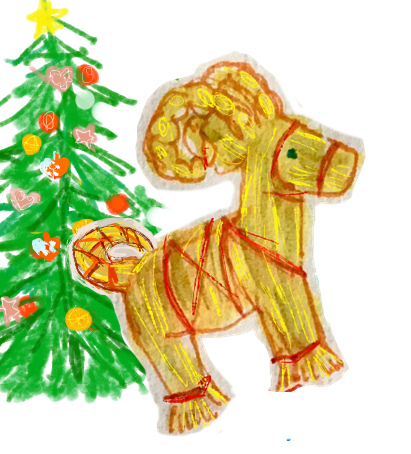
A common Christmas symbol and decoration is a straw goat, Julbocken/Julebukk, often put under the Christmas tree. It goes back to the Viking times and it was a household protector, representing Thor’s magical goats, who lead him in the night sky. Bigger versions can be found in town centres – this tradition started in the Swedish town of Gävle in the 60s, and every year this traditions is repeated with a Julbock as tall as around 10 metres.
Christmas hearts
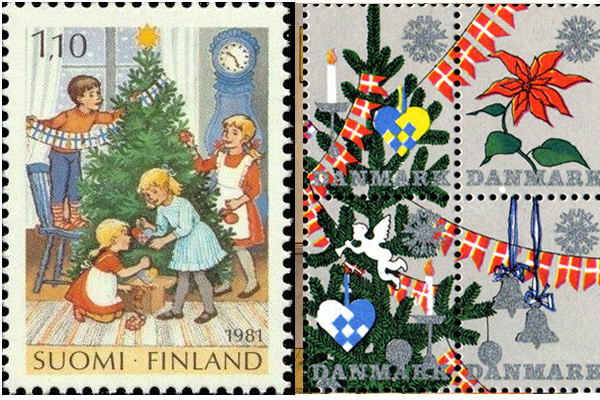
Julehjerter are pleated hearts, very common and in Denmark and Norway (Norwegians call them Juletrekurv “Christmas tree baskets”), but also present in other Nordic countries as a typical Christmas symbol. Children make them with their family with paper of different colours, although they are often red and white.
Flag garlands
Decorating Christmas trees with flags originated in Denmark and it can be seen in all Nordic countries, although it was more common in the mid-20th Century. A survey showed that one in three Norwegians thinks flag garlands are suitable Christmas tree decorations, while only 3 % and 5 % is of the same opinion in Sweden and Finland. Nonetheless, I bought a Christmas tree flag ornament in Sweden…
3. Christmas treats
Gingerbread cookies
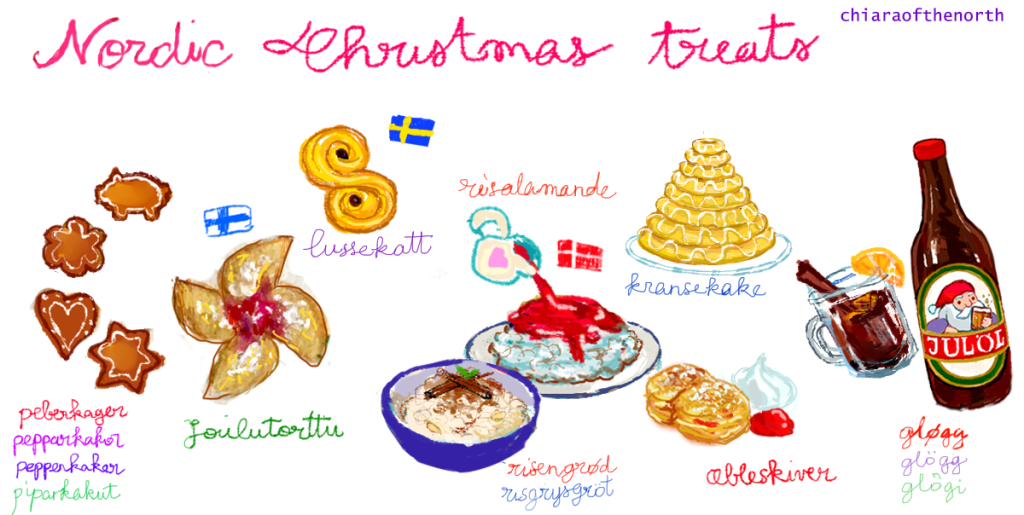
Baking gingerbread cookies is a typical Christmas time family activity: Pepparkakor in Swedish, Pepperkaker in Norwegian and Peberkager in Danish, piparkakut in Finnish are a common and popular Christmas treat all over the Nordics.
Rice porridge
Hiding an almond in rice porridge with a prize for who finds it is a common things in Nordic countries. in Sweden the rice pudding is called risgrysgröt. In Denmark you have the Risalamande (from French ris à l’amande, just because French sounded fancy), It is served cold with a warm cherry sauce, kirsebærsovs. The lucky person who finds the entire almond in it wins a marzipan pig!
National Christmas treats
| country | name meaning | Norway | |
| Sweden | Lussekatter | ‘Lucia cats’ | saffron S-shaped buns, (supposed to remind a cat shape) |
| Denmark | Æbleskiver | ‘apple slices’ | round pancakes, served with jam and powder sugar. Apples are not an ingredient! |
| Finland | Joulutorttu or tähtitorttu | ‘Christmas pastry’ or ‘star pastry’ | puff pastry filled with plum or apple jam |
| Iceland (known as Biskvi in Sweden) | Sörur (Sarah Bernhardt pastries) | chocolate covered cookies, common in the Nordics but typical of Christmas in Iceland |
Kransekage/kransekake ‘crown cake’ is an almond cookie rings tower, typical of festive occasions in general in Norway, but especially eaten on New Year’s Eve in Denmark!
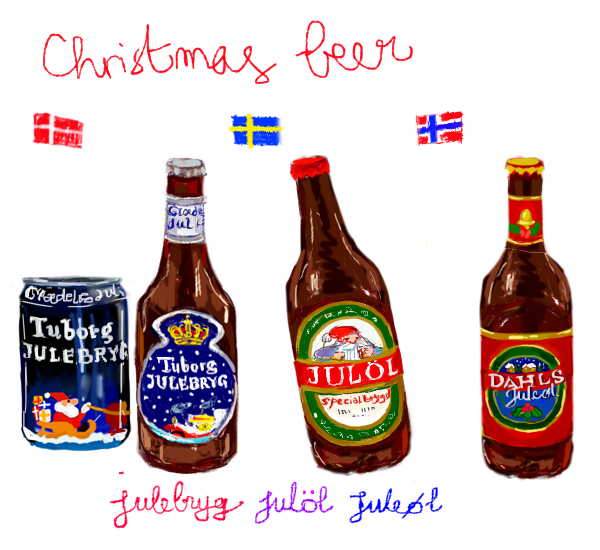
Mulled wine, glögg, is a classic, with spices as cinnamon, cardamom and ginger, but you can also drink Chistmas beer! It is darker and spicier than the usual ones.
God Jul!
more articles
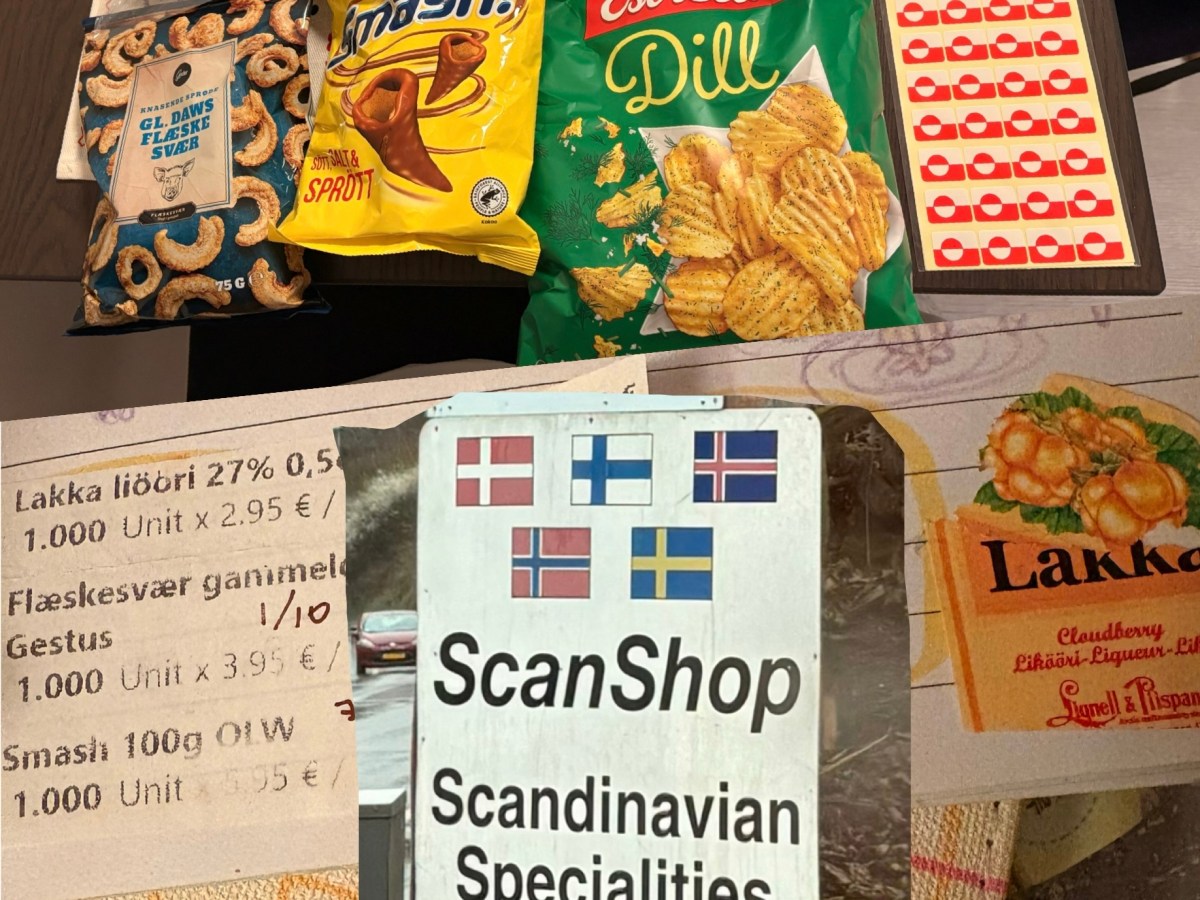
ScanShop: Nordic supermarket in Luxemburg
I visited Scanshop, a supermarket for Nordic expats in Luxembourg and Belgium. It offers a wide range of Scandinavian food products, including rye bread, fish, and sweets, alongside flags and tableware.

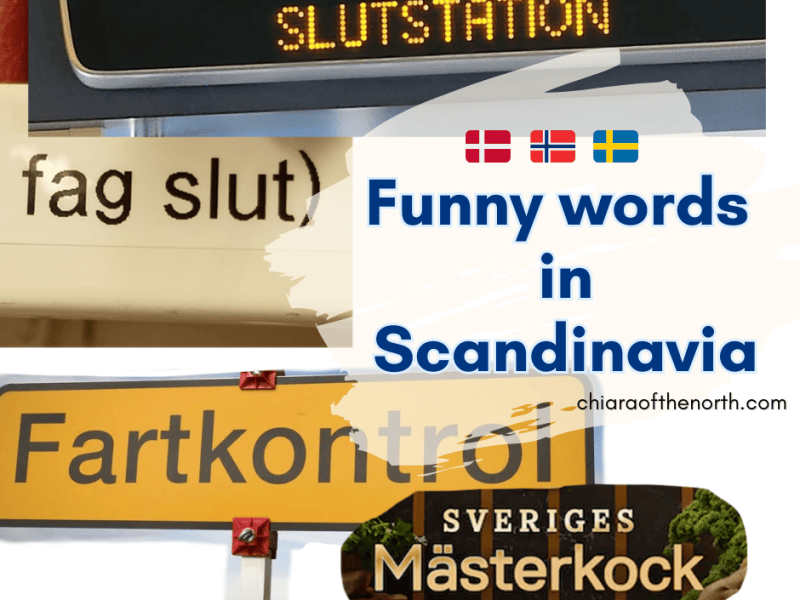
A collection of (unintentionally) Hilarious False Friends in Nordic languages
Take a train in Scandinavia to reach a “slutstation” or see”fartkontrol” signs while driving. Kiss and killing also mean something you were not expecting!
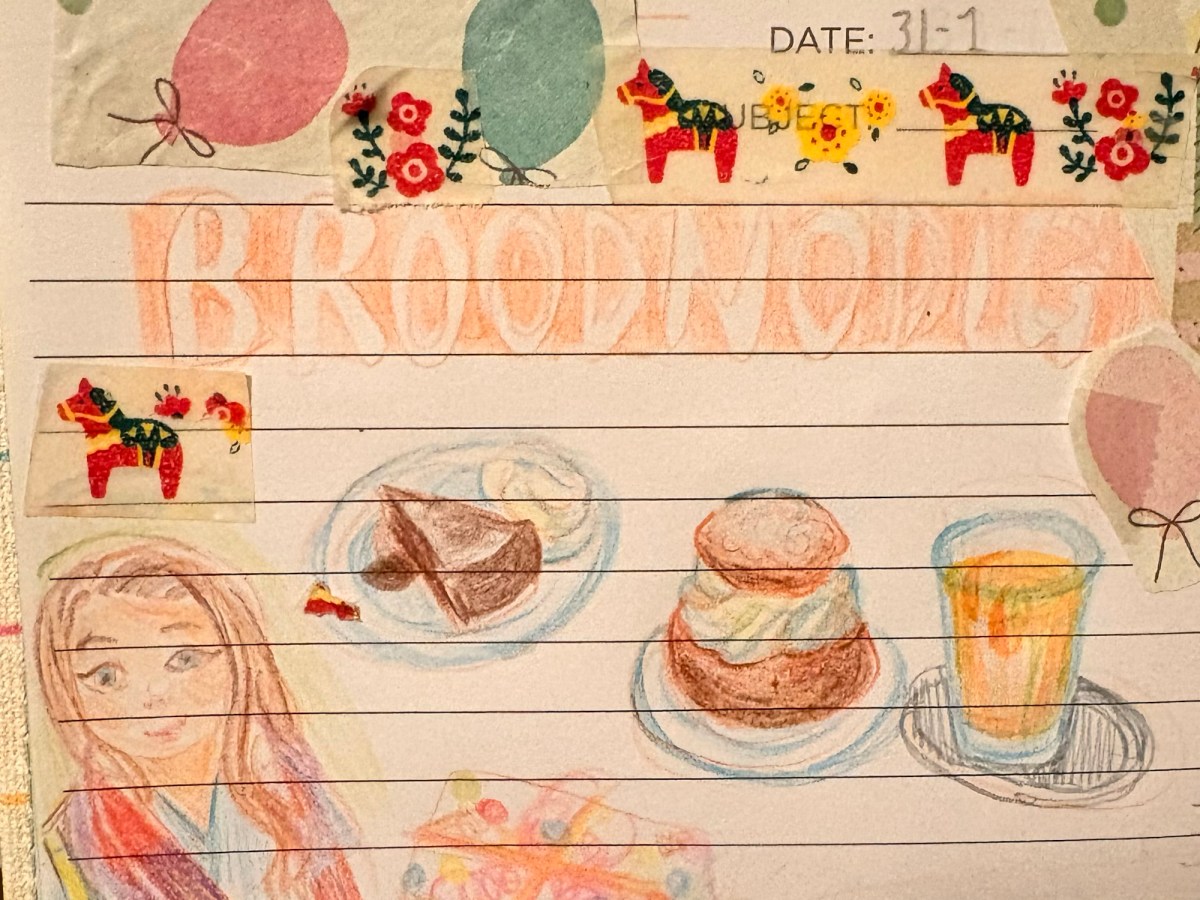
Swedish Café in Utrecht: Broodnodig
In Utrecht, the cafe Broodnodig serves Swedish pastries and cakes as cinnamon and cardamom buns, kladdkaka, smulpaj and Scandinavian seasonal treats as semlor and saffron buns.


7 thoughts on “Scandinavian Christmas: symbols, sweets and gift bringers”