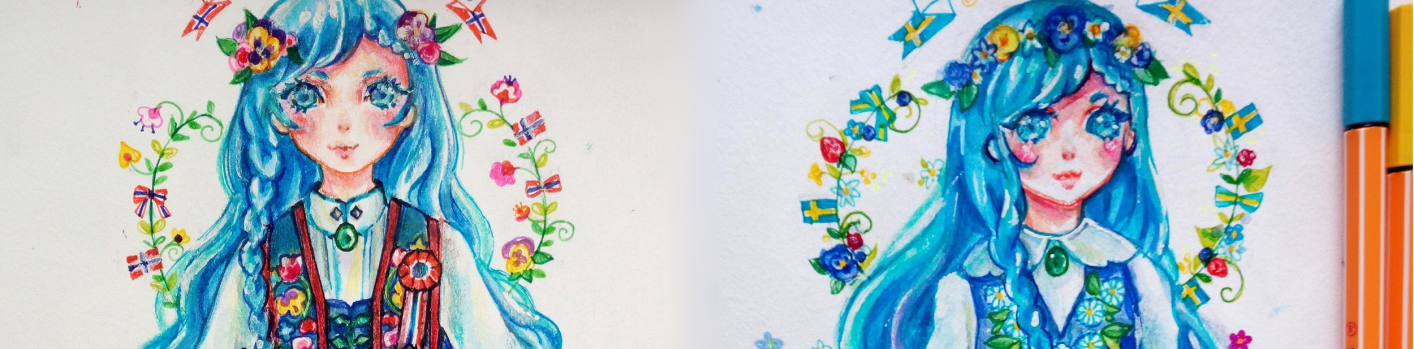
Bunad: Norway’s iconic folk costumes

The Norwegian national costume, to be seen in all its glory on 17 may, and its old but not so old tradition

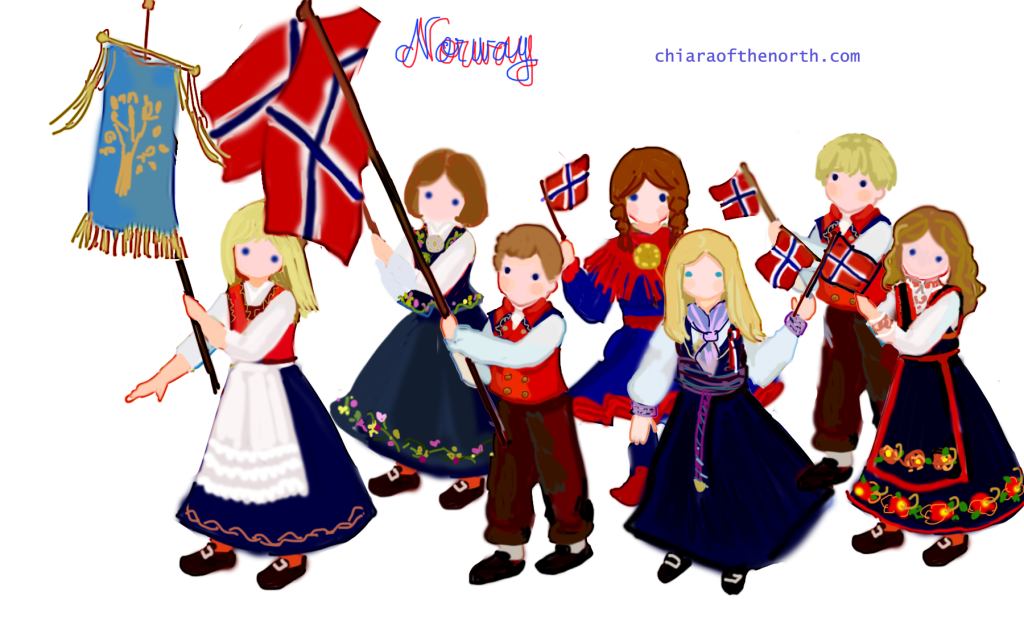
A bunad (plural bunader) is the Norwegian national costume. Bunads are among the most beloved folk costumes in the world, and the most worn in Europe. Other Nordic countries have their own folk costumes as well, but they are much less common and strictly connected to folk traditions as folk dances. Read about Swedish folkdräkter.

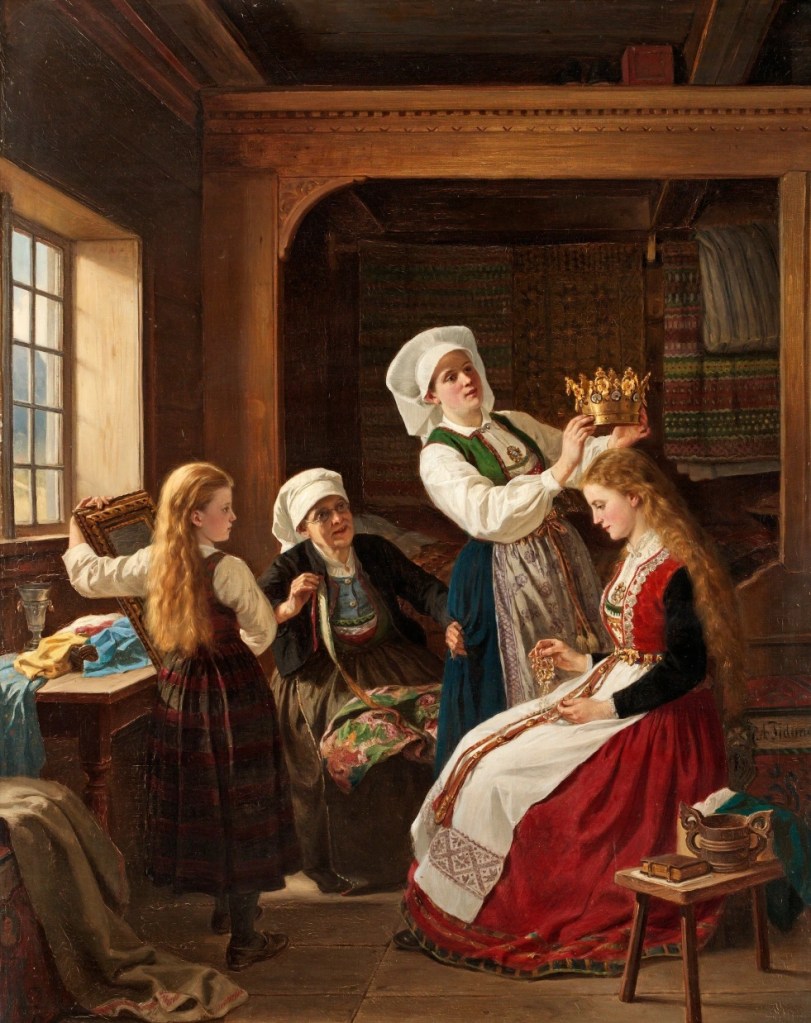
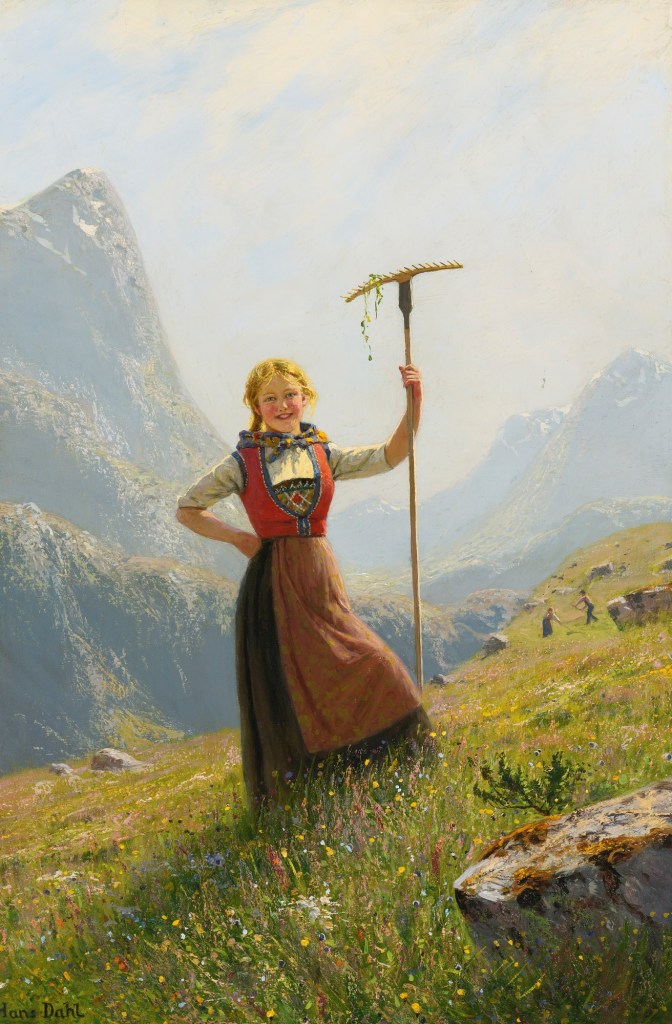
In Norwegian there’s a distinction between a Bunad and a folkedrakt (“folk costume”) , with the latter specifically used for costumes from the past. The word bunad, from Old Norse búnaðr began to be used in the 20th century, as the national costumes gained popularity with the rise of the National romantic movement in the 19th century, with artists as Adolph Tidemand and Hans Dahl depicting them.
Why bunads are so popular in Norway

After national romanticism, the use of bunads increased in the 1920s, but it was after the war that the national dress became even more popular, as a symbol of free and indepent Norway. First and foremost on the national day, and then for any festive occasions – as christenings and weddings. It is now officially seen as a gala attire, which can be for instance worn at the opening of the Stortinget, the Norwegian parliament. The best day to admire Bunads remains 17th May (Norway’s National day).

Young adults traditionally receive their bunad on their confirmation, as 15-year-olds, and it will last their entire lifetime. Crown princess Alexandra had hers sewn by her grandmother the Queen for this occasion. Purchasing a bunad costs thousands of euros/dollars, although lately low cost “China bunad” emerged.

Around 80% of Norwegian women owns a bunad. It is less common for men to wear it, with 20% having one, but the number is rising. In 1999, Pakistani-born Stortingen member Rubina Rana wore a bunad as the first person with migration background doing so in a 17 mai parade.

The diverse bunad designs
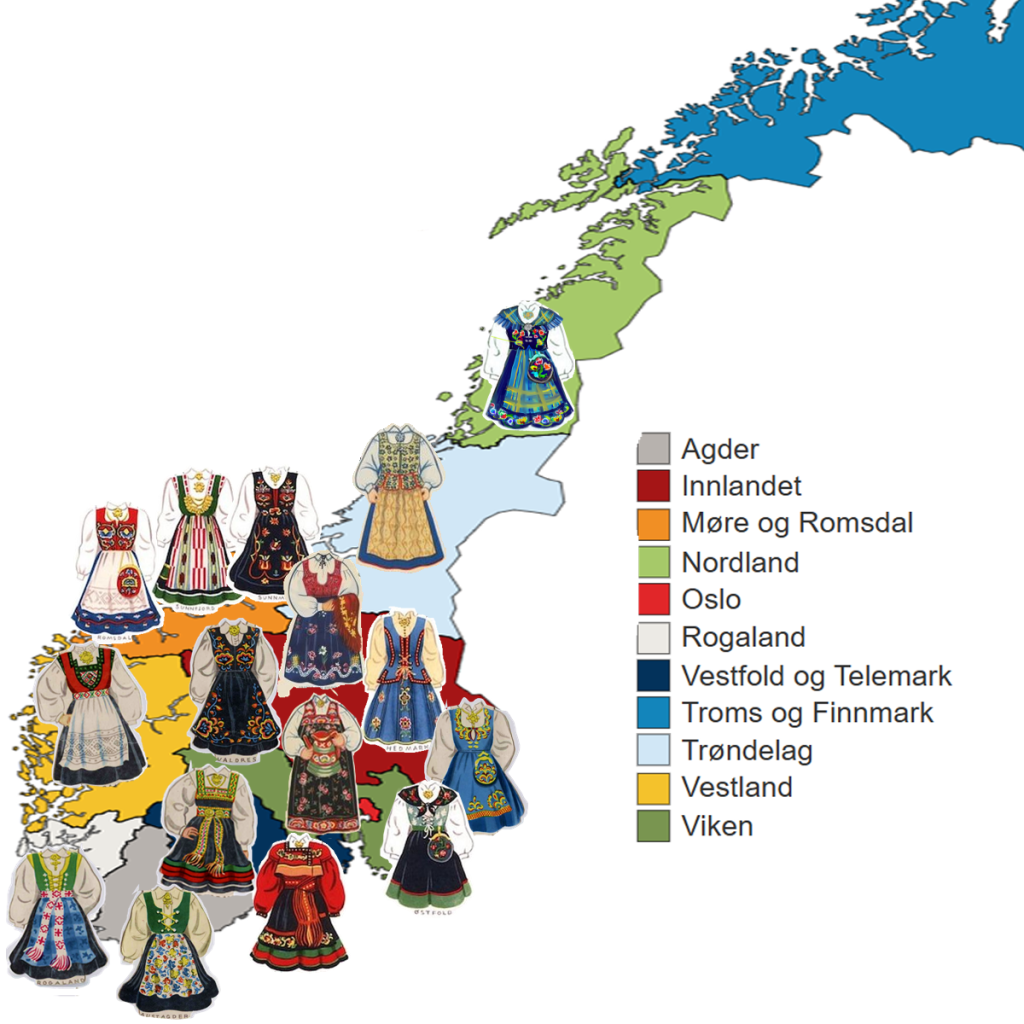
Norway’s fylker (counties) with some bunads from them

There are around 450 bunads in Norway, with each district having its own designs. They can be grouped into 5 categories of Bunads depending on how they were created, from traditionally in use to entirely recounstructed.

At the beginning of the 20th century Norway had just become fully independent and many were trying to promote Norwegian traditions and make the national identity stronger. In these years Bunads were being redesigned from old costumes with Hilda Garborg as leading figure for the movement. She published a very successful book called Norsk Klædebunad in 1917.

Bunads with the oldest tradition

The Hardanger bunad, was established in its use and is retained as the most Norwegian, depicted in art and easily recognisable. Setesdal, Hallingdal and Telemark are the other districts with the oldest and most established bunad tradition.
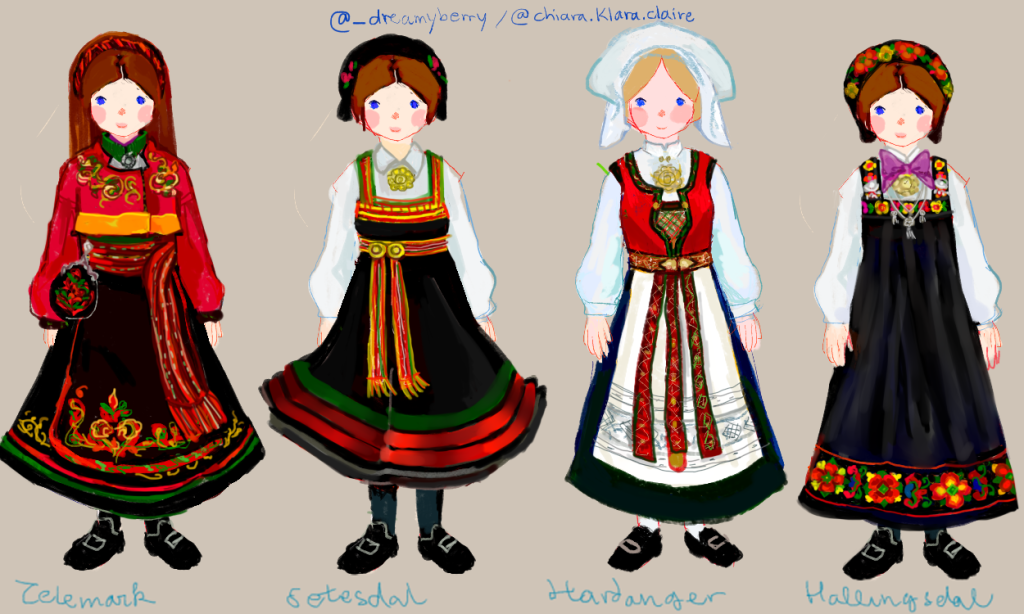
More recent bunads

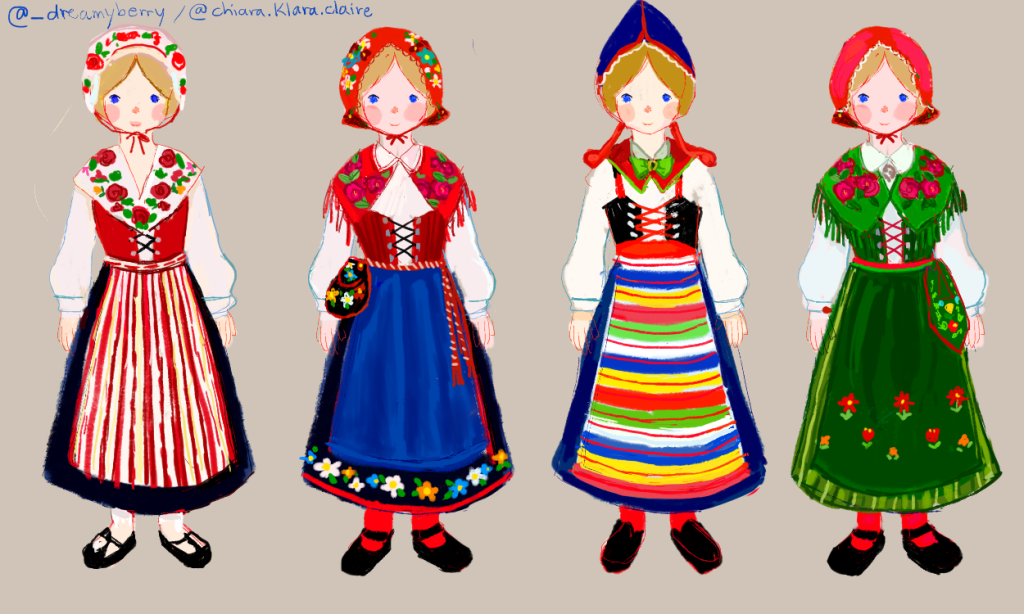
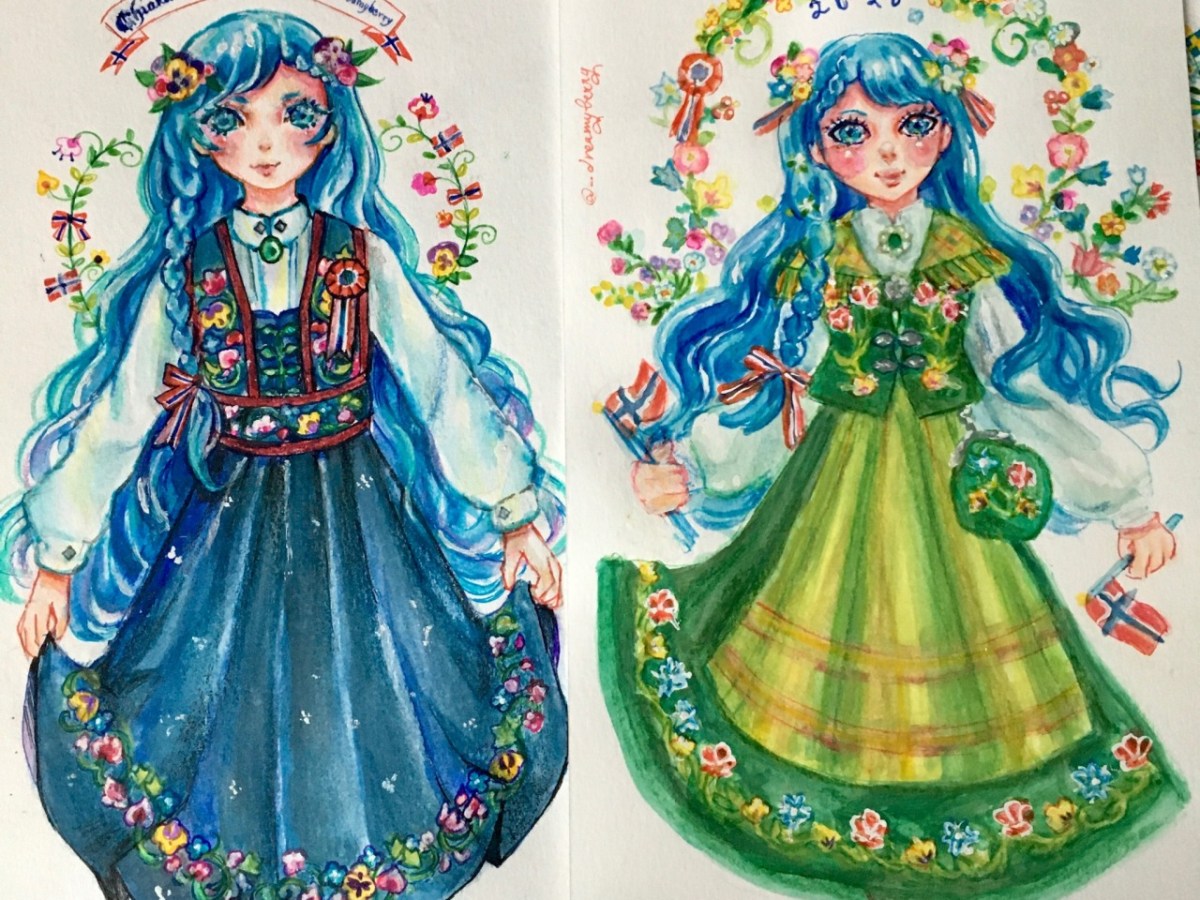
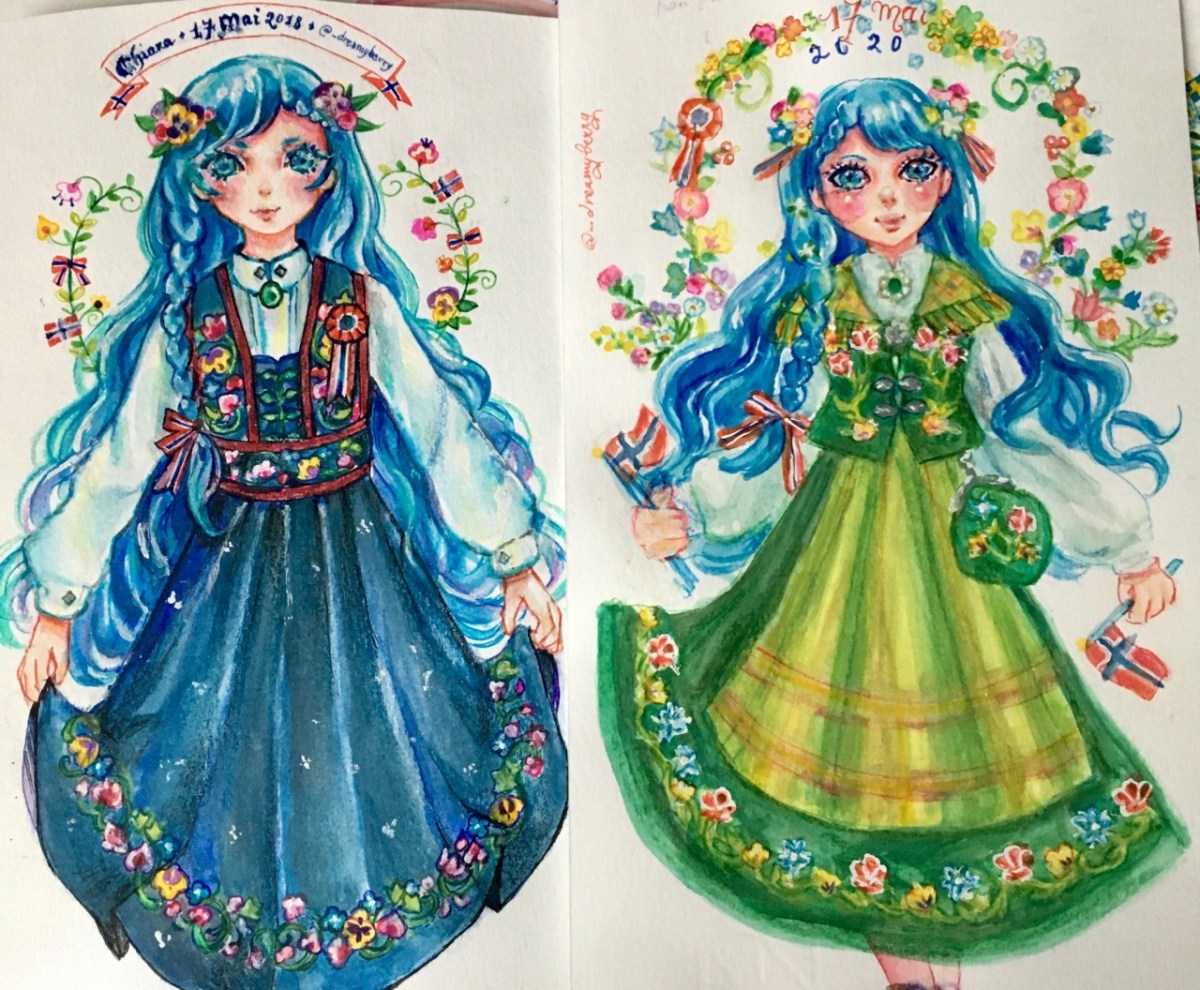
Flower embroideries are very common. Present among others in the Nordland bunad (considered by many Norwegians the prettiest bunad) and Gudbrandsdalen bunad. The same design can also come in different colours, with the Nordland bunad existing both in green and blue and the Trøndelag and Romerike bunads in blue, red and green.
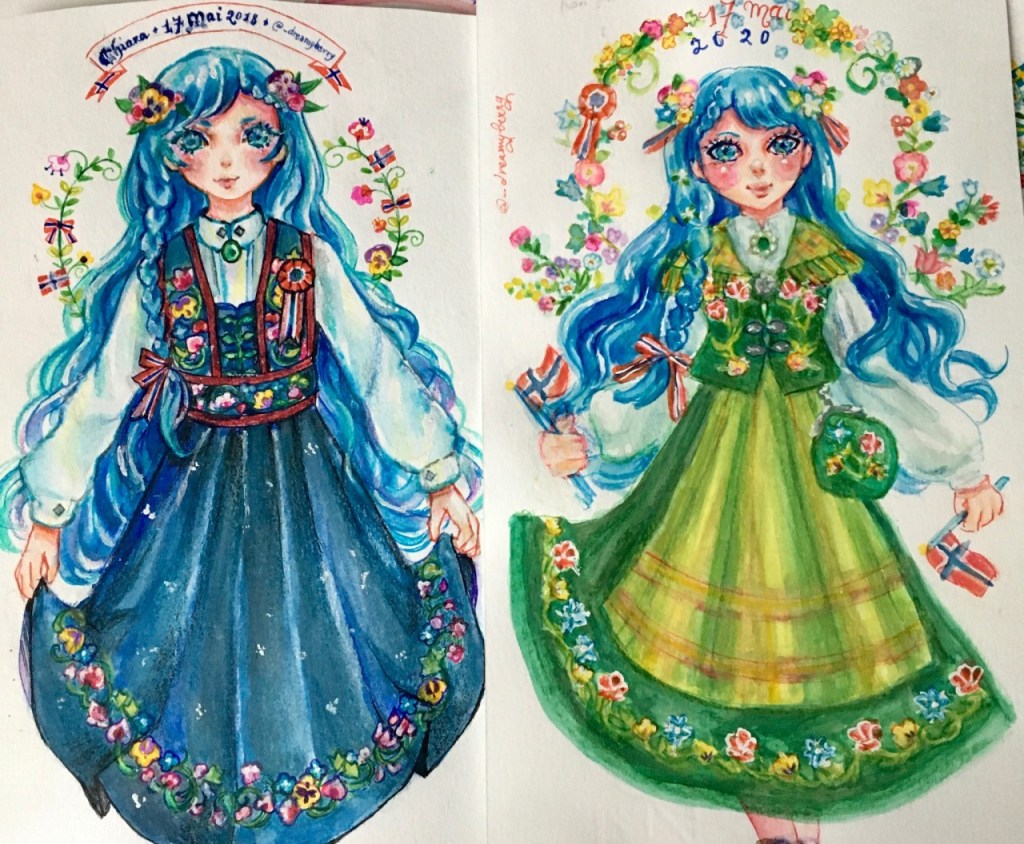
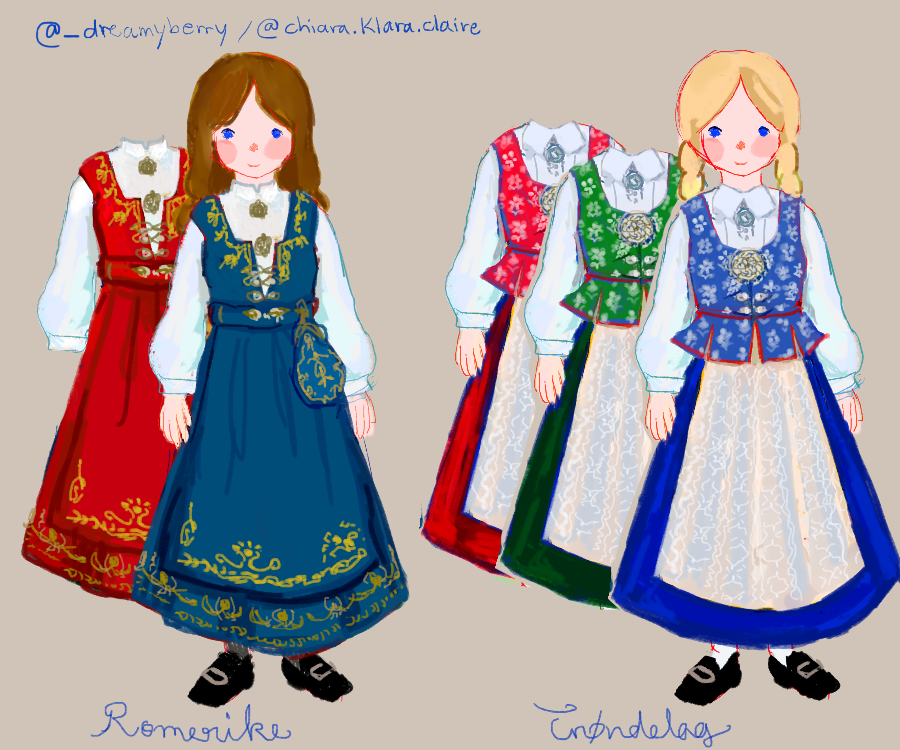
Left to right: my flower-themed original character with by Gudbrandsdal and Nordland bunads. Romerike (South-East Norway, near Oslo), Trøndelag (North Norway)

Accessories of the Bunad outfit

Part of the bunad outfit is Sølje, hand-made silver or gold jewellery, which is very important and gets bigger with older one gets. Silver was believed to have magical powers!

Headdresses, as bonnets, used to be important as they indicated an individual’s social or marital status, but big ones as the hardanger bonnet are now scarcely used.

An elaborate with bridal crown can be used for a traditional Norwegian wedding, it was a sign of virginity in connection to the Holy Virgin. The bridal crown tradition goes as far back as the Middle Ages. Like bunads, there are many regional variations, which you can see on Whigofwhimsy.
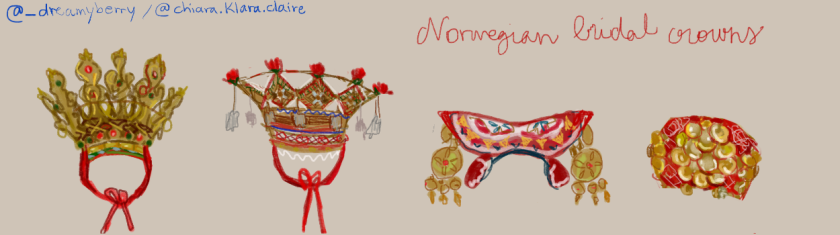
The silver crown, present in many regional variations, Hardanger perlekrune, Voss, Setesdal

Sources: Store Norske Leksikon
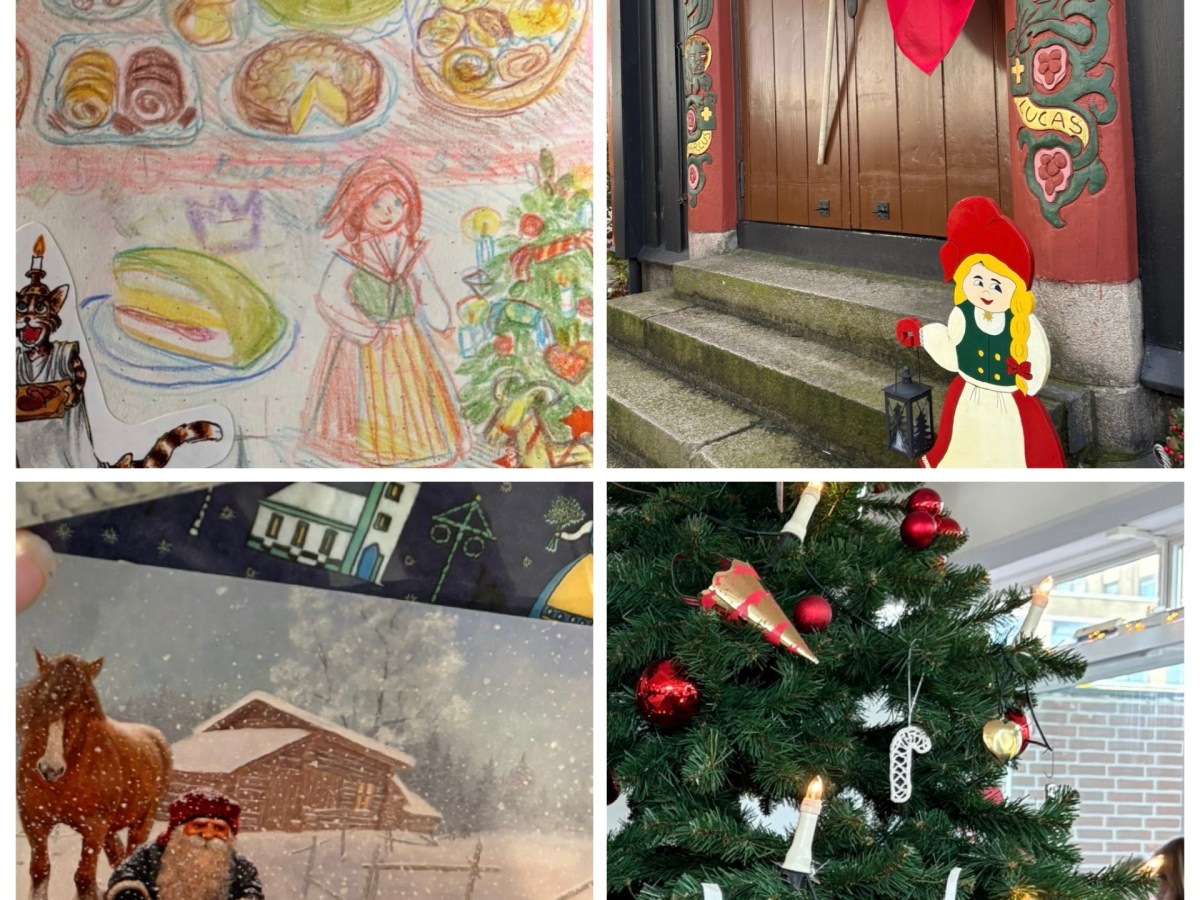
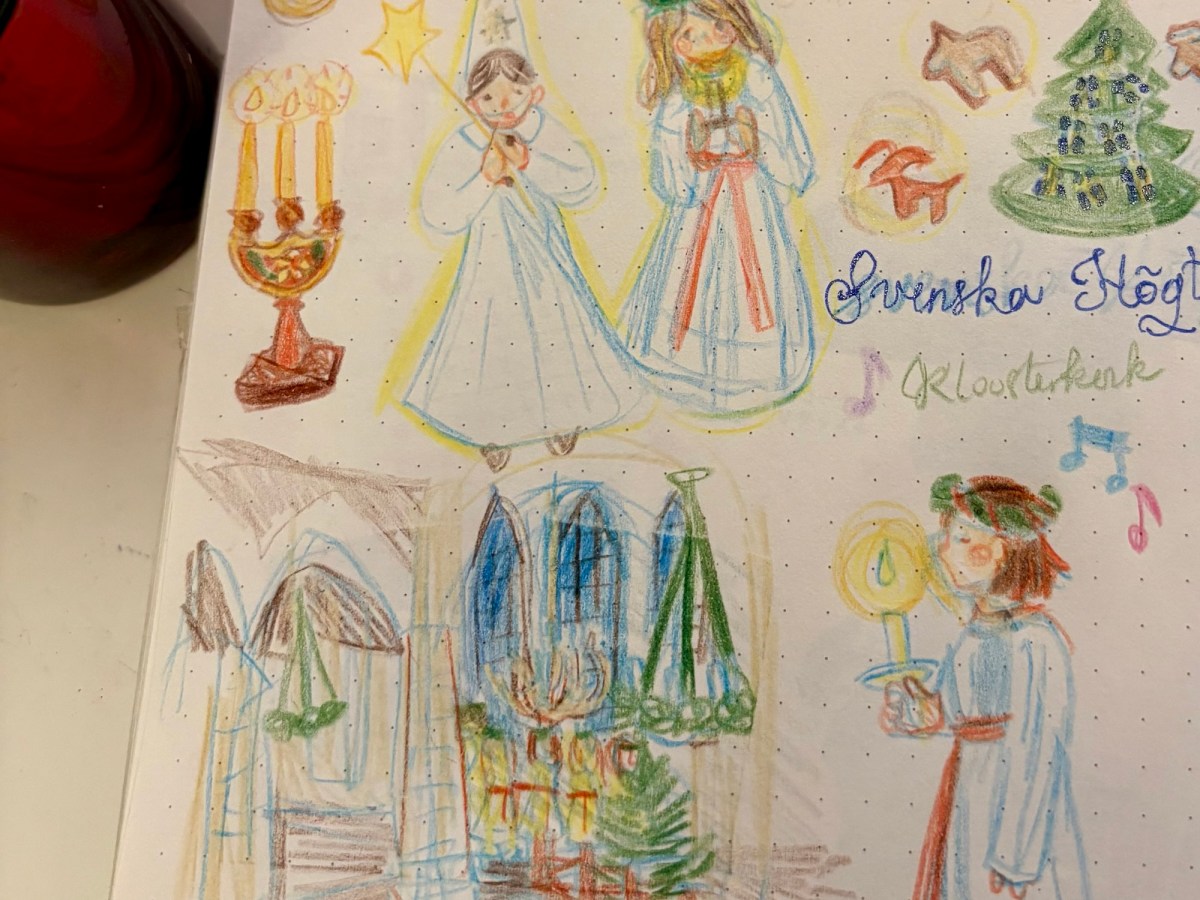
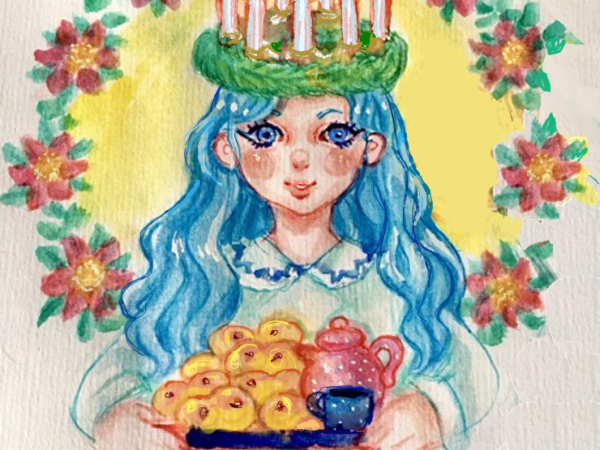
7 fun facts about Lucia, Sweden’s pagan saint

Lucia brings light in the darkest night of the year and is a mix of pagan and christian traditions. It is celebrated in Scandinavia with processions, saffron buns and church concerts.
Days to celebrate Finnish culture

Days on which the Finnish language, suomenkieli, and culture is celebrated in Finland, on birthdays of Finnish poets and artists

Finland celebrates its language and culture during special days chosen for birthdays of Poets and artists. Most are flag days in the country, on which the Finnish flag Siniristilippu (“blue cross flag”) shall fly.
Runeberg day – 5 February

In Finnish Runebergin päivä, it is the birthday of the national poet Johan Ludvig Runeberg (1804–1877). The highlight of the celebration is eating Runeberg’s torte (Finnish: Runebergintorttu; Swedish: Runebergstårta).

Runeberg lived in Porvoo/Borgå and although he is considered the national poet of Finland, he only wrote in Swedish! His Vårt land (“Our Land”, Maamme in Finnish) became an unofficial Finnish national anthem.

Runeberg ate the torte now carrying his name everyday, baked by his wife Fredrika. it is an almond and rum flavoured pastry with raspberry jam, and a ring of icing on top. You can find it in shops from the beginning of January until 5 February. The exception to this is Runeberg’s hometown Porvoo, where you can enjoy the torte the whole year round!

Kalevala day – 28 February

In Finnish Kalevalan päivä, it also known as Finnish Culture Day because of the central role Kalevala has as the national epic of Finland and Karelia. Elias Lönnrot (1802 – 1884), a Finnish physician and philologist, compiled it in the 19th century by collecting traditional Finnic oral folklore in Finland, Karelia, the Kola Peninsula and the Baltic countries.
Kalevala means land of Kaleva, and its main character is Väinämöinen, a sort of godlike shaman with a magical voice, and it tells about the hero’s search for a wife.
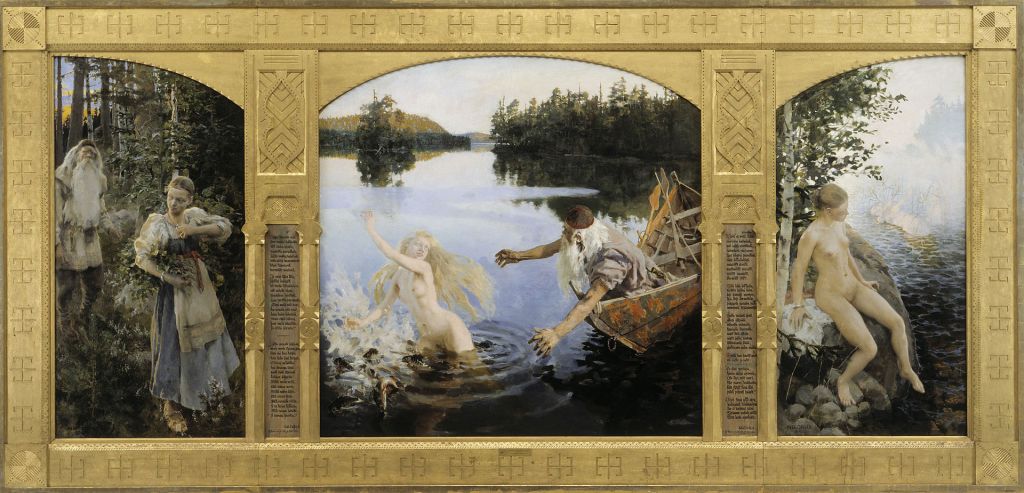
As a symbol of Finnish culture and history, Kalevala has inspired many Finnish artists, among others the classical composer Jean Sibelius and the painter Akseli Gallen-Kallela.

A. Gallen Kallela, Aino Myth, Triptych, 1891

Something as old and quintessentially Finnish can be described as kalevalainen “Kalevala-esque”!

Finnish Language day – 9 April

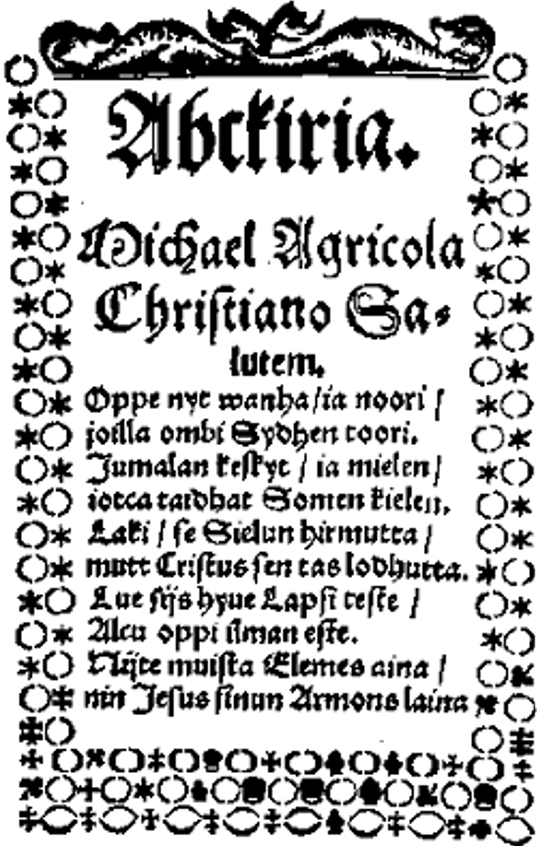
On 9 April Mikael Agricola, the “father of literary Finnish” died, and Elias Lönnrot was born. For this reason it is celebrated as Finnish language day, suomen kielen päivä.

While the previously mentioned Elias Lönnrot compiled the Kalevala, Mikael Agricola was a Bishop and scholar who created Finnish as a written language in the 1500s, with all its lovely double vowels.

Agricola’s role for the Finnish language was similar to that of Luther for German. Both translated the bible into their people’s language. He did that with other Finns while living in Wittenberg, Luther’s town. Agricola also wrote the Abckiria (ABC Book), the first piece of literature in Finnish.

Other important days for Finnish culture

  • 3 February – Day of Finnish architecture and design, Arkkitehtuurin ja muotoilun päiviä. It is the birthday of Alvar Aalto
  • 12 may – Day of Finnish Identity, suomalaisuuden päivä, birthday of the statesman Johan Vilhelm Snellman
  • 9 August – Tove Jansson day, Since 2020 this day, Tove Jansson’s birthday, is a flag day in Finland, celebrating Finnish art. Tove Jansson was a painter and illustrator, most known as the creator of Moomintrolls. Her novels and other written work have been translated into more than 50 languages
  • 8 December – John Sibelius day, Birthday Jean Sibeliuksen päivä/ also day of Finnish music

Nordic findings in japan

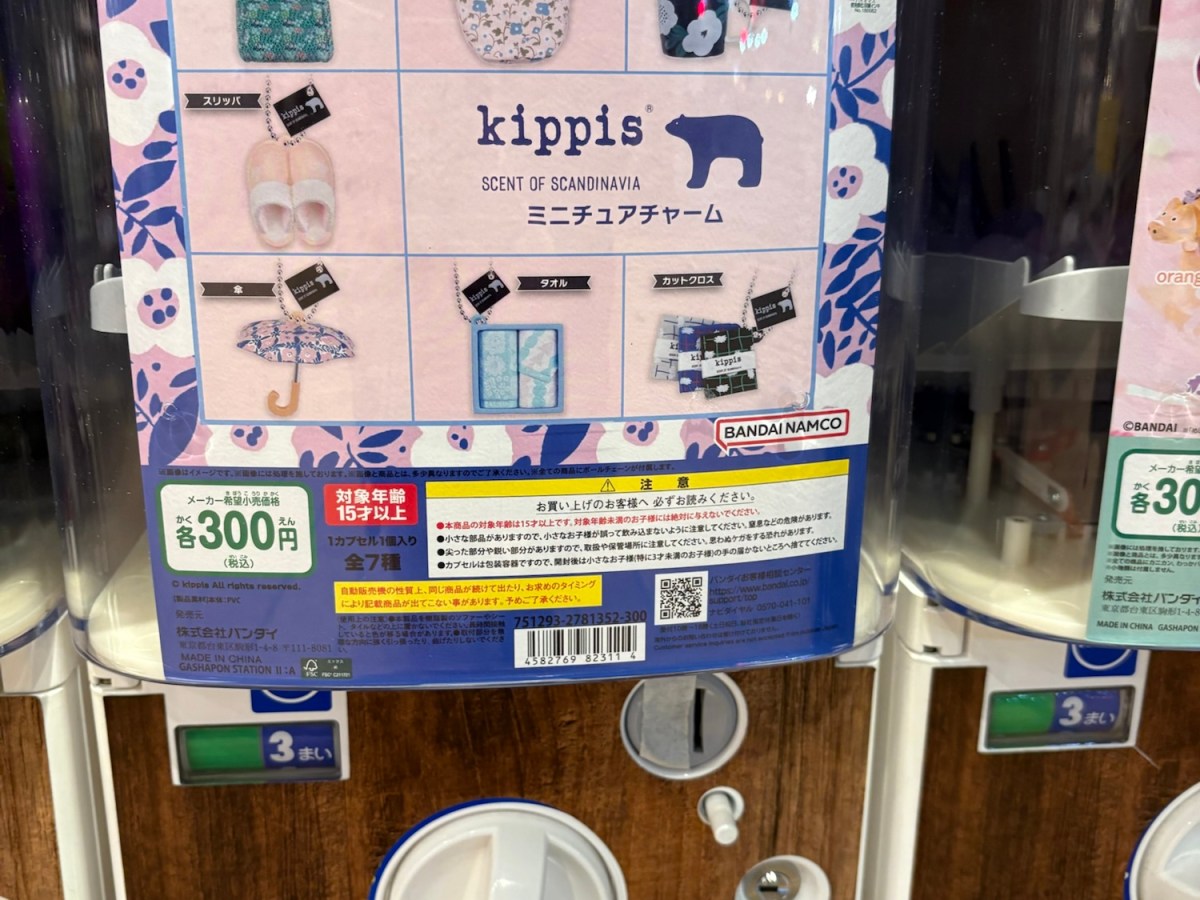
Nordic culture experienced in Japan: Moomins, Dala horse stationery, Nordic-inspired foods and books about Scandinavia seen by the Japanese.

How Nordic are Baltic countries

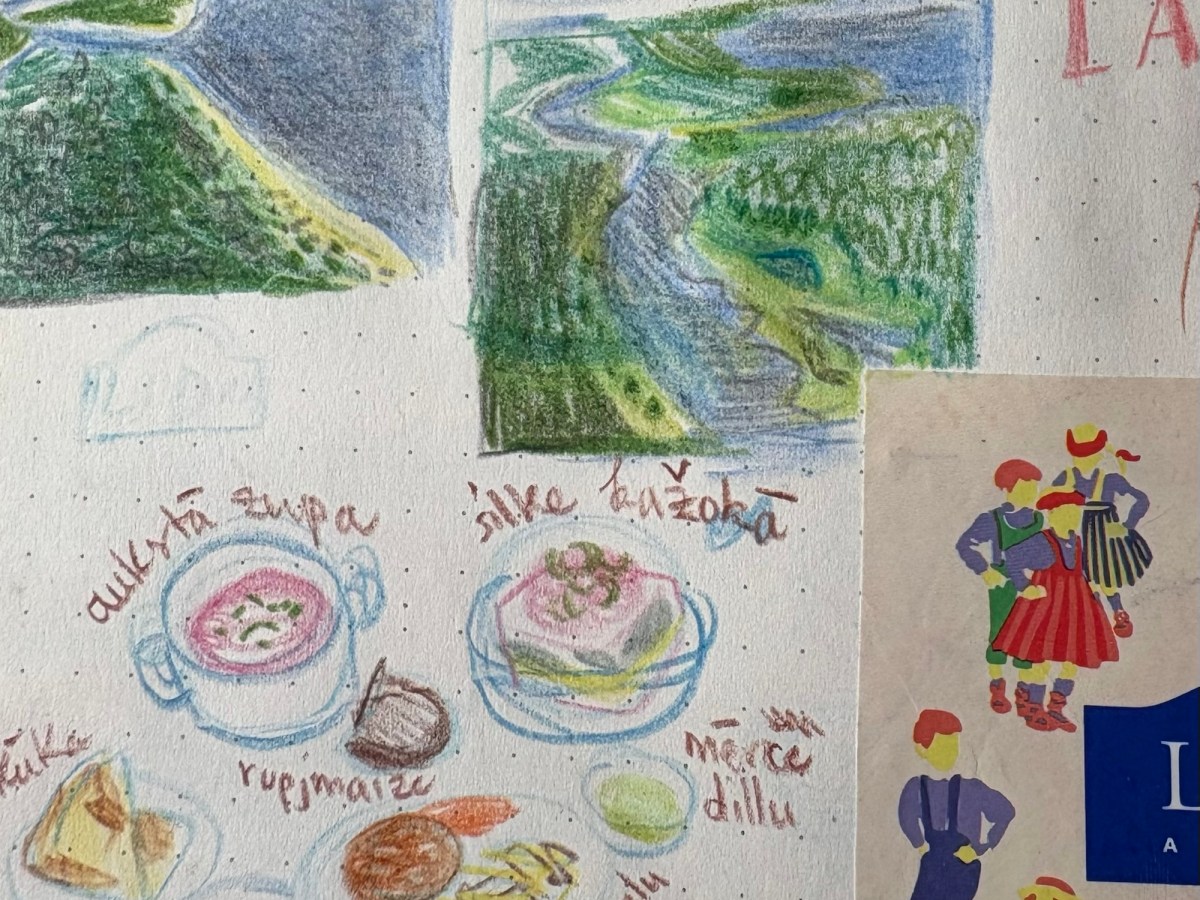
Are Baltic countries Nordic at all? I explored Latvia and Estonia, noting their ties to Nordic culture, from languages to Rye bread and Midsummer.

Sweden’s sweet calendar: kanelbullensdagen and other pastry-themed days

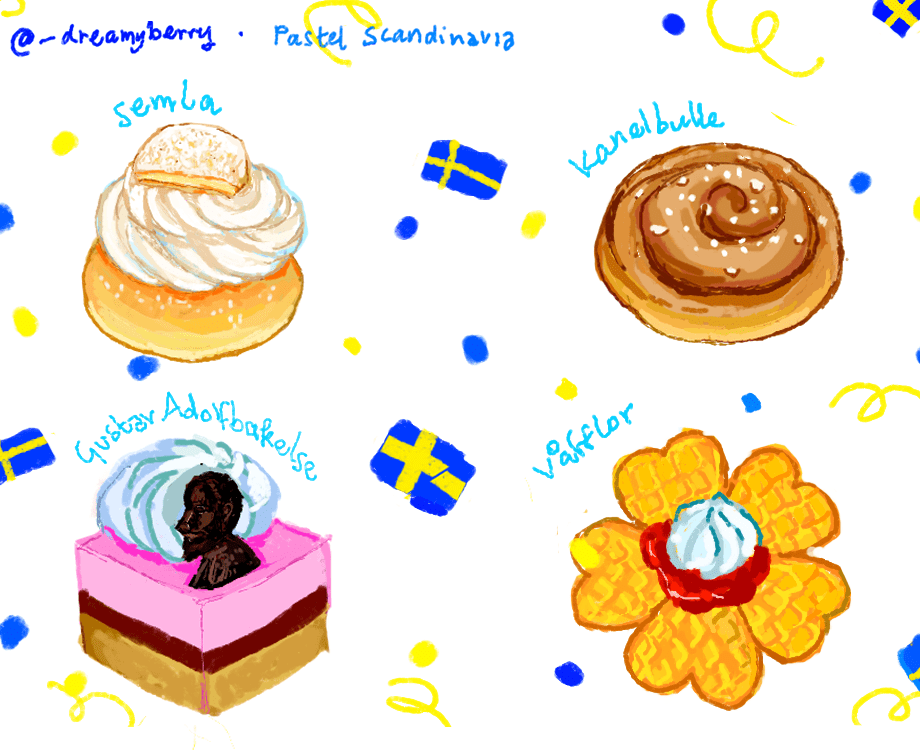
cinnamon buns, waffles, semlor and more: there is a special day dedicated to each in Sweden

Soon it is time to eat semlor pastries in Sweden! Swedes have a few days dedicated to eating a specific thing. Whether it started to honour a king or just find an excuse to bake, time to mark some days on your calendar and join them in celebrating Swedish confectionery!

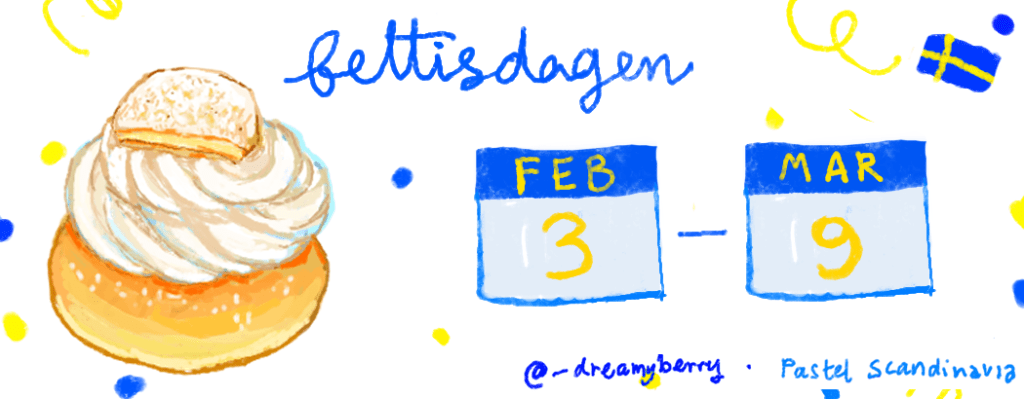
Semlor: February/MarchFettisdagen

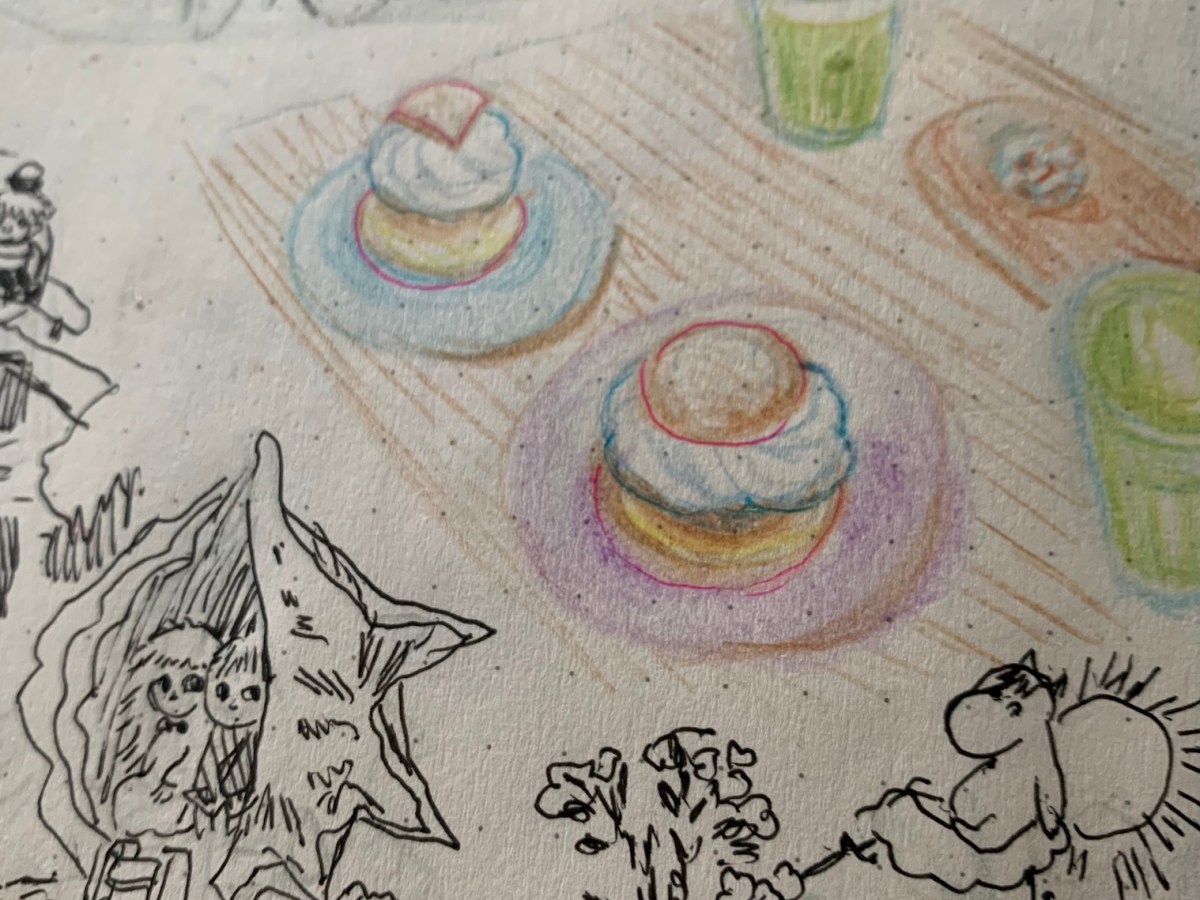
On Shrove Tuesday (fettisdagen, fet tisdag = fat Tuesday), 21 February in 2023, tons of of semlor are purchased in Sweden. A semla is a cardamom-spiced bun with almond paste and whipped cream. A perfect pastry you’d want to devour before the fastening time preceding Easter starts! Semlor are eaten in Swedish Finland too, but called fastlagsbulle there, and Fettisdagen is called fastlagstisdagen. Slightly different versions of semlor exist in the other Nordic countries too, and they are usually eaten on Shrove Monday instead: Bollur in Iceland, Fastelavnboller in Denmark/Norway. Unlike the Swedish semlor, they often have chocolate on top…

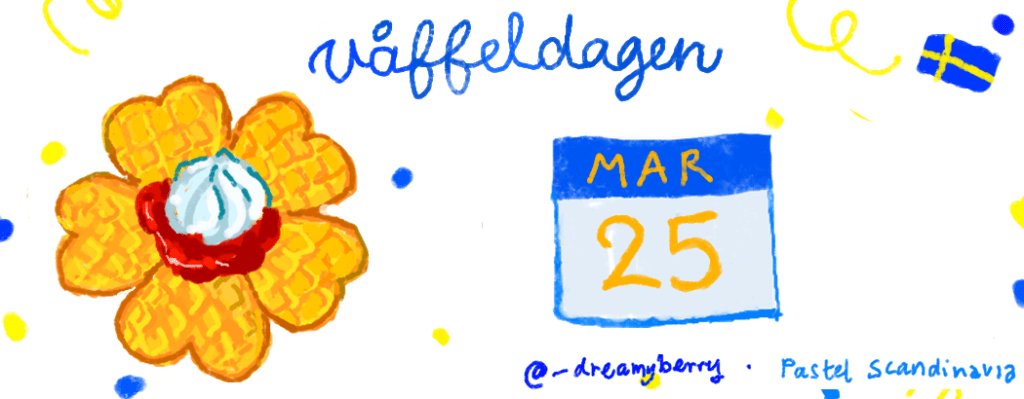
Waffles: 25 March Våffeldagen

The christian feast of the Annunciation, in Swedish Vårfrudagen, lit. “Our Lady’s Day”, ended up becoming for most Swedes the similar-sounding våffeldagen (“waffle day”). This turned a religious day into a chance to eat heart-shaped waffles! It is also ”observed” In Norway and Denmark!

Cinnamon buns: 4 October – Kanelbullensdagen

Cinnamon bun day has been celebrated since 1999, and it was actually invented for commercial reasons: the person who made it up, Kaeth Gardestedt, was at the time working for an association of baking products producers. After almost 25 years people still bake cinnamon buns on 4th October!

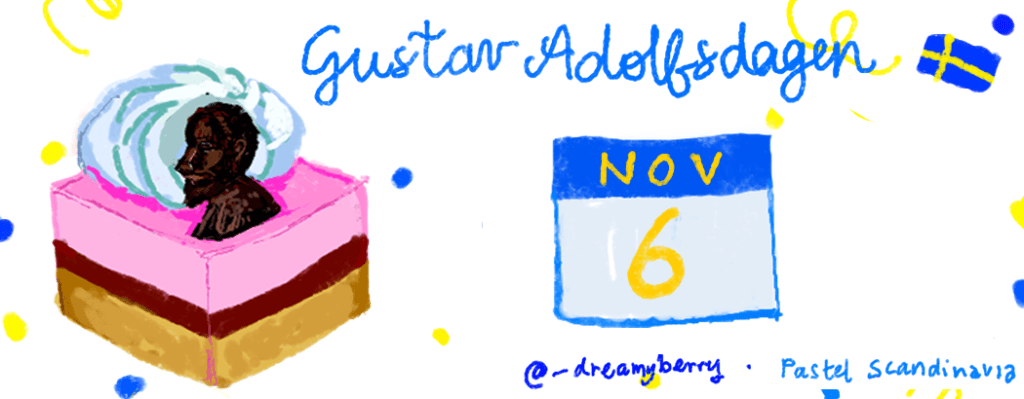
Gustav Adolf pastry: 6 November – Gustav Adolfsdagen

6th November is the date of the Swedish king Gustav II Adolf’s death in 1632. The king was very generous with universities as the one of Gothenburg, where a pastry was invented in his remembrance: Gustav Adolfsbakelse. It has been popular since the late 1800s. You can see it in a lot of variations, but what makes it a Gustav Adolf pastry is the chocolate bust of the king on top!

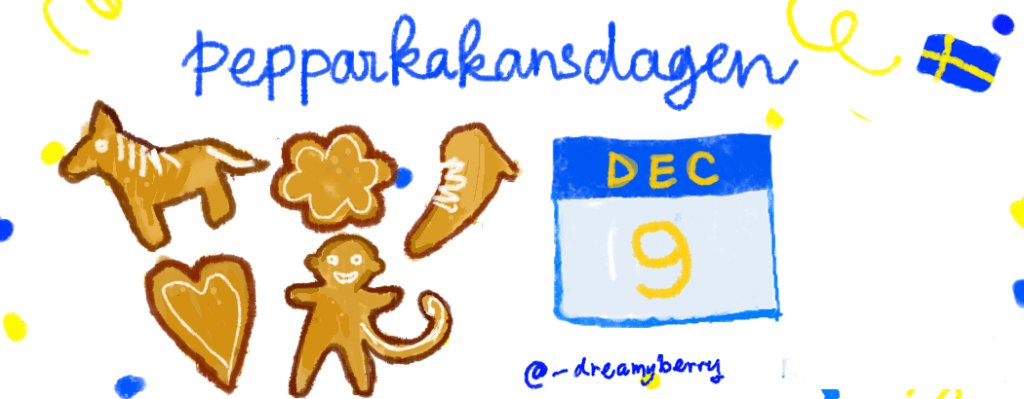
Gingerbread biscuits: 9 December – Pepparkakansdag

Gingerbread cookies, known as pepparkakor in Sweden, probably originated in Nuremberg, Germany, in the middle ages. Mentioned in Swedish in 1444 for the first time, the word pepper was used to mean spices in it, as pepper was the most common spice at the time. Baking them became a typical Christmas thing in Sweden and other countries, remember the episode of Pippi were she cuts them in the shape of her horse and monkey? Pepparkakansdag was, similarly to Kannelbullensdag, invented in 1996 by gingerbread maker Annas Pepparkakor.

Apparently there is also a Polkagrisensdag (candy cane day) on 20th April, but it mostly promoted in Gränna, near the Vättern lake. There Amalia Eriksson invented the polkagrisstång in 1859, the red-white peppermint candy cane, and many local shops celebrate this day.

Does your country have any days like these?

More articles:

Scandinavian graduation traditions

How graduating from high school is like in Sweden, Denmark, Norway!

Hats and buses

the symbol of High school graduation is a hat resembling a ship’s captain cap, the first time I saw a Swedish graduation celebration picture I was pretty confused about those hats, but it’s actually a tradition inspired by German students, spreading it to Nordic countries in the 19th century.

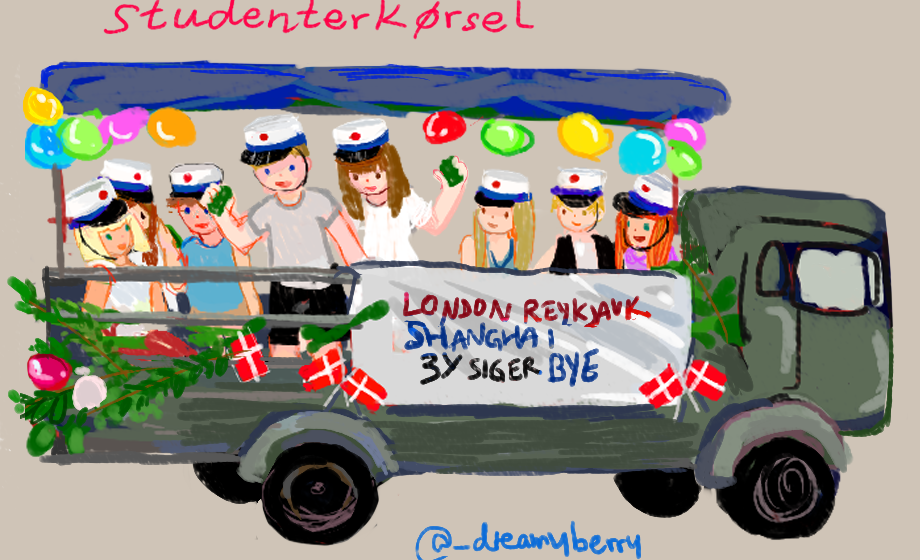
Another common thing in Scandinavian is that graduates celebrate around town on rented buses or trucks (sometimes saving up years just to rent one), generally playing loud music, drinking and just partying!

Denmark 🇩🇰

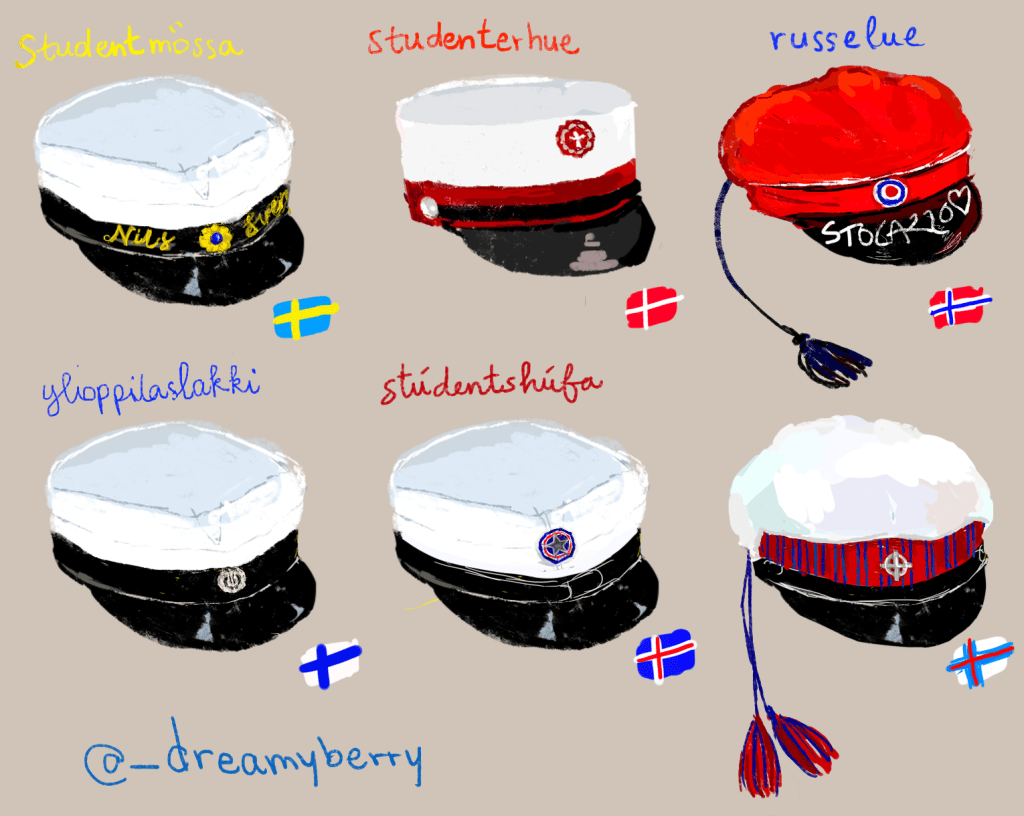
Danes have an oral exam as final. you have to decide who from your family is placing the hat, studenterhue, on your head, when you step out from it. It’s the norm to wear the graduation cap for at least 2 weeks, It is courtesy that people they meet on the street congratulate them, even if they don’t know each other.

The ribbon on Danish caps was originally only either blue (Mathematics students) or red (Arts students), it now comes in many different colors depending on the length of your education and which school you went to, see all possible variations on Alt.dk. There are lots of rules involving the studenterhue:

  • You can’t wear your cap before your last exam (it would bring bad luck)
  • your grade has to be written in the center of the hat, and friends and family can leave autographs and short notes in it
  • friends bite in the shadow for good luck.
  • the students with the biggest and smallest hat size, and the ones with the highest and lowest grade average have to buy a box of beers for the class
  • the hat has to be cut in different ways if the student has drunk 24 units within sunrise, if he vomits, and so on to the point a which if the student goes to the hospital because of too much alcohol the whole shade is cut off.
  • more rules are related to having sex (heart on the sweatband if with the partner, lightning on the rim if not in a relation) , kissing someone (if same gender the cross has to be turned), breaking up (metals going off), taking a swim with only the hat on (wave in the rim)
  • If the student has been awake for 24 hours then the hat must be turned around (shadow in the back).
  • You can see more on this site dedicated to studenterhue rules (in Danish)!

The Studenterkørsel – student drive – is an important part of the celebration, renting a truck decorated with beech branches to party, drink and play loud music on (here‘s a site where the trucks & stuff can be arranged). It drives to each student’s home for around 15 minutes, for a short visit where parents give snacks and drinks before the next destination.

This can last one or two days and of course also the studenterkørsel has its own rules, among which running after the truck if you get an A in your last exam, and learning a battle cry to scream at passing student trucks!

Everyone greets and sends their congratulations when they see these trucks. On my very first day in Denmark Student buses were driving around (slowing down the bus I was on though, haha) and following my friend’s example we waved at them, flying my welcoming flag! It felt quite cool!

Sweden 🇸🇪

In Sweden there’s one big day, Studenten, but the celebration starts around the end of April, where students organize games which will give points deciding who will be the first student running out of the school on the gruaduation day; it can be anything from chill to embarrassing things to do, though maybe not as wild as what you’ll read for Norway. In May, there’s one day called Mösspåtaggning, on which students dress up nicely with their hat Studentmössa on, and with classmates they go to school and then to a restaurant or bar, celebrating that one month is left until the studenten time.

The big day of Studenten may vary depending on the school, but it is usually around 30th May to 15th June, with 6th June (Sweden national day) being the pitch.

  • This day starts with fellow students meeting up very early – between 4 and 7 am for the Champagnefrukost, Champagne breakfast
  • At 8-9 it’s time to leave for school, with some proving they can keep up with the celebration despite being drunk.
  • Around 10 everybody listens to the principal giving a speech, some students get diploma for things as All-A-Student etc.
  • At 11-12: photo shootings of classes!

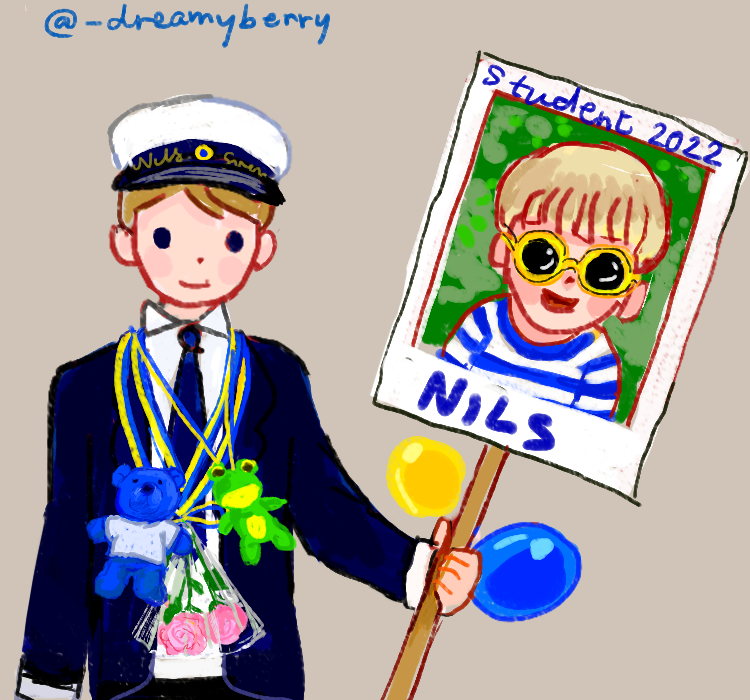
Once they got their diploma, Students run out of school to their families and friends, who are waiting for them holding a picture of the graduate as a baby or small child, and give them blue-yellow chains with flowers and trinkets as plushies!

The clothing for this day is quite formal, with boys wearing suits, girls usually a white dress. each student has their name and surname embroidered on the hat, which costs around 100 euros

After staying with their families for some time, students get on flatbed buses driving through the city as the Danes do, dancing, drinking and partying. In some cases they just walk around instead, something which has been encouraged by authorities after several accidents involving the flatbuses occured.

Norway 🇳🇴

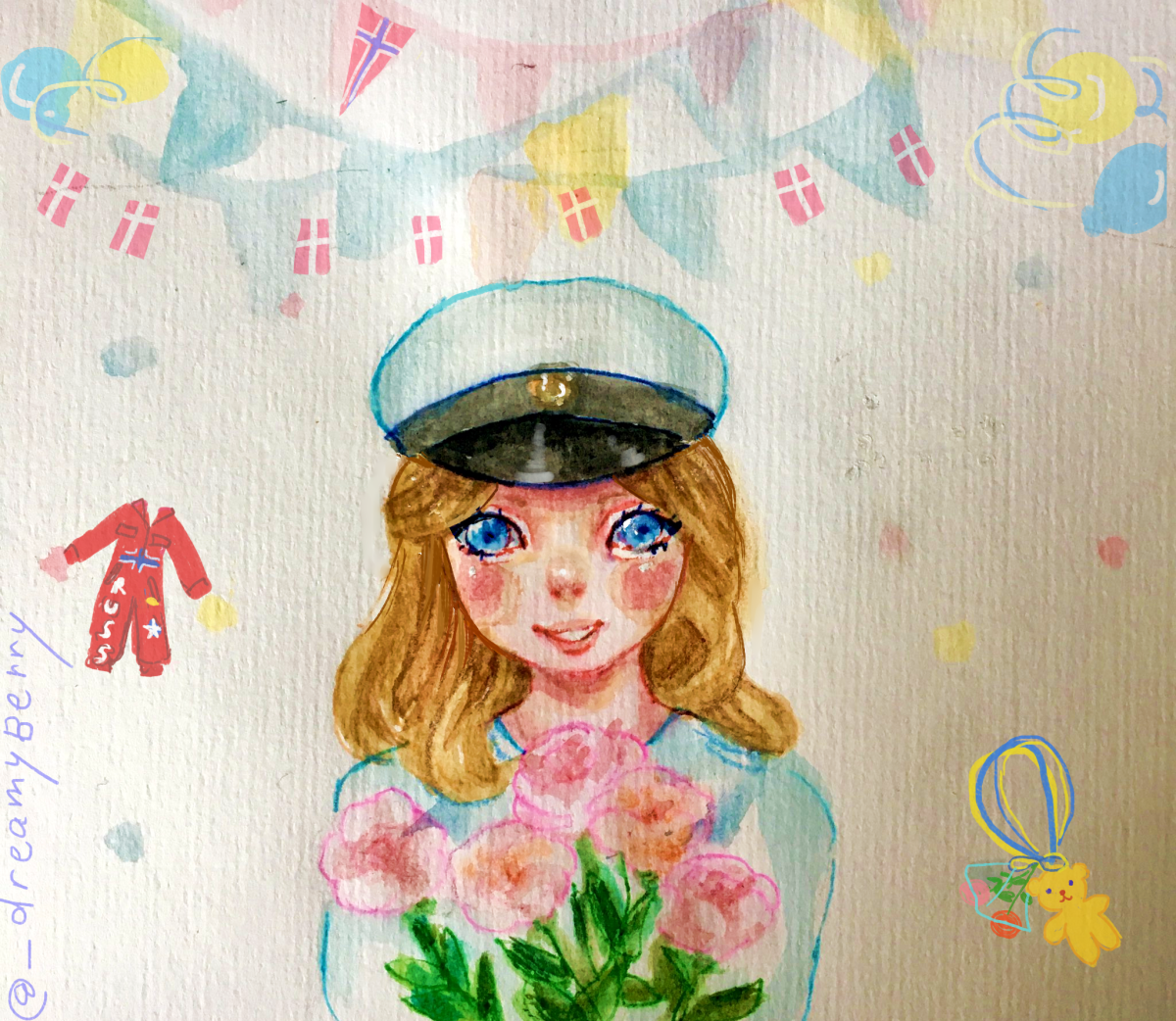
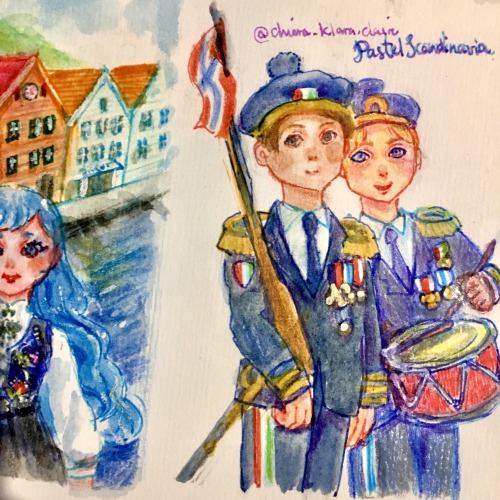
Norwegian graduation celebrations, Russ (short for russefeiring) is a big deal in Norway, with youngsters in overalls roaming cities for almost a month, from the end of April to the Norwegian Constitution Day, (read more about May 17th). On that day, the students are awarded their caps and join the parade in their overalls. The russ period has also become known as “the three-week binge” treukersfylla, continue reading to find out why…

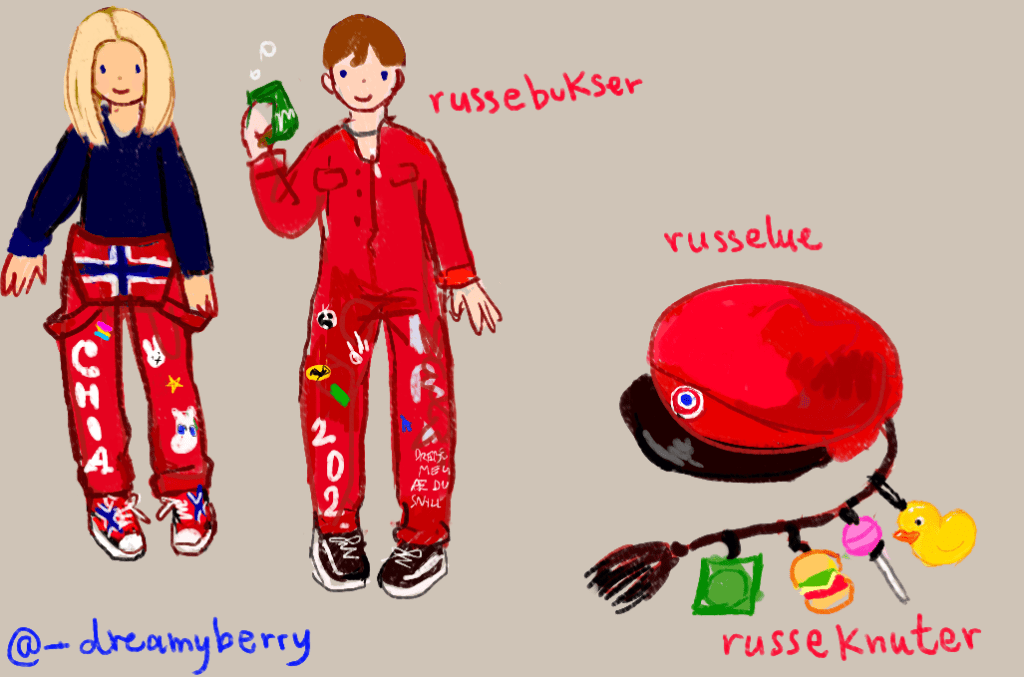
The personalized overalls, russebukse, are usually red, or blue in case of financial and business studies, and personalized with patches. On this website Norwegians can get their russ equipment 😉

On the caps, Russeluer, Students write the Russ names they’ve been given, but the important part is a long cord, which gets knots (knuter) added for given dares completed before graduation: russeknuter. The tradition was introduced in the 40s, with different lists of around 100 dares for every school. Many dares involve sex and alcohol, and a lot are just hilarious. Classics are wearing loaves of bread on your feet for a whole day, not sleeping for 48 hours and bathing outside before 1st May. After criticism that russ was getting too wild, some new dares were invented to encourage teens to make good choices, such as getting tested for STDs or giving food to a homeless person.

Here are a few recurring ones (trinket – dare associated to it):

  • TAMPON – Put two tampons in your mouth and drink a pint of beer/cider.
  • TWIGS FROM THE GARDEN – Sleep in a tent in a teacher’s garden.
  • CANDY BURGER – Eat a cheeseburger in two bites.
  • “L” – Put an “L” (used for driving practice) on the back of a public transport vehicle.
  • CONDOM PACKAGE – Buy a pack of condoms using only body language.
  • BANKNOTE – Place a 5 minute poledance on a pole on a public transport.
  • RUBBER DUCK – Bathe with someone else in a canopy in front of the school, remember to scrub each other.
  • TOY FIRE TRUCK – Have safe sex during your period/with someone on theirs.

Here is the whole list of Russeknuter of Oslo for 2022 (in Norwegian). Because of what’s happening, this year there is a special Ukraine-knut, which can be gained if the class contacts a refugee centre and brings some fun activities to socially engage the young refugees there.

As the other Scandinavians Norwegians also rent or buy buses – the tradition of buying an old van or bus and painting it started in the 70s – but they do it on the next level, with their Russebuss, large coach buses completely decked out with colors, graphics, retrofitted and customized to become mobile partying units! The average Russbuss is used by 15 to 25 students and costs around $116,000!! Drivers are hired to drive them to Festivals and landstreff (national meetings) to meet Russ from whole Norway and party, party, party.

You may now wonder why students party that wildly in April. That’s because by the early 2000s, the authorities were worried about the impact all this partying and alcohol would have on the students’ grades, so the final exams in public schools were moved to early May. but what ended up happening was simply that the students started the russefeiring earlier.

Bonus: Finland 🇫🇮

The girl I portrayed on the cover picture of this article is a Finn, (@alwaystimeforbujo on ig, she posts about bullet journaling), so here is something about Finland too:

The Finnish cap, Ylioppilaslakki, is similar to the Swedish version, but instead of coloured fabric cockade, it has a metallic, gold-colored cockade depicting the lyre of Apollo, the insignia of the University of Helsinki.

Truck parties are a thing in Finland too, but in February, when students begin preparing for their final exams. A typical thing they do is dressing up in various costumes visiting the town’s school and throwing candy!

Good luck to everybody graduating this year!

Sources

Swedish folk costumes

From old folk dresses varying for each district to the Sverigedräkt, a national dress for all of Sweden

Swedish folk costumes, Folkdräkter, are an important part of a Swedish cultural heritage, and are symbols for local and national identity. There are 840 different variations (550 female outfits and 290 male ones). Some of them have a rather long history, dating back from the 17th century. Members of the Swedish royal family wears a blue and yellow dress with daisy decorations on some occasions – that dress is much more recent!

Different types of Swedish folk costume

Swedish folk costumes vary by region of origin, but in some they are more common, Dalarna has a very rich folk costume culture for example.

Some from Dalarna (Leksand, ?, Rättvik), central Sweden; and Norrbotten, northern Sweden

Each district had its own tailor, and some areas with natural boundaries and good communications within the district itself but poorer connections with the outside world would develop their own designs. Among typical features are flower patterns and headgear of all kinds, from bonnets to horn-shaped hats.

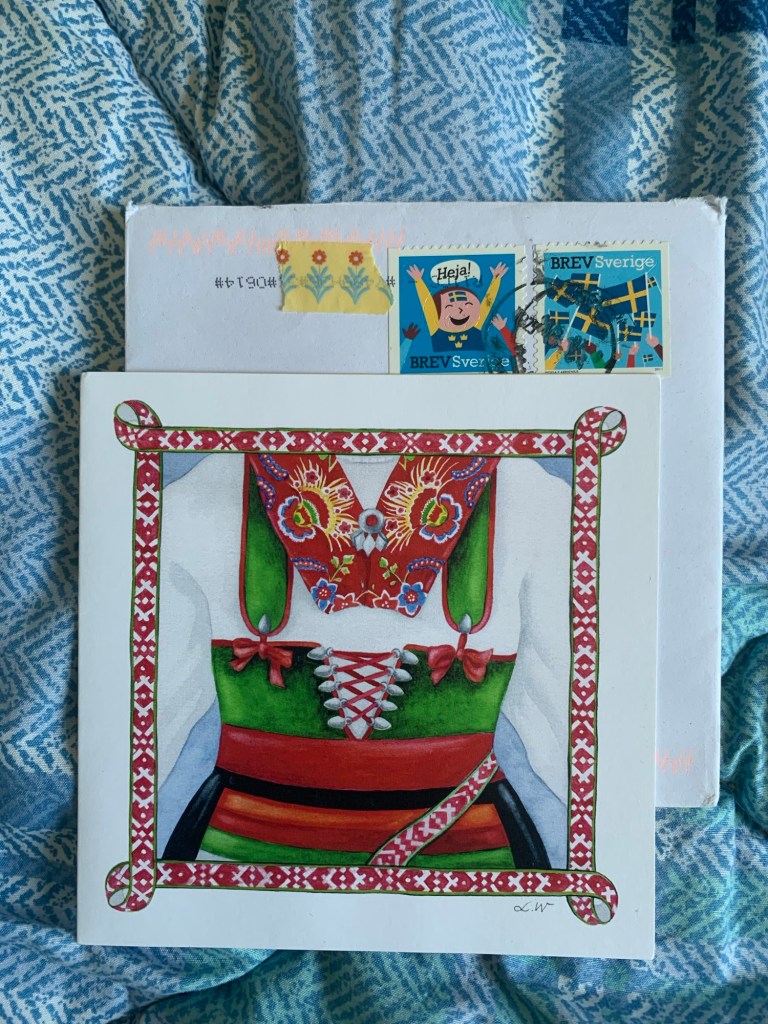
Postcard with a folk costume from Dalarna. Illustration by Lena Wikman,

in the 1850s, with the industrialization of Sweden, folk costumes started to be abandoned – but around 1900, with the National romantic period, upper classes amused themselves by wearing them. Some artists also depicted them, Among others Jenny Nyström and Carl Larsson:

[…] In addition we need the bright colors of the peasant costumes. They have an invigorating effect on our senses that is all too often under-estimated and they are necessary as a contrast to the deep green pine forest and the white snow

Carl Larsson, from ‘Ett hem’ (A Home)

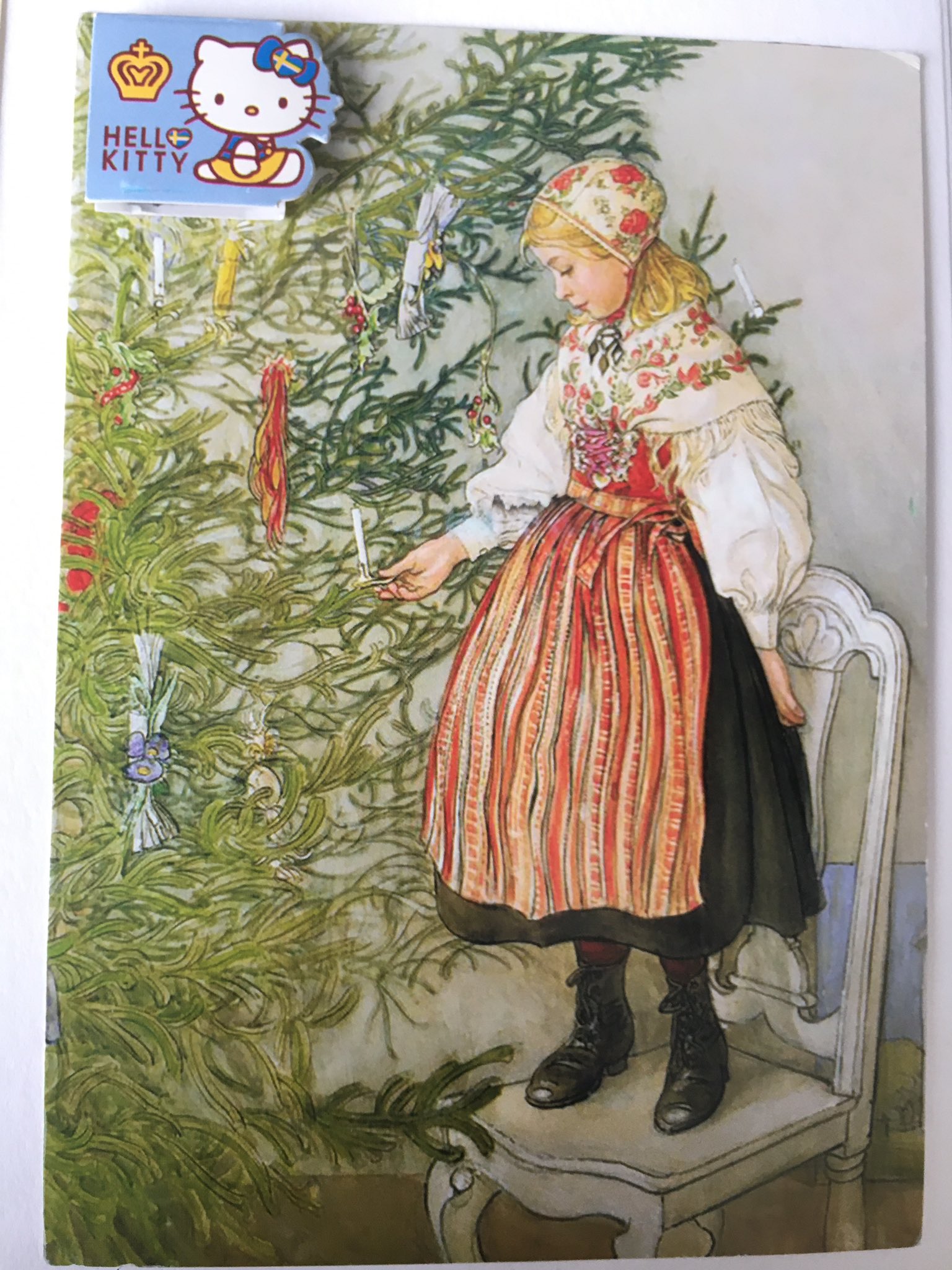
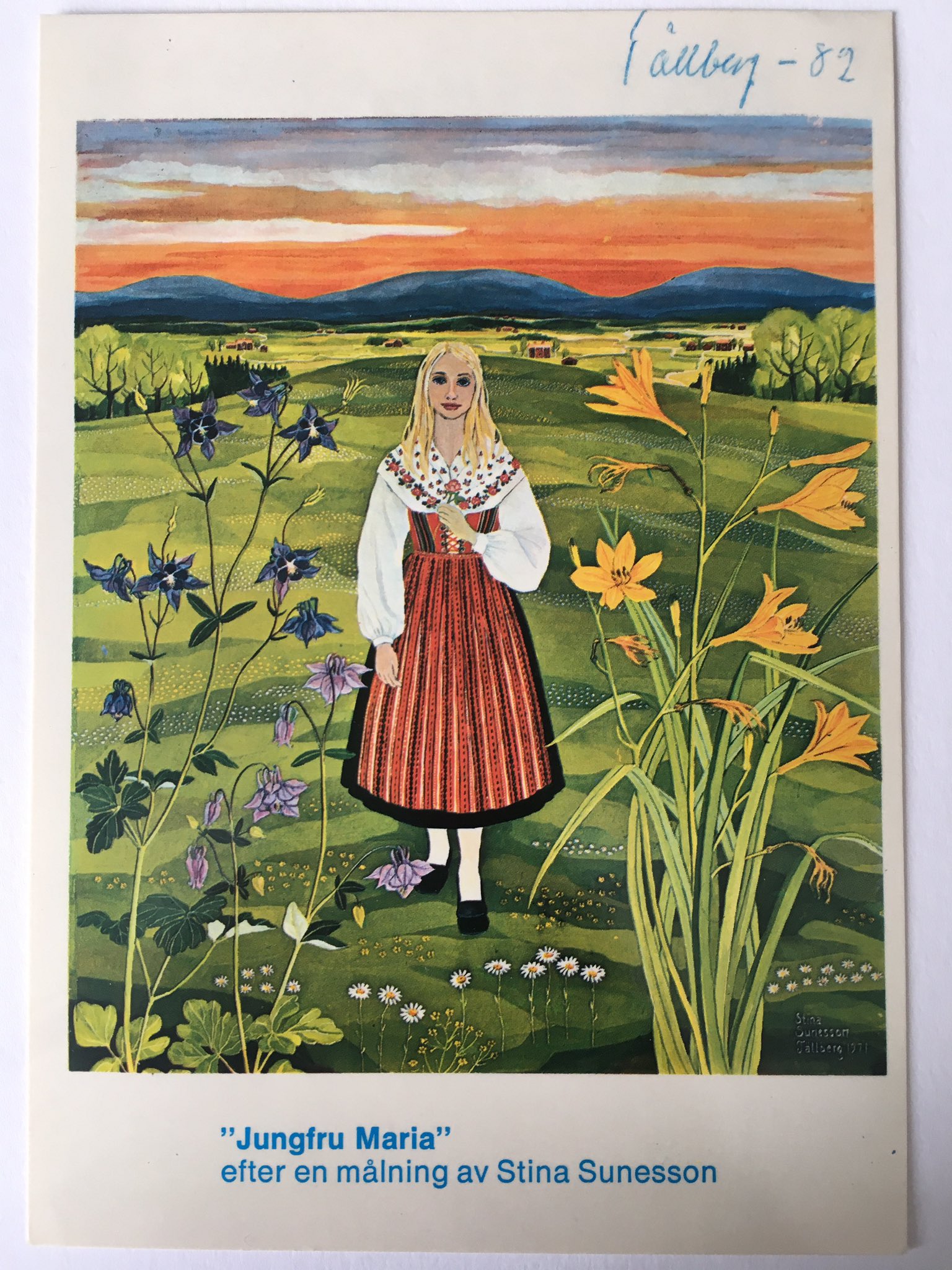
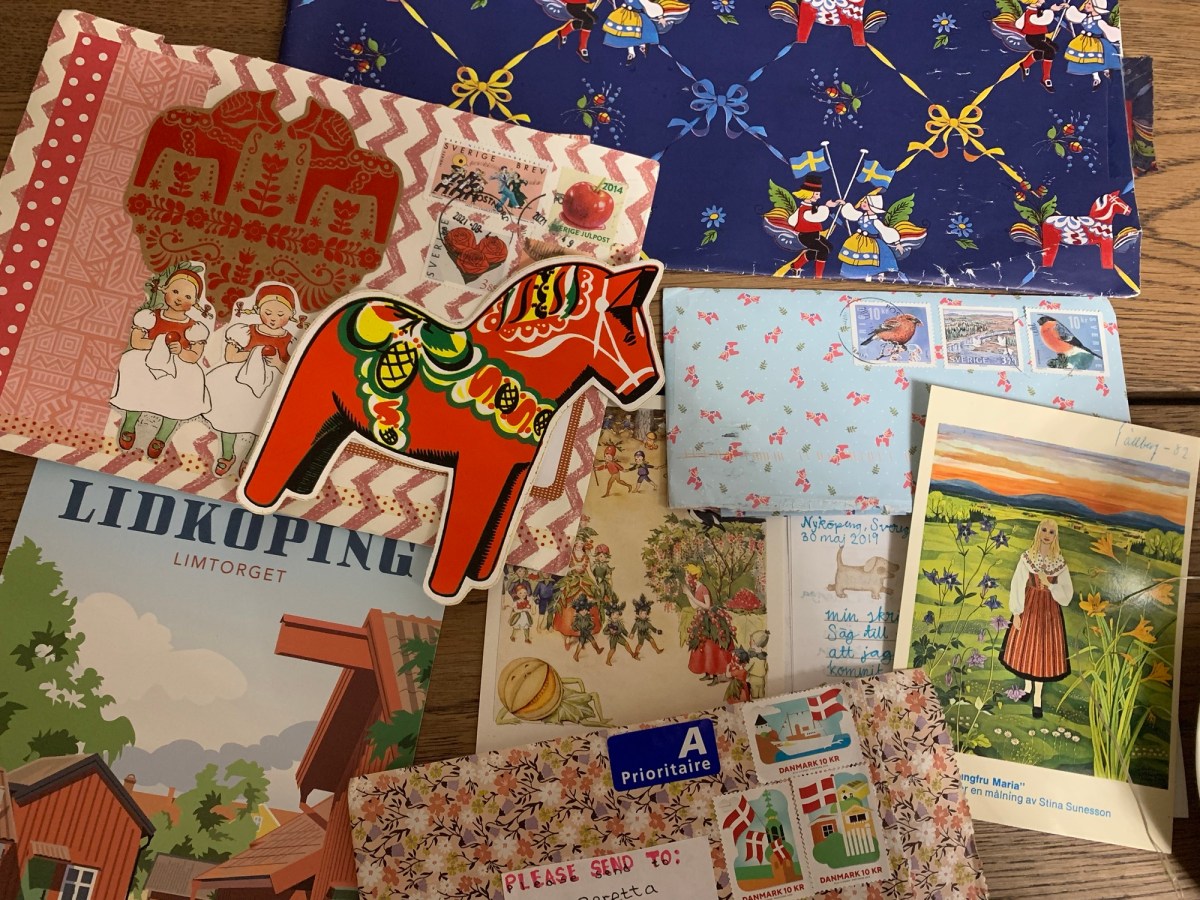
I got a couple postcards from Swedish penpals with paintings featuring folk costumes, by Carl Larsson (and I got a tiny Hello kitty in a svenska dräkten from the same person!) and Stina Sunesson

The invention of the Swedish National dress, Almänna svenska nationaldräkten

In 1983 Queen Silvia wore the Svenska dräkten on Sweden’s National Day, 6th June, starting a tradition. The dress she wore was relatively recent, designed by a woman called Märta Jörgensen.

Märta Jörgensen was an apprentice gardener when came to the Royal Castle of Tullgarn, in the province of Södermanland in 1900. There, all female employees wore a costume inspired by a traditional dress from Österåker, by decision of the then queen Victoria.

She then married and moved to Dalarna working as a teacher. In Falun she set up the Swedish Women’s National Costume Society, Svenska Kvinnliga Nationaldräkts-Föreningen in 1902. Her goal was to ‘achieve freedom from the dominant foreign fashion through the introduction of a national dress for Swedish women’, that had to be of a simple cut and design, influenced by national romanticism.

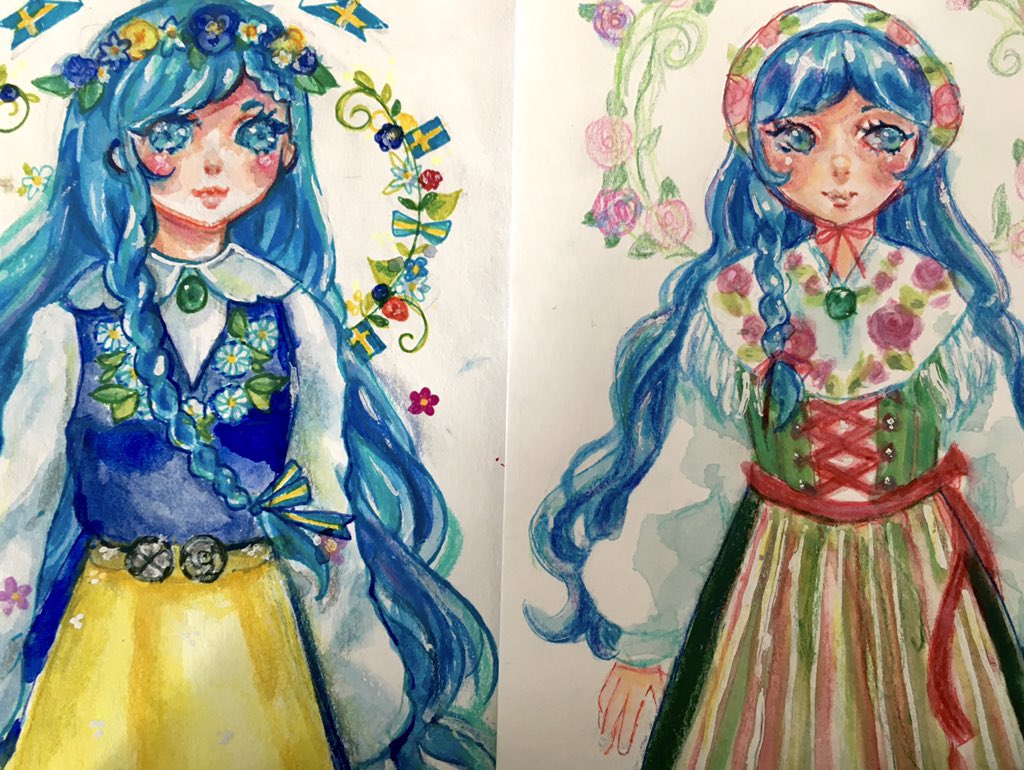
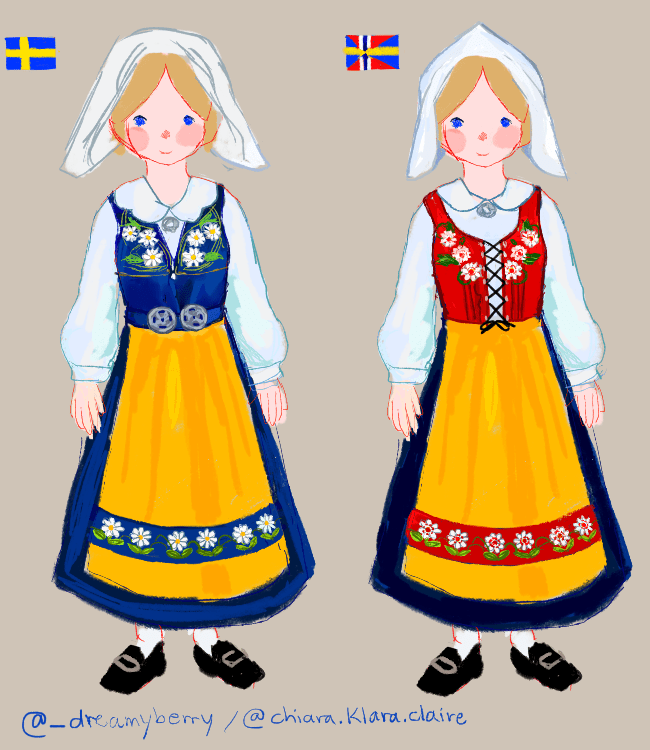
She designed two models, one for everyday wear, Blue with a yellow apron as the Swedish flag; the other for special occasions, with a red bodice, representing the Swedish-Norwegian Union (that lasted until 1905).

left one has been used by the royals, the right one is based on the few pictures I could find online.

The Costume Society had over 200 members in 1910, but interest decreased after WW2. Swedish folk costumes enjoyed however a comeback in the 70s. Queen Silvia wearing it on Sweden’s national day in 1983 made it the official national costume.

Side note – Definitions for Swedish folk costumes

Swedish folk costumes are called in various ways: folk folkdräkt (folk dress), landskapsdräkt (national costume), sockendräkt (provincial costume), bygde- or hembygsdräkt (parish or district costume), härads-dräkt (old jurisdictional county costume). The Swedish Museums have decided that the term folkdräkt can only be used for costumes from areas with a well documented, locally distinctive form of dress.

sources:

  • Skansen museum (Swedish)
  • nationalclothing.com
  • Sverigedrakten.se
  • Märta Jörgensen biography – skbl.se
  • M. Jörgensen, Något om bruket af nationaldräkter ‘On the Use of National Costumes’, 1903

DIY Danish Christmas Hearts

Julehjerter, a common Christmas ornament In Denmark and Norway.

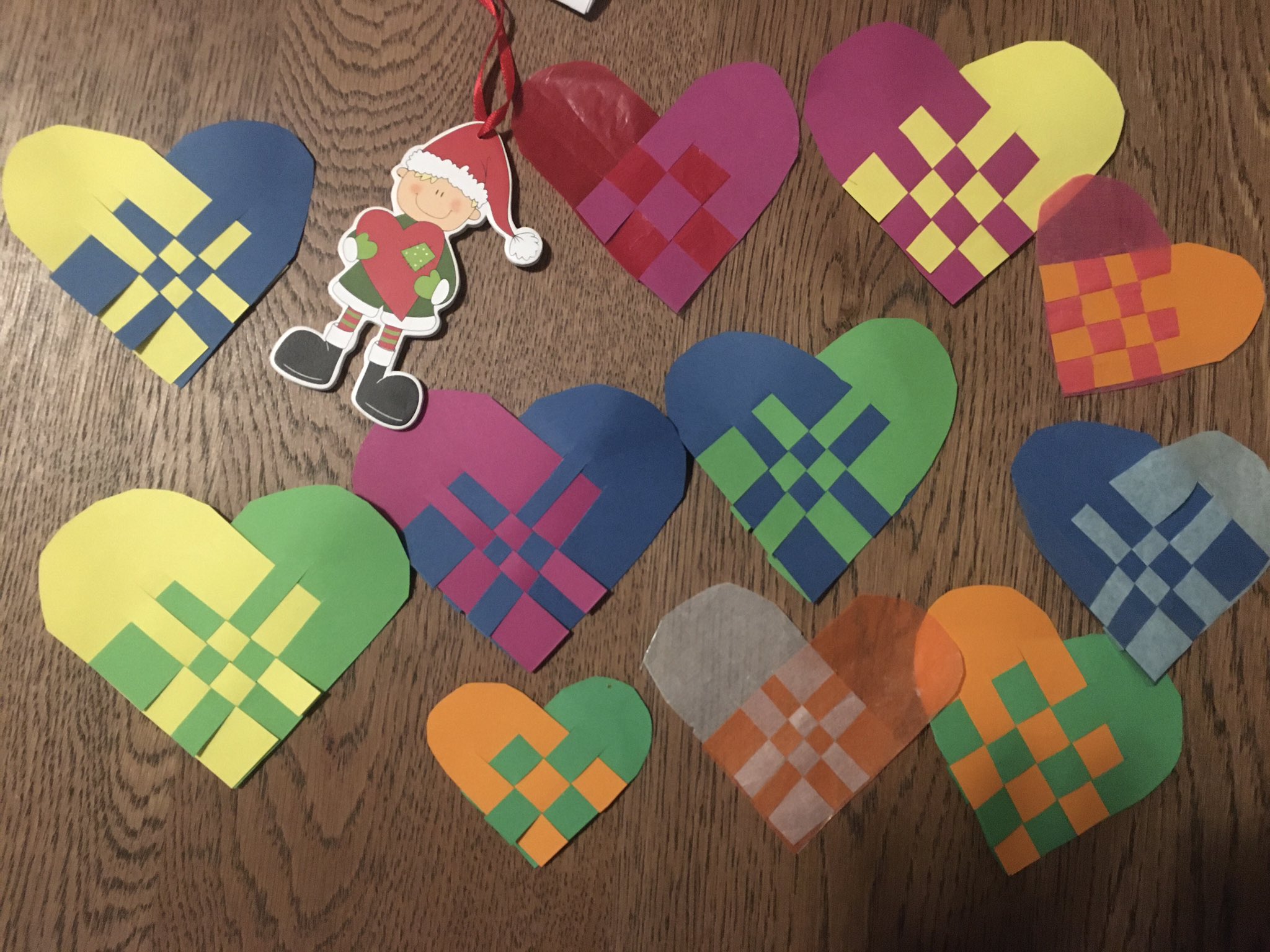
As i had already mentioned talking about Christmas symbols in Nordic countries, a common homemade Christmas ornament in Scandinavia is pleated hearts, very common in Denmark, known as Julehjerter, and Norway, where they are called Juletrekurv.

Children make them with their family with paper of different colours, although they are mostly red and white. They have been made for around 150 years: the oldest known guide to making pleated Christmas hearts is found in an 1871 edition of the Danish journal Nordisk Husflidstidende. A 1873 pleated heart can be seen at the National museum in Oslo and one from 1866 at H. C. Andersen house in Odense!

Make your own Julehjerter

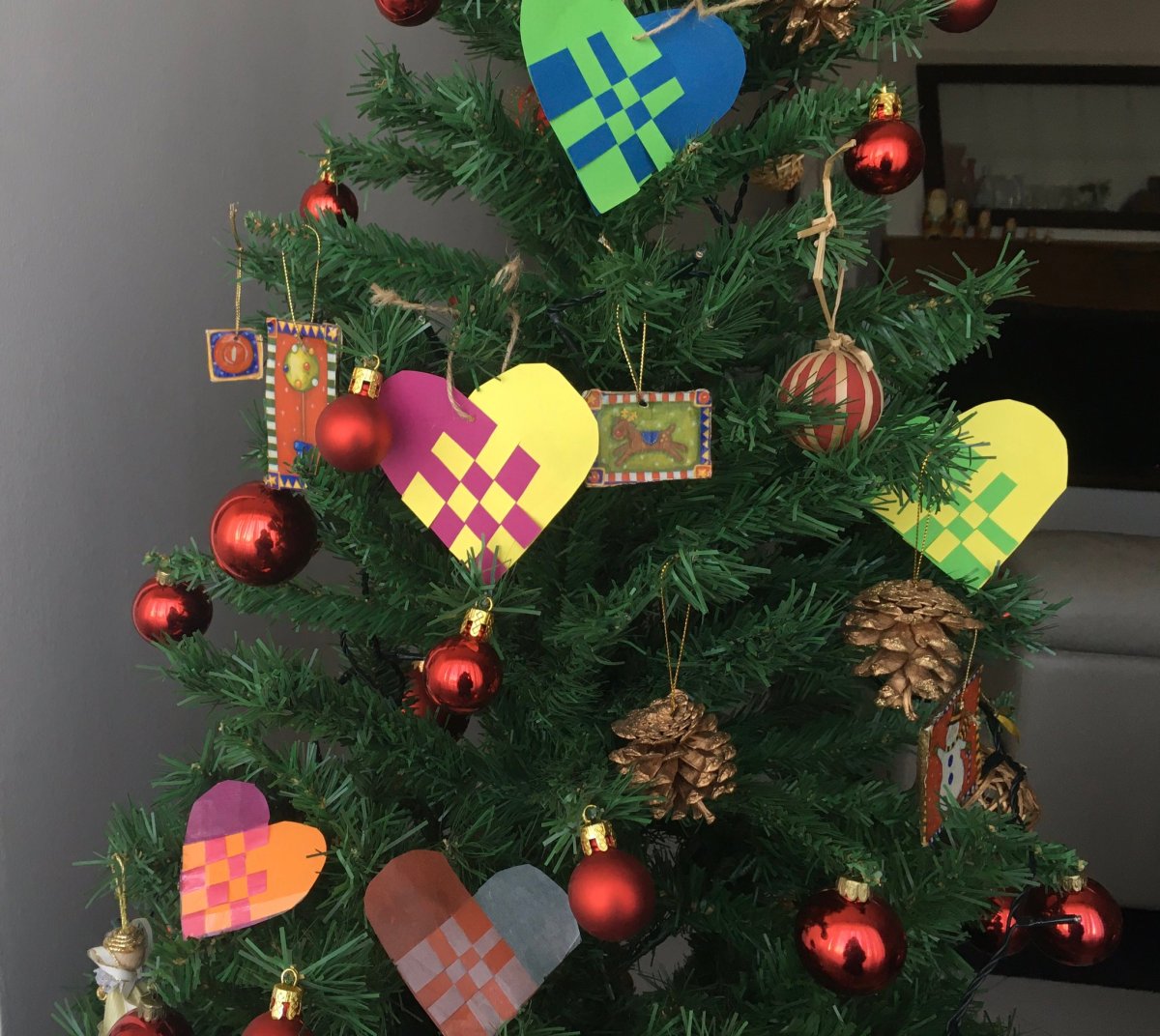
I made my very own, simple version of them, so they are not really a basket as the Norwegian name says, and I used strings to hang them on the tree.

what I used:
  • colored paper (the most traditional version is white & red, but do as you please). I used leftover paper we had at home.
  • Scissors, obviously and something to make holes on paper, as pins
  • Strings
Process:
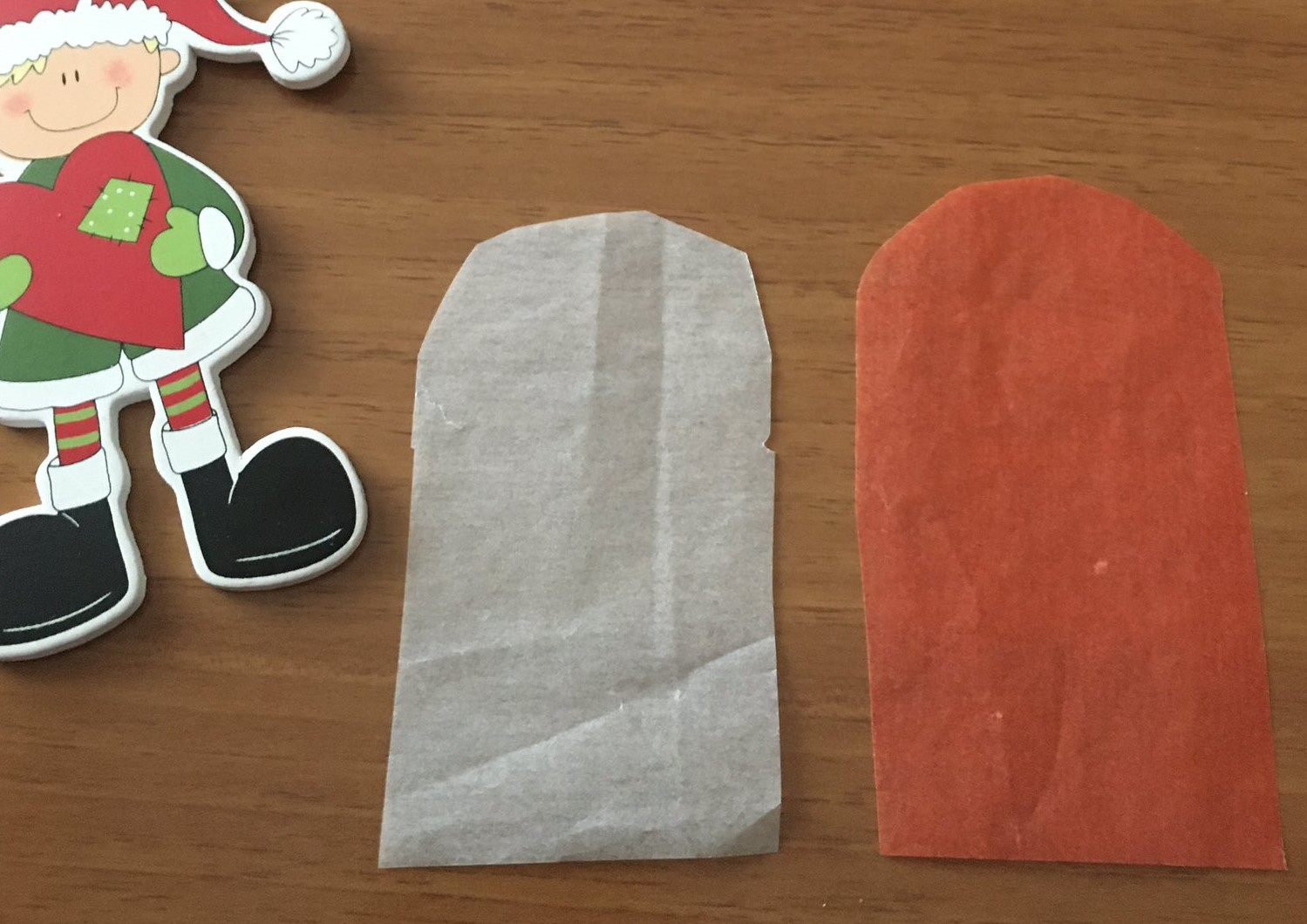
  1. cut paper, put two sheets on top of each other when cutting so it is of the same size.
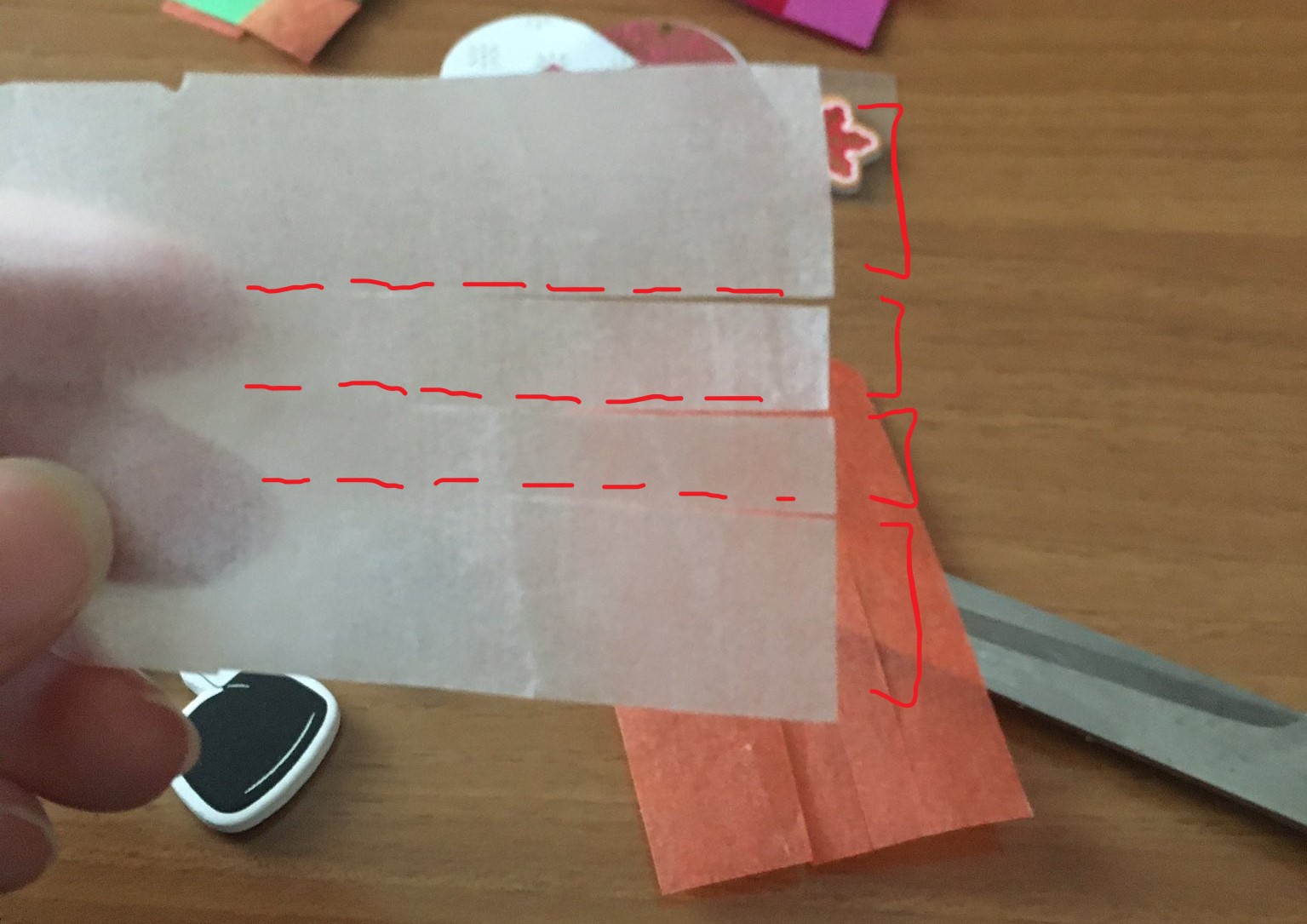
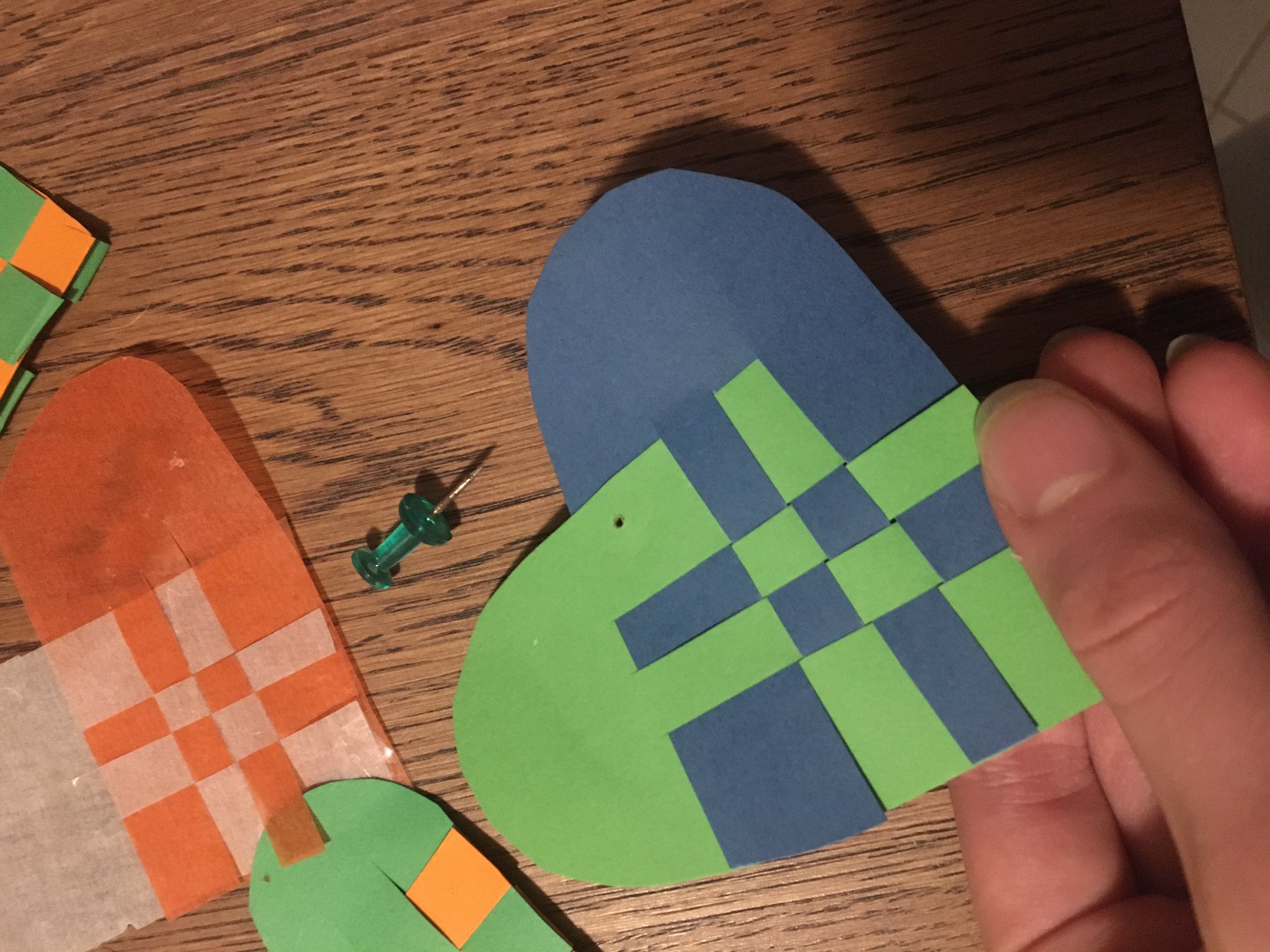
  2. cut the lines to intertwine the two pieces: they can be all of the same size or the two inner parts narrower.

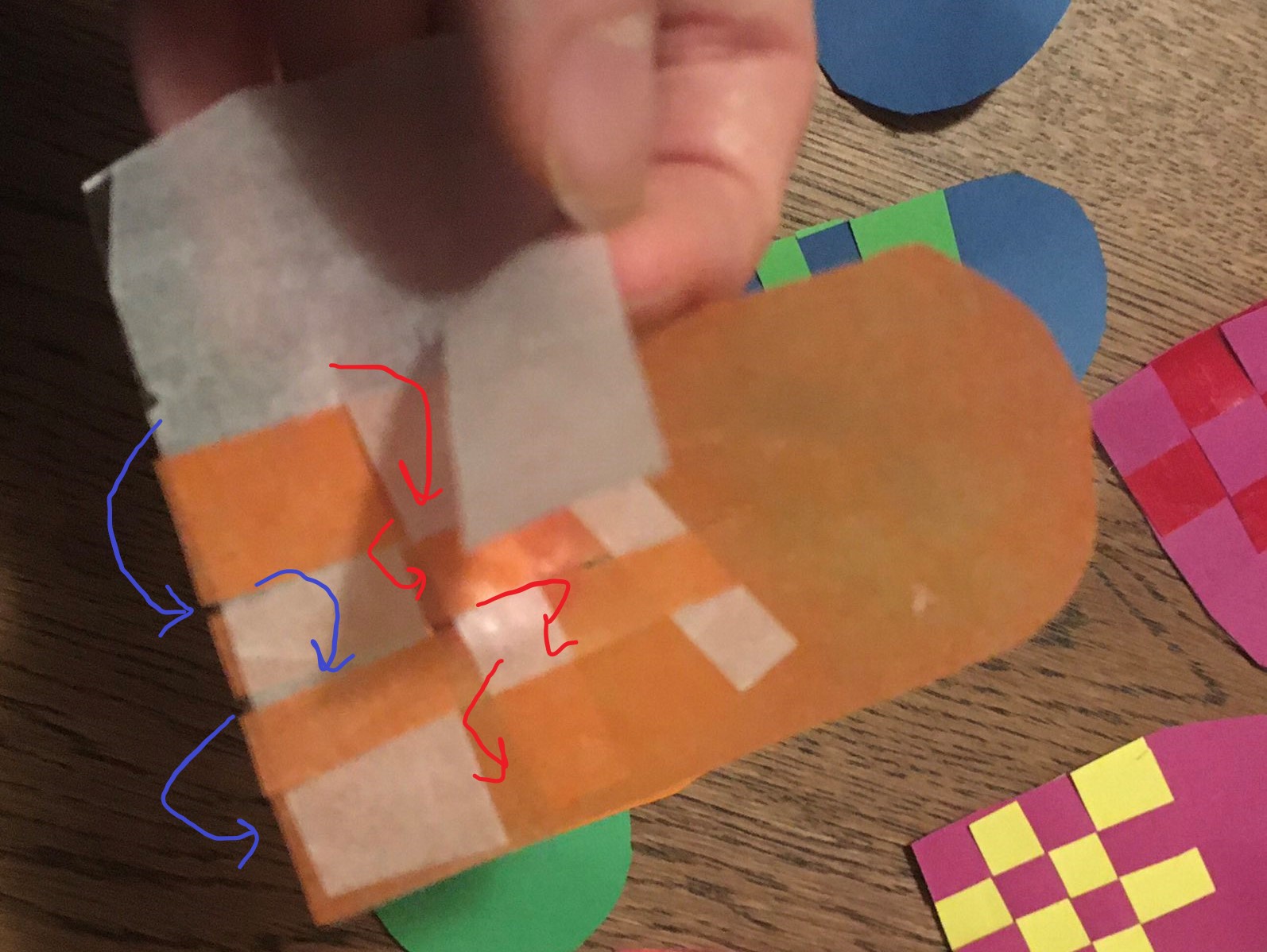
3. Intertwine the pieces: depending on how you cut the lines you will have a slightly different pattern

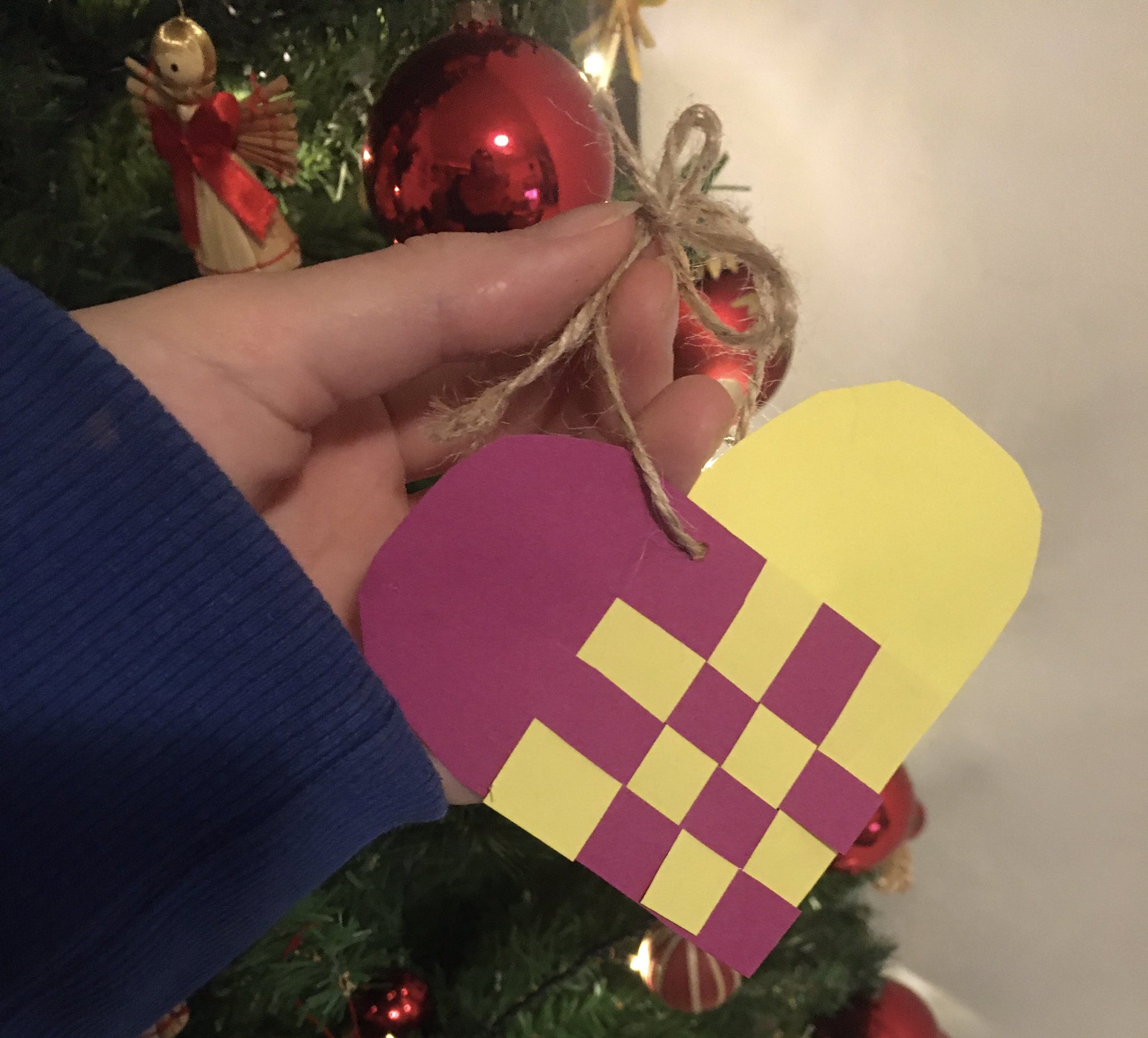
4. Make a hole and put the string in it

Your Christmas Heart is ready to be hung on your tree or wherever you want!

Please share with me your Julehjerter if you happen to make any 🙂

Glædelig Jul!

17. Mai in Norway

17th May is Norway’s national day, in which parades are the central event

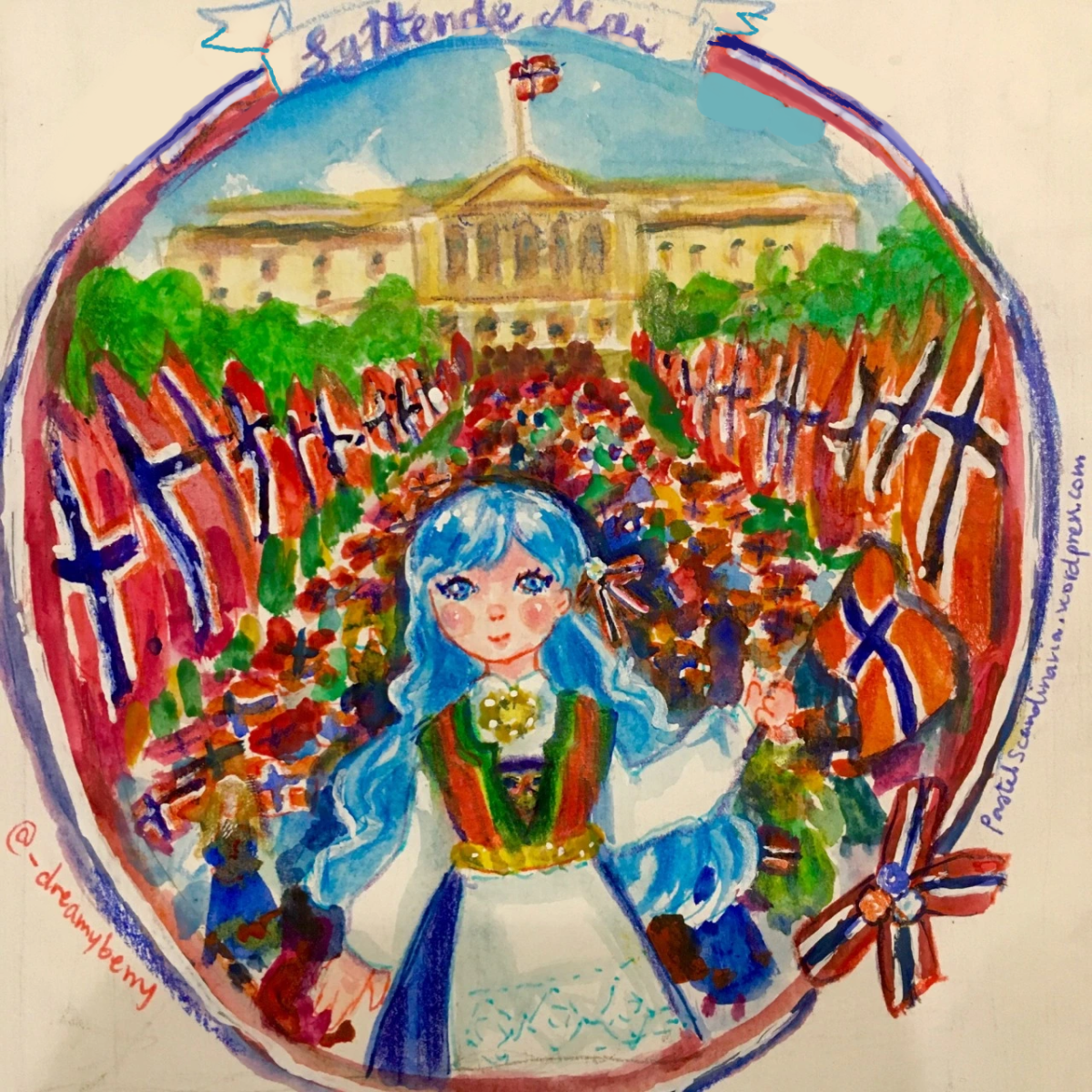
Known as Syttende Mai (17th May) is Norway’s Constitution Day, Grunnlovsdagen, the most important day in Norway, characterized by parades, a sea of flags everywhere and people wearing the Norwegian folk costume, the Bunad. It is commonly called Norway’s birthday!

On this day the Constitution was signed at Eidsvoll in 1814, declaring Norway as an independent kingdom after being continuosly handed over from and to Sweden and Denmark. Celebrations began among students despite Norway still being in an union with Sweden. WW2 ended in Norway nine days before that year’s Constitution Day, and this strengthened the meaning of 17. mai!

Parades (17. mai-tog)

Norway’s national day is also called “Barnas dag” (children’s day). Each elementary school district arranges its own parade with marching bands. In 1864 the first children’s parade was launched in Oslo, but only with boys until 1899. The parades are, in order:

  • senior school children carrying the school’s official banner
  • others carrying full-size Norwegian flags;
  • the school’s marching band;
  • the rest of the children follow with hand-sized flags, and often self-made banners for each class.

The parade often stops at homes of senior citizens and war memorials. Kindergartens and bystanders often join in behind the parade as it passes.

songs about the celebration of the National Dayare sung, and the parade is concluded with the national anthem Ja, vi elsker dette landet, and the royal anthem Kongesangen. At the end, The children shout “Hurra!”. All parades begin or end with speeches. Both grown-ups and older children are invited to speak. After the parades, there are games for the children: sekkeløp (sack race) and potetløp (egg & spoon race) are two classics.

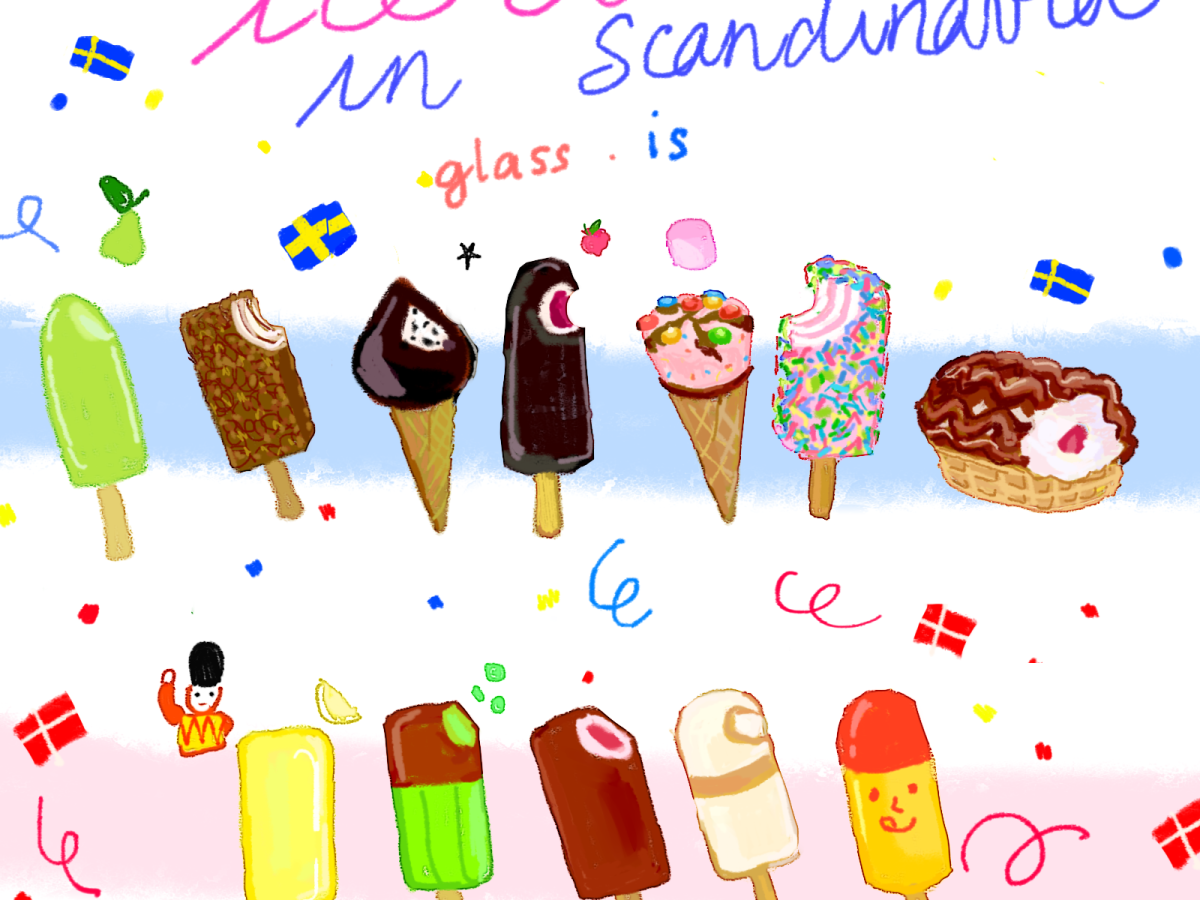
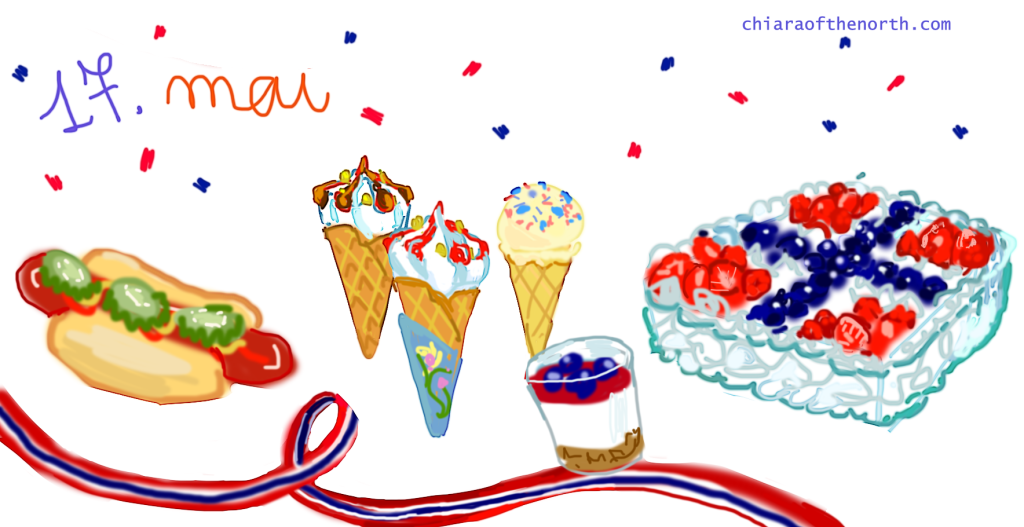
Norway’s birthday is the day on which children are allowed to eat as much ice cream as they please! Popular snacks are pølser (hotdogs), barbecue, waffles. Food with colors of the Norwegian flags is of course a must.

Other parades

Parades for the public, Borgertog, where everybody is welcome to join in. They are led by marching bands and often local boy scouts, local choirs, NGOs, sport associations and firefighters. The borgertog take place in the early morning or in the afternoon, before or after the school’s parade.

The Russ, graduating class of the videregående (high school),celebrate 17 May with their own parades in Norwegian streets later in the day, usually around 4 or 5 pm, on a Russebuss, a party bus, highlight of Norwegian graduation traditions…

Celebrations in Norwegian cities

The longest parade is in Oslo, broadcasted on tv. It includes around 100 schools, marching bands, and passes the royal palace where the royal family greet the people from the main balcony. In the municipality of Asker, near Oslo, the children gather outside the residence of the Crown Prince in the morning.

Bergen has its own traditions for the parade, including comic troupes, various local organisations, a children’s parade, and the buekorps

In Stavanger international schools arrange parades with flags from many countries and an international parties. the British school started it in the 1970s, followed up by the Dutch school and the American school.

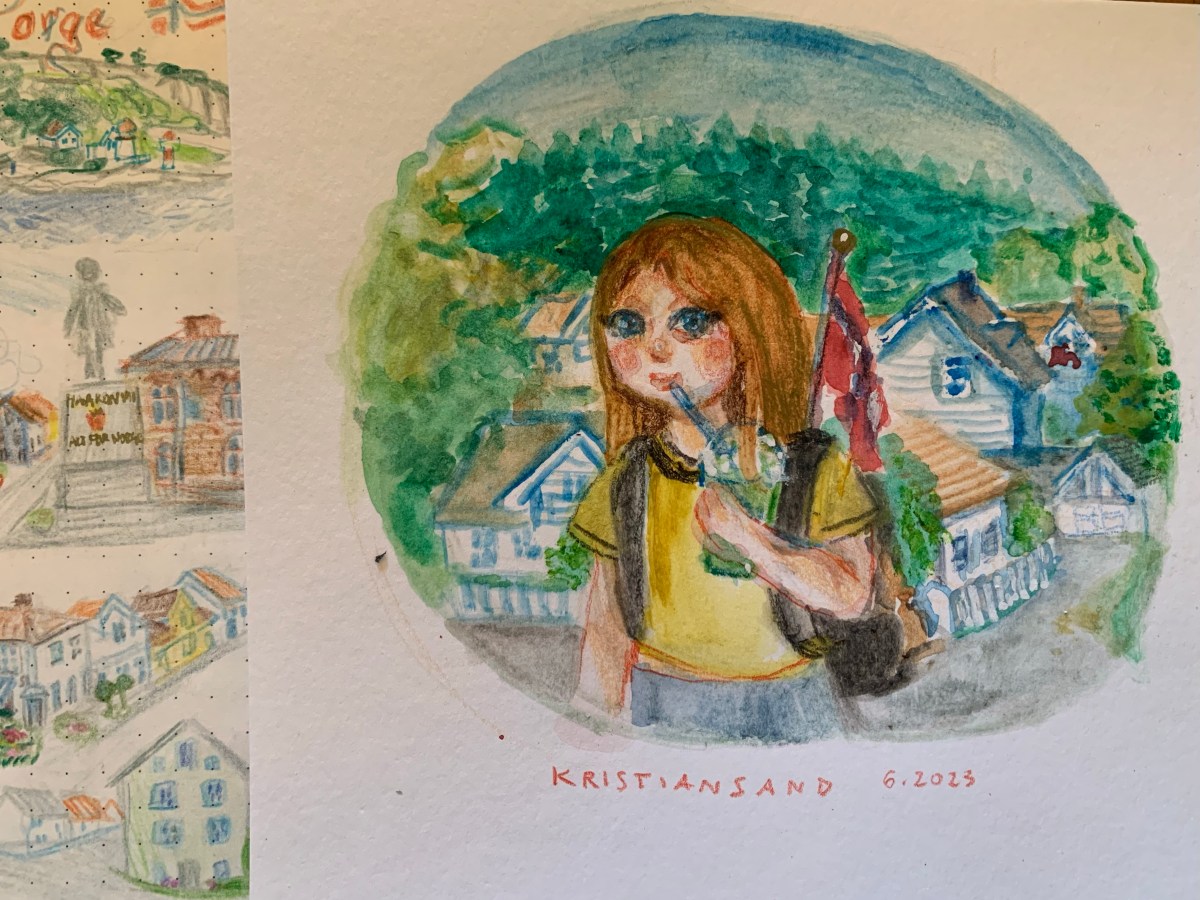
Kristiansand, is known for the conclusion of the National Day with running through the city centre (“Tapto”) and spectacular fireworks. A trad jazz band plays until midnight in front of the Christiansholm Fortress.

17 MAI IN THE WORLD

Norwegian seamen churches (sjømannskirken) and Norwegian heritage associations organise 17 mai parades, Norwegian church service, and celebrate the day in parks, with typical Norwegian food and music.

AMERICA

In the United States and Canada, the local lodges of the Sons of Norway often play a central part in organizing the festivities, attended by people with Norwegian ancestry, common in the mid-western USA.

  • Chicago – holds a three-day 17 mai celebration
  • New York City – has had a 17 mai parade since 1952.
  • Petersburg, Alaska a.k.a. “Little Norway”: has a festival the weekend around 17 May, including Vikings and Valkyries.
  • Since 1969, the city of Westby, western Wisconsin has a four-day festival
  • Seattle and Salt Lake City, Utah also have 17 mai celebrations with parades, folk dancing and luncheons.

EUROPE

  • Stockholm has the biggest 17 mai parade outside Norway – ending at Skansen, where you can get waffles, coffee and hot dogs!
  • 17 May in London is celebrated every year in Southwark Park. Games, live music, and a parade from the Norwegian church to the park are in the programme
  • In Orkney/Shetland (Scotland) 17 May is celebrated as the islands used to be part of the Norwegian kingdom. Orkney holds a parade, and children are invited to bring their Norway and Orkney flags.

GRATULERER MED DAGEN! Happy birthday Norway!

Sámi people: who are they?

The indigenous people of North Scandinavia & 6th February

February 6th is, other than my birthday, Sámi people’s National Day.

The Sámi – also spelled Saami – are an indigenous people inhabiting Sápmi, which today encompasses large northern parts of Norway, Sweden, Finland and Russia. The Sámi have historically been known as Lapps or Laplanders, but these terms are usually regarded as offensive. There are about 100,000 Sámi people, divided by the borders of 4 states: Norway (ca. 60.000), Sweden (30.000), Finland (8.000) and Russia (2.000).

The Sami have their own history, languages, and maintain a strong cultural identity while being citizens of their countries.
One of the most typical traits of Sami culture is the central role of reindeers: around 10% of Sámi practice reindeer herding nowadays, which in some parts of the Nordic countries can be practiced only by Sámis.

Sami symbols and culture

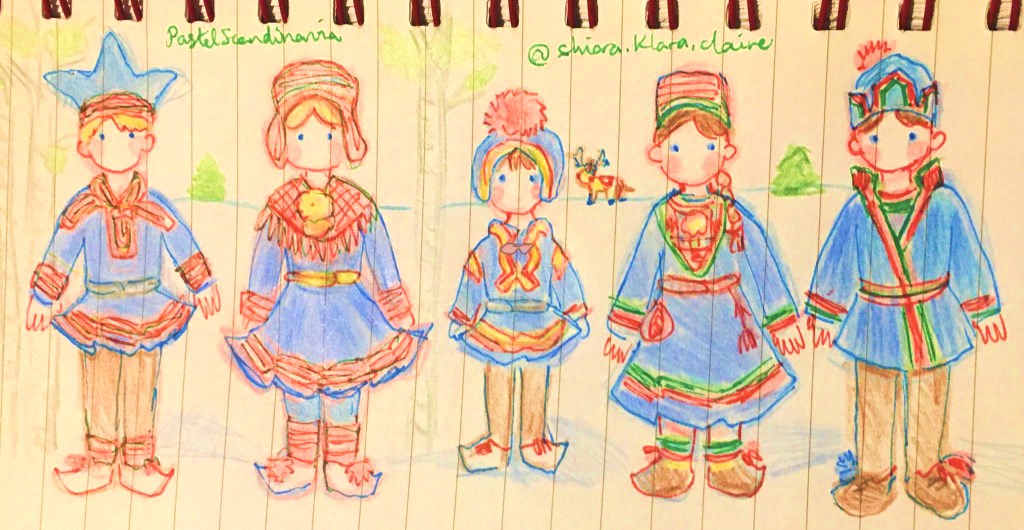
The Sami traditional clothing, gákti/gapta/gábdde in Sami languages, kofte/kolt in Norwegian and Swedish, is well dinstinguished from Norwegian bunads and Swedish national dresses. It is worn at important occasions and varies depending on the gender, family, area one is from and status. Important parts of Sami culture are Sami handicrafts, known as duodji, which include accessories and clothing.

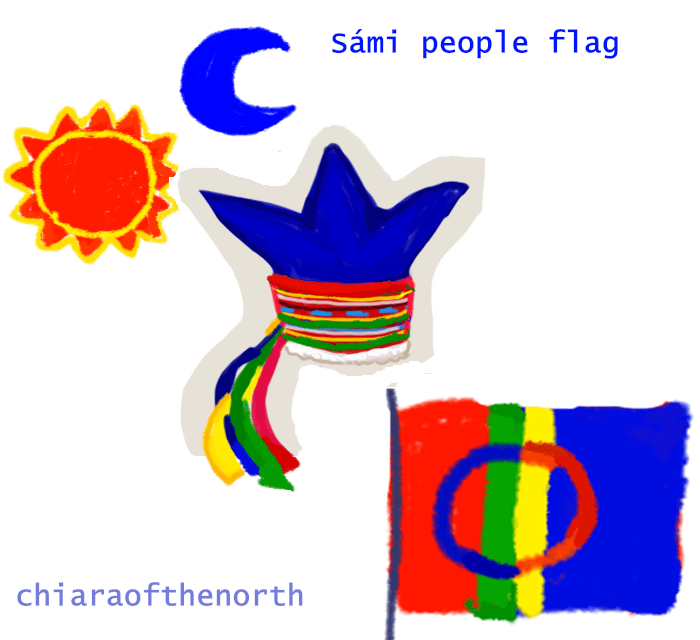
The colors found in Sami clothing inspired the Sámi flag – designed by Astrid Båhl, from Skibotn, Norway, and approved by the Nordic Sámi Council in 1986. The circle is a symbol for the sun (red) and the moon (blue), emphasizing Sami people’s connection to nature.

Another unique cultural element is the Yoik (or jojk), a traditional song-chant, with different functions, and can be about each other, places and animals. it is however inappropriate to sing a yoik about oneself, as this would be a form of self-flattery. Sami national jojk is Sámi eatnan duoddariid by Nils-Aslak Valkeapää, who modernised the yoik tradition. A famous example of yoik is Daniels jojk by Jon Henrik, a yoik tied to his late friend, which was sung at tv-show Sweden’s got talent.

What language do Sami people speak?

If you want to know in detail about various languages Sami people have spoken read my article about Sami languages . There is no single Sámi language, but a group of around 10 distinct Sámi languages which belong to the Ugro-Finnic language family (as Finnish and Estonian). Sami languages are relatively closely related, but not mutually intelligible to each other. North Sámi is the most widely used language and is spoken in all the four countries.

The majority of the Sámi now speak the majority languages of the countries they live in and all Sámi languages are at some degree of endangerment. Sámi languages had been illegal for centuries in Sweden and Norway, with assimilation policies and special residential schools (similarly to what happened in North America with indigenous people). This led to Sámi parents themselves to not speak Sámi to their children as a way to protect them. Since the late 20th century, the Sámi have the right to education in their own languages.

Sámi movie, book, music

  • the movie Sameblod, or Same Blood in English (2016), directed my Amanda Kernell. It is set in Sweden in the 1930s and concerns a 14-year-old girl who experiences prejudice at a nomad school for Sami children, and decides to escape her town and disavow her Sami heritage. Parts of the story are inspired by Kernell’s own grandmother.
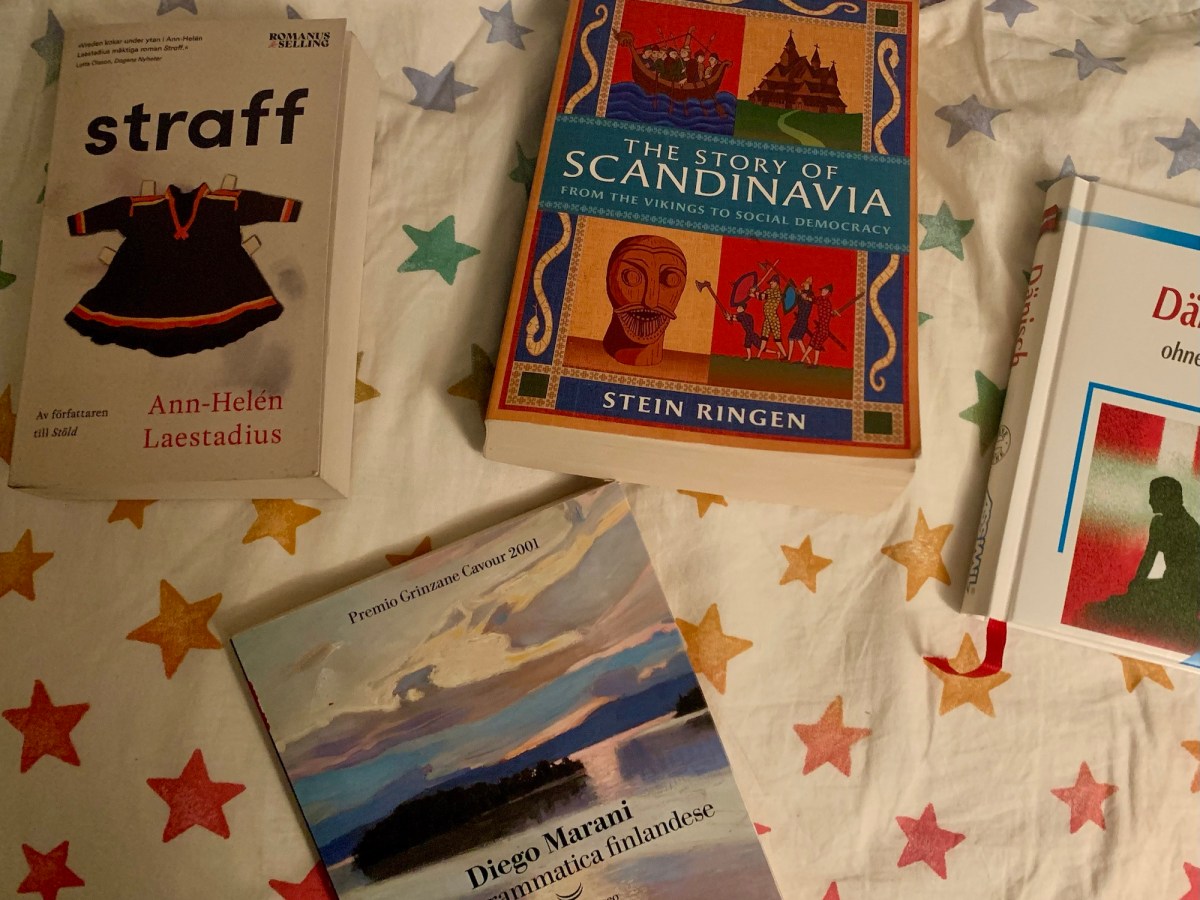
  • books by Ann-Elen Laestadius: Stöld (stolen is the English title- with a Netflix adaption from 2021 as well), Straff (punished in English)
  • Sami singers: Jarnna (their Nilas jojk was my favourite song to calm down in an incredibl stressing period), Jon Henrik, Elin Oskal

History of Sámi people

  • 11,000-5,000 b.C. -first traces of people in Sapmi, inner Norrland. 1,500 b.C – reindeer ski dating back to this time. sijda communities were formed, several families who work and hunt together.

Mentions of Sami people in ancient times:

98 a.D. – the Roman historian Tacitus talks about a people called Fenni in his Germania. Finns used to be a synonym for Sami. 550 a.D – the bizantine historian Procopius tells about various peoples in Scandinavia. the Scraerefenni went on skis, wore animal skins and give the babies marrow to suck on. Both men and women hunt. 900 a.D- Icelandic Viking tales tell about the skin trade with the Sami and how the Sami and other nordic peoples deal with each other.

1300-1600 religious missions and colonisation

Early 1300s – Swedish kings encourage colonisation of lands to the north of Hälsingland, Sami people are taxed. 1389 – The Archbishop of Uppsala is urged by Queen Margaret to serve a mission in Lapland, because she believes that the Sami need a Christian faith. 1606 – King Charles IX calls himself King of the Lapps. He decides that church and market places should be established in the Lapland. 1685-1693 Charles XI of Sweden orders magistrates’ councils to examine the Sami idolatry. The Sami religion shall be destroyed. in 1700s the biologist Linnaeus travelled to Lapland, and mentioned that when a Sami refused to hand over religious objects such as magic drums to the missionaries, they would hold him down while they cut open the large artery in his arm, and made him bleed until he obeyed – a procedure that, according to Linnaeus, ‘often succeeded’.”

1700-1900 systematic discrimination

  • 1723 och 1732 – it is prohibited for Sami people to enter territories to the south of Lappmarken in Sweden, with the policy Lapp skall vara Lapp (Lapp shall be lapp), 1860s – Systematic Norwegianization, Socialdarwinism, Sami people considered inferior. Measures against Sami languages. 1902 – Law in Finnmark that prevented from selling land to those who did not speak Norwegian.

20th century – Rights given to Sámi people

  • 1917 – On 6th February the first Sami national congress took place in Trondheim, Norway. This was the first time that Norwegian and Swedish Sámi came together to solve common problems. On this day Sami national day is celebrated in all of Sami lands since 1992.
  • 1977 -The Swedish Parliament confirms that the Sami are an indigenous people in Sweden.
  • Sami parliaments: 1989 Sametinget in Norway; 1992 Sametinget in Sweden. In Finland a Sami delegation had already been formed in 1971, turned into a parliament in 1996
  • 2000 – The first Swedish Sami language law. Sami are given the right to use Sami languages in contact with authorities and courts, child and elderly care has to be accessible in Sami languages.

Sources :

  • Samiskeveivisere.no – Samer og nordmenn i Norge – Samiske Veivisere
  • Store Norske Leksikon – snl.no/samer
  • sametinget.no
  • samer.se
  • YLE’s Say it in Saami quick guide to Saami culture

the MOOMINS

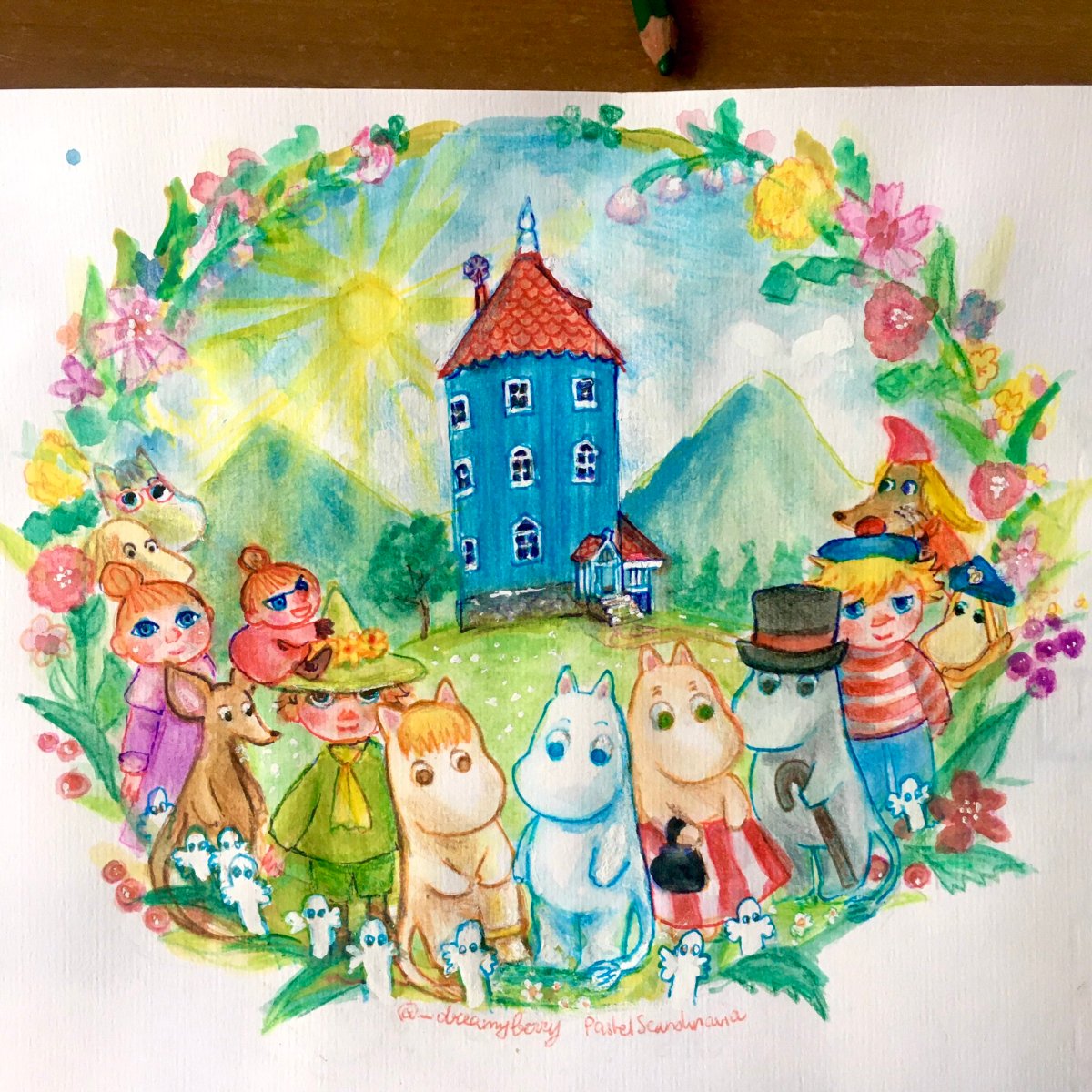
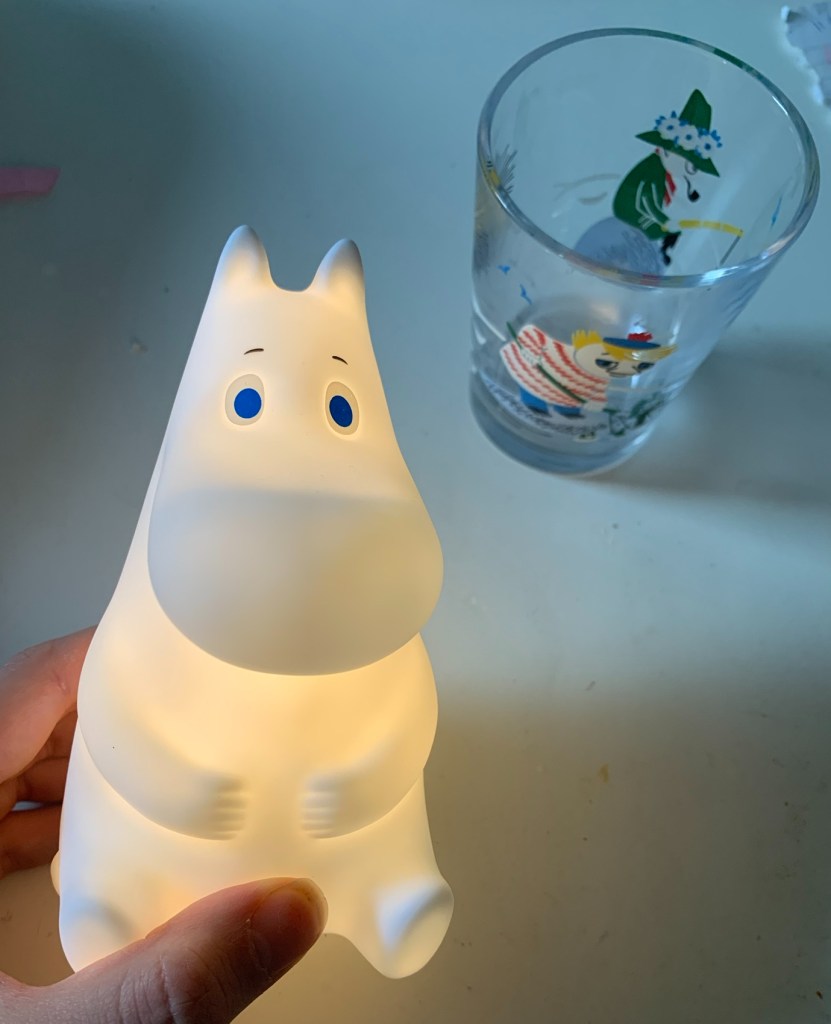
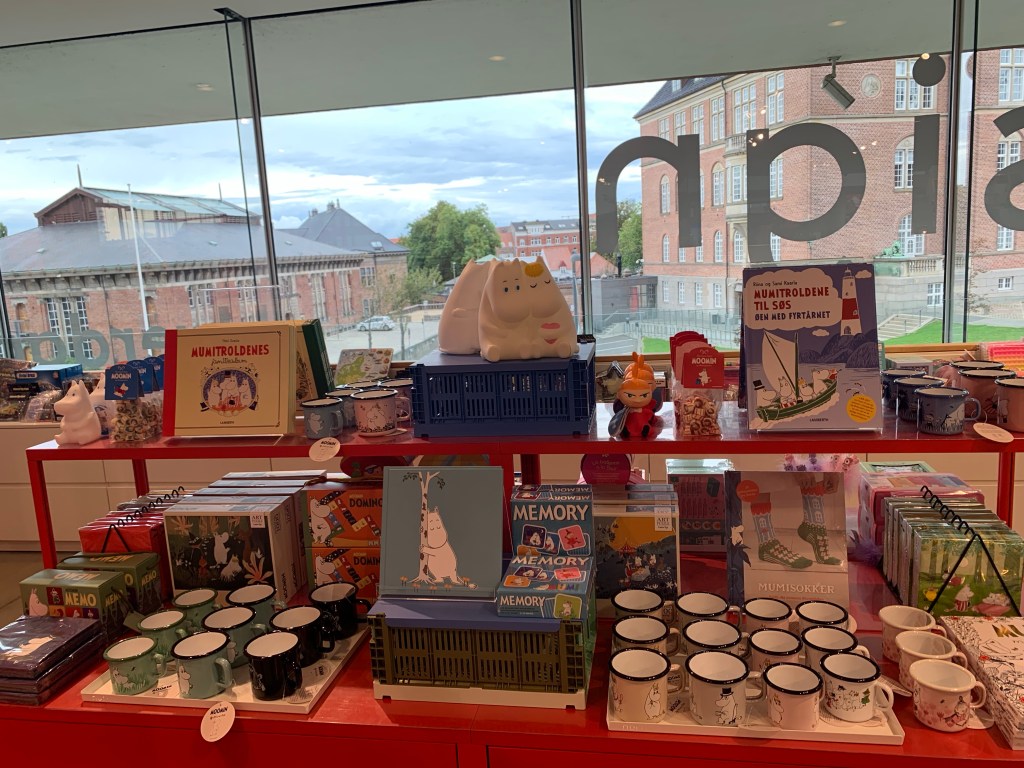
The Moomins, created by Tove Jansson, are the most famous and beloved Finnish characters, First appeared in books, then animated series. Still immensely popular in the Nordic region and Japan, they are feature in countless merchandise items, especially mugs!

The Moomins are a family of hippo-looking characters, created by Swedish-speaking Finnish illustrator Tove Jansson, who created Moomins during the Second World War, as ‘an escape from reality in a fairytale world’. Moomins are still incredibly popular in Nordic countries, and are often used as a Finnish cultural symbol.

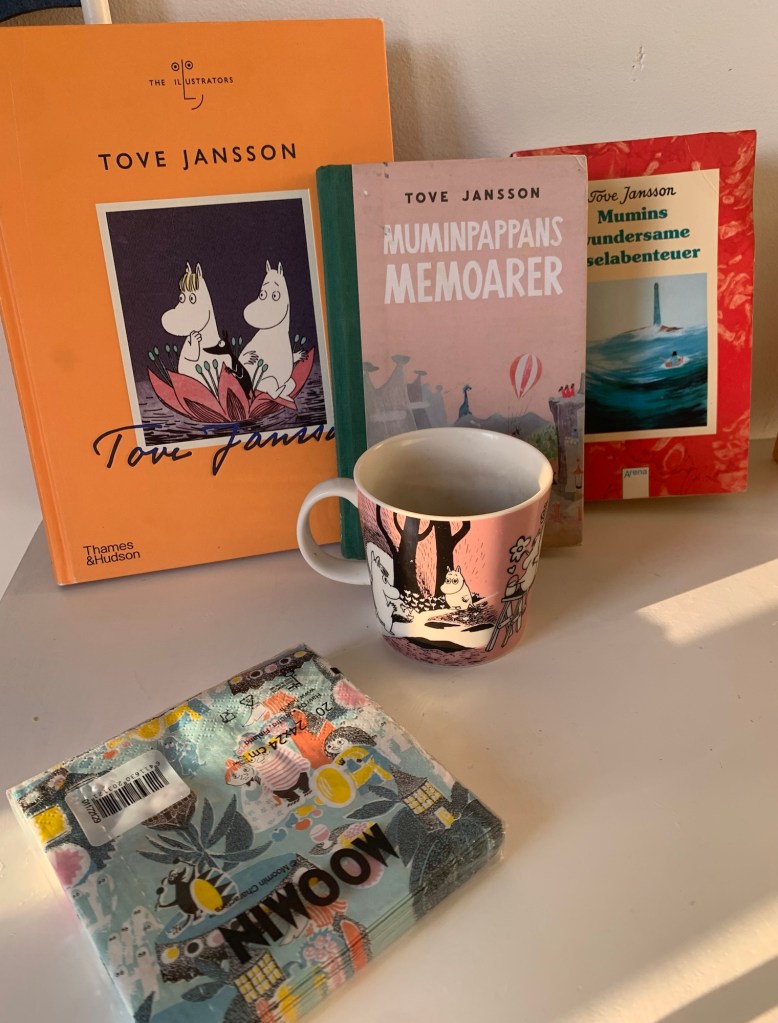
moomin books mug tissues

Tove Jansson wrote and illustrated several books and strips between 1945 and 1980, which got translated into 38 languages.
The first animated series is from 1969, but the most popular is from the 90s, and the most recent is from the 2020s.
Other series were made with puppets and cutouts. and there’s even a Moomin opera! Here’s the Moomin timeline.

Moomin Characters

The core family of the moomins is Moomin himself muumipeikko in Finnish, and his parents, Moominmamma and Moominpappa, live in their iconic cylindric blue house (for a while they lived in a lighthouse and a theatre too). But the ‘family’ is not limited to them, and has incorporated other members:

  • the fearful Sniff
  • the naughty Little My, who teaches that being angry is okay too, sometimes.
  • Moomintroll’s girlfriend Snork Maiden,
  • the vagabond and freedom lover Snufkin, an artist soul,connected to a typical Finnish feeling of melancholy and solitude

Other characters who often appear are:

  • the bossy and stubborn Hemulens and the anxious Fillyjonk, representing the petty bourgeoisie of the time when Tove invented the Moomin world
  • the wise and pragmatic Too-Ticky,
  • Mymla, Little My’s big sister.
  • To the east borders of Moomin Valley there are lonely mountains (Ensliga Bergen), a mysteryous place where the monster Groke lives, who freezes everything she walks on and is hard to communicate with.

Many characters are actually invented after people from Tove Jansson’s life, as her parents , Too Ticky – her partner Tuulikki Pietilä.

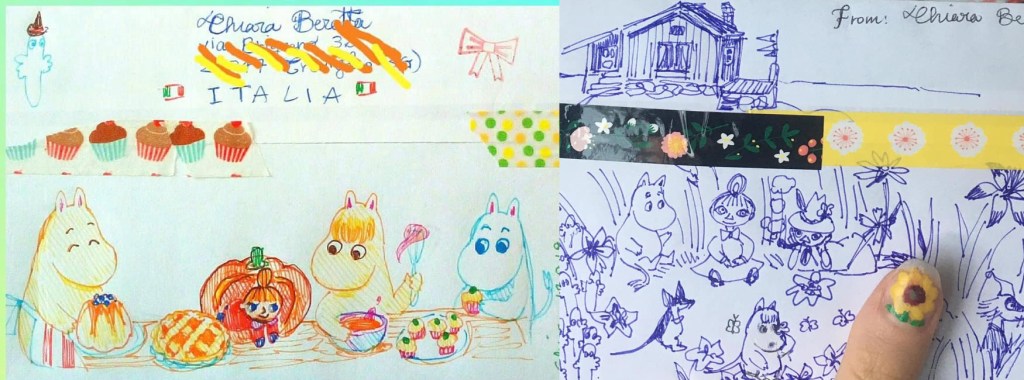
Letters i decorated with Moomin art.

Life in the peaceful Moomin world is often about enjoying small pleasures, as Moomin says:

I only want to live in peace and plant potatoes and dream!

One can’t be too dangerous, if they like to eat pancakes. Especially with jam on it’.

Moomin in Finland

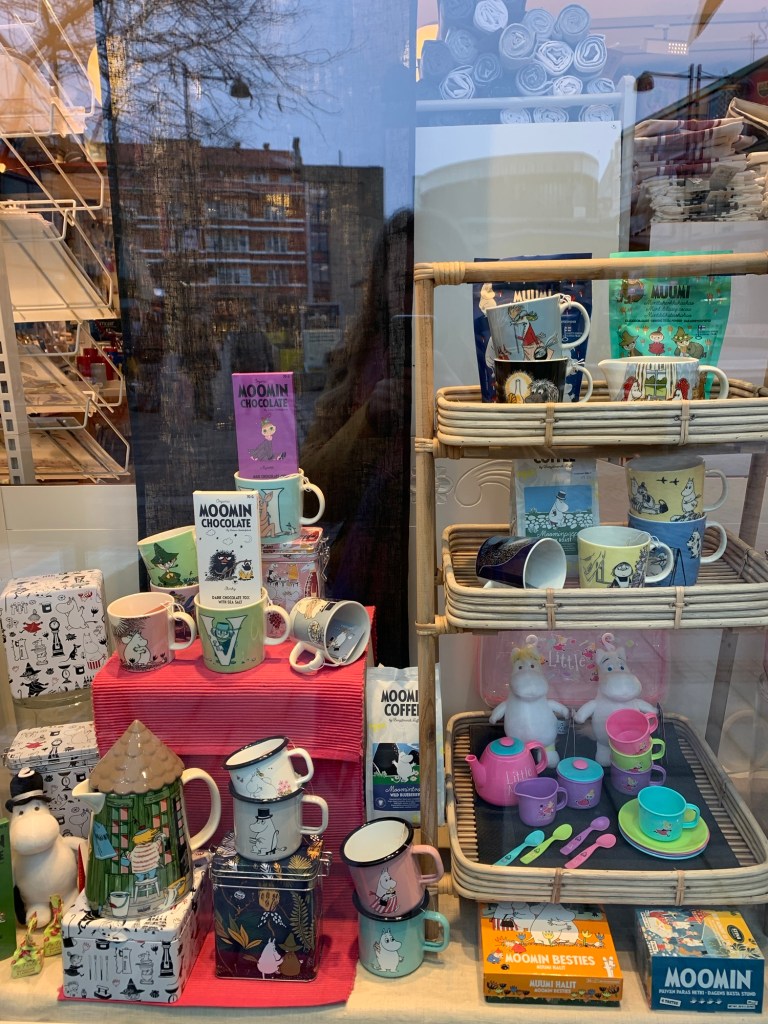
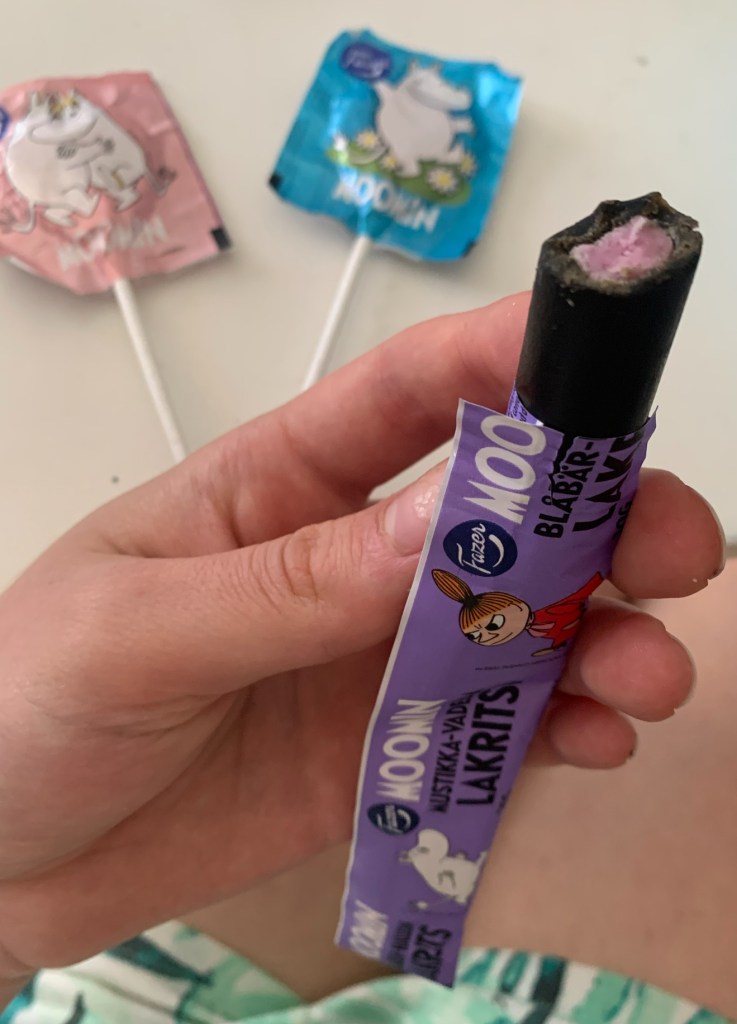
Moomins are still incredibly popular and easy to find in Finland: on Fazer candy and cookies, on finnish postage stamps (since 1988)… but the most classic item to own is probably moomin mugs: produced by Arabia since the 1950s.
You can even fly on a Moomin FINNAIR plane, which of course fly to Japan.

Most Finns (and maybe Swedes or other Nordic peoples as well) have some kind of Moomin object. Even the former Finnish President Tarja Halonen has been known to wear a Moomin watch!

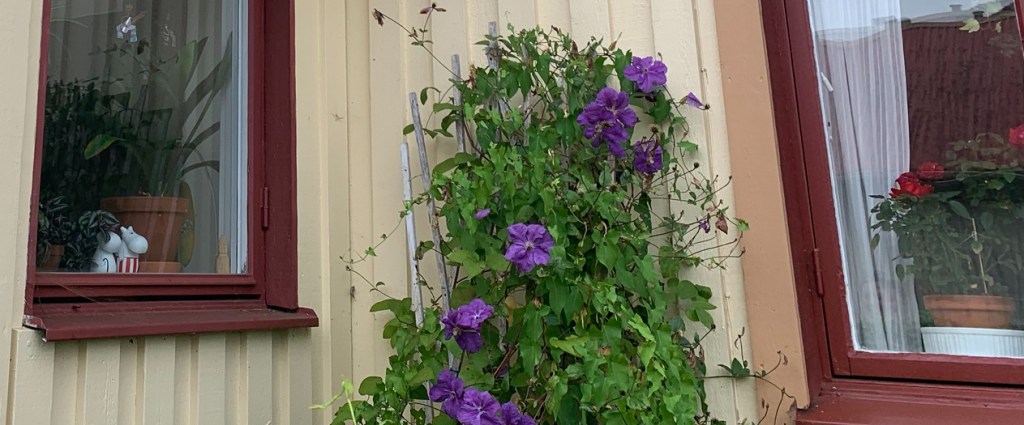
spot the moomins inside this Swedish house!

If you travel to Finland, you can also visit some Moomin-themed attractions:

  • Moomin World theme park (in Finnish Muumimaailma) in Naantali, near Turku, in 1993.
  • Tampere Art Museum has a Moomin section: Muumimuseo, which contains around 2000 original works of Tove Jansson, including a model of the Moominhouse, which Tove Jansson contributed to build.
  • Moomin ice cave is a 30 meters below of a Spa Hotel near Kuopio, it includes Moomin-themed ice sculptures, and offers activities for families with children.

Moomin shops, cafes and attractions in the world

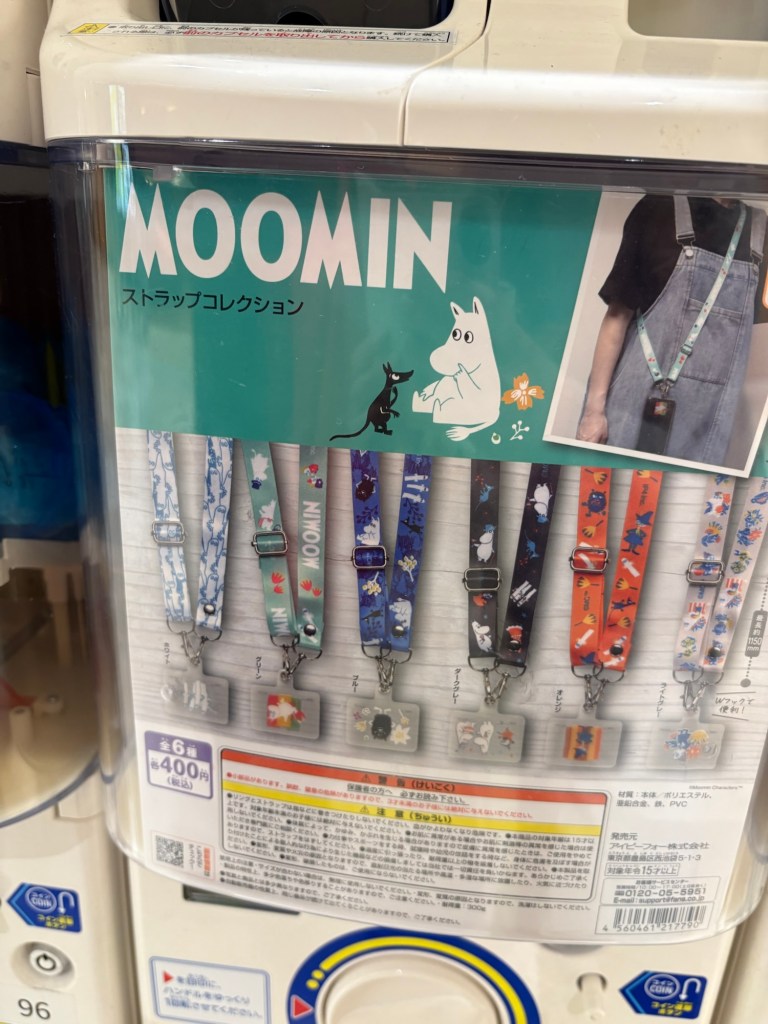
The real Moomin Boom started in the 1990s, with the Japanese animated series Tales From Moominvalley. Moomin books were already bestsellers in Nordic and Baltic countries, but the animation made Moomin extremely popular in Japan among others.

Japan has a Moomin-themed park since 2015: MoominValley Park, in the prefecture of Saitama, near Tokyo.

Besides Moomin shops in Nordic countries (I have been in the Gothenburg one, Sweden), there are quite a few in Asia (most in Japan, but also Korea, Thailand, China and Hong Kong), and there is one in the USA, but not NYC or LA – in Hawaii! Not surprisingly due to the Japanese tourists…

Moomin themed-cafes are very popular in East Asian countries: other than in Finland various pop-up cafes have appeared now and then in Japan, Hong Kong, Thailand, South Korea and Taiwan.
You could eat a moomin shaped meal in front of a giant moomin character plush there! Moomin Cafes.

You can check out all currently open Moomin shops, attractions and cafes on Moomin official website.

Subscribe for more info and moominous posts:

Puffins: Iceland & Faroe’s mascot

The lovely sea parrot living around the North Atlantic coasts, symbol of Iceland and the Faroe Islands.

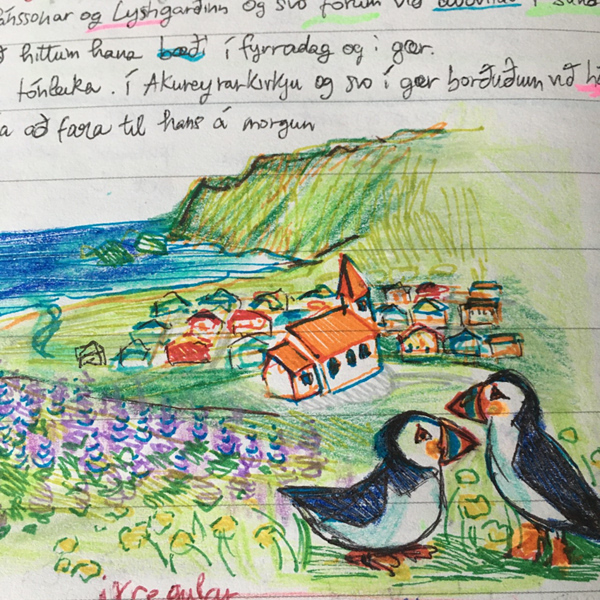
The Atlantic puffin (Fratercula arctica), Lundi in Icelandic and Faroese, is a species of seabird in the auk family. The Atlantic puffin moves to North Atlantic coasts in summer and breeds in Iceland, the Faroe Islands, the Shetland and Orkney Islands, Norway, Greenland, Newfoundland and Labrador, and as far south as Maine in the west and Britain in the east. More than 90% of the global population is found in Europe  and colonies in Iceland alone are home to 60% of the world’s Atlantic puffins, in particular Westman islands (Vestmannaeyjar).

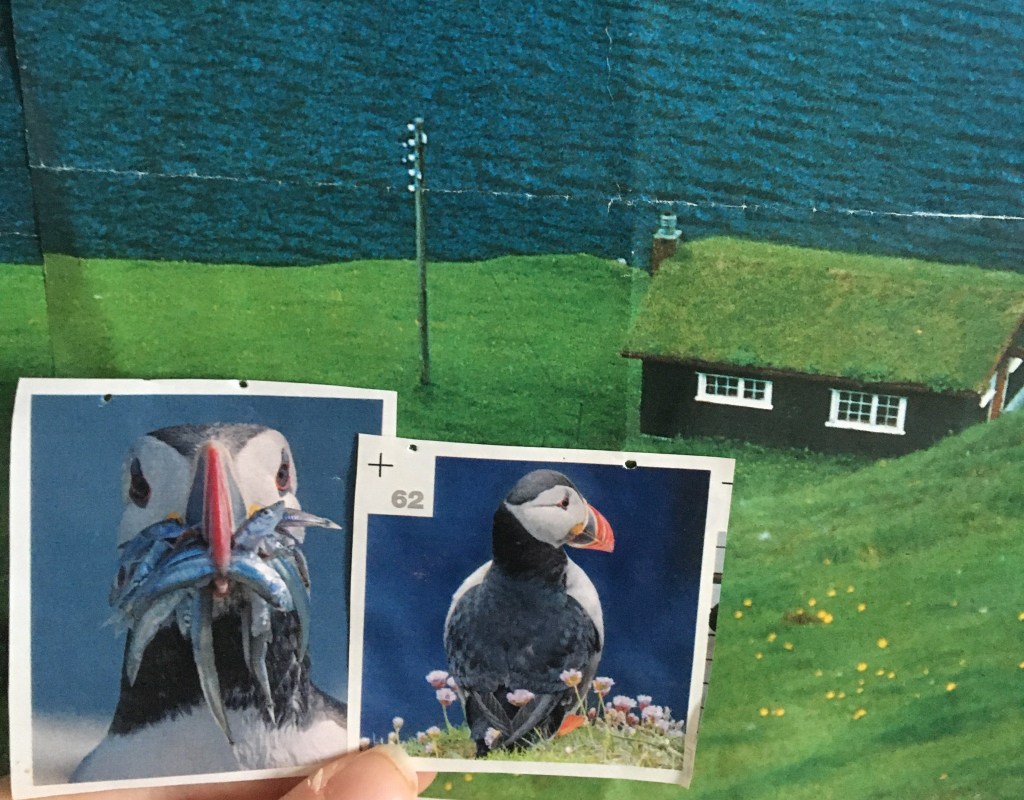
Cutouts from magazines, I can’t resist to puffin pictures!

The generic name Fratercula comes from the Medieval Latin fratercula, “friar”, a reference to the black and white plumage which resembles monastic robes. The vernacular name “puffin” comes from puffed in the sense of swollen. The striking appearance, large colourful bill, waddling gait, and behaviour of this bird have given rise to nicknames such as “clown of the sea” and “sea parrot”.

The beak is the most distinctive feature. From the side, it is broad and triangular, but viewed from above, it is narrow. The half near the tip is orange-red, yellow, and blue-greyish. A puffin beak can contain 12 up to 18 fish at once! The Atlantic puffin is sturdily built with a thick-set neck and short wings and tail. It is about 30 cm and weighs 400-600 g.

Traditions in Iceland and Faroe Islands

A tradition exists on the Icelandic island of Heimaey (part of Westman islands) for the children to rescue young puffins, a fact recorded in Bruce McMillan’s photo-illustrated children’s book Nights of the Pufflings (1995). The fledglings emerge from the nest and try to make their way to the sea, but sometimes get confused, perhaps by the street lighting, ending up by landing in the village. The children collect them and liberate them to the safety of the sea.

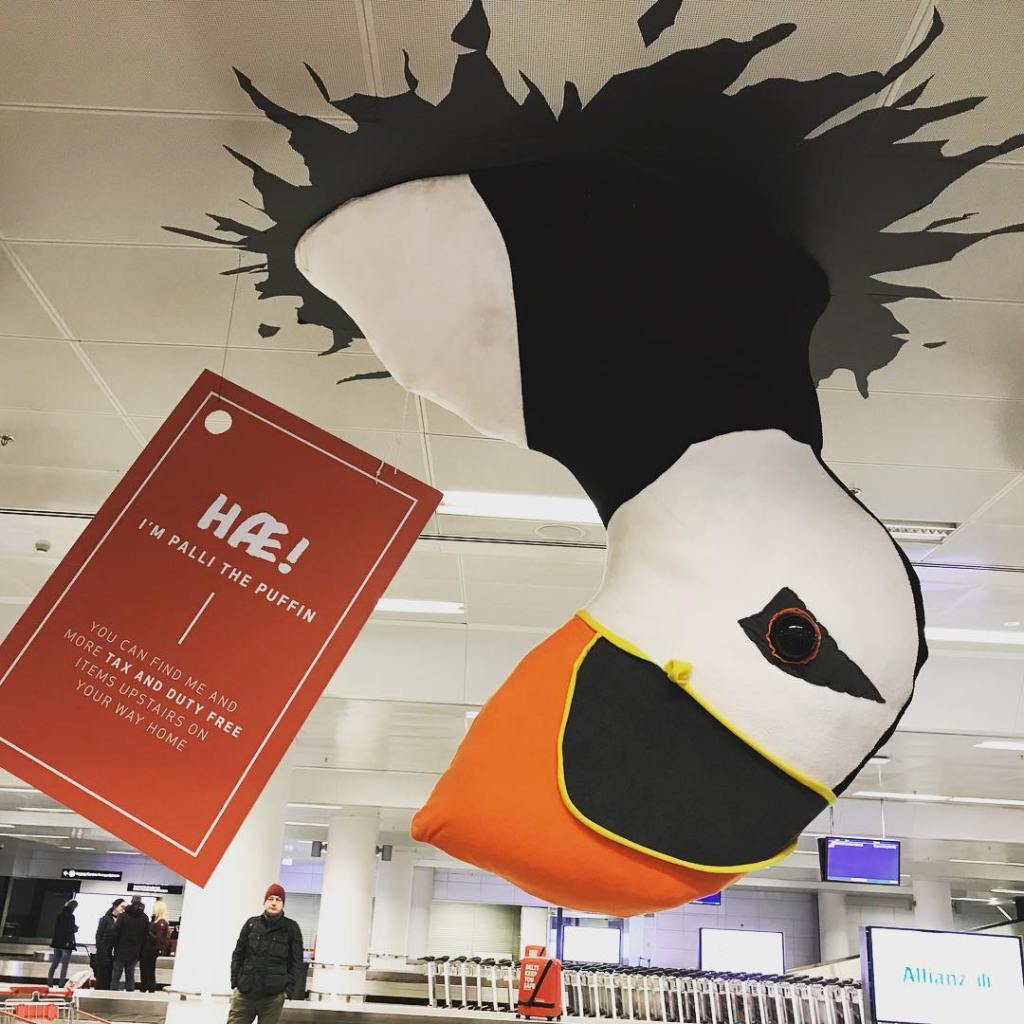
Palli the Puffin greeting travellers coming to Iceland in Reykjavik airport (picture by Mundi Lundi, page about a puffin who was found injured in the Icelandic capital and the nursed back to health)
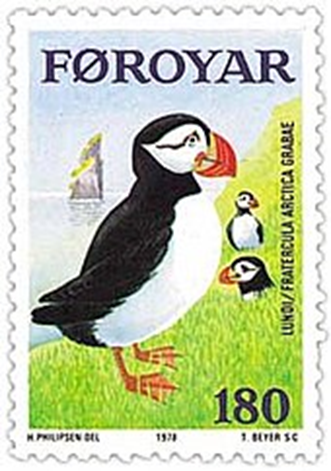
Faroe islands 1978 postal stamp by Holger Philipsen

Puffins have been hunted by man since time immemorial, coastal communities and island dwellers with few natural resources at their disposal didn’t have much else to hunt besides fish and seabirds.

They are still caught and eaten in Iceland and the Faroe Islands A typical device used in the Faroes to catch them was a fleyg. This was a long pole with a neton the end. a skilled hunter could gather 200–300 in a day!

Puffins in logos and symbols

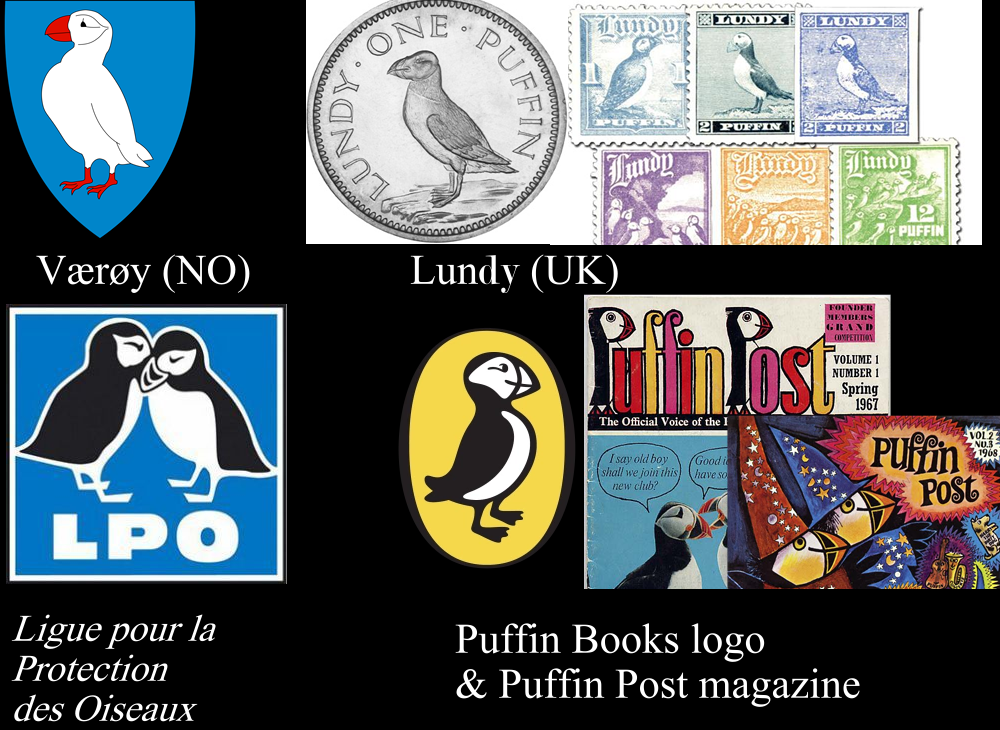
  • The Norwegian island municipality of Værøy, part of the Lofoten, has an Atlantic puffin as its civic emblem.
  • the name of the island of Lundy (UK) might come from Norse lund-ey or “puffin island”. The Vikings might have found the island a useful refuge and restocking point after their depredations on the mainland . The island issued its own coins, and in 1929, its own stamps with denominations in “puffins”.
  • The paperbook publisher Penguin Books introduced a range of books for children under the Puffin Books brand in 1939. The demand was so great that a children’s magazine called Puffin Post was established, Puffin Post.

Puffin characters in pop culture

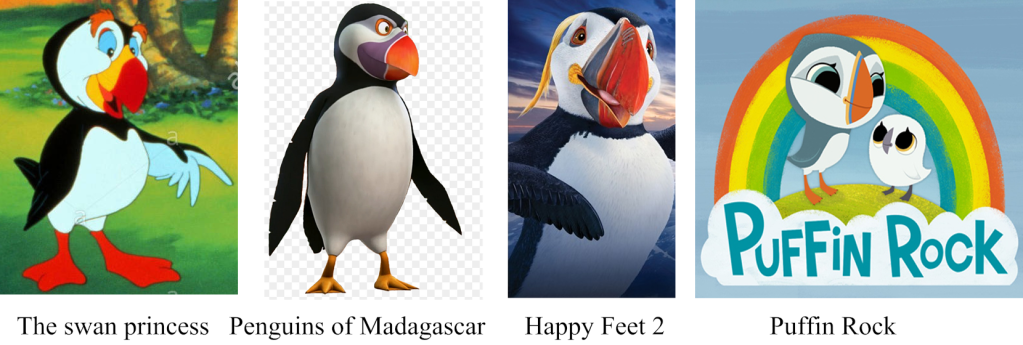
  • The Swan Princess -Puffin
  •  Madagascar – Hans
  • Happy Feet 2 – Sven is a puffin who pretends to be a penguin
  • Puffin Rock – A Netflix original cartoon about the puffin Oona and her little brother Baba

Icelandic and Faroese mascotte in the world

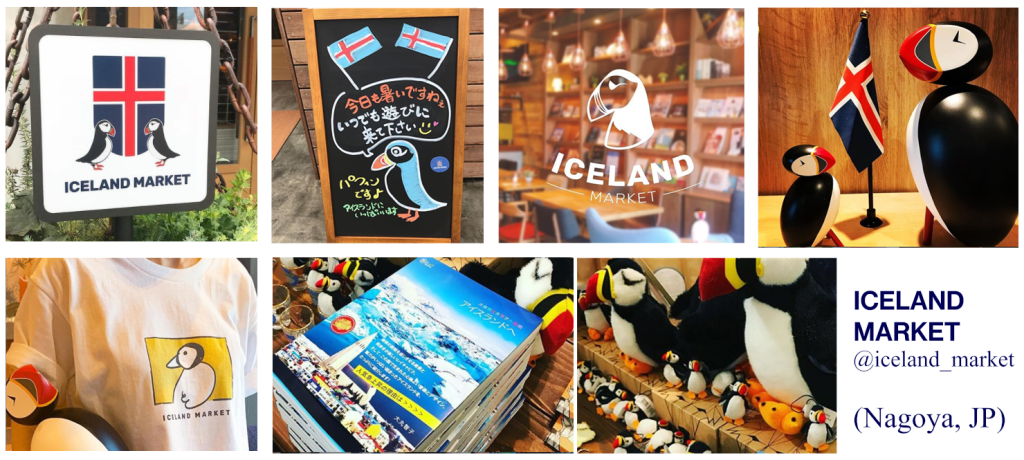
Puffins are often used to promote these Nordic islands, ICELAND MARKET in Nagoya, Japan, still has puffins in its logo and gadgets in what used to be its cafe, proudly representing Iceland.

FRAMTAK, a Faroese site, now inactive, promotes the Nordic archipelago and has a section with comics about Ludvík Lundi (“the puffin with glasses”), ideal if you want to practice Faroese!

Puffins in danger

In most countries, Atlantic puffins are now protected by legislation, and in the countries where hunting is still permitted, strict laws prevent overexploitation, but calls have been made for an outright ban on hunting them in Iceland because of concern over the rapid and ongoing population decline in its European range especially since 2000. In 2015, the status of this species was upgraded from “least concern” to “vulnerable”.  Some of the causes of population decline may be increased predation by gulls and skuas, the introduction of rats, cats, dogs, and foxes onto some islands used for nesting, contamination by toxic residues, drowning in fishing nets, and climate change.  Based on current trends, the European population will decline an estimated 50–79% between 2000 and 2065.

More articles: