cinnamon buns, waffles, semlor and more: there is a special day dedicated to each in Sweden
Soon it is time to eat semlor pastries in Sweden! Swedes have a few days dedicated to eating a specific thing. Whether it started to honour a king or just find an excuse to bake, time to mark some days on your calendar and join them in celebrating Swedish confectionery!
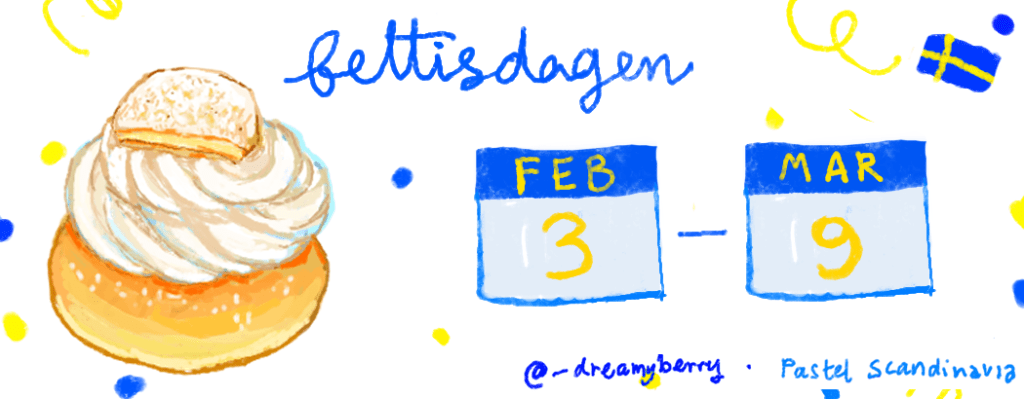
Semlor: February/March – Fettisdagen
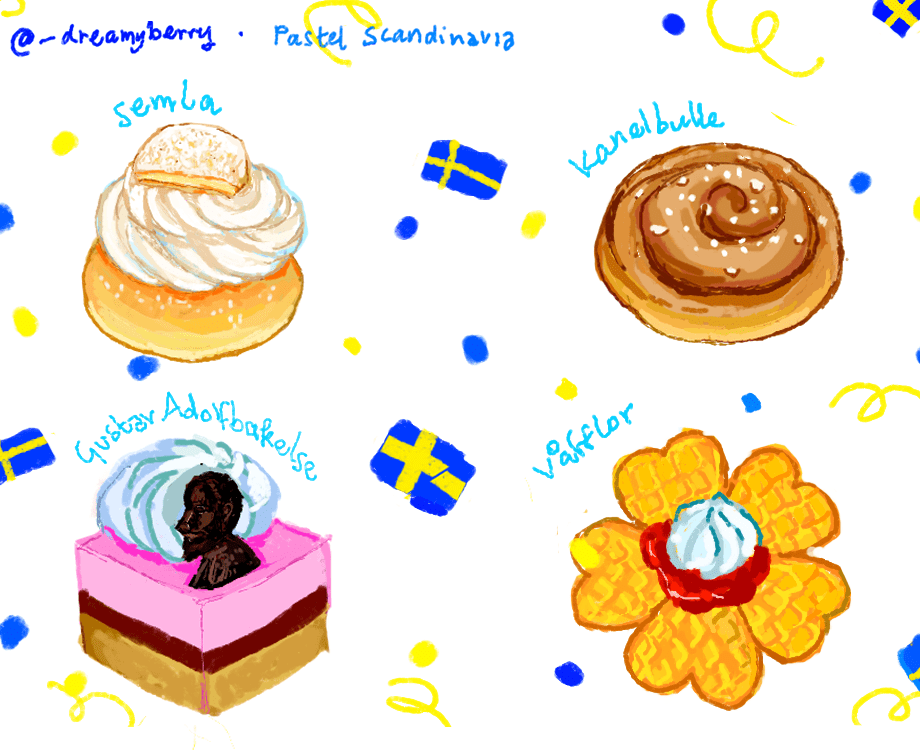
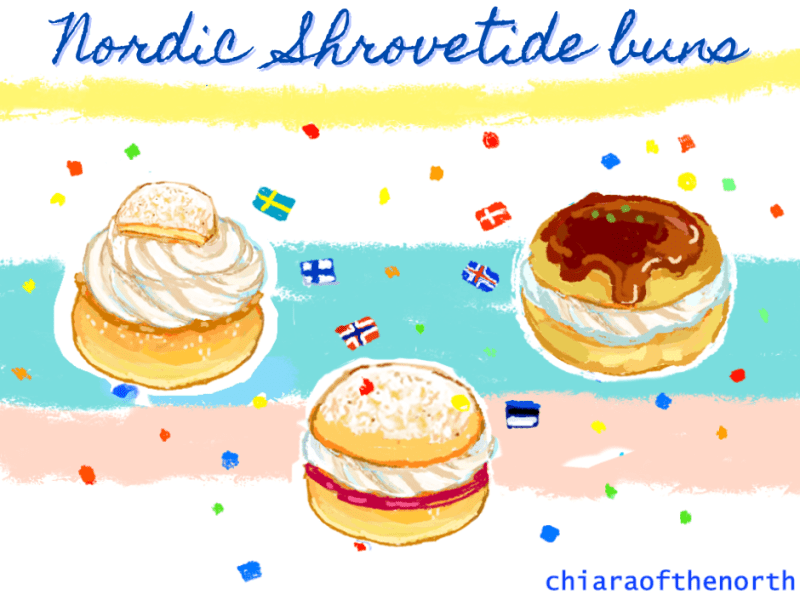
On Shrove Tuesday (fettisdagen, fet tisdag = fat Tuesday), 21 February in 2023, tons of of semlor are purchased in Sweden. A semla is a cardamom-spiced bun with almond paste and whipped cream. A perfect pastry you’d want to devour before the fastening time preceding Easter starts! Semlor are eaten in Swedish Finland too, but called fastlagsbulle there, and Fettisdagen is called fastlagstisdagen. Slightly different versions of semlor exist in the other Nordic countries too, and they are usually eaten on Shrove Monday instead: Bollur in Iceland, Fastelavnboller in Denmark/Norway. Unlike the Swedish semlor, they often have chocolate on top…
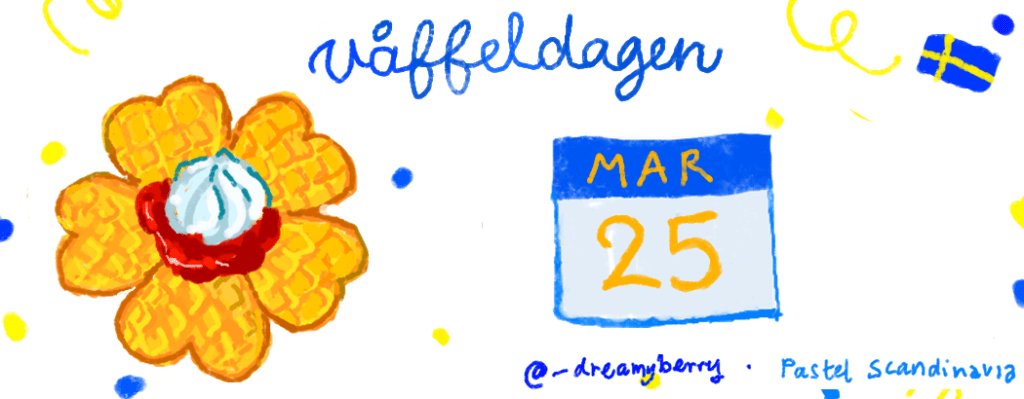
Waffles: 25 March – Våffeldagen
The christian feast of the Annunciation, in Swedish Vårfrudagen, lit. “Our Lady’s Day”, ended up becoming for most Swedes the similar-sounding våffeldagen (“waffle day”). This turned a religious day into a chance to eat heart-shaped waffles! It is also ”observed” In Norway and Denmark!
Cinnamon buns: 4 October – Kanelbullensdagen
Cinnamon bun day has been celebrated since 1999, and it was actually invented for commercial reasons: the person who made it up, Kaeth Gardestedt, was at the time working for an association of baking products producers. After almost 25 years people still bake cinnamon bunson 4th October!
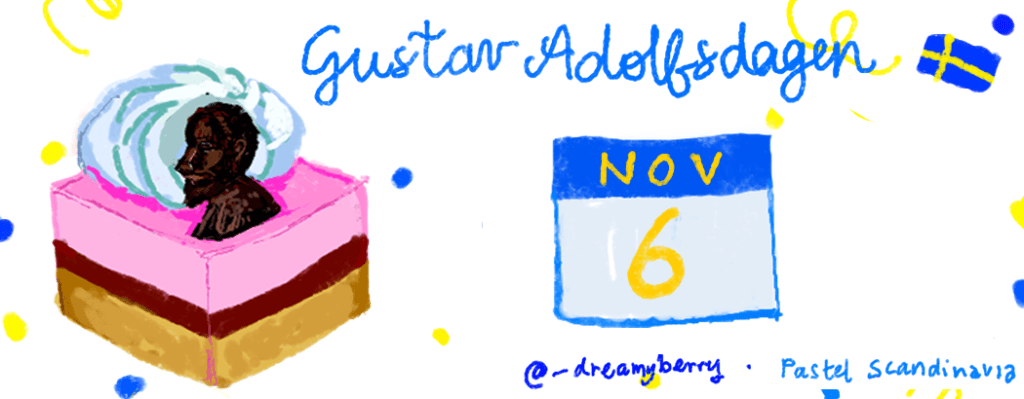
Gustav Adolf pastry: 6 November – Gustav Adolfsdagen
6th November is the date of the Swedish king Gustav II Adolf’s death in 1632. The king was very generous with universities as the one of Gothenburg, where a pastry was invented in his remembrance: Gustav Adolfsbakelse. It has been popular since the late 1800s. You can see it in a lot of variations, but what makes it a Gustav Adolf pastry is the chocolate bust of the king on top!
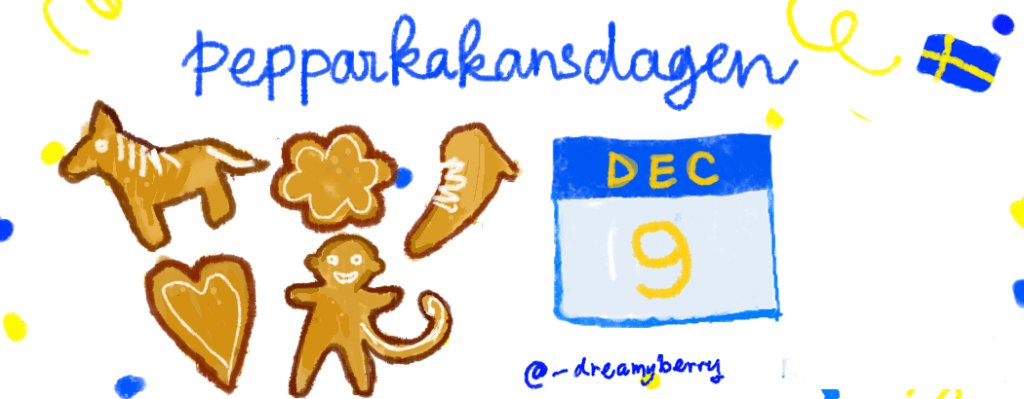
Gingerbread biscuits: 9 December – Pepparkakansdag
Gingerbread cookies, known as pepparkakor in Sweden, probably originated in Nuremberg, Germany, in the middle ages. Mentioned in Swedish in 1444 for the first time, the word pepper was used to mean spices in it, as pepper was the most common spice at the time. Baking them became a typical Christmas thing in Sweden and other countries, remember the episode of Pippi were she cuts them in the shape of her horse and monkey? Pepparkakansdag was, similarly to Kannelbullensdag, invented in 1996 by gingerbread maker Annas Pepparkakor.
Apparently there is also a Polkagrisensdag (candy cane day) on 20th April, but it mostly promoted in Gränna, near the Vättern lake. There Amalia Eriksson invented the polkagrisstång in 1859, the red-white peppermint candy cane, and many local shops celebrate this day.
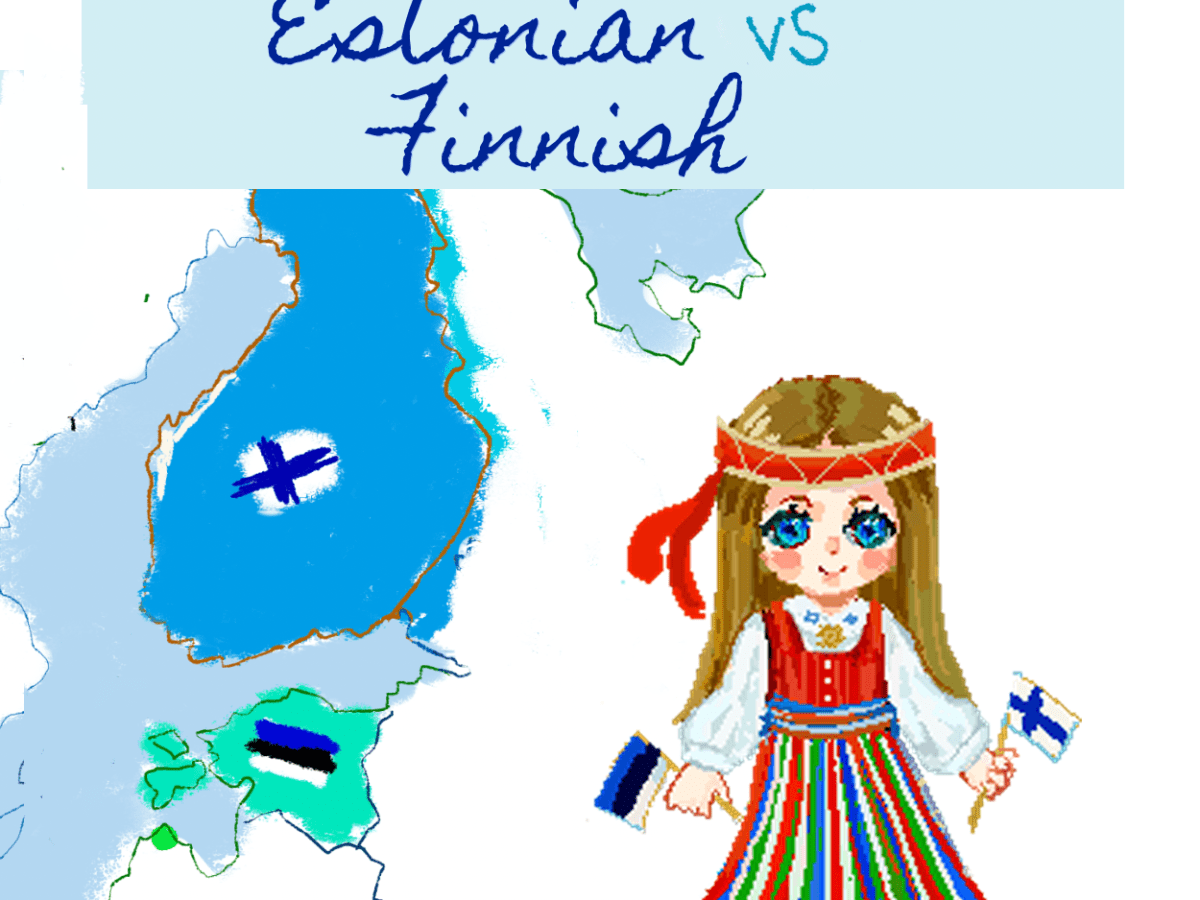
Estonian is a Finnic language, sharing many similarities with its ‘bigger’ sister Finnish, while being unrelated to all their bigger language neighbours
Cream buns are enjoyed in Nordic and Baltic countries during shrovetide, between January and February. Sweden’s classic semla has almond paste, while other countries variations include jam, vanilla cream, and chocolate icing top.
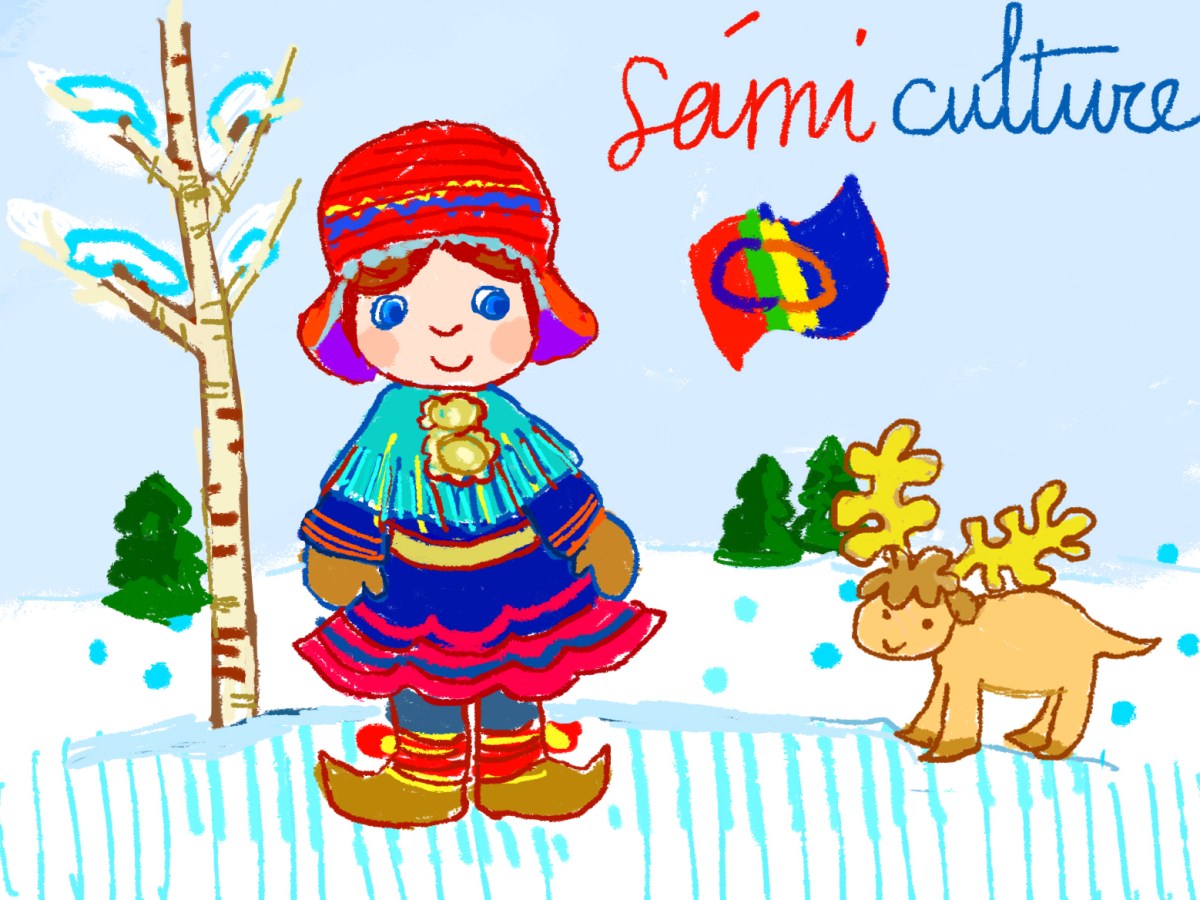
Sámi people, indigenous people of North Scandinavia, have a distinct culture, symbolised by its unique flag and traditional clothing, and part of it are Duodji handicrafts and unique musical expression through yoik.
How graduating from high school is like in Sweden, Denmark, Norway!
Hats and buses
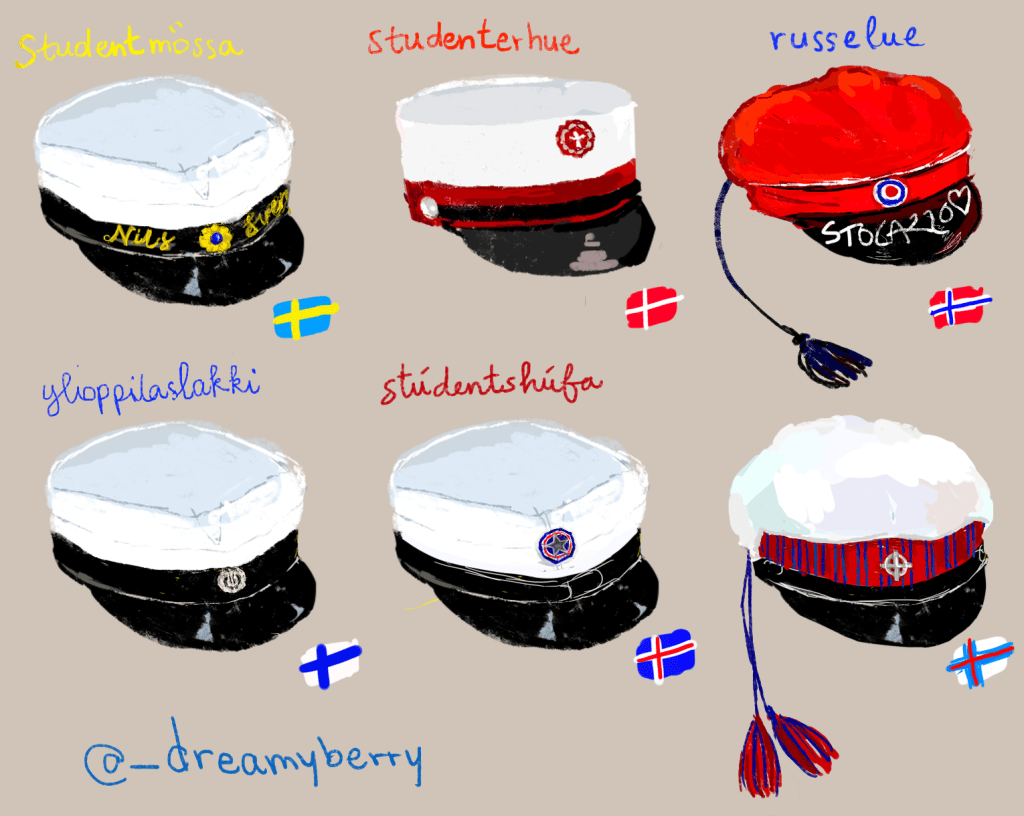
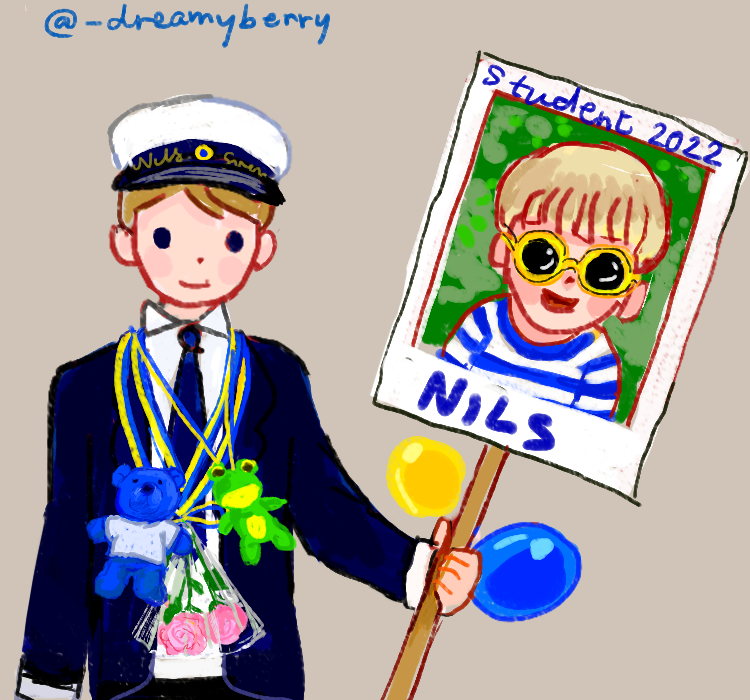
the symbol of High school graduation is a hat resembling a ship’s captain cap, the first time I saw a Swedish graduation celebration picture I was pretty confused about those hats, but it’s actually a tradition inspired by German students, spreading it to Nordic countries in the 19th century.
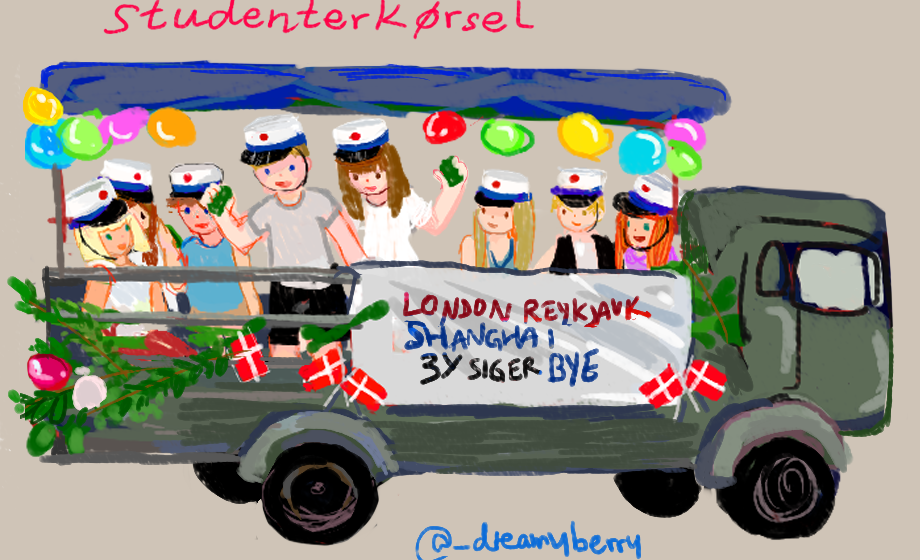
Another common thing in Scandinavian is that graduates celebrate around town on rented buses or trucks (sometimes saving up years just to rent one), generally playing loud music, drinking and just partying!
Denmark 🇩🇰
Danes have an oral exam as final. you have to decide who from your family is placing the hat, studenterhue, on your head, when you step out from it. It’s the norm to wear the graduation cap for at least 2 weeks, It is courtesy that people they meet on the street congratulate them, even if they don’t know each other.
The ribbon on Danish caps was originally only either blue (Mathematics students) or red (Arts students), it now comes in many different colors depending on the length of your education and which school you went to, see all possible variations on Alt.dk. There are lots of rules involving the studenterhue:
You can’t wear your cap before your last exam (it would bring bad luck)
your gradehas to be written in the center of the hat, and friends and family can leave autographs and short notes in it
friends bite in the shadow for good luck.
the students with the biggest and smallest hat size, and the ones with the highest and lowest grade average have to buy a box of beers for the class
the hat has to be cut in different ways if the student has drunk 24 units within sunrise, if he vomits, and so on to the point a which if the student goes to the hospital because of too much alcohol the whole shade is cut off.
more rules are related to having sex (heart on the sweatband if with the partner, lightning on the rim if not in a relation) , kissing someone (if same gender the cross has to be turned), breaking up (metals going off), taking a swim with only the hat on (wave in the rim)
If the student has been awake for 24 hours then the hat must be turned around (shadow in the back).
You can see more on this site dedicated to studenterhue rules (in Danish)!
The Studenterkørsel – student drive – is an important part of the celebration, renting a truck decorated with beech branches to party, drink and play loud music on (here‘s a site where the trucks & stuff can be arranged). It drives to each student’s home for around 15 minutes, for a short visit where parents give snacks and drinks before the next destination.
This can last one or two days and of course also the studenterkørsel has its own rules, among which running after the truck if you get an A in your last exam, and learning a battle cry to scream at passing student trucks!
Everyone greets and sends their congratulations when they see these trucks. On my very first day in Denmark Student buses were driving around (slowing down the bus I was on though, haha) and following my friend’s example we waved at them, flying my welcoming flag! It felt quite cool!
Sweden 🇸🇪
In Sweden there’s one big day, Studenten, but the celebration starts around the end of April, where students organize games which will give points deciding who will be the first student running out of the school on the gruaduation day; it can be anything from chill to embarrassing things to do, though maybe not as wild as what you’ll read for Norway. In May, there’s one day called Mösspåtaggning, on which students dress up nicely with their hat Studentmössa on, and with classmates they go to school and then to a restaurant or bar, celebrating that one month is left until the studenten time.
The big day of Studenten may vary depending on the school, but it is usually around 30th May to 15th June, with 6th June (Sweden national day) being the pitch.
This day starts with fellow students meeting up very early – between 4 and 7 am for the Champagnefrukost, Champagne breakfast
At 8-9 it’s time to leave for school, with some proving they can keep up with the celebration despite being drunk.
Around 10 everybody listens to the principal giving a speech, some students get diploma for things as All-A-Student etc.
At 11-12: photo shootings of classes!
Once they got their diploma, Students run out of school to their families and friends, who are waiting for them holding a picture of the graduate as a baby or small child, and give them blue-yellow chains with flowers and trinkets as plushies!
The clothing for this day is quite formal, with boys wearing suits, girls usually a white dress. each student has their name and surname embroidered on the hat, which costs around 100 euros
After staying with their families for some time, studentsget on flatbed buses driving through the city as the Danes do, dancing, drinking and partying. In some cases they just walk around instead, something which has been encouraged by authorities after several accidents involving the flatbuses occured.
Norway 🇳🇴
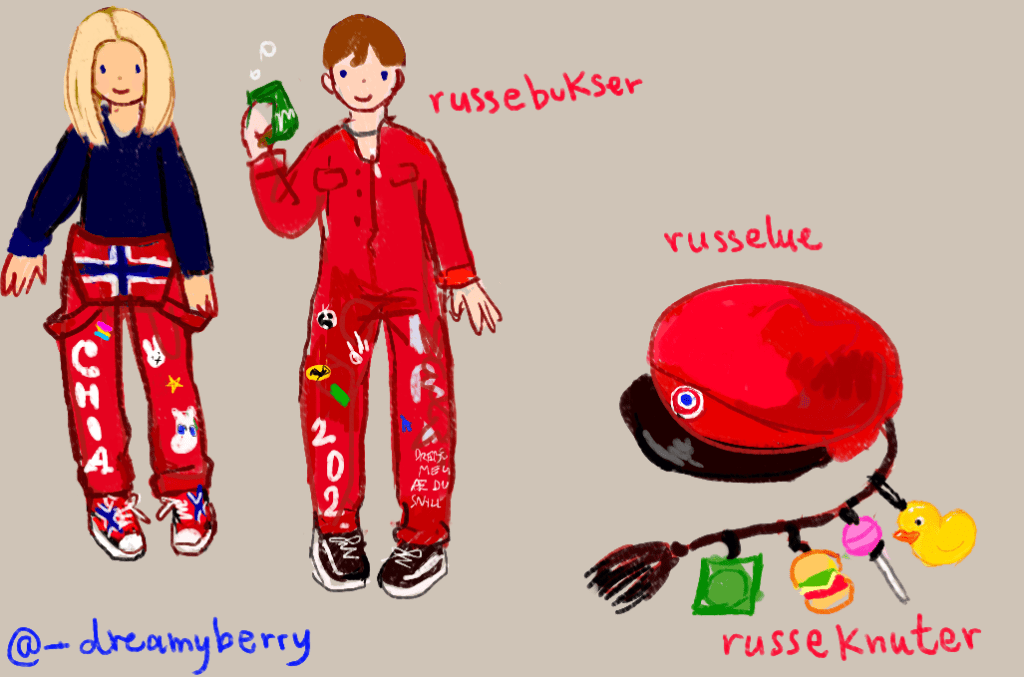
Norwegian graduation celebrations, Russ (short for russefeiring) is a big deal in Norway, with youngsters in overalls roaming cities for almost a month, from the end of April to the Norwegian Constitution Day, (read more about May 17th). On that day, the students are awarded their caps and join the parade in their overalls. The russ period has also become known as “the three-week binge” treukersfylla, continue reading to find out why…
The personalized overalls, russebukse, are usually red, or blue in case of financial and business studies, and personalized with patches. On this website Norwegians can get their russ equipment 😉
On the caps, Russeluer, Students write the Russ names they’ve been given, but the important part is a long cord, which gets knots (knuter) added for given dares completed before graduation: russeknuter. The tradition was introduced in the 40s, with different lists of around 100 dares for every school. Many dares involve sex and alcohol, and a lot are just hilarious. Classics are wearing loaves of bread on your feet for a whole day, not sleeping for 48 hours and bathing outside before 1st May. After criticism that russ was getting too wild, some new dares were invented to encourage teens to make good choices, such as getting tested for STDs or giving food to a homeless person.
Here are a few recurring ones (trinket – dare associated to it):
TAMPON – Put two tampons in your mouth and drink a pint of beer/cider.
TWIGS FROM THE GARDEN – Sleep in a tent in a teacher’s garden.
CANDY BURGER – Eat a cheeseburger in two bites.
“L” – Put an “L” (used for driving practice) on the back of a public transport vehicle.
CONDOM PACKAGE – Buy a pack of condoms using only body language.
BANKNOTE – Place a 5 minute poledance on a pole on a public transport.
RUBBER DUCK – Bathe with someone else in a canopy in front of the school, remember to scrub each other.
TOY FIRE TRUCK – Have safe sex during your period/with someone on theirs.
Here is the whole list of Russeknuter of Oslo for 2022 (in Norwegian). Because of what’s happening, this year there is a special Ukraine-knut, which can be gained if the class contacts a refugee centre and brings some fun activities to socially engage the young refugees there.
As the other Scandinavians Norwegians also rent or buy buses – thetradition of buying an old van or bus and painting it started in the 70s – but they do it on the next level, with their Russebuss, large coach buses completely decked out with colors, graphics, retrofitted and customized to become mobile partying units! The average Russbuss is used by 15 to 25 students and costs around $116,000!! Drivers are hired to drive them to Festivals and landstreff (national meetings) to meet Russ from whole Norway and party, party, party.
You may now wonder why students party that wildly in April. That’s because by the early 2000s, the authorities were worried about the impact all this partying and alcohol would have on the students’ grades, so the final exams in public schools were moved to early May. but what ended up happening was simply that the students started the russefeiring earlier.
Bonus: Finland 🇫🇮
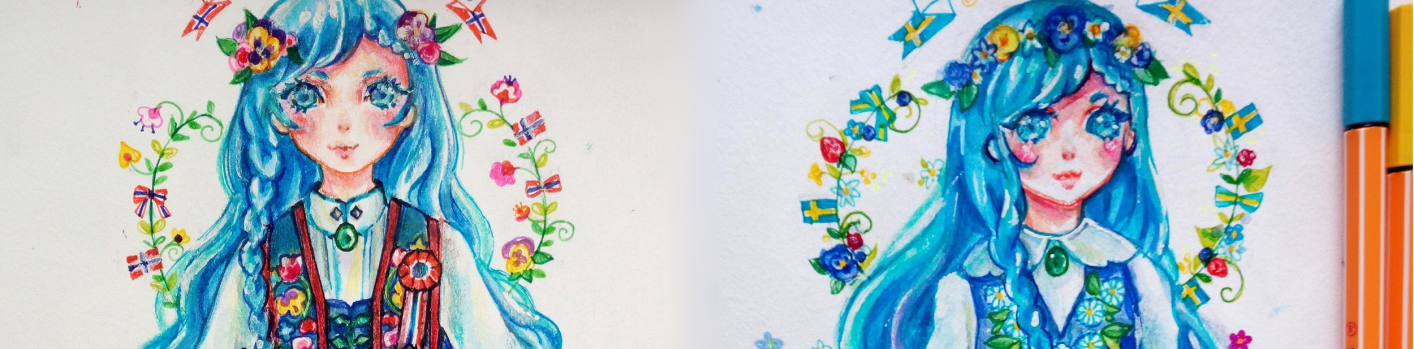
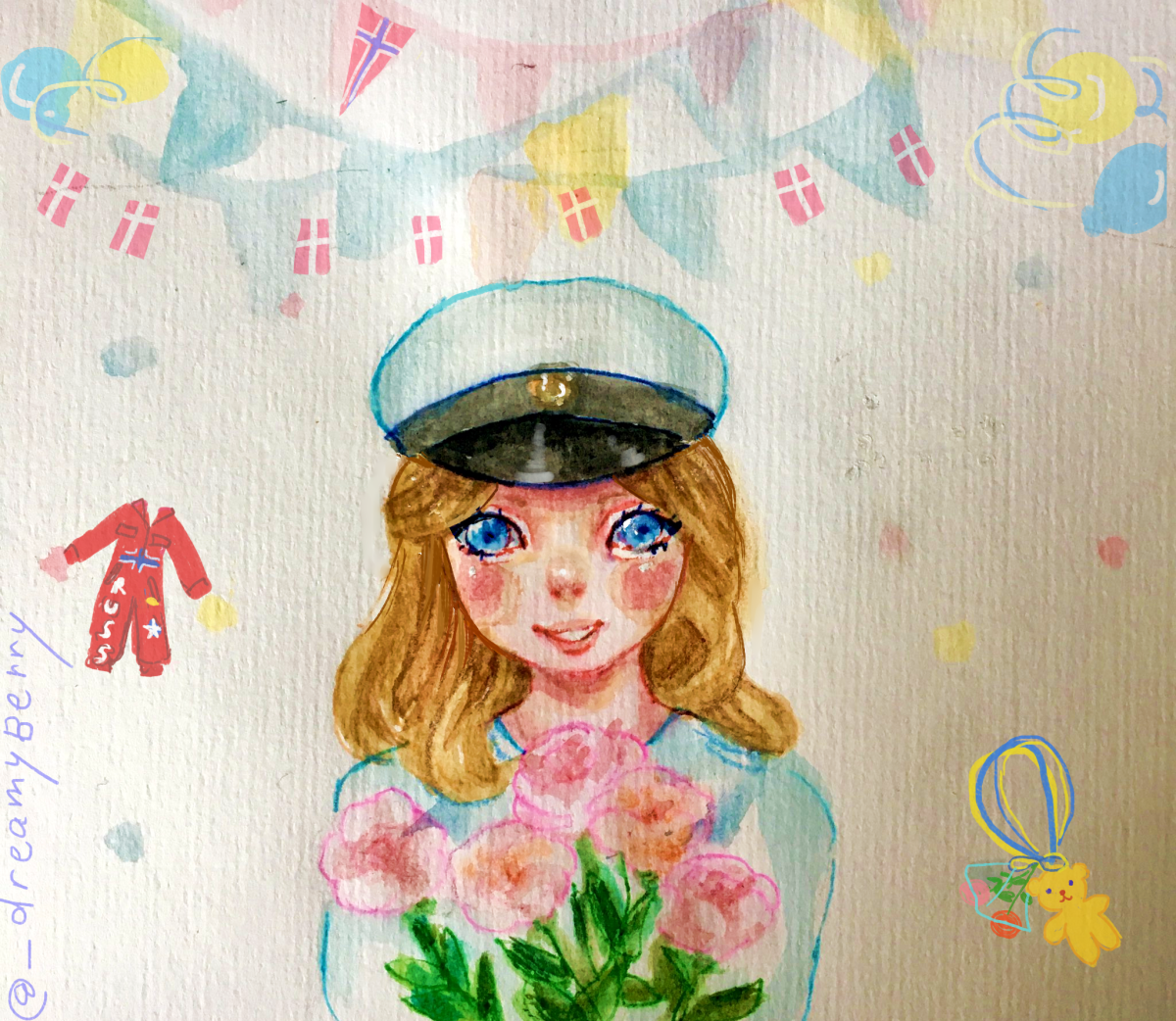
The girl I portrayed on the cover picture of this article is a Finn, (@alwaystimeforbujo on ig, she posts about bullet journaling), so here is something about Finland too:
The Finnish cap, Ylioppilaslakki, is similar to the Swedish version, but instead of coloured fabric cockade, it has a metallic, gold-colored cockade depicting the lyre of Apollo, the insignia of the University of Helsinki.
Truck parties are a thing in Finland too, but in February, when students begin preparing for their final exams. A typical thing they do is dressing up in various costumes visiting the town’s school and throwing candy!
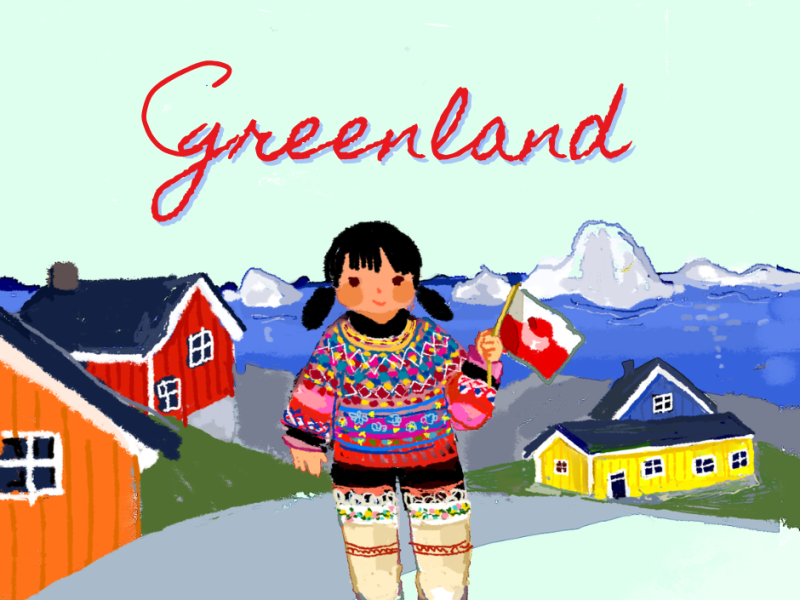
Discover Greenland, home to the Inuit Kalaallit, and its most iconic aspects as its flag, language and folk costumes. The biggest island of the world has a rich history of indigenous culture intertwined with Norse colonization and later Danish rule.
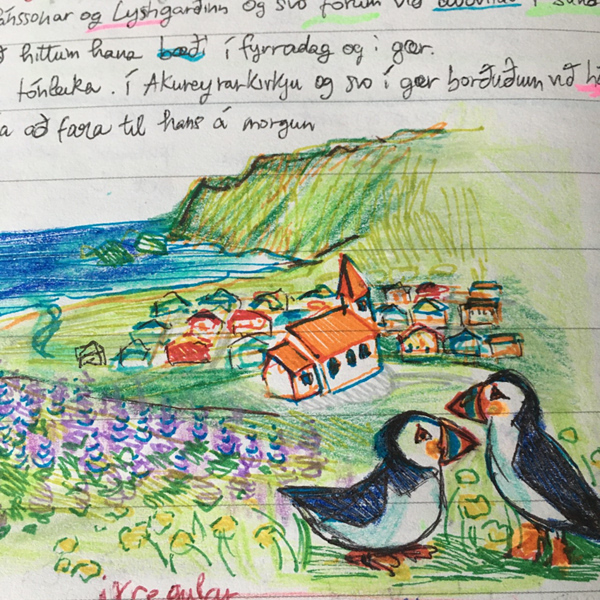
The lovely sea parrot living around the North Atlantic coasts, symbol of Iceland and the Faroe Islands.
The Atlantic puffin (Fratercula arctica), Lundi in Icelandic and Faroese, is a species of seabird in the auk family. The Atlantic puffin moves to North Atlantic coasts in summer and breeds in Iceland, the Faroe Islands, the Shetland and Orkney Islands, Norway, Greenland, Newfoundland and Labrador, and as far south as Maine in the west and Britain in the east. More than 90% of the global population is found in Europe and colonies in Iceland alone are home to 60% of the world’s Atlantic puffins, in particular Westman islands (Vestmannaeyjar).
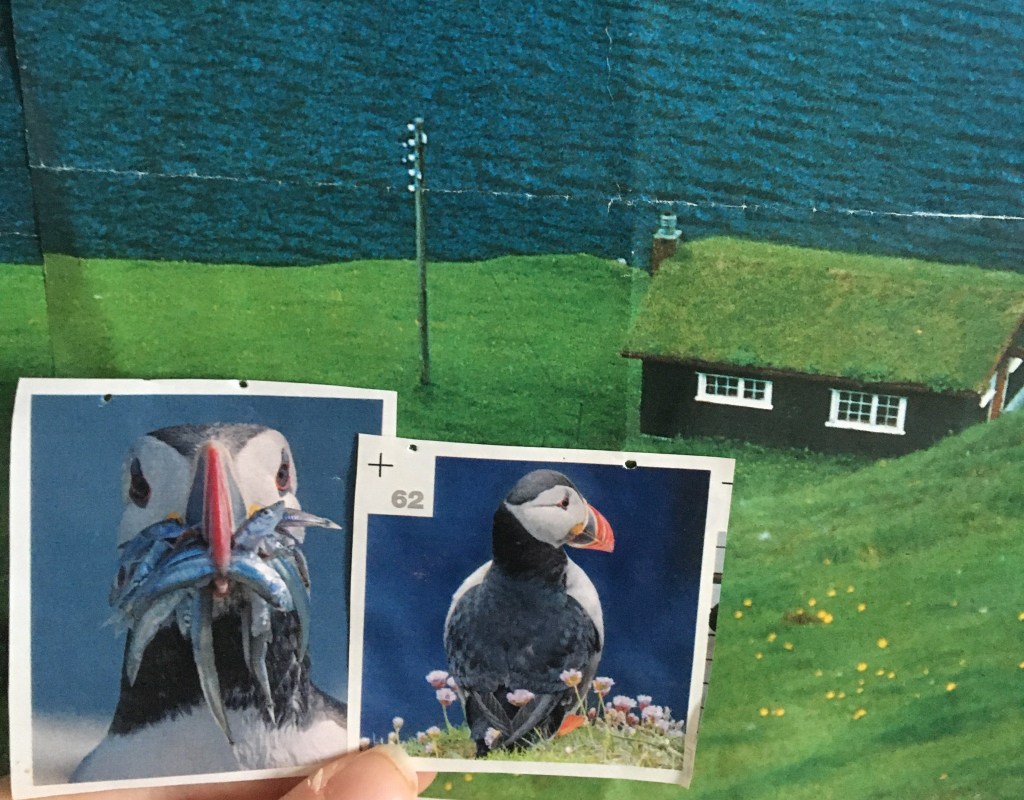
Cutouts from magazines, I can’t resist to puffin pictures!
The generic name Fratercula comes from the Medieval Latin fratercula, “friar”, a reference to the black and white plumage which resembles monastic robes. The vernacular name “puffin” comes from puffed in the sense of swollen. The striking appearance, large colourful bill, waddling gait, and behaviour of this bird have given rise to nicknames such as “clown of the sea” and “sea parrot”.
The beak is the most distinctive feature. From the side, it is broad and triangular, but viewed from above, it is narrow. The half near the tip is orange-red, yellow, and blue-greyish. A puffin beak can contain 12 up to 18 fish at once! The Atlantic puffin is sturdily built with a thick-set neck and short wings and tail. It is about 30 cm and weighs 400-600 g.
Traditions in Iceland and Faroe Islands
A tradition exists on the Icelandic island of Heimaey (part of Westman islands) for the children to rescue young puffins, a fact recorded in Bruce McMillan’s photo-illustrated children’s book Nights of the Pufflings (1995). The fledglings emerge from the nest and try to make their way to the sea, but sometimes get confused, perhaps by the street lighting, ending up by landing in the village. The children collect them and liberate them to the safety of the sea.
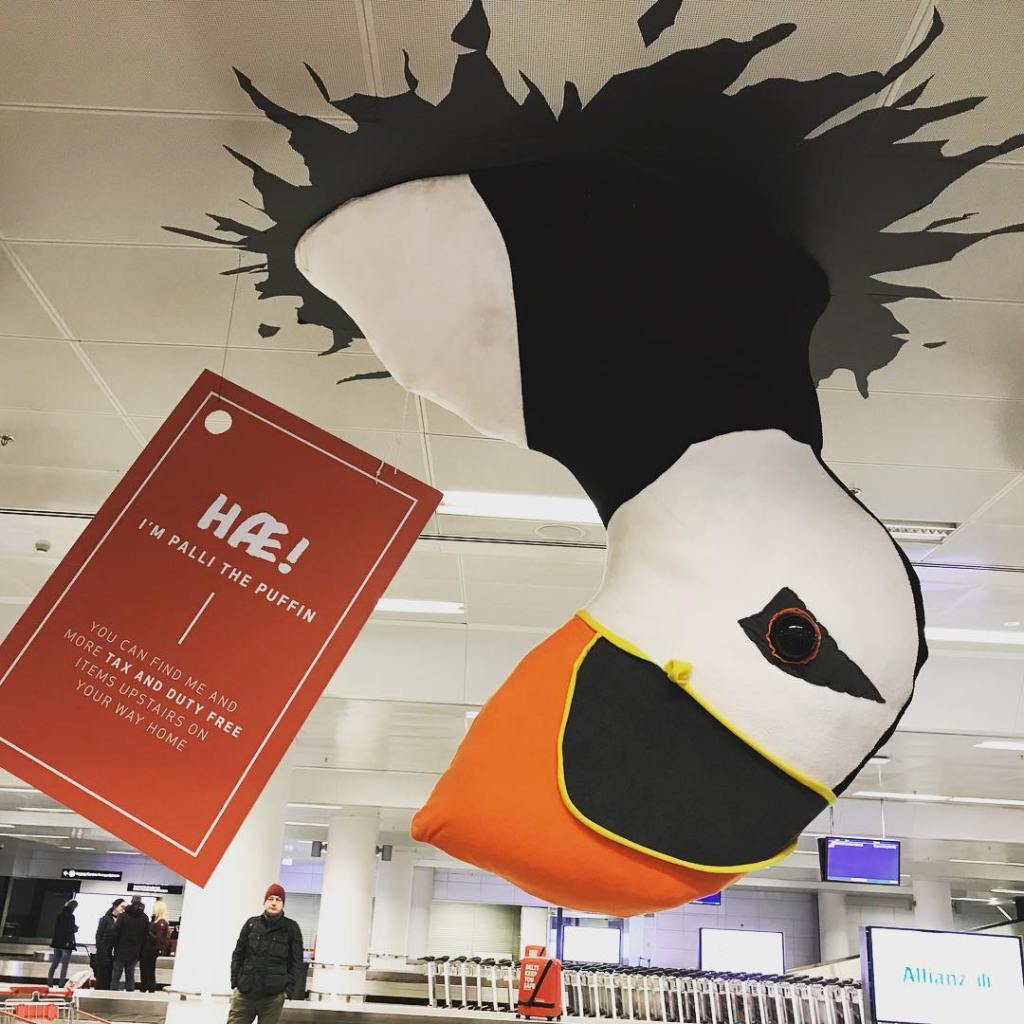
Palli the Puffin greeting travellers coming to Iceland in Reykjavik airport (picture by Mundi Lundi, page about a puffin who was found injured in the Icelandic capital and the nursed back to health)
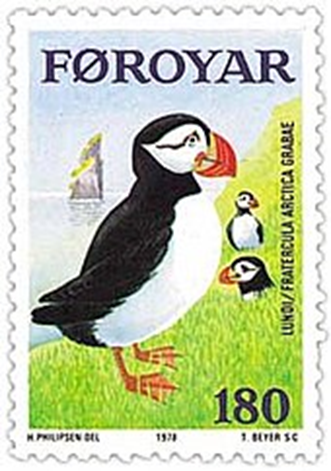
Faroe islands 1978 postal stamp by Holger Philipsen
Puffins have been hunted by man since time immemorial, coastal communities and island dwellers with few natural resources at their disposal didn’t have much else to hunt besides fish and seabirds.
They are still caught and eaten in Iceland and the Faroe Islands A typical device used in the Faroes to catch them was a fleyg. This was a long pole with a neton the end. a skilled hunter could gather 200–300 in a day!
Puffins in logos and symbols
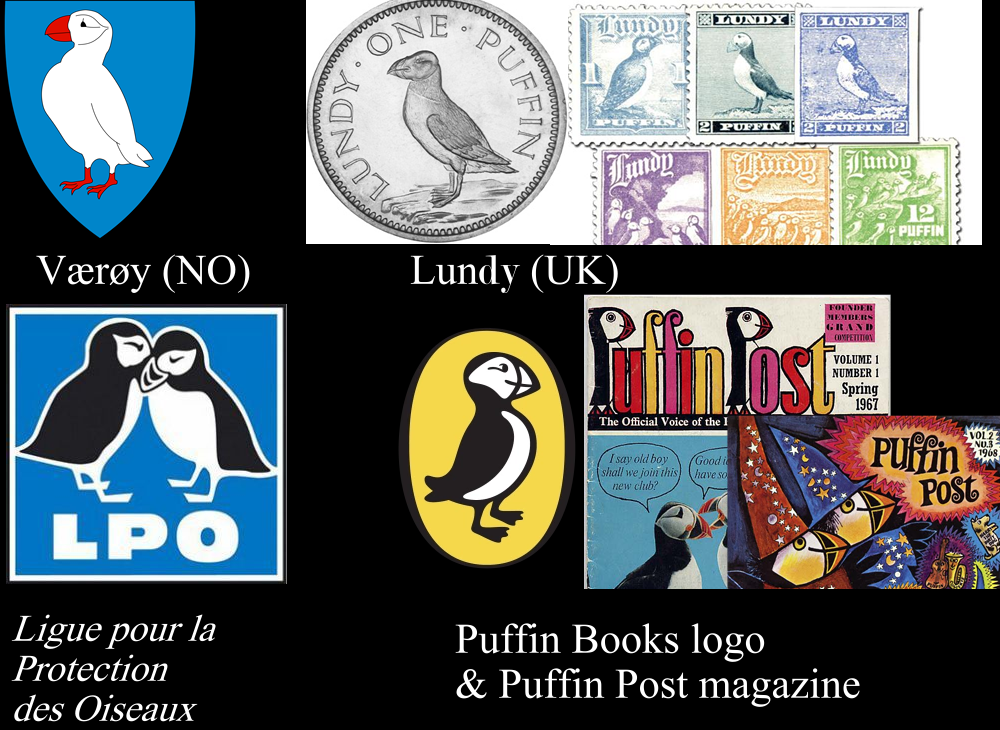
The Norwegian island municipality of Værøy, part of the Lofoten, has an Atlantic puffin as its civic emblem.
the name of the island of Lundy (UK) might come from Norse lund-ey or “puffin island”.The Vikings might have found the island a useful refuge and restocking point after their depredations on the mainland . The island issued its own coins, and in 1929, its own stamps with denominations in “puffins”.
The paperbook publisher Penguin Books introduced a range of books for children under the Puffin Books brand in 1939. The demand was so great that a children’s magazine called Puffin Post was established, Puffin Post.
Puffin characters in pop culture
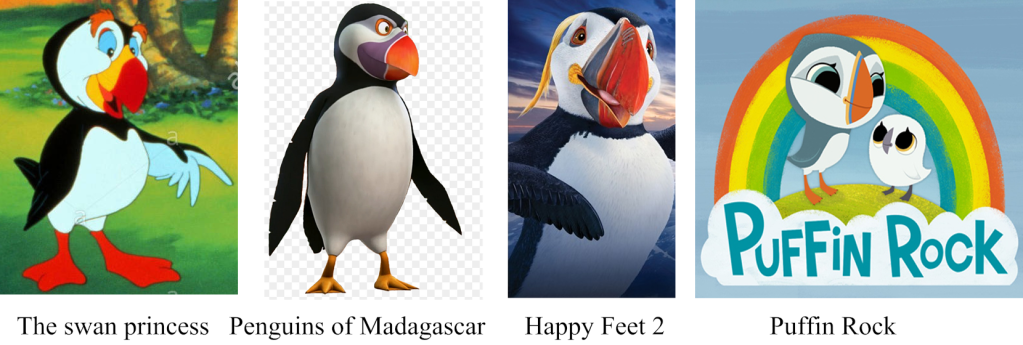
The Swan Princess -Puffin
Madagascar – Hans
Happy Feet 2 – Sven is a puffin who pretends to be a penguin
Puffin Rock – A Netflix original cartoon about the puffin Oona and her little brother Baba
Icelandic and Faroese mascotte in the world
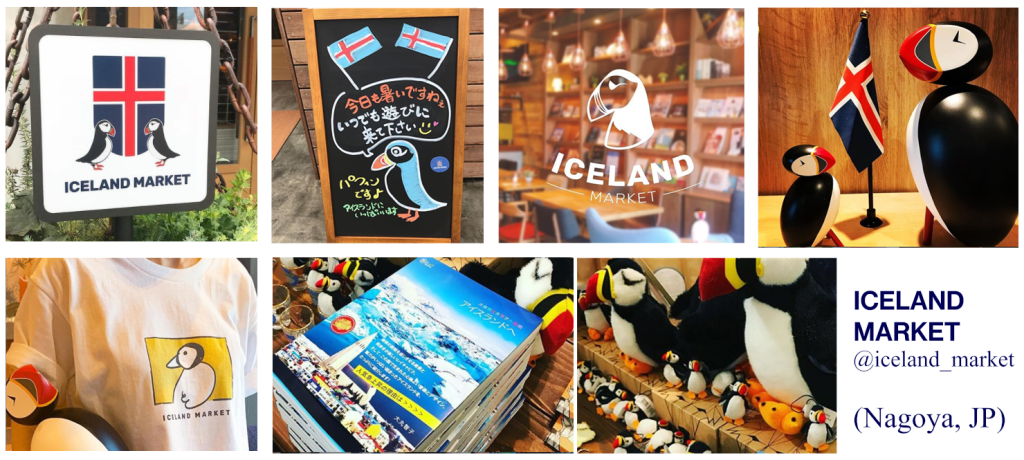
Puffins are often used to promote these Nordic islands, ICELAND MARKET in Nagoya, Japan, still has puffins in its logo and gadgets in what used to be its cafe, proudly representing Iceland.
FRAMTAK, a Faroese site, now inactive, promotes the Nordic archipelago and has a section with comics about Ludvík Lundi (“the puffin with glasses”), ideal if you want to practice Faroese!
Puffins in danger
In most countries, Atlantic puffins are now protected by legislation, and in the countries where hunting is still permitted, strict laws prevent overexploitation,but calls have been made for an outright ban on hunting them in Iceland because of concern over the rapid and ongoing population decline in its European range especially since 2000. In 2015, the status of this species was upgraded from “least concern” to “vulnerable”. Some of the causes of population decline may be increased predation by gulls and skuas, the introduction of rats, cats, dogs, and foxes onto some islands used for nesting, contamination by toxic residues, drowning in fishing nets, and climate change. Based on current trends, the European population will decline an estimated 50–79% between 2000 and 2065.
Norwegian, Danish, Finnish and Swedish Christmas markets in Rotterdam. Christmas decorations, imported typical Nordic products for sale, a cafe with lunch and cakes in each of them!
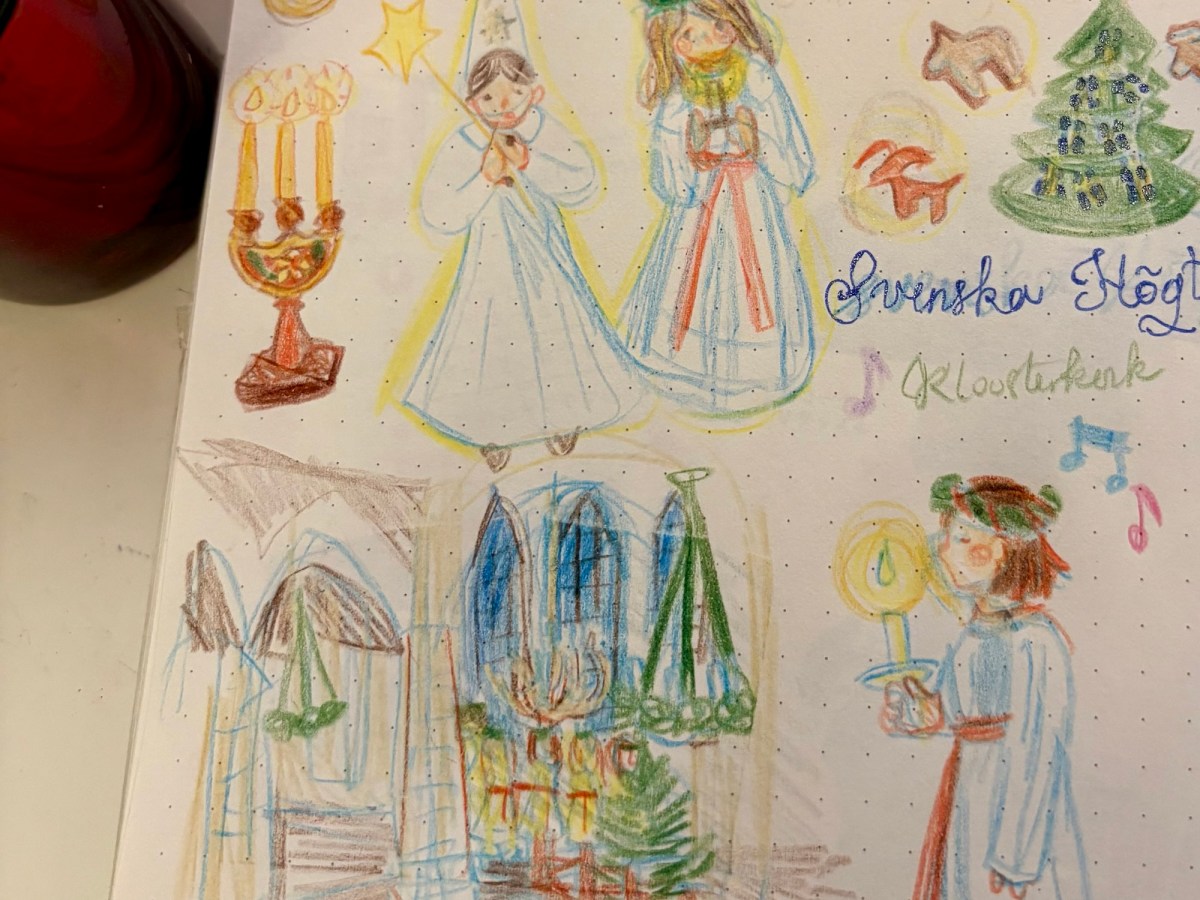
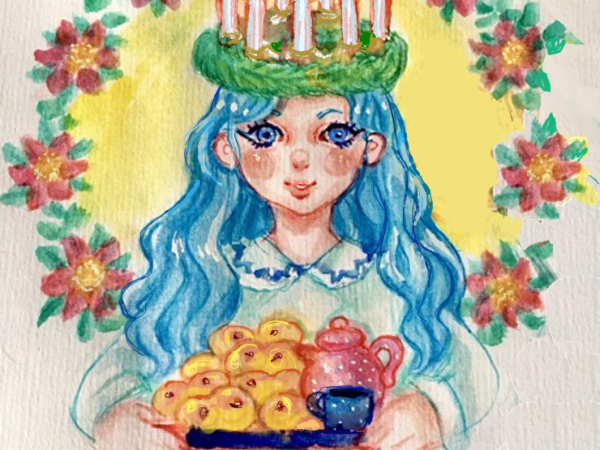
Lucia brings light in the darkest night of the year and is a mix of pagan and christian traditions. It is celebrated in Scandinavia with processions, saffron buns and church concerts.
Nordic Christmas, or Yule, means among others flag tree decorations, a pinwheel-shaped pastry, and gnomes.
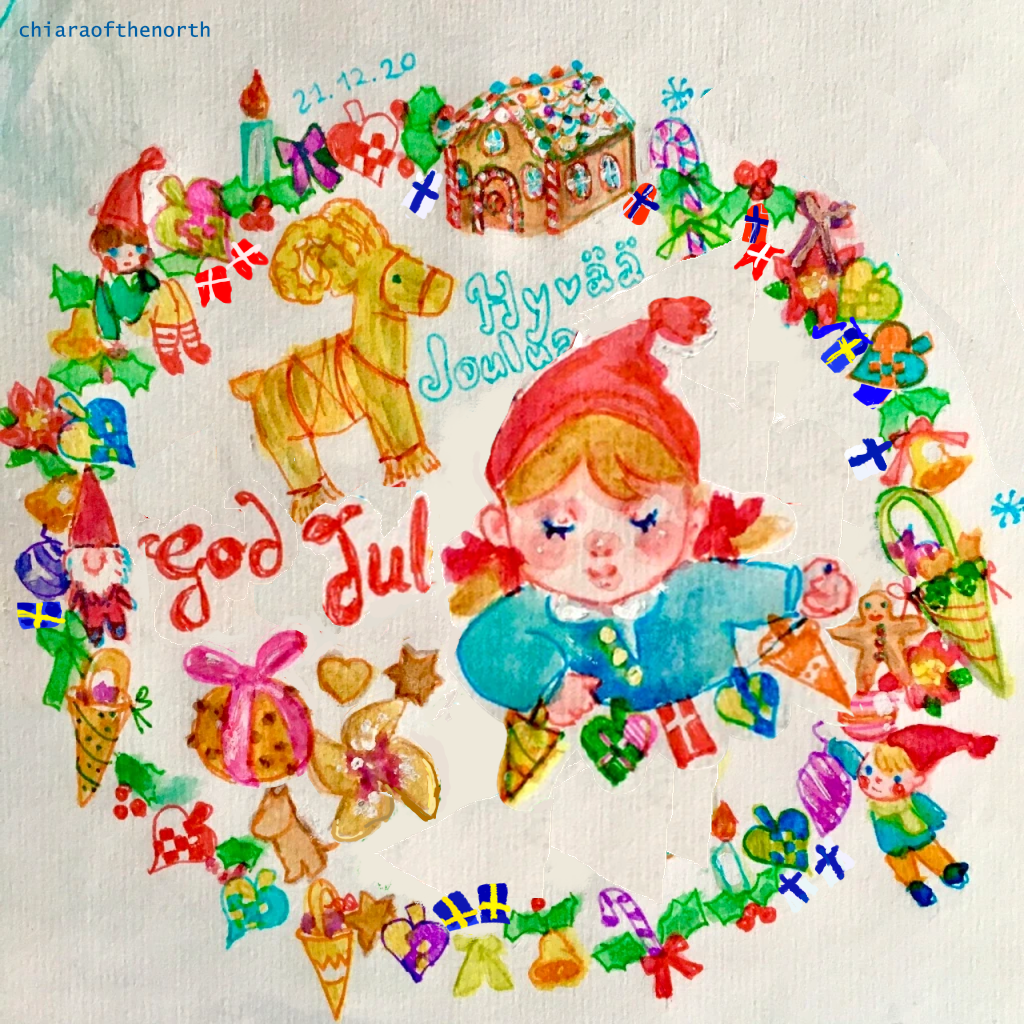
Nordic countries share quite a lot Christmas customs and symbols, whether it is Christmas tree decorations, gnomes and elves instead of Santa Claus, and of course spiced cookies. Let’s see what a Scandinavian Christmas looks like!
1. Scandinavian Santa Claus: Gnomes and pixies
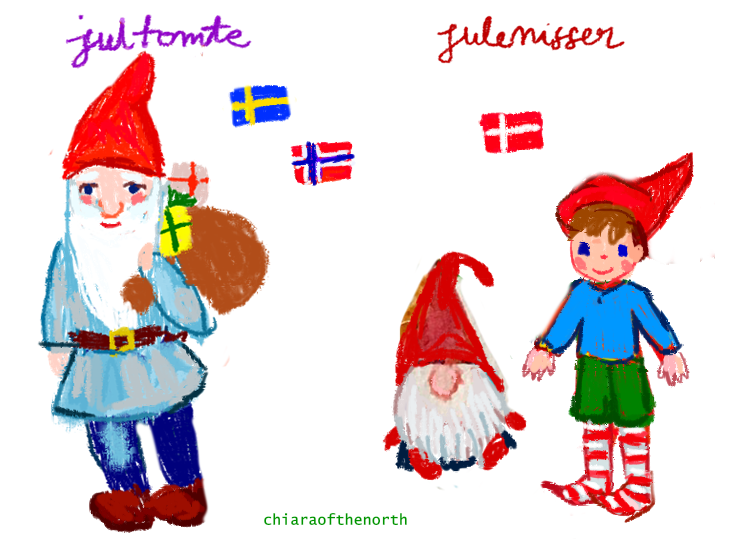
In Sweden and Norway it is a Santa Claus-like gnome bringing presents: Jultomte in Sweden and Julenisse. According to the tradition it lives in farms and takes care of the household while the family is sleeping, Bringing presents if the family treated him and the farm animals well. InNorway, an adult disguises himself as Julenisse and gives out presents to children, often greeting them by saying Er det noen snille barn her? (“is there any good child here?”).
In Denmark Julemanden (literally Christmas man) arrives on a sleigh with reindeers and has elves as helpers, Julenisser or just Nisser, who are believed to live in barns and attics. Children leave rice pudding for the Nisser, who find it delicious accoring to popular belief. In the Faroe islands it is called Jólamaðurin.
Initially the gift bringer was the Julbocken/Julebukk goat mentioned above, so in Finnish Santa Claus is calledJoulupukki…
2. Christmas Decorations: straw goats, pleated hearts and flags
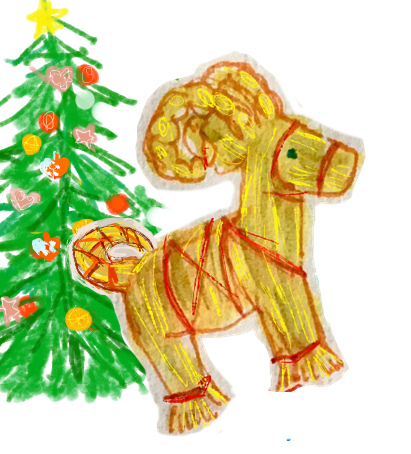
Yule Goat: A common Christmas symbol and decoration is a straw goat, Julbocken/Julebukk, often put under the Christmas tree. It goes back to the Viking times and it was a household protector, representing Thor’s magical goats, who lead him in the night sky. Bigger versions can be found in town centres – this tradition started in the Swedish town of Gävle in the 60s, and every year this traditions is repeated with a Julbock as tall as around 10 metres.
Things to hang on the tree
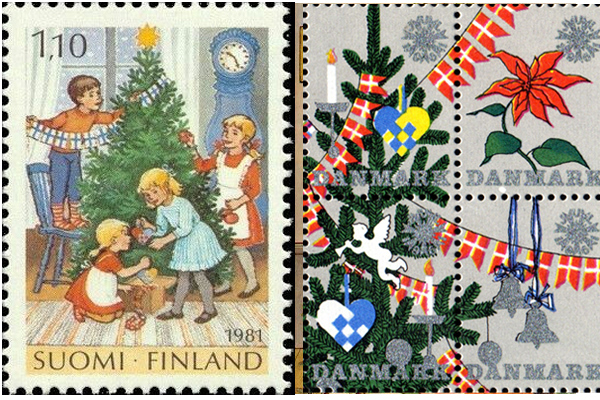
Julehjerter are pleated hearts, very common and in Denmark and Norway (Norwegians call them Juletrekurv “Christmas tree baskets”), but also present in other Nordic countries as a typical Christmas symbol. Children make them with their family with paper of different colours, although they are often red and white.
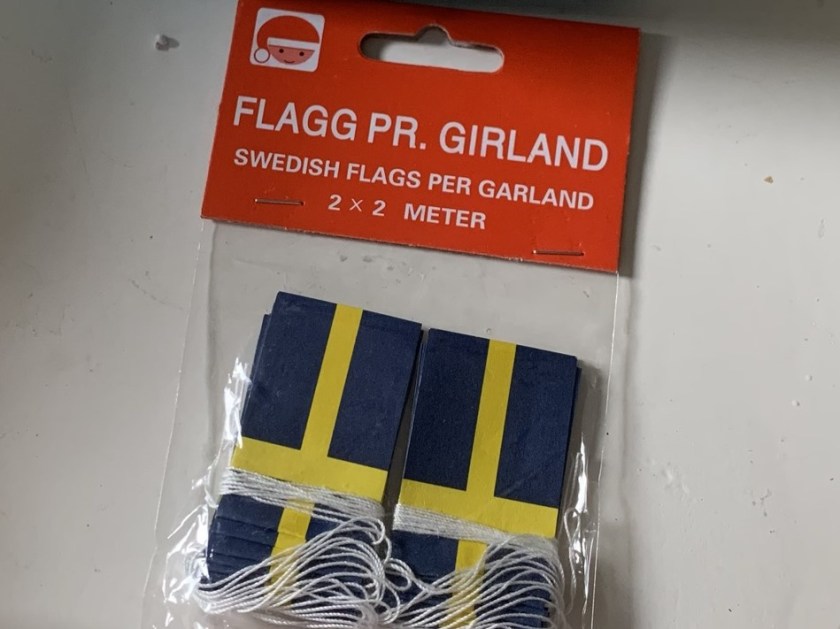
Flag garlands: Decorating Christmas trees with flags originated in Denmark and it can be seen in all Nordic countries, although it was more common in themid-20th Century. A survey showed that one in three Norwegians thinks flag garlands are suitable Christmas tree decorations, while only 3 % and 5 % is of the same opinion in Sweden and Finland. Nonetheless, I bought a Christmas tree flag ornament in Sweden…
3. Christmas treats: spiced cookies to rice porridge
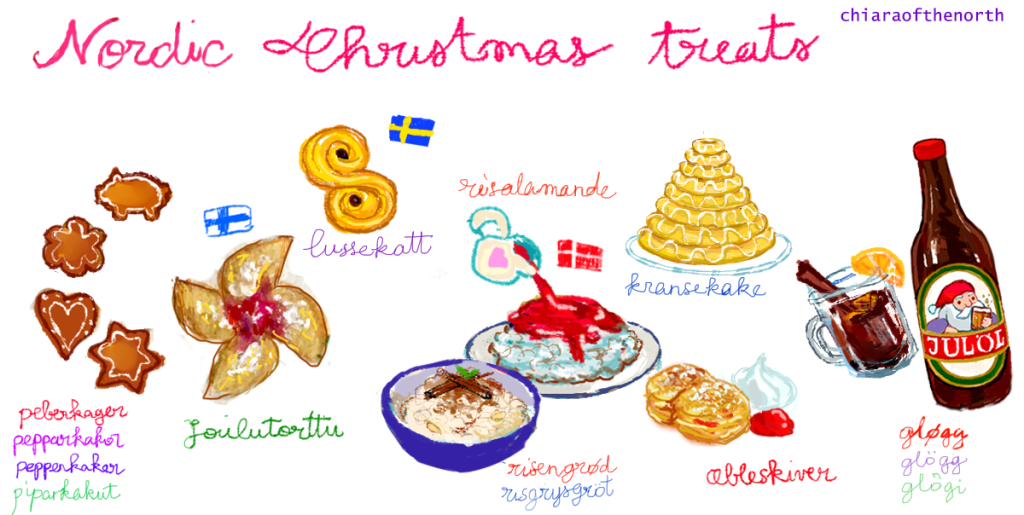
Baking gingerbread cookies is a typical Christmas time family activity: Pepparkakorin Swedish, Pepperkaker in Norwegian and Peberkager in Danish, piparkakut in Finnish.
Hiding an almond in rice porridge with a prize for who finds it is a common things in Nordic countries. in Sweden the rice pudding is called risgrysgröt. In Denmark you have the Risalamande (from French ris à l’amande, just because French sounded fancy), It is served cold with a warm cherry sauce,kirsebærsovs. The lucky person who finds the entire almond in it wins a marzipan pig!
Lussekatter are Swedish saffron pastries, typically eaten for Lucia.
Joulutorttu, a Finnish pastry filled with plum or apple jam.
Æbleskiver are Danish fried snacks, round and often served with jam and powder sugar. The name literally means “apple slices”, although apples are usually not an ingredient!
Kransekake, Norwegian and Danish almond cookie rings, commonly eaten on festive occasions.
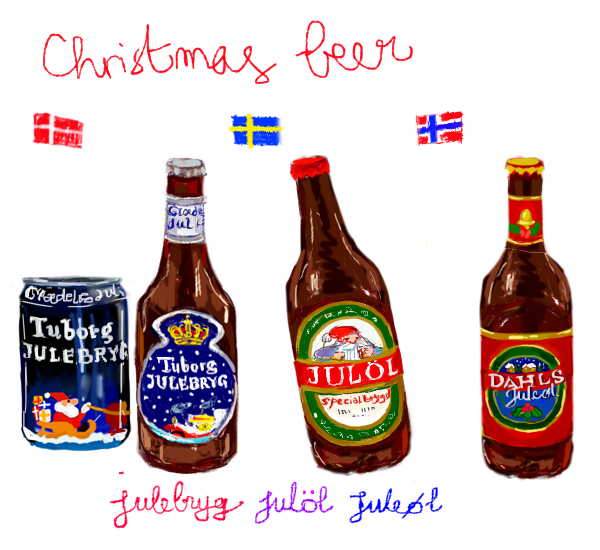
Mulled wine, glögg, is a classic, with spices as cinnamon, cardamom and ginger, but you can also drink Chistmas beer! It is darker and spicier than the usual ones.




 a Polyglot illustrating Scandinavia