Sami traditional costumes

Sami traditional costumes: hats and dresses from Lapland

My birthday falls on Sami national day, and to honour the sami people (who used to be called Lapps), I decided to write an an article about their traditional clothing, after Swedish and Norwegian costumes.

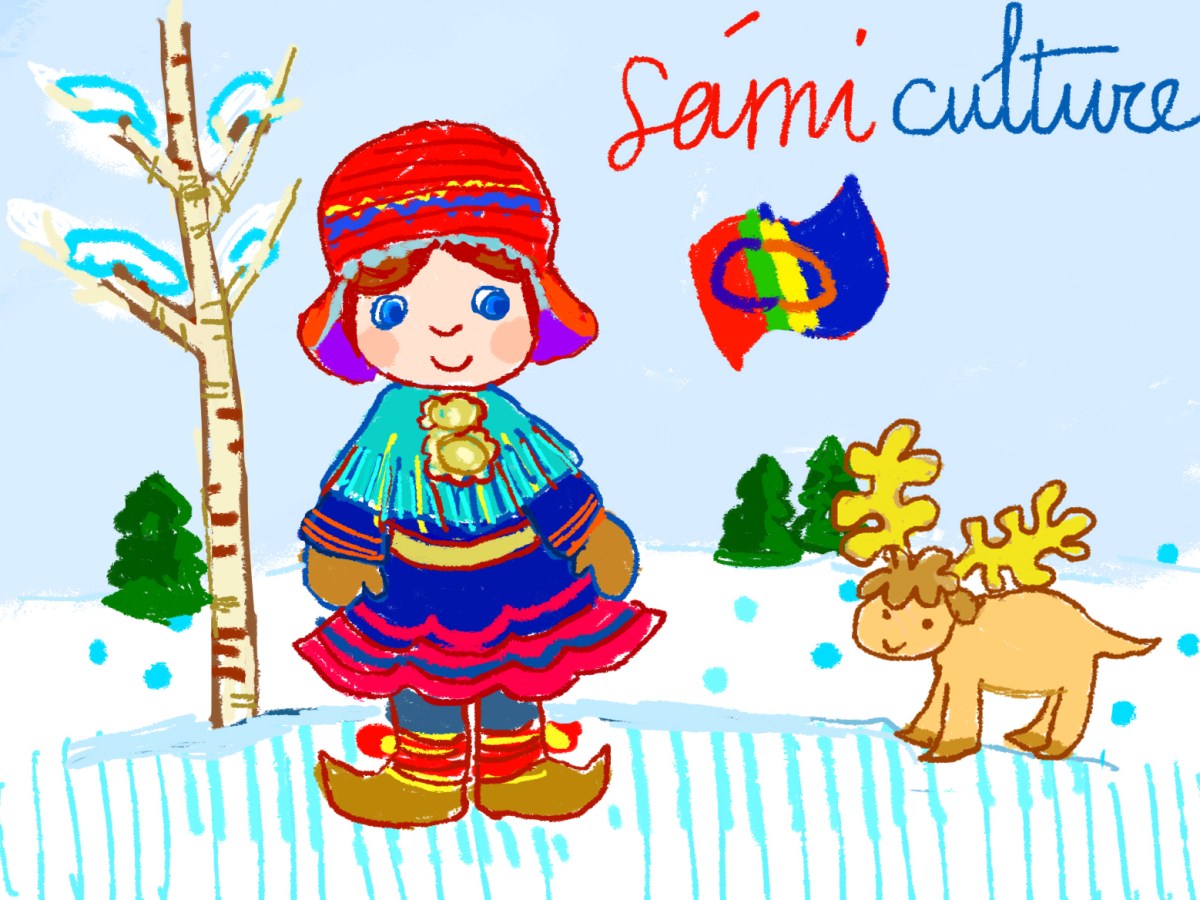
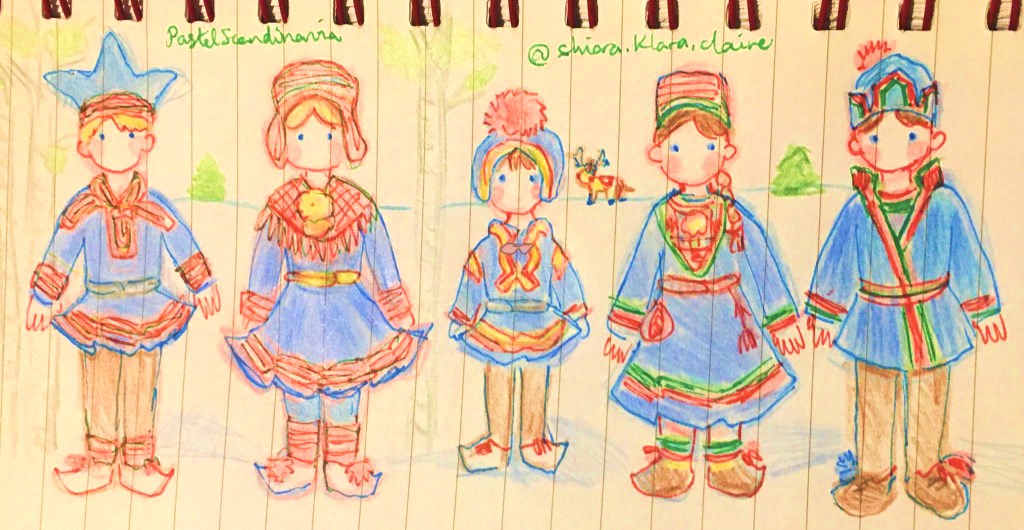
The Sami traditional costume is called gapta/gåptoe, in southern Sami, gábdde in Lule Sami, gákti in Northern Sami. In Swedish and Norwegian repectively kolt and kofte. It includes hats, belts, jewellery as brooches and mittens.

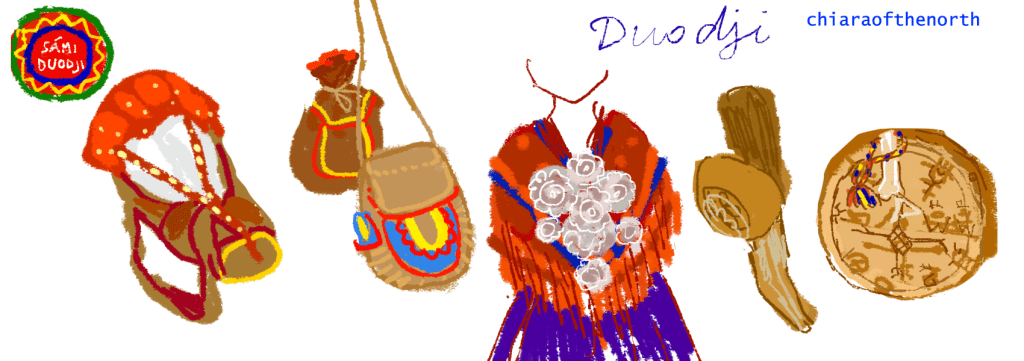
Sami handicrafts, Duodji, also include making your own clothing, and that is still the case for some families.

Sami costume variations

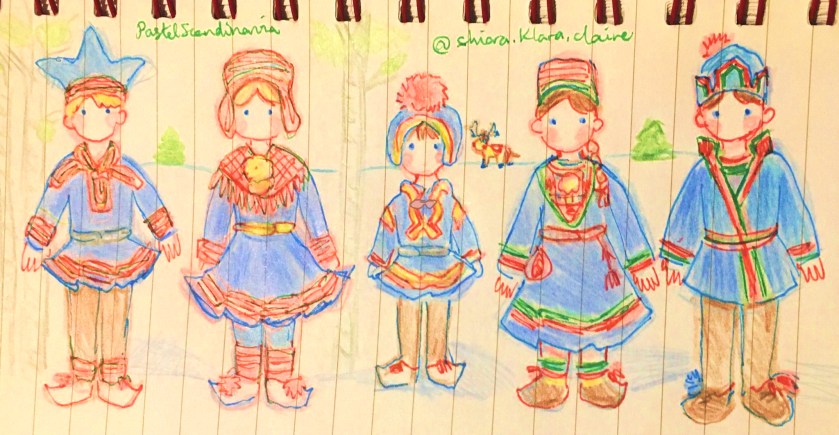
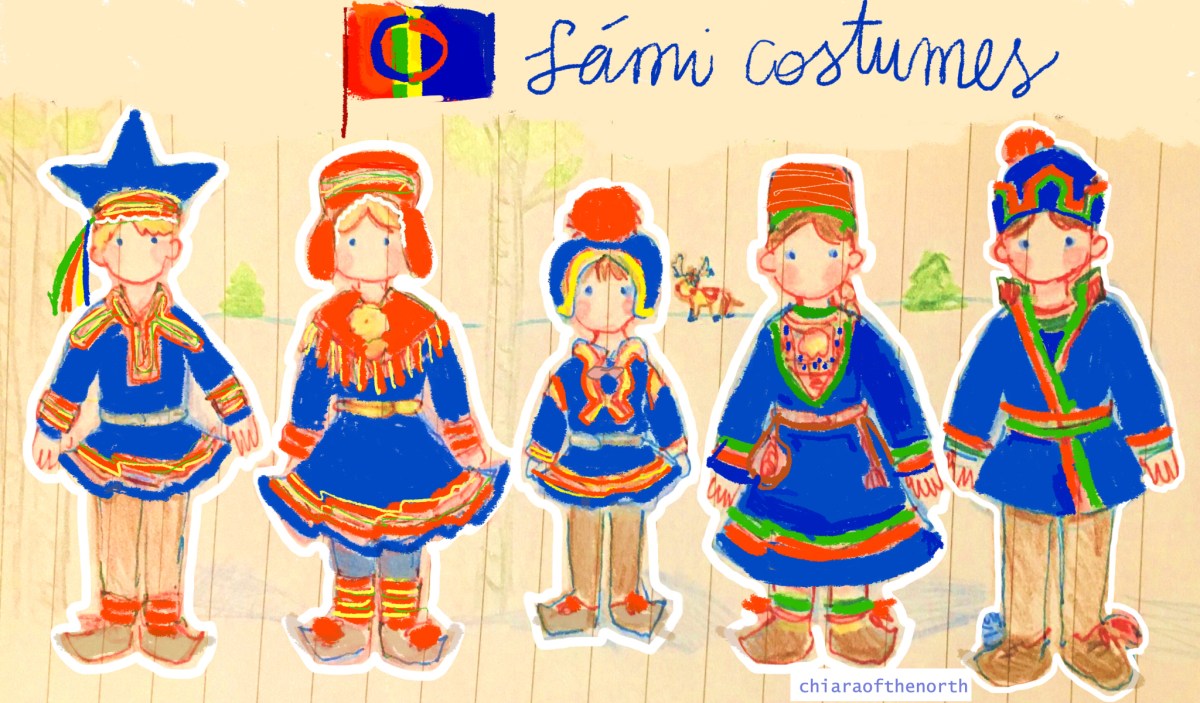
Sami Costumes vary depending on the geographical area and gender, but can have differences due to status, with different color orders and decorations. The base color is most often blue, with decorations in red, white, yellow and Green.

Generally, variations in Sami costumes follow Sami languages and ethnical groups within Samis. However, because of nomadic life depending on reindeers, designs from different groups ended up influencing each other.

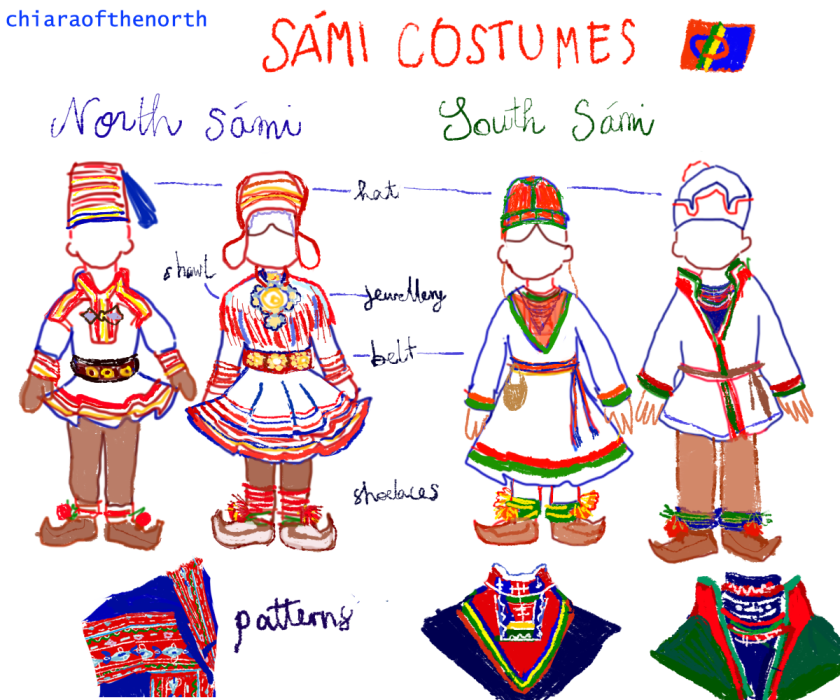
The biggest differences I have noticed are between North and South Sami costume is the more “curled up” shape in the North Sámi versions, and the fact it, without surprise, looks more meant for cold climates, more often including a shawl for women. Nowadays it possible to see more modern kofte/kolt with different patterns, as you can see in this music video.

Sami iconic hats

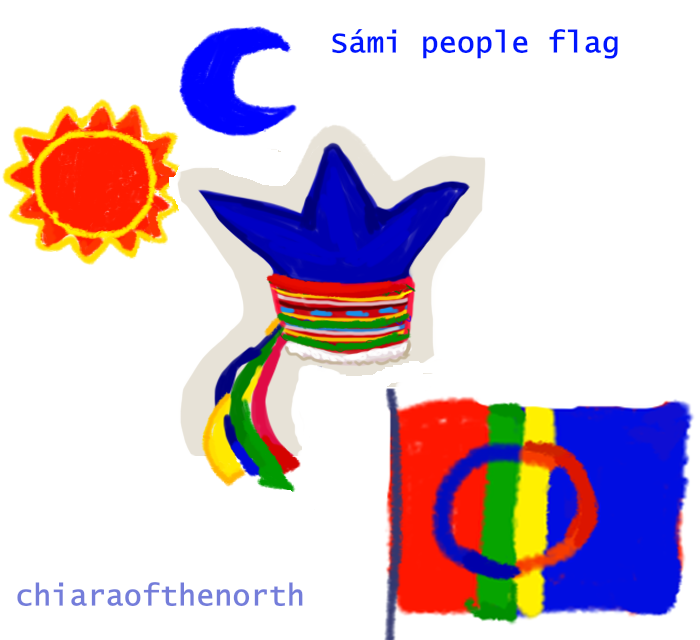
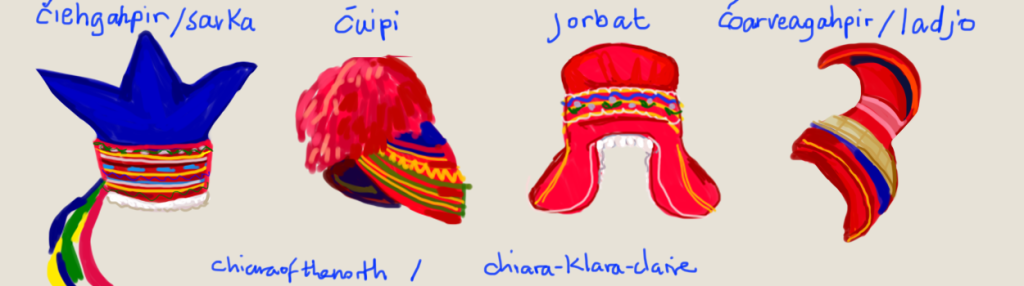
An important part of Sami costumes is the hat. Various types of hats exist (see picture), different for men and women. Among others:

men hats: Four Winds Hat, čiehgahpir or Šávka, with summer and winter variations (also stjernelue in Norwegian “star hat”), used in East Finnmark, Karasjok, Kautokeino, North-East Norway; ćuipi, a kind of poofball hat with a big red pom pom, used in Karesuando, Swedish Lapland.

Women hats: Jorbat, the hat with the big ‘ears’; Ládju/ladjo, also called čoarvegahpir (čoarvi – horn, gahpir – hat), which stopped being used a hundred years ago, but still exists in eastern Sami areas now under Russia.

Costumes as a symbol of Sámi identity

Some Sami grew up wearing it, other only used it for their confirmation ceremony, others get themself a sami traditional costume as adults. The tradition to wear it has almost disappeared in the coastal areas, but a revival lead to reconstructing them, similarly to what happened with Norwegian bunads.

In 1940 the archeologist Gutorm Gjessing and his wife Gertrjud were the first to write about Sami clothing, in their book Lapdrakten.

In the 1970s, Sami movements made it an important symbol for Sami identity. Wearing Sami costumes became a new tradition in some contexts, as during Sami national parliament assemblies in Sweden, Norway and Finland.

Sources: Store Norske Leksikon

7 fun facts about Lucia, Sweden’s pagan saint

Lucia brings light in the darkest night of the year and is a mix of pagan and christian traditions. It is celebrated in Scandinavia with processions, saffron buns and church concerts.

Sámi languages

The languages of the Sámi, indigenous people of Scandinavia

The Sámi people (Sámit/Sápmelaš in sami languages) are Northern Scandinavia’s indigenous people. I have talked about Sámi people and their National Day last year. This year I will focus on their languages.

Sámi languages speakers are approximately 30,000-40,000, out of around 100,000 people identifying as Sámi.

Sámi languages belong to the Uralic language family and are most closely related to the Baltic-Finnic languages (as Estonian, Finnish, and Karelian).

There are 10 distinct variations (of which 6 have standard written forms). They are not mutually intelligible to each other, although there is intelligibility among neighbor variants, which makes the Sámi languages a dialect continuum. According to the Store Norske Leksikon South and North Sami are as far as Norwegian and Icelandic.

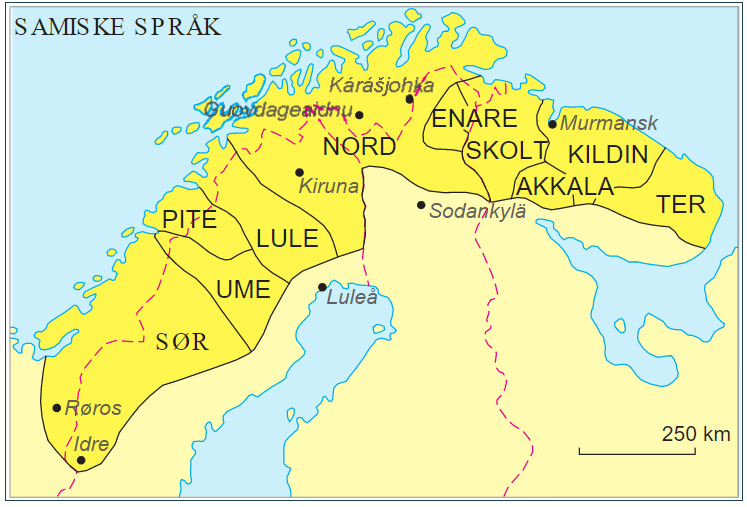
Sámi language areas, picture from Store norske leksikon.

They can be divided into Eastern and Western language groups:

Western Sámi languages

  • North-Davvisámegiella: 15,000 speakers in Norway, Sweden, Finland, about 75% of all Sámi native speakers
  • LuleJulevsámegiella: 2000 speakers in Norway and Sweden
  • South-Åarjelsaemien gïele: 500 speakers in Norway and Sweden
  • PiteBidumsámegiella: 20 speakers in Sweden
  • UmeUbmejensámien giella: 20 speakers in Sweden

Eastern Sámi languages

  • Inari-Anarâškielâ: 400 speakers in Finland
  • Skolt-Sää’mǩiõll/nuõrttsää’m: 400 speakers in Finland and Russia
  • Kildinкӣллт са̄мь кӣлл: about 787 speakers in the Kola peninsula of Russia
  • Ter-Saa’mekiill: fewer than 10 speakers in Russia
  • Akkala-Ákkil sámegiella: considered extinct. Not standardized, but translations of the New Testament into it in 1755 and the bible in 1811 were major influences in the written language.

Sámi language features

Note: what follows refers mainly to North Sámi

  • like Finnish Sámi languages are agglutinative and highly inflected, nouns and adjectives change form according to their grammatical roles. Northern Sámi has 7 noun cases.
  • Sámi verbs have dual forms: other than three singular and plural persons the verb conjugations can indicate an action by two people (plural is more than two).
  • Sámi originally had no words beginning with two or more consonants (unlike in English: green, strong, bridge..): Spasibo (спасибо) became pass’bo in Kildin Sámi. Word-initial clusters were however taken into Sámi through Scandinavian lownwoards: Kraevies (gray) from protonorse *grawaR, grár in Protonorse, modern Scandinavian grå.
  • Sámi languages have a kind of vowel harmony, which for example makes the given name Knut become Knavhta, adding a third vowel.
  • Scandinavian varieties of Sámi languages use the Latin alphabets, with additional characters: The unique letter “Ŧ/ŧ”, similar to English th in “thin” and Thorn þ still used in Icelandic. “Đ/đ” is equivalent to Icelandic ð. Other letters occurring in Sámi languages are Áá Čč Ŋŋ Šš Žž.

Language Comparison

Similar words North Sámi – Finnish – Estonian

  • Nature: luondu – luonto – loodus
  • Forest: meahcci – metsä – mets
  • Shaman/witch: noaidi – noita – nõid
  • Brother: vielljaveli vend
  • Day: beivi – päivä – päev
  • life: eallin – elämä – elu
  • love: ráhkisvuohta – rakkaus – armastus
  • mother: eadni – äiti – ema
  • Reindeer: boazu – poro – põhjapõdrad

As you might notice, historically related words in Finnish with p, t, k have b, d, g in Sámi.

N =North; L=Lule; S=South; U=Ume; P=Pite; I=Inari; SK=Skolt

  • The Sámi Land/AreaN: Sápmi L: Sábme/Sámeednam S: Saepmie U: Sábmie – P: SábmeI: Säämi
  • Traditional clothing/dress (swedish: kolt, norwegian: kofte) – N: Gákti L: Gábdde/Gáppte – S: Gapta/Gaeptie/Gåptoe U: Gápttie – P: Gáppte/Gåppto I: MááccuhSK: määccaǩ
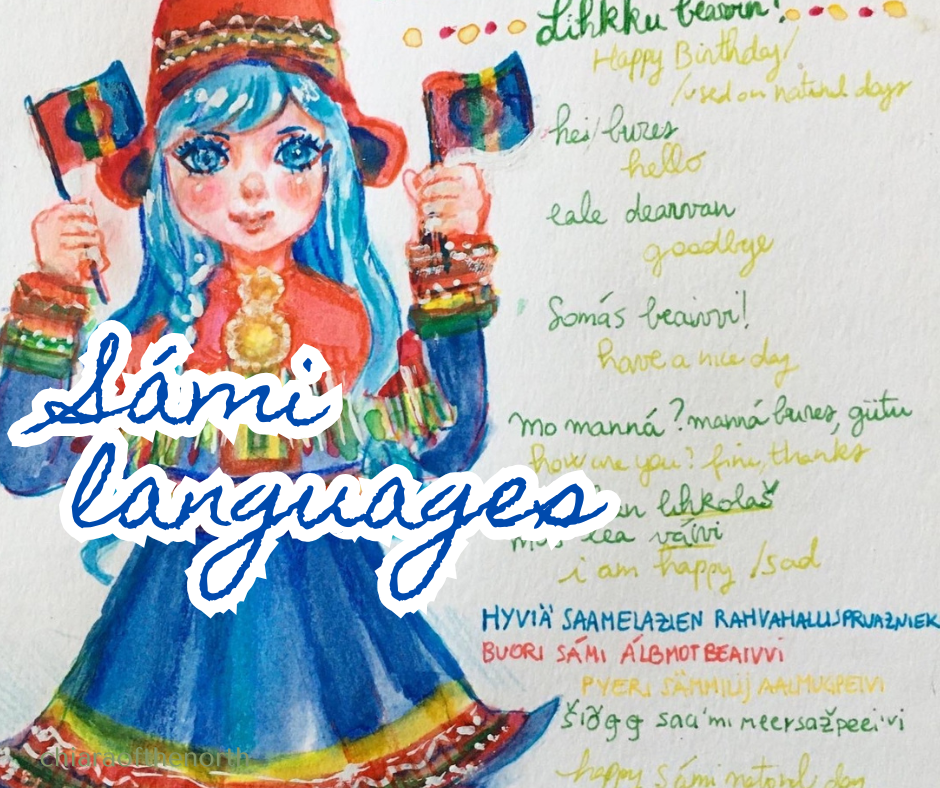
  • Sámi National Day: N: Sámi álbmotbeaiviS: Saemiej åålmegebiejjieI: Säämi aalmugpeivi SK: Saaʹmi meersažpeiʹvv
  • Happy New Year! – NBuorre Ođđa Jahki! – S: Buerie Orre Jaepie! – L: Buorre Ådå Jahke! – PBuorre Årrå Jahke! – UBuörrie Urra Jáhpie! – I: Pyeri uđđâ ihe! – SK: Šiõǥǥ ođđ eeʹjj!
  • Merry ChristmasN: Buorit Juovllat!L: Buorre Javla!SLahkoe Jåvlh!P: Buorre Jåvvlå!UBuörrie Juvlla!

Language status and discrimination

All the Sámi languages are considered endangered, this is due in part to historic laws prohibiting the use of Sámi languages in schools and at home in Sweden and Norway. Sámi languages were illegal in Norway from 1773 until 1958. Special residential schools that would assimilate the Sámi into the dominant culture were established, and access to Sámi instruction as part of schooling was not available until 1988.

Samer.se underlines that in the 60s and 70s many Sámi parents did not speak Sámi to their children. This was a reaction to the negative experiences and the discrimination faced in Swedish schools, which however resulted in depriving children of their mother tongue, and many suffered from that as adults.

In the last decades of the past century this attitude started to change, granting the rights to have education in Sámi languages and esthablishing funds for the promotion of Sámi culture and languages.

  • In Norway Sámi languages have official status in 9 municipalities in the counties of Finnmark and Troms.
  • Since 2002 Sámi languages have been recognised as minority languages in Sweden and have official status in 4 municipalities. In these areas they can be used in government agencies, courts, pre-schools and nursing homes.
  • North Sami, Skolt Sami and Inari Saami are offically recognised in Finland and have official status in 4 municipalities, Sámi people have the right to use Sámi languages for all government services.
  • In Russia Sámi people are recognised as an indigenous people but their languages have no official status.
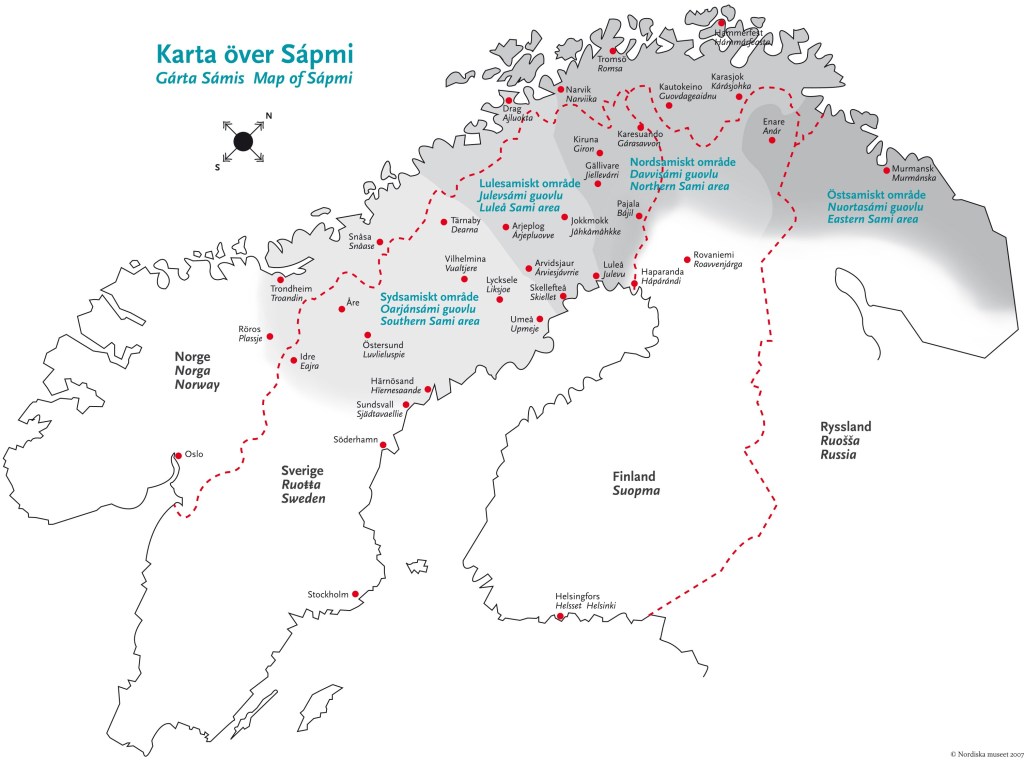
Municipalities where Saami is an official language, picture from Nordiskamuseet.se

Art and media in Sámi languages

The first two recorded Sámi poems are by Sámi priest and poet Olaus Sirma (1655-1719), included by Johannes Schefferus of Uppsala in his book Lapponia in 1673.

Parne miela Piägga miela,
Noara Jorda kockes Jorda.


A boy’s will is the wind’s will,
the thoughts of youth are long, long thoughts.

refrain of Moarsi favrrot/The Beloved One, translated in “a Lapland song” by Henry Wadsworth Longfellow (1807-1882) and included in the long poem “My Lost Youth”

The oldest Sámi language newspaper is Nuorttanaste (Eastern Star), a religious paper began in 1898 and still published in Norway. The Sámi-Swedish bilingual Newspaper Samefolket began in 1918, and Sapmelas, founded in 1934 and renamed in in 1993 Odda Sapmelas (The New Sámi) is published in Finland.

Various Sámi units of national broadcasting company exist: NRK Sápmi (Norway), Yle Sámi Radio (Finland), Sameradion (Sweden).

The 1970s saw a blossoming of Sámi language literature that has continued to the present, with Sámi artists focusing their work on Sámi language and Sámi traditional themes. Prominent figures include Nils-Aslak Velkeapää (writer, singer, multimedia artist); Paulus Utsi (poet); Vuokko Arvonen (feminist writer); Nils Gaup (filmmaker); Mari Boine and Sofia Jannok (singers). In Norway, the yearly Riddu Riđđu festival in Olmmáivaggi/Manndalen features music, art, theater from Sápmi, including Sámi rap music, yoik rock and dramas from Beaivváš Sámi Našunálateáhter, the Sámi national theatre.

Online Resources to learn Sámi languages

Find resources to learn Sami languages in my resources list page

Sources for this article:

  • Sanders, Ruth H. The languages of Scandinavia (2017) The University of Chicago Press
  • Samer.se
  • Den Store Norske Leksikon
  • Valokki and Talvatis on tumblr
  • Omniglot.com

Sámi people: who are they?

The indigenous people of North Scandinavia & 6th February

February 6th is, other than my birthday, Sámi people’s National Day.

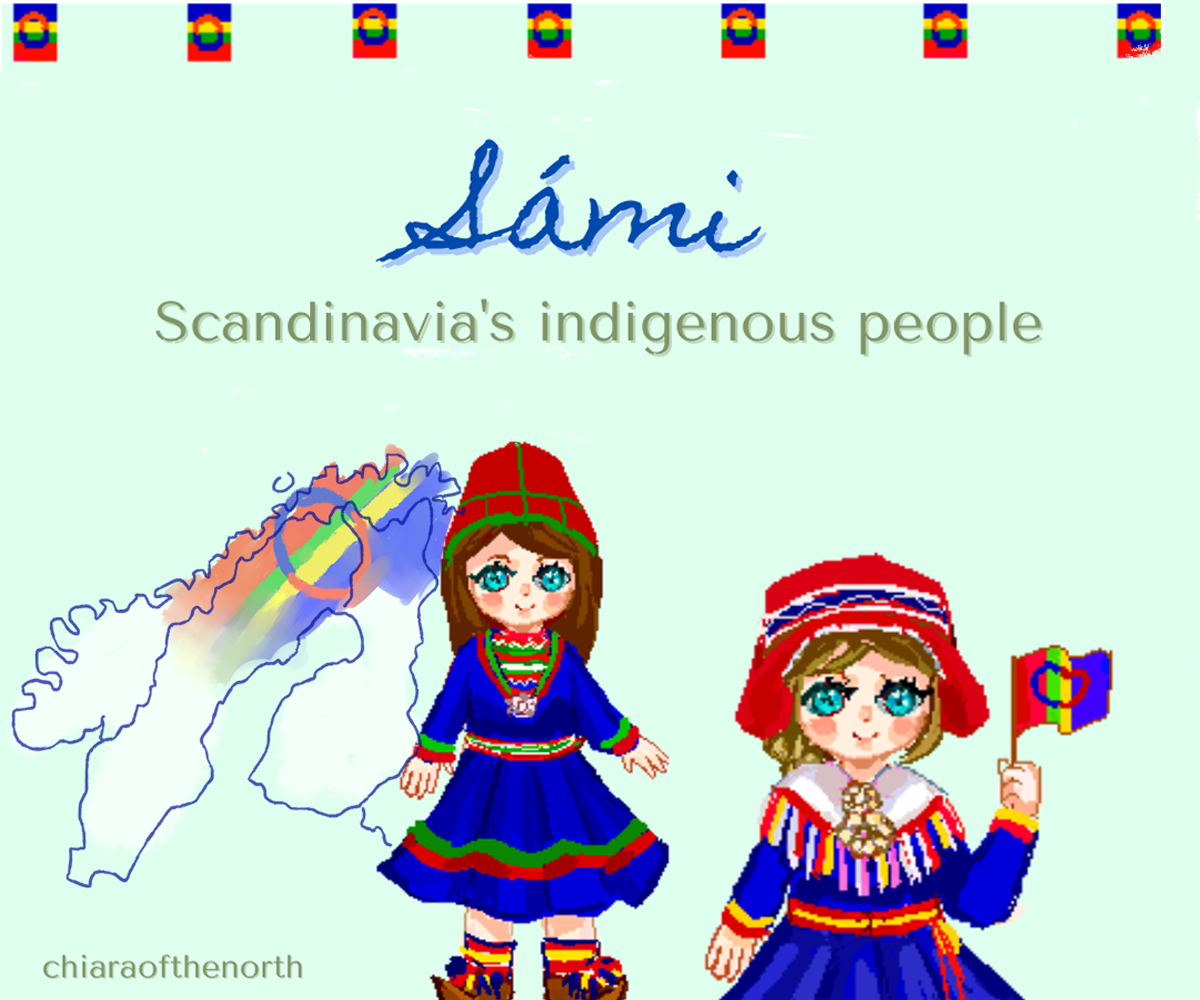
The Sámi – also spelled Saami – are an indigenous people inhabiting Sápmi, which today encompasses large northern parts of Norway, Sweden, Finland and Russia. The Sámi have historically been known as Lapps or Laplanders, but these terms are usually regarded as offensive. There are about 100,000 Sámi people, divided by the borders of 4 states: Norway (ca. 60.000), Sweden (30.000), Finland (8.000) and Russia (2.000).

The Sami have their own history, languages, and maintain a strong cultural identity while being citizens of their countries.
One of the most typical traits of Sami culture is the central role of reindeers: around 10% of Sámi practice reindeer herding nowadays, which in some parts of the Nordic countries can be practiced only by Sámis.

Sami symbols and culture

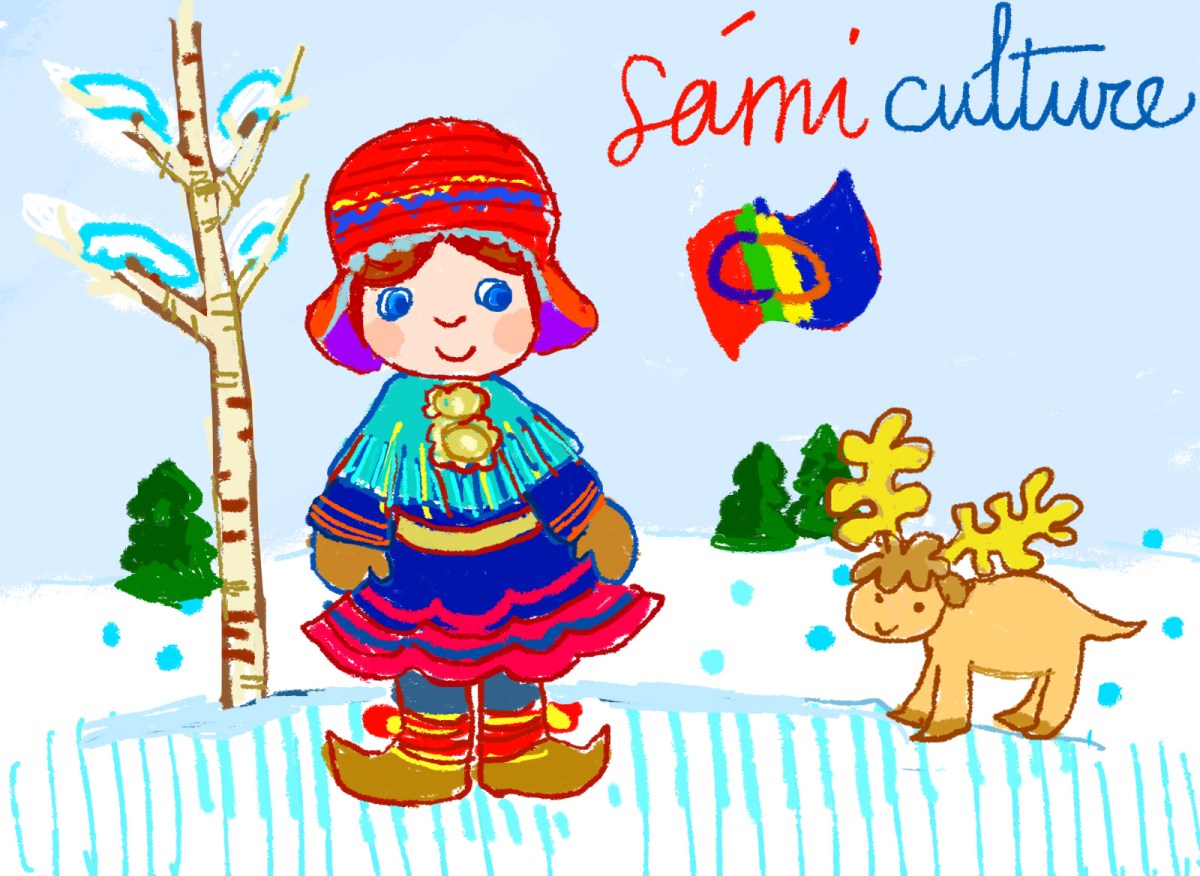
The Sami traditional clothing, gákti/gapta/gábdde in Sami languages, kofte/kolt in Norwegian and Swedish, is well dinstinguished from Norwegian bunads and Swedish national dresses. It is worn at important occasions and varies depending on the gender, family, area one is from and status. Important parts of Sami culture are Sami handicrafts, known as duodji, which include accessories and clothing.

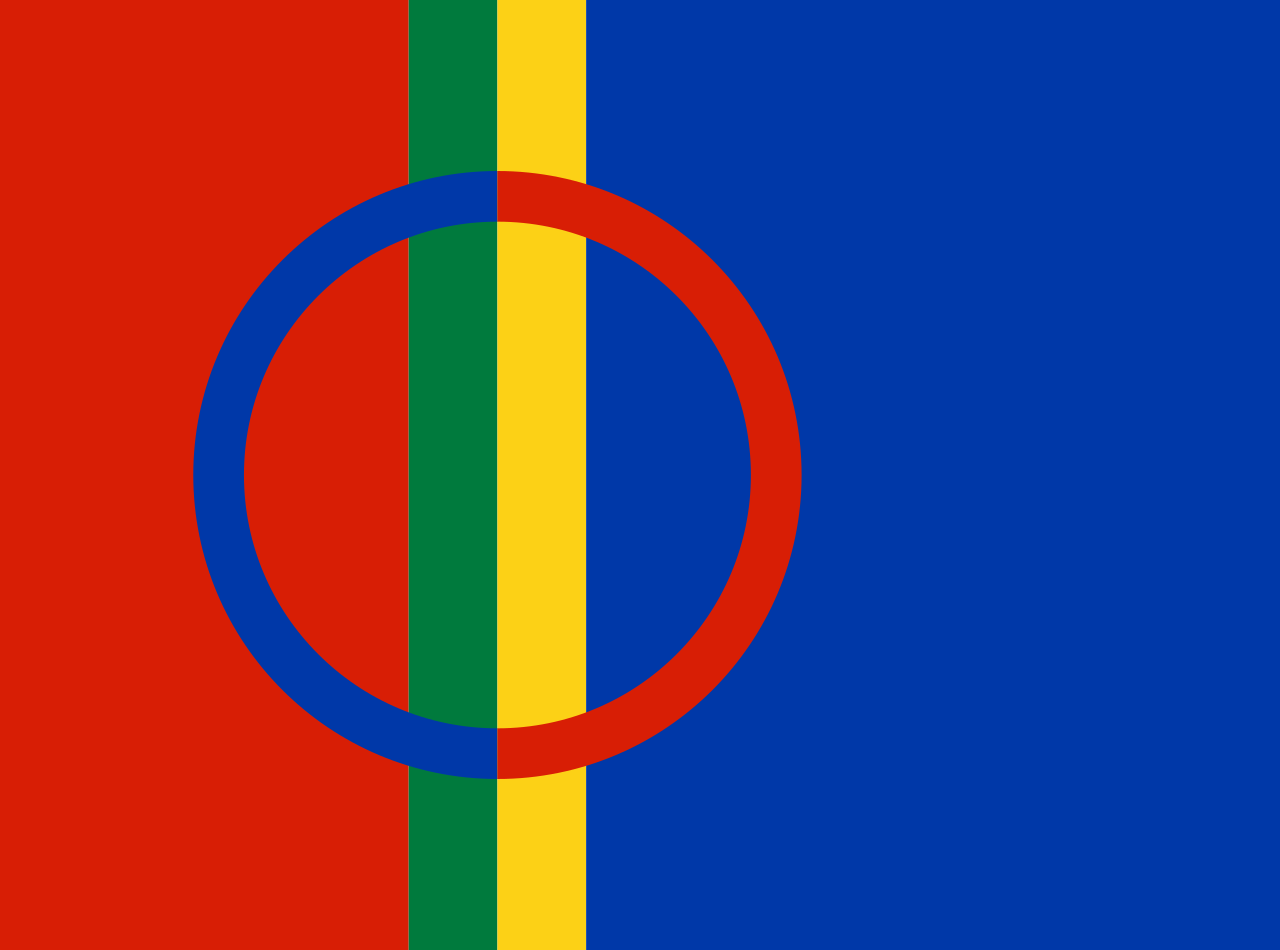
The colors found in Sami clothing inspired the Sámi flag – designed by Astrid Båhl, from Skibotn, Norway, and approved by the Nordic Sámi Council in 1986. The circle is a symbol for the sun (red) and the moon (blue), emphasizing Sami people’s connection to nature.

Another unique cultural element is the Yoik (or jojk), a traditional song-chant, with different functions, and can be about each other, places and animals. it is however inappropriate to sing a yoik about oneself, as this would be a form of self-flattery. Sami national jojk is Sámi eatnan duoddariid by Nils-Aslak Valkeapää, who modernised the yoik tradition. A famous example of yoik is Daniels jojk by Jon Henrik, a yoik tied to his late friend, which was sung at tv-show Sweden’s got talent.
What language do Sami people speak?

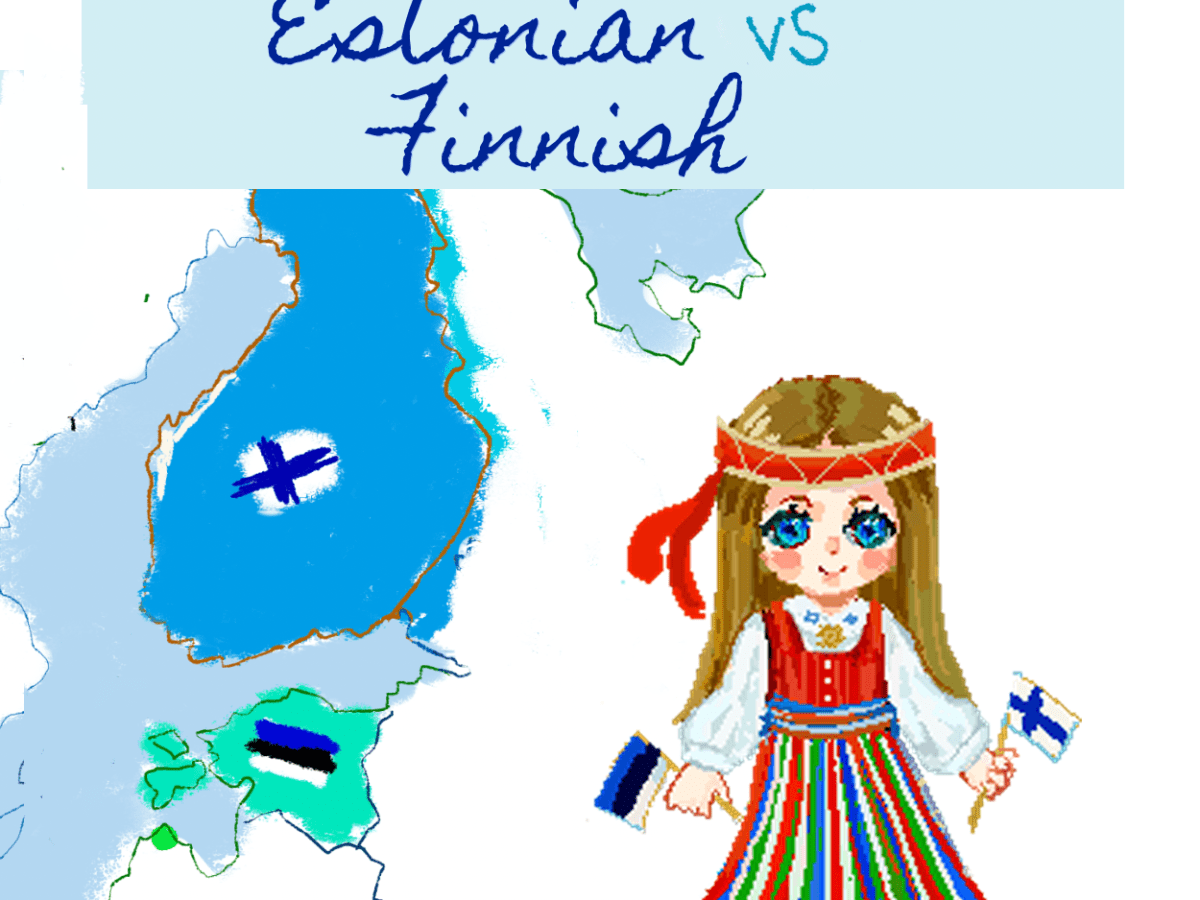
If you want to know in detail about various languages Sami people have spoken read my article about Sami languages . There is no single Sámi language, but a group of around 10 distinct Sámi languages which belong to the Ugro-Finnic language family (as Finnish and Estonian). Sami languages are relatively closely related, but not mutually intelligible to each other. North Sámi is the most widely used language and is spoken in all the four countries.

The majority of the Sámi now speak the majority languages of the countries they live in and all Sámi languages are at some degree of endangerment. Sámi languages had been illegal for centuries in Sweden and Norway, with assimilation policies and special residential schools (similarly to what happened in North America with indigenous people). This led to Sámi parents themselves to not speak Sámi to their children as a way to protect them. Since the late 20th century, the Sámi have the right to education in their own languages.

Sámi movie, book, music

  • the movie Sameblod, or Same Blood in English (2016), directed my Amanda Kernell. It is set in Sweden in the 1930s and concerns a 14-year-old girl who experiences prejudice at a nomad school for Sami children, and decides to escape her town and disavow her Sami heritage. Parts of the story are inspired by Kernell’s own grandmother.
  • books by Ann-Elen Laestadius: Stöld (stolen is the English title- with a Netflix adaption from 2021 as well), Straff (punished in English)
  • Sami singers: Jarnna (their Nilas jojk was my favourite song to calm down in an incredibl stressing period), Jon Henrik, Elin Oskal

History of Sámi people

  • 11,000-5,000 b.C. -first traces of people in Sapmi, inner Norrland. 1,500 b.C – reindeer ski dating back to this time. sijda communities were formed, several families who work and hunt together.

Mentions of Sami people in ancient times:

98 a.D. – the Roman historian Tacitus talks about a people called Fenni in his Germania. Finns used to be a synonym for Sami. 550 a.D – the bizantine historian Procopius tells about various peoples in Scandinavia. the Scraerefenni went on skis, wore animal skins and give the babies marrow to suck on. Both men and women hunt. 900 a.D- Icelandic Viking tales tell about the skin trade with the Sami and how the Sami and other nordic peoples deal with each other.

1300-1600 religious missions and colonisation

Early 1300s – Swedish kings encourage colonisation of lands to the north of Hälsingland, Sami people are taxed. 1389 – The Archbishop of Uppsala is urged by Queen Margaret to serve a mission in Lapland, because she believes that the Sami need a Christian faith. 1606 – King Charles IX calls himself King of the Lapps. He decides that church and market places should be established in the Lapland. 1685-1693 Charles XI of Sweden orders magistrates’ councils to examine the Sami idolatry. The Sami religion shall be destroyed. in 1700s the biologist Linnaeus travelled to Lapland, and mentioned that when a Sami refused to hand over religious objects such as magic drums to the missionaries, they would hold him down while they cut open the large artery in his arm, and made him bleed until he obeyed – a procedure that, according to Linnaeus, ‘often succeeded’.”

1700-1900 systematic discrimination

  • 1723 och 1732 – it is prohibited for Sami people to enter territories to the south of Lappmarken in Sweden, with the policy Lapp skall vara Lapp (Lapp shall be lapp), 1860s – Systematic Norwegianization, Socialdarwinism, Sami people considered inferior. Measures against Sami languages. 1902 – Law in Finnmark that prevented from selling land to those who did not speak Norwegian.

20th century – Rights given to Sámi people

  • 1917 – On 6th February the first Sami national congress took place in Trondheim, Norway. This was the first time that Norwegian and Swedish Sámi came together to solve common problems. On this day Sami national day is celebrated in all of Sami lands since 1992.
  • 1977 -The Swedish Parliament confirms that the Sami are an indigenous people in Sweden.
  • Sami parliaments: 1989 Sametinget in Norway; 1992 Sametinget in Sweden. In Finland a Sami delegation had already been formed in 1971, turned into a parliament in 1996
  • 2000 – The first Swedish Sami language law. Sami are given the right to use Sami languages in contact with authorities and courts, child and elderly care has to be accessible in Sami languages.

Sources :

  • Samiskeveivisere.no – Samer og nordmenn i Norge – Samiske Veivisere
  • Store Norske Leksikon – snl.no/samer
  • sametinget.no
  • samer.se
  • YLE’s Say it in Saami quick guide to Saami culture