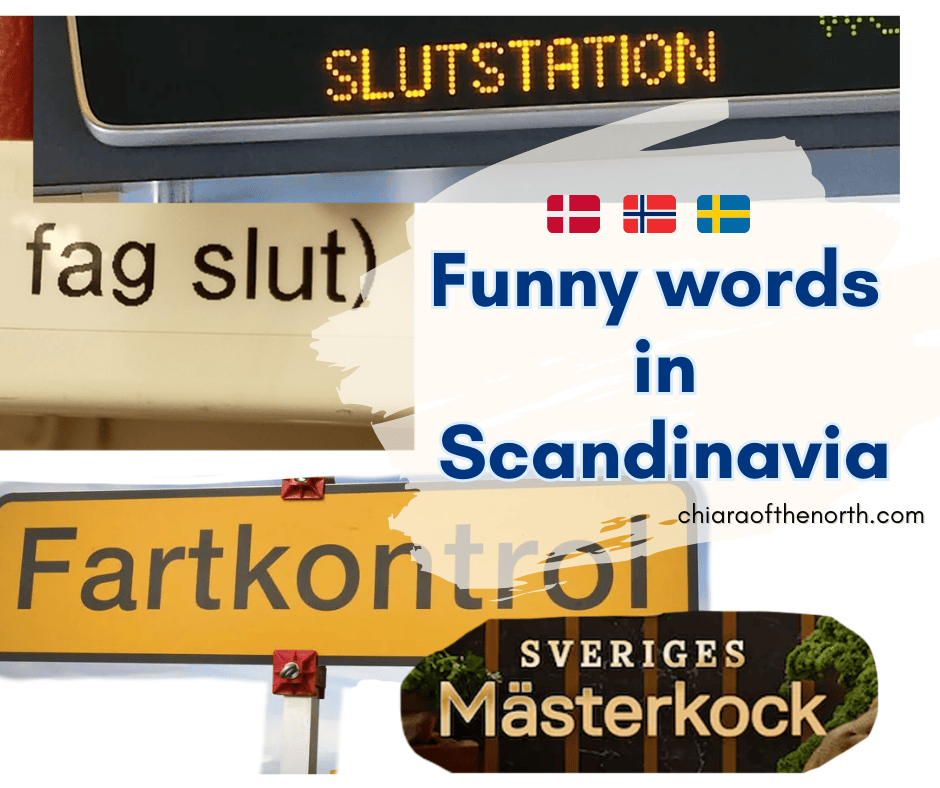
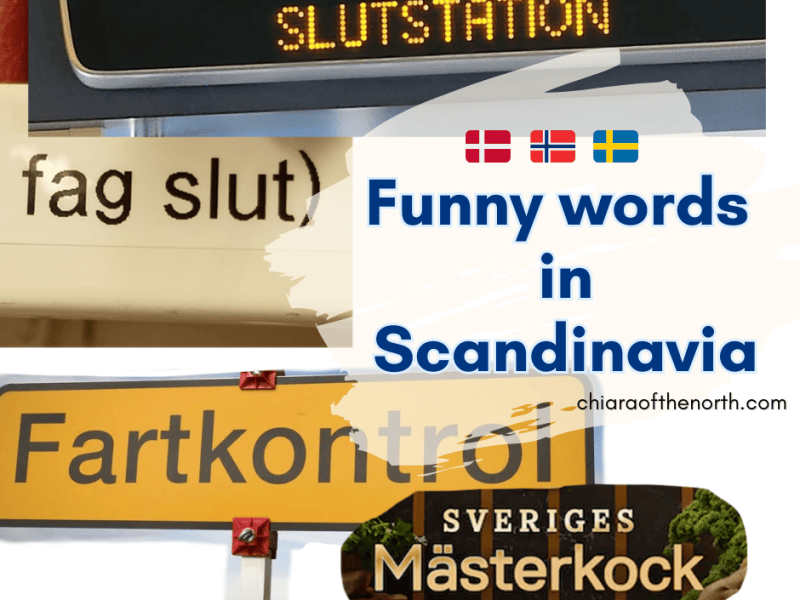
Take a train in Scandinavia to reach a “slutstation” or see”fartkontrol” signs while driving. Kiss and killing also mean something you were not expecting!
English and Scandinavian languages have, just like other languages, false friends and homonyms – words which look similar despite having different meanings.
You might see and hear fart, fagperson, and pussi which do not mean what you’d think – Continue reading to avoid embarrassing confusion if you will travel to the Nordics!
Do not feel insulted if you hear these words in Scandinavia!
Slut – end
et Fag (Danish) – used to mean a specific topic or specialization, as German Fach.
Tvätt (Swedish)- washing
Slags – kind/type
Normal stuff, with misleading names
En Kock (Swedish) – a cook/chef
En Puss – a kiss; Pussi (Finnish) – a bag
Fart – speed
Bra – just ‘good’!
En Killing – A young goat in Sweden. Or a kitty if you are in Denmark.
Mad (Danish) – food.
Words that do not mean what it looks like… but in a bad way
Kiss – Do not be happy to receive kiss in Sweden. That means ‘pee’.
Gift – Do not accept a free gift in Scandinavia, you might get poisoned.
Full – Maybe it makes sense as you are full..of alcohol.
Dog – died (verb)
Even funnier combinations you’ll see when travelling in Scandinavia
Slutstation – You are not ending up in a bad neighborhood.. It is just the last stop.
Fartkontrol(l) – Nobody is gonna do weird checkups on you, but be careful when driving…
A Fagskole is a vocational school in Denmark. Fagpersonis an expert in a given field. Fagslut at a Danish library is just the end of a specific topic on an aisle.
Sveriges Mästerkock is not a contest for the biggest **** in Sweden. It is the Swedish name of the cooking show Masterchef . It is a family-friendly show there as well, I promise!
Bonus false friends for speakers of Italian and German
Fika – a very recurring words in Both Swedish and Italian. Except that in Sweden it is a popular coffee break tradition involving pastries, whereas in italy a popular part of the female body.
Fickkalender (Swedish) – a pocket calendar sounds like a calendar for something else in German.
árslok – not an insult for Germans, but the end of the year in Icelandic.
Sources: Scandikitchen, Goetheinstitut on Instagram, Tayo826 on reddit, fartkontrol, archivegeo on tumblr (fagslut)
That was all for now. but more funny Scandinavian language facts will come.. so stay tuned.
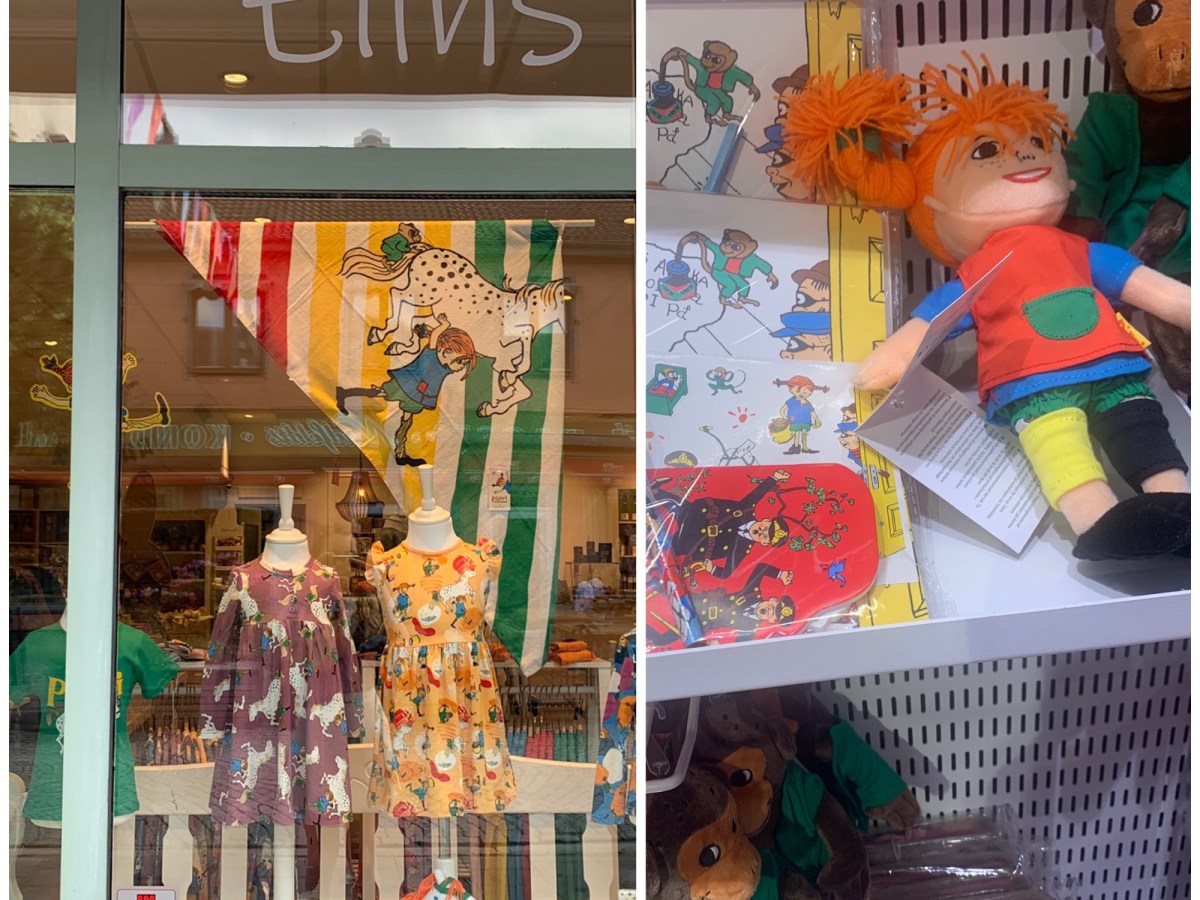
In Sweden, Pippi Longstocking objects can be a lovely souvenir. Pippi is on sweets and various children’s items a well, as sometimes other Astrid Lindgren’s characters, which have also cherished cultural impact as a part of Swedish identity.
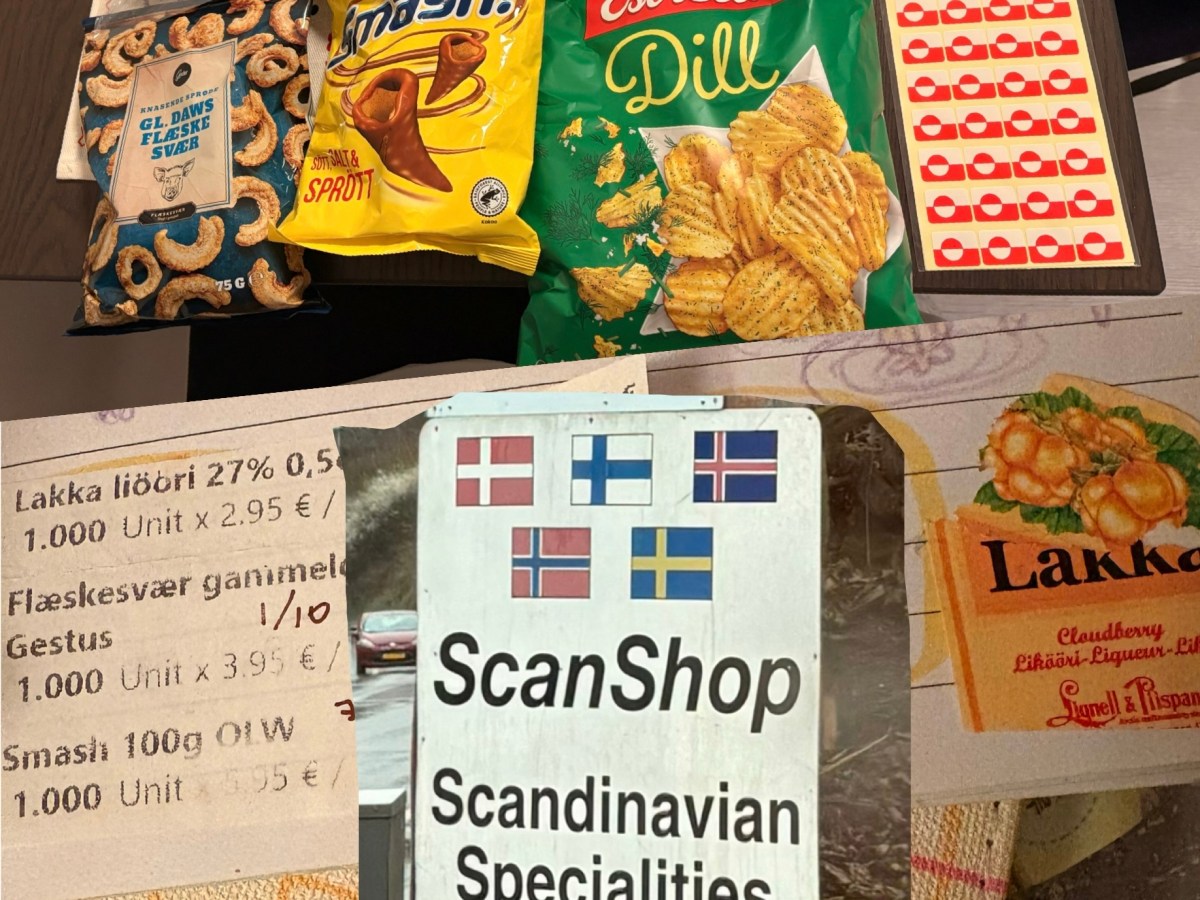
I visited Scanshop, a supermarket for Nordic expats in Luxembourg and Belgium. It offers a wide range of Scandinavian food products, including rye bread, fish, and sweets, alongside flags and tableware.
Take a train in Scandinavia to reach a “slutstation” or see”fartkontrol” signs while driving. Kiss and killing also mean something you were not expecting!
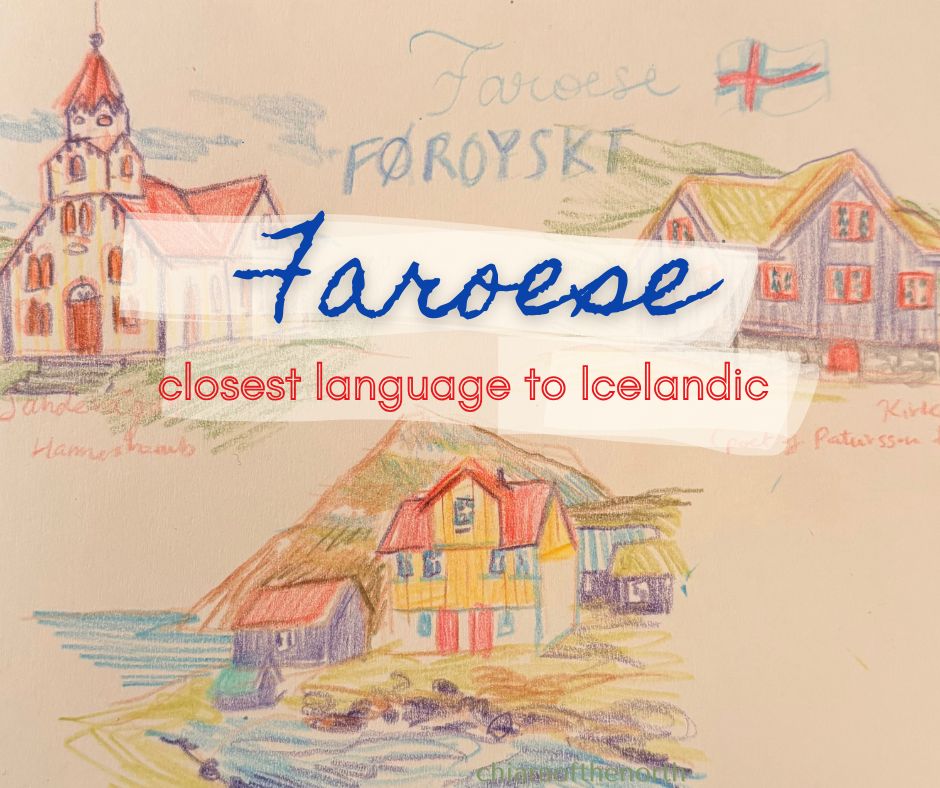
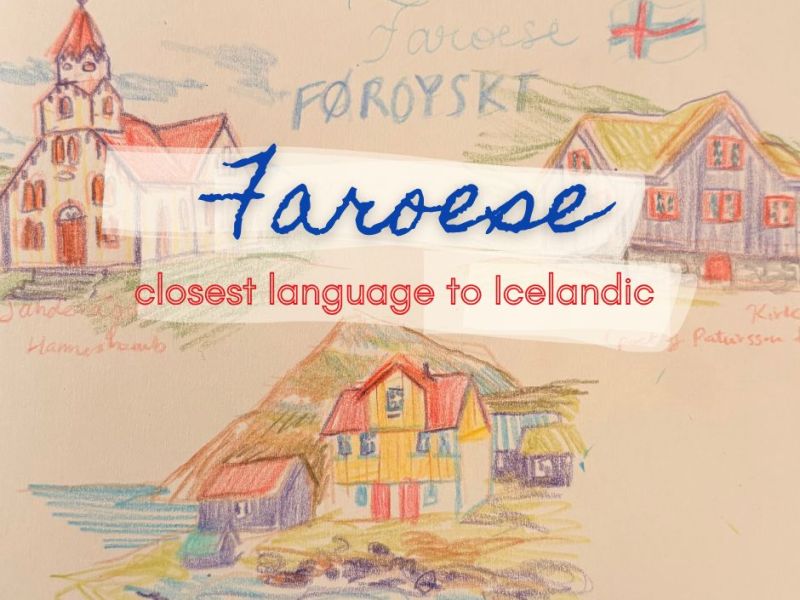
Discover Faroese – today spoken by about 80,000 people in the North Sea archipelago- as Icelandic still has much in common with Old Norse in grammar and vocabulary
Faroese (Føroyskt) is the language spoken in the Faroe Islands (Føroyar), located between Scotland, Norway and Iceland. Faroese people’s ancestors were Norsemen, and despite centuries of Danish rule, they managed to preserve their language through oral tradition. Faroese and Icelandic are closely related to Scandinavian languages, but still look much more like the language of their ancestors.
How similar is Faroese to Icelandic, and Scandinavian languages?
As follows, some basic expressions in Faroese, Icelandic, and Swedish/Danish/Norwegian. Although Faroese and Icelandic are closer, you can easily see that they belong to the same language group.
Faroese
Icelandic
Scandinavian
yes/no
ja/nei
já/nei
ja/ nej/nei
thank you
takk
takk
tak(k)
excuse me
orsaka
afsakaðu
se:ursäkta / no,dk:un(d)skyld
sorry
umskylda
fyrirgefðu
se:förlåt/ no:beklager
here you go/you’re welcome
ger so væl
gjörðu svo vel
varsågod
what’s your name
hvussu eitir tú?
hvað heitir þú?
(h)va(d) heter/hedder du?
good day
góðan dagin
góðan daginn
god dag
Faroese-Icelandic Differences in Spelling: tell them apart
Faroese has a written form based on etymology, making it look much closer to old Norse (and Icelandic), than its pronunciation.
No Þ (thorn) in Faroese:þ, pronounced as English th in mouth, is not present in the Faroese alphabet. Where Icelandic has a Þ, Faroese usually has a T: tú (you); tað (this) vs þú, það. In Scandinavian languages this is usually a D: du, det
No é in Faroese: Faroese alphabet does have just like Icelandic and unlike Scandinavian languages several accented vowels: Á Í Ó Ú Ý, It does however not have é (‘I’ in Faroese: eg, Icelandic: ég)
Faroese Ø/ Icelandic Ö
-ggj ending in Faroese: oyggjar, nýggj, kríggj (islands, new, war)
Faroese vocabulary: Language purism, Danish loanwords, and a sprinkle of Irish
A language committee has invented words to prevent more influential languages to take over Faroese, similarly to Icelandic language purism. The Faroese Jóhan Hendrik W. Poulsen (1934-2022) invented words as:
Telda (computer), Fartelda (laptop), Fartelefon (mobile phone) – In Icelandic (far)tölva and (far)sími
Talgildur (digital), fløga (CD) ‘thick slice’
tyrla (helicopter) – in Icelandic þyrla from tiril=whirl, Farstøð (terminal) ‘distance/travel place’
flogbóltur (volleyball), ‘fly ball’
Gosbað (jacuzzi) ‘air bath’
At the same time, being under the Kingdom of Denmark, Faroe islanders incorporated loanwords form Danish in their language: snakka, forstanda – speak, understand – are used colloquially instead of tosa and skilja (Icelandic tala, skilja). Bike is súkkla (cykel in Danish, reiðhjól in Icelandic), War is kríggj (krig in Danish, lögregla in IS)
Faroese vocabulary is of course North Germanic, but as Norsemen brought Celtic women from their settlements in the Irish Sea, you also find a few traces of that, mainly regarding cattle and fields apparently.
Grammar: genders, declensions, verbs
Faroese and Icelandic are Insular North Germanic languages- and thanks to their isolation they retained many aspects of Old Norse that Swedish, Danish and Norwegian dropped.
Faroese
Icelandic
Scandinavian
genders/articles
3 (m, f, n)
3 (m, f, n)
2* (m/f, n)
cases
3 (often 2 when spoken)
4
–
verb endings (present)
3/4: -i,-r,-a/u (plural=1 ending)
5/6: -,-t, -r,-um,-ið,-a/u
1: -r
Here are explanations regarding the table above:
Genders
Both Icelandic and Faroese have masculine, feminine and neuter gender.
*in Scandinavia, only Norwegian partially kept the masculine/feminine distinction, while Swedish and Danish have only general and neuter – Norwegian was actually grouped as West- North Germanic together with Faroese and Icelandic before shifting towards the languages in the continent. What is neuter in Icelandic and Faroese usually is also in Scandinavian, as feminine when used in Norwegian. There is some overlap also with German and Dutch, so speaking multiple Germanic languages helps when in doubt!
The gender can be often assumed from the endings:
Masculine: -UR, -I: dagur, matur (day, food)- Scandinavian languages lost the ending: dag, mat; tími
Feminine: -, -A: bók, nátt/nótt; kirkja, gøta/gata (book, night, church, street). A often stays in Swedish, but is an E in Danish: kyrka/kirke, gata/gade
In addition, Faroese and Icelandic have declesions for numbers until 3 (Faroese) and 4 (Icelandic). The number changes depending on the gender: ein maður/kona, eitt barn; tveir menn, tvær konur, tvey børn and so on. This does happen in Scandinavian languages only for one/a: en bok, ett barn.
Faroese
Icelandic
1/a man, woman, child
ein maður/kona, eitt barn
einn maður, ein kona, eitt barn
2 men, women, children
tveir menn, tvær konur, tvey børn
tveir menn, tvær konur, tvö börn
3
tríggir, tríggjar, tryy
þrir, þrjar, þrjú
4
–
fjórir, fjær, fjogur
What about articles?: there is no undetermined article. ‘a man’ is simply maður. As in all North Germanic languages, the determined form is made by adding a suffix to the substantive, which varies by gender: -in, -n, -ið: Masculine maðurin(n) (the man), feminine-n konan (the woman),neuter-ið: husið (the house).
in Scandinavian you do have en/ett as undetermined article, becoming -en, -et for the determined form: ett hus, huset. Norwegian might also have feminine ei as ei bok (a book), becoming boka, the book. Another interesting common trait with some varieties of Norwegian is that the possessive adjective can be put after the noun: boka mi – bókin min vs min bok/bog in Swedish and Danish.
Cases
In Faroese and Icelandic, a noun changes depending on the grammatical case according to its gender/number, and the prepositions it follows.
Faroese: Bátur(in): (the) boat – eg síggi bátin: i see a boat
Icelandic: bátur(inn) – ég sé bát
Icelandic retained 4 cases: Nominative (subject), accusative (object), dative, genitive, as for example German does – while Faroese 3, dropping the genitive, considered obsolete, very formal, or only in fixed expressions- or even 2, as in spoken Faroese the accusative is often used instead of dative!
So the name of the Faroe Islands is Føroyar, but: í Føroyum (in the Faroes), and you have the Føroya Banki (Bank of the Faroes); the Faroese language is called Føroyskt, but in Faroese is á føroyskum.
How to Learn Faroese?
You find resource to learn Faroese, Icelandic and all Scandinavian languages in my free language resources list – many of these are free!
Faroese is now available on google translator, though the Faroe Islands started their own translation service Faroe Islands Translate in 2017, with sentences human-translated.
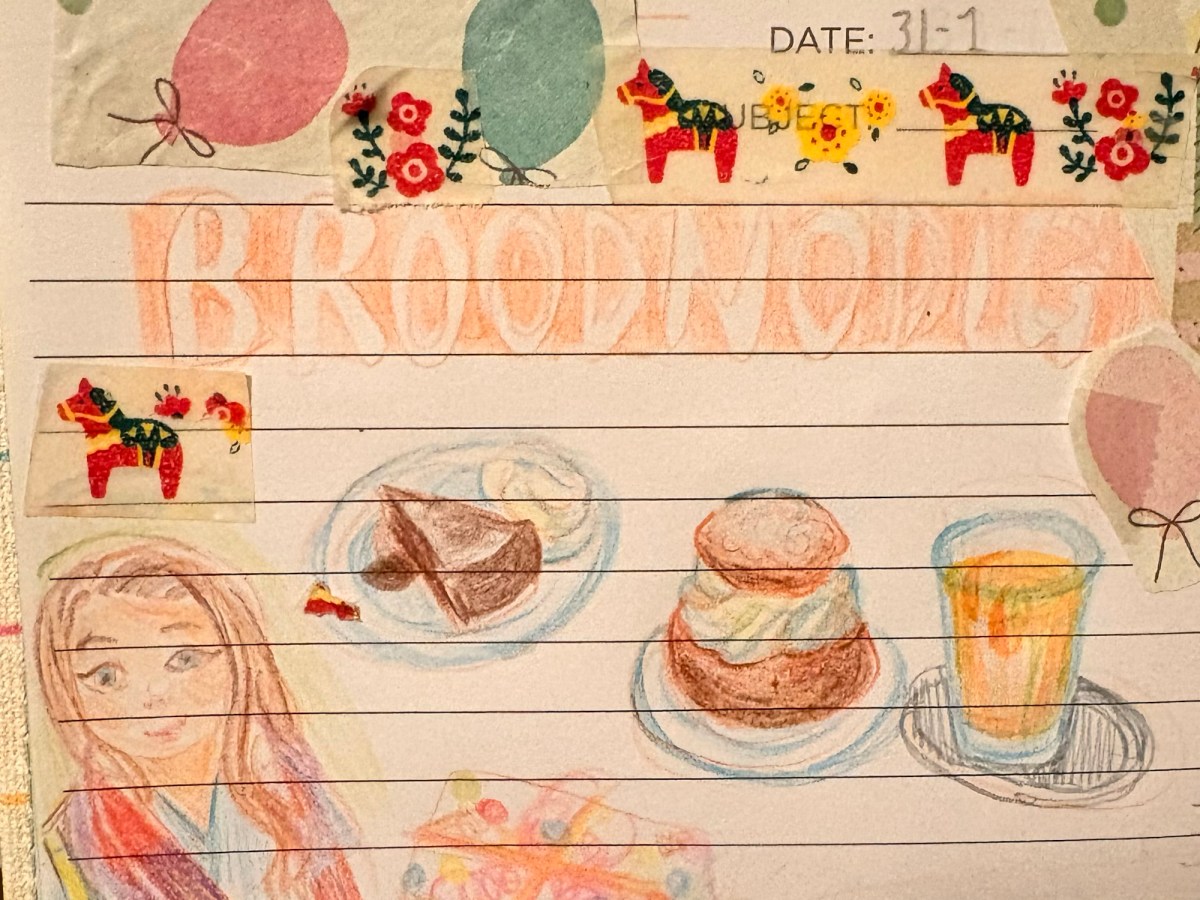
In Utrecht, the cafe Broodnodig serves Swedish pastries and cakes as cinnamon and cardamom buns, kladdkaka, smulpaj and Scandinavian seasonal treats as semlor and saffron buns.
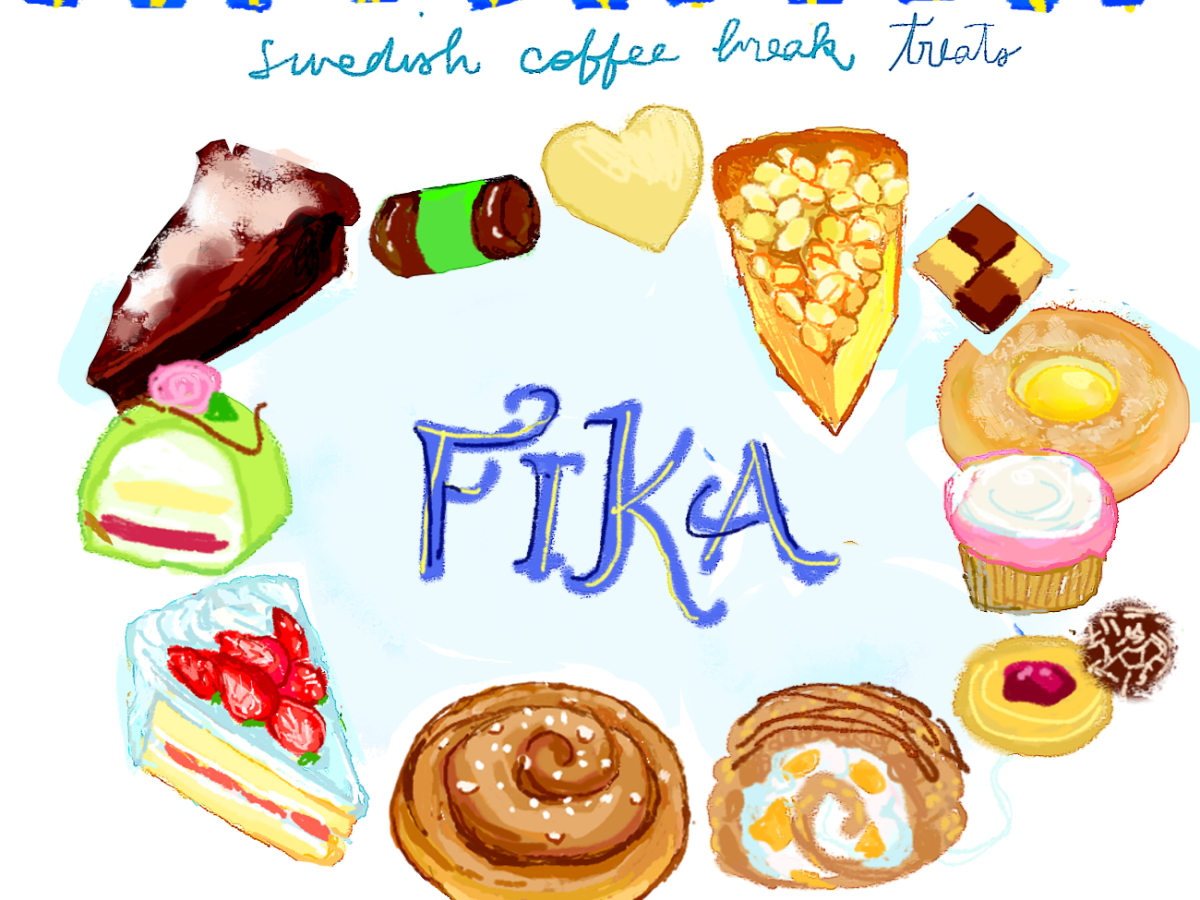
Fika is a cherished Swedish tradition involving a coffee and cake break. Discover various Fika treats, from classic kanelbullar (cinnamon buns), cakes and cookies to savory options.
Discover Faroese – today spoken by about 80,000 people in the North Sea archipelago- as Icelandic still has much in common with Old Norse in grammar and vocabulary