Sami traditional costumes

Sami traditional costumes: hats and dresses from Lapland

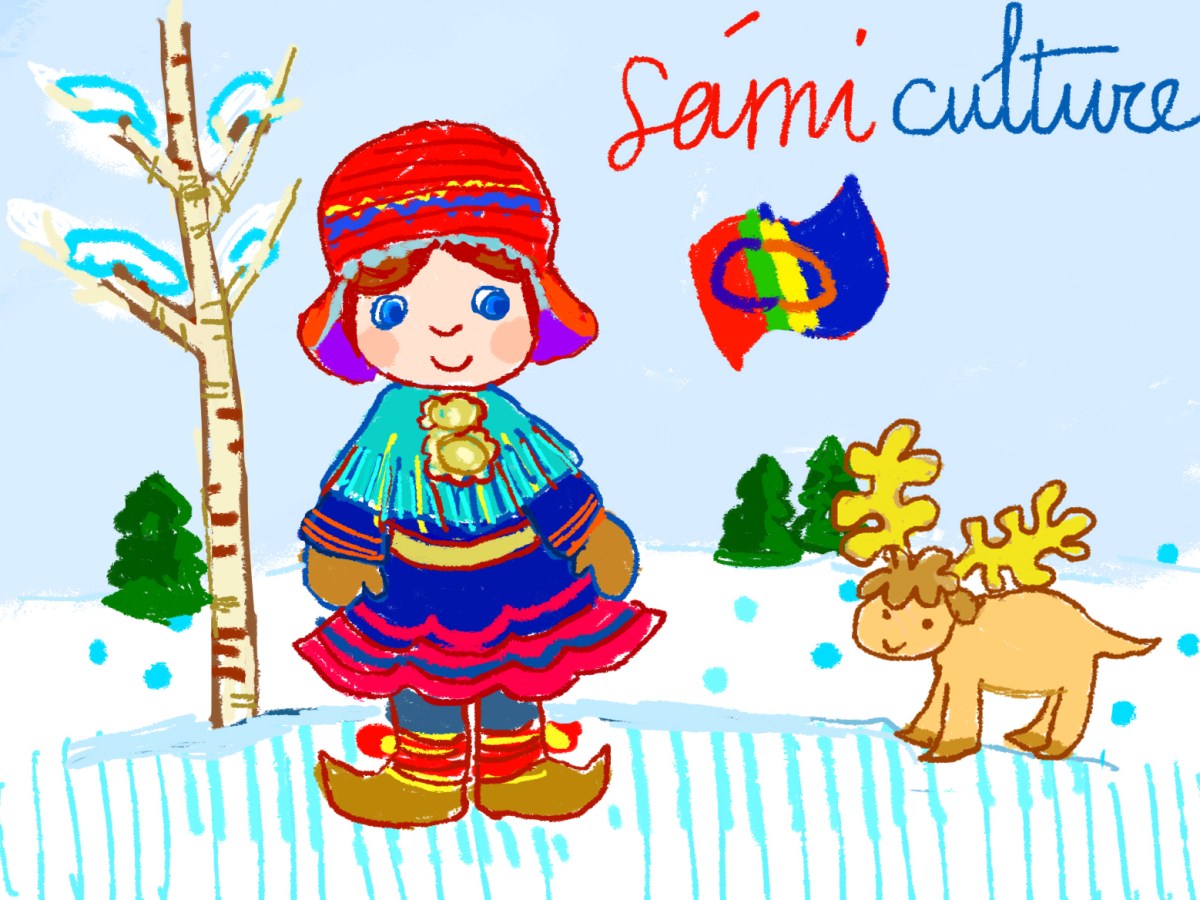
My birthday falls on Sami national day, and to honour the sami people (who used to be called Lapps), I decided to write an an article about their traditional clothing, after Swedish and Norwegian costumes.

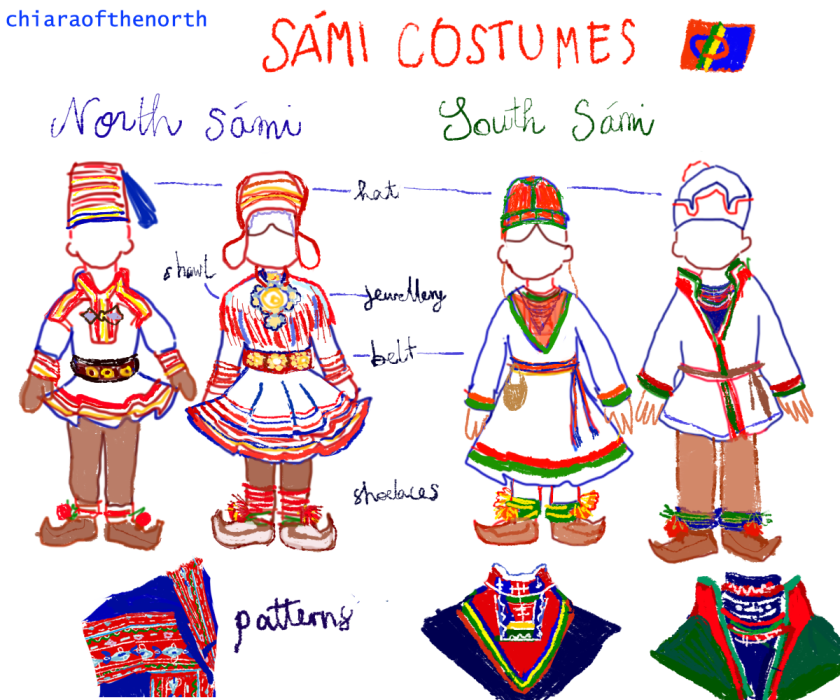
The Sami traditional costume is called gapta/gåptoe, in southern Sami, gábdde in Lule Sami, gákti in Northern Sami. In Swedish and Norwegian repectively kolt and kofte. It includes hats, belts, jewellery as brooches and mittens.

Sami handicrafts, Duodji, also include making your own clothing, and that is still the case for some families.

Sami costume variations

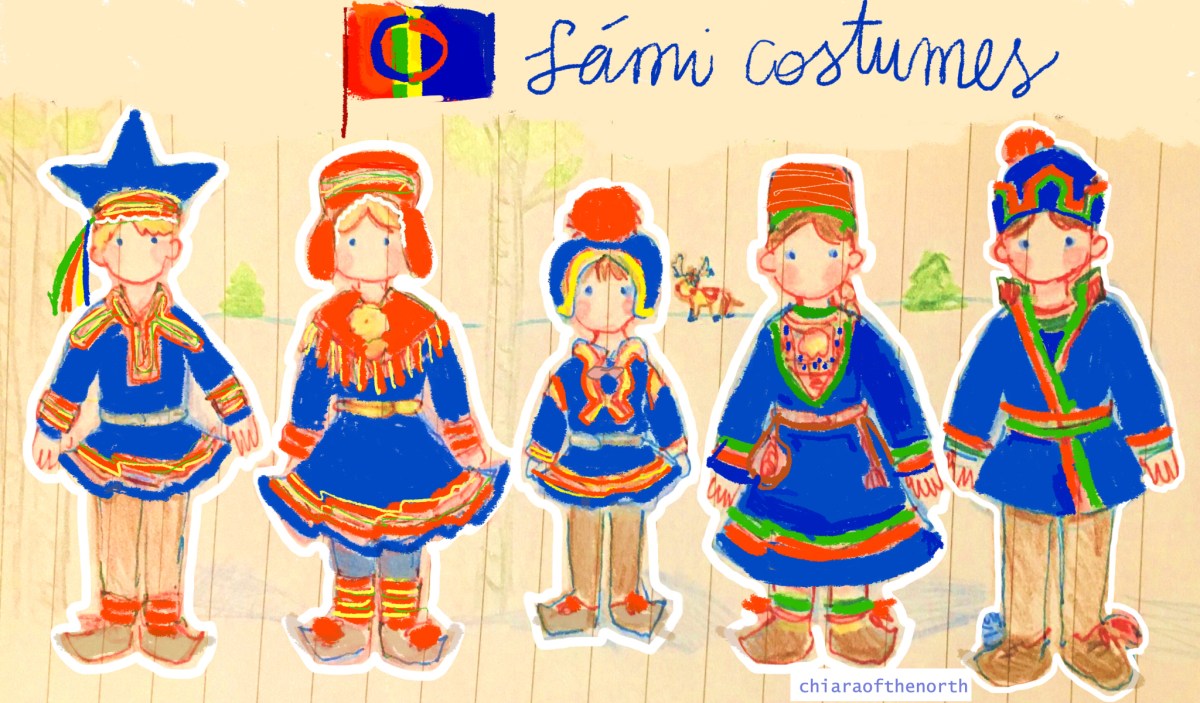
Sami Costumes vary depending on the geographical area and gender, but can have differences due to status, with different color orders and decorations. The base color is most often blue, with decorations in red, white, yellow and Green.

Generally, variations in Sami costumes follow Sami languages and ethnical groups within Samis. However, because of nomadic life depending on reindeers, designs from different groups ended up influencing each other.

The biggest differences I have noticed are between North and South Sami costume is the more “curled up” shape in the North Sámi versions, and the fact it, without surprise, looks more meant for cold climates, more often including a shawl for women. Nowadays it possible to see more modern kofte/kolt with different patterns, as you can see in this music video.

Sami iconic hats

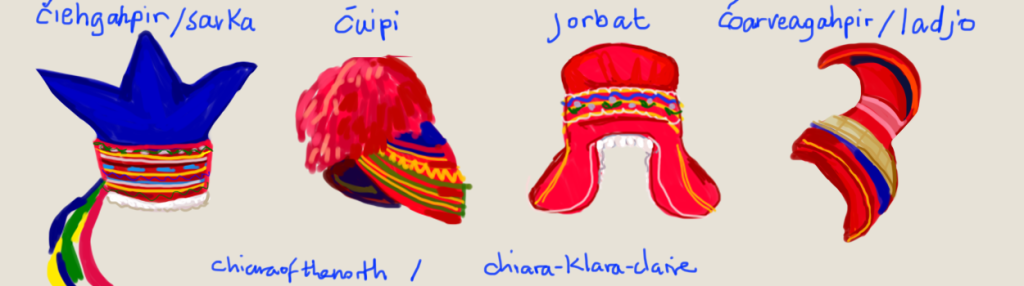
An important part of Sami costumes is the hat. Various types of hats exist (see picture), different for men and women. Among others:

men hats: Four Winds Hat, čiehgahpir or Šávka, with summer and winter variations (also stjernelue in Norwegian “star hat”), used in East Finnmark, Karasjok, Kautokeino, North-East Norway; ćuipi, a kind of poofball hat with a big red pom pom, used in Karesuando, Swedish Lapland.

Women hats: Jorbat, the hat with the big ‘ears’; Ládju/ladjo, also called čoarvegahpir (čoarvi – horn, gahpir – hat), which stopped being used a hundred years ago, but still exists in eastern Sami areas now under Russia.

Costumes as a symbol of Sámi identity

Some Sami grew up wearing it, other only used it for their confirmation ceremony, others get themself a sami traditional costume as adults. The tradition to wear it has almost disappeared in the coastal areas, but a revival lead to reconstructing them, similarly to what happened with Norwegian bunads.

In 1940 the archeologist Gutorm Gjessing and his wife Gertrjud were the first to write about Sami clothing, in their book Lapdrakten.

In the 1970s, Sami movements made it an important symbol for Sami identity. Wearing Sami costumes became a new tradition in some contexts, as during Sami national parliament assemblies in Sweden, Norway and Finland.

Sources: Store Norske Leksikon

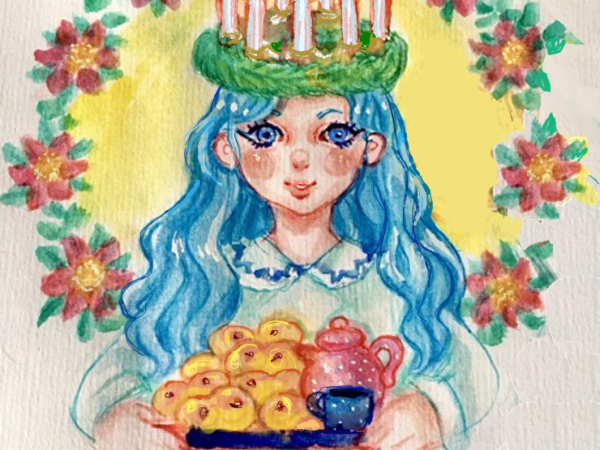
7 fun facts about Lucia, Sweden’s pagan saint

Lucia brings light in the darkest night of the year and is a mix of pagan and christian traditions. It is celebrated in Scandinavia with processions, saffron buns and church concerts.

Iceland national day and the Lady of the Mountain

The Fjallkona is the personification of Iceland and has a big role in the Icelandic national day, between poetry and parades

June, 17th, is Iceland’s national day, Þjóðhátíðardagurinn. The day was established after Iceland’s independence from Denmark in 1944, on the independentist Jón Sigurðsson’s birthday.

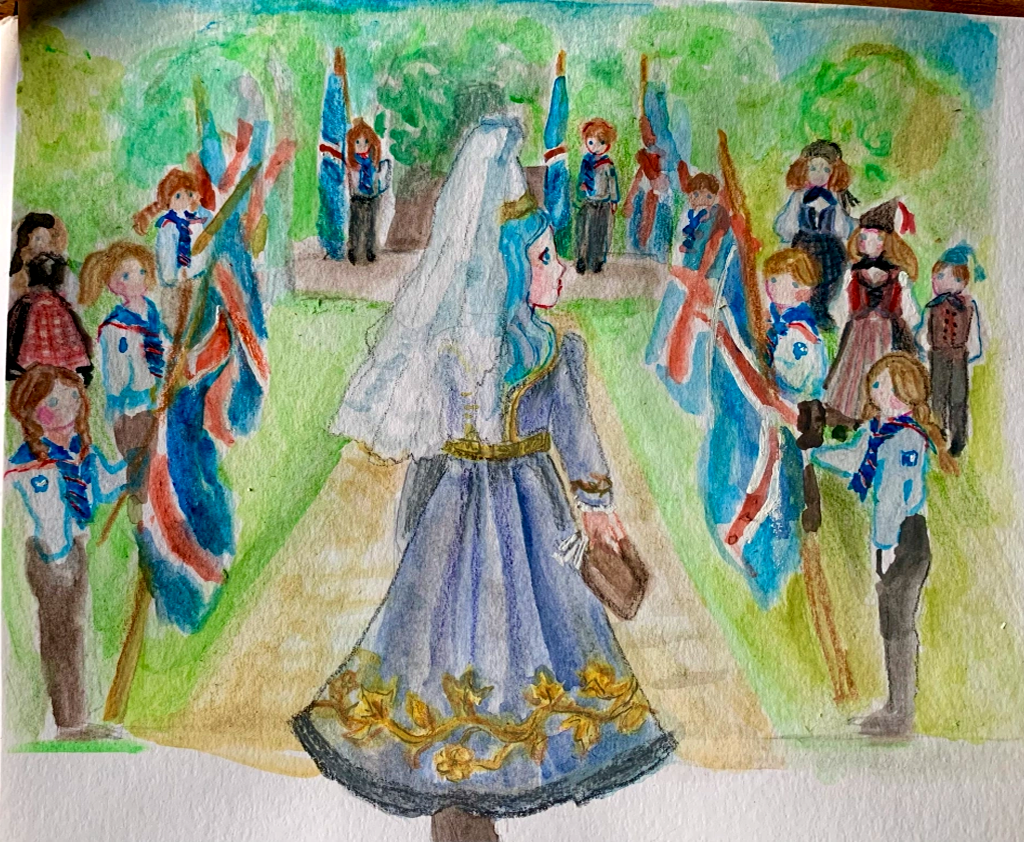
The day is marked by parades, with marching bands and flag-bearing troops from the national scout movement. After the parades, it’s time for the town’s elected ‘lady of the mountain’ to recite a poem. Her identity is however secret until the ceremony. Before that, authorities and freshman students in Reykjavík have laid wreaths to honour Jón Sigurðsson. You can see the program for 17 júní in Reykjavík.

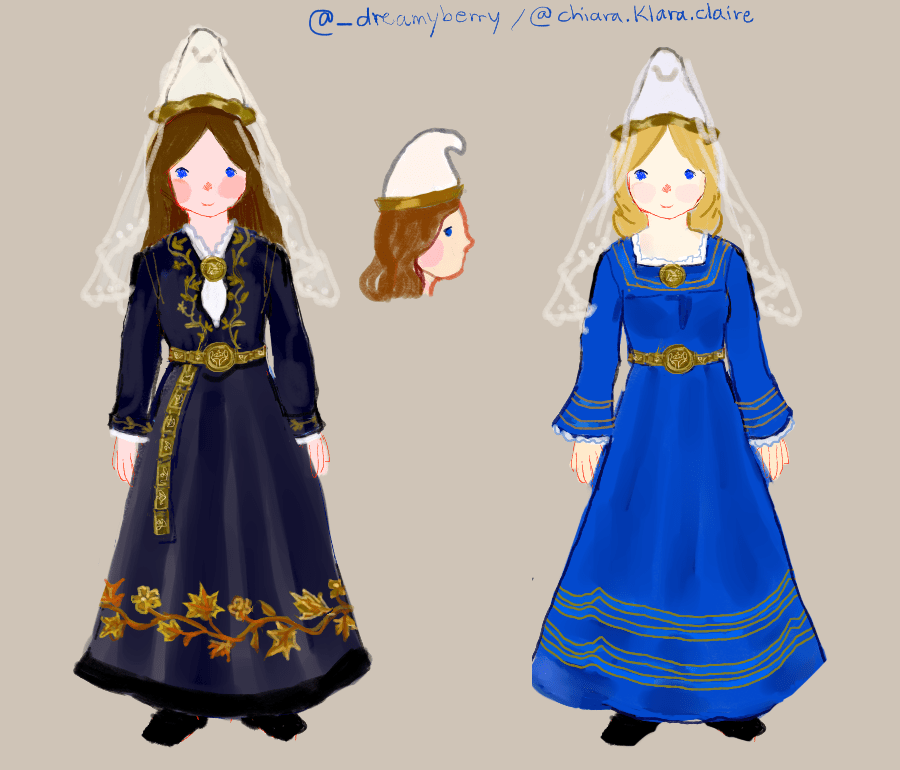
The woman representing the fjallkona, literally ‘lady/maid of the Mountain’, wears the skautbúningur, dark dress with golden embroidery and a sort of horn-shaped headgear, inspired by the ancient krókfaldur with a veil. The first time a woman represented the fjallkona with a skautbúningur was actually in Winnipeg, Canada in 1924, where many Icelanders migrated in the 1870s.

skautbúningur and kyrtill dresses are worn by the fjallkona, both designed by Sigurður Guðmundsson in the 19th century

Icelanders are encouraged to wear a folk costume on the national day, Þjóðbúningur. There are officially several types among which the Upphlutur for women and Hátíðarbúningur for men, not too different from other Nordic folk costumes as Norwegian Bunads and Swedish Folkdräkter, often black but also in colours as red or blue. part of the outfit is a tail cap.

Icelandic national day feels to me kind of a mix between Norway’s 17 (!) mai, with national dresses, parades and marching bands, and Lucia, with its elected Lucia/Fjallkona!

Where does the Fjallkona come from?

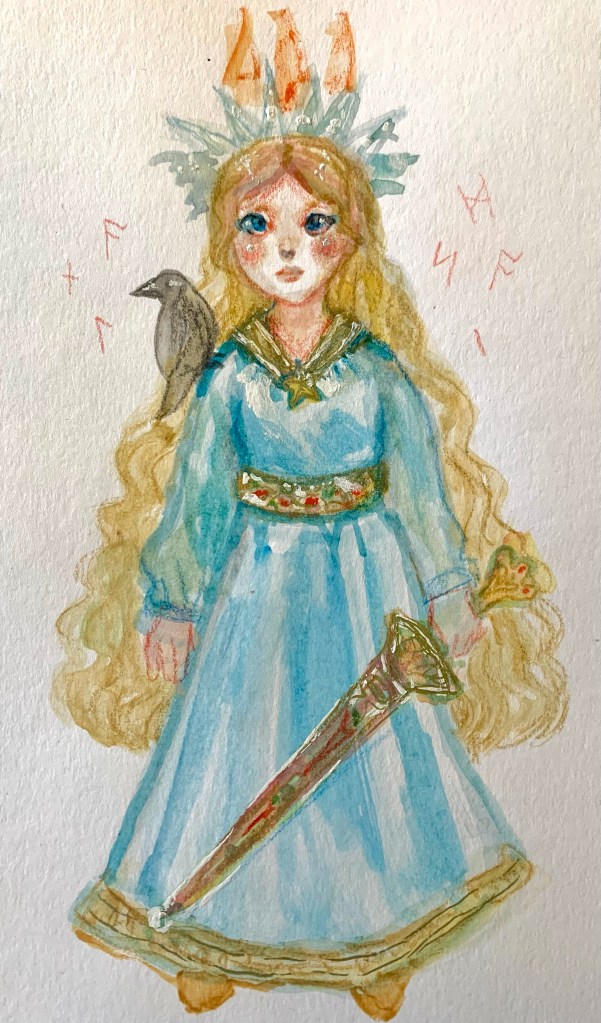
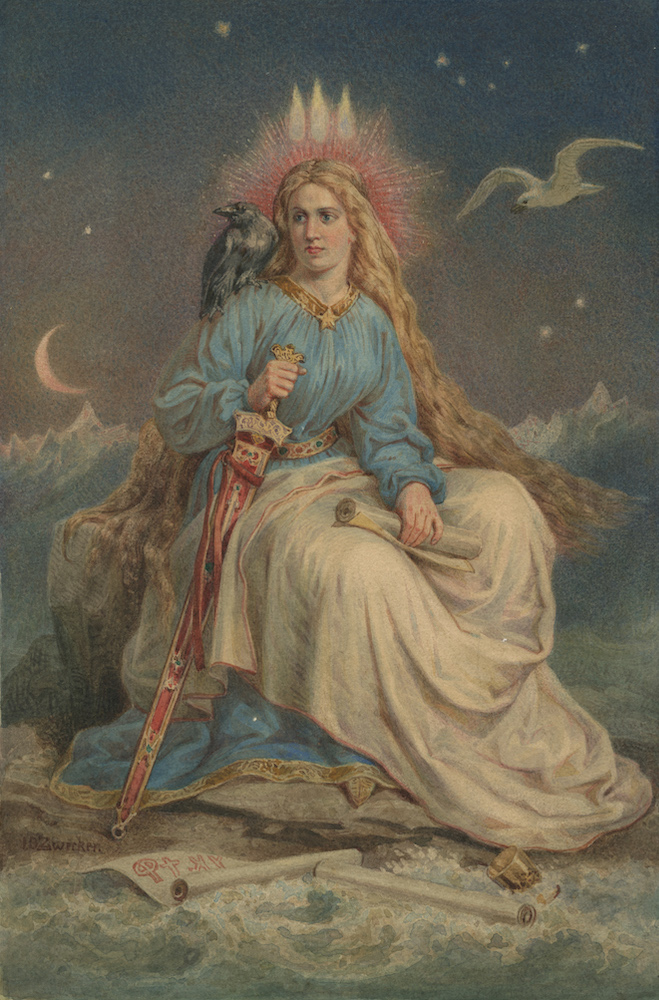
the Fjallkona is the female personification of Iceland. She represents Iceland’s spirit and its nature. Its name appears in the poem Eldgamla Ísafold a.k.a. Íslands minni by Bjarni Thorarensen in the early 19th century. Its most popular depiction is the painting by German painter Johann Baptist Zwecker in 1866.

Eldgamla Ísafold/ ástkæra fósturmold/ fjallkonan fríð!/ mögum þín muntu kær/ meðan lönd gyrðir sær og gumar girnast mær/ gljár sól á hlíð.

(Ancient land of ice / beloved nurturing soil / fair mountain woman. /May you love your sons, while countries barricade their waters / and men yearn for maidens / the sun glistens on a hillside.)

Bjarni Thorarensen , ‘Íslands minni’/ Eldgamla Ísafold

In Zwecker’s painting, made for the last volume of a collection of Icelandic folk tales, Icelandic Legends, the fjallkona has a crown of ice from which fires erupt, representing Icelandic nature with its glaciers and geysers. On her shoulder is a raven, symbol for the god Odin and norse mythology, and runes on a parchment, representing Icelandic culture.

It then gained popularity as symbol for the motherland, sometimes opposed to the Danish King as father under the Danish rule.

Icelandic patriotic poems

On the occasion of the institution of the Republic in 1944, a poem contest was held. Hver á sér fegra föðurland (who has a lovelier fatherland) and Land Míns Föður (My father’s land) were the winning poems. An extract from the two follows:

Hver á sér fegra föðurland / með fjöll og dal og bláan sand / með norðurljósa bjarmaband / Og björk og lind í hlíð? […]

Við heita brunna, hreinan blæ / og hátign jökla, bláan sæ / hún uni grandvör, farsæl, fróð / Og frjáls – við ysta haf.

Hulda (Unnur Bedediktsdóttir Bjarklind), ‘Hver á sér fegra föðurland’

Who has a lovelier fatherland / with fells and dales and bluest sand, with northern lights up aloft, and birch and lime on hilltops? […] With hot springs of a pure hue / majestic glaciers, a sea of blue / she remains thoughtful, peaceful, sage / and free, in the farthest sea.

Hvíslað var um hulduland / hinst í vestanblænum / hvítan jökul, svartan sand / söng í hlíðum grænum. / Ýttu þá á unnarslóð / Austmenn, vermdir frelsisglóð / fundu ey og urðu þjóð / úti´í gullnum sænum. […]

Hvort sem krýnist þessi þjóð / þyrnum eða rósum / hennar sögur, hennar ljóð / hennar líf vér kjósum. / Ein á hörpu íss og báls / aldaslag síns guðamáls / æ hún leiki,ung og frjáls / undir norðurljósum.

Jóhannes úr Kötlum, ‘Land Míns Föður’

There were whispers of a hidden land / hinst in the western blues / white glacier, black sand / singing on green slopes. / Push them on a path of success / Men of the East, warmed by the embers of freedom / found an island and became a nation / out in the golden seas. […] Whether this nation is crowned / with thorns or roses / its stories, its poetry / its life we choose. / Alone on the land of ice and fire / the eternal sound of her divine language / forever she moves, young and free / under the northern lights.

Gleðilegan Þjóðhátíðardag! (Happy national day!)

More articles:

Nordic findings in japan

Nordic culture experienced in Japan: Moomins, Dala horse stationery, Nordic-inspired foods and books about Scandinavia seen by the Japanese.

How Nordic are Baltic countries

Are Baltic countries Nordic at all? I explored Latvia and Estonia, noting their ties to Nordic culture, from languages to Rye bread and Midsummer.

Bunad: Norway’s iconic folk costumes

The Norwegian national costume, to be seen in all its glory on 17 may, and its old but not so old tradition

A bunad (plural bunader) is the Norwegian national costume. Bunads are among the most beloved folk costumes in the world, and the most worn in Europe. Other Nordic countries have their own folk costumes as well, but they are much less common and strictly connected to folk traditions as folk dances. Read about Swedish folkdräkter.

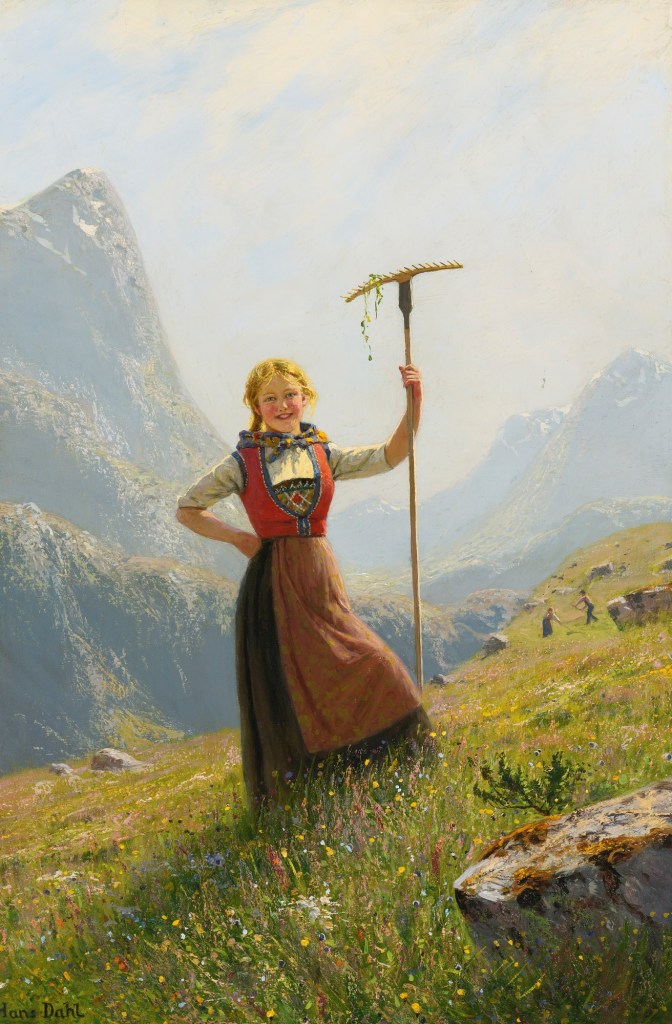
In Norwegian there’s a distinction between a Bunad and a folkedrakt (“folk costume”) , with the latter specifically used for costumes from the past. The word bunad, from Old Norse búnaðr began to be used in the 20th century, as the national costumes gained popularity with the rise of the National romantic movement in the 19th century, with artists as Adolph Tidemand and Hans Dahl depicting them.

Why bunads are so popular in Norway

After national romanticism, the use of bunads increased in the 1920s, but it was after the war that the national dress became even more popular, as a symbol of free and indepent Norway. First and foremost on the national day, and then for any festive occasions – as christenings and weddings. It is now officially seen as a gala attire, which can be for instance worn at the opening of the Stortinget, the Norwegian parliament. The best day to admire Bunads remains 17th May (Norway’s National day).

Young adults traditionally receive their bunad on their confirmation, as 15-year-olds, and it will last their entire lifetime. Crown princess Alexandra had hers sewn by her grandmother the Queen for this occasion. Purchasing a bunad costs thousands of euros/dollars, although lately low cost “China bunad” emerged.

Around 80% of Norwegian women owns a bunad. It is less common for men to wear it, with 20% having one, but the number is rising. In 1999, Pakistani-born Stortingen member Rubina Rana wore a bunad as the first person with migration background doing so in a 17 mai parade.

The diverse bunad designs

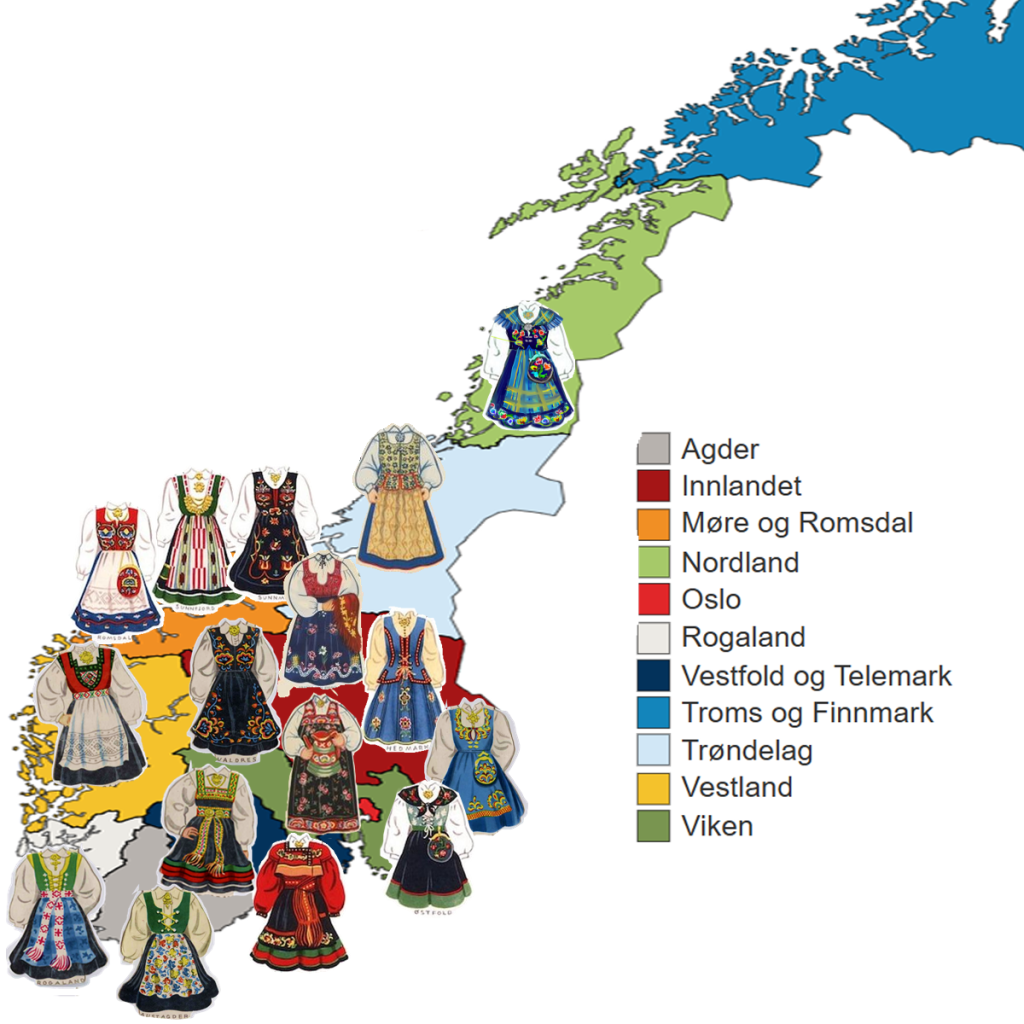
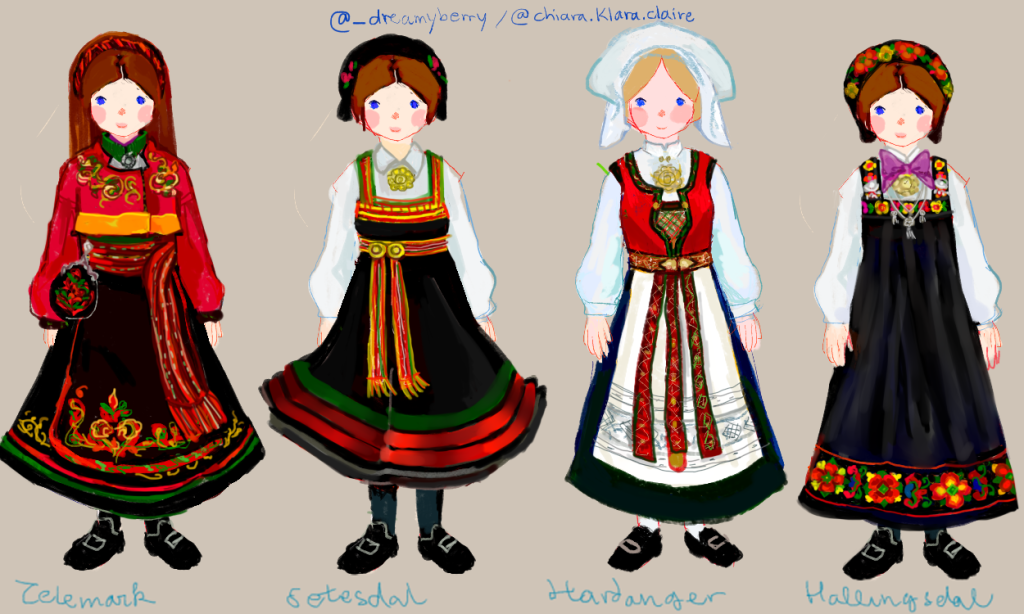
Norway’s fylker (counties) with some bunads from them

There are around 450 bunads in Norway, with each district having its own designs. They can be grouped into 5 categories of Bunads depending on how they were created, from traditionally in use to entirely recounstructed.

At the beginning of the 20th century Norway had just become fully independent and many were trying to promote Norwegian traditions and make the national identity stronger. In these years Bunads were being redesigned from old costumes with Hilda Garborg as leading figure for the movement. She published a very successful book called Norsk Klædebunad in 1917.

Bunads with the oldest tradition

The Hardanger bunad, was established in its use and is retained as the most Norwegian, depicted in art and easily recognisable. Setesdal, Hallingdal and Telemark are the other districts with the oldest and most established bunad tradition.

More recent bunads

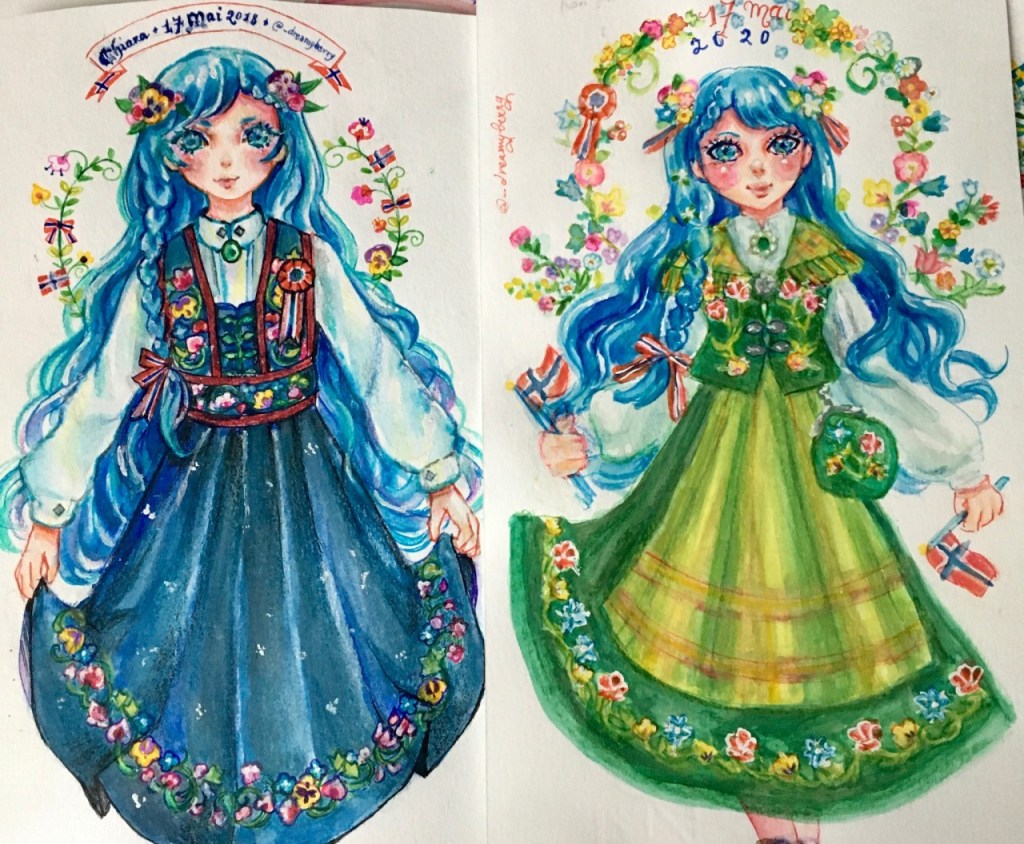
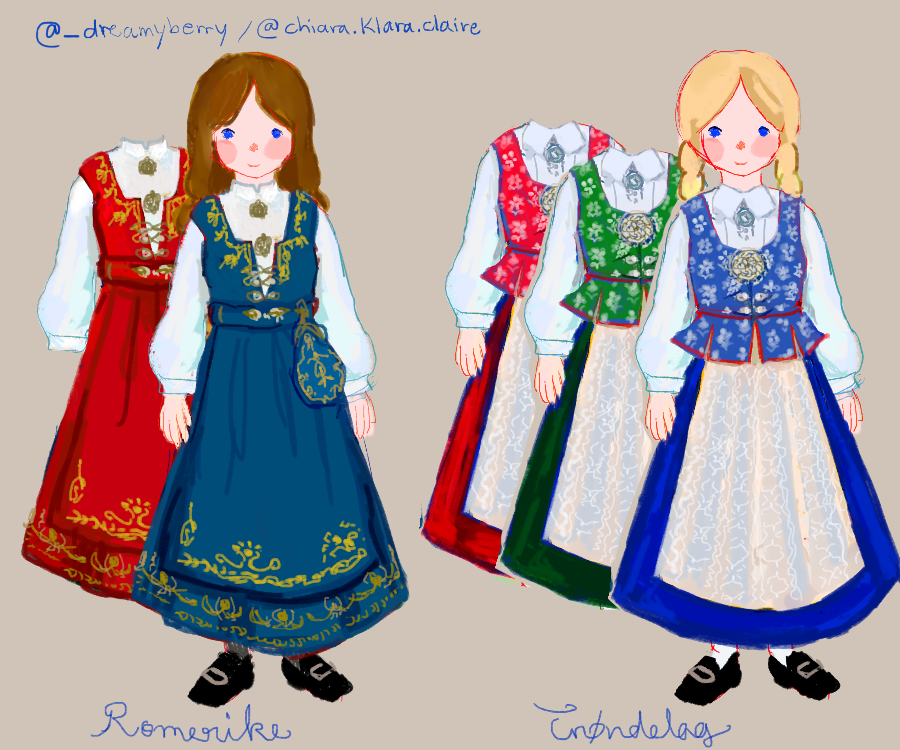
Flower embroideries are very common. Present among others in the Nordland bunad (considered by many Norwegians the prettiest bunad) and Gudbrandsdalen bunad. The same design can also come in different colours, with the Nordland bunad existing both in green and blue and the Trøndelag and Romerike bunads in blue, red and green.

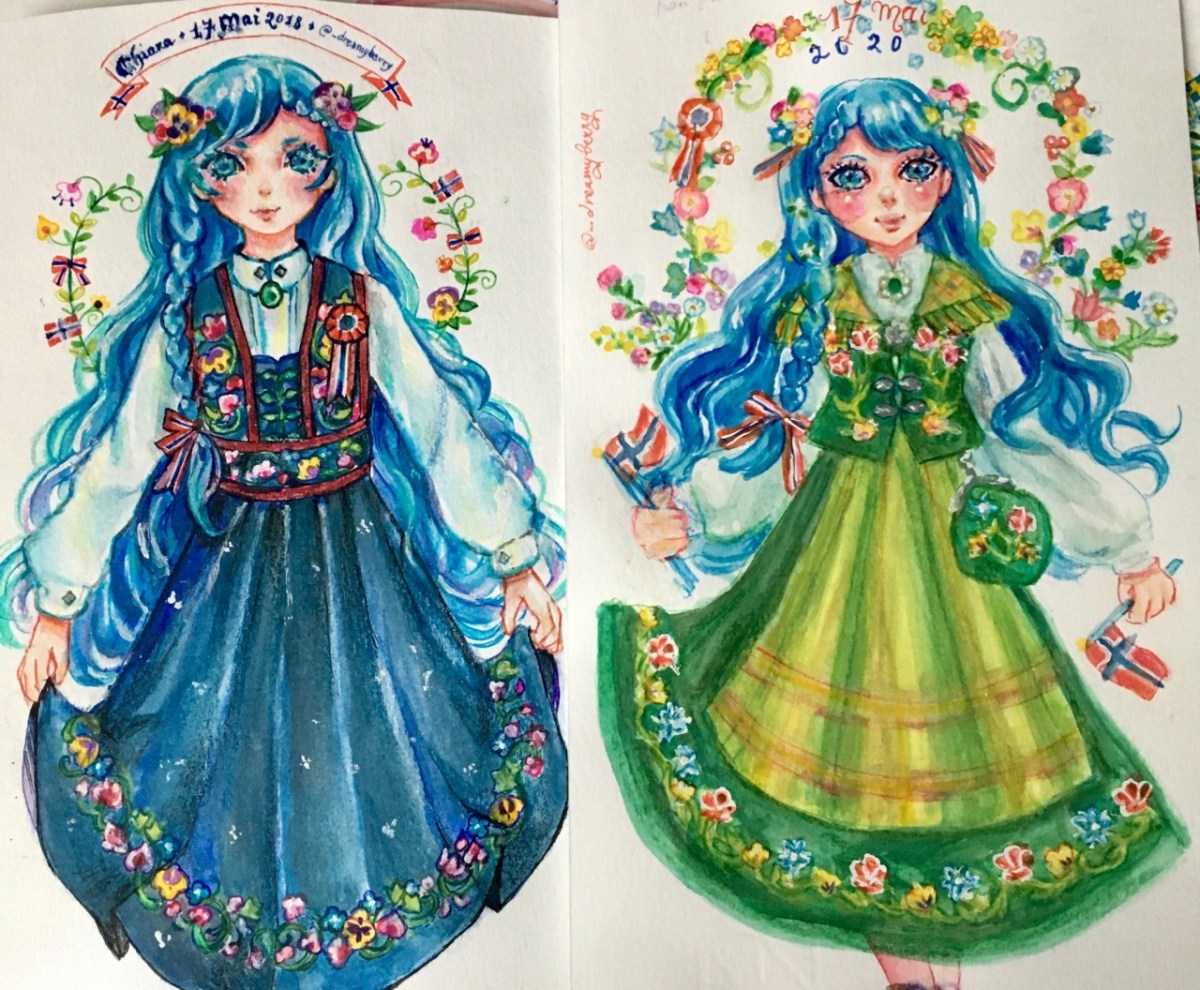
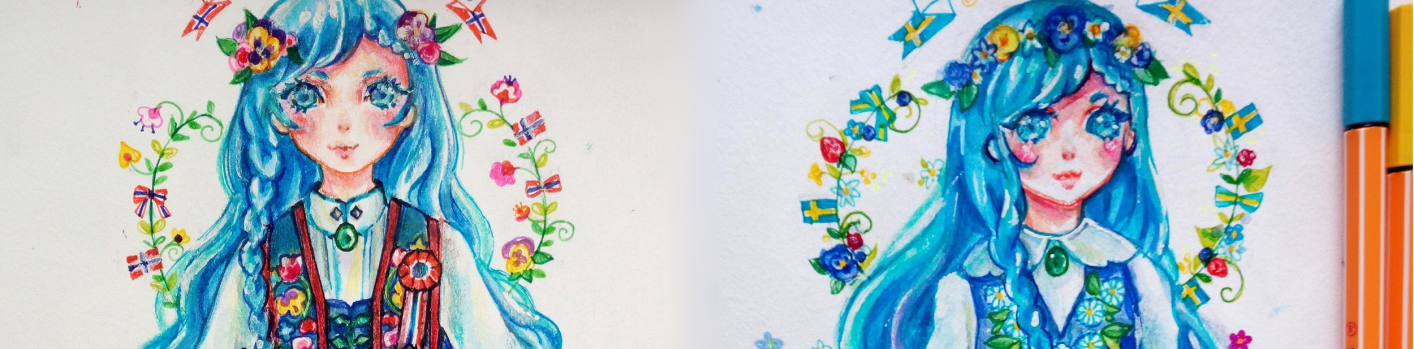
Left to right: my flower-themed original character with by Gudbrandsdal and Nordland bunads. Romerike (South-East Norway, near Oslo), Trøndelag (North Norway)

Accessories of the Bunad outfit

Part of the bunad outfit is Sølje, hand-made silver or gold jewellery, which is very important and gets bigger with older one gets. Silver was believed to have magical powers!

Headdresses, as bonnets, used to be important as they indicated an individual’s social or marital status, but big ones as the hardanger bonnet are now scarcely used.

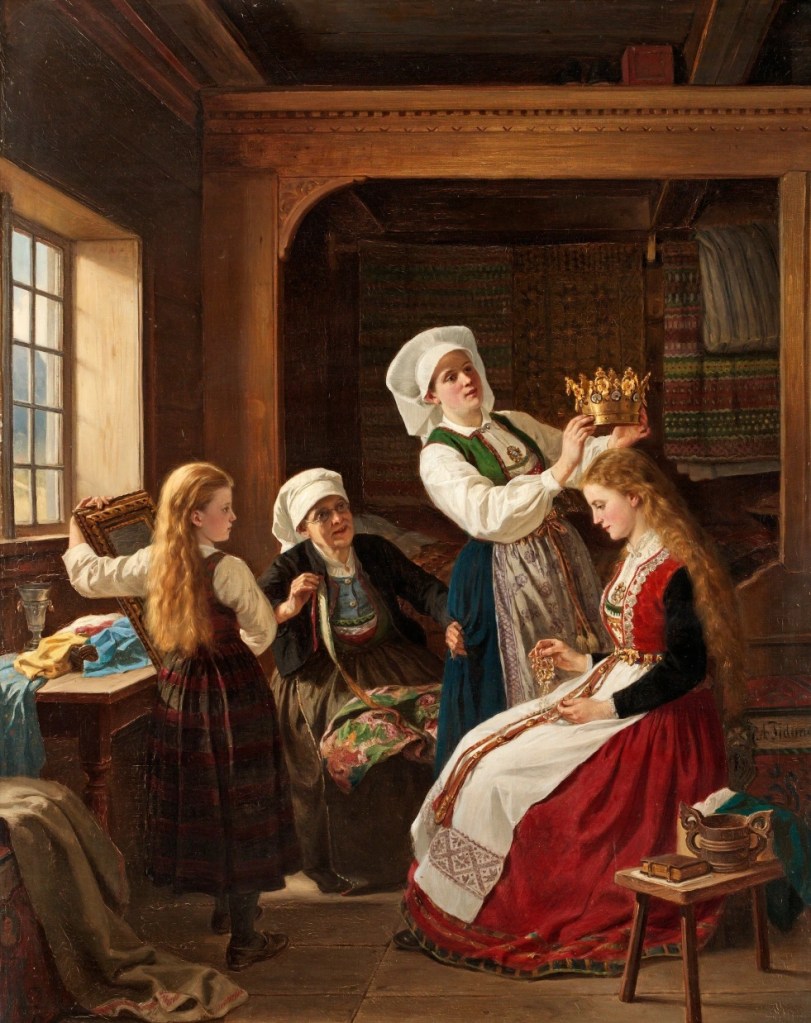
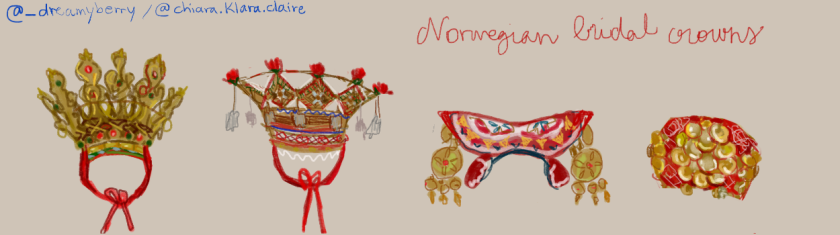
An elaborate with bridal crown can be used for a traditional Norwegian wedding, it was a sign of virginity in connection to the Holy Virgin. The bridal crown tradition goes as far back as the Middle Ages. Like bunads, there are many regional variations, which you can see on Whigofwhimsy.

The silver crown, present in many regional variations, Hardanger perlekrune, Voss, Setesdal

Sources: Store Norske Leksikon

Swedish folk costumes

From old folk dresses varying for each district to the Sverigedräkt, a national dress for all of Sweden

Swedish folk costumes, Folkdräkter, are an important part of a Swedish cultural heritage, and are symbols for local and national identity. There are 840 different variations (550 female outfits and 290 male ones). Some of them have a rather long history, dating back from the 17th century. Members of the Swedish royal family wears a blue and yellow dress with daisy decorations on some occasions – that dress is much more recent!

Different types of Swedish folk costume

Swedish folk costumes vary by region of origin, but in some they are more common, Dalarna has a very rich folk costume culture for example.

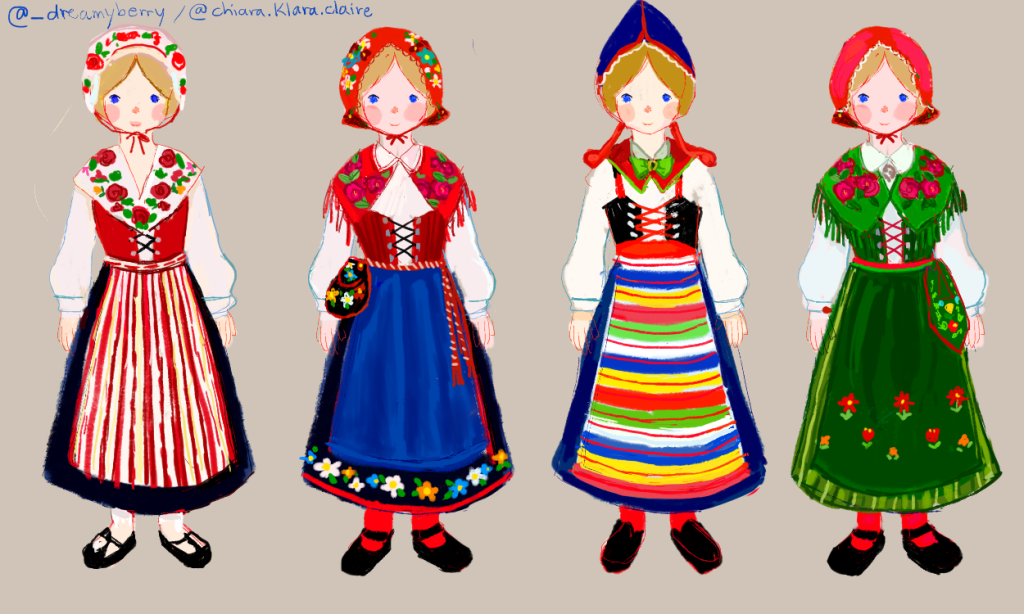
Some from Dalarna (Leksand, ?, Rättvik), central Sweden; and Norrbotten, northern Sweden

Each district had its own tailor, and some areas with natural boundaries and good communications within the district itself but poorer connections with the outside world would develop their own designs. Among typical features are flower patterns and headgear of all kinds, from bonnets to horn-shaped hats.

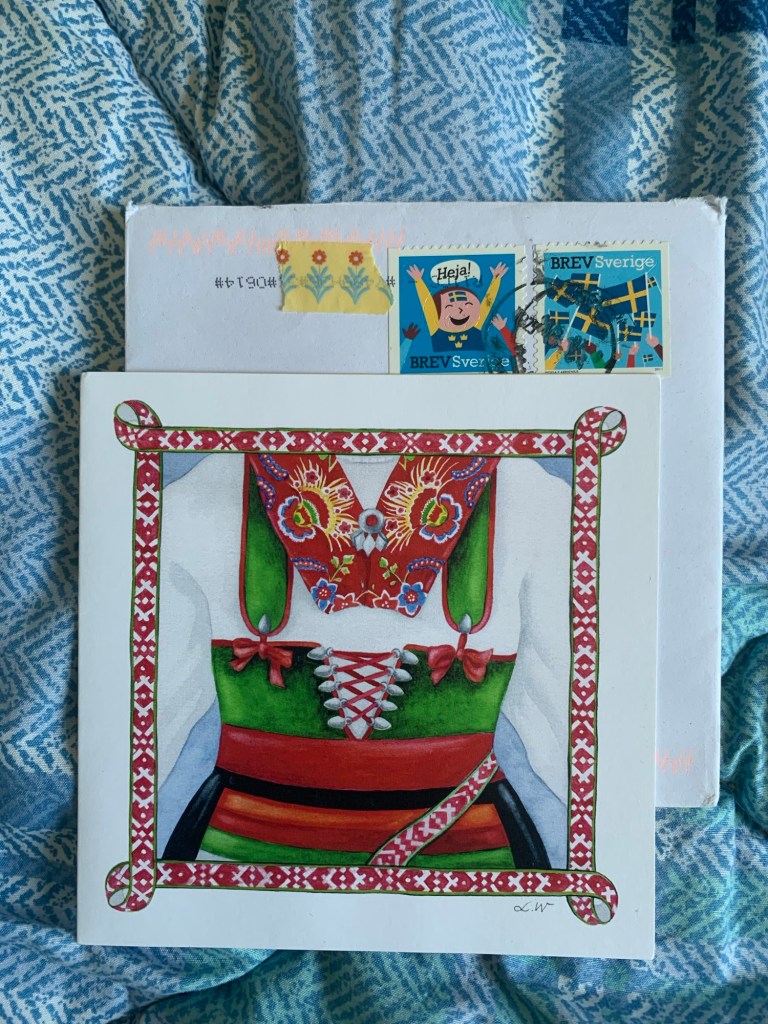
Postcard with a folk costume from Dalarna. Illustration by Lena Wikman,

in the 1850s, with the industrialization of Sweden, folk costumes started to be abandoned – but around 1900, with the National romantic period, upper classes amused themselves by wearing them. Some artists also depicted them, Among others Jenny Nyström and Carl Larsson:

[…] In addition we need the bright colors of the peasant costumes. They have an invigorating effect on our senses that is all too often under-estimated and they are necessary as a contrast to the deep green pine forest and the white snow

Carl Larsson, from ‘Ett hem’ (A Home)

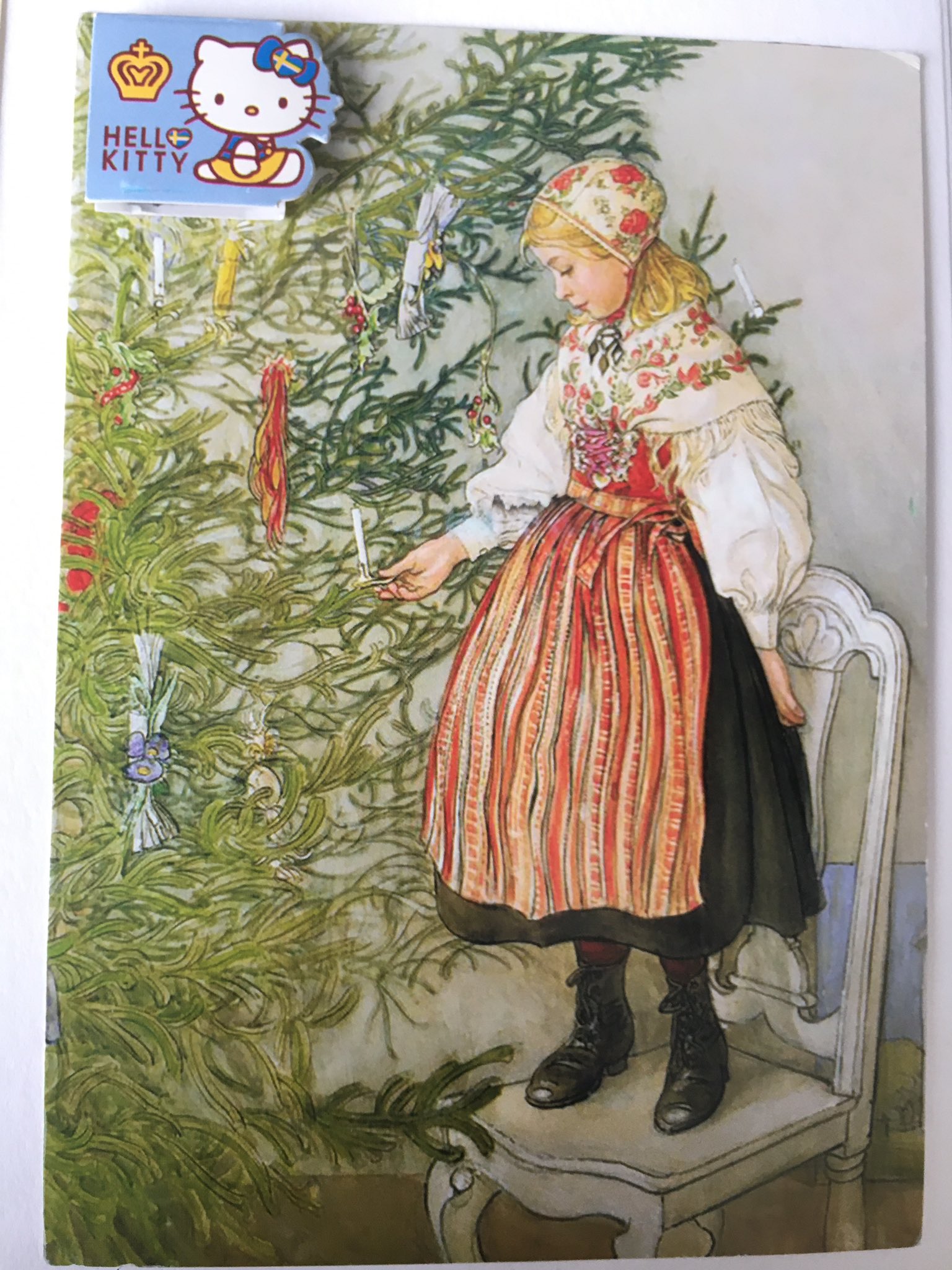
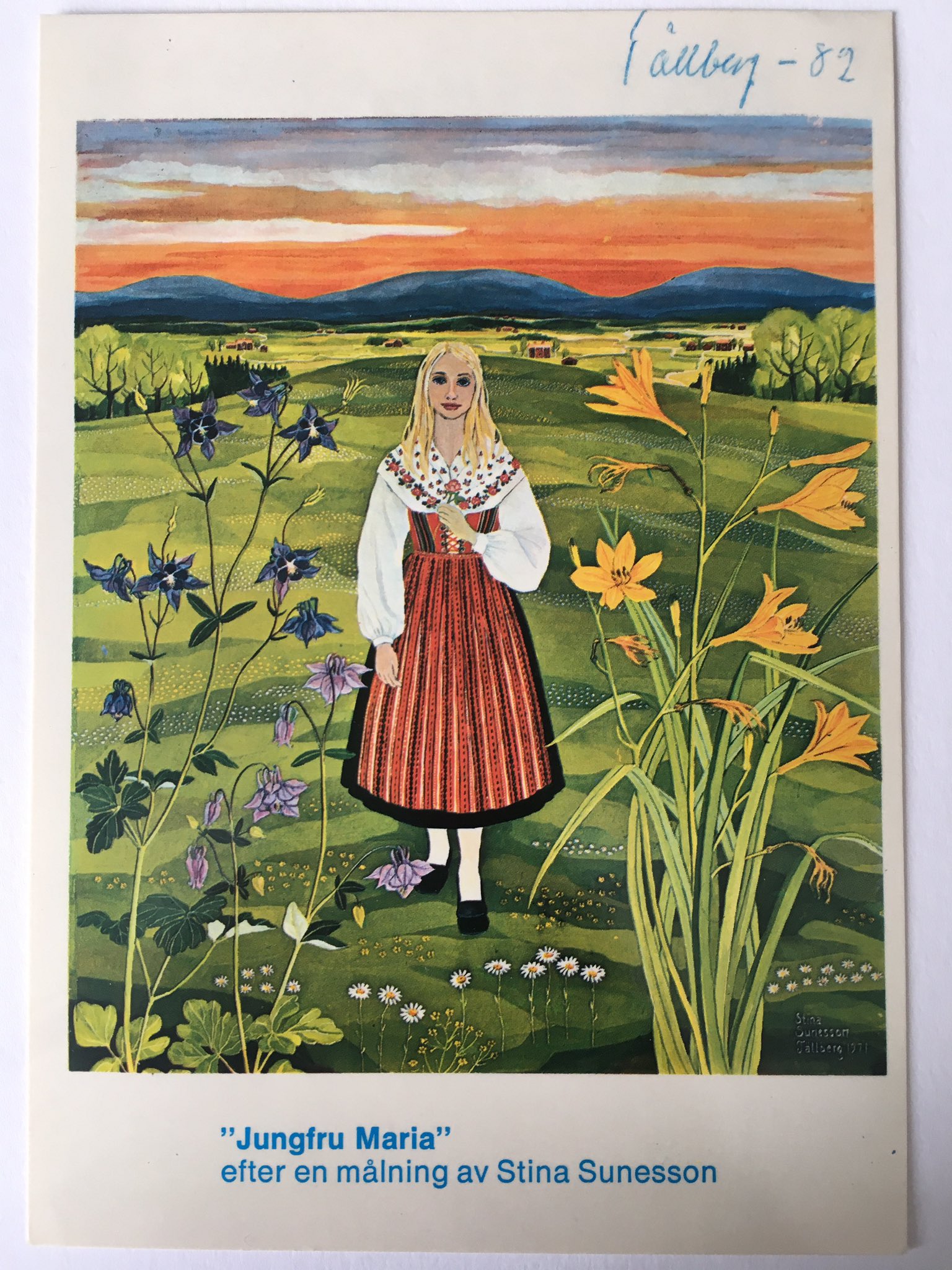
I got a couple postcards from Swedish penpals with paintings featuring folk costumes, by Carl Larsson (and I got a tiny Hello kitty in a svenska dräkten from the same person!) and Stina Sunesson

The invention of the Swedish National dress, Almänna svenska nationaldräkten

In 1983 Queen Silvia wore the Svenska dräkten on Sweden’s National Day, 6th June, starting a tradition. The dress she wore was relatively recent, designed by a woman called Märta Jörgensen.

Märta Jörgensen was an apprentice gardener when came to the Royal Castle of Tullgarn, in the province of Södermanland in 1900. There, all female employees wore a costume inspired by a traditional dress from Österåker, by decision of the then queen Victoria.

She then married and moved to Dalarna working as a teacher. In Falun she set up the Swedish Women’s National Costume Society, Svenska Kvinnliga Nationaldräkts-Föreningen in 1902. Her goal was to ‘achieve freedom from the dominant foreign fashion through the introduction of a national dress for Swedish women’, that had to be of a simple cut and design, influenced by national romanticism.

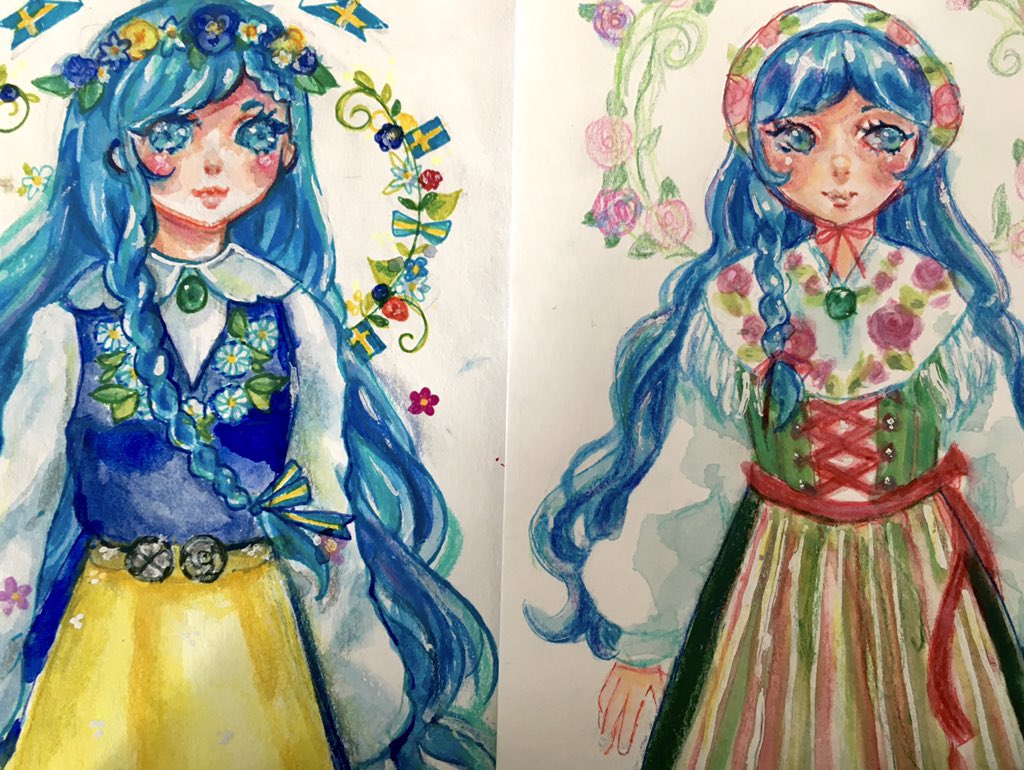
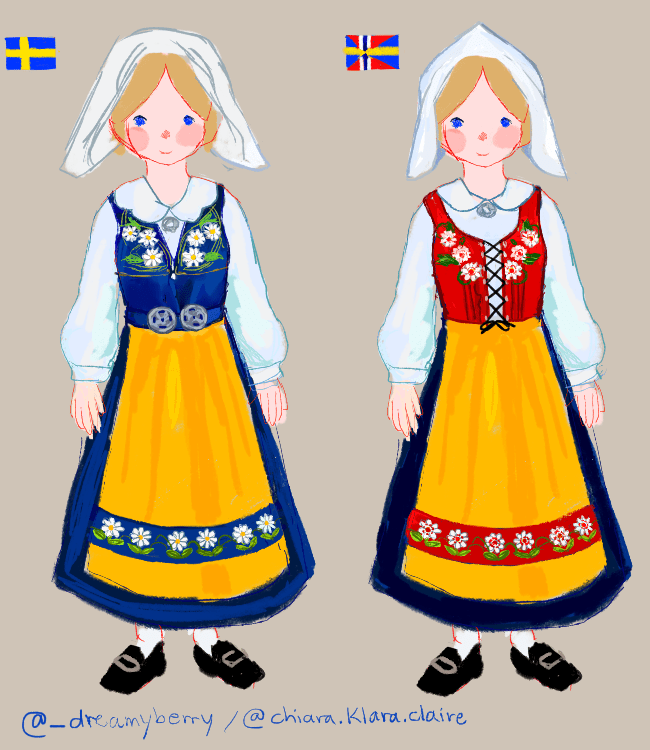
She designed two models, one for everyday wear, Blue with a yellow apron as the Swedish flag; the other for special occasions, with a red bodice, representing the Swedish-Norwegian Union (that lasted until 1905).

left one has been used by the royals, the right one is based on the few pictures I could find online.

The Costume Society had over 200 members in 1910, but interest decreased after WW2. Swedish folk costumes enjoyed however a comeback in the 70s. Queen Silvia wearing it on Sweden’s national day in 1983 made it the official national costume.

Side note – Definitions for Swedish folk costumes

Swedish folk costumes are called in various ways: folk folkdräkt (folk dress), landskapsdräkt (national costume), sockendräkt (provincial costume), bygde- or hembygsdräkt (parish or district costume), härads-dräkt (old jurisdictional county costume). The Swedish Museums have decided that the term folkdräkt can only be used for costumes from areas with a well documented, locally distinctive form of dress.

sources:

  • Skansen museum (Swedish)
  • nationalclothing.com
  • Sverigedrakten.se
  • Märta Jörgensen biography – skbl.se
  • M. Jörgensen, Något om bruket af nationaldräkter ‘On the Use of National Costumes’, 1903