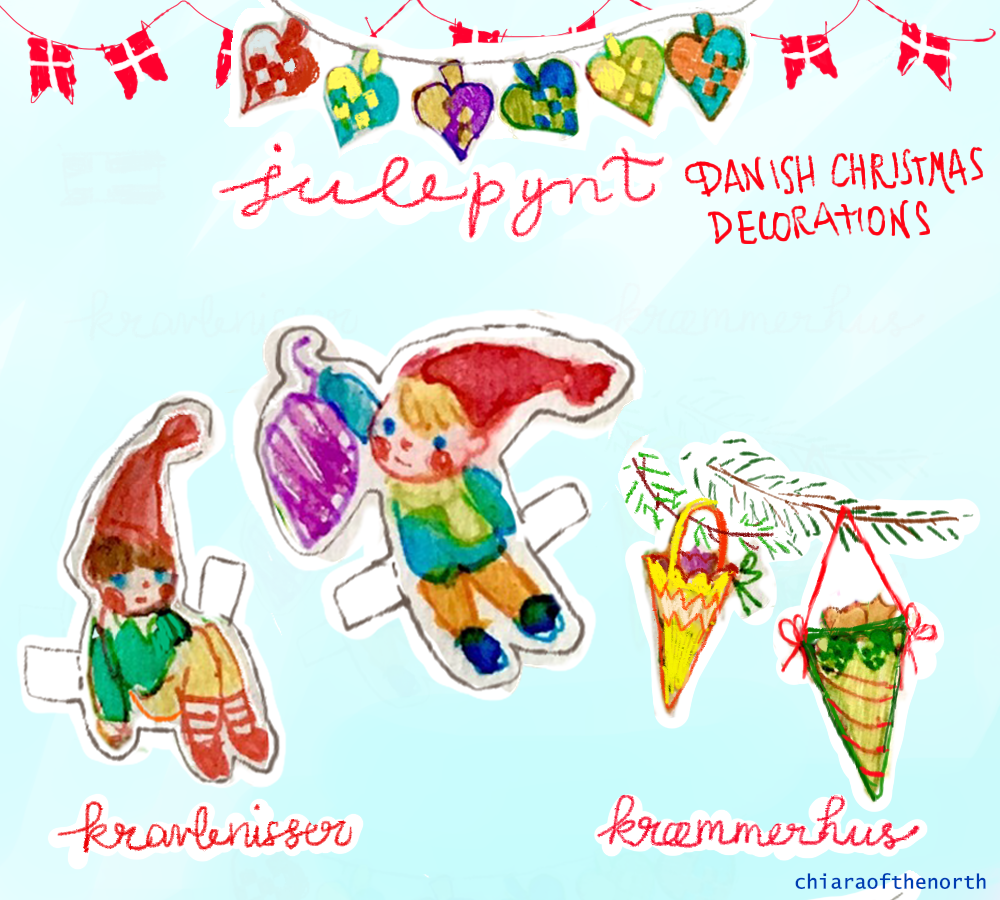
Danish Christmas decorations: Julepynt

Christmas paper decorations in Denmark: hearts, candy cones and nisser

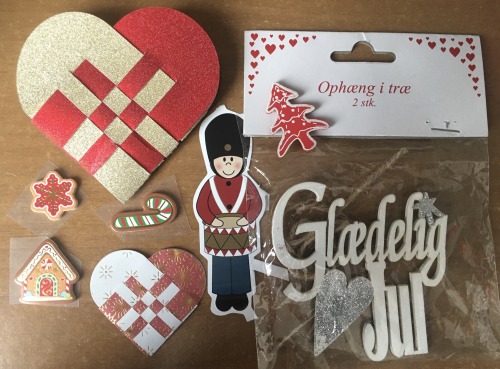
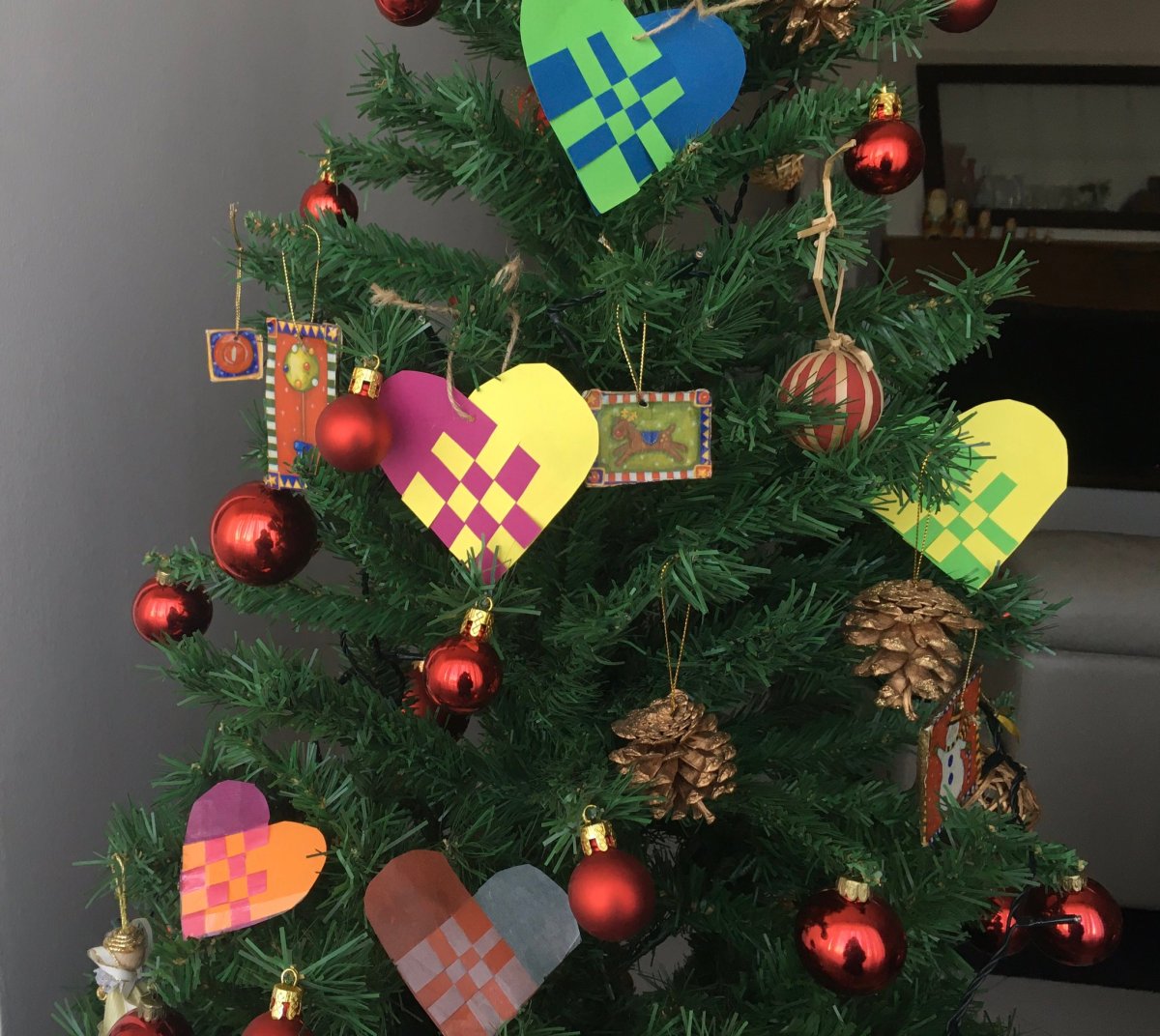
Typical Danish Christmas decorations – Julepynt – are homemade paper ornaments, and have been a tradition since H. C Andersen’s time! Besides the ones I’ll mention below, flags are a typical tree ornament, a more general Scandinavian Christmas tradition.
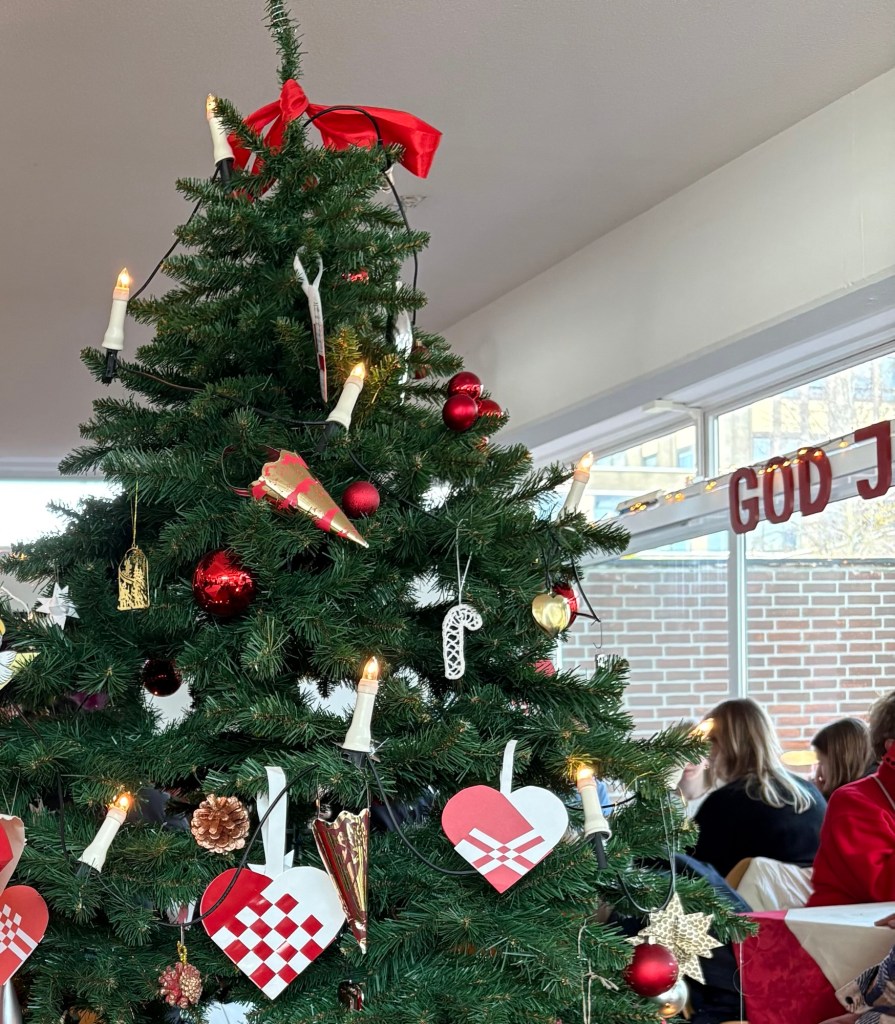
Julehjerter

Pleated hearts, Julehjerter, are one of the most iconic Danish and Nordic Christmas symbol. They are most often red and white, and making them is a typical family activity.

Their origin is unknown, but the oldest heart was made by the fairytale author H. C. Andersen in 1860, still to be seen in his house in Odense. They might have become so common since Danish kindergartens started having children make them around 1910. The oldest depiction of a Chistmas tree decorated with pleated hearts dates from 1901 from the Danish manor house Søllestedgaard.
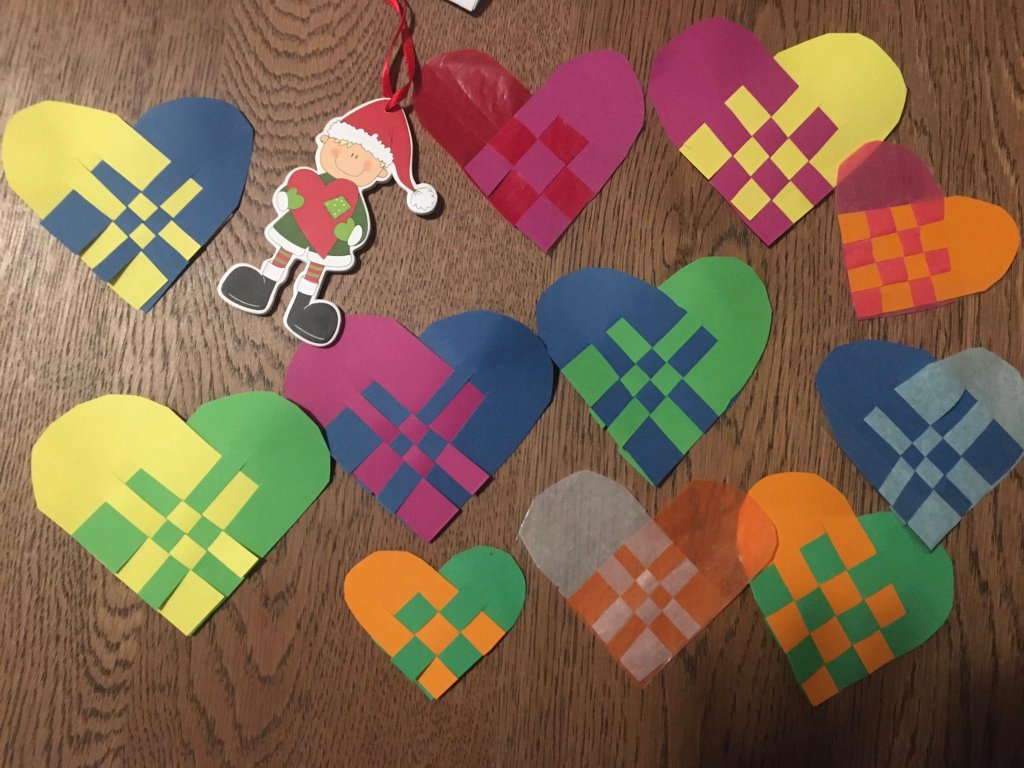
You can try making DIY Julehjerter yourself as I did

Kræmmerhus

These paper cones, often homemade and decorated, are commonly hung on Christmas trees through an handle and filled with sweets, as hardy candy, bolsjer, or pebernødder – Træet skal spises – The tree has to eat.
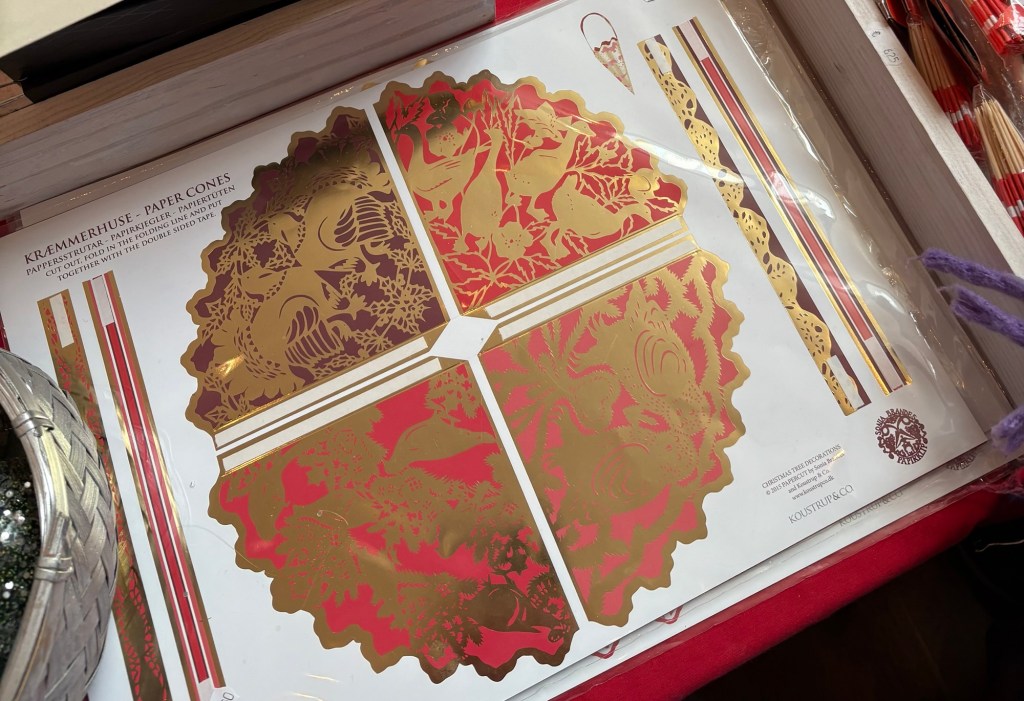
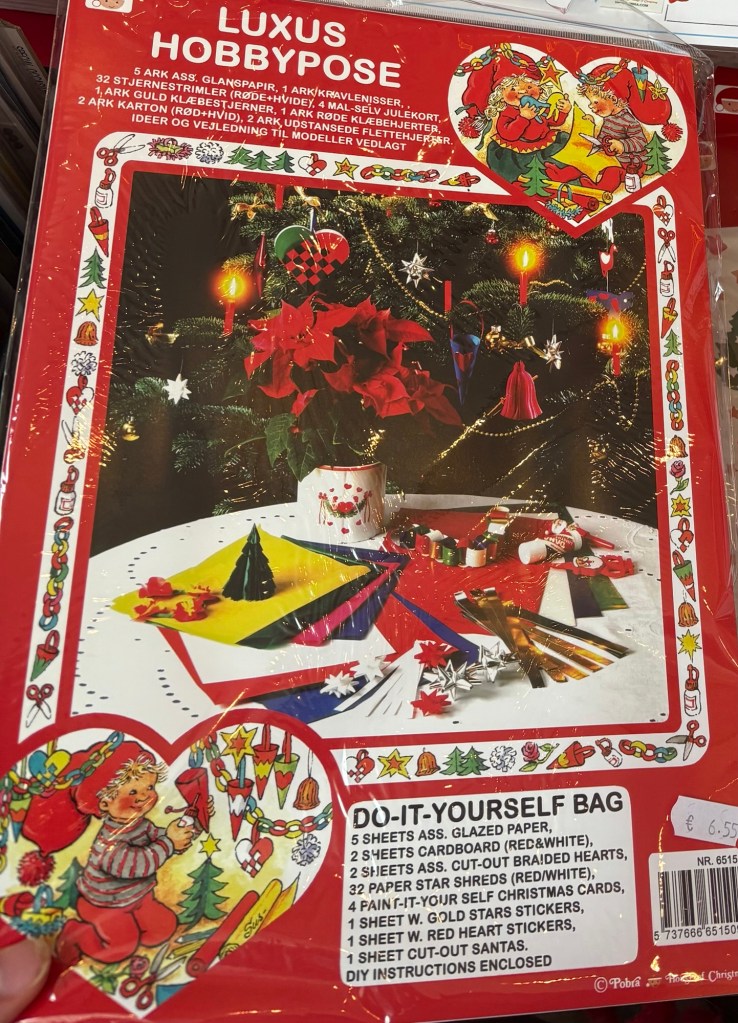
They are as old as 1860s – their origin comes from how traveling peddlers  (kræmmere), would carry food flour, sugar and other food they got from merchants in bulk. Children would also got candy in such paper cones.

Kravlenisser
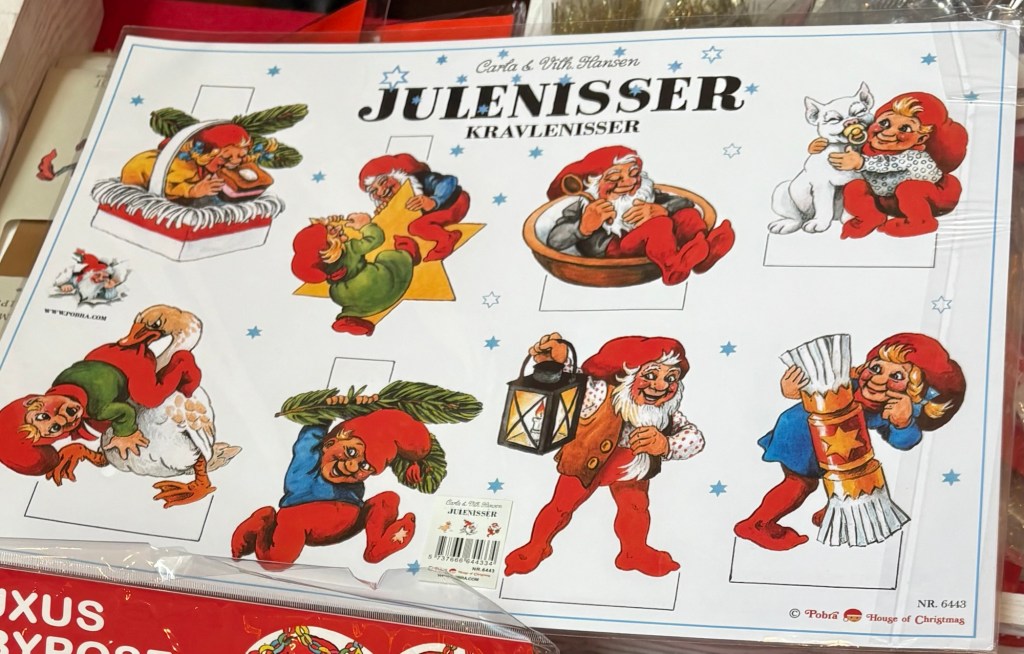
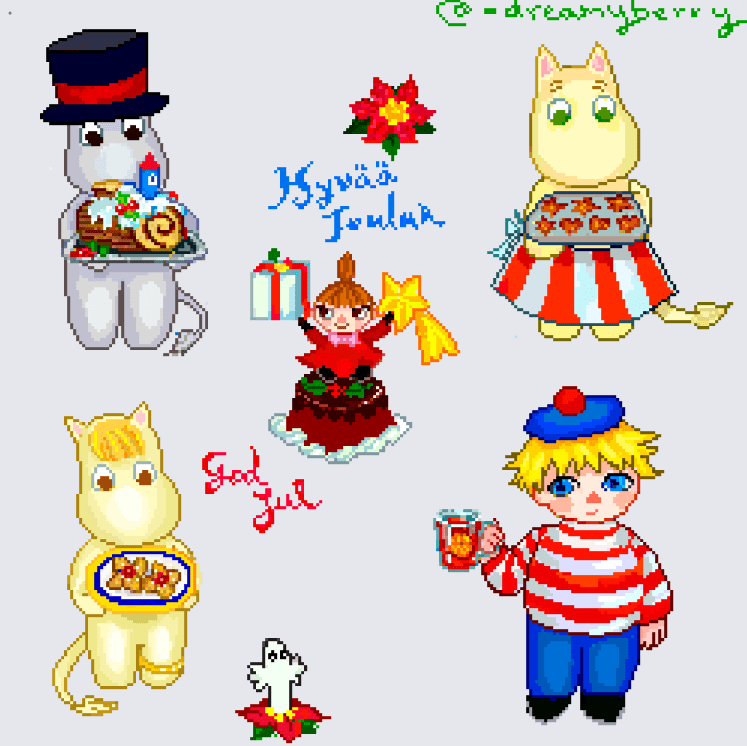
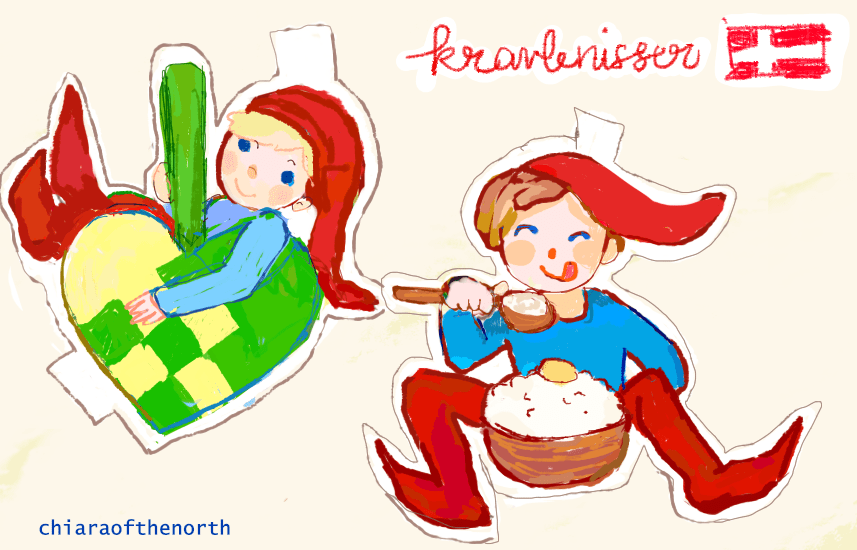
“Climbing nisser”, are drawings of nisser, Christmas elves, sometimes hanging from things, and are a more recent but not less typical Danish Christmas decoration. They were invented by the drawer Frederik Bramming, publishing the first group of them in 1947. On top of an ‘ark’ of kravlenisser he wrote “Her er de igen – Julens smaa fornøjelige Hyggespredere‘: Here they are again – Christmas’ small joyful Hygge-spreaders. The idea was then copied by many artists especially in the 50s and 60s, as Aage Dam, Illa Winkelhorn and Iben Clante. I also made my own (see below), inspired by common kravlenisser pictures as a nisse eating rice porridge, risengrød, and hanging from a julehjerte.
Glædelig jul!

sources: lex.dk
7 fun facts about Lucia, Sweden’s pagan saint

Lucia brings light in the darkest night of the year and is a mix of pagan and christian traditions. It is celebrated in Scandinavia with processions, saffron buns and church concerts.
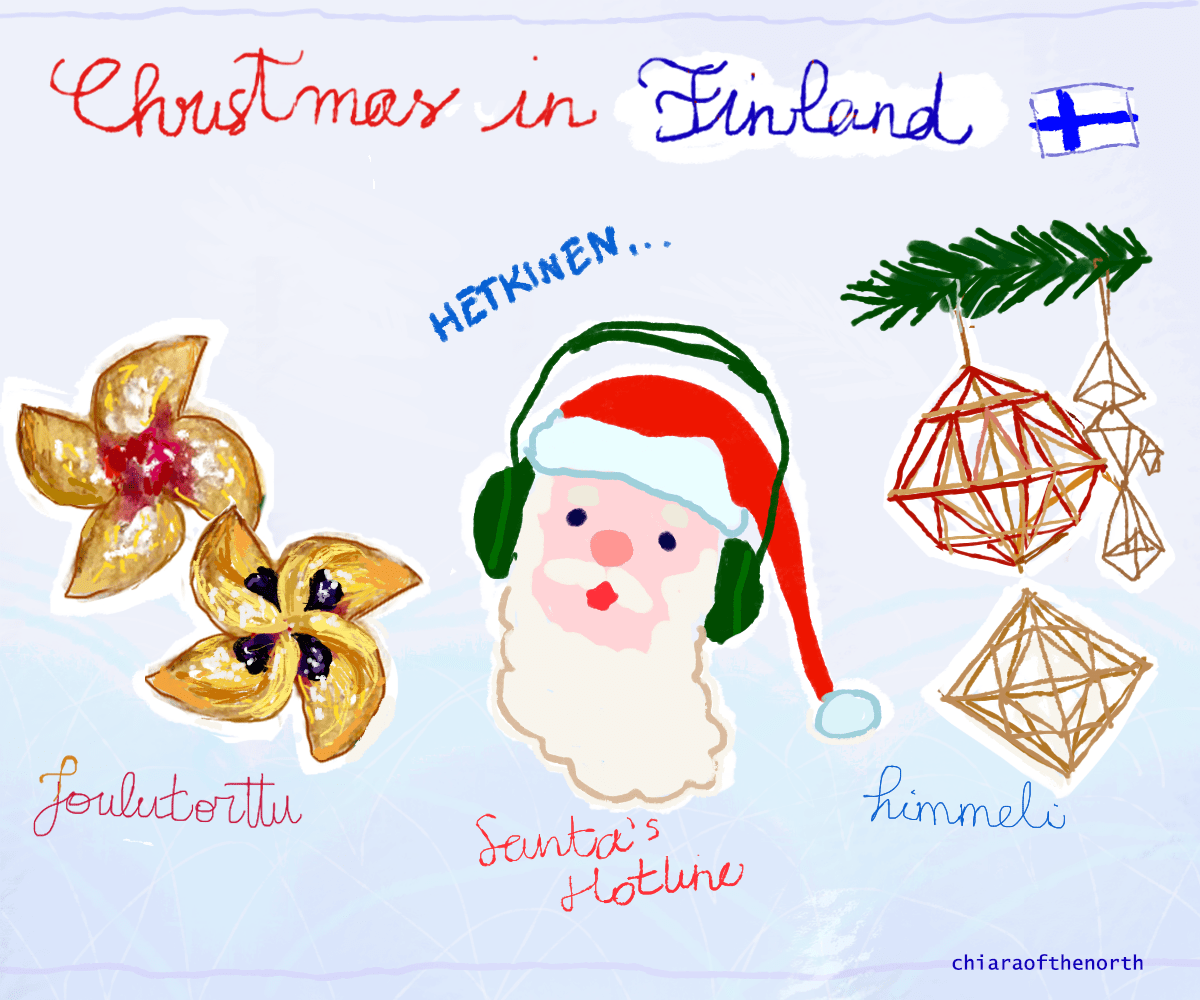
Typical Finnish Christmas things

3 typical unique Christmas symbols and traditions in Finland

Here are country-specific facts about how Christmas is celebrated in Nordic countries, after an overview of Scandinavian Christmas I actually keep updating… Next up will be Norway and Iceland, so stay tuned!

Joulutorttu: pinwheel pastry

Also called tähtitorttu “star cake”. it has the shape of a star or pinwheel, with apple or plum filling. It was already mentioned in the 1830s by Zacharias Topelius (Swedish-speaking Finnish writer), and it still is a Christmas classic in Finland, being present on 76% of Finnish tables on Christmas eve.

the Santa Claus Hotline

In Finland they have had the Joulupukin kuumalinja ‘Santa Claus Hotline’ for 33 years on tv. Here is the Finnish tv program for the day in 2024: There are breaks between one Christmas-themed cartoon and the other, where children can call, elves will take the call and some lucky children will be able to talk to Santa..It is also possible to send pictures, and some of these will be shown!

Himmeli Christmas decoration

Himmeli are wooden straw geometrical pendants, of various sizes, decorating Finnish houses. It comes from himmel, sky/heaven in Swedish and Germanic languages. Himmeli traditionally hung above dining tables until summer to ensure a good crop, as Finlandi.fi mentions.

Nordic findings in japan

Nordic culture experienced in Japan: Moomins, Dala horse stationery, Nordic-inspired foods and books about Scandinavia seen by the Japanese.

How Nordic are Baltic countries

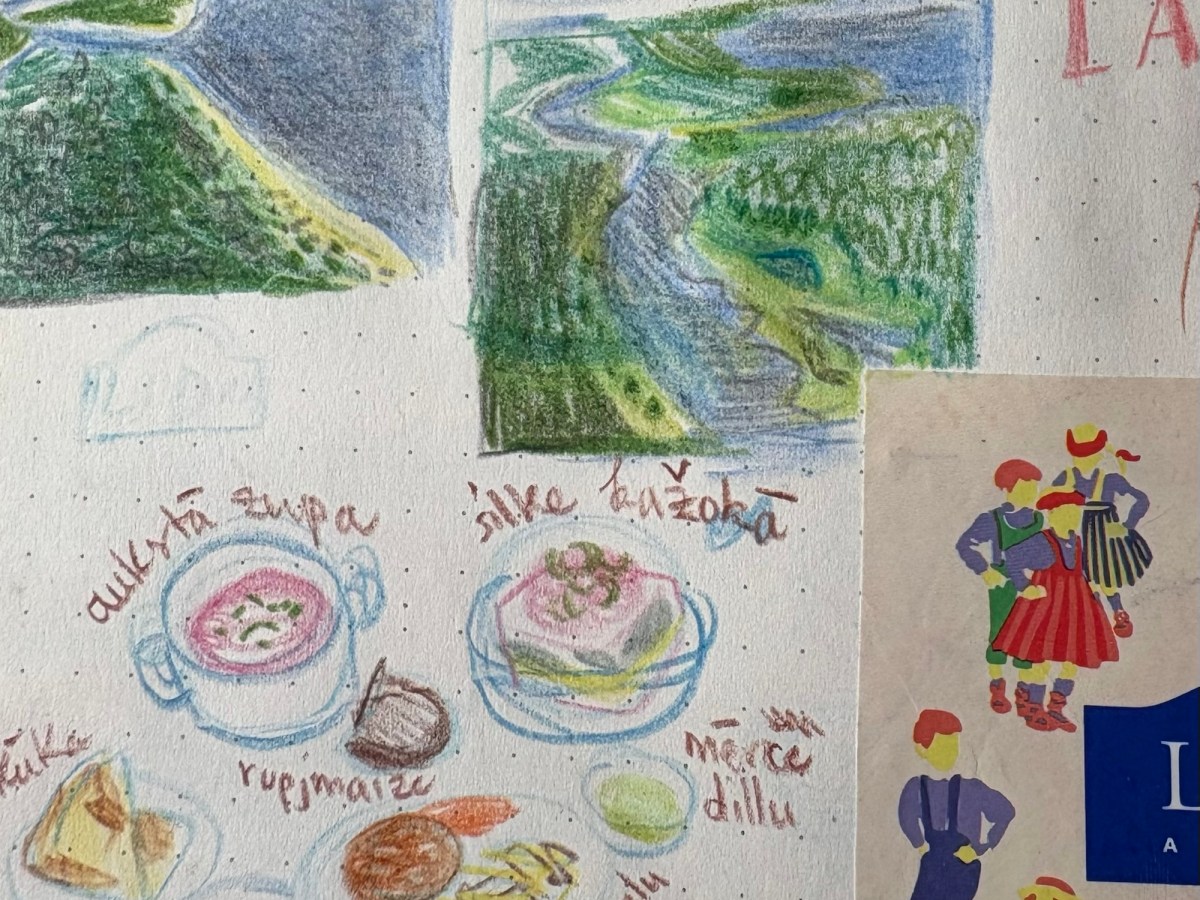
Are Baltic countries Nordic at all? I explored Latvia and Estonia, noting their ties to Nordic culture, from languages to Rye bread and Midsummer.

Swedish folk costumes

From old folk dresses varying for each district to the Sverigedräkt, a national dress for all of Sweden

Swedish folk costumes, Folkdräkter, are an important part of a Swedish cultural heritage, and are symbols for local and national identity. There are 840 different variations (550 female outfits and 290 male ones). Some of them have a rather long history, dating back from the 17th century. Members of the Swedish royal family wears a blue and yellow dress with daisy decorations on some occasions – that dress is much more recent!

Different types of Swedish folk costume

Swedish folk costumes vary by region of origin, but in some they are more common, Dalarna has a very rich folk costume culture for example.

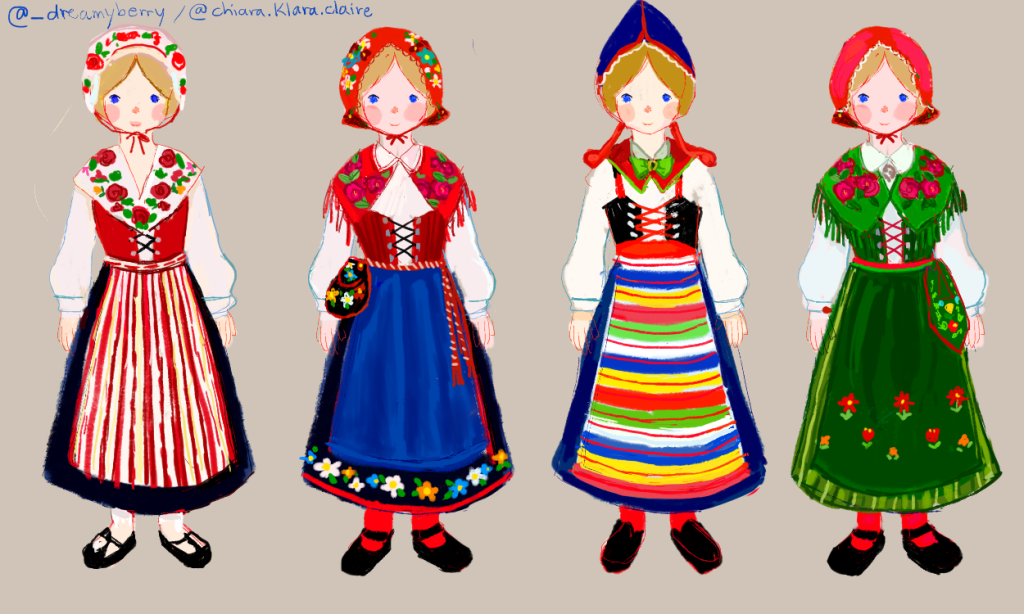
Some from Dalarna (Leksand, ?, Rättvik), central Sweden; and Norrbotten, northern Sweden

Each district had its own tailor, and some areas with natural boundaries and good communications within the district itself but poorer connections with the outside world would develop their own designs. Among typical features are flower patterns and headgear of all kinds, from bonnets to horn-shaped hats.
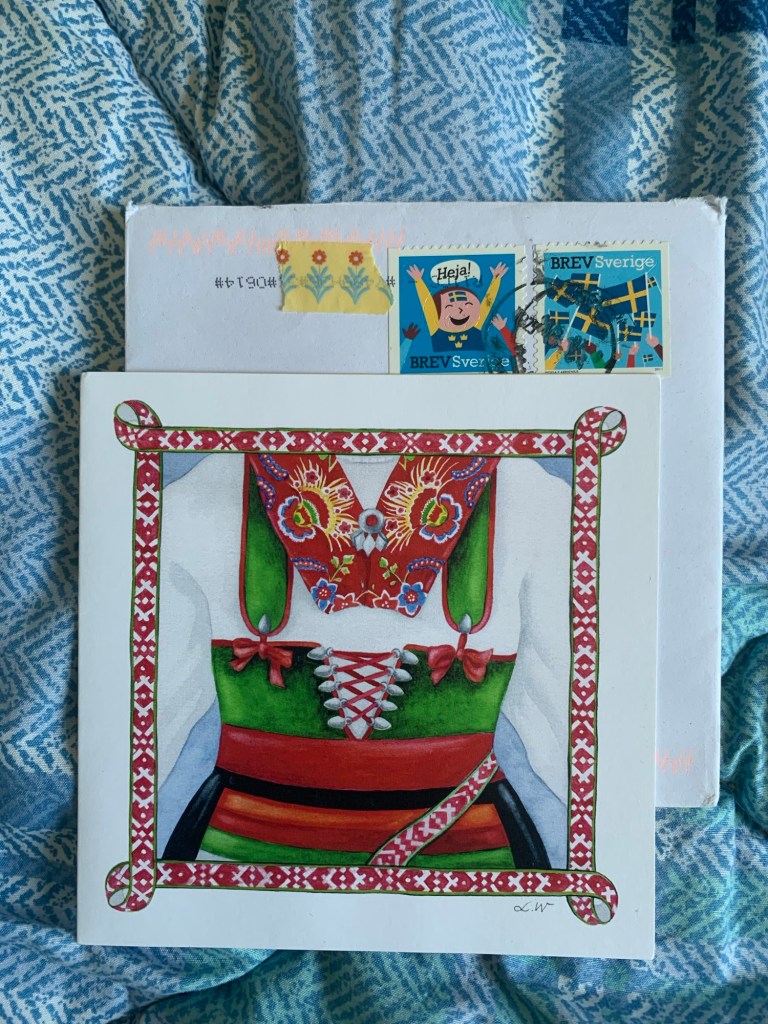
Postcard with a folk costume from Dalarna. Illustration by Lena Wikman,

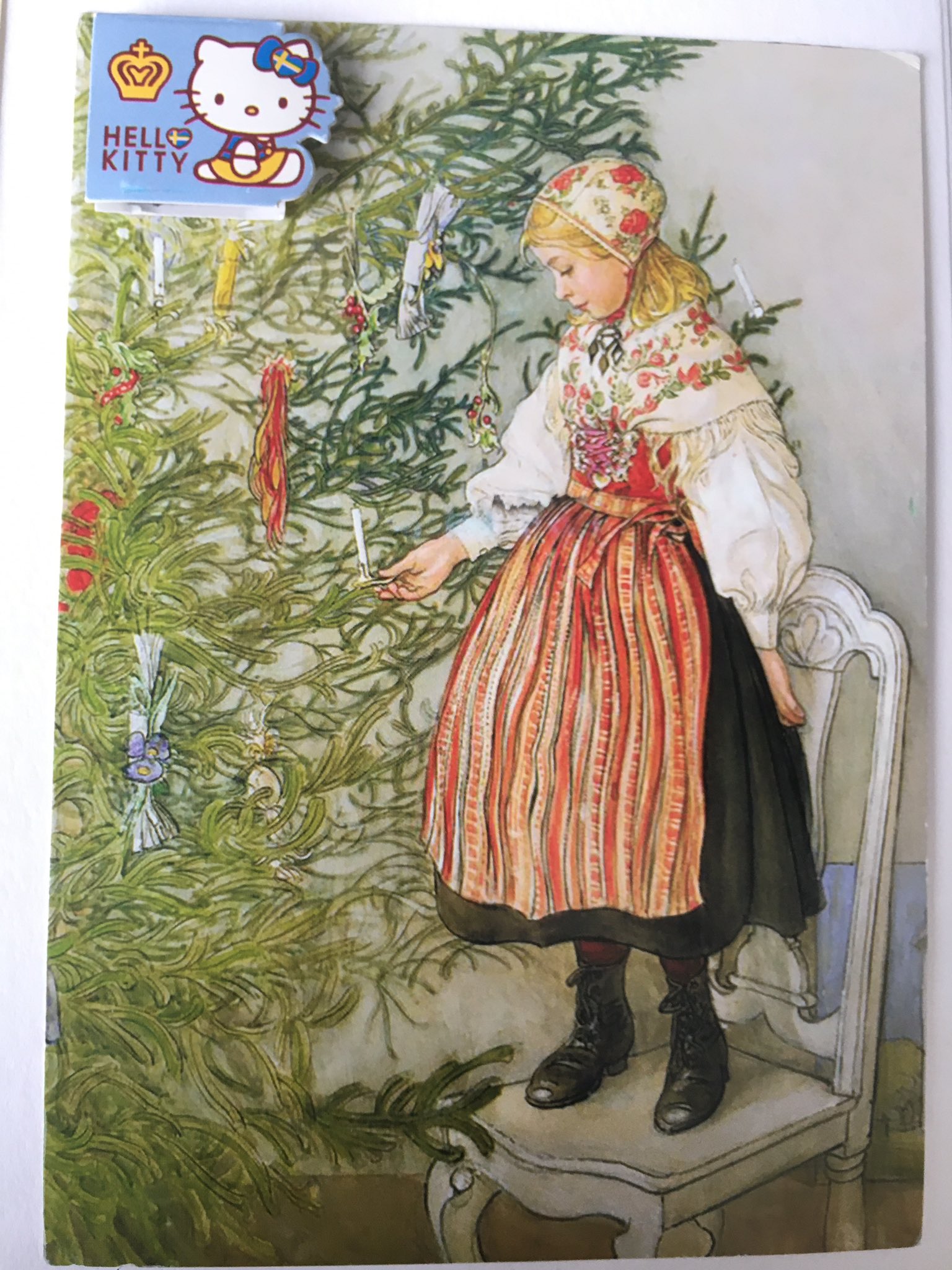
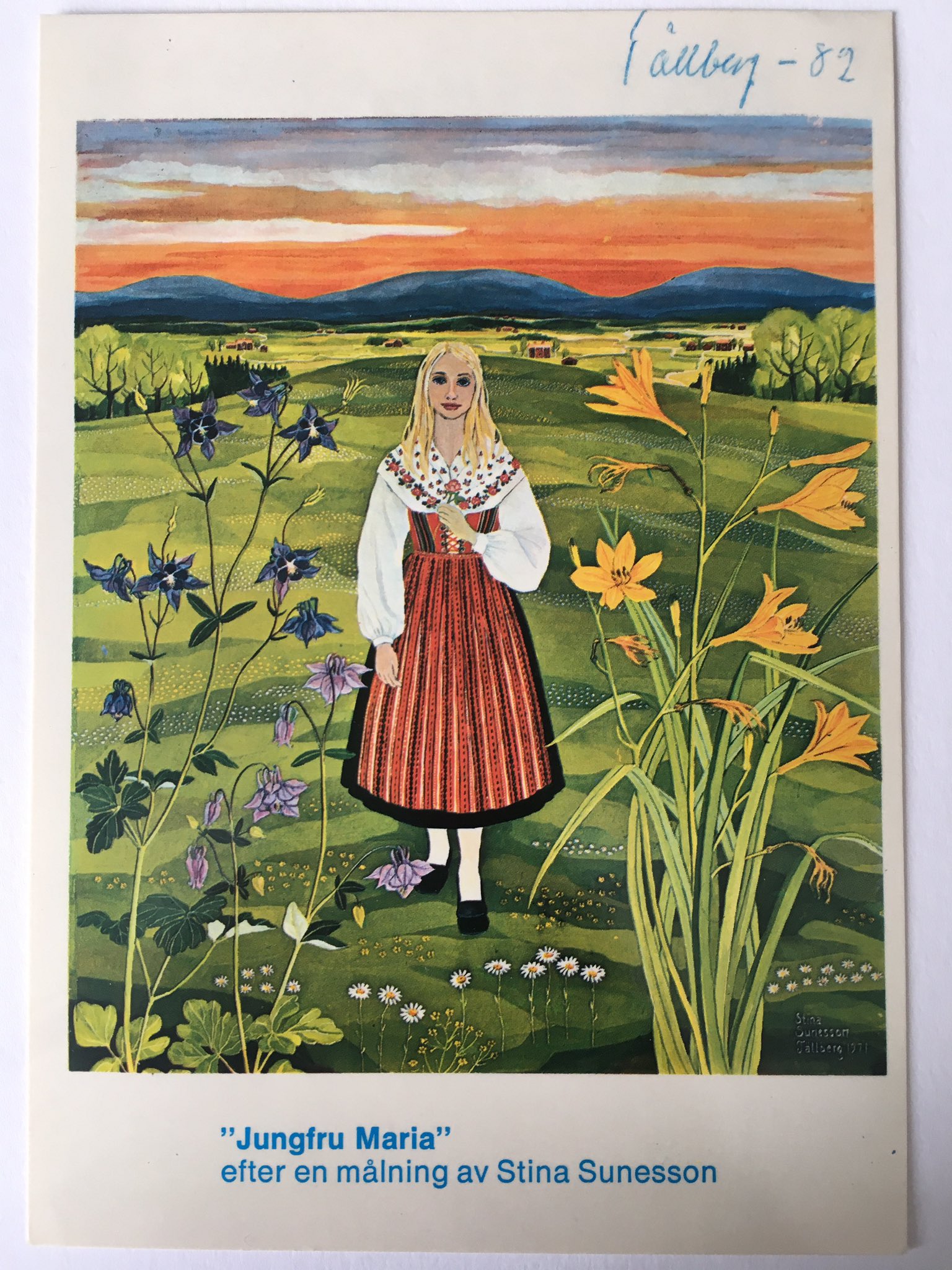
in the 1850s, with the industrialization of Sweden, folk costumes started to be abandoned – but around 1900, with the National romantic period, upper classes amused themselves by wearing them. Some artists also depicted them, Among others Jenny Nyström and Carl Larsson:

[…] In addition we need the bright colors of the peasant costumes. They have an invigorating effect on our senses that is all too often under-estimated and they are necessary as a contrast to the deep green pine forest and the white snow
Carl Larsson, from ‘Ett hem’ (A Home)

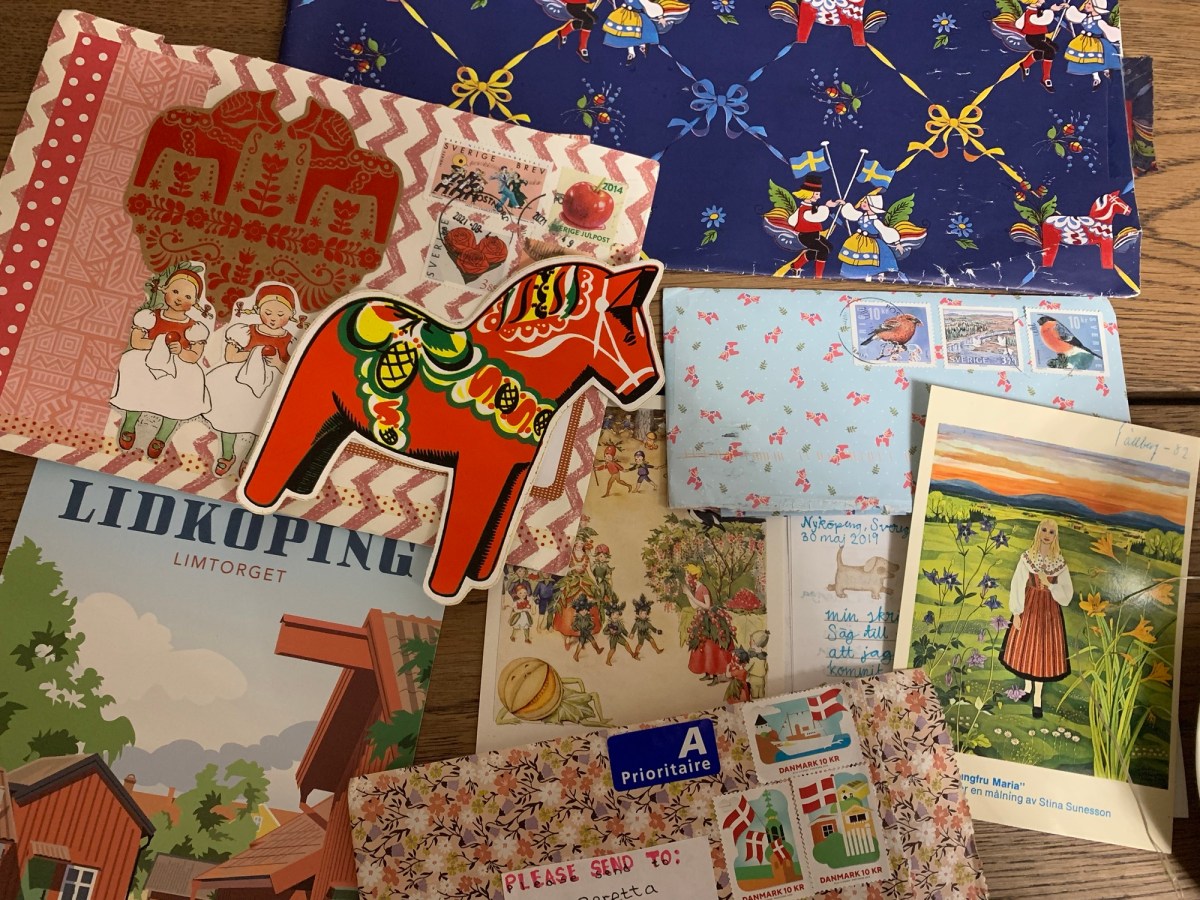
I got a couple postcards from Swedish penpals with paintings featuring folk costumes, by Carl Larsson (and I got a tiny Hello kitty in a svenska dräkten from the same person!) and Stina Sunesson

The invention of the Swedish National dress, Almänna svenska nationaldräkten

In 1983 Queen Silvia wore the Svenska dräkten on Sweden’s National Day, 6th June, starting a tradition. The dress she wore was relatively recent, designed by a woman called Märta Jörgensen.
Märta Jörgensen was an apprentice gardener when came to the Royal Castle of Tullgarn, in the province of Södermanland in 1900. There, all female employees wore a costume inspired by a traditional dress from Österåker, by decision of the then queen Victoria.

She then married and moved to Dalarna working as a teacher. In Falun she set up the Swedish Women’s National Costume Society, Svenska Kvinnliga Nationaldräkts-Föreningen in 1902. Her goal was to ‘achieve freedom from the dominant foreign fashion through the introduction of a national dress for Swedish women’, that had to be of a simple cut and design, influenced by national romanticism.

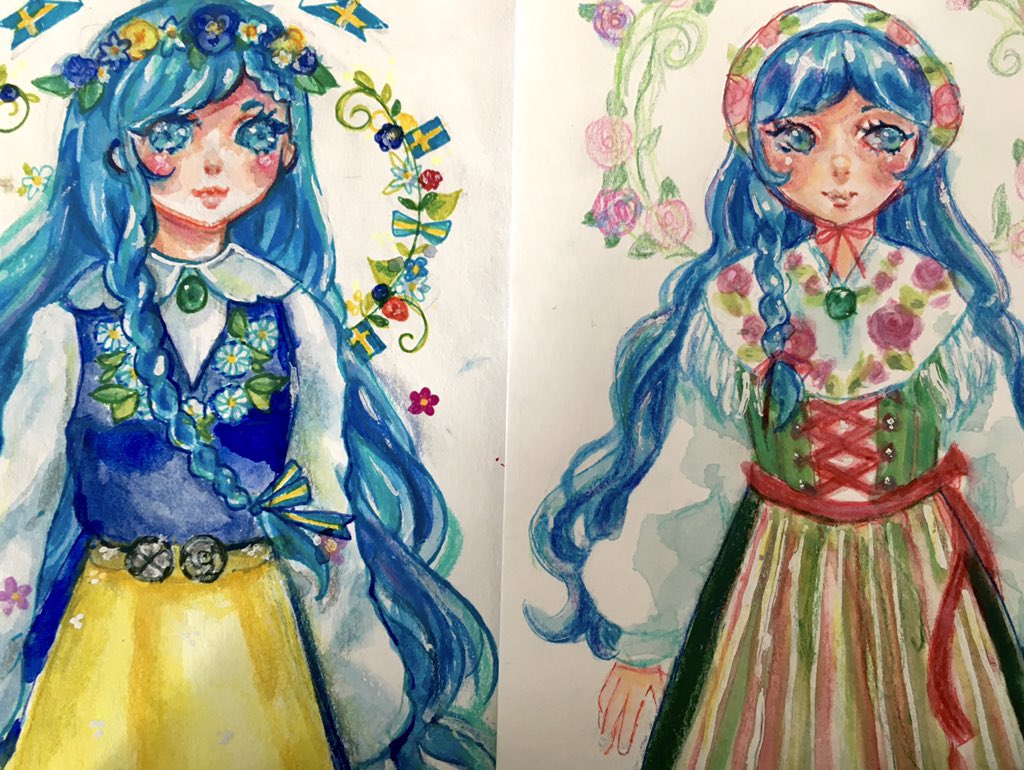
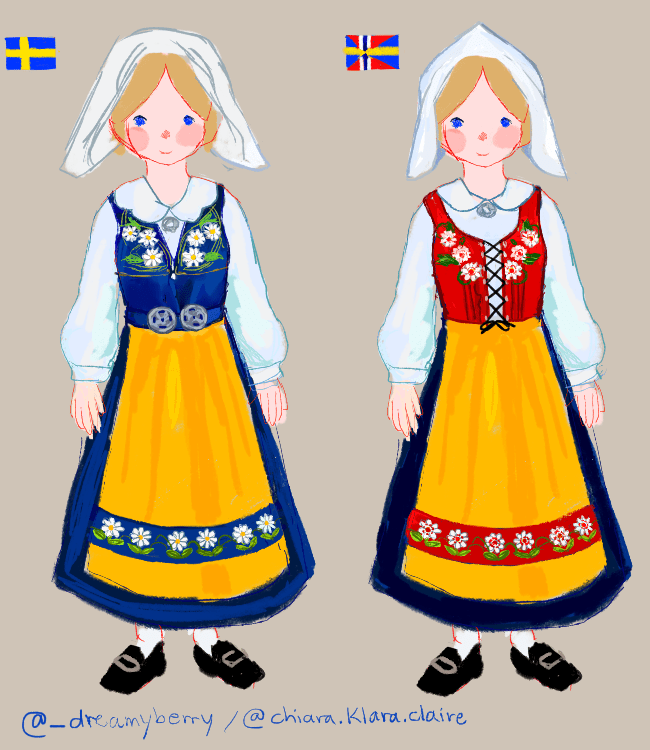
She designed two models, one for everyday wear, Blue with a yellow apron as the Swedish flag; the other for special occasions, with a red bodice, representing the Swedish-Norwegian Union (that lasted until 1905).

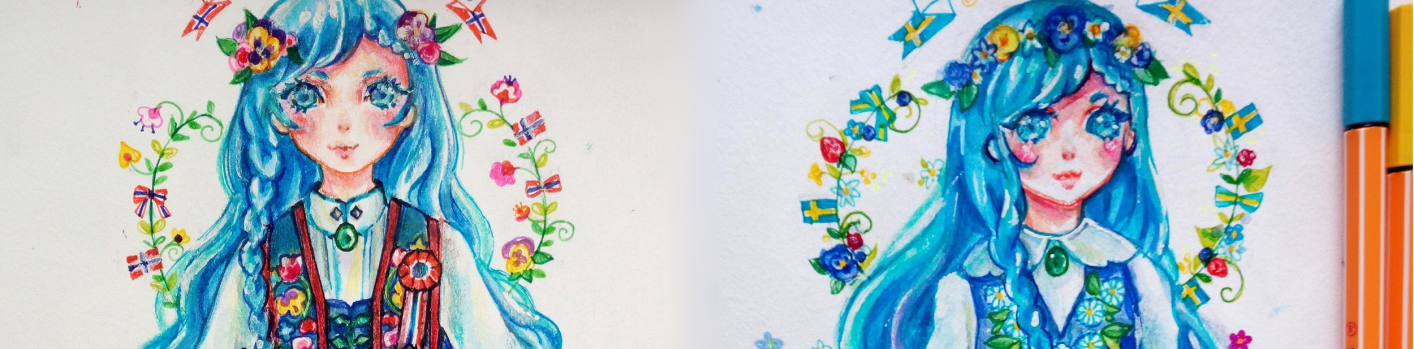
left one has been used by the royals, the right one is based on the few pictures I could find online.

The Costume Society had over 200 members in 1910, but interest decreased after WW2. Swedish folk costumes enjoyed however a comeback in the 70s. Queen Silvia wearing it on Sweden’s national day in 1983 made it the official national costume.

Side note – Definitions for Swedish folk costumes

Swedish folk costumes are called in various ways: folk folkdräkt (folk dress), landskapsdräkt (national costume), sockendräkt (provincial costume), bygde- or hembygsdräkt (parish or district costume), härads-dräkt (old jurisdictional county costume). The Swedish Museums have decided that the term folkdräkt can only be used for costumes from areas with a well documented, locally distinctive form of dress.

sources:

  • Skansen museum (Swedish)
  • nationalclothing.com
  • Sverigedrakten.se
  • Märta Jörgensen biography – skbl.se
  • M. Jörgensen, Något om bruket af nationaldräkter ‘On the Use of National Costumes’, 1903

DIY Danish Christmas Hearts

Julehjerter, a common Christmas ornament In Denmark and Norway.

As i had already mentioned talking about Christmas symbols in Nordic countries, a common homemade Christmas ornament in Scandinavia is pleated hearts, very common in Denmark, known as Julehjerter, and Norway, where they are called Juletrekurv.

Children make them with their family with paper of different colours, although they are mostly red and white. They have been made for around 150 years: the oldest known guide to making pleated Christmas hearts is found in an 1871 edition of the Danish journal Nordisk Husflidstidende. A 1873 pleated heart can be seen at the National museum in Oslo and one from 1866 at H. C. Andersen house in Odense!

Make your own Julehjerter

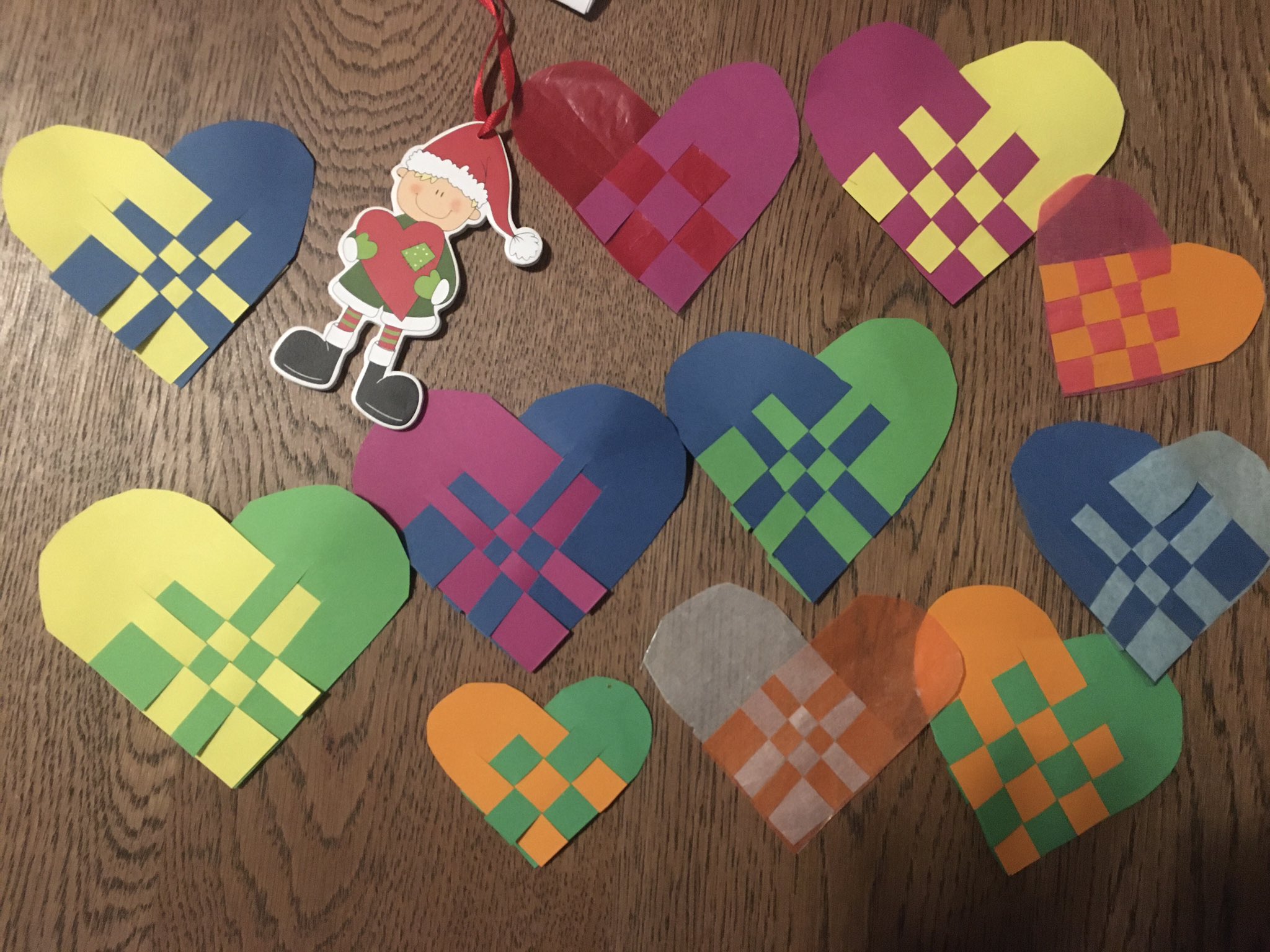
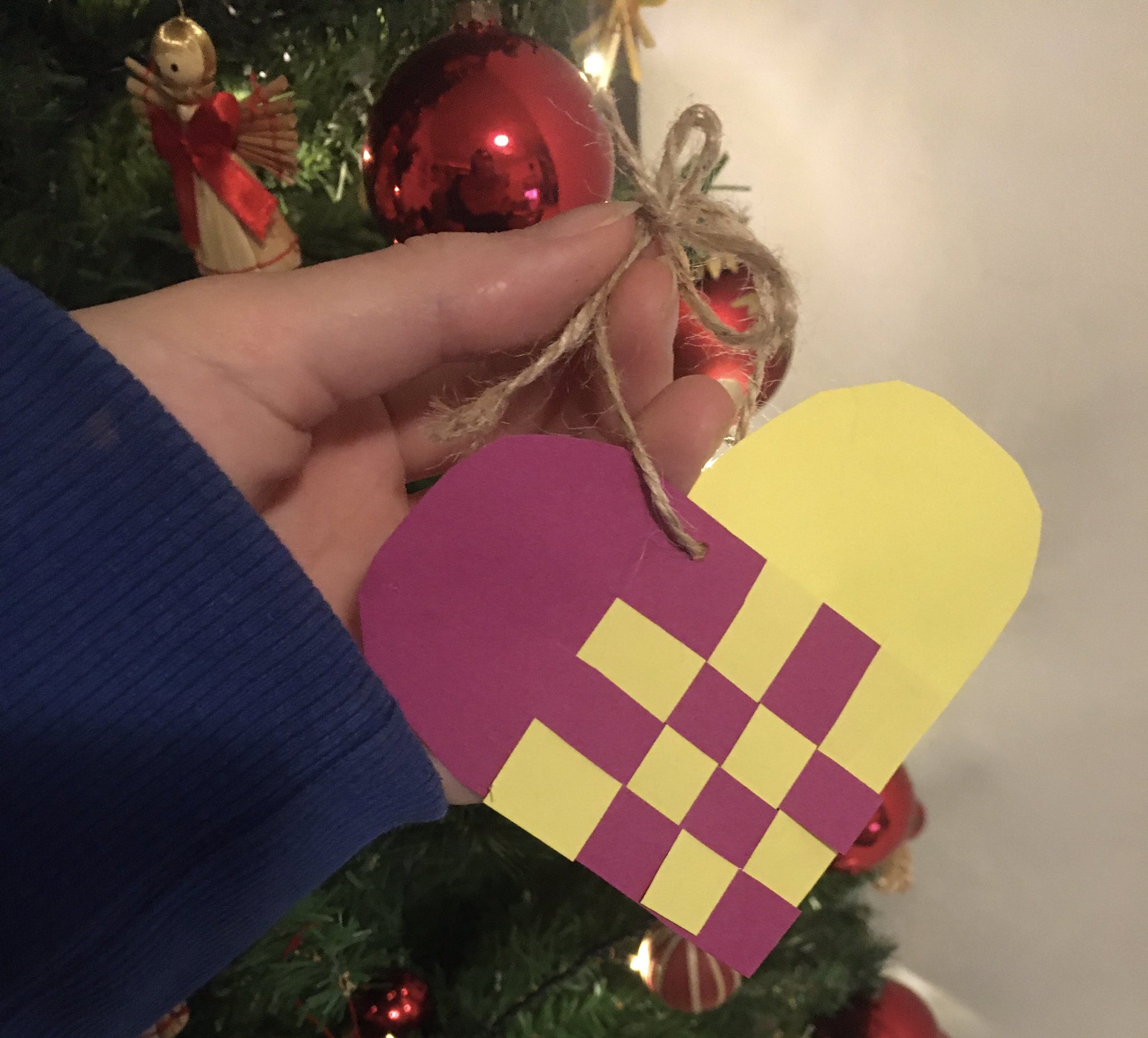
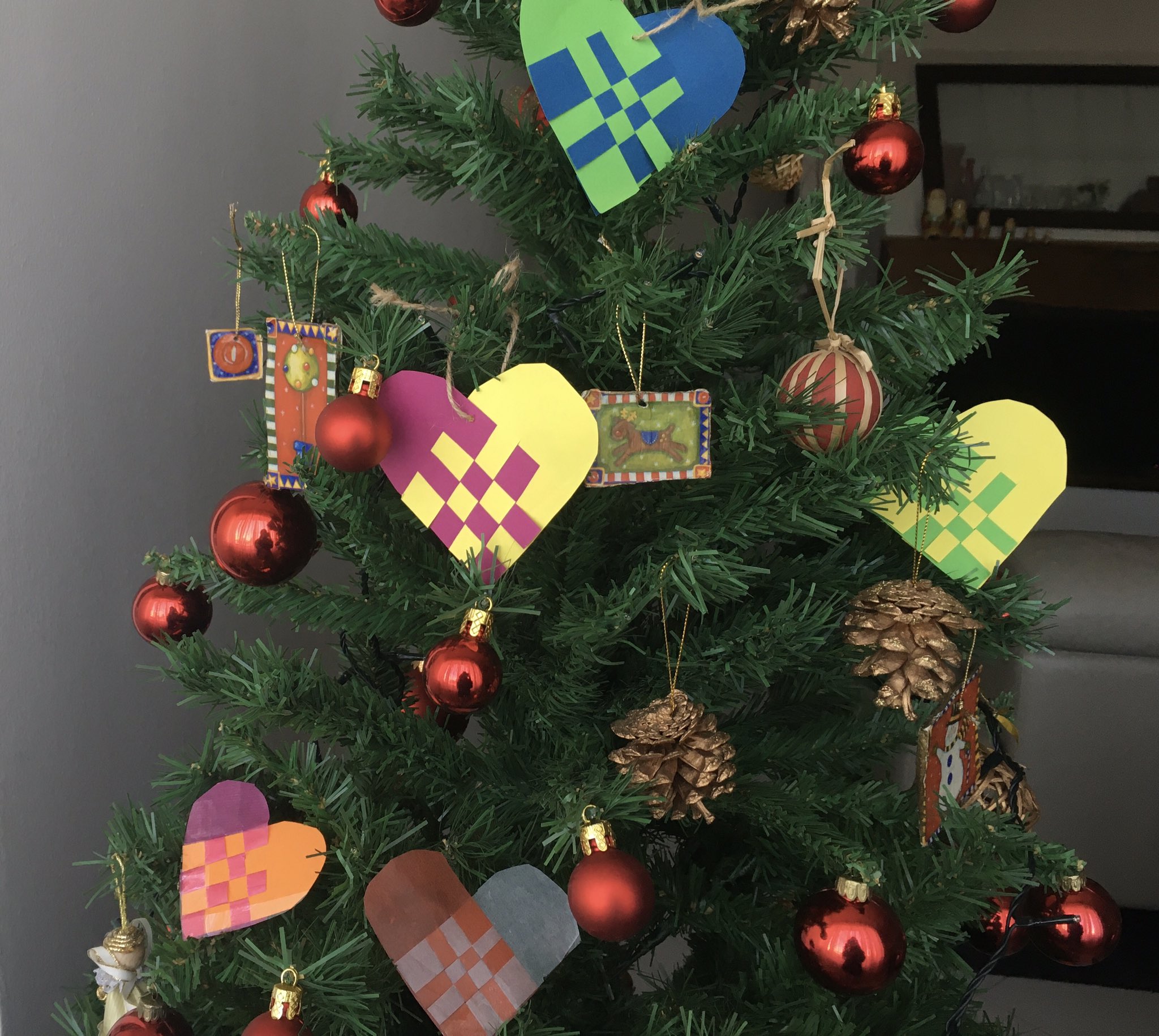
I made my very own, simple version of them, so they are not really a basket as the Norwegian name says, and I used strings to hang them on the tree.

what I used:
  • colored paper (the most traditional version is white & red, but do as you please). I used leftover paper we had at home.
  • Scissors, obviously and something to make holes on paper, as pins
  • Strings
Process:
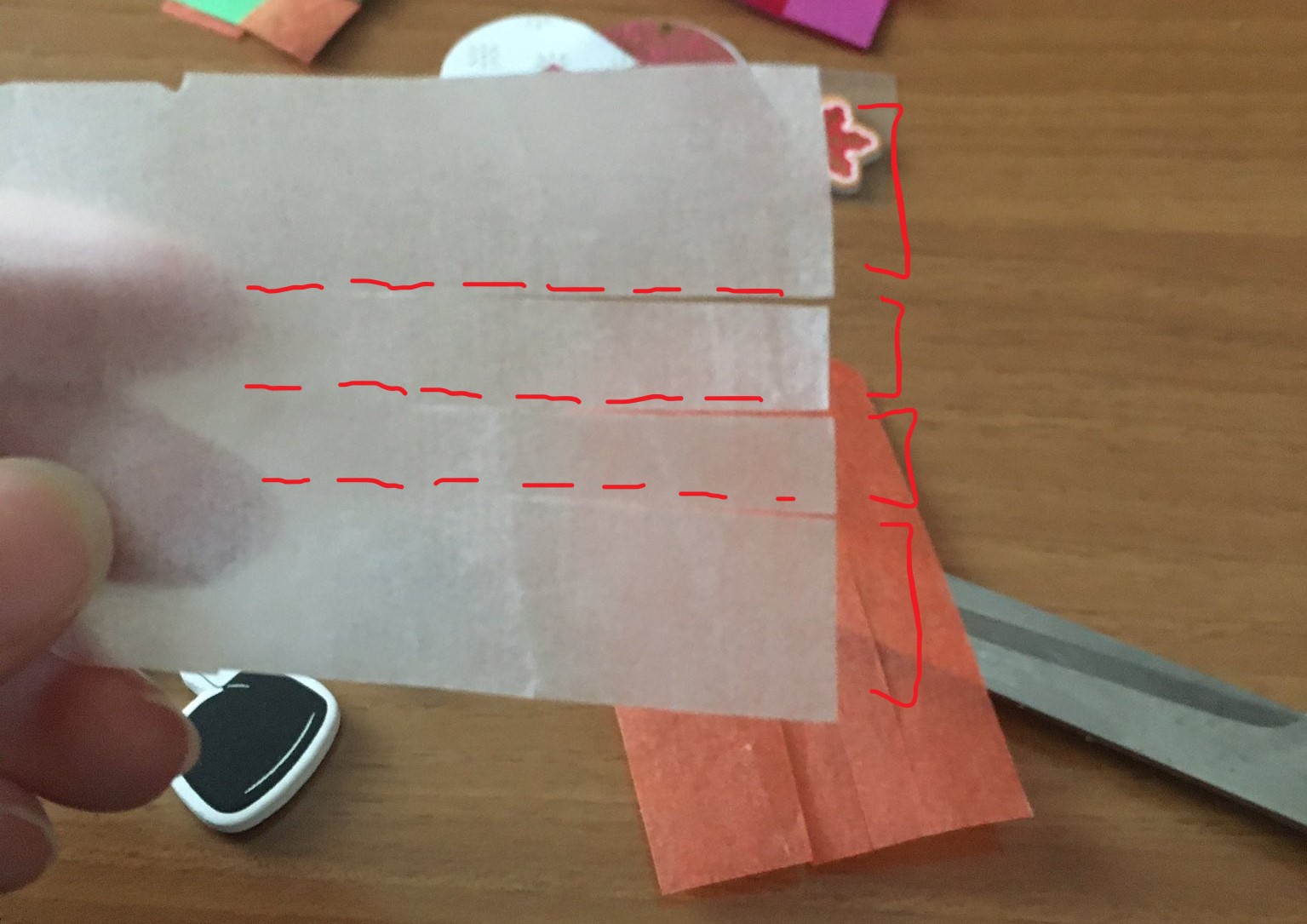
  1. cut paper, put two sheets on top of each other when cutting so it is of the same size.
  2. cut the lines to intertwine the two pieces: they can be all of the same size or the two inner parts narrower.

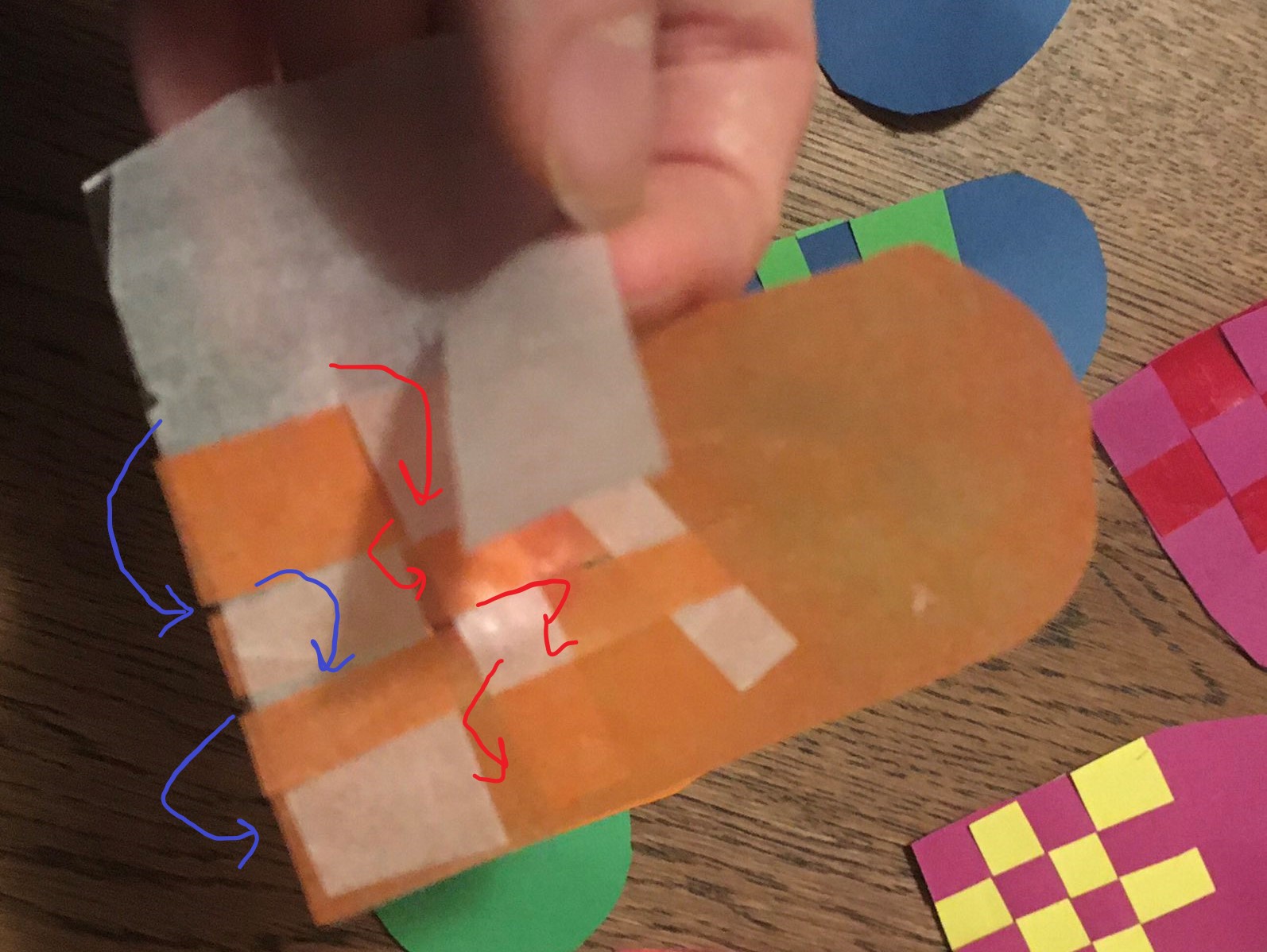
3. Intertwine the pieces: depending on how you cut the lines you will have a slightly different pattern

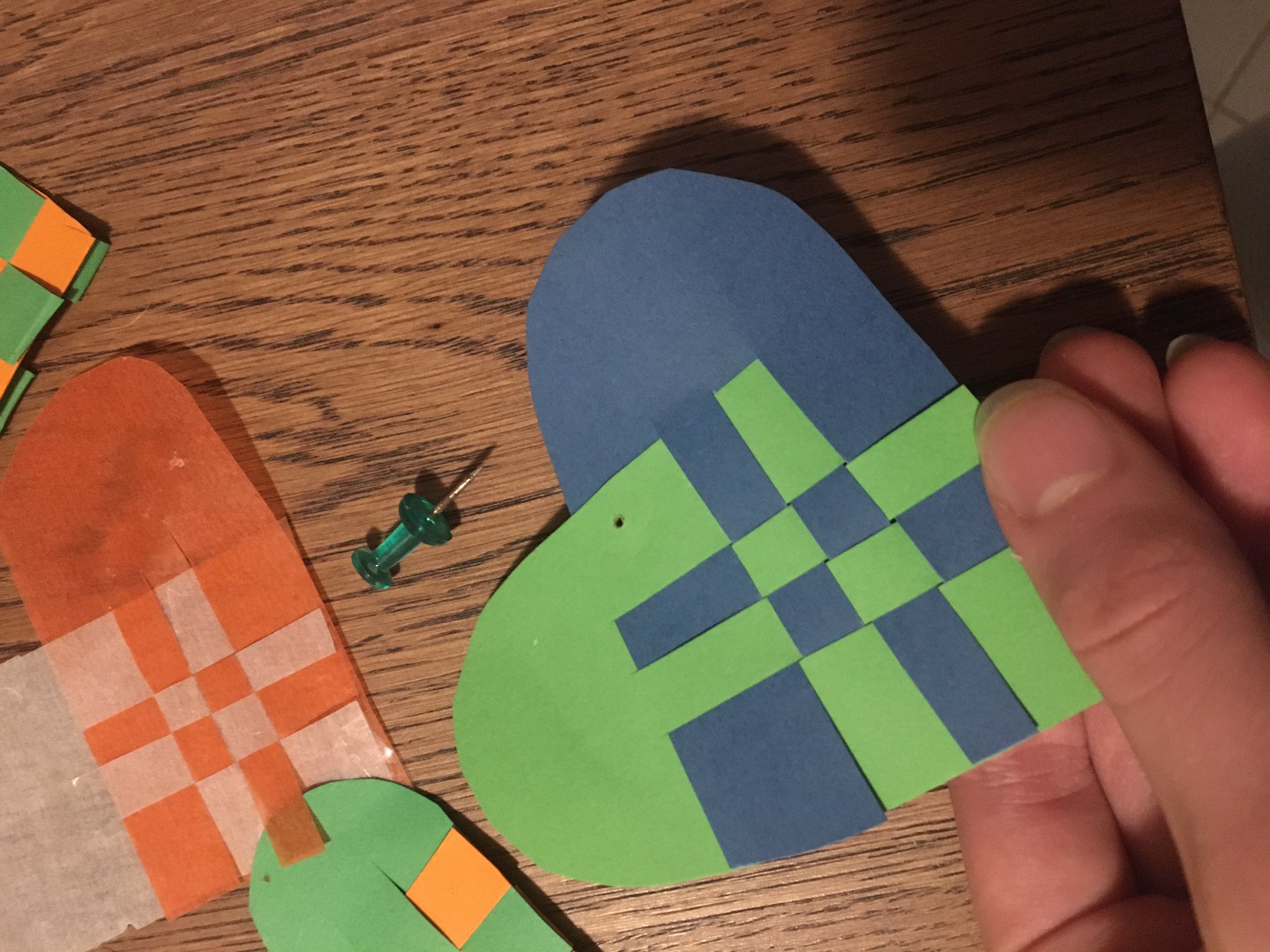
4. Make a hole and put the string in it

Your Christmas Heart is ready to be hung on your tree or wherever you want!

Please share with me your Julehjerter if you happen to make any 🙂

Glædelig Jul!

the MOOMINS

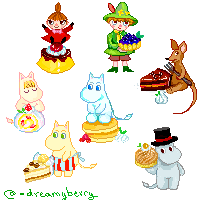
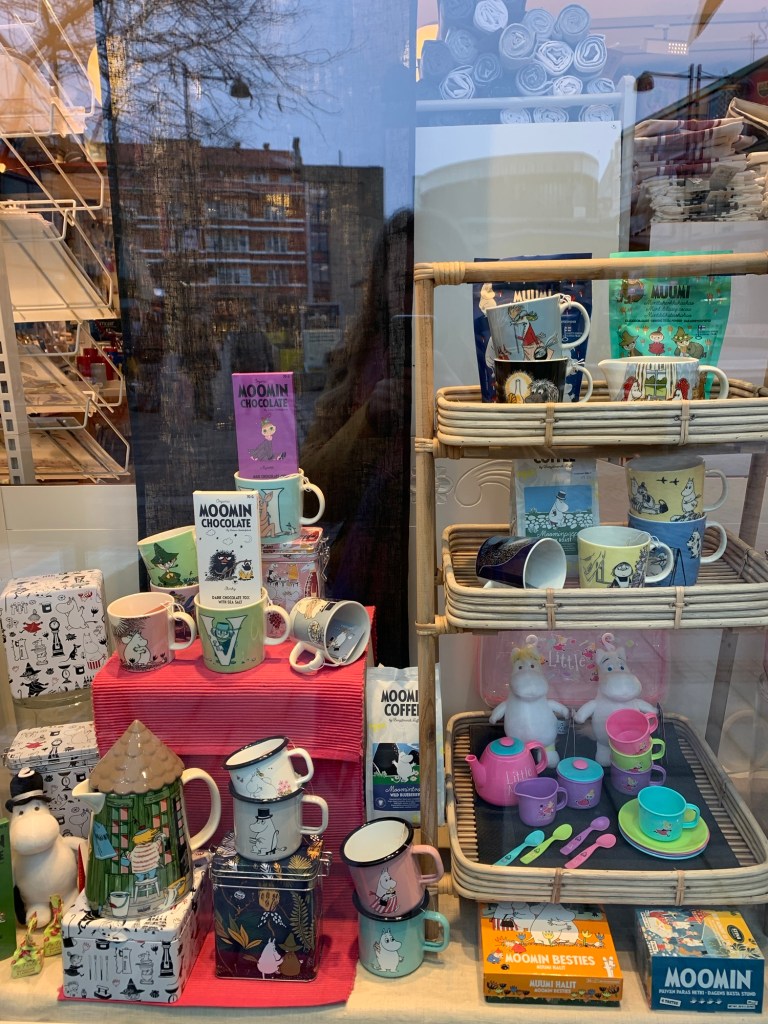
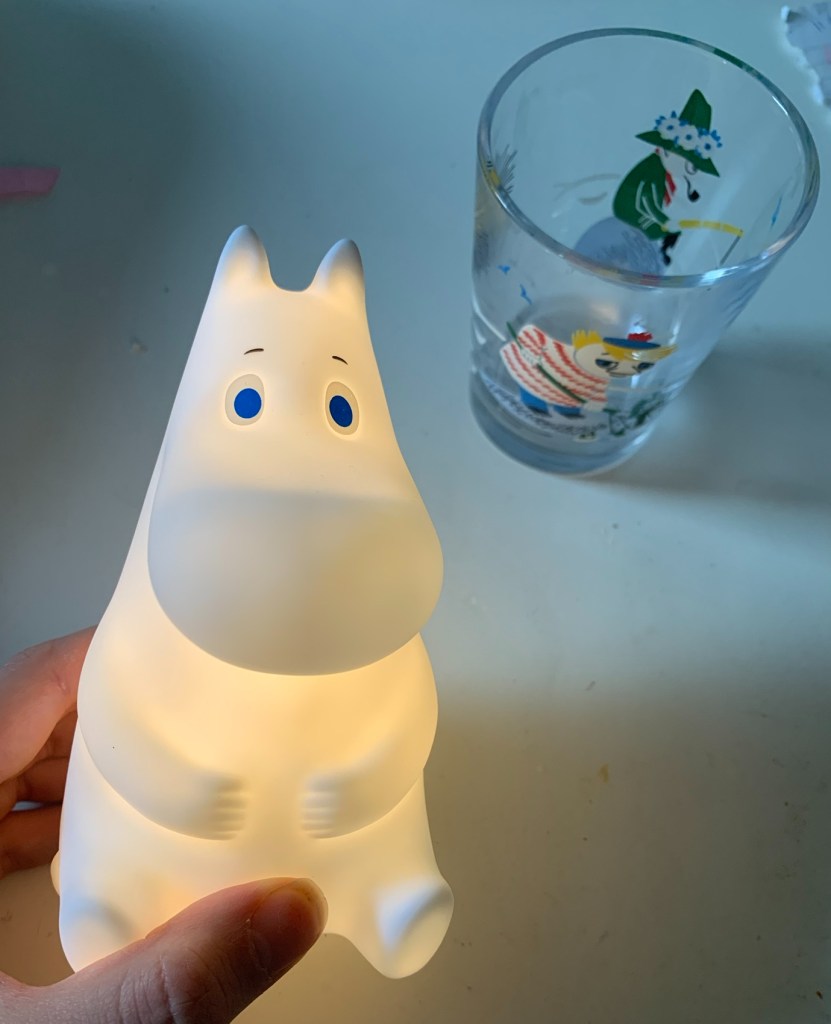
The Moomins, created by Tove Jansson, are the most famous and beloved Finnish characters, First appeared in books, then animated series. Still immensely popular in the Nordic region and Japan, they are feature in countless merchandise items, especially mugs!

The Moomins are a family of hippo-looking characters, created by Swedish-speaking Finnish illustrator Tove Jansson, who created Moomins during the Second World War, as ‘an escape from reality in a fairytale world’. Moomins are still incredibly popular in Nordic countries, and are often used as a Finnish cultural symbol.

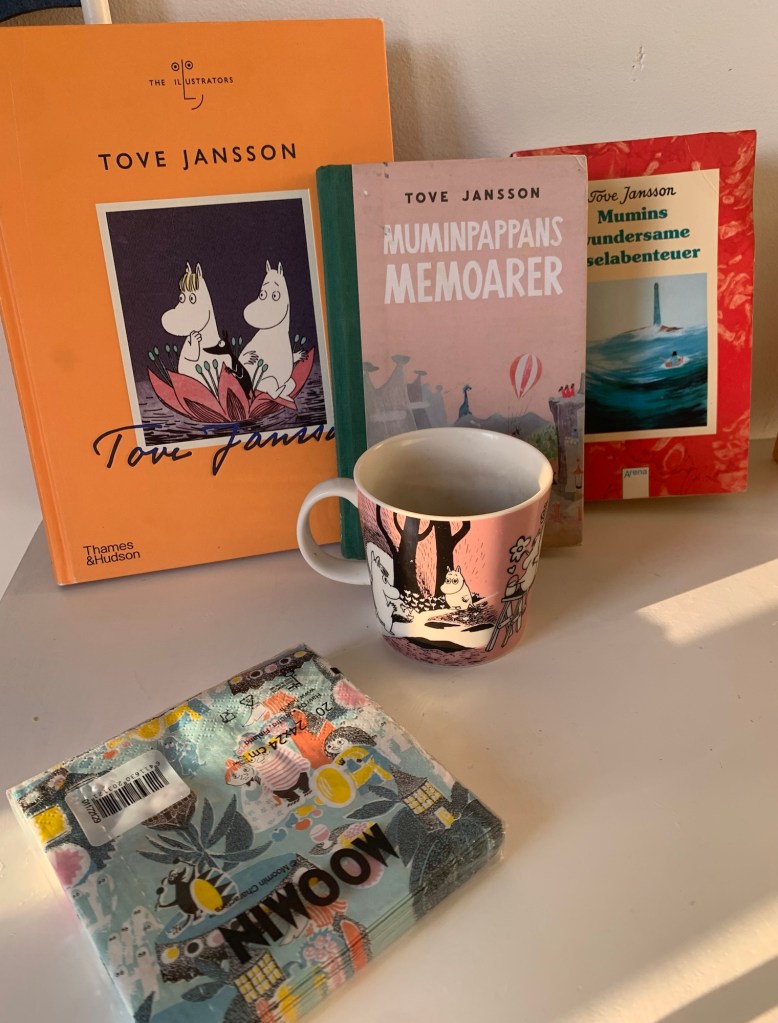
moomin books mug tissues

Tove Jansson wrote and illustrated several books and strips between 1945 and 1980, which got translated into 38 languages.
The first animated series is from 1969, but the most popular is from the 90s, and the most recent is from the 2020s.
Other series were made with puppets and cutouts. and there’s even a Moomin opera! Here’s the Moomin timeline.

Moomin Characters

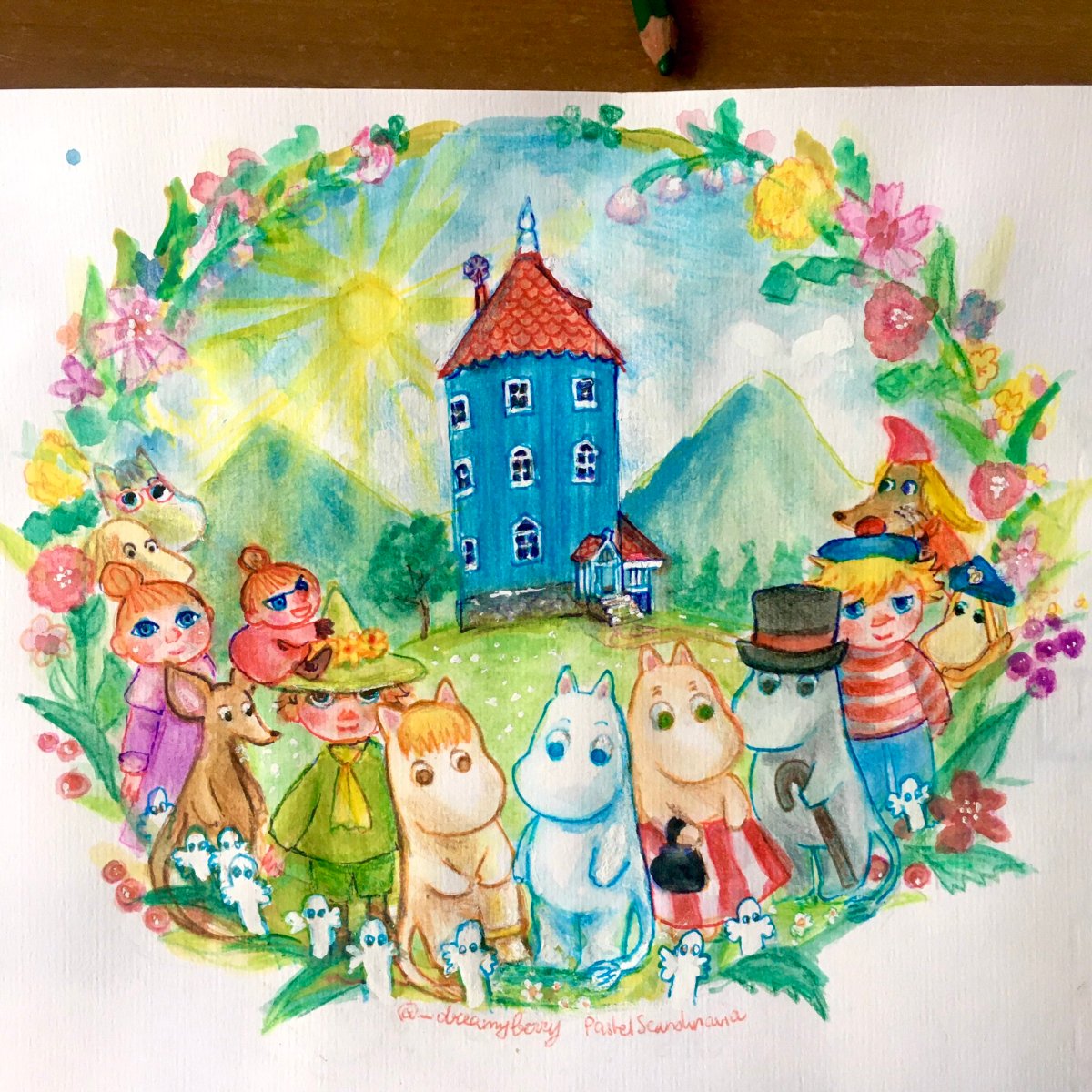
The core family of the moomins is Moomin himself muumipeikko in Finnish, and his parents, Moominmamma and Moominpappa, live in their iconic cylindric blue house (for a while they lived in a lighthouse and a theatre too). But the ‘family’ is not limited to them, and has incorporated other members:

  • the fearful Sniff
  • the naughty Little My, who teaches that being angry is okay too, sometimes.
  • Moomintroll’s girlfriend Snork Maiden,
  • the vagabond and freedom lover Snufkin, an artist soul,connected to a typical Finnish feeling of melancholy and solitude

Other characters who often appear are:

  • the bossy and stubborn Hemulens and the anxious Fillyjonk, representing the petty bourgeoisie of the time when Tove invented the Moomin world
  • the wise and pragmatic Too-Ticky,
  • Mymla, Little My’s big sister.
  • To the east borders of Moomin Valley there are lonely mountains (Ensliga Bergen), a mysteryous place where the monster Groke lives, who freezes everything she walks on and is hard to communicate with.

Many characters are actually invented after people from Tove Jansson’s life, as her parents , Too Ticky – her partner Tuulikki Pietilä.

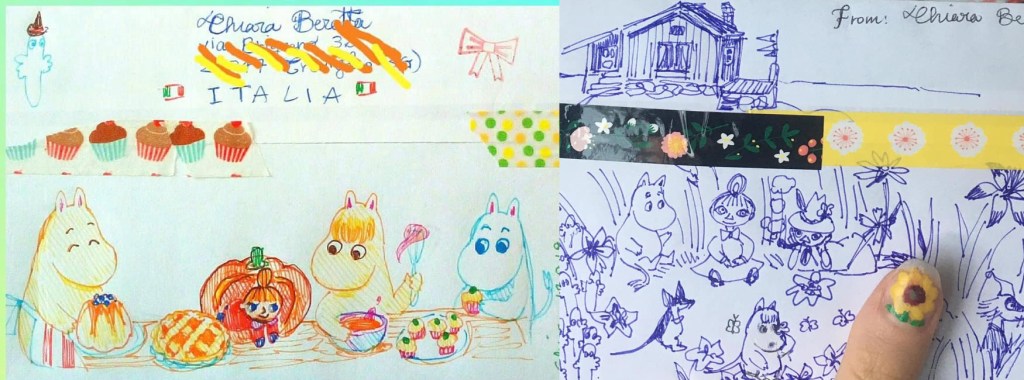
Letters i decorated with Moomin art.

Life in the peaceful Moomin world is often about enjoying small pleasures, as Moomin says:

I only want to live in peace and plant potatoes and dream!

One can’t be too dangerous, if they like to eat pancakes. Especially with jam on it’.

Moomin in Finland

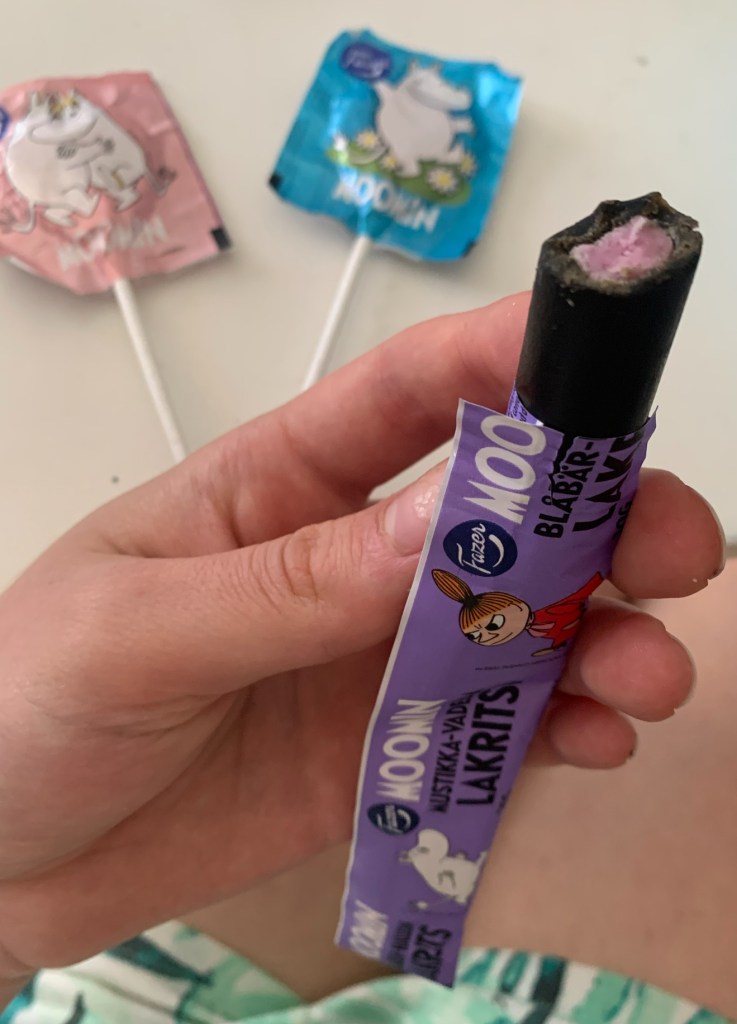
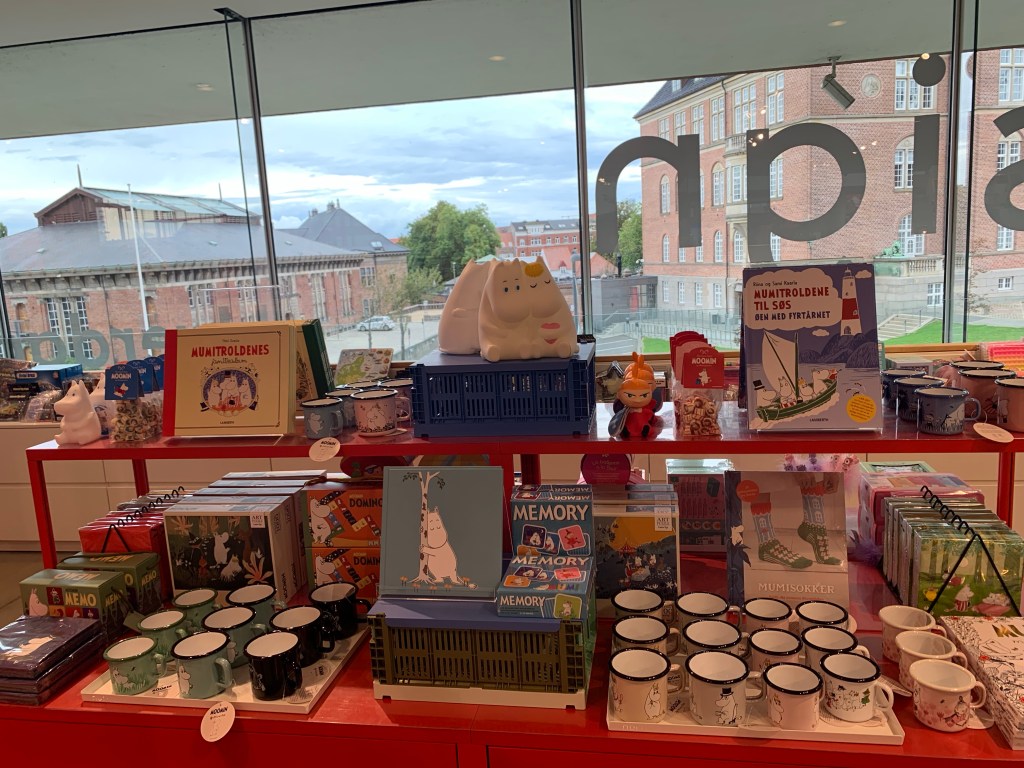
Moomins are still incredibly popular and easy to find in Finland: on Fazer candy and cookies, on finnish postage stamps (since 1988)… but the most classic item to own is probably moomin mugs: produced by Arabia since the 1950s.
You can even fly on a Moomin FINNAIR plane, which of course fly to Japan.

Most Finns (and maybe Swedes or other Nordic peoples as well) have some kind of Moomin object. Even the former Finnish President Tarja Halonen has been known to wear a Moomin watch!

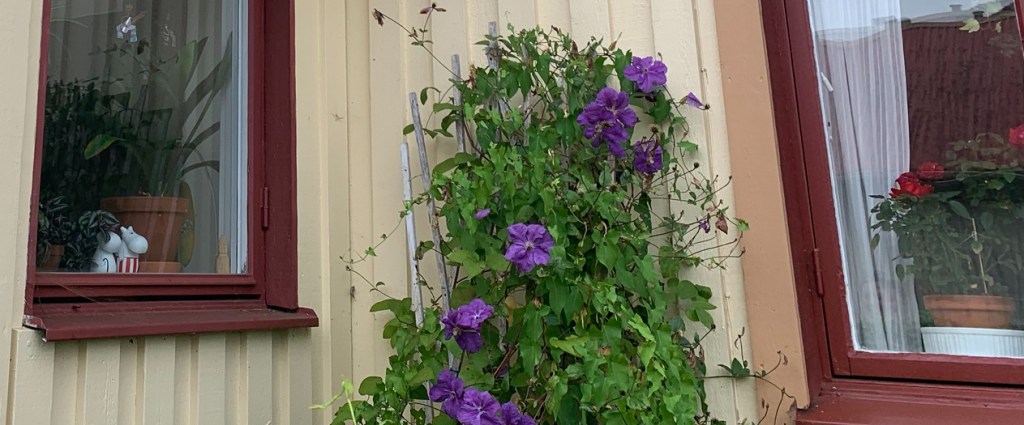
spot the moomins inside this Swedish house!

If you travel to Finland, you can also visit some Moomin-themed attractions:

  • Moomin World theme park (in Finnish Muumimaailma) in Naantali, near Turku, in 1993.
  • Tampere Art Museum has a Moomin section: Muumimuseo, which contains around 2000 original works of Tove Jansson, including a model of the Moominhouse, which Tove Jansson contributed to build.
  • Moomin ice cave is a 30 meters below of a Spa Hotel near Kuopio, it includes Moomin-themed ice sculptures, and offers activities for families with children.

Moomin shops, cafes and attractions in the world

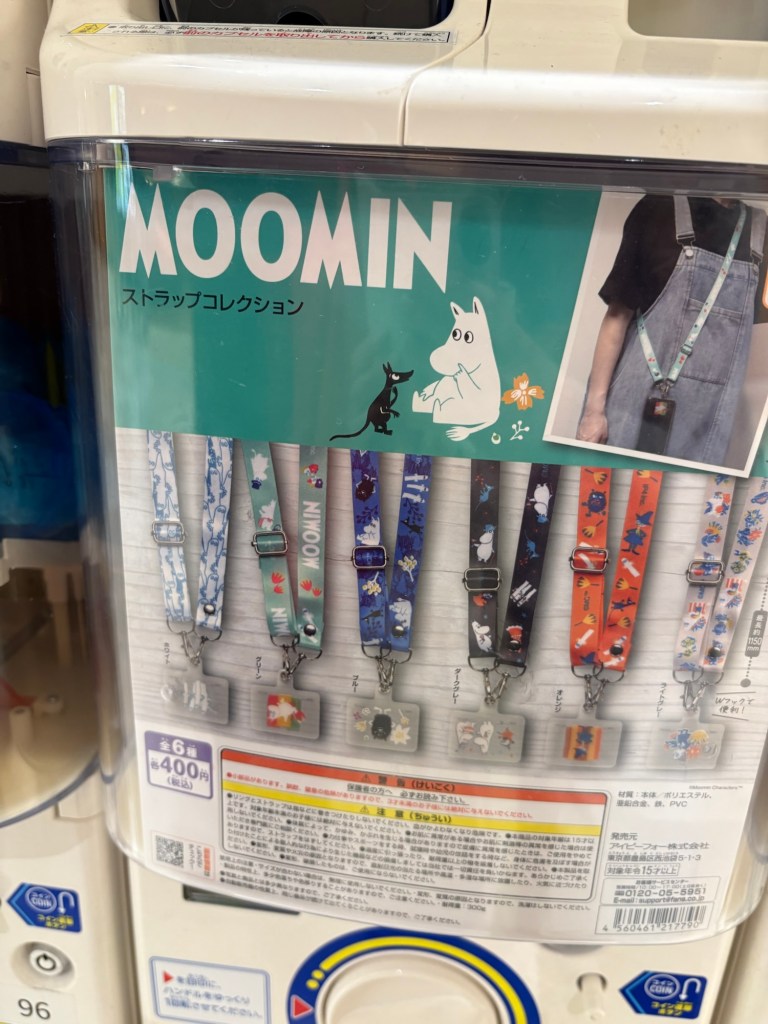
The real Moomin Boom started in the 1990s, with the Japanese animated series Tales From Moominvalley. Moomin books were already bestsellers in Nordic and Baltic countries, but the animation made Moomin extremely popular in Japan among others.

Japan has a Moomin-themed park since 2015: MoominValley Park, in the prefecture of Saitama, near Tokyo.

Besides Moomin shops in Nordic countries (I have been in the Gothenburg one, Sweden), there are quite a few in Asia (most in Japan, but also Korea, Thailand, China and Hong Kong), and there is one in the USA, but not NYC or LA – in Hawaii! Not surprisingly due to the Japanese tourists…

Moomin themed-cafes are very popular in East Asian countries: other than in Finland various pop-up cafes have appeared now and then in Japan, Hong Kong, Thailand, South Korea and Taiwan.
You could eat a moomin shaped meal in front of a giant moomin character plush there! Moomin Cafes.

You can check out all currently open Moomin shops, attractions and cafes on Moomin official website.

Subscribe for more info and moominous posts:

Puffins: Iceland & Faroe’s mascot

The lovely sea parrot living around the North Atlantic coasts, symbol of Iceland and the Faroe Islands.

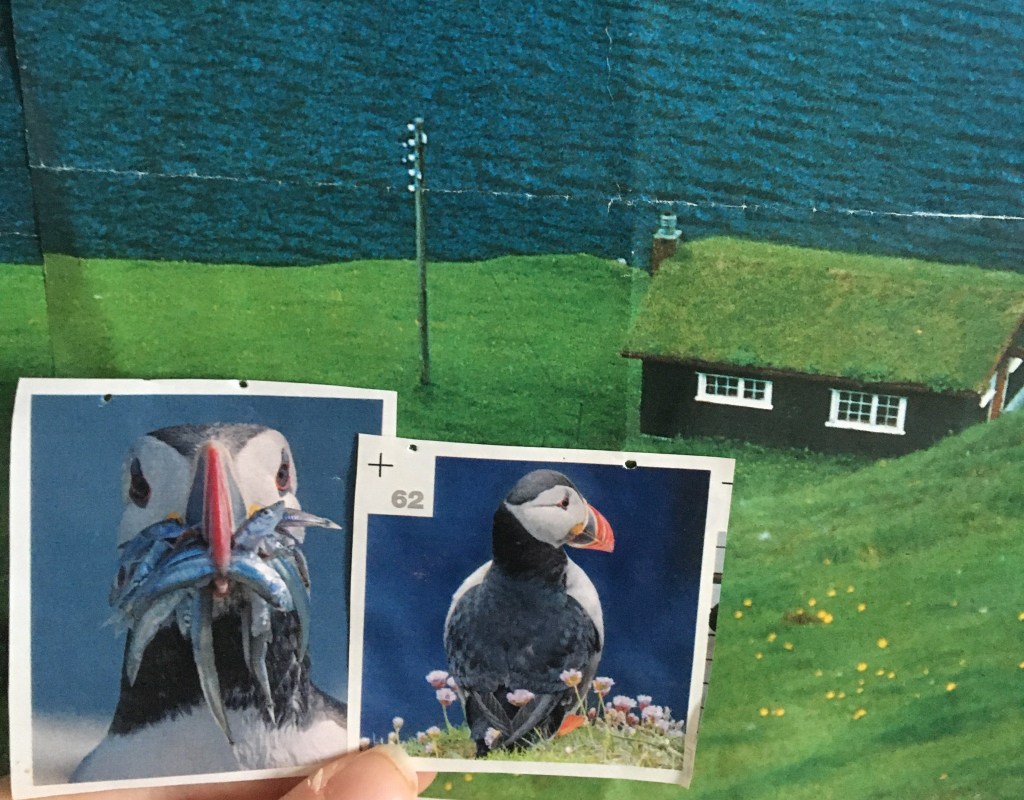
The Atlantic puffin (Fratercula arctica), Lundi in Icelandic and Faroese, is a species of seabird in the auk family. The Atlantic puffin moves to North Atlantic coasts in summer and breeds in Iceland, the Faroe Islands, the Shetland and Orkney Islands, Norway, Greenland, Newfoundland and Labrador, and as far south as Maine in the west and Britain in the east. More than 90% of the global population is found in Europe  and colonies in Iceland alone are home to 60% of the world’s Atlantic puffins, in particular Westman islands (Vestmannaeyjar).

Cutouts from magazines, I can’t resist to puffin pictures!

The generic name Fratercula comes from the Medieval Latin fratercula, “friar”, a reference to the black and white plumage which resembles monastic robes. The vernacular name “puffin” comes from puffed in the sense of swollen. The striking appearance, large colourful bill, waddling gait, and behaviour of this bird have given rise to nicknames such as “clown of the sea” and “sea parrot”.

The beak is the most distinctive feature. From the side, it is broad and triangular, but viewed from above, it is narrow. The half near the tip is orange-red, yellow, and blue-greyish. A puffin beak can contain 12 up to 18 fish at once! The Atlantic puffin is sturdily built with a thick-set neck and short wings and tail. It is about 30 cm and weighs 400-600 g.

Traditions in Iceland and Faroe Islands

A tradition exists on the Icelandic island of Heimaey (part of Westman islands) for the children to rescue young puffins, a fact recorded in Bruce McMillan’s photo-illustrated children’s book Nights of the Pufflings (1995). The fledglings emerge from the nest and try to make their way to the sea, but sometimes get confused, perhaps by the street lighting, ending up by landing in the village. The children collect them and liberate them to the safety of the sea.

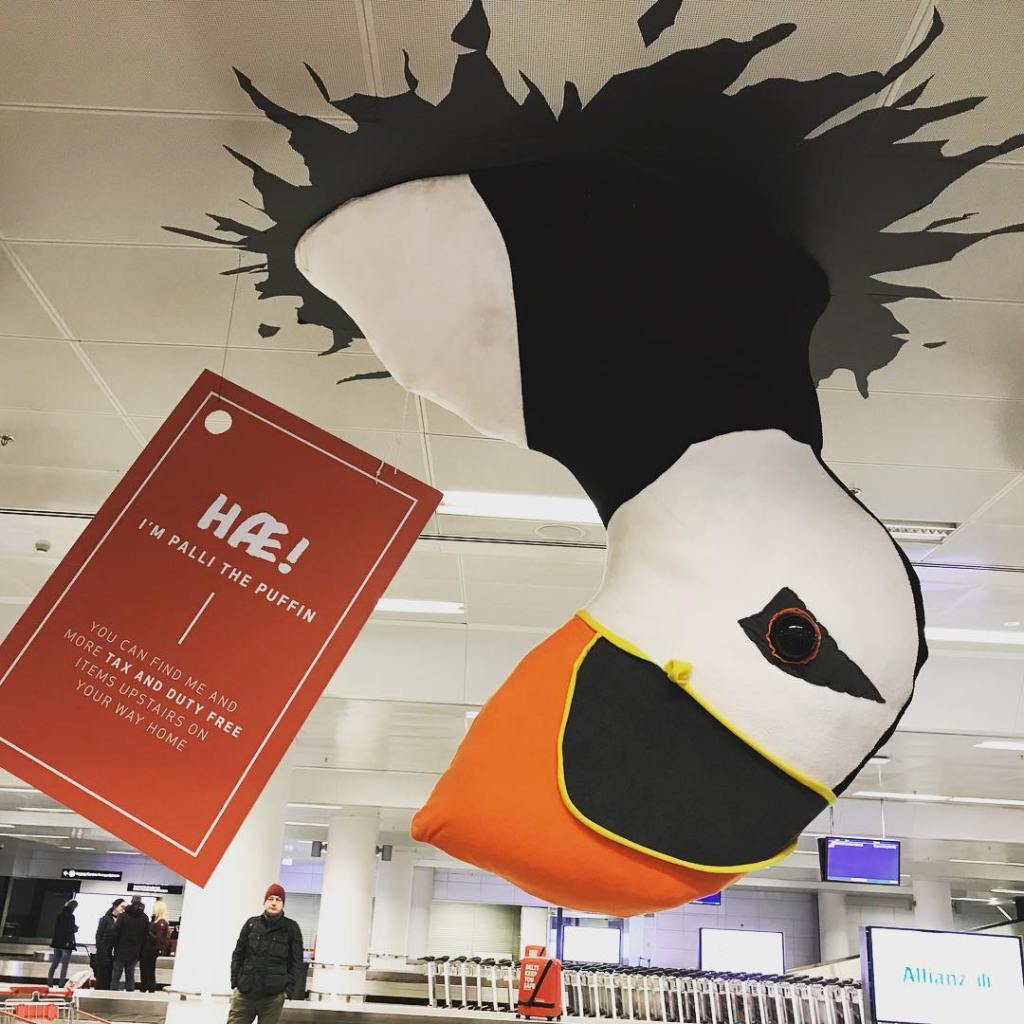
Palli the Puffin greeting travellers coming to Iceland in Reykjavik airport (picture by Mundi Lundi, page about a puffin who was found injured in the Icelandic capital and the nursed back to health)
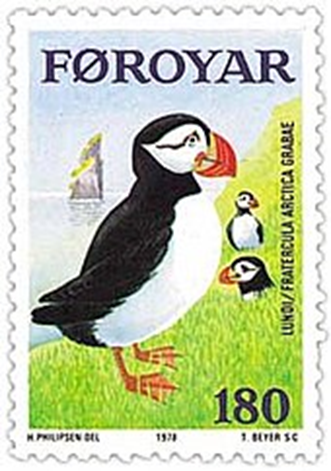
Faroe islands 1978 postal stamp by Holger Philipsen

Puffins have been hunted by man since time immemorial, coastal communities and island dwellers with few natural resources at their disposal didn’t have much else to hunt besides fish and seabirds.

They are still caught and eaten in Iceland and the Faroe Islands A typical device used in the Faroes to catch them was a fleyg. This was a long pole with a neton the end. a skilled hunter could gather 200–300 in a day!

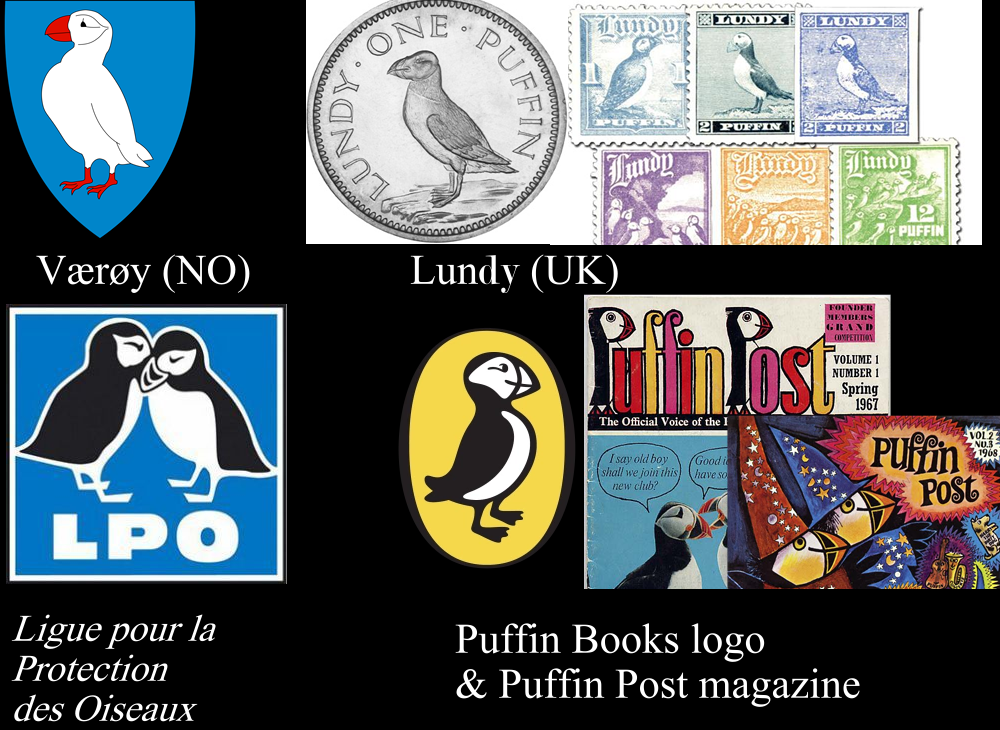
Puffins in logos and symbols

  • The Norwegian island municipality of Værøy, part of the Lofoten, has an Atlantic puffin as its civic emblem.
  • the name of the island of Lundy (UK) might come from Norse lund-ey or “puffin island”. The Vikings might have found the island a useful refuge and restocking point after their depredations on the mainland . The island issued its own coins, and in 1929, its own stamps with denominations in “puffins”.
  • The paperbook publisher Penguin Books introduced a range of books for children under the Puffin Books brand in 1939. The demand was so great that a children’s magazine called Puffin Post was established, Puffin Post.

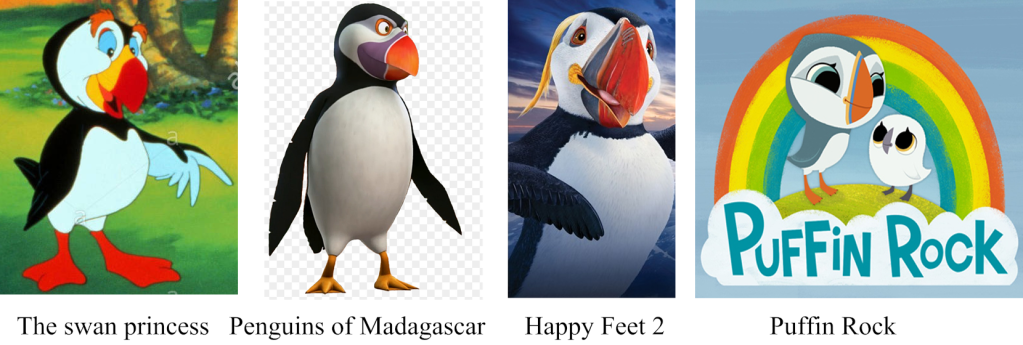
Puffin characters in pop culture

  • The Swan Princess -Puffin
  •  Madagascar – Hans
  • Happy Feet 2 – Sven is a puffin who pretends to be a penguin
  • Puffin Rock – A Netflix original cartoon about the puffin Oona and her little brother Baba

Icelandic and Faroese mascotte in the world

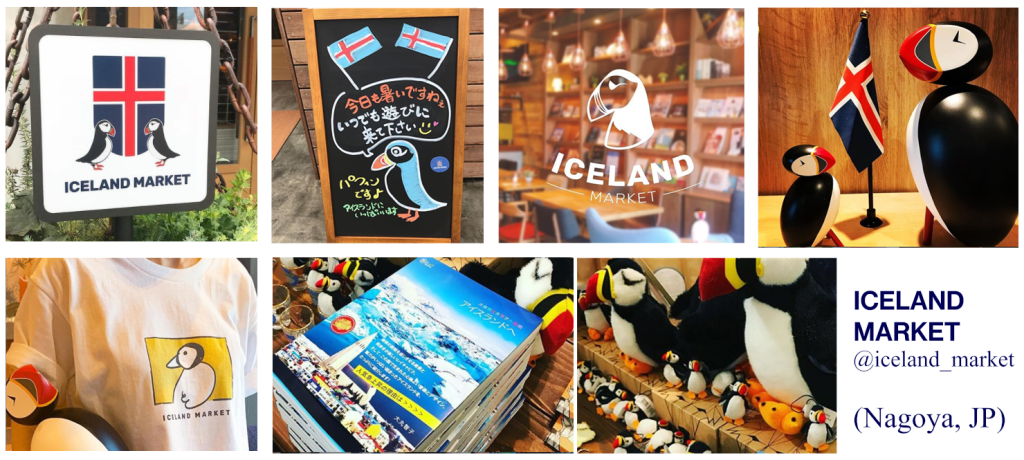
Puffins are often used to promote these Nordic islands, ICELAND MARKET in Nagoya, Japan, still has puffins in its logo and gadgets in what used to be its cafe, proudly representing Iceland.

FRAMTAK, a Faroese site, now inactive, promotes the Nordic archipelago and has a section with comics about Ludvík Lundi (“the puffin with glasses”), ideal if you want to practice Faroese!

Puffins in danger

In most countries, Atlantic puffins are now protected by legislation, and in the countries where hunting is still permitted, strict laws prevent overexploitation, but calls have been made for an outright ban on hunting them in Iceland because of concern over the rapid and ongoing population decline in its European range especially since 2000. In 2015, the status of this species was upgraded from “least concern” to “vulnerable”.  Some of the causes of population decline may be increased predation by gulls and skuas, the introduction of rats, cats, dogs, and foxes onto some islands used for nesting, contamination by toxic residues, drowning in fishing nets, and climate change.  Based on current trends, the European population will decline an estimated 50–79% between 2000 and 2065.

More articles: