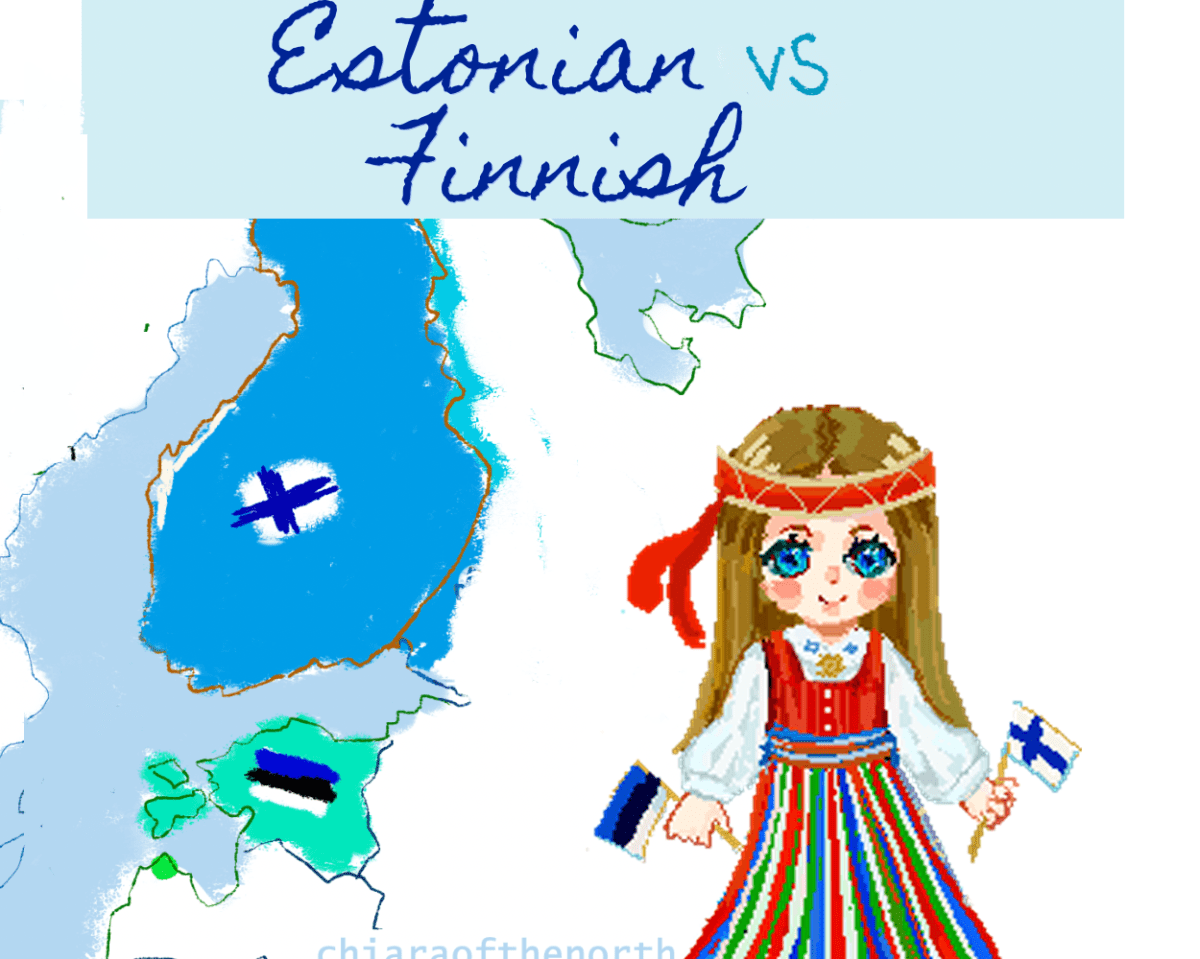
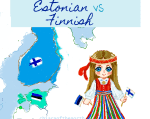
24th February is Estonian Independence Day! To celebrate, here is some info on one of the closest relatives of Finnish and insight on Uralic languages.
Finnish and Estonian are both Uralic languages, belonging to a different family than most languages spoken in Europe, from Icelandic to Italian, which are all Indo-European languages. Find out more about Finnish compared to other Nordic languages. I already wrote in Estonian culture in general compared to Finland after my trip to the Baltics last summer.
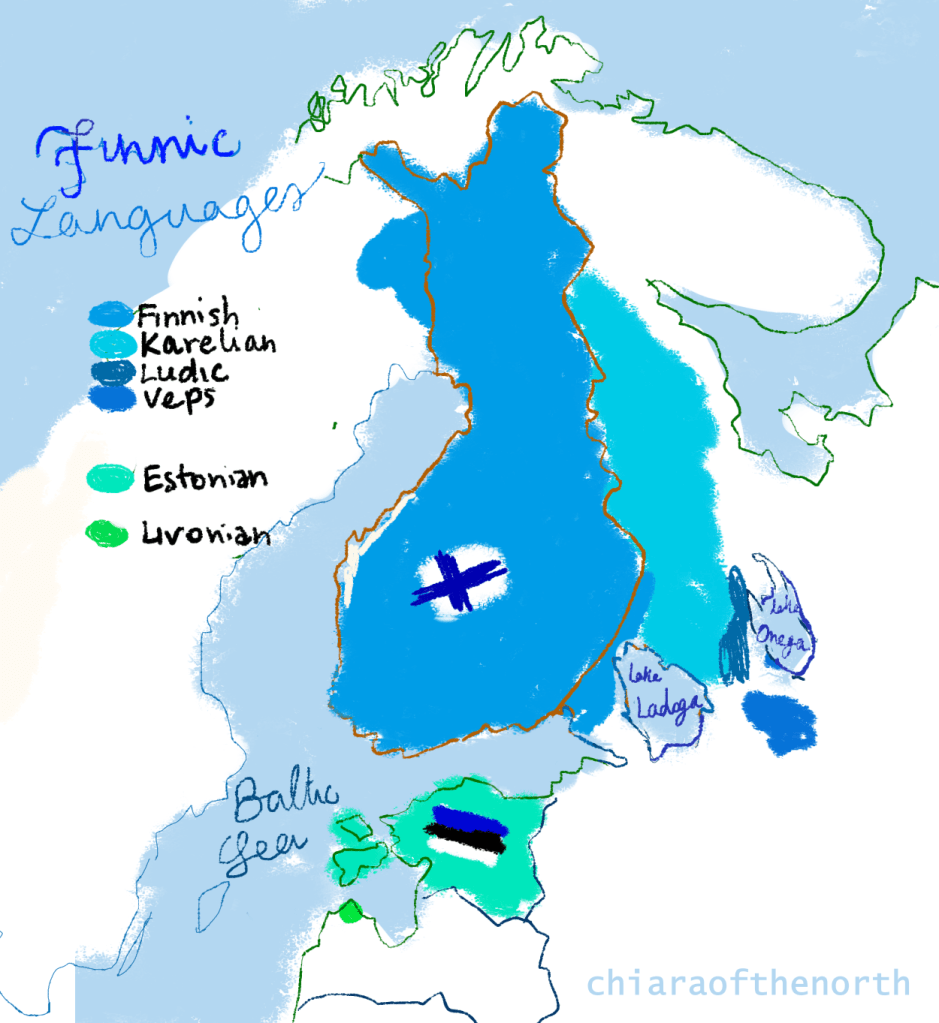
Finnish and Estonian: Finnic sister languages
Estonian is the second biggest Finnic language after Finnish , spoken by around 1 million people, (Finnish has 5 millions). Other related languages exist in the Baltics, although most have very few speakers left: võro, Livonian (in Latvia).
There are many similarities exist betwenn Finnish and Estonian. Although they are not always mututally intelligible, Finns and Estonians can often understand each other, particularly in written form. Estonians in particular used to be able to understand Finnish very well thanks to access to Finnish media they had access to during the Soviet occupation.
Unique Finnic language features
- Gender-neutral pronoun: The English third person pronoun has a gender distinction – he/she. Finnish and Estonian have only one, neutral version: “hän” in Finnish and “ta” in Estonian.
- Vowel Length (2 in Finnish, 3 in Estonian): Both Finnish and Estonian have short and long vowels: you often see double ones when bumping into these languages – aa, ää , ee, oo, ii etc. For example: mutta ‘but’ vs muuttaa ‘to change’ in Finnish.
Estonian, has however not two, but three vowel lengths: kala (fish) Long: kaala (weigh), kaalla (with a neck). - 14-15 inflections of grammatical cases (simplified in Estonian): Both languages often convey meaning through inflection: I go to Estonia – Tulen estii Finnish stayed more conservative, while Estonian started using more prepositions instead and dropped the accusative case.
Finnish and Estonian vocabulary
There is a large Finnic common vocabulary: the following words are the same in Finnish and Estonian, unrelated to indoeuropean languages:
- water: vesi
- moon: kuu
- money: raha
- tree: puu
- snow: lumi
- hand: käsi
- expensive: kallis
- sea: meri
Countries around Finnic people got similar, distinct names in their languages, notice the following: Finland, Sweden, Germany, Russia, Denmark:
- Finnish: Suomi, Ruotsi, Saksa, Venäjä, Tanska
- Estonian: Soome, Rootsi, Saksamaa, Venemaa, Taani. Maa means ‘Land’ also in Finnish
Finnish got many loanwords from Sweden, being its neighbor and ruling power. Similarly, Estonian has borrowed as much from German. As a common Finnic feature, many words which originally had S with another consonant after it, dropped the S.
| Finnish | Estonian | Swedish | German | |
| school | koulu | kool | skola | Schule |
| chair | tuoli | tool | stol | Stuhl |
| to paint | maalata | maalima | måla | malen |
| ham | kinkku | sink | skinka | Schinken |
| cake | kakku | kook | kaka | Kuchen |
| kitchen | keittiö | köök | köket | Küche |
| mirror | peili | pegeli | spegel | Spiegel |
Tell Finnish and Estonian apart
Estonian and Finnish look similar, so if you’re not familar with any you can tell if it is Estonian instead for these features:
- Estonian has the unique letter Õ, and – unlike Finnish – uses Ü, B and G in native Finnic words (Finnish only in foreign words). Š and Ž can also be rarely seen in words of foreign origin in Estonian, although not officially part of the alphabet
- diphthongs not present in Finnish: if you see two different vowels next to each other, that cannot be Finnish – but if it looks like it, it might be Estonian: päev.
- No vowel harmony in Estonian: In Finnish, words contain vowels from only front or back vowels – so ä, y, ö cannot be together in the same word with a, u, o. In Estonian, mixing them is possible.
Spoken Estonian tends to sound softer and more fluid, while Finnish pronunciation is more rythmic. This might be due to dipthongs and consonant length distinction in pronunciation, stricter in Finnish, where the difference between short and long consonants is stronger.
Finnish and Estonian language days
Both countries have a day dedicated to their respective languages.
Estonian language day, also Mother Tongue day, Emakeelepäev, is celebrated on 14th March since 1999, birthday of the poet Kristjan Jaak Peterson. Poetry readings including a 12-hours reading marathon mark the day.
Finnish language day is on 9th April in honour of Michael Agricola, a 1500s clergyman considered the father of written Finnish for having published the first book in this language.
sources
- suomainen.com
- elang.ee – Estonian vs Finnish
- Langfocus
- news.err.ee – How German shaped the Estonian language
An introduction to Estonian: sister language of Finnish
Estonian is a Finnic language, sharing many similarities with its ‘bigger’ sister Finnish, while being unrelated to all their bigger language neighbours

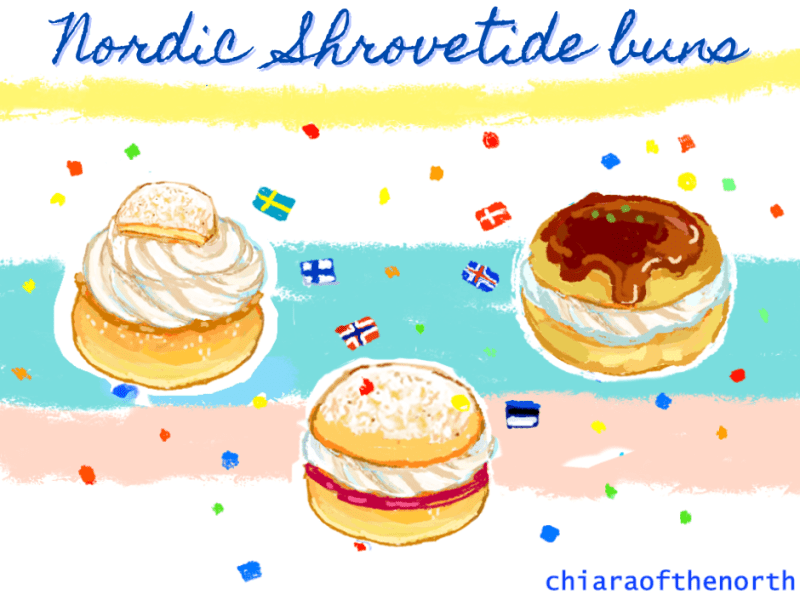
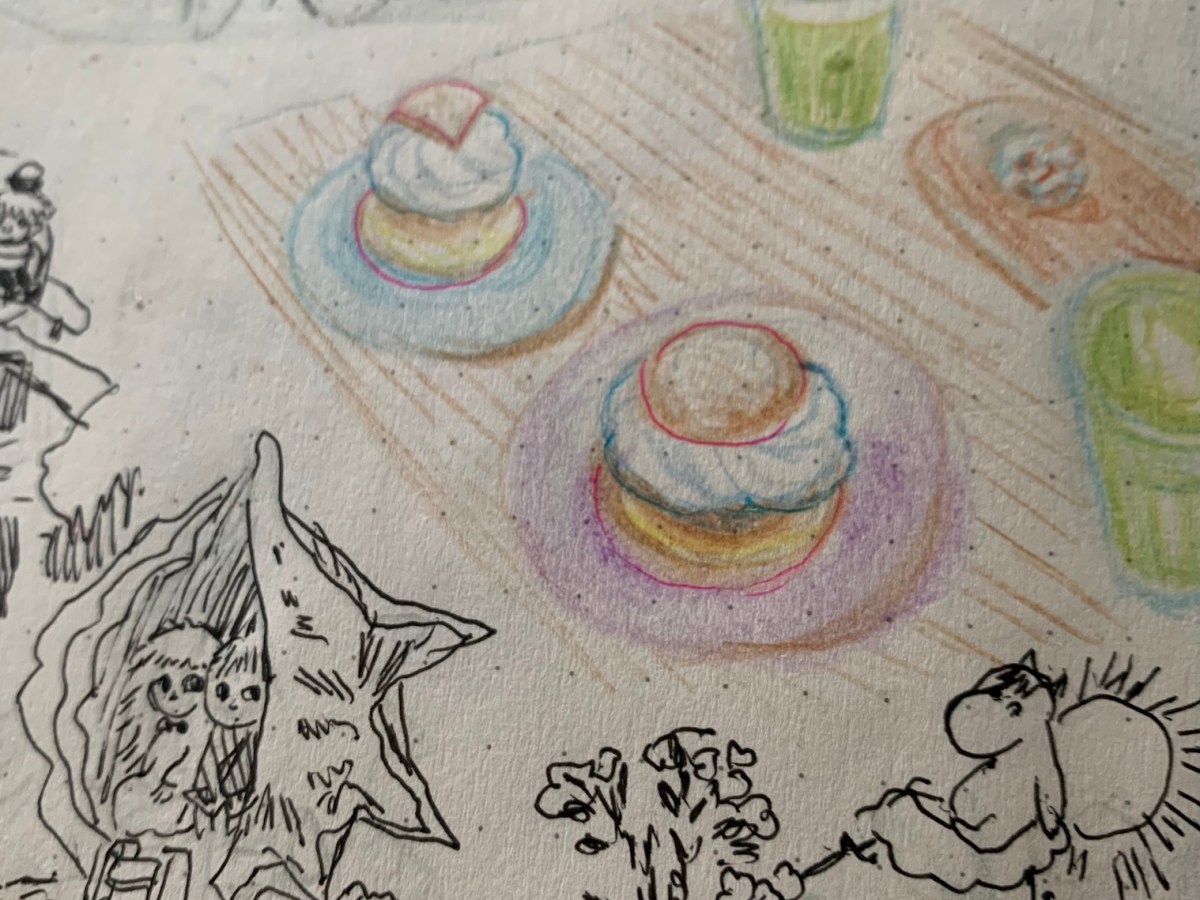
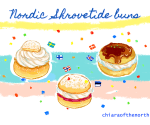
Scandinavian carnival buns (and where to eat them in the Netherlands)
Cream buns are enjoyed in Nordic and Baltic countries during shrovetide, between January and February. Sweden’s classic semla has almond paste, while other countries variations include jam, vanilla cream, and chocolate icing top.
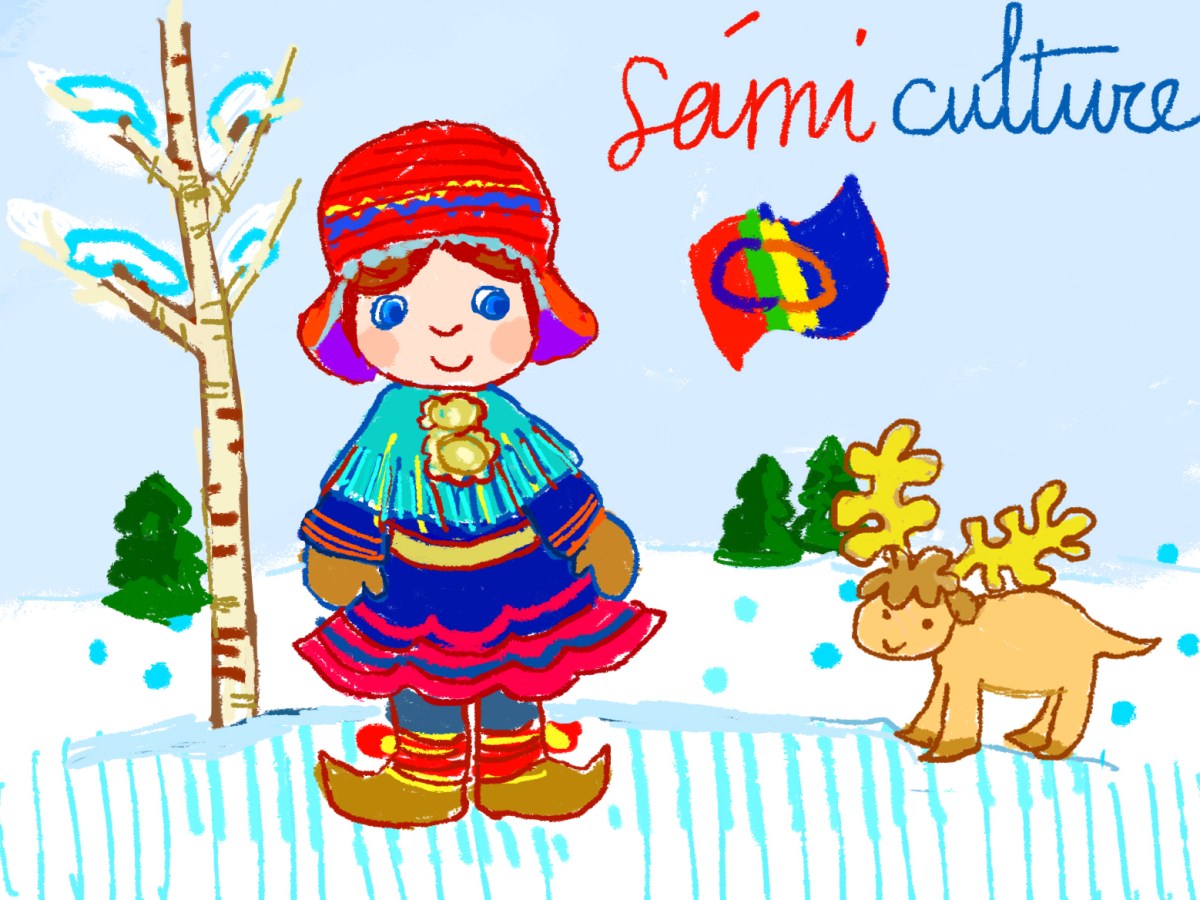
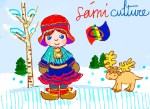
5 symbols of Sami culture
Sámi people, indigenous people of North Scandinavia, have a distinct culture, symbolised by its unique flag and traditional clothing, and part of it are Duodji handicrafts and unique musical expression through yoik.
.

 a Polyglot illustrating Scandinavia