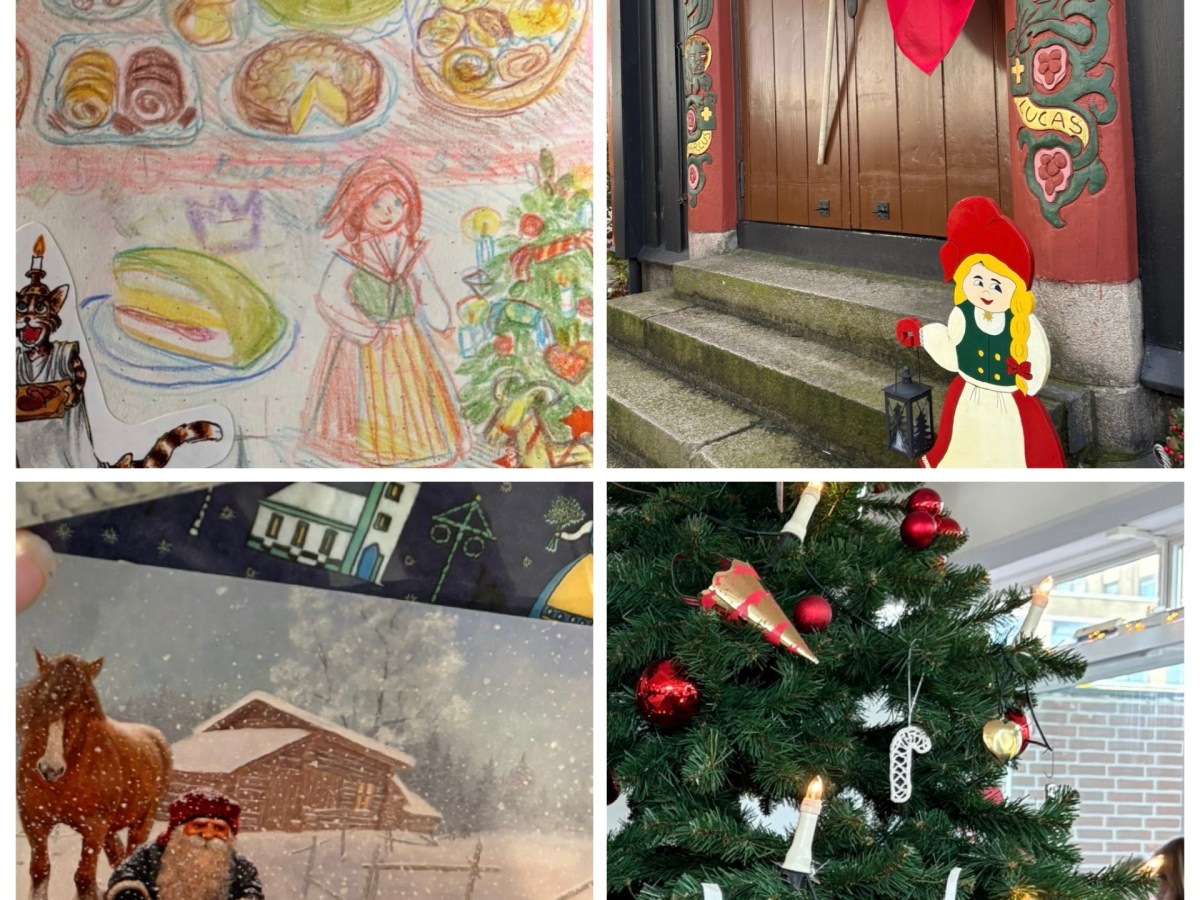
My visit to Nordic Christmas markets in Rotterdam

Norwegian, Danish, Finnish and Swedish Christmas markets in Rotterdam. Christmas decorations, imported typical Nordic products for sale, a cafe with lunch and cakes in each of them!

Nordic seamen churches in Rotterdam organise every year their Christmas markets in November. You can purchase food products from Scandinavia and have lunch and coffee with cakes at their cafes! Second hand books were also to find. Every church had a lottery as well!
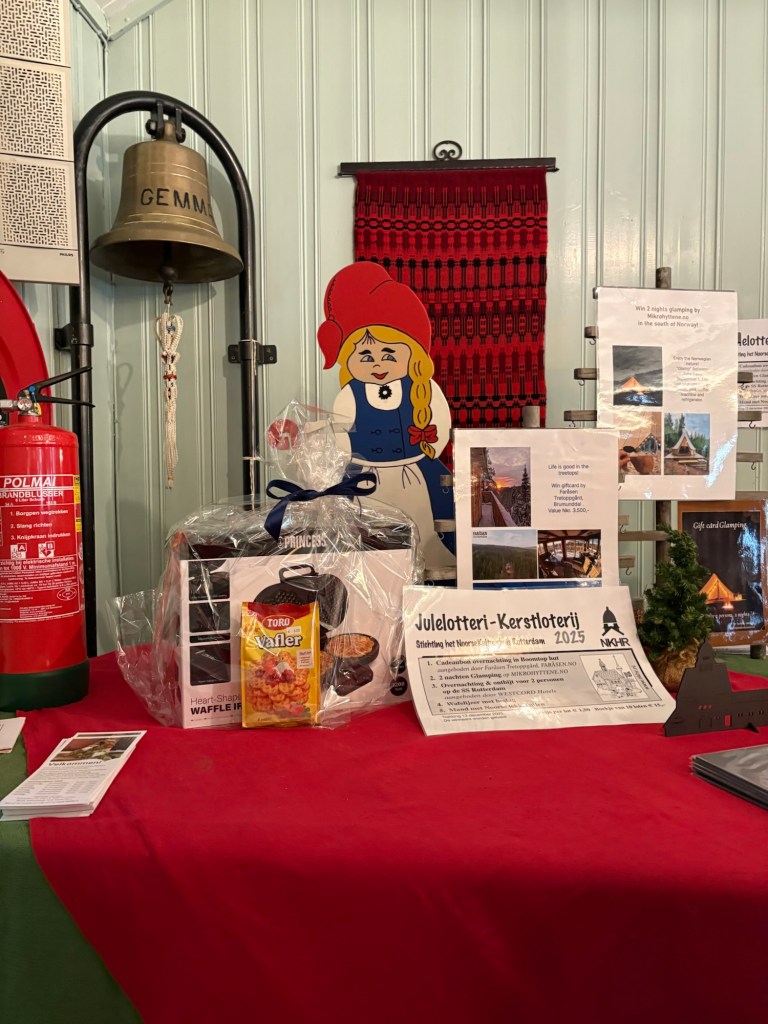
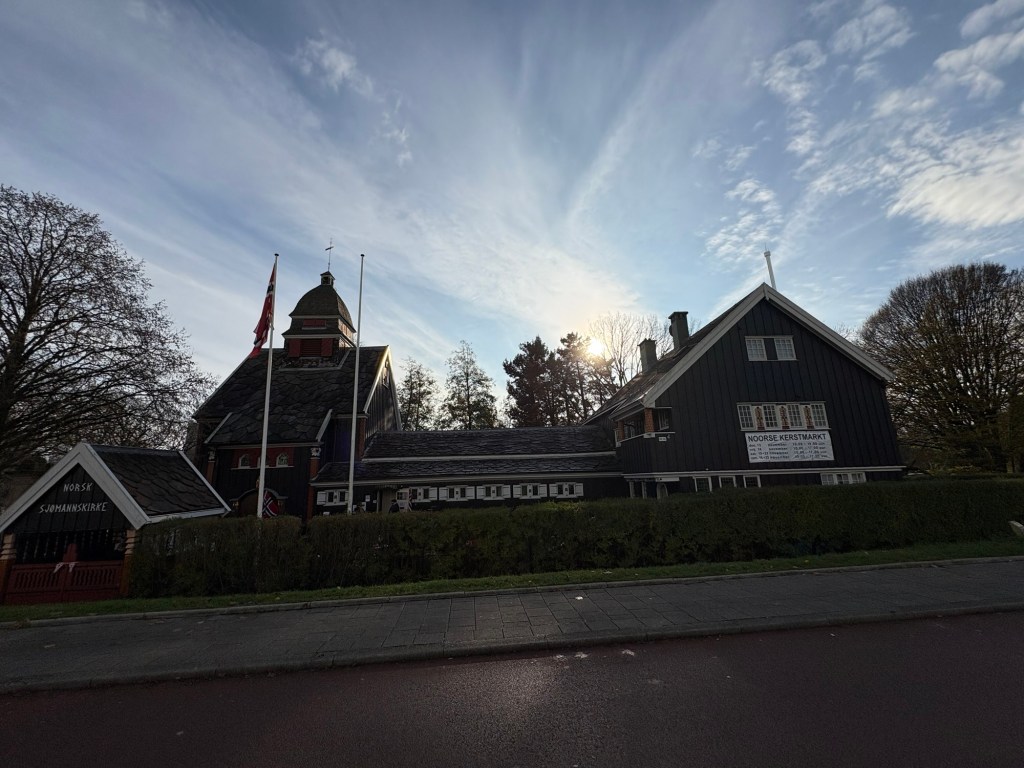
Norsk Sjømannskirke / Noorse zeemanskerk/ Noorse kultuurhuis

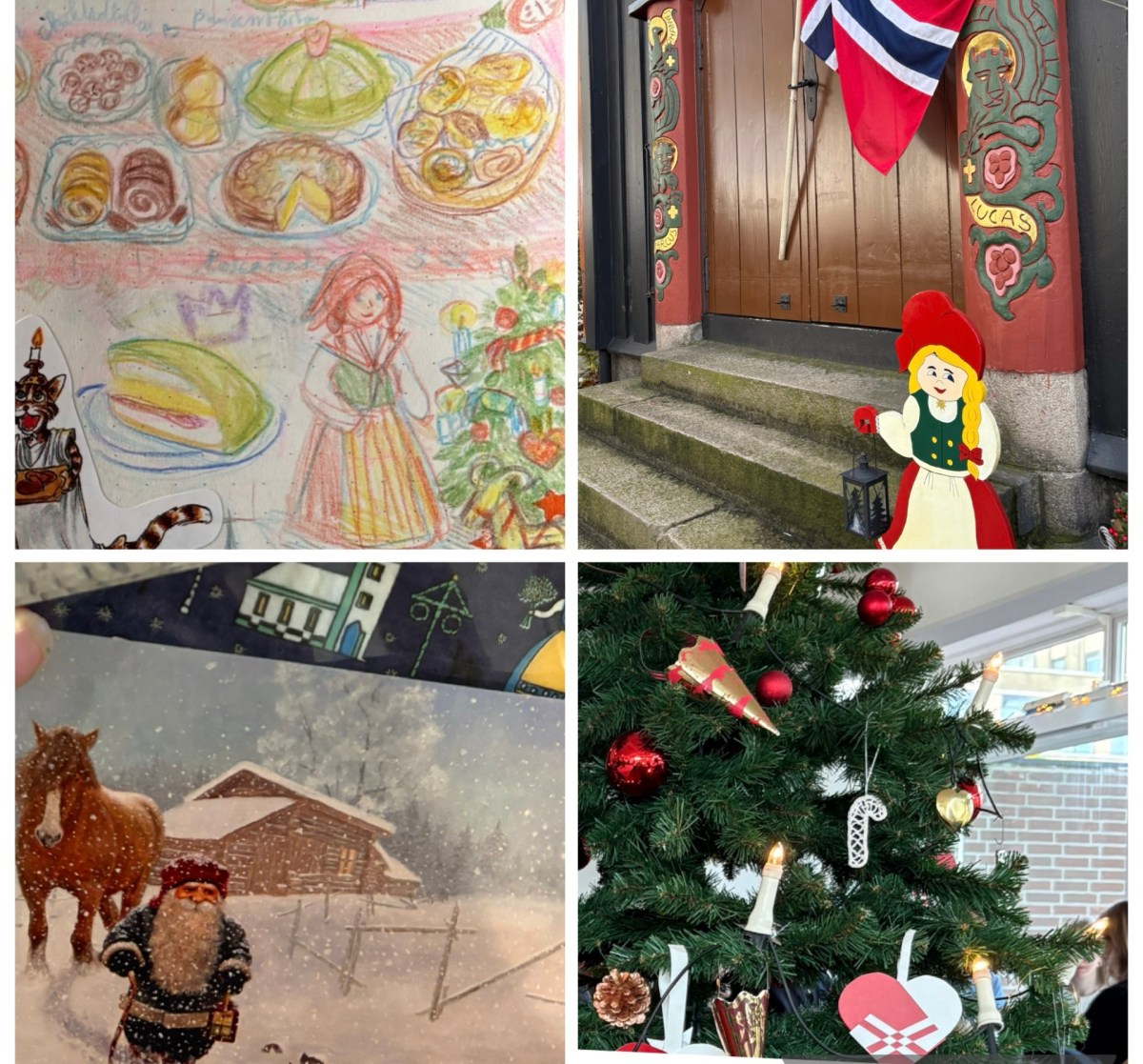
First went to the Norwegian one. I had already been there on 17th May for Norwegian National Day. Their church is so beautiful.
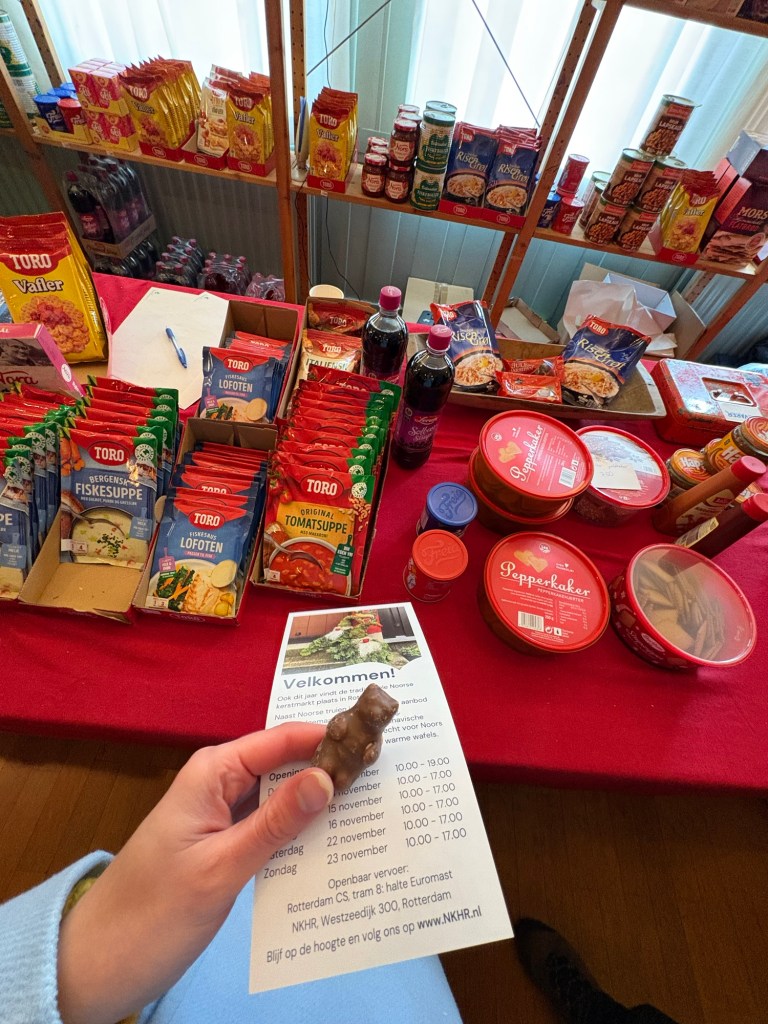
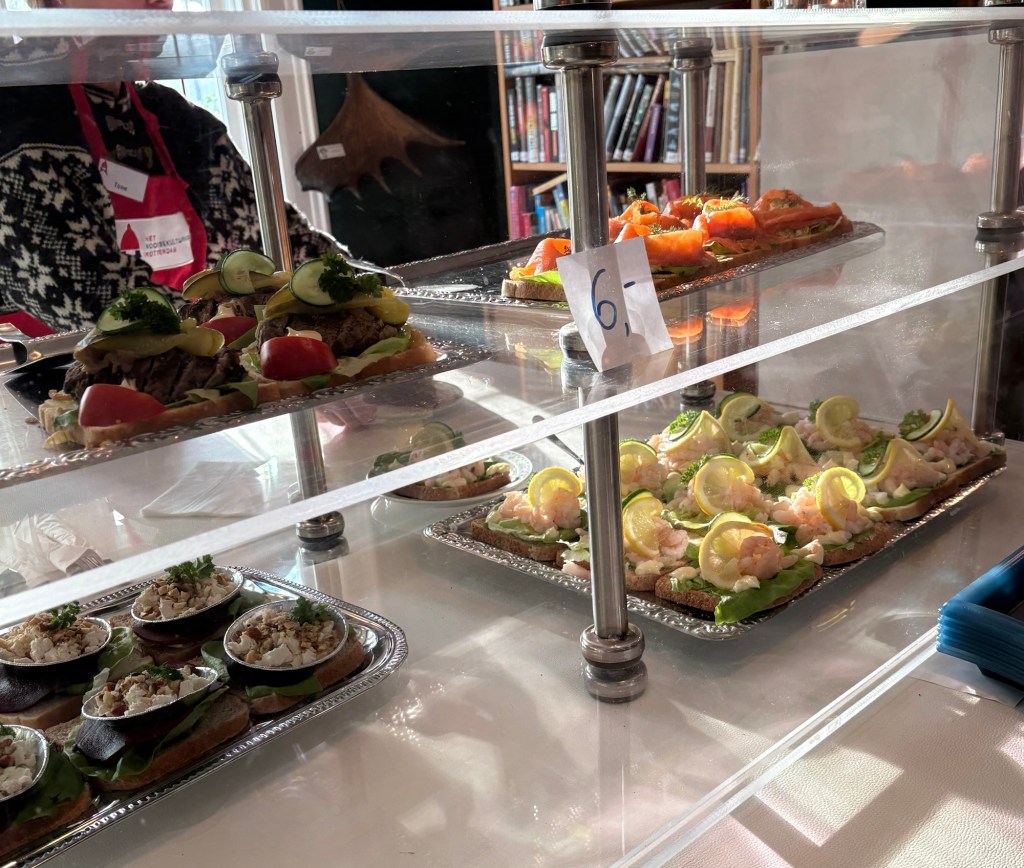
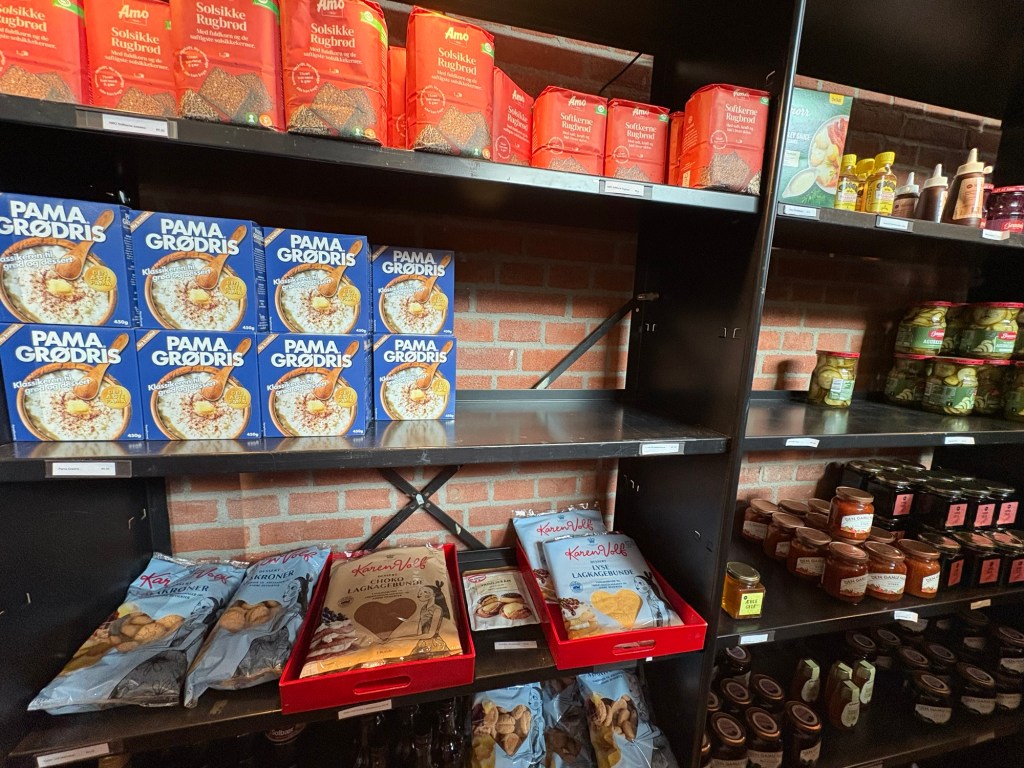
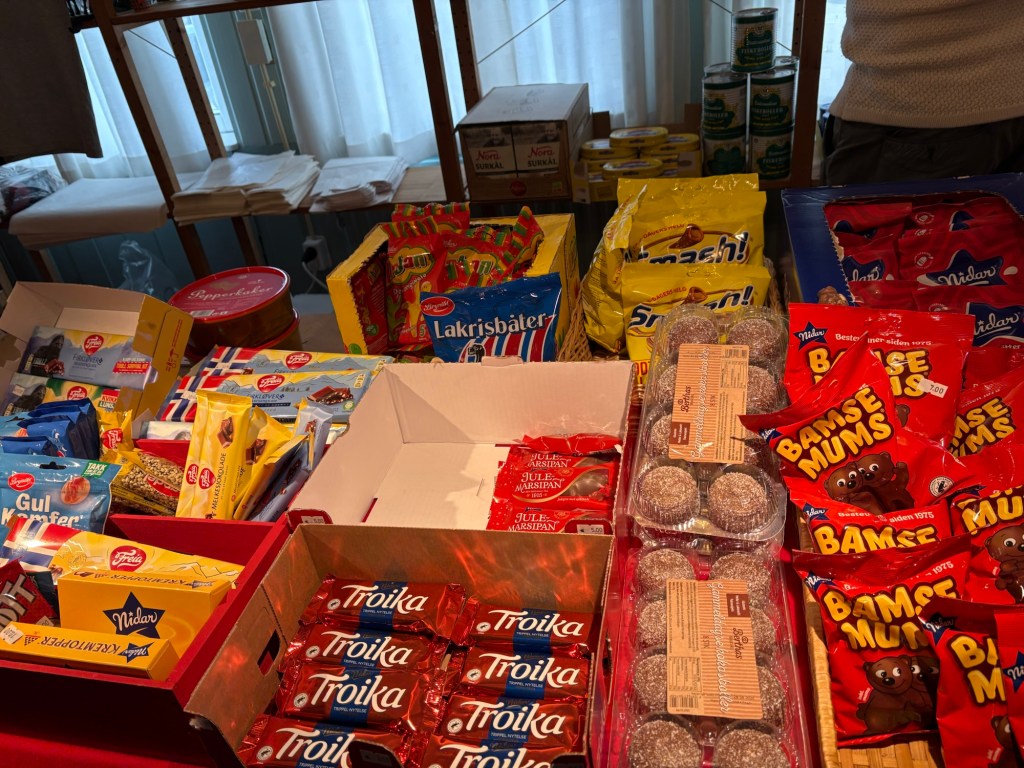
Lots of food products to buy, open sandwiches and cakes were sold in the cafe.
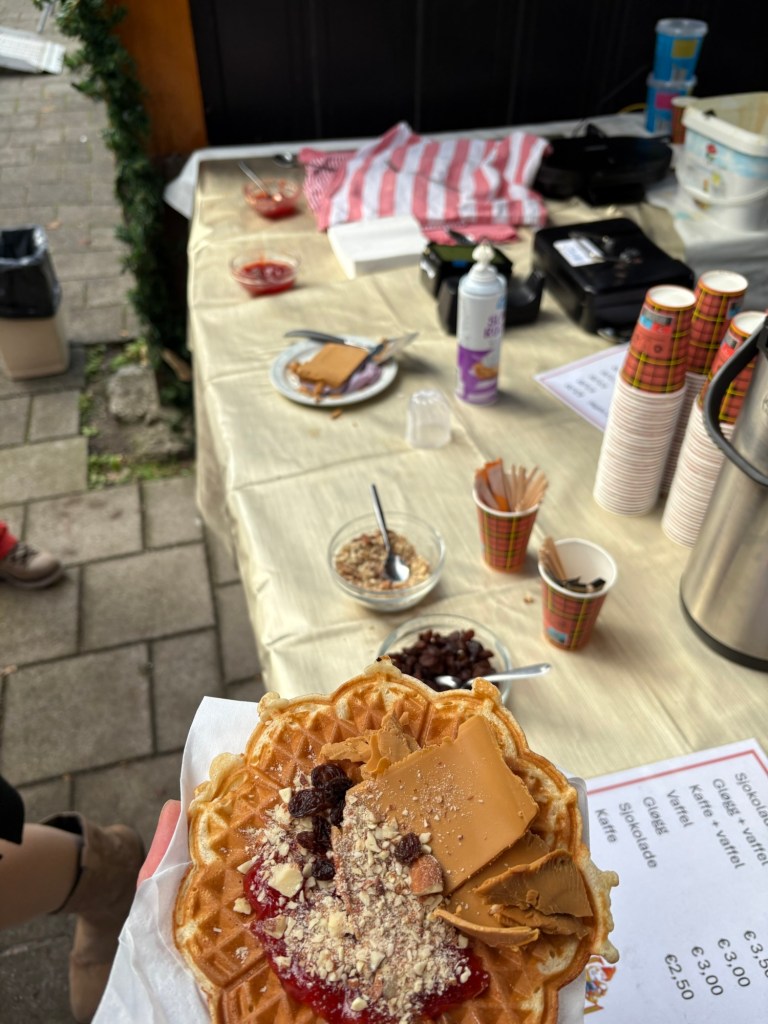
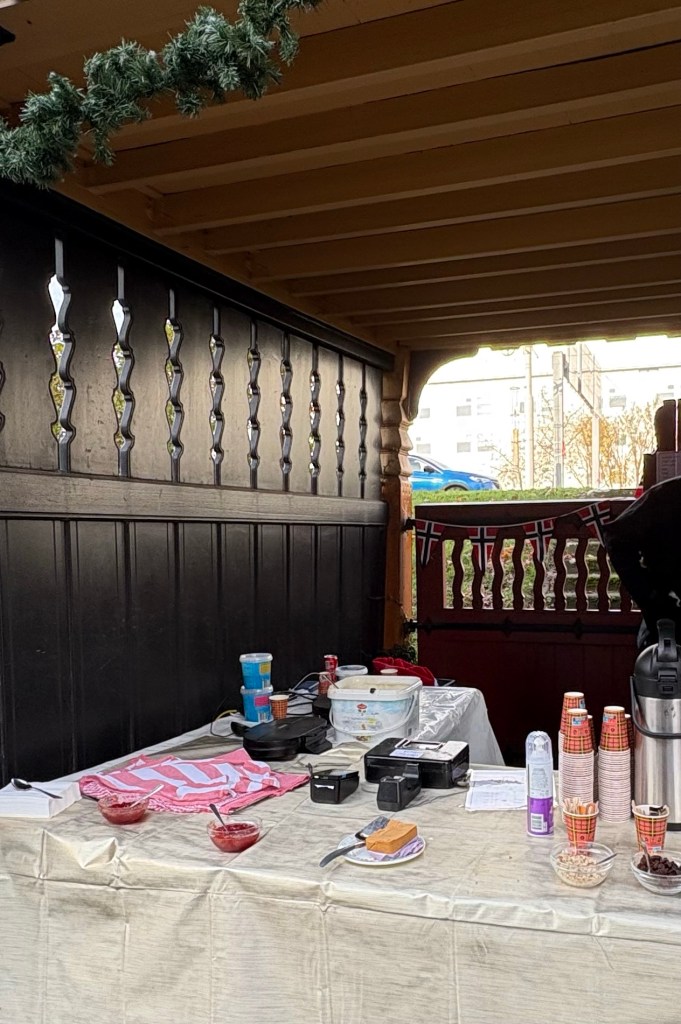
Of course I got a Vaffel !! I bought lefsa bread and risengrøt to try them.
Love that they have thrift books downstairs at the Norwegian Church so I got a book again…

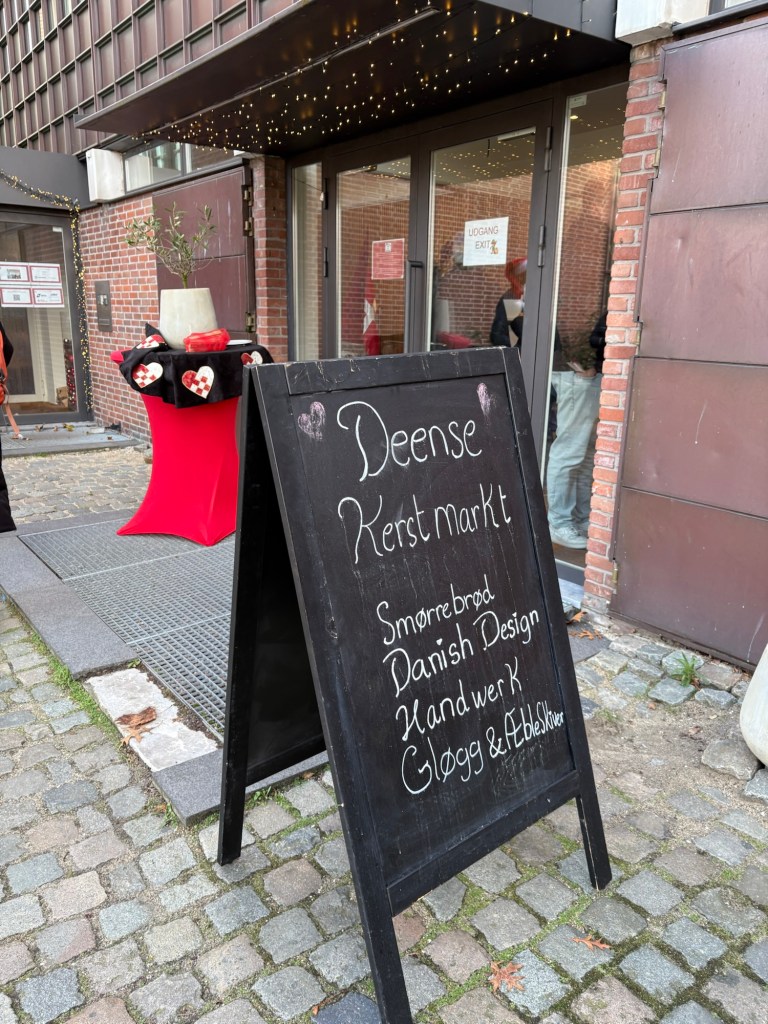
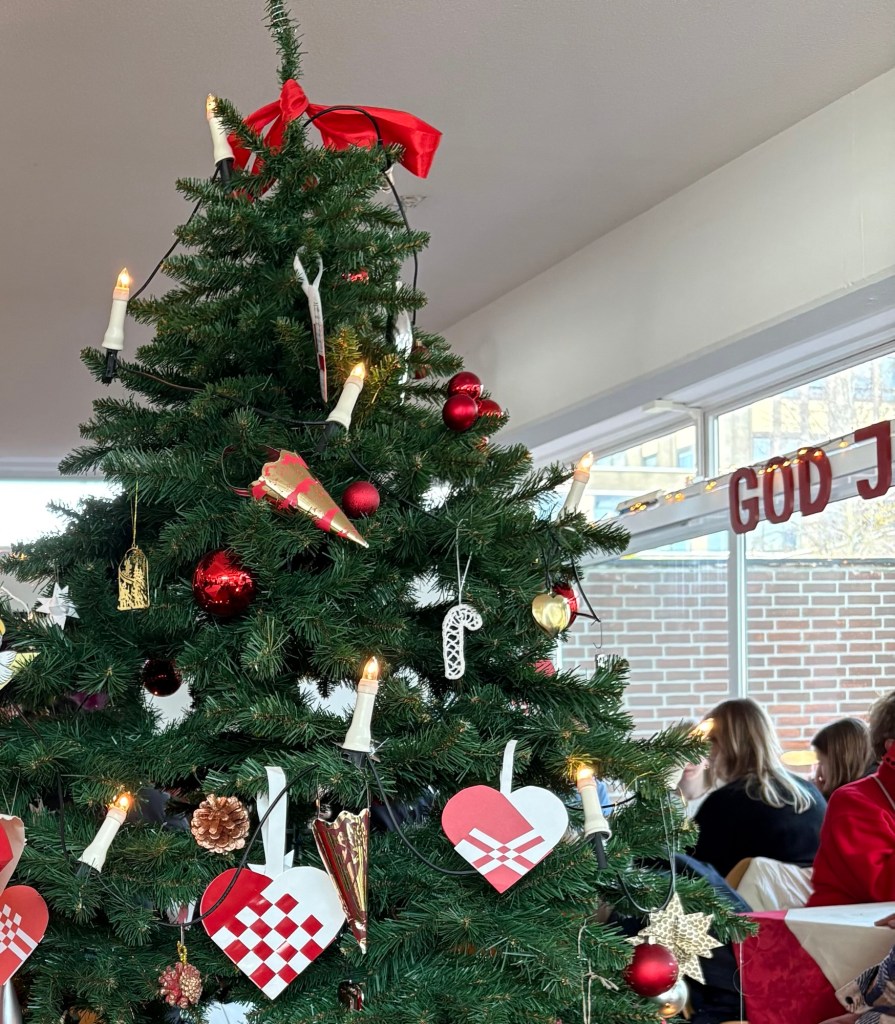
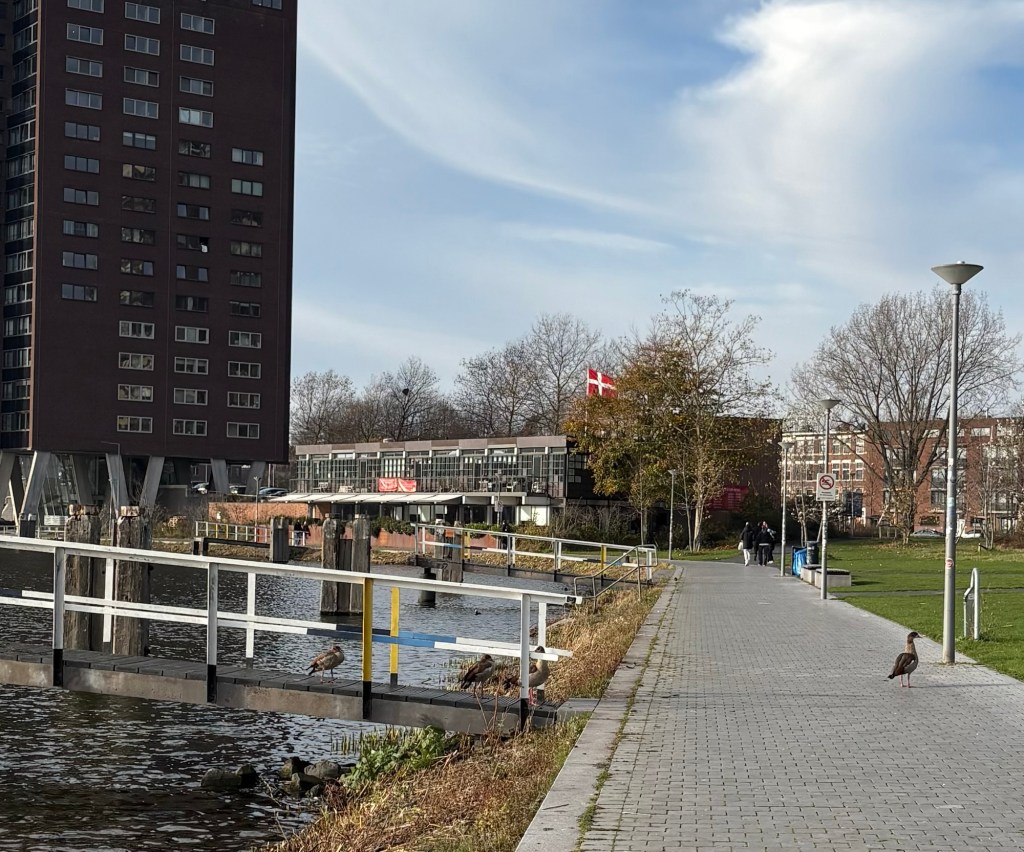
Dansk Sømandskirke / Deense zeemanskerk
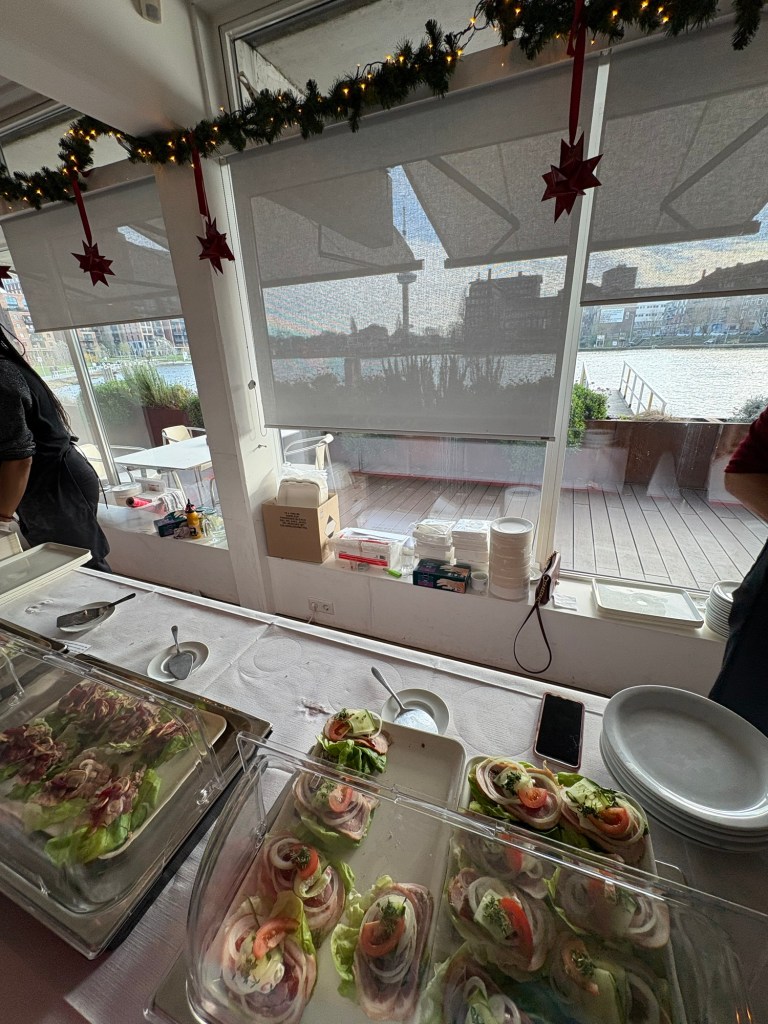
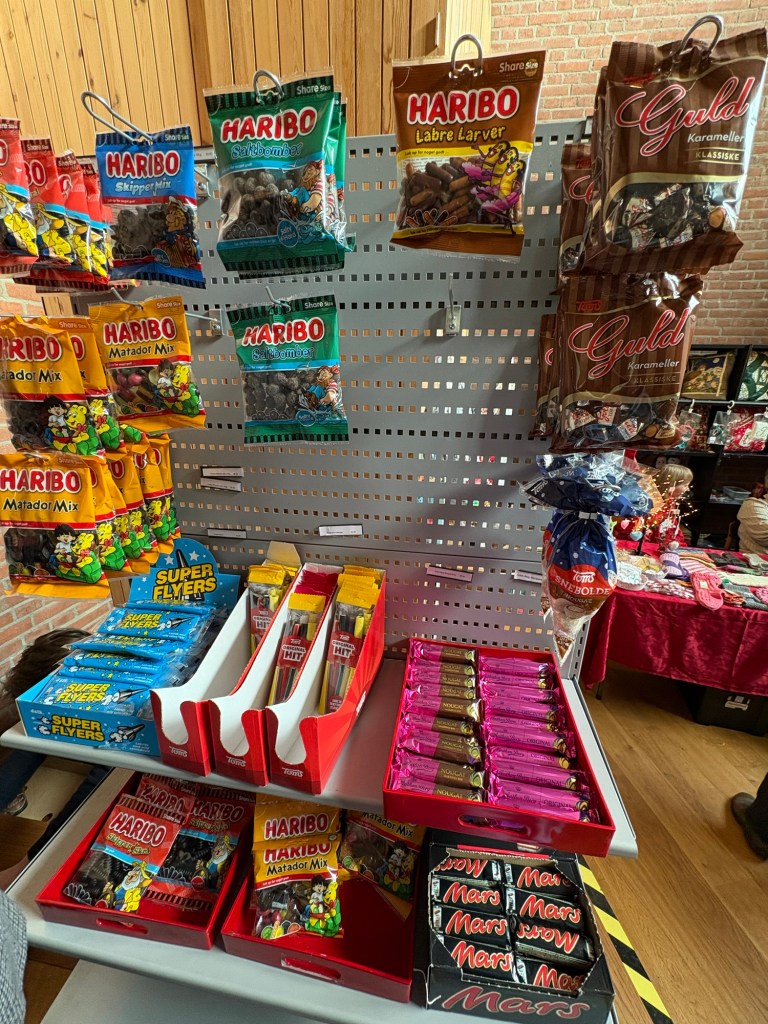
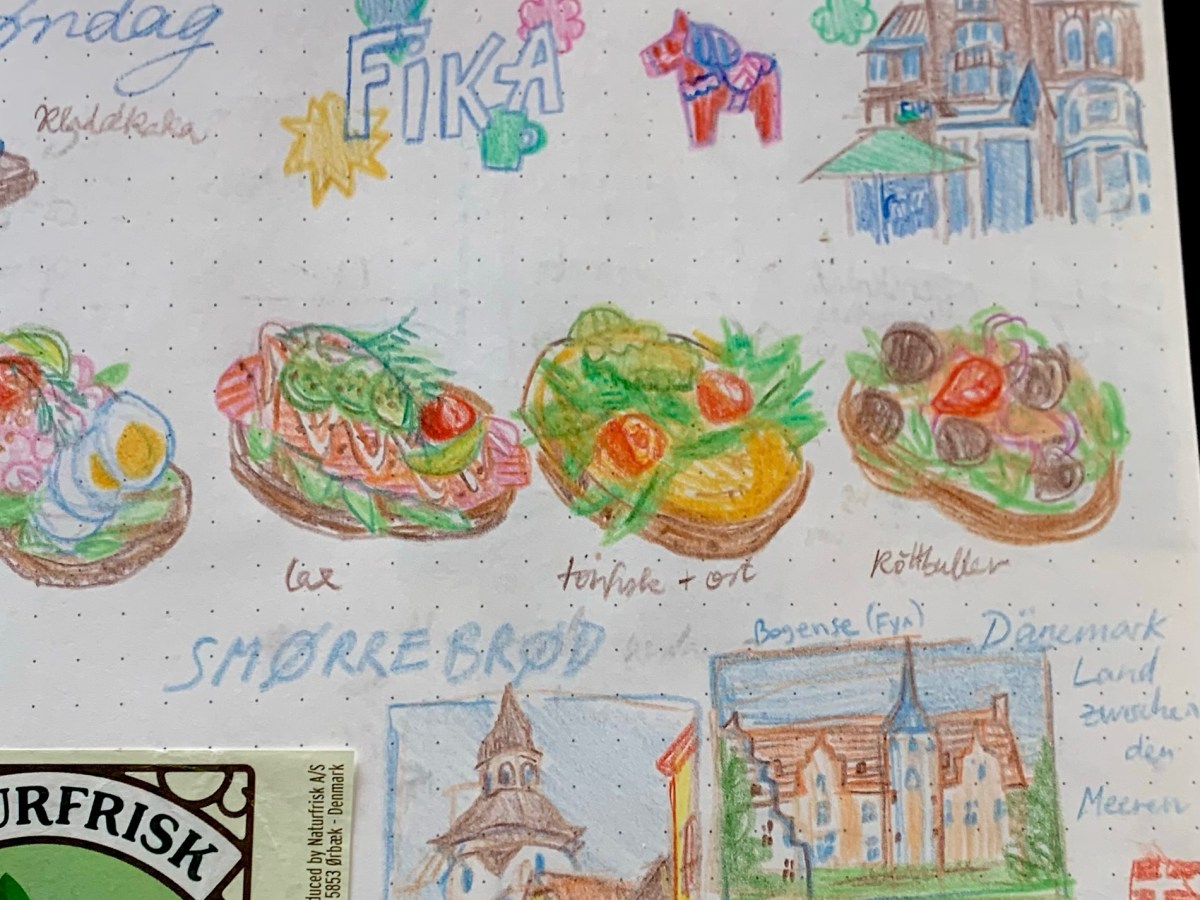
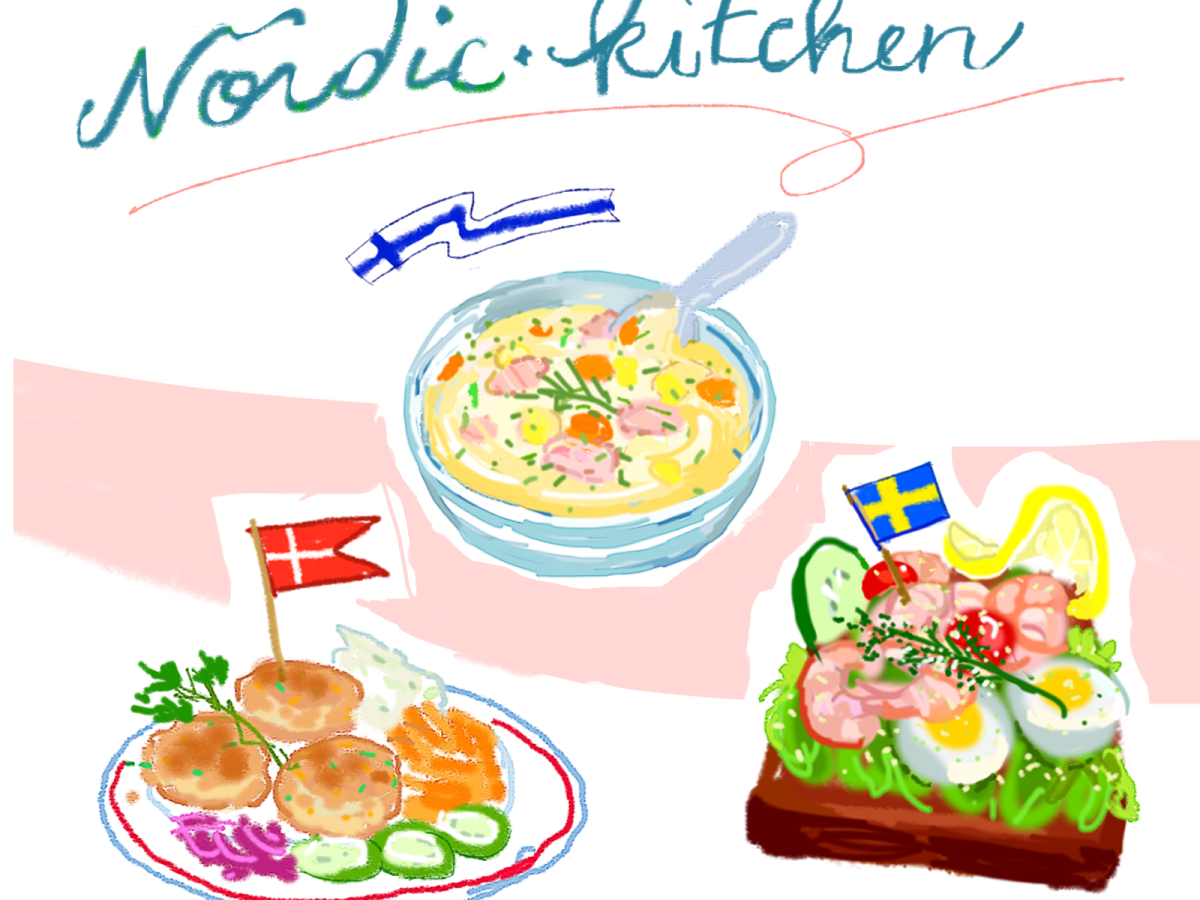
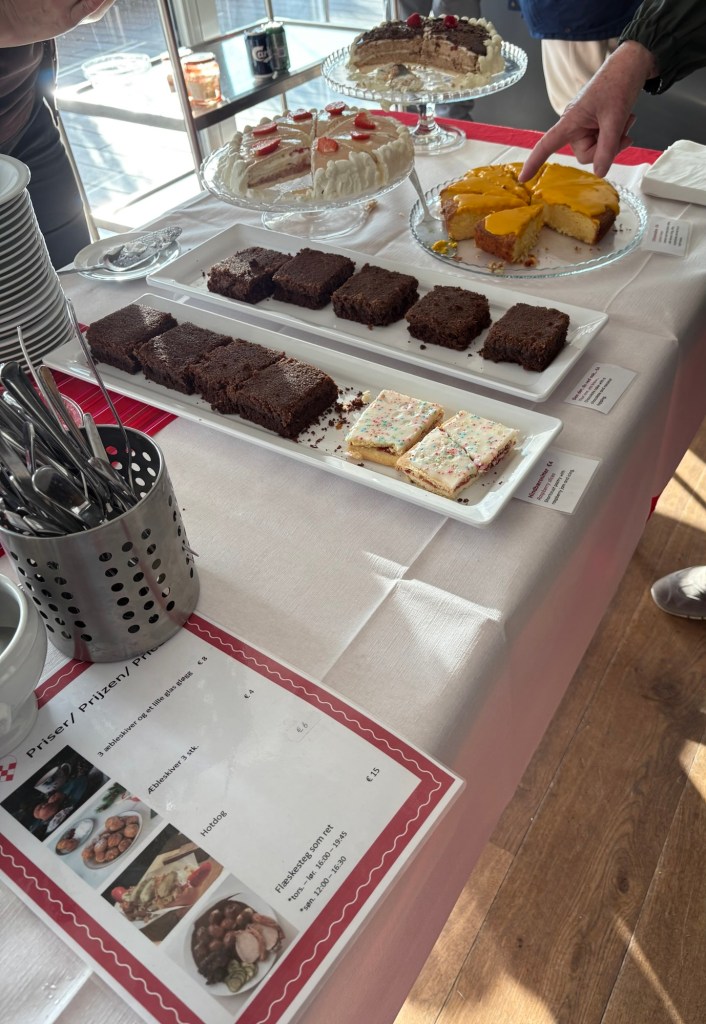
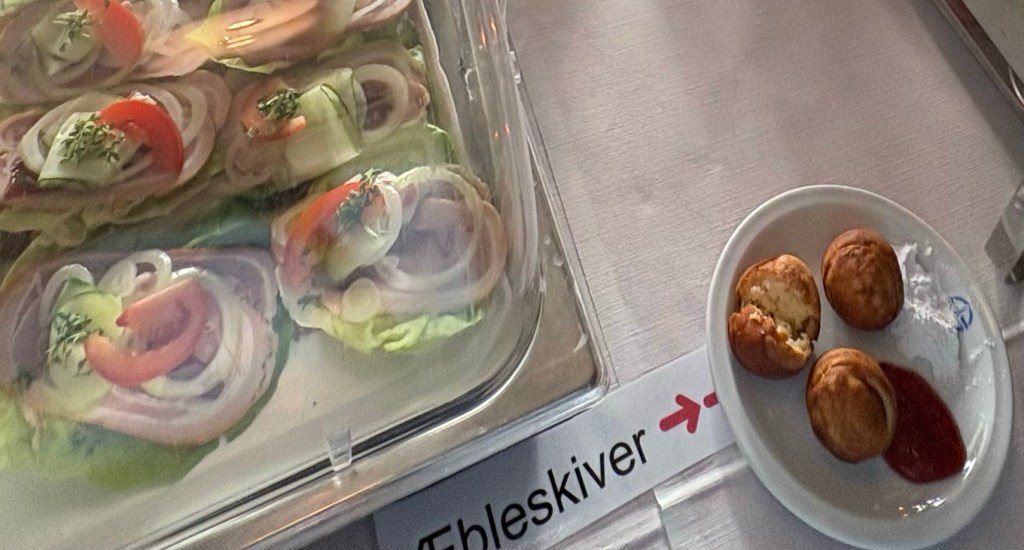
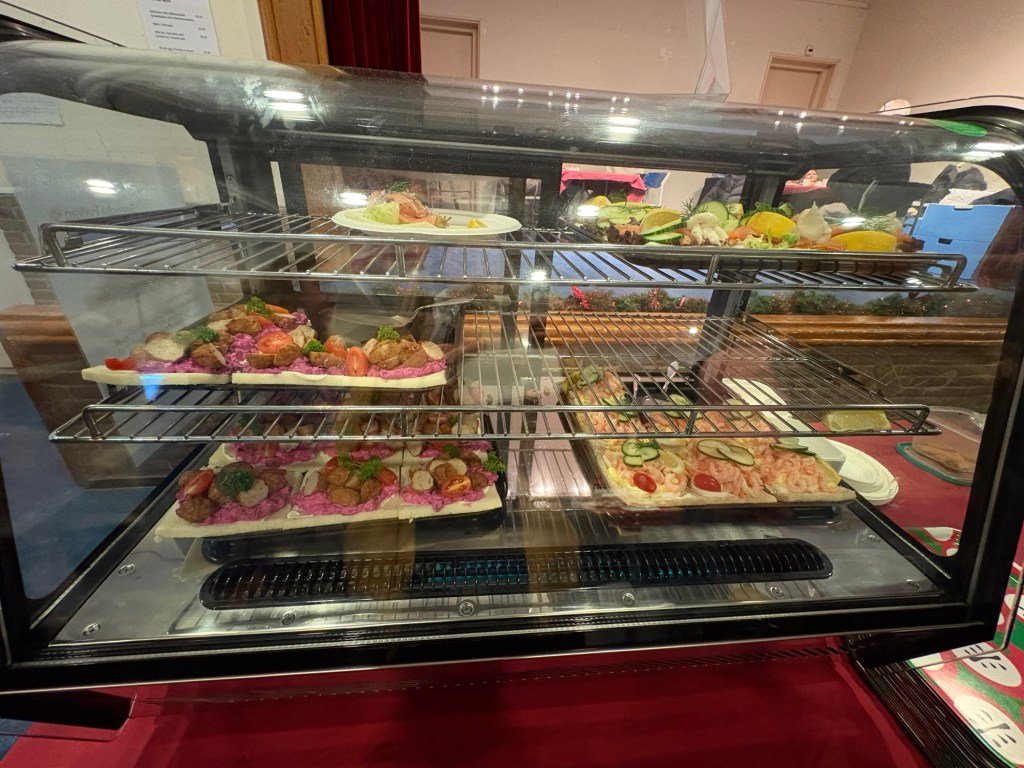
The Danish seamenchurch had several Smørrebrød available for lunch, hotdogs, and then a variety of cakes (hindbærsnitte, citronmåne..). And of course æbleskiver (Christmas mini pancakes, or a variation of poffertjes from a Dutch perspective). You could also order Flæskesteg, the typical Danish Christmas dish, as well!
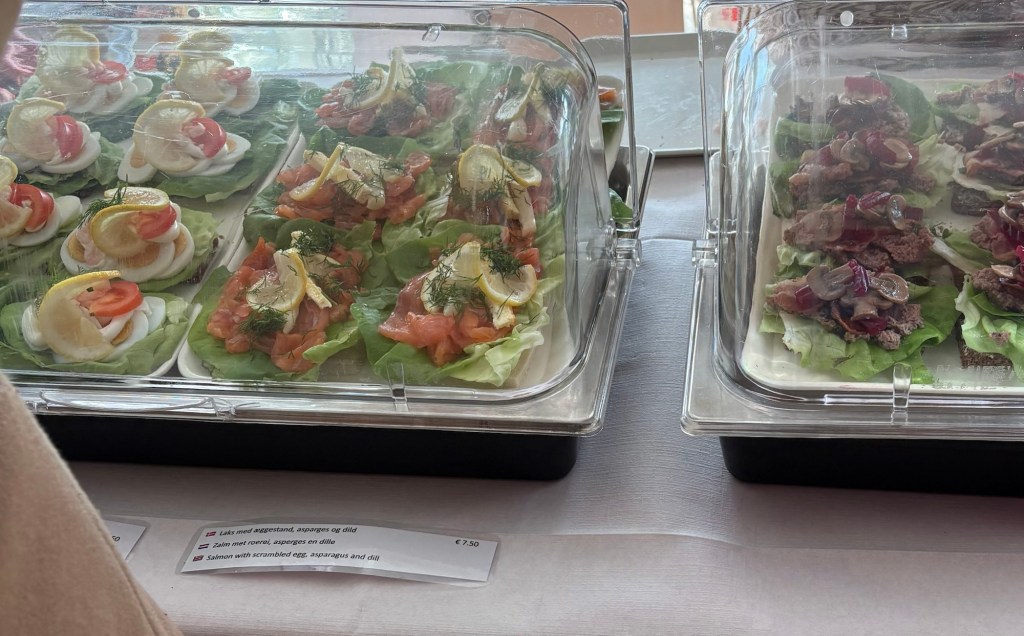
The available smørrebrød were rullepølse (sausage roll), eggs, salmon, leverpostej (pate). I ate a smørrebrød with leverpostej and mushrooms here, and æbleskiver
I got liquorice… they had a lot of candy here, nougat sweets as well
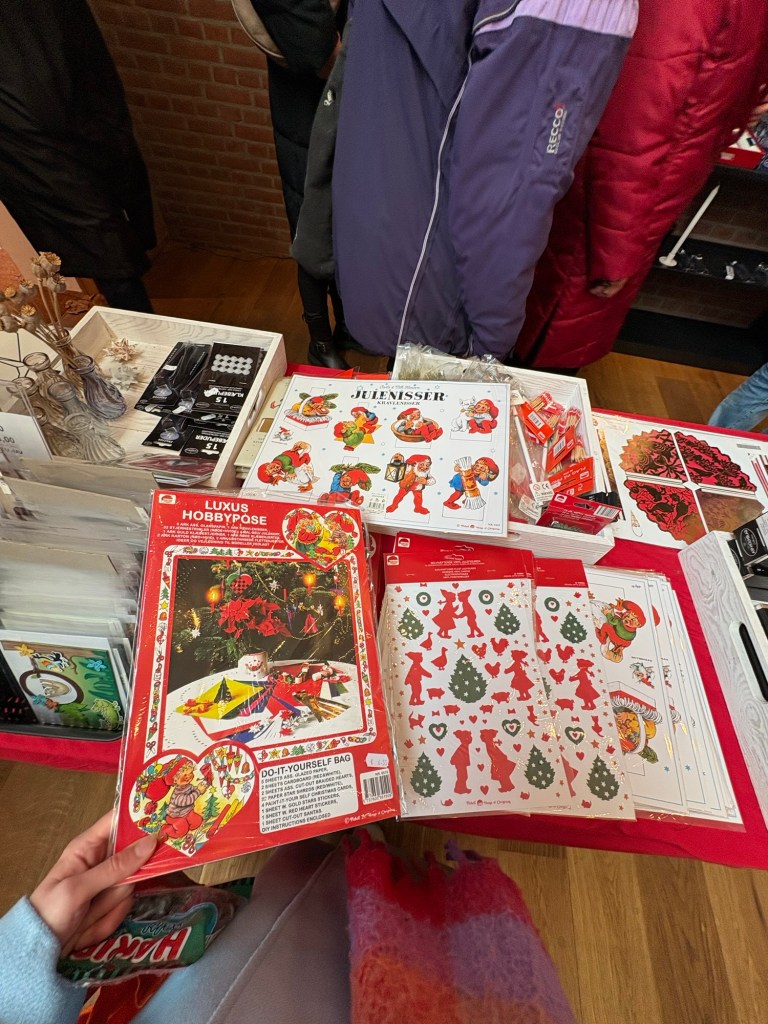
Between a Christmas market and the other, we also passed by Søstrene Grene, and I got havtorn jam, and Danish-brand date snacks.

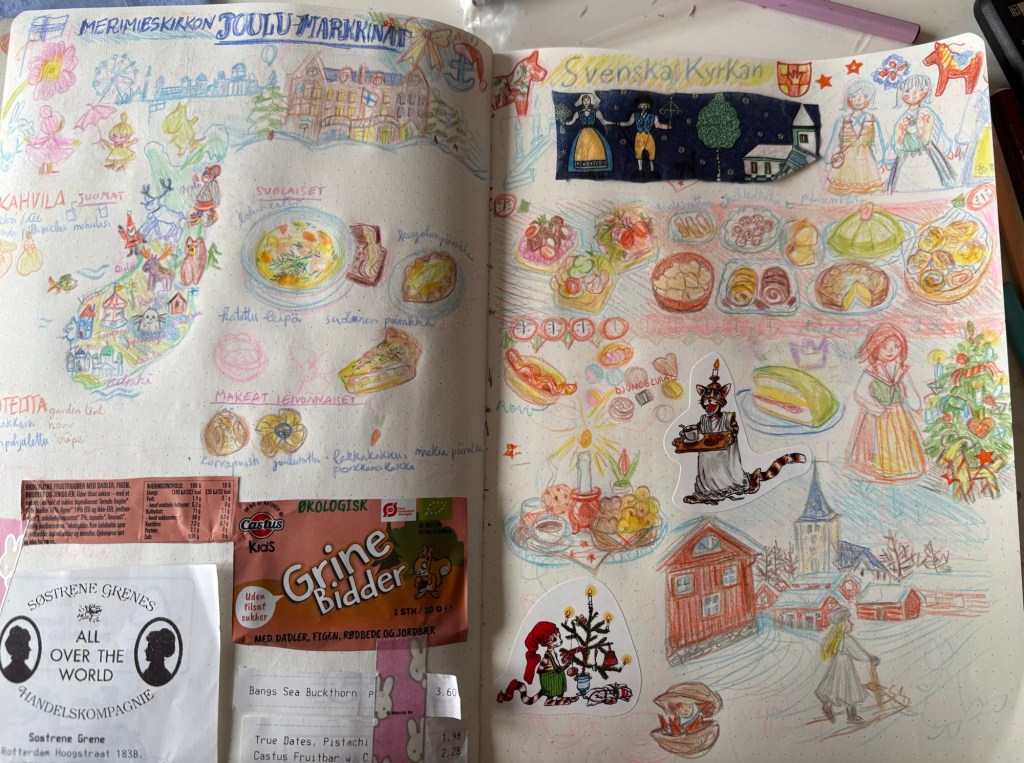
Suomen Merimieskirkko – Finse zeemanskerk/ Het Finse Huis

As it was on the same day as the Danish and Norwegian one, I could not skip the Finnish Christmas market I had been to last year too.
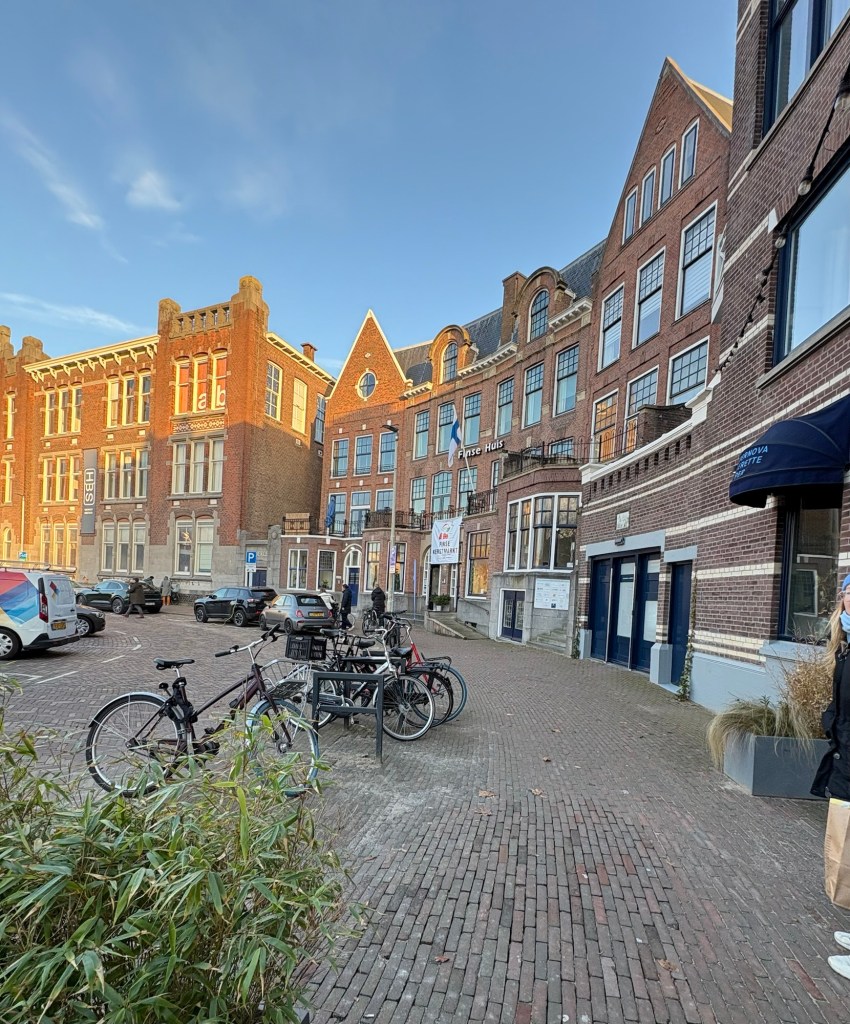
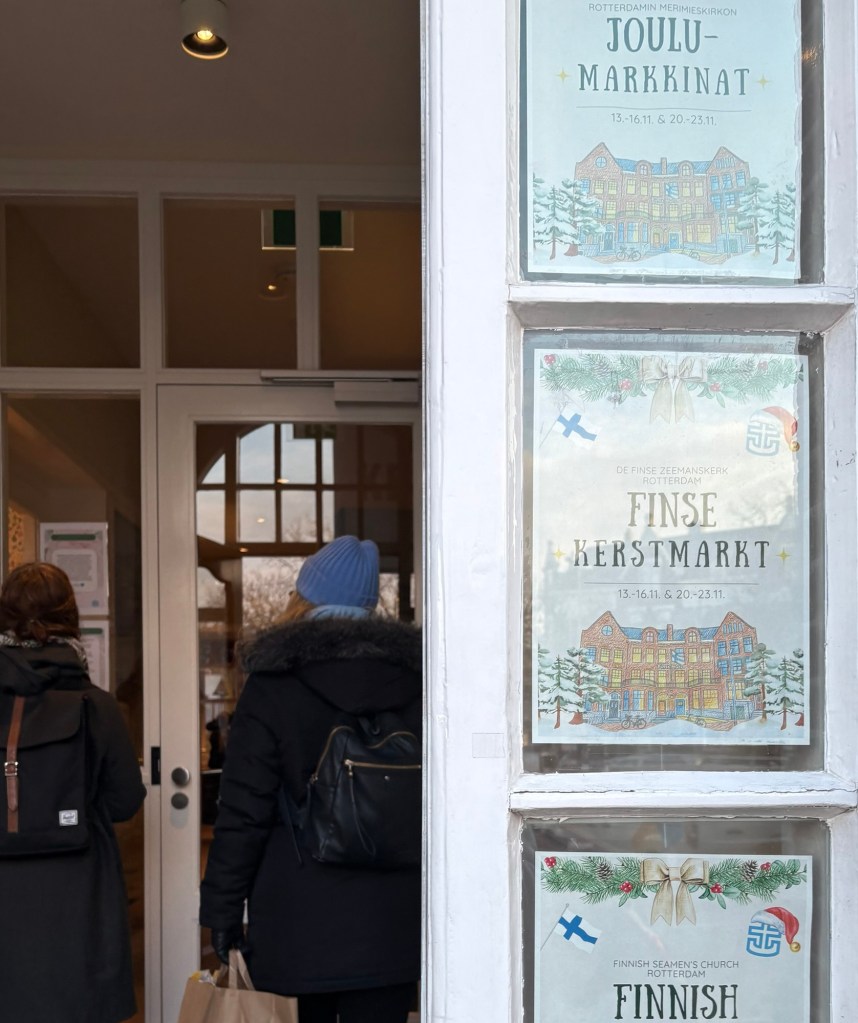
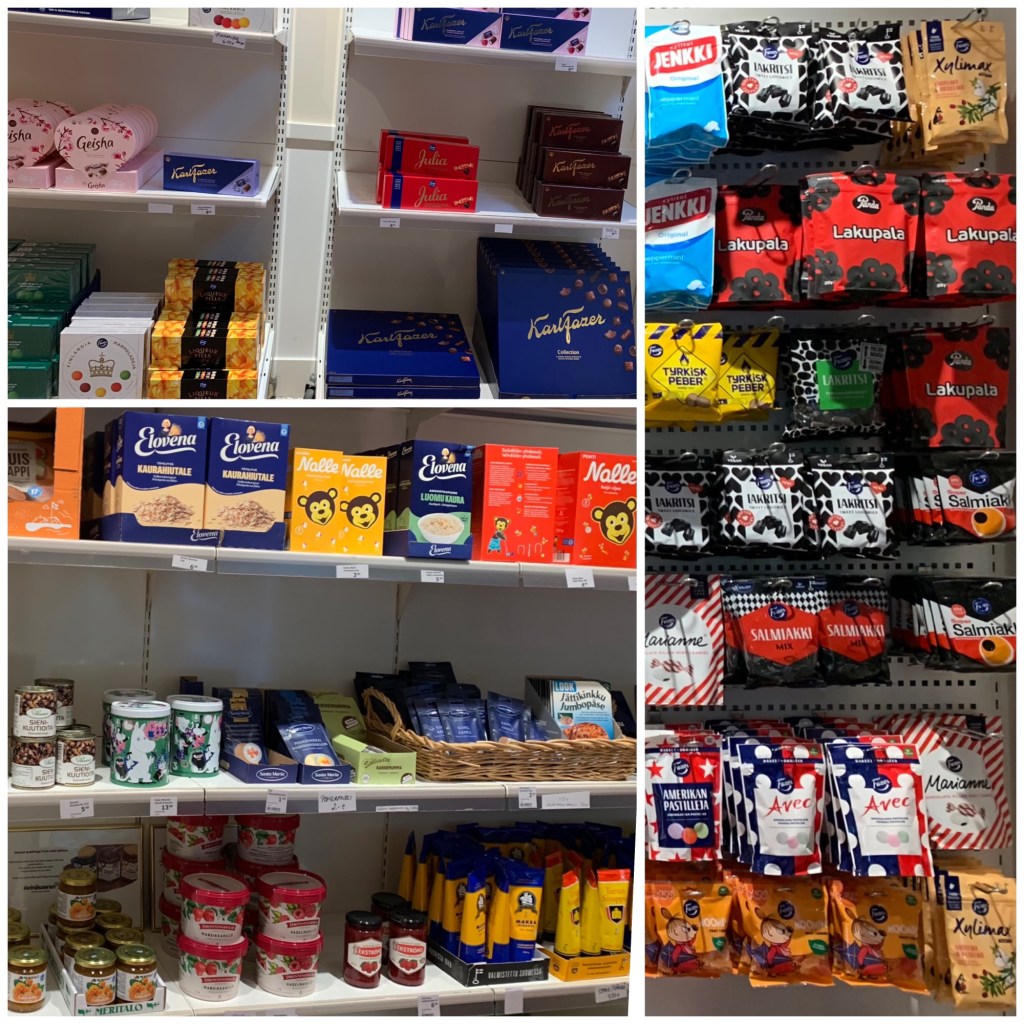
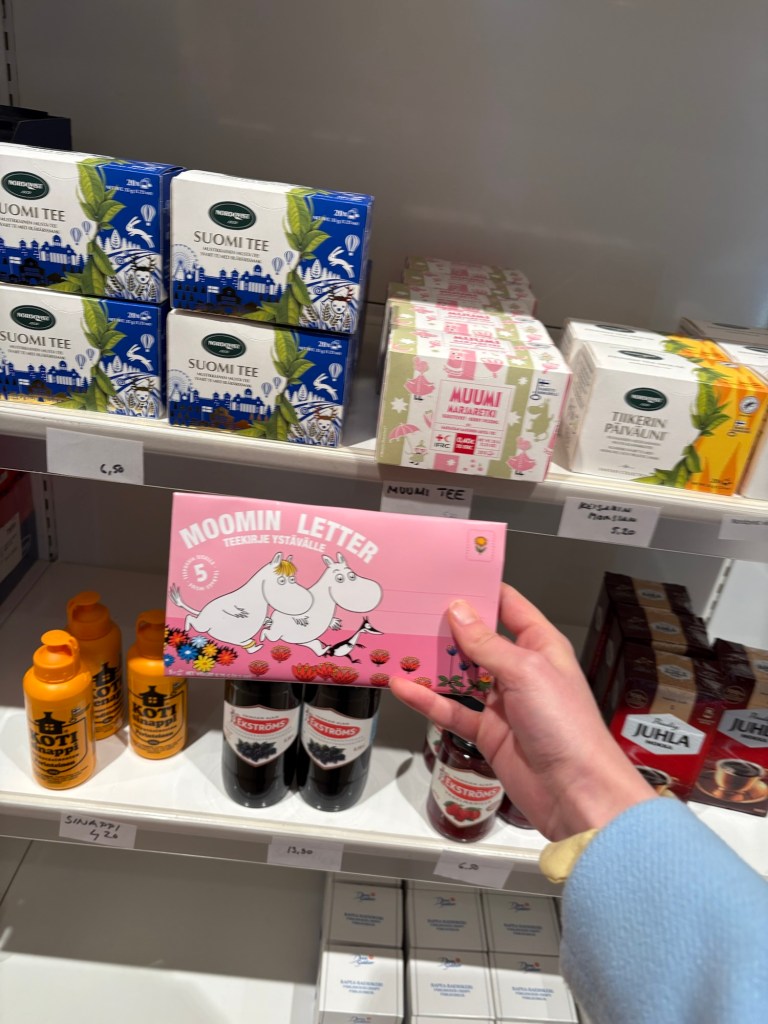
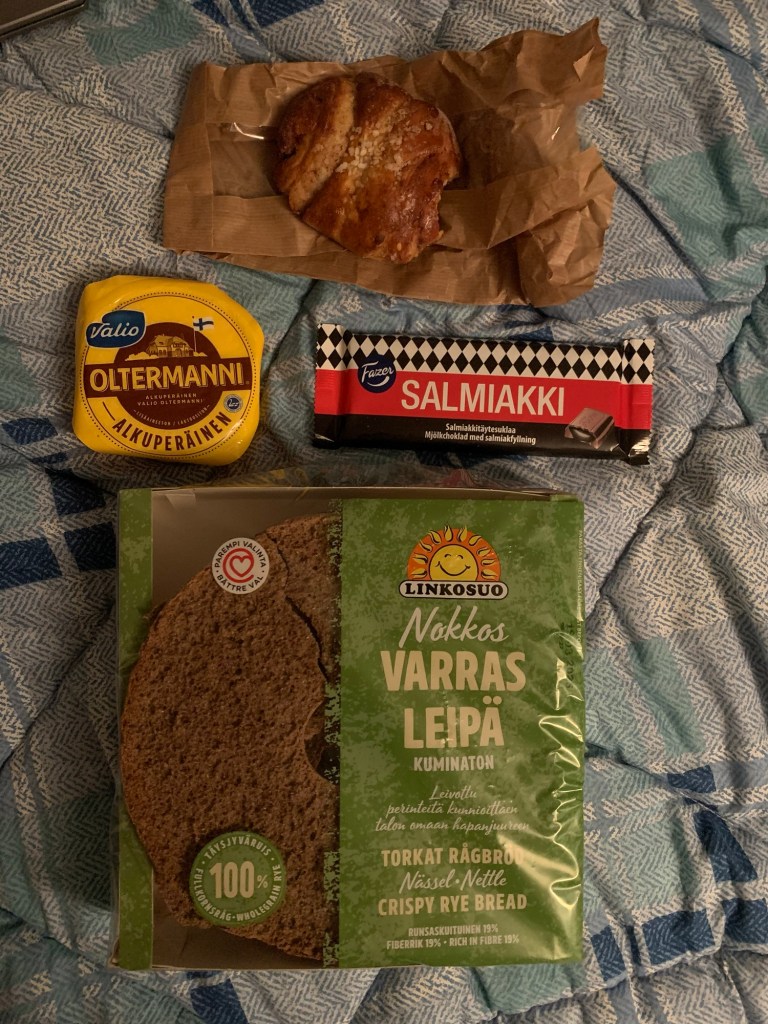
Finnish products as Marimekko, food and frozen food, cheeses, bread and Moomin branded fazer candy and chocolate were for sale
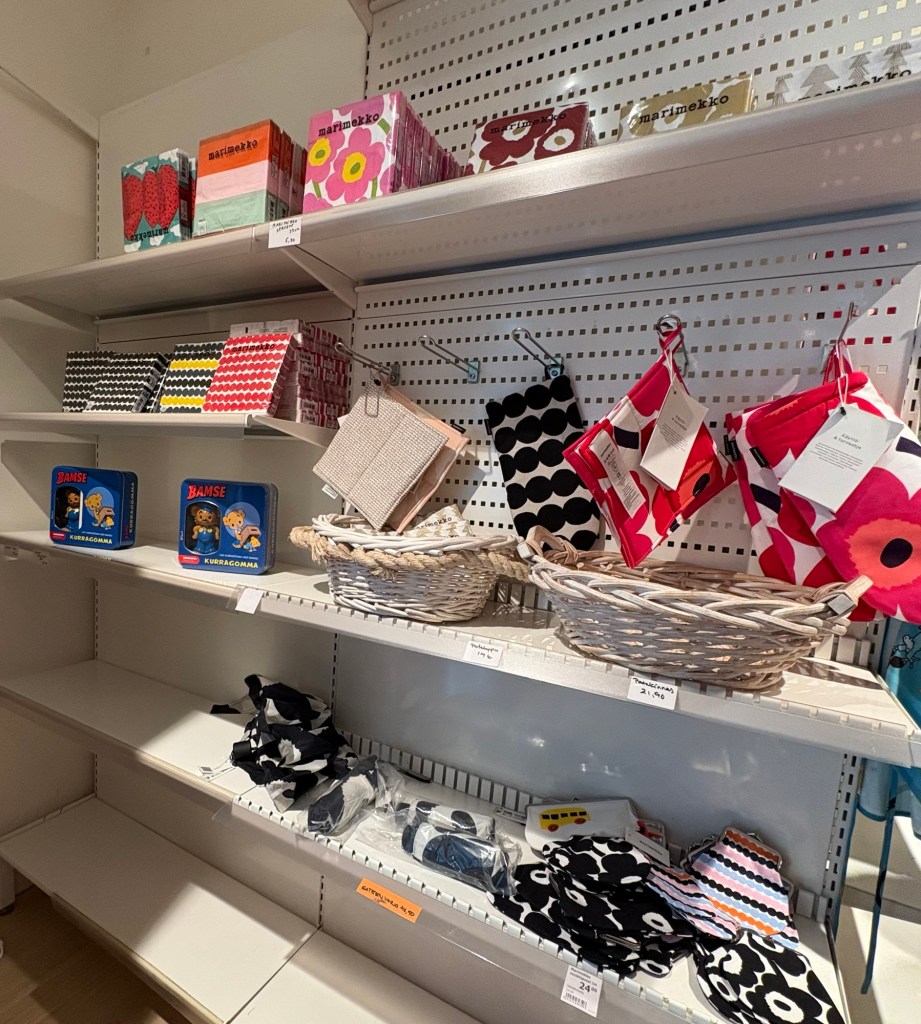
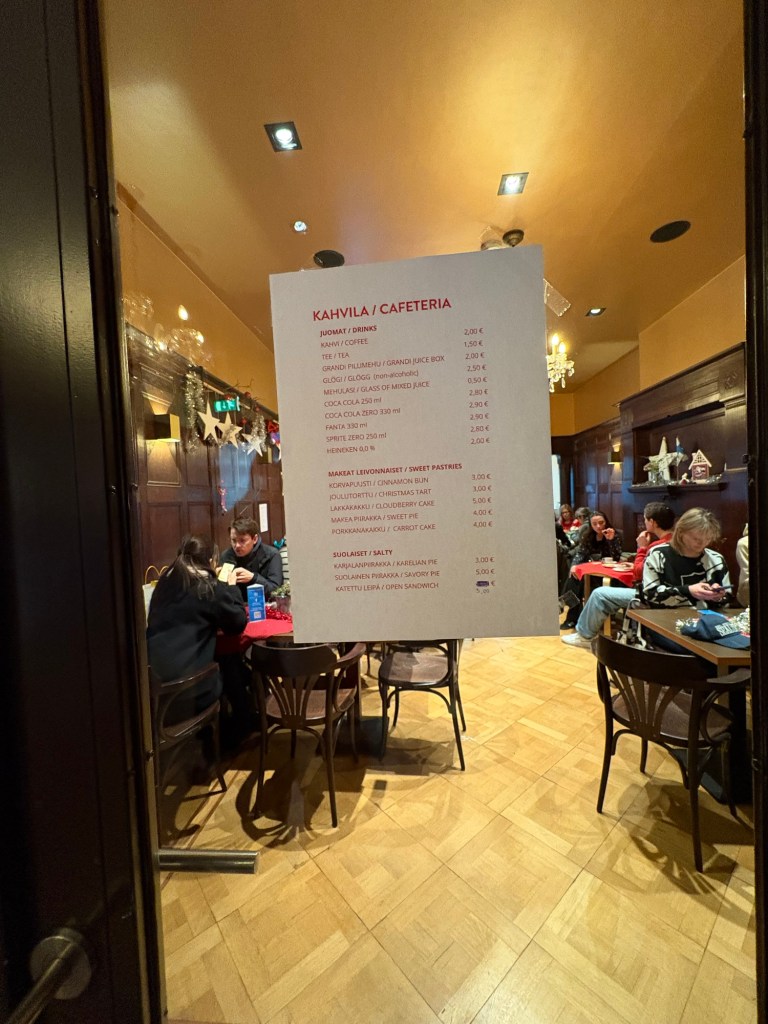
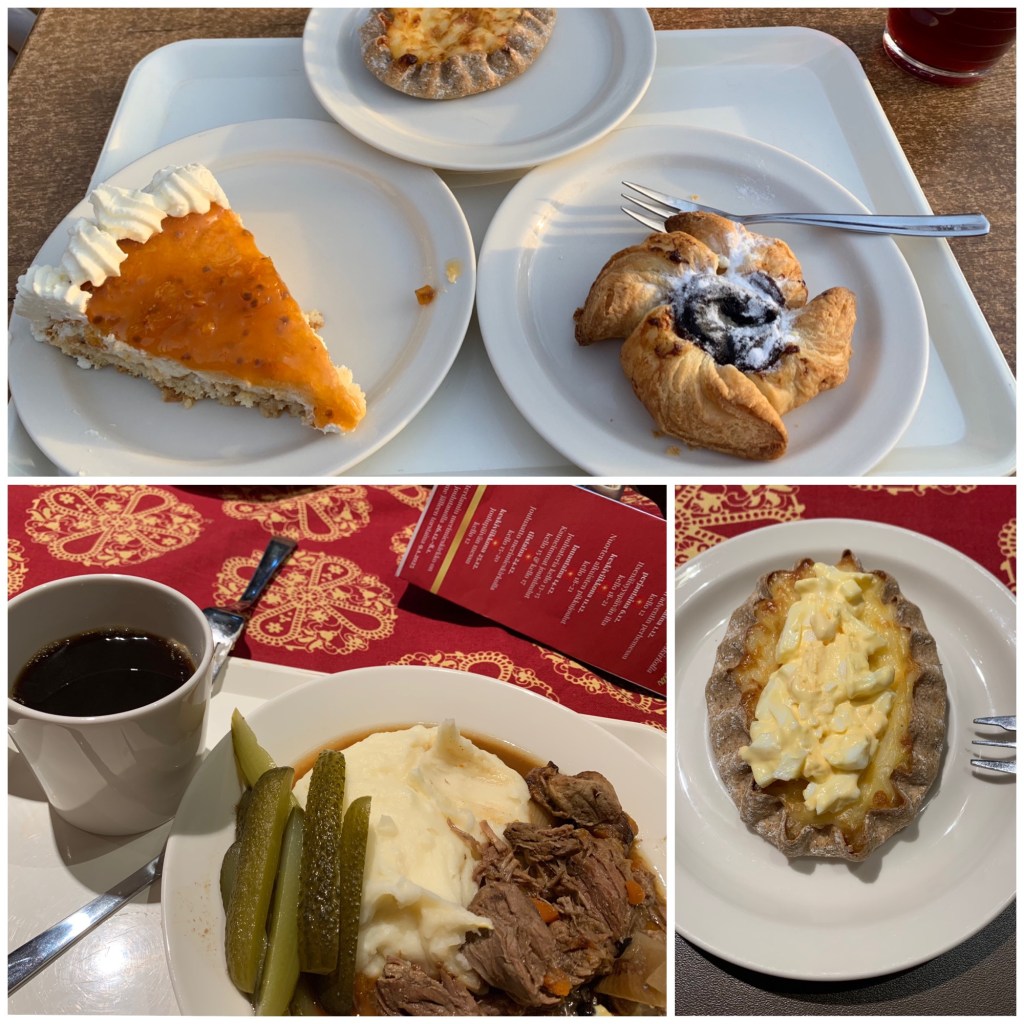
I was happy to enjoy some Finnish cuisine again at the cafe! I wanted to try the reindeer stew, but it was on Sunday…Outside there was a tent where you could have a Finnish pancake and hotdogs, but that too might be for next time…
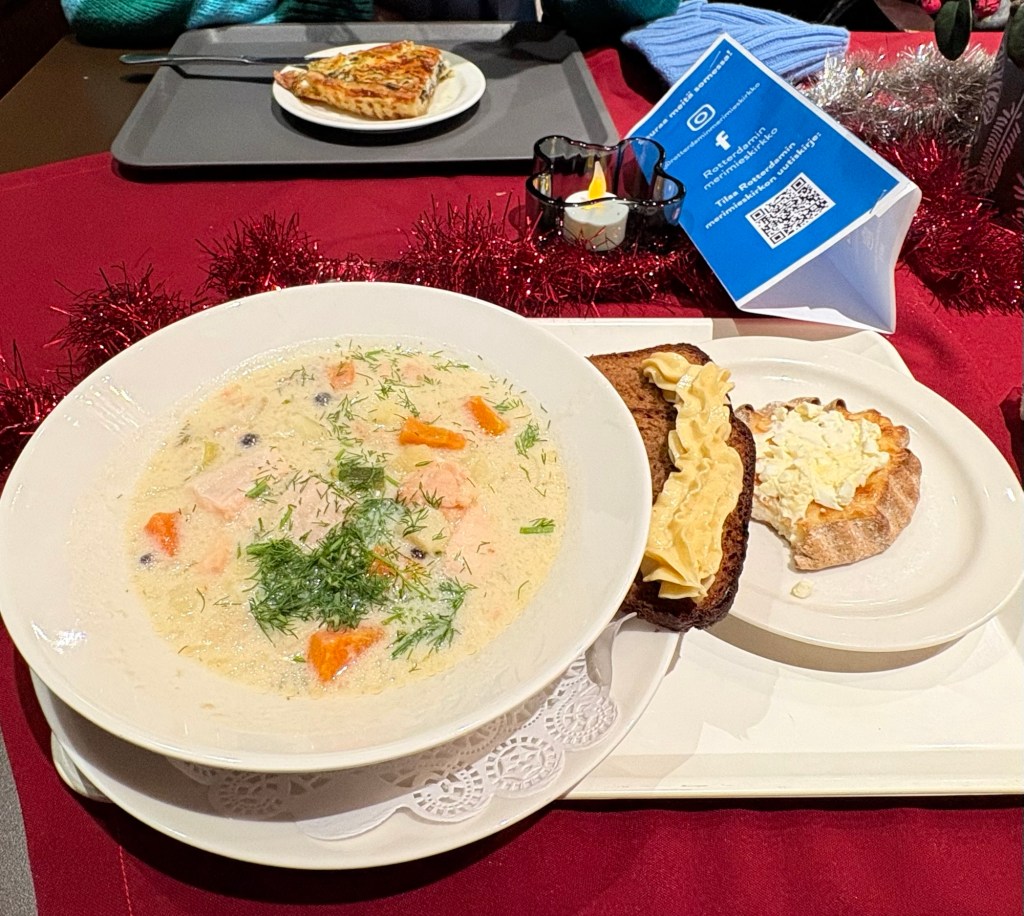
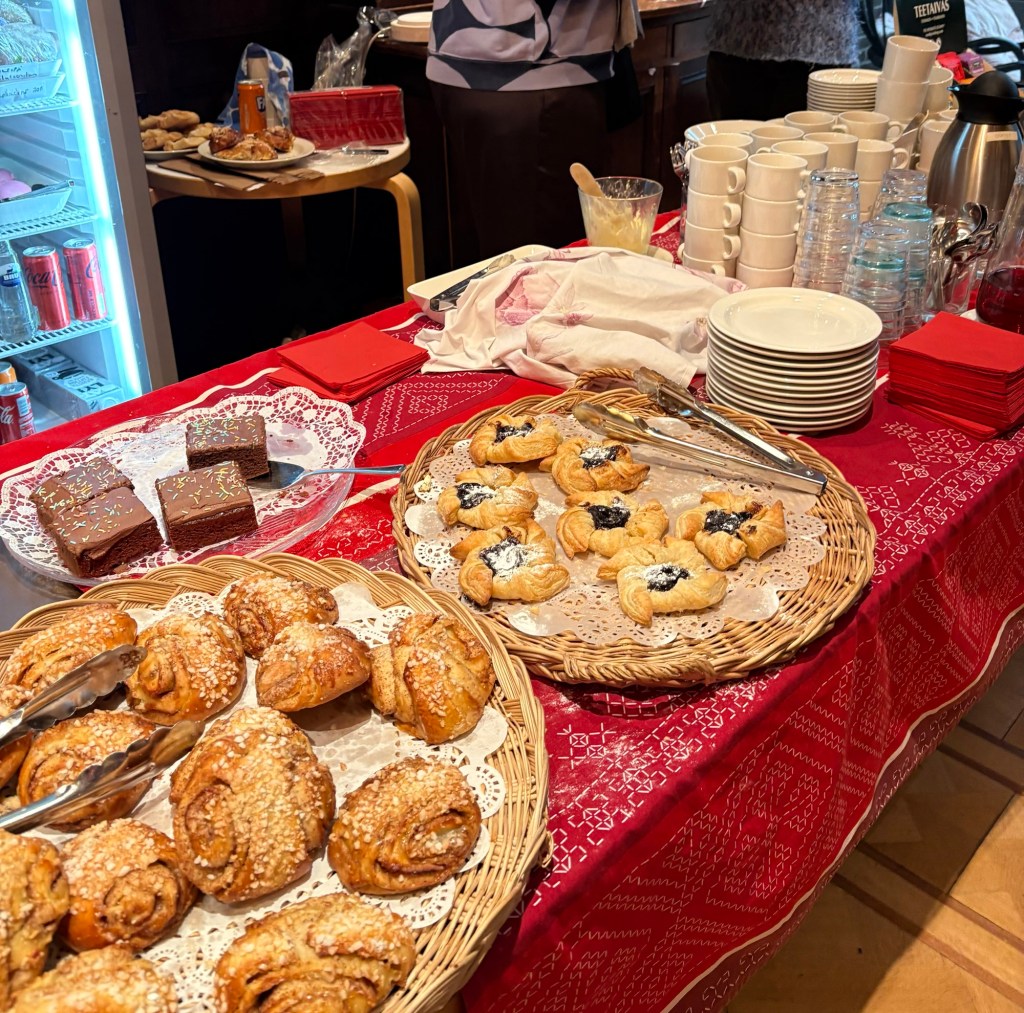
I did take a korvapuusti, joulutorttu and salmon savory pie to bring home. Third picture is from last year.

Swedish Church – Svenska Kyrkan (@ Scottish church)

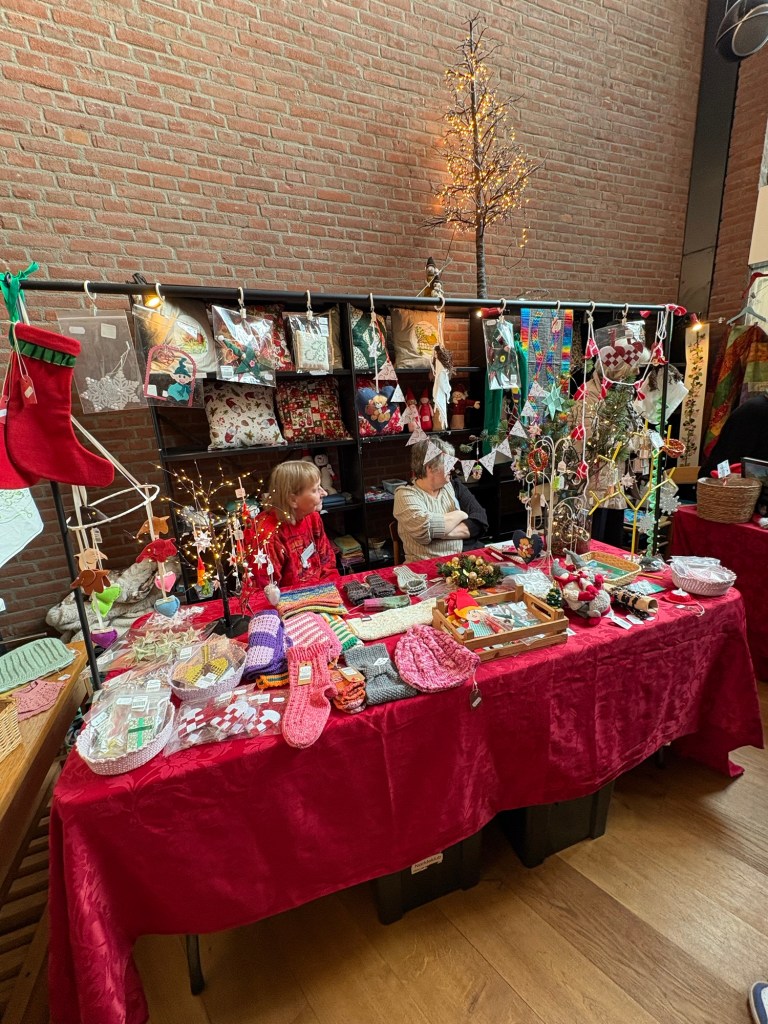
The Swedish Christmas market was on the weekend after the other ones (do not think I would have made it to a fourth one on the same day anyway) and on Friday-Saturday only. This due to the services of the Scottish church the market was hosted at – apparently there are no Swedish seamen anymore in Rotterdam so the Swedish seamen church closed years ago. But the Christmas market tradition has continued!
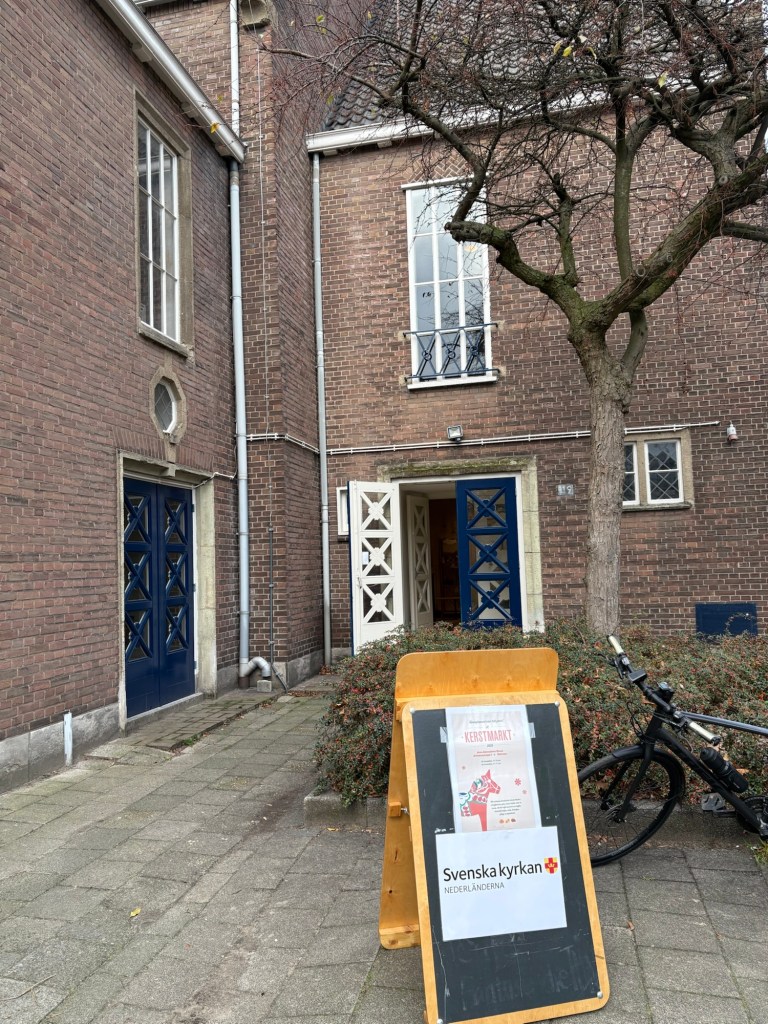
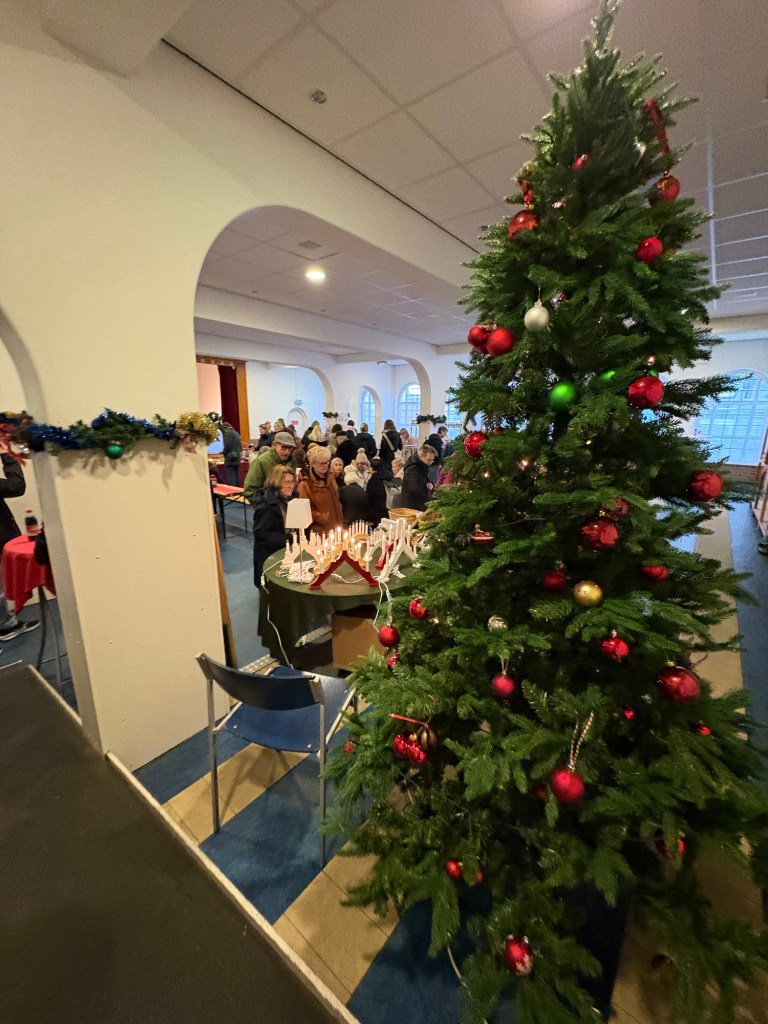
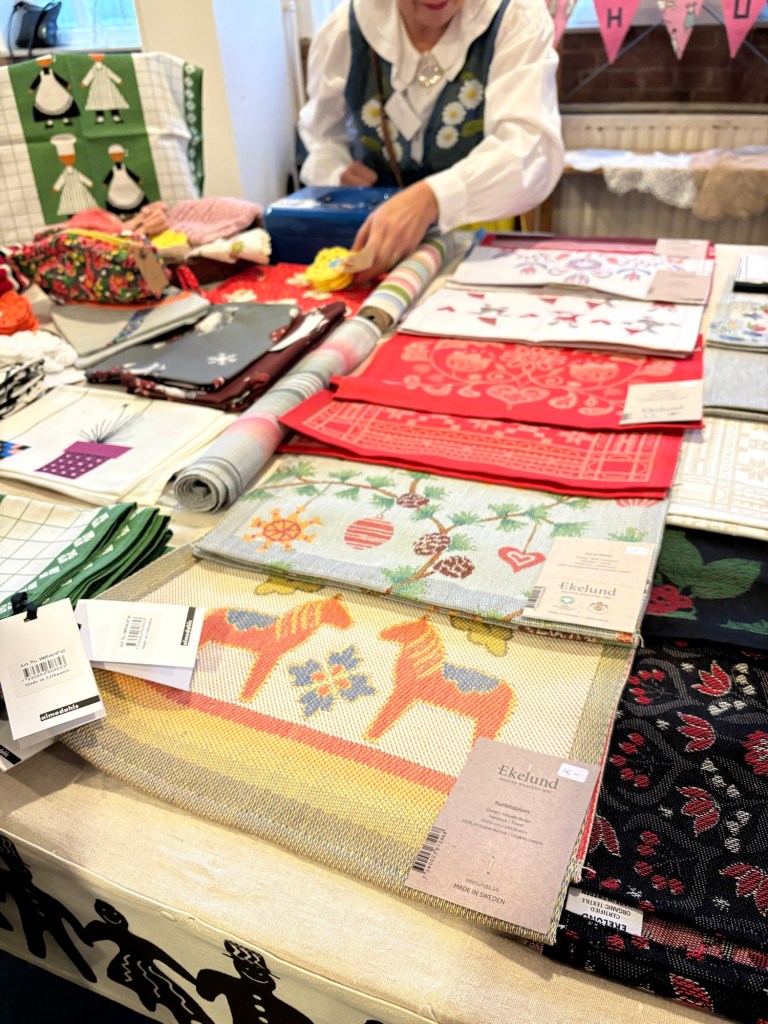
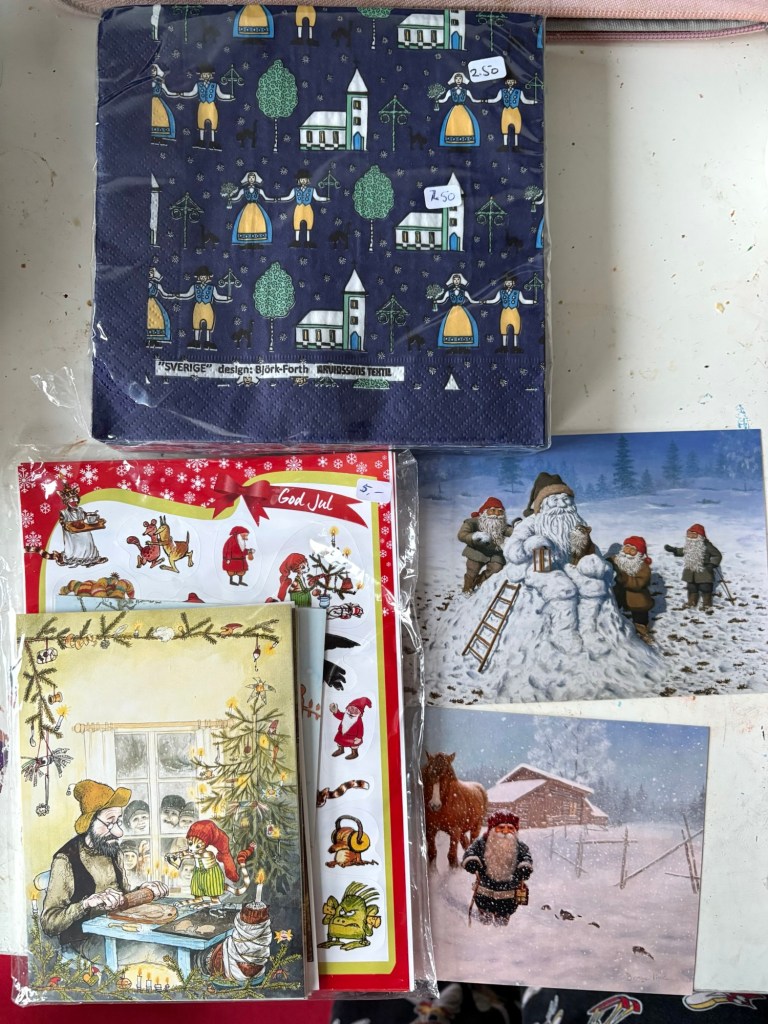
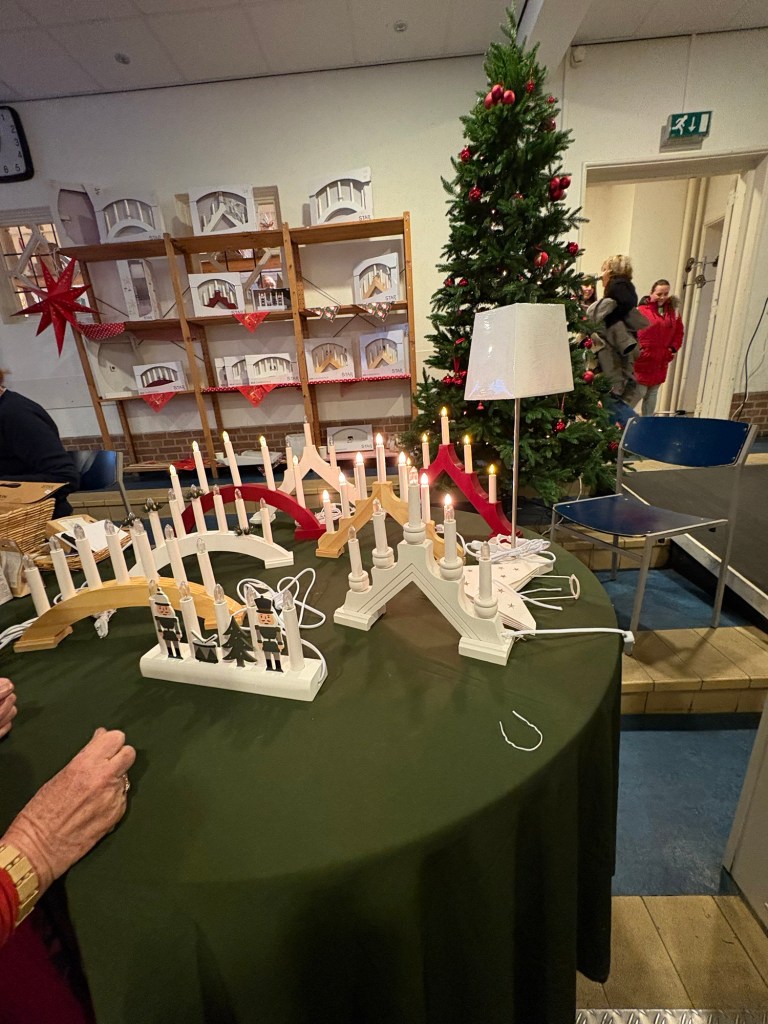
As the other Nordic markets, food products and Christmas objects were being sold – among other advent candle holders!
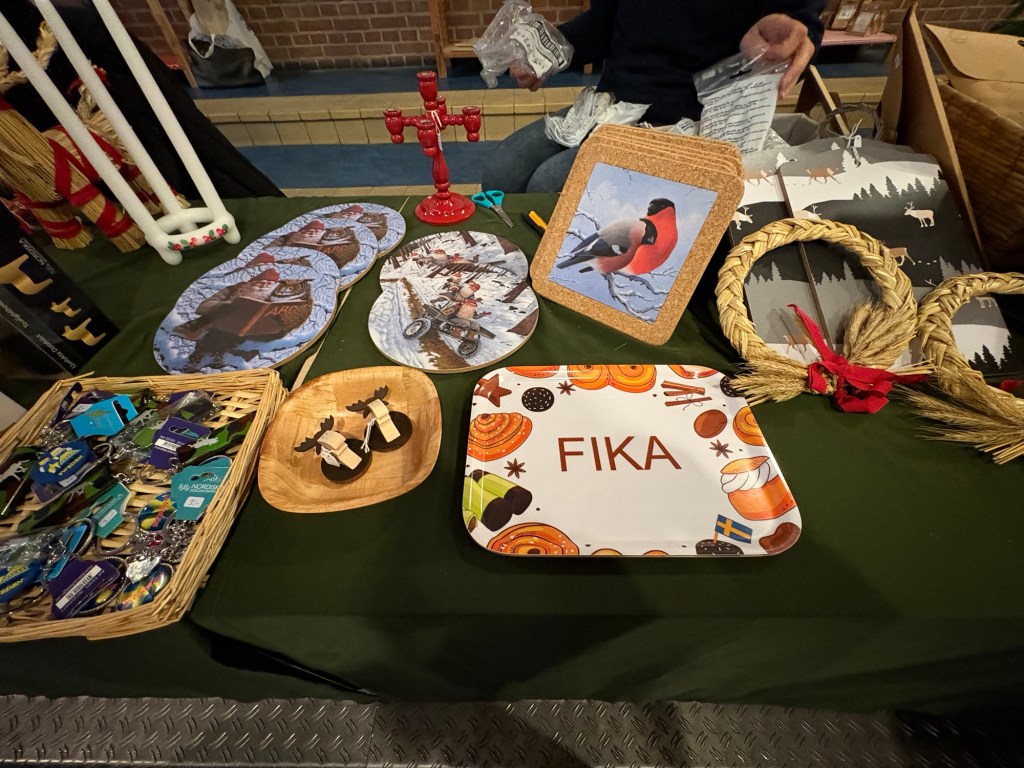
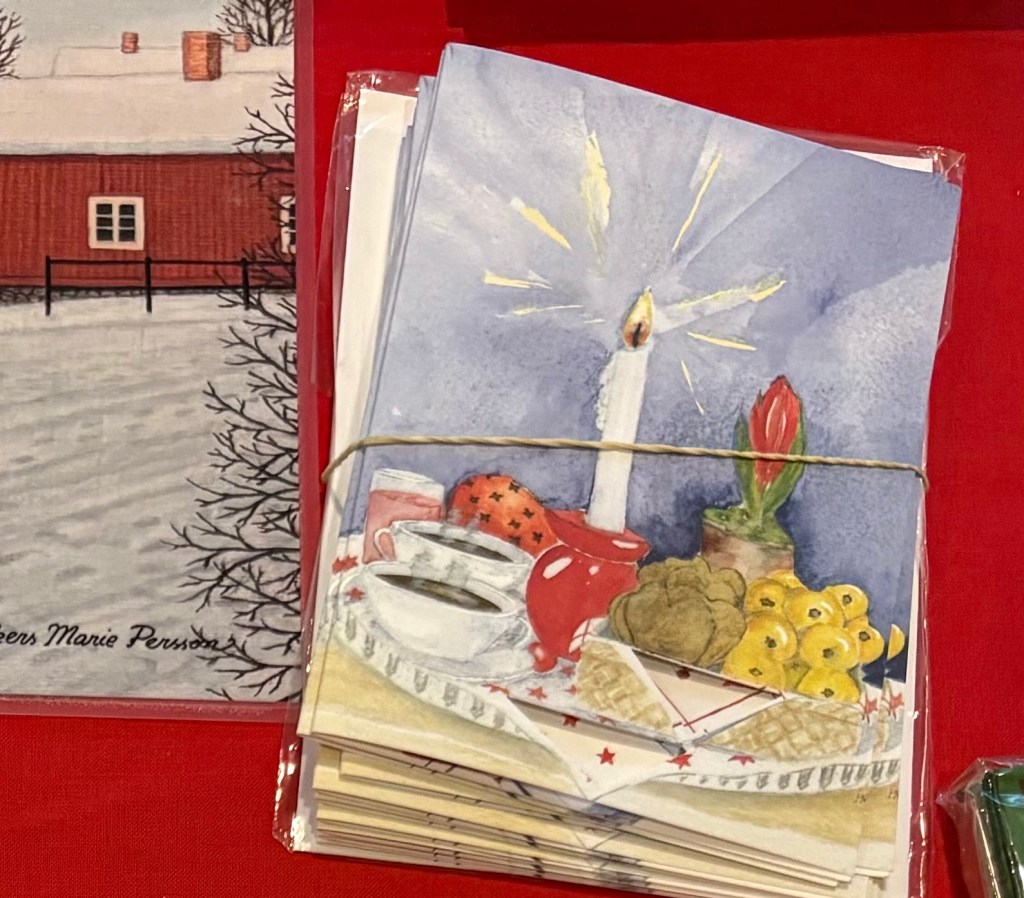
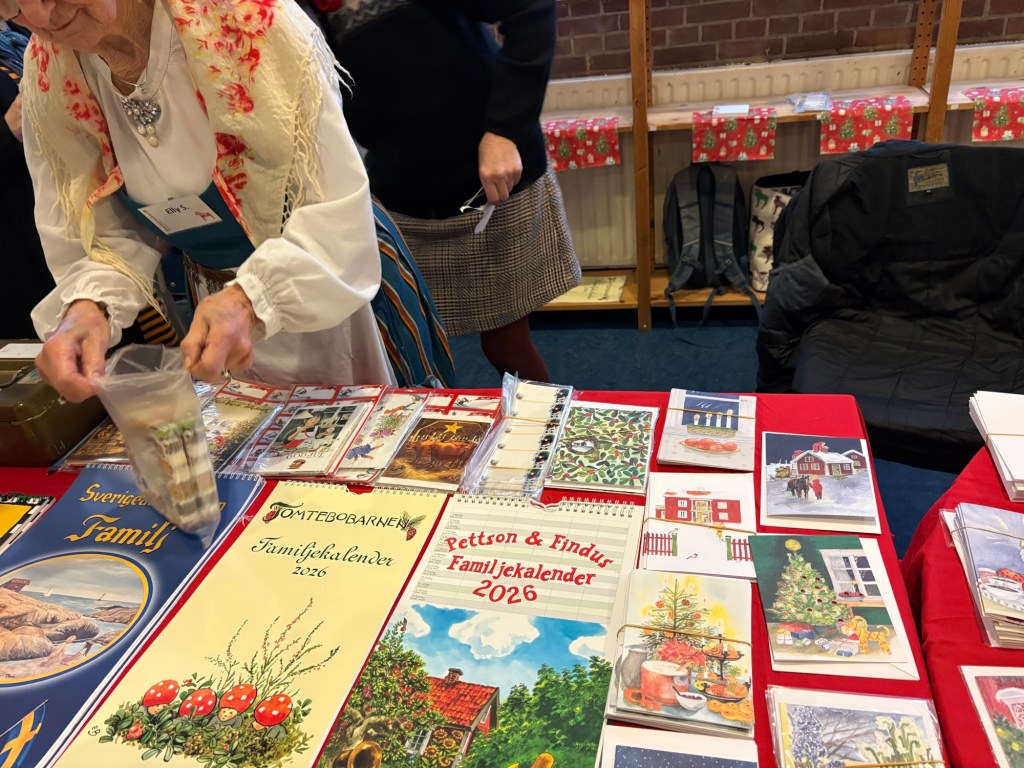
I liked the postcards in particular here. They had a 5€ set with stickers, which I found a very cute idea
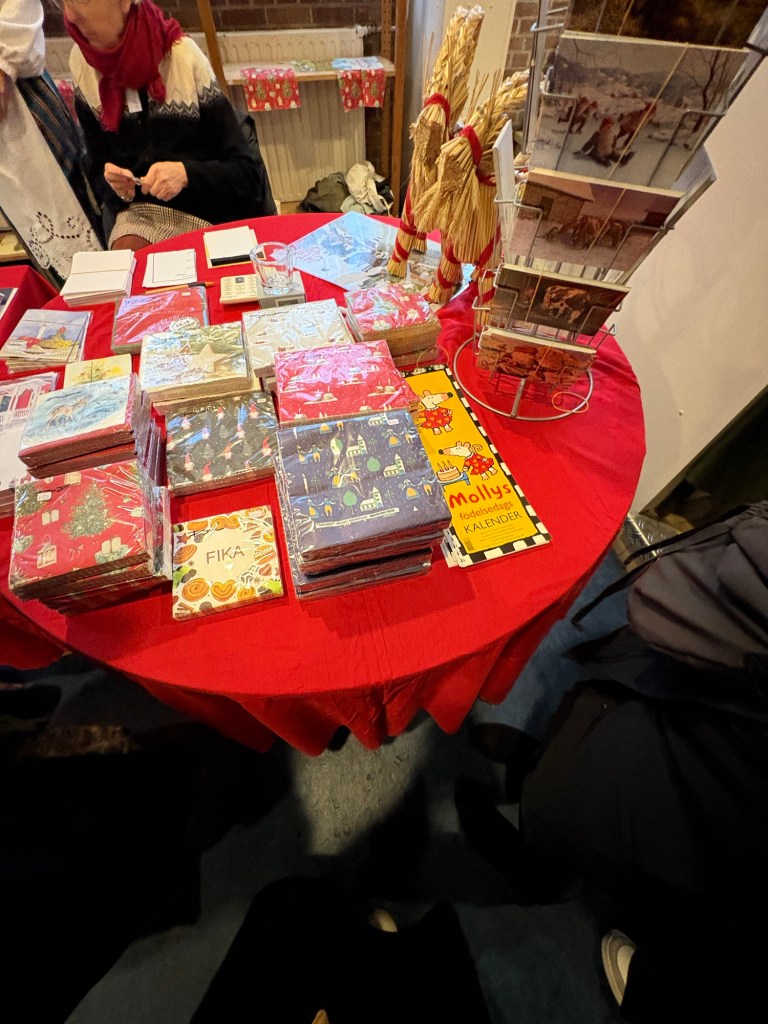
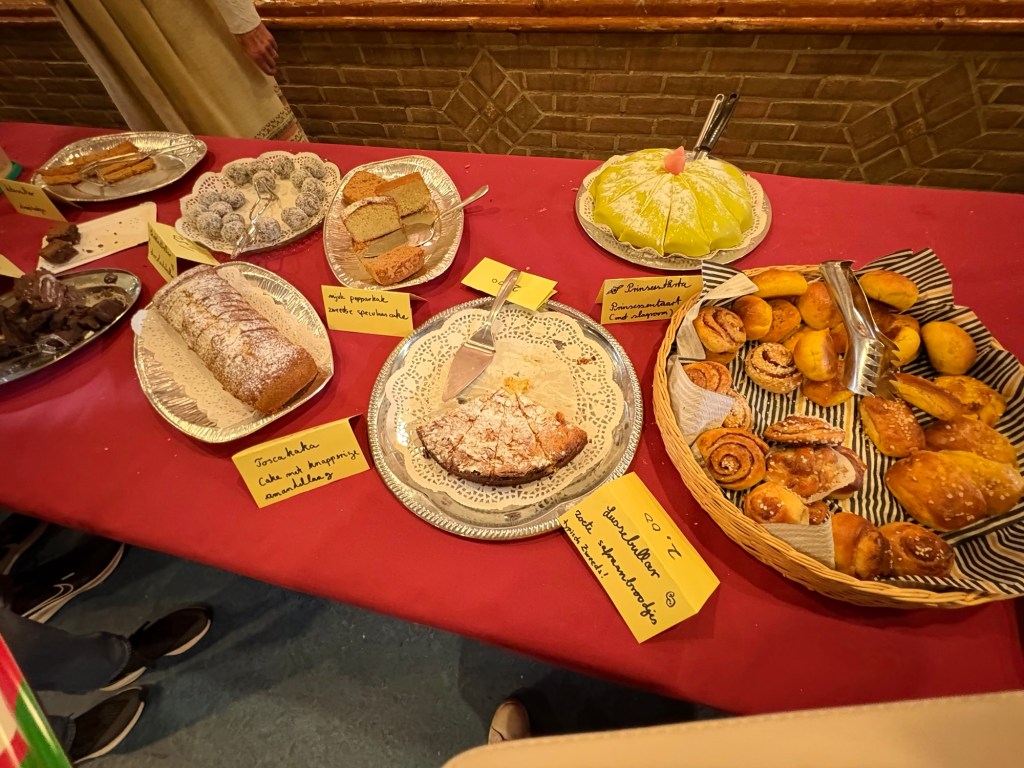
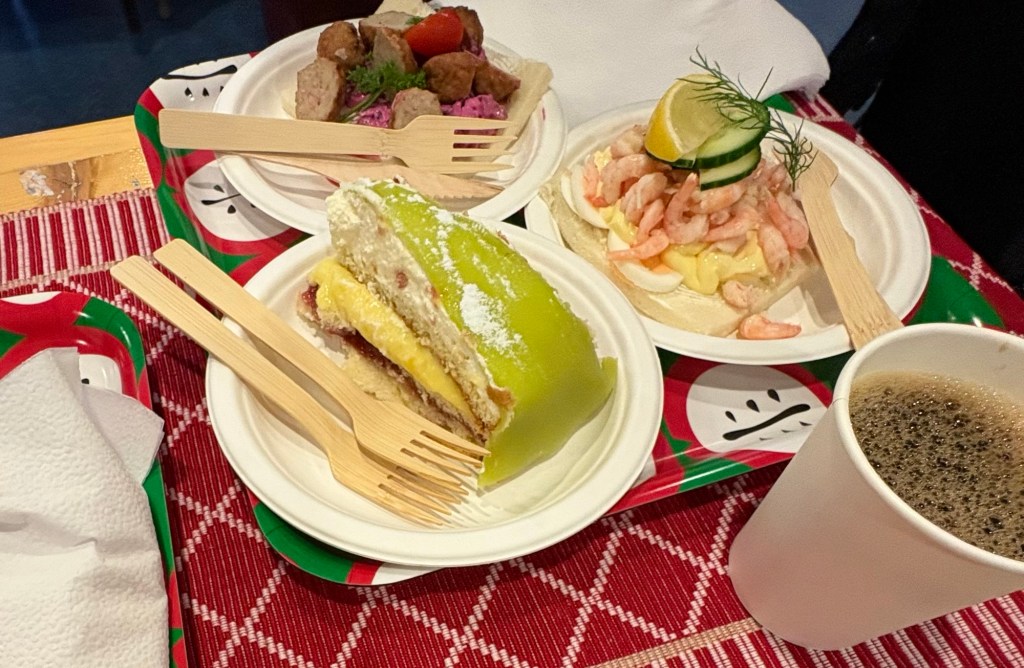
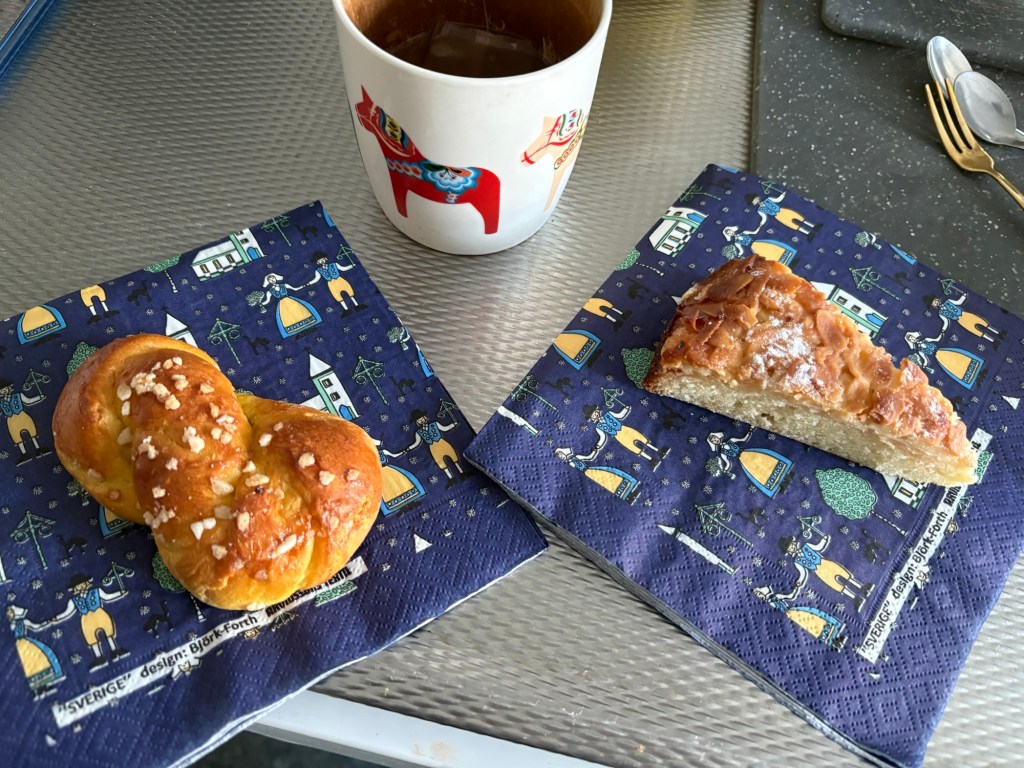
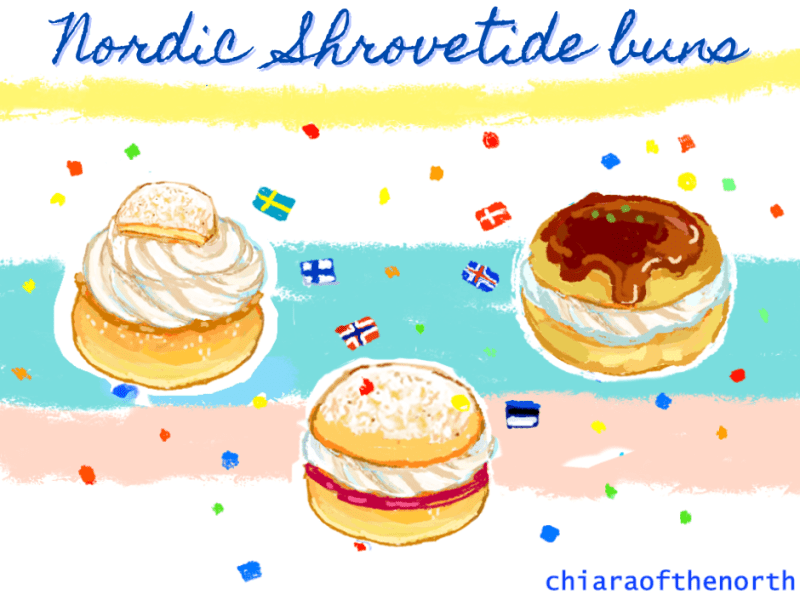
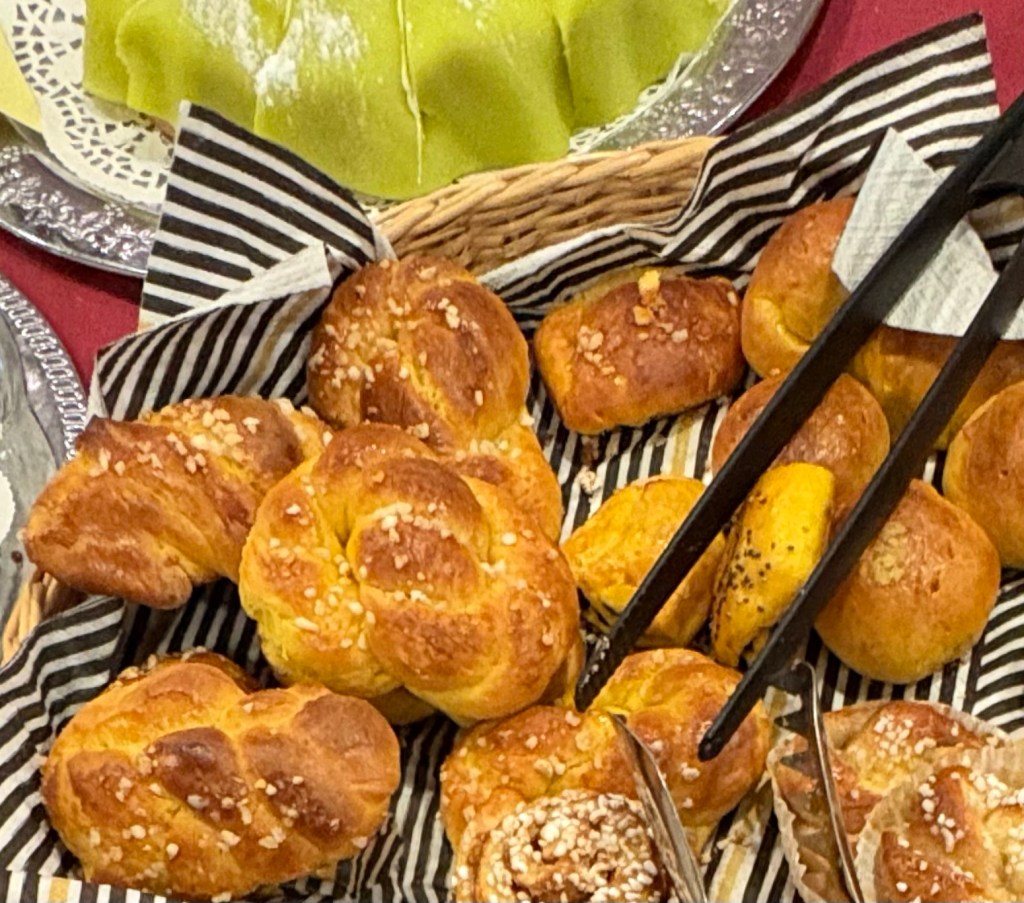
Open sandwiches, cookies and cakes were sold. And of course saffron and cinnamon buns!!
I got a Toscakaka slice and a second saffron bun to take home (I love them).

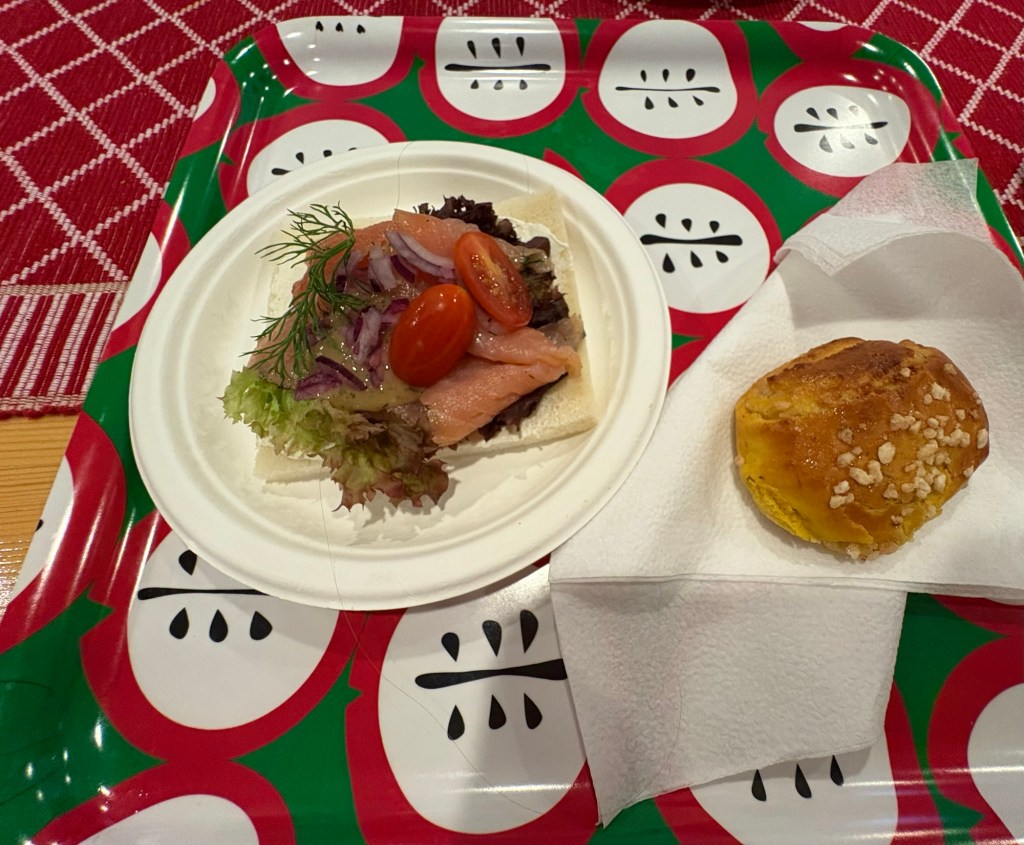
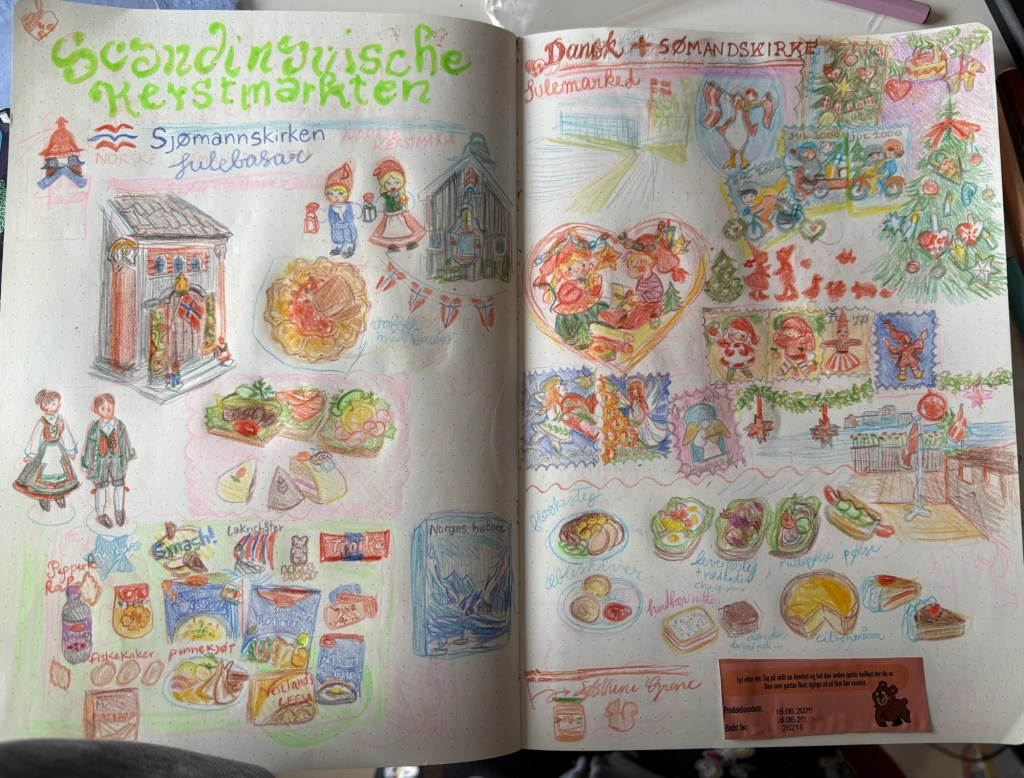
all I got to take home, including havtron jam and date snacks from Søstrene Grene in the pictures):
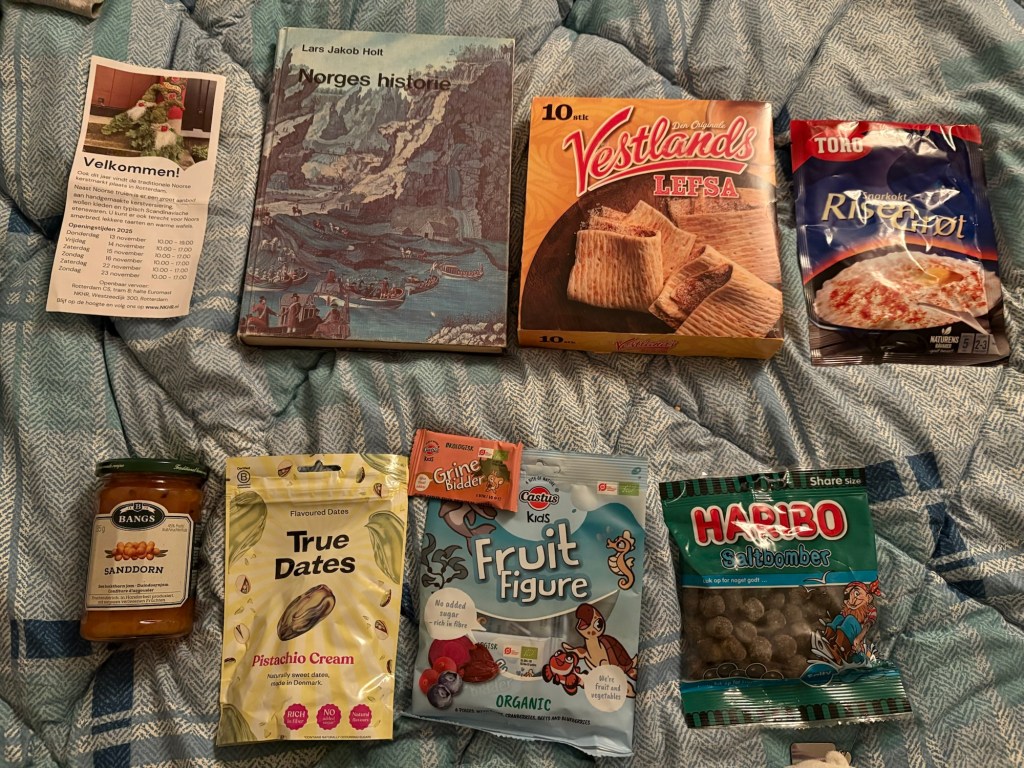
I was glad to visit all Nordic markets in Rotterdam this year , follow me for more reviews like this!!
Lucia concert (and a Lussekatt) in Den Haag

This year, I celebrated Lucia in the Hague by eating a Lussekatt at Scandinavian bakery Norvolk, and attending a Lucia church concert.

13th December is Luciadagen in Sweden and Scandinavia, this year on a Saturday, so I could attend a Lucia concert in the Hague!
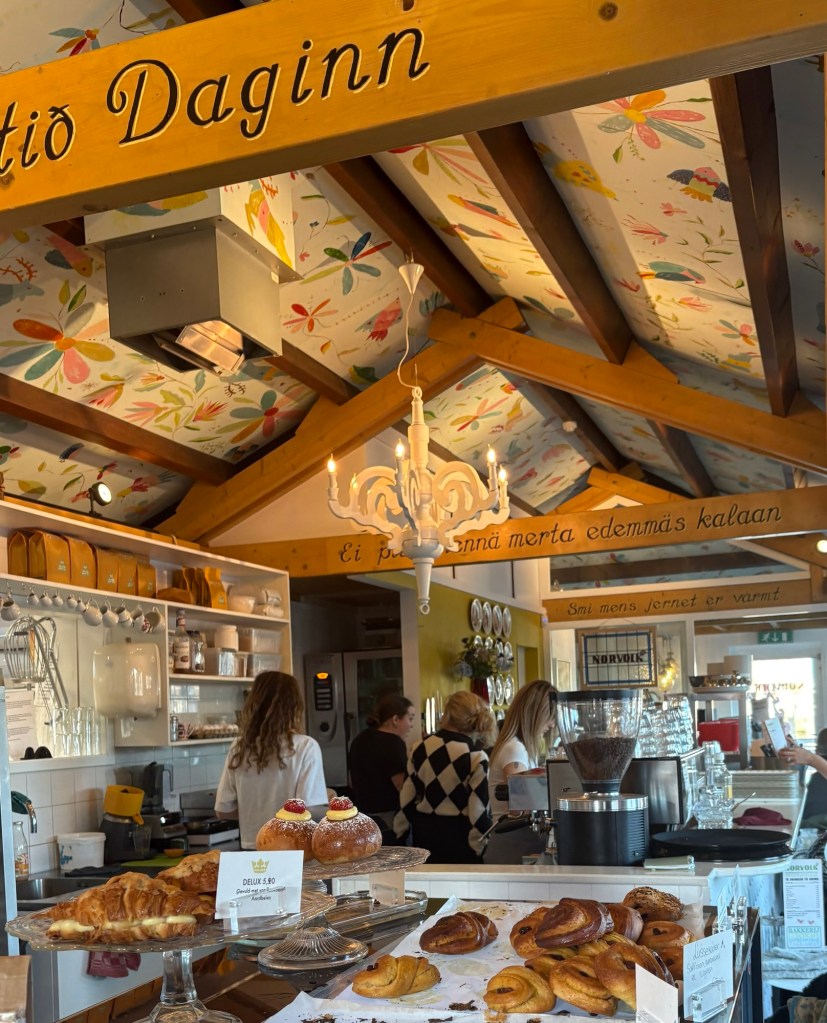
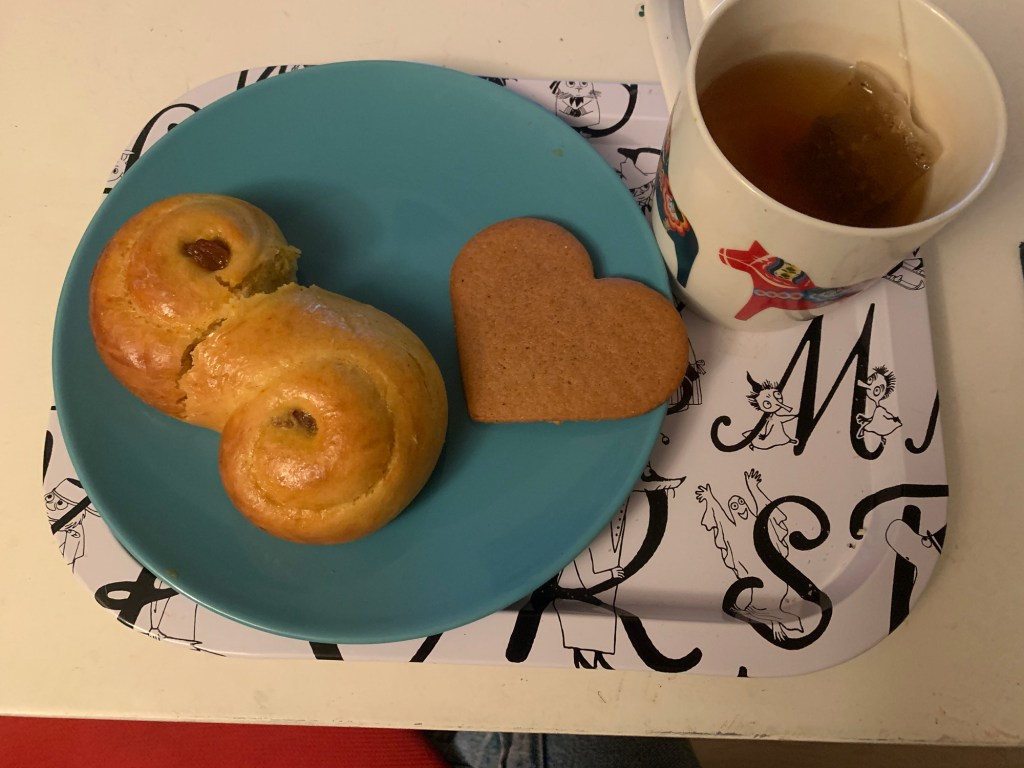
I started my day in the Hague going to Norvolk, a Scandinavian bakery in Scheveningen, which I had been to for a lussekatt last year as well.

Last year it really had the classic S shape, this year it look slightly different, but still with raisins!

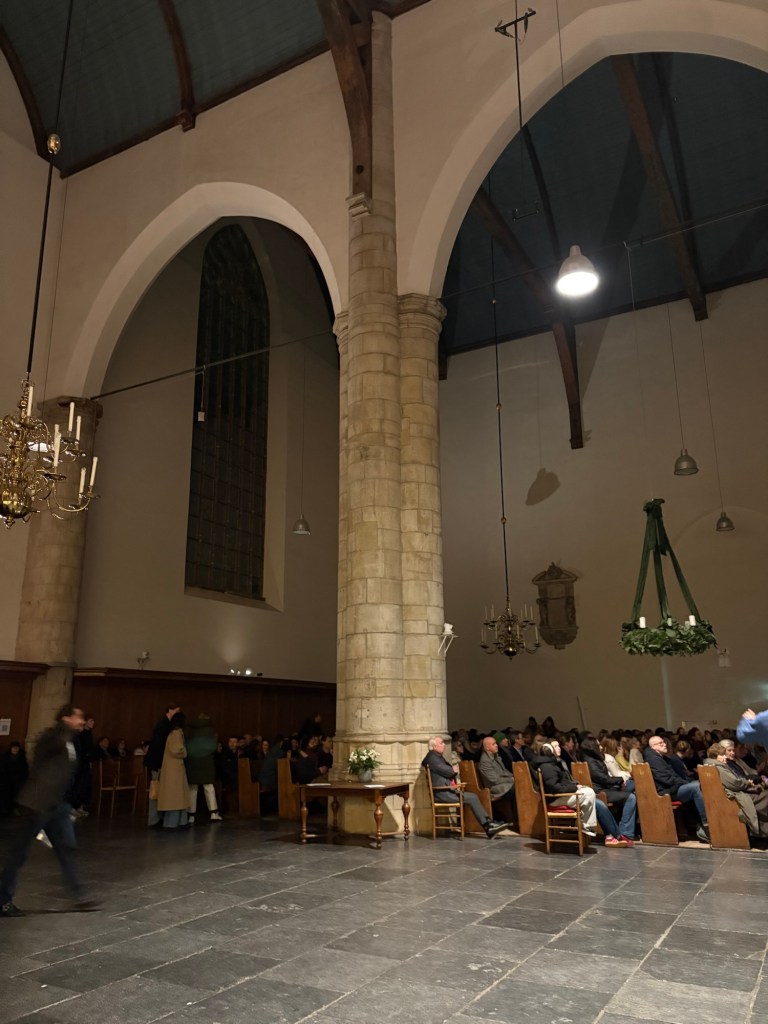
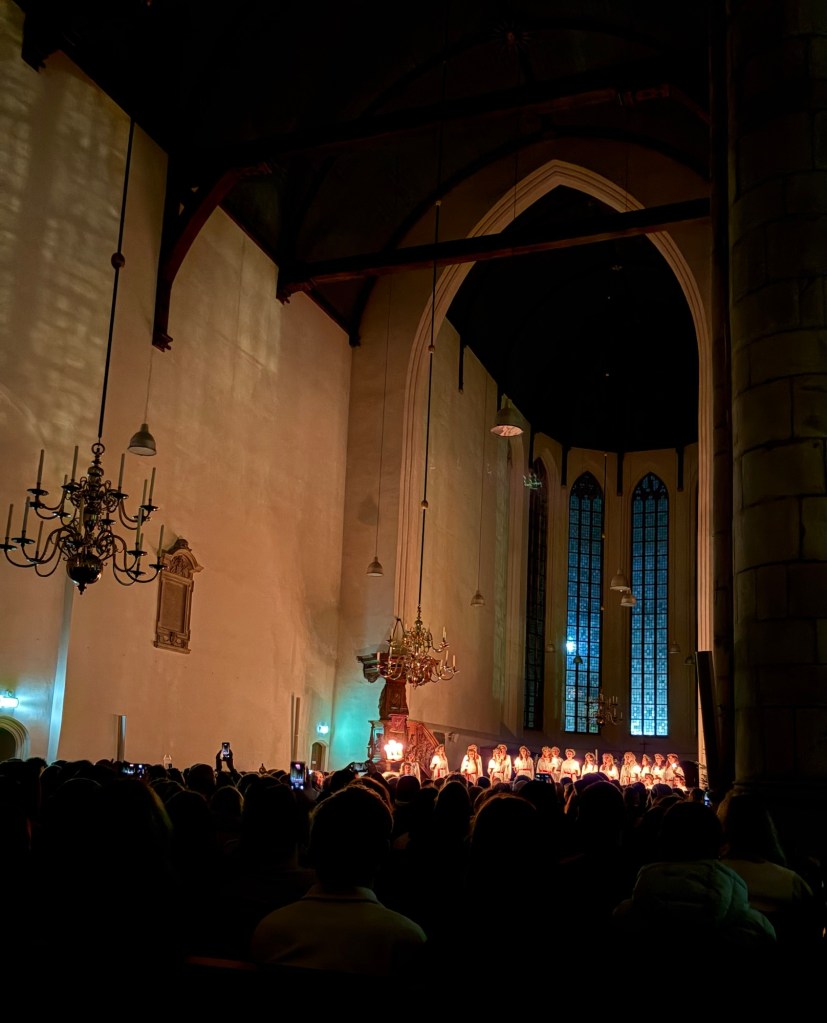
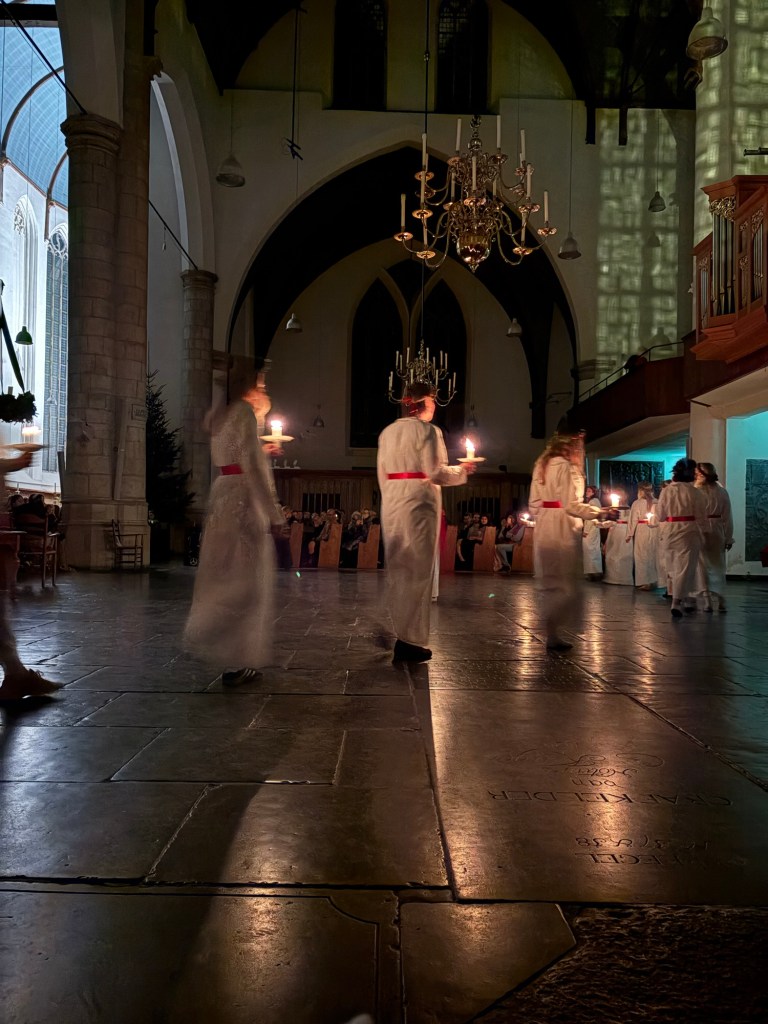
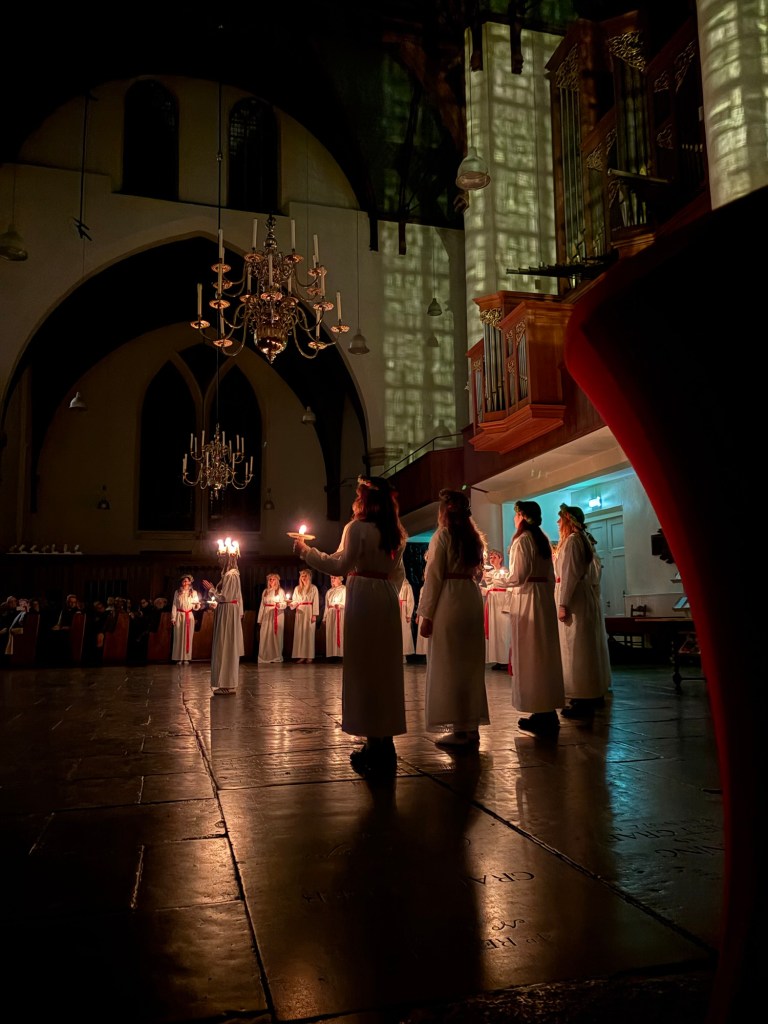
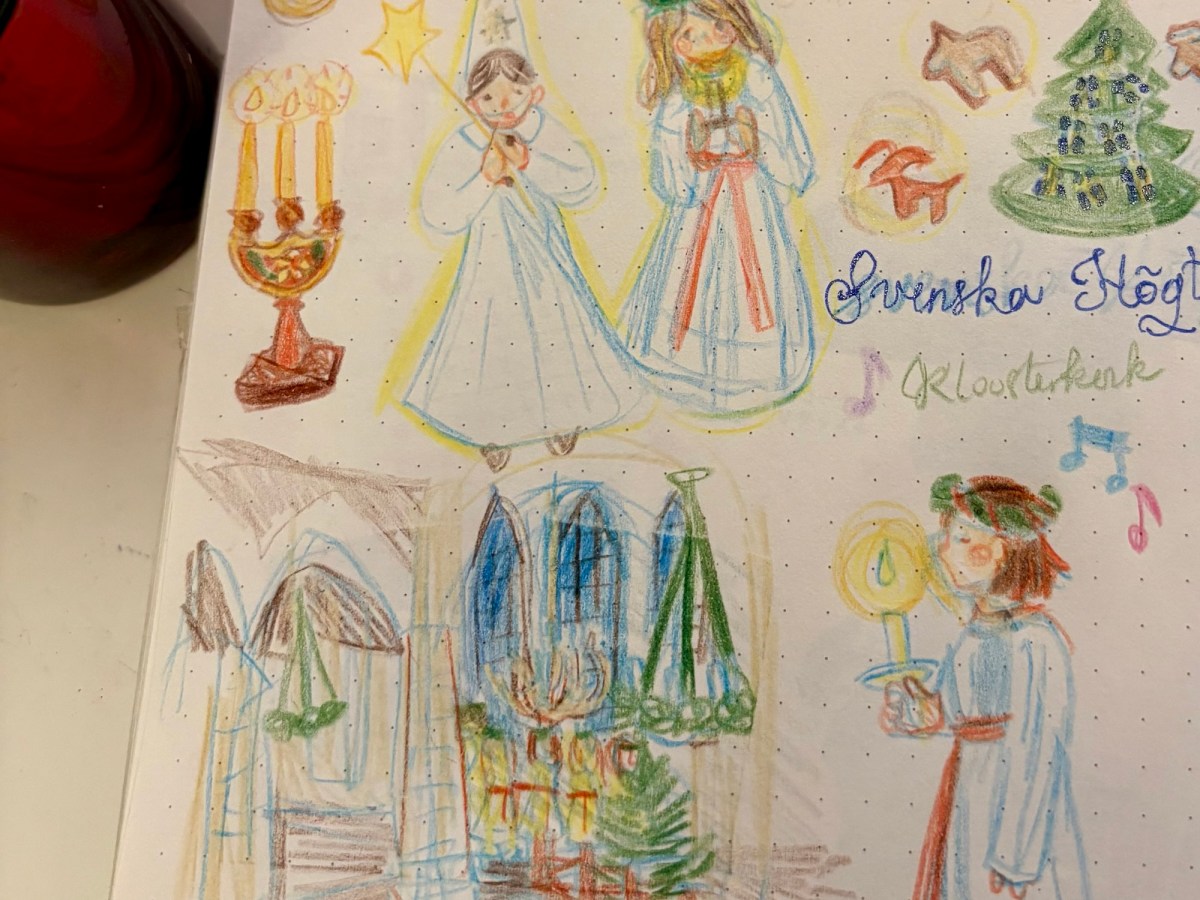
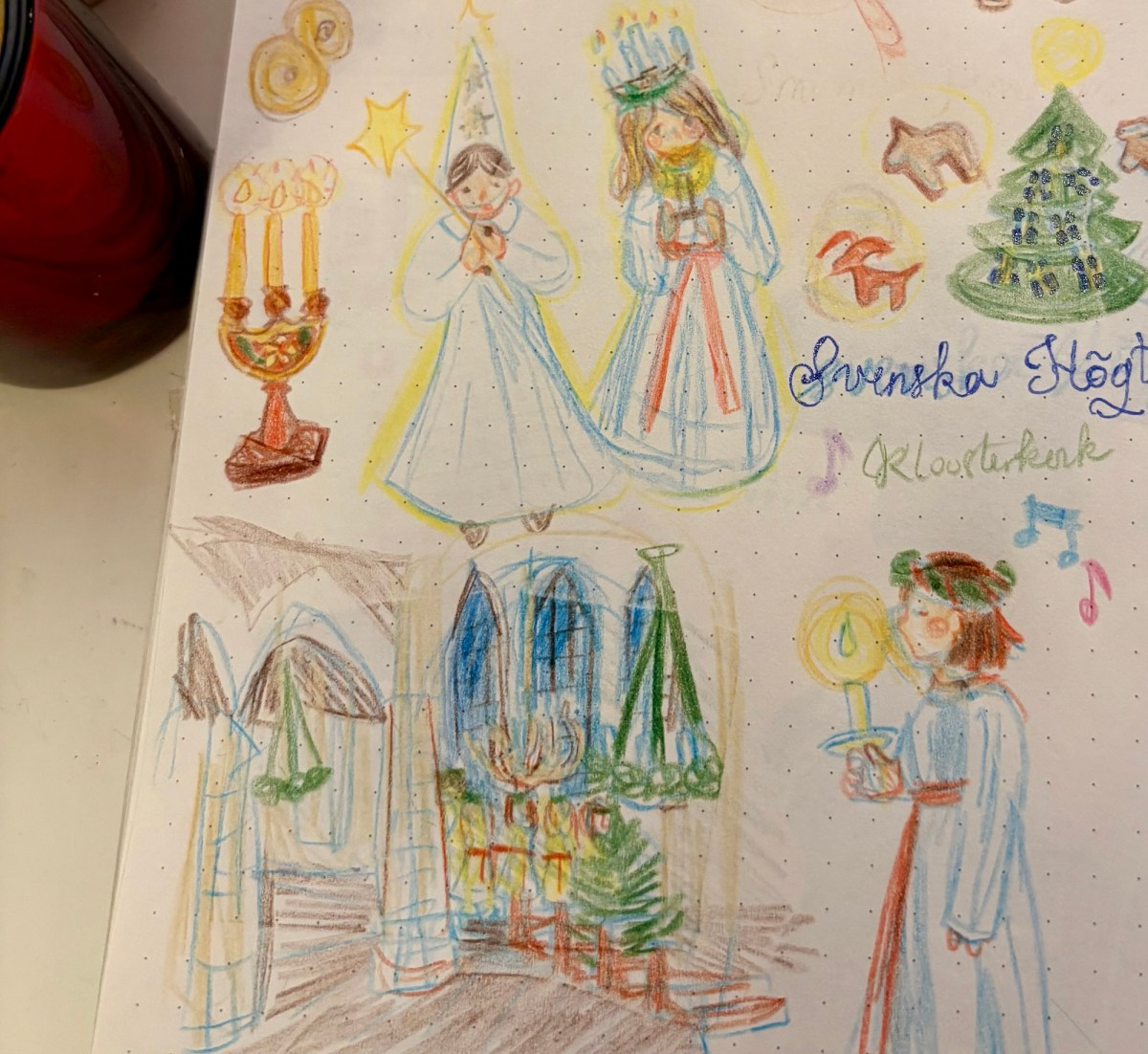
In the evening I went with a friend to the Kloosterkerk in The Hague, where a Swedish choir – Svenska Högtidskören held a Lucia concert, as you see them in Scandinavia. They hold concerts elsewhere in the Netherlands too!

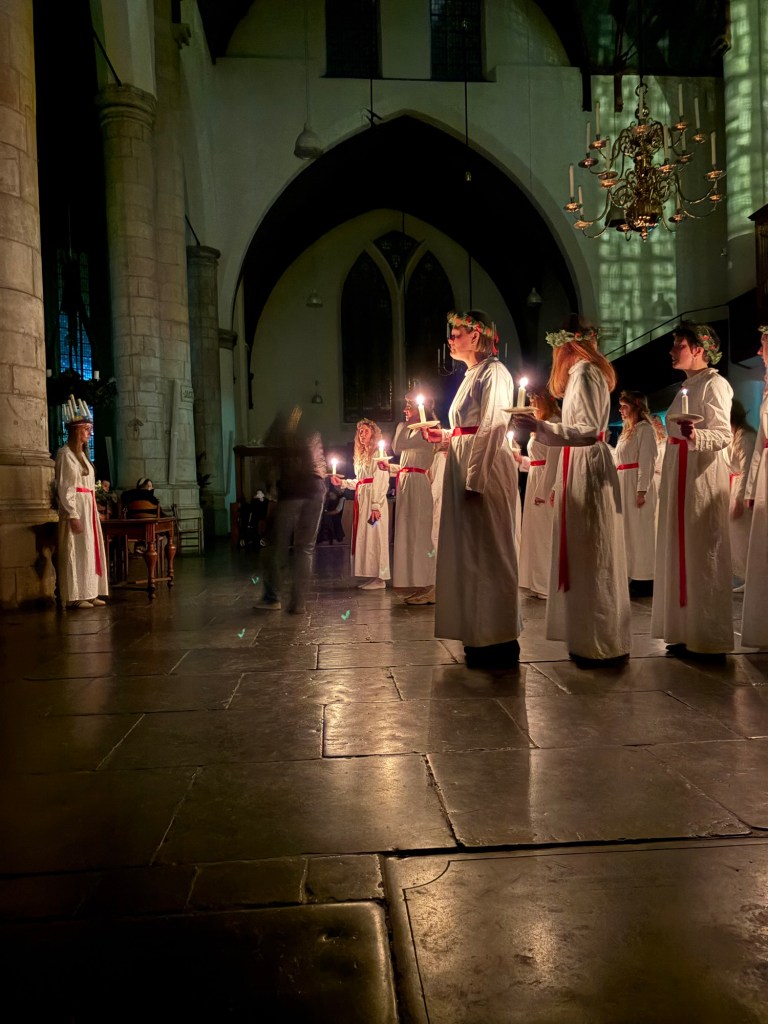
It began in the darkness, with all the girls in the processions holding a candle and walking in a line to where they would stand and sing.

The concert started at 19:30 and lasted one hour.

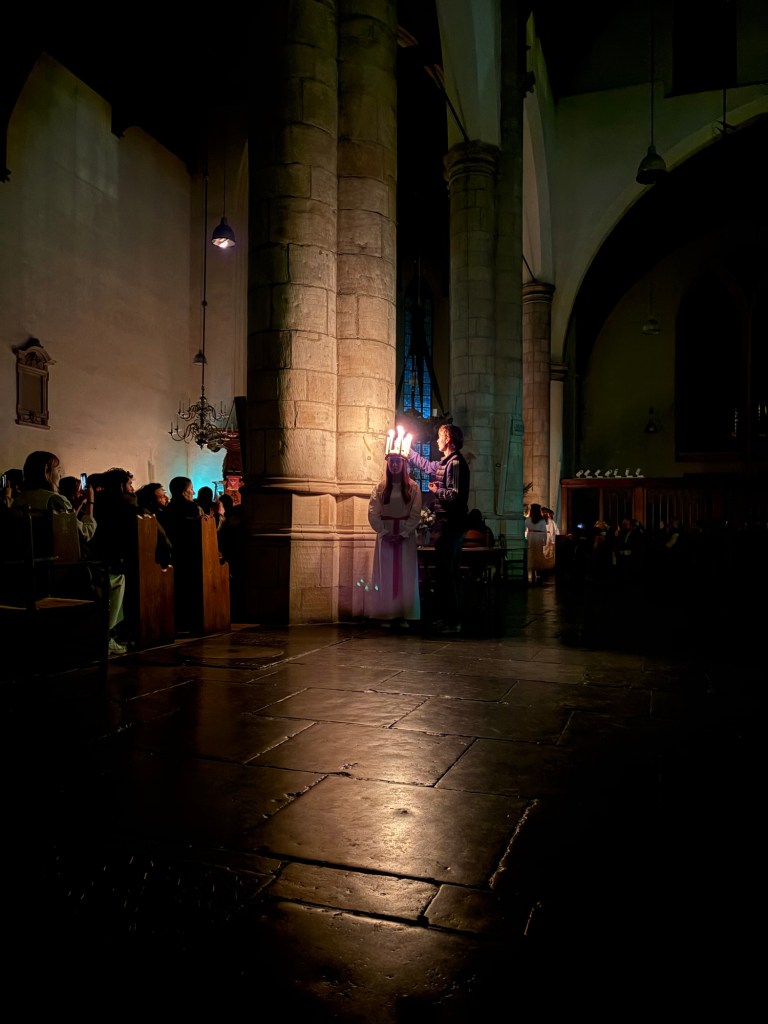
One of the highlights was Lucia’s having the candles on her crown lighted – behind the pillars, but I could see it well from where I was sitting! It felt so magical.

They sung traditional Swedish songs of course, but also Stille Nacht/ Silent night in German and English.

Then, they walked back, with Lucia in front, and stood all in a circle with her in the middle.

It was possible to give money for a charity – a food bank in Amsterdam in this case.

It was a whimsical experience and definitely among other things that makes me enjoy Christmas time!

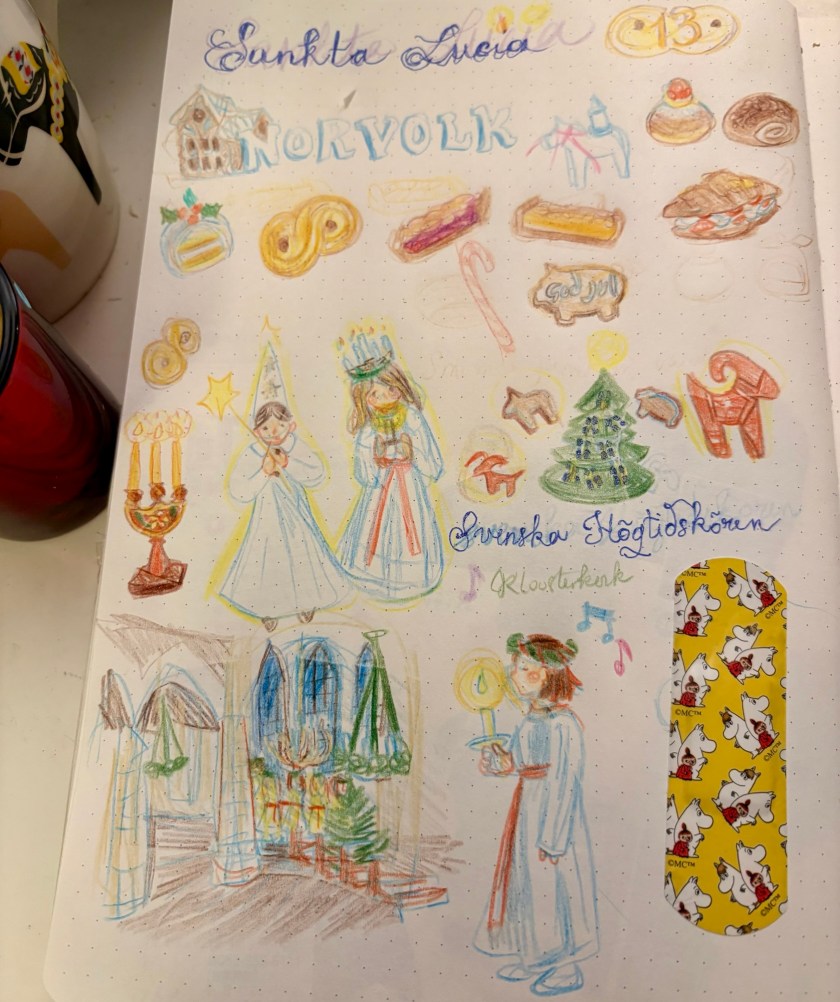
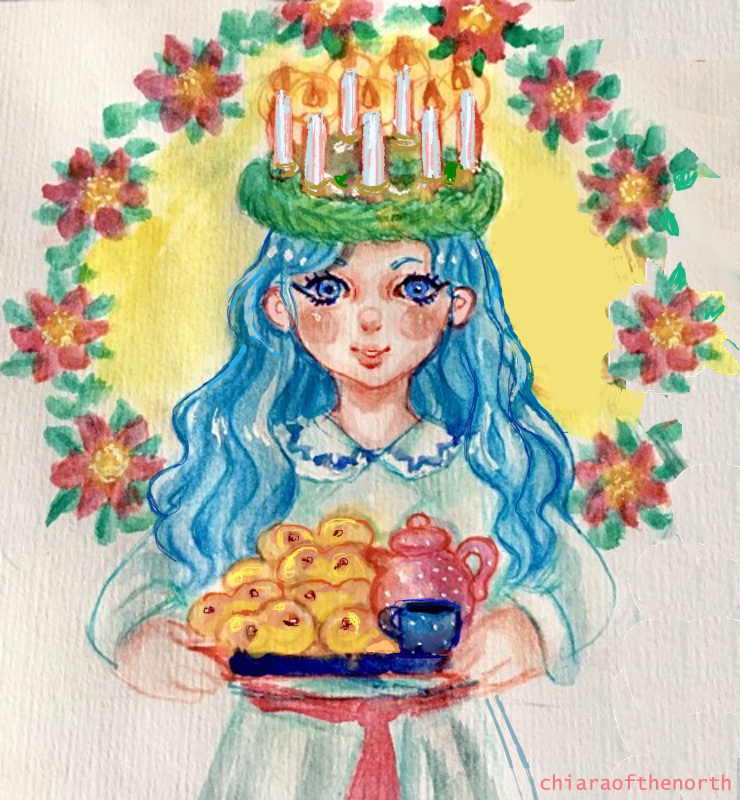
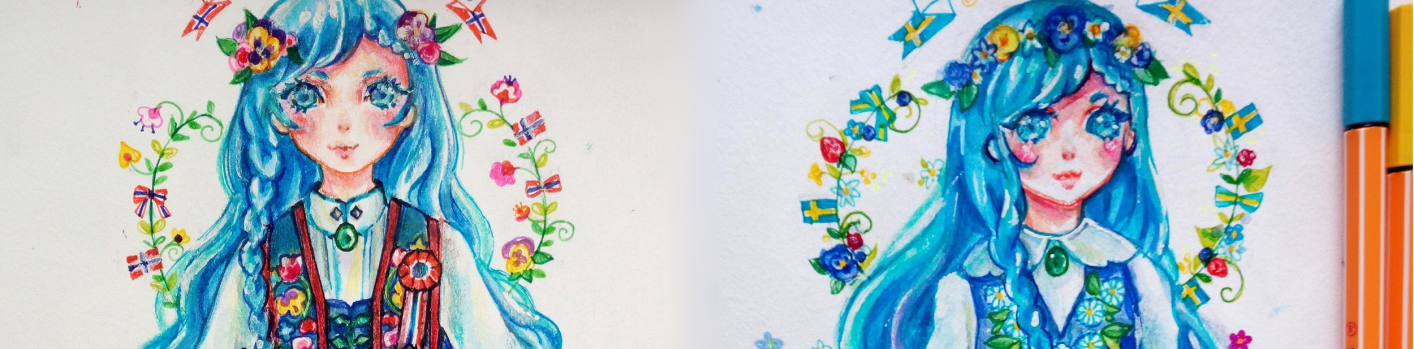
swedish lucia illustration journal

Follow for more Nordic experiences!

7 fun facts about Lucia, Sweden’s pagan saint

Lucia brings light in the darkest night of the year and is a mix of pagan and christian traditions. It is celebrated in Scandinavia with processions, saffron buns and church concerts.

7 fun facts about Lucia, Sweden’s pagan saint

Lucia brings light in the darkest night of the year and is a mix of pagan and christian traditions. It is celebrated in Scandinavia with processions, saffron buns and church concerts.

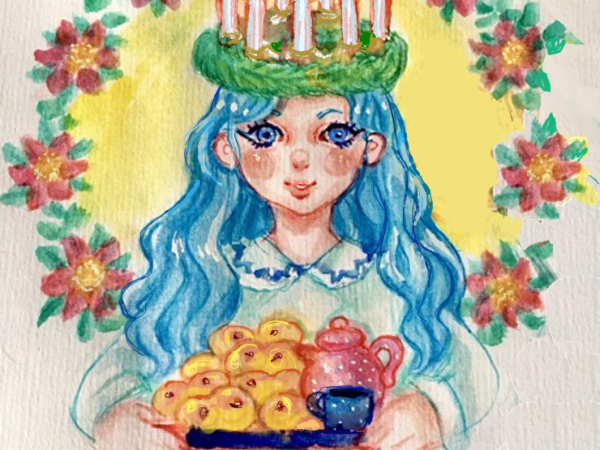
Luciadagen is celebrated in Scandinavia, especially in Sweden, on 13th December, marking the start of Nordic Christmas, Jul, season. Sankta Lucia is typically depitcted with a wreath of candles.

1. Lucia was a dangerous night…– the pagan origin

Lussinatta was observed between Norway and Sweden. On that magic night, Lussi, a dark, female creature, would come with witches and trolls, punishing those who misbehaved or did not observe Yule preparations -also by going down the chimney (reminds me of somebody…) and blowing up the house… To protect oneself, it was necessary to stay indoors and respect the tradition of Lussevaka, staying awake and watching out on the longest night of the year. Candles would also help protect.

2. The real Lucia was Sicilian – the christian origin

Saint Lucy was a Syracusan martyr of the 4th century AD. Some say she brought food to Christians hidden in the Roman catacombs, with candles on her head to have her hands free. A figure who brings light in the darkness, much needed in the Northern winter, replaced the dark creatures of Lussinatta!

3. Lucia’s modern look came from Germany

The current celebration of Lucia is derived from the German tradition of Kindchen Jesus or Christkind (child Jesus). The Christkind was represented by a girl dressed in white, wearing a crown and lights, who handed out gifts to children. The tradition was brought to Sweden in the 1700s, where the name became Kinken Jes and spread from southwestern Sweden. It became common among wealthy families that a girl dressed as Lucia would serve breakfast in the 1800s.

4. A Lucia is elected each year

The girls representing local Lucias in processions are elected each year, as is one national Lucia for whole Sweden. The first public procession in Sweden took place in 1927, when a newspaper in Stockholm elected an official Lucia of that year for Stockholm. There used to be Lucia contests, but nowadays it is more about children processions, with schools which often let chance decide who’s to be Lucia, for example by organising a draw.

5. Lucia’s male counterparts are Star boys, gingerbread men and christmas elves

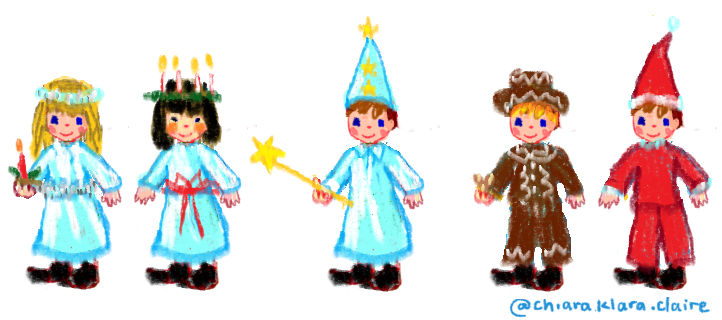
The processions include the Lucia at the head, giving out sweets, accompanied by other angel girls and boys dressed as stjärngossar “star boys”, in white, wearing a cone hat with golden stars and holding a star stick. They are linked to stjärngossespel, a tradition from middle ages consisting in ‘star’ children going door to door singing songs, representing the Three Kings.
Other children are pepparkaksgubbar (gingerbread men) and tomtenissar (Christmas elves). Lucia songs as are sung, as Natten går tunga fjät “the night comes heavily”. It is actually based off a song by a Neapolitan composer.

6. Lucia’s treats: Saffron buns

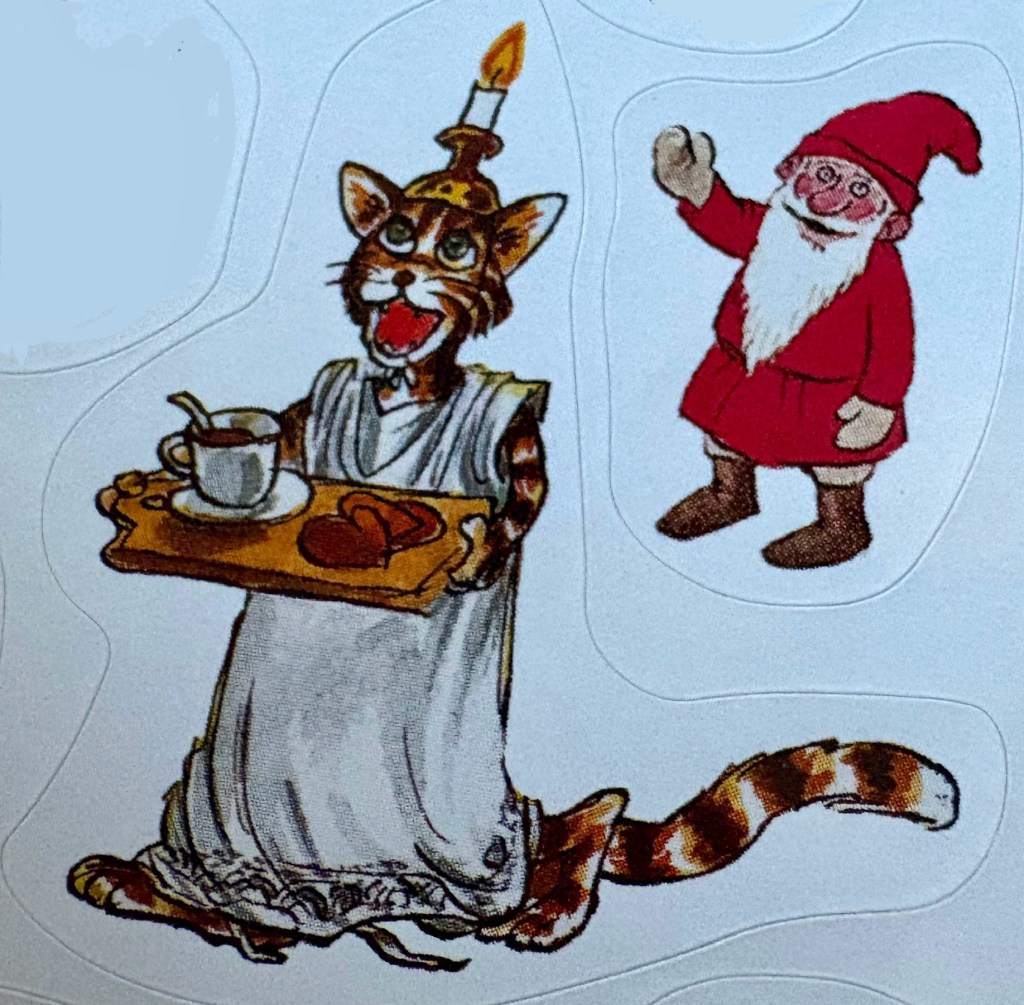
Around Advent time Sweden is full of Saffron buns, especially the classic Lussekatter, shaped like an S with raisins, which would be shaped as curled-up cats with some fantasy.

Other Advent-time treats as pepparkakor (spiced cookies) and glögg (mulled whine) are also commonly linked to Lucia traditions.

7. Lucia is celebrated in the rest of Scandinavia…and Italy

The Swedish-speaking population of Finland celebrates Luciasfester. Finland elects its Lucia since 1949, when she was elected and crowned in the cathedral of Helsinki, but the very first Finnish Lucia might have been elected in a school in Åbo/Turku in 1898.
In Denmark and Norway, Lucia started being celebrated during and after WW2, and it is mostly celebrated in schools and kindergartens. In 1944, the tradition was brought to Denmark with the first procession in Copenhagen, as a way to strengthen common Nordic traditions in the dark times of German occupation.

Some parts of Italy also celebrate Lucia! That is mostly around Bergamo, North Italy, where Lucia comes on a donkey and brings presents in the night, and children leave some treats as cookies for her. The 13th is also a special day in schools! It is also celebrated in Sicily, where it is more christianity-centered.

Sources:

5 peculiar symbols of Christmas in Iceland

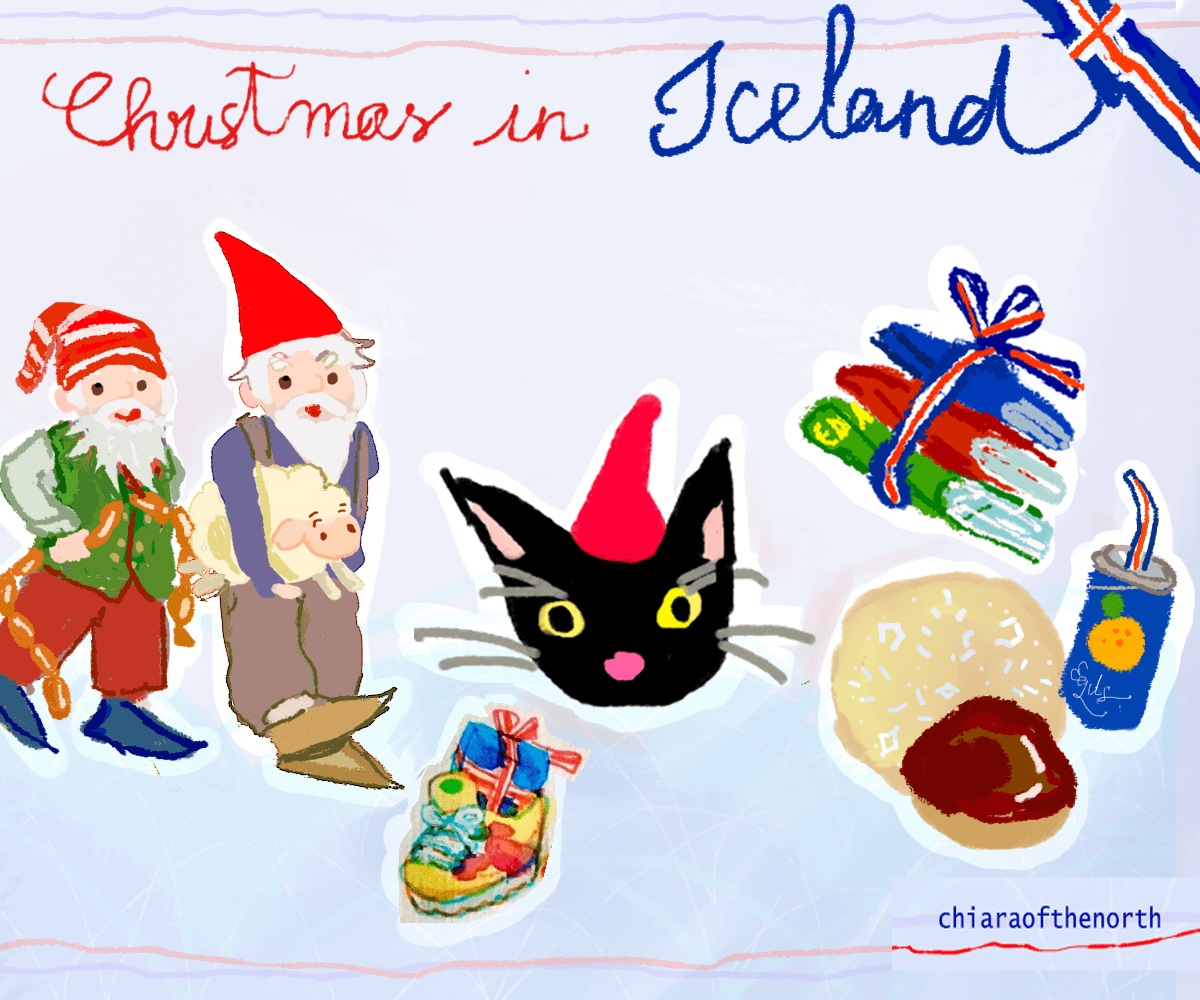
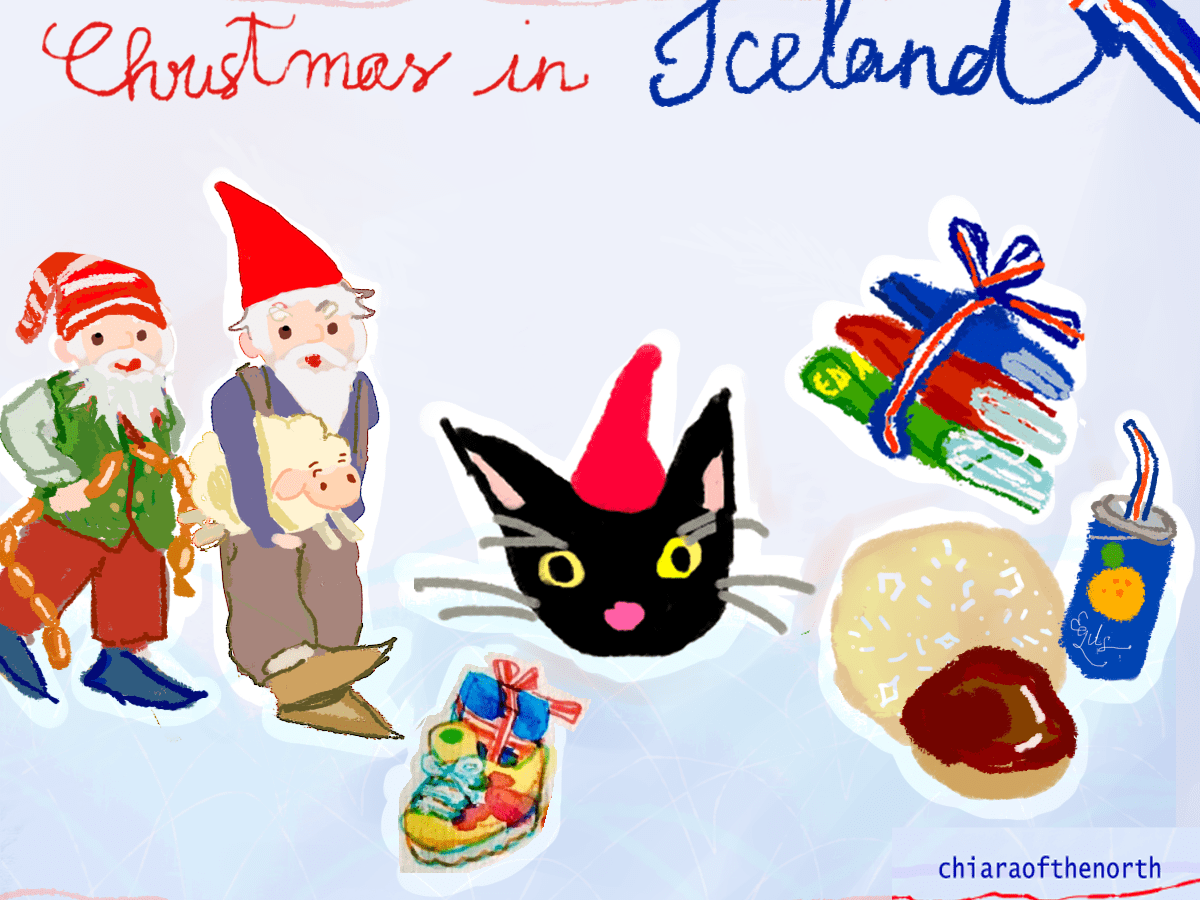
Iceland’s Christmas, Jól, involves 13 mischievous elves, a black cat, orange-beer, and a lot of books.

After Norwegian, Danish, and Finnish Christmas fun facts, this time is Iceland’s turn! As Iceland is fairly isolated from mainland Europe, Icelandic christmas, Jól, is characterized by a few more or less curious things, especially who brings gifts…

13 naughty elves

In Iceland the Christmas gift bringer is not one, but 13 elves, Jólasveinarnir -‘Yule lads’, who start coming 13 days before Christmas, one each day. Icelandic kids leave their shoes on the window sill every evening, so that the yule lads can leave a present inside them. According to the tradition they come from the mountains to annoy the population, each of them has a different name, related to what they do: Hurðaskellir “door slammer”, Skyrgámur “skyr gobbler”, Bjúgnakrækir “sausage stealer”, Stekkjarstaur “sheep harasser“ among others.

A black cat that will eat you *if you have old clothes

In Iceland you also have the Christmas Cat, Jólakötturinn, who eats people who have not received new clothes. During Christmas time you can admire a big sculpture of the cat in Reykjavik.

Books, books, books

Iceland has the highest number of books published (and probably read) per capita, and nearly everyone gives and receives books as Christmas presents. Around 80% of book sales happen during the so-called Jólabókaflóð “Christmas book flood”, in the two months before Christmas. Candles and playing cards are other traditional gifts.

Bread with patterns

An Icelandic Christmas tradition is making a thin and round fried bread laufabrauð “leaf bread”, with patterns cut into it. It kind of end up looking like bread snowflakes! Laufabrauð is often paired with hangikjöt, Icelandic smoked lamb.

Orange soda-beer mix

As it is during Jul period in other Nordic countries, Icelanders have their own Christmas beer. In Iceland, it is orange flavored! Jólaöl is a mix of malt extract and orange soda, from the orange soda brand Egils.

Cookies named after a French actress

Sarah Bernhardt cookies are a common Christmas treat in Iceland, typically home baked. Commonly called Sörur – Icelandic plural of Sara – they are chocolate dipped cookies, invented in Denmark in 1911 in honour of French actress Sarah Bernhardt.

sources -Guidetoiceland.is

Subscribe for more fun facts!

Nordic findings in japan

Nordic culture experienced in Japan: Moomins, Dala horse stationery, Nordic-inspired foods and books about Scandinavia seen by the Japanese.

How Nordic are Baltic countries

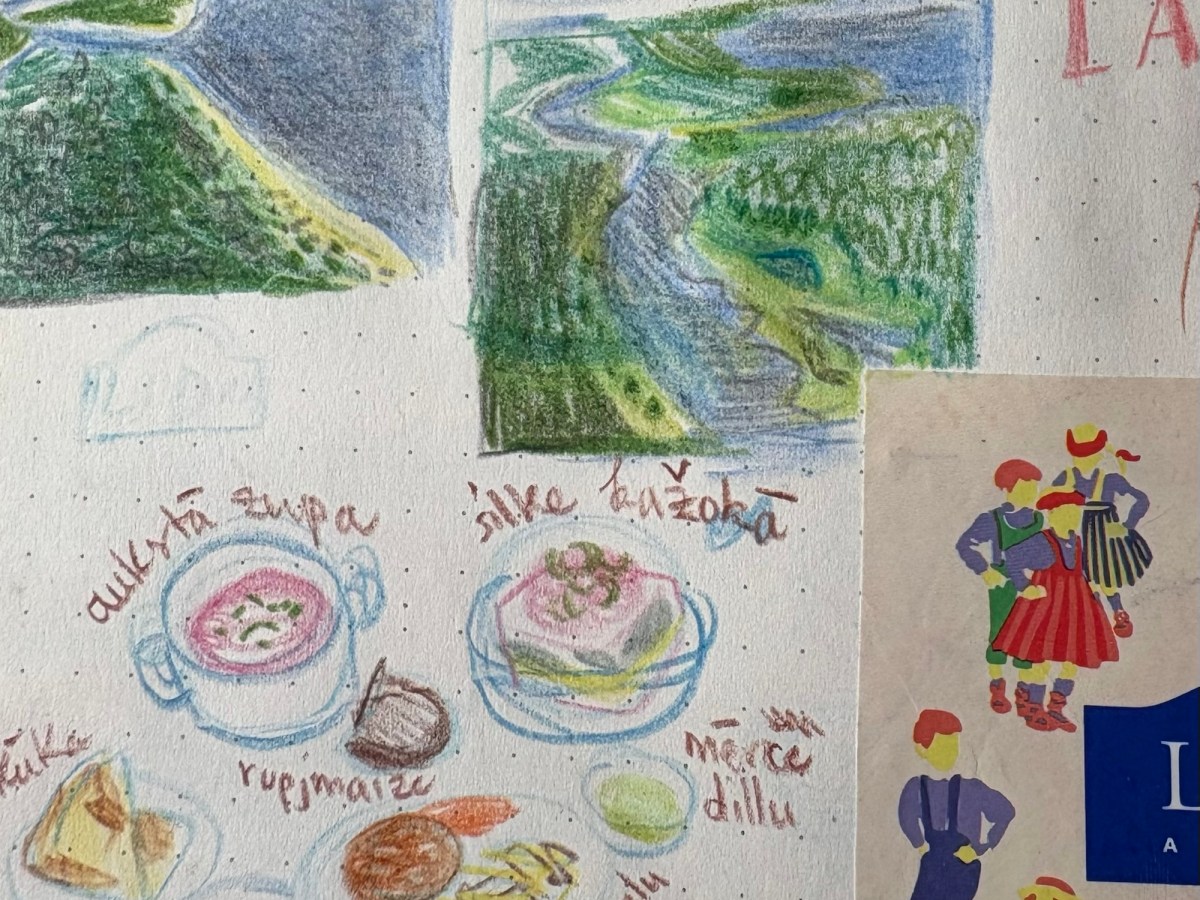
Are Baltic countries Nordic at all? I explored Latvia and Estonia, noting their ties to Nordic culture, from languages to Rye bread and Midsummer.

Danish Christmas decorations: Julepynt

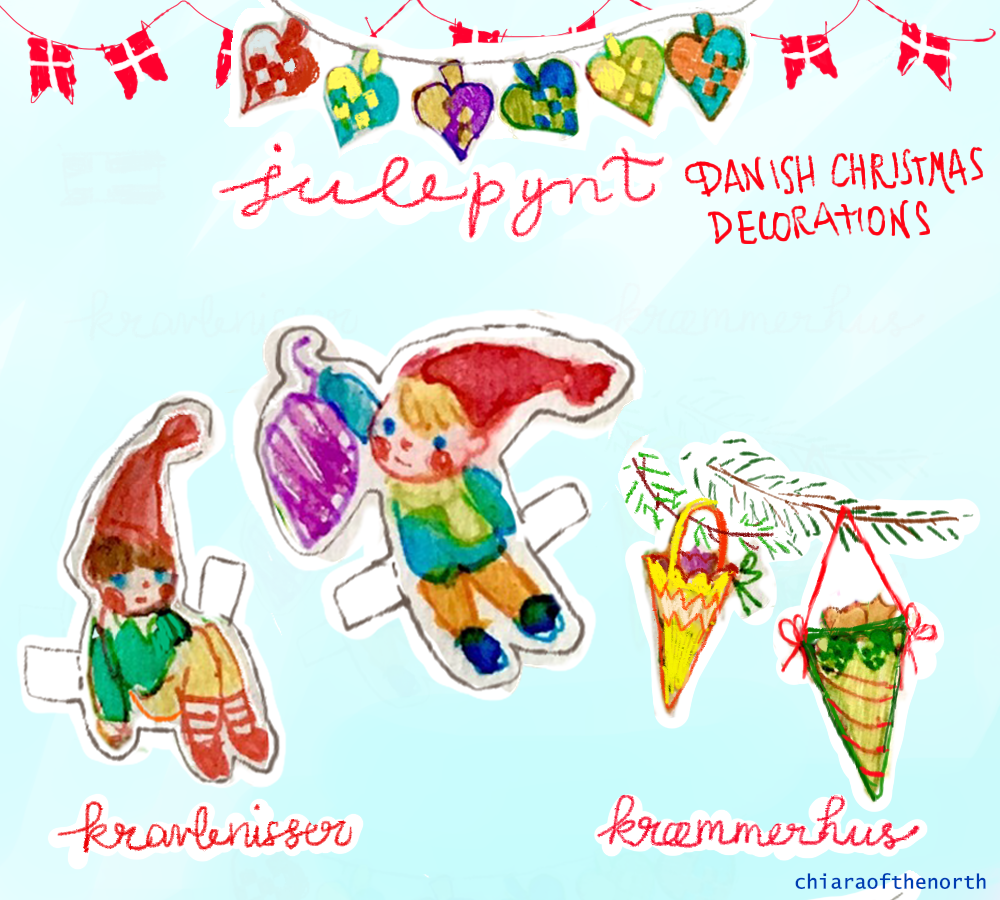
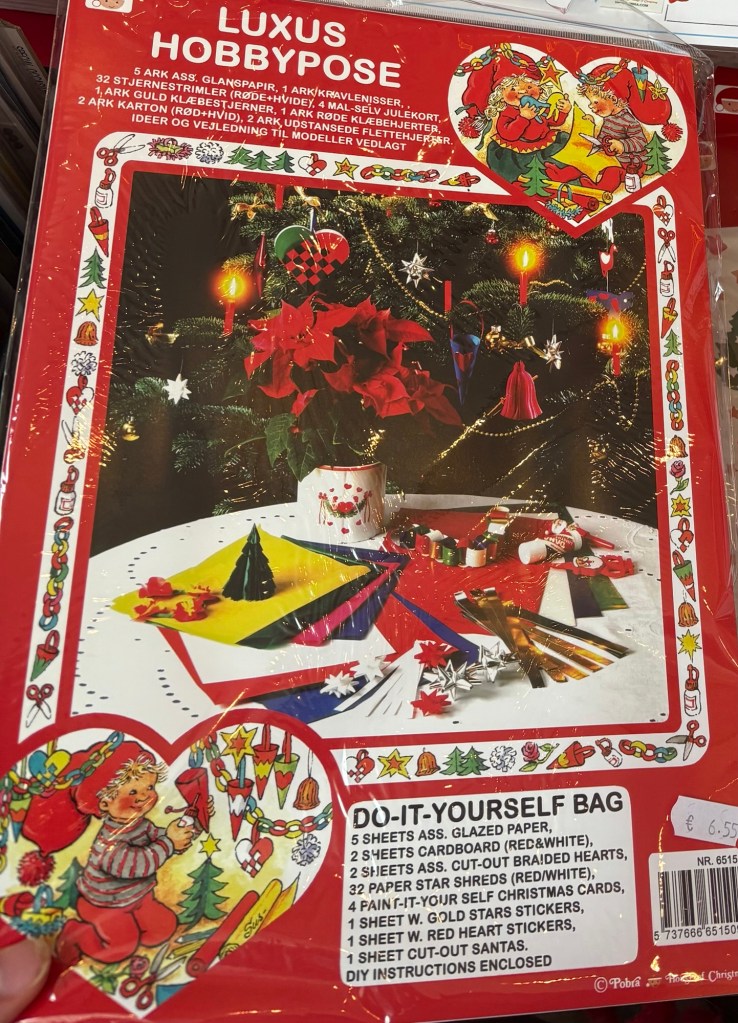
Christmas paper decorations in Denmark: hearts, candy cones and nisser

Typical Danish Christmas decorations – Julepynt – are homemade paper ornaments, and have been a tradition since H. C Andersen’s time! Besides the ones I’ll mention below, flags are a typical tree ornament, a more general Scandinavian Christmas tradition.

Julehjerter

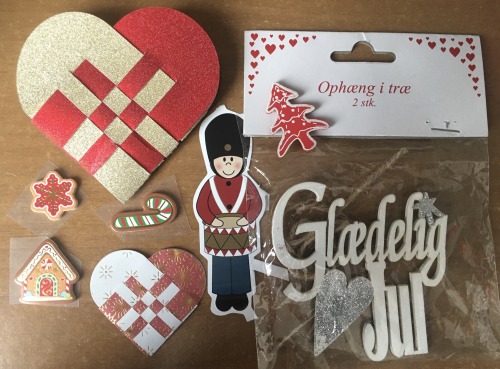
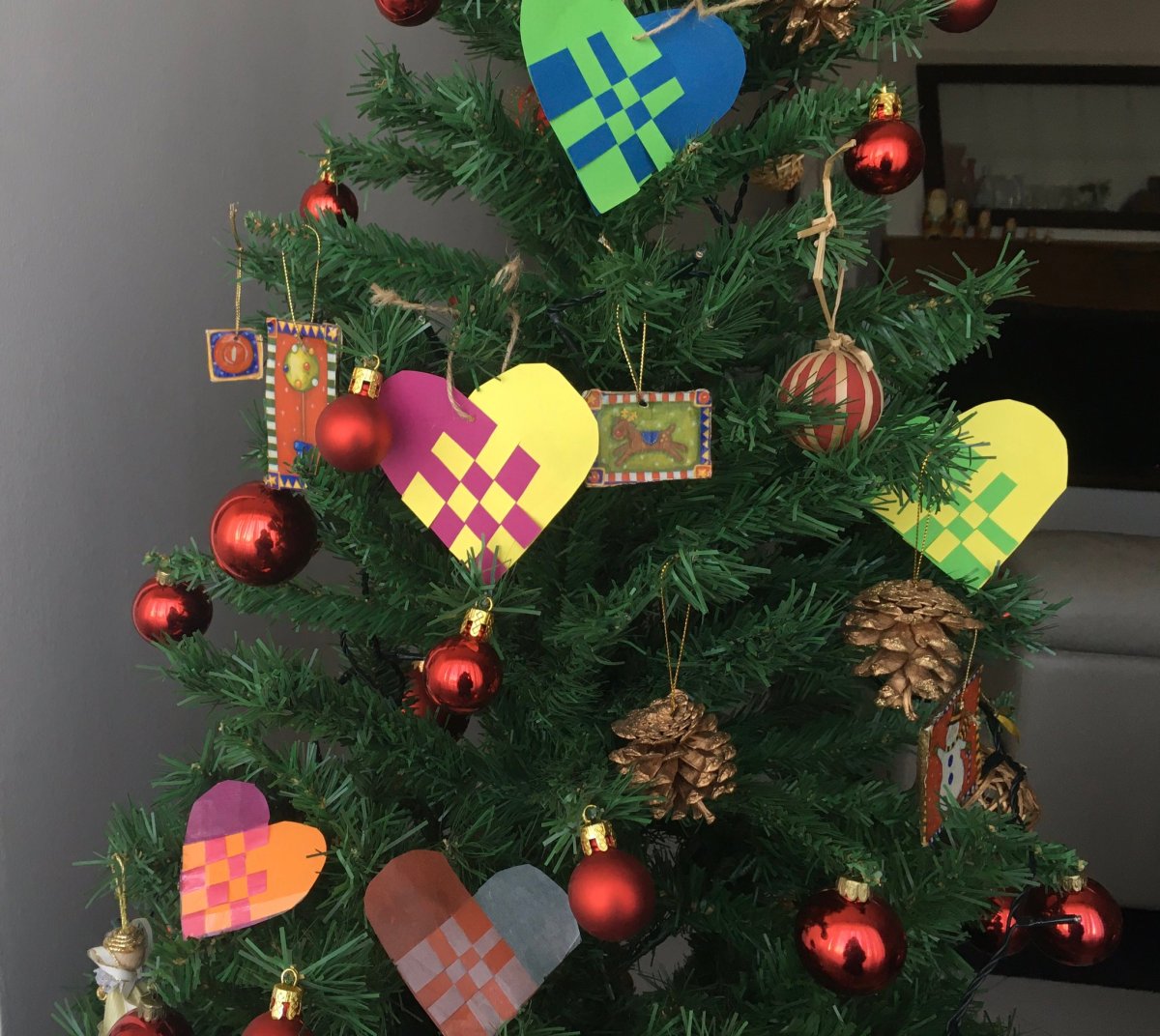
Pleated hearts, Julehjerter, are one of the most iconic Danish and Nordic Christmas symbol. They are most often red and white, and making them is a typical family activity.

Their origin is unknown, but the oldest heart was made by the fairytale author H. C. Andersen in 1860, still to be seen in his house in Odense. They might have become so common since Danish kindergartens started having children make them around 1910. The oldest depiction of a Chistmas tree decorated with pleated hearts dates from 1901 from the Danish manor house Søllestedgaard.

You can try making DIY Julehjerter yourself as I did

Kræmmerhus

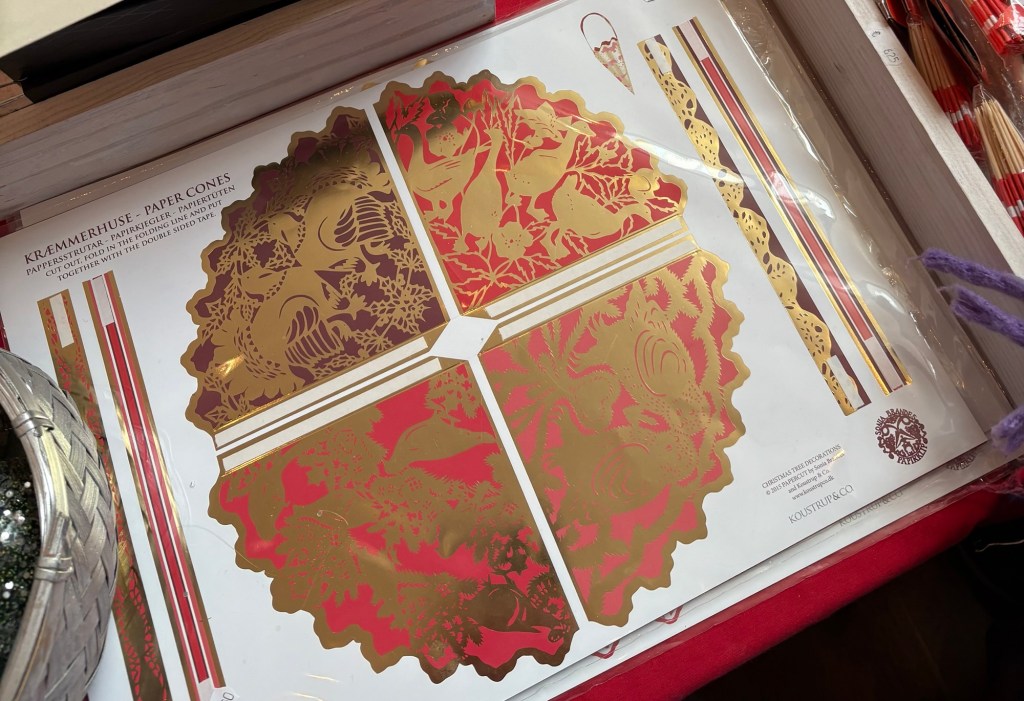
These paper cones, often homemade and decorated, are commonly hung on Christmas trees through an handle and filled with sweets, as hardy candy, bolsjer, or pebernødder – Træet skal spises – The tree has to eat.

They are as old as 1860s – their origin comes from how traveling peddlers  (kræmmere), would carry food flour, sugar and other food they got from merchants in bulk. Children would also got candy in such paper cones.

Kravlenisser

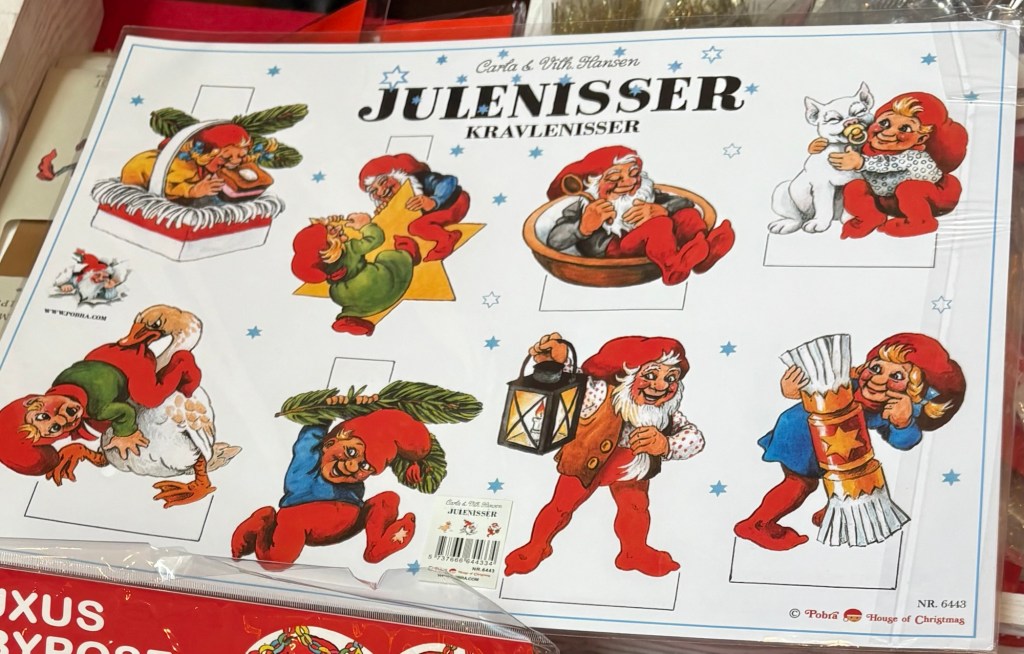
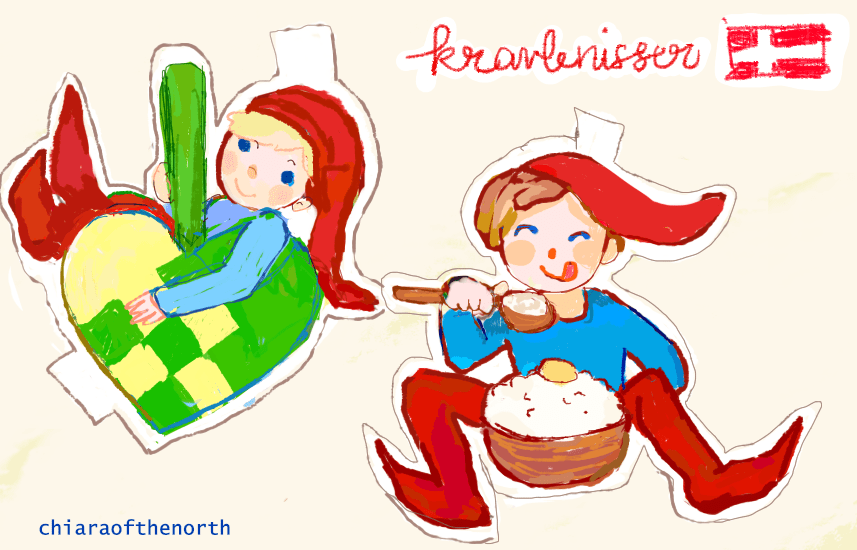
“Climbing nisser”, are drawings of nisser, Christmas elves, sometimes hanging from things, and are a more recent but not less typical Danish Christmas decoration. They were invented by the drawer Frederik Bramming, publishing the first group of them in 1947. On top of an ‘ark’ of kravlenisser he wrote “Her er de igen – Julens smaa fornøjelige Hyggespredere‘: Here they are again – Christmas’ small joyful Hygge-spreaders. The idea was then copied by many artists especially in the 50s and 60s, as Aage Dam, Illa Winkelhorn and Iben Clante. I also made my own (see below), inspired by common kravlenisser pictures as a nisse eating rice porridge, risengrød, and hanging from a julehjerte.

Glædelig jul!

sources: lex.dk

Cozy things Norwegians do around Christmas

Traditions and popular things to do in Norway around and on Christmas day: from movies to cookies

After Scandinavian Christmas Traditions and Finnish Christmas facts, I am continuing this series with Norway!

Watching Czech Cinderella

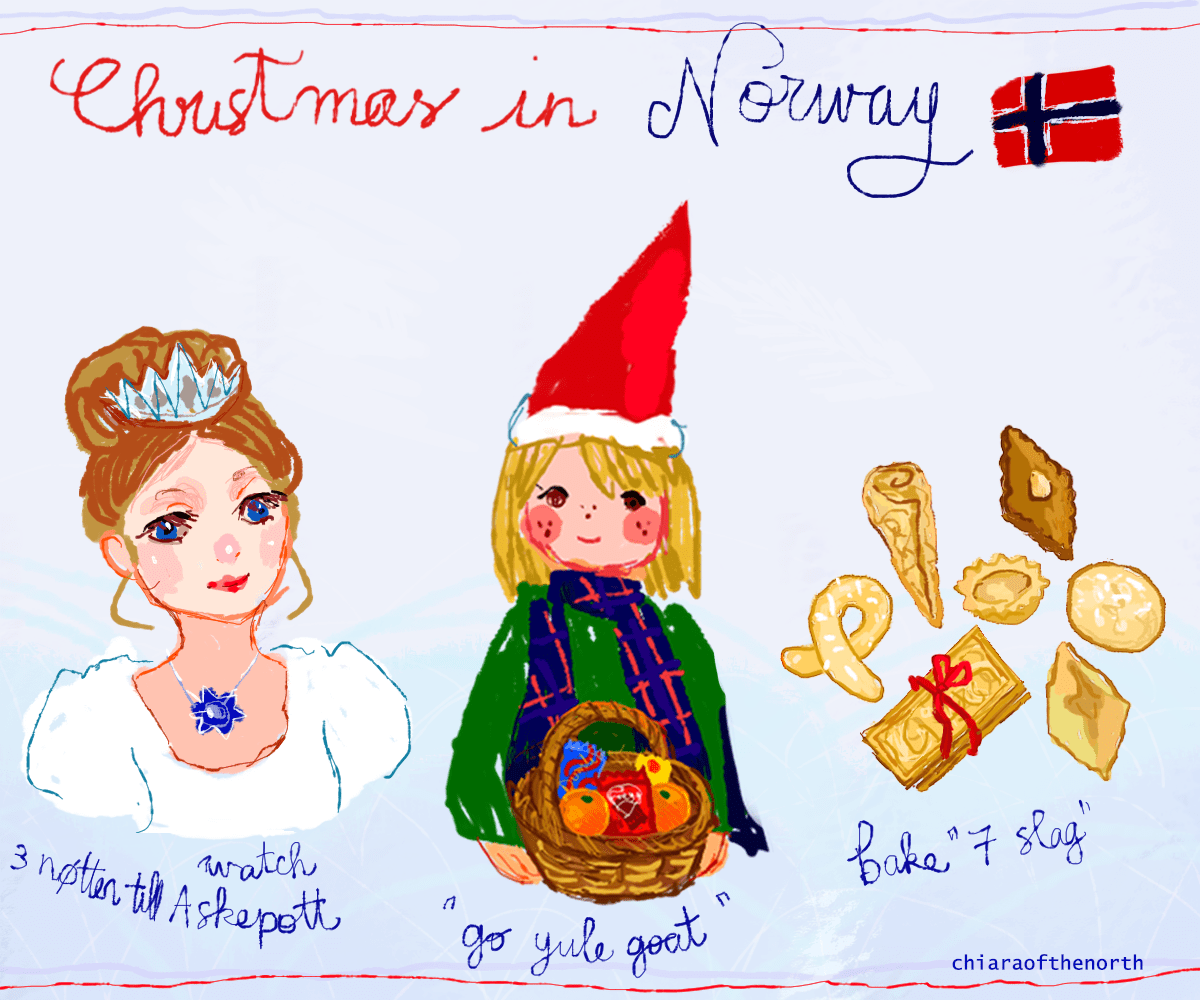
An iconic Christmas movie In Norway is actually Czech, from 1973: 3 nøtter til Askepott (3 wishes for Cinderella), broadcasted on Christmas eve in Norway since 1996 – Norwegians made a remake in 2021 though. Another popular Christmas movie in Norway is Reisen til Julestjernen (journey to the Christmas Star), a Norwegian production from 1976, in which a princess disappears to look for the Christmas Star…

‘Going Yule goat’ or Christmas trick-or-treating

In the period of Romjul, between Christmas and New Year, some Norwegian children go around with a Nisselue (Santa hat), with red cheeks and freckles painted on their face, or as angels, shepherds and other Christmas figures, singing Christmas Carols from door to door, in exchange for sweets. This is called å gå julebukk – to go Yule Goat..a sort of christmasy halloween. According to the Store Norske Leksikon it 14% of interviewed Norwegians or their children was going julebukk in 2017.

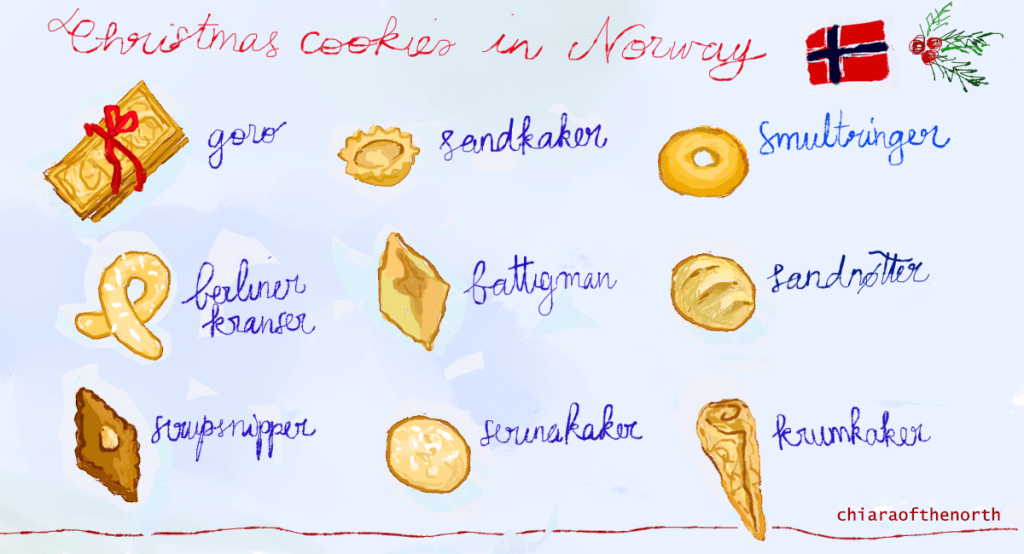
Baking 7 cookies

Some Norwegians bake the ‘Seven types’ – 7 different type of cookies, de Syv slag in Norwegian. Baking seven different types of cookies is a tradition that exists also in Sweden. There is no fixed list, but the classical types are Sandkaker, Pepperkaker (gingerbread cookies), Fattigmann ‘poor man’, Goro from Danish god raad, one of the oldest types from the 1800s- made with an iron press with patterns – Krumkaker, Berlinerkranser, Serinakaker.

Kransekake, kokosmakroner, sirupsnipper, sandnøtter and smultringer are also popular to be included in the syv slag according to godt.no.

Typical Finnish Christmas things

3 typical unique Christmas symbols and traditions in Finland

Here are country-specific facts about how Christmas is celebrated in Nordic countries, after an overview of Scandinavian Christmas I actually keep updating… Next up will be Norway and Iceland, so stay tuned!

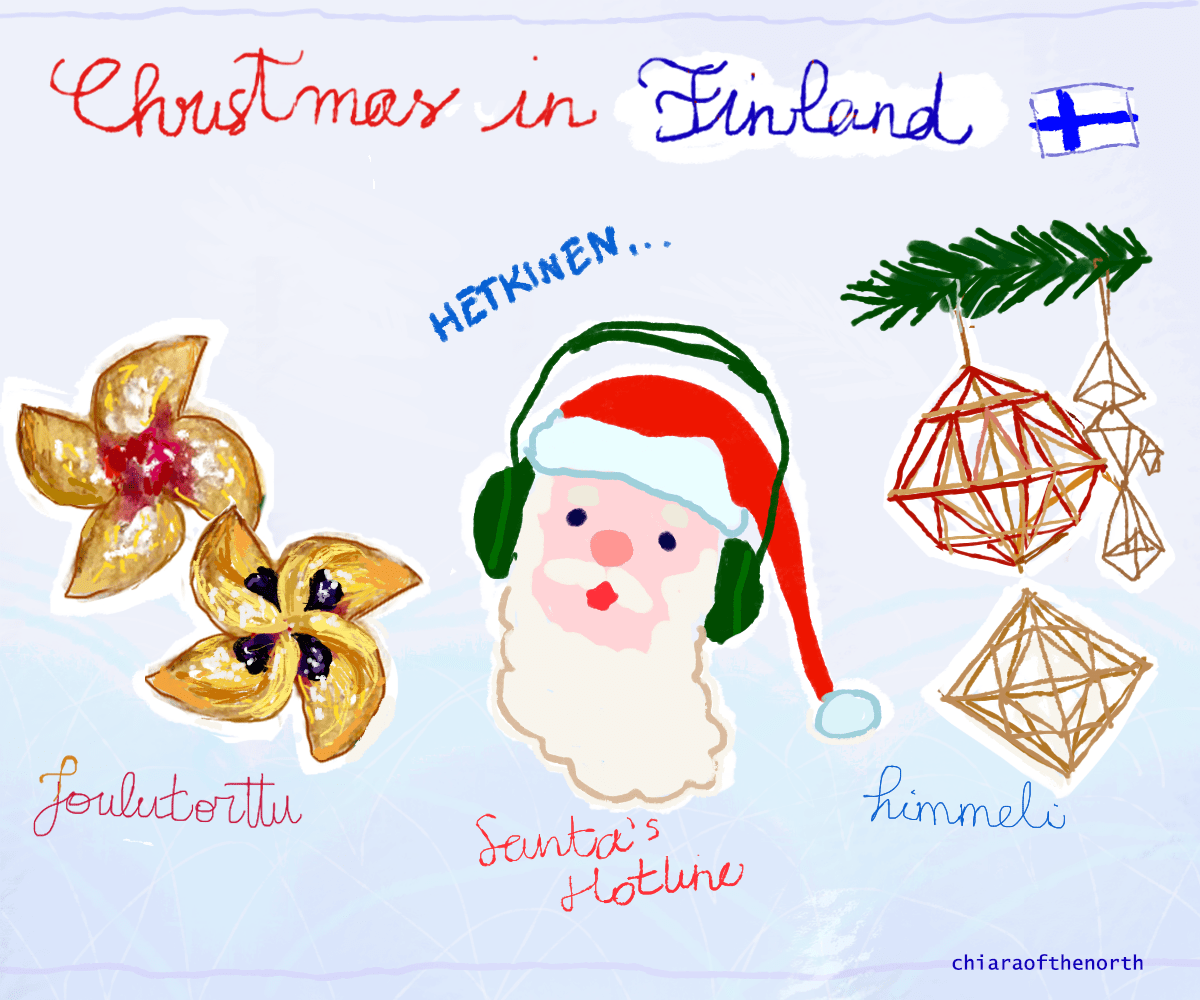
Joulutorttu: pinwheel pastry

Also called tähtitorttu “star cake”. it has the shape of a star or pinwheel, with apple or plum filling. It was already mentioned in the 1830s by Zacharias Topelius (Swedish-speaking Finnish writer), and it still is a Christmas classic in Finland, being present on 76% of Finnish tables on Christmas eve.

the Santa Claus Hotline

In Finland they have had the Joulupukin kuumalinja ‘Santa Claus Hotline’ for 33 years on tv. Here is the Finnish tv program for the day in 2024: There are breaks between one Christmas-themed cartoon and the other, where children can call, elves will take the call and some lucky children will be able to talk to Santa..It is also possible to send pictures, and some of these will be shown!

Himmeli Christmas decoration

Himmeli are wooden straw geometrical pendants, of various sizes, decorating Finnish houses. It comes from himmel, sky/heaven in Swedish and Germanic languages. Himmeli traditionally hung above dining tables until summer to ensure a good crop, as Finlandi.fi mentions.

DIY Danish Christmas Hearts

Julehjerter, a common Christmas ornament In Denmark and Norway.

As i had already mentioned talking about Christmas symbols in Nordic countries, a common homemade Christmas ornament in Scandinavia is pleated hearts, very common in Denmark, known as Julehjerter, and Norway, where they are called Juletrekurv.

Children make them with their family with paper of different colours, although they are mostly red and white. They have been made for around 150 years: the oldest known guide to making pleated Christmas hearts is found in an 1871 edition of the Danish journal Nordisk Husflidstidende. A 1873 pleated heart can be seen at the National museum in Oslo and one from 1866 at H. C. Andersen house in Odense!

Make your own Julehjerter

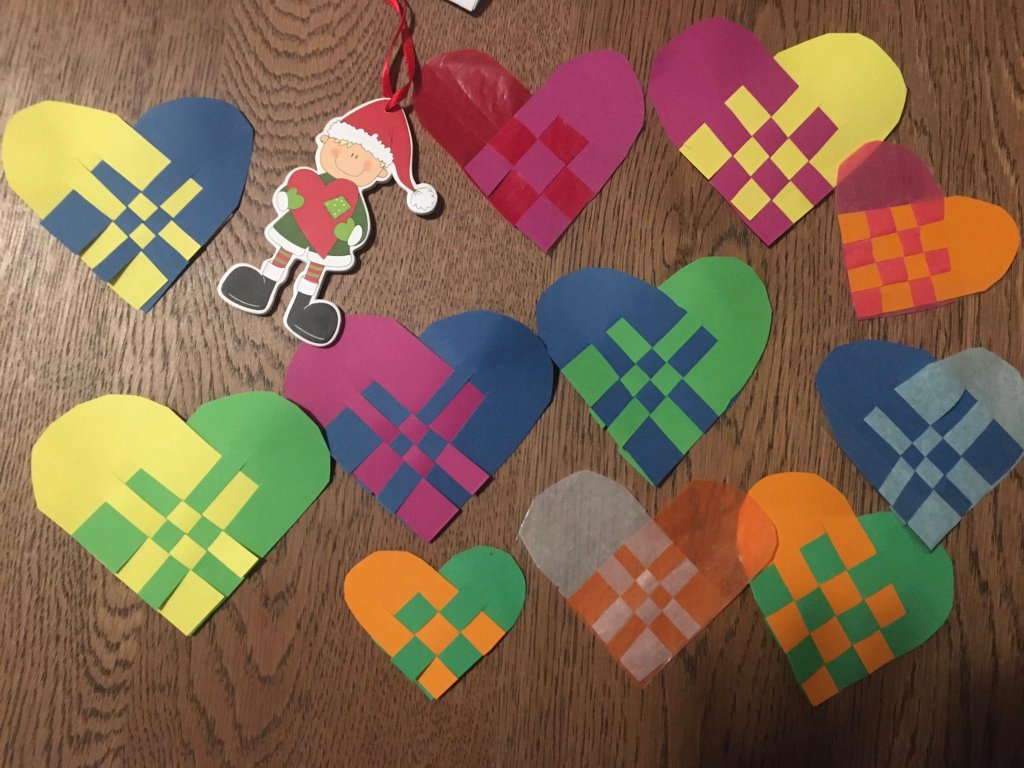
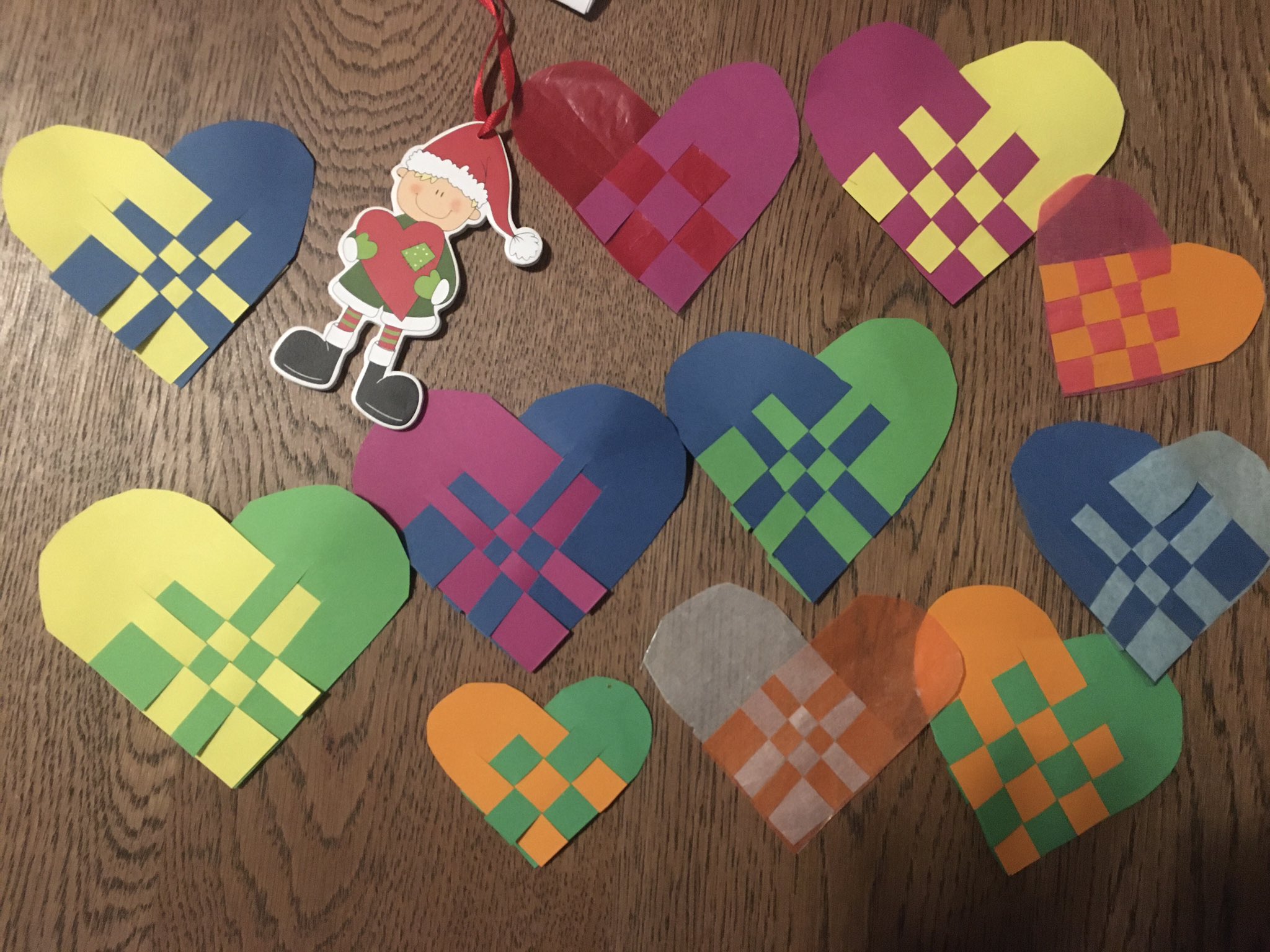
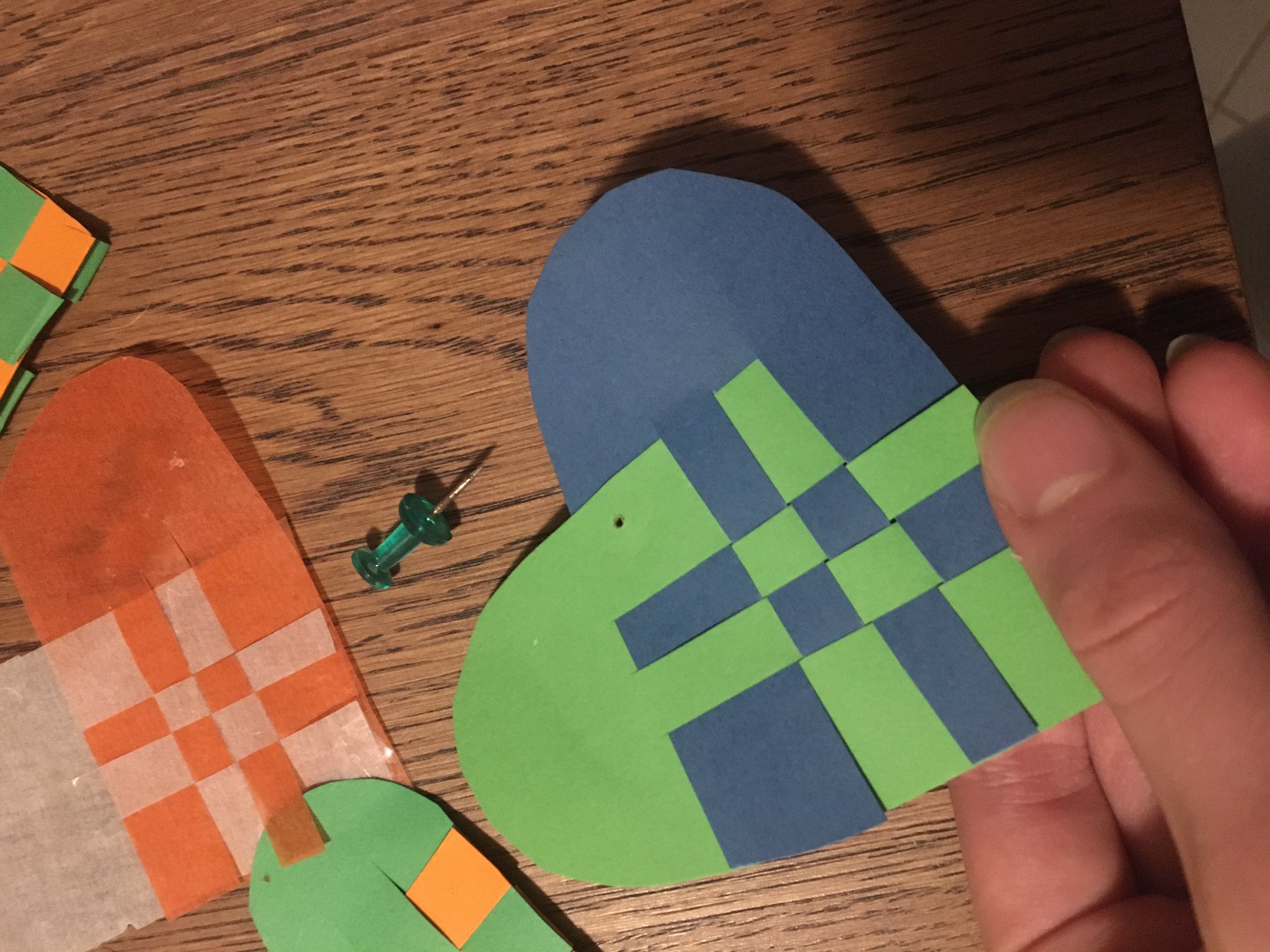
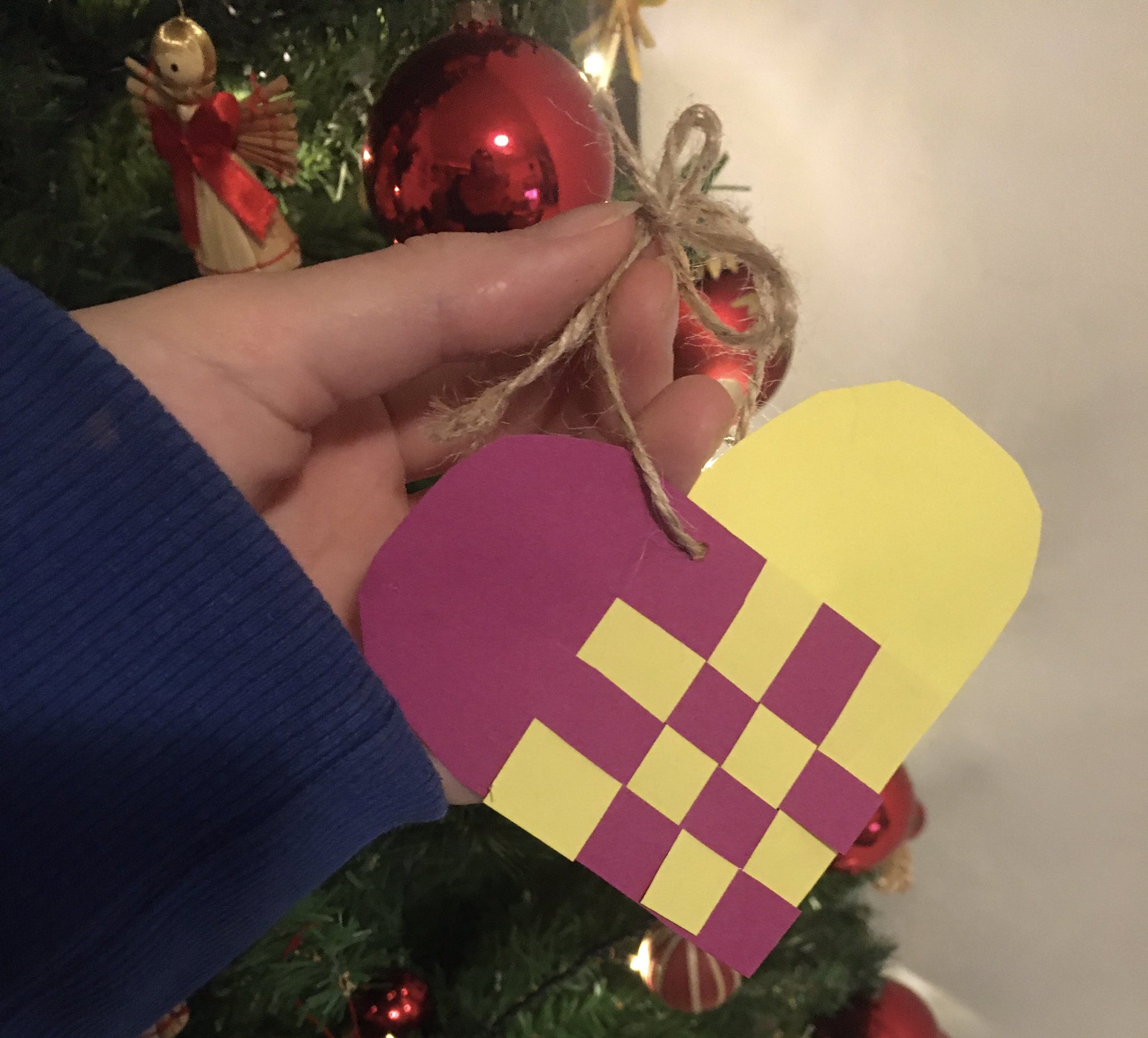
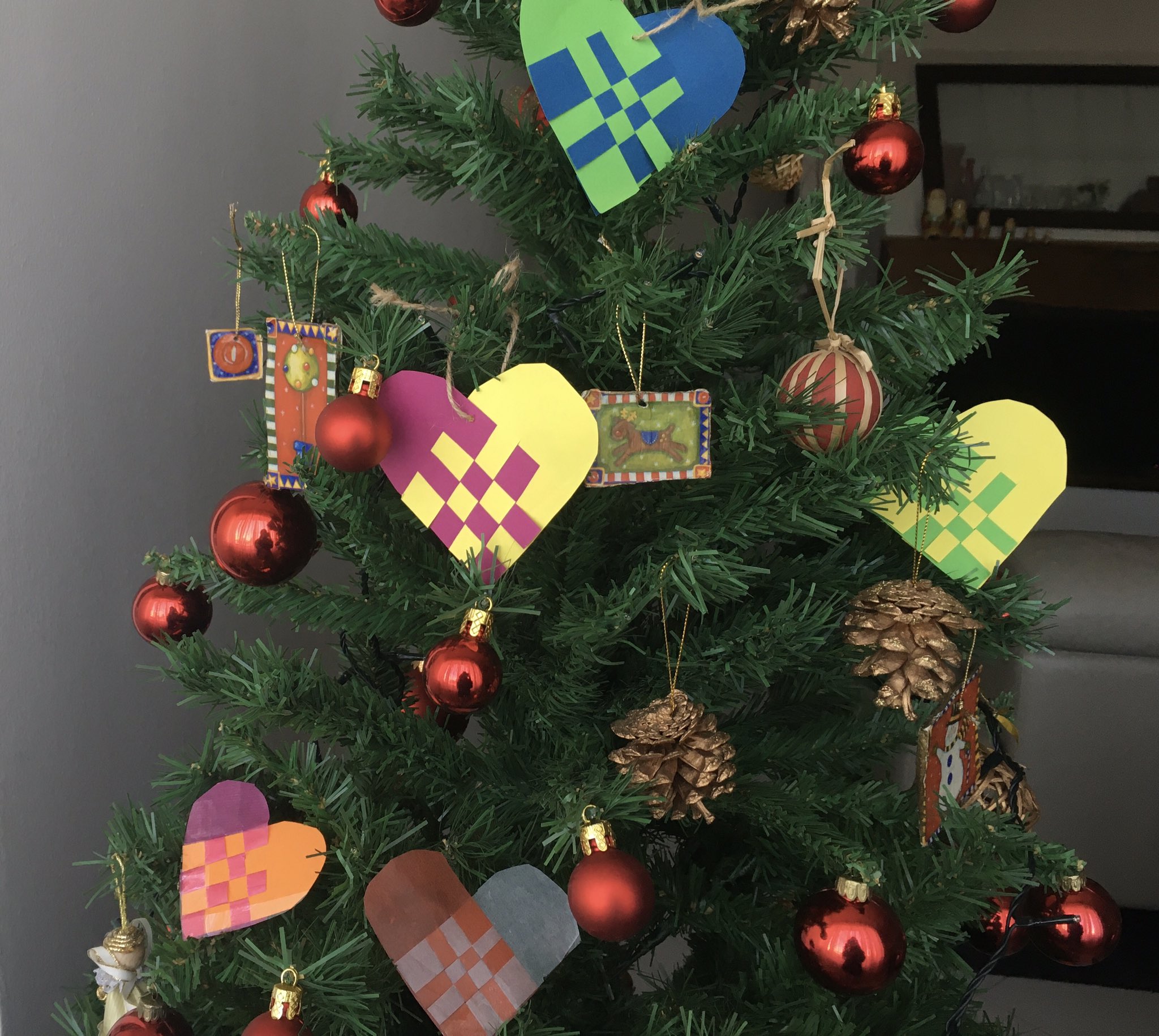
I made my very own, simple version of them, so they are not really a basket as the Norwegian name says, and I used strings to hang them on the tree.

what I used:
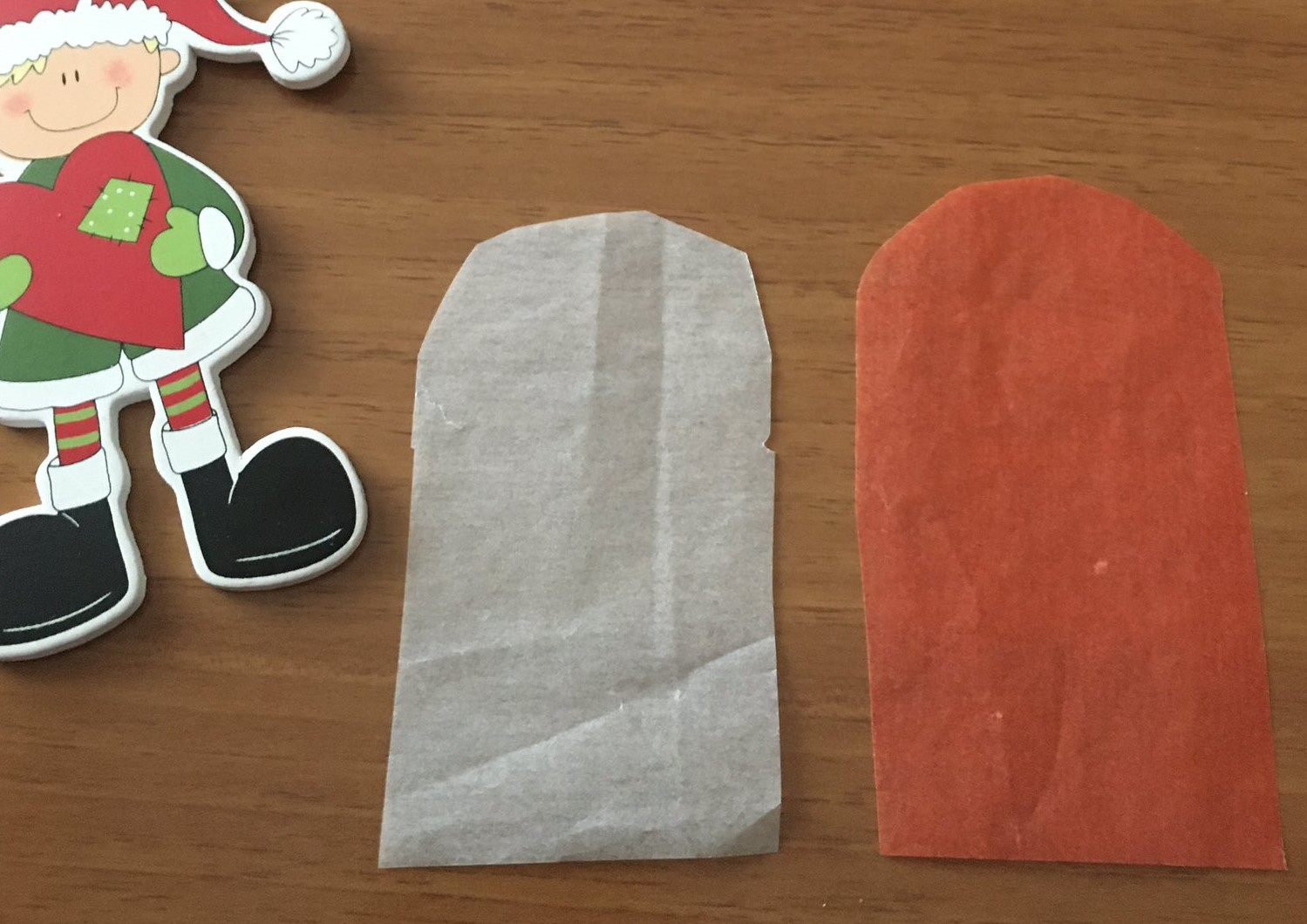
  • colored paper (the most traditional version is white & red, but do as you please). I used leftover paper we had at home.
  • Scissors, obviously and something to make holes on paper, as pins
  • Strings
Process:
  1. cut paper, put two sheets on top of each other when cutting so it is of the same size.
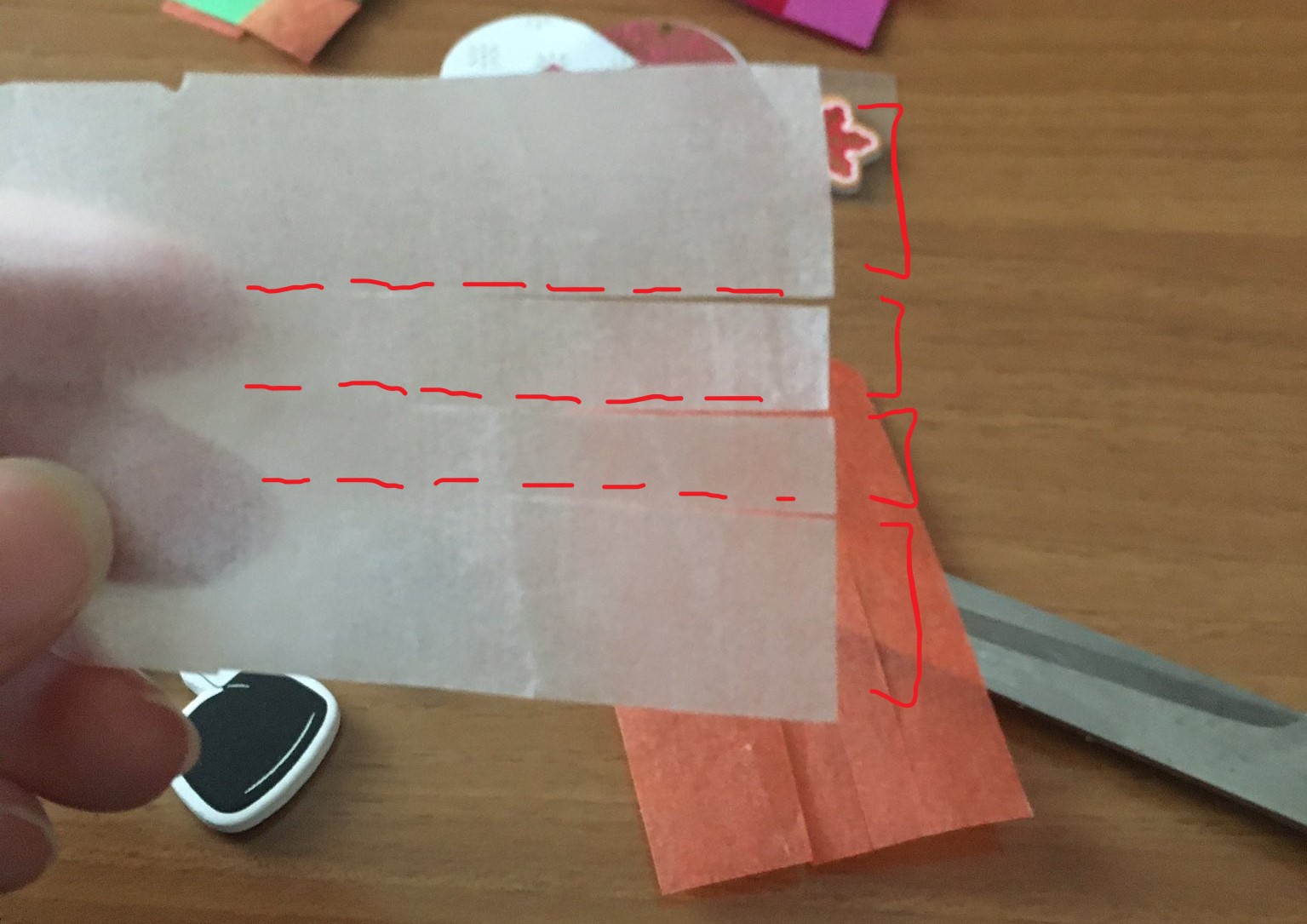
  2. cut the lines to intertwine the two pieces: they can be all of the same size or the two inner parts narrower.

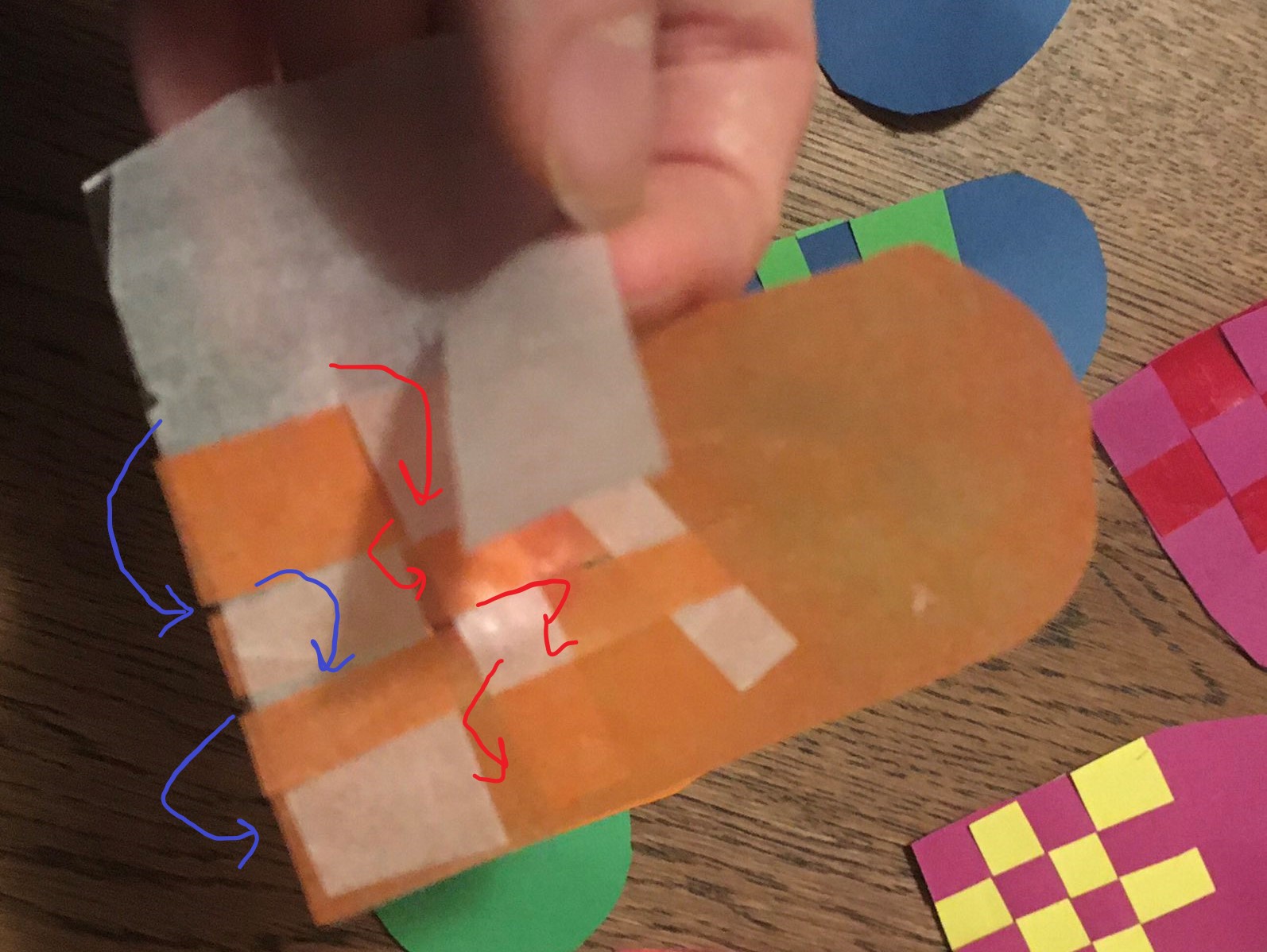
3. Intertwine the pieces: depending on how you cut the lines you will have a slightly different pattern

4. Make a hole and put the string in it

Your Christmas Heart is ready to be hung on your tree or wherever you want!

Please share with me your Julehjerter if you happen to make any 🙂

Glædelig Jul!

Scandinavian Christmas: symbols, sweets and gift bringers

Nordic Christmas, or Yule, means among others flag tree decorations, a pinwheel-shaped pastry, and gnomes.

Nordic countries share quite a lot Christmas customs and symbols, whether it is Christmas tree decorations, gnomes and elves instead of Santa Claus, and of course spiced cookies. Let’s see what a Scandinavian Christmas looks like!

1. Scandinavian Santa Claus: Gnomes and pixies

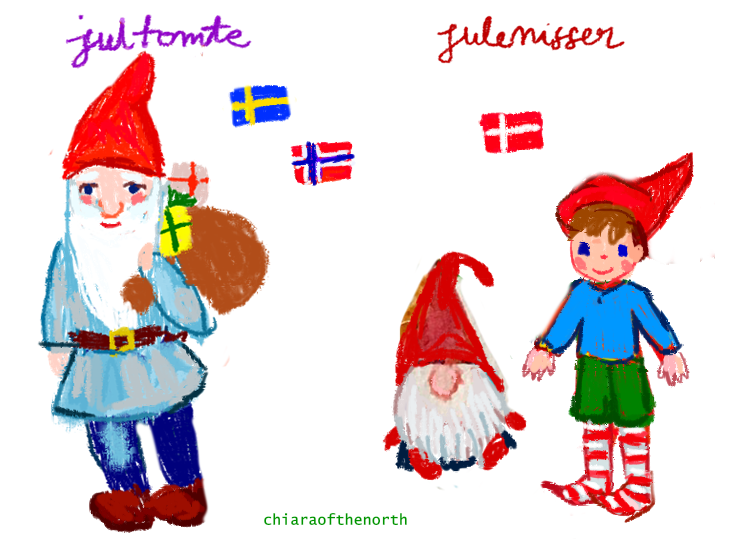
In Sweden and Norway it is a Santa Claus-like gnome bringing presents: Jultomte in Sweden and Julenisse. According to the tradition it lives in farms and takes care of the household while the family is sleeping, Bringing presents if the family treated him and the farm animals well. In Norway, an adult disguises himself as Julenisse and gives out presents to children, often greeting them by saying Er det noen snille barn her? (“is there any good child here?”).

In Denmark Julemanden (literally Christmas man) arrives on a sleigh with reindeers and has elves as helpers, Julenisser or just Nisser, who are believed to live in barns and attics. Children leave rice pudding for the Nisser, who find it delicious accoring to popular belief. In the Faroe islands it is called Jólamaðurin.

Initially the gift bringer was the Julbocken/Julebukk goat mentioned above, so in Finnish Santa Claus is called Joulupukki

2. Christmas Decorations: straw goats, pleated hearts and flags

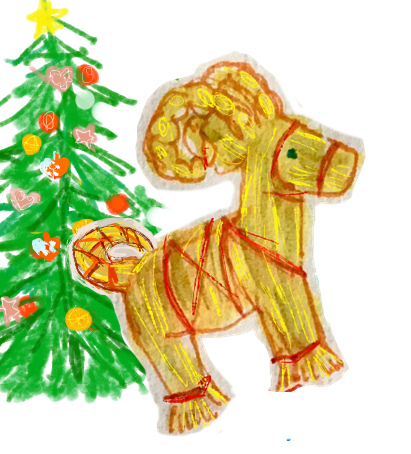
Yule Goat: A common Christmas symbol and decoration is a straw goat, Julbocken/Julebukk, often put under the Christmas tree. It goes back to the Viking times and it was a household protector, representing Thor’s magical goats, who lead him in the night sky. Bigger versions can be found in town centres – this tradition started in the Swedish town of Gävle in the 60s, and every year this traditions is repeated with a Julbock as tall as around 10 metres.

Things to hang on the tree

Julehjerter are pleated hearts, very common and in Denmark and Norway (Norwegians call them Juletrekurv “Christmas tree baskets”), but also present in other Nordic countries as a typical Christmas symbol. Children make them with their family with paper of different colours, although they are often red and white.

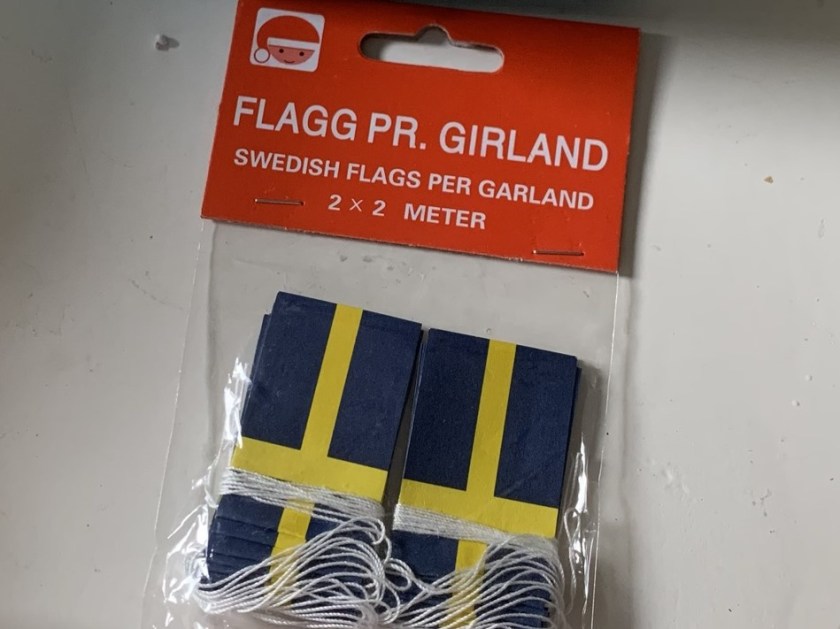
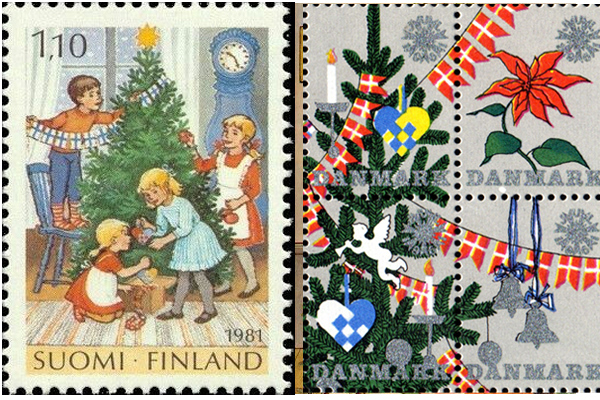
Flag garlands: Decorating Christmas trees with flags originated in Denmark and it can be seen in all Nordic countries, although it was more common in the mid-20th Century. A survey showed that one in three Norwegians thinks flag garlands are suitable Christmas tree decorations, while only 3 % and 5 % is of the same opinion in Sweden and Finland. Nonetheless, I bought a Christmas tree flag ornament in Sweden…

3. Christmas treats: spiced cookies to rice porridge

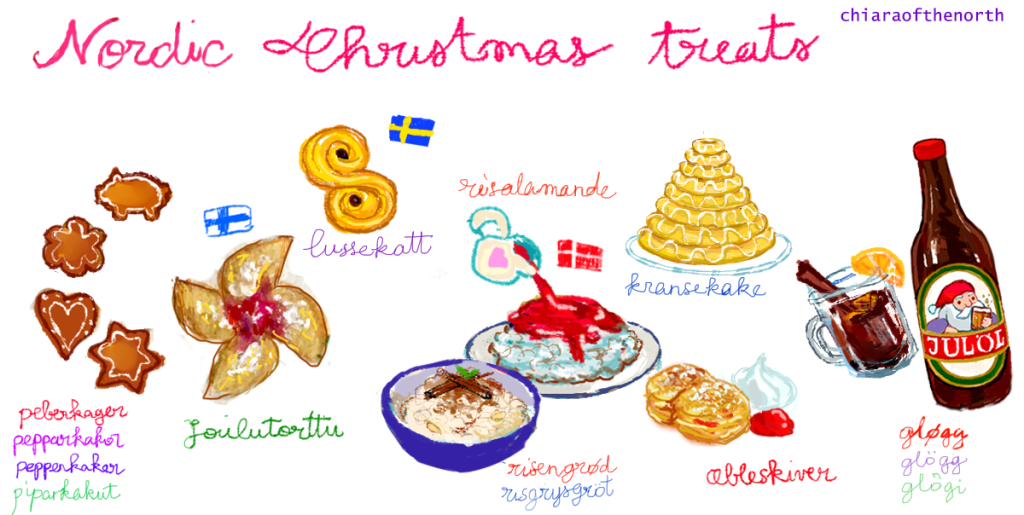
  • Baking gingerbread cookies is a typical Christmas time family activity: Pepparkakor in Swedish, Pepperkaker in Norwegian and Peberkager in Danish, piparkakut in Finnish.
  • Hiding an almond in rice porridge with a prize for who finds it is a common things in Nordic countries. in Sweden the rice pudding is called risgrysgröt. In Denmark you have the Risalamande (from French ris à l’amande, just because French sounded fancy), It is served cold with a warm cherry sauce, kirsebærsovs. The lucky person who finds the entire almond in it wins a marzipan pig!
  • Lussekatter are Swedish saffron pastries, typically eaten for Lucia.
  • Joulutorttu, a Finnish pastry filled with plum or apple jam.
  • Æbleskiver are Danish fried snacks, round and often served with jam and powder sugar. The name literally means “apple slices”, although apples are usually not an ingredient!
  • Kransekake, Norwegian and Danish almond cookie rings, commonly eaten on festive occasions.

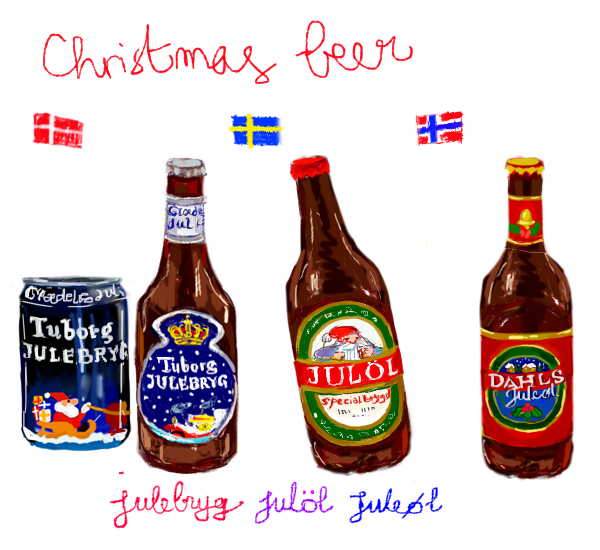
Mulled wine, glögg, is a classic, with spices as cinnamon, cardamom and ginger, but you can also drink Chistmas beer! It is darker and spicier than the usual ones.

God Jul!

more articles