False friends in Danish, Norwegian, Swedish and Icelandic that can lead to misunderstandings and funny situations between Scandinavians.
False friends are a very common thing in similar languages, and they can cause funny or weird situations, from calling someone calm instead of fun and pastries becoming headaches. Or insulting a girl by calling her girl.
So here is a list to find out curious false friends and keep yourself safe from incoveniences. As you will notice, Danish and Norwegian often have the same meaning opposed to Swedish, but not always.
(se-dk-no) word
Swedish meaning
Danish meaning
Norwegian meaning
rolig
fun (calm=lugn)
calm
calm
artig
polite
funny
funny
frukost/frokost
breakfast (lunch=lunch)
lunch (breakfast=morgenmad)
breakfast (lunch=lunsj)
blomma/e
flower (plum=plommon)
plum (flower=blomster)
plomme=plum (flower=blomster)
varelse/værelse
(living) being (room=rum)
room
room
by
town/village (city=stad)
city (town=landsby)
city (town=landsby)
stad/sted
city
place
place
semester
holiday (semester=termin)
semester (holiday=ferie)
semester (holiday=ferie)
lov
summer break , promise (law=lag)
law (a promise=et løfte, but to promise=at love)
law (a promise=et løfte, but to promise=at love)
rar
weird (nice=snäll)
nice, friendly
weird (nice=snill)
konstig/kunstig
weird
artificial (weird=mærkelig, underlig)
artificial (weird=rar, merkelig)
snål
stingy
–
weird, odd
le
smile (laugh=skratta)
laugh (smile=smile, read smeeleh)
laugh (smile=smile)
grina/e
weep, cry, also gråta
laugh (cry=græde)
cry (laugh=le, also gråte)
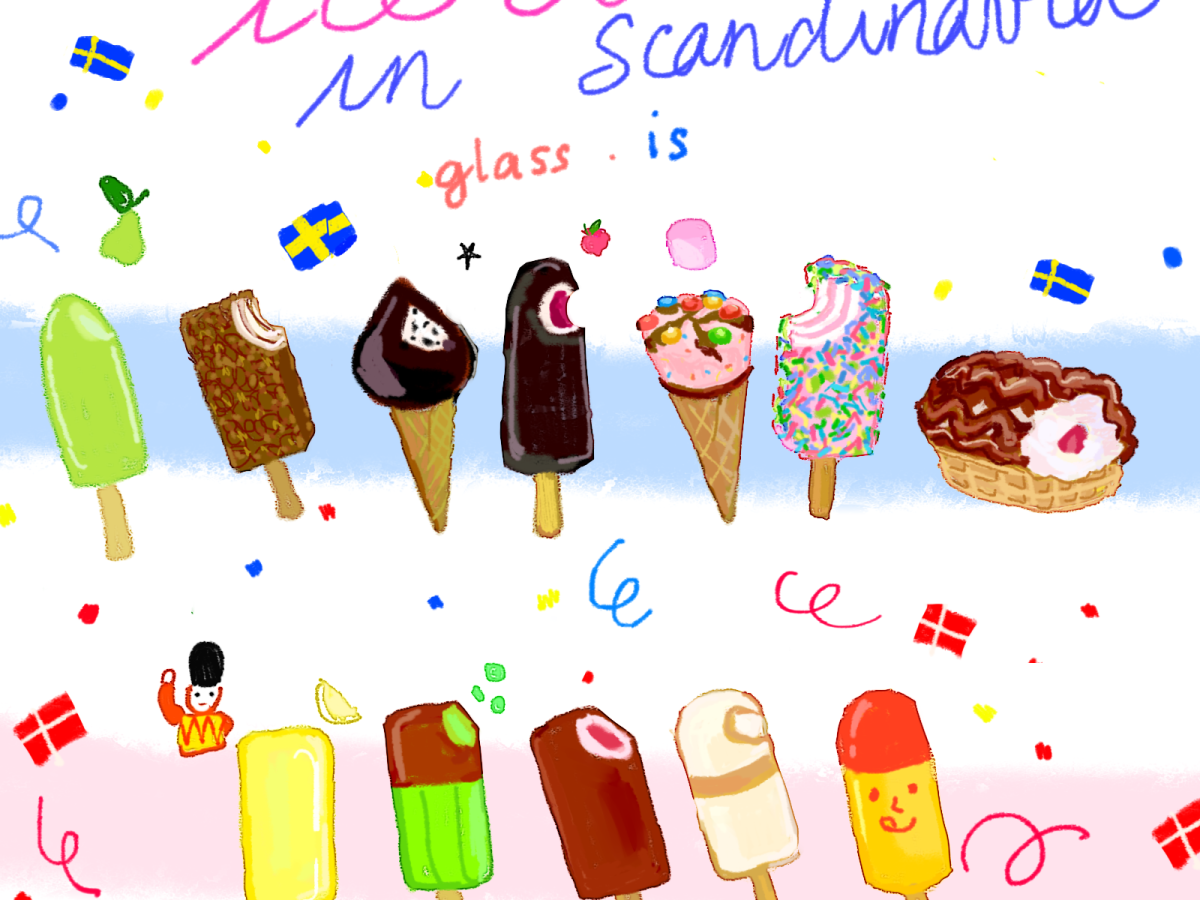
glass
ice cream (glass=glas)
glass (ice cream=is)
glass (ice cream=is)
kjol/kjole
skirt (dress=klänning)
dress (skirt=nederdel)
dress (skirt=skjørt)
killing
young goat
kitten*
geitekilling=young goat
bums
immediately, at once
pimple
–
kryddsill/krydsild
spiced herring
crossfire (spiced herring=kryddersild)
-, spiced herring=kryddersild)
tallrik/talrig
plate
numeous (plate=tallerken)
-, plate=tallerken
hurtig
cheeky
fast
fast
anledning
reason
reason
opportunity
bedrift
achievement
company
company
stygg
naughty
ugly
fly
escape
airplane
flight
tillbud/tilbud
incident
offer
offer
tull
customs
– (customs=told)
joke/nonsense (customs=toll)
snort
snot
lace, cord
driva/e med
joking with/kidding
doing
måste/må jeg…
do I have to?
may I?
do i have to?
and here special section with Naughty words…. Pay attention
Swedish meaning
Danish meaning
Norwegian meaning
skede
phase
vag**a
tös/tøs
girl
girl
sl*t
bolla/e
play boll (to f8&k=knulla)
to f*ck
en bolle=bun pastry, å bolle seg=chill, have fun (to f8&k=knulle)
kneppe
–
to f**k (button=knappe
button (fuck=pul3)
mås
seagull
butt (seagull=måge)
– (seagull=måke)
svans
tail
fag**t
–
källing/kælling
kitten*
b**ch
–
kuk
d1ck
cuckoo , mess (d*ck=p1k)
d1ck
bärs/bæ,sj
slang for a beer
poop
icelandic also has a few interesting cases:
Swedish
Icelandic
hugga
chop
console
bakverk
pastry
backache
That’s all for now, I will keep this updated in the future!
Estonian is a Finnic language, sharing many similarities with its ‘bigger’ sister Finnish, while being unrelated to all their bigger language neighbours
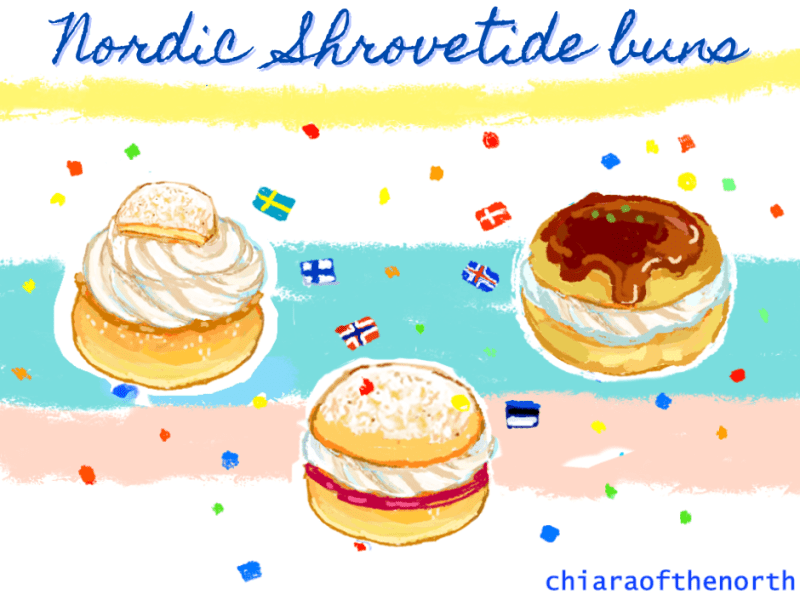
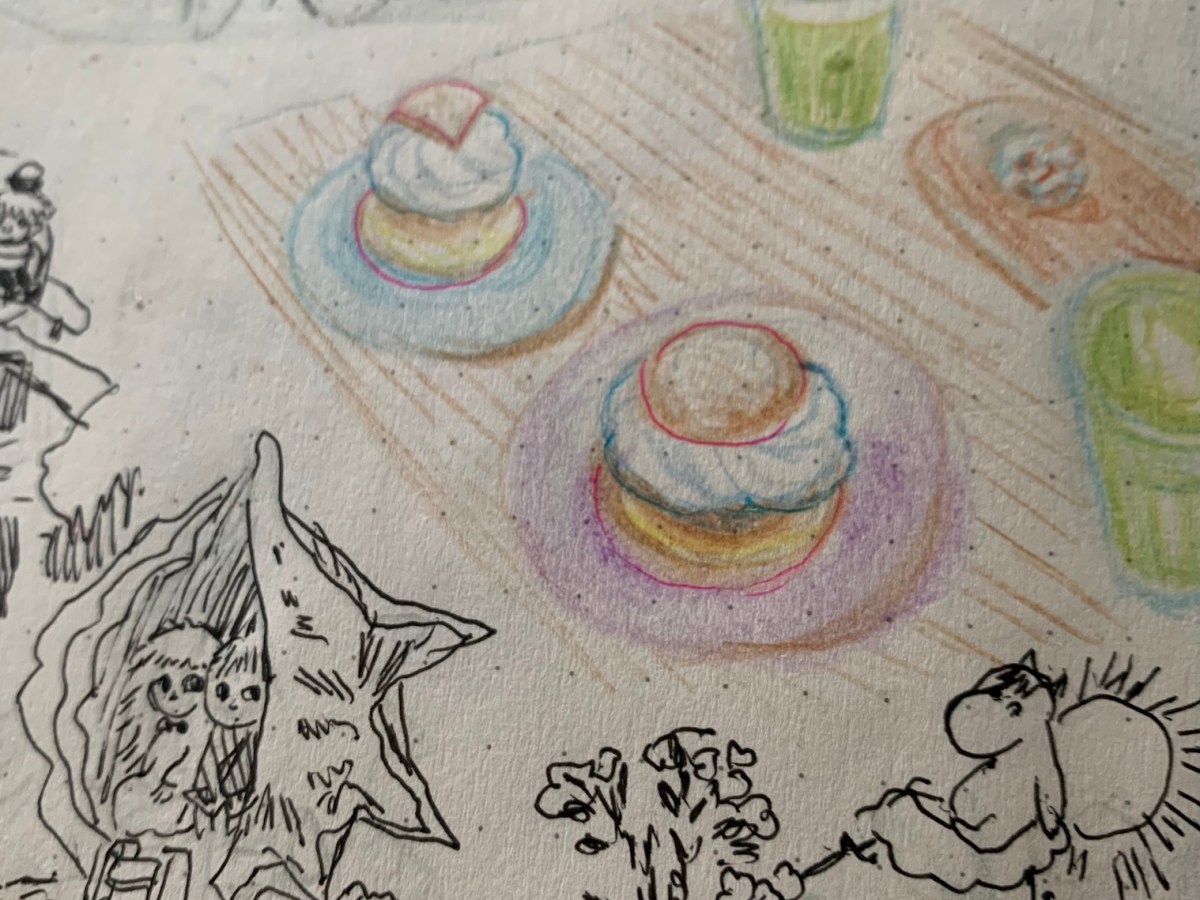
Cream buns are enjoyed in Nordic and Baltic countries during shrovetide, between January and February. Sweden’s classic semla has almond paste, while other countries variations include jam, vanilla cream, and chocolate icing top.
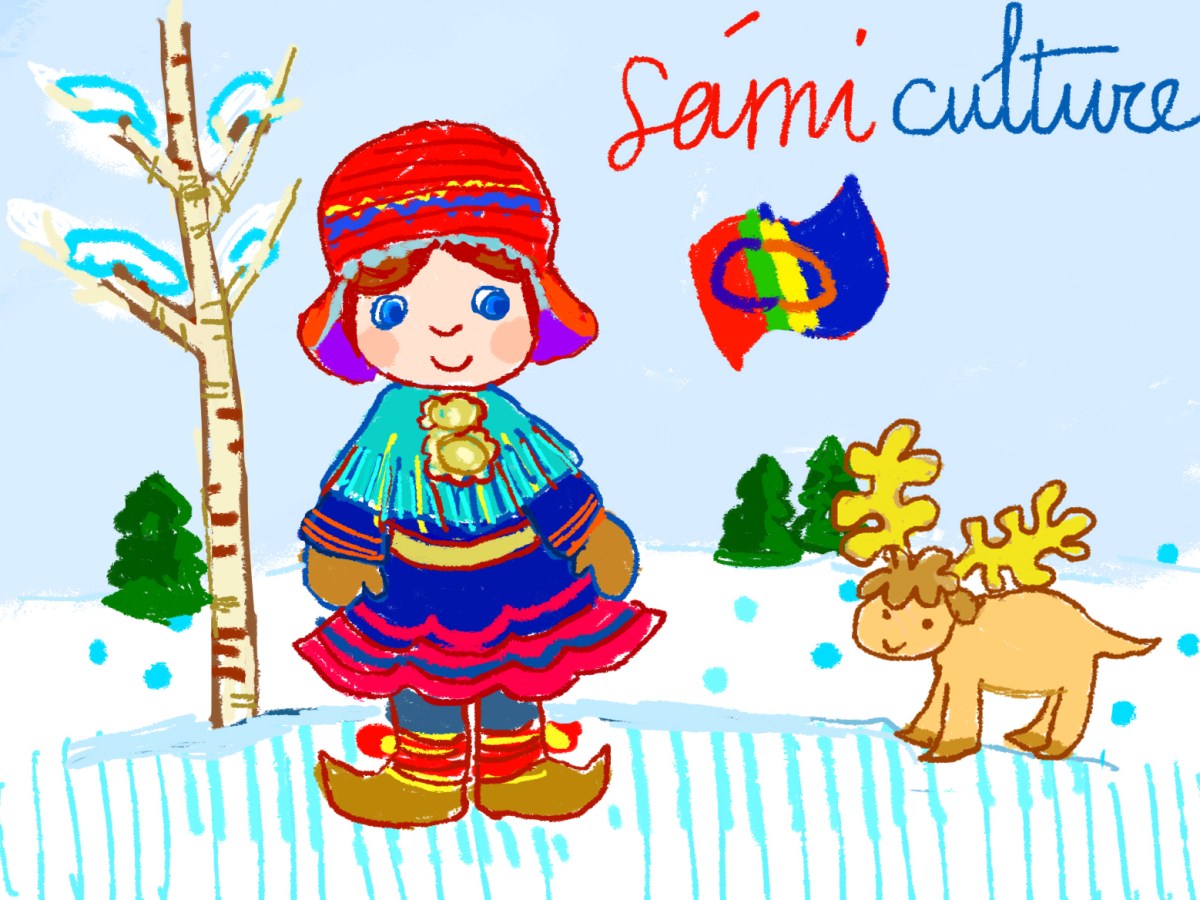
Sámi people, indigenous people of North Scandinavia, have a distinct culture, symbolised by its unique flag and traditional clothing, and part of it are Duodji handicrafts and unique musical expression through yoik.
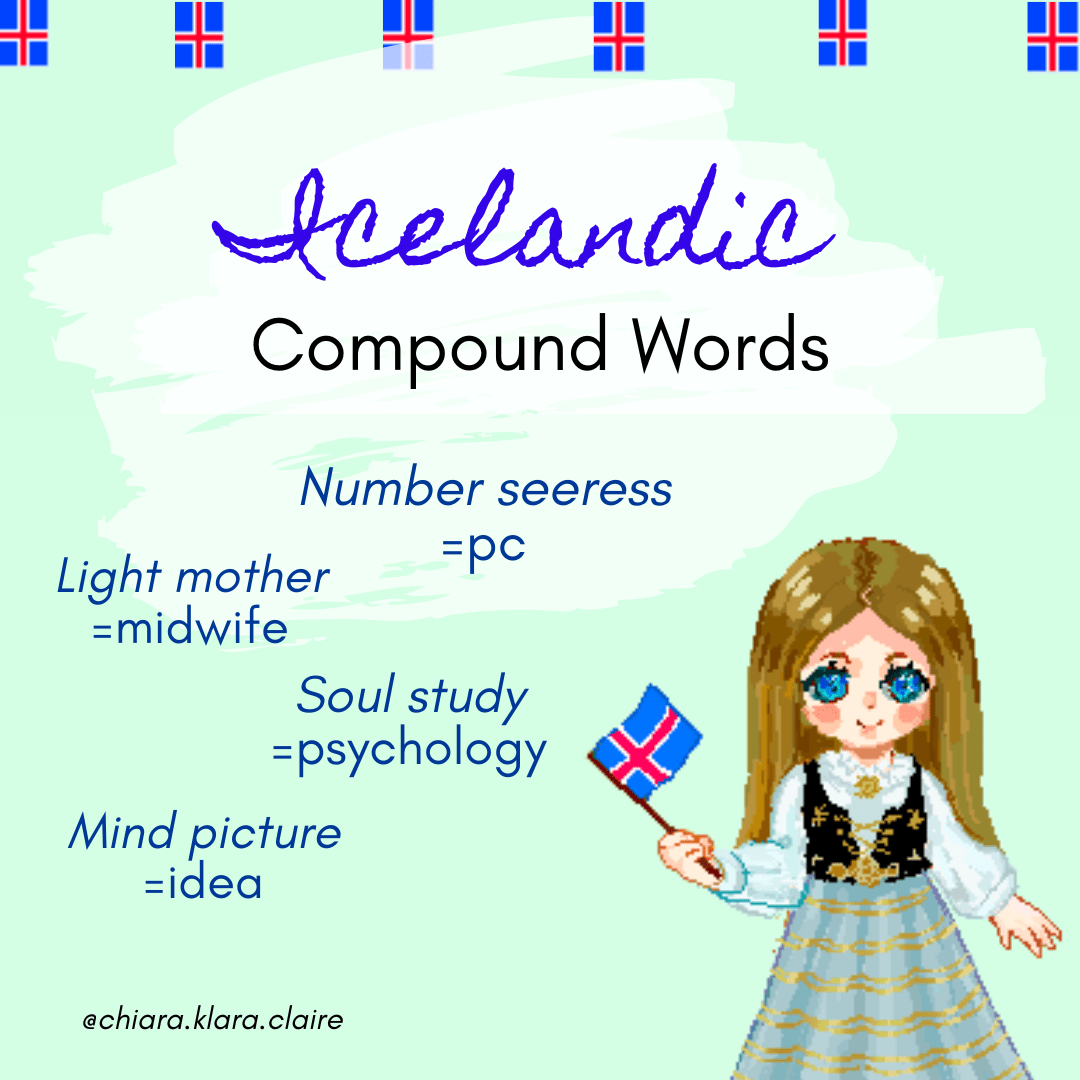
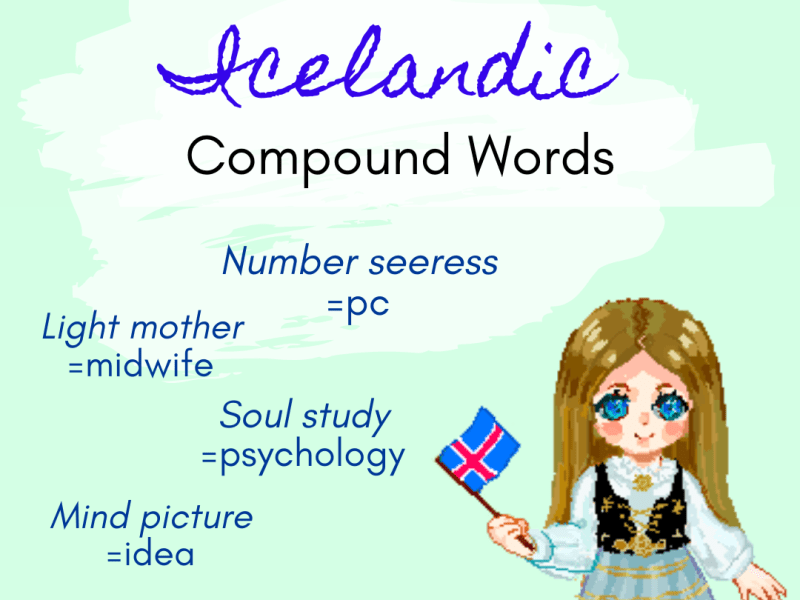
curious Icelandic compound words, from unique Icelandic words as ‘number prophetess’ for computer to ‘light pear’ for lightbulb.
Icelandic, like other languages, has a lot of compound words, expressing a concept with multiple other words. For new concepts, for example technology-related vocabulary, Iceland has a committee inventing new words for new concepts, by assembling existing Icelandic words. This is to follow the language purism policy, and avoid just adapting foreign words or using loanwords.
Here are some Icelandic compound words I like. Can you guess the meaning by looking at the literal translation?
words unique to Icelandic:
a classic example is tölva – Number-Prophetess (tala+völva): computer
ljósmóðir – light-mother: midwife
bergmál –rocks-language: echo
spékoppar – naughty cups: cheek dimples
tónlist – sound-art: music
hugmynd – mind-picture: idea
ástfanginn – Love-captured: be in love. This one is probably my favourite!!
hugfanginn – mind-captured: fascinated
sálfræði – soul-study: psychology. Most academic subjects have their own icelandic name, as málfræði – language-study: grammar.
ratljóst – know/find the way (rata)-light: enough light to wander. This is however not widely used.
Viðskiptavinur – business-friend: customer
Mörgæs – Fat-Goose: penguin
smokkfiskur – condom-fish: squid: it might be that smokk comes from smock, however, smokkur means condom, and that would somehow makes sense…
Compound words that also exist in other languages
Icelandic also took words that are jut adaptions of the original Greek words, literally translating into Icelandic, and shares quite a few with other (Germanic) languages, which are still curious if you are not a speaker of any of them.
eldfjall – fire-mountain: volcano (just like 火山 in Japanese)
Reikistjarna – wandering-star: planet. (what Planet originally means in Greek)
rafmagn – amber-power: electricity (as electricity originally comes from Greek ēlektron meaning amber)
flóðhestur – river-horse: hippo. (As in Scandinavian languages flodhe/äst or ‘Nile-horse’ in German and Dutch Nipferd/nijlpaard, it is just the literal translation of Greek hippopotamos). Nashyrningur – nose-horn: rhino. See above literal translation of rhinocerus, as Noshörning, neshorn, Nashorn, Neushoorn.
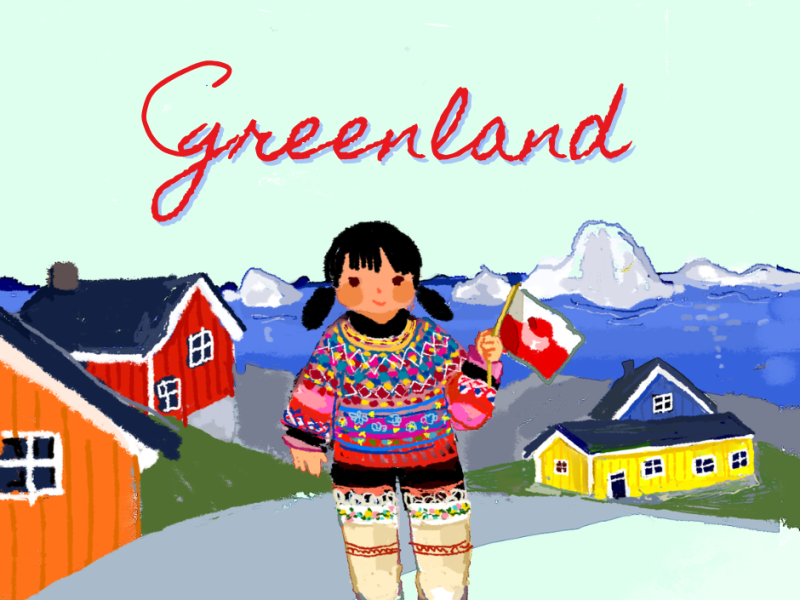
Discover Greenland, home to the Inuit Kalaallit, and its most iconic aspects as its flag, language and folk costumes. The biggest island of the world has a rich history of indigenous culture intertwined with Norse colonization and later Danish rule.
4 tips to practice a language as Swedish and Dutch, where most people are fluent in English and foreigners struggle to improve the local language.
You are learning a language and would be eager to use it when you are in the country where it is spoken. But what if everybody switches to English the second they hear you are not from there?
This is a typical problem in Holland and Scandinavia, where most people speak English well, and the fact that English will simply always work better and be the easiest option prevents you from attempting at speaking anything else.
I have had experiences with Dutch, Swedes, Swedes and Norwegians in various contexts and with the given language being at various levels at different times, and these are a few tips to exercise the language if you are not (or do not feel) fluent yet:
1. important information in English, smalltalk and chitchat in local language
Sometimes you just have to be sure you know what is going on and what you need to do, other times you can miss some parts of a dialogue without causing yourself any damage – in the latter give a go at your target language, you’ll never understand 100% anyway if you never practice.
example: Last time I was in Denmark, I heard a confusing announcement on the train. As i wanted to be 100% sure my train would reach my destination, I first asked that in English to the person sitting next to me, to switch to Danish right after having received that piece of information, (saying that I actually did speak Danish) and had a nice conversation in it.
If your level is still basic, do make sure to (be able to) say small things like hi/thanks/sorry/excuse me/good evening etc. You’ll get those small expression stuck in your head, and give yourself and others the feeling you do speak the language, which is a better start than not using it at all.
3. Prepare what you want to say in advance, or fake it until you make it.
Sometimes you can look up how to properly say something in advance, as in shops and restaurants – things like ‘do you have a free table’ ‘i would like to this and that’, or even look up some extra vocabulary for a conversation of which you already know the topic.
Also: in given contexts like shops the things you get asked tend to be standard, as ‘do you want a bag?/receipt..’ , so you know what words might be pronounced, anticipating what you’ll be asked, and be less scared you will not understand.
example: I had to talk to a Norwegian client on the phone, so I wrote down what I would say, and looked up vocabulary I needed: that means learning new words and getting to practice with them!
3. Find ‘comfort zones’ and people with whom you stick to the language
If your level in a language is not very high, you might not dare making attempts with strangers. I am a quite shy person myself, other than a perfectionist, so I know that feeling well. But you learn a language by practicing it (and making mistakes), and as soon as you have someone or somewhere to freely practice -no matter how off your grammar is, how many gaps you have in your vocabulary, how many times you ask for repetitions – do it. Having active conversations is also important to absorb the language yourself and learn from your language partner.
With strangers you can stick to English if you feel uncomfortable otherwise, but it is good to have a situation in which you’ll always stick to the language (This counts also when chatting online!). Or at least often enough that your default language is Swedish, Finnish, etc. You learn to swim by swimming – but it does not have to be in the open sea from moment one.
Other options if you do not know anybody, you can use find tandem partners on apps such as hellotalk, tandem etc. and give yourself the rule to rather use translators, but never use English. Events as language cafés are also great occasions to practice if you find any!
keypoint: sometimes it is a matter of self-confidence more than language level
The thing with Swedish, Dutch, Danish etc. is, you might be pretty good at them, but if you are a bit insecure, allowing yourself to use them language over English will be hard. In countries where the average level of English is poor, that is of course completely different.
So you’ll just exercise your Italian, Japanese, Spanish, etc. without thinking much about whether you are good enough at it. You might barely know how to order a drink in Italian or Japanese, but still, you’ll do it, because they will understand it better than in English, even with bad pronunciation or grammar. Maybe they will be relieved they can use their language with you, while the Dutch either want to help you by using a language you are more fluent in or just want to have a smooth communication.
It does take some self-confidence to stick to a language if the counterpart easily switches to English! Even if it does not necessarily mean you are bad at it. It is all about finding contexts and people to use the language, broadening them gradually as you get more comfortable or fluent enough to use it for everything.
How I have done it: First I would use Dutch only in written form and with given people, then I got to the point I’d dare using it with strangers, in shops, but not at an airport desk, then I started using it even for formal things like registering at the municipality , but I did not switch back to Dutch if people switched to English. Now i stick to Dutch, always. With Danish I am in the phase where I could use it in formal context but do not always dare due to fear of not understanding. But I did ask for information in Danish at a museum desk, which I did not do one year ago.
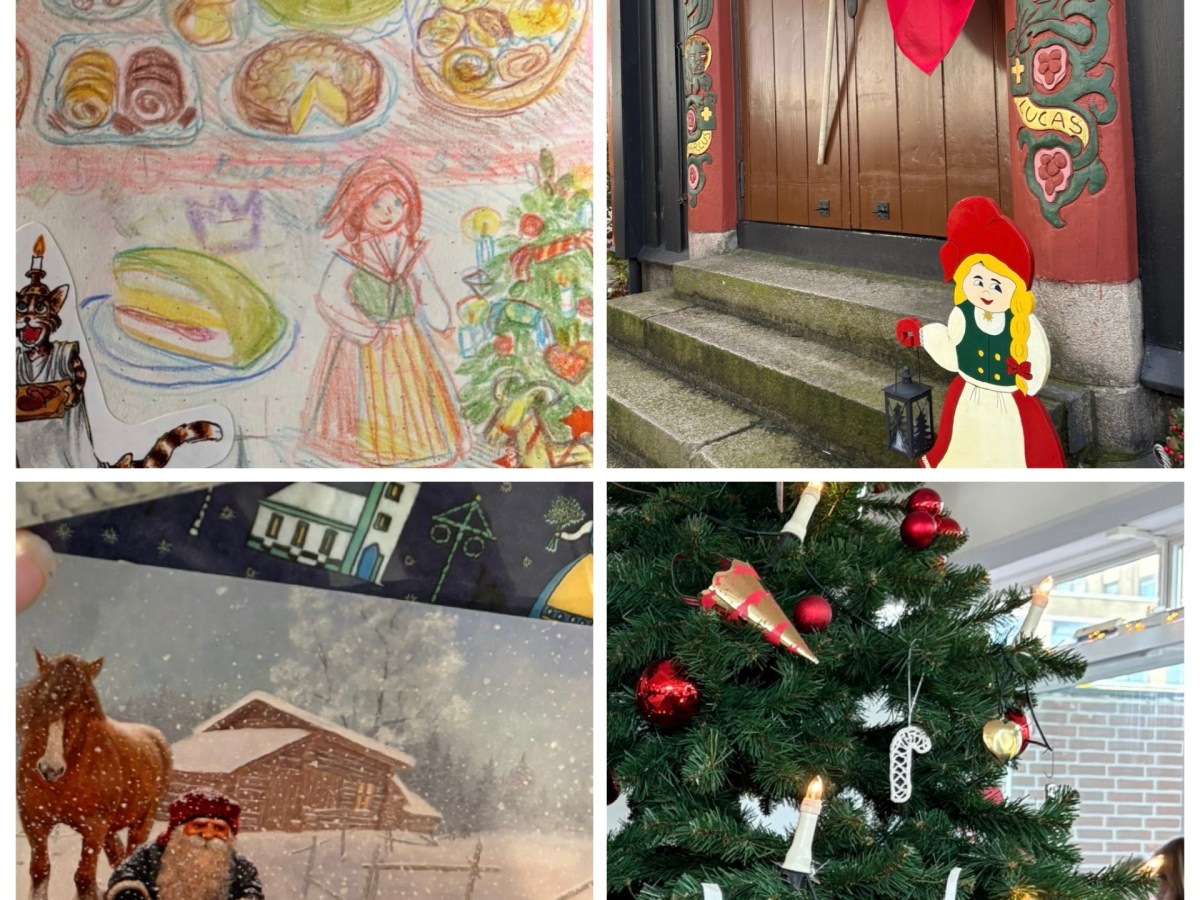
Norwegian, Danish, Finnish and Swedish Christmas markets in Rotterdam. Christmas decorations, imported typical Nordic products for sale, a cafe with lunch and cakes in each of them!
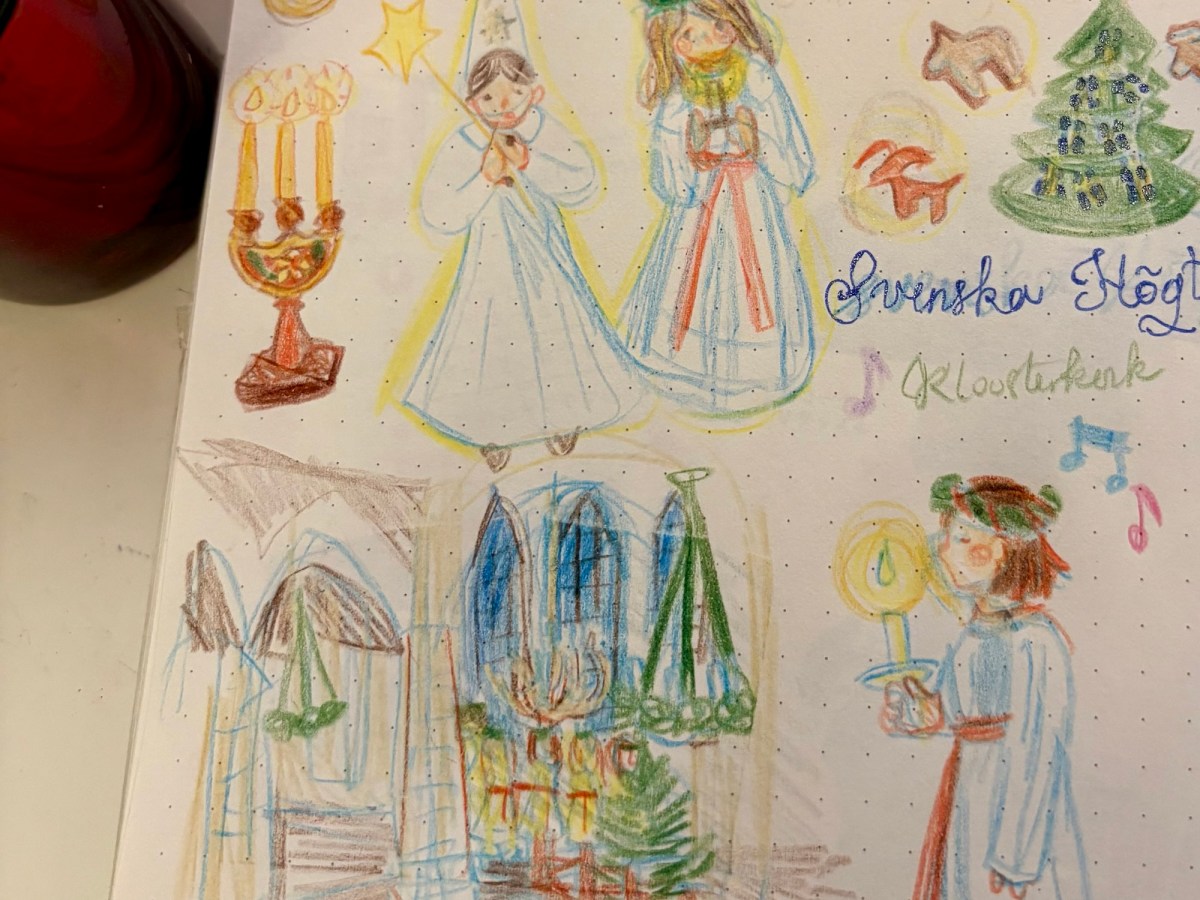
Lucia brings light in the darkest night of the year and is a mix of pagan and christian traditions. It is celebrated in Scandinavia with processions, saffron buns and church concerts.
Is it easier to learn Icelandic if you speak a Scandinavian language? My experience of studying it while knowing Swedish, Danish, Nowegian and German
A while ago a follower of my langstagram asked: Hi Chiara, I was thinking about starting Icelandic, what are your thoughts on the difficulty of the language? I already know swedish on B1 level, is that helpful?
Generally speaking, good knowledge of Scandinavian languages will certainly help, but Icelandic is to be taken as a very distinct language, for which you’ll need to spend quite a lot of time for both grammar and vocabulary, even if many things will look familiar.
As follows my impressions and experience with my prior knowledge of Scandinavian languages:
Learning grammar
Needless to say now, the trickiest part is the grammar and the inflections, it’s something you have to practice with and get used to. For that aspect knowing some German might help you more than knowing Swedish honestly. Just like they told me Latin would help me understand how German works. And I think it did, even if it was just to understand what cases are at all. German and Icelandic belong however to the same language family, and as fellow Germanic languages there are still some endings they vaguely share. They also use the same 4 cases: Nominative, Accusative, Dative, Genitive. This is clear by looking at the personal pronouns: while you only have I-me in the rest of Germanic languages, from Swedish to Dutch, Icelandic and German have the dative version: ich-mich-mir and ég-mig-mér.
Icelandic
Scandinavian
German
English
case inflections
4 cases used in nouns, adjectives
– only personal pronouns (I-me, he-him.. forms)
4 cases used in articles, adjectives, personal pronouns
-only personal pronouns (2 forms)
verb conjugations (examples with present tense)
a couple conjugations with similar endings: -/a,-(u)r/-(s)t/ð, -(u)r/-; -um, -ið, -a/u
always same ending for all people (-a/er)
always same endings (with some irregularities in root vowels): -e,-st,-t;-en,-t, -en
no ending except for third person -s
word order
as in English +verb in 2nd position rule
as in English +verb in 2nd position rule
verb in 2nd position, conjugated verb at the end after given connectors
To put it simply, I could say Icelandic is like an overcomplicated version of something you might be familiar with. Of course there are unique features Icelandic shares with its cousin languages, like:
definite article at the end of the word: (a) boy, strákur, becomes strákurinn when you want to say the boy. the ending is -n for the feminine and ,-ið for the neuter, and gets a bit more complicated in the plural. But once you got how it works that’s it.
passive/reflexive verb form made with the Middle Voice, formed by the addition of the ending -st to the Active verb, in any tense: við sjáumst, vi ses = we see each other; Hann kallast – han kallas = he is called.
Learning vocabulary
Scandinavian languages might come in handy for vocabulary. There are a lot of cognates and things which will remind you of something you already know, although not used in the same way. However, generally speaking I would say knowing any other Germanic language is often as helpful, maybe just slightly less similar, but to a smaller extent for English, which has a significant higher share of romance vocabulary due to its history.
Icelandic
Scandinavian
English
German
Dutch
blóm
blomma/blomst
flower
Blume
bloem
maður, kona
man, kvinna/kvinde *kone in Danish=wife
man, woman
Mann, Frau
man, vrouw
jarðarber
jordgubbe, jordbær..
strawberry
Erdbeer
aardbei
höfuðborg
huvud/hovedstad
capital city
Hauptstadt
hoofdstad
eða
eller
or
oder
of
But still, quite often you will encounter obscure words, for which most other languages use the same word, for instance háskoli for university (literally ‘high school’, just higher than high school in Icelandic 😉 , or tölva for computer. You can check out many others in an article with a comparison between Icelandic and Finnish.
Sometimes you won’t recognize some related words instantly but once you’ve realized the connections with Swedish/Danish/Norwegian they will be much easier to remember (I had this some time ago with keyra (to drive), köra/køre in Swedish/Danish).
Icelandic
Scandinavian
English
German
hvað heitir þu?
(h)va(d) heter/hedder du?
What’s your name
wie heißt du?
ég tala ekki ensku
jag/jeg pratar/snakker inte/ikke engelsk(a)
I don’t speak English
ich spreche kein Englisch
hvað ert þú gamall?
hur/hvor gammal/el är/er du?
how old are you?
wie alt bist du?
English: All human beings are born free and equal in dignity and rights.
Scandinavian: Alla/e människor/mennesker är födda/født fria/e och lika/lige i värde och rättigheter/værdighed og rettigheder.
Icelandic: Hver maður er borinn frjáls og jafn öðrum að virðingu og réttindum.
German: Alle Menschen sind frei und gleich an Würde und Rechten geboren.
As follows the plot of the movie Nói Albinói. words in bold are similar in Scandinavian languages, underlined ones in other Germanic languages as well, meaning that knowing the given language(s) spared me from the pain of looking them up. Words in italic are unique to Icelandic, and I had to copy-paste them somewhere…:
Myndingerist um vetur í smábæ úti á landi. Nói er ungur strákurí menntaskóla. Hann býr hjá ömmu sinni. Pabbi Nóa býr einn, hann er þunglyndur og drekkur mikið. Nói er sérstök persóna, hann er gáfaður en hann er ekki duglegur í skóla. Hann er oft einn og hann er ekki félagslyndur. En ung stúlka, Íris, flytur í bæinn. Hún er úr Reykjavík. Nói kynnisthenni og þau verðavinir. (text from IcelandicOnline)
Is it useful to learn a Scandinavian language before starting Icelandic?
Of course speaking a Scandinavian language will make your journey with icelandic a bit easier, but definitely not as much as Norwegian/Swedish/Danish with each other. So learn a Scandinavian language before or after Icelandic to have fun, but do not think Icelandic will be easy after it. On the other hand, Learning them simultaneously might confuse you a little bit but in my opinion they are different enough to not mess up too much.
Learning Icelanding before a Scandinavian language will make the latter feel a lot easier. Similarly to what it is like to first learn German and then Dutch, when finding yourself with a simplified version of a known grammar, instead of the opposite.
Icelanders learn Danish in school but the chances that that will make it any more convenient to speak Danish in Iceland are probably very low.
Some dialects of Norwegian have more in common with Icelandic though, mostly in the pronounciation, with hva being pronounced as ka, similarly to Icelandic hv-words. But that’s more a language geek thing than something actually helping you learn Icelandic I guess?
My experience
Although learning it not too consistently and keeping it as an “extra”, I started picking it up a couple years ago. I already spoke Swedish and more casually learned Danish and Norwegian, and Icelandic was my missing puzzle, the living ancestor of these three, with its unique þ and ð and the obscure grammar. I was first mainly interested in just understanding its grammar, the same I had with Finnish, and my current goal is becoming conversional. In the meantime, I gained a good insight on how the language works and challenges it gives.
I am currently using Icelandic Online and reading Short Stories to keep up with Icelandic (not consistently enough, unfortunately), and I do often find cognates which help me recognizing words, but that’s mostly due to having studied all the main Germanic languages than just Scandinavian ones. Probably also because of this my experience learning Icelandic goes more smoothly than Finnish, which belongs to a separate language family.
What I’ve learned through my language learning journey trying to master many Germanic languages, from German to Faroese through Dutch and Swedish among others.
This article is derived from my Instagram post on my language learning profile inspired by @haluska.langs with her slavic version. I had also made a post about learning multiple similar languages in the past!
I speak to different degrees most of the main Germanic languages, including being familiar with a few lesser known ones as West-Frisian and Faroese.
I gradually added more and more of them through the years, starting from English and then German at school, then self studying more since I was about to finish high school.
As English was heavily influenced by French and uses many words with latin roots, besides the fact that it just feels like a given-for-granted language everybody speaks, it sometimes feels weird to include it in the Germanic languages family, but it indeed helped understanding for example to instantly recognize är in Swedish as the verb are, and the fact that verbs have att – in the infinitive form makes sense as English has to –.
However, When i started Swedish and Dutch simultaneosly in the now distant April 2017, it was German that made a lot of things easier than it would have perhaps been without it.
MY JOURNEY
I started English in primary school, and was always quite excited about learning it, wishing to have more hours for it every year.
My second Germanic language arrived much later, I choose German over Spanish in high school, but it had been fascinating me for many years, trying to learn random words of it here and there, I did learn the first word on cornflake boxes: Zutaten (“ingredients”).
During my last year of high school, after 5 years of English, French and German, I started self-learning Swedish and Dutch simultaneosly, using exclusively Duolingo for months. I theorically dowloaded duolingo for Swedish, but I loved Dutch too so i immediately started the course and used duolingo basically every day for a good year. I had a strong knowledge of German to begin with, it heavily helped me and made a lot of grammar and vocabulary instantly clear/recognizable, but also meant having interferences (see below), for example it ruled the verb order making me place verbs where it made no sense in Swedish nor English nor my mother tongue…
Two years later I wanted to learn some Danish and Norwegian: exposure, writing “adjusting” my Swedish with the help of online translators, but the effort to learn grammar and vocabulary was 70% done. learning Danish and Norwegian together without knowing Swedish would have been bad, you wouldn’t know when you are learning one or the other, but with a good Swedish knowledge and some exposure for both it’s manageable. Needless to say, focusing on one will make you better at it than splitting time/energies for both.
During the first corona lockdown in spring 2020, I started learning Icelandic with textbooks and online resources. I had actually read about pronunciation in a mountain hut in summer 2018, but didn’t understand much or took the time to process it at haha.
In the last few years I’ve been also getting some exposure to Faroese and West Frisian (which i can understand to a given extent thanks to other languages as Dutch and Icelandic) and casually learning them.
MIXING THEM UP
When learning multiple related languages, it is easy to end up mixing them up in one way or another. The more fluent you are in one, the less it is likely that you let yourself get influenced by another, this is way reaching a good level in onee language before learning another one in the same family is important. Moreover, you will be very familiar with much of its grammar and vocabulary, and you might rely way too much on your first language of that family. Using Spanish words when speaking Italian might not be the best, but you’ll be much better off than only knowing more distant related languages locals hardly speak.
There are a lot of false friends and words which would “fit” in the other language used without even realizing it. Some examples are short words existing in multiple languages but with different usage/meaning:
en means “and” in Dutch, “a(n)” in Scandinavian languages, and “but” in Icelandic!
ommeans “about” something in Scandinavian languages, while it’s usually “(in order) to” in Dutch
A false friend example is Icelandic að kenna meaning teach; while kennen/känna/kjenne/kende all mean “know (usually someone)”!
a funny fact about interferences is that I once used mensen talking in Swedish, “people” in Dutch, but “the menstruation” in Swedish!
Verb order is very vulnerable to interferences when learning multiple Germanic languages, at least at first: with subordinate clauses in German you have “..that I something done have“, in Dutch “..that I something have done“, in North Germanic languages ” ..that I have done something” as it is in English.
At first I would instantly use the German verb order with Swedish (for no apparent reason since the order in Swedish is supposed to be the most natural for me..), that doesn’t happen anymore, however, I still mess up it with Dutch and German since they only have the very last part switched! I hate it, but that’s what you pay for speaking both I guess…
To avoid interferences one of the most useful things is getting corrected or being aware of them, detecting the mistake is the first step to stop making it.
BONUS POINTS
Easy to learn vocabulary
Knowing languages related to each other can cause interferences but can also come very handy at times! Besides all words sharing a common root, You will understand and easily remember cognates and words which are everyday vocabulary in one language and seldom used ones in another one.
In Danish jeg spiser is “I eat”, you might easily remember this word as Speisekarte means “menu” in German. In the closely related Swedish you say “jag äter”, which however resembles eat, eten etc.
Despite my Swedish being more advanced, Danish and Norwegian helped me with understanding right away obsolete words in Swedish while reading an old book: Danish pige and Norwegian jente are the word for “girl”, while piga/jänta are “maid” in Swedish, not a word you’d learn in an everyday context.
Easy to guess the gender
Germanic languages, except for English, have different genders, whether masculine, feminine, neuter as German, Icelandic, and partially Norwegian, or general + neutral as Swedish, Danish and Dutch*. Being from the same family in many cases genders are usually the same for words with the same root:
House is neutral: das Haus/het huis/ett hus/husið;
Earth is feminine, sky is masculine: die Erde, der Himmel (German) /jörðin, himinn (Icelandic) /jorda, himmelen (Norwegian)
The closer the language the safest the bet: Dutch and German are more likely to have words with the same gender than them and North Germanic languages: book is neutral in West Germanic languages but feminine/general in North Germanic – het boek, das Buch (n) / boka, bókin (f).
*Neutral exists in all but English, while In Dutch, Swedish and Danish masculine & feminine merged. However, they are sometimes still visible, for example in pronouns for objects: hij/zij as he/she in Dutch (knowing German can give you great advantage compared to natives!); to tell the time in Swedish you say “hon är..” (she is..) because klocka (clock) was feminine! Norwegian does have feminine, even though in some Norwegian dialects feminine (book: ei bok, boka) and masculine are not distinct and general en is used (having en bok, boken which would be masculine).
Easy to learn Irregular verbs
All Germanic languages have irregular verbs, which mean learning lists of paradigms present-past perfect-past participle. Once you have learned them for one, it’s all downhill to learn the others, as not only you already know how the verb system works but many are very similar across different languages (and the set of verbs being irregular is more or less the same), or follow similar patterns:
Don’t learn more than 2 similar languages at once, if very similar and from scratch keep that at one. You might be dying for the other for a while, but the path will be downhill and you’ll be less confused.
I learned Norwegian and Danish more or less simultaneously but it wad 95% just exposure, as I already spoke Swedish. That means I knew well what I was dealing with and most importantly I didn’t have to learn a grammar system from zero, but mostly only how to adapt it to Danish and Norwegian, same for how spelling behaves in both. The proficiency you acquire then depends on how much time you spend on each. My Danish is better and I don’t have to check words as much as in Norwegian because I happened to use Danish more because of friends and such, but I used to write letters in Danish/Norwegian and basically check every other word on google, while the grammar structure was as good as done with some exposure on top of speaking Swedish.
Getting a little exposure is always fine, you will just get to know the other languages a bit more, preparing yourself for a more serious approach when you are ready. With some effort you’ll then split from the “rely on X language” phase and speak it independently.
Dutch and German are maybe almost as similar as Scandinavian languages to each other, but not as much, and if you learned Dutch first you’ll have to deal with cases and an additional gender, not quite the same as just adapting it and only learning from immersion.
Nevertheless, give love to all your target languages through frequent immersion, scheduling study sessions for those which require help.
A little fact in conclusion: in Germanic languages “moon” is masculine and “sun” is feminine, while in romance languages it is the opposite! I can see why if you look at the weather and daytime in North vs South Europe 🙂
Main features in grammar, vocabulary, pronunciation and my experience with studying Íslenska (Icelandic) and Suomi (Finnish)
Some time ago I made an Instagram post comparing these two languages, which I started simultaneously during the hard lockdown in spring 2020 (you can see it on @chiara.klara.claire, as a summary of this article). With this article I’ll dig in deeper and talk about more aspects.
A short overview of Icelandic and Finnish main characteristics:
Icelandic belongs to North Germanic languages, as Swedish, Norwegian and Danish and Faroese, the closest of all to it (learn how totell them all apart) . It is still very close to what Old Norse was and retained a highly inflected grammar and ð/þ.
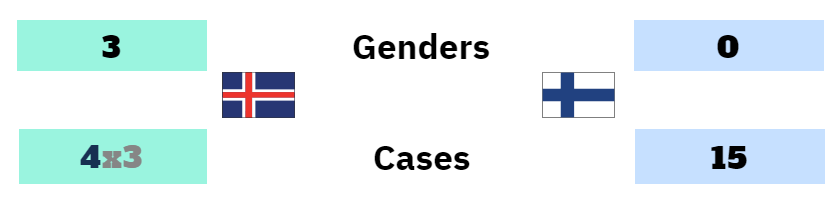
Finnish is an Uralic language, sister language of Estonian and related to Sámi languages but completely unrelated to its Scandinavian Neighbors. Its grammar is as complex as Icelandic but as an agglutinative language, lacking however genders.
In a language difficulty ranking 1-5 with 5 being the hardest, Icelandic was category 4 and Finnish between 4 and 5.
You can find useful language resources at the end of this article!
Alphabets & ortography
Icelandic Ðð (eth) is as “th” in the, Þþ (thorn) as in think. the former is also present in Faroese, its closest language
a, á, e, é, i, í, o, ó, u, ú, y, ý, æ, ö are all the vowels, each is a distinct letter of the Icelandic alphabet
c, q, w are not present in Icelandic. Z was removed in 1973 and replaced with S in words which had it. It is still present in some historic names as the Verzló school in Reykjavík.
Finnish actually uses only 21 of the 29 letters in its alphabet, which derives from Swedish: b, c, f, g, q, w, x, z, å are not present in native Finnish words. For example, the Swedish name of Turku, city with a significant number of Swedish speakers, is Åbo.
Finnish is the only language in which the frequency of vowels exceeds that of consonants, and both are often doubled: suosittelette. vaapukka, terveellistä, laatikko, karjalanpiirakka. With its relatively small inventory of letters being often doubled, many words change meaning with one letter: muta “mud”, mutta “but”, muuta “other”, muuttaa “to move”
Both languages use a lot of long compound words (common in most Germanic languages) as a way to construct new words. Those long stretches of letters might look obscure, but if you break them into smaller words they are quite normal: Icelandic volcano Eyjafjallajökull is just “island-mountain glacier”. An example in Finnish could be lumipallosotatantere = “snowball fight field”, English would be no different if it removed spaces after all!
Grammar
This is what Finnish and Icelanidc are most (in)famous for, both have an arguably complicated grammar, but more or less hard depending on the aspects.
In Icelandic and Finnish words change depending on their role in a sentence, with the so-called cases. Although to a much smaller extent cases existin English too, in personal pronouns: she becomes her when it’s an object. In the following table you can see how cases change words in these two languages:
(a) beatiful country
in (a) beautiful country
to (a) beautiful country
from (a) beautiful country
Icelandic
fallegt land
í fallegu landi
til fallegs lands
frá fallegu landi
Finnish
kaunis maa
kauniissa maassa
kauniiseen maan
kaunista maasta
Icelandic has 4 cases: nominative, accusative, dative, genitive (nefnifall, þolfall, þágufall, eignarfall) – familiar if you know German or Latin – in which nouns, pronouns and adjectives are declined differently depending on gender: (masculine, feminine, neuter), with weak or strong nouns, and number. Icelandic has no articles but it does have definite forms, which as in Scandinavian languages is marked in the end of the nouns: maður= (a) man, maðurinn= the man). More detailed info here
function
M*
pl.
F*
pl. *
N*
pl. *
nom.
subject
-i; -ur, ll..
-ar
-a; –
-ur; -ir
-a; –
-u; –
acc.
object
-a; -, -l..f
-a
-u; –
-ur; -ir
-a; –
-u; –
dat.
indirect object
-a; -um, -i
-um
-u; –
-um
-a; -i
-um
gen.
possession
-a; -s
-a
-u; -ar
-a
-a; -s
-a
definite form noun declension: *weak; strong.
Finnish uses many suffixes instead of prepositions, with a total of 15 cases, in which nouns, pronouns, adjectives, numerals are declined. The good news is that Finnish has no genders nor articles: even the personal pronoun hän means both he and she.
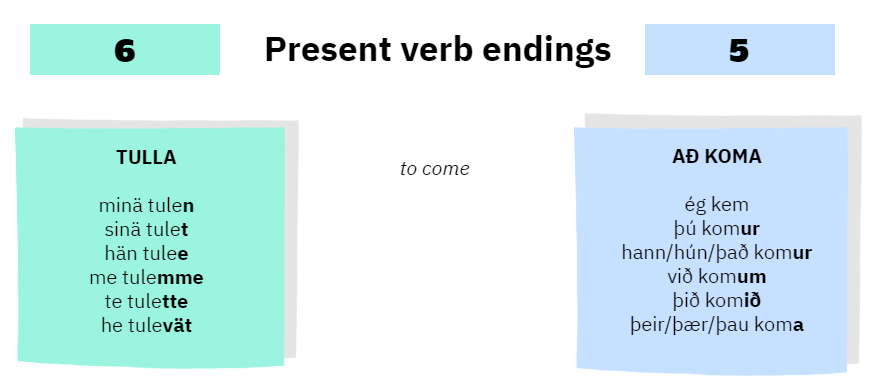
Verbs are divided in both languages into groups, 3 in Icelandic and 6 in Finnish, depending on which conjugations slightly change, but are not (in my opinion) much harder than in Romance languages as Italian and French. They have different endings for each person, and the infinitive form is sometimes not immediately recognisable knowing a conjugated form.
Vocabulary
As you might have already figured out, Icelandic is more accessible with knowledge of (North) Germanic languages, while Finnish will look completely unfamiliar unless you speak an Uralic language:
Icelandic
Scandinavian (se/dk/no)
German
Dutch
Finnish
apple
epli
äpple/æble/eple
Apfel
appel
omena
book
bók
bok
Buch
boek
kirja
hair
hár
hår
Haar
haar
hiukset
house
hús
hus
Haus
huis
talo
mother
móðir
mor
Mutter
moeder
äiti
night
nótt/nátt
natt
Nacht
nacht
yö
stone
steinn
sten
Stein
steen
kivi
that
það
det
das
dat
se
word
orð
ord
Wort
woord
sana
However, due to its history under Swedish rule -other than having the Scandinavian country as neighbour- Finnish adopted many loanwords from and through Swedish, adapting them to its spelling and pronounciation:
katu – gata (street)
koulu – skola (school)
sokeri – soker (sugar)
tuoli – stol (chair)
suklaa – choklad (chocolate)
pankki – bank
kahvi – kaffe (coffee)
During the 19th century, Icelandic started avoiding borrowing neologisms found in most European languages with its Linguistic purism policy, creating new vocabulary with Old Norse roots for new concepts: Theatre is Leikhús, “acting house”; AIDS is alnæmi, from al “all/complete” and næmi “sensitive”, which is what the disease really is about.
Finnish also has a good number of neologisms with native words when most European languages use a common Latin/Greek or English form:
Icelandic
Finnish
grammar
málfræði “language science”
kielioppi “language study”
electricity
rafmagn “amber power” calquing the Greek root
sähkö based on sähähtää “to sizzle (briefly)” + säkenöidä “to sparkle”
phone
sími originally “cord”
puhelin “I chatter”
computer
tölva (computer)=tala+völva “number seeress”
tietokone “knowledge/data machine”
film
kvikmynd “alive/moving picture”
elokuva “life picture”
As mentioned before Finnish did anyway adopt many words common in European languages, while Icelandic has words of its own, probably also thanks to its geographical isolation:
Icelandic
Scandinavian
Finnish
idea
hugmynd “mind picture”
idé
idea
comet
halastjarna “tail star”
komet
komeetta
psychology
sálfræði “soul study”
psykologi
psykologia
history
sagnfræði
historia/historie
historia
philosophy
heimspeki
filosofi
filosofia
bus
strætó
buss
bussi
helicopter
þyrla
helikopter
helikopteri
president
forseti
president/præsident
presidentti
normal
eðlilegt
normal
normaali
immune
ónæmur
immun
immuuni
alcohol
áfengi
alkohol
alkoholi
notice how Finnish often adds -i!
Pronunciation
Icelandic: Although not as inconsistent as English, in Icelandic different positions in the words or letter combinations make the same consonants sound differently, with many variations which at least for me took long to grasp and I am often in doubt about the pronounciation of Icelandic words. Here is a list of tricky features from wikibooks
HV is pronounced as KV, (or as Scots WH in some areas)
LL is often pronounced something liketl.MM and NN as pmand tn.
KK, PP, and TT are pronounced with an h sound to their left. Pre-aspirated tt is analogous etymologically and phonetically to German and Dutch cht (Night-Icelandic nótt, German/Dutch Nacht.
If a K is followed by a t, it is pronounced similarly to a Spanish j (e.g. lukt – lantern). Likewise, a P followed by a t changes into an f sound (e.g. Að skipta – to shift). F in the middle of a word is often pronounced as a v (e.g. Að skafa – to shave), FF is pronounced as English F.
Word-final voiced consonants are devoiced pre-pausally, so that dag (‘day (acc.)’) is pronounced as [ˈta:x] and dagur (‘day (nom.)’) is pronounced [ˈta:ɣʏr̥
I and Y share the same pronunciation, as do Í and Ý.
Finnish: Extremely consistent and read just like it is written: Each grapheme (independent letter), represents almost exactly one phoneme (sound).
Double consonants can be challenging for English speakers among others, and failing to pronounce them correctly can result in confusion with other words.
Some vowel combinations can be tricky for your tongue: yö,pyöreä (with y pronounced as ü in German).
With little exposure I was confident in pronouncing Finnish, while Icelandic requires much more effort & time, this might be influenced by the fact that Italian phonology is more similar to Finnish, and double consonants are not problematic to me as an Italian native speaker.
Language variations
Icelandic has very small dialect variations, presumably due to its strong writing culture throughout history. However, some local pronunciation variants exist.
Finnish has dialects divided into two distinct groups, Western and Eastern.Finnish dialects are largely mutually intelligible and operate on the same phonology and grammar, not going too far from standard Finnish. What Finnish is mostly known for is however the distinction between the two registers: the formal, written form Kirjakieli “book language” and Puhekieli “spoken language”. The former is used in written texts and formal situations like political speeches and newscasts, the latter is the main variety of Finnish used in everyday speech, popular TV, radio shows and at workplaces. In Puhekieli words are often shortened: minä olen “I am” becomes mä oon, anteeksi “excuse me” drops the last i and so on.
Conclusions
Both languages can be pretty challenging, with a significant amount of grammar one can hardly just absorb by practicing as in my experience it was with languages as Dutch and Swedish. What I do think is that practicing and paying attention to certain features can be more helpful than only focusing on repeating declensions without context, and I try to mix both. That being said, Icelandic and Finnish are my “slow” languages with Japanese, and at the moment I’m trying to proceed with textbooks once a month, trying to practice with little things as apps and learning/translating things I see here and there on social media.
I personally find Finnish a bit easier per se, since it has no arbitrary gender and different declensions connected to it, a rather easy pronounciation and so on. However, since I speak Germanic languages, I study (& understand!) Icelandic with much more ease and find myself more easily lost in Finnish, for now at least.
Have you tried studying these languages? If both, which one did you think was harder?
p.s. Perse means “ass” in Finnish and Estonian so maybe don’t say per se too often when talking to Finns.
Learning resources
You find many free, online resources for Finnish and Icelandic on my Language Resources page, other than all for mant other languages.
Sources
Sanders, Ruth H. The languages of Scandinavia (2017) The University of Chicago Press, p. 99-100: Finnish sound structure
The ‘anchor’ language concept allowed me to learn Swedish, Dutch, Danish, Norwegian easily starting from studying properly only one language. This approach helps prevent confusion and builds a solid foundational understanding of language structures.
Learn quickly how to distinguish and identify all Nordic languages!
As a language lover I tend to take for granted that certain languages are clearly different from others or recognizable from certain features. Some time ago my sister asked what was the language I was reading in, and I was expecting her to know that with ð’s it has to be Icelandic. But if language learning is not your hobby, Dutch and Swedish might as well be the same thing, purely because you never get to see them. I still remember reading about differences between Danish and Norwegian and finding it really useful, so I decided to make a summary of features and differences that can come in handy as a guide for those who would enjoy being able to distinguish all Nordic languages without actually studying or knowing much.
Please note that I’m mostly writing about the written form, as nuances of the spoken language can be much harder to describe. For what concerns the oral form, you just have to listen to them a lot, and as a Swedish friend once told me:
Swedish is up ‘n downs, Norwegians is all ups, Danish is all downs.
And well, it makes sense.
How similar are Nordic languages to each other?
Swedish, Norwegian, Danish, Icelandic and Faroese belong to the North Germanic language family. Their cousins are German, Dutch and English. If you speak two of these three a big amount of vocabulary and grammar will be familiar to you.
Swedish, Svenska; Norwegian, Norsk; and Danish, Dansk, are the languages of Scandinavia, (yes, the Scandinavian paeninsula is made up of only these three countries) could be considered siblings (or twins?) because they are mutually intelligible, a Swede and a Norwegian will likely converse in their own language without recurring to English, the same goes with a Dane although Danish can be more problematic…But you can read about that later. Theirunique letter is Å, which is roughly pronounced as O. So yeah, remember that when you talk about songs by Måneskin…
Icelandic,Íslenska, is essentially old Norse – the ancestor of all North Germanic languagages – that got crystallized in the middle of the North Atlantic. Because of this Icelanders find it pretty easy to read old viking sagas than the Scandinavians, who don’t really understand Icelandic. Faroese, Føroyskt, spoken in the Faroe islands – between Iceland, Norway and Scotland – is similar to Icelandic in the written form, but the spoken language is quite different. They are classified as Insular languages of the North Germanic family, its distinguishing letter is ð (called eð in Icelandic and edd in Faroese, capitalÐ), pronounced as th in this. Both have æ, á í ó úin their alphabets.
Swedish and Danish would be classified as East-North Germanic, while Norwegian and Icelandic West-North Germanic, the bound between Icelandic and Norwegian is is noticeable in some Norwegian dialects, but the geographical distance made Norwegian become more intelligible with the eastern branch instead.
However, there’s an odd one out of the Nordic languages. Not only Finnish, Suomi, does not belong to the North Germanic family, but it is not even indo-european. That means Hindi is potentially closer than its neighbour Swedish. Finnish belongs to the Finno-ugric family and is completely different grammar-wise, but has quite a lot of loanwords and cultural influence from Swedish. You can recognize it by very frequent double letters with combinations as yy and ää, double consonants after another consonant: tsemppiä, pankki. Finnish does not have B, G, D in its alphabet.
The Sámi, indigenous people of north Scandinavia, have their own languages, which are related to Finnish as they belong to the Uralic language family, this article i wrote focuses on them.
And now let’s go into detail!
Swedish vs Danish & Norwegian
Norwegian and Danish look very much alike in the written form, but if you hear them you will be more likely to think Swedish and Norwegian sound similar while Danish stands out for its “weirdness”, It is said that Danes speak as if they had potatoes in their mouths, if you want to know more look up the stød linguisti phenomenon.
Swedish: Ö, Ä / Norwegian & Danish: Ø, Æ: The first and easiest difference
CK/KK: ck is found in Swedish, usually K or KK in the other two: lycka/lykke (luck); tack/takk, tak (thanks).
-A/-E: Swedish tends to have a lot of -a endings, while you have E’s in Norwegian and Danish. See the example above of lycka/lykke, also in plural adjectives: mina/mine (my) goda/gode (good).
HV/V is not found in Swedish, which got rid of the H: vad, vem/hvad, hvem; (what, who)
X an Q sometimes occur in Swedish, only in foreign names in the other two: exempel/eksempel (example).
Modern written Norwegian was based off Danish so it can be extremely similar and if you have a very short text it might even be all spelt the same way, but a few features will signal which of the two you are reading:
ØJ/ØY: øj in Danish while øy in Norwegian: tøj/tøy (clothes)
MIG/MEG: Norwegian Bokmål uses E in deg/meg/seg, while Danish has mig as in Swedish
K/KJ: kj an b found frequently in Norwegian while Danish has directly a vowel after K: kære/kjære (dear); at kende/ å kjenne (to know)
TION/SJON: Norwegian’s spelling in words of foreign origin is more “tamed” to the language, for instance words ending in-tion, where Danish keeps the -tion ending and Norwegian has -sjon: international/internasjonal; chokolade/sjokolade (chocolate).
Tendencies:
D, G, B/ T, K, P: Danish tends to have much more D, G, and B’s (it could be compared to Spanish vs Italian I think?). bog/bok (book); nouns in -hed/het; at vide/å vite (to know); peberkager/pepperkaker (gingerbread). Swedish and Norwegian are usually more similar for what concerns this.
Norwegian got rid of many “unnecessary” letters (often D’s, G’s) to its pronounciation: at sige/å si (to say); vidste/visste (knew), sagde/sa, -ld, -nd endings trold/troll (troll); end/enn (than)
Æ frequence: Danish tends to have a lot more Æ, where Norwegian has a ‘simple’ E: næsten/nesten (almost); at tænke/å tenke (think). at hjælpe/ å hjelpe (help). Swedish usually has an Ä here: att hjälpa, nästan, att tänka.
Norwegian could be further divided into Bokmål and Nynorsk, which are just two different ways to spell it. Bokmål “book language”, is fundamentally Danish with adjustments to the Norwegian language and the most widespread one, while Nynorsk “New Norwegian” was an attempt to create a more Norwegian-Norwegian, and it is more frequent in the west part of the country, used by about 12% of Norwegians. I won’t go into detail with Nynorsk, but ein, eit indicates Nynorsk, while en, et are Bokmål.
Icelandic vs Faroese
Faroese and Icelandic pronounciations contrast with their similar spelling, that is because Faroese was given an ethymological ortography to resemble its ancestor Old Norse. On top of that, Faroese adopted some words of Danish origin because of its history.
Þ/T: Only Icelandic has Þþ (þorn in Icelandic) which corresponds to English th in mouth, Icelandic words with Þ have T in Faroese: þú/tú (you); það/tað (it).
Ö/Ø: Icelandic uses ö while Faroese adopted ø.
Icelandic has accented E’s, É, not present in the Faroese alphabet: ég/eg (I).
Finnish: the outsider
As previously mentioned, Finnish is completely unrelated to the North Germanic family, it belongs to the Ugro-Finnic family and its closest language is Estonian.
TO HELP: att hjälpa-at hjælpe-å hjelpe ; að hjálpa ; autaa
SOMEONE: någon-nogen-noen ; einhver-onkur ; joku
TO SAY: att säga-at sige-å si ; að segja-at siga ; sanoa
APPLE: äpple-æble-eple ; epli; omena
WHAT: vad-hvad-hva ; hvað-hvat; mikä
Article 1 from the Universal Declaration of Human Rights :
Swedish: Alla människor är födda fria och lika i värde och rättigheter.
Danish: Alle mennesker er født frie og lige i værdighed og rettigheder.
Norwegian bokmål: Alle mennesker er født frie og med samme menneskeverd og menneskerettigheter; Nynorsk: Alle menneske er fødde til fridom og med same menneskeverd og menneskerettar.
Faroese: Øll menniskju eru fødd fræls og jøvn til virðingar og mannarættindi.
Icelandic: Hver maður er borinn frjáls og jafn öðrum að virðingu og réttindum.
Finnish: Kaikki ihmiset syntyvät vapaina ja tasavertaisina arvoltaan ja oikeuksiltaan.
If you want to go even more in detail, you can check out this on mylanguagebreak.com, but my advice is to just expose yourself to the languages, and experience all the differences yourself. 🙂 Here you can briefly read about even more languages used in the Nordic countries.
if you want to see an even more succint summary of all this, you can check out my post on instagram.




 a Polyglot illustrating Scandinavia