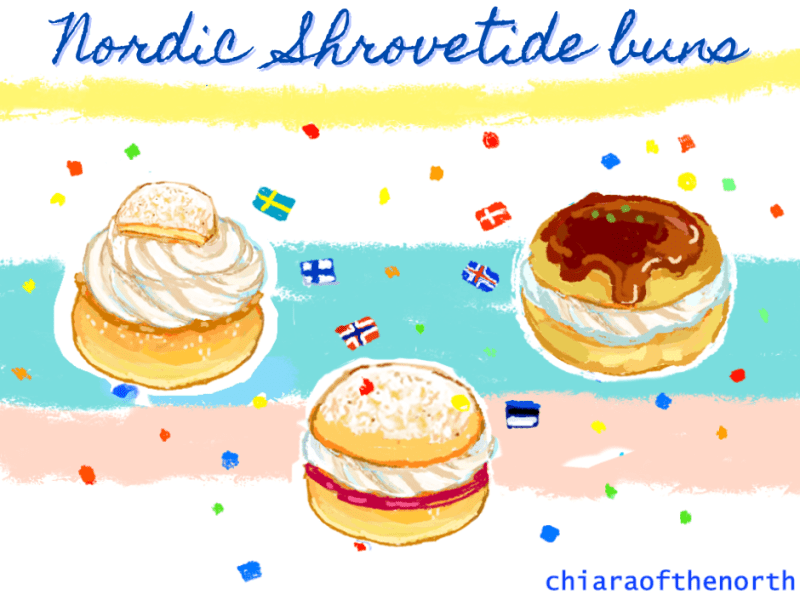
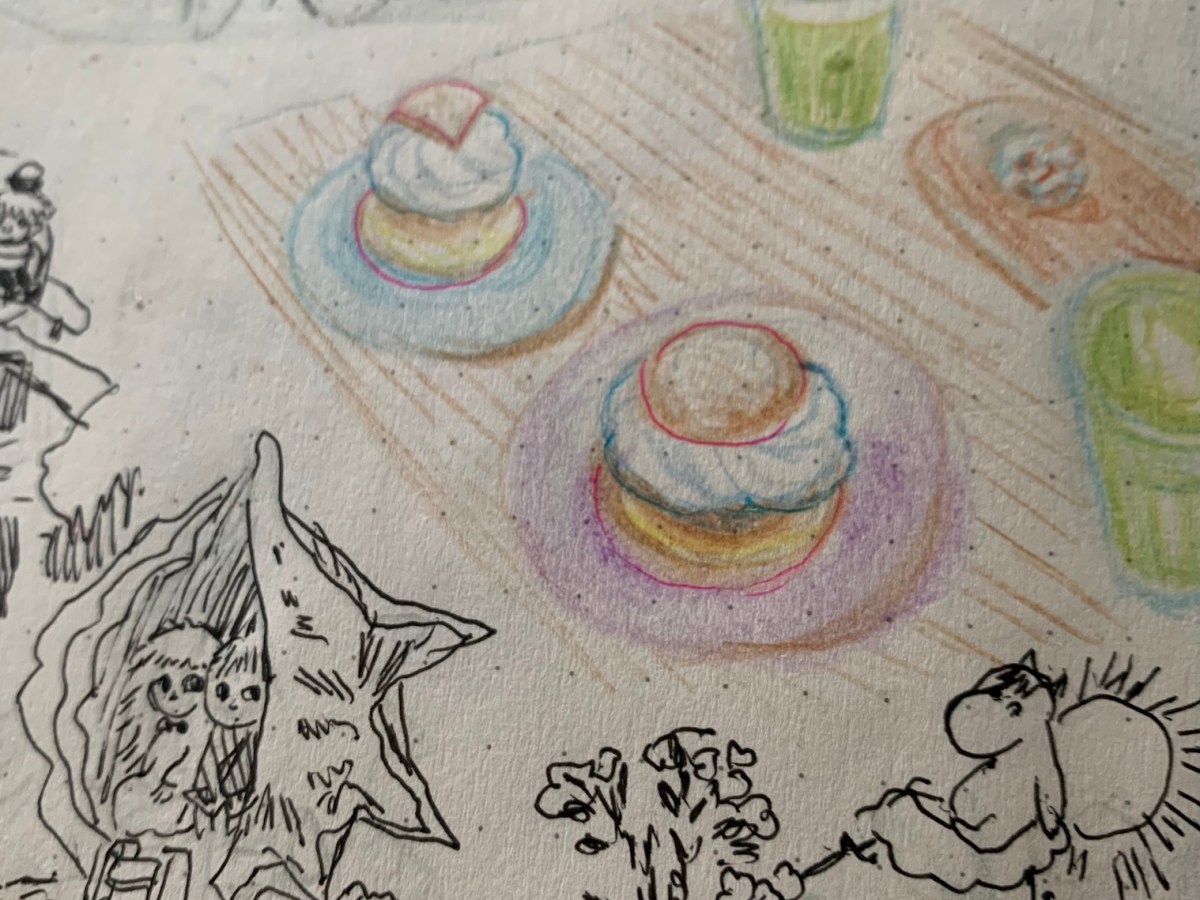
Cream buns are enjoyed in Nordic and Baltic countries during shrovetide, between January and February. Sweden’s classic semla has almond paste, while other countries variations include jam, vanilla cream, and chocolate icing top.
Whipped cream-filled buns are eaten and baked in Nordic countries during shrovetide (carnival for catholics), Fastelavn in Danish/Norwegian, Laskiainen in Finnish. This period would anticipate the lent before Easter, and culminates on Fat Tuesday – Fettisdagen in Sweden, or Shrove Sunday.
Lent was abolished with the reformation, but the buns stayed! To the point that Icelanders call the day when you eat bollur, shrove Monday, bolludagur, ‘bun day’.
National Variations of Shrovetide buns
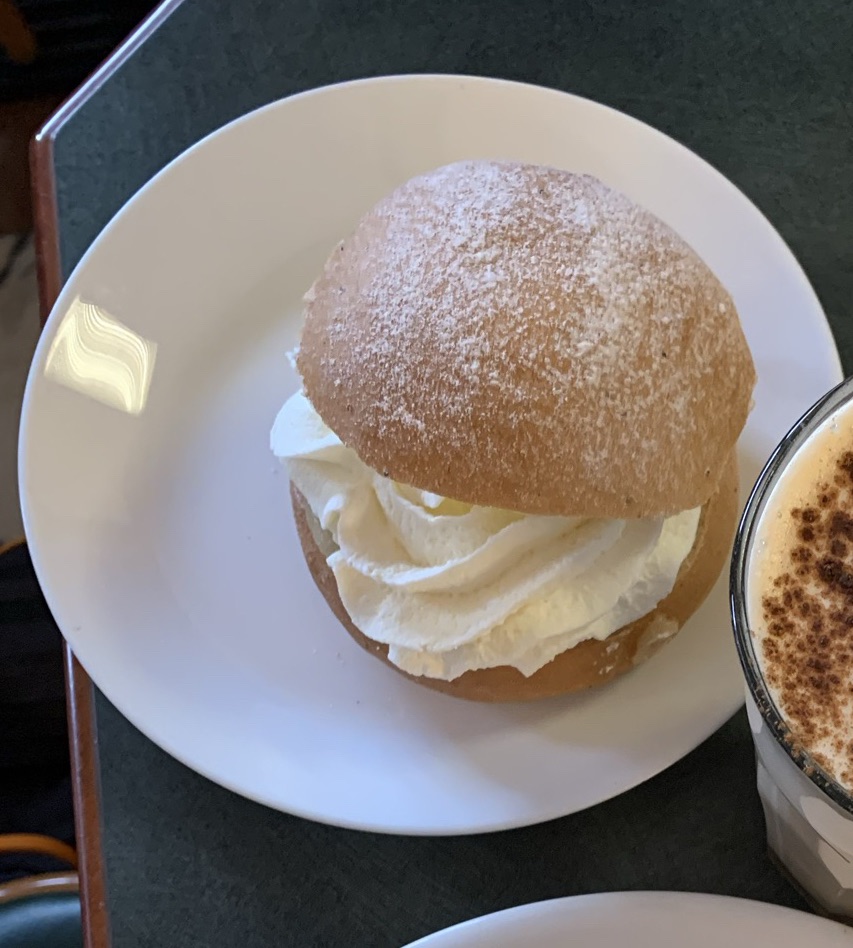
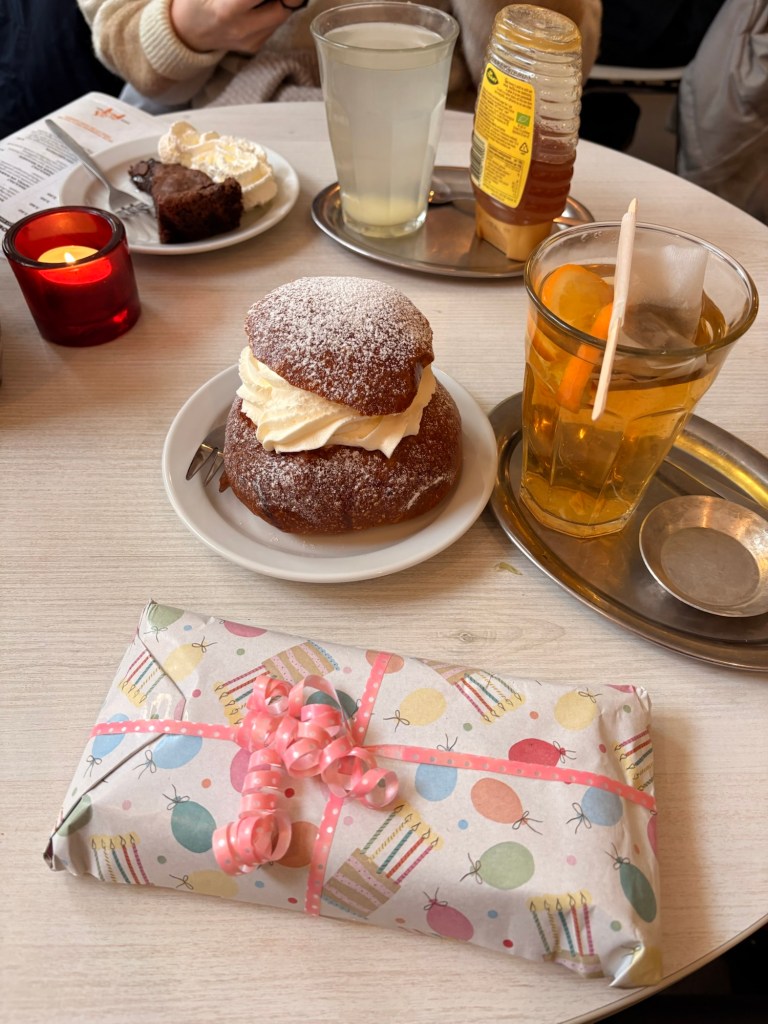
In Sweden the semla is filled with almond paste and whipped cream. It is traditional to eat it soaked in hot milk, known as hetvägg. Swedish King Adolf Frederick died from digestion problems after eating 14 hetvägg!
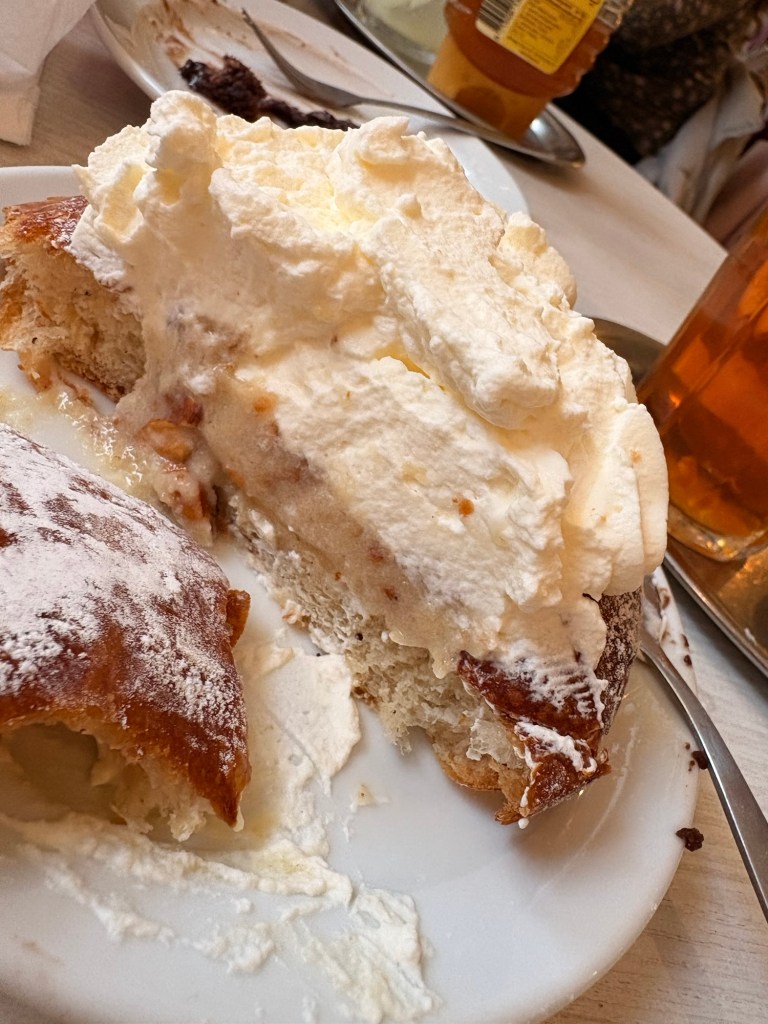
Mormors bageri Semla in LundAlmond paste inside Broodnodig’s Semla in Utrecht
in Finland, Laskiaispulla – or fastlagsbulle in Swedish-speaking Finland – instead of almond paste you find jam. Estonian Vastlakukkel is more simple, genereally only with whipped cream, but sometimes also contain jam, and Norwegian fastelavnsboller can be filled with vanilla cream, jam, chocolate and almond paste.
Danish fastelavnsboller, similar to bollur in Iceland and Føstulávintsbolli in the Faroe, are made from puff and choux pastry, often with chocolate icing on top and besides whipped cream filled with vanilla cream, whipped cream and jam.
Besides the traditional version named above, there are more and more variations including liquorice, pistache and so on, with curious semlor made up each year.
Mentioning Dutch culture, a Danish/Icelandic fastelavnsbolle reminds me of a Bossche Bol, although the latter are completely coated in chocolate. I believe Italian Maritozzo is very similar to a plain semla, without almond paste.
Where to try them in the Netherlands
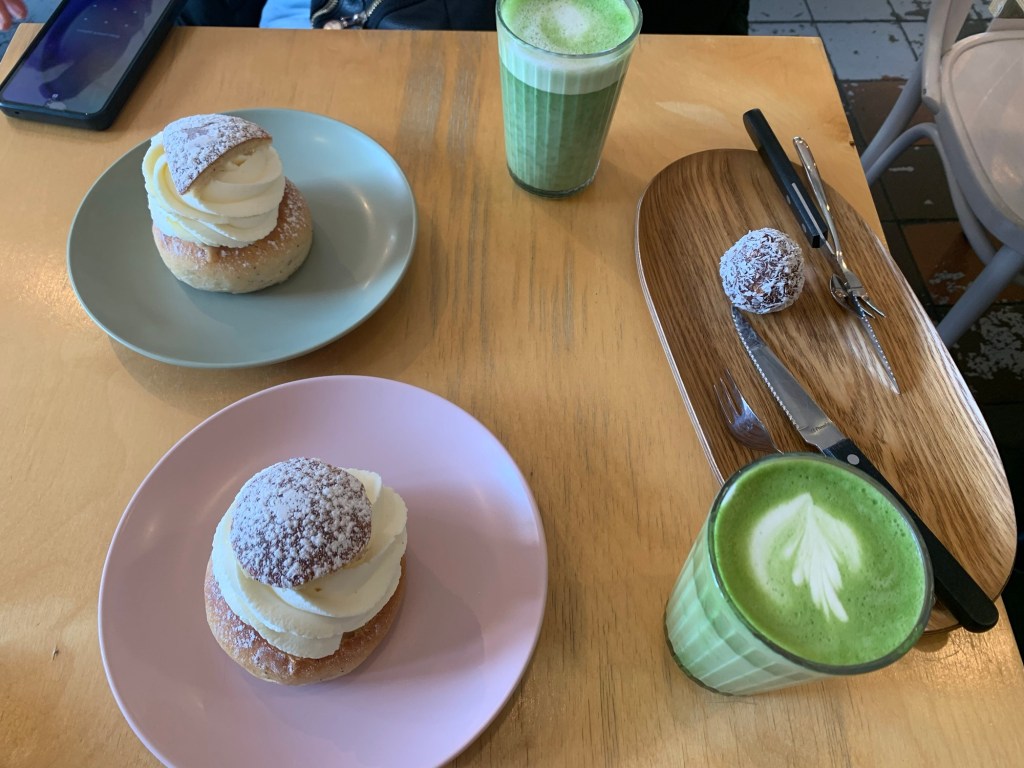
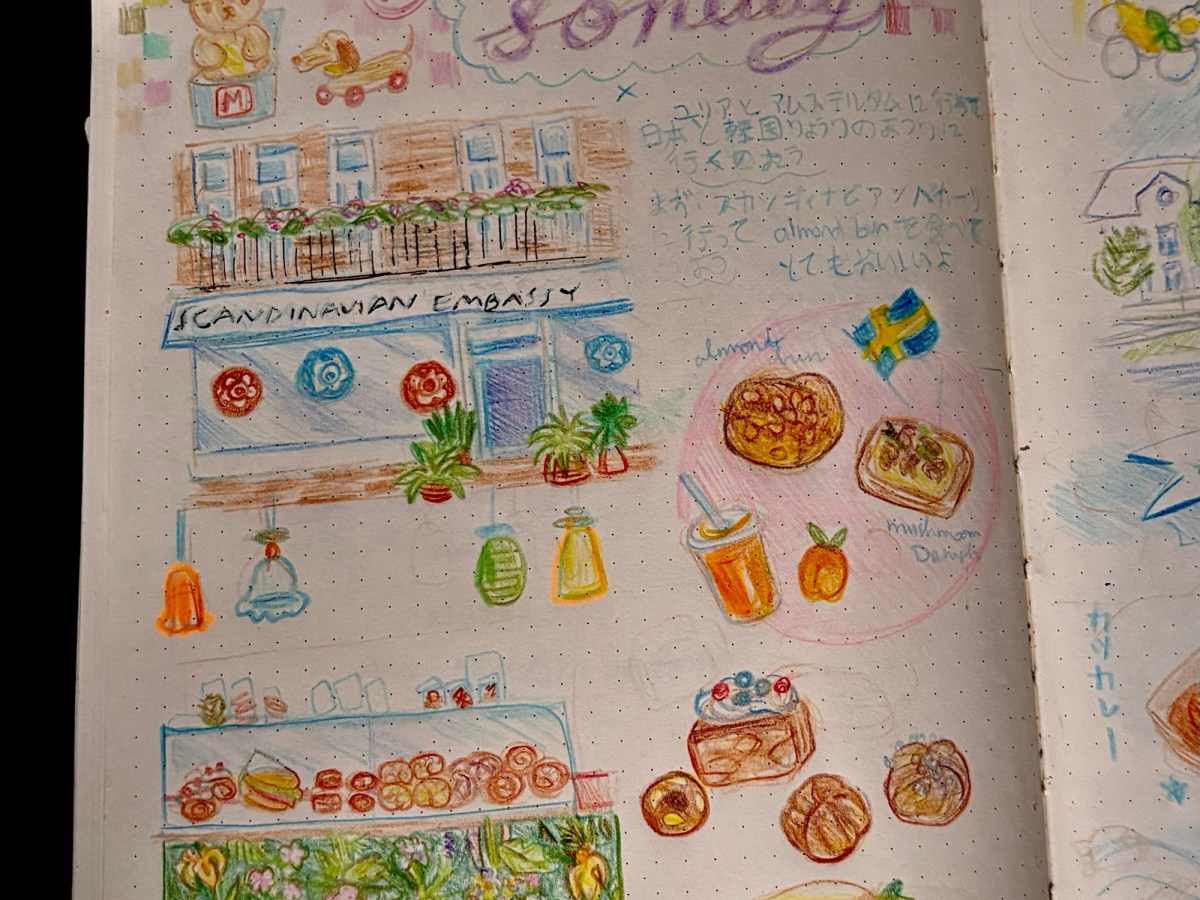
In Amsterdam, Selma’s Nordic bakery and Scandinavian Embassy make Semlor. Selma was also serving Finnish-style laskiaispulla in 2025, with a fruit compote, and a Danish fastelavnsbolle in 2026!
I also tried Broodnodig’s classic almond paste semla in 2026, a very big one!
In Den Haag semlor are also available Norvolk (in Scheveningen)
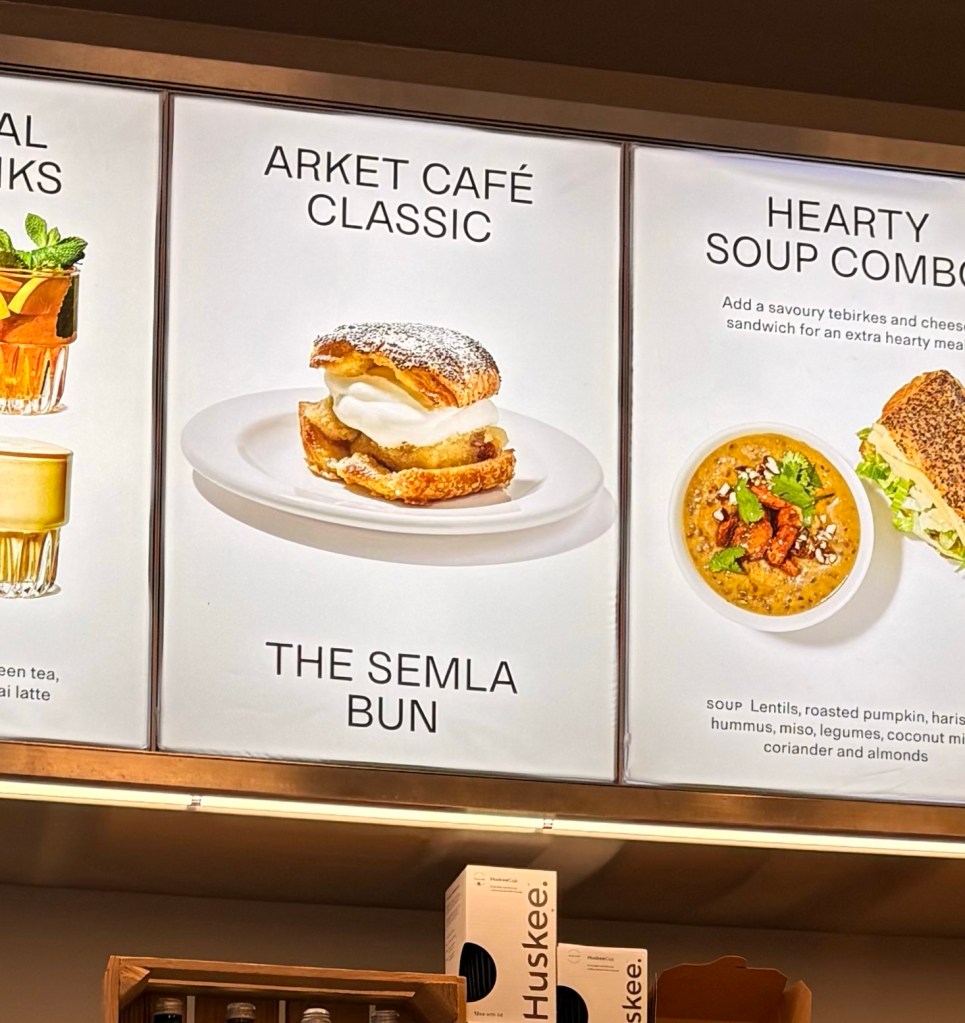
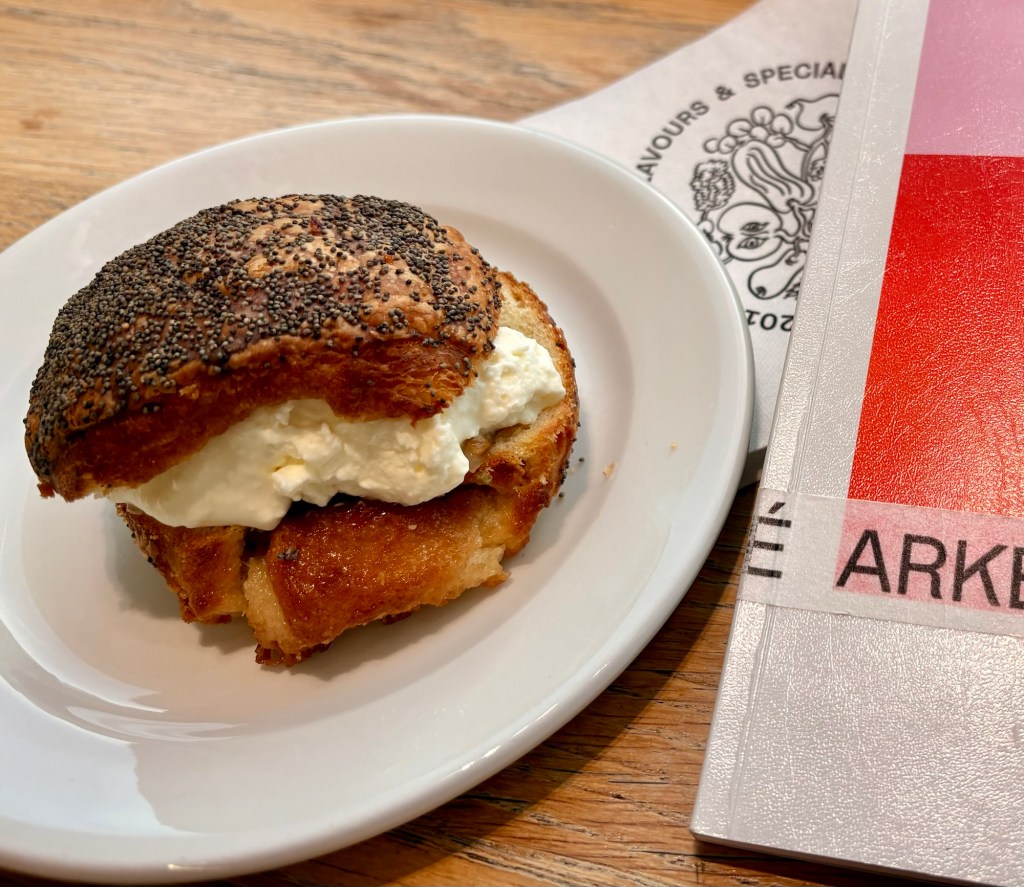
Arket made an interesting Danish-Swedish twist, with the classic wienerbrød Tebirkes cut and filled with whipped cream and almond paste like a semla!
On a trip to Amsterdam, I decided to test Scandinavian Embassy and both of its two locations, starting with the bakery in europaplein. The two locations are in Amsterdam zuid: Saphatipark and Europaplein: in the former, a more central location, you can sit but it has fewer items than the bakery in Europaplein. The bakery,…
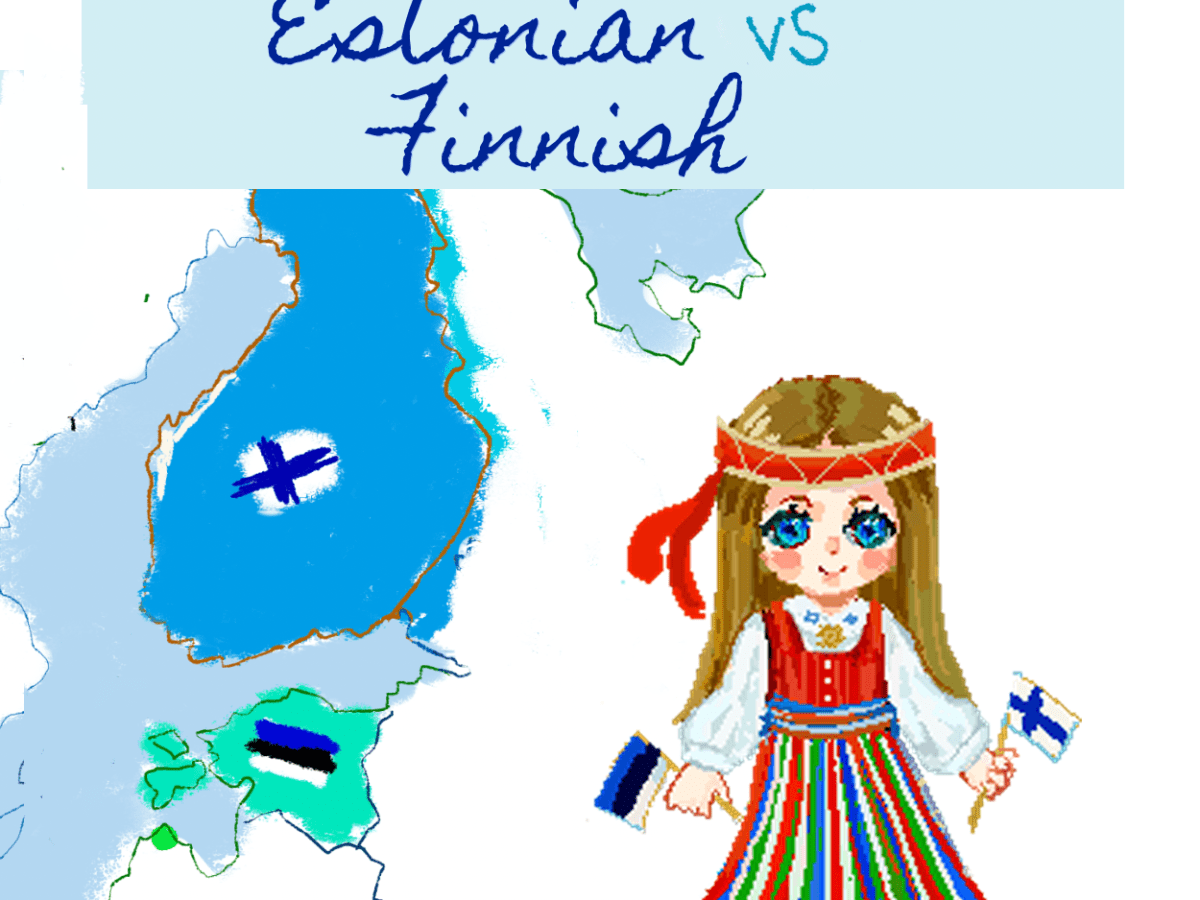
Estonian is a Finnic language, sharing many similarities with its ‘bigger’ sister Finnish, while being unrelated to all their bigger language neighbours
Cream buns are enjoyed in Nordic and Baltic countries during shrovetide, between January and February. Sweden’s classic semla has almond paste, while other countries variations include jam, vanilla cream, and chocolate icing top.
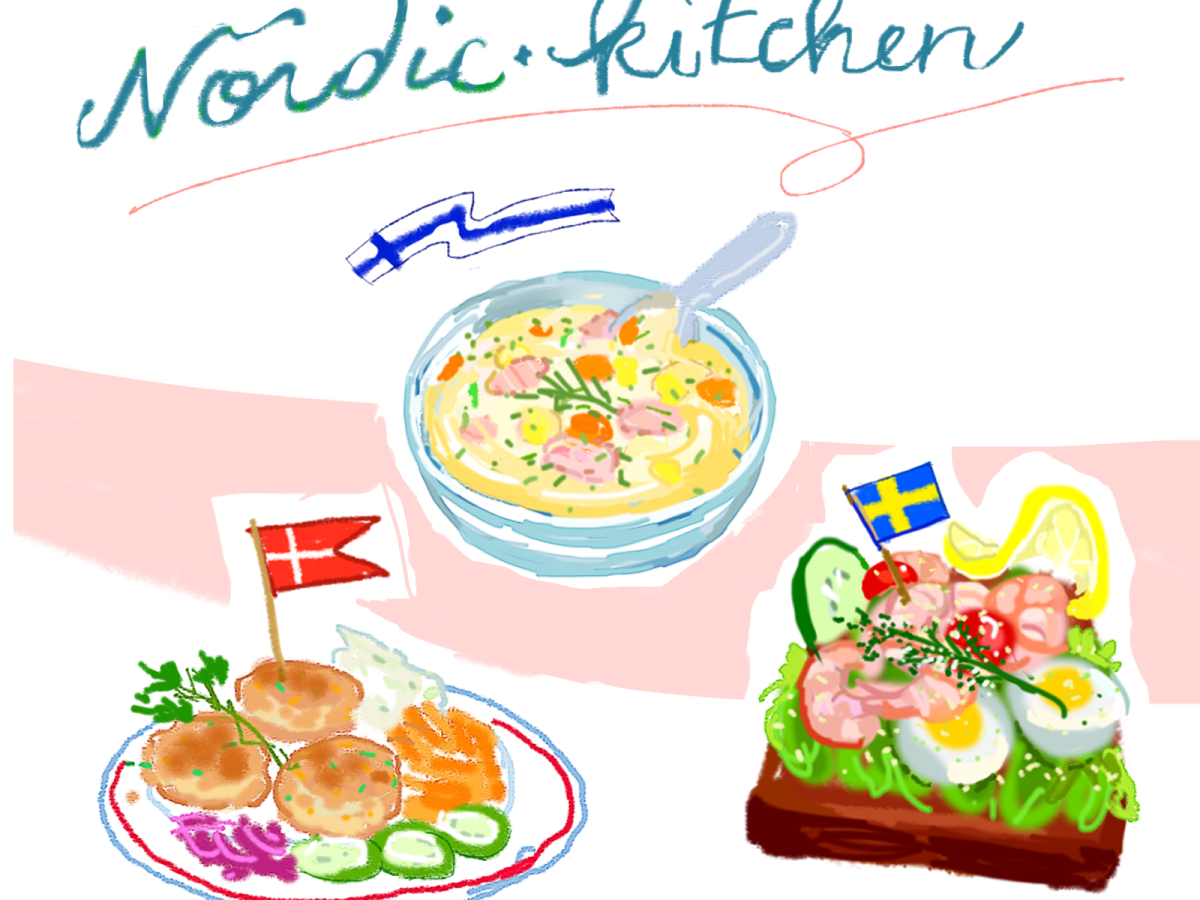
simple and iconic Scandinavian recipes to make yourself for a typical Nordic dinner
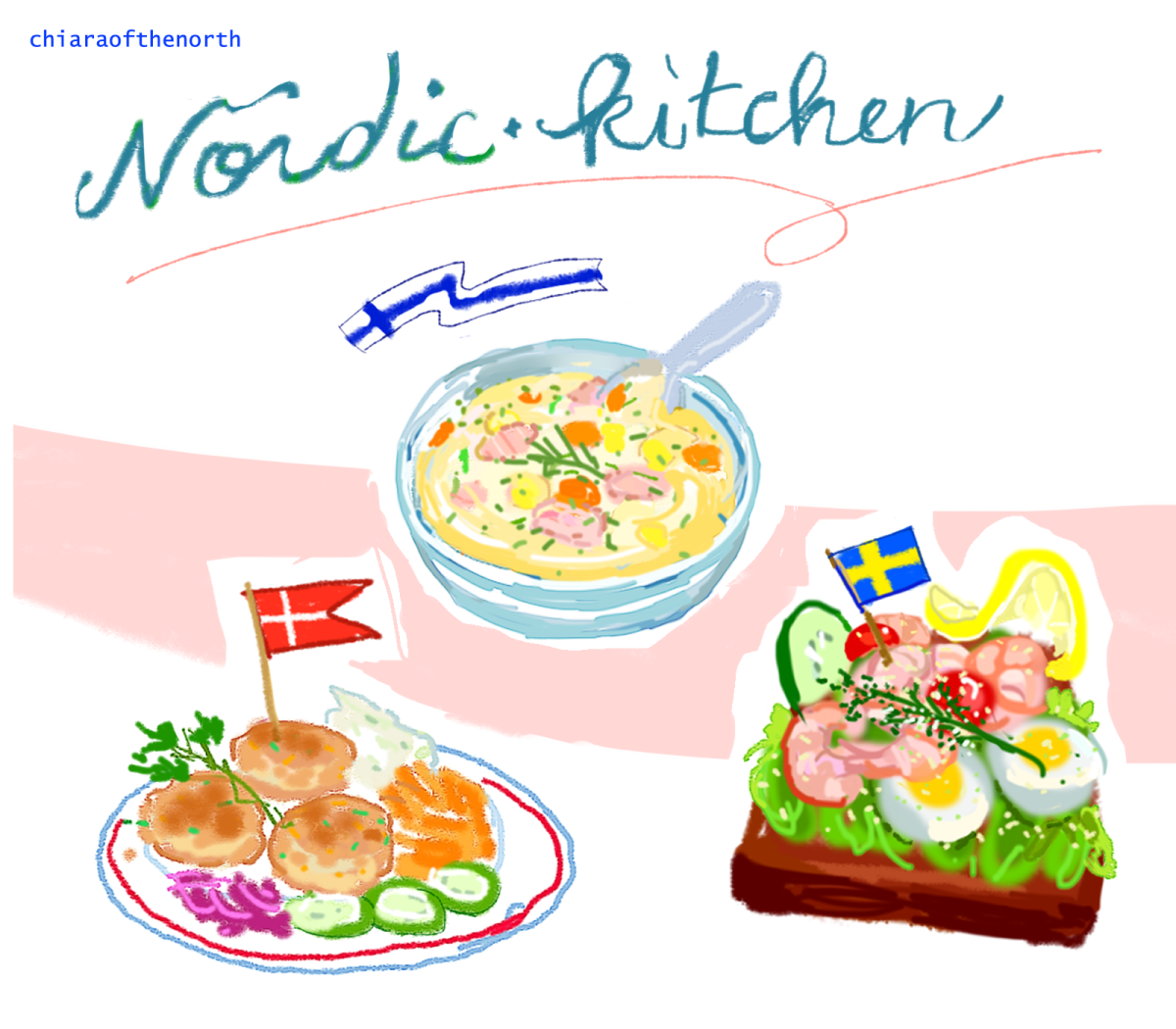
I have been testing Nordic dishes as someone with not-so-incredible cooking skills who likes to cook simple things, and these are three delicious and easy meal ideas I can present you, in time/complexity order from the easiest:
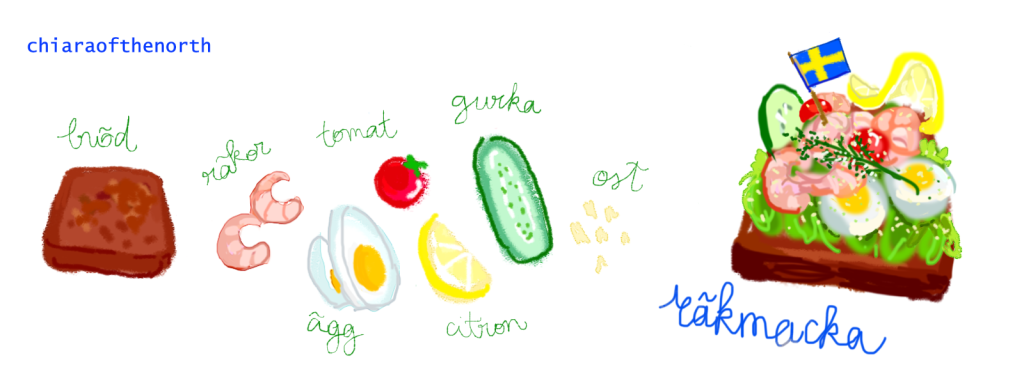
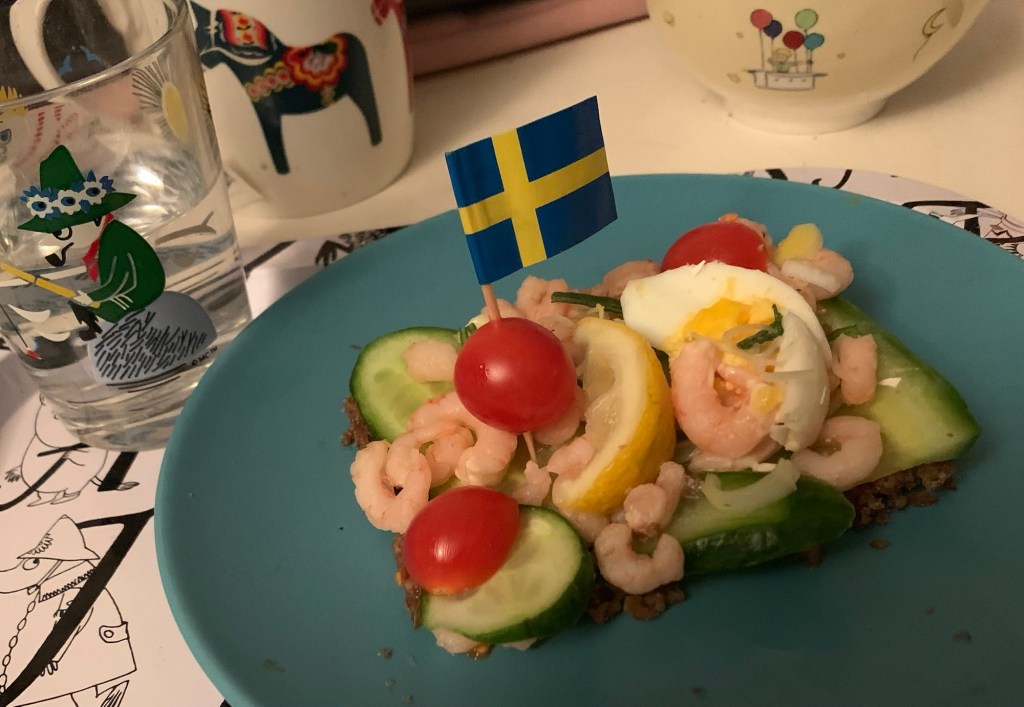
1. Räkmacka – Swedish Shrimp open sandwich
Typically found at cafés as savoury option for a fika, but you can easily make it yourself – (rye) bread with Shrimps, cucumbers and tomato slices on salad, often egg and lemon – add whatever you like and make it look fancy!
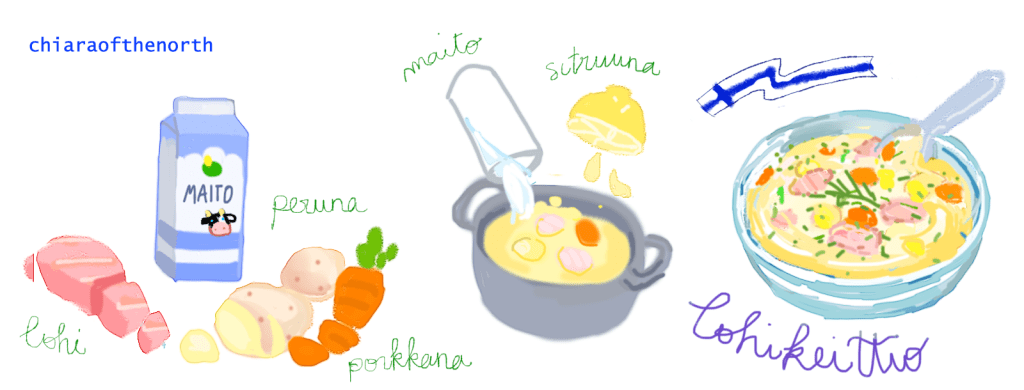
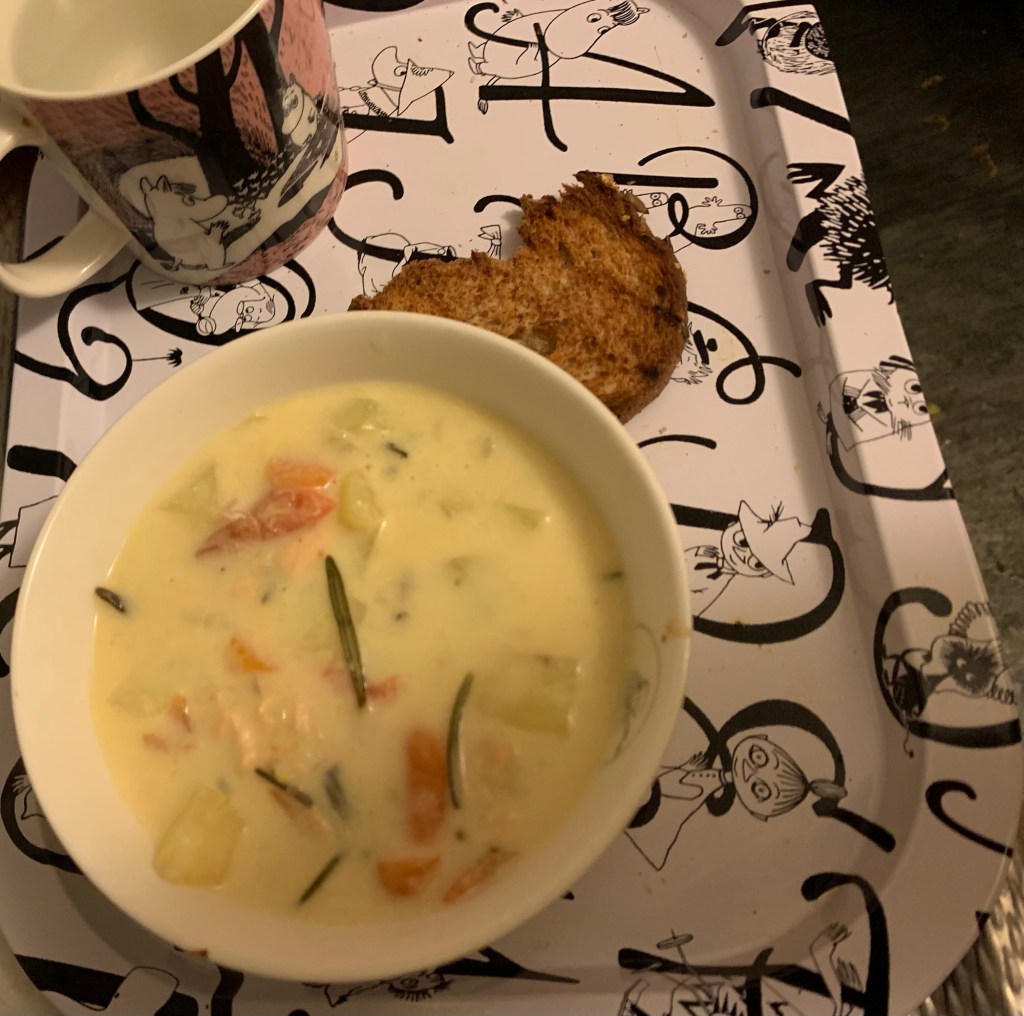
2. Lohikeitto – Finnish salmon soup
soup with chopped salmon, based off milk and lemon juice, and enriched by veggies as potatoes and carrots.
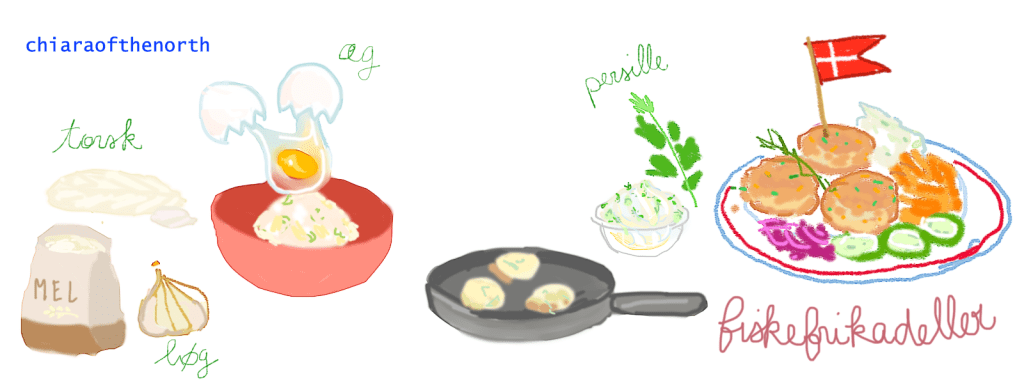
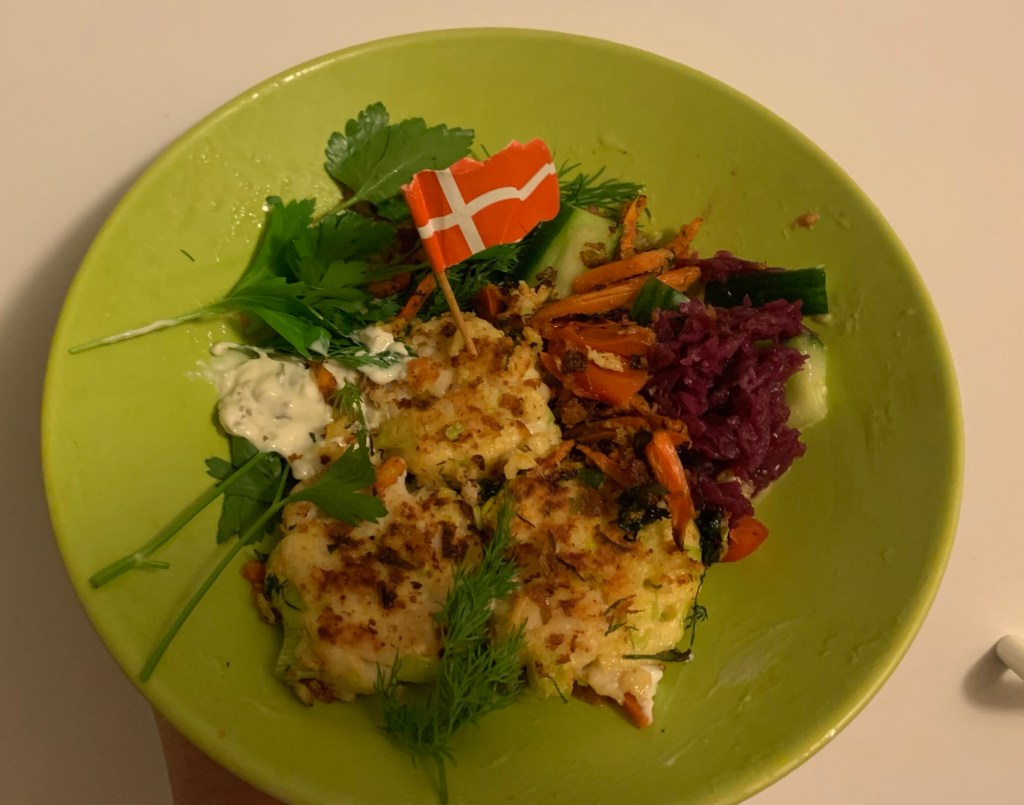
3. Fiskefrikadeller – Danish fishballs
Make balls after mixing fish chunks (I have used pangasius and cod) with egg, flour, spring onion – I also like to add carrot bits -, Fry them in a pan on both sides. Garnish with herbs as parsley. Complete the plate with some fresh veggies to the plate as cucumber and red cabbage. Enjoy the fishballs with remoulade sauce as the Danes do!
Here are pictures of my experiments:
räkmackalohikeittofiskefrikadeller
Disclaimer: these are my creative versions, and I do not follow 1:1 classic recipes. You find plenty of other references online! You can still see more Scandinavian and Nordic food on this blog, from my trips in Scandinavia and to Nordic cafés elsewhere.
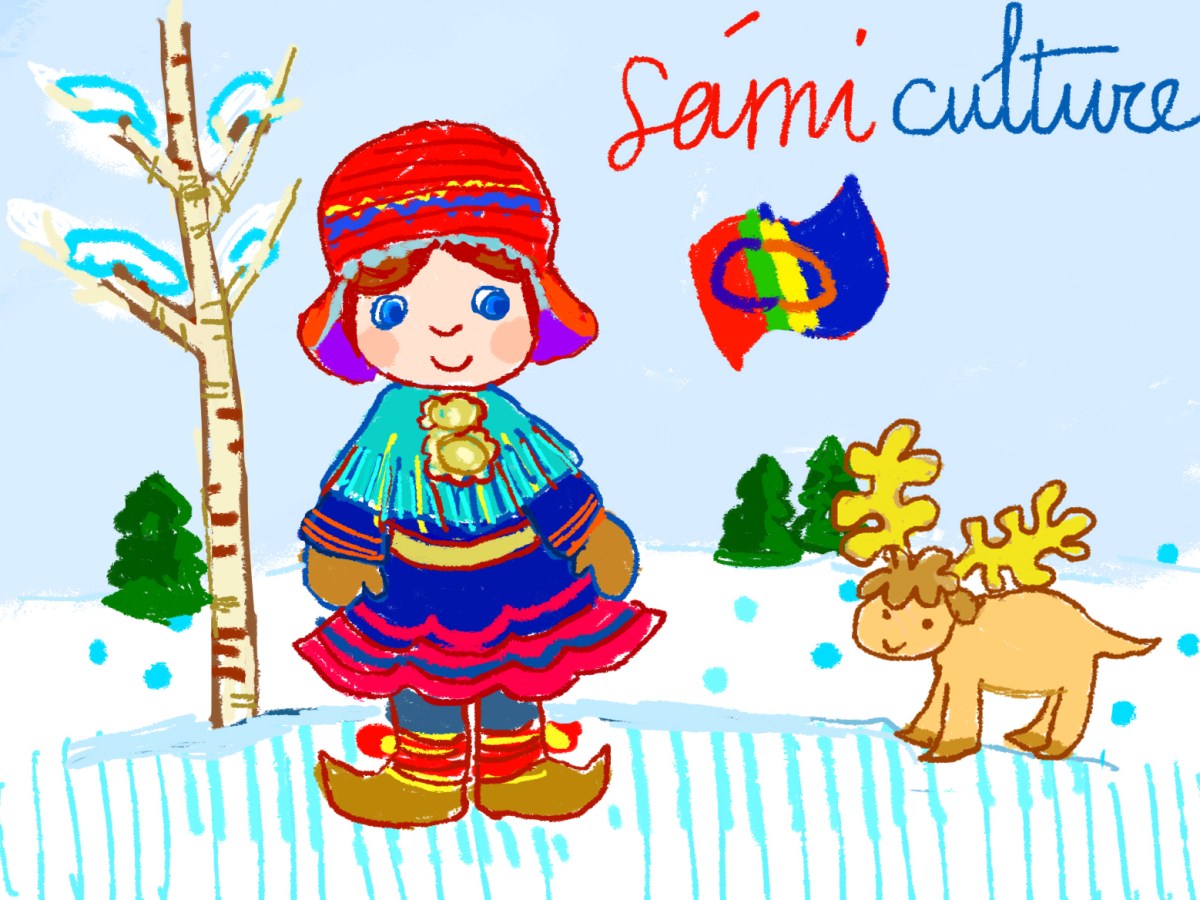
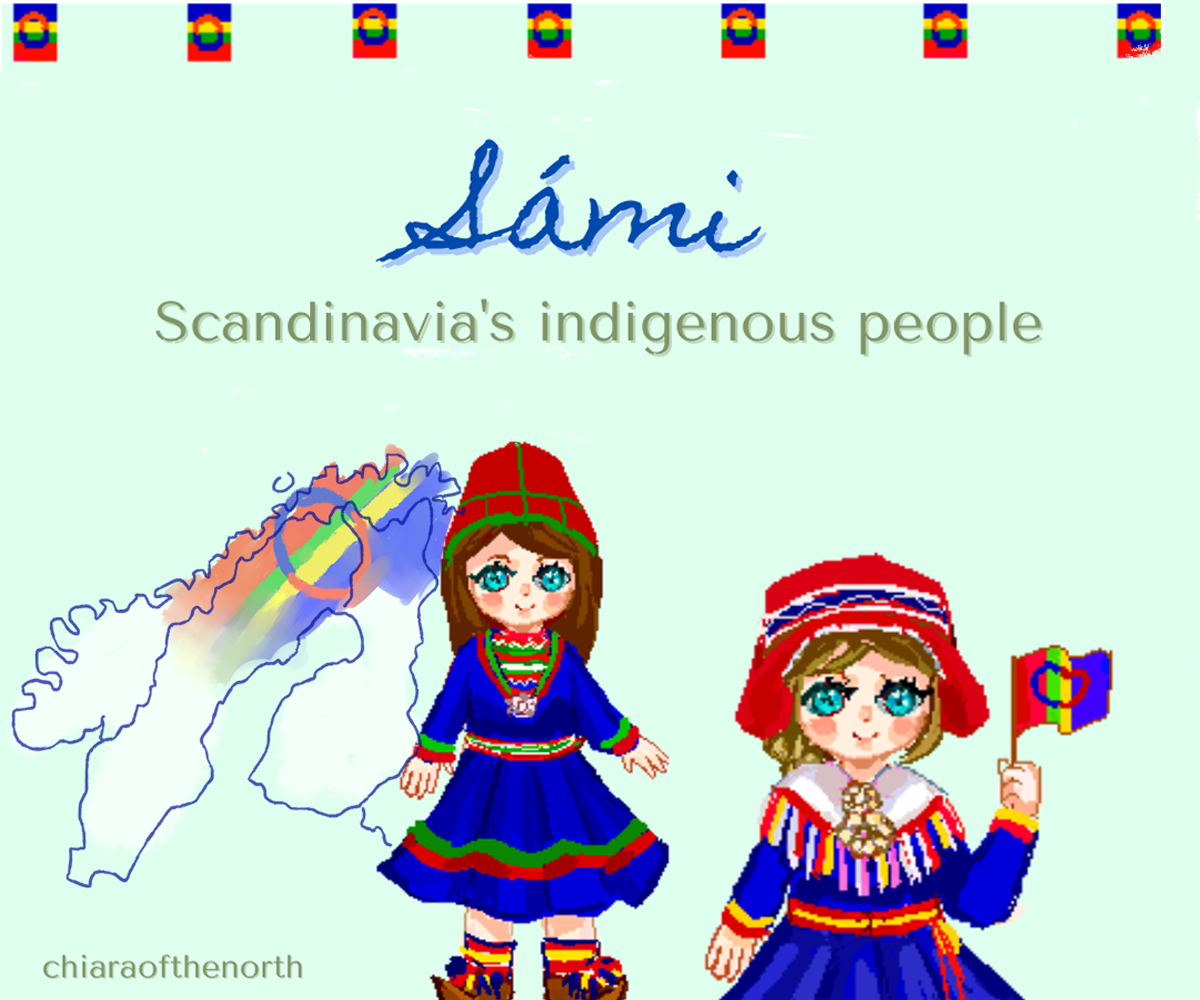
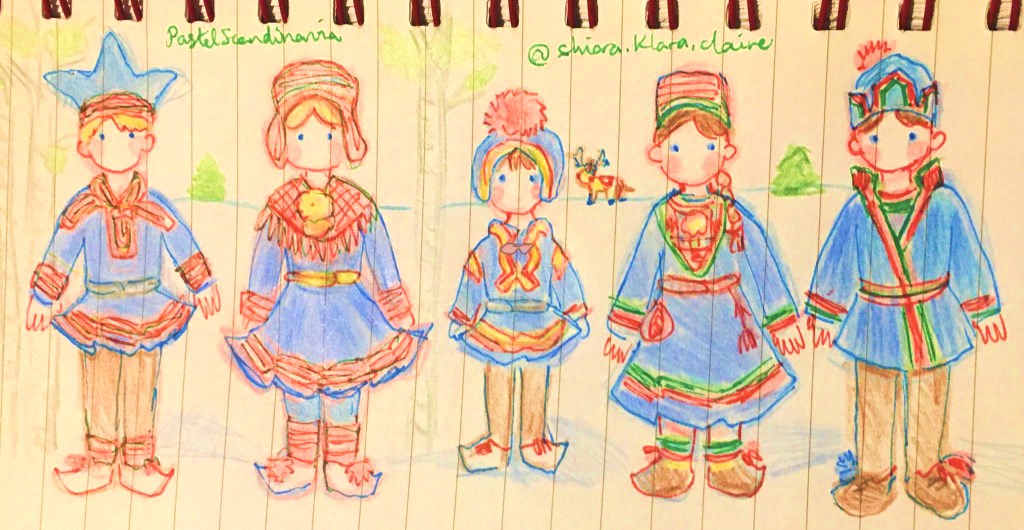
Sámi people, indigenous people of North Scandinavia, have a distinct culture, symbolised by its unique flag and traditional clothing, and part of it are Duodji handicrafts and unique musical expression through yoik.
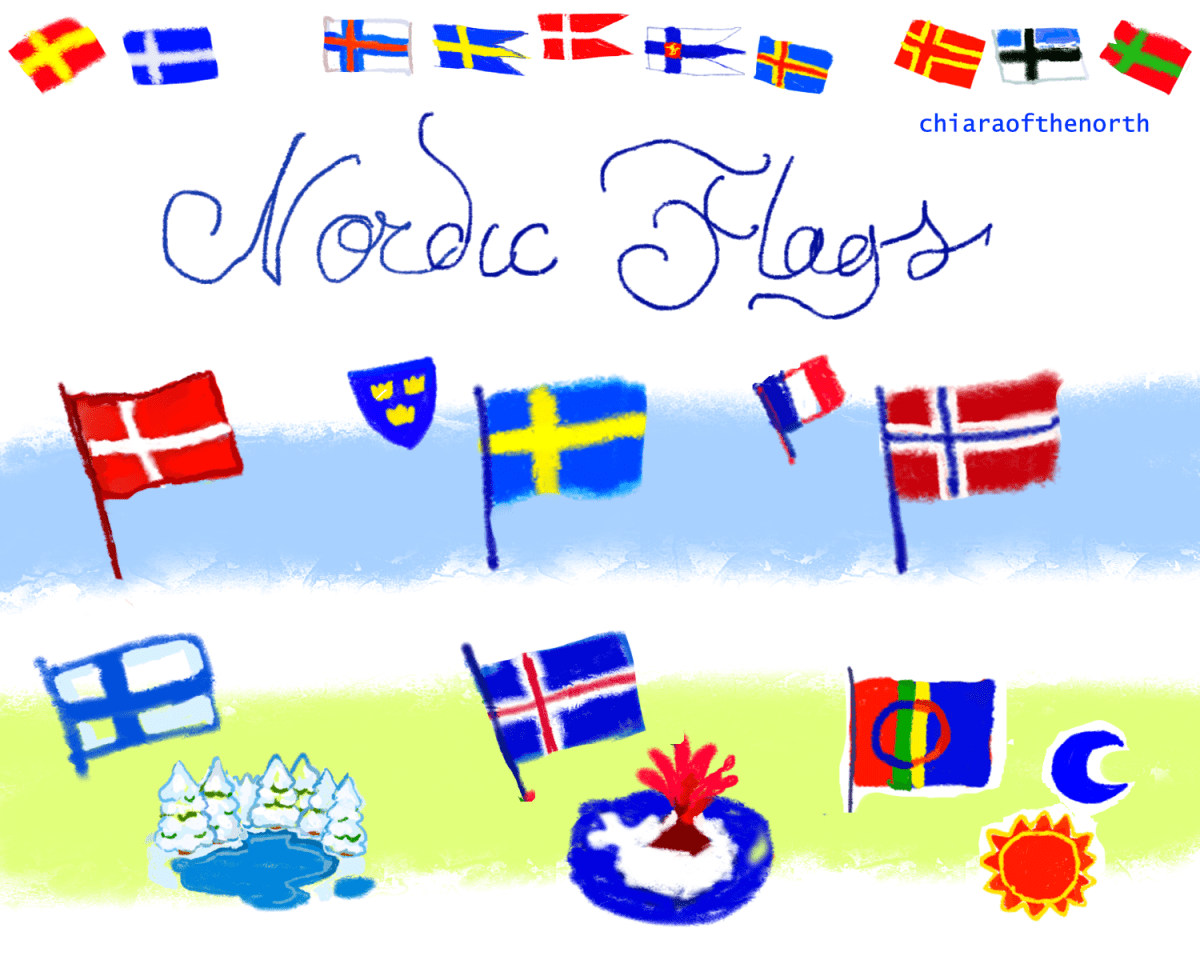
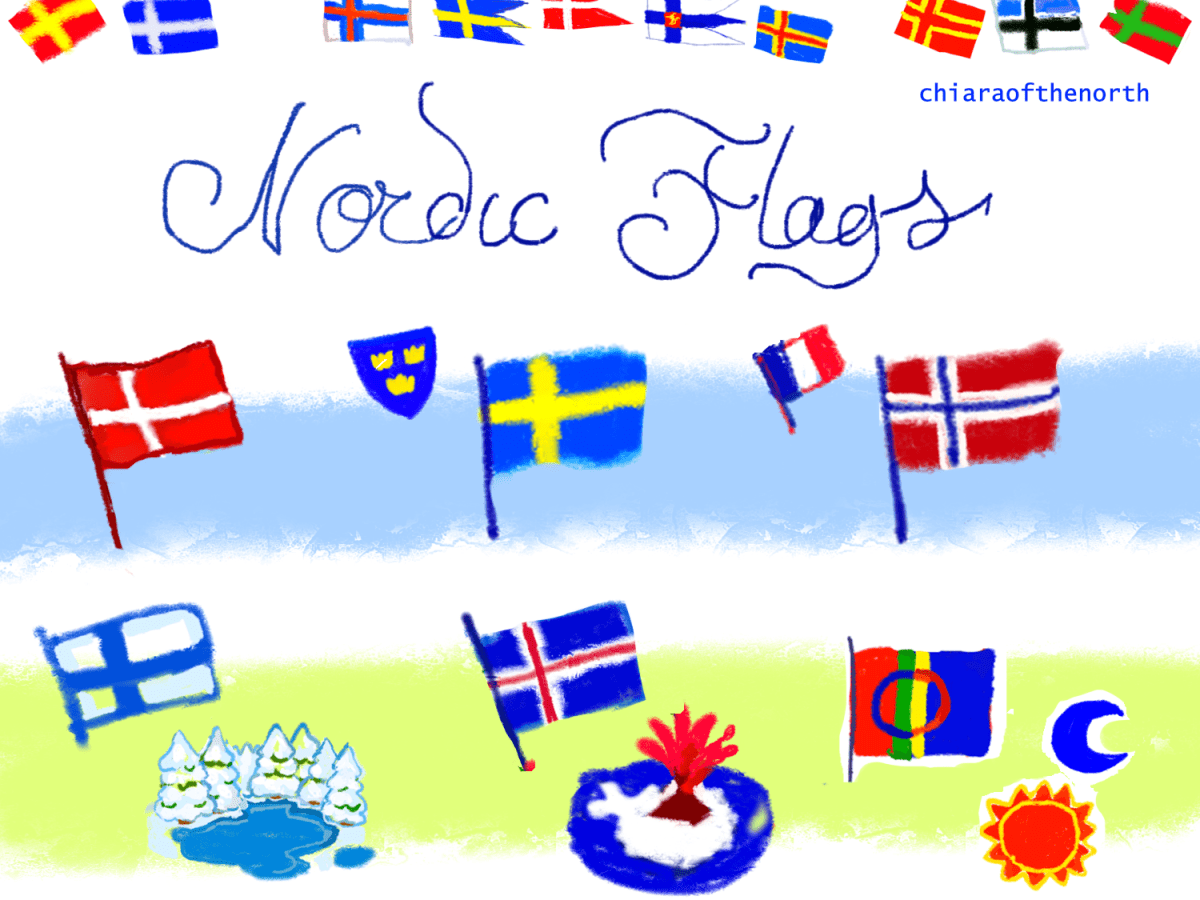
Origin and meaning of Nordic flags and other Nordic cross flags explained
Tomorrow, 23 March, is Nordic day, on this day the Helsinki treaty, establishing the Nordic Council, was signed in 1962. Its member are all Nordic countries and autonomous regions – includingÅland, the Faroe Islands and Greenland.
In honour of this occurence, I am writing this post explaining Nordic (cross) flags. Scandinavians and Nordic peoples in general really like to use their flag, which are common to see in various forms and occasions, from pennants to wooden table flags, as decoration for a birthday or on a Christmas tree. But let’s go back to history!
Where Nordic flags come from: Dannebrog, the oldest flag in the world
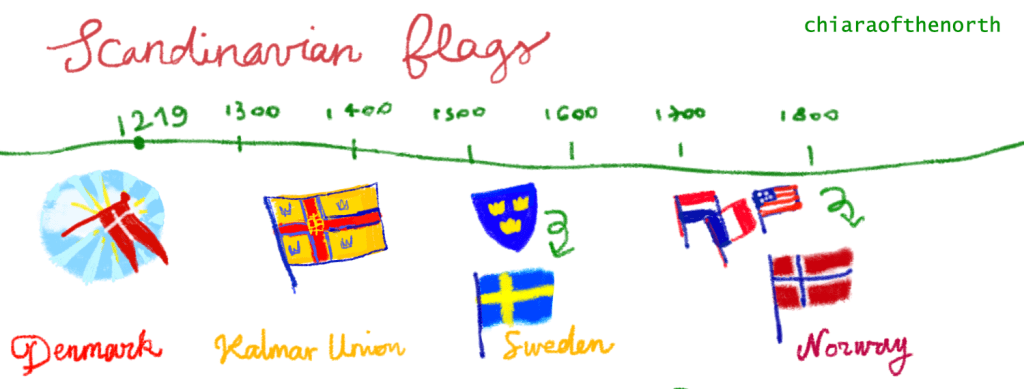
the Nordic cross flags originated from the Danish flag, the oldest flag in the world! Also called Dannebrog, according to the legend it fell from the sky during a battle in Lyndanisse (today’s Estonian capital Tallinn) in 1219, turning 800 years old few years ago! 15th June is celebrated as Valdemarsdag in Denmark, from Valdemar Sejr,the king who fought in that battle.
The flag of the Kalmar Union, union of Scandinavia (or Denmark and Sweden, with Denmark reigning over Norway) 1397-1523, also had a Nordic cross. The Danish flag then became the model for fellow Scandinavian countries:
Sweden officially got its flag 300 years later, with a design from the 16th century, with the colors -yellow and blue – taken from the coat of arms dating back to 1275. The day on which the flag is celebrated is June 6th, Svenska flaggans dag.
Norway‘s current flag appeared in 1821 – picked among a few different flag design proposals. It was the first Nordic flag with 3 colors, maybe inspired by the French revolution wanting to get rid of the Danes…parliament member Fredrik Meltzer from Bergen said ‘it means freedom, as the French flag, and in the Flags of the Dutch and Americans, and the Union of the English’. You will see a sea of flags everywhere on 17th May, Norway’s constitution day
2oth century Nature-inspired Iceland and Finland, Faroe islands and Åland
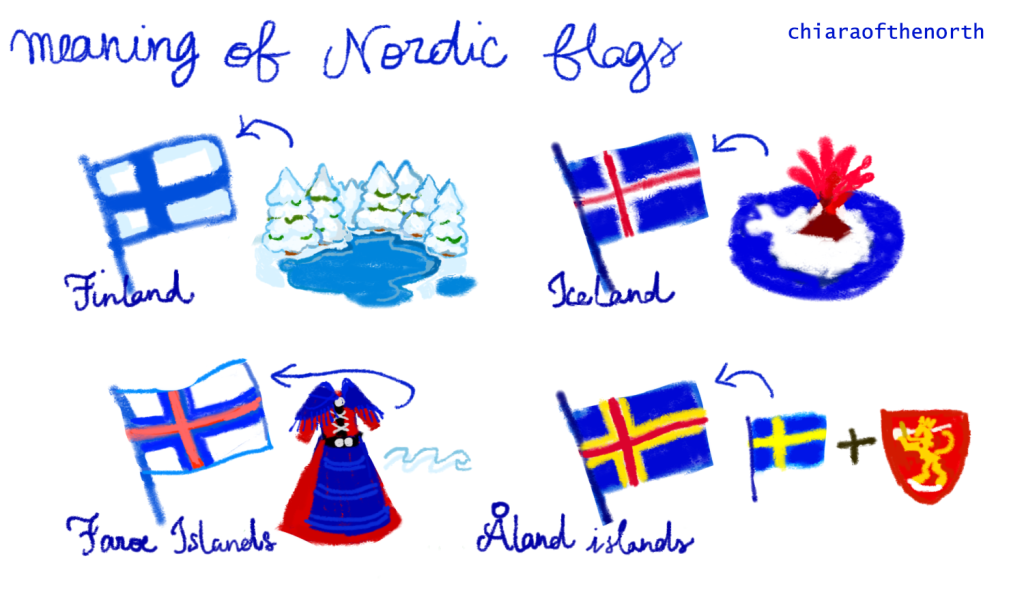
Iceland‘s official flag became official in 1915, based off its nature: according to the Flag Act the flag colours are “sky blue”, “fire red” and “snow white”. Iceland had previously an unofficial flag called Hvítbláinn, the ‘white-blue’, used by Icelandic nationalist activists from 1897 and after 1915 partly abandoned due to its similarity to other flags. Today it is still used by the Icelandic Youth Association among others.
Finland‘s flag, called Siniristilippu“blue cross flag”, was adopted in 1917. The colors would represent the lakes Finland is rich of and snow. Finland has a Day of the Flag, Suomen lipun päivä, which also happens to be Midsummer (or Juhannus in Finnish), a very important day for the Nordics! On this day the Finnish flag is raised on Midsummer eve on 6pm, until 9pm of midsummer itsself.
Faroe Islands flag is called Merkið “drape / mark”, with a white background symbolizing the foam of the sea and the pure, radiant sky of the Faroe Islands, while the old Faroese blue and red colours are reminiscent of other Scandinavian and Nordic flags, also reminding the colors of traditional Faroese clothing. Faroese students in Denmark strongly felt the need to have their own flag, and in 1919 their newly created flag was hoisted for the first time by a student in his home village. On 25 April 1940, the British Authorities officially recognised the Merkið as the Marine Flag of the Faroe Islands. This day became later the Faroese flag day, Flaggdagur.
Åland islands, the autonomous Swedish-speaking archipelago belonging to Finland, mixes Sweden and Finland in its flag, where the red cross represented Finland as the color of its coat of arms. The red cross used to be blue, with the colors taken from a song festival in the capital Mariehamn. Since 1954 it has been the official flag of Åland, April’s last Sunday is the flag day, Ålands flaggas dag.
Regional, minority and other unofficial nordic cross flags
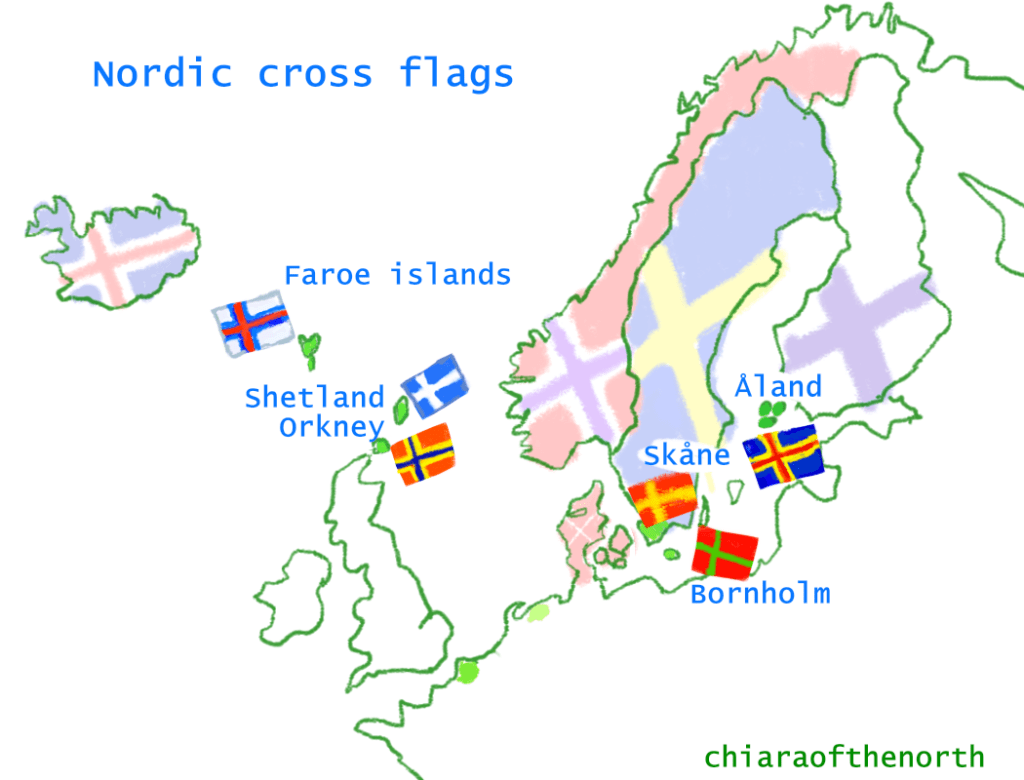
On this map I added official or widely used flags, not adding therefore Normandy and proposed flags
Skåne – The flag of Scania is actually quite old, and has its origin in the historical coat of arms of Lund’s (Danish) archibishop of Lund, older than the Danish Dannebrog! The Nordic cross flag was made up in the 1800s though. The third Sunday of July is Skåne flag day. skaneflaggan.nu
Finnish/Swedish minority: Flag mixes – Finland’s Swedes (looks actually the same as Skåne flag, red stands for Finland as above for Åland) and Swedish Finns, Finland’s flag with a yellow lining around the cross.
Bornholm – The island’s unofficial flag is from the 70s, designed by Bent Kaas. Green would represent the nature on the Danish island. It is mainly used in tourism and to mark local products.
Unofficial Nordic cross flags have been created for Swedish regions as Norrland, Bohuslän, Småland among others, and the Swedish Baltic Sea islands of Öland, and Gotland, although these are not really used.
Nations with Nordic ties- scandi heritage
Shetland and Orkney for their Nordic heritage, historical and cultural ties of the Scottish islands with Scandinavia. Shetland‘s flag was created in the 60s for the 500 years since its transfer to Scotland from Norway (after belonging to Norway for as long). A Nordic cross with Scottish colors. Orkney‘s flag was chosen in 2007, after a public consultation (all proposed flags were a Nordic cross). Yellow and red from Scottish and Norwegian royal coats of arms, Blue representing Scotland and the Sea.
Normandy‘s Saint Olaf flag: mainly used by regionalists movements, its name comes from the Norwegian kind Olaf Haraldson, probably baptised in Rouen, remarking the region’s viking origin.
Nordic cross flags were also proposed for Estonia in 1919, to remark its Nordic (rather than Baltic) identity and historical ties.
A cool Nordic cross flag was also proposed for Frisia, probably due to the part of Scandinavian heritage Frisian people (scattered between the Netherlands, Germany and Denmark) have.
Nordic indigenous nations without Nordic cross: Greenland and Sami people
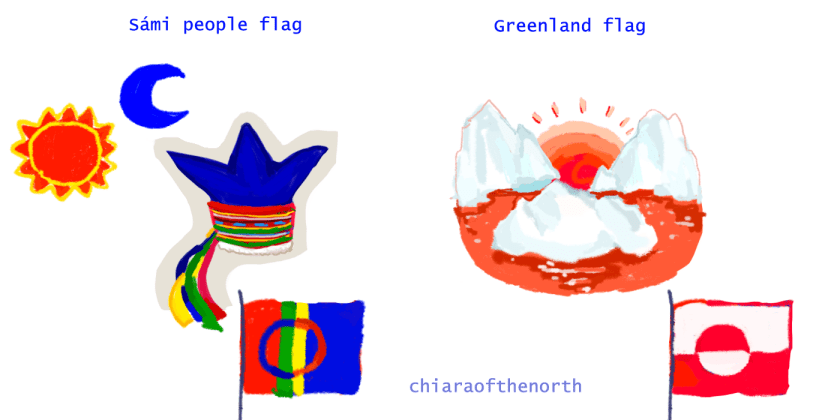
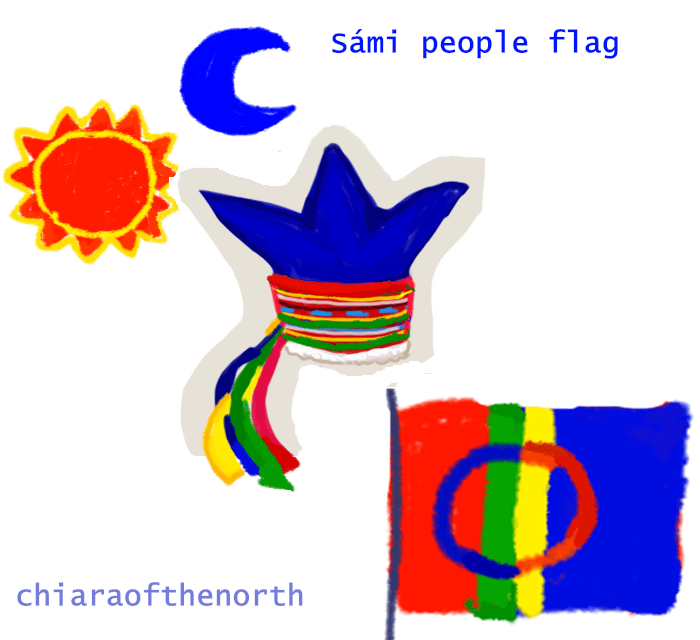
Greenland and Sami people have a flag since 1985 and 1986, both Inuit and Sami people adopted a sun/moon symbol instead of a cross, more typical of indigenous people and their connection to nature. the sun symbol was kept however in the same left-aligned position as Nordic crosses. Greenland has had a Nordic cross flag proposal – you might guess, green was in it- , but the Greenlandic iceberg landscape-inspired design by Tue Christiansen was eventually chosen instead. its name is Erfalasorput,”our flag”. In the Sami flag sun and moon are represented as a circle. The first Sami flag, designed in 1977 by Synnøve Persens, was the simpler, red and blue with the yellow line, inspired by Sami traditional clothing. Astrid Båhl added the Green line (color more present in South sami clothing) and the circle.
sources
Norway: stortinget.no – Det Norske Flagg – et flagg i frihetens farger
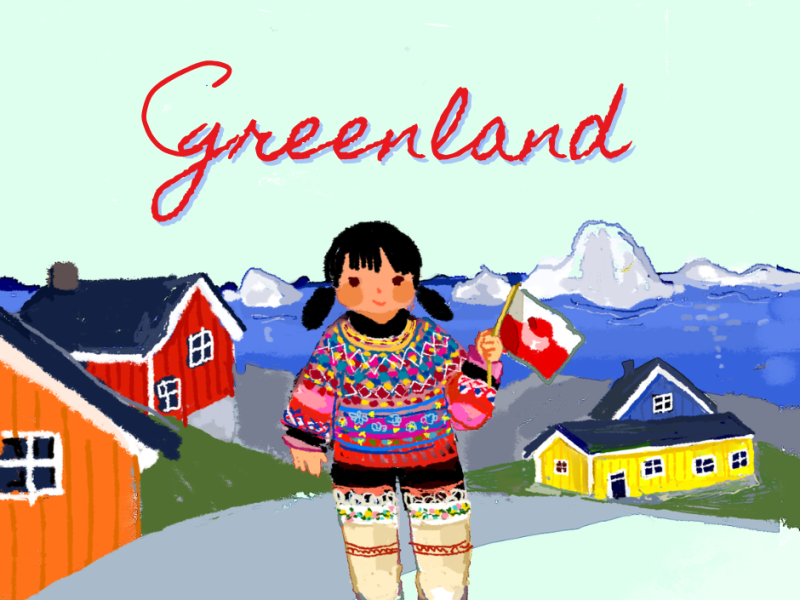
Discover Greenland, home to the Inuit Kalaallit, and its most iconic aspects as its flag, language and folk costumes. The biggest island of the world has a rich history of indigenous culture intertwined with Norse colonization and later Danish rule.
Norwegian, Danish, Finnish and Swedish Christmas markets in Rotterdam. Christmas decorations, imported typical Nordic products for sale, a cafe with lunch and cakes in each of them!
my trips to Nordic Christmas markets at the Finnish seamen house in Rotterdam and a Swedish Christmas market in Groningen
I had been looking for a place selling Lussekatter (Lucia post) but ended up finding about Nordic Christmas markets in the Netherlands where I live! The blog post will be in Dutch – English Below
Alle Skandinavische zeemanskerken in Rotterdam organiseren Kerstmarkten in november, en ik ontdekte ze net op tijd om alleen naar de Finse Kerstmarkt te gaan. Een week later ging ik ook naar de ‘Zweedse’ kerstmarkt in Groningen. Twee heel verschillende evenementen! Spoiler- ik vond de gezellige, authentieke Finse markt veel leuker.
Finnish Christmas Market – Finse Kerstmarkt bij de Suomen Merimieskirkko in Rotterdam
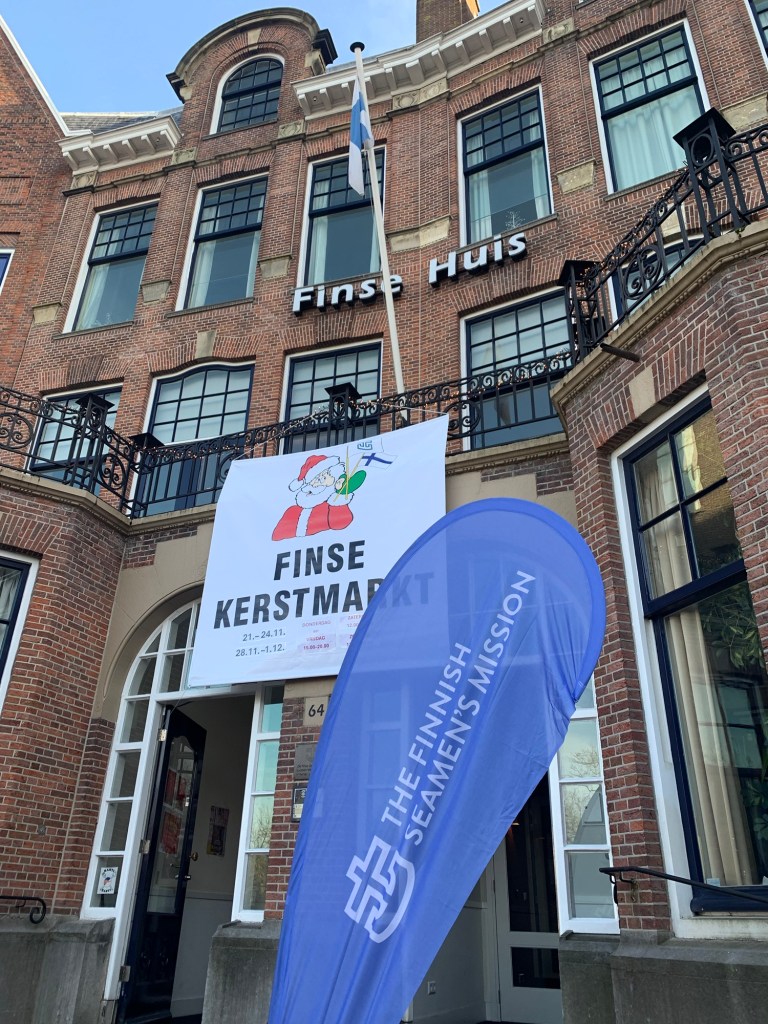
De Finse kerstmarkt werd direct georganiseerd door de Finse zeemanskerk, Suomen Merimieskirkko, twee weekenden in november, en het was gratis toegankelijk. De meeste mensen hadden wel een band met Finland en het was er niet te druk, op zondag tenminste. Ik werd ook een paar keer in het Fins aangesproken en een paar mensen waren benieuwd over waarom ik daar was. Het was dus zeker perfect om wat contact met Finland en het Finse taal te hebben! Ik heb namelijk heel erg zin gekregen om Fins weer te gaan leren.
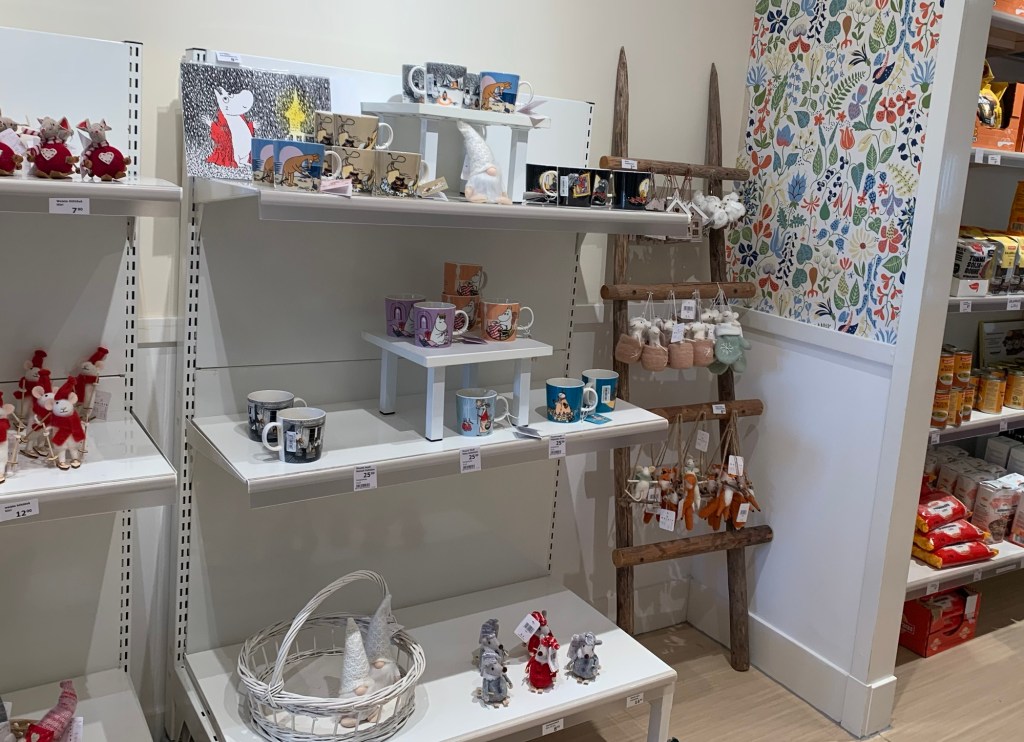
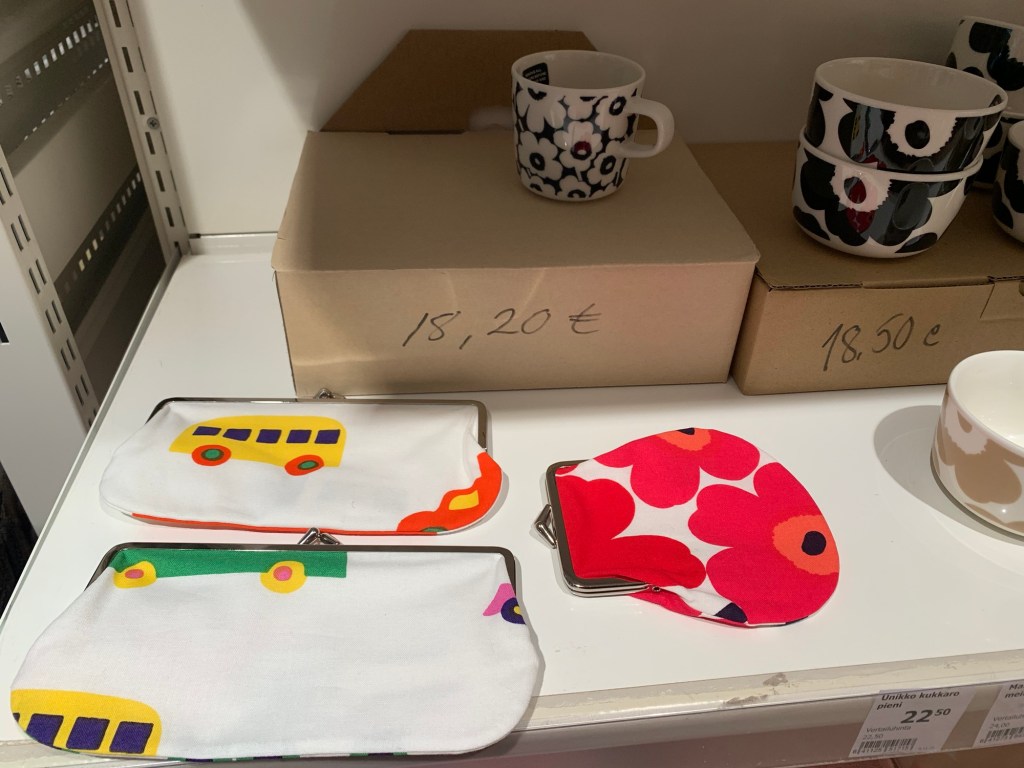
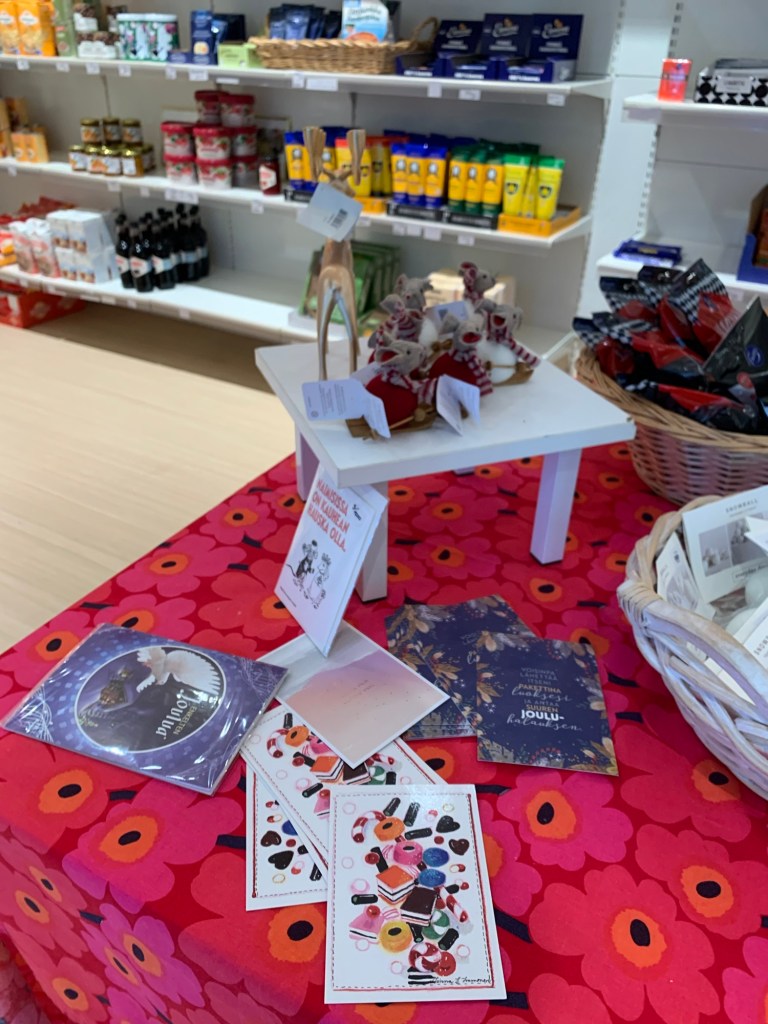
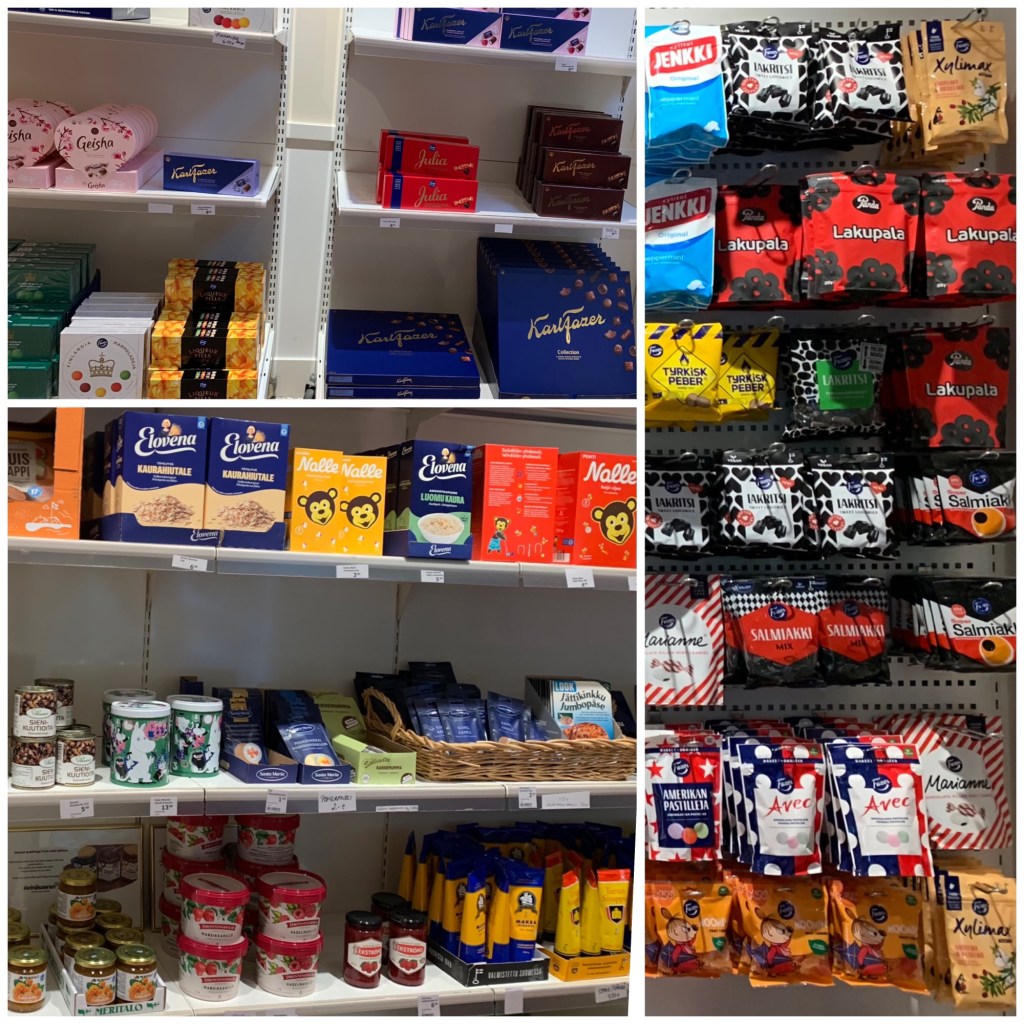
De locatie was het Finse Huis, binnen was er een soort Finse minimarkt, met ook wat andere typisch Finse spullen zoals Marimekko en Moomin merch. Daarnaast was er een café waar je van een authentieke Finse maaltijd en gebak kon genieten. Buiten was een kraam voor gegrilde worst en zelfs een Finse sauna waar je gebruik van kon maken tegen betaling!
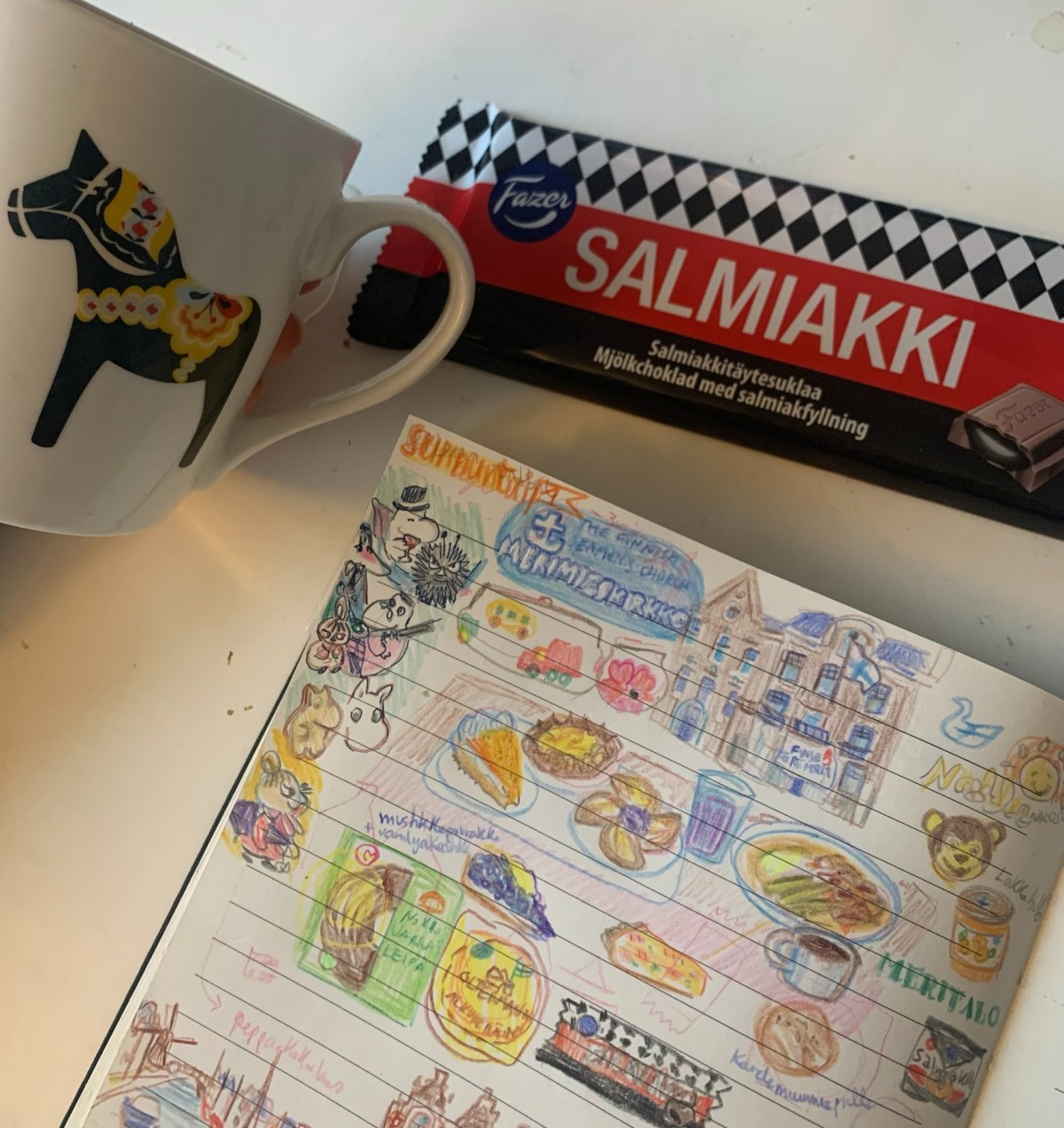
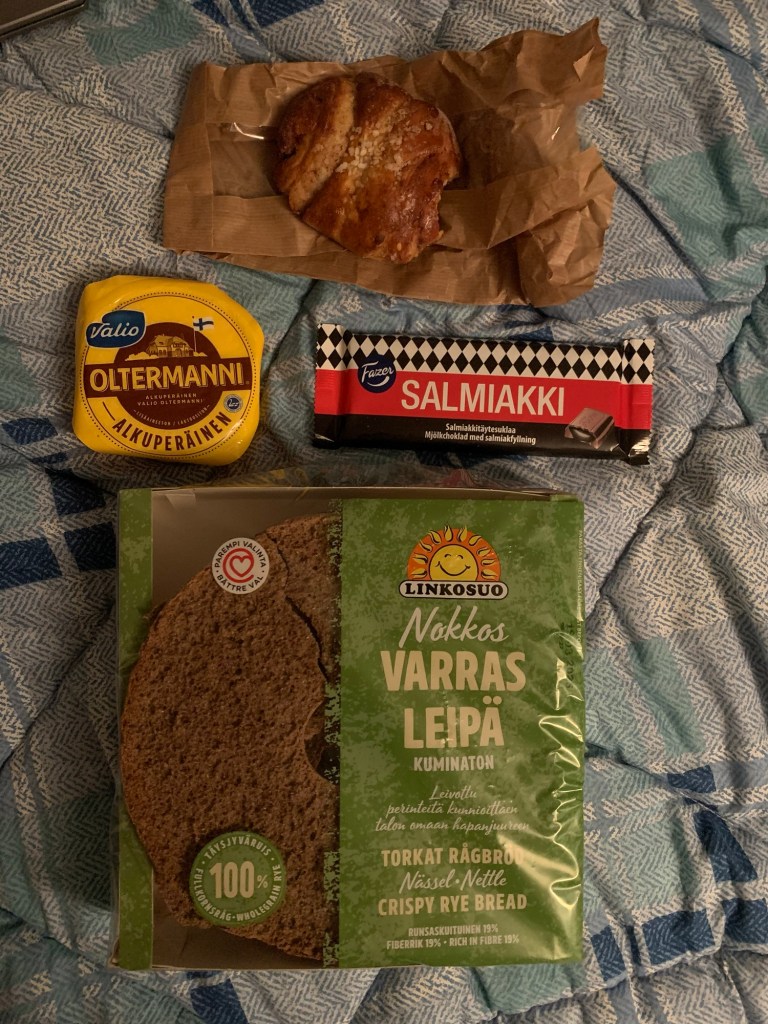
Ik heb gekocht Fins rond gedroogd roggebrood, kaas, Fazer chocolade met salmiakki (drop). Ik was heel onzeker over kruipbraam jam (lakka is de naam van de oranje beer in het Fins – hjortron in het Zweeds, cloudberry in het Engels). Dit alles was vrij prijzig, van € 4 voor de chocoladereep tot € 13 die de jam zou hebben gekost!!! Maar goedkoper dan reizen naar Finland…
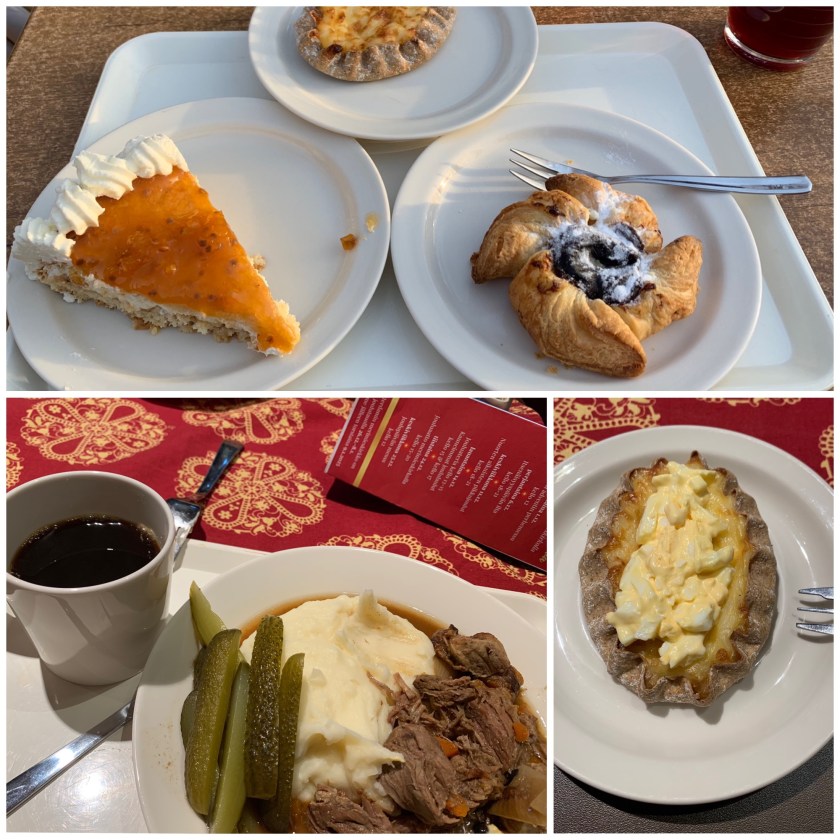
Ik heb van alles geprobeerd in het café, waaronder Joulutorttu (typisch Fins kerstgebak), Karjalanpiirakka (pasteitje met rijst vulling, waar je een ei-botermengsel op smeert), en een cake met kruipbraam jam. écht Noords en iets zuur). Daarna een Karjalan paisti, Karelische stoofvlees met aardappelpuree en augurken, € 15 met koffie erbij. Omdat ze al het overgebleven eten voor de halve prijs weggaven, kreeg ik aan het eind ook nog een broodje kardemom…
The Finnish Christmas market at the Finnish seamen Church there was a sort of Finnish minimarket, including some typical Finnish stuff as Marimekko houseware and Moomin mugs. Next to it you could have an authentic Finnish meal and cakes at the café, and sausages at a kiosk. It was also possible to try the Finnish sauna outside!|•
I bought Finnish round dried rye bread, cheese, Fazer chocolate with salmiakki, liquoricem and almost got also cloudberry jam. All these were quite pricy, from € 4 for the chocolate bar to € 13 which the jam would have costed!! But cheaper than travelling to Finland..
I tried a bit of anything at the café, and that included Joulutorttu, Karjalanpiirakka, a cloudberry jam cake. Then a Karelian stew, Karjalan paistu, with coffee included. There was a egg and butter mix to be added to the Karelian pie, but found it out late, so guess what…I ate it twice. As they were Giving away all food left for half price, i also got a cardemom bun at the end..
Swedish Christmas market – Zweedse Kerstmarkt in Groningen, Suikerfabriek
De ‘Zweedse’ markt in Groningen was in de Suikerfabriek, een voormalige suikerfabriek, dus een vrij grote plek, en er was een kaartje voor € 8-9, dat de ochtend van het evenement op zaterdag al was uitverkocht. Het was een typische kerstmarkt waar van alles werd verkocht, ook spullen, van oorbellen tot houten dingen tot handschoenen.
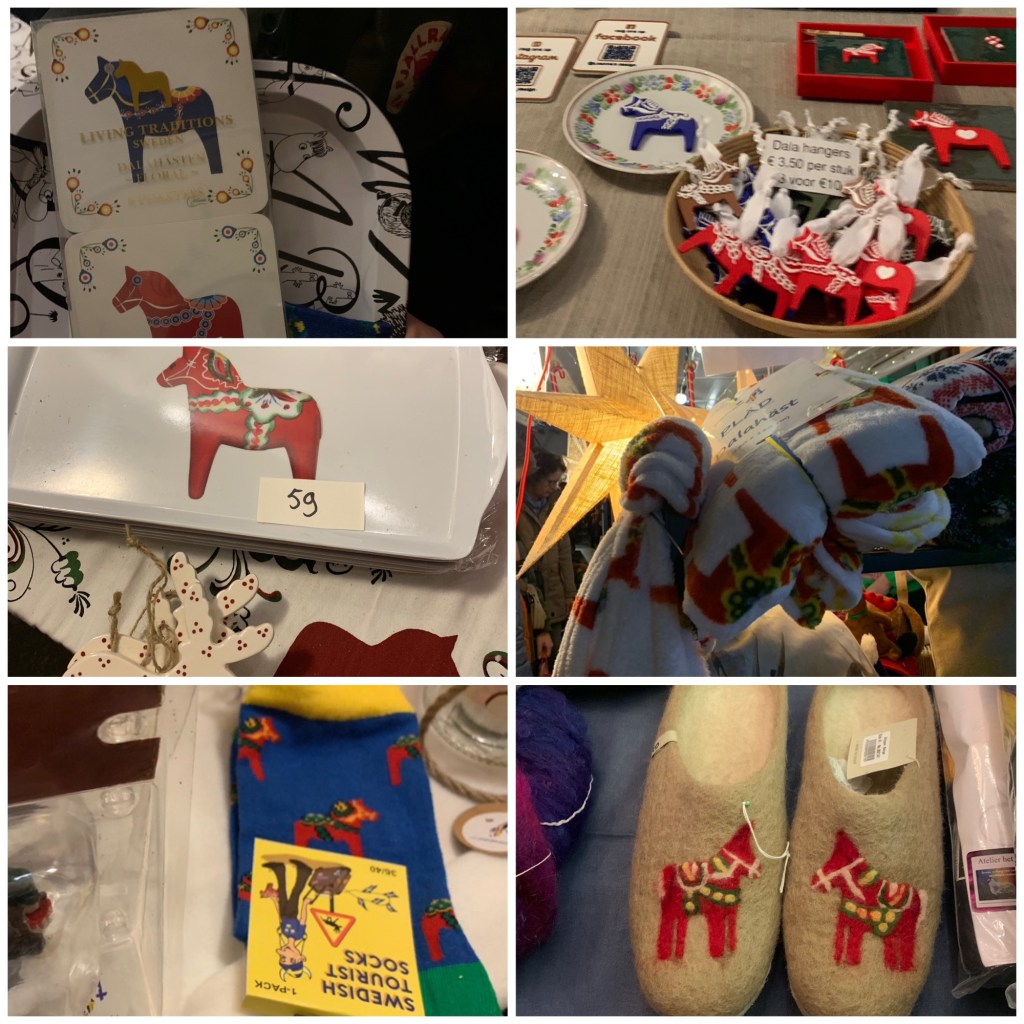
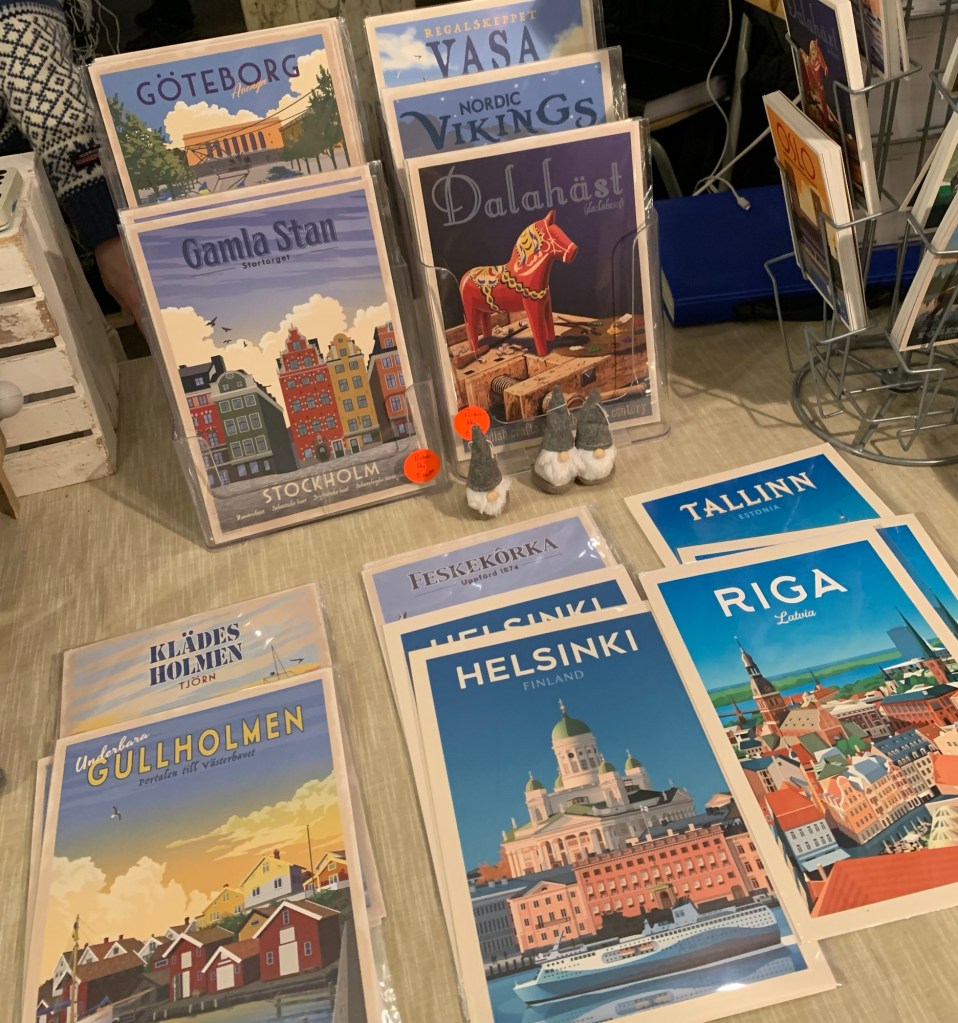
Er waren niet heel veel stands die Scandinavische spullen verkochten, en eigenlijk meer souvenirs in die gevallen, met een heleboel Dala-paardjes. Prenten van Scandinavische steden waren ook bij een paar te koop.
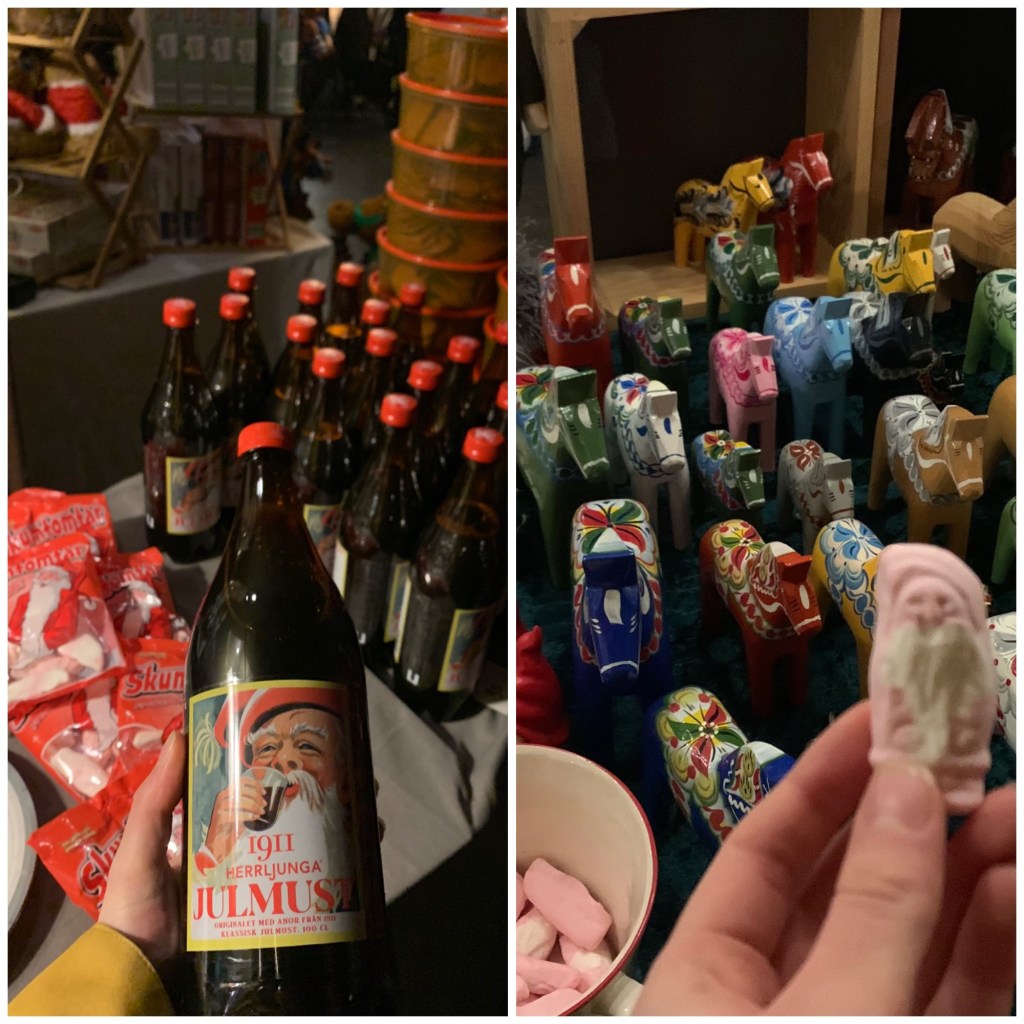
Pas Eén kraam verkocht Moomin-spullen (je zou meer verwachten als je ziet hoe vaak Moomin spullen zijn te vinde in Zweden), en een paar hadden sokken met Zweedse motieven, ook hier te koop bij Svensk Husman, en andere Pepparkakor, snoep en Julmust flessen (specerij-cola). Het eten was een beetje teleurstellend: Kanelbullar (kaneelbroodjes), een kraampje van Noorse zalm, en ‘Zweedse’ gehaktballen met standaard sauzen voor Nederland en niets meer…
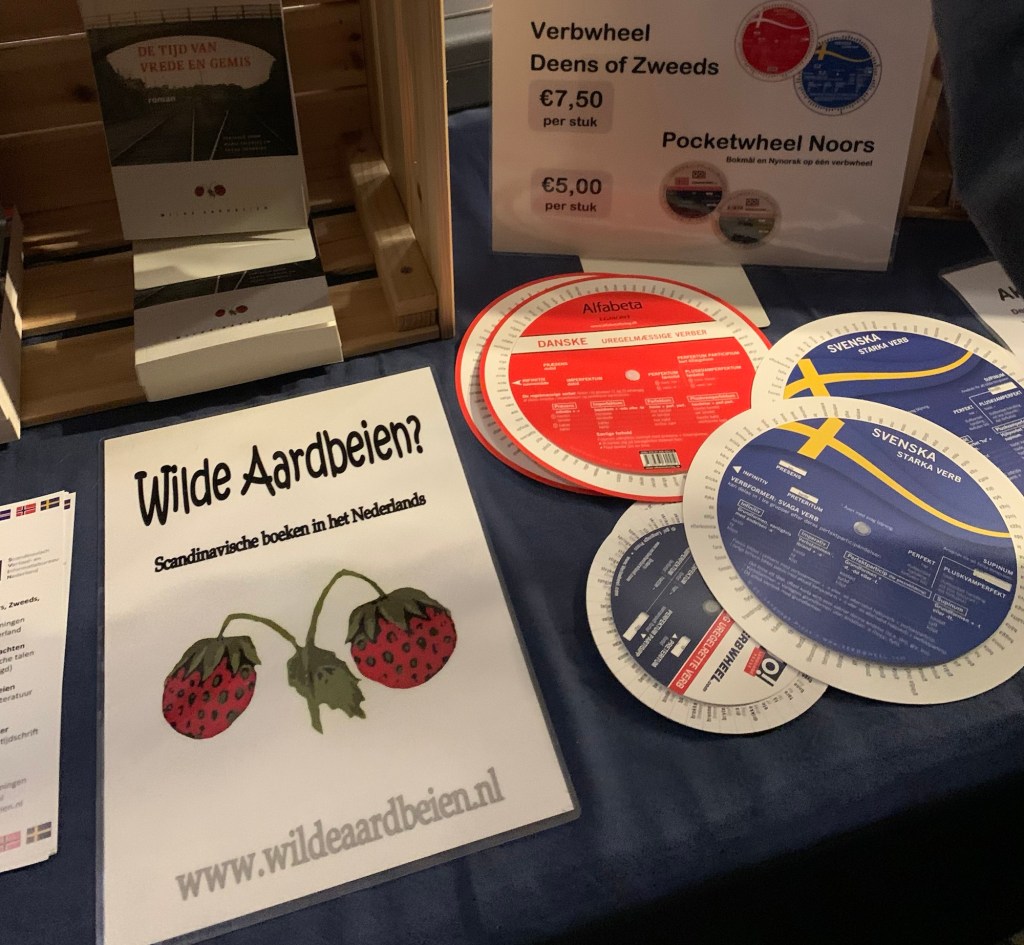
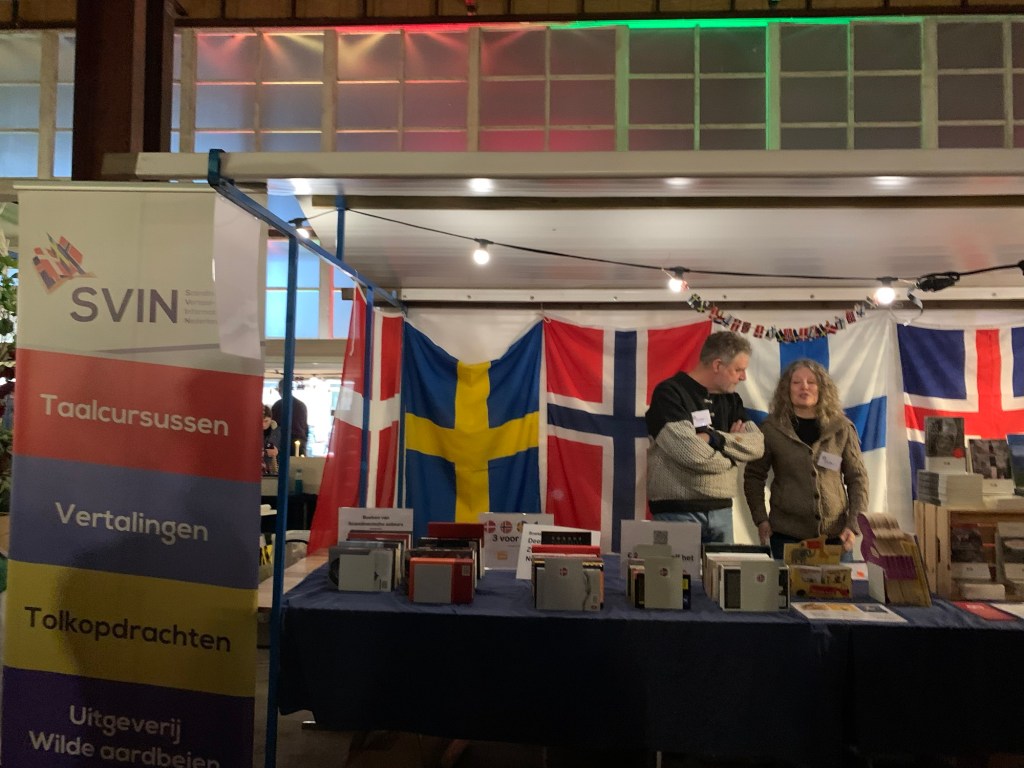
De Skandinavische Vereniging en Informatie bureau in Nederland – SVIN – en culturele associatie van vertalers voor Scandinavische talen en culturen, was erbij. Ik las hardop iets voor mijn vriend daar en kreeg complimentjes voor mijn Deense uitspraak!!!
Conclusie:om Skandinavische/Zweedse (kerst) spullen en eten te vinden kon je beter naar IKEA gaan, en zonder € 8 kaartje.
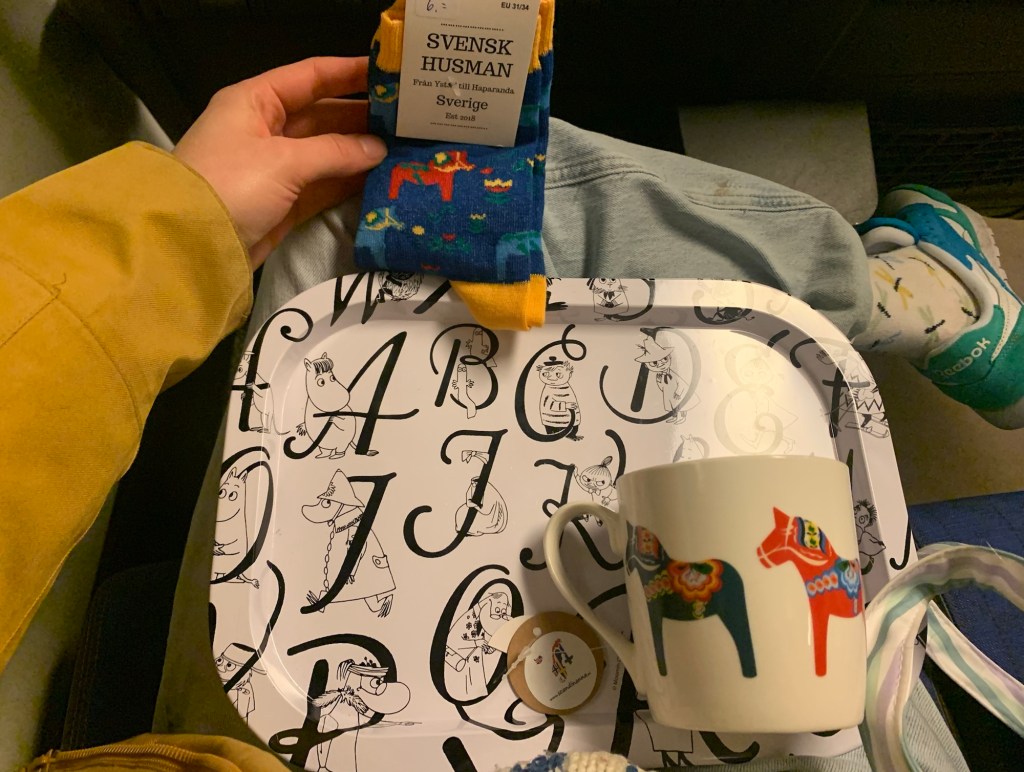
Ik heb ondanks dat wel iets gekocht: een mooie Dalahäst kop en sokken, een Moomin dienblad (ik had eigenlijk een dienblad erg nodig).
Maar ben blij dat ik daar ben geweest om een vriend en Groningen te zien.
The ‘Swedish’ market in Groningen was located at an old factory now serving as a fair location, entry with a € 8-9 ticket. It was for a great part a general Christmas Market with stands selling from earrings to wooden things to gloves.
There were only a which sold legit Nordic stuff, which was actually souvenirs and a lot of Dala horse objects. another couple prints depicting Nordic cities. One was selling Moomin stuff and a couple socks with Swedish things as motifs. The food part was kind of delusional, the only Scandinavian thing to be found was Kanelbullar, and a stand selling Norwegian salmon. And ‘Swedish’ meatballs, without typical Swedish sides as lingonsylt though. The Dutch association of translators from Nordic languages also had a stand, selling some books and verb paradigm round cheat-cheets. I read out loud for my friend something and got praised for my Danish!!
I got Dala horse stuff although there was barely anything else worth being bought (thankfully for my wallet lately): A mug and socks! I already needed a tray and happened to find a Moomin one, so I went for it..
Scandinavian Christmas findings in chain shops
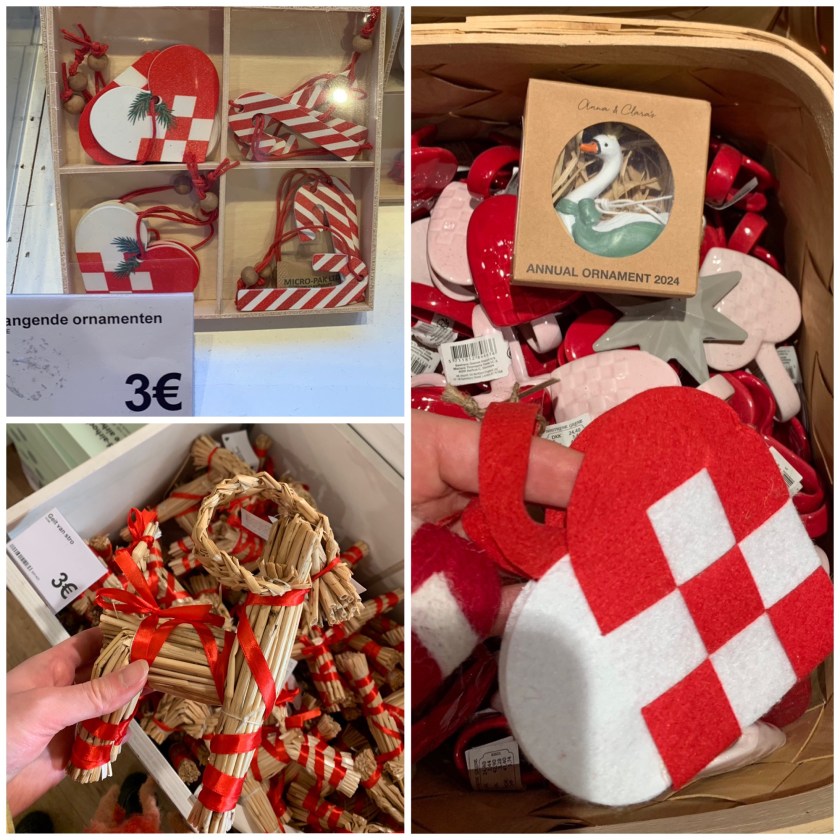
Naast IKEA verkopen Tiger en Søstrene Grene, Deense winkelketens, een paar typisch Scandinavische kerst artikelen met betaalbare prijzen: Julehjerter decoraties, Yule-geiten van stro, Pepparkakor/Brunkager koekjes en zakjes met Deense pepernoten.
Other than IKEA, Tiger and Søstrene Grene, as Danish shop chains, also sell some typical Scandinavian Christmas articles at affordable prices.
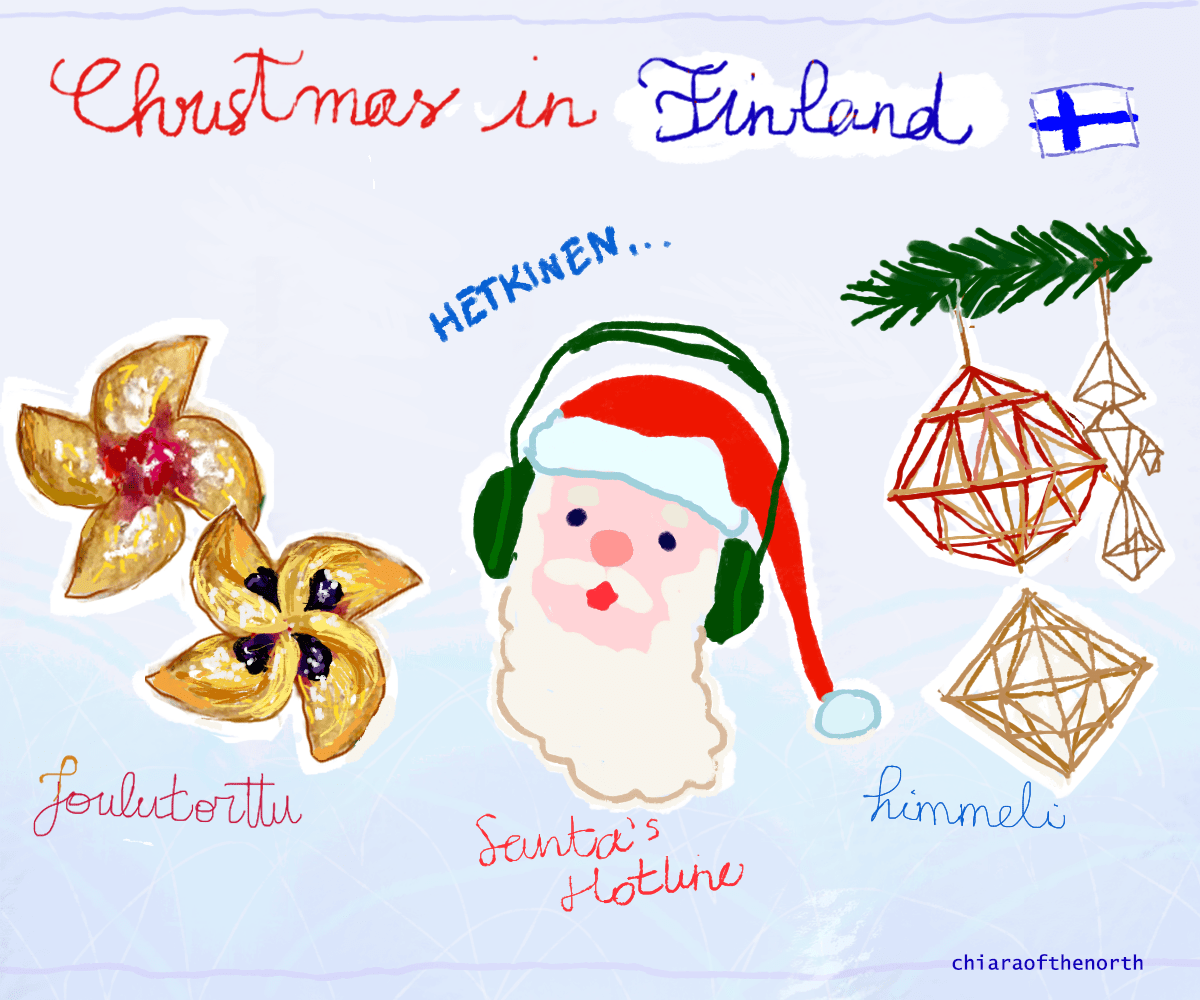
3 typical unique Christmas symbols and traditions in Finland
Here are country-specific facts about how Christmas is celebrated in Nordic countries, after an overview of Scandinavian Christmas I actually keep updating… Next up will be Norway and Iceland, so stay tuned!
Joulutorttu: pinwheel pastry
Also called tähtitorttu “star cake”. it has the shape of a star or pinwheel, with apple or plum filling. It was already mentioned in the 1830s by Zacharias Topelius (Swedish-speaking Finnish writer), and it still is a Christmas classic in Finland, being present on 76% of Finnish tables on Christmas eve.
the Santa Claus Hotline
In Finland they have had the Joulupukin kuumalinja ‘Santa Claus Hotline’ for 33 years on tv. Here is the Finnish tv program for the day in 2024: There are breaks between one Christmas-themed cartoon and the other, where children can call, elves will take the call and some lucky children will be able to talk to Santa..It is also possible to send pictures, and some of these will be shown!
Himmeli Christmas decoration
Himmeli are wooden straw geometrical pendants, of various sizes, decorating Finnish houses. It comes from himmel, sky/heaven in Swedish and Germanic languages. Himmeli traditionally hung above dining tables until summer to ensure a good crop, as Finlandi.fi mentions.
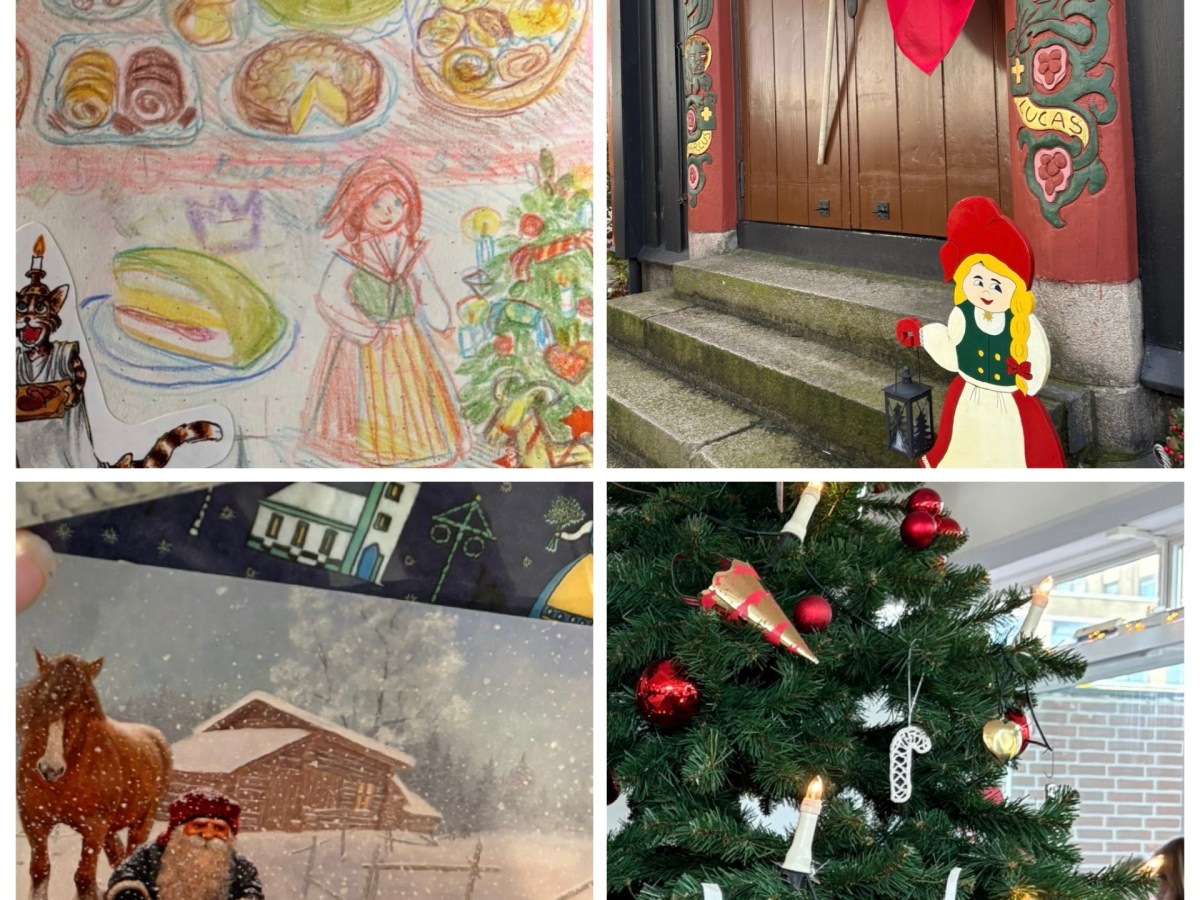
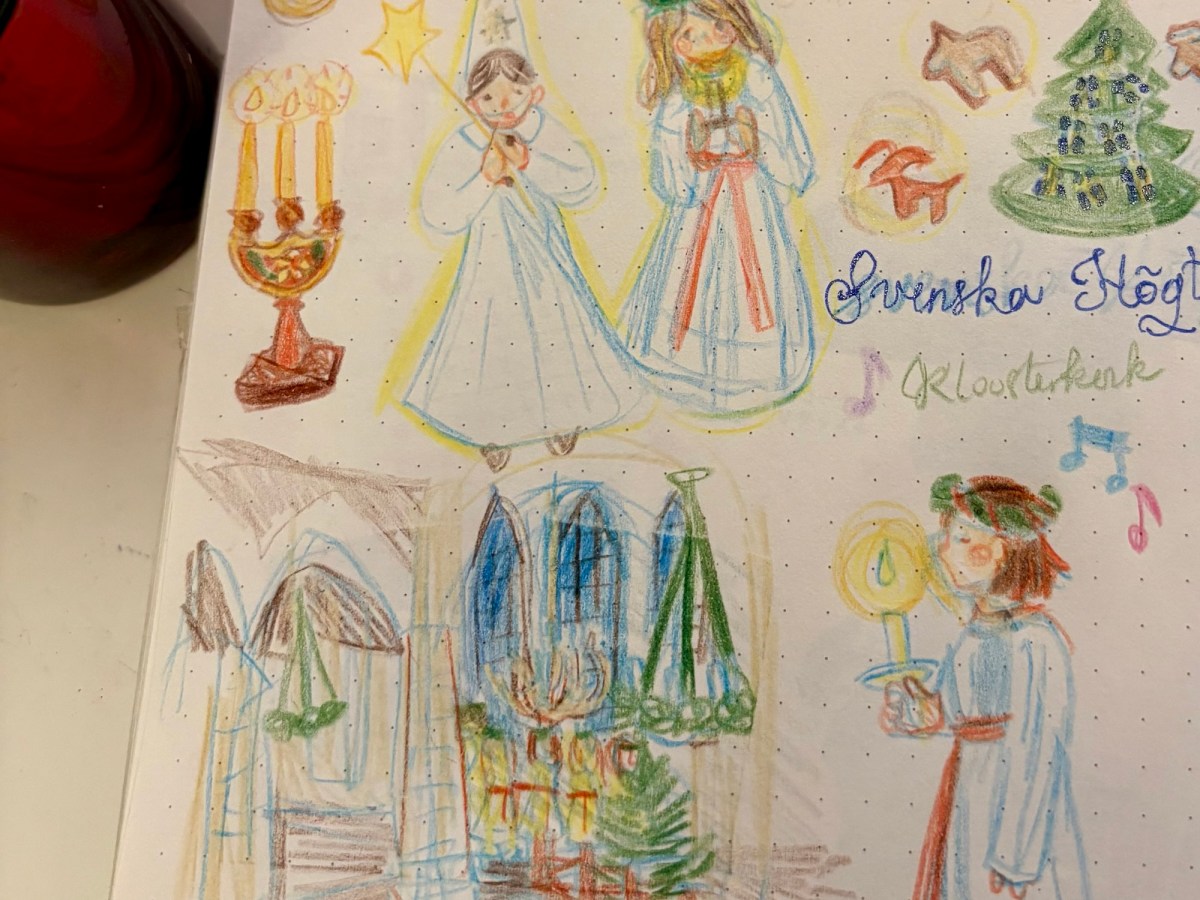
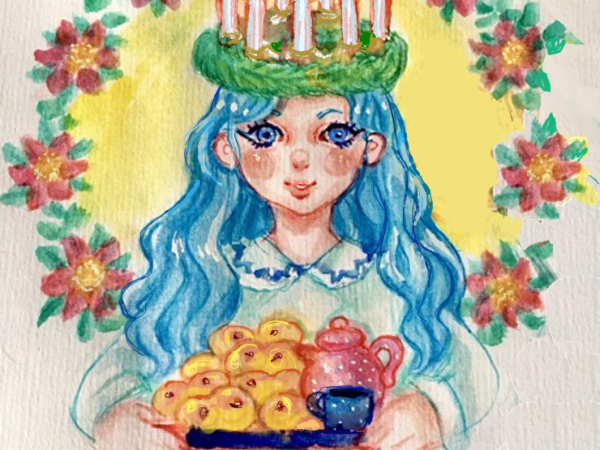
Lucia brings light in the darkest night of the year and is a mix of pagan and christian traditions. It is celebrated in Scandinavia with processions, saffron buns and church concerts.
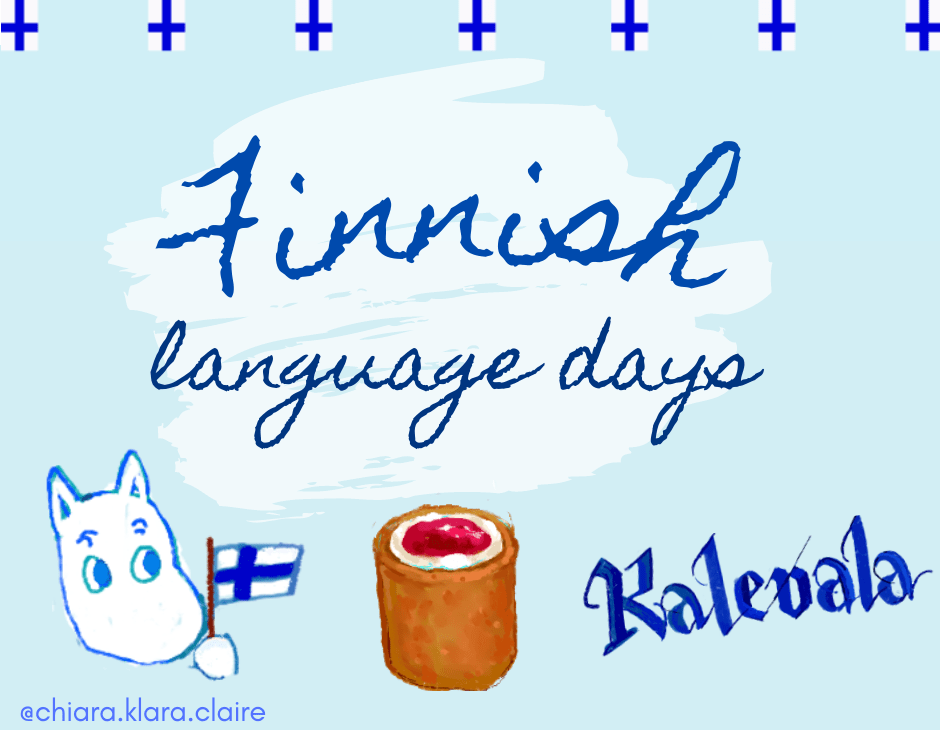
Days on which the Finnish language, suomenkieli, and culture is celebrated in Finland, on birthdays of Finnish poets and artists
Finland celebrates its language and culture during special days chosen for birthdays of Poets and artists. Most are flag days in the country, on which the Finnish flag Siniristilippu(“blue cross flag”) shall fly.
Runeberg day – 5 February
In Finnish Runebergin päivä, it is the birthday of the national poet Johan Ludvig Runeberg (1804–1877). The highlight of the celebration is eating Runeberg’s torte (Finnish: Runebergintorttu; Swedish: Runebergstårta).
Runeberg lived in Porvoo/Borgå and although he is considered the national poet of Finland, he only wrote in Swedish! His Vårt land (“Our Land”, Maamme in Finnish) became an unofficial Finnish national anthem.
Runeberg ate the torte now carrying his name everyday, baked by his wife Fredrika. it is an almond and rum flavoured pastry with raspberry jam, and a ring of icing on top. You can find it in shops from the beginning of January until 5 February. The exception to this is Runeberg’s hometown Porvoo, where you can enjoy the torte the whole year round!
Kalevala day – 28 February
InFinnish Kalevalan päivä, it also known as Finnish Culture Day because of the central role Kalevala has as the national epic of Finland and Karelia. EliasLönnrot (1802 – 1884), a Finnish physician and philologist, compiled it in the 19th century by collecting traditional Finnic oral folklore in Finland, Karelia, the Kola Peninsula and the Baltic countries.
Kalevala means land of Kaleva, and its main character is Väinämöinen, a sort of godlike shaman with a magical voice, and it tells about the hero’s search for a wife.
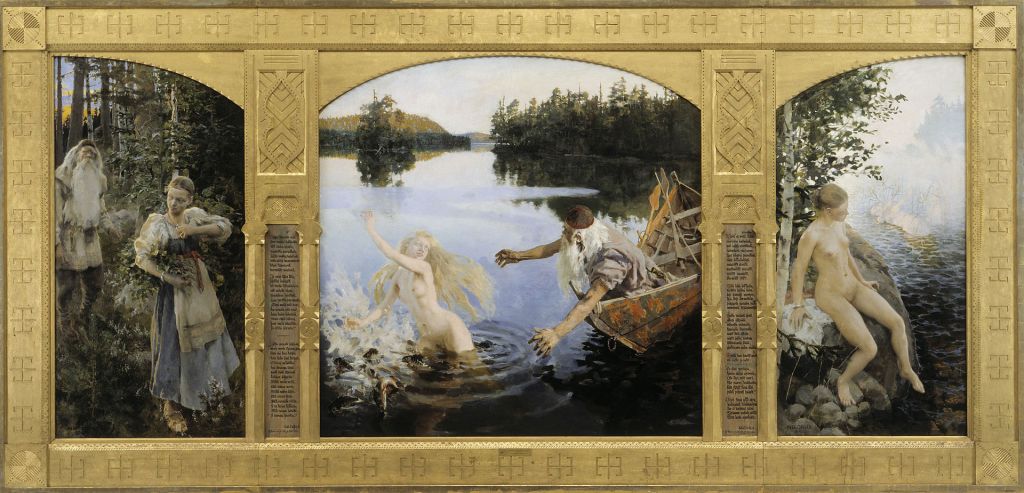
As a symbol of Finnish culture and history, Kalevala has inspired many Finnish artists, among others the classical composer Jean Sibelius and the painter Akseli Gallen-Kallela.
A. Gallen Kallela, Aino Myth, Triptych, 1891
Something as old and quintessentially Finnish can be described as kalevalainen “Kalevala-esque”!
Finnish Language day – 9 April
On 9 April Mikael Agricola, the “father of literary Finnish” died, and Elias Lönnrot was born. For this reason it is celebrated as Finnish language day, suomen kielen päivä.
While the previously mentioned Elias Lönnrot compiled the Kalevala, Mikael Agricola was a Bishop and scholar who created Finnish as a written language in the 1500s, with all its lovely double vowels.
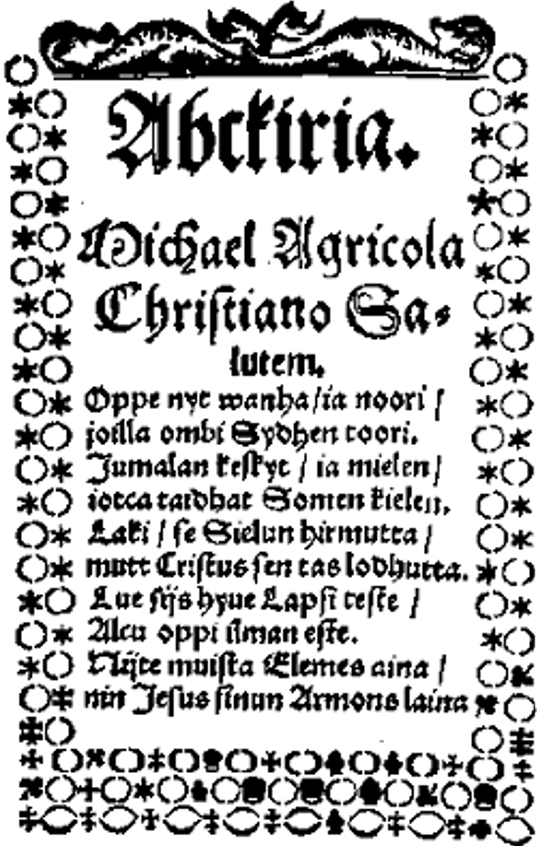
Agricola’s role for the Finnish language was similar to that of Luther for German. Both translated the bible into their people’s language. He did that with other Finns while living in Wittenberg, Luther’s town. Agricola also wrote theAbckiria (ABC Book), the first piece of literature in Finnish.
Other important days for Finnish culture
3 February – Day of Finnish architecture and design, Arkkitehtuurin ja muotoilun päiviä. It is the birthday of Alvar Aalto
12 may – Day of Finnish Identity, suomalaisuuden päivä, birthday of the statesman Johan Vilhelm Snellman
9 August – Tove Jansson day, Since 2020 this day, Tove Jansson’s birthday, is a flag day in Finland, celebrating Finnish art. Tove Jansson was a painter and illustrator, most known as the creator of Moomintrolls. Her novels and other written work have been translated into more than 50 languages
8 December – John Sibeliusday, Birthday Jean Sibeliuksen päivä/ also day of Finnish music
How graduating from high school is like in Sweden, Denmark, Norway!
Hats and buses
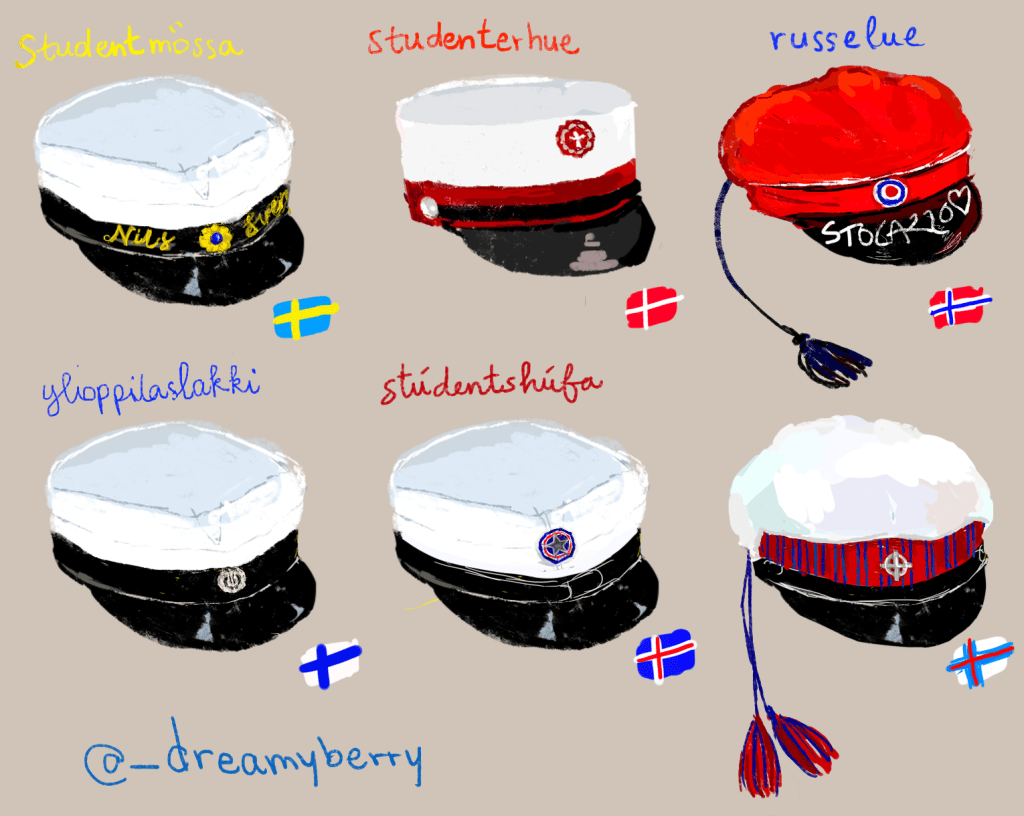
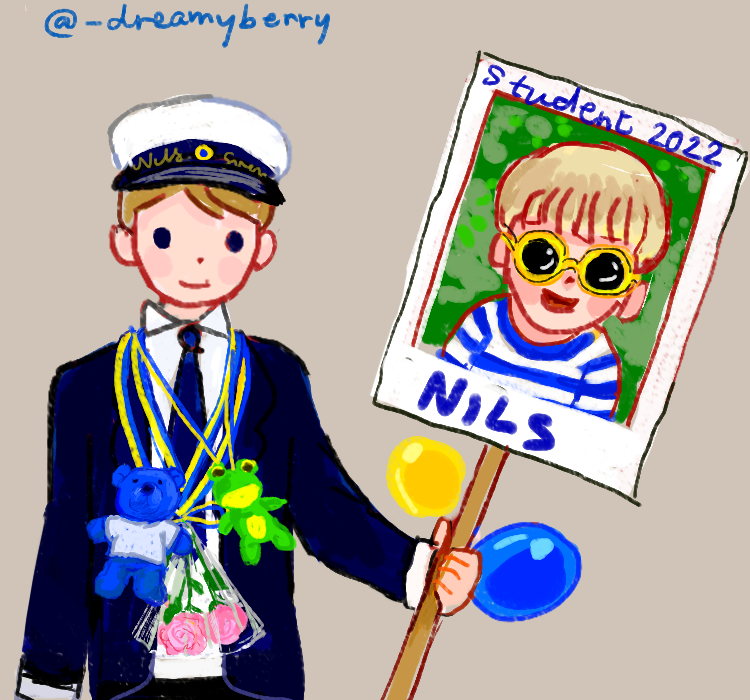
the symbol of High school graduation is a hat resembling a ship’s captain cap, the first time I saw a Swedish graduation celebration picture I was pretty confused about those hats, but it’s actually a tradition inspired by German students, spreading it to Nordic countries in the 19th century.
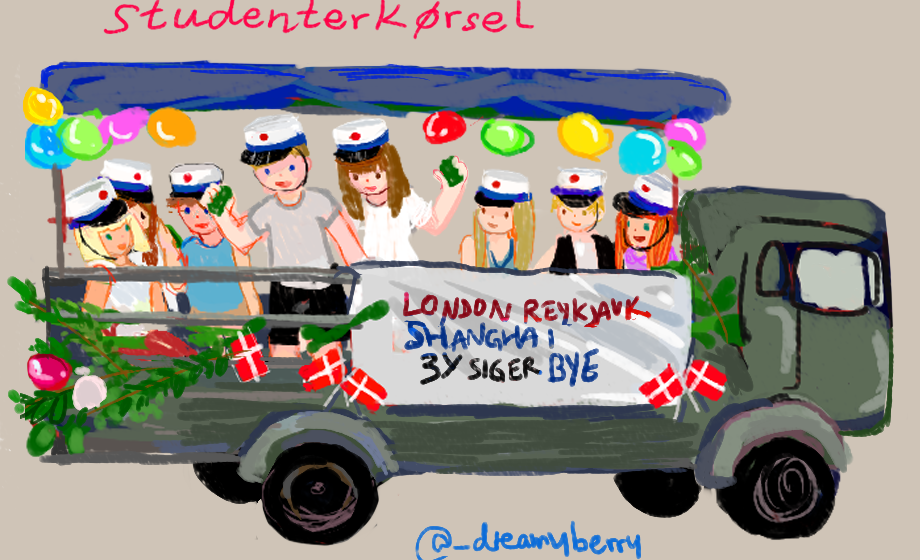
Another common thing in Scandinavian is that graduates celebrate around town on rented buses or trucks (sometimes saving up years just to rent one), generally playing loud music, drinking and just partying!
Denmark 🇩🇰
Danes have an oral exam as final. you have to decide who from your family is placing the hat, studenterhue, on your head, when you step out from it. It’s the norm to wear the graduation cap for at least 2 weeks, It is courtesy that people they meet on the street congratulate them, even if they don’t know each other.
The ribbon on Danish caps was originally only either blue (Mathematics students) or red (Arts students), it now comes in many different colors depending on the length of your education and which school you went to, see all possible variations on Alt.dk. There are lots of rules involving the studenterhue:
You can’t wear your cap before your last exam (it would bring bad luck)
your gradehas to be written in the center of the hat, and friends and family can leave autographs and short notes in it
friends bite in the shadow for good luck.
the students with the biggest and smallest hat size, and the ones with the highest and lowest grade average have to buy a box of beers for the class
the hat has to be cut in different ways if the student has drunk 24 units within sunrise, if he vomits, and so on to the point a which if the student goes to the hospital because of too much alcohol the whole shade is cut off.
more rules are related to having sex (heart on the sweatband if with the partner, lightning on the rim if not in a relation) , kissing someone (if same gender the cross has to be turned), breaking up (metals going off), taking a swim with only the hat on (wave in the rim)
If the student has been awake for 24 hours then the hat must be turned around (shadow in the back).
You can see more on this site dedicated to studenterhue rules (in Danish)!
The Studenterkørsel – student drive – is an important part of the celebration, renting a truck decorated with beech branches to party, drink and play loud music on (here‘s a site where the trucks & stuff can be arranged). It drives to each student’s home for around 15 minutes, for a short visit where parents give snacks and drinks before the next destination.
This can last one or two days and of course also the studenterkørsel has its own rules, among which running after the truck if you get an A in your last exam, and learning a battle cry to scream at passing student trucks!
Everyone greets and sends their congratulations when they see these trucks. On my very first day in Denmark Student buses were driving around (slowing down the bus I was on though, haha) and following my friend’s example we waved at them, flying my welcoming flag! It felt quite cool!
Sweden 🇸🇪
In Sweden there’s one big day, Studenten, but the celebration starts around the end of April, where students organize games which will give points deciding who will be the first student running out of the school on the gruaduation day; it can be anything from chill to embarrassing things to do, though maybe not as wild as what you’ll read for Norway. In May, there’s one day called Mösspåtaggning, on which students dress up nicely with their hat Studentmössa on, and with classmates they go to school and then to a restaurant or bar, celebrating that one month is left until the studenten time.
The big day of Studenten may vary depending on the school, but it is usually around 30th May to 15th June, with 6th June (Sweden national day) being the pitch.
This day starts with fellow students meeting up very early – between 4 and 7 am for the Champagnefrukost, Champagne breakfast
At 8-9 it’s time to leave for school, with some proving they can keep up with the celebration despite being drunk.
Around 10 everybody listens to the principal giving a speech, some students get diploma for things as All-A-Student etc.
At 11-12: photo shootings of classes!
Once they got their diploma, Students run out of school to their families and friends, who are waiting for them holding a picture of the graduate as a baby or small child, and give them blue-yellow chains with flowers and trinkets as plushies!
The clothing for this day is quite formal, with boys wearing suits, girls usually a white dress. each student has their name and surname embroidered on the hat, which costs around 100 euros
After staying with their families for some time, studentsget on flatbed buses driving through the city as the Danes do, dancing, drinking and partying. In some cases they just walk around instead, something which has been encouraged by authorities after several accidents involving the flatbuses occured.
Norway 🇳🇴
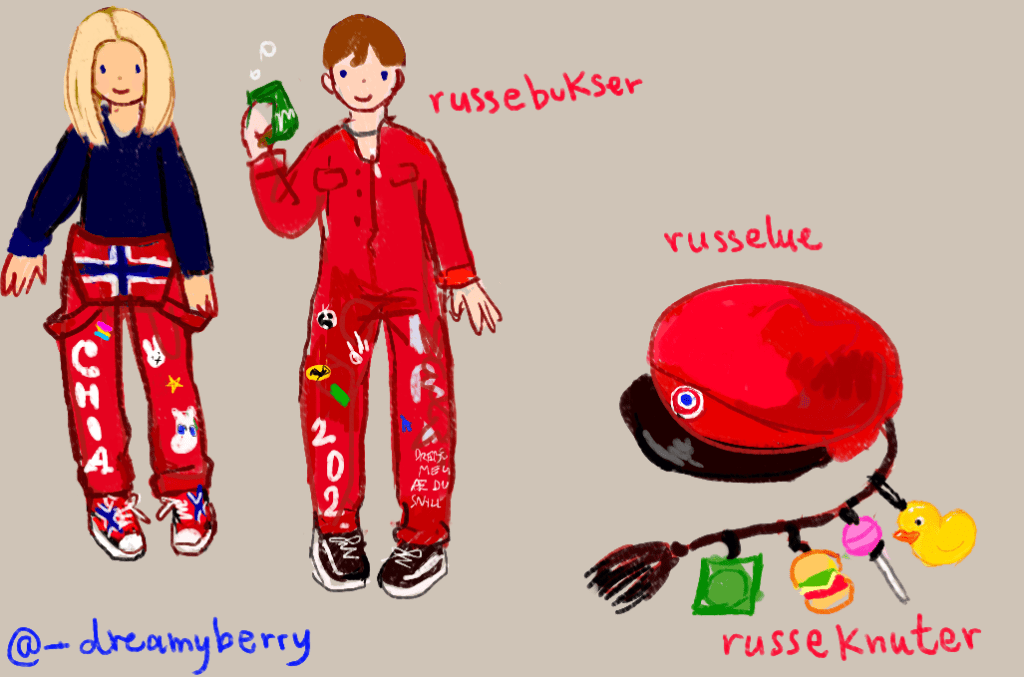
Norwegian graduation celebrations, Russ (short for russefeiring) is a big deal in Norway, with youngsters in overalls roaming cities for almost a month, from the end of April to the Norwegian Constitution Day, (read more about May 17th). On that day, the students are awarded their caps and join the parade in their overalls. The russ period has also become known as “the three-week binge” treukersfylla, continue reading to find out why…
The personalized overalls, russebukse, are usually red, or blue in case of financial and business studies, and personalized with patches. On this website Norwegians can get their russ equipment 😉
On the caps, Russeluer, Students write the Russ names they’ve been given, but the important part is a long cord, which gets knots (knuter) added for given dares completed before graduation: russeknuter. The tradition was introduced in the 40s, with different lists of around 100 dares for every school. Many dares involve sex and alcohol, and a lot are just hilarious. Classics are wearing loaves of bread on your feet for a whole day, not sleeping for 48 hours and bathing outside before 1st May. After criticism that russ was getting too wild, some new dares were invented to encourage teens to make good choices, such as getting tested for STDs or giving food to a homeless person.
Here are a few recurring ones (trinket – dare associated to it):
TAMPON – Put two tampons in your mouth and drink a pint of beer/cider.
TWIGS FROM THE GARDEN – Sleep in a tent in a teacher’s garden.
CANDY BURGER – Eat a cheeseburger in two bites.
“L” – Put an “L” (used for driving practice) on the back of a public transport vehicle.
CONDOM PACKAGE – Buy a pack of condoms using only body language.
BANKNOTE – Place a 5 minute poledance on a pole on a public transport.
RUBBER DUCK – Bathe with someone else in a canopy in front of the school, remember to scrub each other.
TOY FIRE TRUCK – Have safe sex during your period/with someone on theirs.
Here is the whole list of Russeknuter of Oslo for 2022 (in Norwegian). Because of what’s happening, this year there is a special Ukraine-knut, which can be gained if the class contacts a refugee centre and brings some fun activities to socially engage the young refugees there.
As the other Scandinavians Norwegians also rent or buy buses – thetradition of buying an old van or bus and painting it started in the 70s – but they do it on the next level, with their Russebuss, large coach buses completely decked out with colors, graphics, retrofitted and customized to become mobile partying units! The average Russbuss is used by 15 to 25 students and costs around $116,000!! Drivers are hired to drive them to Festivals and landstreff (national meetings) to meet Russ from whole Norway and party, party, party.
You may now wonder why students party that wildly in April. That’s because by the early 2000s, the authorities were worried about the impact all this partying and alcohol would have on the students’ grades, so the final exams in public schools were moved to early May. but what ended up happening was simply that the students started the russefeiring earlier.
Bonus: Finland 🇫🇮
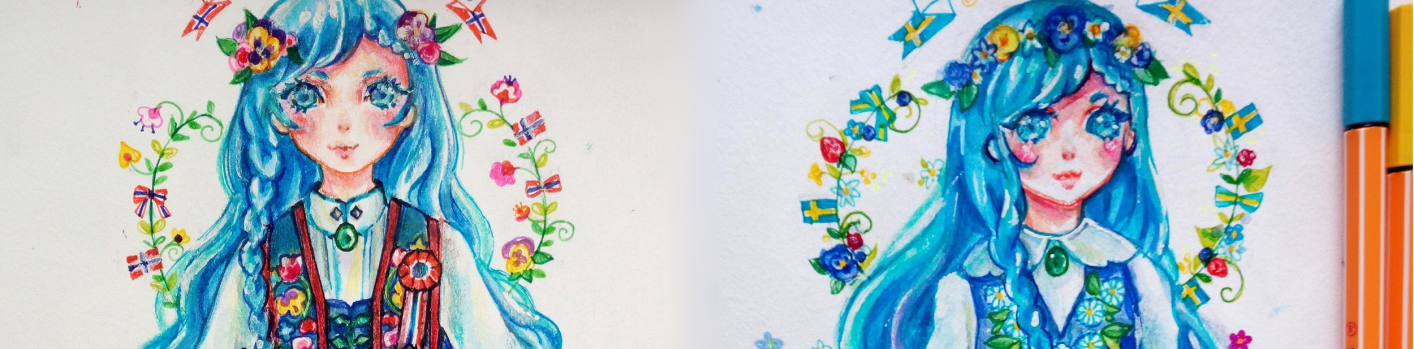
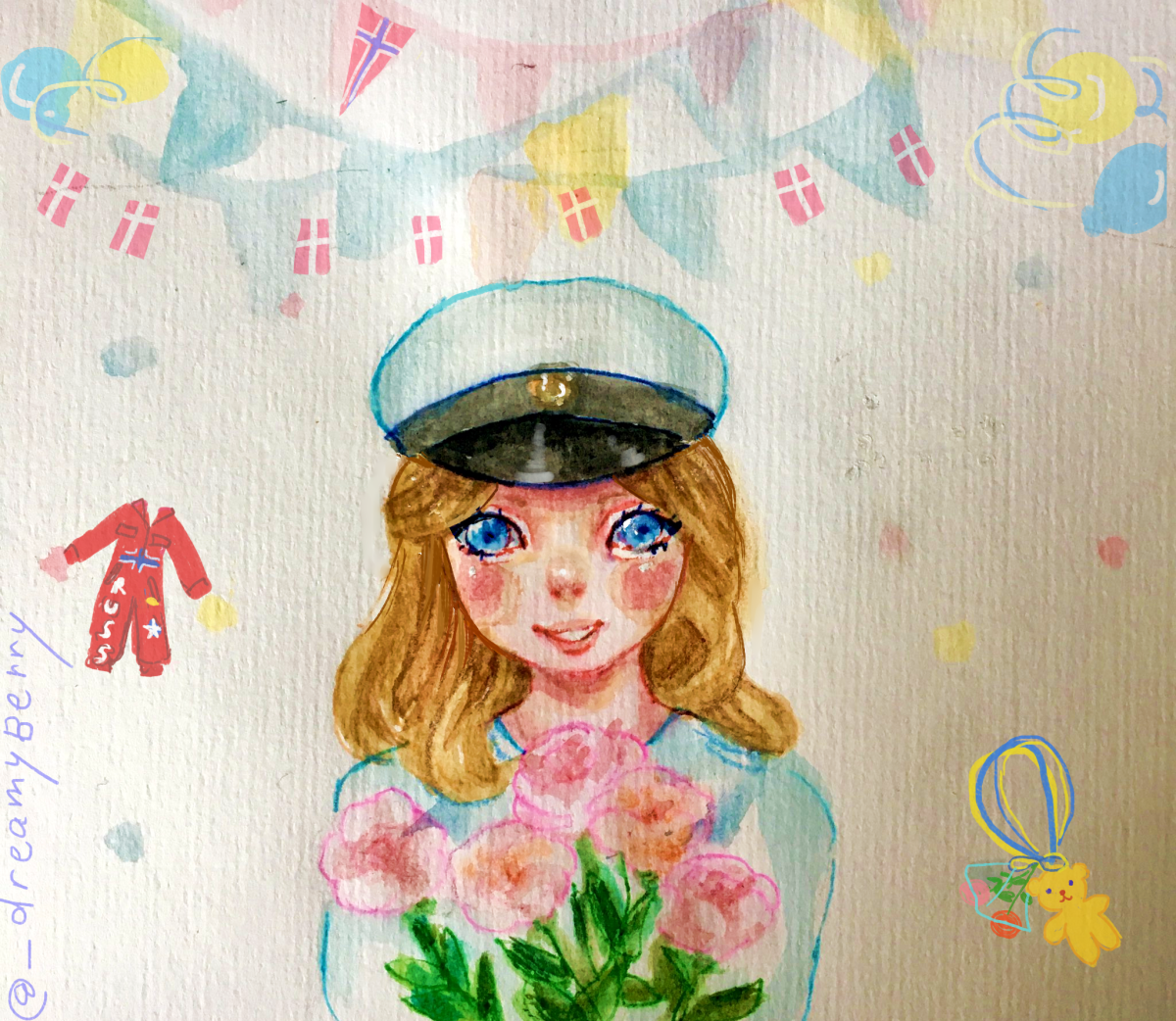
The girl I portrayed on the cover picture of this article is a Finn, (@alwaystimeforbujo on ig, she posts about bullet journaling), so here is something about Finland too:
The Finnish cap, Ylioppilaslakki, is similar to the Swedish version, but instead of coloured fabric cockade, it has a metallic, gold-colored cockade depicting the lyre of Apollo, the insignia of the University of Helsinki.
Truck parties are a thing in Finland too, but in February, when students begin preparing for their final exams. A typical thing they do is dressing up in various costumes visiting the town’s school and throwing candy!
The ‘anchor’ language concept allowed me to learn Swedish, Dutch, Danish, Norwegian easily starting from studying properly only one language. This approach helps prevent confusion and builds a solid foundational understanding of language structures.
The languages of the Sámi, indigenous people of Scandinavia
The Sámi people (Sámit/Sápmelaš in sami languages) are Northern Scandinavia’s indigenous people. I have talked about Sámi people and their National Day last year. This year I will focus on their languages.
Sámi languages speakers are approximately 30,000-40,000, out of around 100,000 people identifying as Sámi.
Sámi languages belong to the Uralic language family and are most closely related to the Baltic-Finnic languages (as Estonian, Finnish, and Karelian).
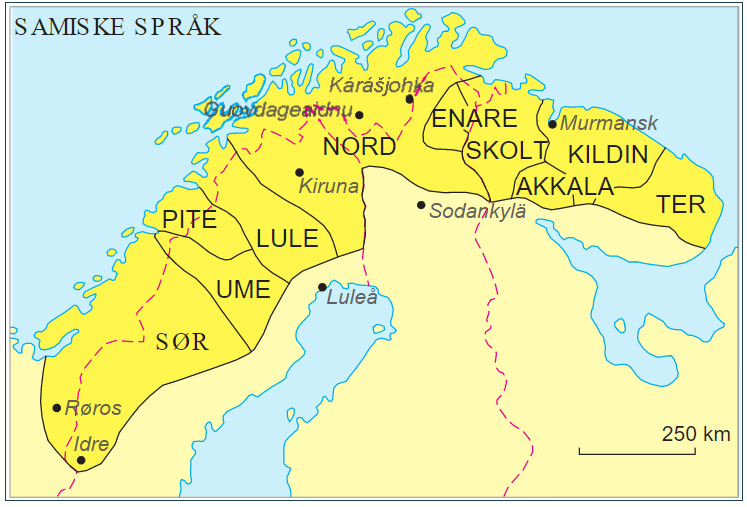
There are 10 distinct variations (of which 6 have standard written forms). They are not mutually intelligible to each other, although there is intelligibility among neighbor variants, which makes the Sámi languages a dialect continuum. According to the Store Norske Leksikon South and North Sami are as far as Norwegian and Icelandic.
Sámi language areas, picture from Store norske leksikon.
They can be divided into Eastern and Western language groups:
Western Sámi languages
North-Davvisámegiella: 15,000 speakers in Norway, Sweden, Finland, about 75% of all Sámi native speakers
Lule–Julevsámegiella: 2000 speakers in Norway and Sweden
South-Åarjelsaemien gïele: 500 speakers in Norway and Sweden
Pite–Bidumsámegiella: 20 speakers in Sweden
Ume–Ubmejensámien giella: 20 speakers in Sweden
Eastern Sámi languages
Inari-Anarâškielâ: 400 speakers in Finland
Skolt-Sää’mǩiõll/nuõrttsää’m: 400 speakers in Finland and Russia
Kildin–кӣллт са̄мь кӣлл: about 787 speakers in the Kola peninsula of Russia
Ter-Saa’mekiill: fewer than 10 speakers in Russia
Akkala-Ákkil sámegiella: considered extinct. Not standardized, but translations of the New Testament into it in 1755 and the bible in 1811 were major influences in the written language.
Sámi language features
Note: what follows refers mainly to North Sámi
like Finnish Sámi languages are agglutinative and highly inflected, nouns and adjectives change form according to their grammatical roles. Northern Sámi has 7 noun cases.
Sámi verbs have dual forms: other than three singular and plural persons the verb conjugations can indicate an action by two people (plural is more than two).
Sámi originally had no words beginning with two or more consonants (unlike in English: green, strong, bridge..): Spasibo (спасибо) became pass’bo in Kildin Sámi. Word-initial clusters were however taken into Sámi through Scandinavian lownwoards: Kraevies (gray) from protonorse *grawaR, grár in Protonorse, modern Scandinavian grå.
Sámi languages have a kind of vowel harmony, which for example makes the given name Knut become Knavhta, adding a third vowel.
Scandinavian varieties of Sámi languages use the Latin alphabets, with additional characters: The unique letter “Ŧ/ŧ”, similar to English th in “thin” and Thorn þ still used in Icelandic. “Đ/đ” is equivalent to Icelandic ð. Other letters occurring in Sámi languages are Áá Čč Ŋŋ Šš Žž.
Language Comparison
Similar words North Sámi – Finnish – Estonian
Nature: luondu – luonto – loodus
Forest: meahcci – metsä – mets
Shaman/witch: noaidi – noita – nõid
Brother: viellja – veli – vend
Day: beivi – päivä – päev
life: eallin – elämä – elu
love: ráhkisvuohta – rakkaus – armastus
mother: eadni – äiti – ema
Reindeer:boazu – poro – põhjapõdrad
As you might notice, historically related words in Finnish with p, t, k have b, d, g in Sámi.
N =North; L=Lule; S=South; U=Ume; P=Pite; I=Inari; SK=Skolt
All the Sámi languages are considered endangered, this is due in part to historic laws prohibiting the use of Sámi languages in schools and at home in Sweden and Norway. Sámi languages were illegal in Norway from 1773 until 1958. Special residential schools that would assimilate the Sámi into the dominant culture were established, and access to Sámi instruction as part of schooling was not available until 1988.
Samer.se underlines that in the 60s and 70s many Sámi parents did not speak Sámi to their children. This was a reaction to the negative experiences and the discrimination faced in Swedish schools, which however resulted in depriving children of their mother tongue, and many suffered from that as adults.
In the last decades of the past century this attitude started to change, granting the rights to have education in Sámi languages and esthablishing funds for the promotion of Sámi culture and languages.
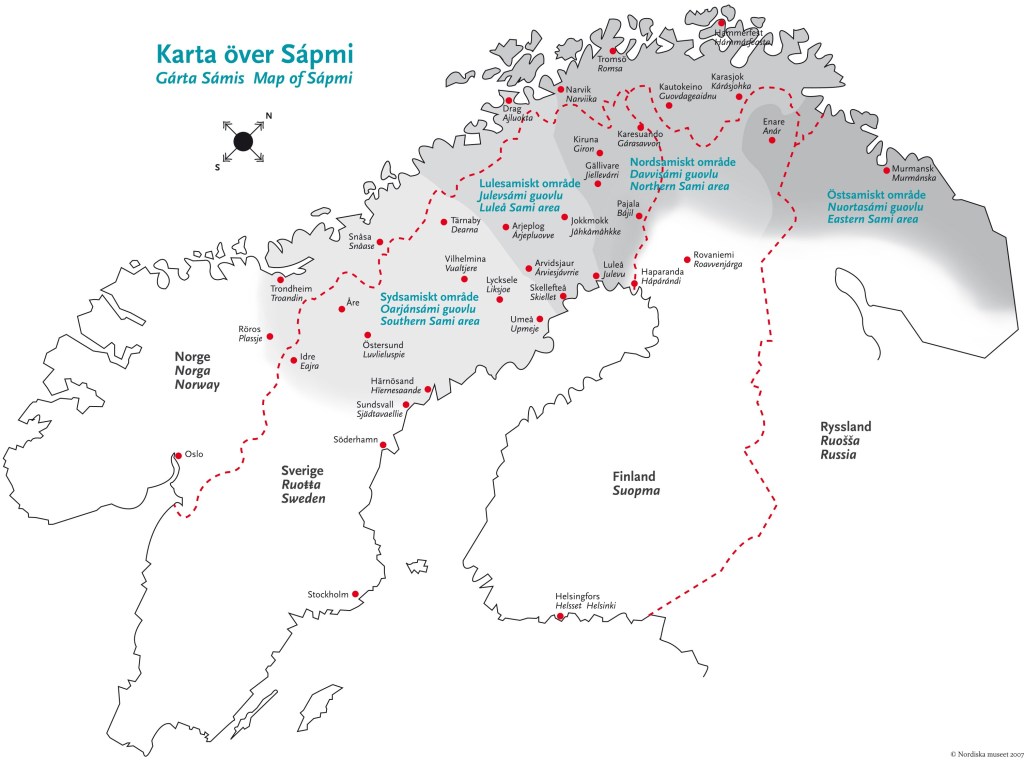
In Norway Sámi languages have official status in 9 municipalities in the counties of Finnmark and Troms.
Since 2002 Sámi languages have been recognised as minority languages in Sweden and have official status in 4 municipalities. In these areas they can be used in government agencies, courts, pre-schools and nursing homes.
North Sami, Skolt Sami and Inari Saami are offically recognised in Finland and have official status in 4 municipalities, Sámi people have the right to use Sámi languages for all government services.
In Russia Sámi people are recognised as an indigenous people but their languages have no official status.
Municipalities where Saami is an official language, picture from Nordiskamuseet.se
Art and media in Sámi languages
The first two recorded Sámi poems are by Sámi priest and poet Olaus Sirma (1655-1719), included by Johannes Schefferus of Uppsala in his book Lapponia in 1673.
A boy’s will is the wind’s will, the thoughts of youth are long, long thoughts.
refrain ofMoarsi favrrot/The Beloved One, translated in “a Lapland song” by Henry Wadsworth Longfellow (1807-1882) and included in the long poem “My Lost Youth”
The oldest Sámi language newspaper is Nuorttanaste (Eastern Star), a religious paper began in 1898 and still published in Norway. The Sámi-Swedish bilingual Newspaper Samefolket began in 1918, and Sapmelas, founded in 1934 and renamed in in 1993 Odda Sapmelas (The New Sámi) is published in Finland.
The 1970s saw a blossoming of Sámi language literature that has continued to the present, with Sámi artists focusing their work on Sámi language and Sámi traditional themes. Prominent figures include Nils-Aslak Velkeapää (writer, singer, multimedia artist); Paulus Utsi (poet); Vuokko Arvonen (feminist writer); Nils Gaup (filmmaker); Mari Boine and Sofia Jannok (singers). In Norway, the yearly Riddu Riđđu festival in Olmmáivaggi/Manndalen features music, art, theater from Sápmi, including Sámi rap music, yoik rock and dramas from Beaivváš Sámi Našunálateáhter, the Sámi national theatre.
The indigenous people of North Scandinavia & 6th February
February 6th is, other than my birthday, Sámi people’s National Day.
The Sámi – also spelled Saami – are an indigenous people inhabiting Sápmi, which today encompasses large northern parts of Norway, Sweden, Finland and Russia. The Sámi have historically been known as Lapps or Laplanders, but these terms are usually regarded as offensive. There are about 100,000 Sámi people, divided by the borders of 4 states: Norway (ca. 60.000), Sweden (30.000), Finland (8.000) and Russia (2.000).
The Sami are well known for their traditional occupation of reindeer herding: around 10% of Sámi practice reindeer herding nowadays, which in some parts of the Nordic countries can be practiced only by Sámis.
Sami people mantain a strong cultural identity while being citizens of their countries, from languages – which are related to Finnish – to traditional clothing and a Sami flag.
Sami people of Norway, Sweden, and Finland also reunite in Sami parliaments of each country since the late 20th century, and have a joint Saami Council. The first meeting of Sami across borders in 1917 became Sami national Day, on 6th February.
After religious missions and colonisation of Northern Scandinavia, Sami people were subject to discriminization and forced assimilation – from prohibiting them to enter territories to the south in Sweden or buying land in Norway, to the Systematic Norwegianization in the 1860s.
The majority of the Sámi now speak the majority languages of the countries they live in and all Sámi languages are at some degree of endangerment.
Sámi languages had been illegal for centuries in Sweden and Norway, with assimilation policies and special residential schools (similarly to what happened in North America with indigenous people). This left many with traumas, not speaking Sámi languages to children as a way to protect them.
This started to change with laws, the funding of Sami parliaments, and recognization of Sami as indigenous people of Scandinavia, giving them the right to education in their language. Despite this, most Sami languages are endangered
Recommendations
the movie Sameblod, or Same Blood in English (2016), directed my Amanda Kernell. It is set in Sweden in the 1930s and concerns a 14-year-old girl who experiences prejudice at a nomad school for Sami children, and decides to escape her town and disavow her Sami heritage. Parts of the story are inspired by Kernell’s own grandmother.
books by Ann-Elen Laestadius: Stöld (stolen is the English title- with a Netflix adaption from 2021 as well), Straff (punished in English)
Sami singers: Jarnna (their Nilas jojk was my favourite song to calm down in an incredibl stressing period), Jon Henrik, Elin Oskal
Sources :
Samiskeveivisere.no – Samer og nordmenn i Norge – Samiske Veivisere
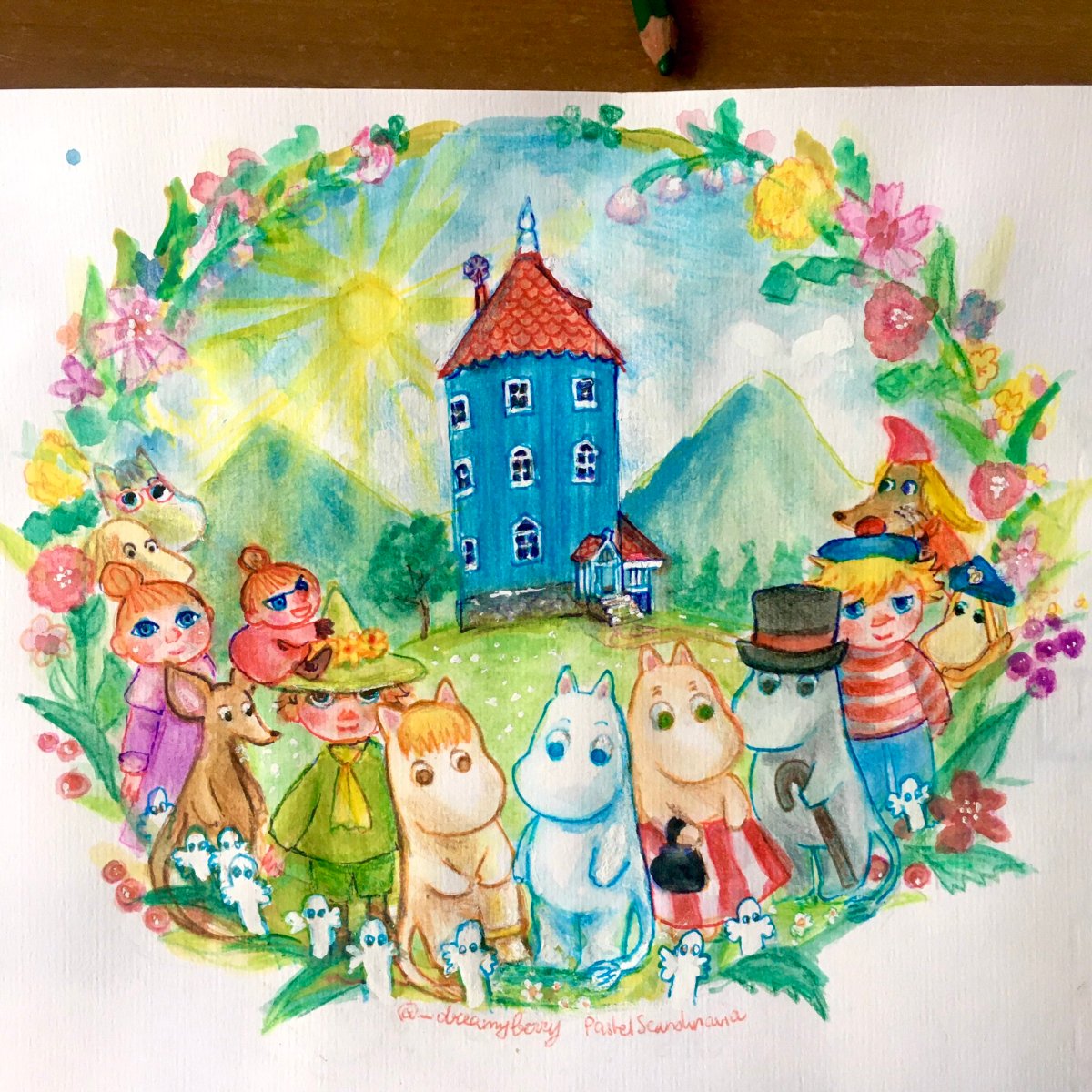
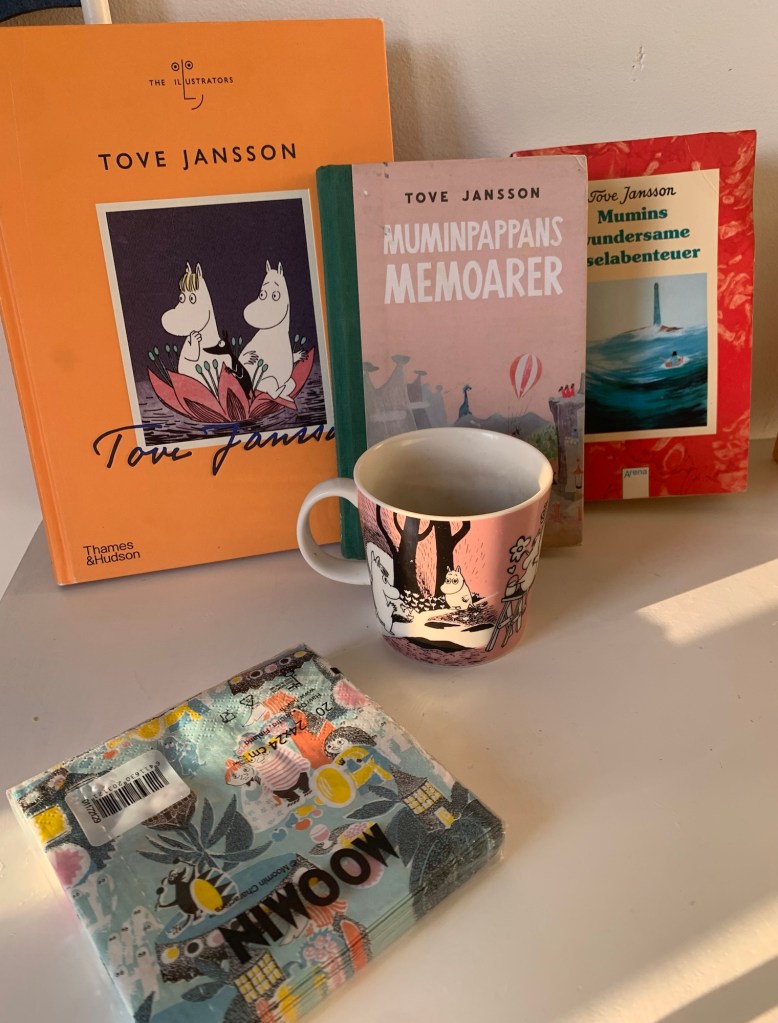
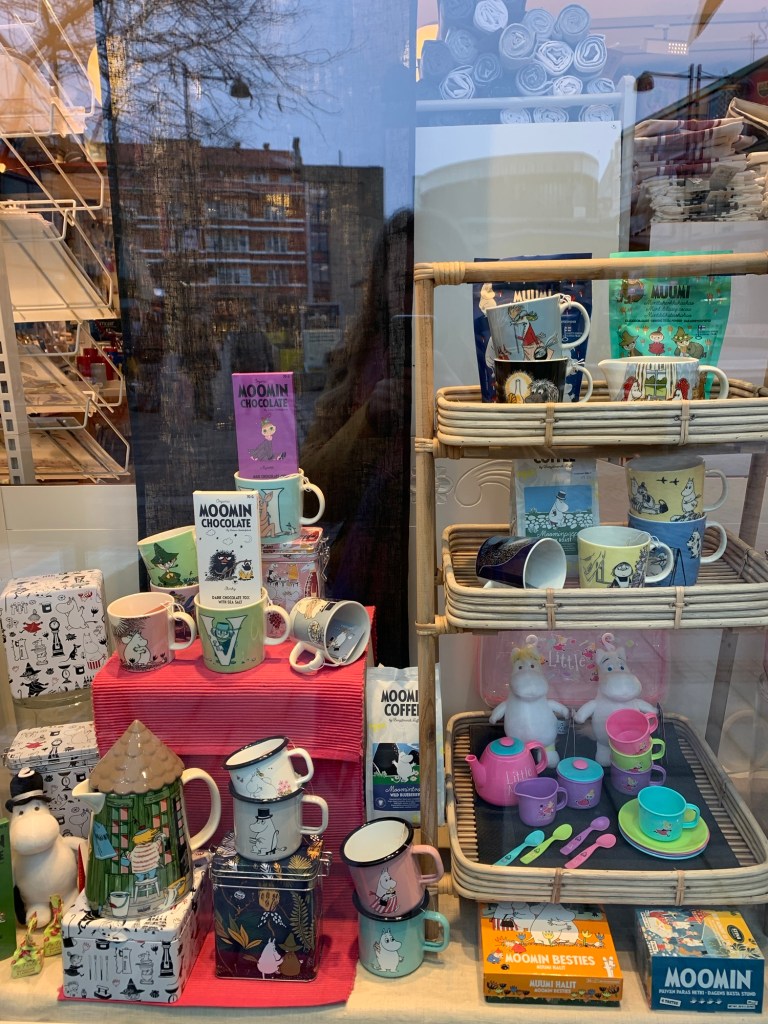
The Moomins, created by Tove Jansson, are the most famous and beloved Finnish characters, First appeared in books, then animated series. Still immensely popular in the Nordic region and Japan, they are feature in countless merchandise items, especially mugs!
The Moomins are a family of hippo-looking characters, created by Swedish-speaking Finnish illustrator Tove Jansson, who created Moomins during the Second World War, as ‘an escape from reality in a fairytale world’. Moomins are still incredibly popular in Nordic countries, and are often used as a Finnish cultural symbol.
Tove Jansson wrote and illustrated several books and strips between 1945 and 1980, which got translated into 38 languages. The first animated series is from 1969, but the most popular is from the 90s, and the most recent is from the 2020s. Other series were made with puppets and cutouts. and there’s even a Moomin opera! Here’s the Moomin timeline.
Moomin Characters
The core family of the moomins is Moomin himself muumipeikko in Finnish, and his parents, Moominmamma and Moominpappa, live in their iconic cylindric blue house (for a while they lived in a lighthouse and a theatre too). But the ‘family’ is not limited to them, and has incorporated other members:
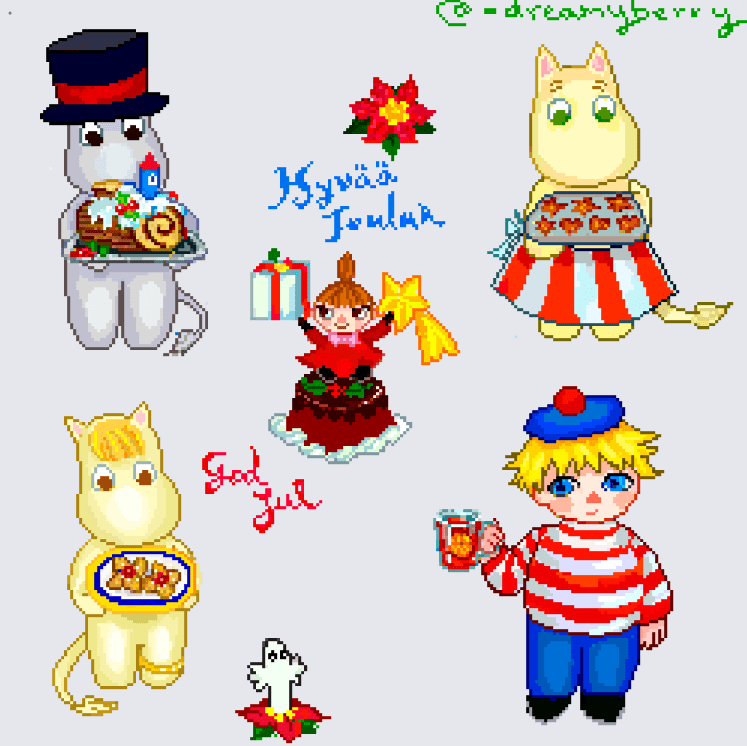
Moomin Pixel art I made!
the fearful Sniff
the naughty Little My, who teaches that being angry is okay too, sometimes.
Moomintroll’s girlfriend Snork Maiden,
the vagabond and freedom lover Snufkin, an artist soul,connected to a typical Finnish feeling of melancholy and solitude
Other characters who often appear are:
the bossy and stubborn Hemulens and the anxious Fillyjonk, representing the petty bourgeoisie of the time when Tove invented the Moomin world
the wise and pragmatic Too-Ticky,
Mymla, Little My’s big sister.
To the east borders of Moomin Valley there are lonely mountains (Ensliga Bergen), a mysteryous place where the monster Groke lives, who freezes everything she walks on and is hard to communicate with.
Many characters are actually invented after people from Tove Jansson’s life, as her parents , Too Ticky – her partner Tuulikki Pietilä.
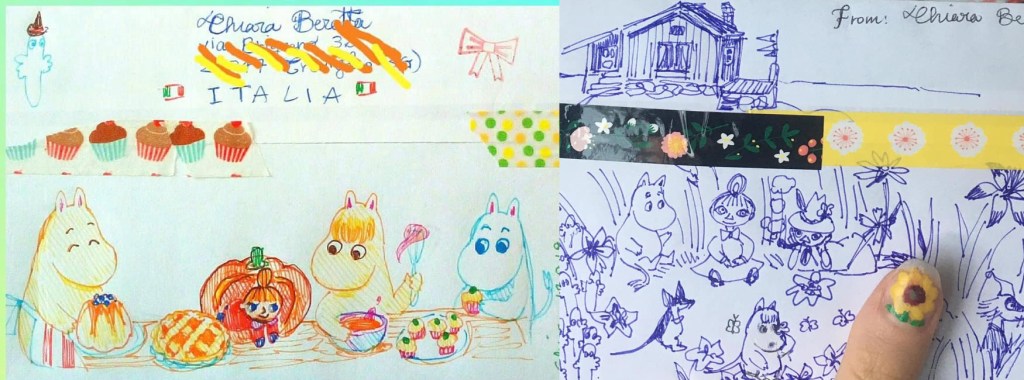
Letters i decorated with Moomin art.
Life in the peaceful Moomin world is often about enjoying small pleasures, as Moomin says:
I only want to live in peace and plant potatoes and dream!‘
‘One can’t be too dangerous, if they like to eat pancakes. Especially with jam on it’.
Moomin in Finland
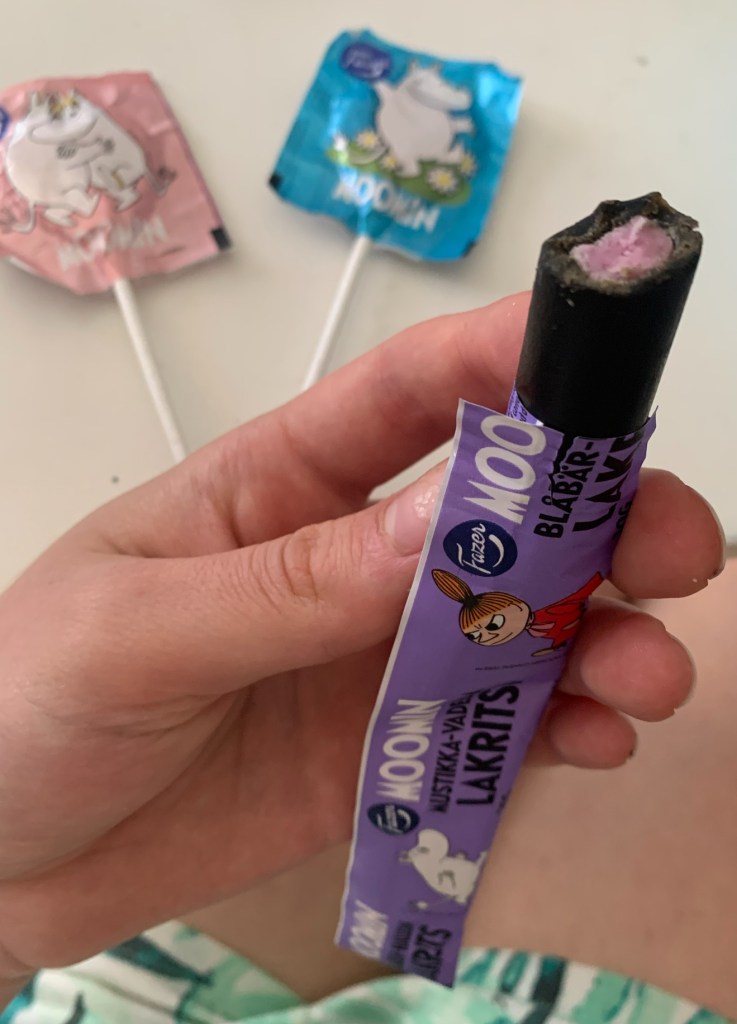
Moomins are still incredibly popular and easy to find in Finland: on Fazer candy and cookies, on finnish postage stamps (since 1988)… but the most classic item to own is probably moomin mugs: produced by Arabia since the 1950s. You can even fly on a Moomin FINNAIR plane, which of course fly to Japan.
Most Finns (and maybe Swedes or other Nordic peoples as well) have some kind of Moomin object. Even the former Finnish President Tarja Halonen has been known to wear a Moomin watch!
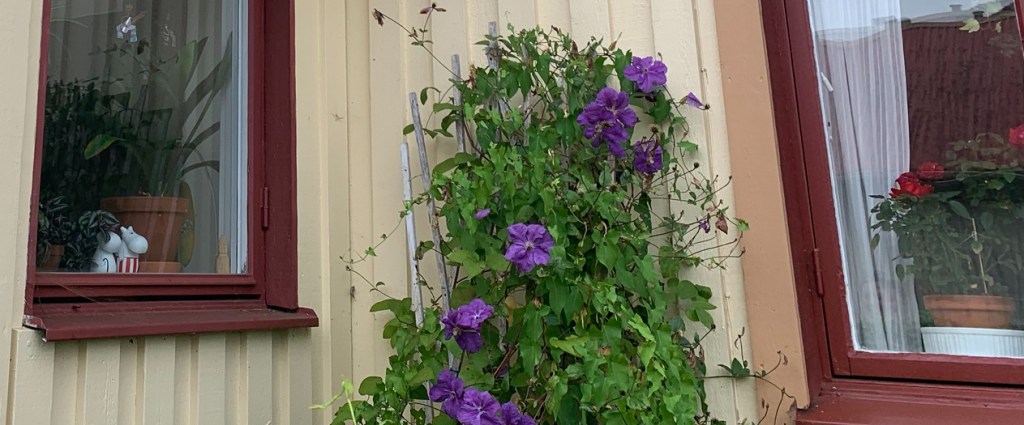
spot the moomins inside this Swedish house!
If you travel to Finland, you can also visit some Moomin-themed attractions:
Moomin World theme park (in Finnish Muumimaailma) in Naantali, near Turku, in 1993.
Tampere Art Museum has a Moomin section: Muumimuseo, which contains around 2000 original works of Tove Jansson, including a model of the Moominhouse, which Tove Jansson contributed to build.
Moomin ice cave is a 30 meters below of a Spa Hotel near Kuopio, it includes Moomin-themed ice sculptures, and offers activities for families with children.
Moomin shops, cafes and attractions in the world
The real Moomin Boom started in the 1990s, with the Japanese animated series Tales From Moominvalley. Moomin books were already bestsellers in Nordic and Baltic countries, but the animation made Moomin extremely popular in Japan among others.
Japan has a Moomin-themed park since 2015: MoominValley Park, in the prefecture of Saitama, near Tokyo.
Besides Moomin shops in Nordic countries (I have been in the Gothenburg one, Sweden), there are quite a few in Asia (most in Japan, but also Korea, Thailand, China and Hong Kong), and there is one in the USA, but not NYC or LA – in Hawaii! Not surprisingly due to the Japanese tourists…
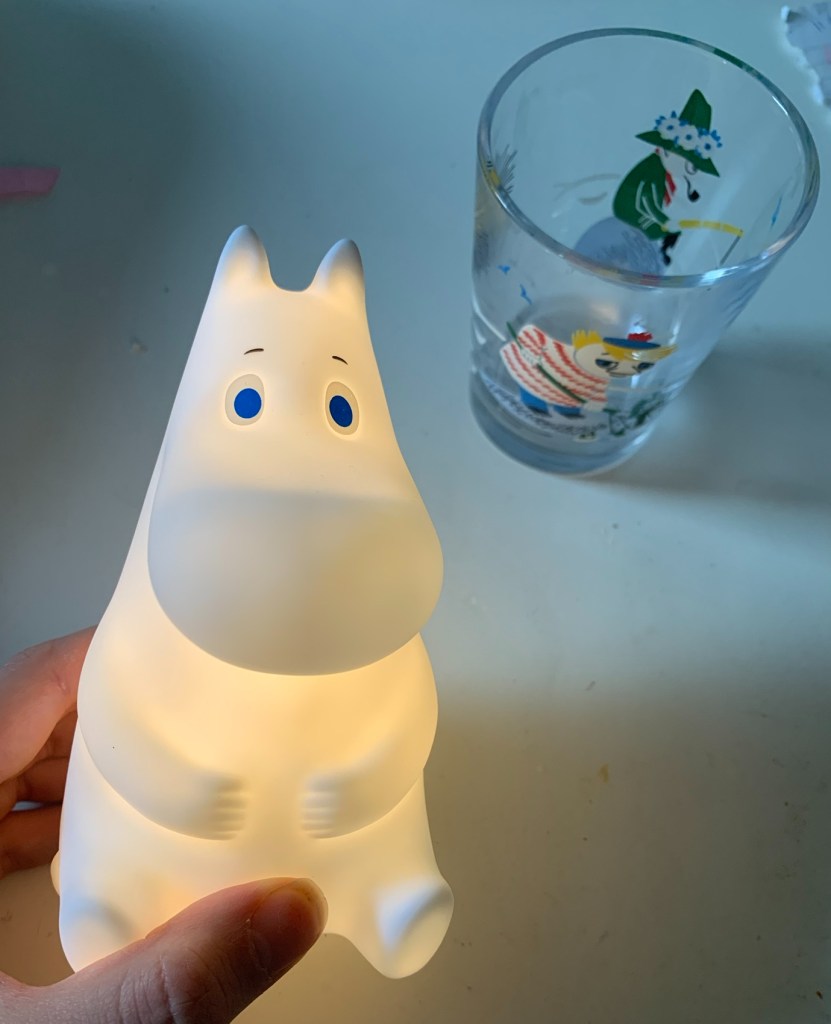
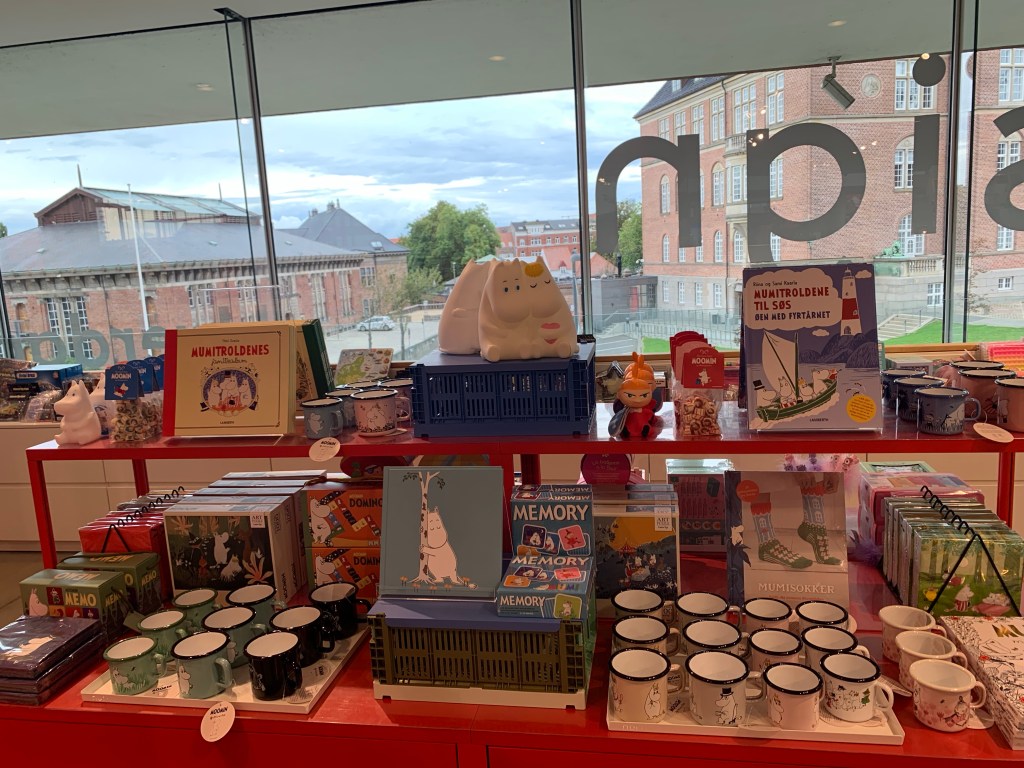
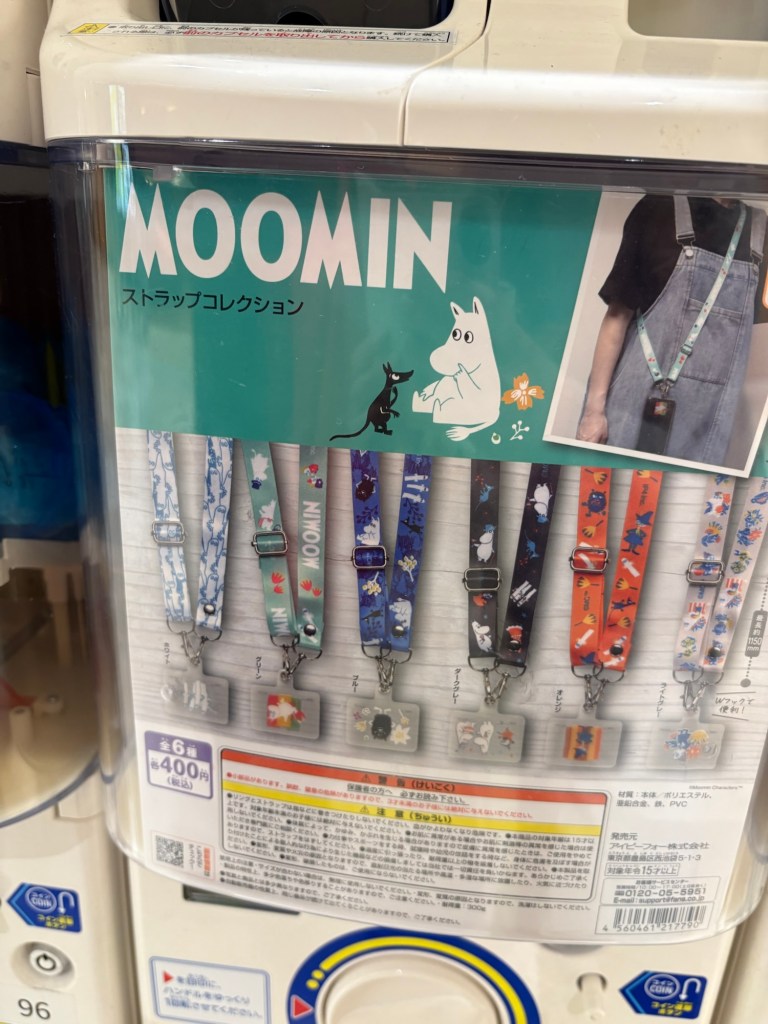
lamp and glass bought in Gothenburg, SwedenMoomin corner of ArOS art museum in Aarhus, Denmark. Japanese gacha-gacha moomin!
Moomin themed-cafes are very popular in East Asian countries: other than in Finlandvarious pop-up cafes have appeared now and then in Japan, Hong Kong, Thailand, South Korea and Taiwan. You could eat a moomin shaped meal in front of a giant moomin character plush there! Moomin Cafes.


 a Polyglot illustrating Scandinavia