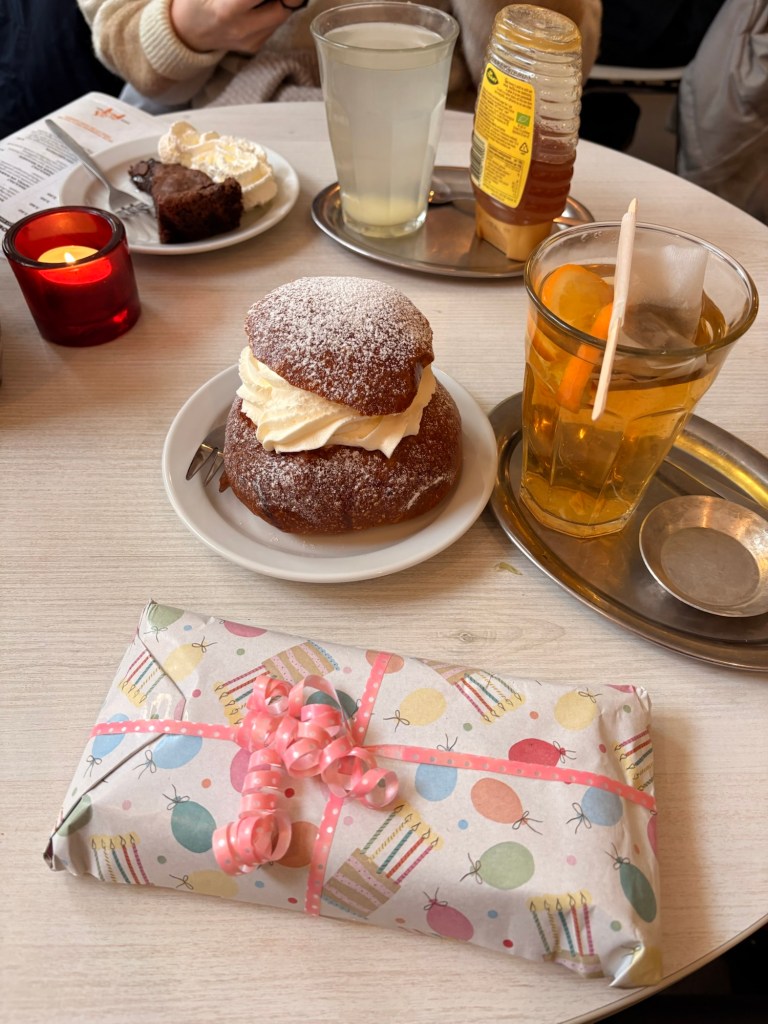
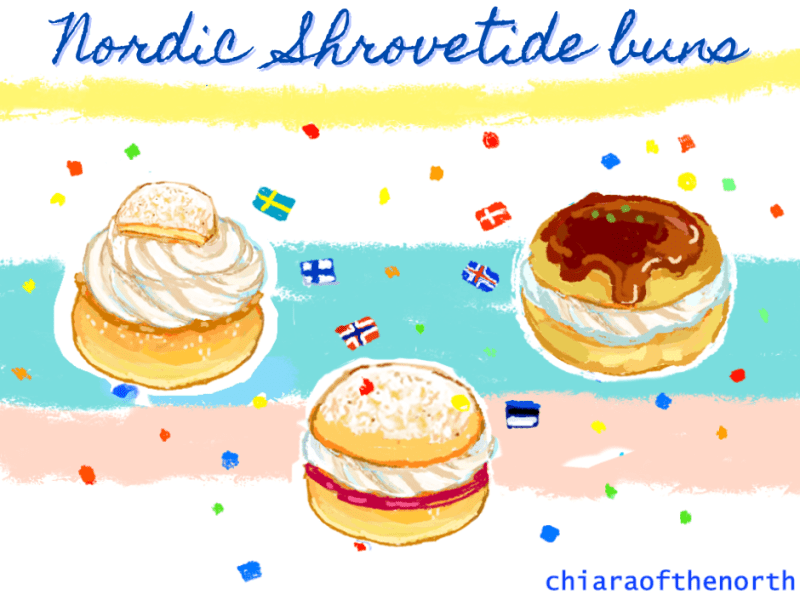
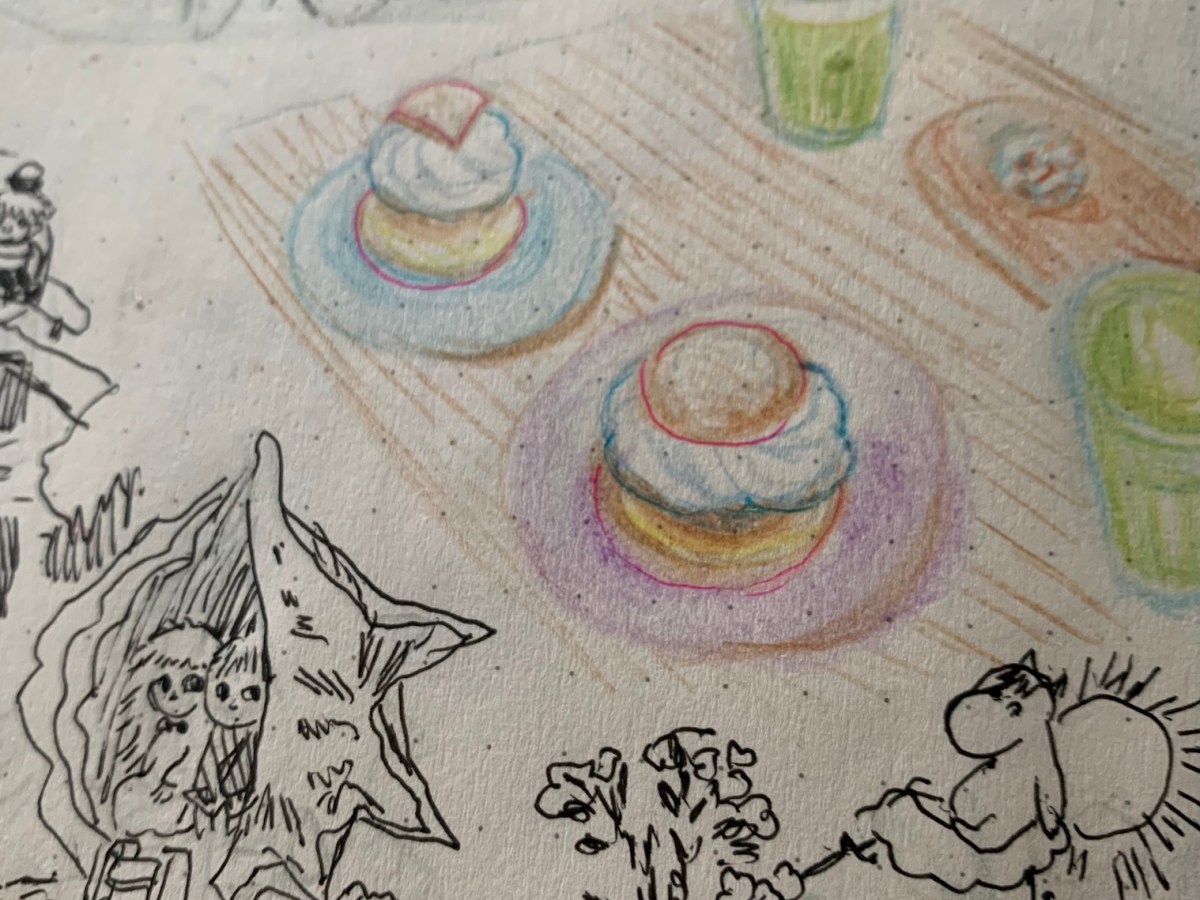
Cream buns are enjoyed in Nordic and Baltic countries during shrovetide, between January and February. Sweden’s classic semla has almond paste, while other countries variations include jam, vanilla cream, and chocolate icing top.
Whipped cream-filled buns are eaten and baked in Nordic countries during shrovetide (carnival for catholics), Fastelavn in Danish/Norwegian, Laskiainen in Finnish. This period would anticipate the lent before Easter, and culminates on Fat Tuesday – Fettisdagen in Sweden, or Shrove Sunday.
Lent was abolished with the reformation, but the buns stayed! To the point that Icelanders call the day when you eat bollur, shrove Monday, bolludagur, ‘bun day’.
National Variations of Shrovetide buns
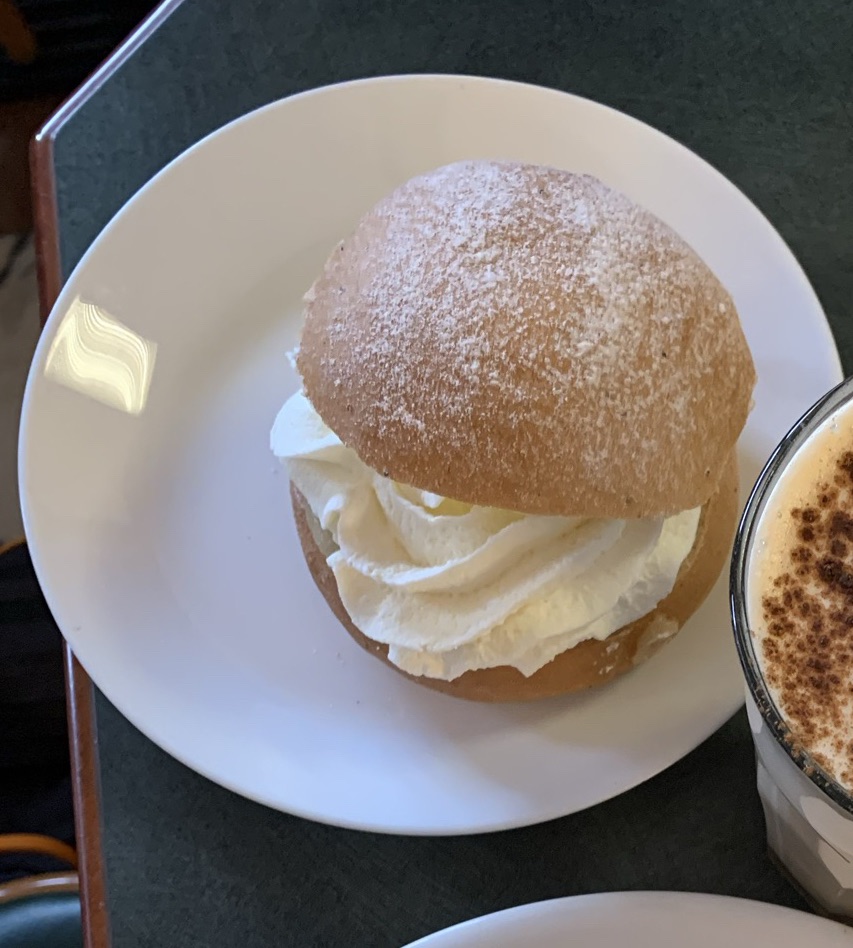
In Sweden the semla is filled with almond paste and whipped cream. It is traditional to eat it soaked in hot milk, known as hetvägg. Swedish King Adolf Frederick died from digestion problems after eating 14 hetvägg!
Mormors bageri Semla in LundAlmond paste inside Broodnodig’s Semla in Utrecht
in Finland, Laskiaispulla – or fastlagsbulle in Swedish-speaking Finland – instead of almond paste you find jam. Estonian Vastlakukkel is more simple, genereally only with whipped cream, but sometimes also contain jam, and Norwegian fastelavnsboller can be filled with vanilla cream, jam, chocolate and almond paste.
Danish fastelavnsboller, similar to bollur in Iceland and Føstulávintsbolli in the Faroe, are made from puff and choux pastry, often with chocolate icing on top and besides whipped cream filled with vanilla cream, whipped cream and jam.
Besides the traditional version named above, there are more and more variations including liquorice, pistache and so on, with curious semlor made up each year.
Mentioning Dutch culture, a Danish/Icelandic fastelavnsbolle reminds me of a Bossche Bol, although the latter are completely coated in chocolate. I believe Italian Maritozzo is very similar to a plain semla, without almond paste.
Where to try them in the Netherlands
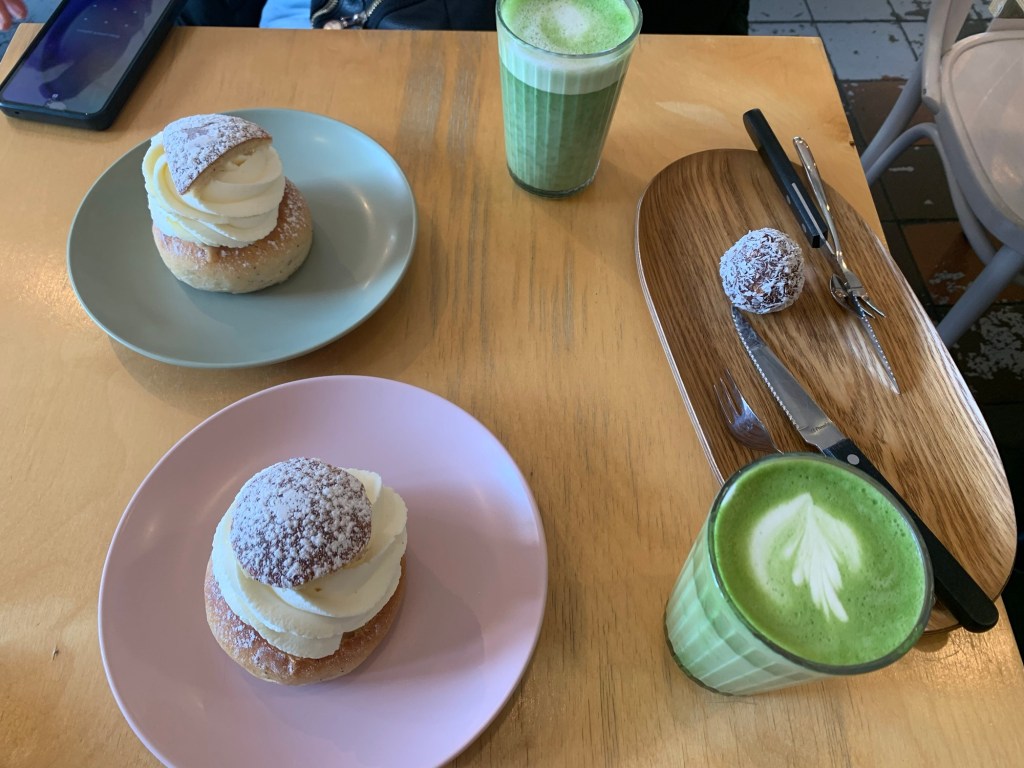
In Amsterdam, Selma’s Nordic bakery and Scandinavian Embassy make Semlor. Selma was also serving Finnish-style laskiaispulla in 2025, with a fruit compote, and a Danish fastelavnsbolle in 2026!
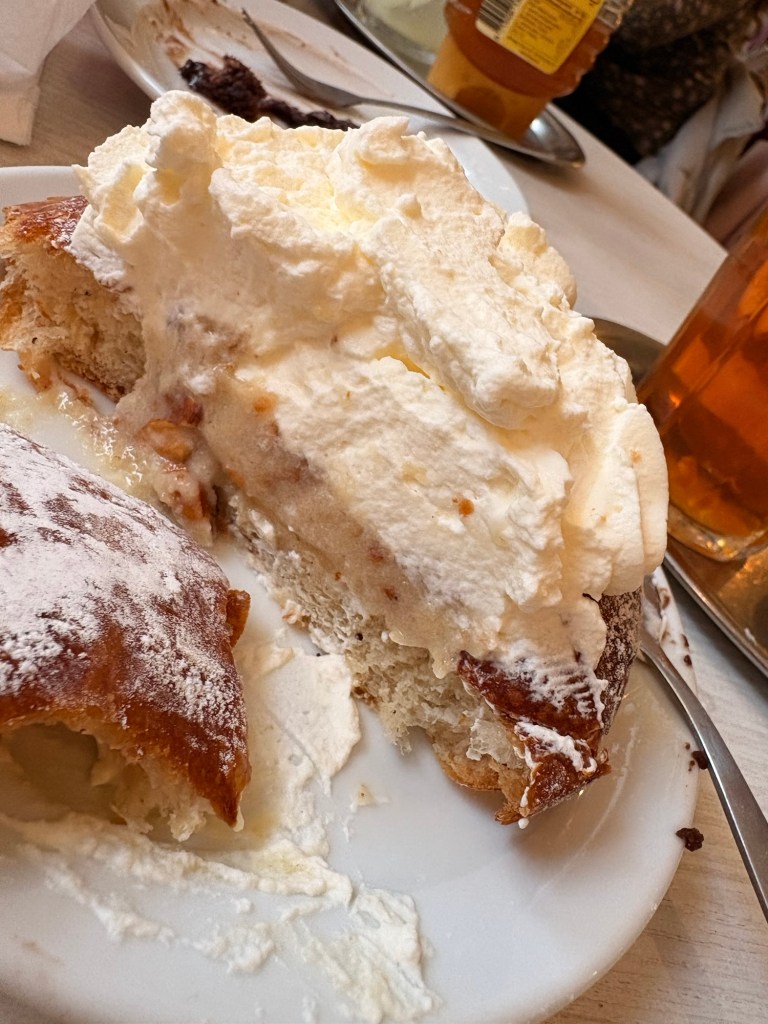
I also tried Broodnodig’s classic almond paste semla in 2026, a very big one!
In Den Haag semlor are also available Norvolk (in Scheveningen)
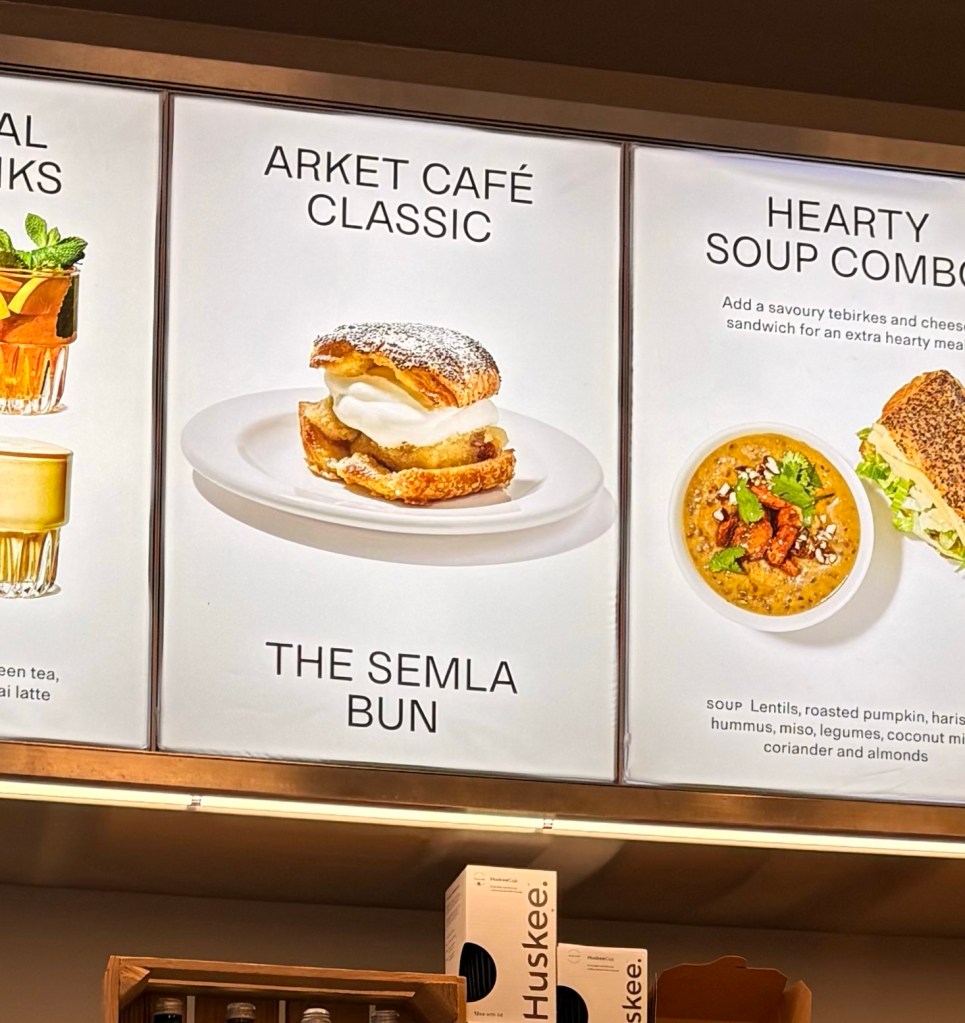
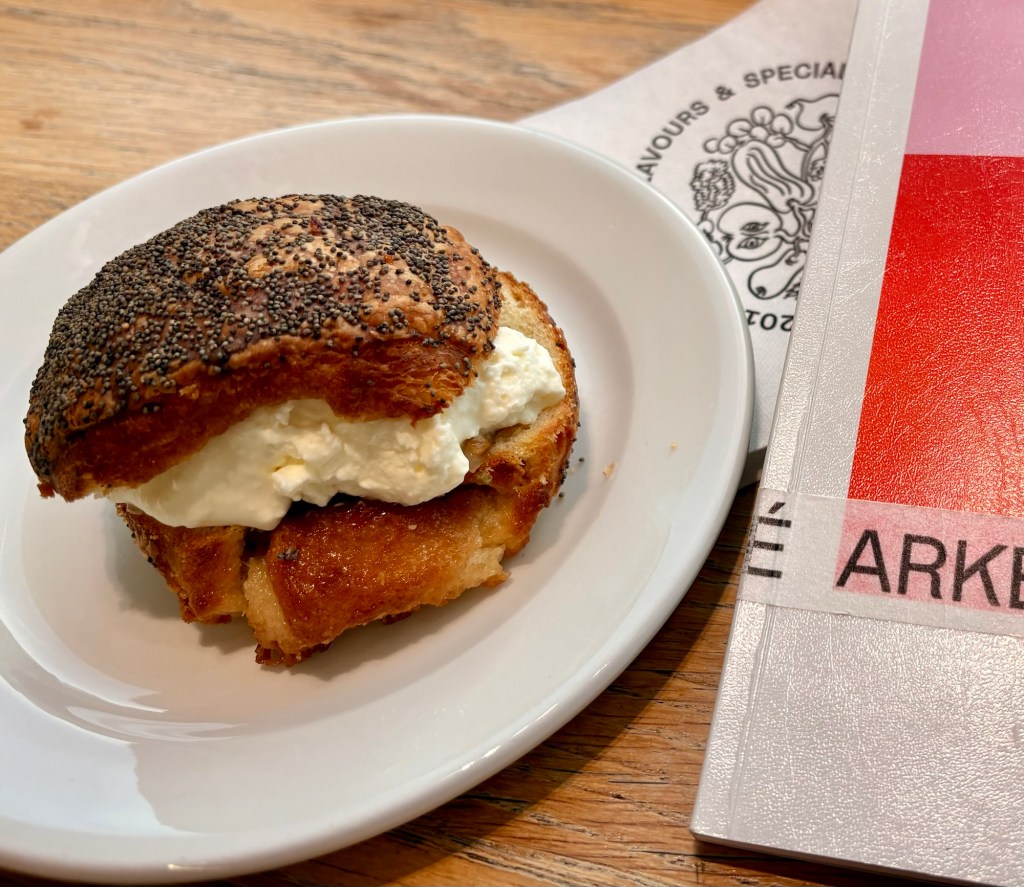
Arket made an interesting Danish-Swedish twist, with the classic wienerbrød Tebirkes cut and filled with whipped cream and almond paste like a semla!
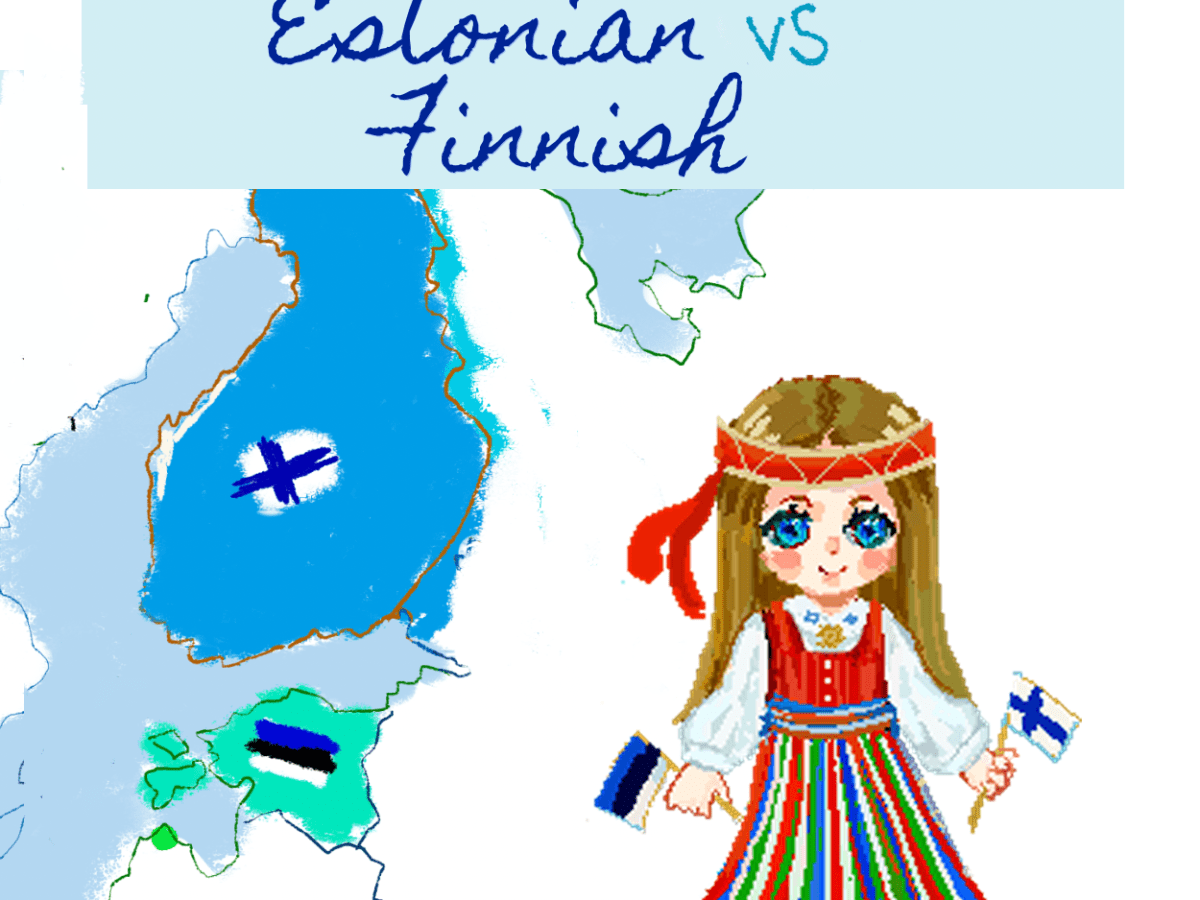
Estonian is a Finnic language, sharing many similarities with its ‘bigger’ sister Finnish, while being unrelated to all their bigger language neighbours
Cream buns are enjoyed in Nordic and Baltic countries during shrovetide, between January and February. Sweden’s classic semla has almond paste, while other countries variations include jam, vanilla cream, and chocolate icing top.
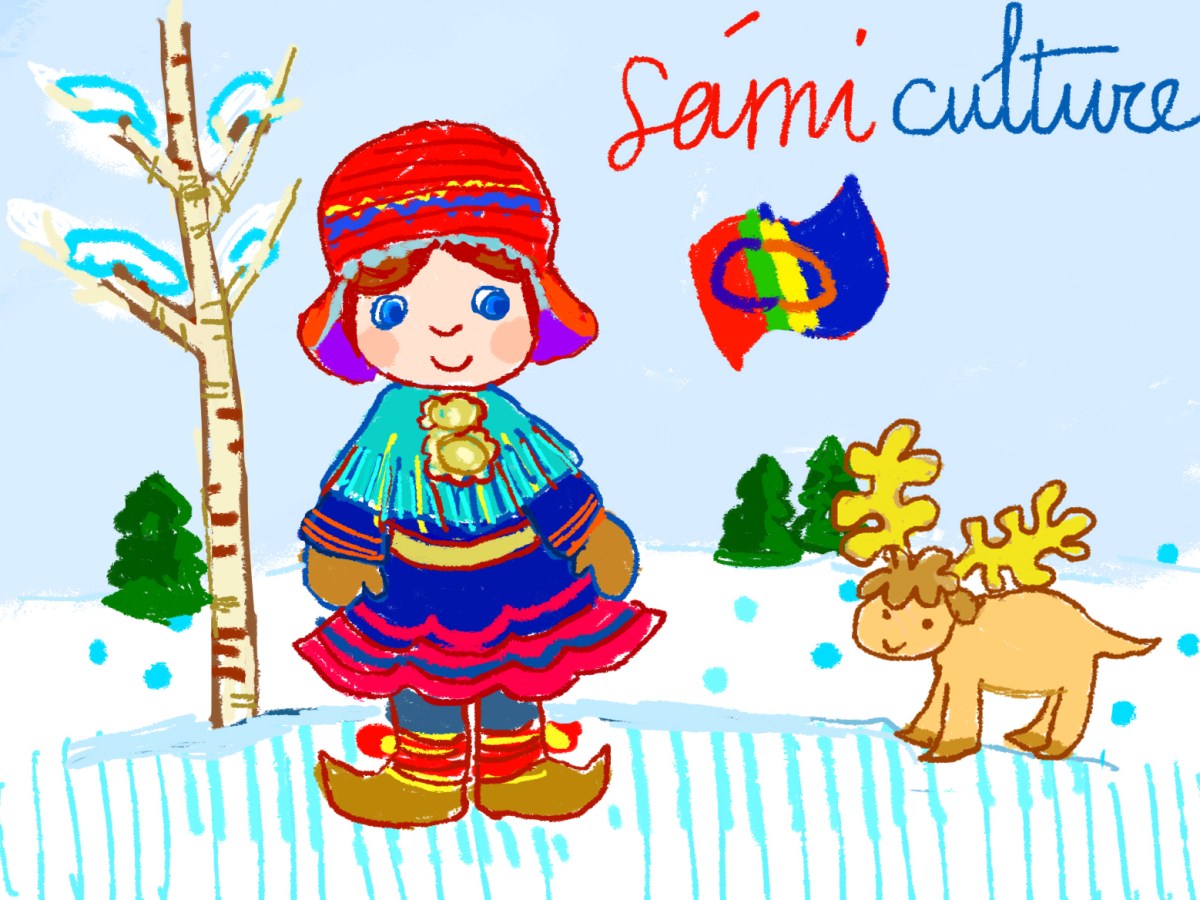
Sámi people, indigenous people of North Scandinavia, have a distinct culture, symbolised by its unique flag and traditional clothing, and part of it are Duodji handicrafts and unique musical expression through yoik.
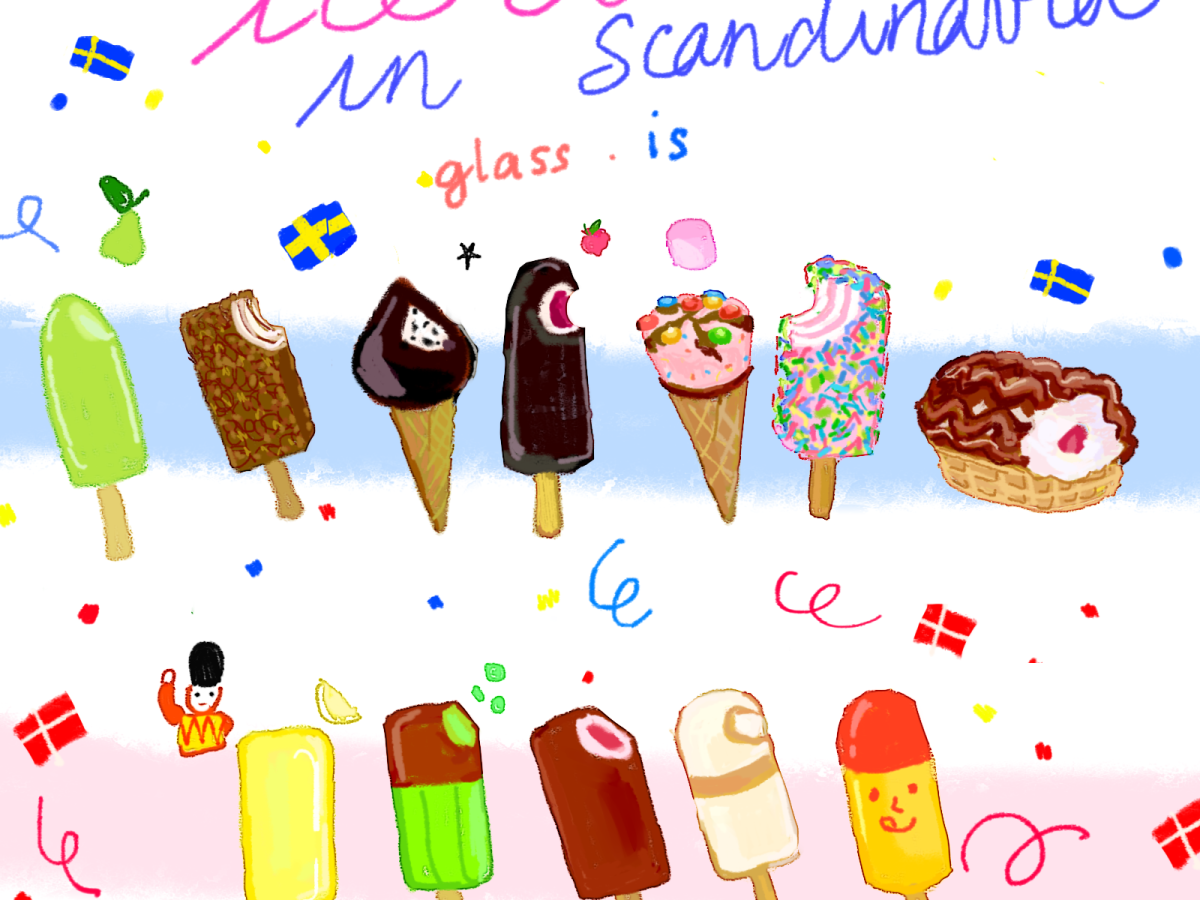
Discover Ice creams to try in Denmark, Sweden, and Norway: all-time classics,
Popular flavors, and curious novelties.
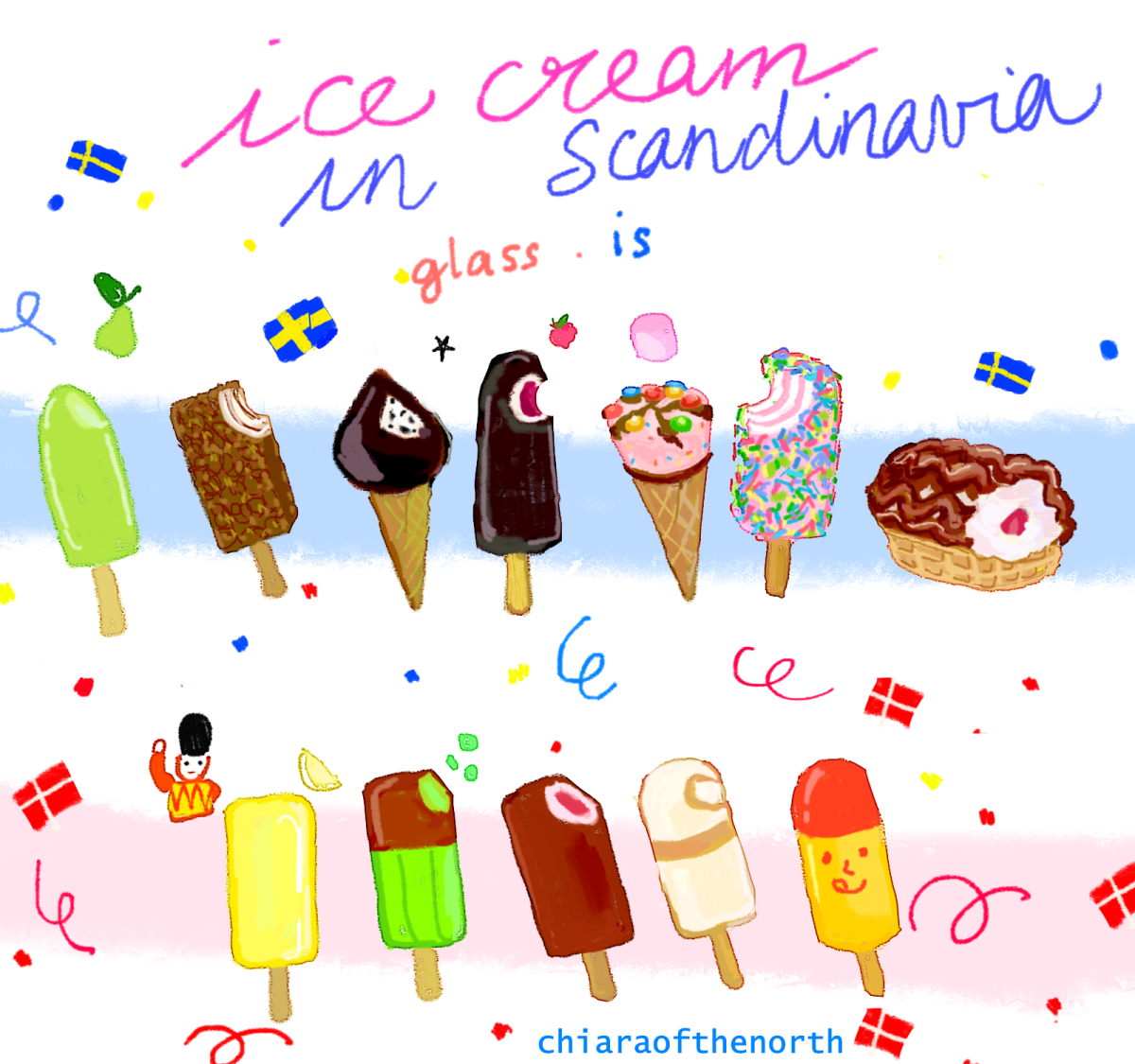
Since travelling to Scandinavia for the first time, i got quite acquainted with ice lollies available there, they have of course the magnum ice creams you see everywhre, but also quite a few interesting national classics, which vary. Here is a guide, so you are prepared..
Liquorice is a Nordic favourite!
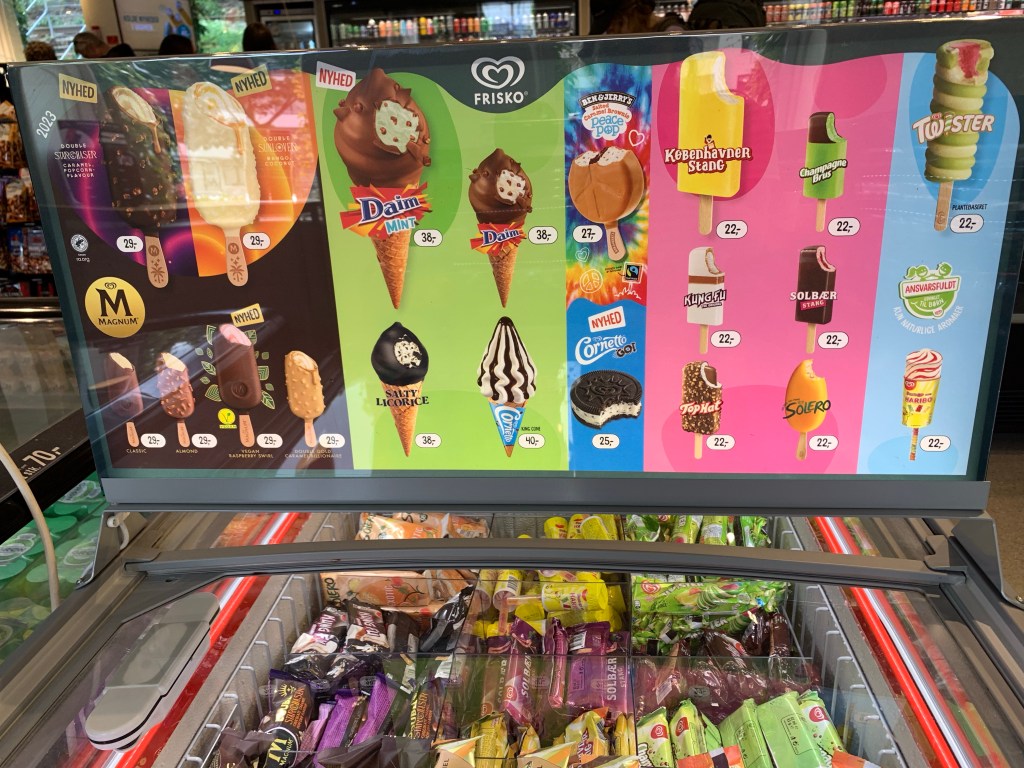
One thing you see everywhere in Nordic countries is liquorice, lakrits/lakrids. You find tons of liquorice candy, in chocolate, and of course as ice cream flavour, and there are several options. A pan-Scandinavian ice cream type is a round DAIM chocolate covered cream cone with a few variations, and it got recently a salt liquorice version!
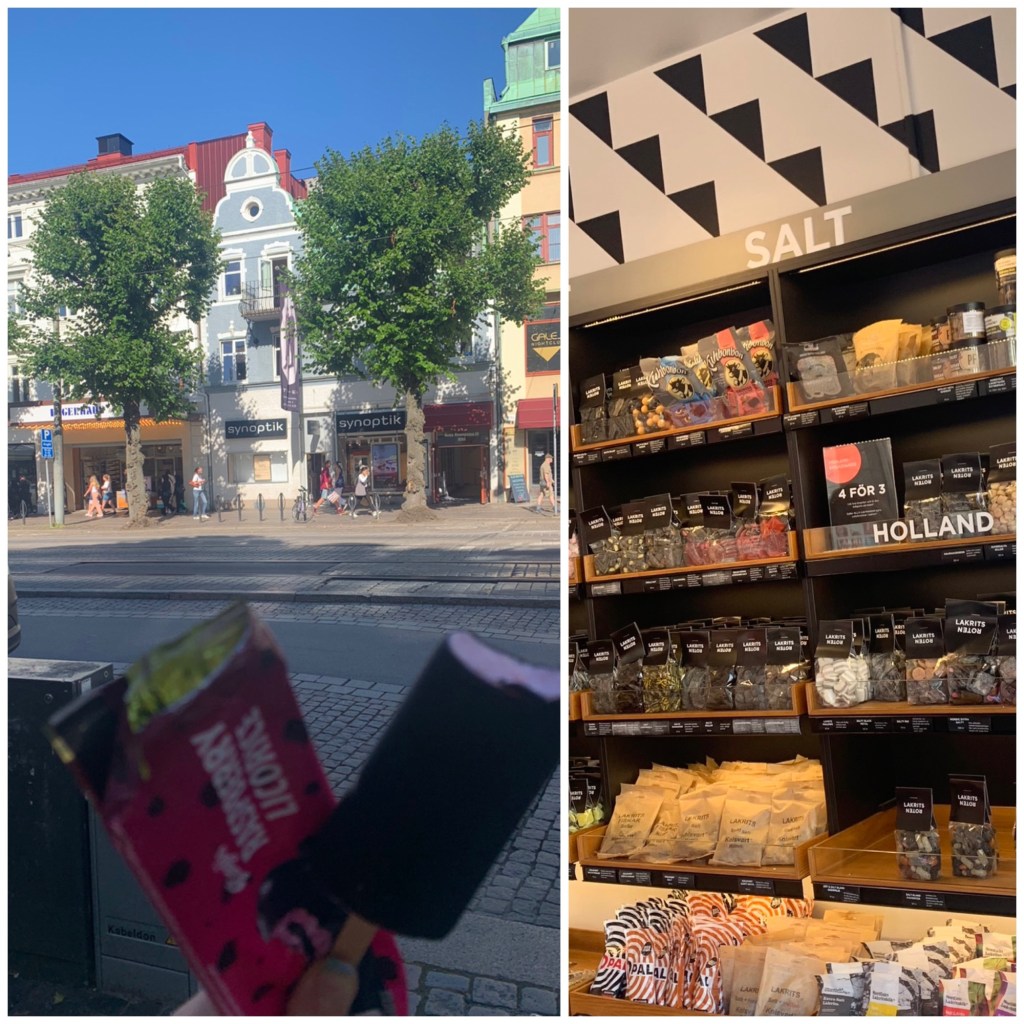
raspberry liquorice ice cream and a liquorice-only shop!
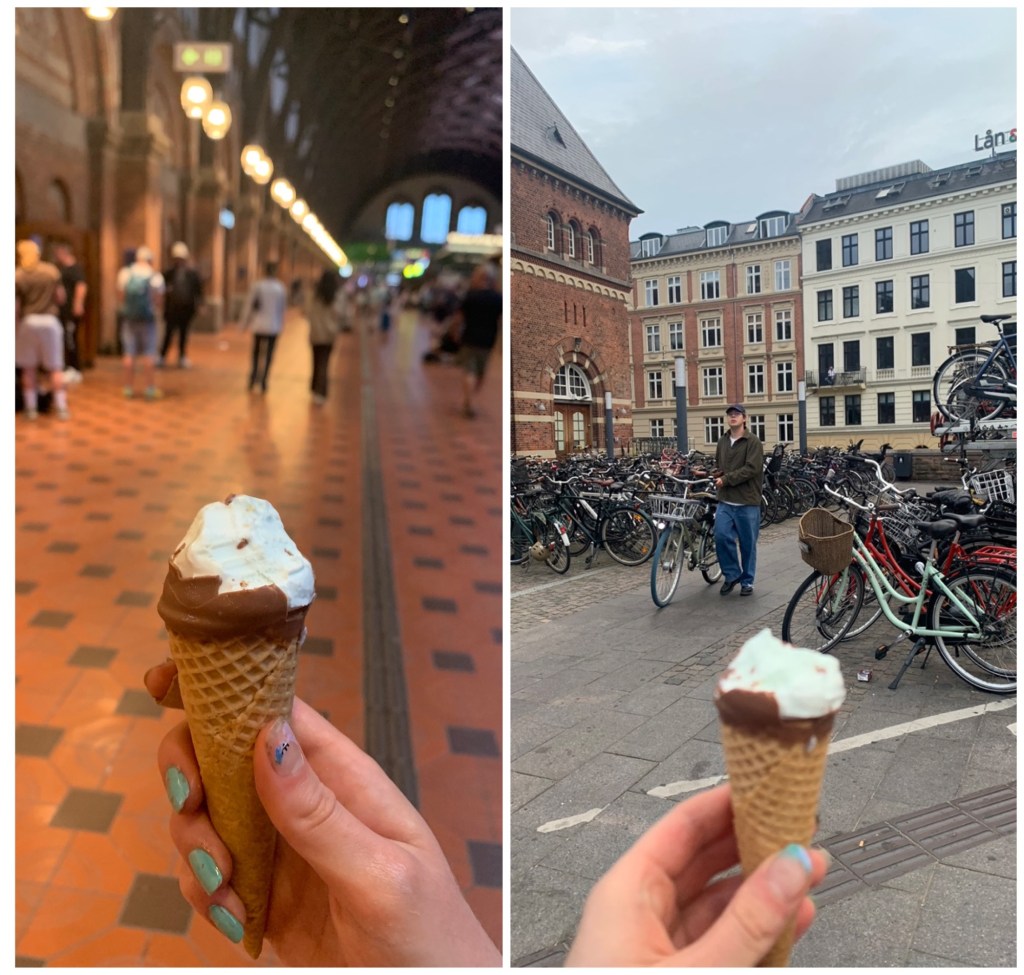
During my Denmark-Sweden holiday of last summer, I got the Daim Mint variation at a 7/11 of Copenhagen station last year though. And I did try a berry-liquorice combo in Sweden though.
The Danish Classic ice creams
Frisko in Denmark, GB Glace in Sweden is the ice cream brand with the heart symbol present everywhere with different names, and many Ice creams I will mention are sold by it. Denmark has a set of all-time favourites, some have been around since the 50s!
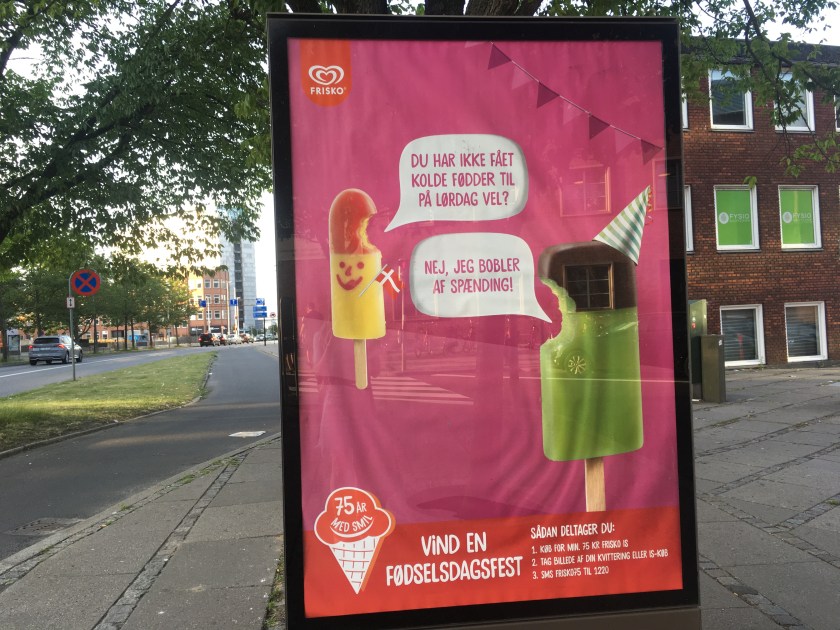
Ice creams at the 7/11 at Fredericia stationFilur: haven’t you got cold feet on saturday? Champagne Brus: No, I am bubbling from excitement!
I have tried Københavner stang, Champagne Brus and Solbærof them. the former is just a plain lemon one (picked it because of the logo), but I enjoy Champagne brus contrast of lime-ish freshness with the chocolate covering. Solbær – which changed name from Kæmpe Eskimo for political correctness reason – is just chocolate with berry creamy filling. Still good! Kung Fu is lime and liquorice, Filur is the cute orange-raspberry water ice cream.
Sweden: pear flavour, Pippi and Emil
Other than liquorice being king, a particularly common flavour in Sweden is pear, or at least much more than it seems to me in other countries. A Finnish Swede friend told me it probably is because you cannot grow many other fruit…Piggelin by GB Glace is a pear ice cream classic.
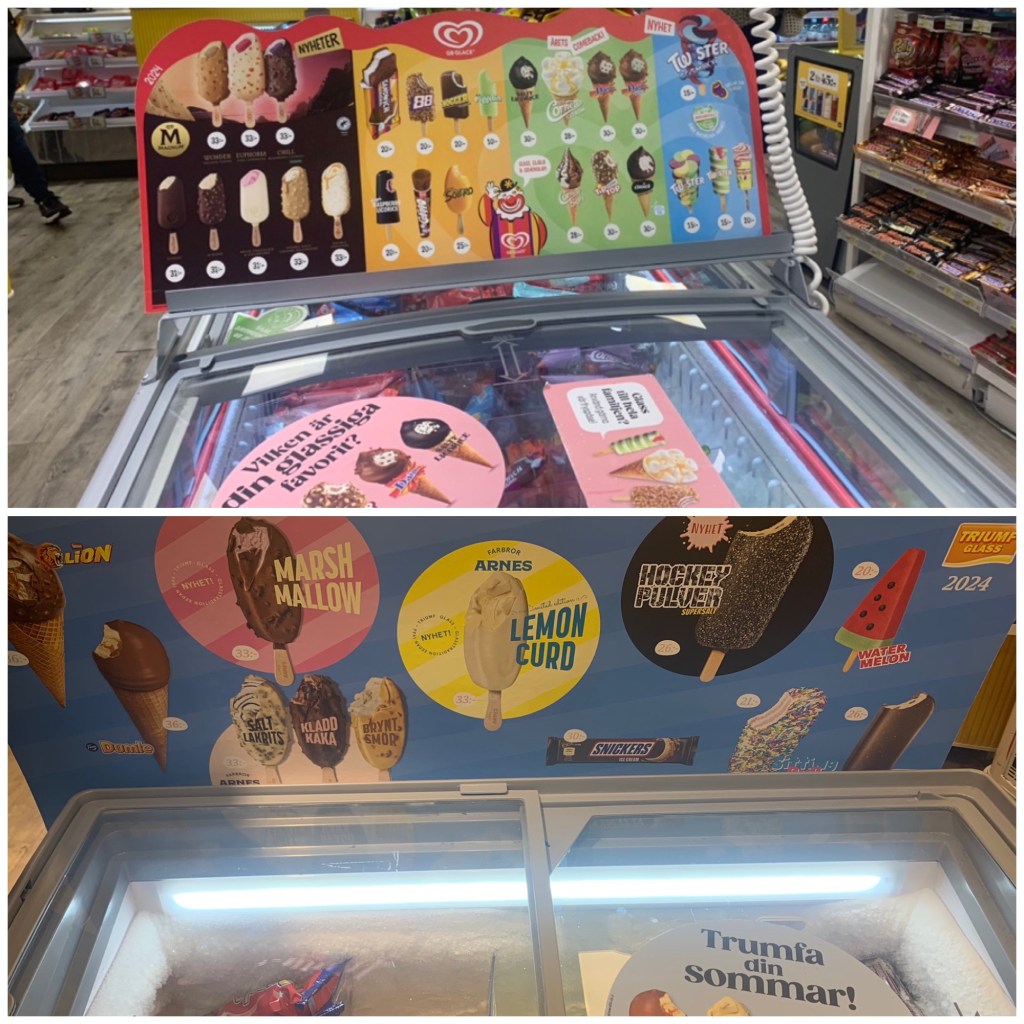
Pressbyrån always making puns, here with ‘Vilken är fin glassiga favorit’: Which one is your classice cream?
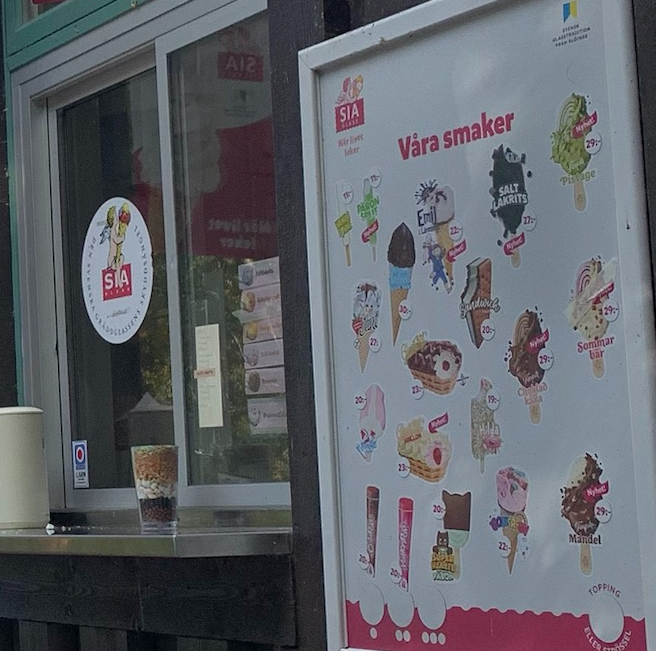
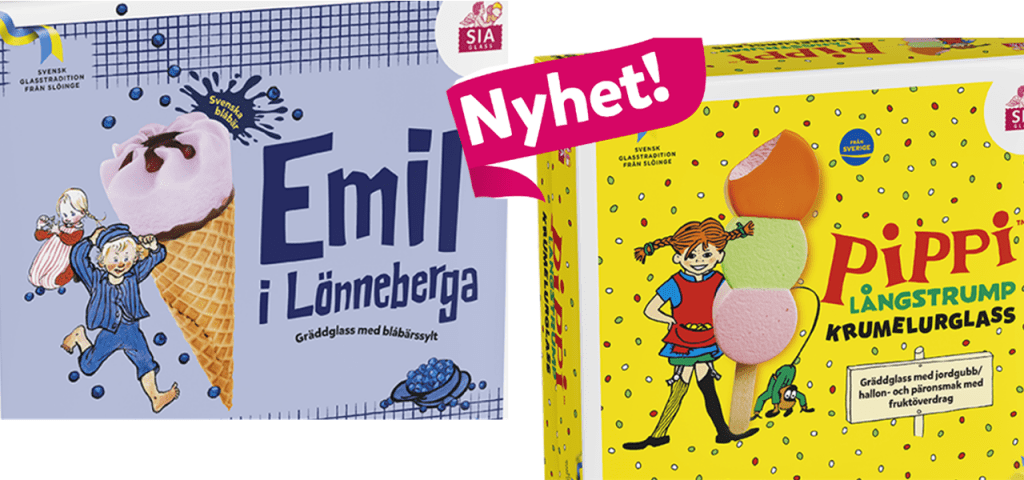
SIA is the main competitor of GB in Sweden I guess, based in Halland. It has introduced Emil and this year Pippi ice creams!! The former is Krumelurglass (which i got in the original candy form last year, krumelurpiller), a fruity ice cream. The green part is -you guess it- pear. Emil has blueberry flavour.
pictures (c) SIA Glass
I actually tried the raspberry liquorice ice cream, the lemon cornetto, and the Swedish classic 88, read åttioåtta. Shoutout to my friend Linda & her husband who made me try it. I would have also tried a Hilda, marshmallow/strawberry-ish? ice cream covered in rainbow sprinkles, or Godisregn (‘candy rain’), basically the same concept but in a cone. Glassbåt (‘ice cream boat’), also looks interesting. There are a few versions of it. I have seen other new ones from this year with very Nordic vibes:
Konfetti gul & blå(blue-yellow as the Swedish flag) from Hemglass, lemon and blueberry ice creams with sprinkles on them.
Punschrulleglass, inspired by the green and chocolate dammsugare pastry.Hence it looks like a Danish Champagne Brus.
a Kanelbulle flavour one
Geisha ice cream- ice cream version of the famous chocolate candy by not Japanese, but Finnish Fazer.
Norway’s 17 mai ice creams
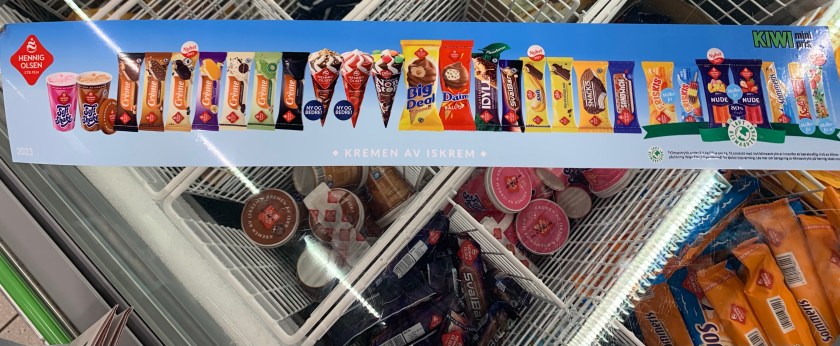
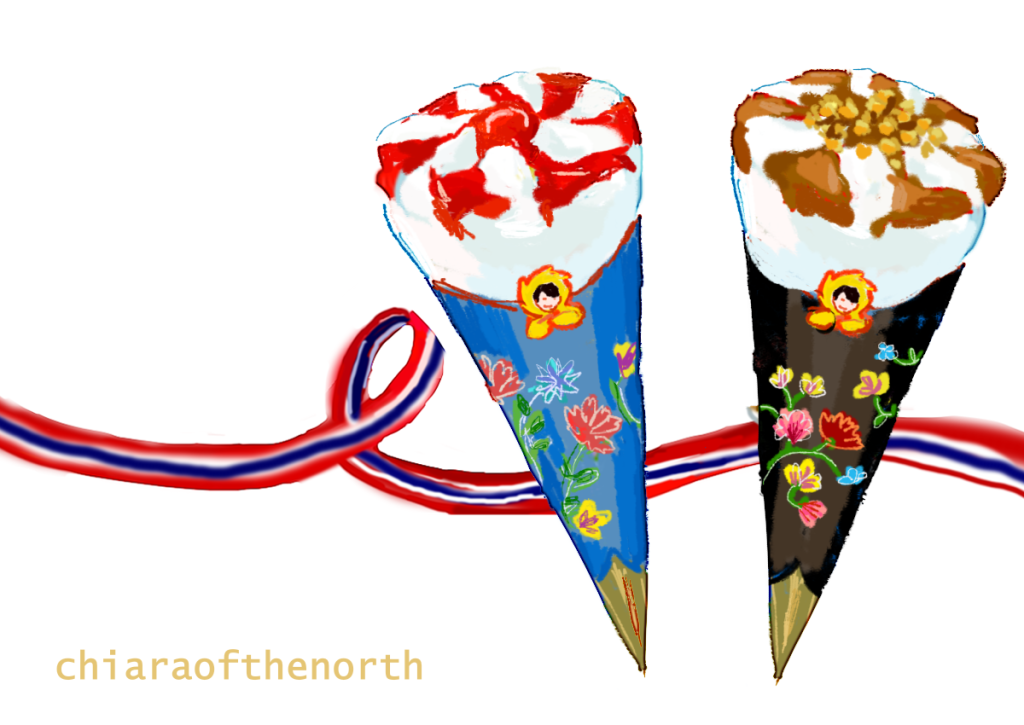
In Norway you see Diplom-Is or Hennig Olsen instead, not sure if Unilever is still behind them – Whatever. There are ‘regular’ strawberry or chocolate and cream cones, which around May get fancier for the National Day, 17 Mai, with bunad-like patterns.
I have not eaten any ice creams in Norway, but I have to say I saw nothing that stood out compared to the other countries! Please invite me to Norway to prove me wrong, haha.
That was all for now, I will probably update this post for the future summers…Or add it for Finland and Iceland and hopefully try out their ice creams!!
So subscribe to stay update on Scandinavian Ice creams:
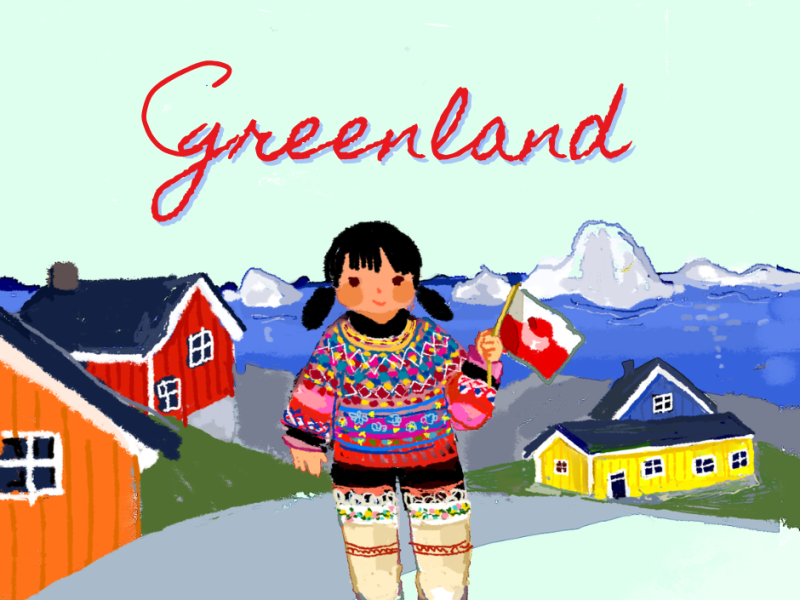
Discover Greenland, home to the Inuit Kalaallit, and its most iconic aspects as its flag, language and folk costumes. The biggest island of the world has a rich history of indigenous culture intertwined with Norse colonization and later Danish rule.
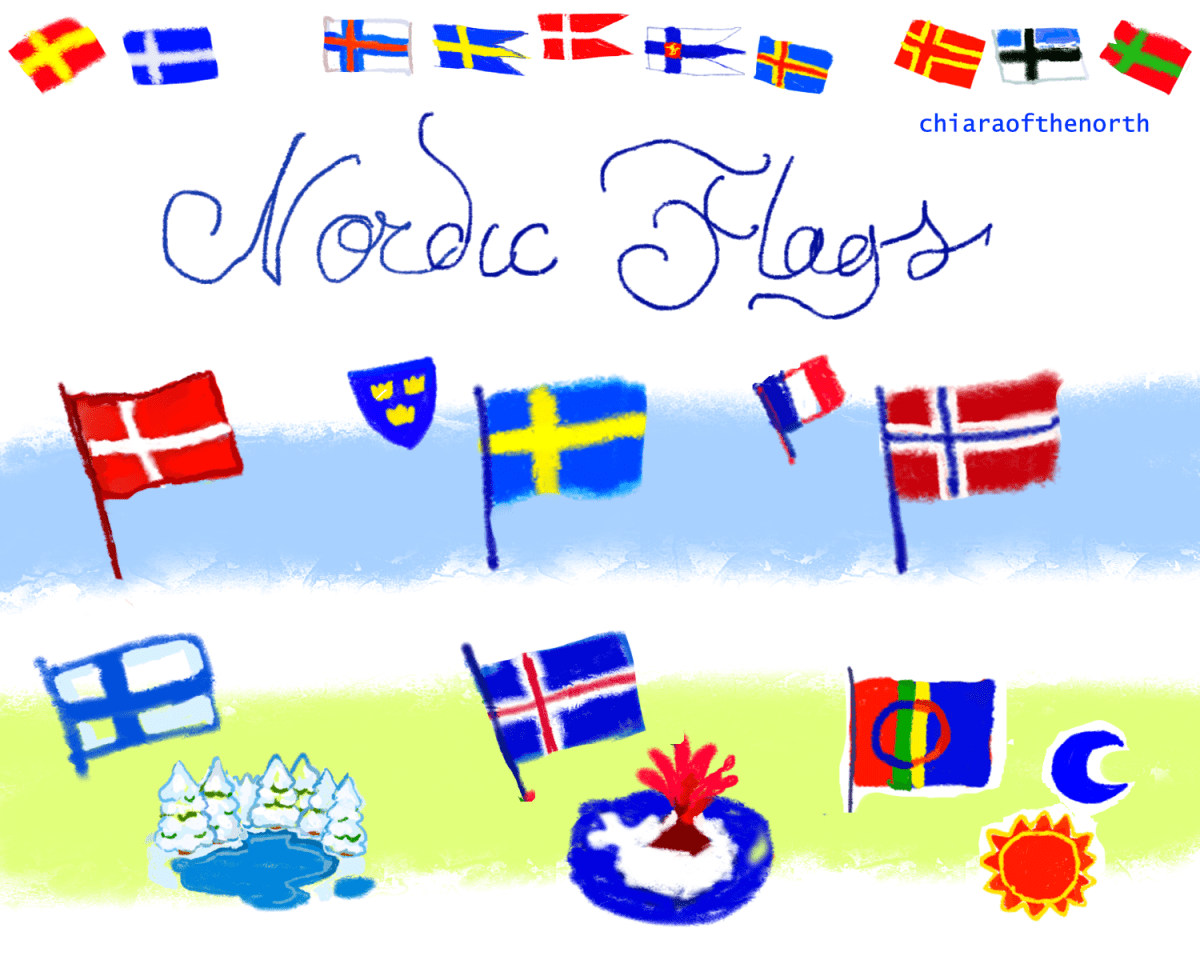
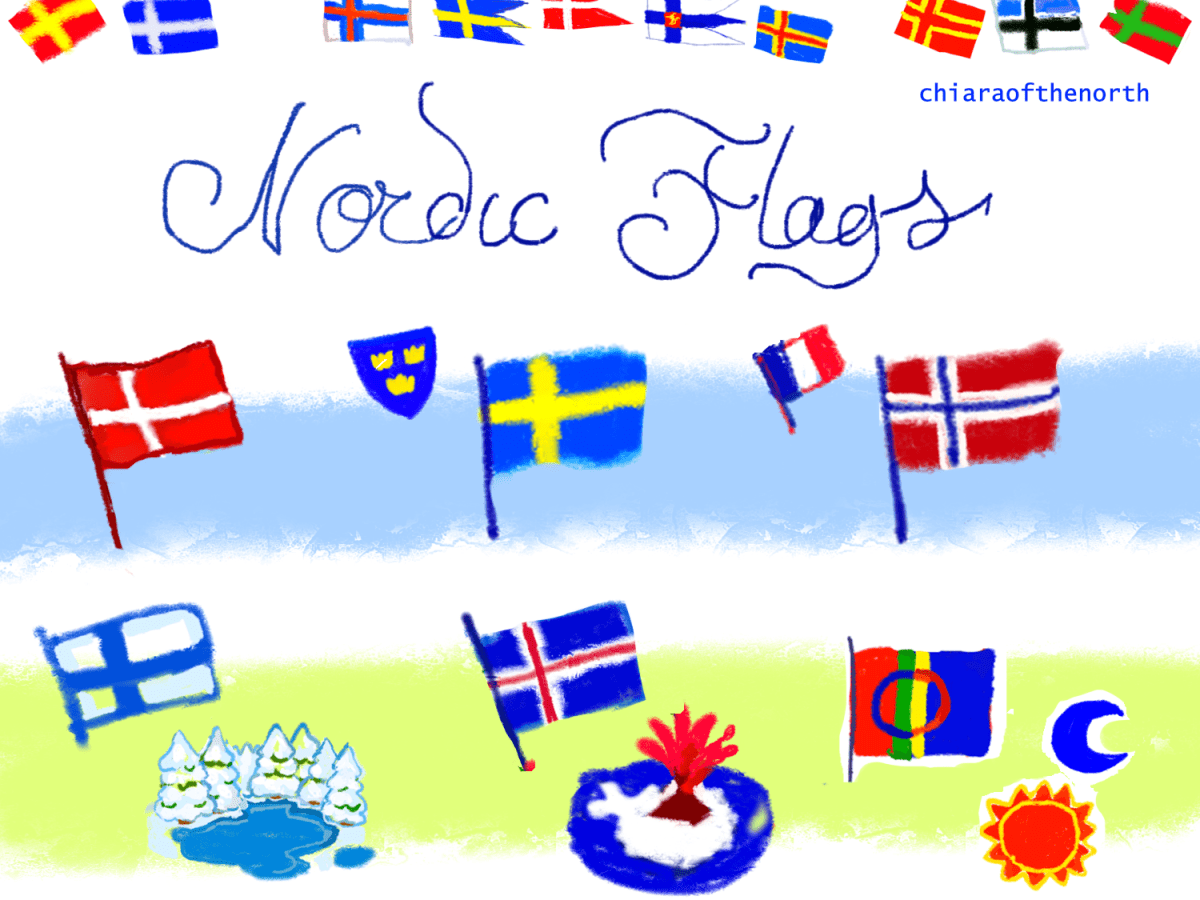
Origin and meaning of Nordic flags and other Nordic cross flags explained
Tomorrow, 23 March, is Nordic day, on this day the Helsinki treaty, establishing the Nordic Council, was signed in 1962. Its member are all Nordic countries and autonomous regions – includingÅland, the Faroe Islands and Greenland.
In honour of this occurence, I am writing this post explaining Nordic (cross) flags. Scandinavians and Nordic peoples in general really like to use their flag, which are common to see in various forms and occasions, from pennants to wooden table flags, as decoration for a birthday or on a Christmas tree. But let’s go back to history!
Where Nordic flags come from: Dannebrog, the oldest flag in the world
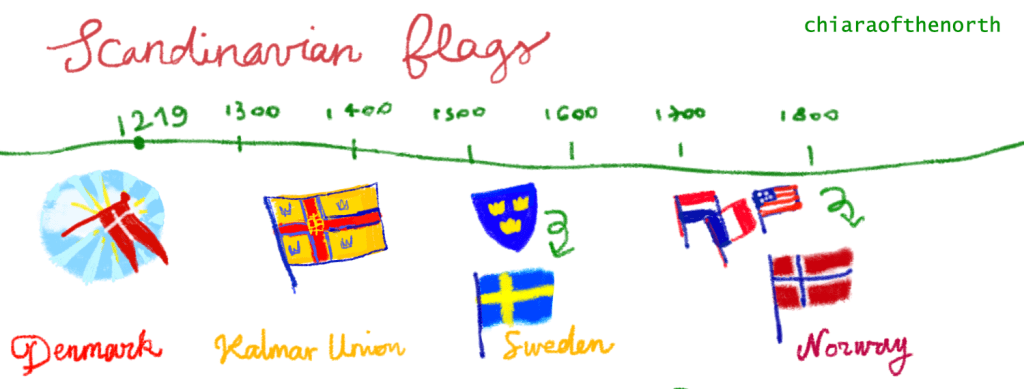
the Nordic cross flags originated from the Danish flag, the oldest flag in the world! Also called Dannebrog, according to the legend it fell from the sky during a battle in Lyndanisse (today’s Estonian capital Tallinn) in 1219, turning 800 years old few years ago! 15th June is celebrated as Valdemarsdag in Denmark, from Valdemar Sejr,the king who fought in that battle.
The flag of the Kalmar Union, union of Scandinavia (or Denmark and Sweden, with Denmark reigning over Norway) 1397-1523, also had a Nordic cross. The Danish flag then became the model for fellow Scandinavian countries:
Sweden officially got its flag 300 years later, with a design from the 16th century, with the colors -yellow and blue – taken from the coat of arms dating back to 1275. The day on which the flag is celebrated is June 6th, Svenska flaggans dag.
Norway‘s current flag appeared in 1821 – picked among a few different flag design proposals. It was the first Nordic flag with 3 colors, maybe inspired by the French revolution wanting to get rid of the Danes…parliament member Fredrik Meltzer from Bergen said ‘it means freedom, as the French flag, and in the Flags of the Dutch and Americans, and the Union of the English’. You will see a sea of flags everywhere on 17th May, Norway’s constitution day
2oth century Nature-inspired Iceland and Finland, Faroe islands and Åland
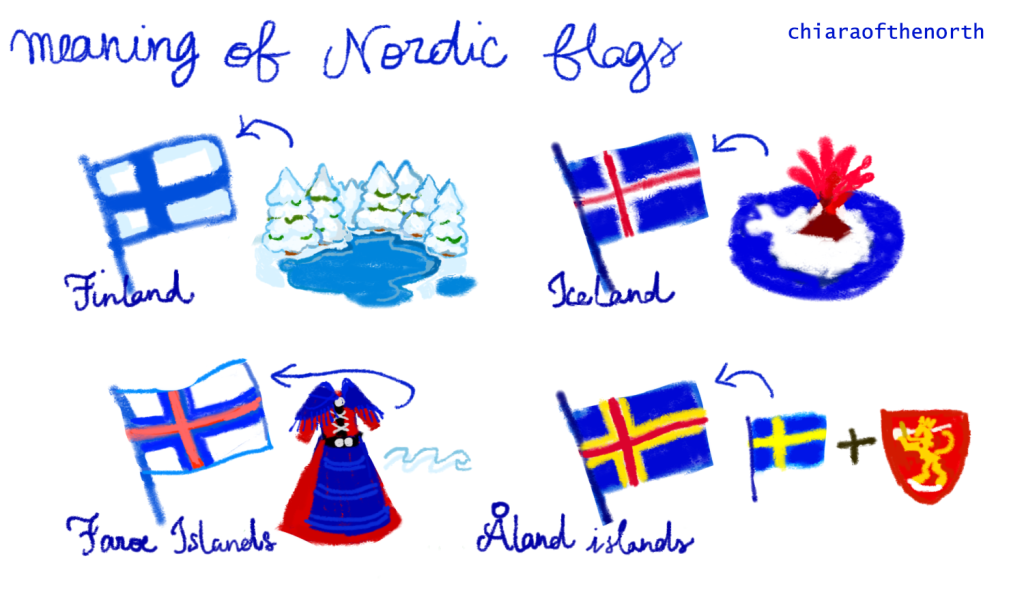
Iceland‘s official flag became official in 1915, based off its nature: according to the Flag Act the flag colours are “sky blue”, “fire red” and “snow white”. Iceland had previously an unofficial flag called Hvítbláinn, the ‘white-blue’, used by Icelandic nationalist activists from 1897 and after 1915 partly abandoned due to its similarity to other flags. Today it is still used by the Icelandic Youth Association among others.
Finland‘s flag, called Siniristilippu“blue cross flag”, was adopted in 1917. The colors would represent the lakes Finland is rich of and snow. Finland has a Day of the Flag, Suomen lipun päivä, which also happens to be Midsummer (or Juhannus in Finnish), a very important day for the Nordics! On this day the Finnish flag is raised on Midsummer eve on 6pm, until 9pm of midsummer itsself.
Faroe Islands flag is called Merkið “drape / mark”, with a white background symbolizing the foam of the sea and the pure, radiant sky of the Faroe Islands, while the old Faroese blue and red colours are reminiscent of other Scandinavian and Nordic flags, also reminding the colors of traditional Faroese clothing. Faroese students in Denmark strongly felt the need to have their own flag, and in 1919 their newly created flag was hoisted for the first time by a student in his home village. On 25 April 1940, the British Authorities officially recognised the Merkið as the Marine Flag of the Faroe Islands. This day became later the Faroese flag day, Flaggdagur.
Åland islands, the autonomous Swedish-speaking archipelago belonging to Finland, mixes Sweden and Finland in its flag, where the red cross represented Finland as the color of its coat of arms. The red cross used to be blue, with the colors taken from a song festival in the capital Mariehamn. Since 1954 it has been the official flag of Åland, April’s last Sunday is the flag day, Ålands flaggas dag.
Regional, minority and other unofficial nordic cross flags
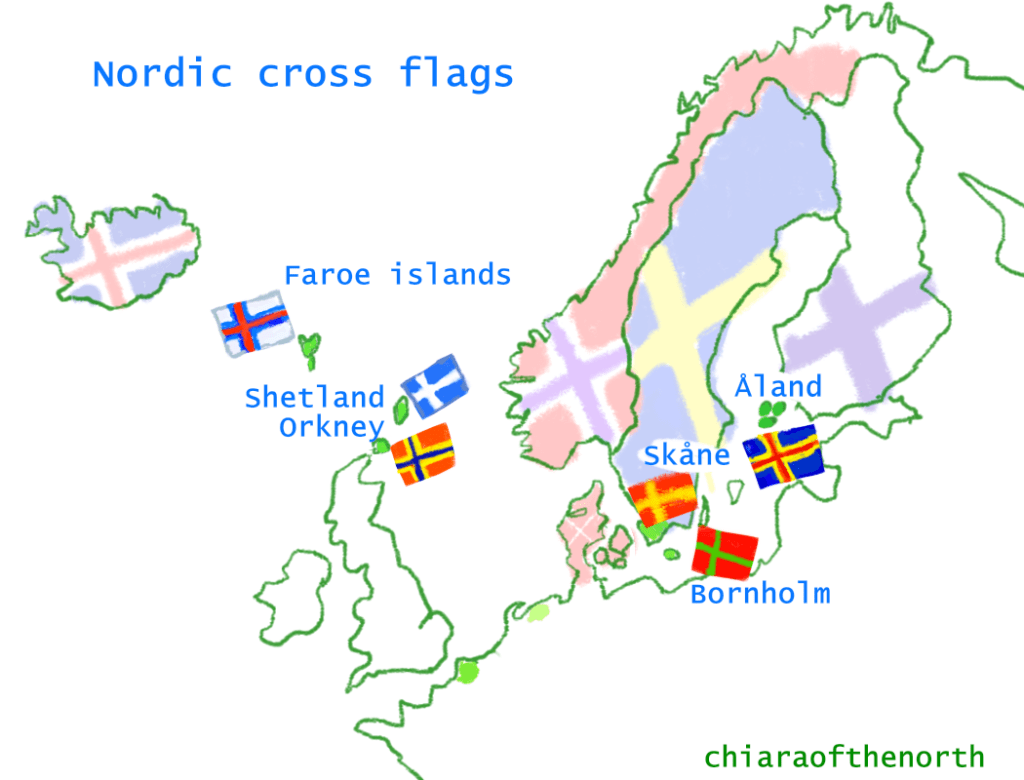
On this map I added official or widely used flags, not adding therefore Normandy and proposed flags
Skåne – The flag of Scania is actually quite old, and has its origin in the historical coat of arms of Lund’s (Danish) archibishop of Lund, older than the Danish Dannebrog! The Nordic cross flag was made up in the 1800s though. The third Sunday of July is Skåne flag day. skaneflaggan.nu
Finnish/Swedish minority: Flag mixes – Finland’s Swedes (looks actually the same as Skåne flag, red stands for Finland as above for Åland) and Swedish Finns, Finland’s flag with a yellow lining around the cross.
Bornholm – The island’s unofficial flag is from the 70s, designed by Bent Kaas. Green would represent the nature on the Danish island. It is mainly used in tourism and to mark local products.
Unofficial Nordic cross flags have been created for Swedish regions as Norrland, Bohuslän, Småland among others, and the Swedish Baltic Sea islands of Öland, and Gotland, although these are not really used.
Nations with Nordic ties- scandi heritage
Shetland and Orkney for their Nordic heritage, historical and cultural ties of the Scottish islands with Scandinavia. Shetland‘s flag was created in the 60s for the 500 years since its transfer to Scotland from Norway (after belonging to Norway for as long). A Nordic cross with Scottish colors. Orkney‘s flag was chosen in 2007, after a public consultation (all proposed flags were a Nordic cross). Yellow and red from Scottish and Norwegian royal coats of arms, Blue representing Scotland and the Sea.
Normandy‘s Saint Olaf flag: mainly used by regionalists movements, its name comes from the Norwegian kind Olaf Haraldson, probably baptised in Rouen, remarking the region’s viking origin.
Nordic cross flags were also proposed for Estonia in 1919, to remark its Nordic (rather than Baltic) identity and historical ties.
A cool Nordic cross flag was also proposed for Frisia, probably due to the part of Scandinavian heritage Frisian people (scattered between the Netherlands, Germany and Denmark) have.
Nordic indigenous nations without Nordic cross: Greenland and Sami people
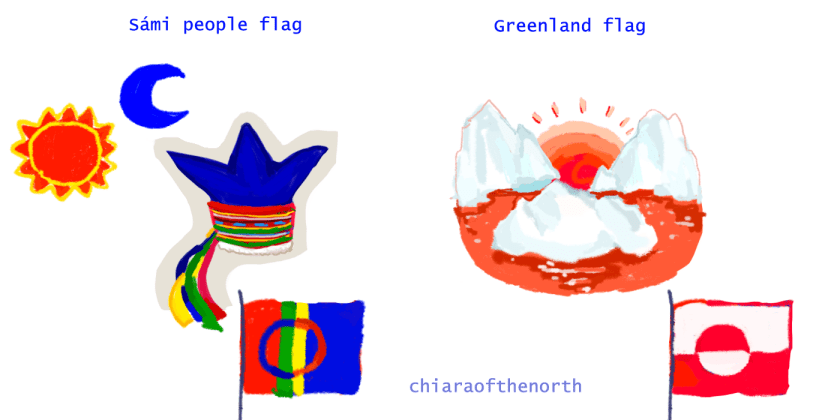
Greenland and Sami people have a flag since 1985 and 1986, both Inuit and Sami people adopted a sun/moon symbol instead of a cross, more typical of indigenous people and their connection to nature. the sun symbol was kept however in the same left-aligned position as Nordic crosses. Greenland has had a Nordic cross flag proposal – you might guess, green was in it- , but the Greenlandic iceberg landscape-inspired design by Tue Christiansen was eventually chosen instead. its name is Erfalasorput,”our flag”. In the Sami flag sun and moon are represented as a circle. The first Sami flag, designed in 1977 by Synnøve Persens, was the simpler, red and blue with the yellow line, inspired by Sami traditional clothing. Astrid Båhl added the Green line (color more present in South sami clothing) and the circle.
sources
Norway: stortinget.no – Det Norske Flagg – et flagg i frihetens farger
Norwegian, Danish, Finnish and Swedish Christmas markets in Rotterdam. Christmas decorations, imported typical Nordic products for sale, a cafe with lunch and cakes in each of them!
Lucia brings light in the darkest night of the year and is a mix of pagan and christian traditions. It is celebrated in Scandinavia with processions, saffron buns and church concerts.
Traditions and popular things to do in Norway around and on Christmas day: from movies to cookies
After Scandinavian Christmas Traditions and Finnish Christmas facts, I am continuing this series with Norway!
Watching Czech Cinderella
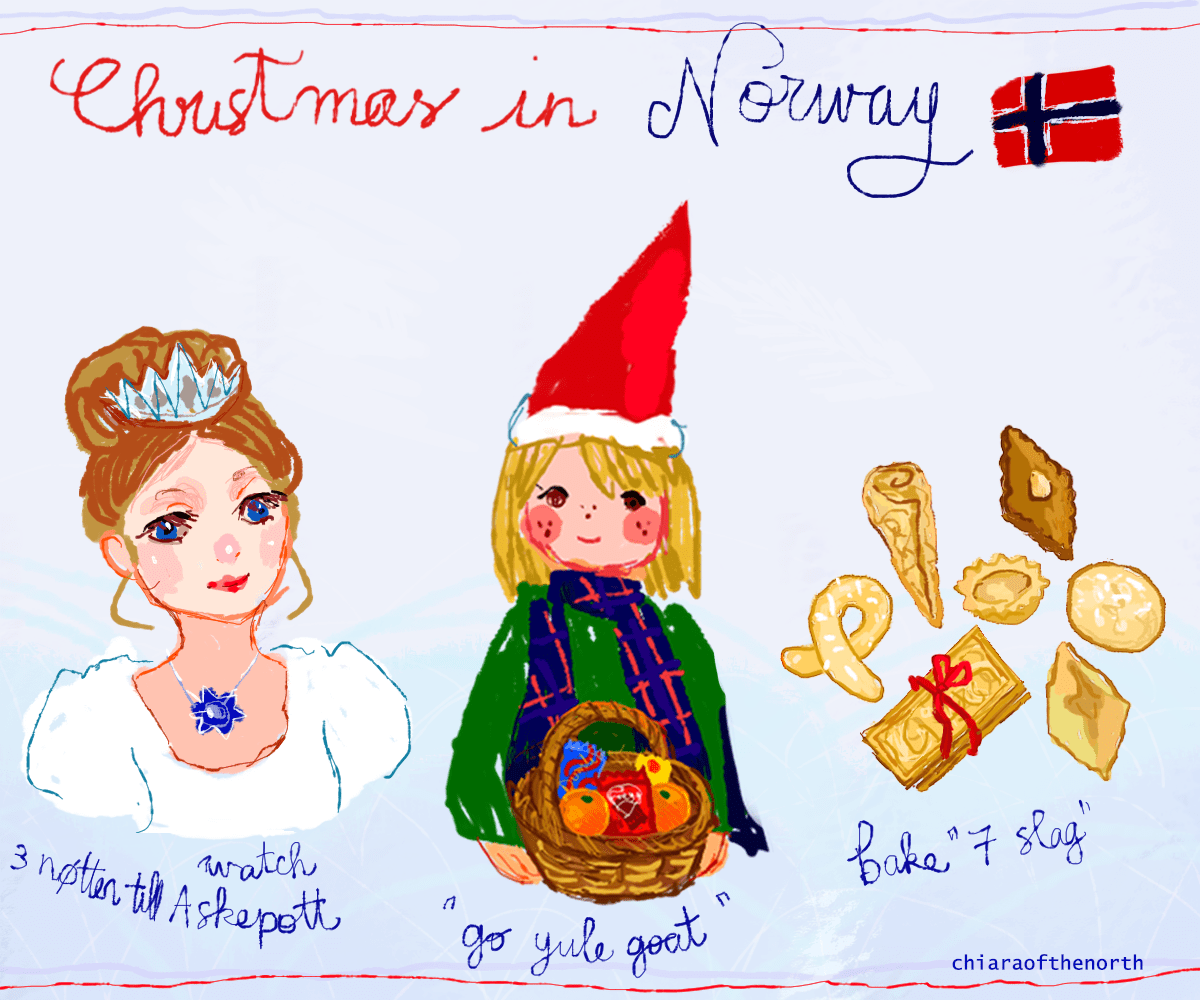
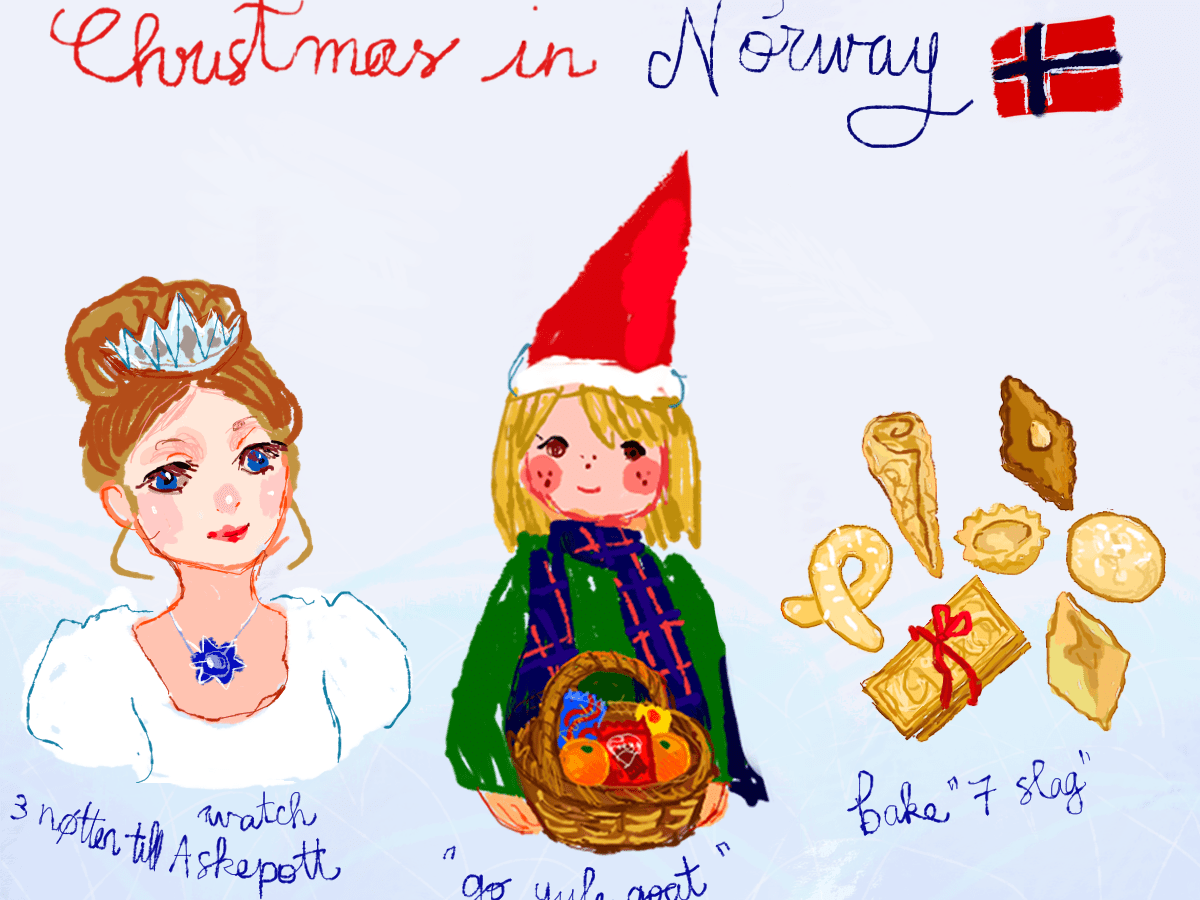
An iconic Christmas movie In Norway is actually Czech, from 1973: 3 nøtter til Askepott (3 wishes for Cinderella), broadcasted on Christmas eve in Norway since 1996 – Norwegians made a remake in 2021 though. Another popular Christmas movie in Norway is Reisen til Julestjernen (journey to the Christmas Star), a Norwegian production from 1976, in which a princess disappears to look for the Christmas Star…
‘Going Yule goat’ or Christmas trick-or-treating
In the period of Romjul, between Christmas and New Year, some Norwegian children go around with a Nisselue (Santa hat), with red cheeks and freckles painted on their face, or as angels, shepherds and other Christmas figures, singing Christmas Carols from door to door, in exchange for sweets. This is called å gå julebukk – to go Yule Goat..a sort of christmasy halloween. According to the Store Norske Leksikon it 14% of interviewed Norwegians or their children was going julebukk in 2017.
Baking 7 cookies
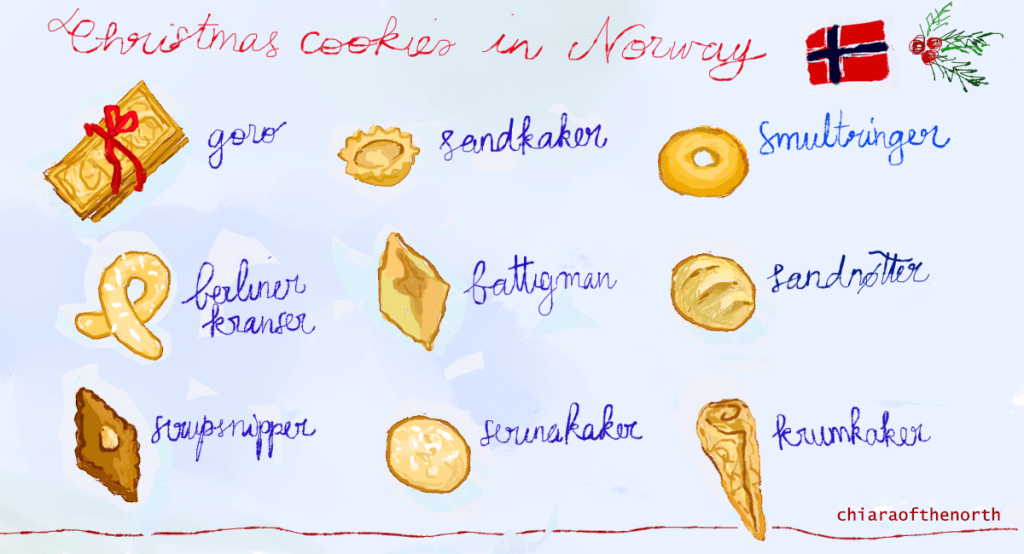
Some Norwegians bake the ‘Seven types’ – 7 different type of cookies, deSyv slag in Norwegian. Baking seven different types of cookies is a tradition that exists also in Sweden. There is no fixed list, but the classical types are Sandkaker, Pepperkaker (gingerbread cookies), Fattigmann ‘poor man’, Goro from Danish god raad, one of the oldest types from the 1800s- made with an iron press with patterns – Krumkaker, Berlinerkranser, Serinakaker.
Kransekake, kokosmakroner, sirupsnipper, sandnøtter and smultringer are also popular to be included in the syv slag according to godt.no.
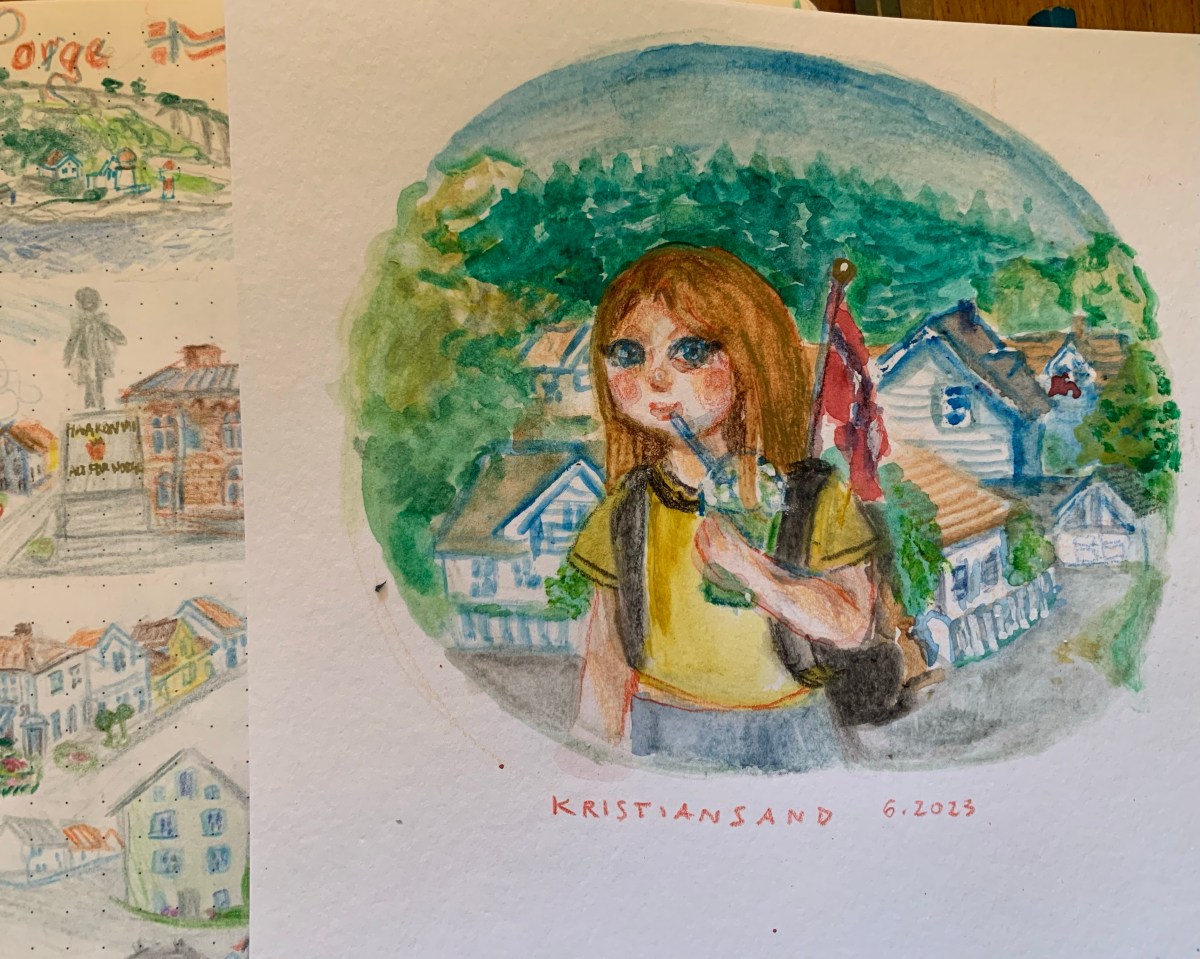
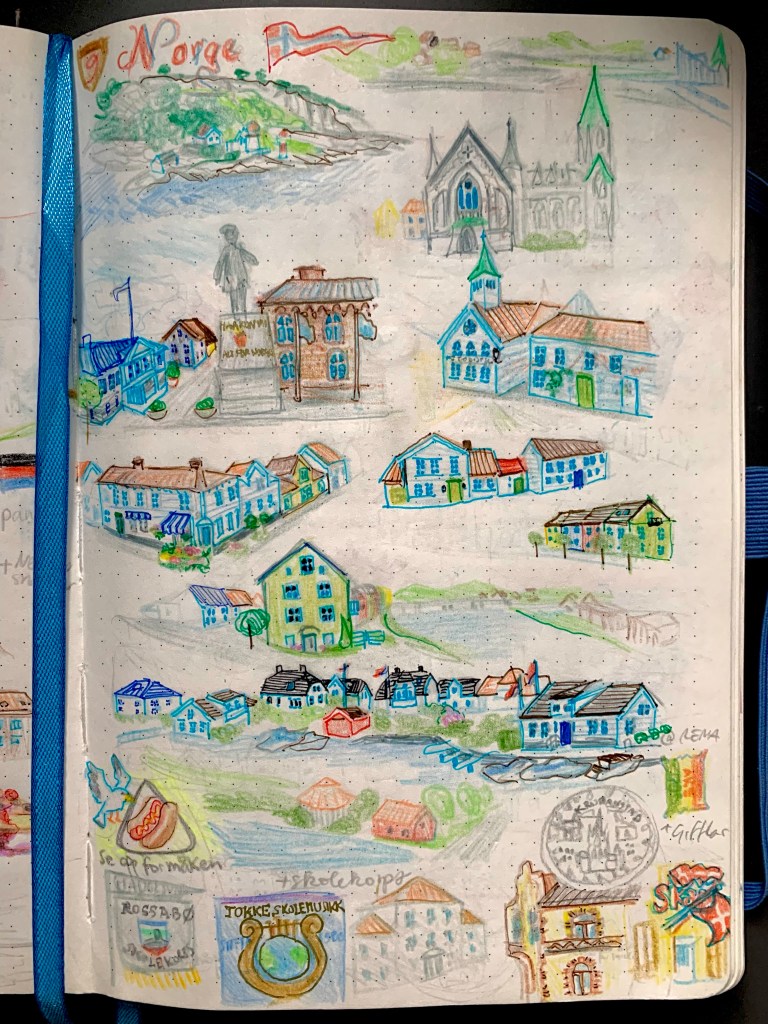
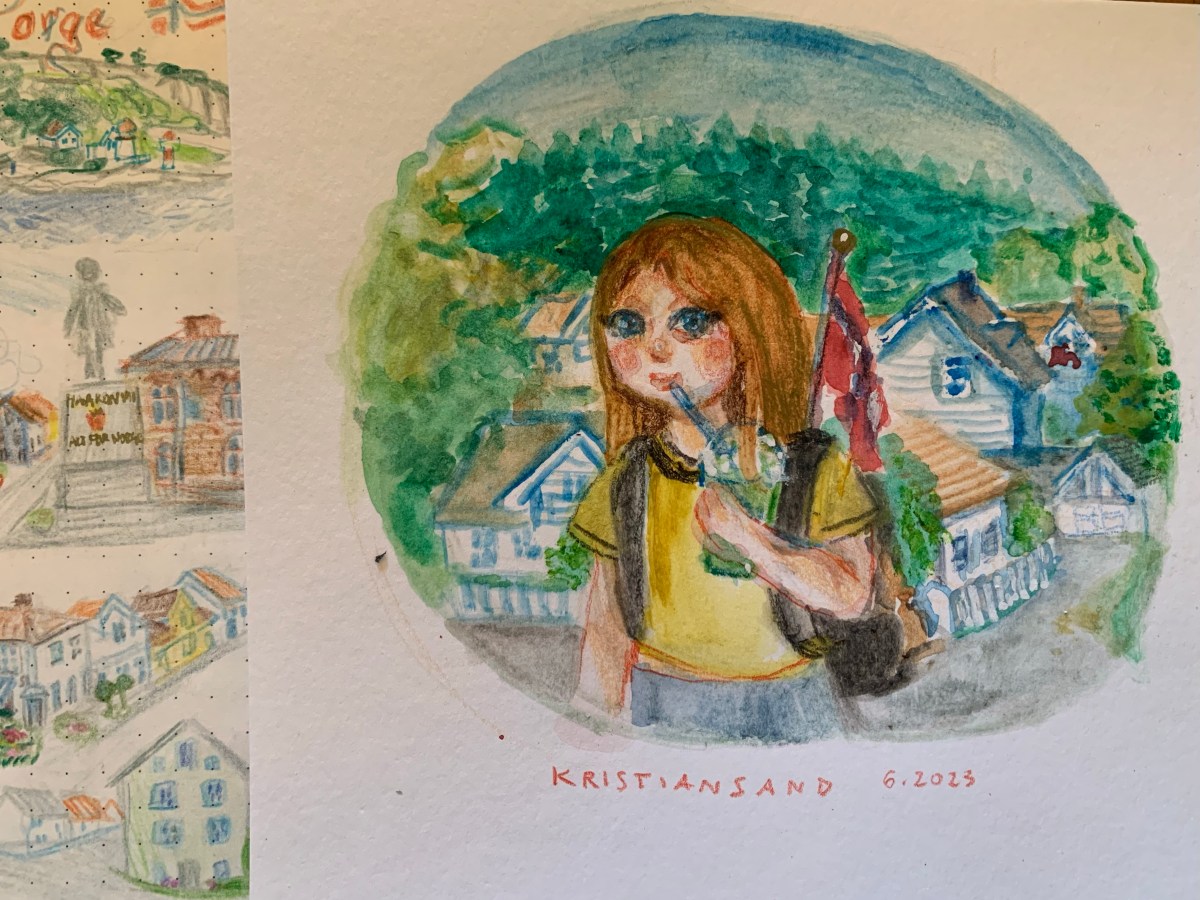
Last June I’ve been on a very short trip to Kristiansand, my first time visiting Norway! Lasted one day but felt satisfaying to have added one more country to my visited ones..!
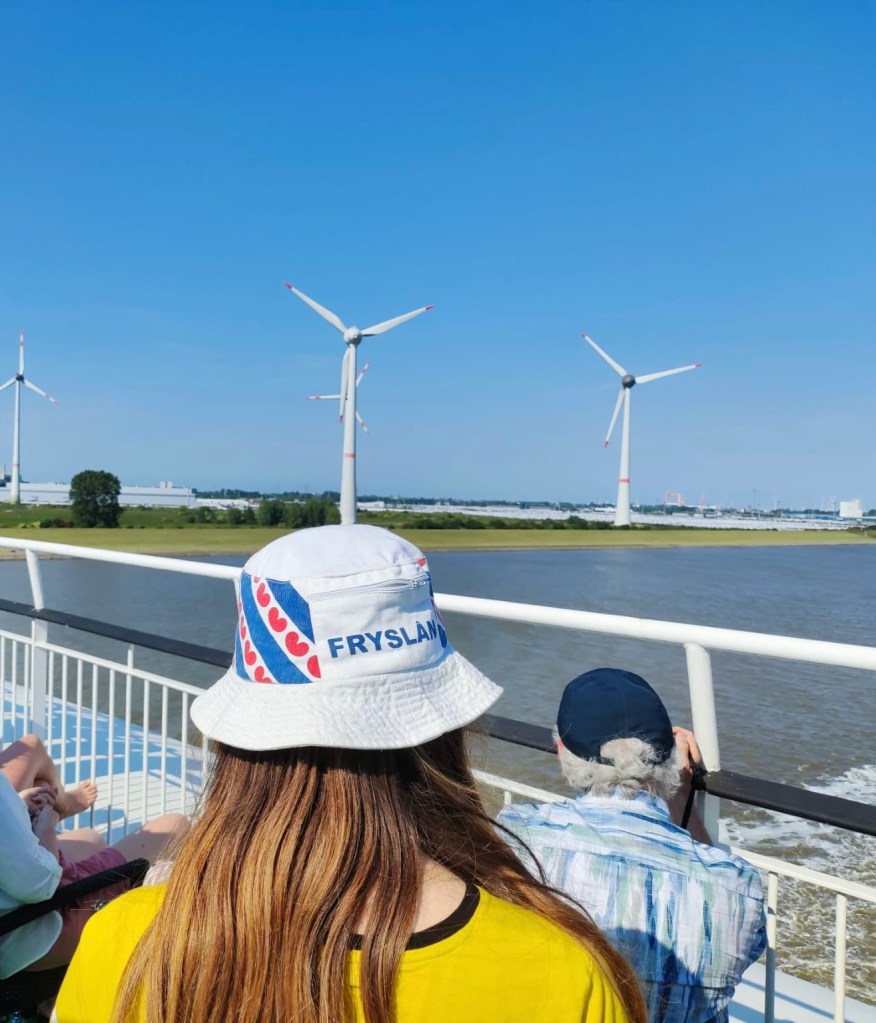
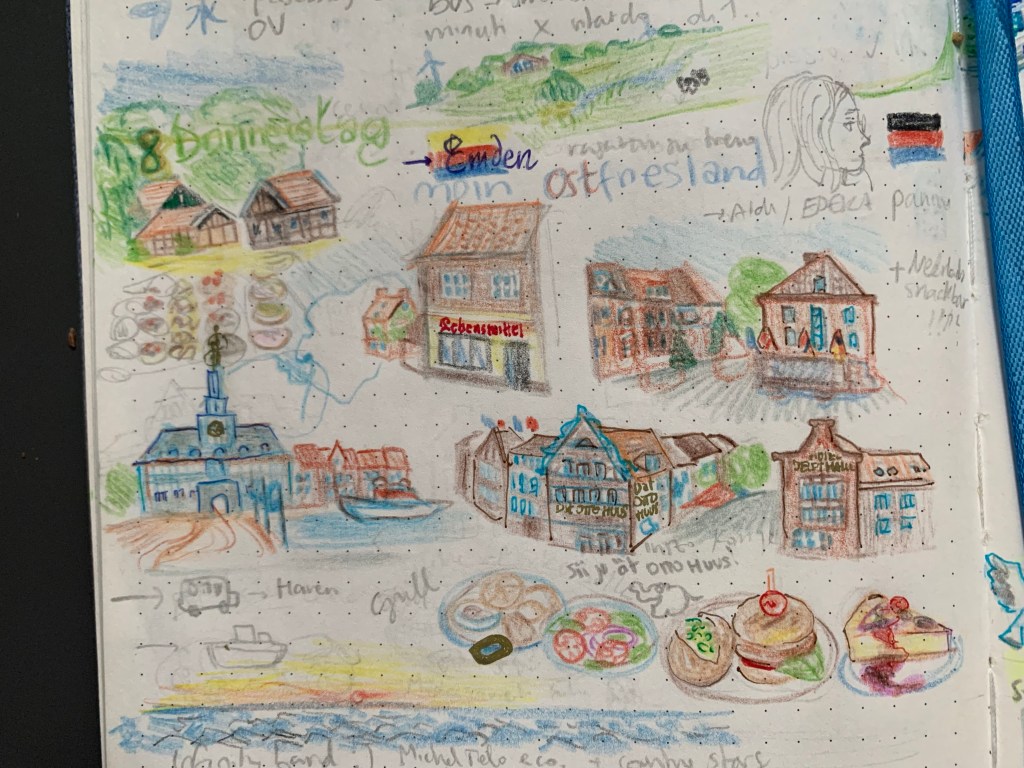
The Cruise was offered by Holland-Norway lines, and was first supposed to happen in February – but due to bad weather and various issues it got postponed, ending up in the best season for it!! The ship left from Emden, in Germany’s Ostfriesland region, so we also managed to see a piece of Germany. Pretty funny that I had a (Dutch) Friesland hat!
We then boarded, ate and assisted to a cover band, the ship also had a shop with Nordic chocolate/candy and souvenirs (read further to see what I got).
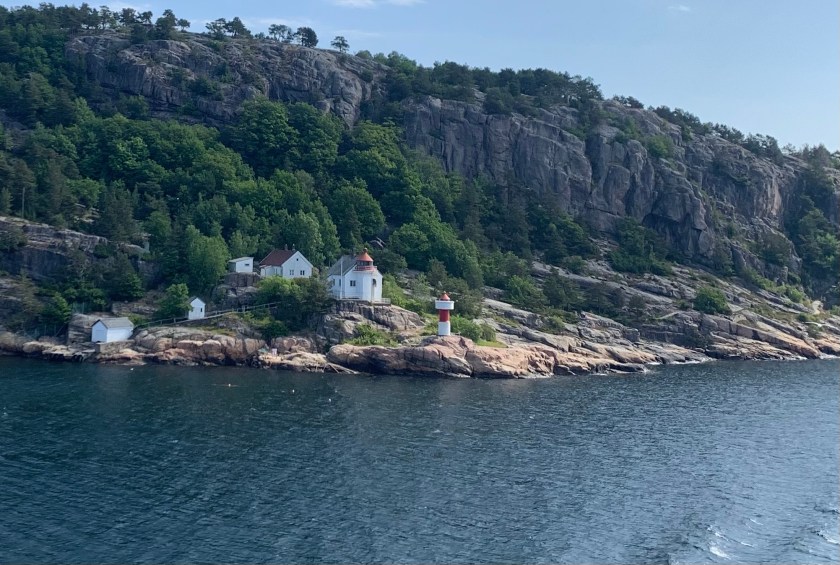
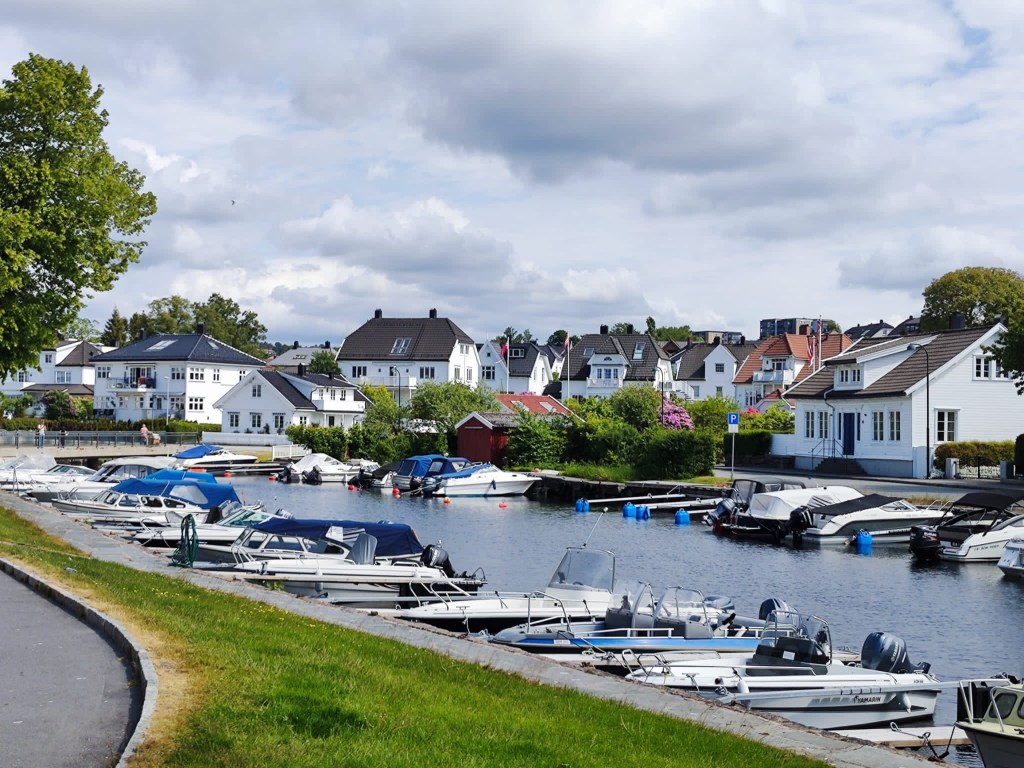
The following morning we were in Norway, welcomed by lots of rocky islets and perfect weather in the Kristiansand harbour.
Although the area has been inhabited since prehistoric times, Kristiansand was founded by the Dano-Norwegian King King Christian IV in 1641, with -sand referring to the sandy headland.
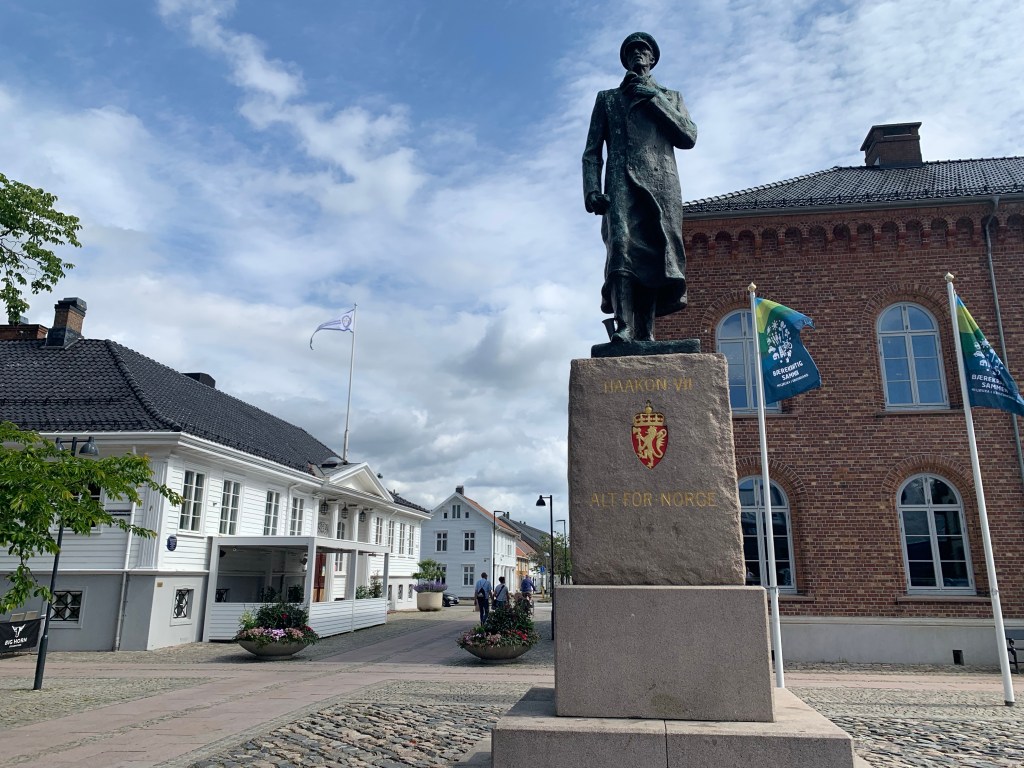
Quick rundown of everything seen in Kristiansand, and skolekorps flags! Also the Danish restaurant chain Skagen..
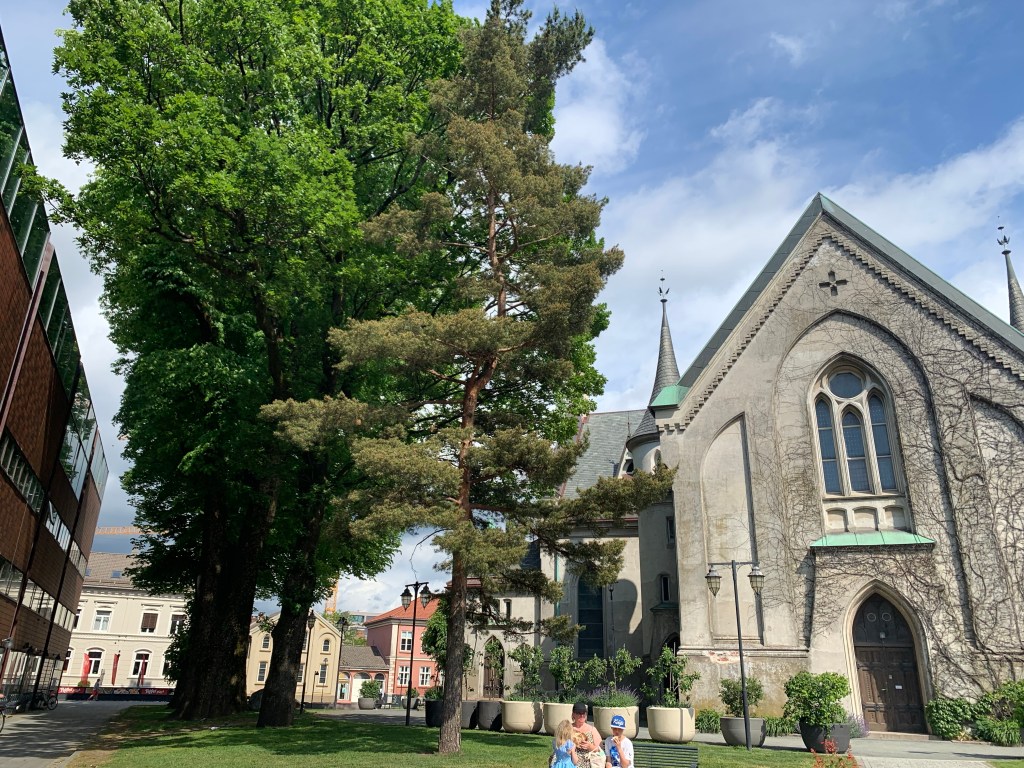
We first got to the square with Kristiansand’s cathedral, from 1885 and one of the largest cathedrals in Norway. there were a few people selling thrift stuff.
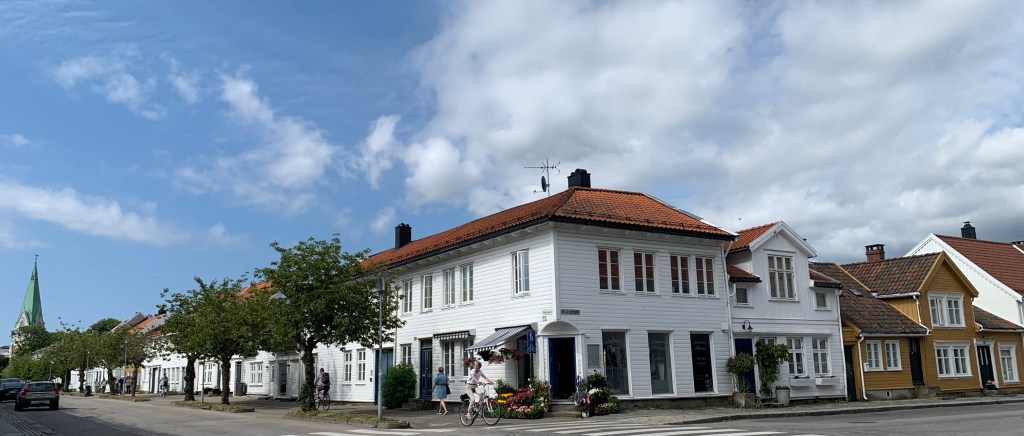
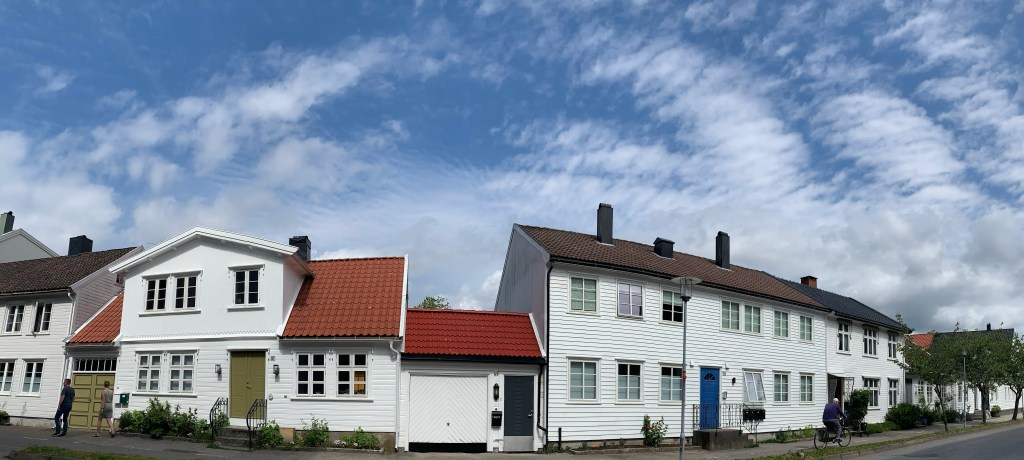
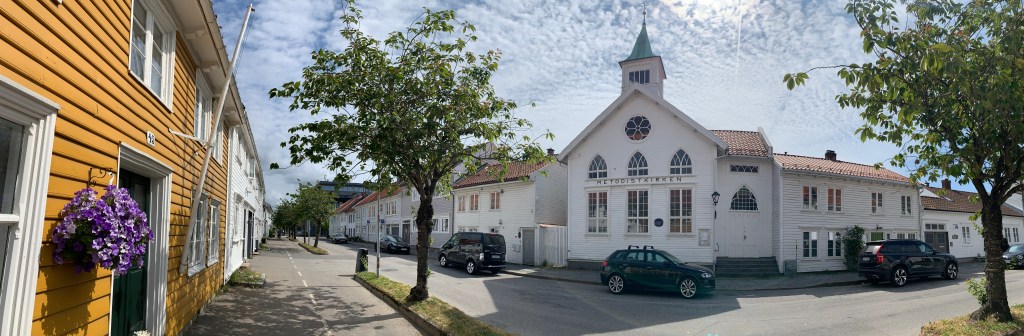
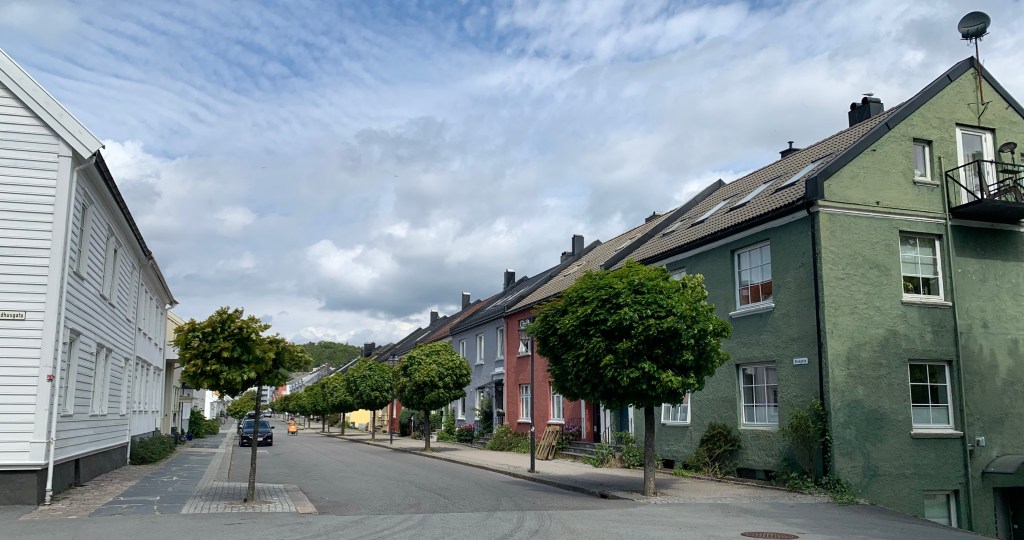
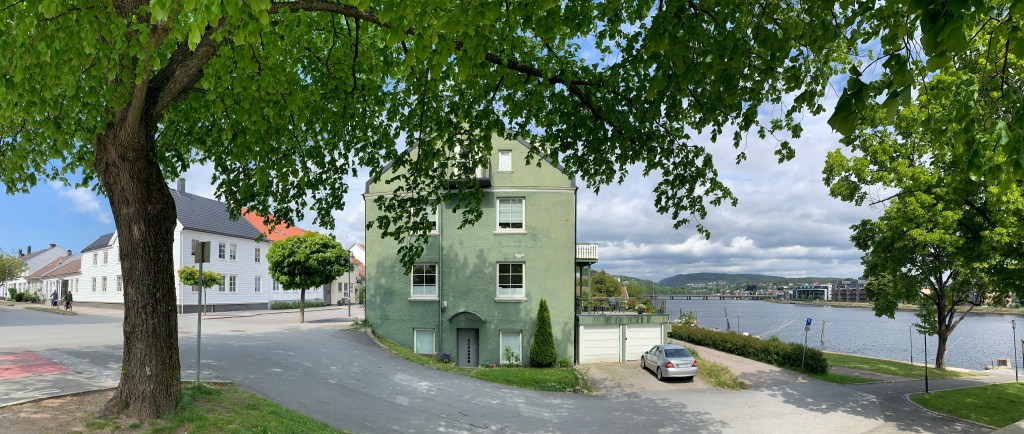
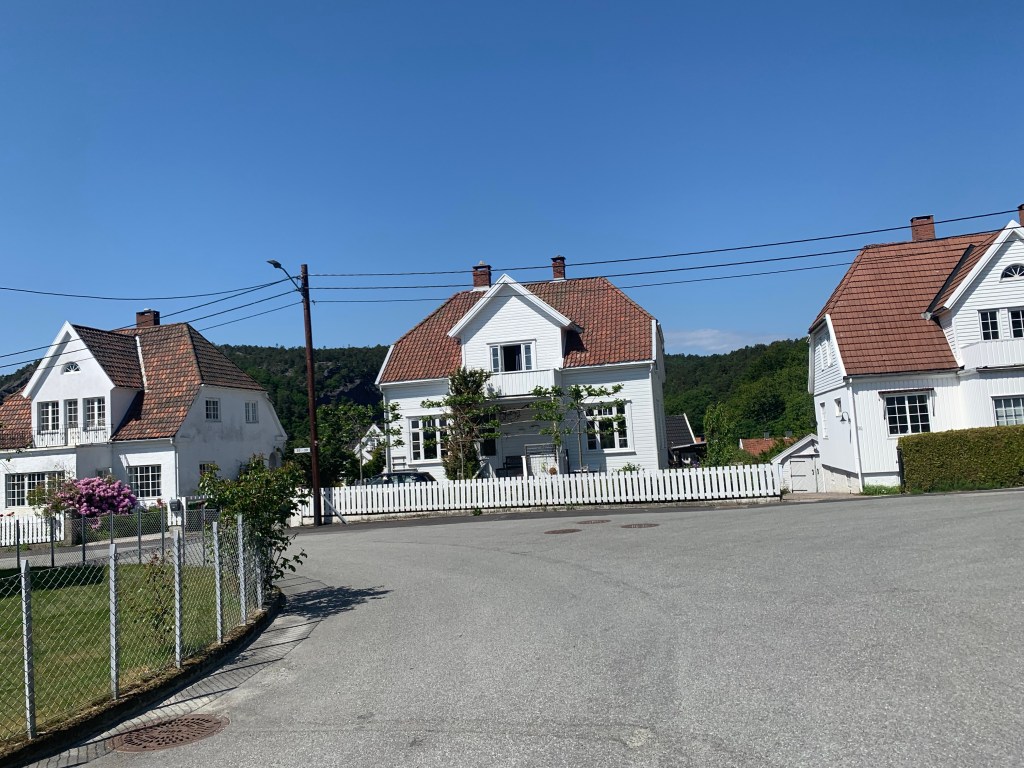
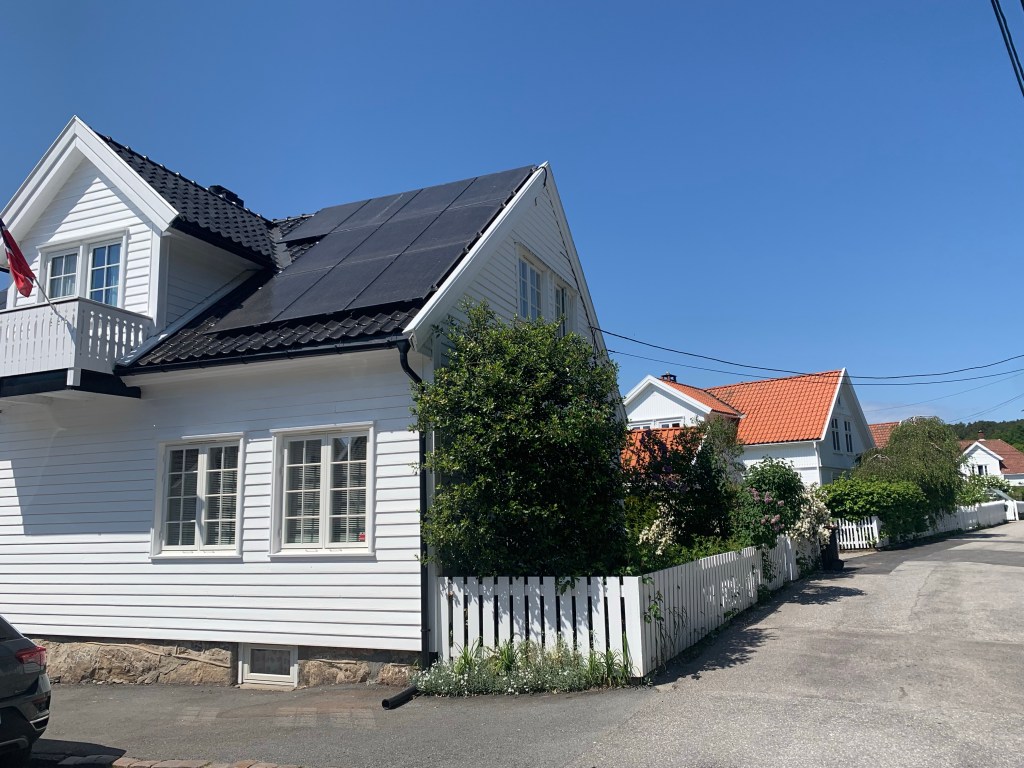
Then we proceeded turing around town, seeing all the lovely white wooden houses in Posebyen, the old town – the only part of Kristiansand surviving a great fire in 1892
We then crossed the bridge and got to another part of the town. At some point one man cycling by said ‘du mistet papiret!’ (you missed a paper piece). My first Norwegian interaction..
Then we happened to run into a skolekorps event! Kind like marching bands?
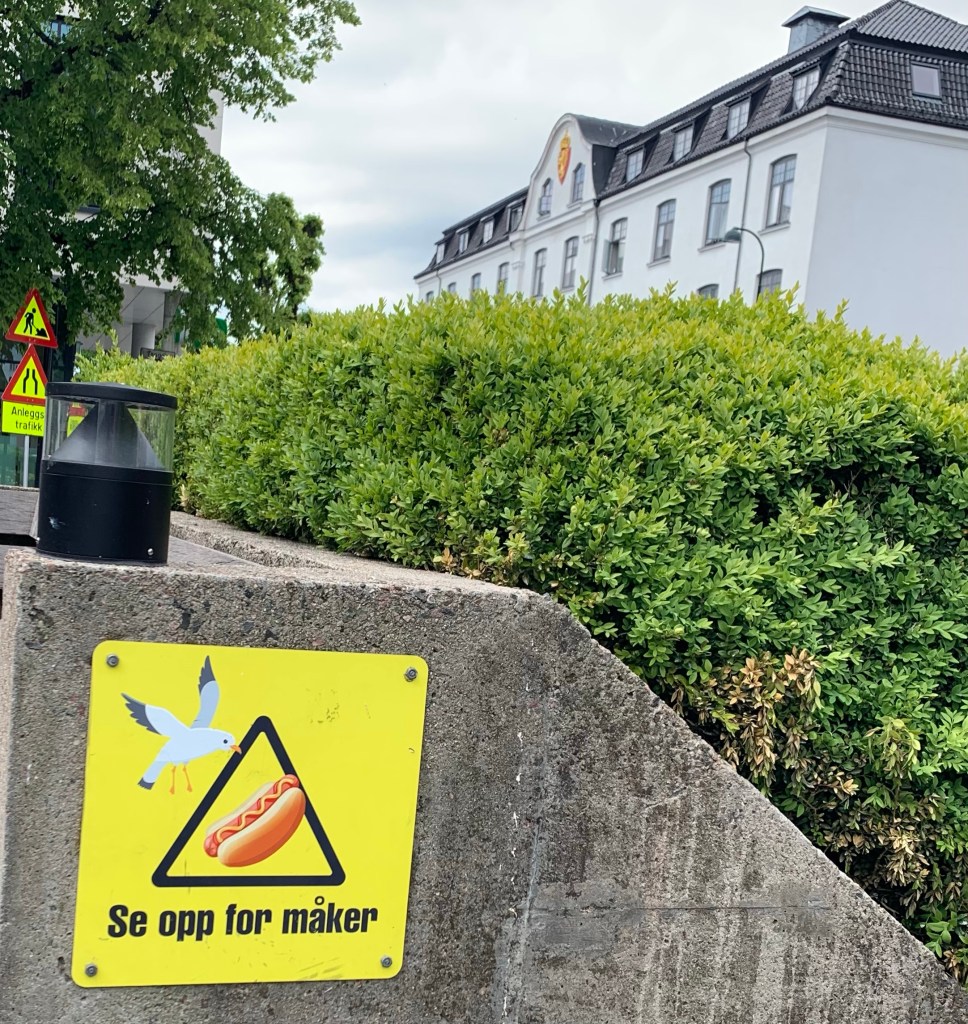
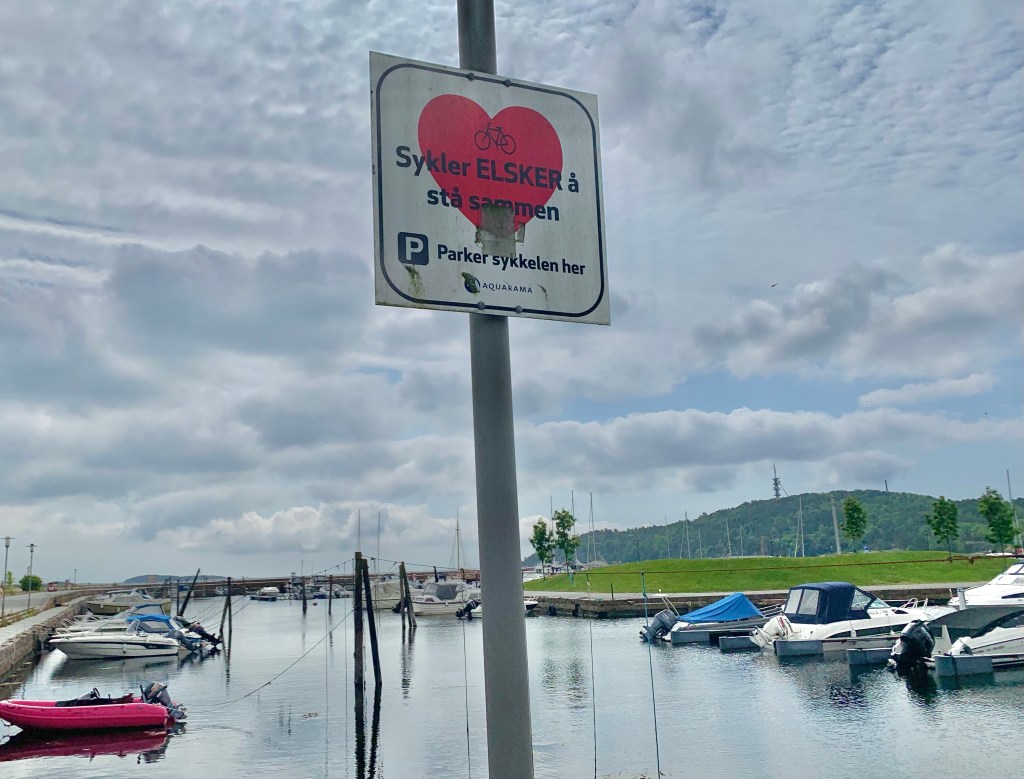
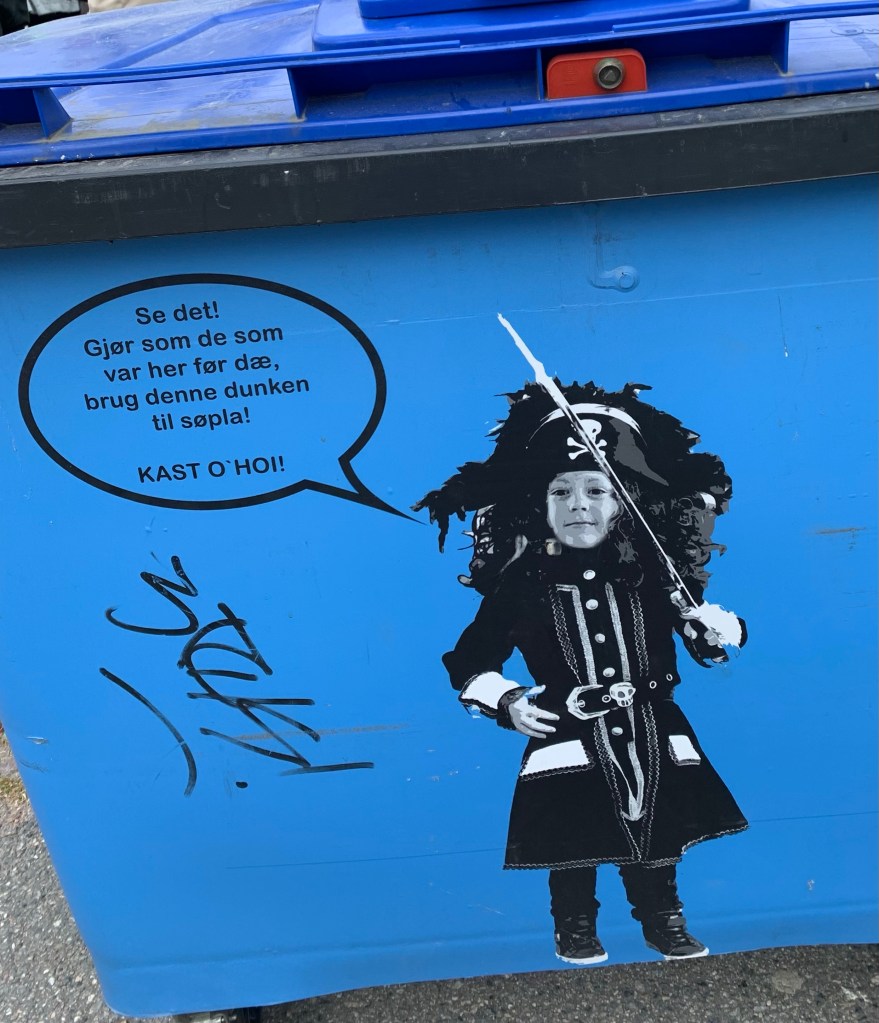
On the way, I saw some funny signs:
beware of (hungry) seagulls, bikes LOVE to stay together and just an invite to throw rubbish in the bin written in (I assume) Kristiansand dialect (dæ instead of deg)
We got into various supermarkets: Rema, Kiwi, Xtra.
Norwegian Supermarket, souvenirs and a small hike
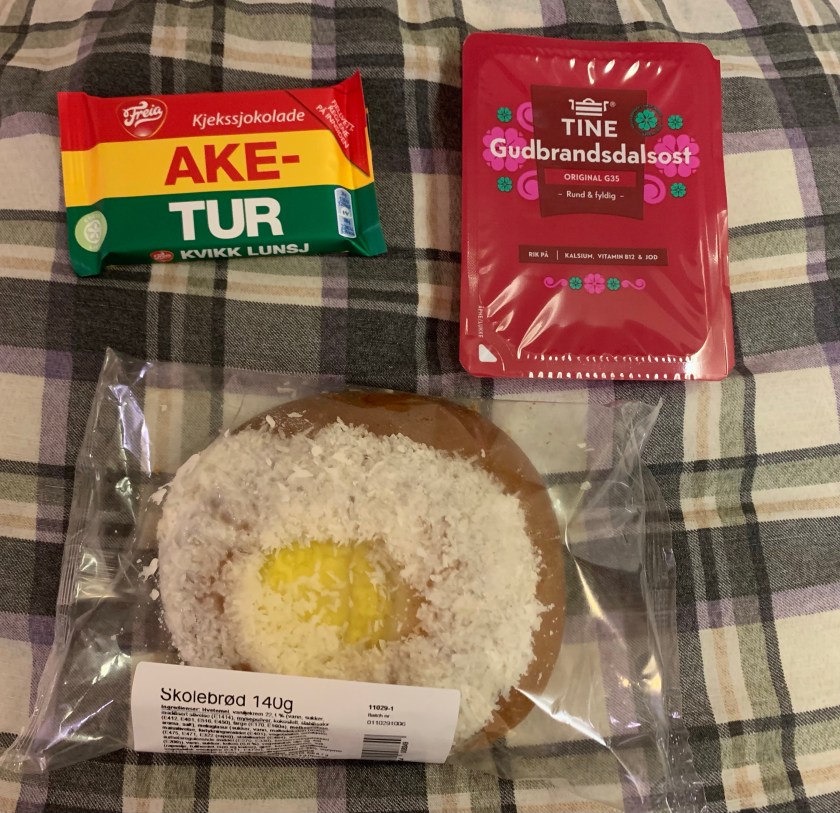
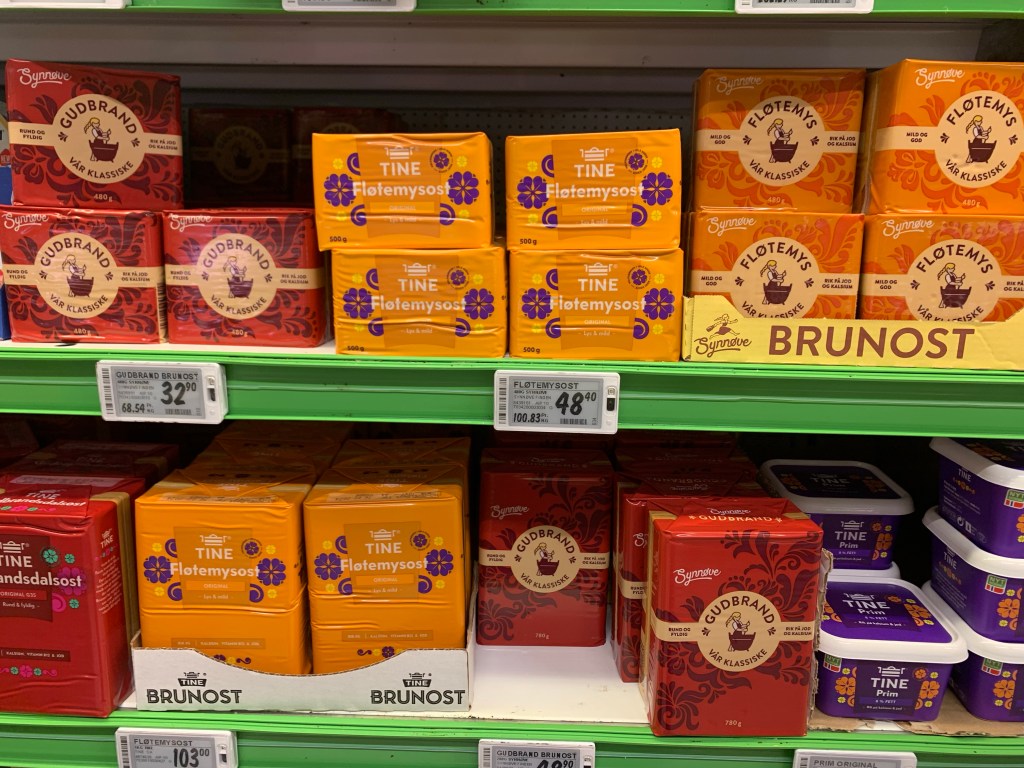
Of course, I had a few things to get from Norwegian supermarkets and bring home. Among these were Brunost, the beloved Norwegian brown goat cheese, and the iconic hiking chocolate Kvikk Lunsj, the latter mostly to be able to say I had tried it (Spoiler, it is basically the same as a kitkat with tips for a safe hike, sorry Norwegians).
I had already tried brunost during my Denmark workaway trip, knowing it was delicious, and was looking forward to eating more. I am sweet tooth and got a skolebrød as well.
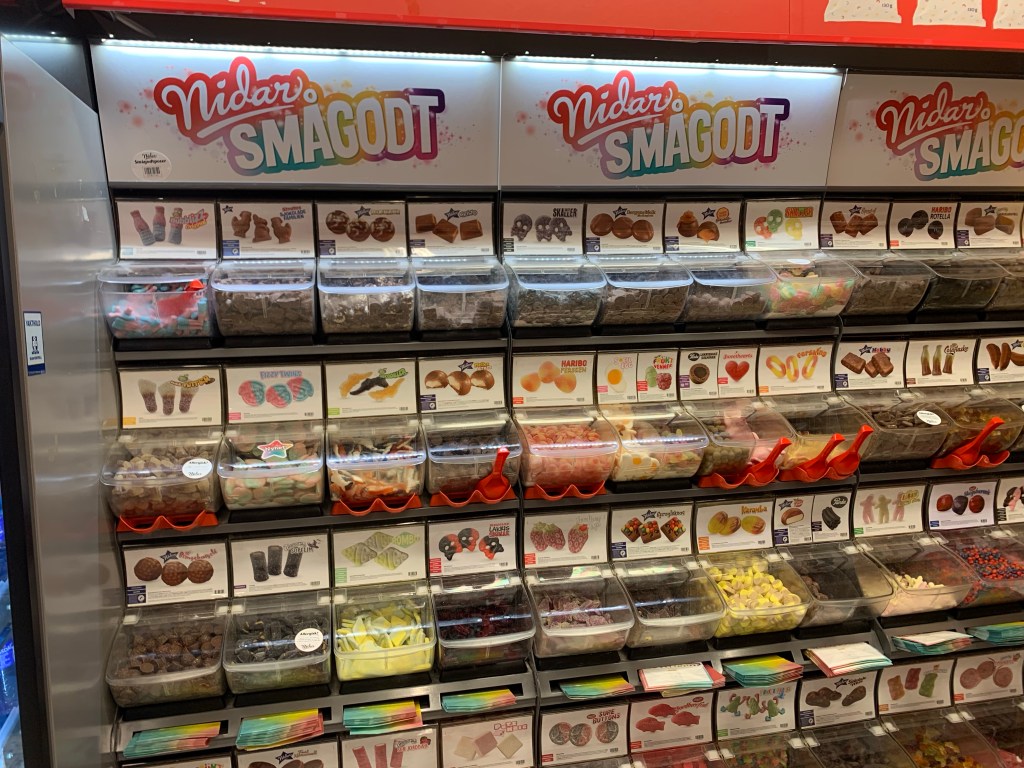
Typical Nordic bulk candy section at the supermarket, smågodt in Norwegian
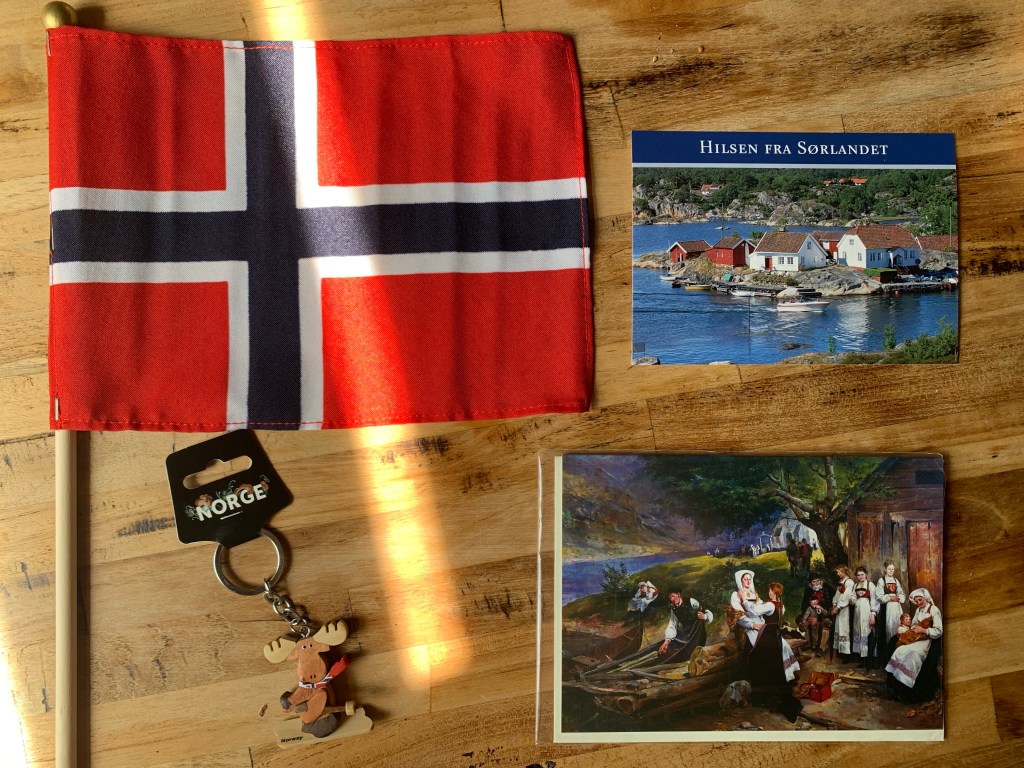
Besides supermarkets, I of course did some souvenir shopping: a skiing/moose keychain and a flag, with a long stick, like those people wave in their hands on 17 Mai!
At a bookshop i got a postcard of Sørlandet and an art card depicting women in bunads.
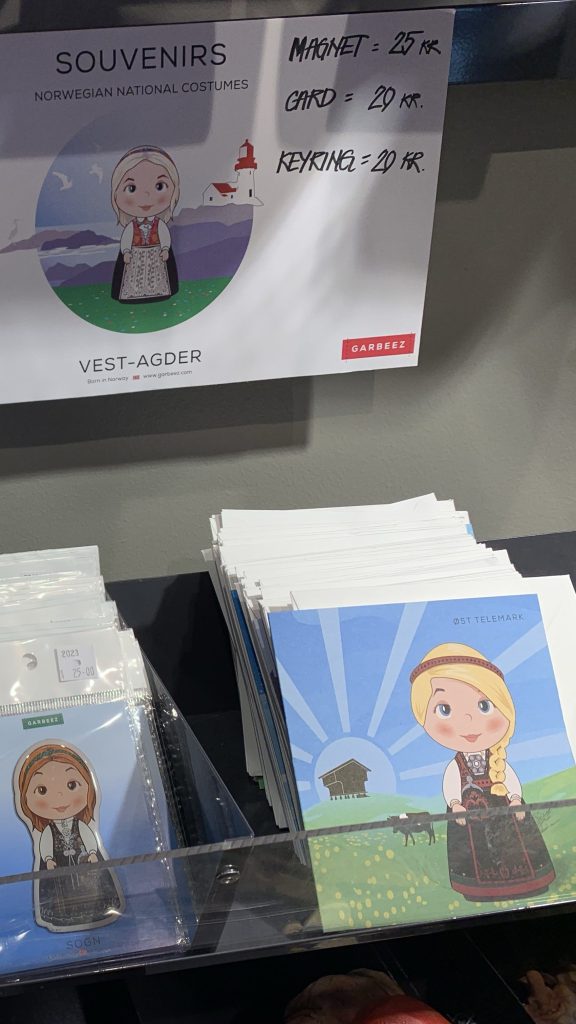
The shop was also selling of characters with bunads of given areas by Garbeez, didn’t get any but the idea is really cute!!
You can read about Norwegian bunads, Norway’s national dresses and how each district in the country has its own costume
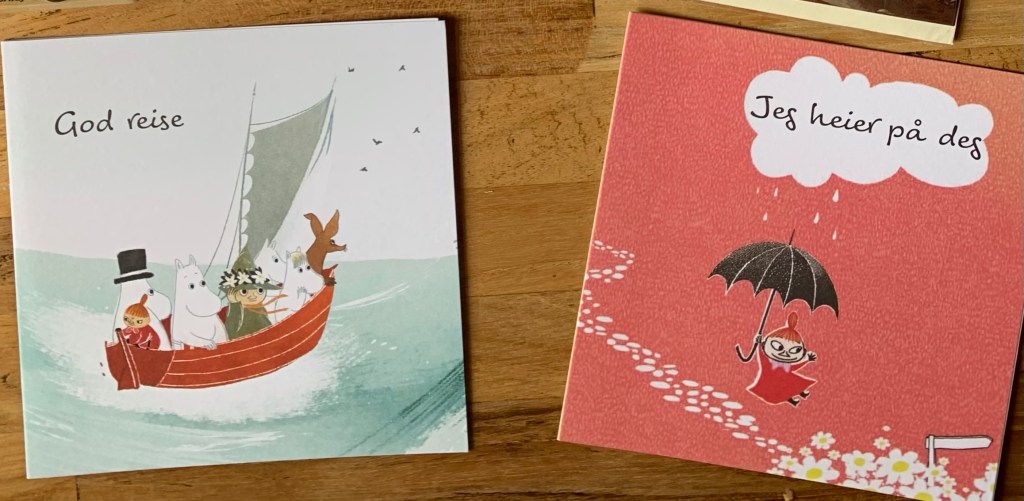
Doesn’t really count as souvenir but I had to get a couple of these lovely Moomin cards!
They say ‘have a nice journey’ and ‘I’m rooting for you!’
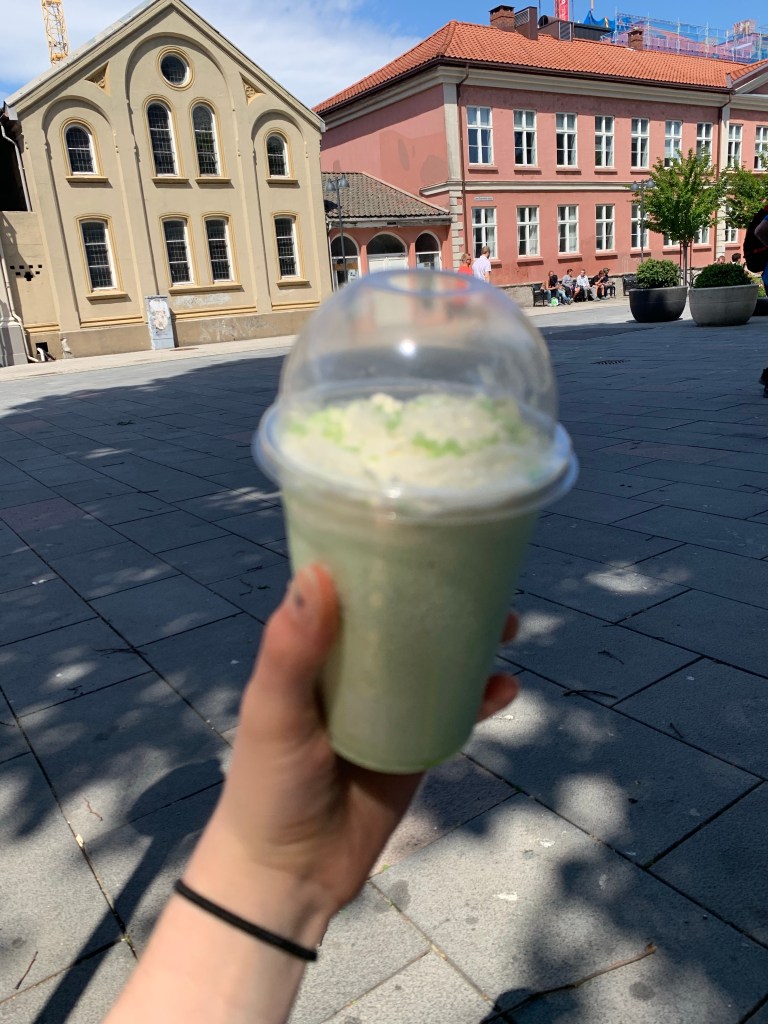
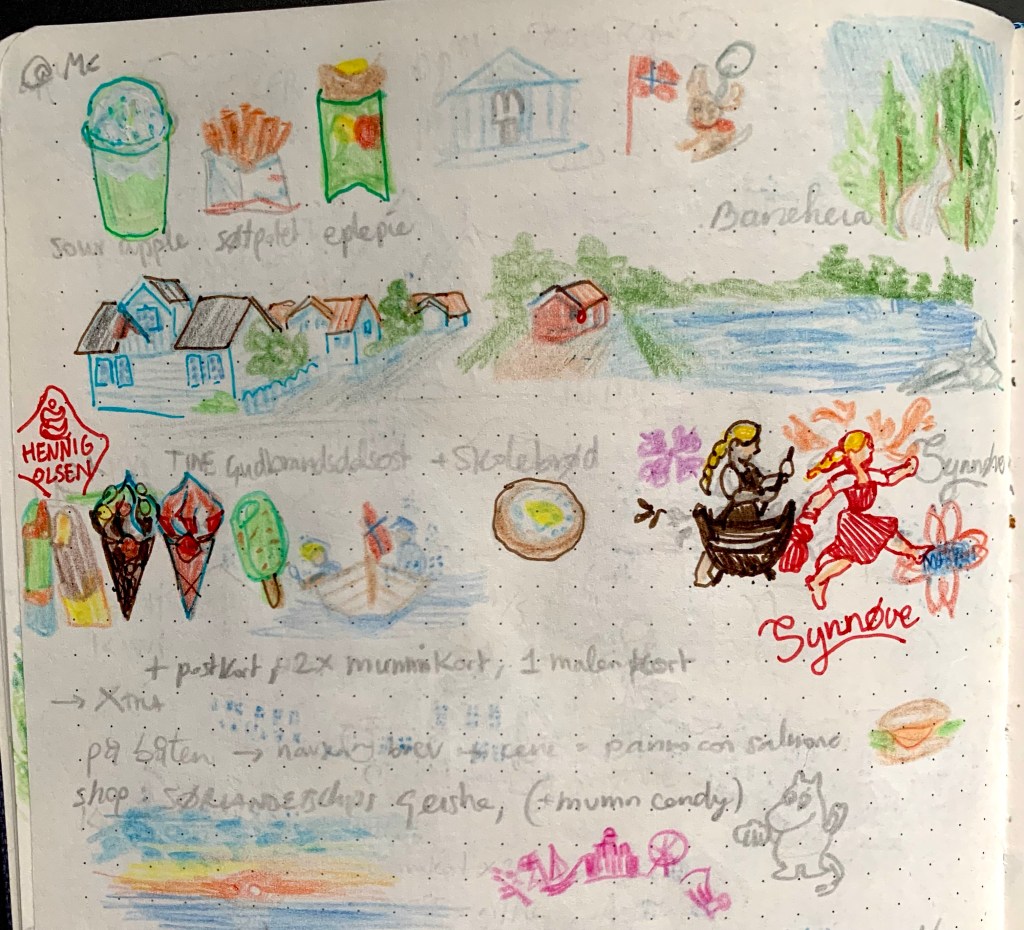
One thing I’ve been low-key obsessed about is checking out other countries ‘custom’ Mcdonald-s things – in Norway i found the sour apple milkshake, absolutely delicious! Also got sweet potato fries and their apple pie (which is more like a strudel). Nothing very Norwegian but I had not tried them before.
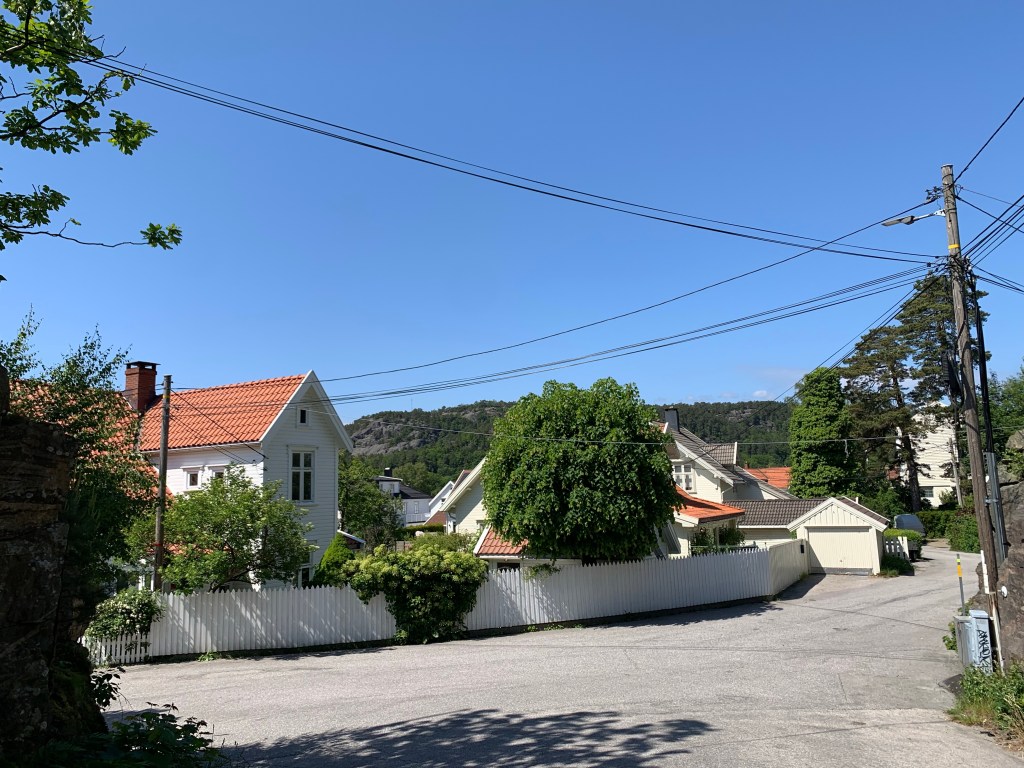
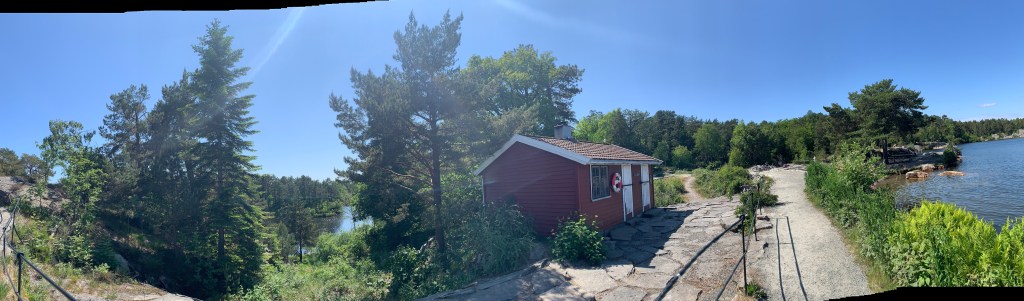
Then walked up finding another cute neighbourhood, from which you could enter the forest.
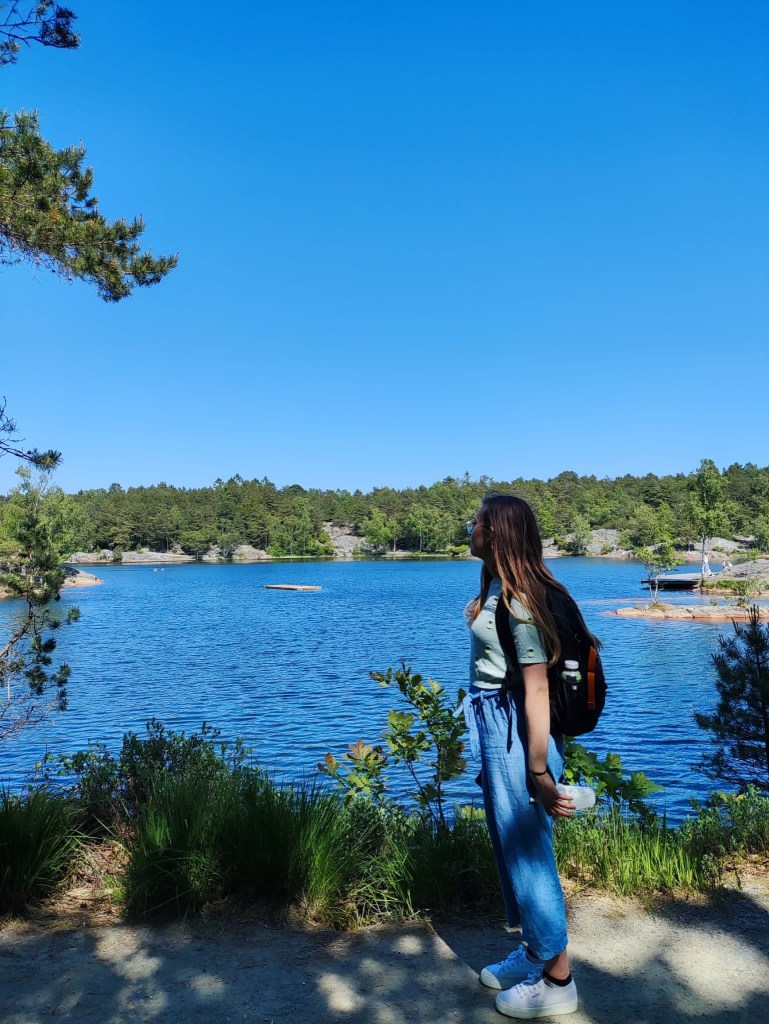
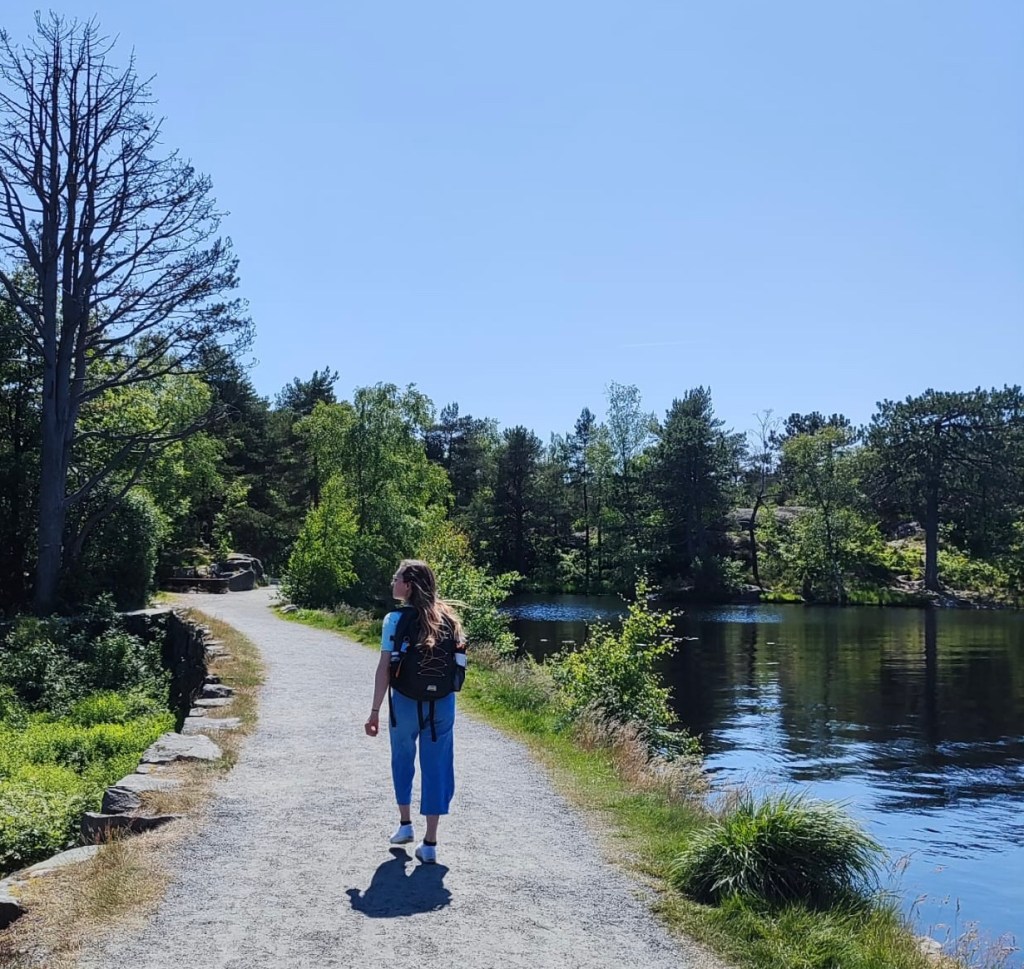
We took a path in the forest, and found a nice lake with people bathing as well, great place!
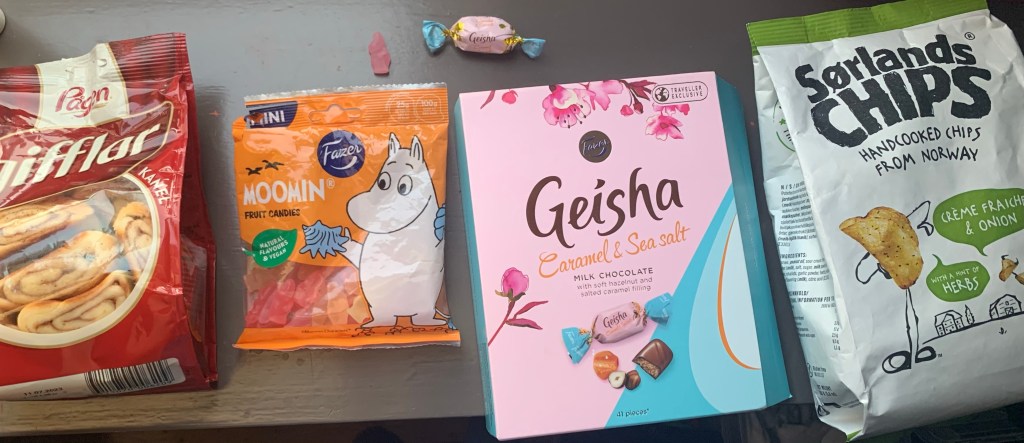
I also purchased a few things on the ship on the way back: Finnish chocolate Geisha, Norwegian Sørlands chips, Swedish gifflar (sort of mini cinnamon buns), and moomin candy.
That was all for my first Norwegian adventure, Ha det!
The Norwegian national costume, to be seen in all its glory on 17 may, and its old but not so old tradition
A bunad (plural bunader) is the Norwegian national costume. Bunads are among the most beloved folk costumes in the world, and the most worn in Europe. Other Nordic countries have their own folk costumes as well, but they are much less common and strictly connected to folk traditions as folk dances. Read about Swedish folkdräkter.
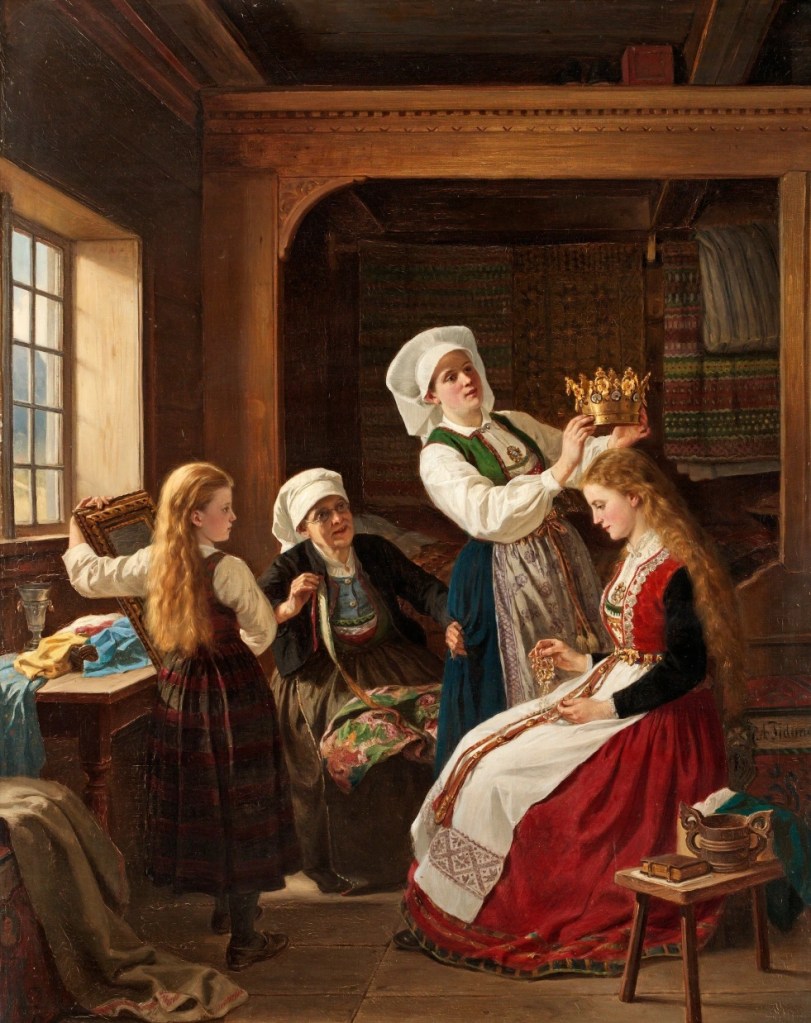
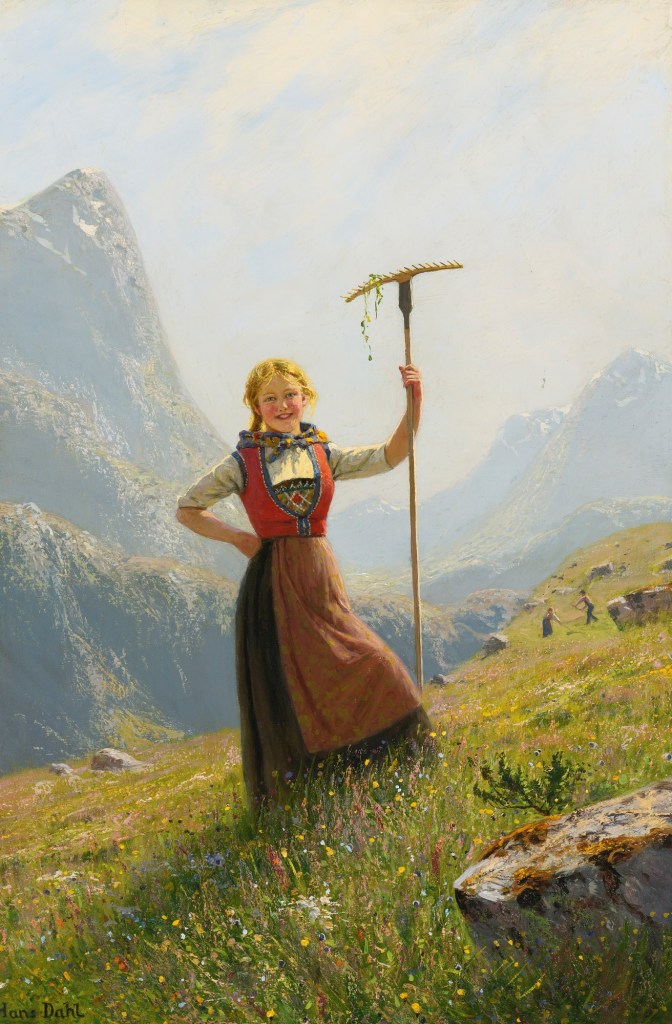
In Norwegian there’s a distinction between a Bunad and a folkedrakt (“folk costume”) , with the latter specifically used for costumes from the past. The word bunad, from Old Norse búnaðr began to be used in the 20th century, as the national costumes gained popularity with the rise of the National romantic movement in the 19th century, with artists as Adolph Tidemand and Hans Dahl depicting them.
Why bunads are so popular in Norway
After national romanticism, the use of bunads increased in the 1920s, but it was after the war that the national dress became even more popular, as a symbol of free and indepent Norway. First and foremost on the national day, and then for any festive occasions – as christenings and weddings. It is now officially seen as a gala attire, which can be for instance worn at the opening of the Stortinget, the Norwegian parliament. The best day to admire Bunads remains 17th May (Norway’s National day).
Young adults traditionally receive their bunad on their confirmation, as 15-year-olds, and it will last their entire lifetime. Crown princess Alexandra had hers sewn by her grandmother the Queen for this occasion. Purchasing a bunad costs thousands of euros/dollars, although lately low cost “China bunad” emerged.
Around 80% of Norwegian women owns a bunad. It is less common for men to wear it, with 20% having one, but the number is rising. In 1999, Pakistani-born Stortingen member Rubina Rana wore a bunad as the first person with migration background doing so in a 17 mai parade.
The diverse bunad designs
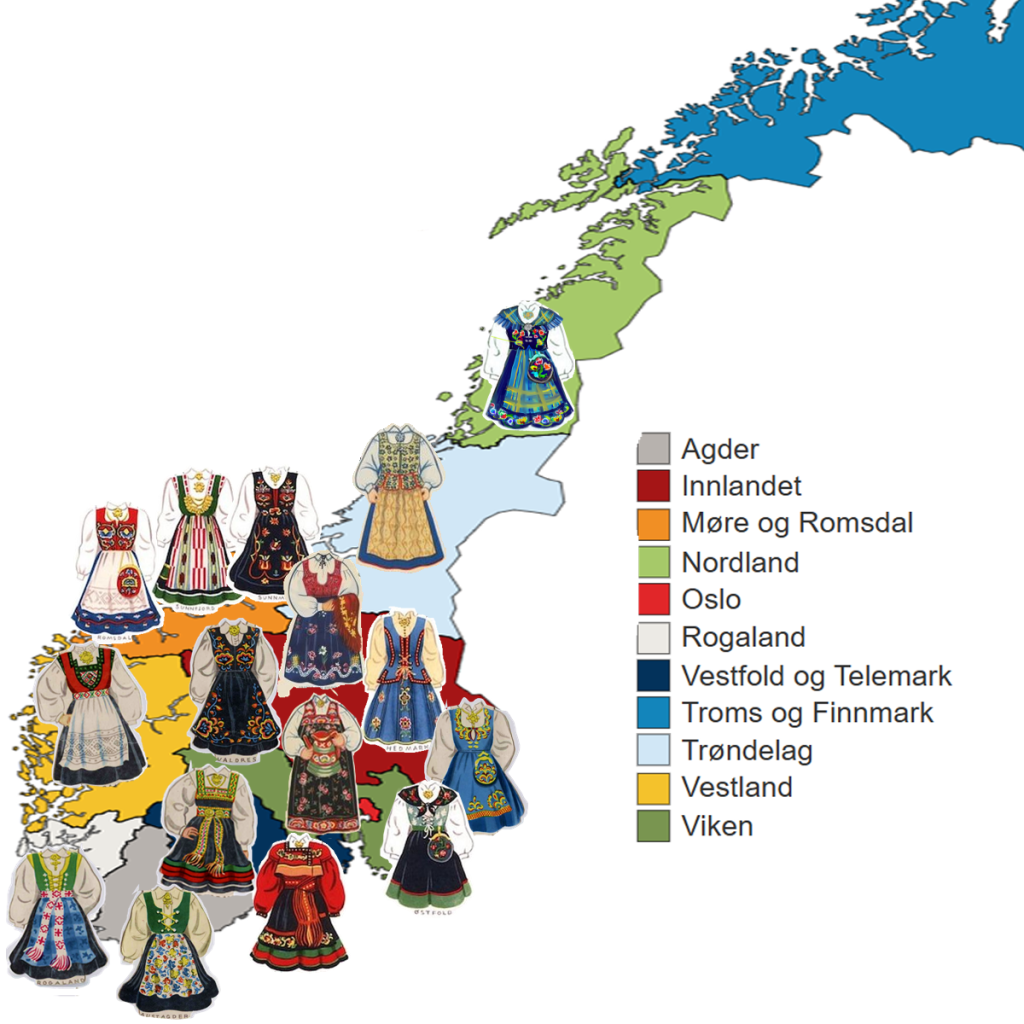
Norway’s fylker (counties) with some bunads from them
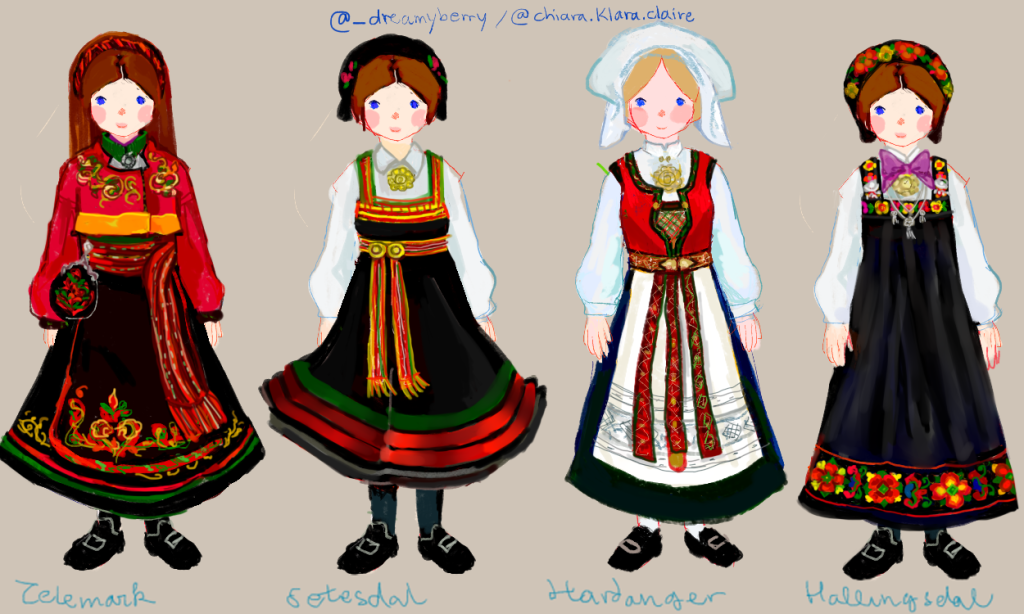
There are around 450 bunads in Norway, with each district having its own designs. They can be grouped into 5 categories of Bunads depending on how they were created, from traditionally in use to entirely recounstructed.
At the beginning of the 20th century Norway had just become fully independent and many were trying to promote Norwegian traditions and make the national identity stronger. In these years Bunads were being redesigned from old costumes with Hilda Garborg as leading figure for the movement. She published a very successful book called Norsk Klædebunad in 1917.
Bunads with the oldest tradition
The Hardanger bunad, was established in its use and is retained as the most Norwegian, depicted in art and easily recognisable. Setesdal, Hallingdal and Telemark are the other districts with the oldest and most established bunad tradition.
More recent bunads
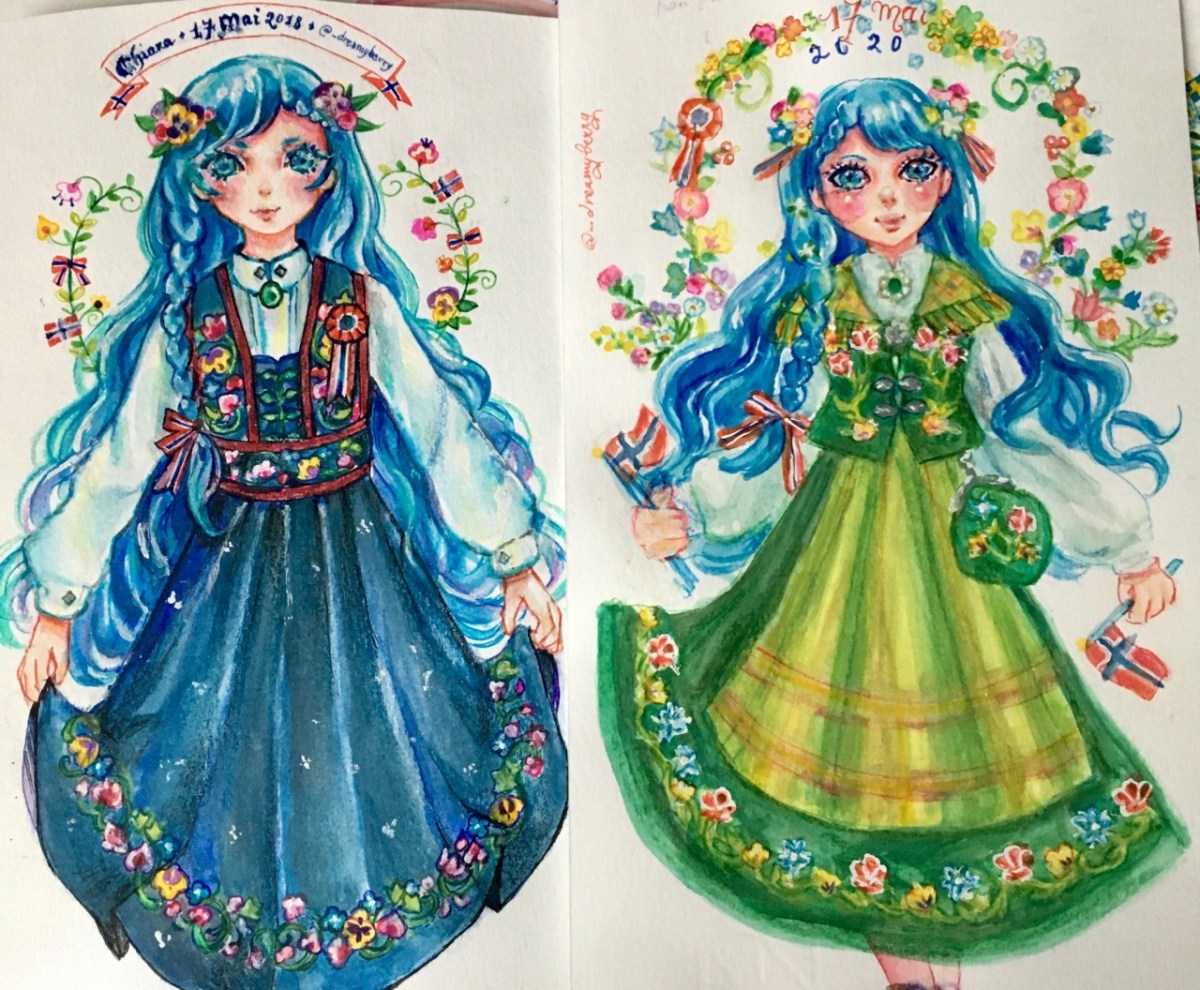
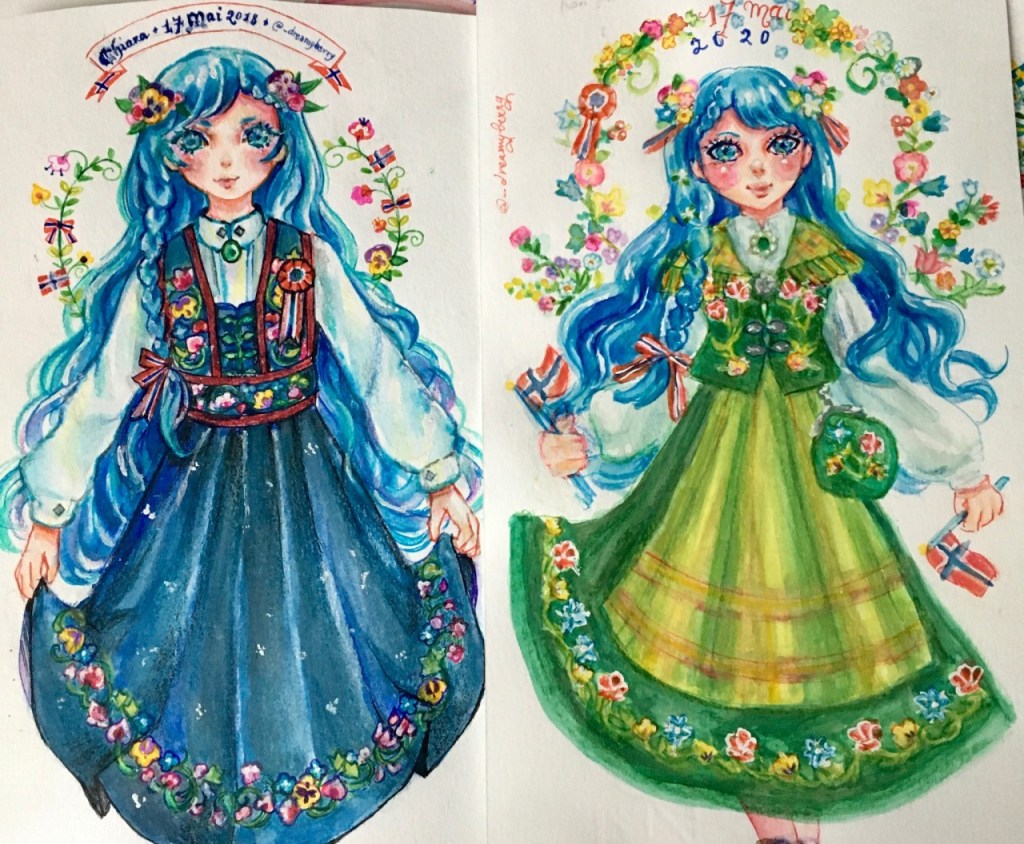
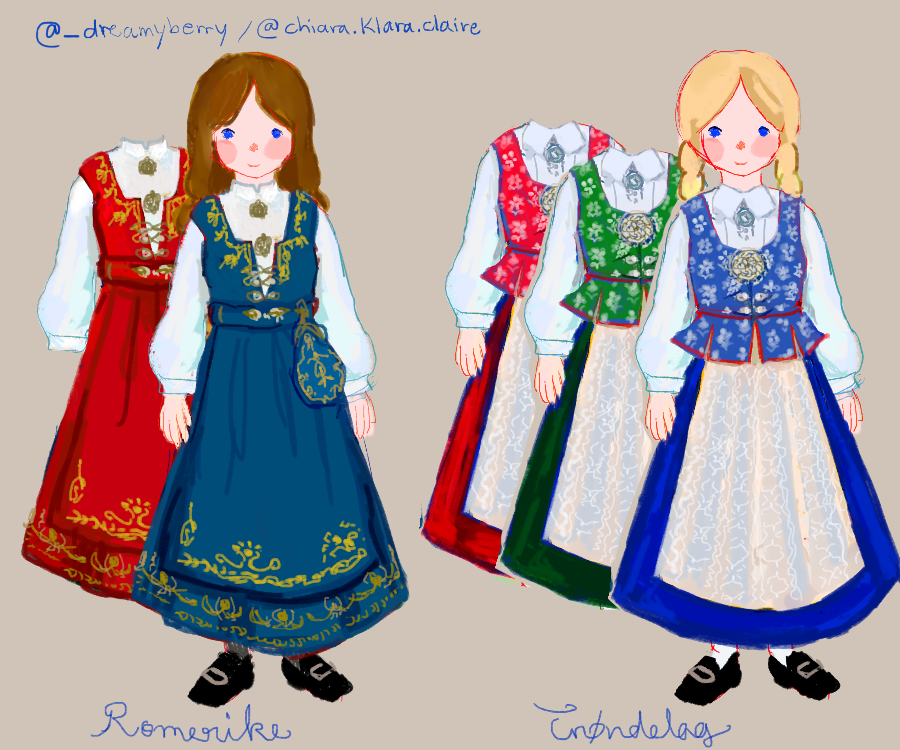
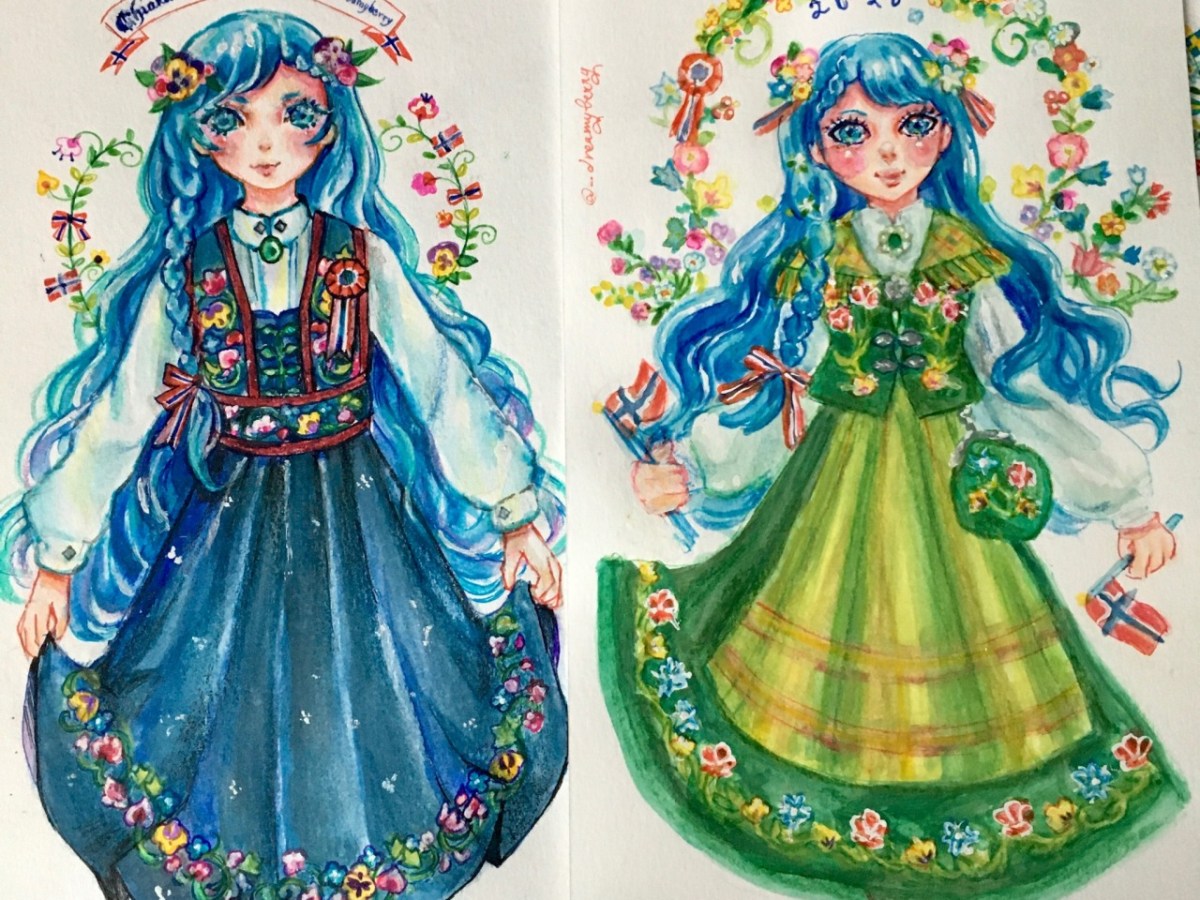
Flower embroideries are very common. Present among others in the Nordland bunad (considered by many Norwegians the prettiest bunad) and Gudbrandsdalen bunad. The same design can also come in different colours, with the Nordland bunad existing both in green and blue and the Trøndelag and Romerike bunads in blue, red and green.
Left to right: my flower-themed original character with by Gudbrandsdal and Nordland bunads. Romerike (South-East Norway, near Oslo), Trøndelag (North Norway)
Accessories of the Bunad outfit
Part of the bunad outfit is Sølje, hand-made silver or gold jewellery, which is very important and gets bigger with older one gets. Silver was believed to have magical powers!
Headdresses, as bonnets, used to be important as they indicated an individual’s social or marital status, but big ones as the hardanger bonnet are now scarcely used.
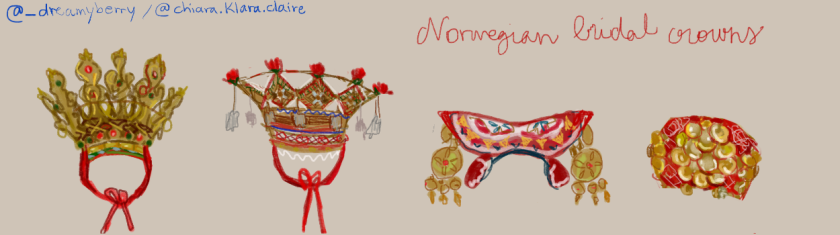
An elaborate with bridal crown can be used for a traditional Norwegian wedding, it was a sign of virginity in connection to the Holy Virgin. The bridal crown tradition goes as far back as the Middle Ages. Like bunads, there are many regional variations, which you can see on Whigofwhimsy.
The silver crown, present in many regional variations, Hardanger perlekrune, Voss, Setesdal
How graduating from high school is like in Sweden, Denmark, Norway!
Hats and buses
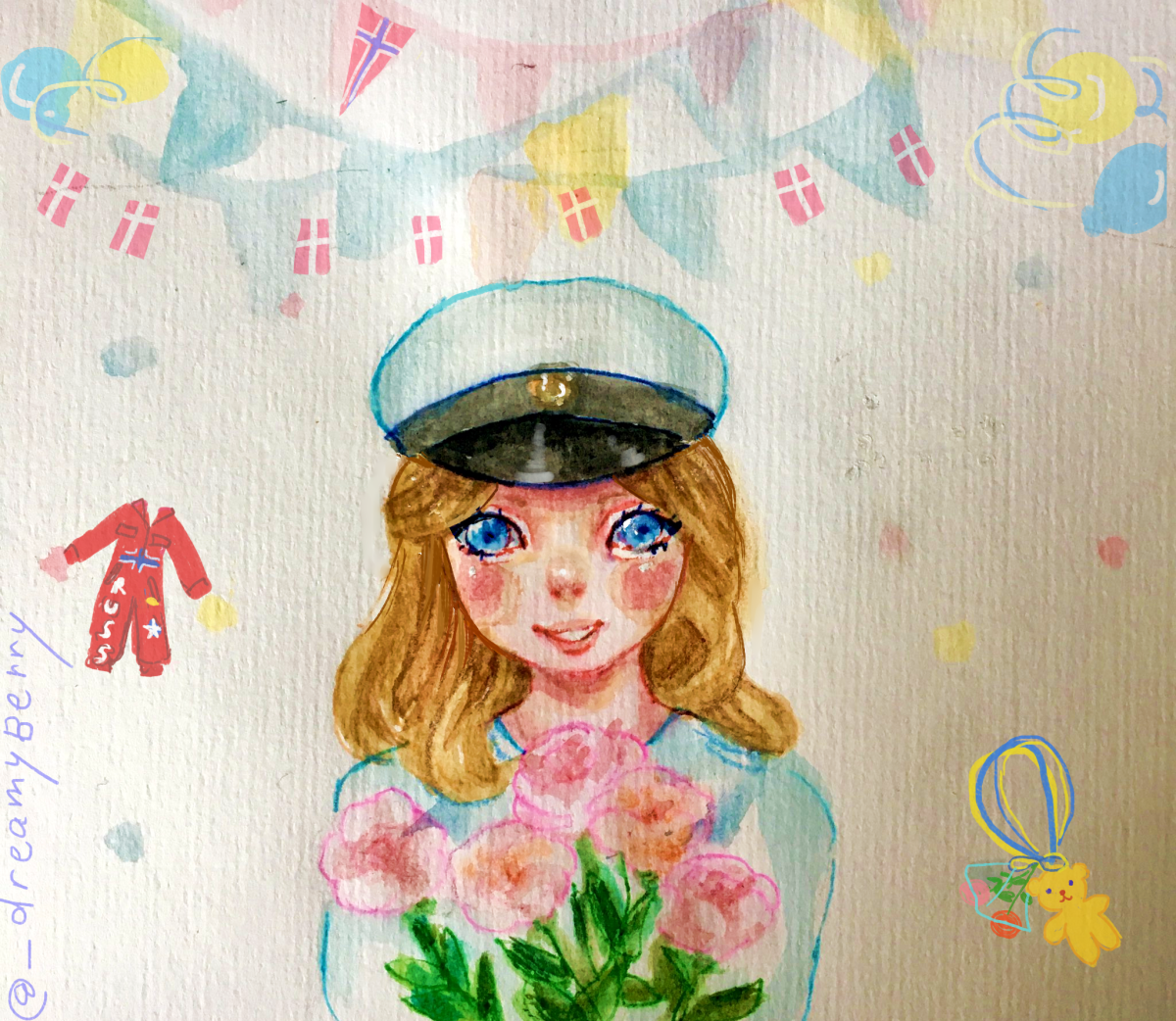
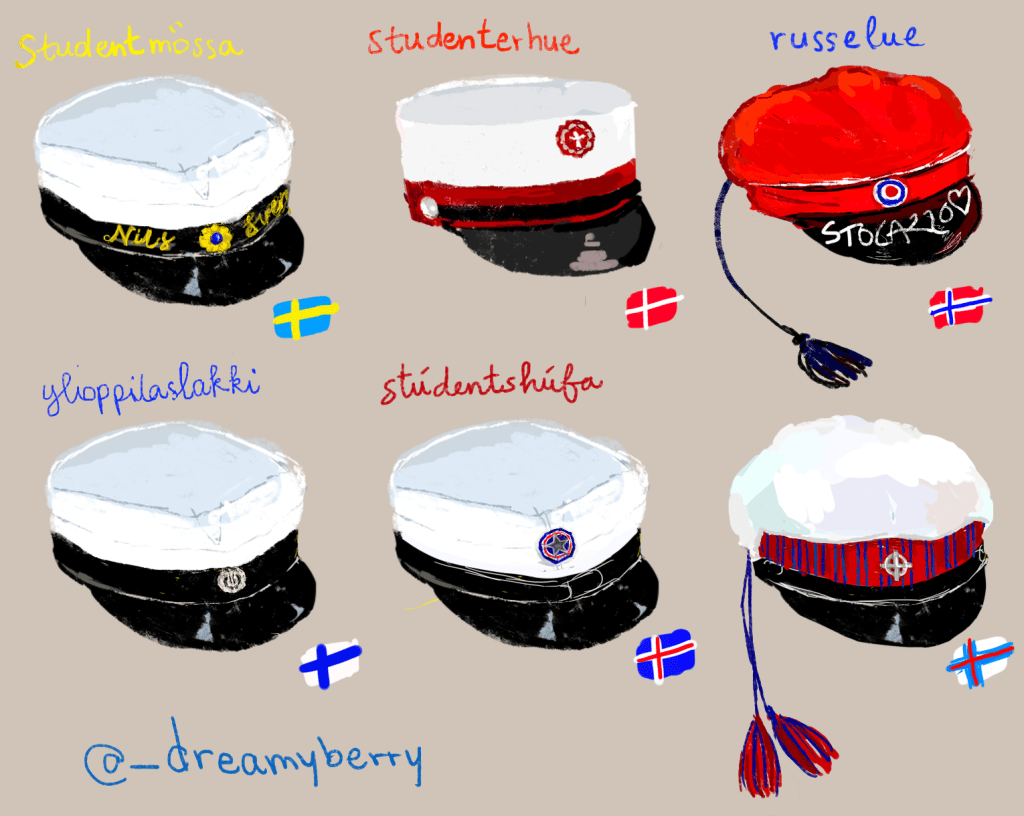
the symbol of High school graduation is a hat resembling a ship’s captain cap, the first time I saw a Swedish graduation celebration picture I was pretty confused about those hats, but it’s actually a tradition inspired by German students, spreading it to Nordic countries in the 19th century.
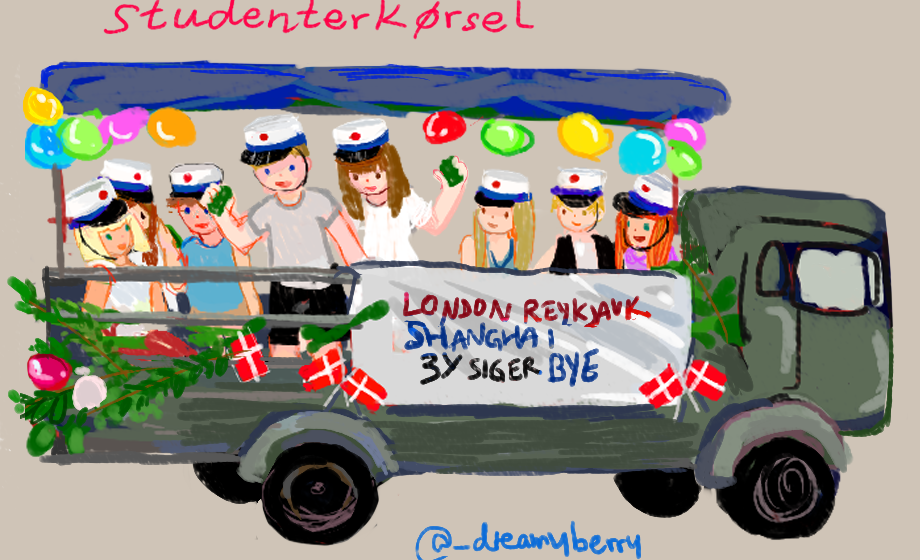
Another common thing in Scandinavian is that graduates celebrate around town on rented buses or trucks (sometimes saving up years just to rent one), generally playing loud music, drinking and just partying!
Denmark 🇩🇰
Danes have an oral exam as final. you have to decide who from your family is placing the hat, studenterhue, on your head, when you step out from it. It’s the norm to wear the graduation cap for at least 2 weeks, It is courtesy that people they meet on the street congratulate them, even if they don’t know each other.
The ribbon on Danish caps was originally only either blue (Mathematics students) or red (Arts students), it now comes in many different colors depending on the length of your education and which school you went to, see all possible variations on Alt.dk. There are lots of rules involving the studenterhue:
You can’t wear your cap before your last exam (it would bring bad luck)
your gradehas to be written in the center of the hat, and friends and family can leave autographs and short notes in it
friends bite in the shadow for good luck.
the students with the biggest and smallest hat size, and the ones with the highest and lowest grade average have to buy a box of beers for the class
the hat has to be cut in different ways if the student has drunk 24 units within sunrise, if he vomits, and so on to the point a which if the student goes to the hospital because of too much alcohol the whole shade is cut off.
more rules are related to having sex (heart on the sweatband if with the partner, lightning on the rim if not in a relation) , kissing someone (if same gender the cross has to be turned), breaking up (metals going off), taking a swim with only the hat on (wave in the rim)
If the student has been awake for 24 hours then the hat must be turned around (shadow in the back).
You can see more on this site dedicated to studenterhue rules (in Danish)!
The Studenterkørsel – student drive – is an important part of the celebration, renting a truck decorated with beech branches to party, drink and play loud music on (here‘s a site where the trucks & stuff can be arranged). It drives to each student’s home for around 15 minutes, for a short visit where parents give snacks and drinks before the next destination.
This can last one or two days and of course also the studenterkørsel has its own rules, among which running after the truck if you get an A in your last exam, and learning a battle cry to scream at passing student trucks!
Everyone greets and sends their congratulations when they see these trucks. On my very first day in Denmark Student buses were driving around (slowing down the bus I was on though, haha) and following my friend’s example we waved at them, flying my welcoming flag! It felt quite cool!
Sweden 🇸🇪
In Sweden there’s one big day, Studenten, but the celebration starts around the end of April, where students organize games which will give points deciding who will be the first student running out of the school on the gruaduation day; it can be anything from chill to embarrassing things to do, though maybe not as wild as what you’ll read for Norway. In May, there’s one day called Mösspåtaggning, on which students dress up nicely with their hat Studentmössa on, and with classmates they go to school and then to a restaurant or bar, celebrating that one month is left until the studenten time.
The big day of Studenten may vary depending on the school, but it is usually around 30th May to 15th June, with 6th June (Sweden national day) being the pitch.
This day starts with fellow students meeting up very early – between 4 and 7 am for the Champagnefrukost, Champagne breakfast
At 8-9 it’s time to leave for school, with some proving they can keep up with the celebration despite being drunk.
Around 10 everybody listens to the principal giving a speech, some students get diploma for things as All-A-Student etc.
At 11-12: photo shootings of classes!
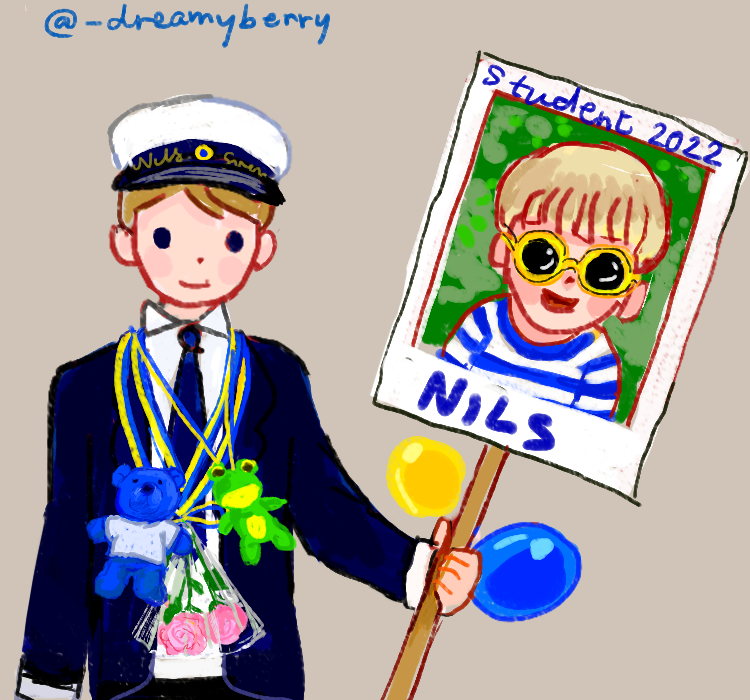
Once they got their diploma, Students run out of school to their families and friends, who are waiting for them holding a picture of the graduate as a baby or small child, and give them blue-yellow chains with flowers and trinkets as plushies!
The clothing for this day is quite formal, with boys wearing suits, girls usually a white dress. each student has their name and surname embroidered on the hat, which costs around 100 euros
After staying with their families for some time, studentsget on flatbed buses driving through the city as the Danes do, dancing, drinking and partying. In some cases they just walk around instead, something which has been encouraged by authorities after several accidents involving the flatbuses occured.
Norway 🇳🇴
Norwegian graduation celebrations, Russ (short for russefeiring) is a big deal in Norway, with youngsters in overalls roaming cities for almost a month, from the end of April to the Norwegian Constitution Day, (read more about May 17th). On that day, the students are awarded their caps and join the parade in their overalls. The russ period has also become known as “the three-week binge” treukersfylla, continue reading to find out why…
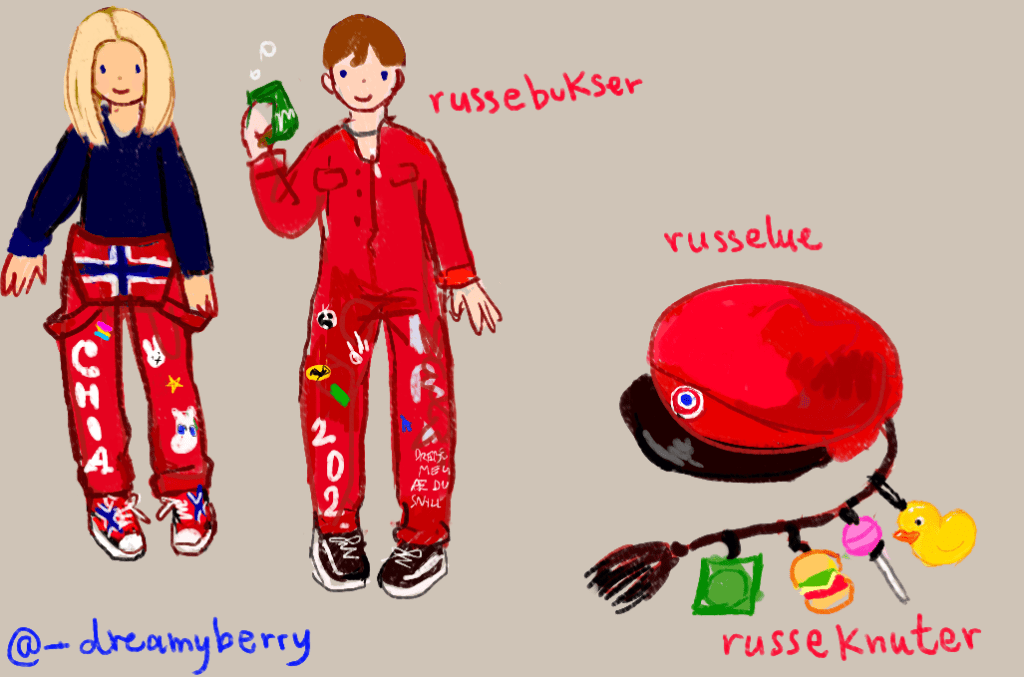
The personalized overalls, russebukse, are usually red, or blue in case of financial and business studies, and personalized with patches. On this website Norwegians can get their russ equipment 😉
On the caps, Russeluer, Students write the Russ names they’ve been given, but the important part is a long cord, which gets knots (knuter) added for given dares completed before graduation: russeknuter. The tradition was introduced in the 40s, with different lists of around 100 dares for every school. Many dares involve sex and alcohol, and a lot are just hilarious. Classics are wearing loaves of bread on your feet for a whole day, not sleeping for 48 hours and bathing outside before 1st May. After criticism that russ was getting too wild, some new dares were invented to encourage teens to make good choices, such as getting tested for STDs or giving food to a homeless person.
Here are a few recurring ones (trinket – dare associated to it):
TAMPON – Put two tampons in your mouth and drink a pint of beer/cider.
TWIGS FROM THE GARDEN – Sleep in a tent in a teacher’s garden.
CANDY BURGER – Eat a cheeseburger in two bites.
“L” – Put an “L” (used for driving practice) on the back of a public transport vehicle.
CONDOM PACKAGE – Buy a pack of condoms using only body language.
BANKNOTE – Place a 5 minute poledance on a pole on a public transport.
RUBBER DUCK – Bathe with someone else in a canopy in front of the school, remember to scrub each other.
TOY FIRE TRUCK – Have safe sex during your period/with someone on theirs.
Here is the whole list of Russeknuter of Oslo for 2022 (in Norwegian). Because of what’s happening, this year there is a special Ukraine-knut, which can be gained if the class contacts a refugee centre and brings some fun activities to socially engage the young refugees there.
As the other Scandinavians Norwegians also rent or buy buses – thetradition of buying an old van or bus and painting it started in the 70s – but they do it on the next level, with their Russebuss, large coach buses completely decked out with colors, graphics, retrofitted and customized to become mobile partying units! The average Russbuss is used by 15 to 25 students and costs around $116,000!! Drivers are hired to drive them to Festivals and landstreff (national meetings) to meet Russ from whole Norway and party, party, party.
You may now wonder why students party that wildly in April. That’s because by the early 2000s, the authorities were worried about the impact all this partying and alcohol would have on the students’ grades, so the final exams in public schools were moved to early May. but what ended up happening was simply that the students started the russefeiring earlier.
Bonus: Finland 🇫🇮
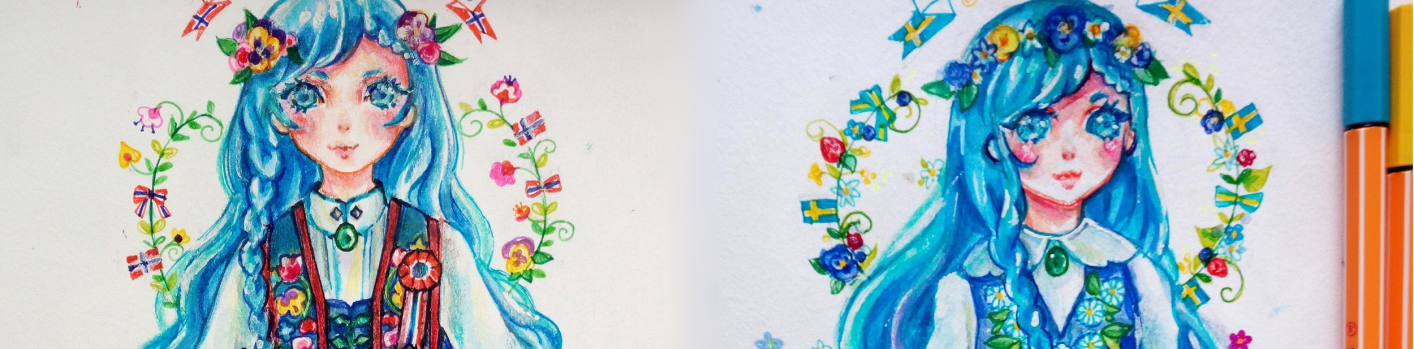
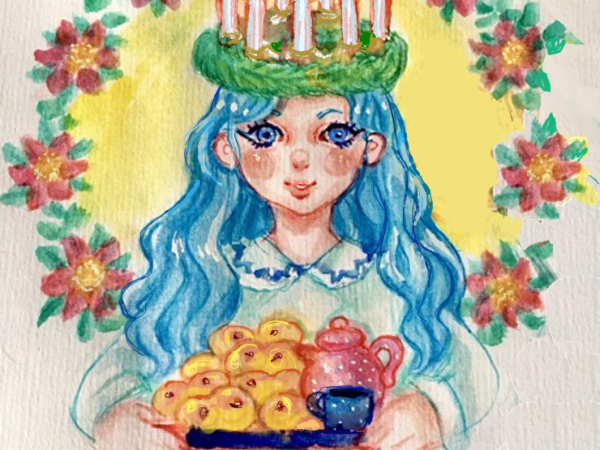
The girl I portrayed on the cover picture of this article is a Finn, (@alwaystimeforbujo on ig, she posts about bullet journaling), so here is something about Finland too:
The Finnish cap, Ylioppilaslakki, is similar to the Swedish version, but instead of coloured fabric cockade, it has a metallic, gold-colored cockade depicting the lyre of Apollo, the insignia of the University of Helsinki.
Truck parties are a thing in Finland too, but in February, when students begin preparing for their final exams. A typical thing they do is dressing up in various costumes visiting the town’s school and throwing candy!
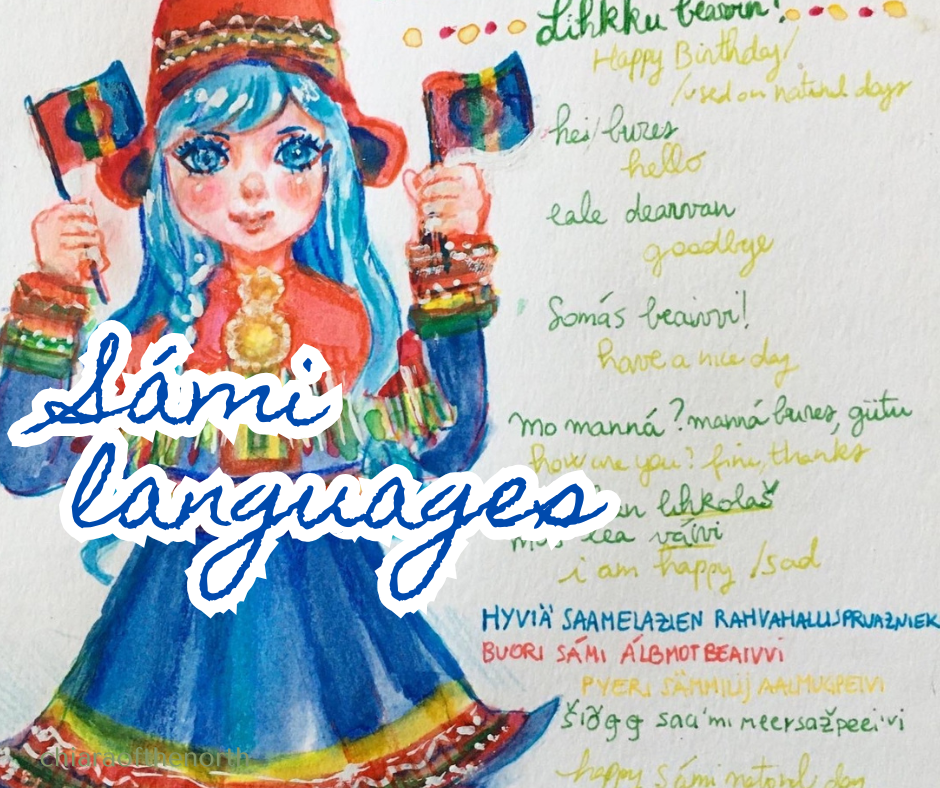
The languages of the Sámi, indigenous people of Scandinavia
The Sámi people (Sámit/Sápmelaš in sami languages) are Northern Scandinavia’s indigenous people. I have talked about Sámi people and their National Day last year. This year I will focus on their languages.
Sámi languages speakers are approximately 30,000-40,000, out of around 100,000 people identifying as Sámi.
Sámi languages belong to the Uralic language family and are most closely related to the Baltic-Finnic languages (as Estonian, Finnish, and Karelian).
There are 10 distinct variations (of which 6 have standard written forms). They are not mutually intelligible to each other, although there is intelligibility among neighbor variants, which makes the Sámi languages a dialect continuum. According to the Store Norske Leksikon South and North Sami are as far as Norwegian and Icelandic.
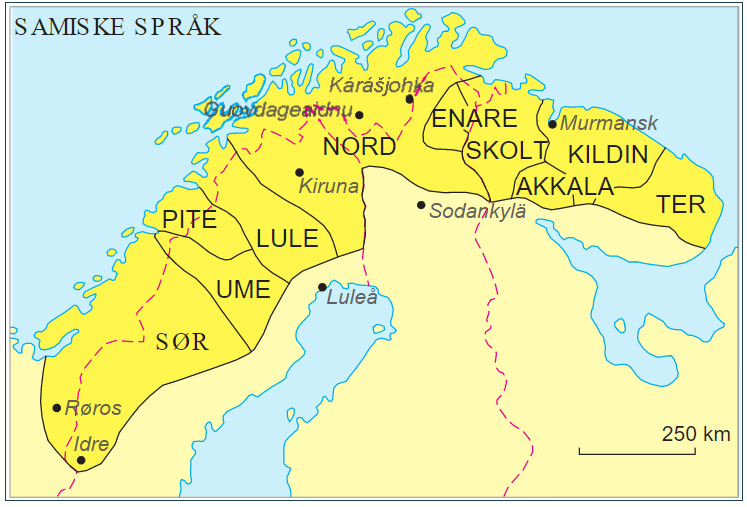
Sámi language areas, picture from Store norske leksikon.
They can be divided into Eastern and Western language groups:
Western Sámi languages
North-Davvisámegiella: 15,000 speakers in Norway, Sweden, Finland, about 75% of all Sámi native speakers
Lule–Julevsámegiella: 2000 speakers in Norway and Sweden
South-Åarjelsaemien gïele: 500 speakers in Norway and Sweden
Pite–Bidumsámegiella: 20 speakers in Sweden
Ume–Ubmejensámien giella: 20 speakers in Sweden
Eastern Sámi languages
Inari-Anarâškielâ: 400 speakers in Finland
Skolt-Sää’mǩiõll/nuõrttsää’m: 400 speakers in Finland and Russia
Kildin–кӣллт са̄мь кӣлл: about 787 speakers in the Kola peninsula of Russia
Ter-Saa’mekiill: fewer than 10 speakers in Russia
Akkala-Ákkil sámegiella: considered extinct. Not standardized, but translations of the New Testament into it in 1755 and the bible in 1811 were major influences in the written language.
Sámi language features
Note: what follows refers mainly to North Sámi
like Finnish Sámi languages are agglutinative and highly inflected, nouns and adjectives change form according to their grammatical roles. Northern Sámi has 7 noun cases.
Sámi verbs have dual forms: other than three singular and plural persons the verb conjugations can indicate an action by two people (plural is more than two).
Sámi originally had no words beginning with two or more consonants (unlike in English: green, strong, bridge..): Spasibo (спасибо) became pass’bo in Kildin Sámi. Word-initial clusters were however taken into Sámi through Scandinavian lownwoards: Kraevies (gray) from protonorse *grawaR, grár in Protonorse, modern Scandinavian grå.
Sámi languages have a kind of vowel harmony, which for example makes the given name Knut become Knavhta, adding a third vowel.
Scandinavian varieties of Sámi languages use the Latin alphabets, with additional characters: The unique letter “Ŧ/ŧ”, similar to English th in “thin” and Thorn þ still used in Icelandic. “Đ/đ” is equivalent to Icelandic ð. Other letters occurring in Sámi languages are Áá Čč Ŋŋ Šš Žž.
Language Comparison
Similar words North Sámi – Finnish – Estonian
Nature: luondu – luonto – loodus
Forest: meahcci – metsä – mets
Shaman/witch: noaidi – noita – nõid
Brother: viellja – veli – vend
Day: beivi – päivä – päev
life: eallin – elämä – elu
love: ráhkisvuohta – rakkaus – armastus
mother: eadni – äiti – ema
Reindeer:boazu – poro – põhjapõdrad
As you might notice, historically related words in Finnish with p, t, k have b, d, g in Sámi.
N =North; L=Lule; S=South; U=Ume; P=Pite; I=Inari; SK=Skolt
All the Sámi languages are considered endangered, this is due in part to historic laws prohibiting the use of Sámi languages in schools and at home in Sweden and Norway. Sámi languages were illegal in Norway from 1773 until 1958. Special residential schools that would assimilate the Sámi into the dominant culture were established, and access to Sámi instruction as part of schooling was not available until 1988.
Samer.se underlines that in the 60s and 70s many Sámi parents did not speak Sámi to their children. This was a reaction to the negative experiences and the discrimination faced in Swedish schools, which however resulted in depriving children of their mother tongue, and many suffered from that as adults.
In the last decades of the past century this attitude started to change, granting the rights to have education in Sámi languages and esthablishing funds for the promotion of Sámi culture and languages.
In Norway Sámi languages have official status in 9 municipalities in the counties of Finnmark and Troms.
Since 2002 Sámi languages have been recognised as minority languages in Sweden and have official status in 4 municipalities. In these areas they can be used in government agencies, courts, pre-schools and nursing homes.
North Sami, Skolt Sami and Inari Saami are offically recognised in Finland and have official status in 4 municipalities, Sámi people have the right to use Sámi languages for all government services.
In Russia Sámi people are recognised as an indigenous people but their languages have no official status.
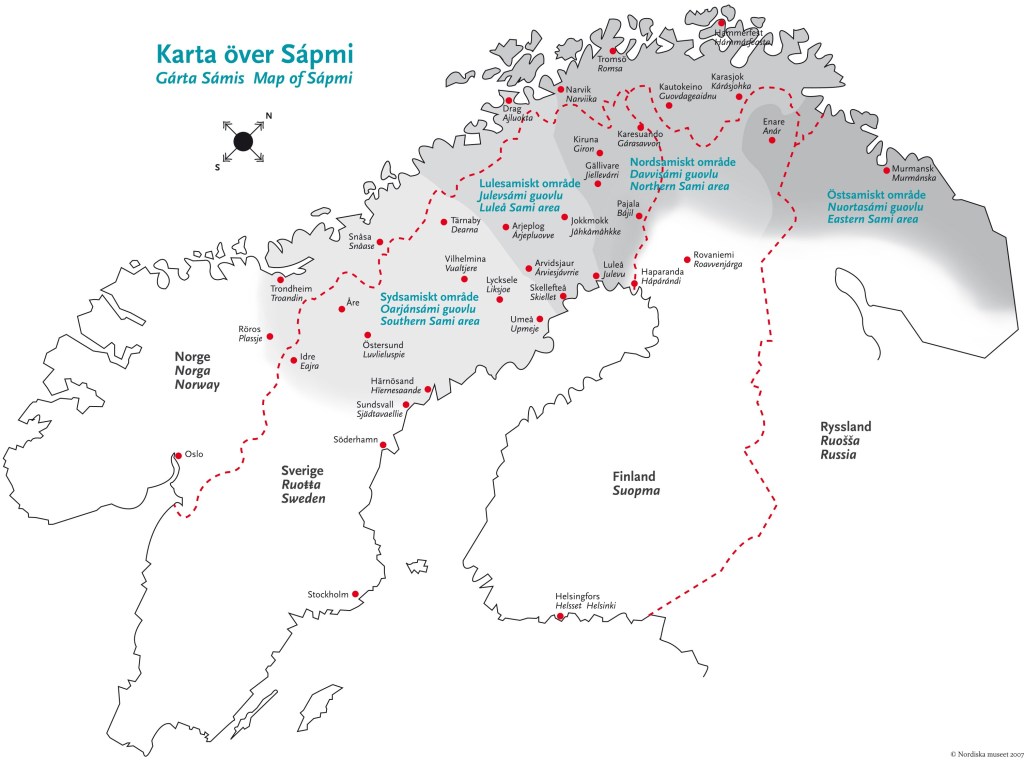
Municipalities where Saami is an official language, picture from Nordiskamuseet.se
Art and media in Sámi languages
The first two recorded Sámi poems are by Sámi priest and poet Olaus Sirma (1655-1719), included by Johannes Schefferus of Uppsala in his book Lapponia in 1673.
A boy’s will is the wind’s will, the thoughts of youth are long, long thoughts.
refrain ofMoarsi favrrot/The Beloved One, translated in “a Lapland song” by Henry Wadsworth Longfellow (1807-1882) and included in the long poem “My Lost Youth”
The oldest Sámi language newspaper is Nuorttanaste (Eastern Star), a religious paper began in 1898 and still published in Norway. The Sámi-Swedish bilingual Newspaper Samefolket began in 1918, and Sapmelas, founded in 1934 and renamed in in 1993 Odda Sapmelas (The New Sámi) is published in Finland.
The 1970s saw a blossoming of Sámi language literature that has continued to the present, with Sámi artists focusing their work on Sámi language and Sámi traditional themes. Prominent figures include Nils-Aslak Velkeapää (writer, singer, multimedia artist); Paulus Utsi (poet); Vuokko Arvonen (feminist writer); Nils Gaup (filmmaker); Mari Boine and Sofia Jannok (singers). In Norway, the yearly Riddu Riđđu festival in Olmmáivaggi/Manndalen features music, art, theater from Sápmi, including Sámi rap music, yoik rock and dramas from Beaivváš Sámi Našunálateáhter, the Sámi national theatre.
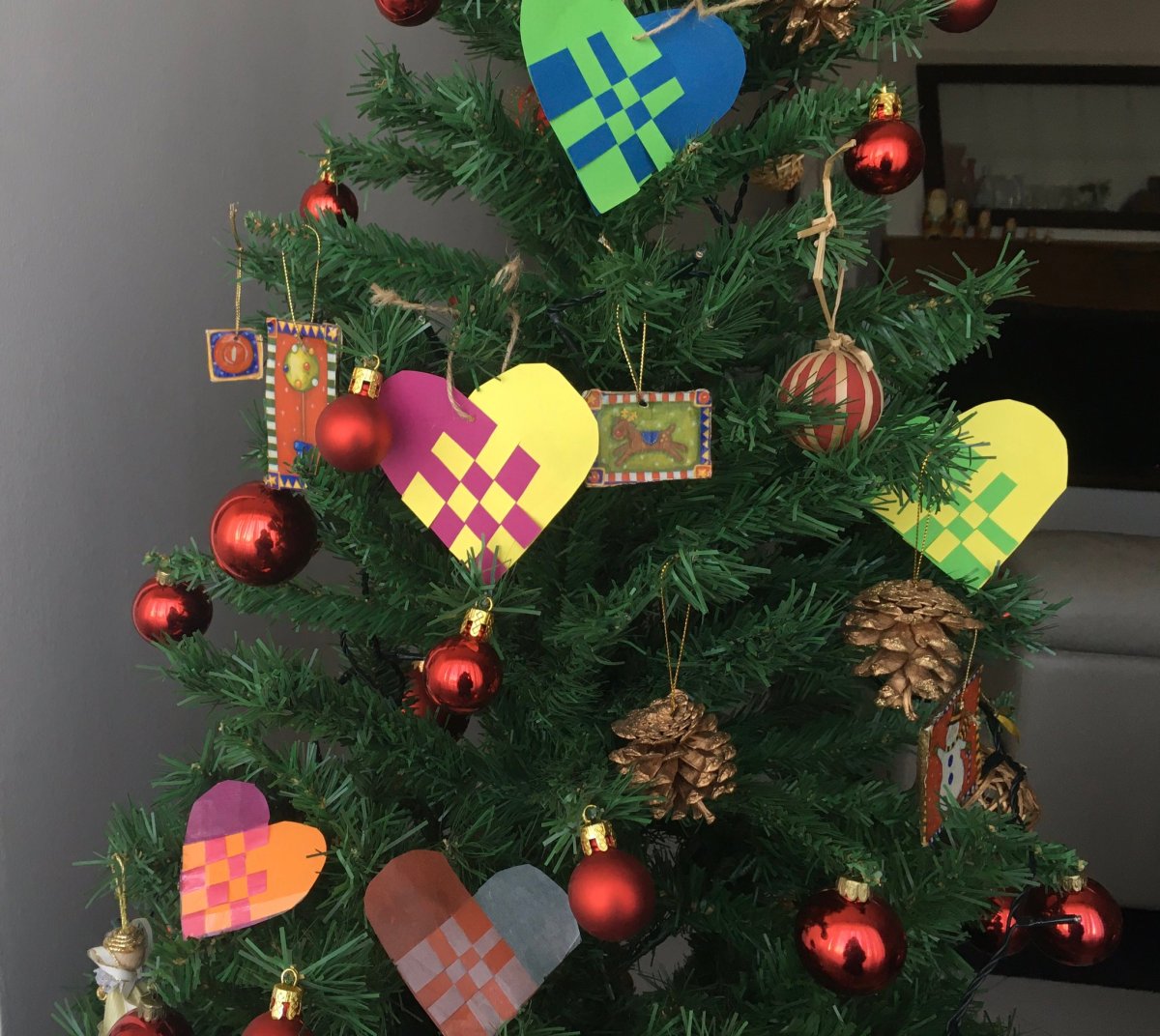
Julehjerter, a common Christmas ornament In Denmark and Norway.
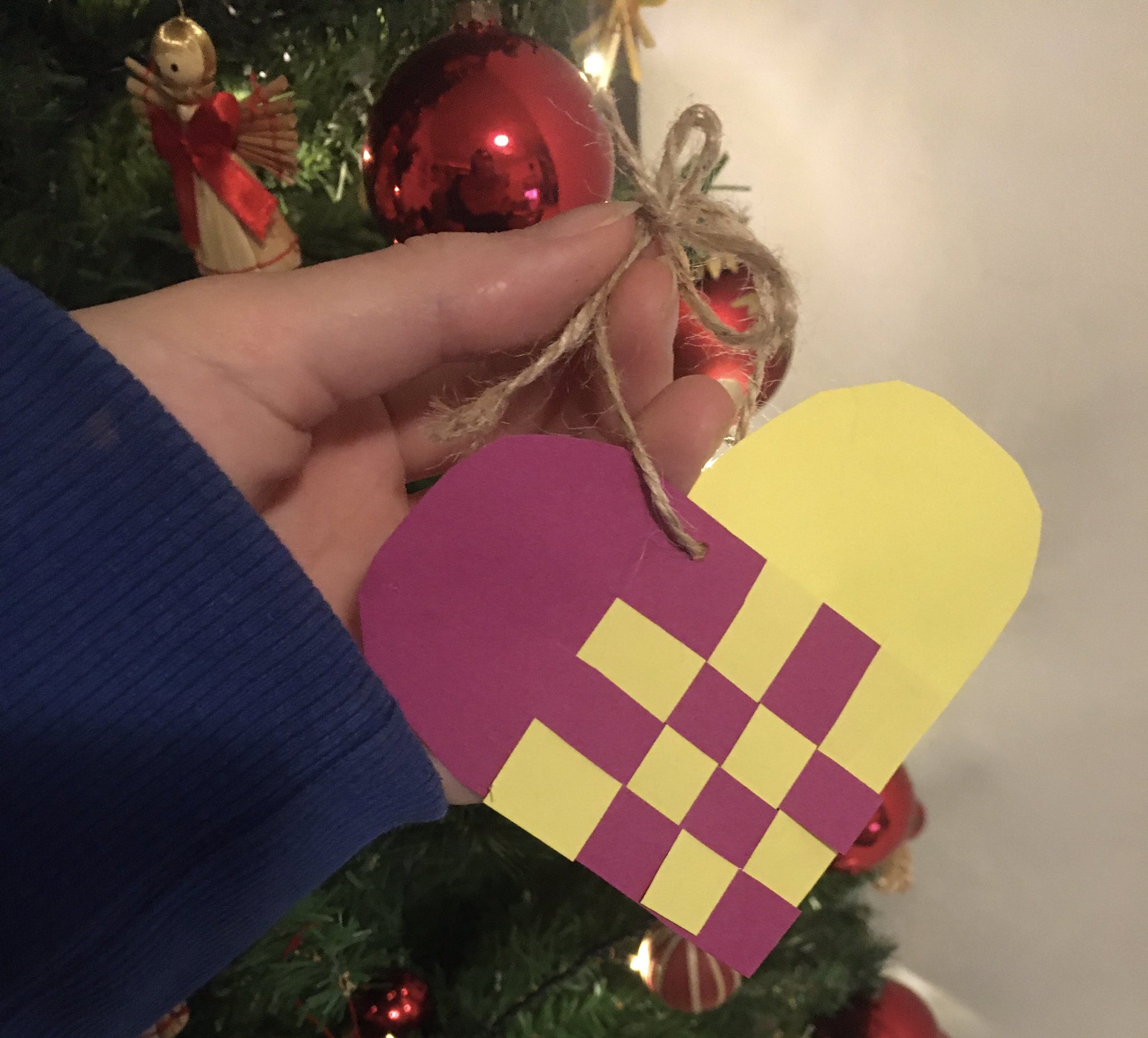
As i had already mentioned talking about Christmas symbols in Nordic countries, a common homemade Christmas ornament in Scandinavia is pleated hearts, very common in Denmark, known as Julehjerter, and Norway, where they are called Juletrekurv.
Children make them with their family with paper of different colours, although they are mostly red and white. They have been made for around 150 years: the oldest known guide to making pleated Christmas hearts is found in an 1871 edition of the Danish journal Nordisk Husflidstidende. A 1873 pleated heart can be seen at the National museum in Oslo and one from 1866 at H. C. Andersen house in Odense!
Make your own Julehjerter
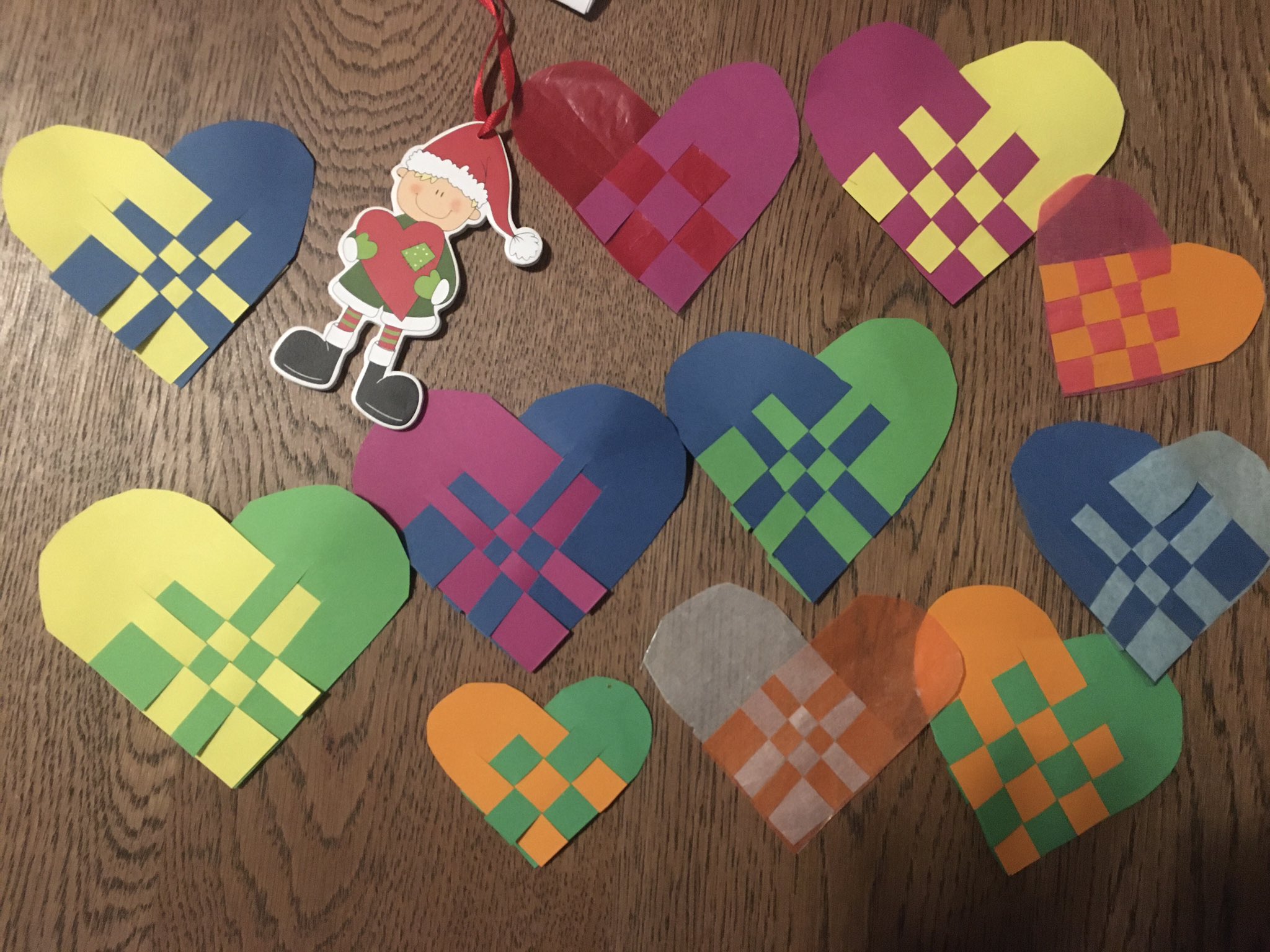
I made my very own, simple version of them, so they are not really a basket as the Norwegian name says, and I used strings to hang them on the tree.
what I used:
colored paper (the most traditional version is white & red, but do as you please). I used leftover paper we had at home.
Scissors, obviously and something to make holes on paper, as pins
Strings
Process:
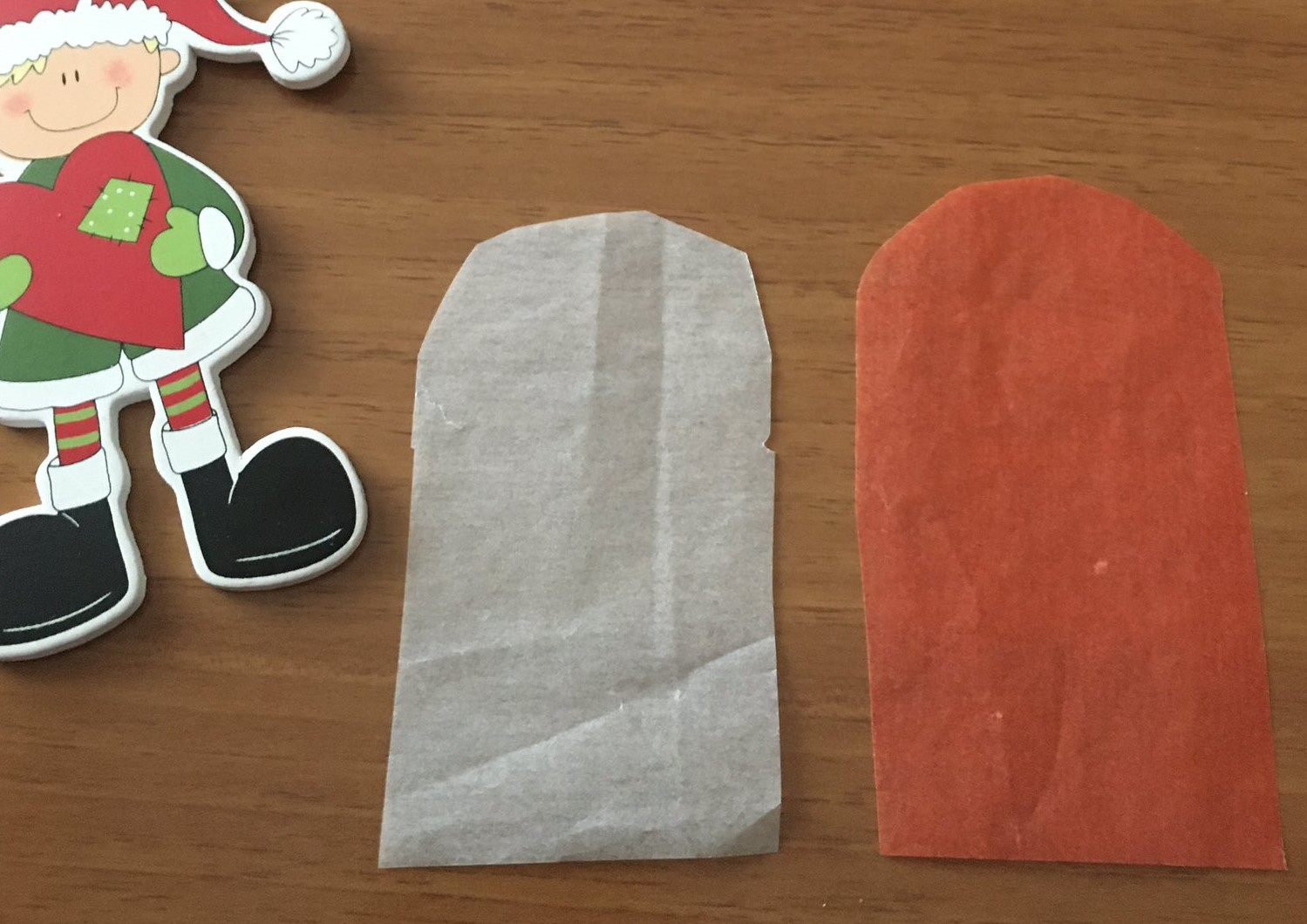
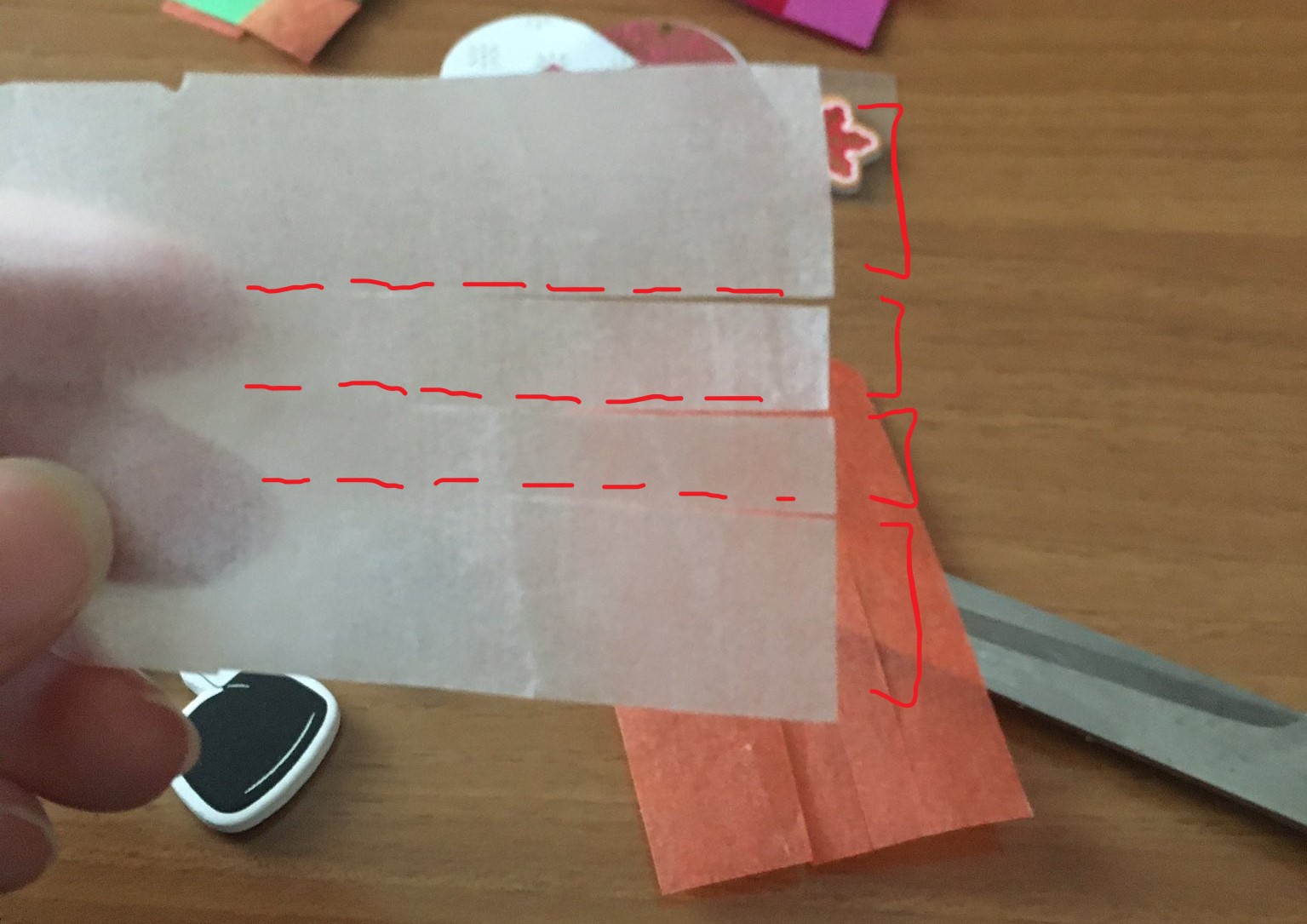
cut paper, put two sheets on top of each other when cutting so it is of the same size.
cut the lines to intertwine the two pieces: they can be all of the same size or the two inner parts narrower.
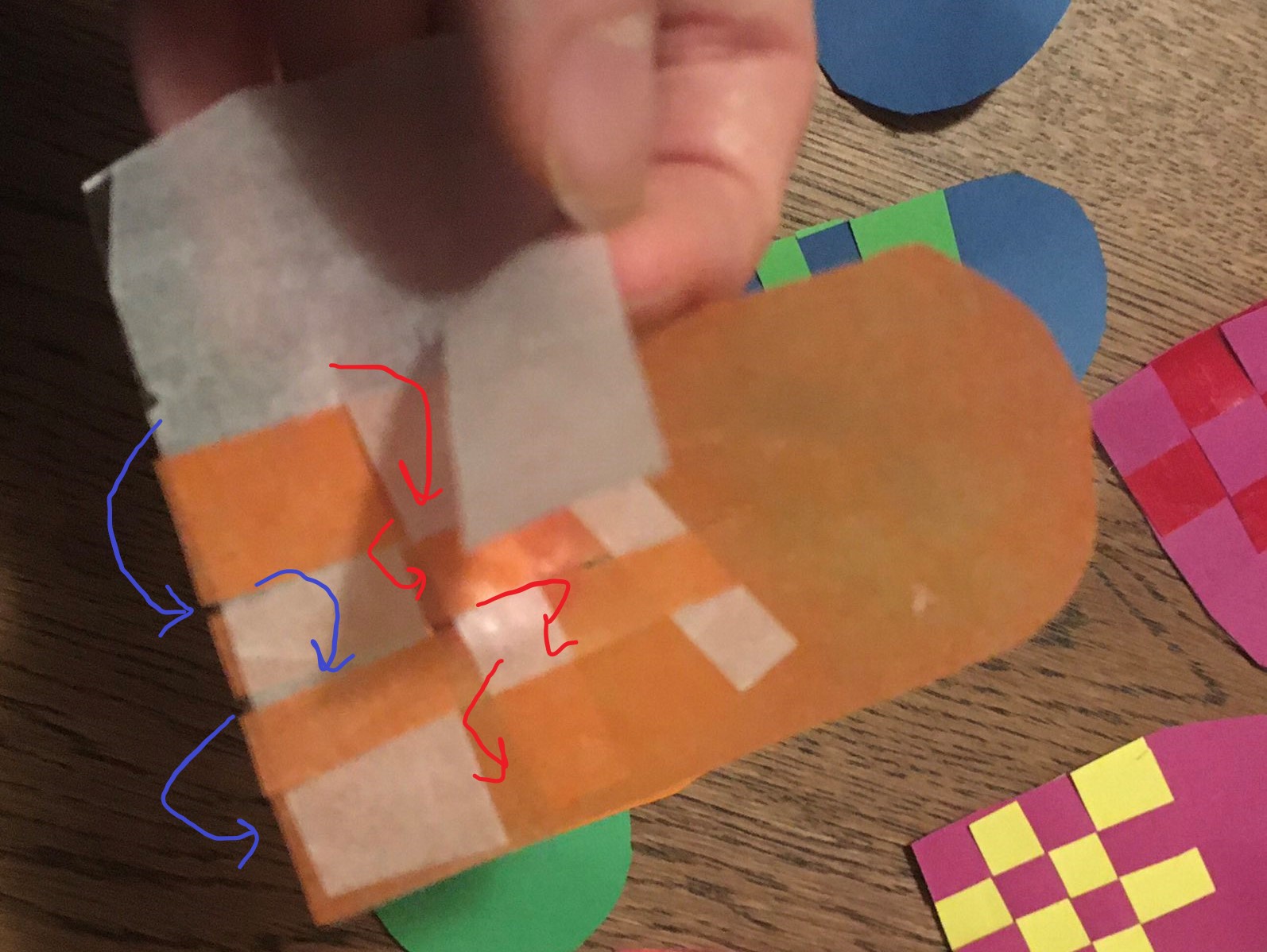
3. Intertwine the pieces: depending on how you cut the lines you will have a slightly different pattern
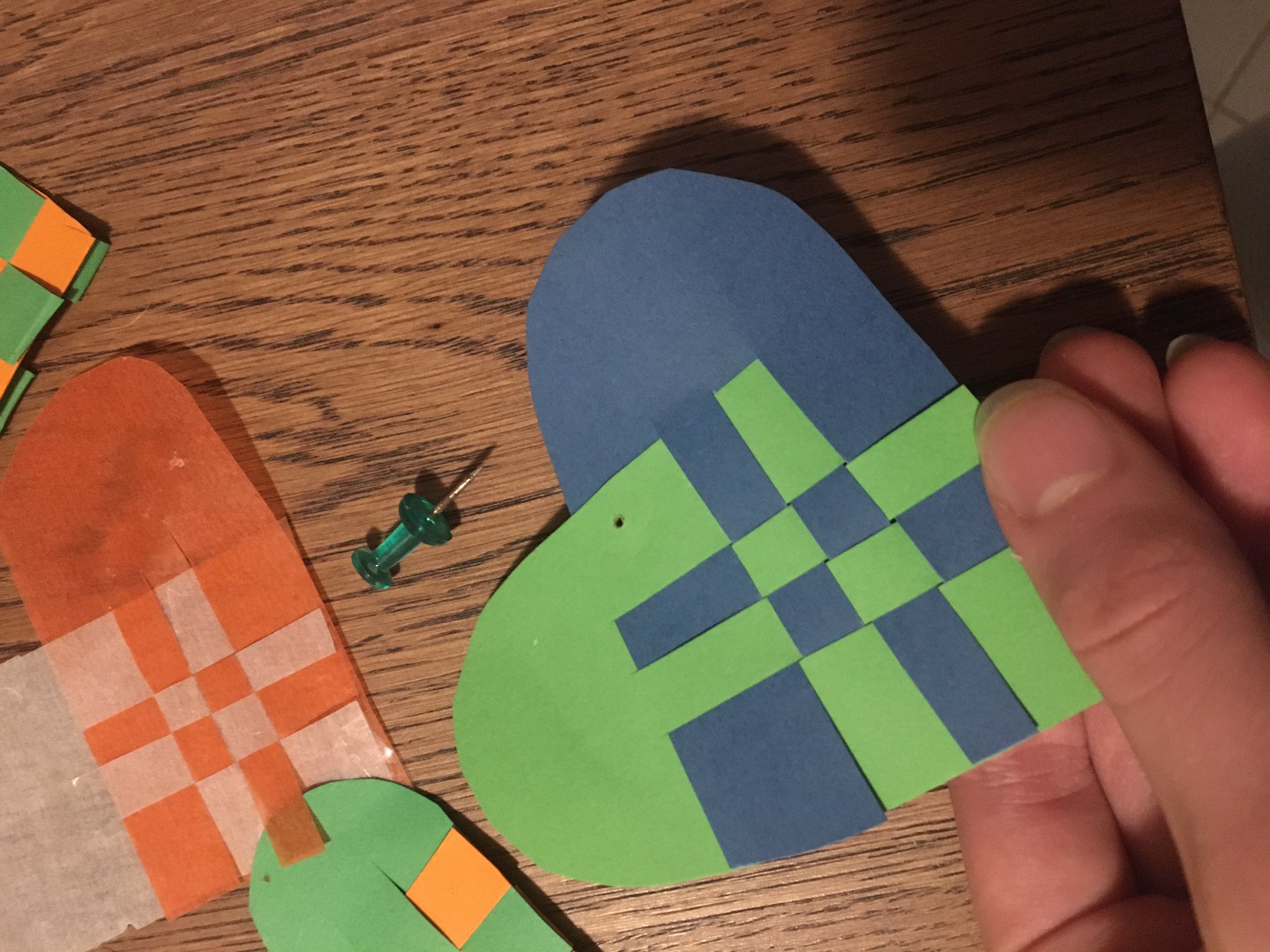
4. Make a hole and put the string in it
Your Christmas Heart is ready to be hung on your tree or wherever you want!
Please share with me your Julehjerter if you happen to make any 🙂
17th May is Norway’s national day, in which parades are the central event
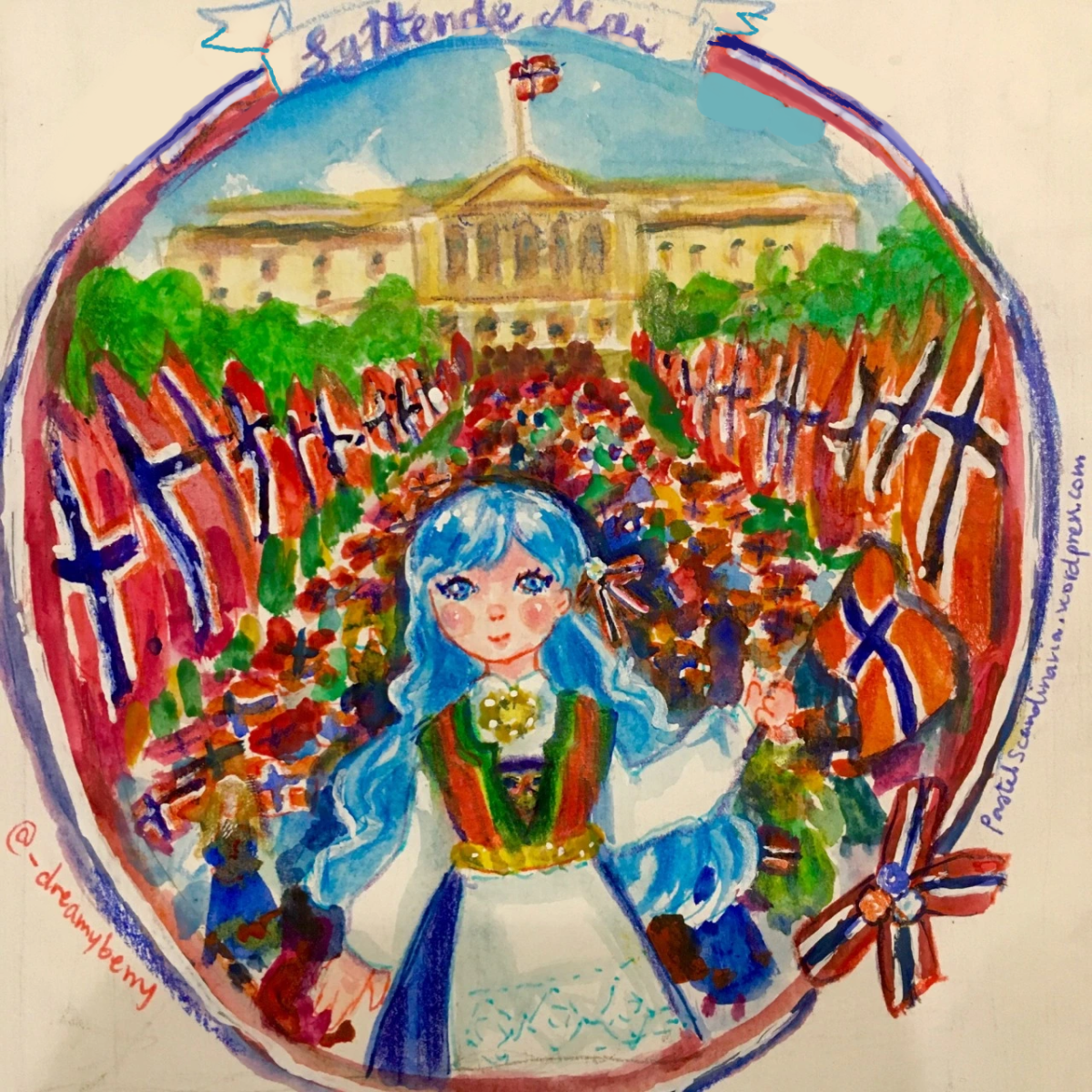
Known as Syttende Mai (17th May) is Norway’s Constitution Day, Grunnlovsdagen, the most important day in Norway, characterized by parades, a sea of flags everywhere and people wearing the Norwegian folk costume, the Bunad. It is commonly called Norway’s birthday!
On this day the Constitution was signed at Eidsvoll in 1814, declaring Norway as an independent kingdom after being continuosly handed over from and to Sweden and Denmark. Celebrations began among students despite Norway still being in an union with Sweden. WW2 ended in Norway nine days before that year’s Constitution Day, and this strengthened the meaning of 17. mai!
Parades (17. mai-tog)
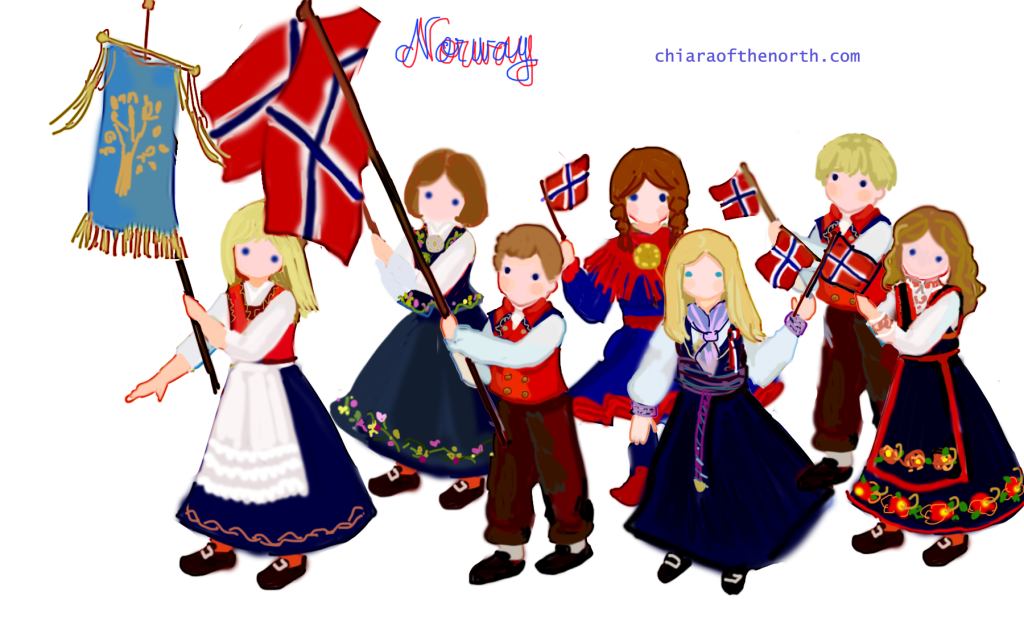
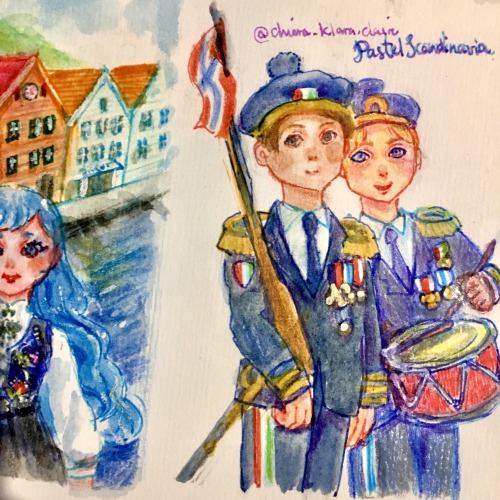
Norway’s national day is also called “Barnas dag” (children’s day). Each elementary school district arranges its own parade with marching bands. In 1864 the first children’s parade was launched in Oslo, but only with boys until 1899. The parades are, in order:
senior school children carrying the school’s official banner
others carrying full-size Norwegian flags;
the school’s marching band;
the rest of the children follow with hand-sized flags, and often self-made banners for each class.
The parade often stops at homes of senior citizens and war memorials. Kindergartens and bystanders often join in behind the parade as it passes.
songs about the celebration of the National Dayare sung, and the parade is concluded with the national anthem Ja, vi elsker dette landet, and the royal anthem Kongesangen. At the end, The children shout “Hurra!”. All parades begin or end with speeches. Both grown-ups and older children are invited to speak. After the parades, there are games for the children: sekkeløp (sack race) and potetløp (egg & spoon race) are two classics.
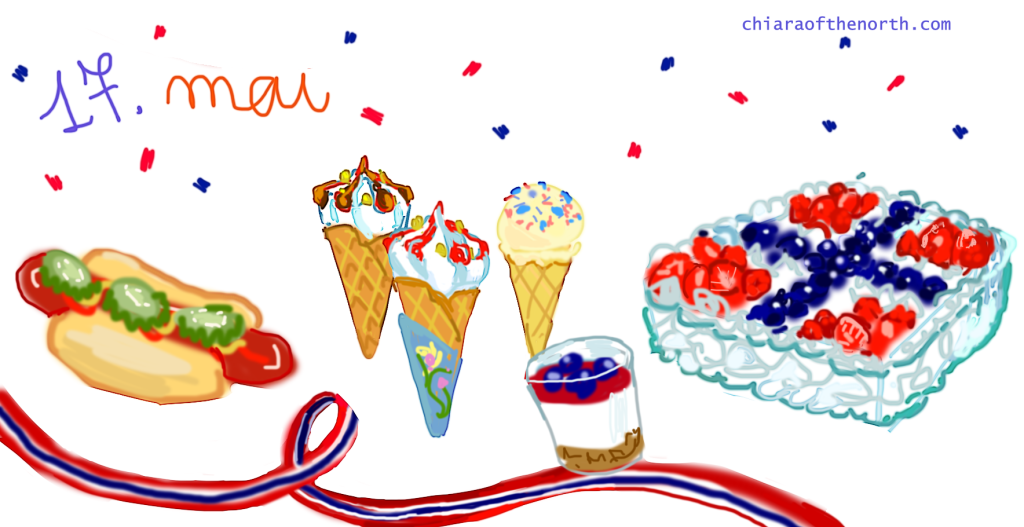
Norway’s birthday is the day on which children are allowed to eat as much ice cream as they please! Popular snacks are pølser (hotdogs), barbecue, waffles. Food with colors of the Norwegian flags is of course a must.
Other parades
Parades for the public, Borgertog, where everybody is welcome to join in. They are led by marching bands and often local boy scouts, local choirs, NGOs, sport associations and firefighters. The borgertog take place in the early morning or in the afternoon, before or after the school’s parade.
The Russ, graduating class of the videregående (high school),celebrate 17 May with their own parades in Norwegian streets later in the day, usually around 4 or 5 pm, on a Russebuss, a party bus, highlight of Norwegian graduation traditions…
Celebrations in Norwegian cities
The longest parade is in Oslo, broadcasted on tv. It includes around 100 schools, marching bands, and passes the royal palace where the royal family greet the people from the main balcony. In the municipality of Asker, near Oslo, the children gather outside the residence of the Crown Prince in the morning.
Bergen has its own traditions for the parade, including comic troupes, various local organisations, a children’s parade, and the buekorps
In Stavanger international schools arrange parades with flags from many countries and an international parties. the British school started it in the 1970s, followed up by the Dutch school and the American school.
Kristiansand, is known for the conclusion of the National Day with running through the city centre (“Tapto”) and spectacular fireworks. A trad jazz band plays until midnight in front of the Christiansholm Fortress.
17 MAI IN THE WORLD
Norwegian seamen churches (sjømannskirken) and Norwegian heritage associations organise 17 mai parades, Norwegian church service, and celebrate the day in parks, with typical Norwegian food and music.
AMERICA
In the United States and Canada, the local lodges of the Sons of Norway often play a central part in organizing the festivities, attended by people with Norwegian ancestry, common in the mid-western USA.
Chicago – holds a three-day 17 mai celebration
New York City – has had a 17 mai parade since 1952.
Petersburg, Alaska a.k.a. “Little Norway”: has a festival the weekend around 17 May, including Vikings and Valkyries.
Since 1969, the city of Westby, western Wisconsin has a four-day festival
Seattle and Salt Lake City, Utah also have 17 mai celebrations with parades, folk dancing and luncheons.
EUROPE
Stockholm has the biggest 17 mai parade outside Norway – ending at Skansen, where you can get waffles, coffee and hot dogs!
17 May in London is celebrated every year in Southwark Park. Games, live music, and a parade from the Norwegian church to the park are in the programme
In Orkney/Shetland (Scotland) 17 May is celebrated as the islands used to be part of the Norwegian kingdom. Orkney holds a parade, and children are invited to bring their Norway and Orkney flags.




 a Polyglot illustrating Scandinavia