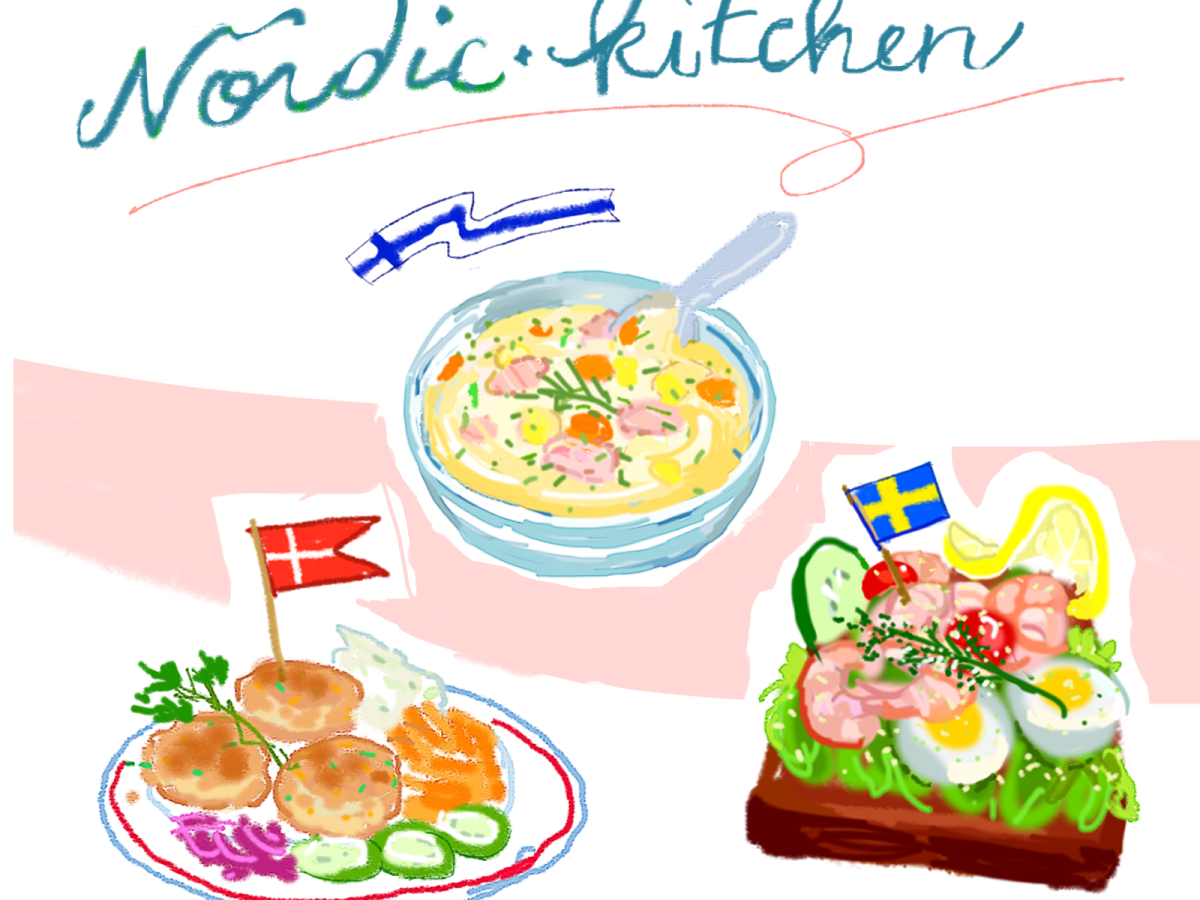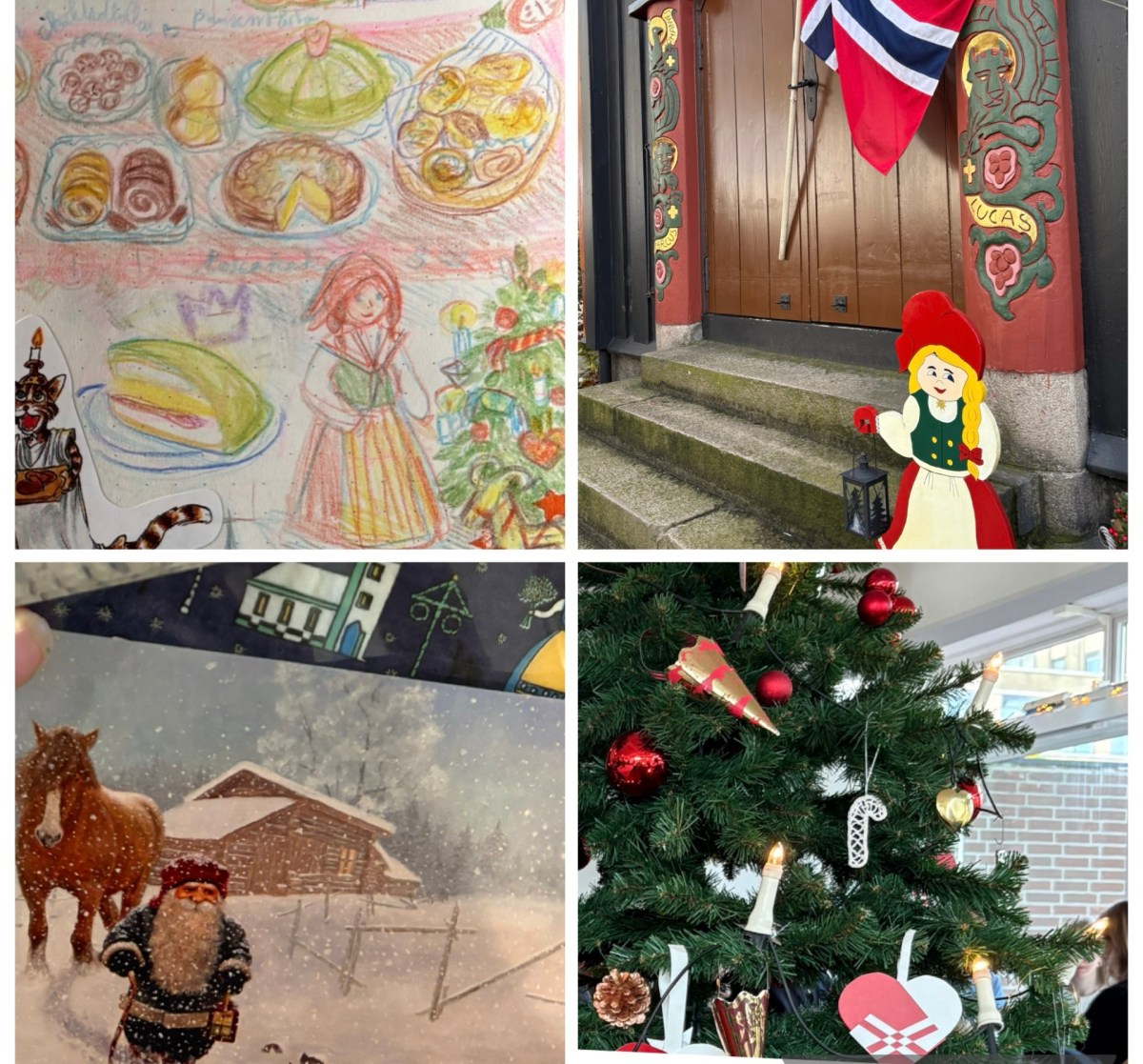
My visit to Nordic Christmas markets in Rotterdam

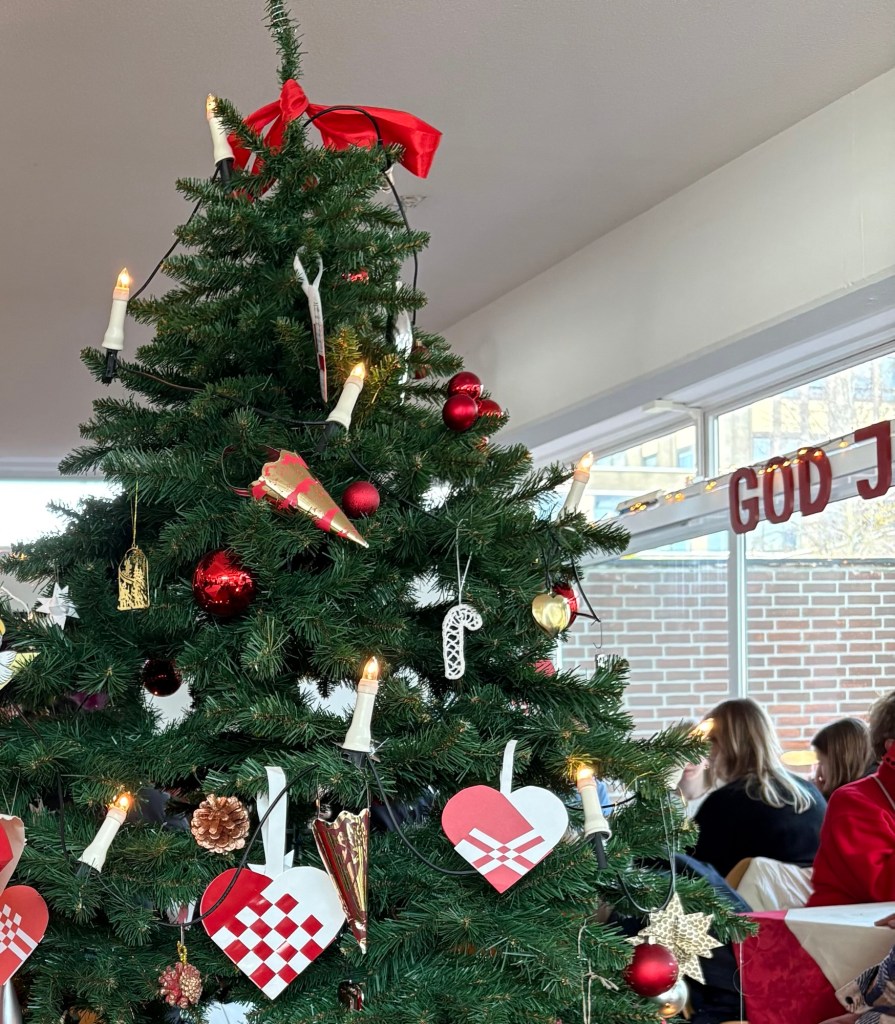
Norwegian, Danish, Finnish and Swedish Christmas markets in Rotterdam. Christmas decorations, imported typical Nordic products for sale, a cafe with lunch and cakes in each of them!
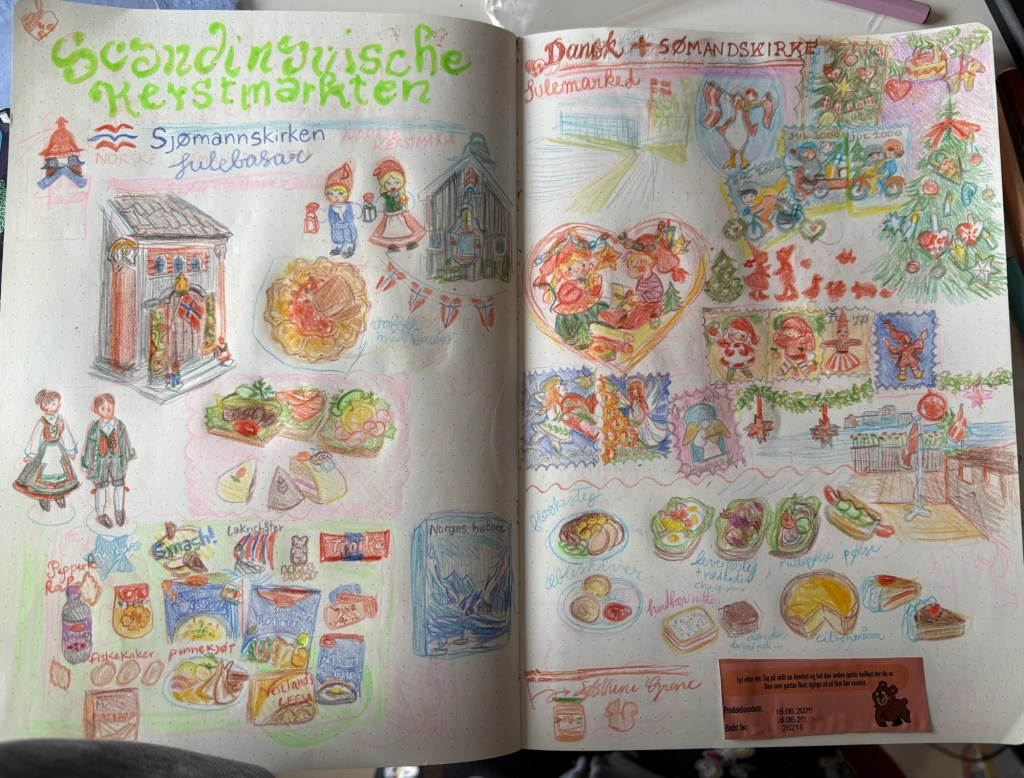
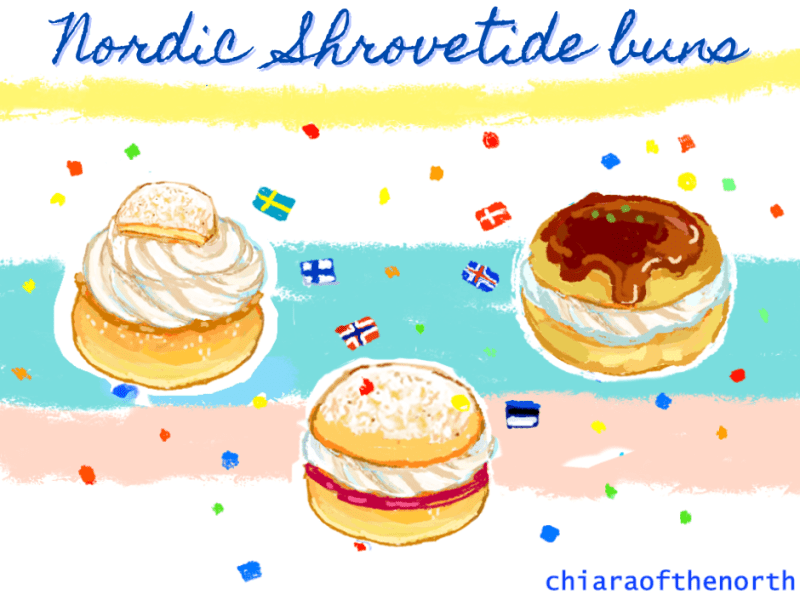
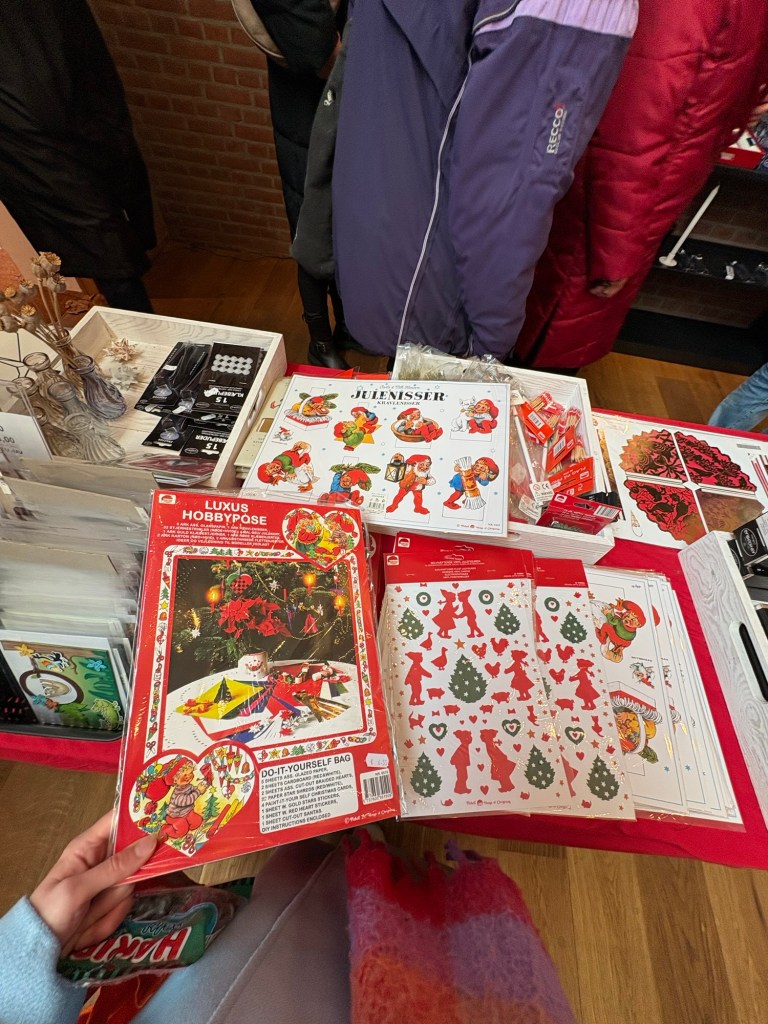
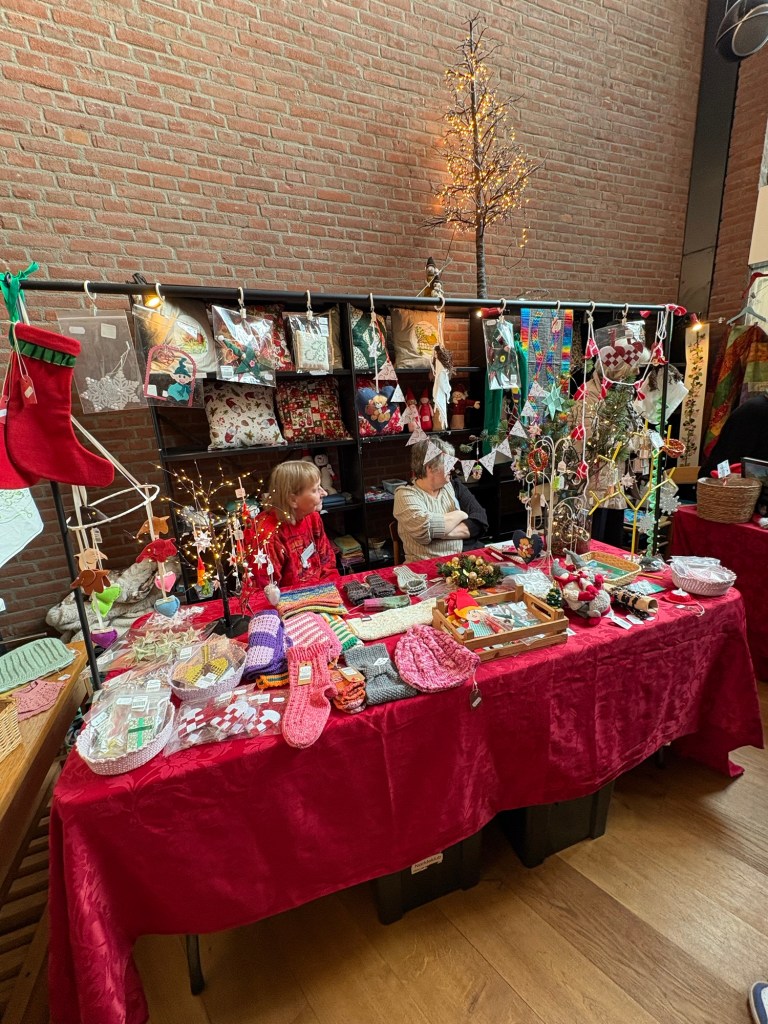
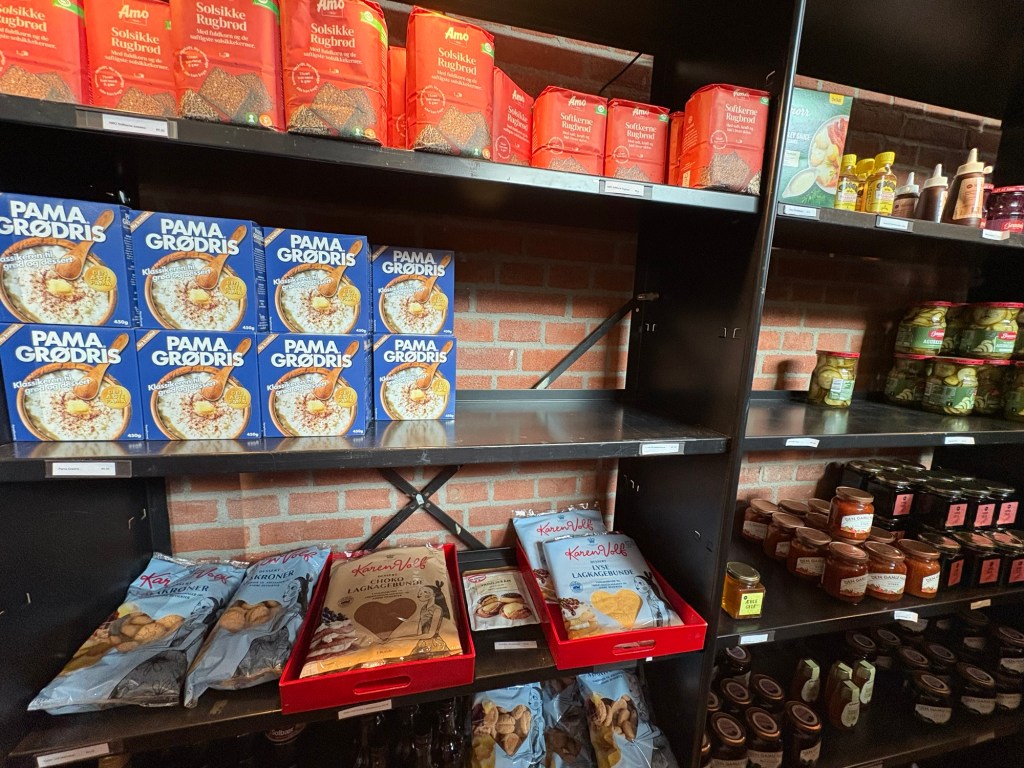
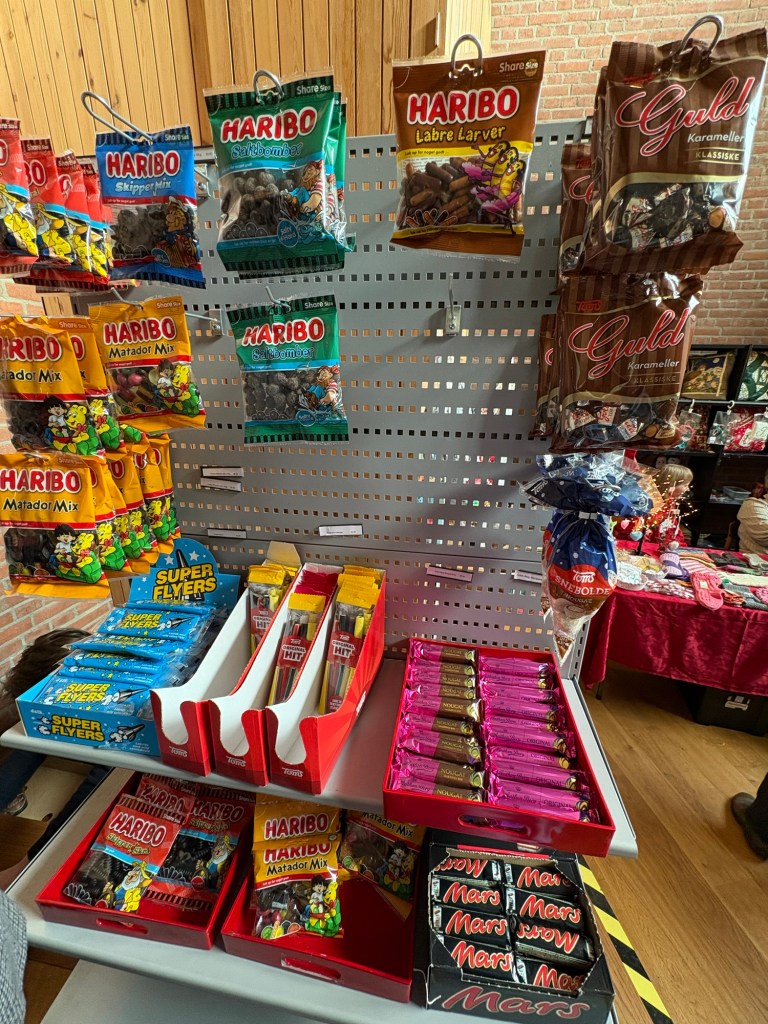
Nordic seamen churches in Rotterdam organise every year their Christmas markets in November. You can purchase food products from Scandinavia and have lunch and coffee with cakes at their cafes! Second hand books were also to find. Every church had a lottery as well!
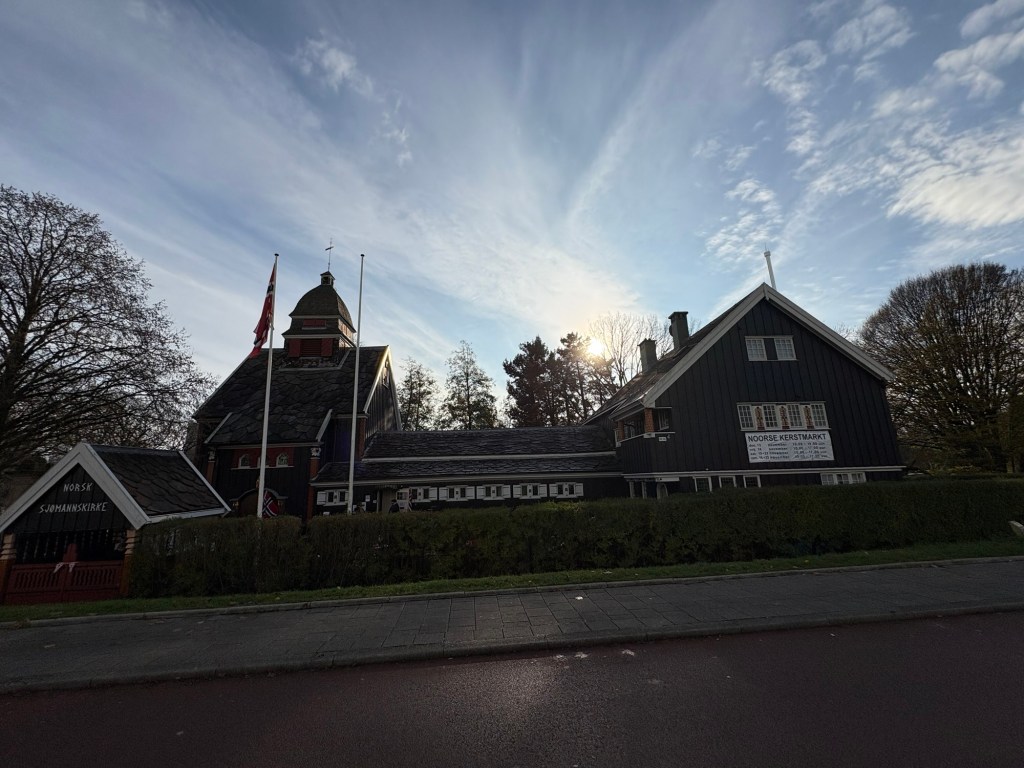
Norsk Sjømannskirke / Noorse zeemanskerk/ Noorse kultuurhuis

First went to the Norwegian one. I had already been there on 17th May for Norwegian National Day. Their church is so beautiful.

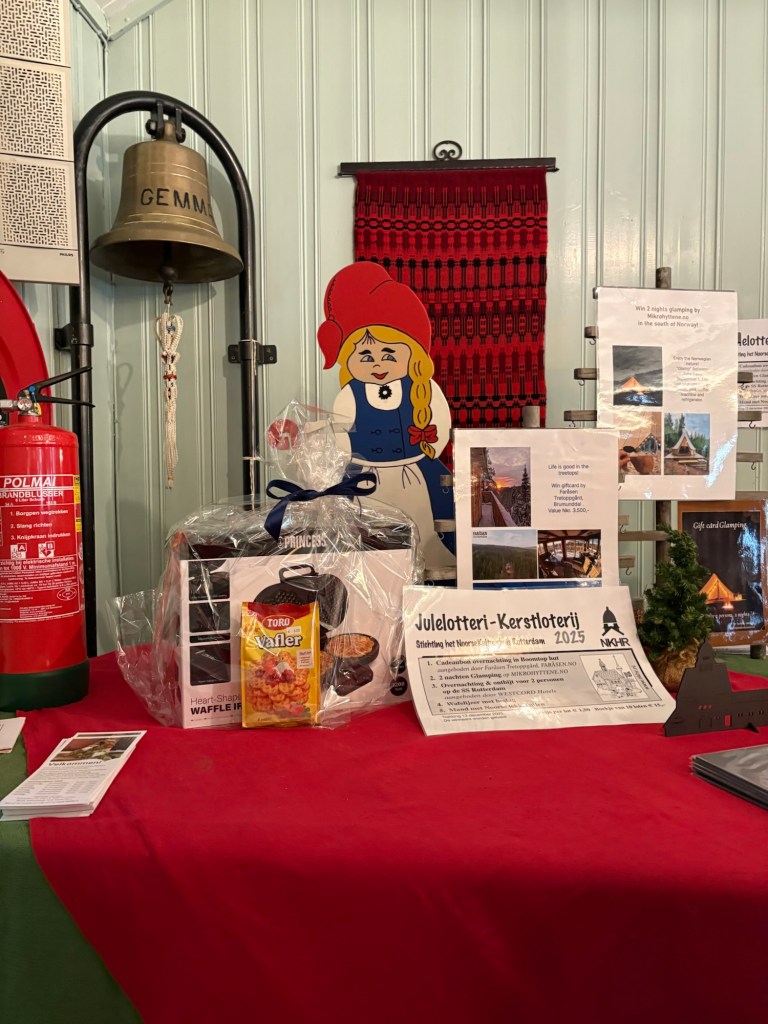
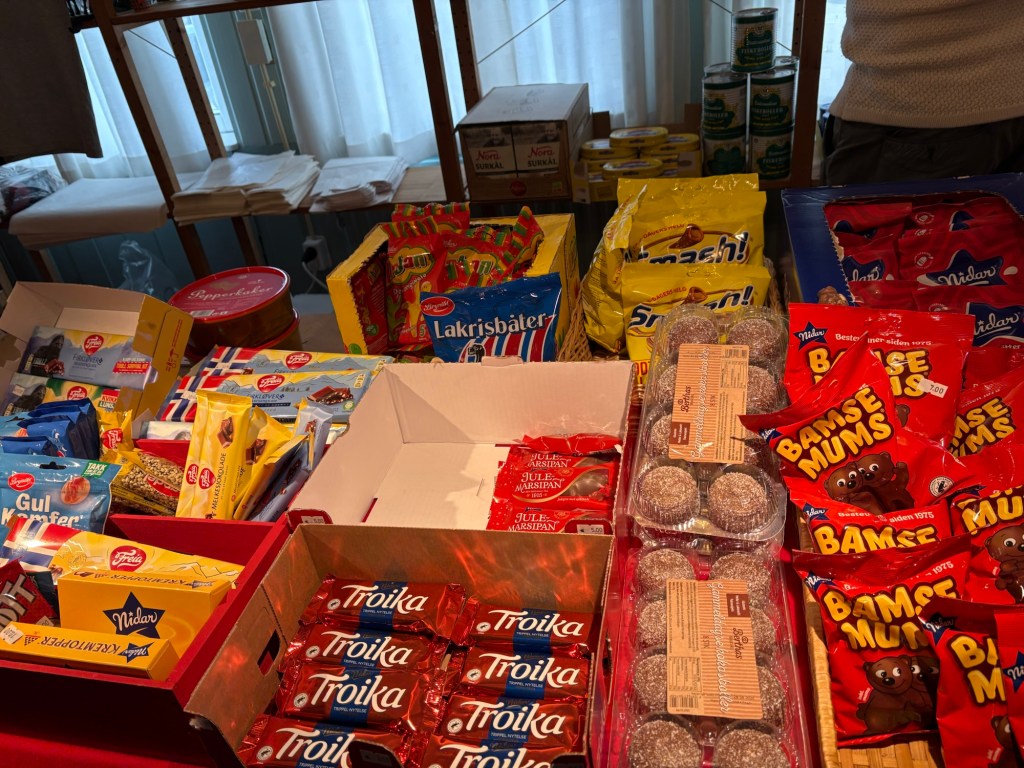
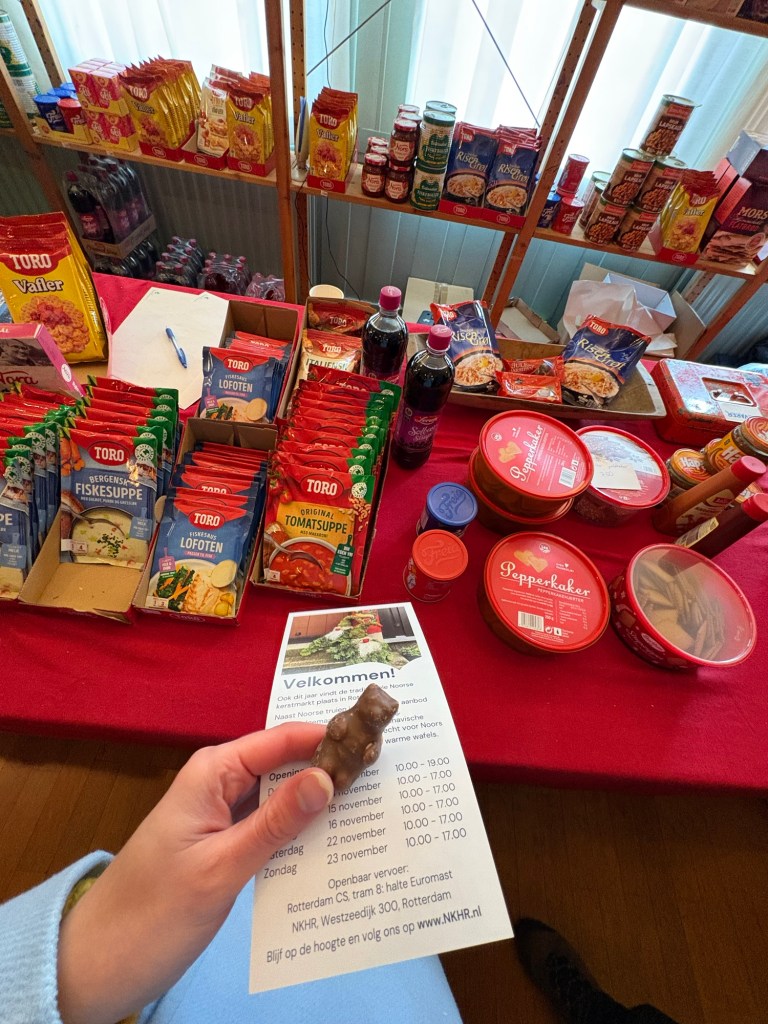
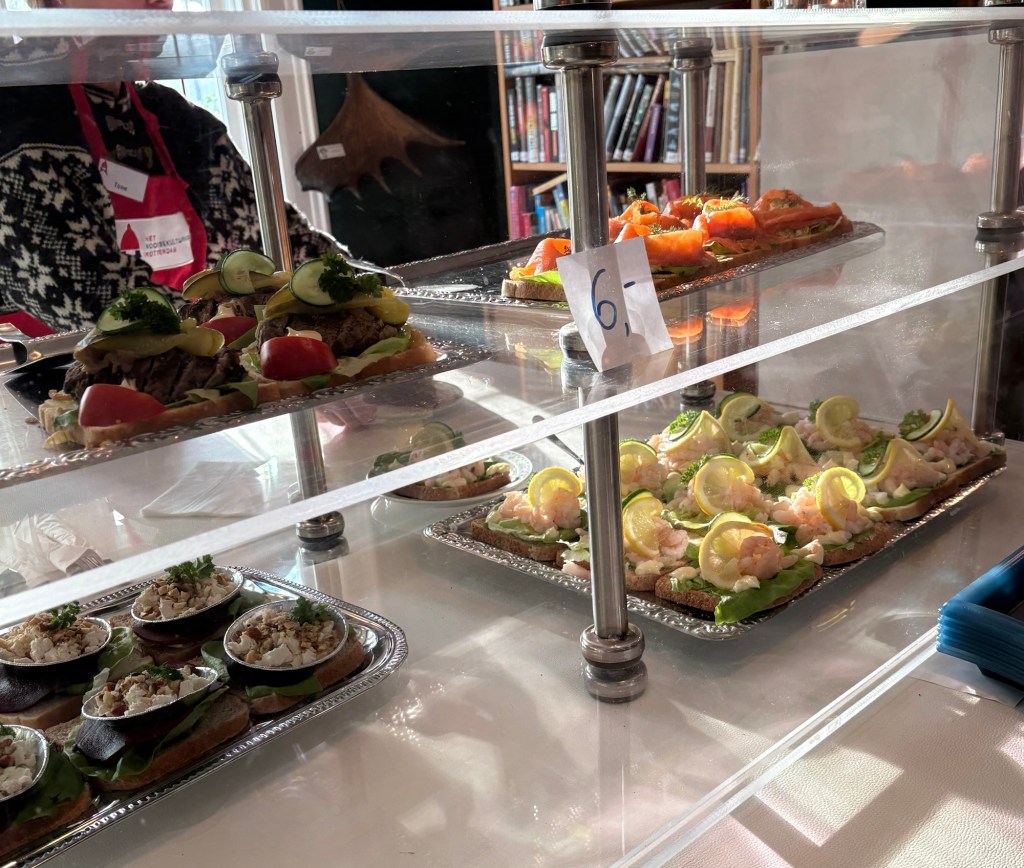
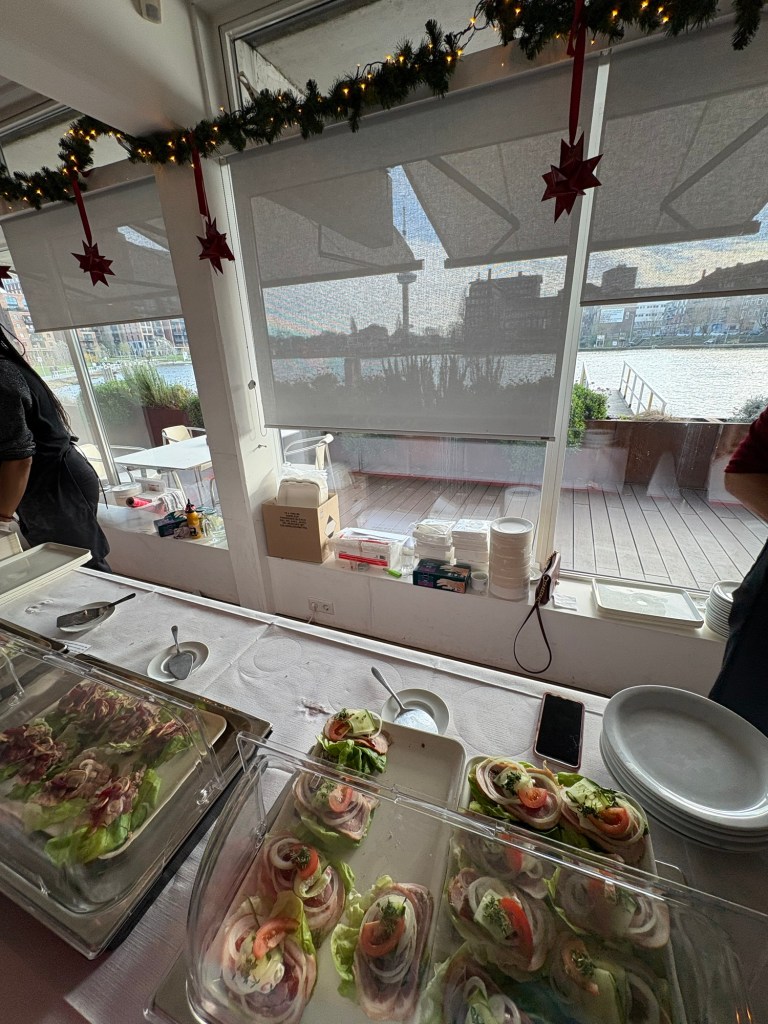
Lots of food products to buy, open sandwiches and cakes were sold in the cafe.

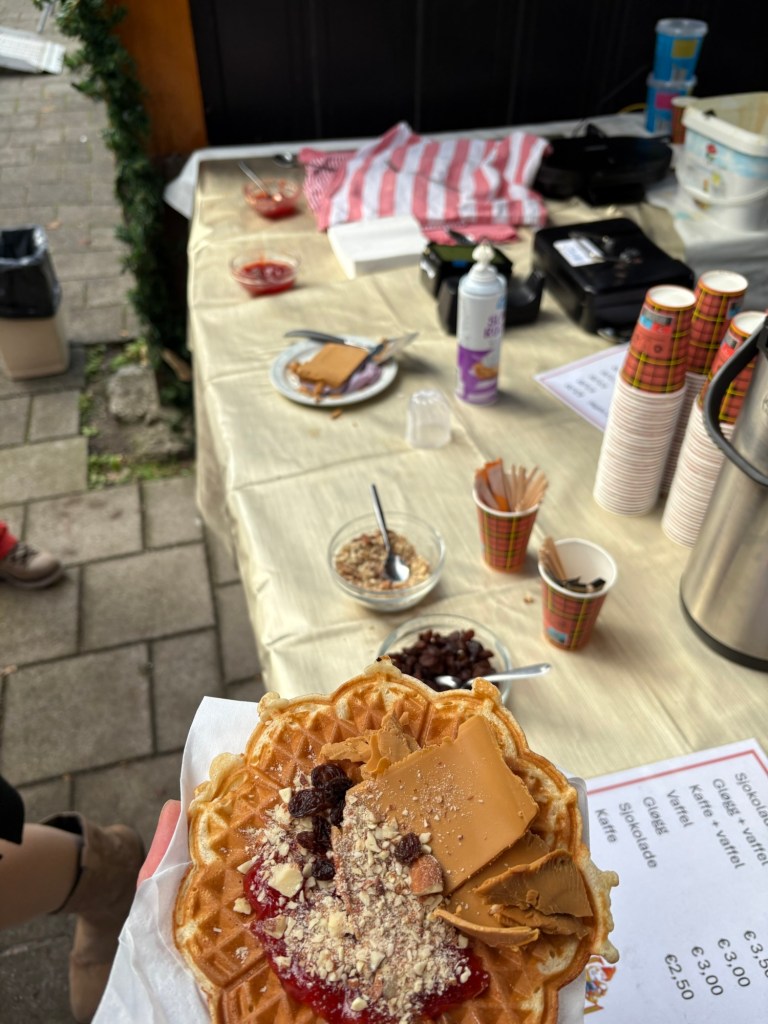
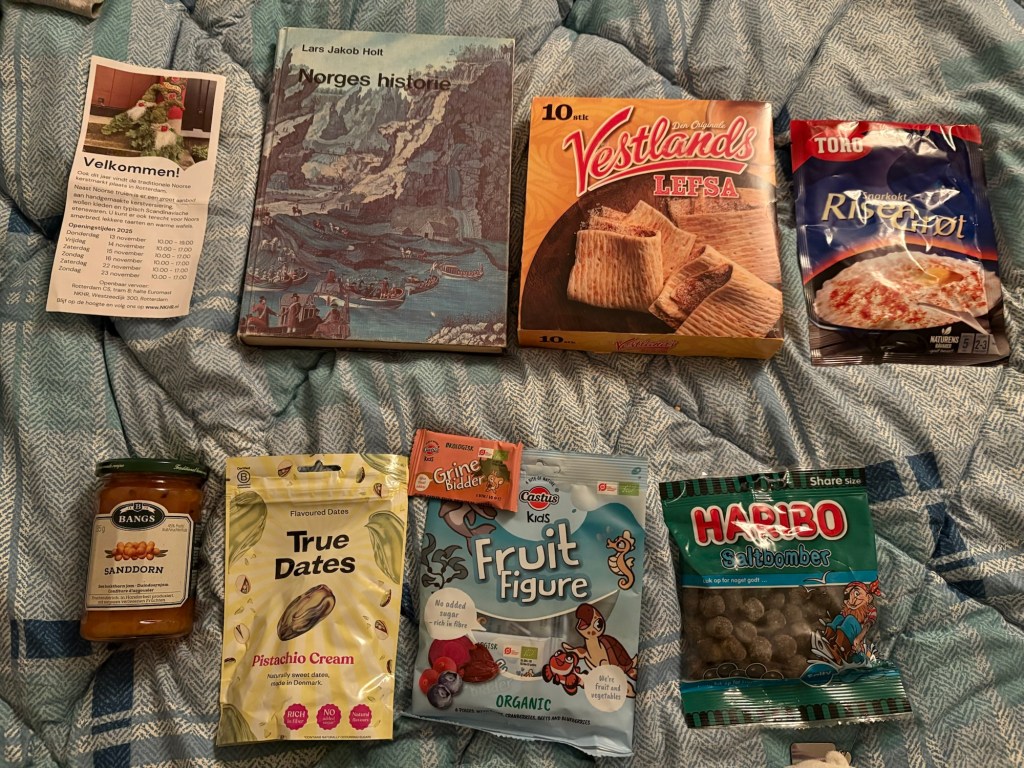
Of course I got a Vaffel !! I bought lefsa bread and risengrøt to try them.

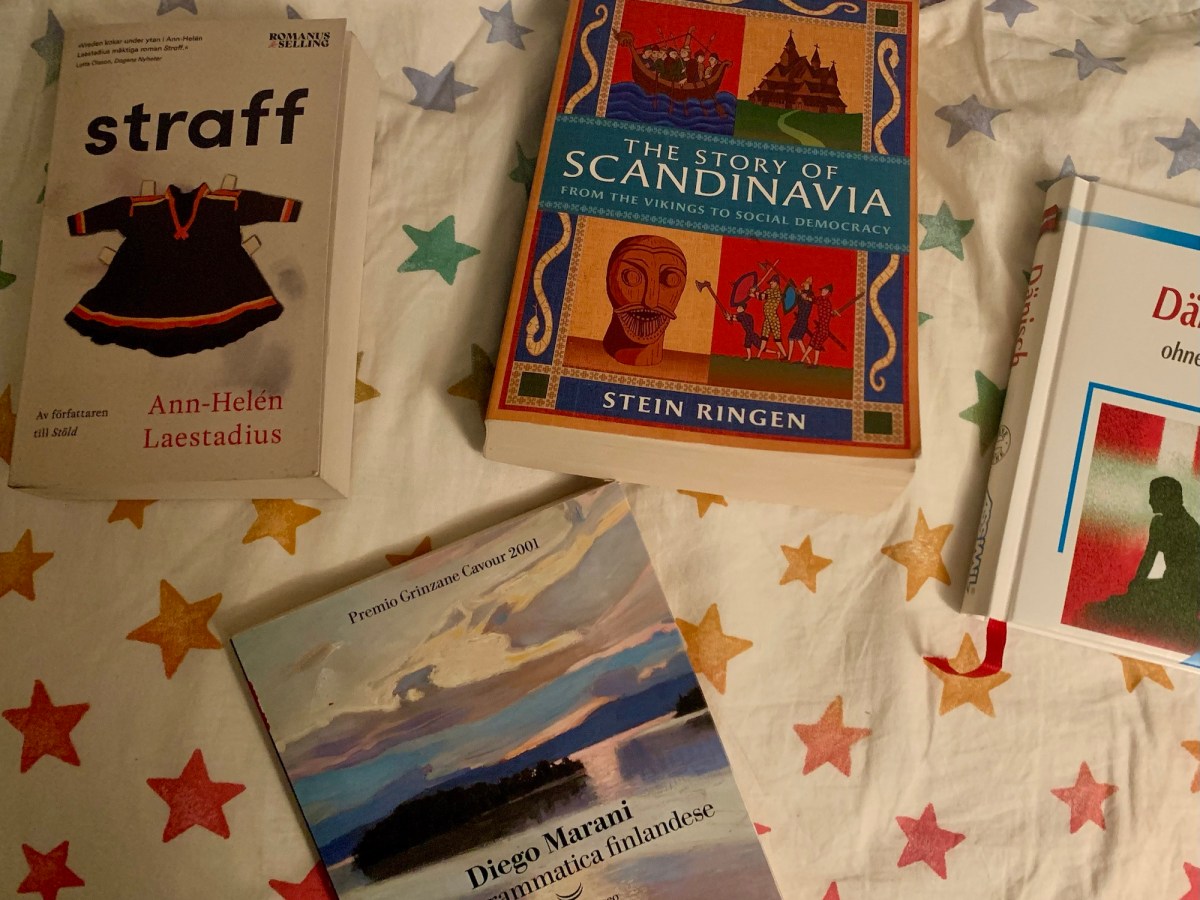
Love that they have thrift books downstairs at the Norwegian Church so I got a book again…

Dansk Sømandskirke / Deense zeemanskerk

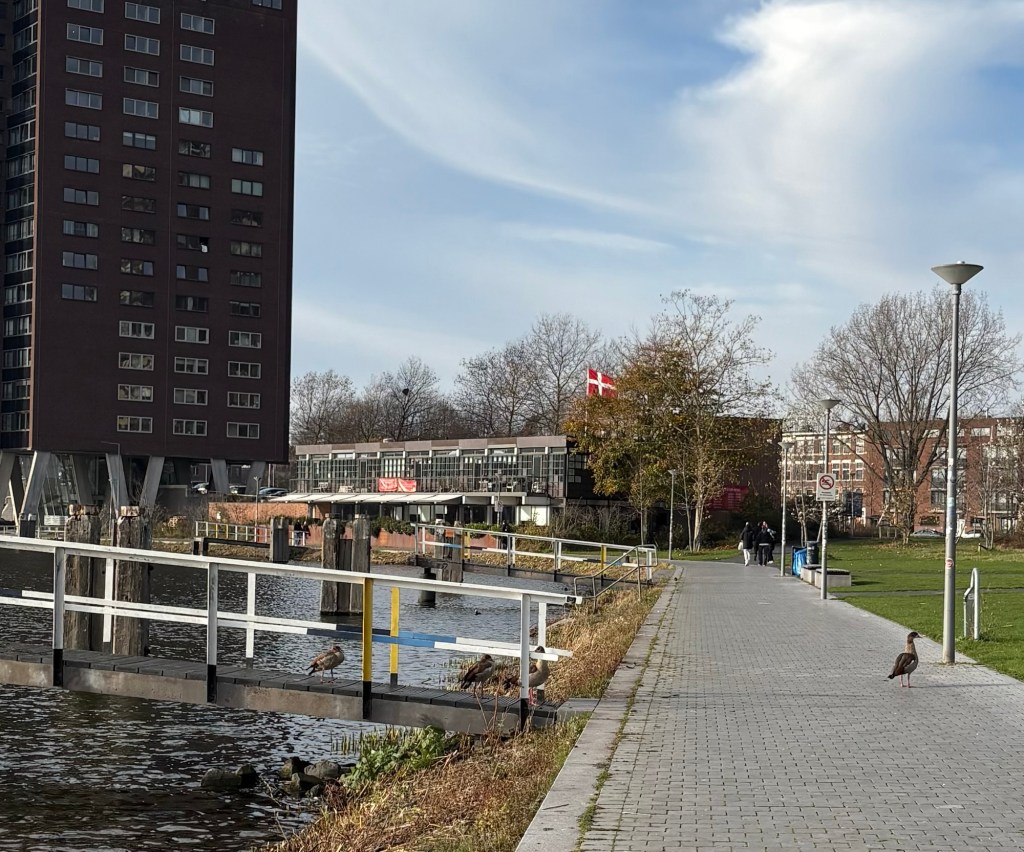
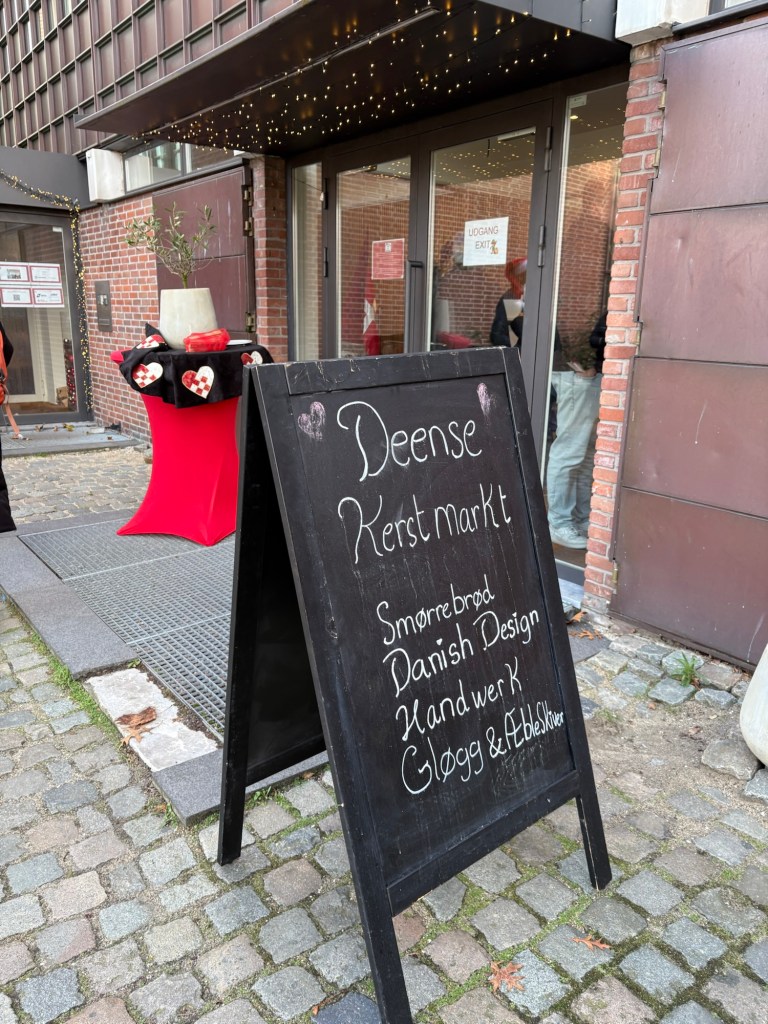
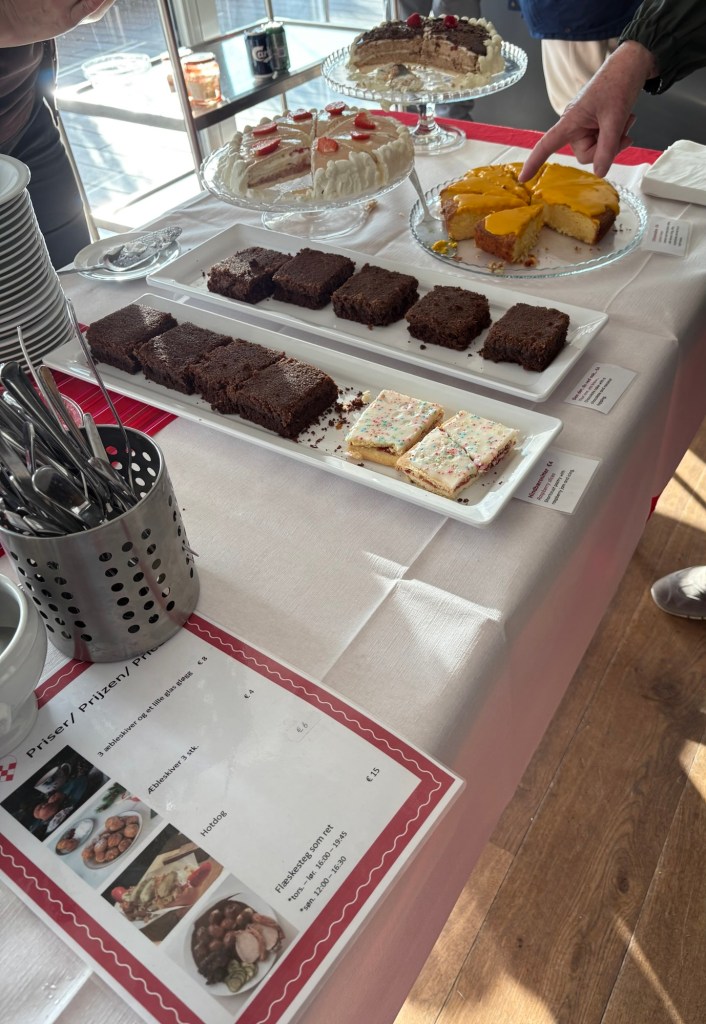
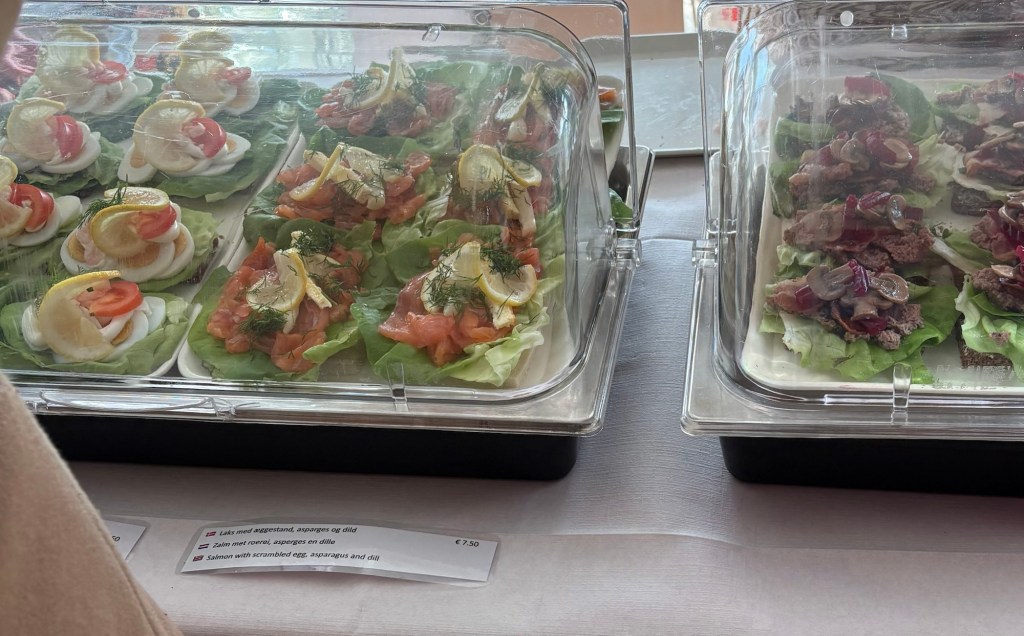
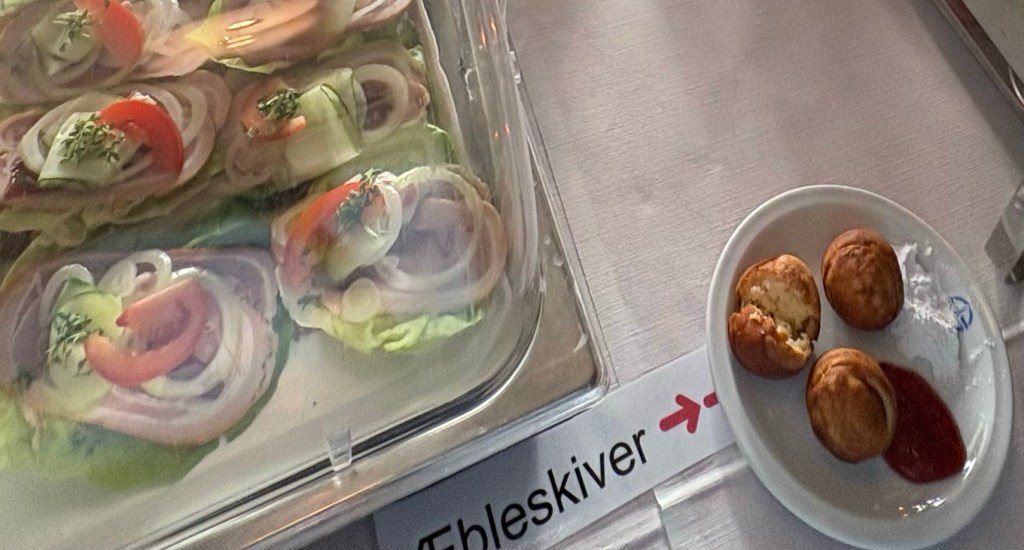
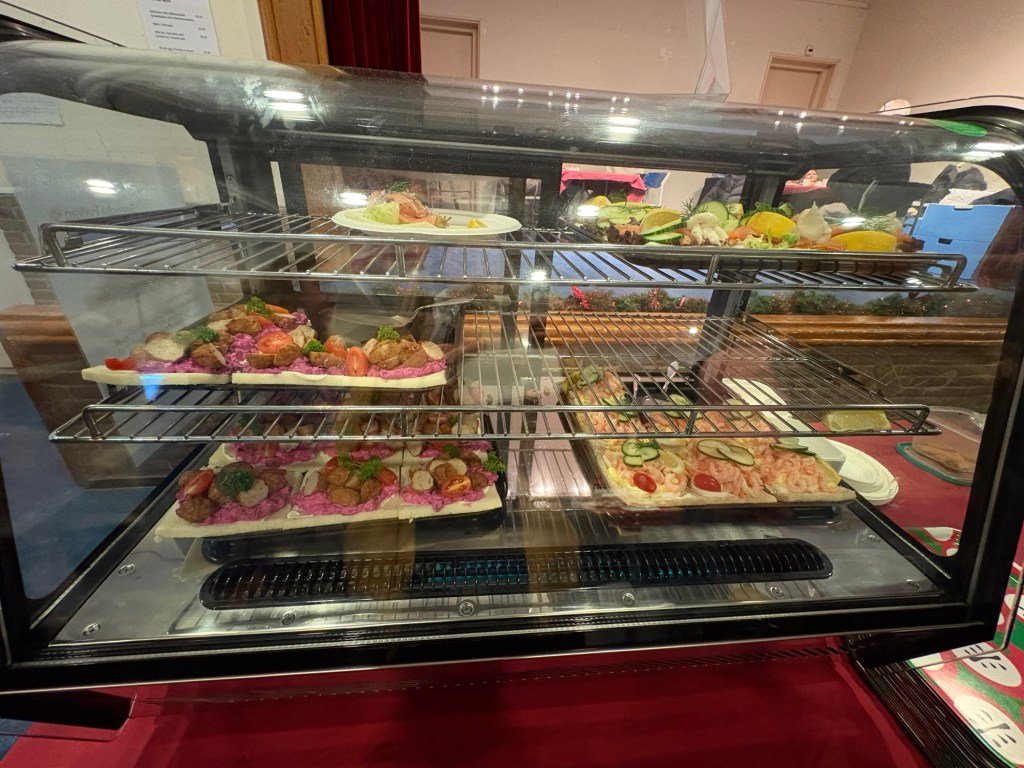
The Danish seamenchurch had several Smørrebrød available for lunch, hotdogs, and then a variety of cakes (hindbærsnitte, citronmåne..). And of course æbleskiver (Christmas mini pancakes, or a variation of poffertjes from a Dutch perspective). You could also order Flæskesteg, the typical Danish Christmas dish, as well!

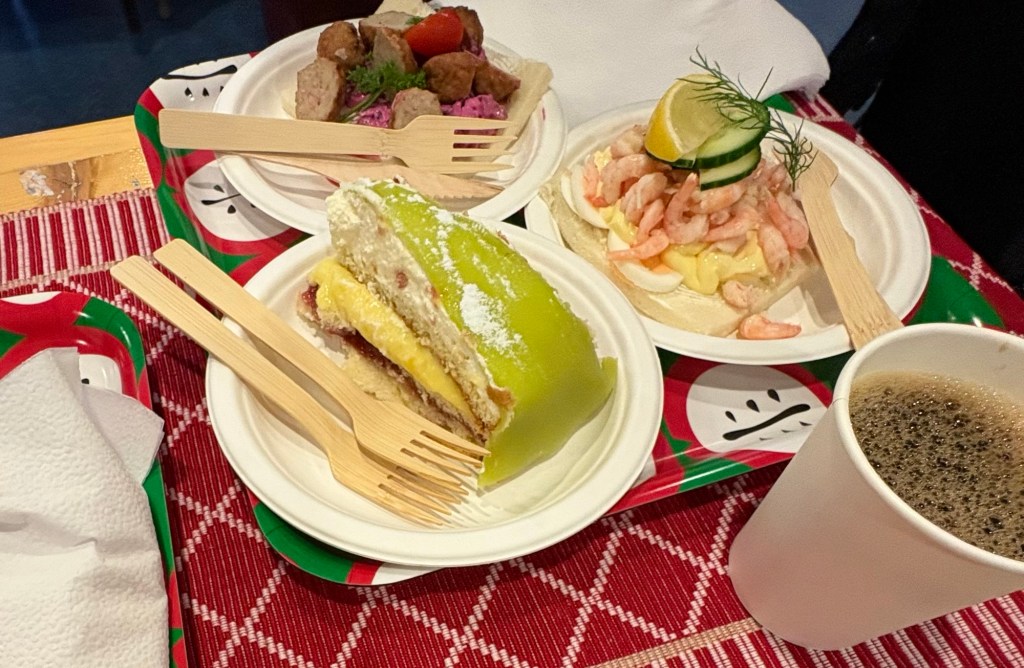
The available smørrebrød were rullepølse (sausage roll), eggs, salmon, leverpostej (pate). I ate a smørrebrød with leverpostej and mushrooms here, and æbleskiver

I got liquorice… they had a lot of candy here, nougat sweets as well

Between a Christmas market and the other, we also passed by Søstrene Grene, and I got havtorn jam, and Danish-brand date snacks.

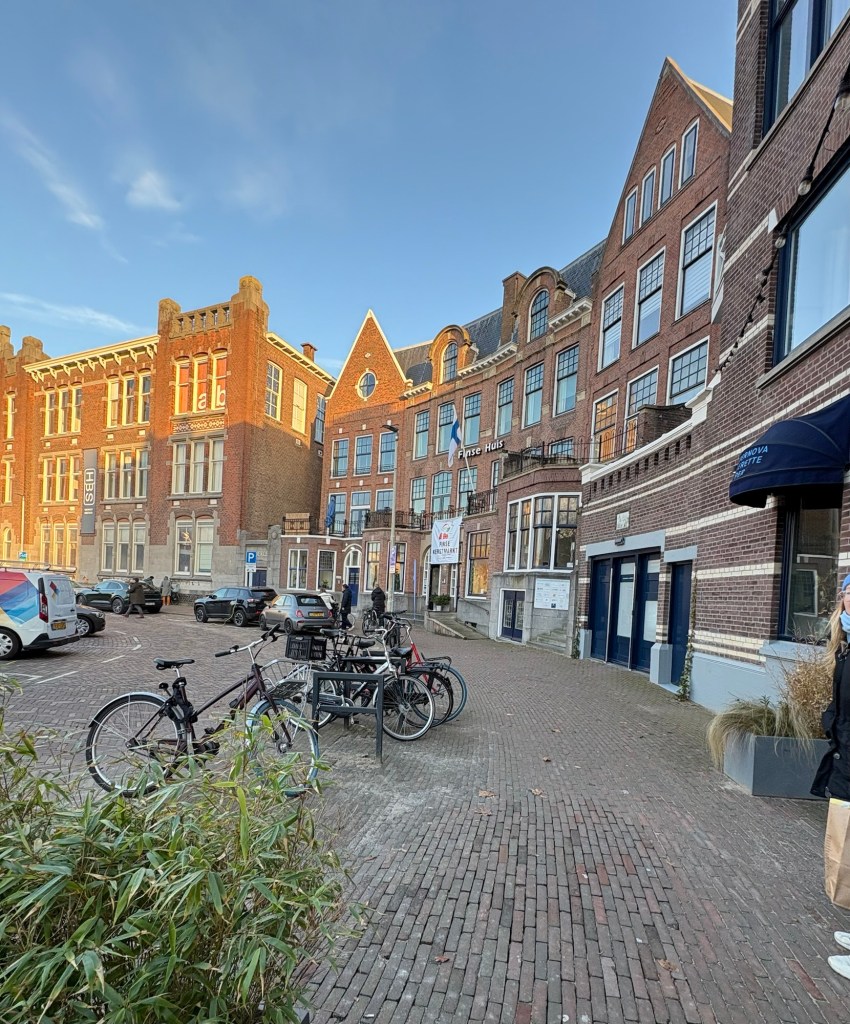
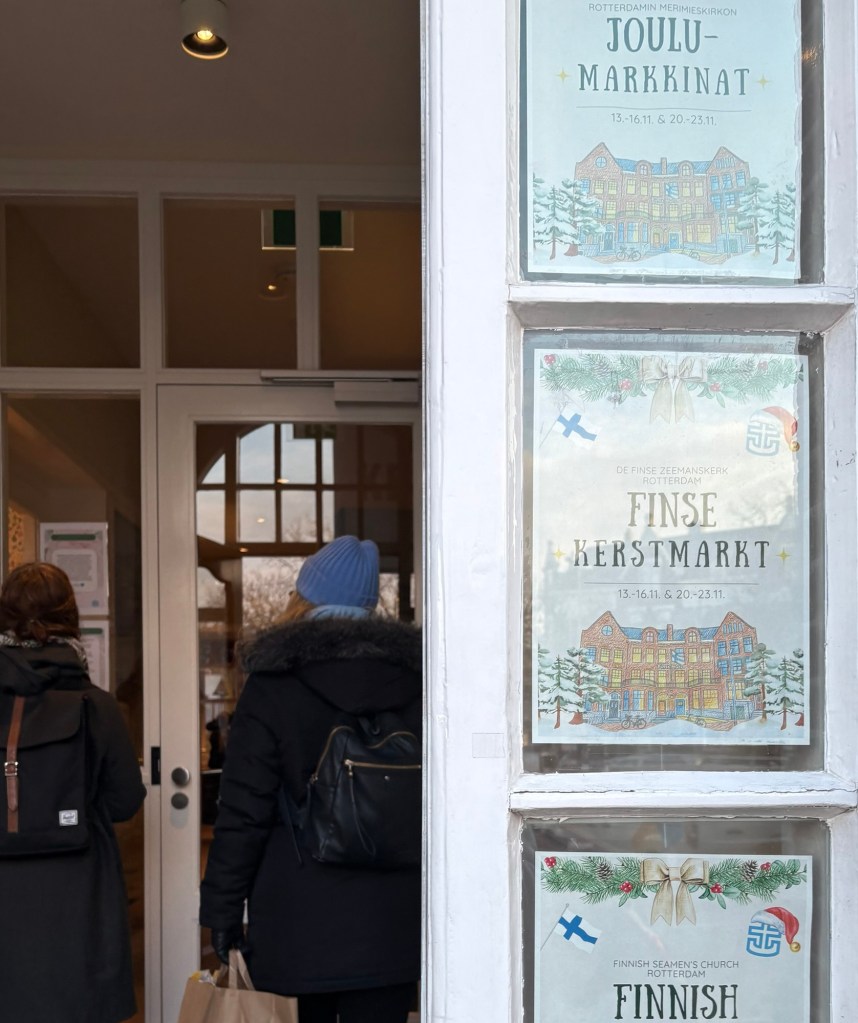
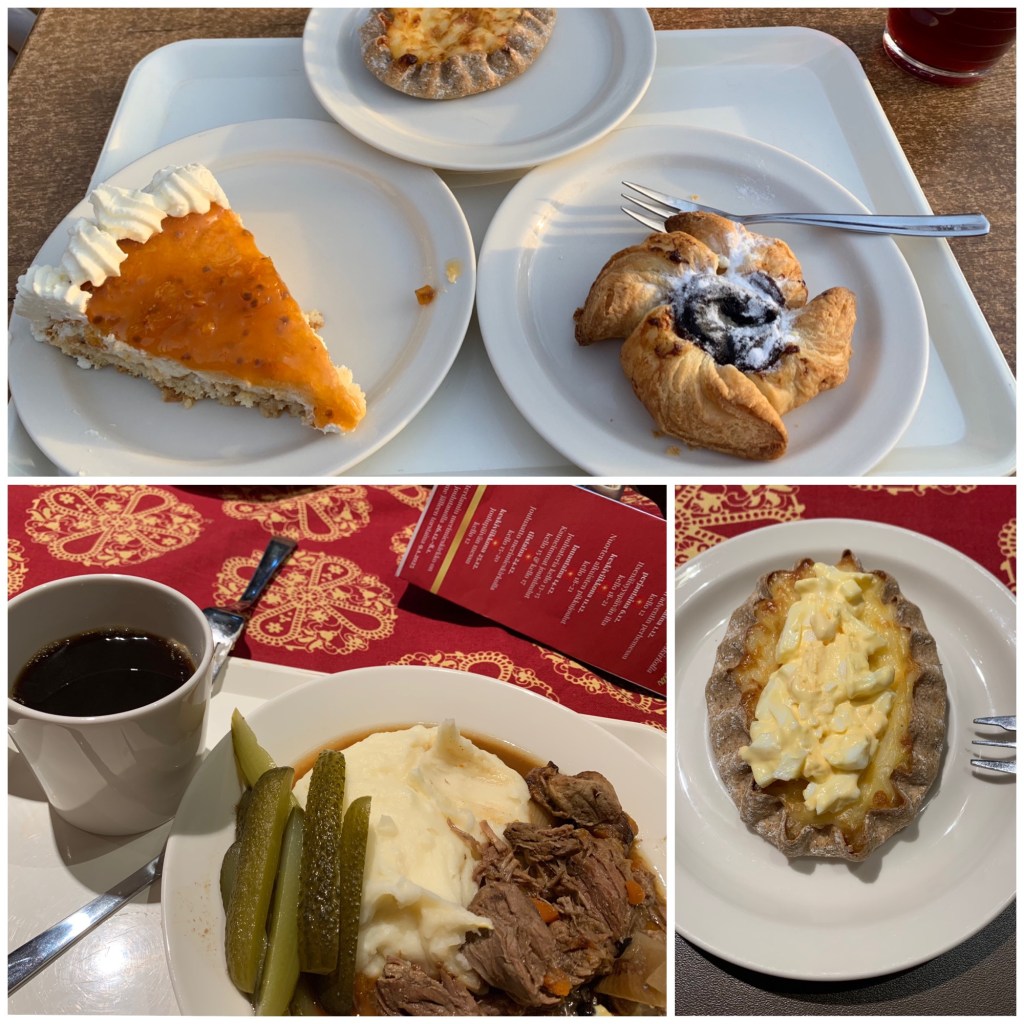
Suomen Merimieskirkko – Finse zeemanskerk/ Het Finse Huis

As it was on the same day as the Danish and Norwegian one, I could not skip the Finnish Christmas market I had been to last year too.

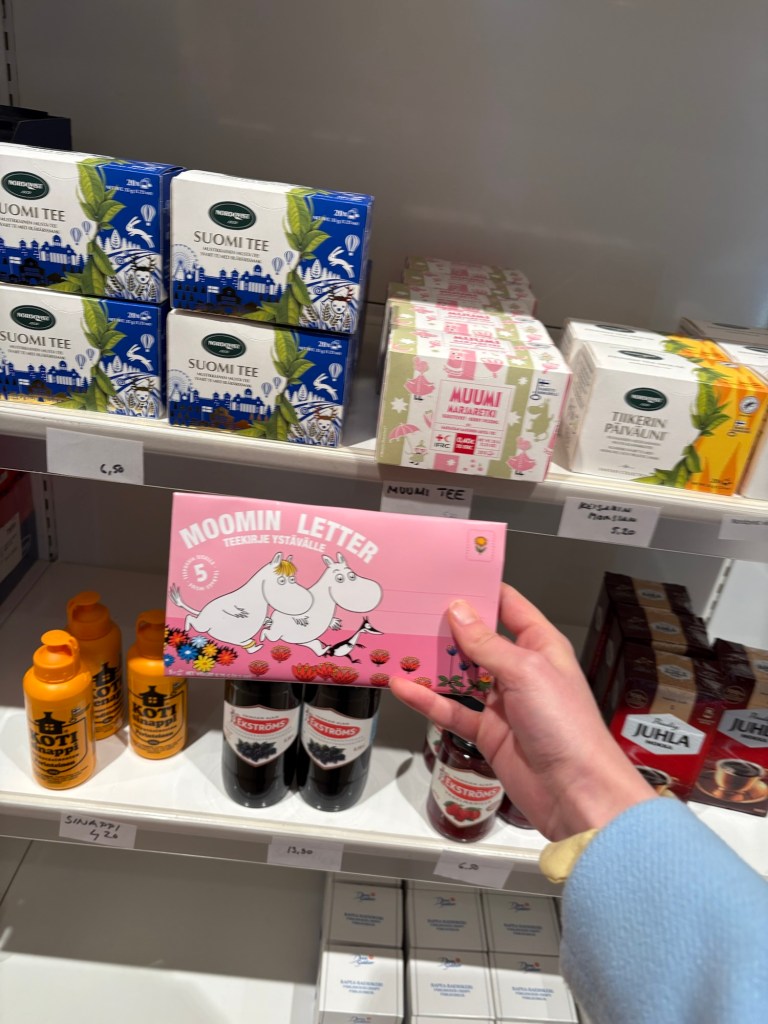
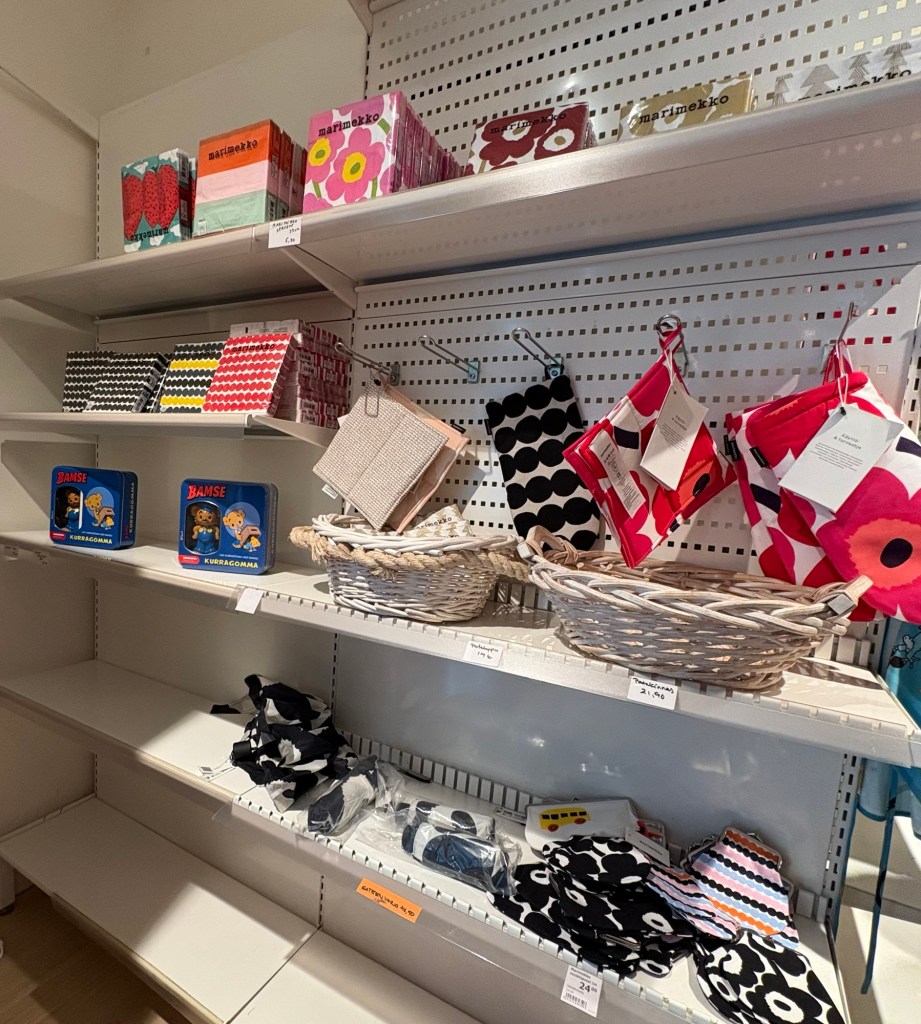
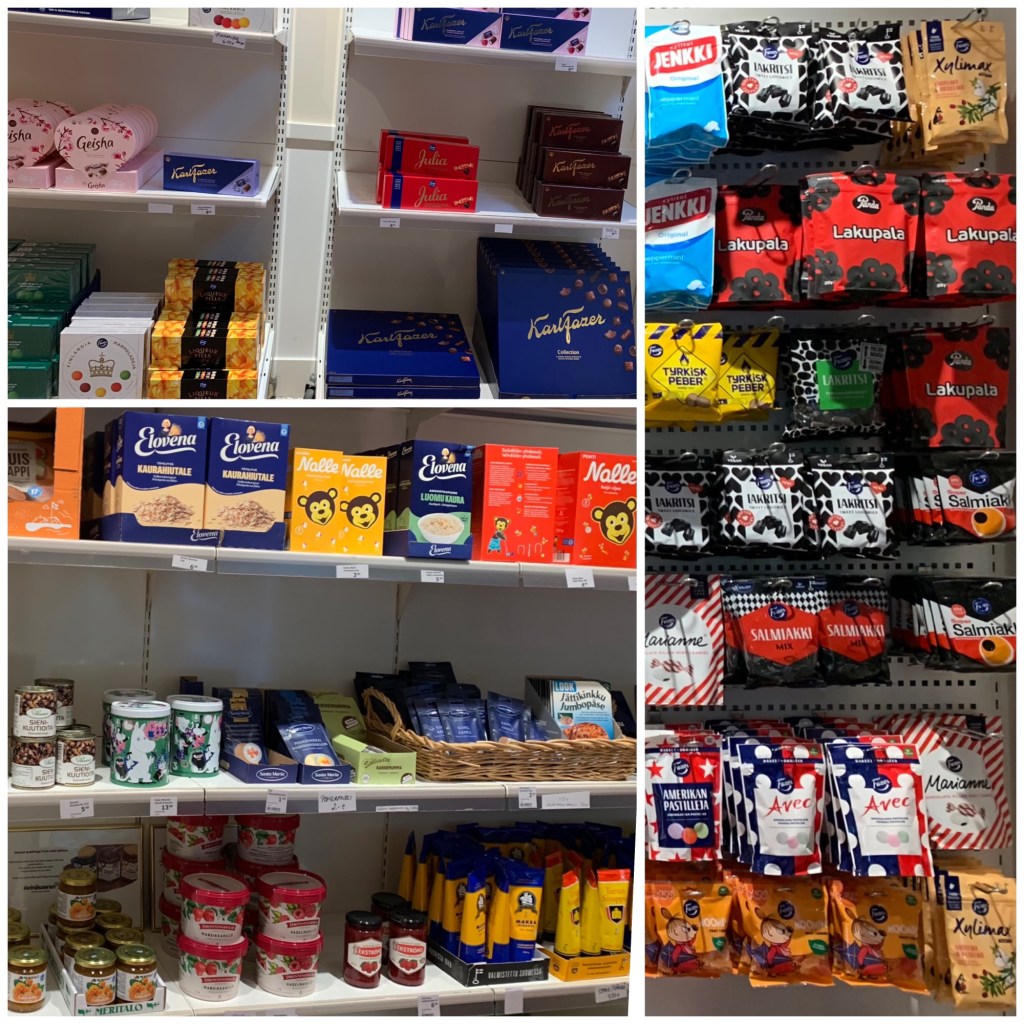
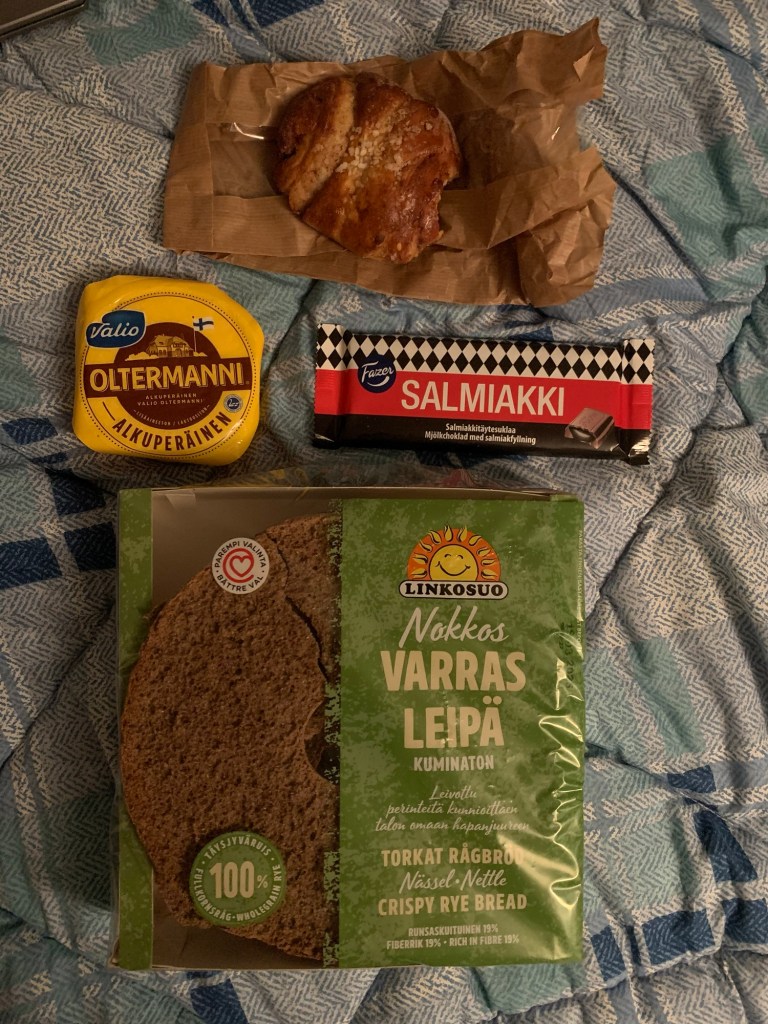
Finnish products as Marimekko, food and frozen food, cheeses, bread and Moomin branded fazer candy and chocolate were for sale

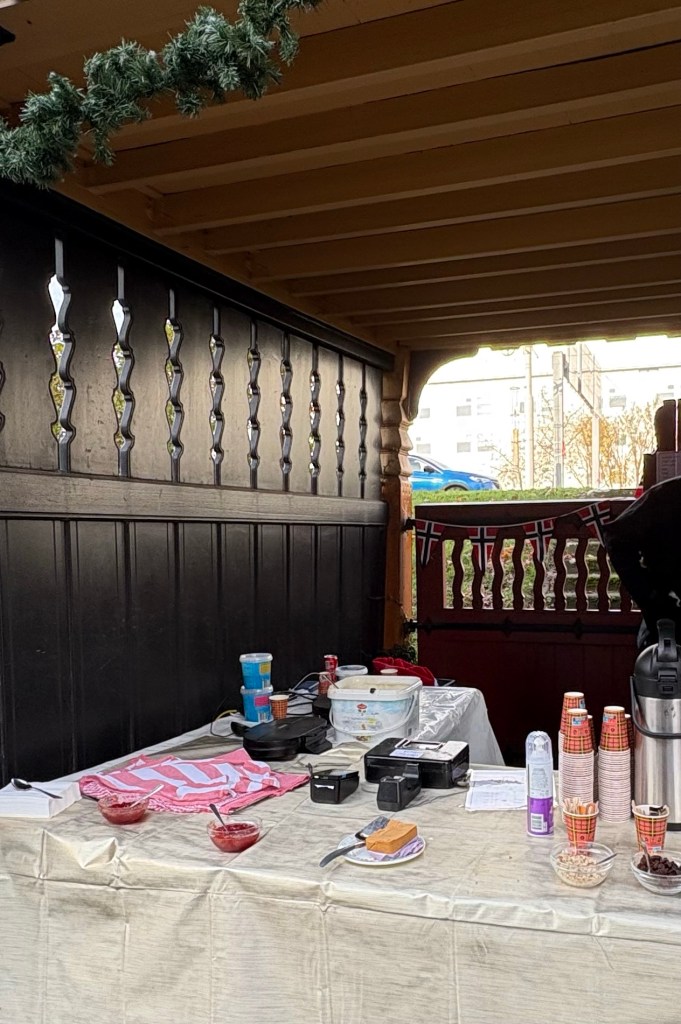
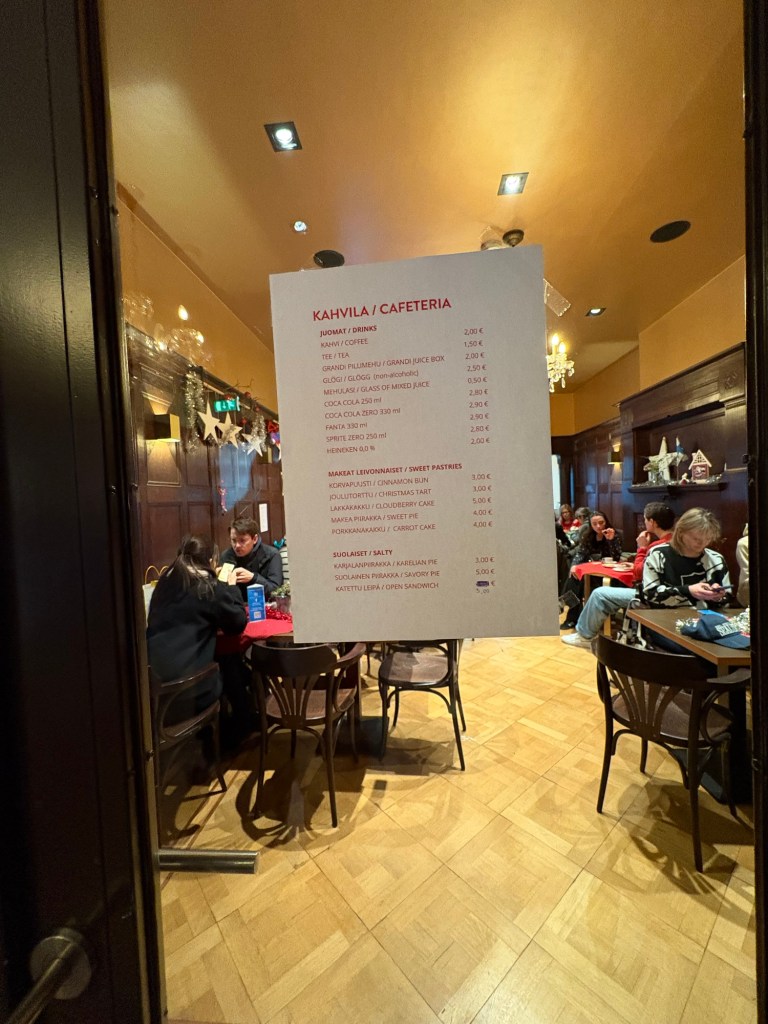
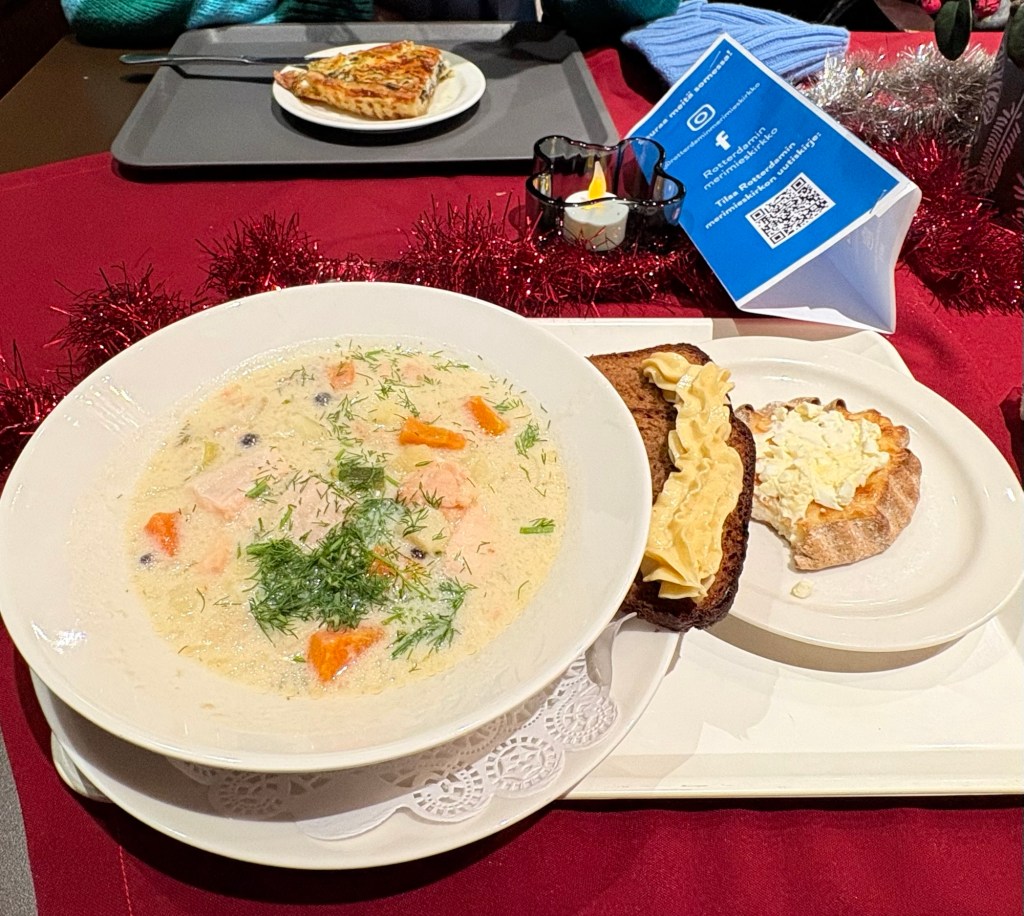
I was happy to enjoy some Finnish cuisine again at the cafe! I wanted to try the reindeer stew, but it was on Sunday…Outside there was a tent where you could have a Finnish pancake and hotdogs, but that too might be for next time…

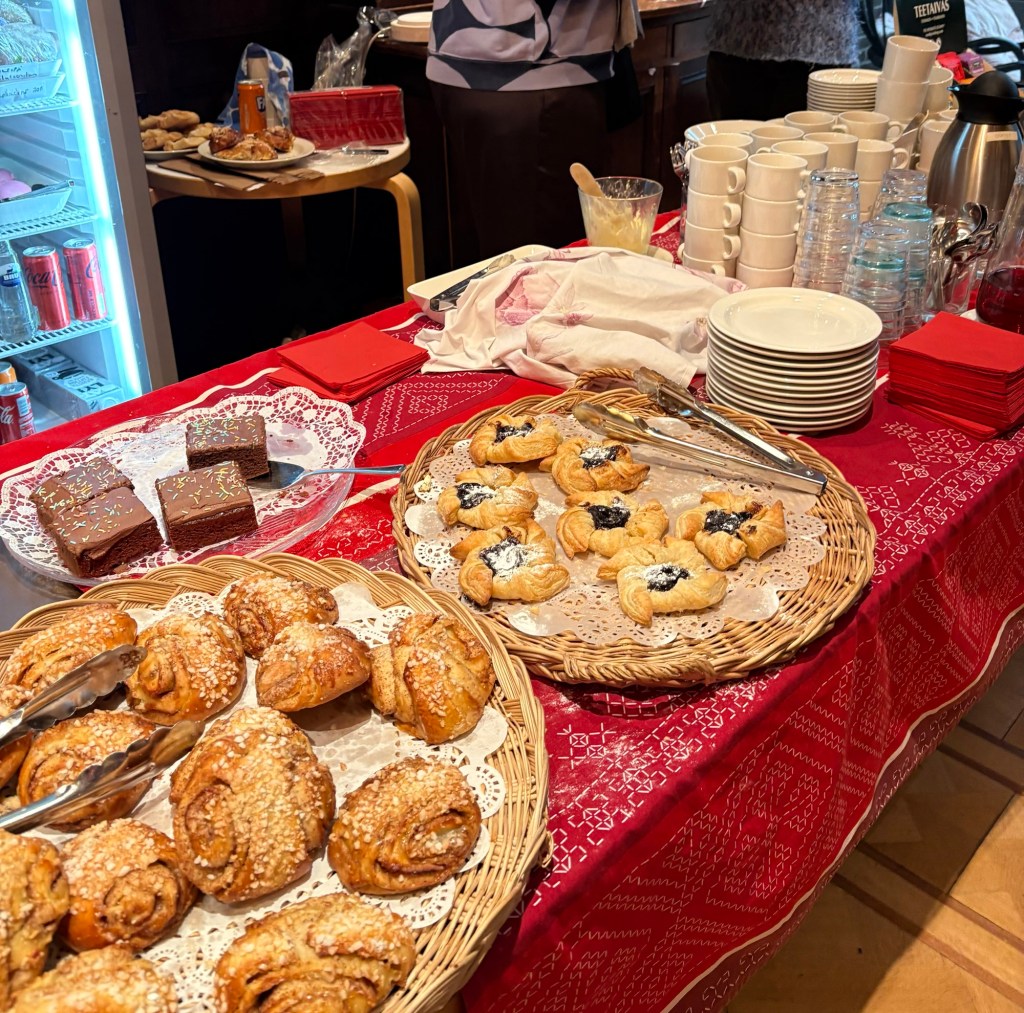
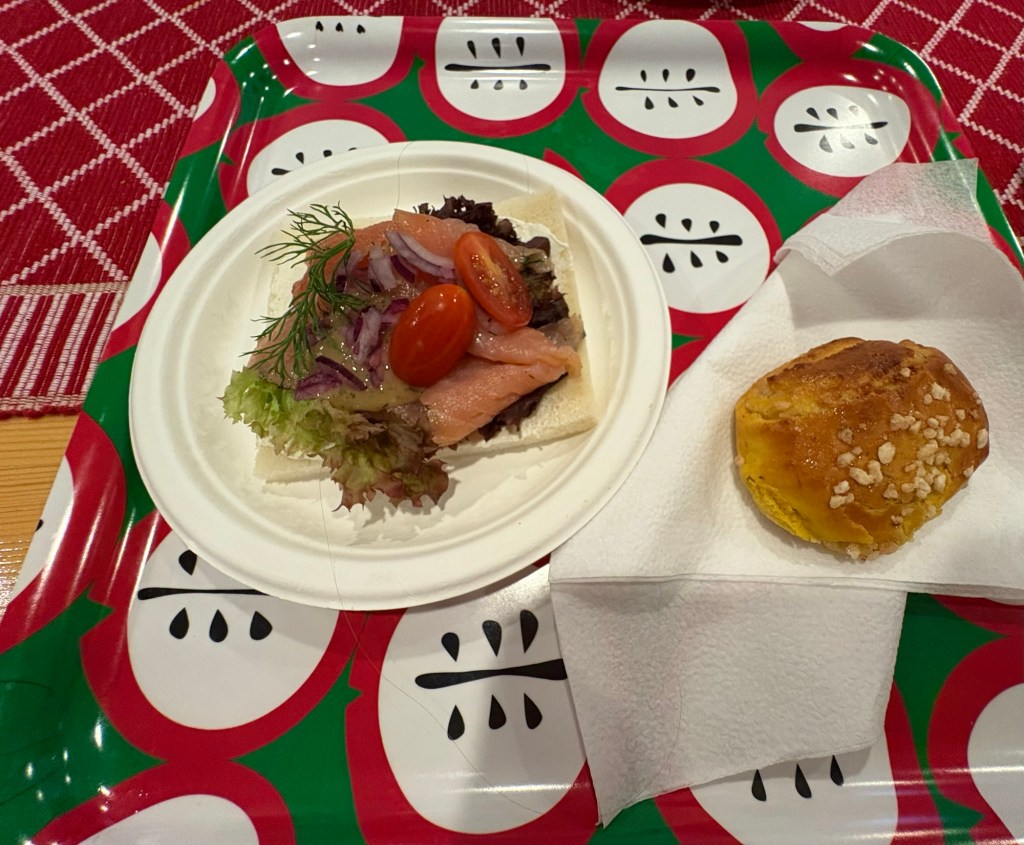
I did take a korvapuusti, joulutorttu and salmon savory pie to bring home. Third picture is from last year.

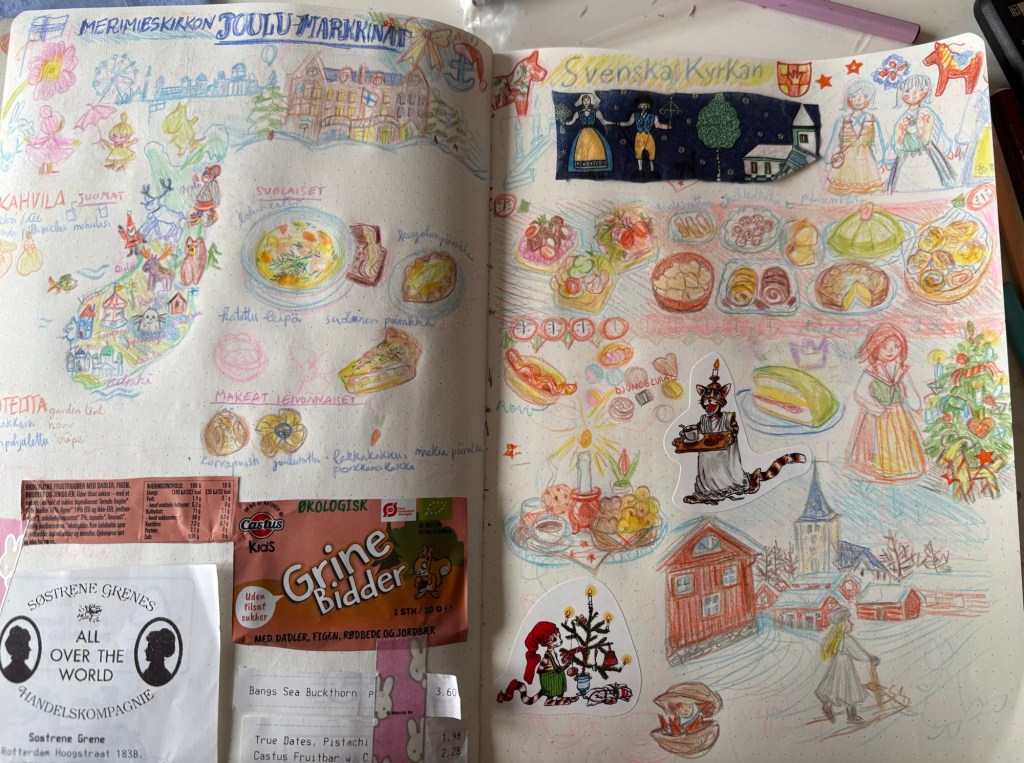
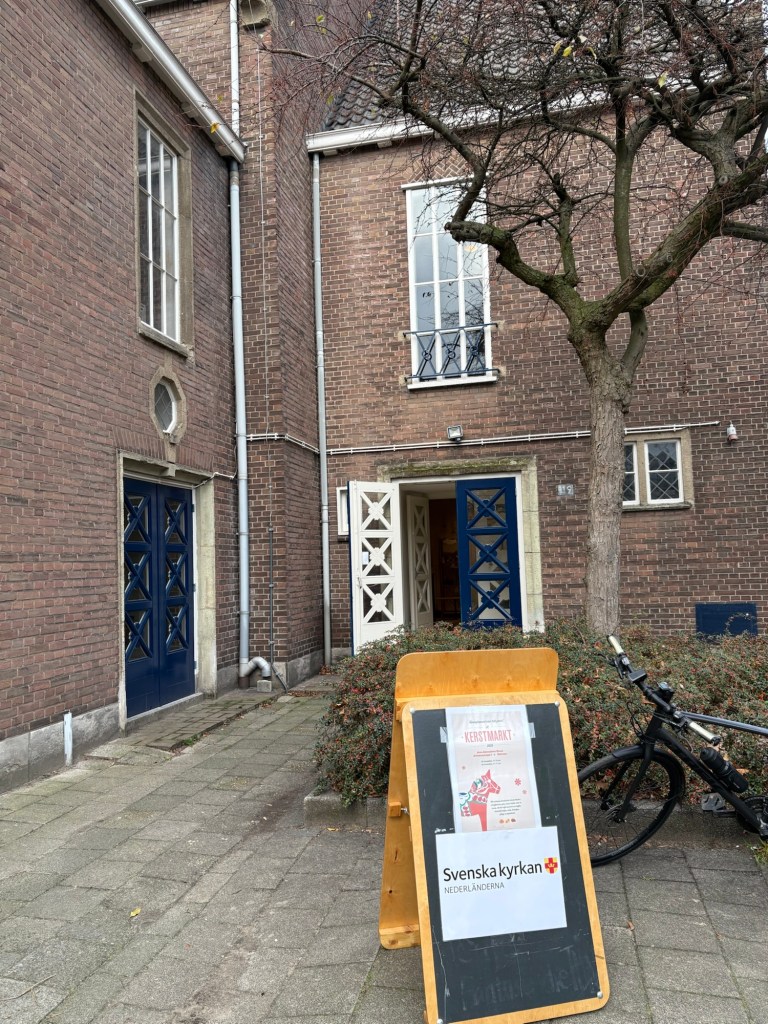
Swedish Church – Svenska Kyrkan (@ Scottish church)

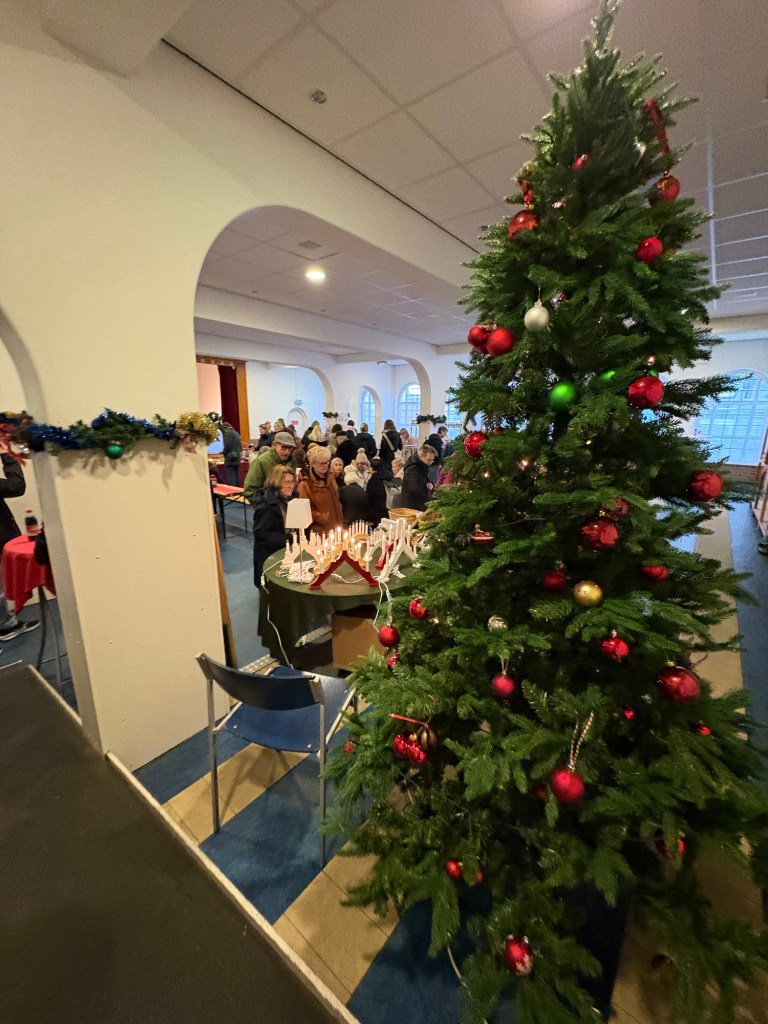
The Swedish Christmas market was on the weekend after the other ones (do not think I would have made it to a fourth one on the same day anyway) and on Friday-Saturday only. This due to the services of the Scottish church the market was hosted at – apparently there are no Swedish seamen anymore in Rotterdam so the Swedish seamen church closed years ago. But the Christmas market tradition has continued!

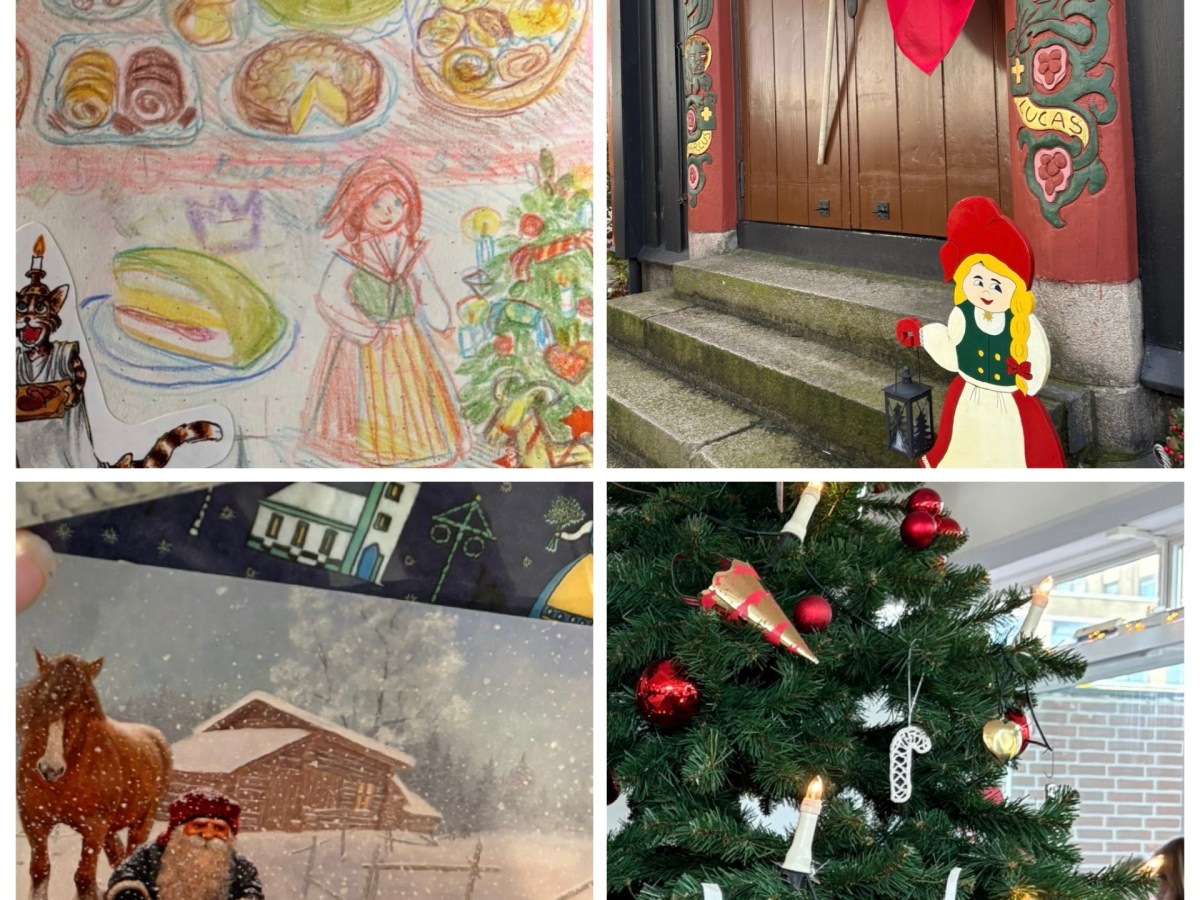
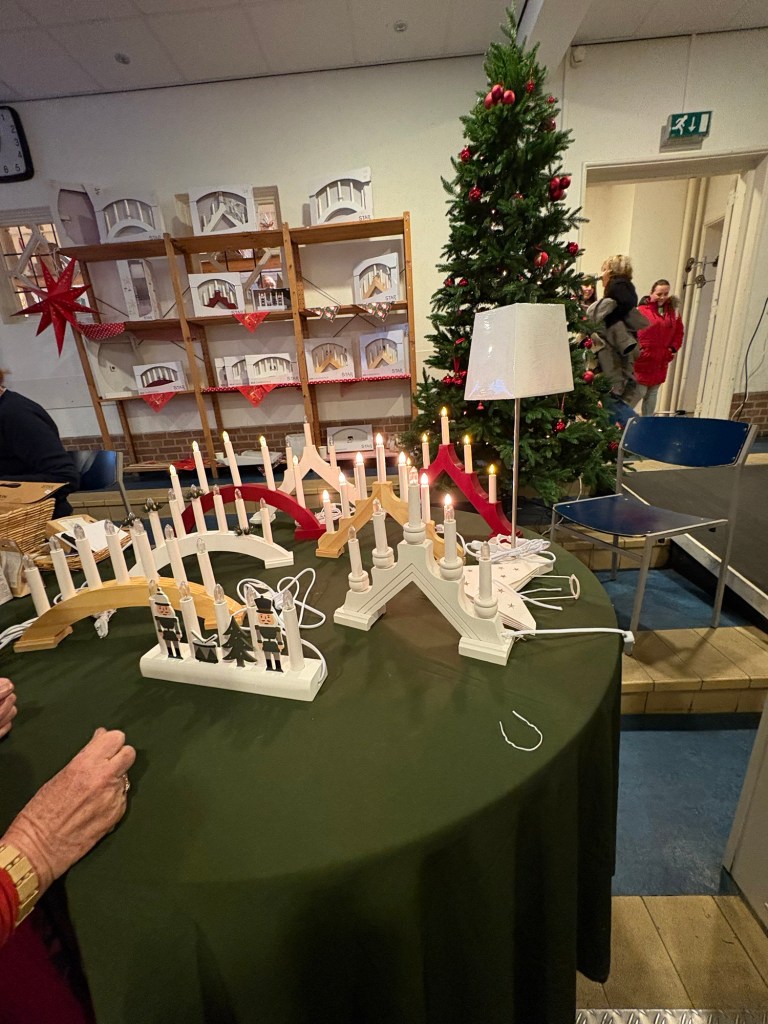
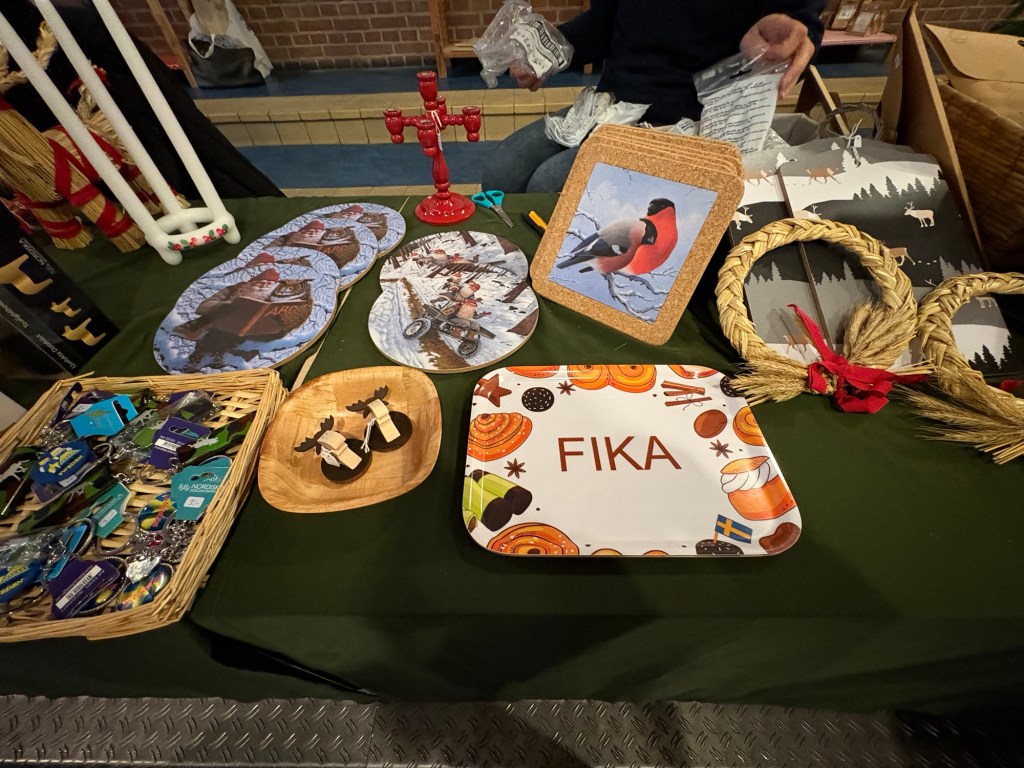
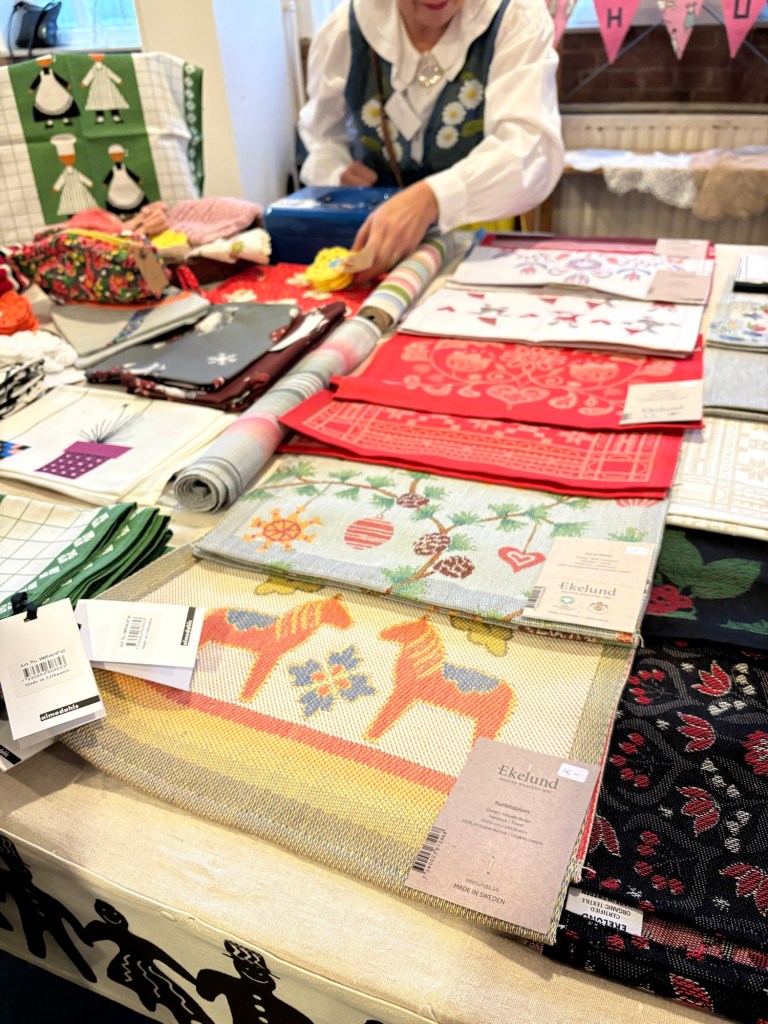
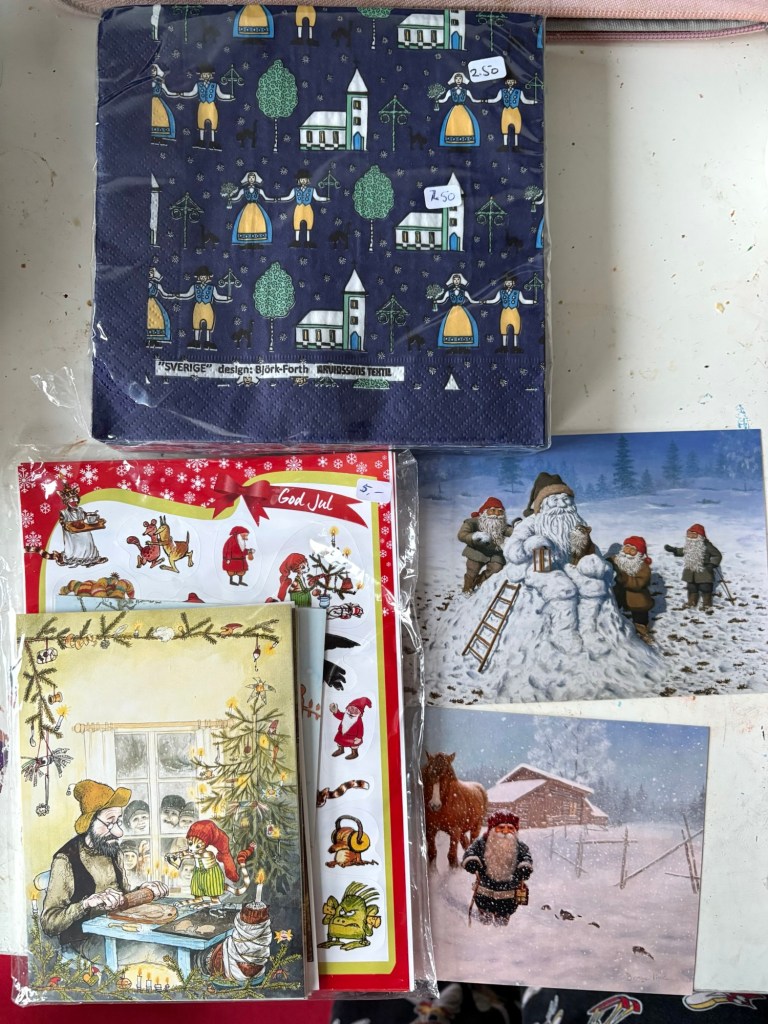
As the other Nordic markets, food products and Christmas objects were being sold – among other advent candle holders!

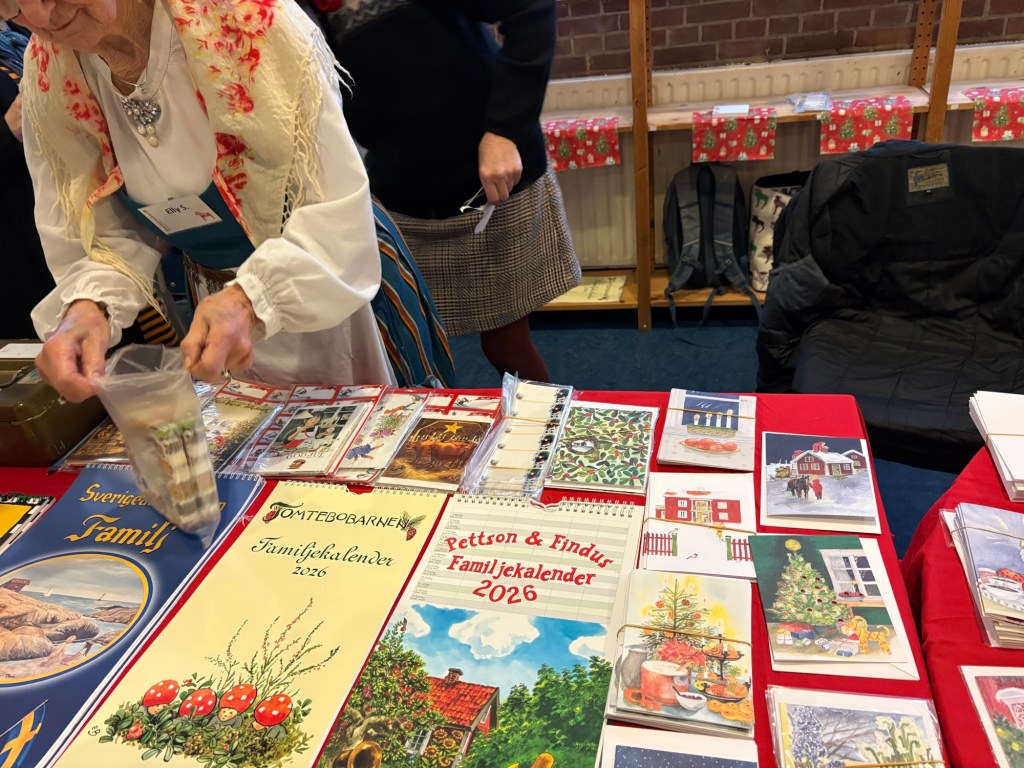
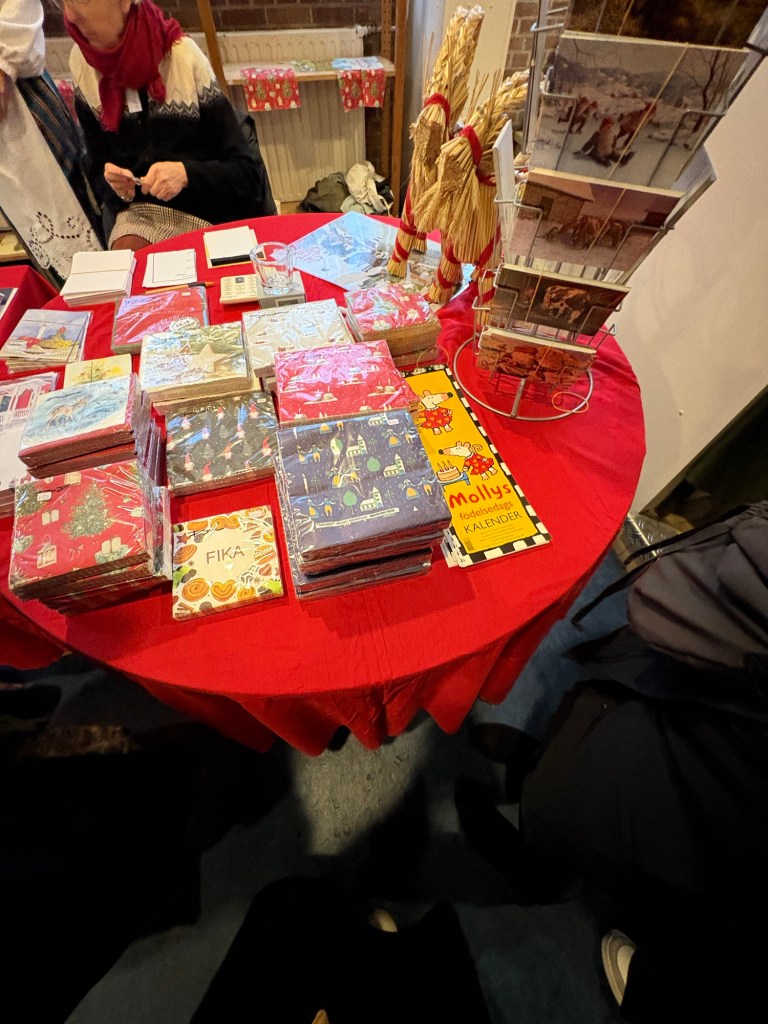
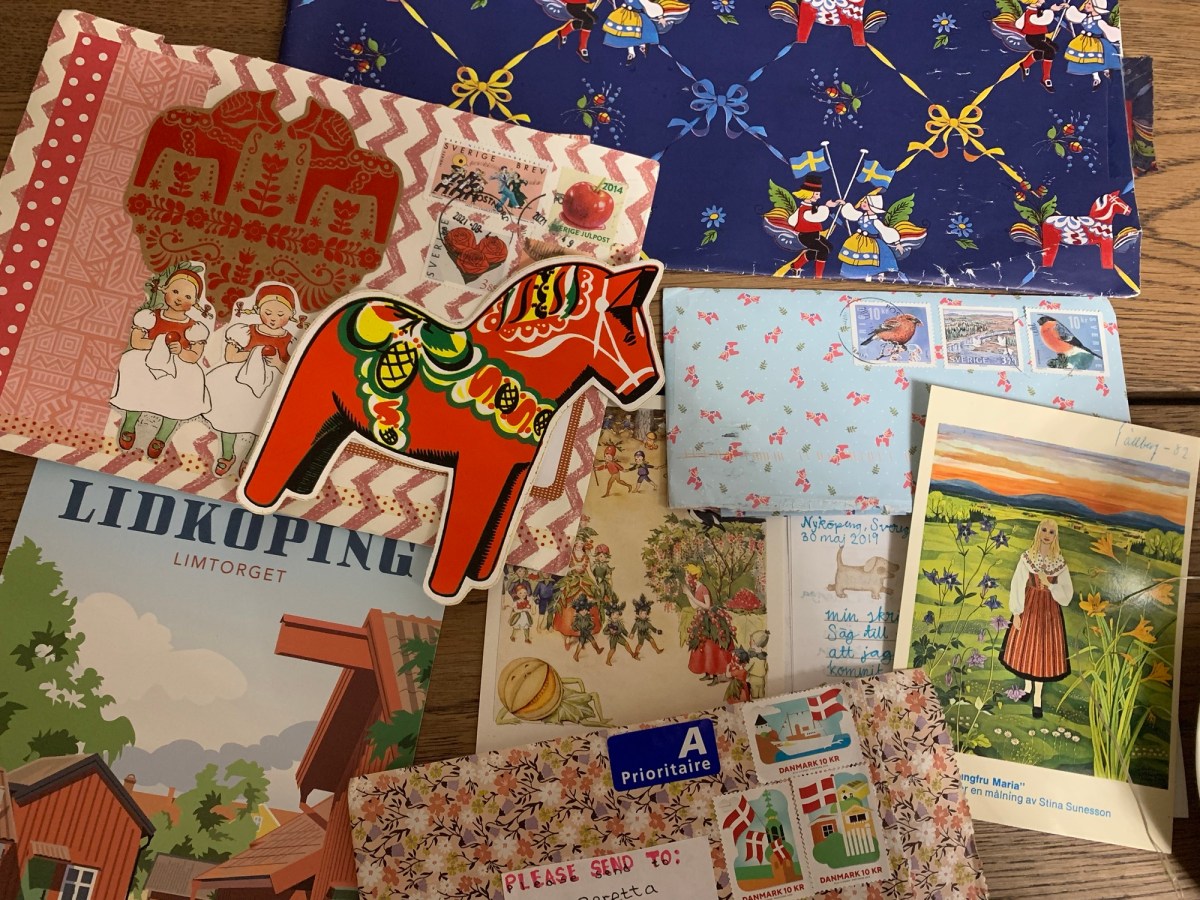
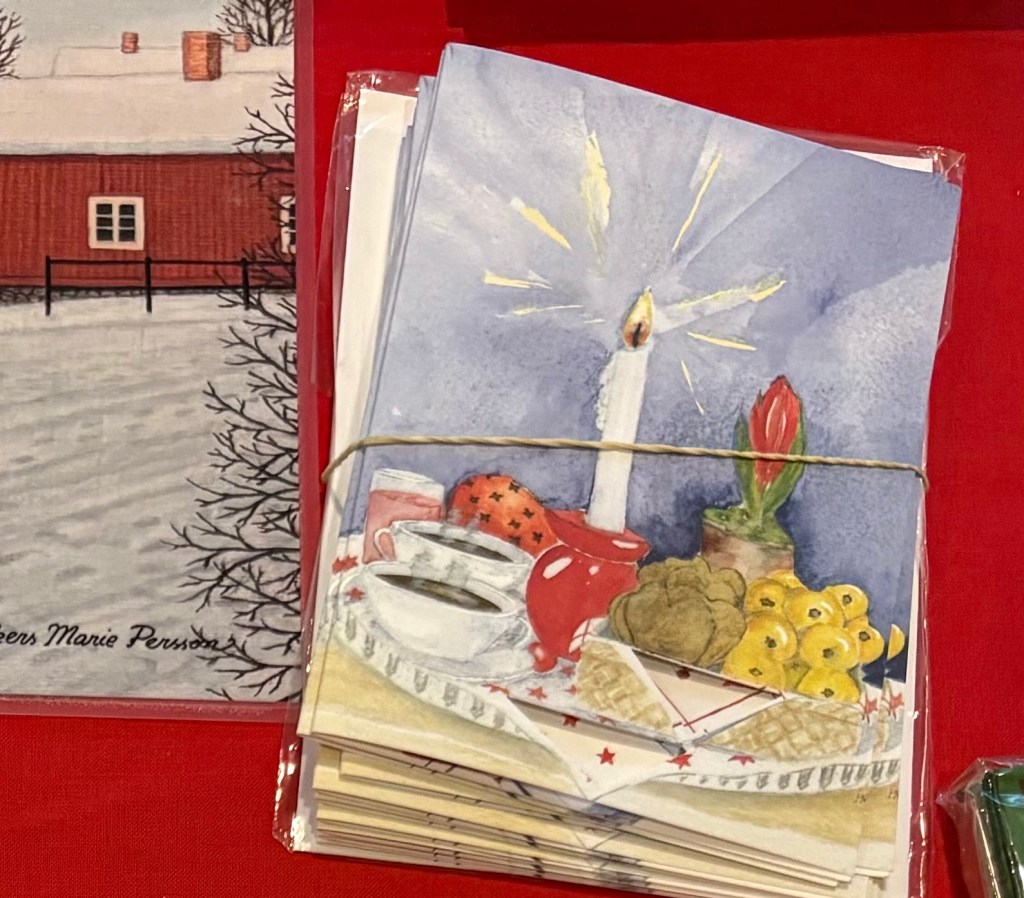
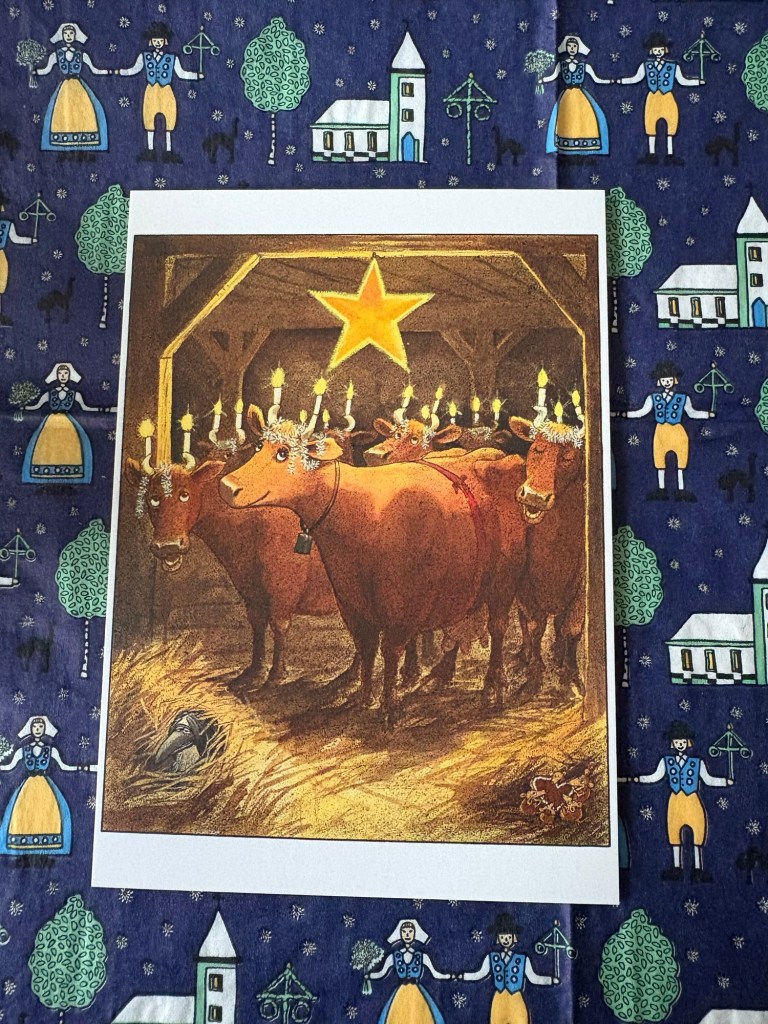
I liked the postcards in particular here. They had a 5€ set with stickers, which I found a very cute idea

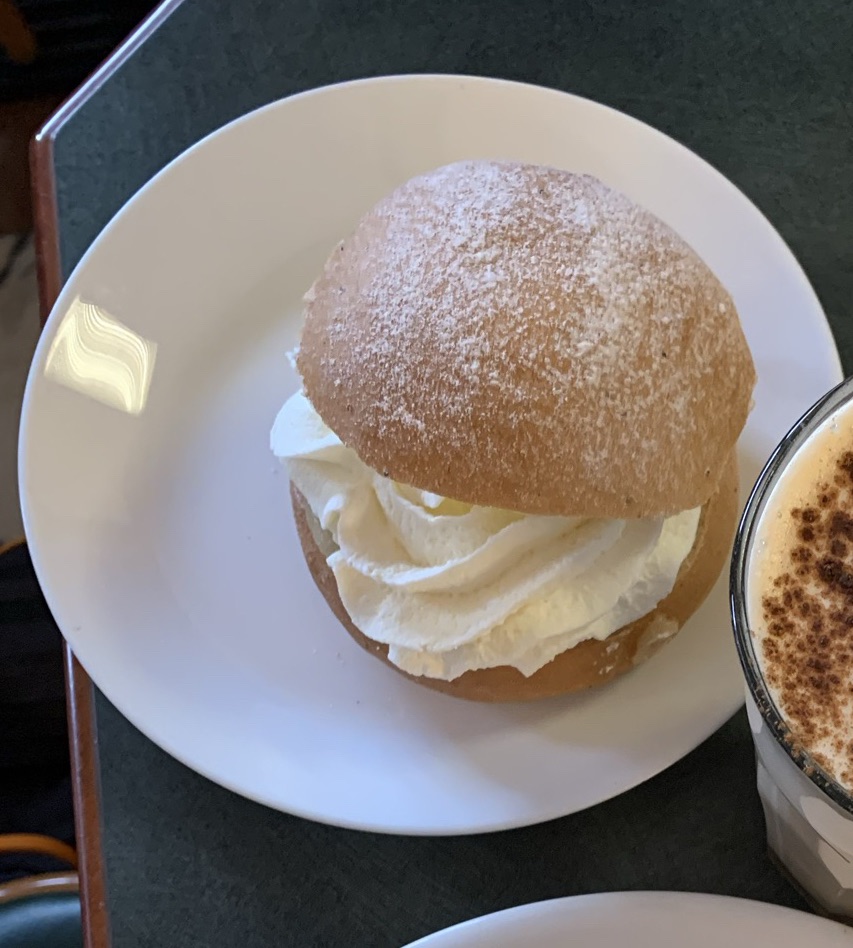
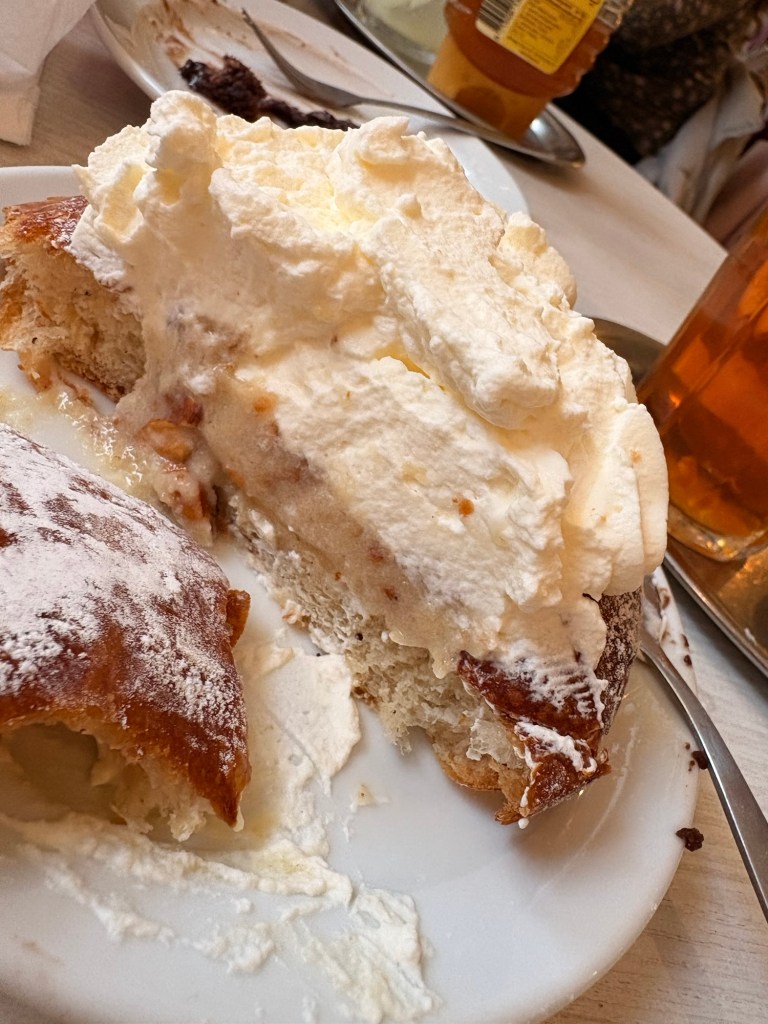
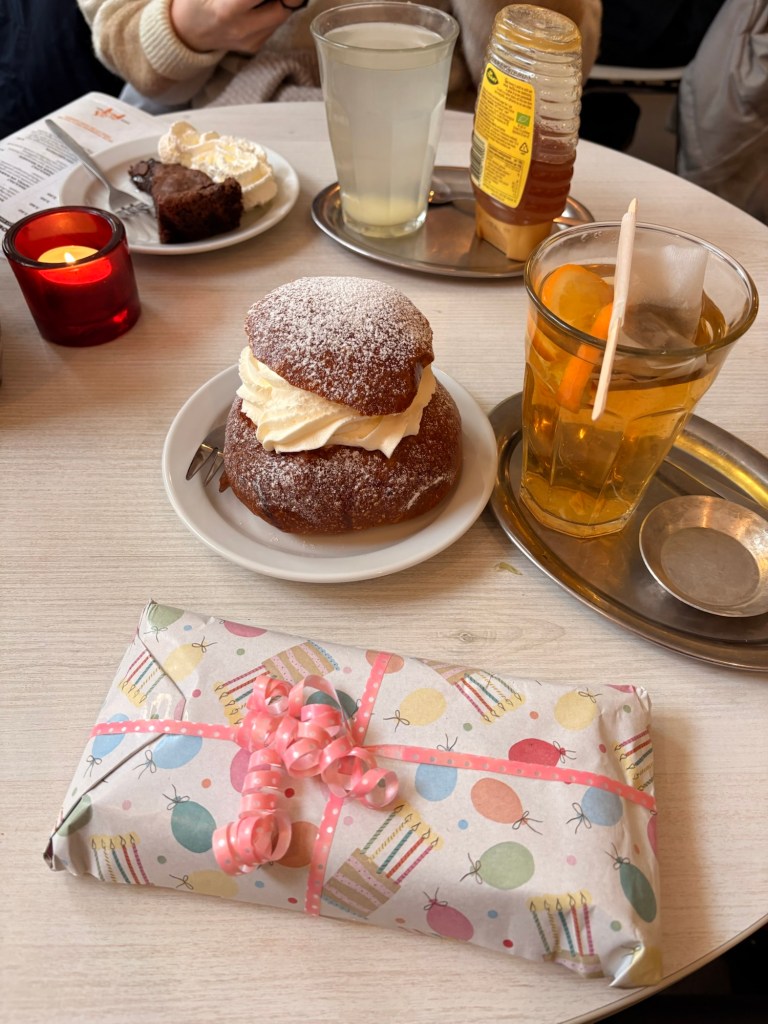
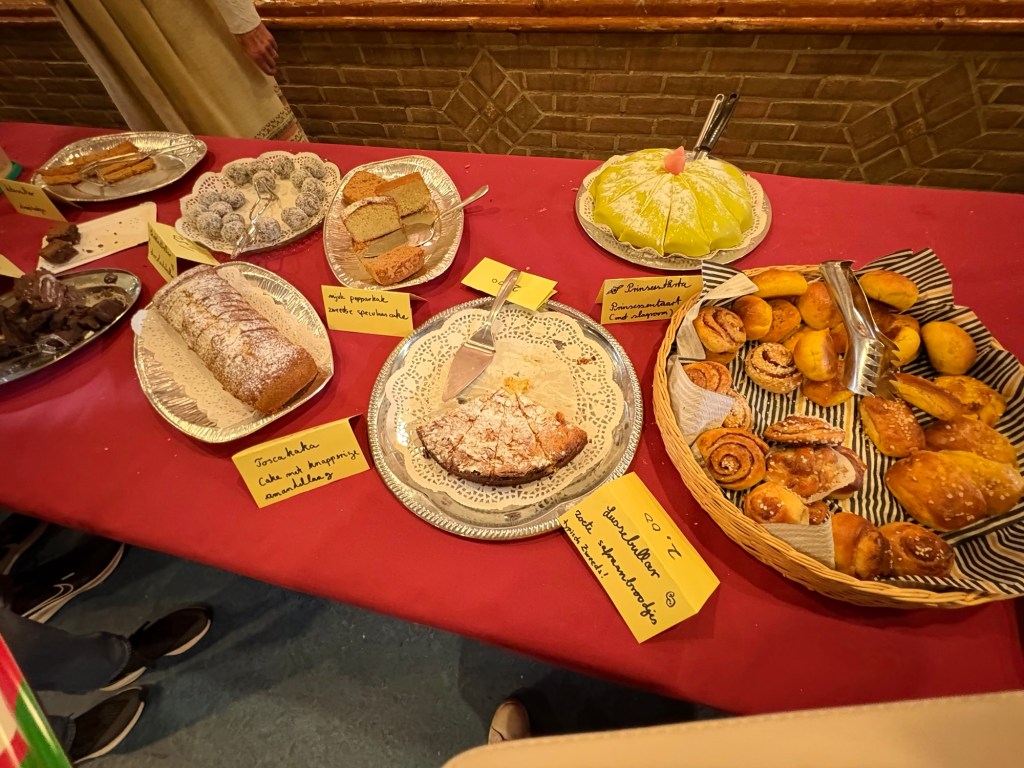
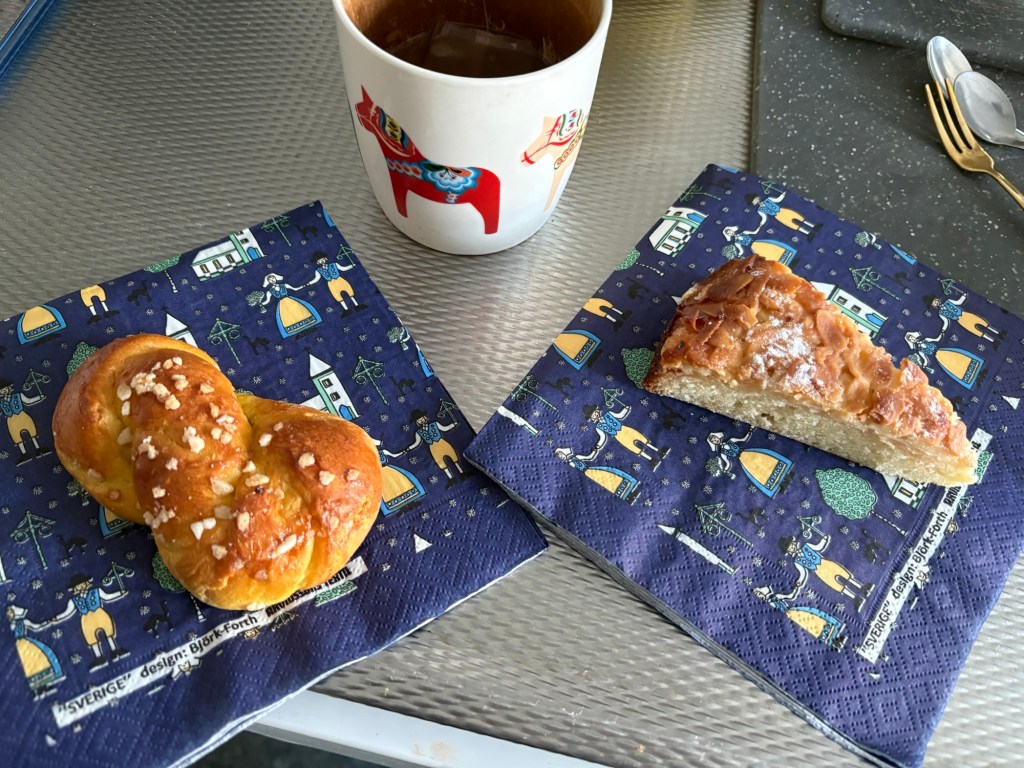
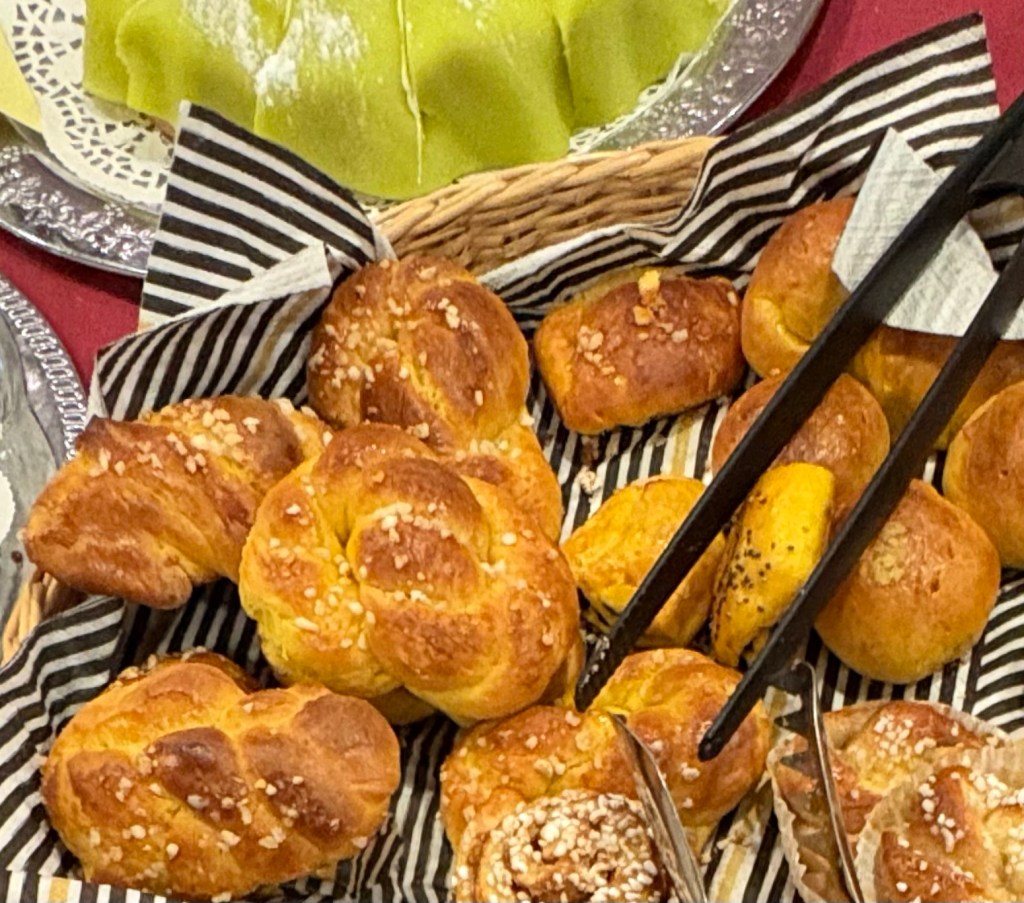
Open sandwiches, cookies and cakes were sold. And of course saffron and cinnamon buns!!

I got a Toscakaka slice and a second saffron bun to take home (I love them).

all I got to take home, including havtron jam and date snacks from Søstrene Grene in the pictures):

I was glad to visit all Nordic markets in Rotterdam this year , follow me for more reviews like this!!

Lucia concert (and a Lussekatt) in Den Haag

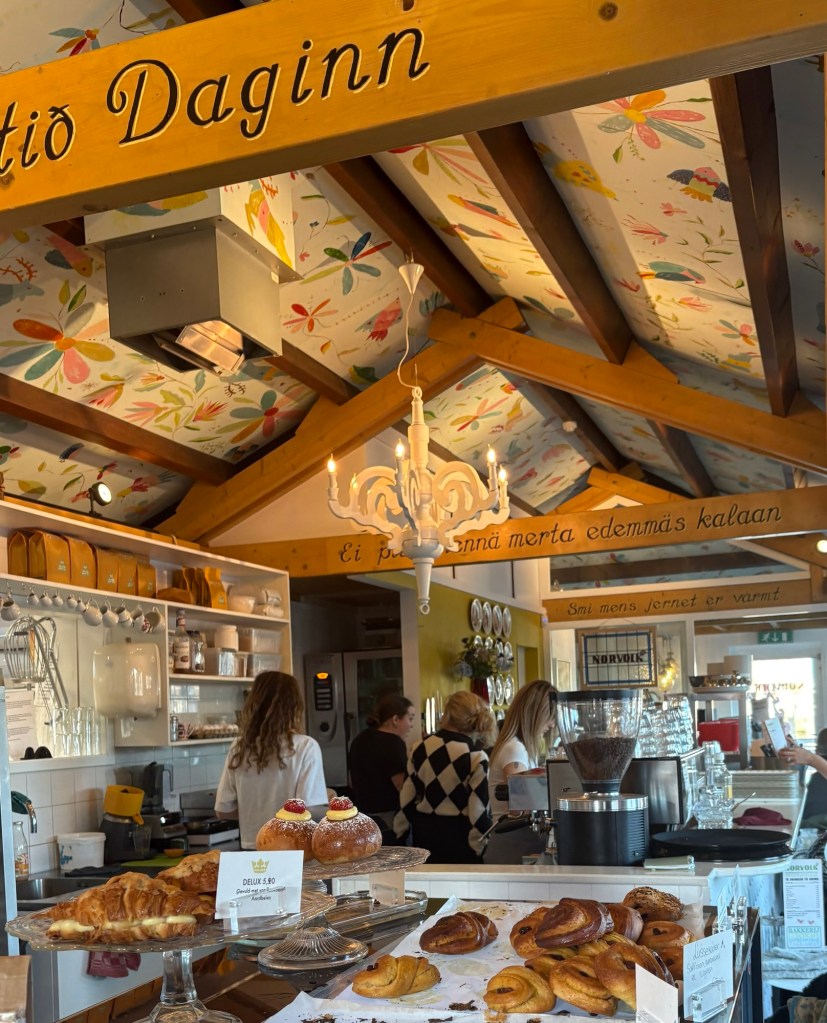
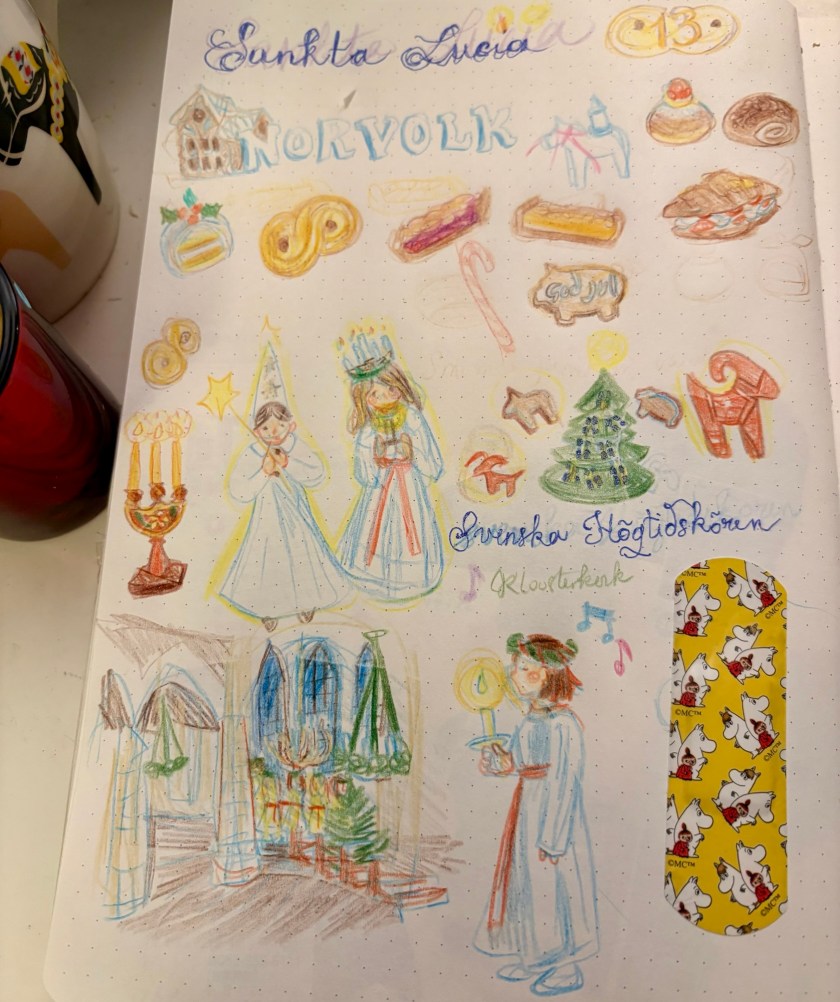
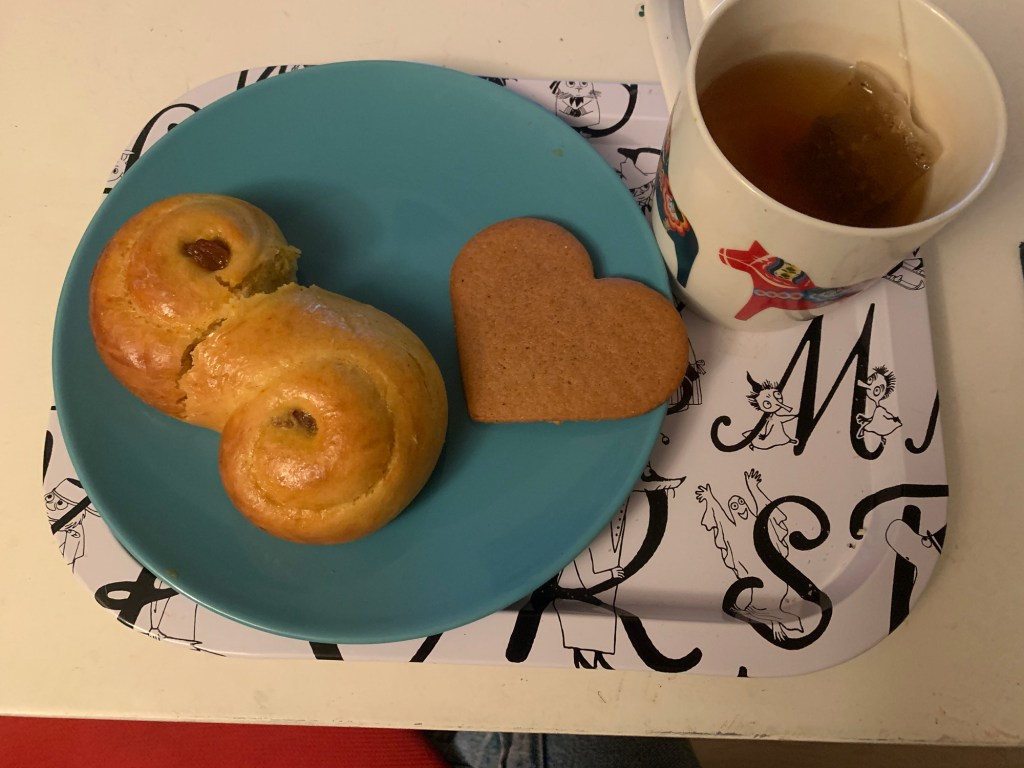
This year, I celebrated Lucia in the Hague by eating a Lussekatt at Scandinavian bakery Norvolk, and attending a Lucia church concert.

13th December is Luciadagen in Sweden and Scandinavia, this year on a Saturday, so I could attend a Lucia concert in the Hague!

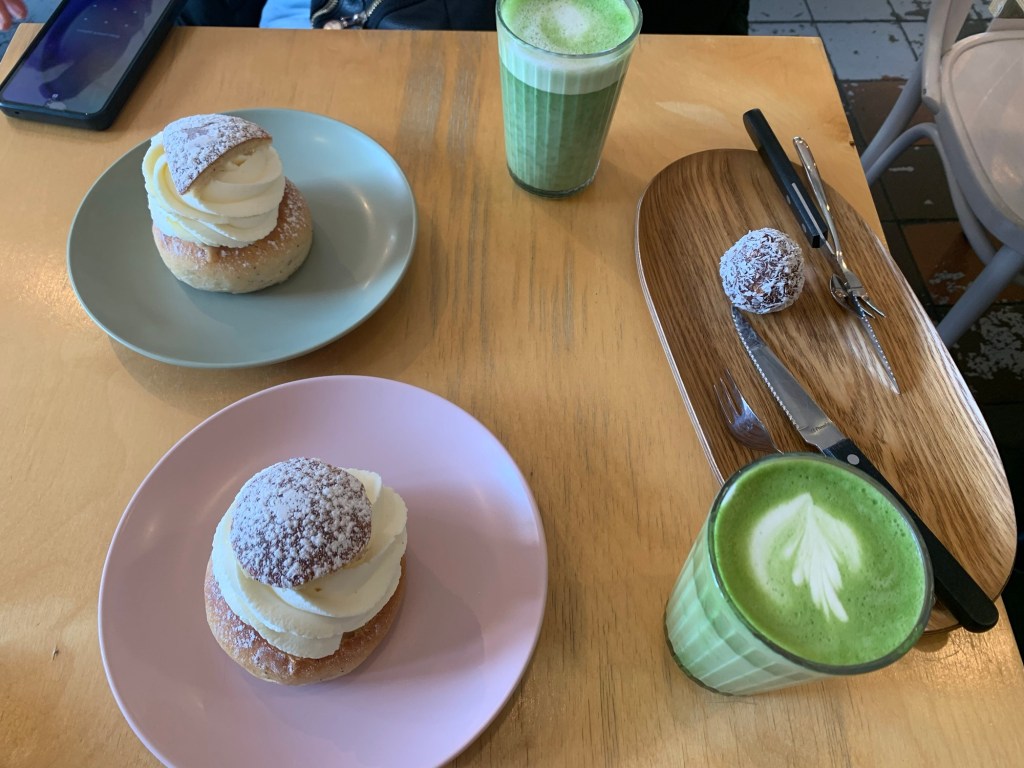
I started my day in the Hague going to Norvolk, a Scandinavian bakery in Scheveningen, which I had been to for a lussekatt last year as well.

Last year it really had the classic S shape, this year it look slightly different, but still with raisins!

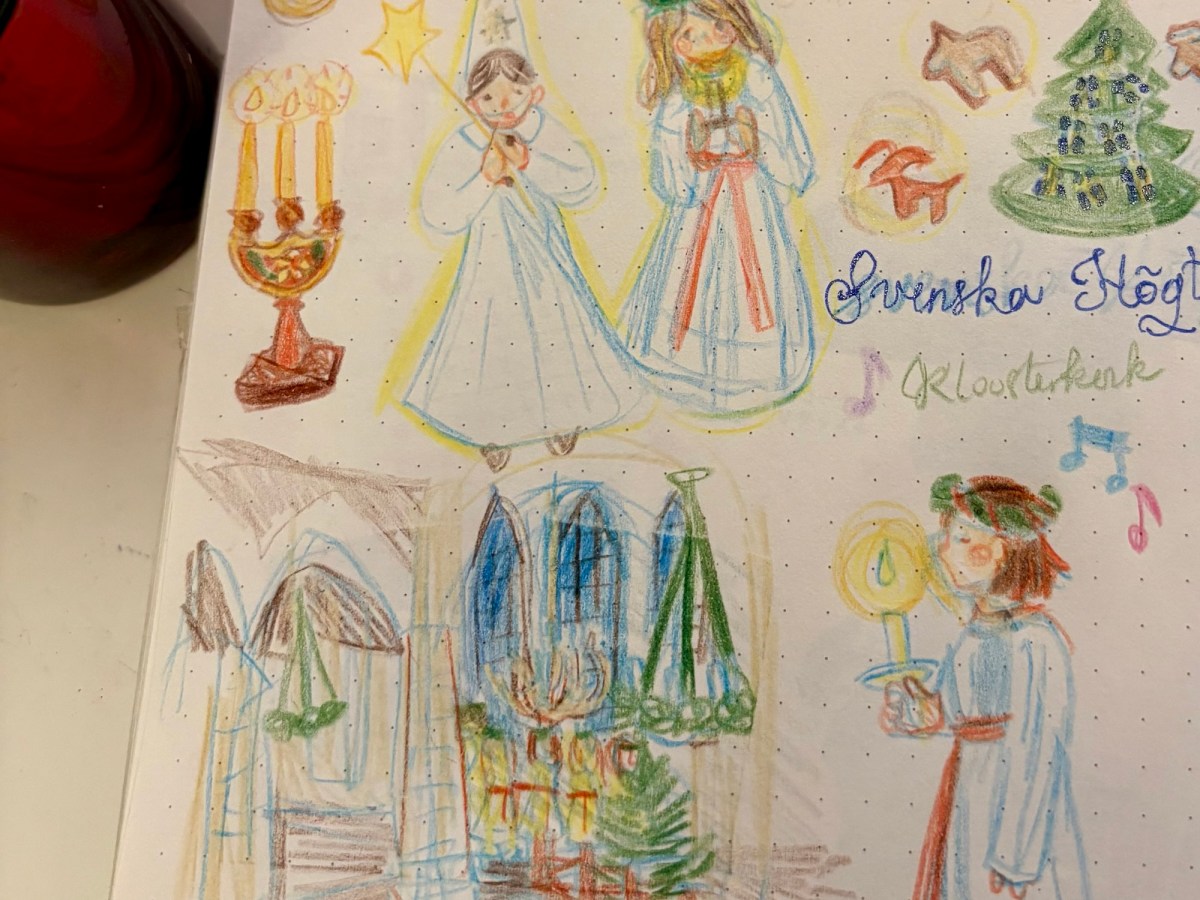
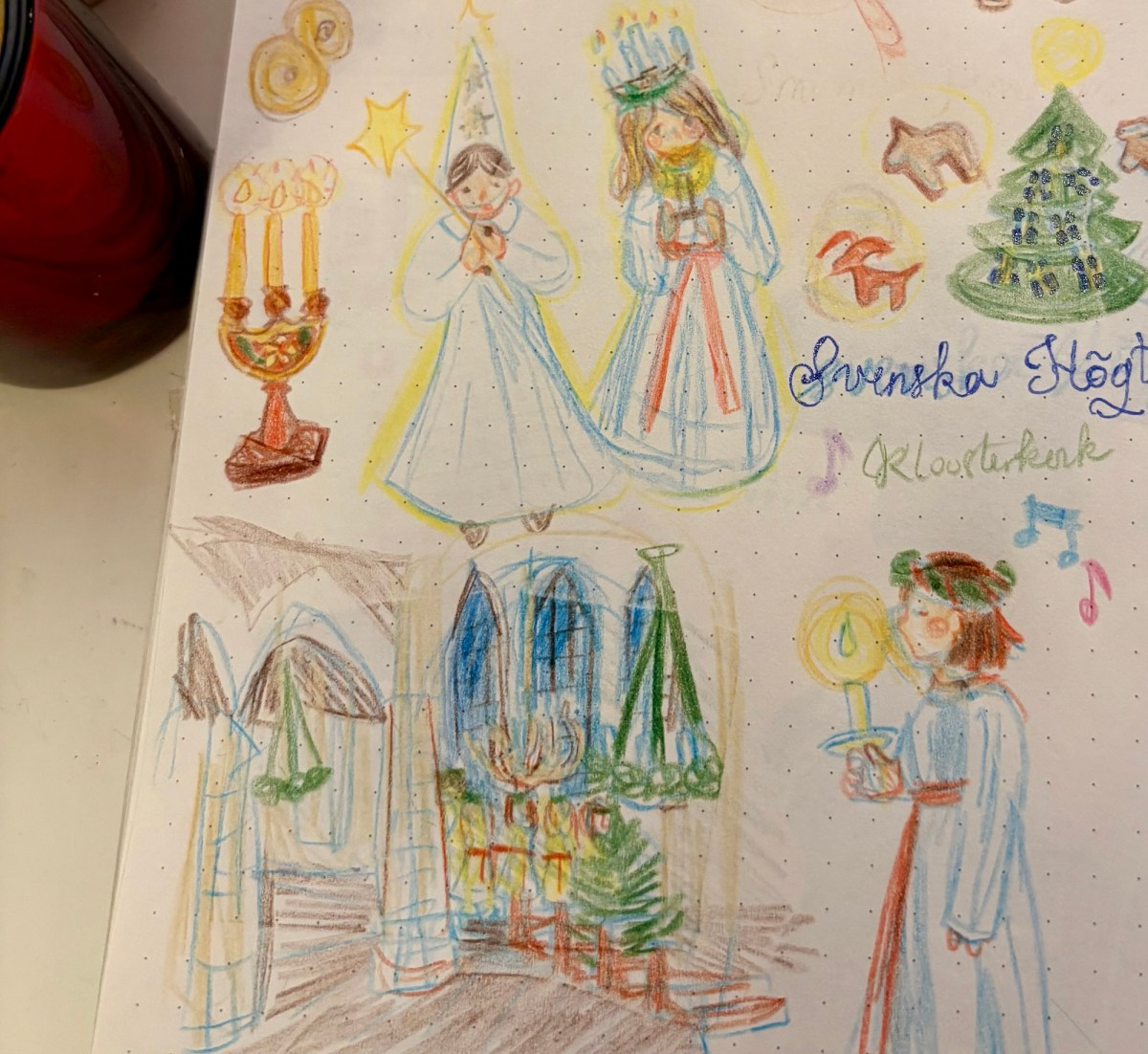
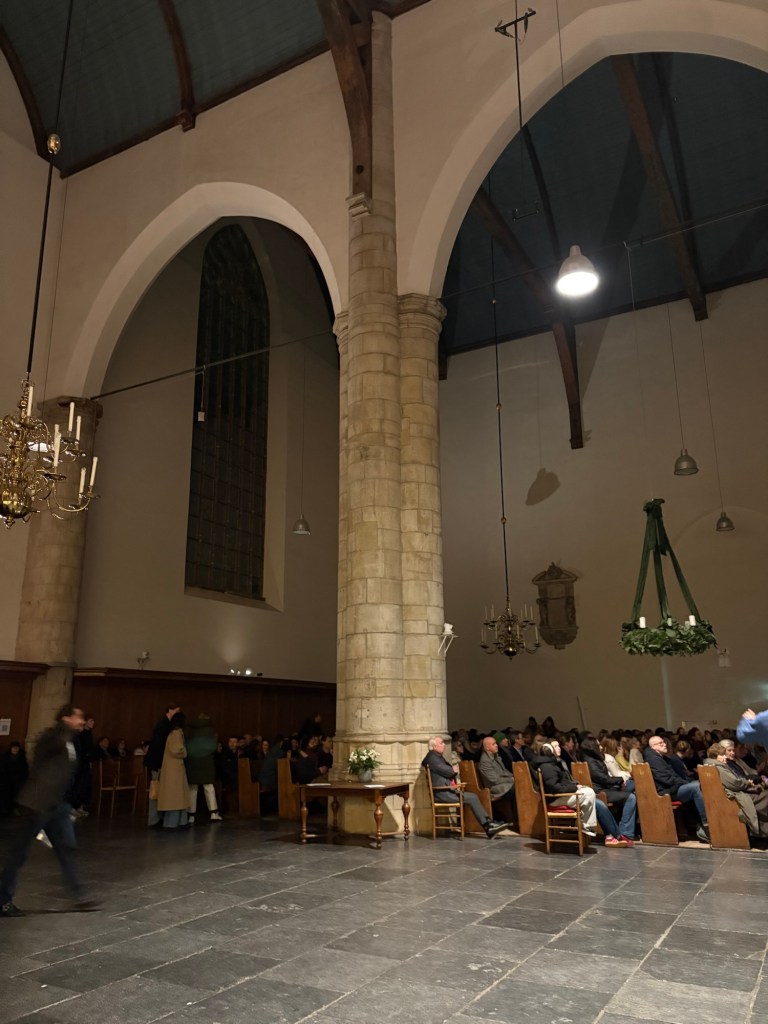
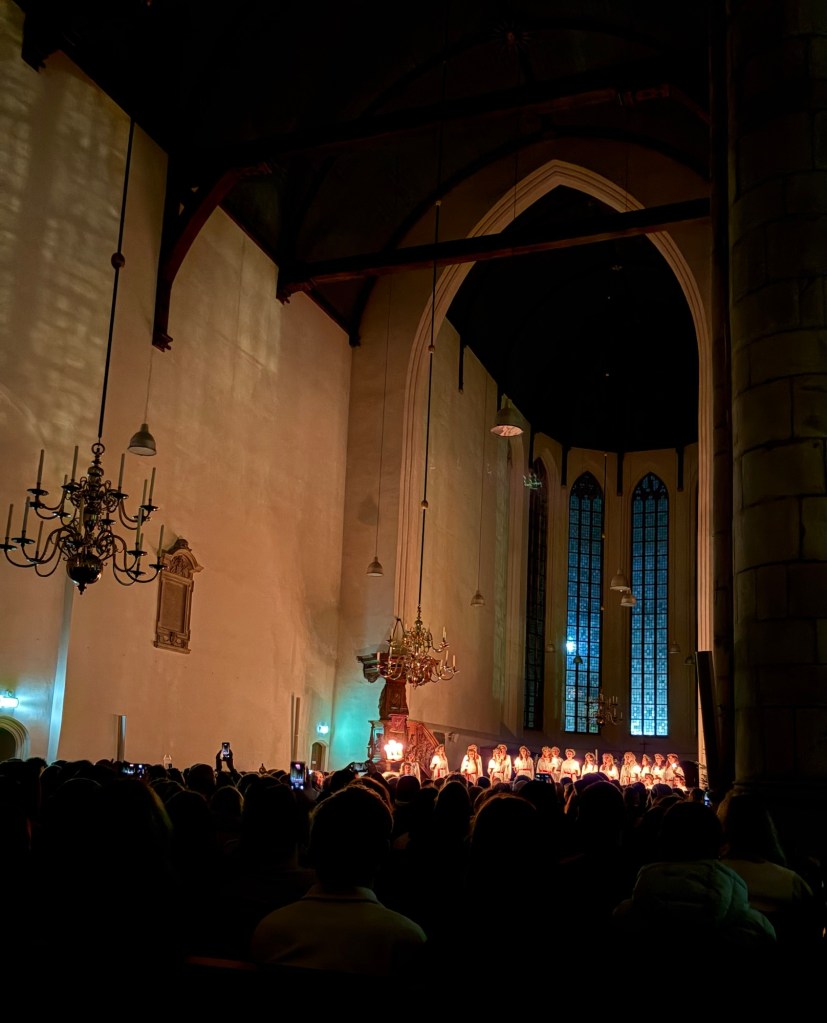
In the evening I went with a friend to the Kloosterkerk in The Hague, where a Swedish choir – Svenska Högtidskören held a Lucia concert, as you see them in Scandinavia. They hold concerts elsewhere in the Netherlands too!

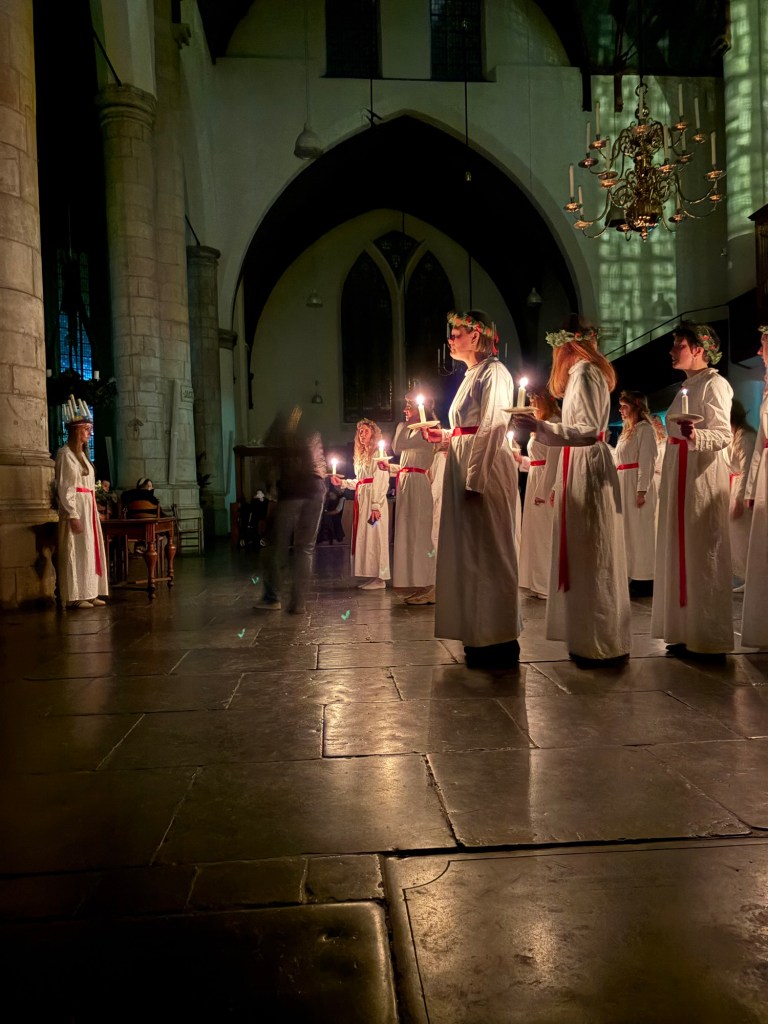
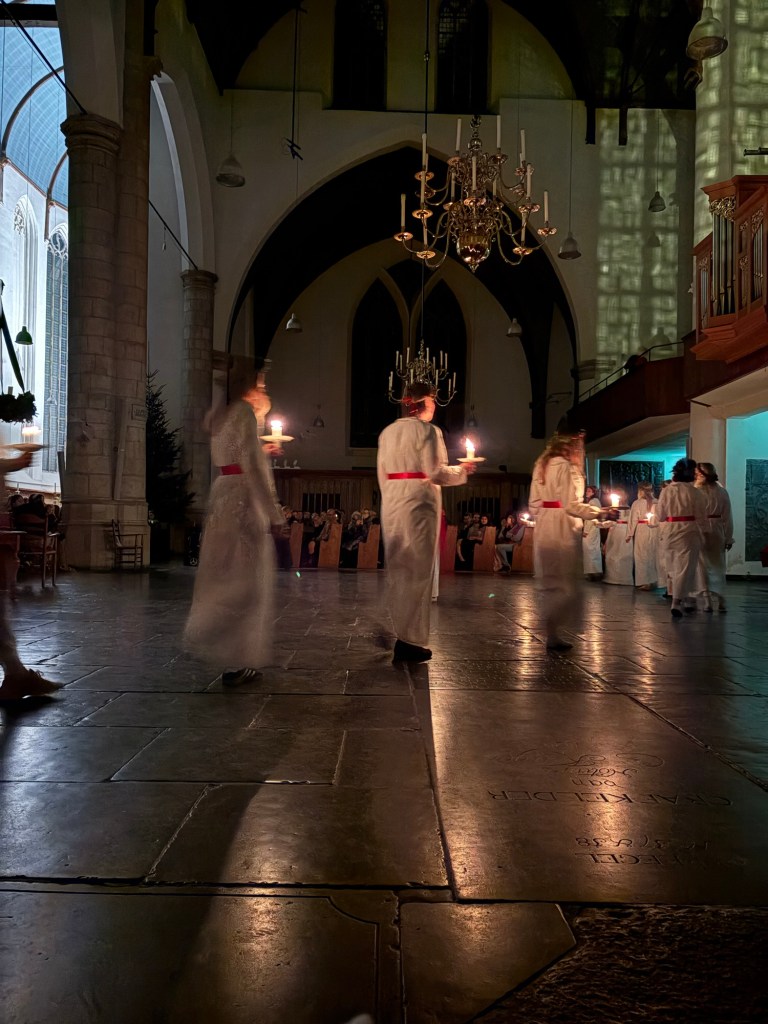
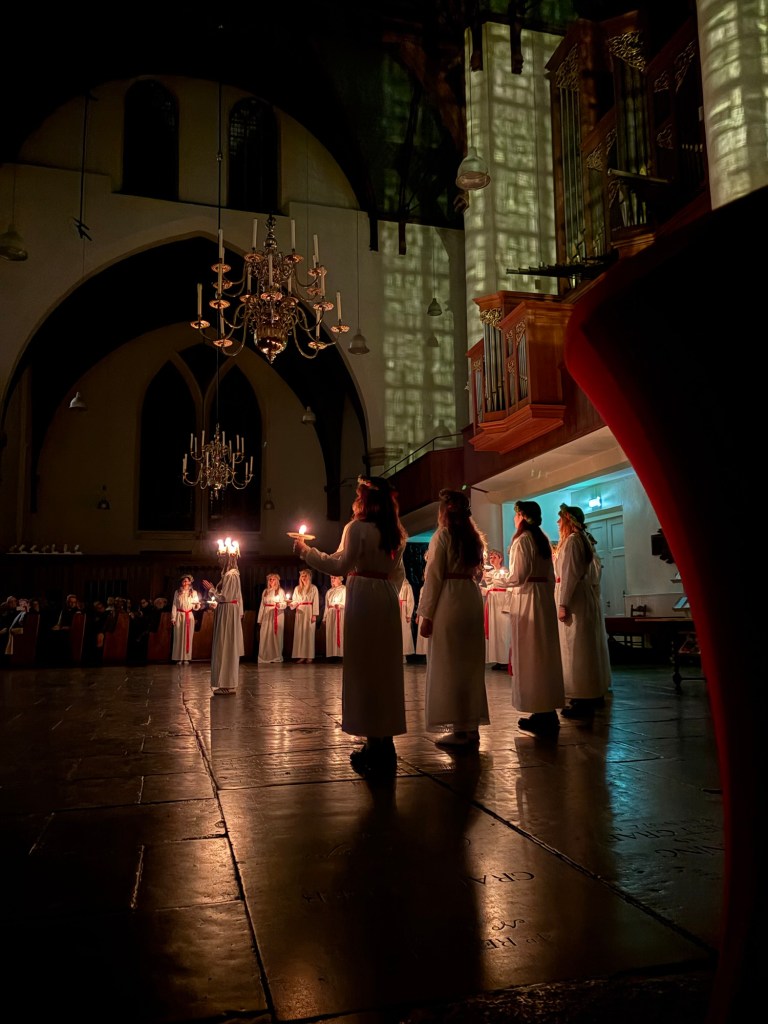
It began in the darkness, with all the girls in the processions holding a candle and walking in a line to where they would stand and sing.

The concert started at 19:30 and lasted one hour.

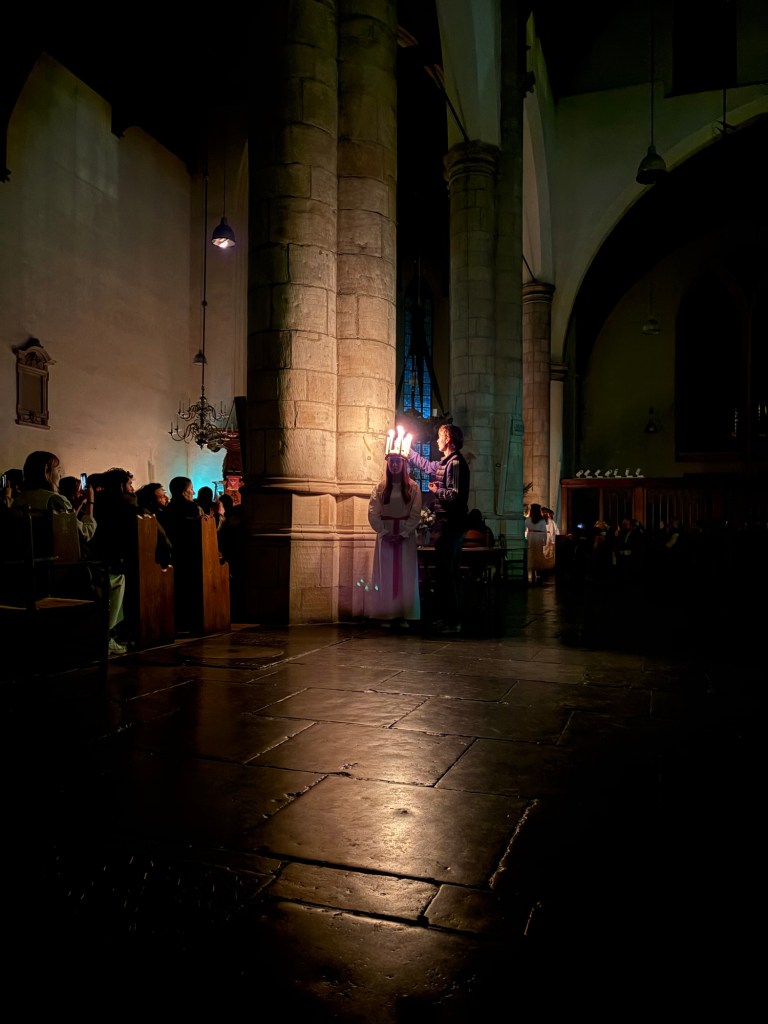
One of the highlights was Lucia’s having the candles on her crown lighted – behind the pillars, but I could see it well from where I was sitting! It felt so magical.

They sung traditional Swedish songs of course, but also Stille Nacht/ Silent night in German and English.

Then, they walked back, with Lucia in front, and stood all in a circle with her in the middle.

It was possible to give money for a charity – a food bank in Amsterdam in this case.

It was a whimsical experience and definitely among other things that makes me enjoy Christmas time!

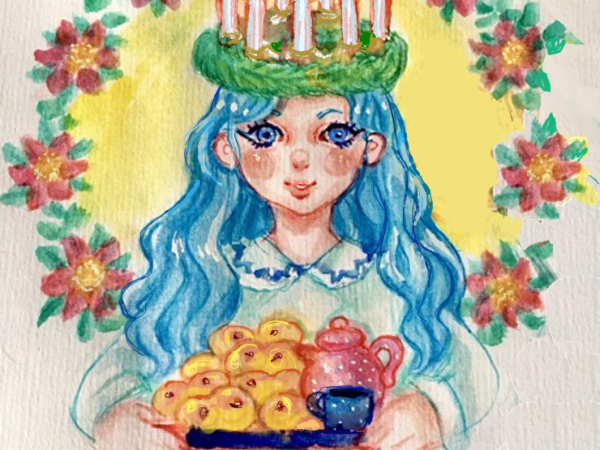
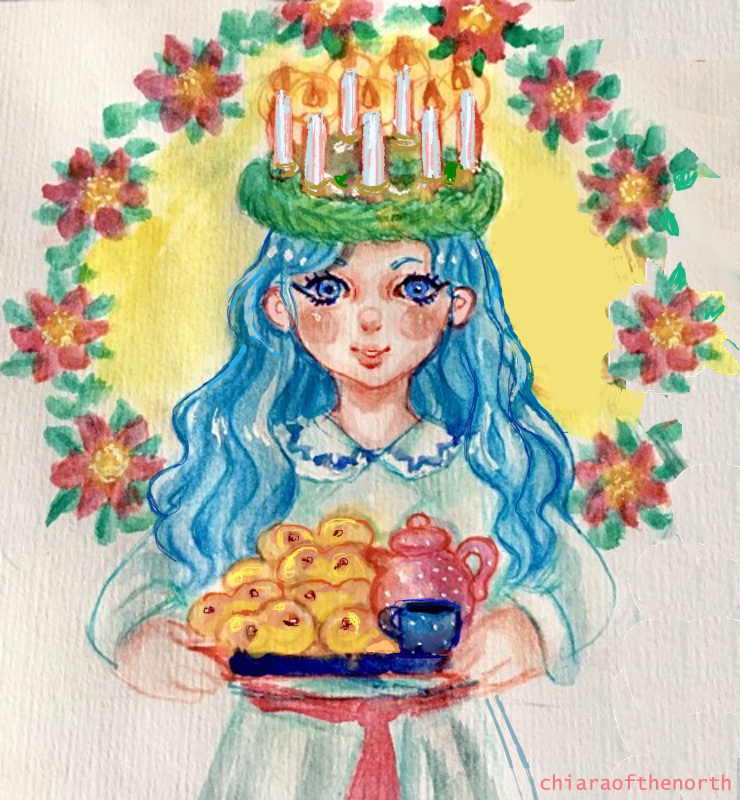
swedish lucia illustration journal

Follow for more Nordic experiences!

7 fun facts about Lucia, Sweden’s pagan saint

Lucia brings light in the darkest night of the year and is a mix of pagan and christian traditions. It is celebrated in Scandinavia with processions, saffron buns and church concerts.

7 fun facts about Lucia, Sweden’s pagan saint

Lucia brings light in the darkest night of the year and is a mix of pagan and christian traditions. It is celebrated in Scandinavia with processions, saffron buns and church concerts.

Luciadagen is celebrated in Scandinavia, especially in Sweden, on 13th December, marking the start of Nordic Christmas, Jul, season. Sankta Lucia is typically depitcted with a wreath of candles.

1. Lucia was a dangerous night…– the pagan origin

Lussinatta was observed between Norway and Sweden. On that magic night, Lussi, a dark, female creature, would come with witches and trolls, punishing those who misbehaved or did not observe Yule preparations -also by going down the chimney (reminds me of somebody…) and blowing up the house… To protect oneself, it was necessary to stay indoors and respect the tradition of Lussevaka, staying awake and watching out on the longest night of the year. Candles would also help protect.

2. The real Lucia was Sicilian – the christian origin

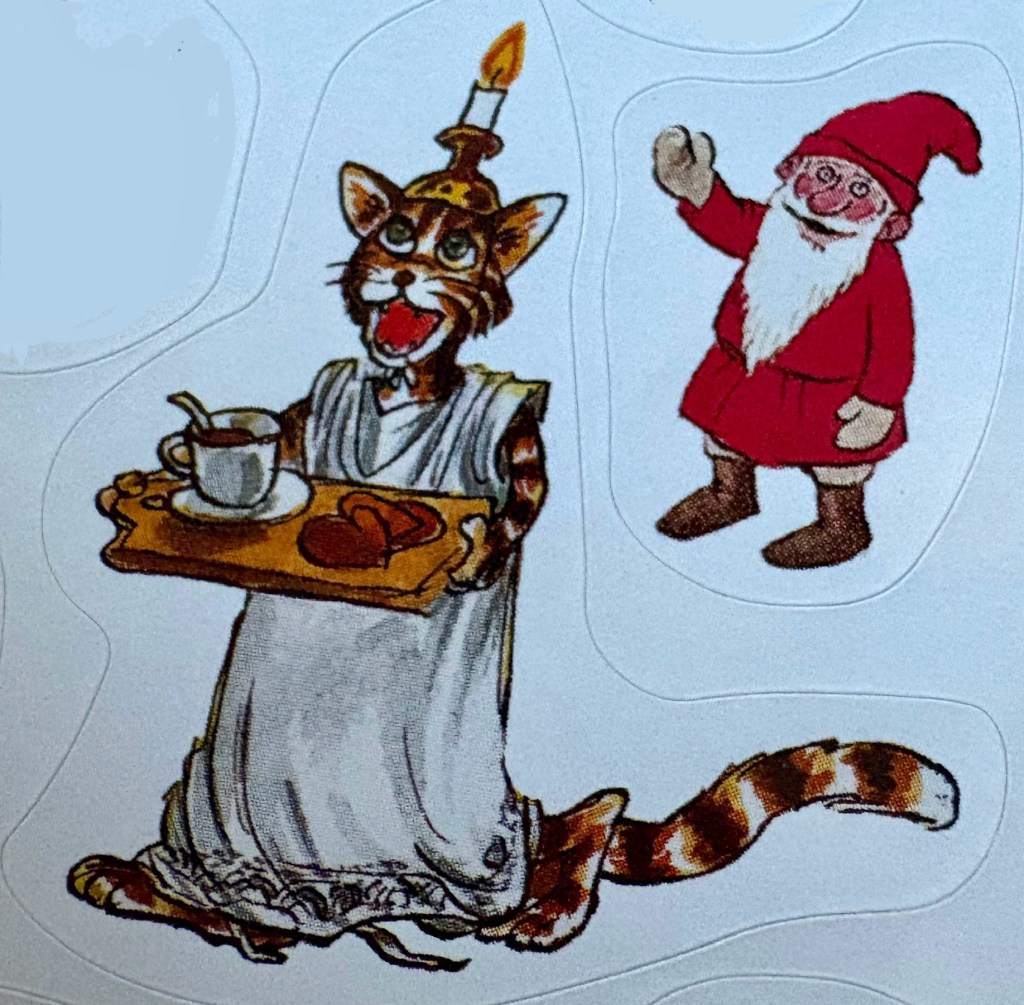
Saint Lucy was a Syracusan martyr of the 4th century AD. Some say she brought food to Christians hidden in the Roman catacombs, with candles on her head to have her hands free. A figure who brings light in the darkness, much needed in the Northern winter, replaced the dark creatures of Lussinatta!

3. Lucia’s modern look came from Germany

The current celebration of Lucia is derived from the German tradition of Kindchen Jesus or Christkind (child Jesus). The Christkind was represented by a girl dressed in white, wearing a crown and lights, who handed out gifts to children. The tradition was brought to Sweden in the 1700s, where the name became Kinken Jes and spread from southwestern Sweden. It became common among wealthy families that a girl dressed as Lucia would serve breakfast in the 1800s.

4. A Lucia is elected each year

The girls representing local Lucias in processions are elected each year, as is one national Lucia for whole Sweden. The first public procession in Sweden took place in 1927, when a newspaper in Stockholm elected an official Lucia of that year for Stockholm. There used to be Lucia contests, but nowadays it is more about children processions, with schools which often let chance decide who’s to be Lucia, for example by organising a draw.

5. Lucia’s male counterparts are Star boys, gingerbread men and christmas elves

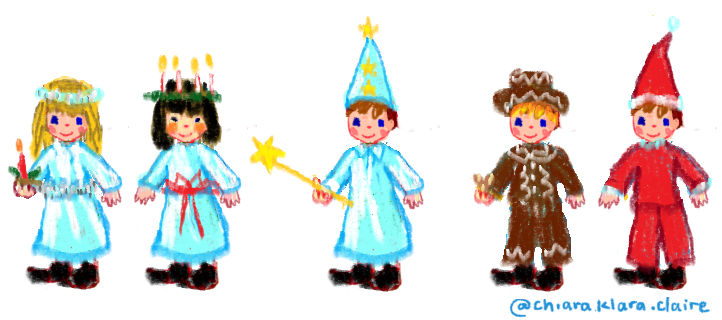
The processions include the Lucia at the head, giving out sweets, accompanied by other angel girls and boys dressed as stjärngossar “star boys”, in white, wearing a cone hat with golden stars and holding a star stick. They are linked to stjärngossespel, a tradition from middle ages consisting in ‘star’ children going door to door singing songs, representing the Three Kings.
Other children are pepparkaksgubbar (gingerbread men) and tomtenissar (Christmas elves). Lucia songs as are sung, as Natten går tunga fjät “the night comes heavily”. It is actually based off a song by a Neapolitan composer.

6. Lucia’s treats: Saffron buns

Around Advent time Sweden is full of Saffron buns, especially the classic Lussekatter, shaped like an S with raisins, which would be shaped as curled-up cats with some fantasy.

Other Advent-time treats as pepparkakor (spiced cookies) and glögg (mulled whine) are also commonly linked to Lucia traditions.

7. Lucia is celebrated in the rest of Scandinavia…and Italy

The Swedish-speaking population of Finland celebrates Luciasfester. Finland elects its Lucia since 1949, when she was elected and crowned in the cathedral of Helsinki, but the very first Finnish Lucia might have been elected in a school in Åbo/Turku in 1898.
In Denmark and Norway, Lucia started being celebrated during and after WW2, and it is mostly celebrated in schools and kindergartens. In 1944, the tradition was brought to Denmark with the first procession in Copenhagen, as a way to strengthen common Nordic traditions in the dark times of German occupation.

Some parts of Italy also celebrate Lucia! That is mostly around Bergamo, North Italy, where Lucia comes on a donkey and brings presents in the night, and children leave some treats as cookies for her. The 13th is also a special day in schools! It is also celebrated in Sicily, where it is more christianity-centered.

Sources:

5 peculiar symbols of Christmas in Iceland

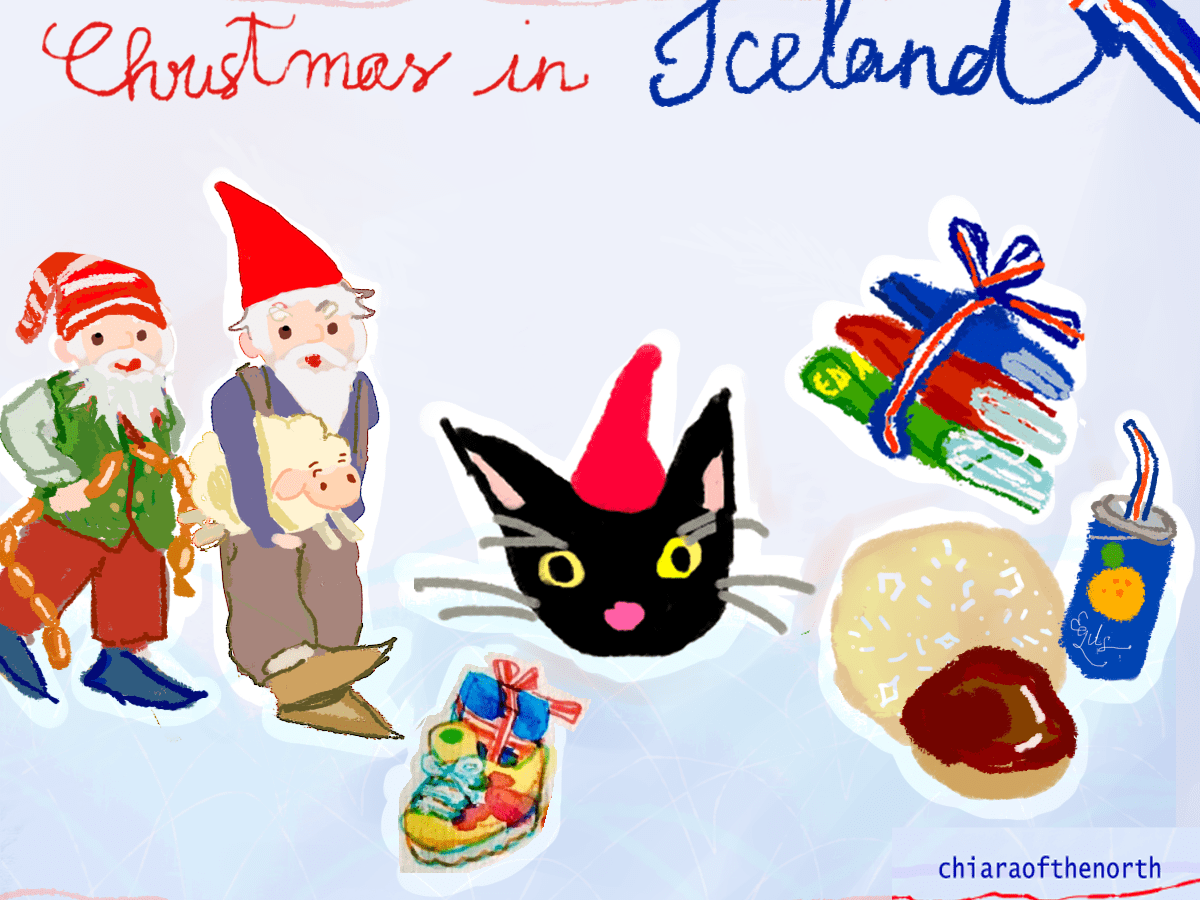
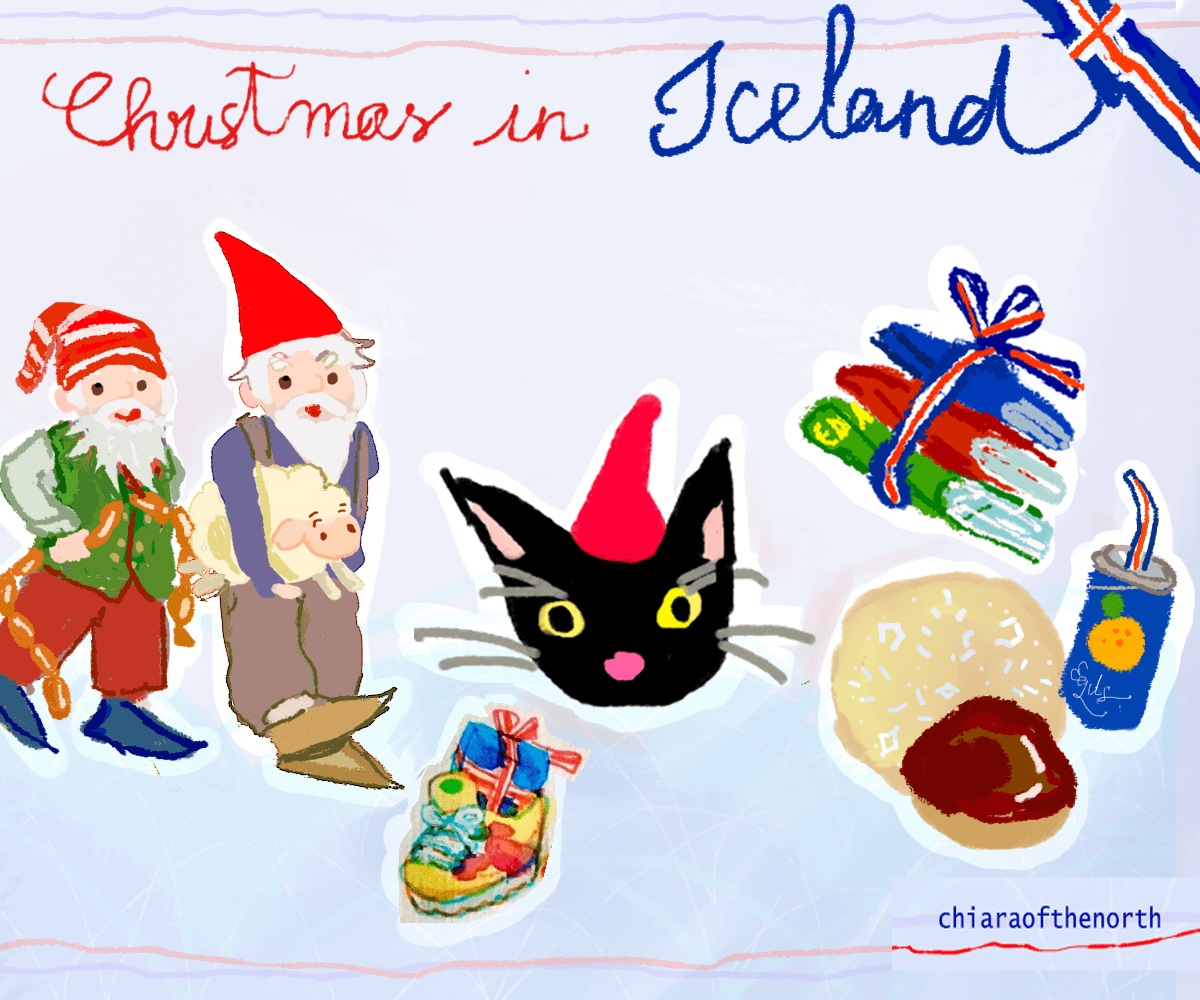
Iceland’s Christmas, Jól, involves 13 mischievous elves, a black cat, orange-beer, and a lot of books.

After Norwegian, Danish, and Finnish Christmas fun facts, this time is Iceland’s turn! As Iceland is fairly isolated from mainland Europe, Icelandic christmas, Jól, is characterized by a few more or less curious things, especially who brings gifts…

13 naughty elves

In Iceland the Christmas gift bringer is not one, but 13 elves, Jólasveinarnir -‘Yule lads’, who start coming 13 days before Christmas, one each day. Icelandic kids leave their shoes on the window sill every evening, so that the yule lads can leave a present inside them. According to the tradition they come from the mountains to annoy the population, each of them has a different name, related to what they do: Hurðaskellir “door slammer”, Skyrgámur “skyr gobbler”, Bjúgnakrækir “sausage stealer”, Stekkjarstaur “sheep harasser“ among others.

A black cat that will eat you *if you have old clothes

In Iceland you also have the Christmas Cat, Jólakötturinn, who eats people who have not received new clothes. During Christmas time you can admire a big sculpture of the cat in Reykjavik.

Books, books, books

Iceland has the highest number of books published (and probably read) per capita, and nearly everyone gives and receives books as Christmas presents. Around 80% of book sales happen during the so-called Jólabókaflóð “Christmas book flood”, in the two months before Christmas. Candles and playing cards are other traditional gifts.

Bread with patterns

An Icelandic Christmas tradition is making a thin and round fried bread laufabrauð “leaf bread”, with patterns cut into it. It kind of end up looking like bread snowflakes! Laufabrauð is often paired with hangikjöt, Icelandic smoked lamb.

Orange soda-beer mix

As it is during Jul period in other Nordic countries, Icelanders have their own Christmas beer. In Iceland, it is orange flavored! Jólaöl is a mix of malt extract and orange soda, from the orange soda brand Egils.

Cookies named after a French actress

Sarah Bernhardt cookies are a common Christmas treat in Iceland, typically home baked. Commonly called Sörur – Icelandic plural of Sara – they are chocolate dipped cookies, invented in Denmark in 1911 in honour of French actress Sarah Bernhardt.

sources -Guidetoiceland.is

Subscribe for more fun facts!

Nordic findings in japan

Nordic culture experienced in Japan: Moomins, Dala horse stationery, Nordic-inspired foods and books about Scandinavia seen by the Japanese.

How Nordic are Baltic countries

Are Baltic countries Nordic at all? I explored Latvia and Estonia, noting their ties to Nordic culture, from languages to Rye bread and Midsummer.

Nordic findings in japan

Nordic culture experienced in Japan: Moomins, Dala horse stationery, Nordic-inspired foods and books about Scandinavia seen by the Japanese.

You can find Nordic cafés & restaurants in Japan on this blog, but here is some other stuff I bumped into during my trip there !

Nordic-inspired Japanese items

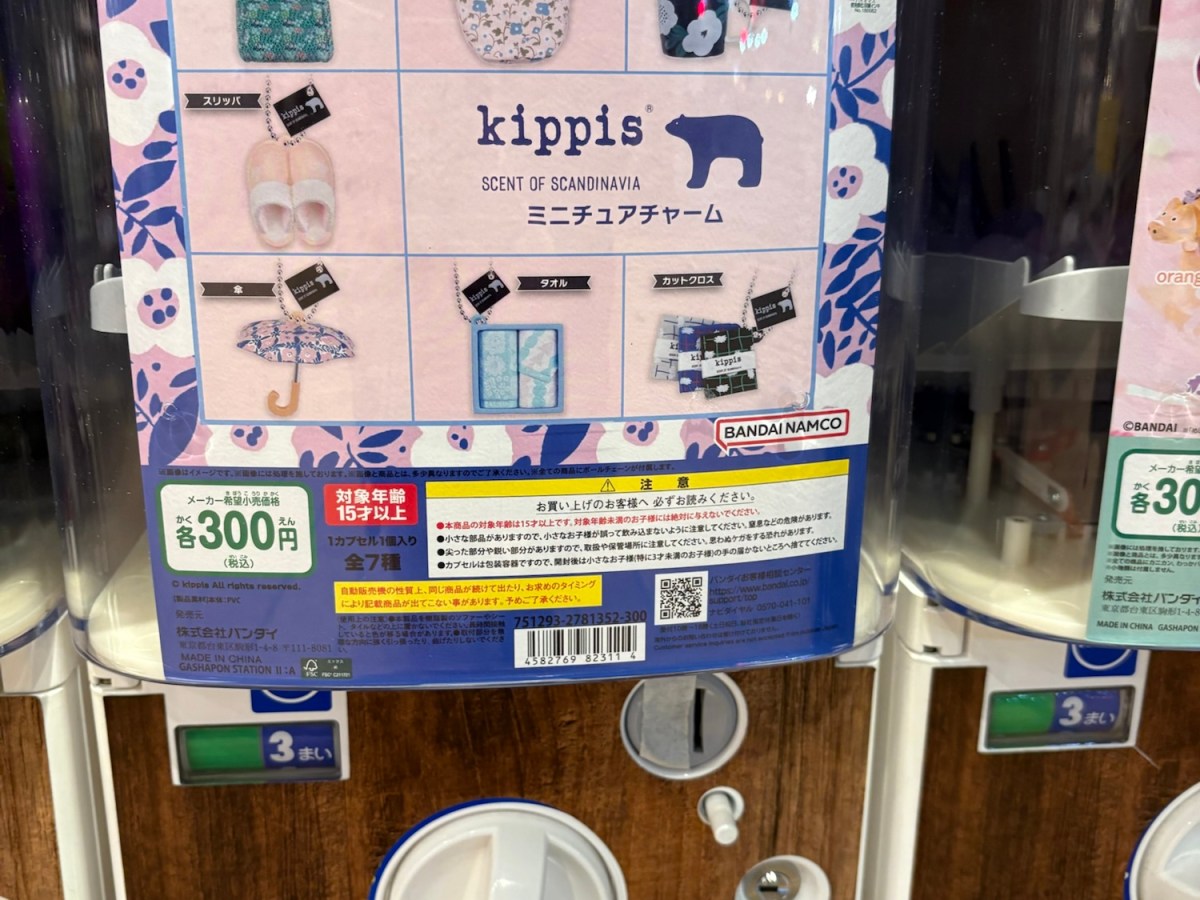
I saw some cute objects connected to Nordic cultures, as a gacha-gacha machine where you could get a Marimekko-looking item keychain! It was called Kippis, what the Finns say when toasting.

It is also not surprising that Japanese and Asian people find Dala horses cute, and that’s what I saw on the cover of a journal. Was kinda tempted to get it!

Moomin!

MOE magazine was featuring Moomins in the current issue. Moomins are pretty popular in Japan and represent an iconic symbol of Finnish culture. This issue had many pages about Finland and Finnish bakeries in Japan among others as well.


A Moomin pop-up cafe closed just before I left, and Mcdonalds has Moomin toys in their happy meal right now! Too bad I was either late or early.

Nordic food with a Japanese twist

Fun Fact: all-you-can-eat style fusion buffet restaurants are usually called Viking – バイキング – in Japan. The idea behing the name originates from Smörgåsbord (buffet) restaurants, that a restaurant manager from Tokyo’s Imperial Hotel saw in Sweden. As Smörgåsbord is not the easiest word for a Japanese, the word viking was adopted instead! (Source: tofugu.com)

Speaking of Sweden, IKEA is, all over the world, the place to go for Swedish food, with its rather cheap restaurant and bistrot. Japan is no exception, but it has its local twist, and I got to try Sweet Potato soft ice cream!! Sweet Potato is a very common seasonal flavour during Autumn in Japan.

You also have a chain called Danish Bar, selling roll-shaped danish pastries. Nothing particularly Danish besides the wienerbrød-ish dough though.

I was walking around in Takayama, Gifu prefecture, when I bumped into a Karjalanpiirakka/Carelian Pie being sold at a cafe called Tori coffee, the iconic Finnish Rice pudding Pie as it was named here!! I had to immediately interact with the person at the counter and ask about it, and I found out the baker had actually been in Finland! I was too full from Japanese food to eat one, but it looked delicious.

Days later, I found Finnish bakeries, cafes and restaurants in Japan being showed off in the MOE Moomin-themed magazine I mentioned above.

The TRANSIT magazine featured a section about the New Nordic Bread Movement, with among others an article about Åland.

While browsing magazines and books in Kinokinuya 7-floor bookshop, I found Time in Scandinavia – what the world’s happiest people have taught me (北欧時間 世界一幸せな国の人たちが教えてくれたこと) by Inko Higurashi.

inko higurashi scandinavia

I also bumped into what seemed an elederly/daycare house called with the Swedish name of Merhälsa and a shop called Kiitos, Looking up online you find either a cafe, a character merch shop, and a cookie/chocolate manifacturer, but none of these seem to be related to Finland?

Follow for more Nordic-related stuff, wherever it may be!

How Nordic are Baltic countries

Are Baltic countries Nordic at all? I explored Latvia and Estonia, noting their ties to Nordic culture, from languages to Rye bread and Midsummer.

Last summer i visited Latvia and Estonia. They are not too far from Scandinavia, and I was curious to find what they have in common with Nordics.

1. language and identity in the Baltics

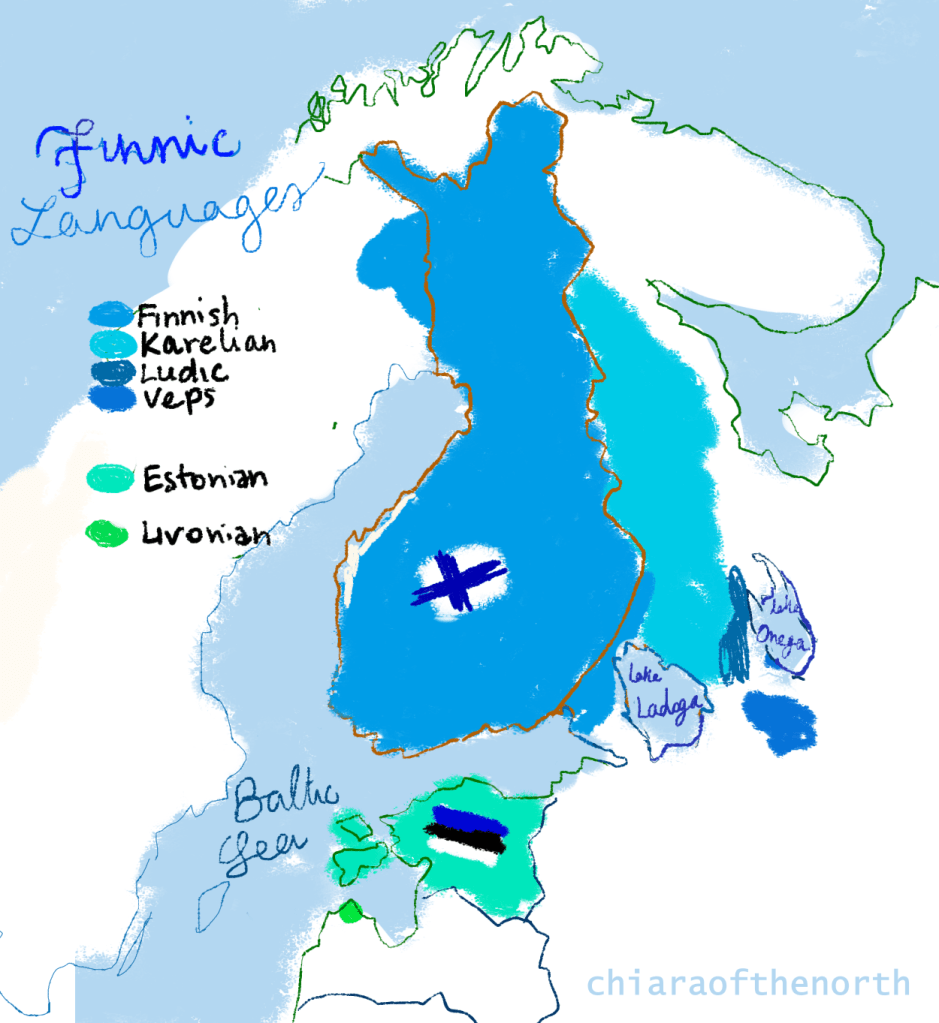
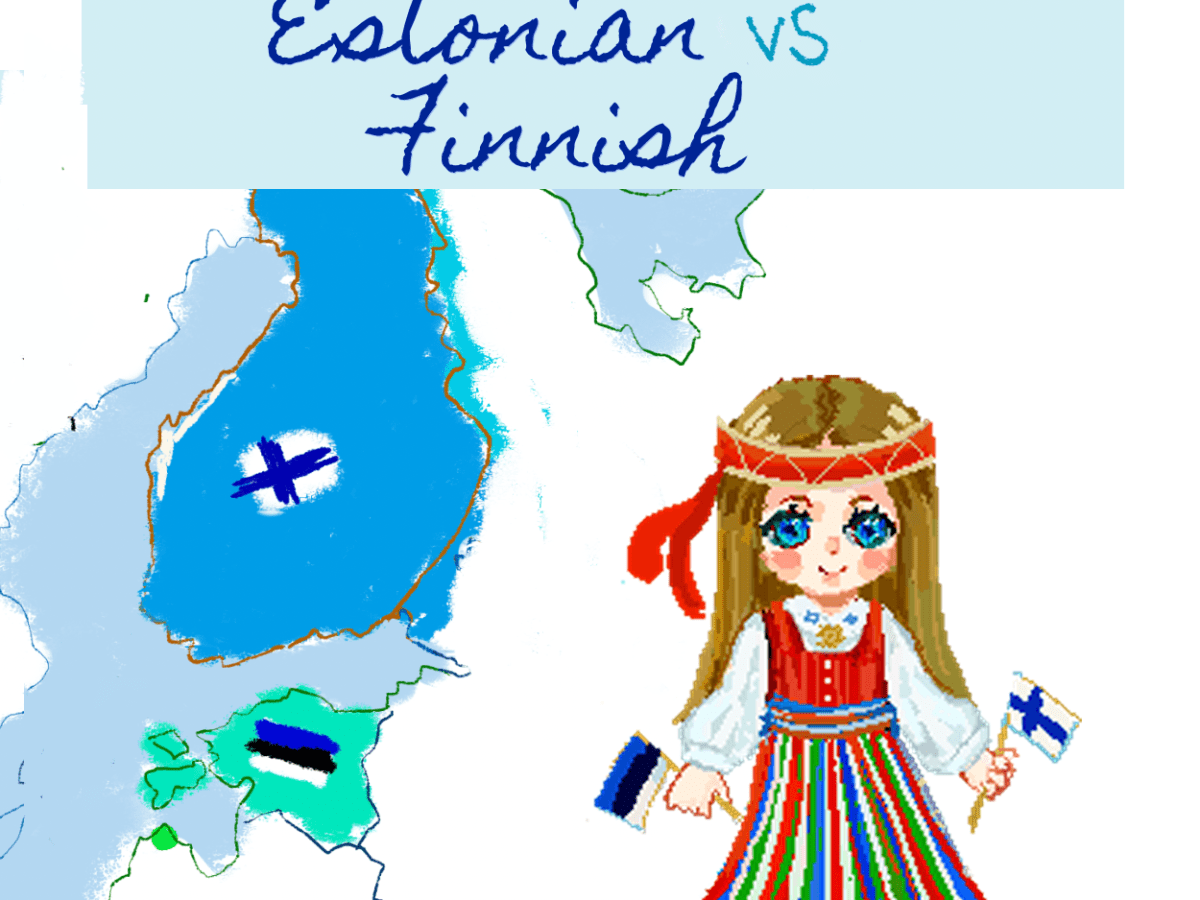
While Latvians and Lithuanians are Baltic people – speaking an Indo-European language, related to Slavic languages- Estonians are Finnic, and their language is very close to Finnish, making Estonia the most ‘Nordic’ of the Baltic countries. Livonians are a small Finnic minority in Latvia.
Estonia in particular has deep ties with Scandinavia – it used to be under Swedish and Danish rule. Though you can find a Swedish gate in Riga too!

There is actually a Swedish minority in Northern Estonia and coastal areas, that has existed since the 13th Century: eestirootslased or rannarootslased in Estonian, estlandssvenskar or aibofolket  in Swedish, similarly to Finlandssvenskar, Finland’s Swedes.
Its number shrinked however significantly due to the USSR occupation in the 20th century, that urged many to flee to Sweden, being very small today.

There is also significant proficiency in Finnish in Estonia, thanks to its linguistic proximity with Estonian and exposure to Finnish broadcasts during the Soviet era. Nowadays, young Estonians are not as exposed to Finnish media as older generations were during those times, and Finnish is not as intelligible for them as it used to be for their parents.

According to a poll done in 2013, about half of the young Estonians considered themselves Nordic, and about the same number viewed Baltic identity as important.

2. Baltic cuisine

  • Rye bread is king! As dark as night! Rye bread chocolate is a things both countries!! Says enough..
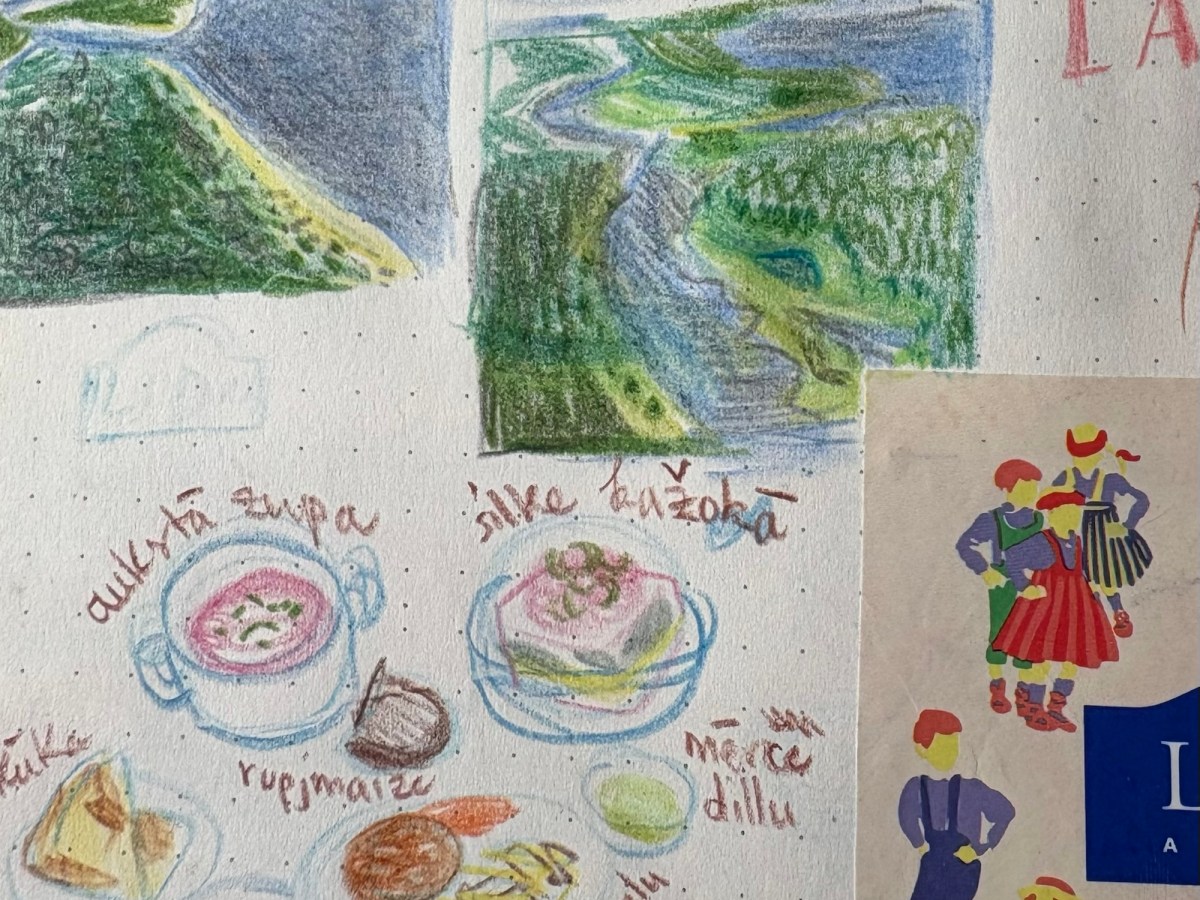
  • Herring, Redbeet, (potato) pancakes are staples – all stuff to be found at LIDO chain self-service restaurants, Latvian of origin.
  • Soups in Latvia are a very common part of meals as in Slavic countries, notably the redbeet cold soup. Something typical Latvian are the dumplings Pelmeni, similar to Polish Pierogi etc.
  • A galore of Baked goods were everywhere in Latvia, maybe not as much in Estonia. Nordic style buns were in both! Something that seemed very common were custard buns, and coconut coated buns. Latvians seem to love cookies.

Kalev is Estonia’s chocolate brand, Latvia also has its national confectionery brand Laci.

3. Nordic stores and products in Baltic

  • Stockmann department stores are present in both countries – you can find a lot of Nordic stuff, including Norwegian Brunost and carelian pastries!! Though I saw carelian pastries in Estonian supermarkets, and ICA cloudberry and lingon jam at a Rimi supermarket.. Finnish fast food chain Hesburger is present in the Baltics – I have to say I did not see any special items from it though…
  • You can get bulk candy in supermarkets like in Nordics. But it seems in the Baltics they enjoy bulk cookies as well!

Finnish brands as Fazer chocolate and some moomin stuff is common in Estonia. At Tallinn airport they had a whole selection of more Finnish and Swedish candy brands, and even a Pippi + moomin merch corner!!

4. architecture

Looking at some buildings, you could be in Scandinavia, though others make you think of Eastern European cottages.

Folk Culture

As in Sweden and Finland among others, Baltic celebrate the Summer Solstice, a.k.a. Midsummer – or Saint John’s night – jääni in Estonian, Jāņi in Latvia. People go to the countryside to gather and eat, drink, sing and take part to old pagan traditions. Among others lighting a bonfire and gather herbs to make flower crowns and oak leaves wreaths!

Folk costumes are also quite distinct from Scandinavian ones, and are often characterized by a headgear in both Latvia and Estonia.

Subscribe for more about Nordic and Baltic countries!

Fika in Nijmegen, lunch with smørrebrød

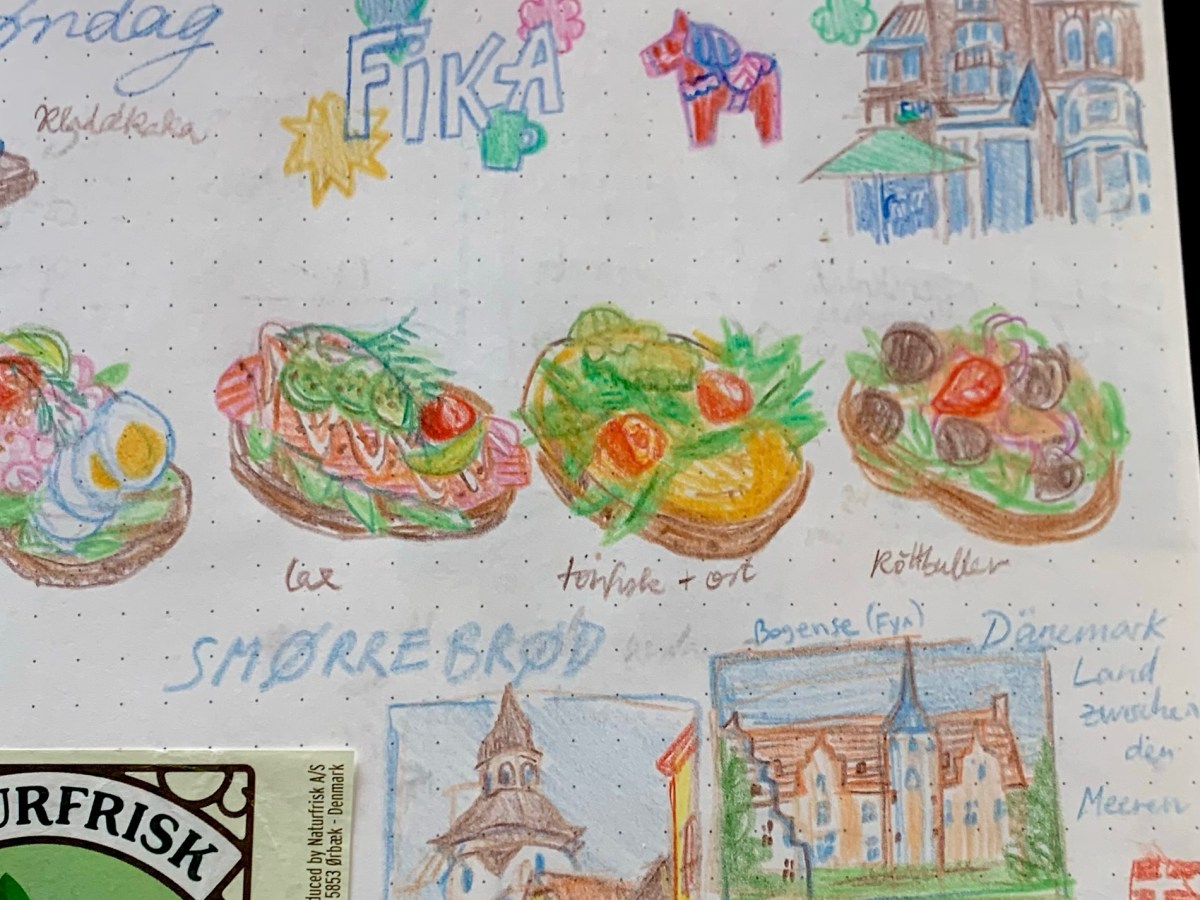
Fika in Nijmegen is a cafe/lunchroom with Scandinavian vibes: smørrebrød, knäckebröd, buns, cakes and books!

Some time ago I went to Fika in Nijmegen, a Scandinavian inspired Café / Lunchroom, focused on open-face sandwiches. high fika with friends. It is also possible to use your laptop at certain times for remote working! Next to the café you have the Fika Kiøsk for a treat and drink on the go.

NL: Een tijdje geleden ben ik bij Fika geweest in Nijmegen. Daar kun je lunchen met skandinavische boterhammen, een lekkere koffiepauze hebben met kardemombollen of cakejes, en zelfs een gezellige ‘high fika’ met vrienden boeken. Andere Zweedse broden als Knäckebröd en polar brood kan je hier ook eten.
Fika heeft een ruime ‘smørrebrød’ selectie: boterhammen van meergranen desembrood met vis, vlees en vega opties. Borrelsnacks met wat skandinavisch gevoel zijn er ook.
Je mag hier ook je laptop gebruiken, aparte flexwerk-ruimte.

Here is what you can eat at Fika:

A highlight of the café is the wide ‘smørrebrød’ selection: multigrain sourdough open-face sandwiches with fish, meat and vegan options. Shrimp salad and köttbullar (meat- or vegan balls) among others.

For a sweet break, of course you can have a fika at Fika – some classic Scandinavian treats to choose from are buns, cardamom or almond; and Kladdkaka (Swedish chocolate cake with gooey filling).

Other snacks to share I noticed on the menu are cheese and meat/vegaballs with a cranberry sauce; knäckebröd with goat cheese and veggies; mini Polar pizza – polar bread with mushroom or salmon; and dill potato chips!

Something I like was the good assortment of Naturfrisk Danish drinks they have!

If you are with friends, it is also possible to book a ‘high fika’, what they call a High Tea elsewhere here. For 26,- euros per person you will get warm drinks and:

  • a soup
  • small open face sandwiches
  • polarbread pizza with mushrooms
  • small cakes
  • skyr
  • fresh fruit

Being with someone else, I managed to try quite a few Smørrebrød, the fish versions- tuna-cheese, salmon, shrimp – and one with mixed vegan- and meatballs. They might not be on the ‘proper’ Danish rye bread, but they did look and taste good! I advised my friend to try the Elderflower Naturfrisk drink.

Before entering the backyard to sit outside, I saw a nice collection of Scandinavia-related books: novels by Nordic authors (translated or in the original version, travel guides, and more.

Underneath there were some toys, and I found one featuring a dammsugare, I am a sucker for this small details.
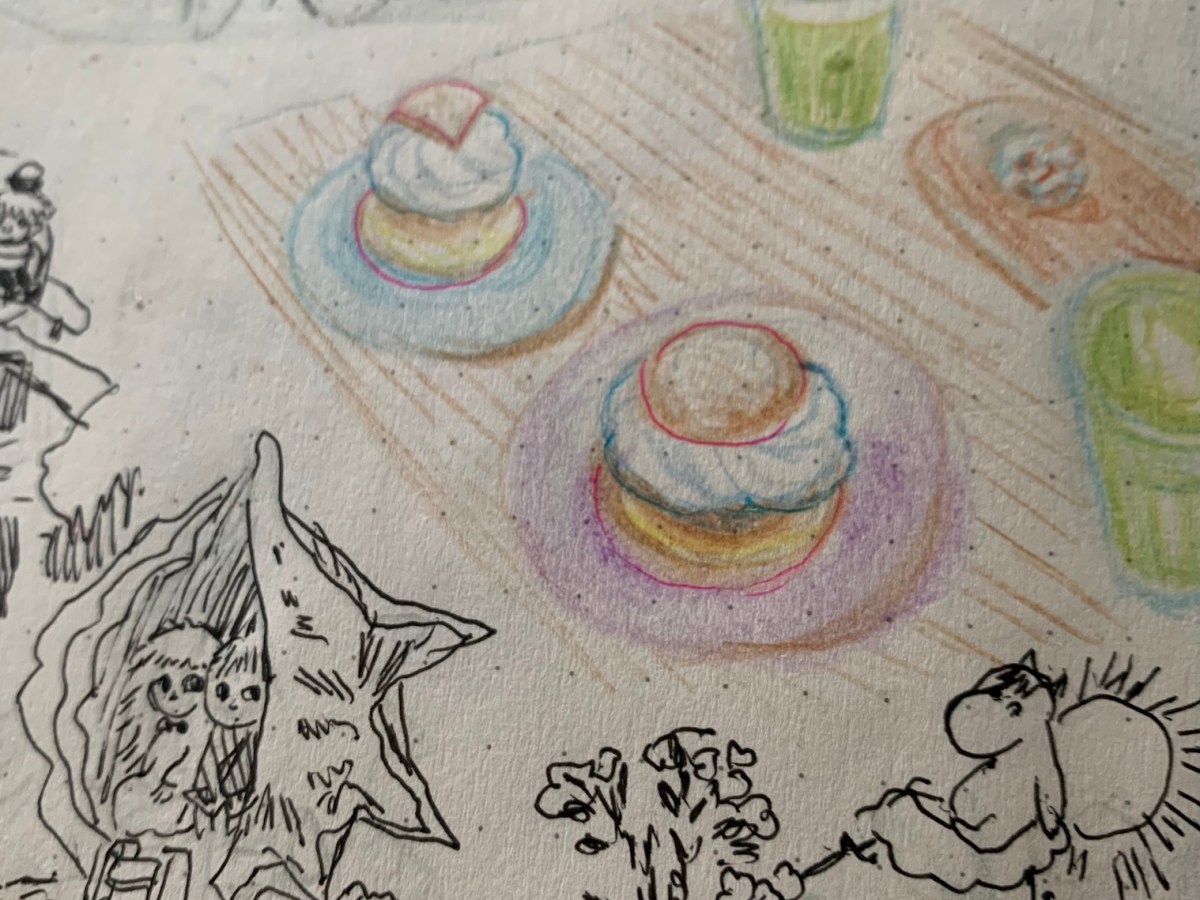
After checking out the books, it was time for dessert. I really wanted to mke my friend try cardamom buns and try an almond bun myself (Swedes would call it a Tosca), but unfortunately there were not any left, so we went for another Dessert lemon velvet, and a Matcha-mango latte. Not particularly Nordic but good.

I loved how the café has a lot of maps of Scandinavia hanging here and there as well!

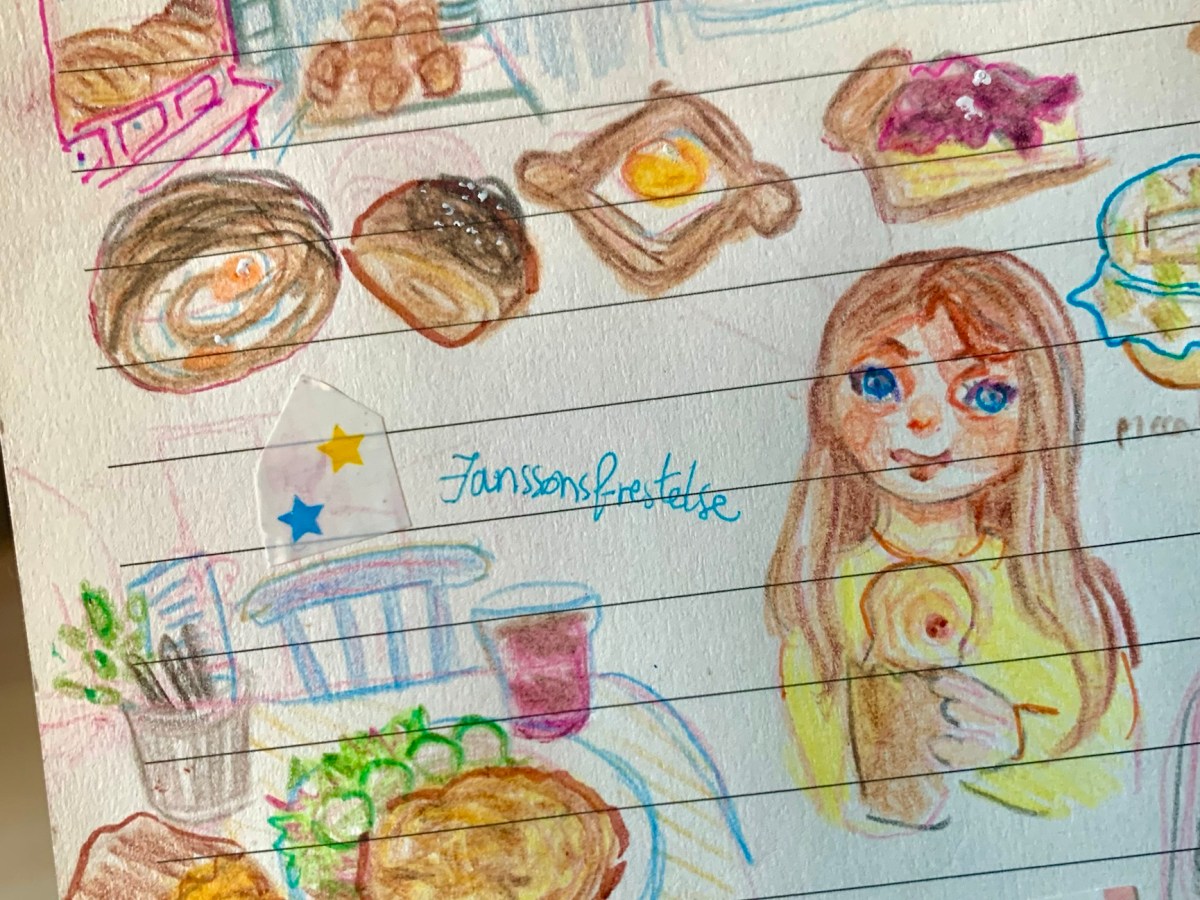
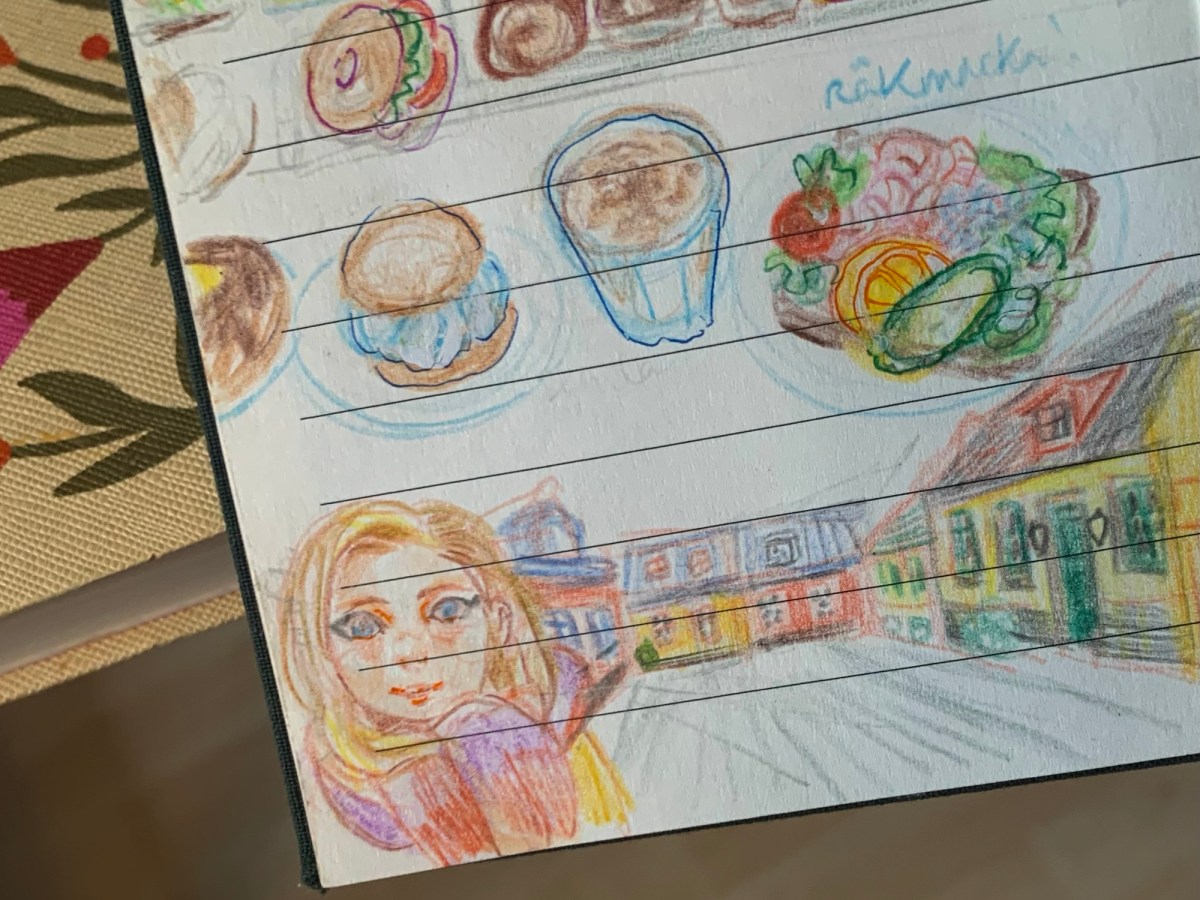
And here is the journal spread for this smørrebrød fika experience in Nijmegen!

We left, with me being kind of disappointed the buns were already finished when we were there, and because of that I had and even bigger craving for a kardemummabulle…

Since you never know, we went to the Albert Heijn to Go to see if they had the more Swedish-looking cinnamon knot. They did not only have that, but CARDAMOM knot too!! Sometimes life surprises you. Not sure if this is only a temporary promotion for Wereldse Smaken – international treats together with miso cookies and pandan muffins.

Volg de blog voor meer Skandinavisch eten aanraders in Nederland:

False Friends within Scandinavian languages

False friends in Danish, Norwegian, Swedish and Icelandic that can lead to misunderstandings and funny situations between Scandinavians.

False friends are a very common thing in similar languages, and they can cause funny or weird situations, from calling someone calm instead of fun and pastries becoming headaches. Or insulting a girl by calling her girl.

So here is a list to find out curious false friends and keep yourself safe from incoveniences. As you will notice, Danish and Norwegian often have the same meaning opposed to Swedish, but not always.

(se-dk-no) wordSwedish meaningDanish meaningNorwegian meaning
roligfun (calm=lugn)calmcalm
artigpolitefunnyfunny
frukost/frokostbreakfast (lunch=lunch)lunch (breakfast=morgenmad)breakfast (lunch=lunsj)
blomma/eflower (plum=plommon)plum (flower=blomster)plomme=plum (flower=blomster)
varelse/værelse(living) being (room=rum)room room
bytown/village (city=stad)city (town=landsby)city (town=landsby)
stad/stedcity placeplace
semesterholiday (semester=termin)semester (holiday=ferie)semester (holiday=ferie)
lovsummer break , promise (law=lag)law (a promise=et løfte, but to promise=at love) law (a promise=et løfte, but to promise=at love)
rarweird (nice=snäll)nice, friendlyweird (nice=snill)
konstig/kunstigweirdartificial (weird=mærkelig, underlig)artificial (weird=rar, merkelig)
snålstingyweird, odd
lesmile (laugh=skratta)laugh (smile=smile, read smeeleh)laugh (smile=smile)
grina/eweep, cry, also gråtalaugh (cry=græde)cry (laugh=le, also gråte)
glassice cream (glass=glas)glass (ice cream=is)glass (ice cream=is)
kjol/kjoleskirt (dress=klänning)dress (skirt=nederdel)dress (skirt=skjørt)
killingyoung goatkitten*geitekilling=young goat
bumsimmediately, at oncepimple
kryddsill/krydsildspiced herringcrossfire (spiced herring=kryddersild)-, spiced herring=kryddersild)
tallrik/talrigplatenumeous (plate=tallerken)-, plate=tallerken
hurtigcheekyfastfast
anledningreasonreasonopportunity
bedriftachievementcompanycompany
styggnaughtyugly
flyescapeairplaneflight
tillbud/tilbudincidentofferoffer
tullcustoms– (customs=told)joke/nonsense (customs=toll)
snortsnotlace, cord
driva/e medjoking with/kiddingdoing
måste/må jeg…do I have to?may I?do i have to?

and here special section with Naughty words…. Pay attention

Swedish meaningDanish meaningNorwegian meaning
skedephasevag**a
tös/tøsgirlgirlsl*t
bolla/eplay boll (to f8&k=knulla)to f*cken bolle=bun pastry, å bolle seg=chill, have fun (to f8&k=knulle)
kneppeto f**k (button=knappebutton (fuck=pul3)
måsseagullbutt (seagull=måge)– (seagull=måke)
svanstailfag**t
källing/kællingkitten*b**ch
kukd1ckcuckoo , mess (d*ck=p1k)d1ck
bärs/bæ,sjslang for a beerpoop

icelandic also has a few interesting cases:

SwedishIcelandic
huggachopconsole
bakverkpastrybackache

That’s all for now, I will keep this updated in the future!


more:

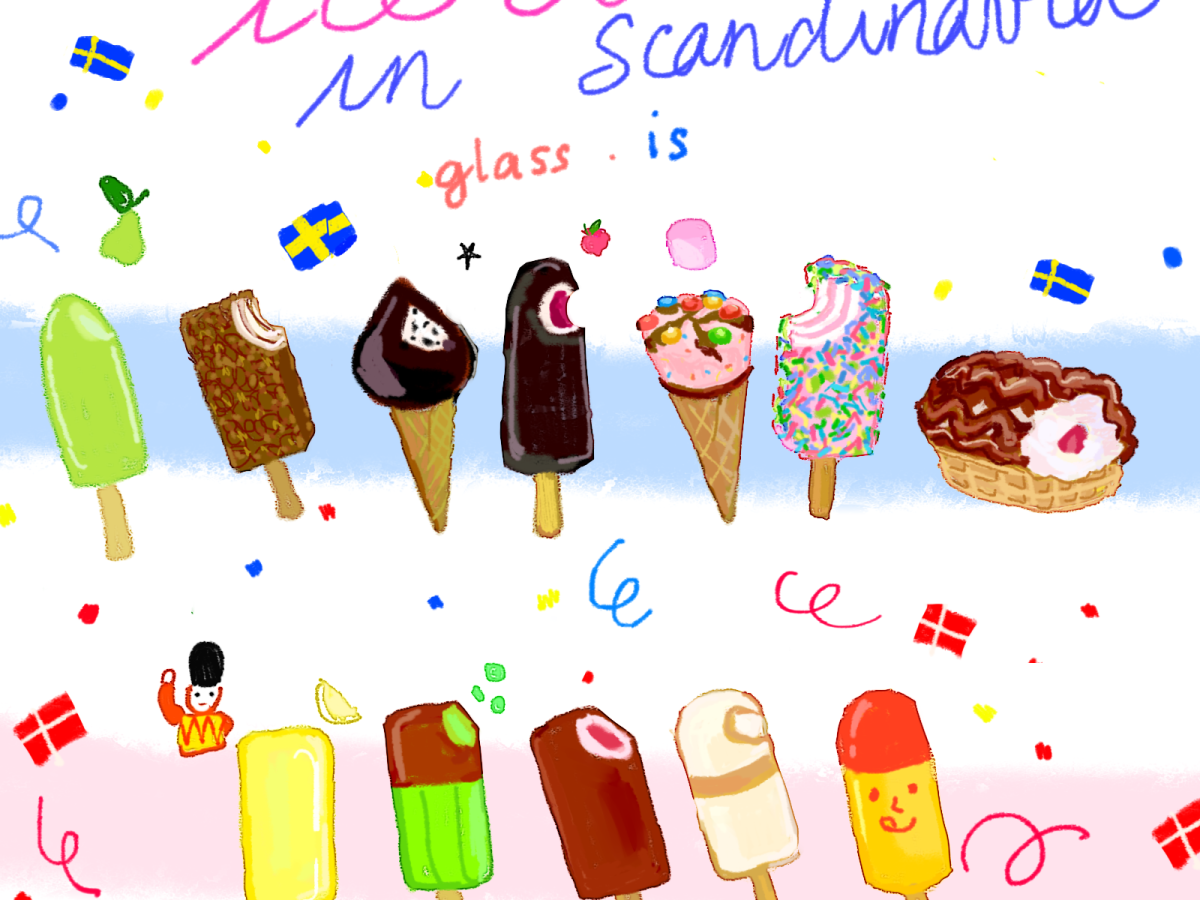
Guide to Ice Creams in Scandinavia

Discover Ice creams to try in Denmark, Sweden, and Norway: all-time classics,
Popular flavors, and curious novelties.

Since travelling to Scandinavia for the first time, i got quite acquainted with ice lollies available there, they have of course the magnum ice creams you see everywhre, but also quite a few interesting national classics, which vary. Here is a guide, so you are prepared..

Liquorice is a Nordic favourite!

One thing you see everywhere in Nordic countries is liquorice, lakrits/lakrids. You find tons of liquorice candy, in chocolate, and of course as ice cream flavour, and there are several options.
A pan-Scandinavian ice cream type is a round DAIM chocolate covered cream cone with a few variations, and it got recently a salt liquorice version!

During my Denmark-Sweden holiday of last summer, I got the Daim Mint variation at a 7/11 of Copenhagen station last year though. And I did try a berry-liquorice combo in Sweden though.

The Danish Classic ice creams

Frisko in Denmark, GB Glace in Sweden is the ice cream brand with the heart symbol present everywhere with different names, and many Ice creams I will mention are sold by it. Denmark has a set of all-time favourites, some have been around since the 50s!


I have tried Københavner stang, Champagne Brus and Solbær of them. the former is just a plain lemon one (picked it because of the logo), but I enjoy Champagne brus contrast of lime-ish freshness with the chocolate covering. Solbær – which changed name from Kæmpe Eskimo for political correctness reason – is just chocolate with berry creamy filling. Still good! Kung Fu is lime and liquorice, Filur is the cute orange-raspberry water ice cream.

Sweden: pear flavour, Pippi and Emil

Other than liquorice being king, a particularly common flavour in Sweden is pear, or at least much more than it seems to me in other countries. A Finnish Swede friend told me it probably is because you cannot grow many other fruit…Piggelin by GB Glace is a pear ice cream classic.


SIA is the main competitor of GB in Sweden I guess, based in Halland. It has introduced Emil and this year Pippi ice creams!! The former is Krumelurglass (which i got in the original candy form last year, krumelurpiller), a fruity ice cream. The green part is -you guess it- pear. Emil has blueberry flavour.

pictures (c) SIA Glass

I actually tried the raspberry liquorice ice cream, the lemon cornetto, and the Swedish classic 88, read åttioåtta. Shoutout to my friend Linda & her husband who made me try it. I would have also tried a Hilda, marshmallow/strawberry-ish? ice cream covered in rainbow sprinkles, or Godisregn (‘candy rain’), basically the same concept but in a cone. Glassbåt (‘ice cream boat’), also looks interesting. There are a few versions of it.
I have seen other new ones from this year with very Nordic vibes:

  • Konfetti gul & blå (blue-yellow as the Swedish flag) from Hemglass, lemon and blueberry ice creams with sprinkles on them.
  • Punschrulleglass, inspired by the green and chocolate dammsugare pastry. Hence it looks like a Danish Champagne Brus.
  • a Kanelbulle flavour one
  • Geisha ice cream- ice cream version of the famous chocolate candy by not Japanese, but Finnish Fazer.

Norway’s 17 mai ice creams

In Norway you see Diplom-Is or Hennig Olsen instead, not sure if Unilever is still behind them – Whatever. There are ‘regular’ strawberry or chocolate and cream cones, which around May get fancier for the National Day, 17 Mai, with bunad-like patterns.

I have not eaten any ice creams in Norway, but I have to say I saw nothing that stood out compared to the other countries! Please invite me to Norway to prove me wrong, haha.

That was all for now, I will probably update this post for the future summers…Or add it for Finland and Iceland and hopefully try out their ice creams!!

So subscribe to stay update on Scandinavian Ice creams:

Read more:

How I learned all Scandinavian languages (and more)- Anchor language method

The ‘anchor’ language concept allowed me to learn Swedish, Dutch, Danish, Norwegian easily starting from studying properly only one language. This approach helps prevent confusion and builds a solid foundational understanding of language structures.

At the Polyglot Gathering 2025 – an event to connect with fellow language lovers and attend talks on language-related topics – Richard Simcott mentioned an interesting concept during his talk Language Bubble. Replying to a question about learning many closely related languages (and avoid confusion) he talked about relying on an ‘anchor’ language. And I realized i actually used that method without being fully aware of it.

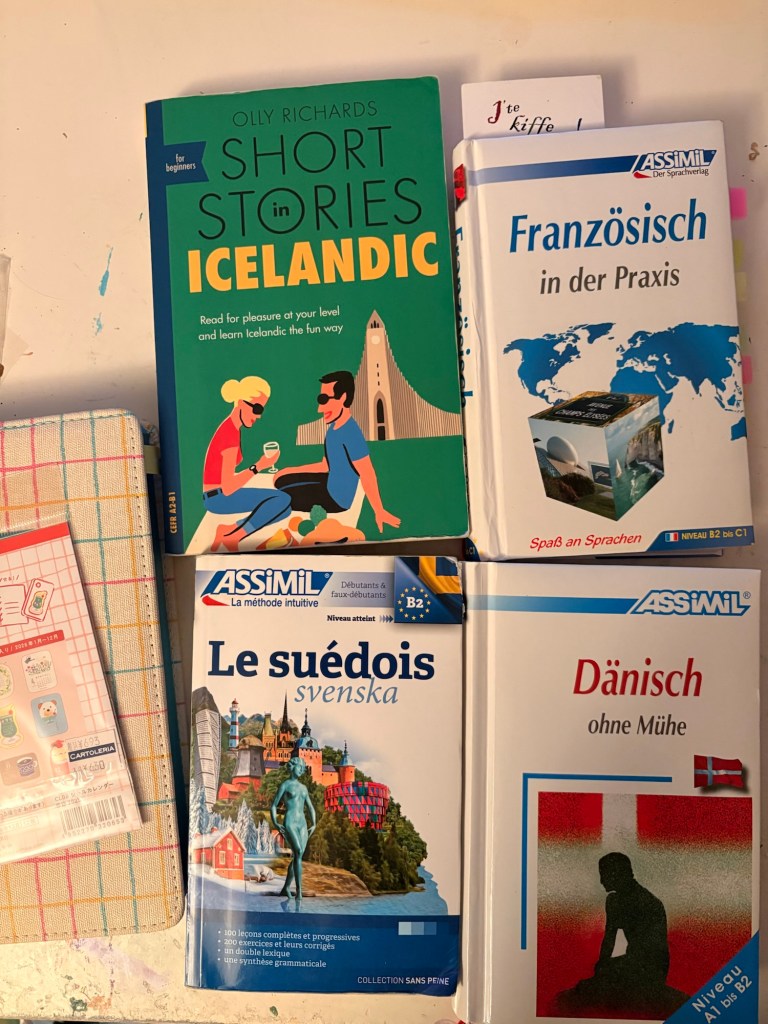
As I mentioned while talking about learning all Germanic languages simultaneously, I did not start 5 languages at once. It was a gradual journey. And I relied on different languages at different stages. First on German, then on Swedish, and that is how I gradually studied/learned all Scandinavian languages. My experience as follows.

How I learned Scandinavian languages together

My first Scandinavian language was Swedish, which I picked out of feeling. Sweden was probably just slightly better represented in my head than Denmark and Norway. I started it after having studied English and German for years, and that helped me significantly, vocabulary and grammar wise. The same goes for Dutch, which I started at the same time as Swedish – they are related, but not that closely.
When I started, I could make a lot of assumptions and give things for granted thanks to my German knowledge: verb position, past verb paradigm, vocabulary I could understand etc. Back then, German could be loosely defined as my Anchor language for both.

Then, after having focused myself only on Swedish for 2 years, I started trying to write in Danish. I could not express myself but all i needed was figuring out how to modify my Swedish. The grammar works In the exact same way for most things, vocabulary is often very similar and has recurring spelling differences. After a while just google translating you see the patterns, and learn fast because of how similar they are.

Similarly, as I happened to chat with more Danes than Norwegians, I expanded a lot my Danish skills, making it more ‘independent’ from my Swedish. For Norwegian I have been relying on both, being aware of typical Norwegian features. I believe the key when attempting to speak is learning well filler words. The listener will be impressed about it before you recycle a word in another language – fake it until you make it they say.

Knowing Scandinavian languages surely did not have the same role as an anchor language when learning Icelandic, but I guess I could/can still use them as a ”reference”. German similarly when it came to Icelandic grammar in the beginning.

Anchor language concept In a nutshell

This concept consists in one language being on a higher level than the rest, To know something also means to know what distinct it from the rest, and for that you need a solid base you can rely on and use as reference. At some point, you will rely less and less on the anchor language.

  1. Pick a language and focus only on it and no new closely related ones for a while. You do not need to become fluent, but you need to know the language structure well: how grammar works, general vocabulary etc. So you are sure of what is Swedish, and do not mix it with what isn’t when learning.
  2. Get exposure in other related languages: start getting to know the other members of the family. Just like in a real family you do not remember the names of everybody after first introductions with many new people, so you have to have contact with them again here and there to actually be acquainted.
  3. Start using the other languages. As the passive language skills are already there due to language intellegibility, and you can use what you naturally absorb after a while, also by searching words you do not know and grammar concepts that might be different in your anchor language.

you can also see it as writing two essays: it works better to first write and finish one with a defined structure, then take that structure for a different topic and slightly modify it, than starting two different essays simultaneously, adding bits to both now and then, ending up with two randomly written texts.

The same can be applied for Romance languages, though my Anchor language is my native language, which I obviously have a strong base of to begin with…

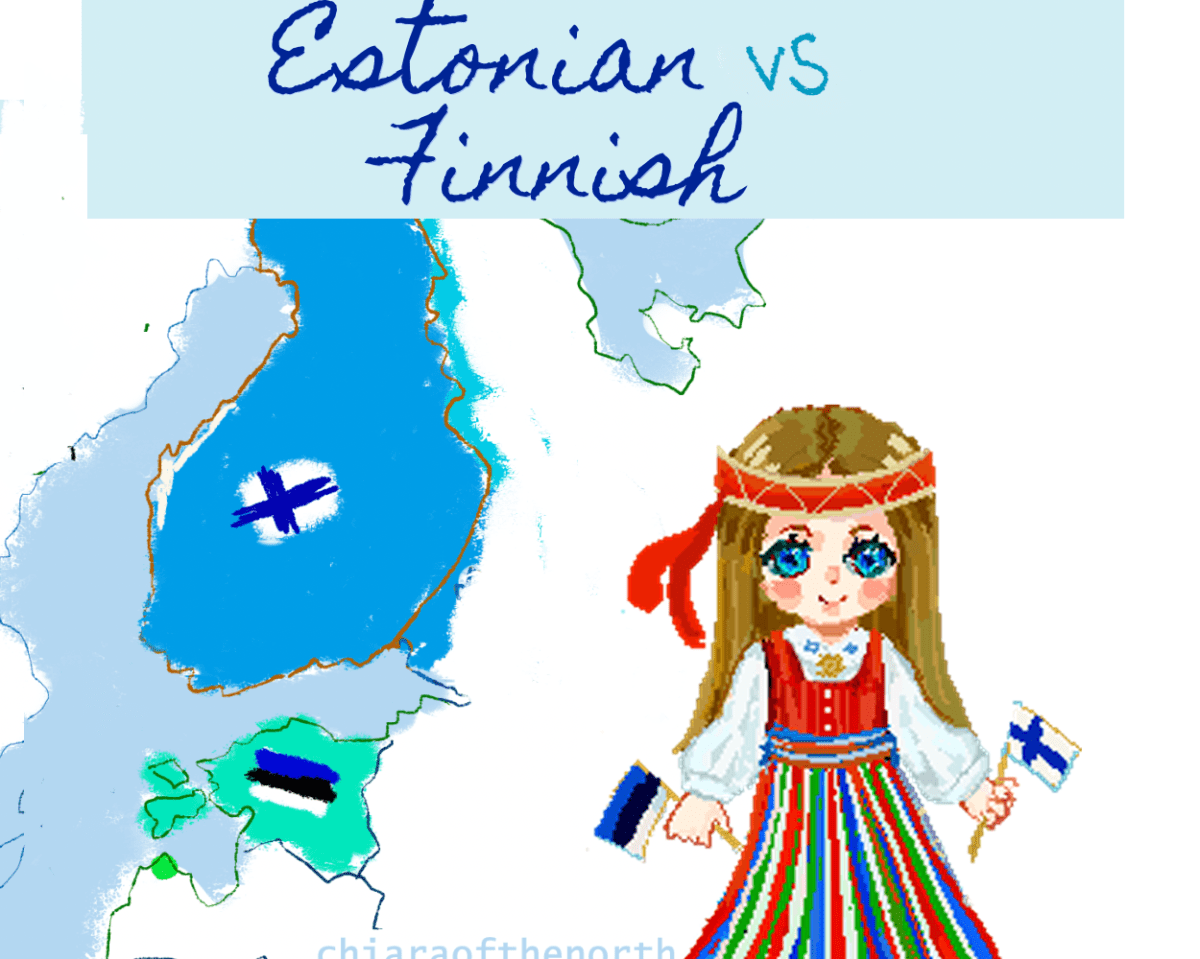
I do plan to focus on Finnish to be able to make it my anchor language in order to easily learn/understand Estonian. It already helps with absorbing grammar features and some words I have randomly encountered, but to be a proper anchor there is work to do!

Find more language tips & facts on Nordic languages learning on this blog, or check out my free language resources list.