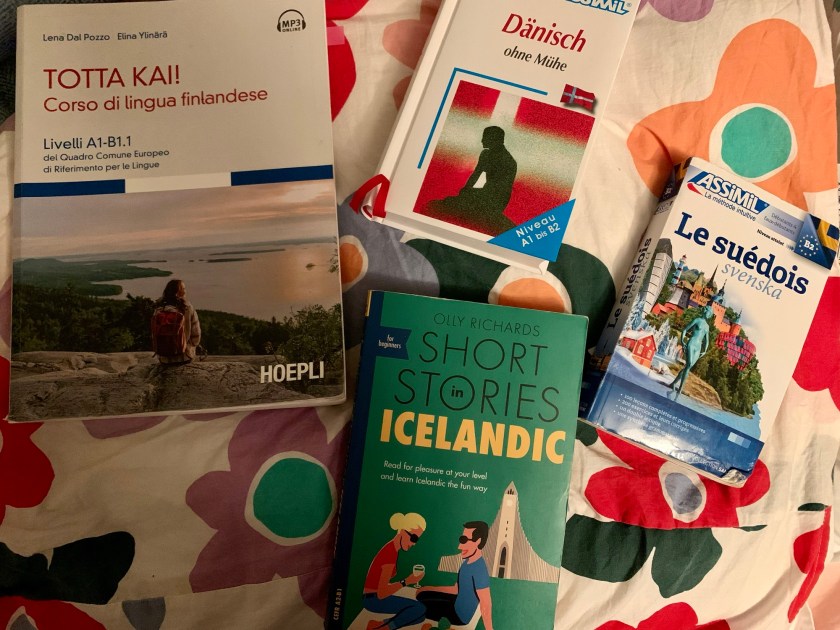
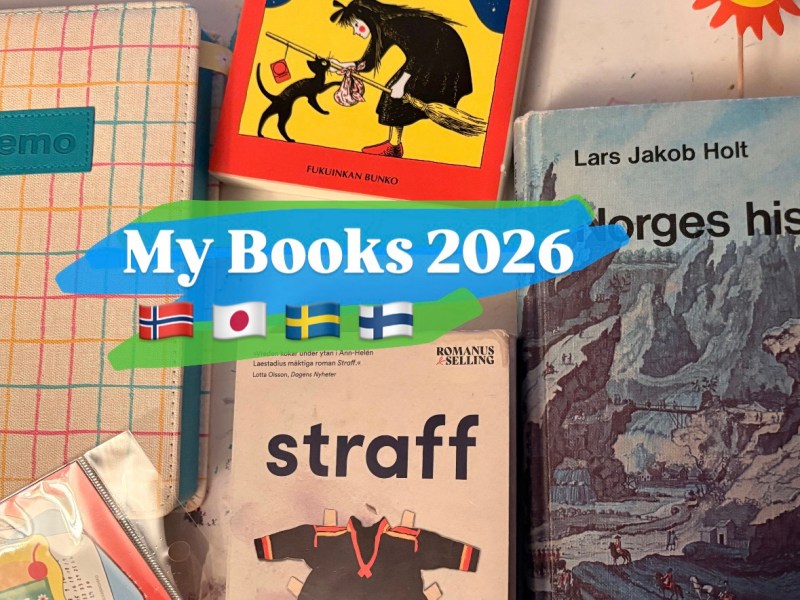
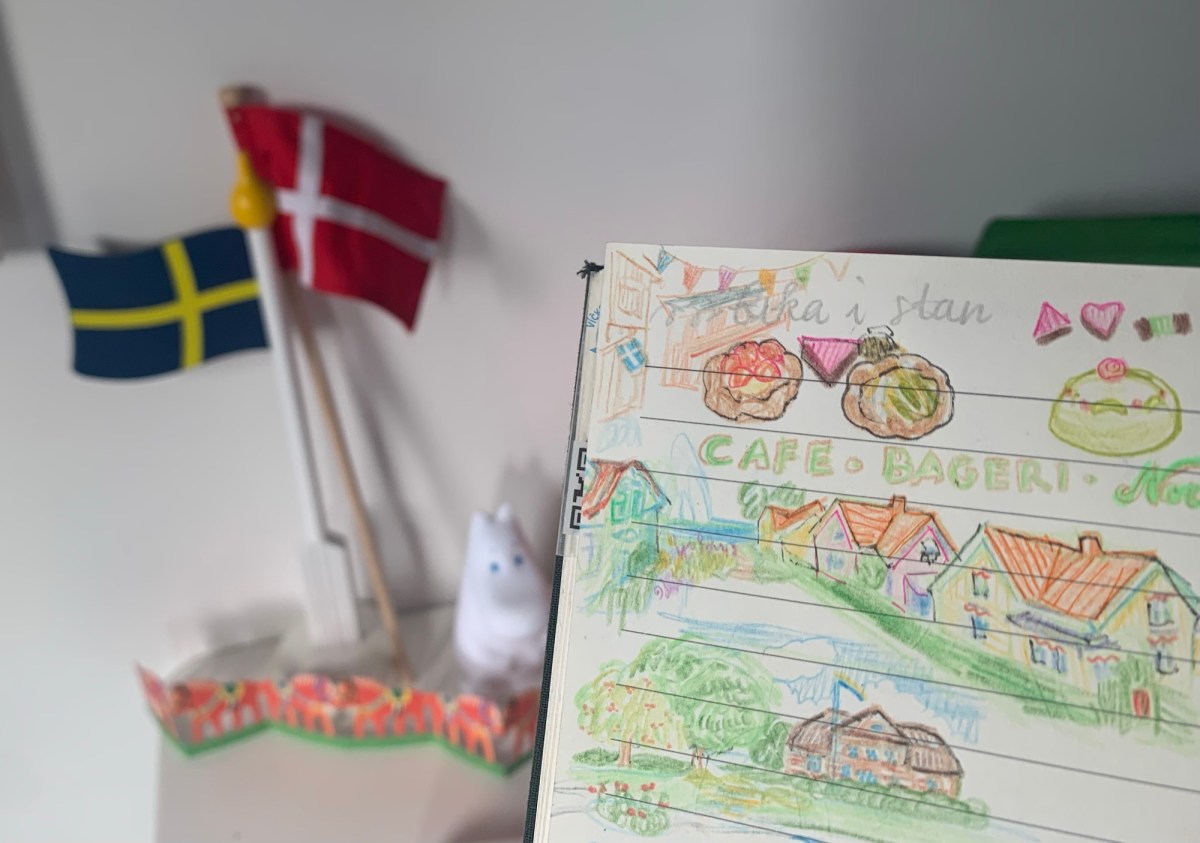
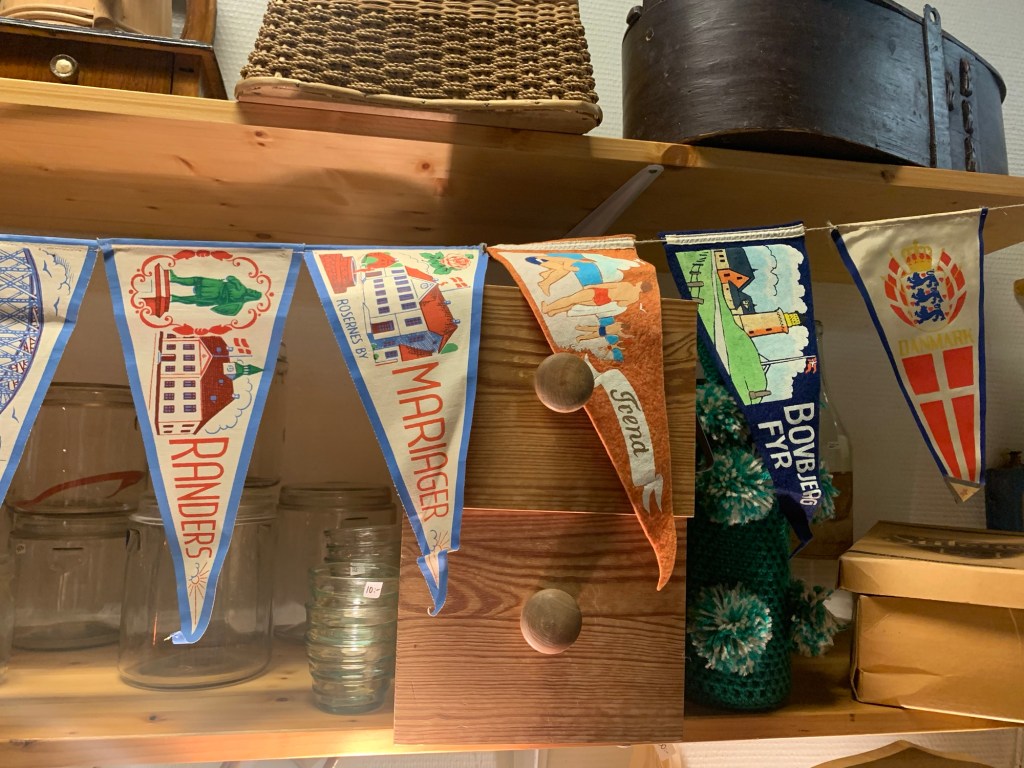
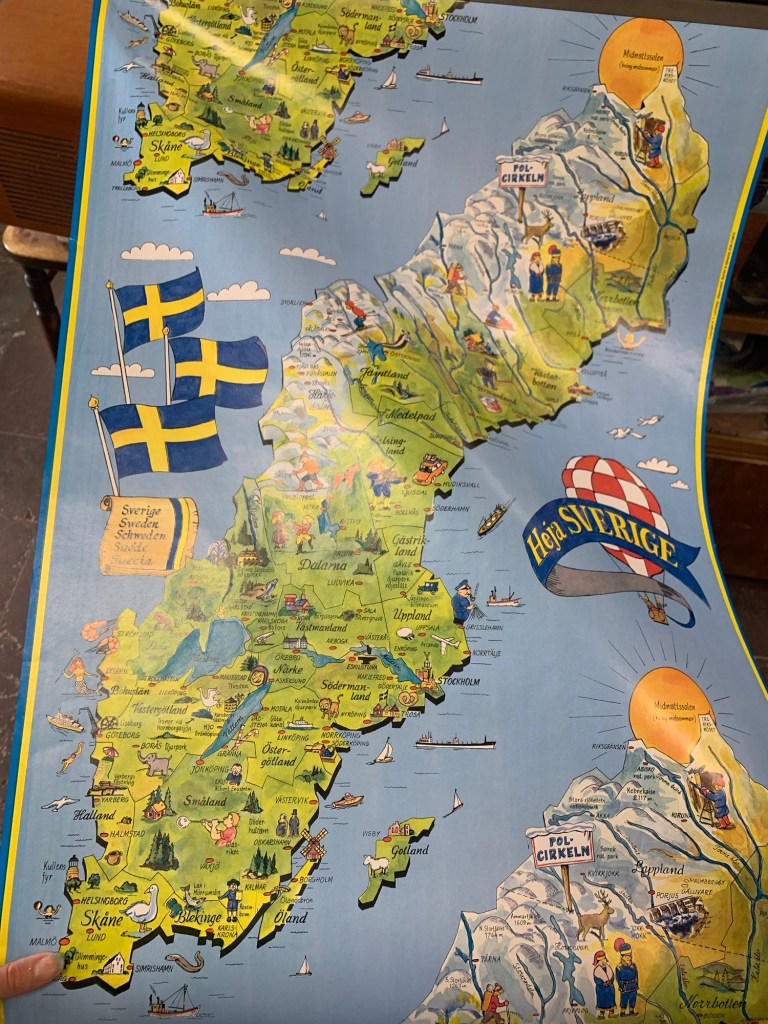
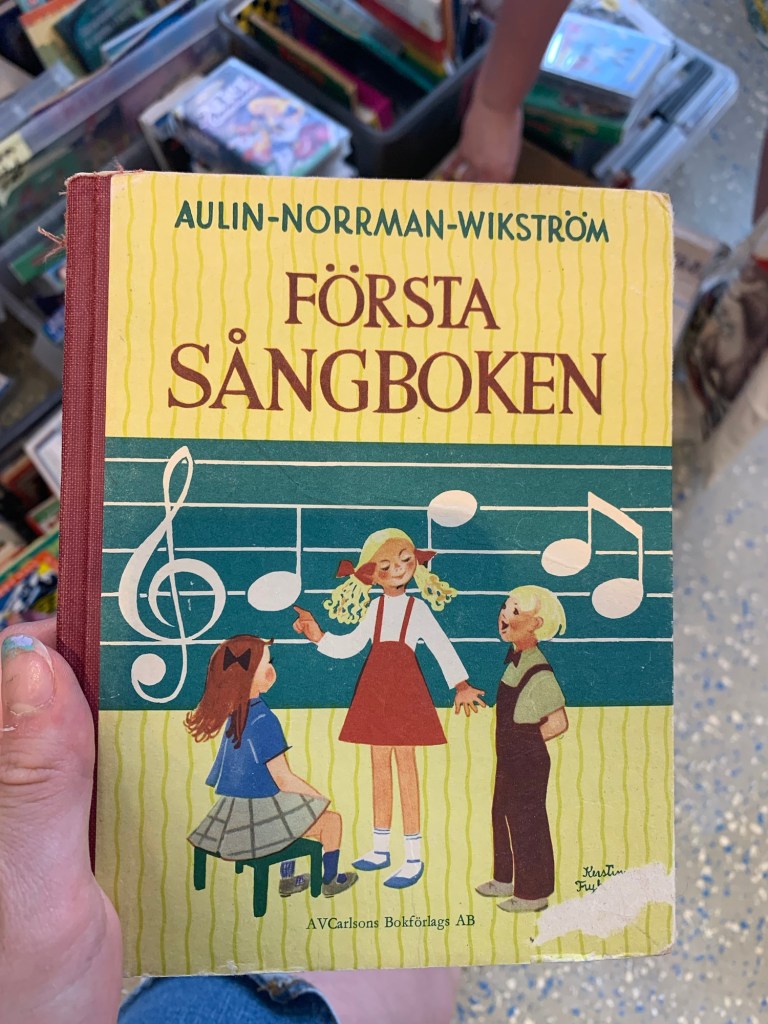
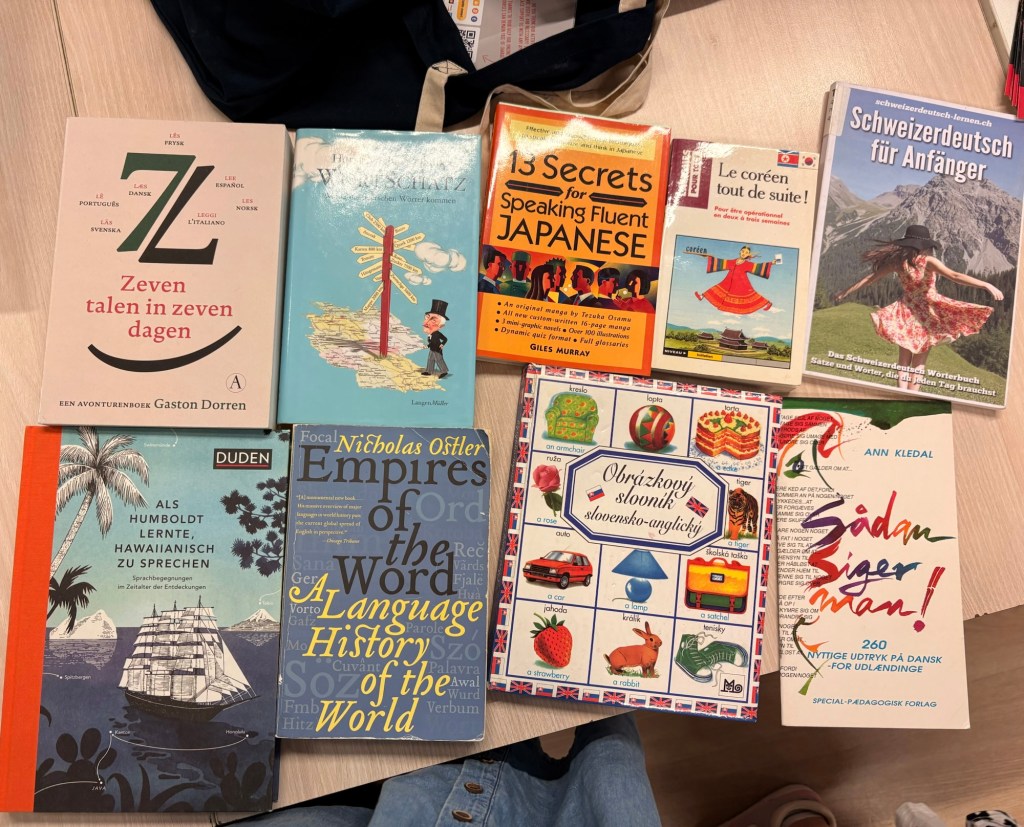
Novels, non-fiction and coursebooks to learn Nordic languages I plan to or might use this year, from Swedish to Icelandic.
I already had these books in 2024, started some of them during the year but still have some to begin yet:
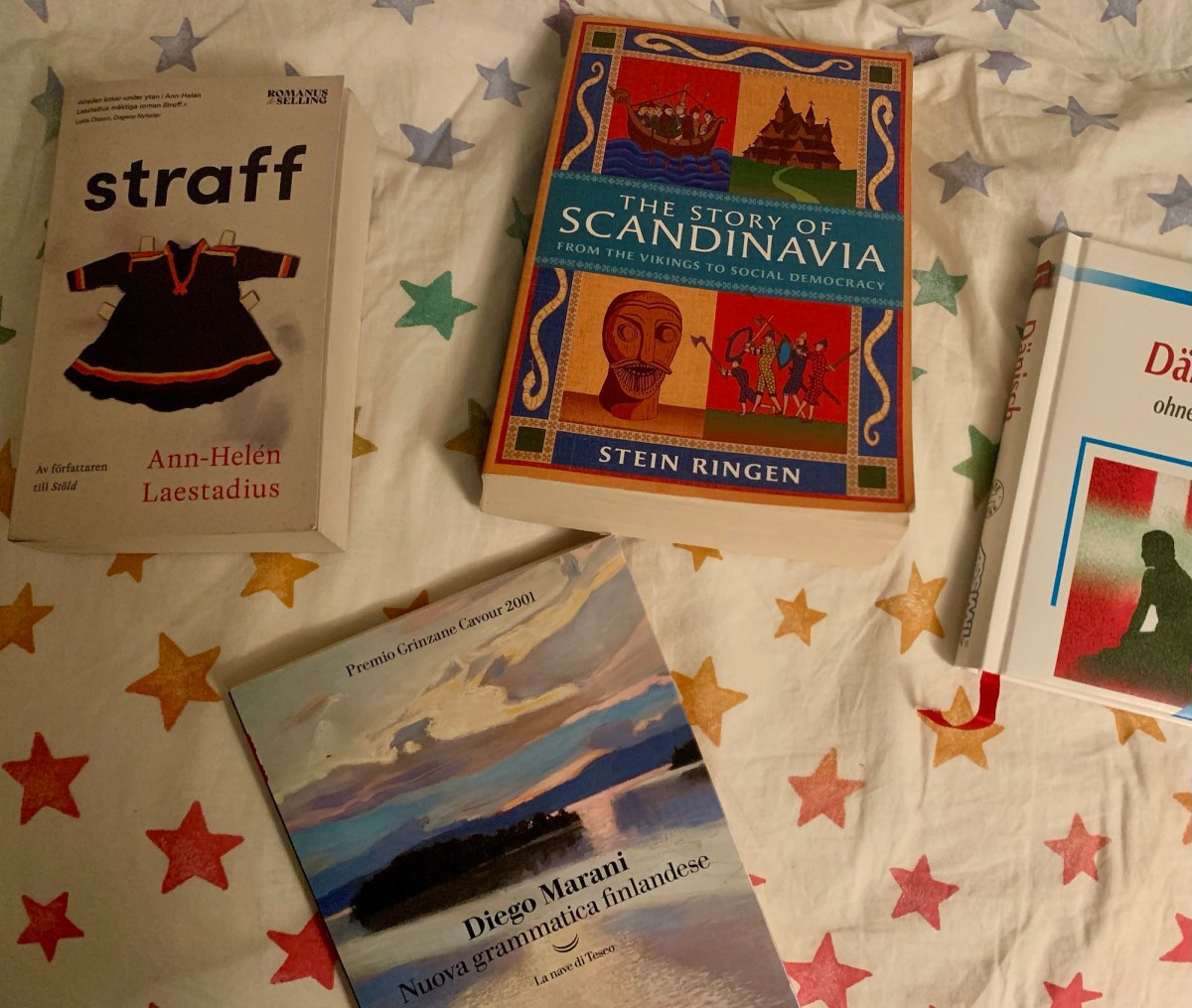
Story of Scandinavia, Stein Ringen – detailed history of Sweden, Denmark and Norway from Viking Age to Present!
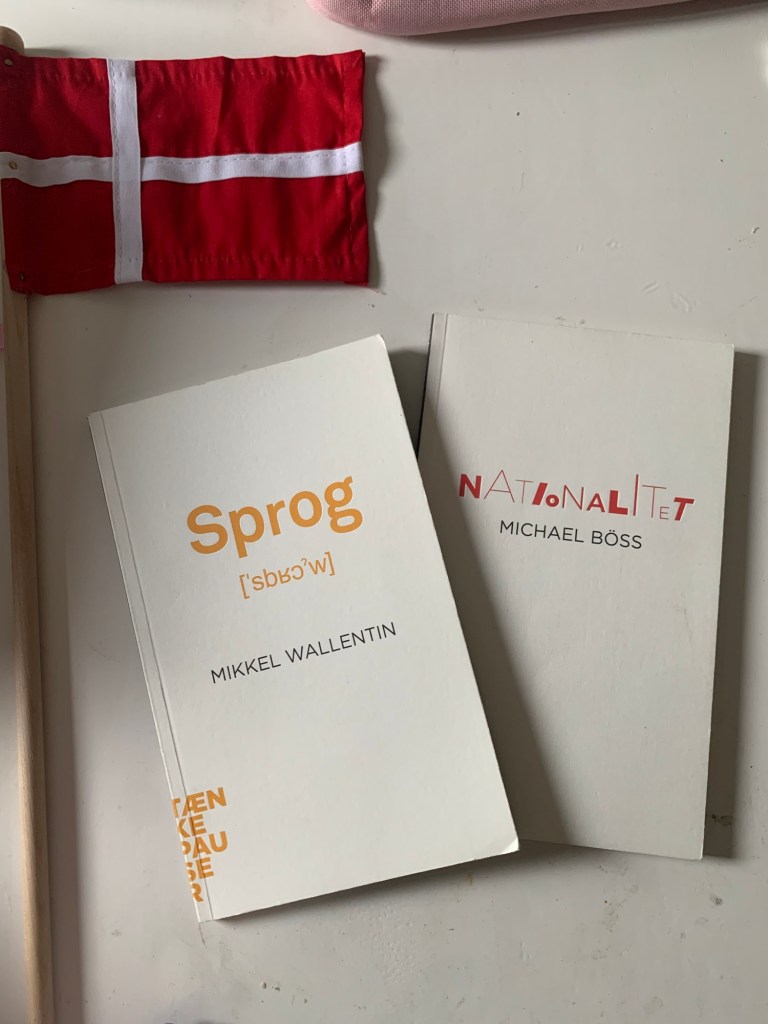
Sprog, Mikkel Wallentin – a booklet about language as a way to communicate and its peculiarities, part of the series Tænkepauser by Aarhus University.
Started (and already finished) in 2025:
New Finnish Grammar (Nuova Grammatica Finlandese), Diego Marani – novel about a soldier found in an italian harbour without any memory of his past and believed to be Finnish, he will be brought to Finland to re-learn his language and culture.
A few novels I still have to start:
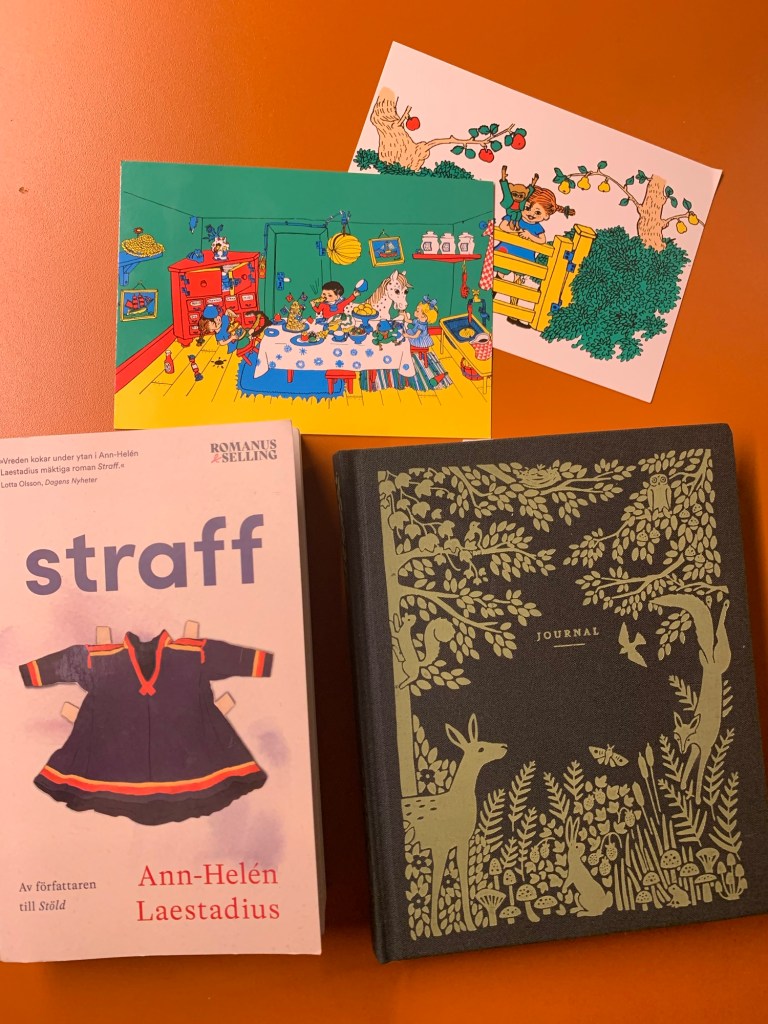
Straff, Ann-Helen Laestadius – Sami kids taken away from their families to a Sami-hostile environment, who meet again 30 years later.
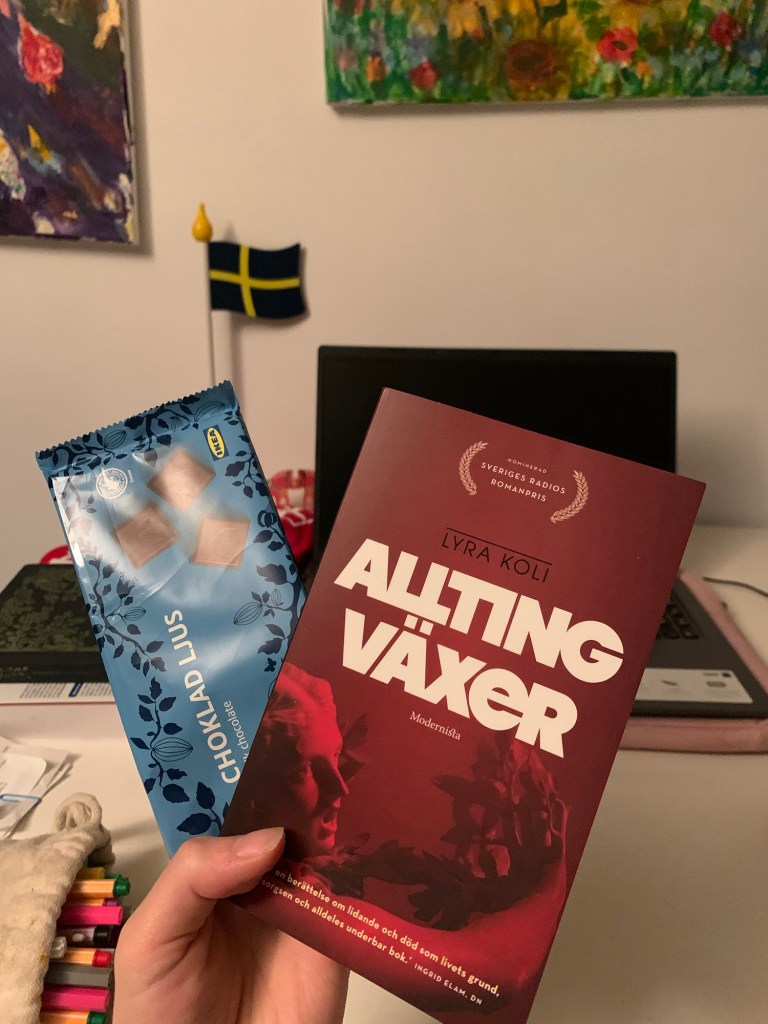
Allting växer, Lyra Koli – dystopic novel about a Scandinavian girl set in a post- world war and climate catastrophe world.
Language books
This year I want to begin by focusing on Japanese, but also Finnish, continuing the coursebook by Hoepli (from Italian).
I am looking forward to improve my Danish a little with the German Assimil edition. Other books, as Swedish assimil and Short Stories in Icelandic, were started in the past and I might continue (for Icelandic) or review (for Swedish) them later.
That was pretty much all for now.. Let’s hope 2025 continues better than how it started, for me by being sick…
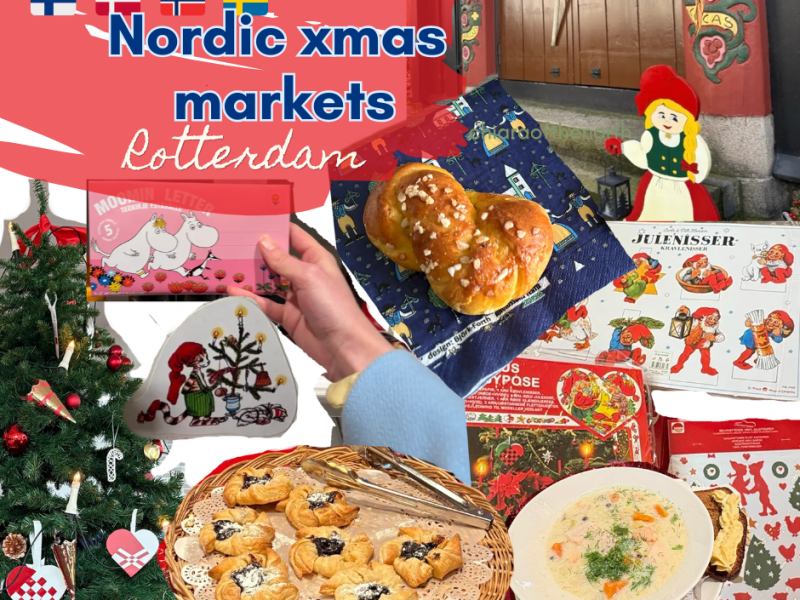
Norwegian, Danish, Finnish and Swedish Christmas markets in Rotterdam. Christmas decorations, imported typical Nordic products for sale, a cafe with lunch and cakes in each of them!
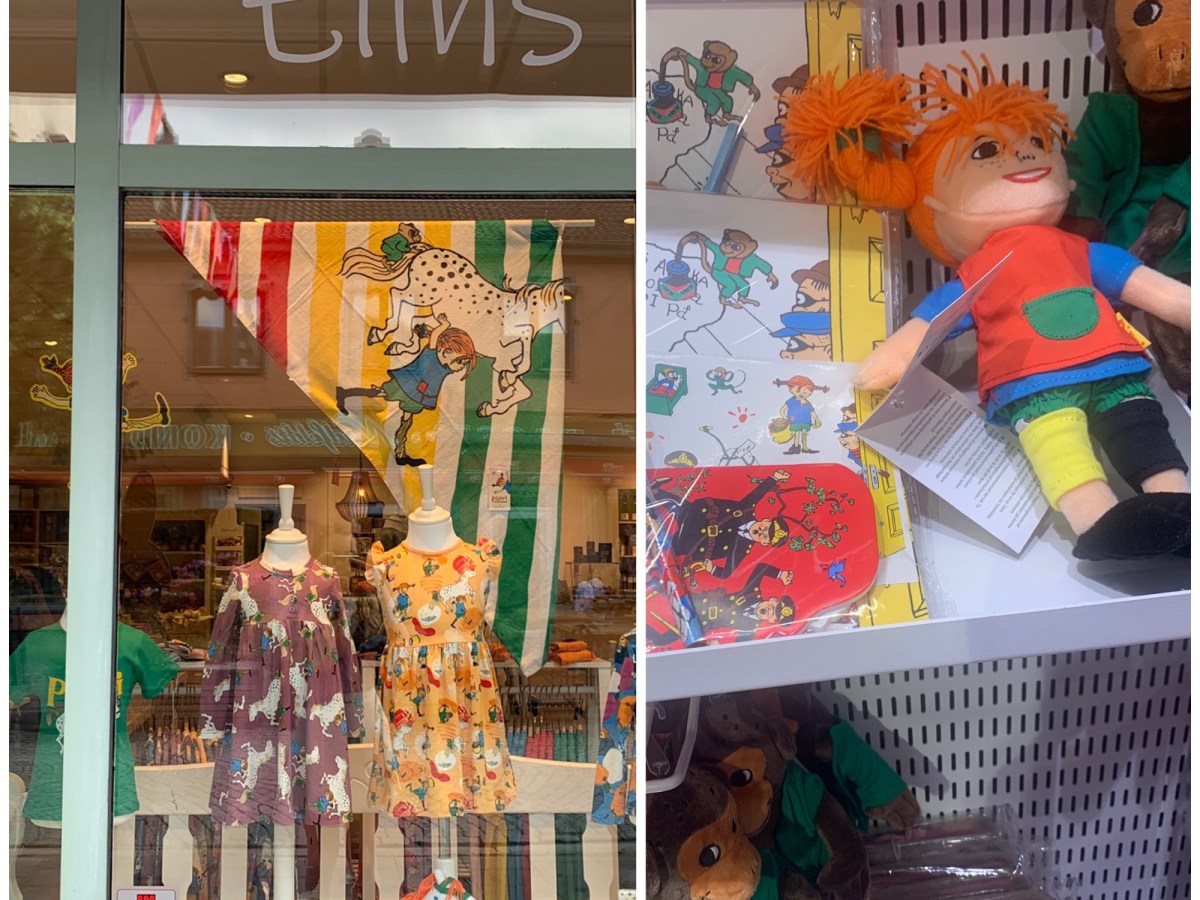
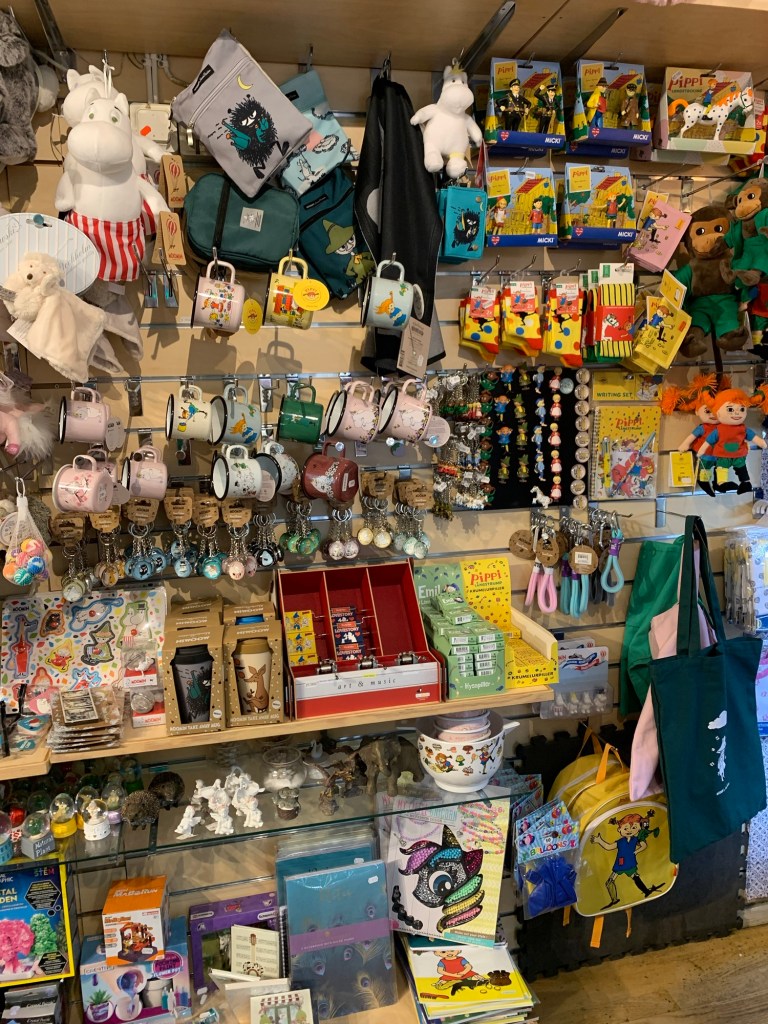
In Sweden, Pippi Longstocking objects can be a lovely souvenir. Pippi is on sweets and various children’s items a well, as sometimes other Astrid Lindgren’s characters, which have also cherished cultural impact as a part of Swedish identity.
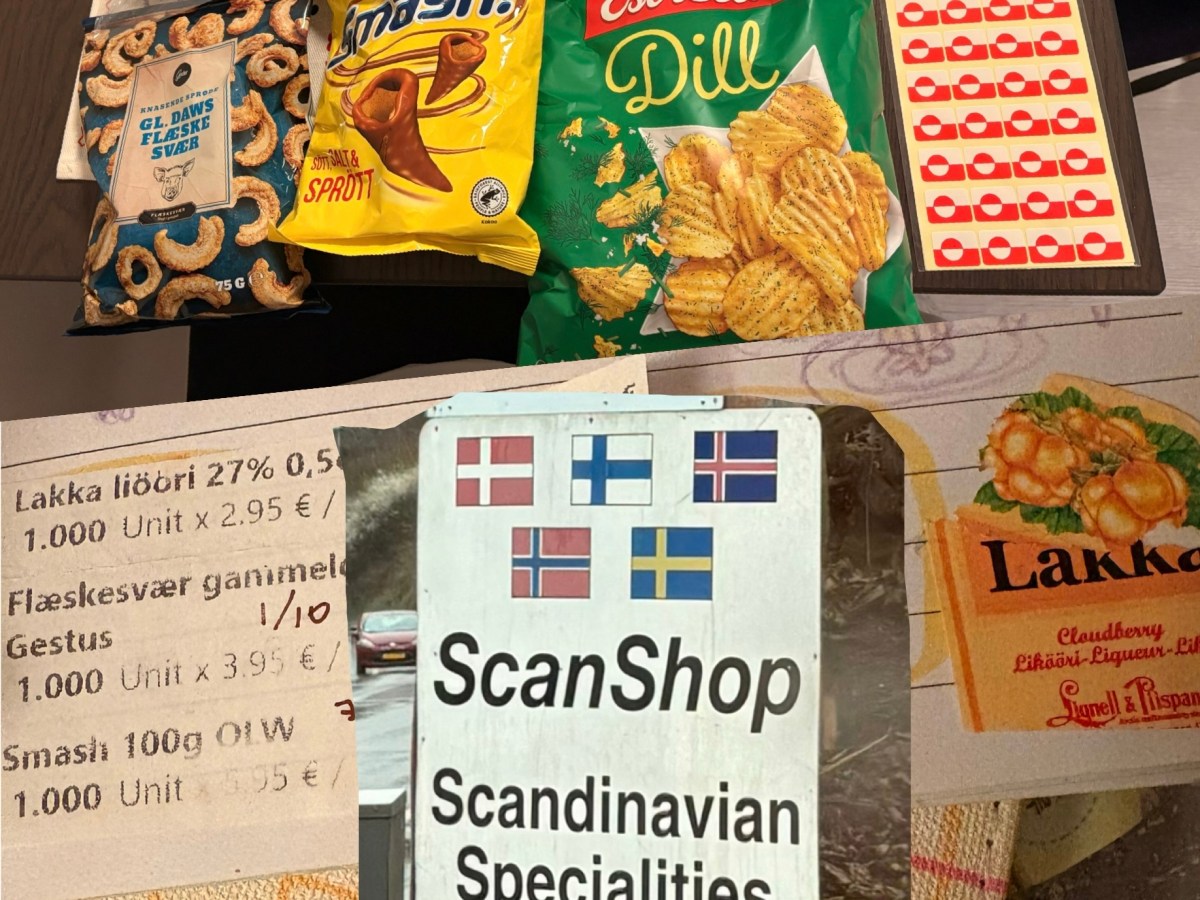
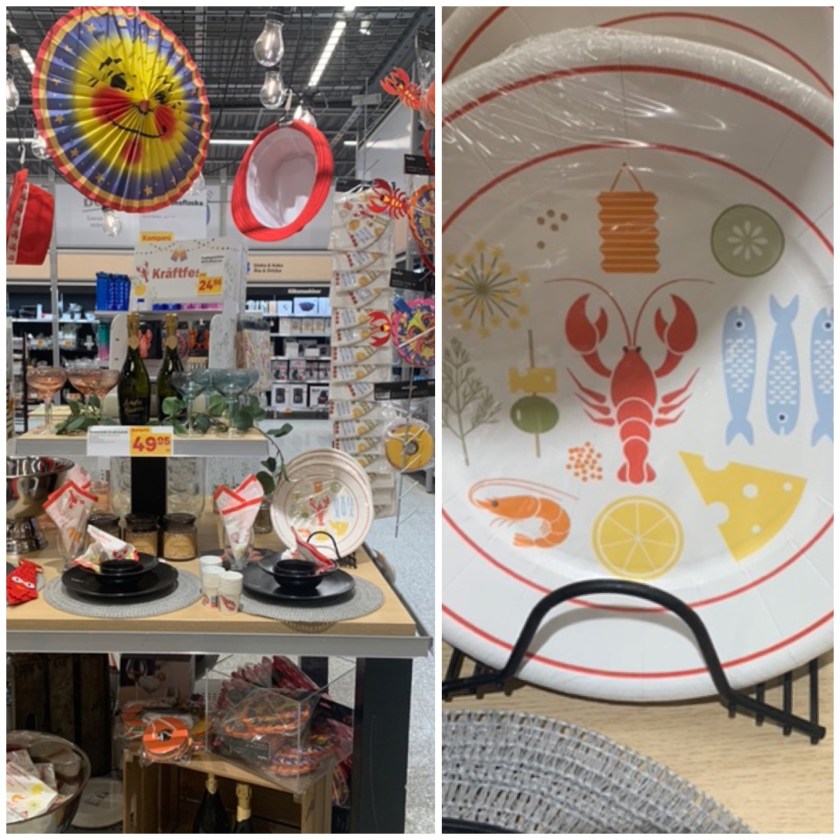
I visited Scanshop, a supermarket for Nordic expats in Luxembourg and Belgium. It offers a wide range of Scandinavian food products, including rye bread, fish, and sweets, alongside flags and tableware.
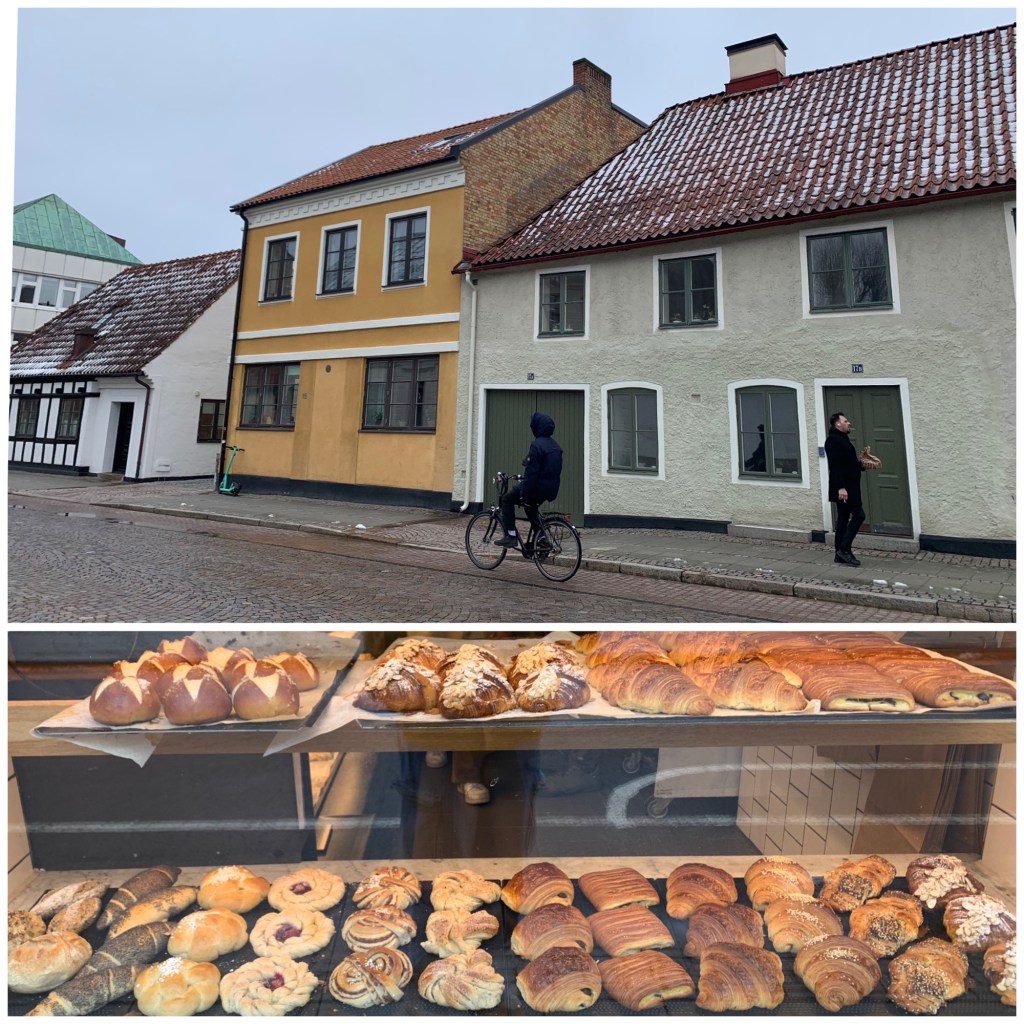
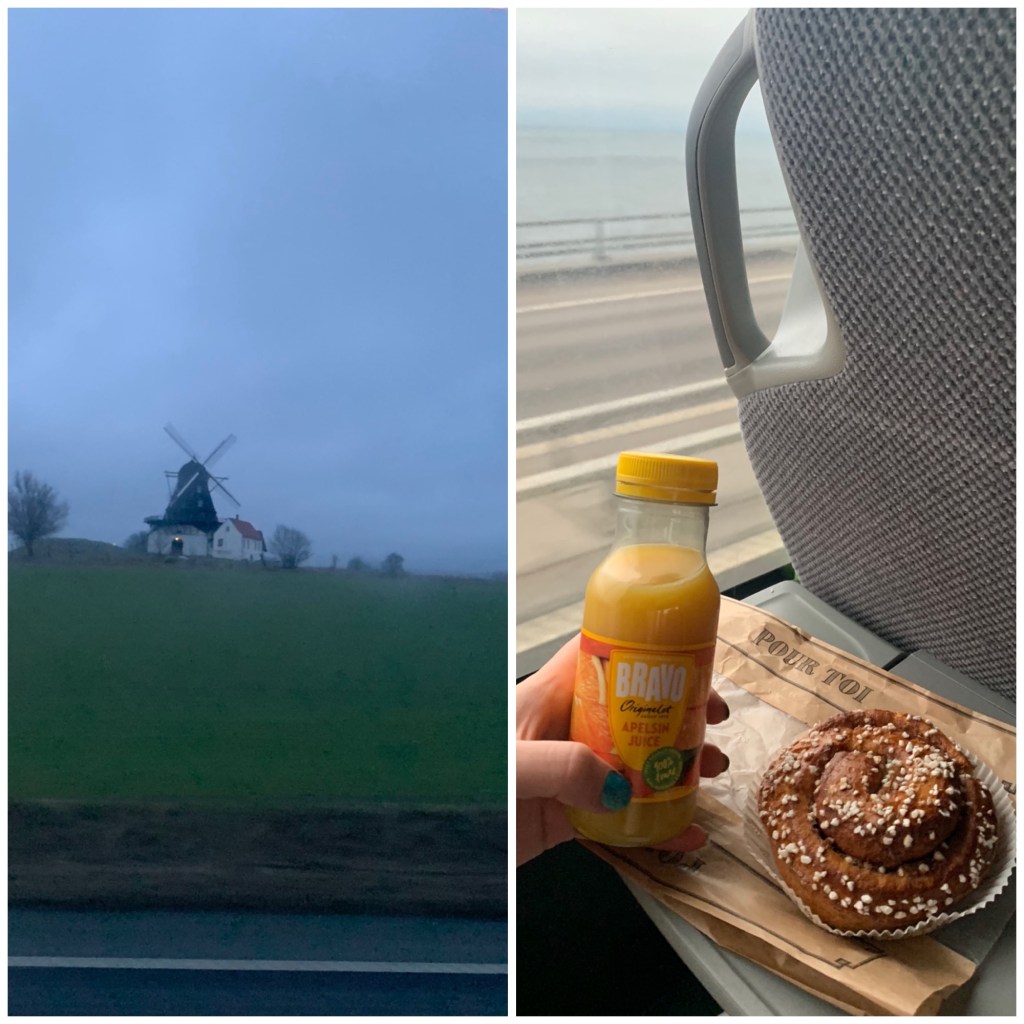
Travelled to Sweden during Semlor season, deep winter, arriving by train and flixbus from the Netherlands.
Going to Sweden in the middle of winter, January-February, is usually not the preferred period, it is cold and dark, not during the festive period either. The only plus point is that it is Semla season, which was my main motivation to go there around my birthday (February 6th).
Back in November i had purchased a 10-day Interrail ticket i used during Christmas holidays, and since it was valid for 2 months after activation, i decided to give myself a birthday present and visit friends in Lund. And That would be my first time in Sweden, after Denmark and Norway!
Sweden at last!
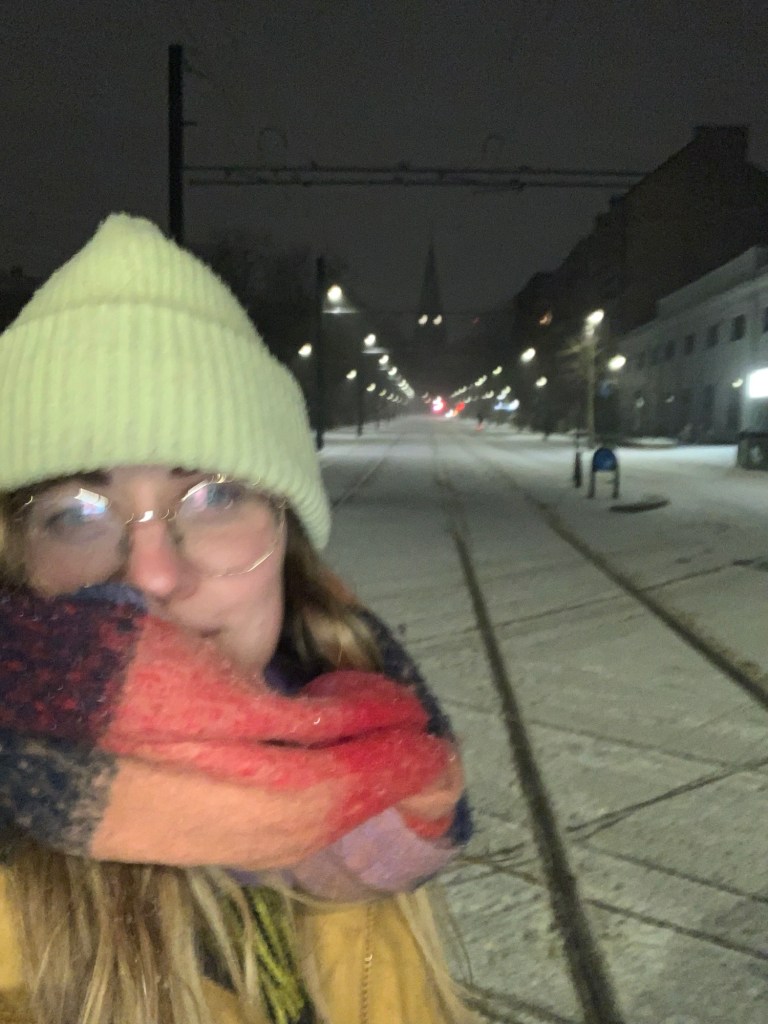
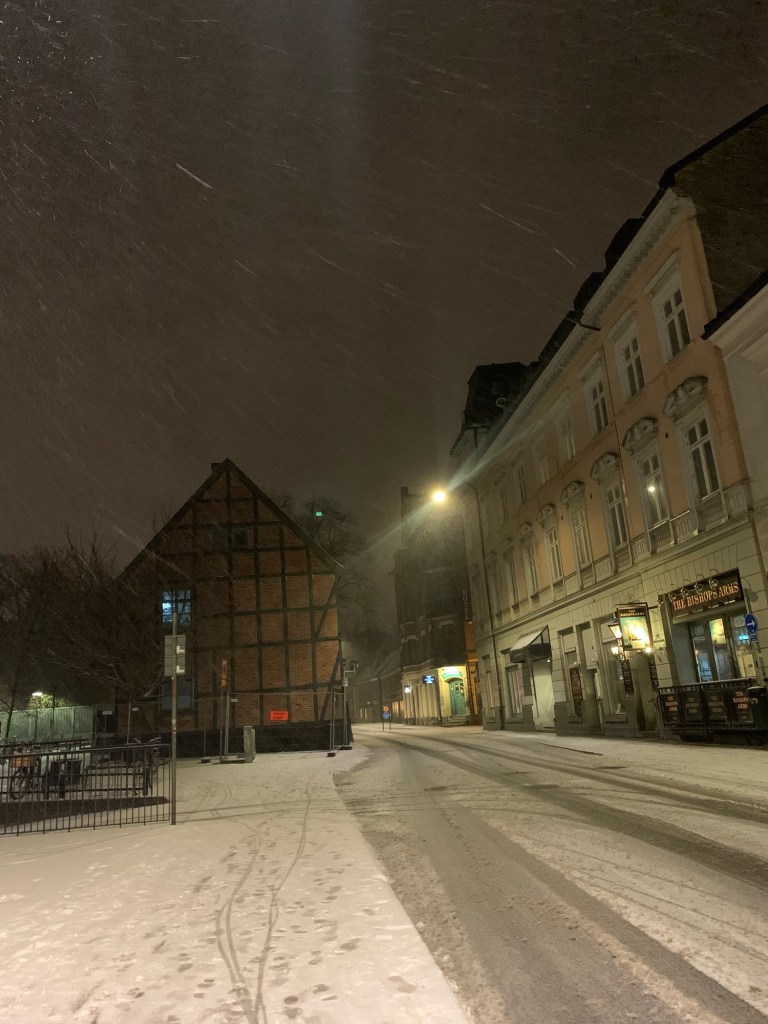
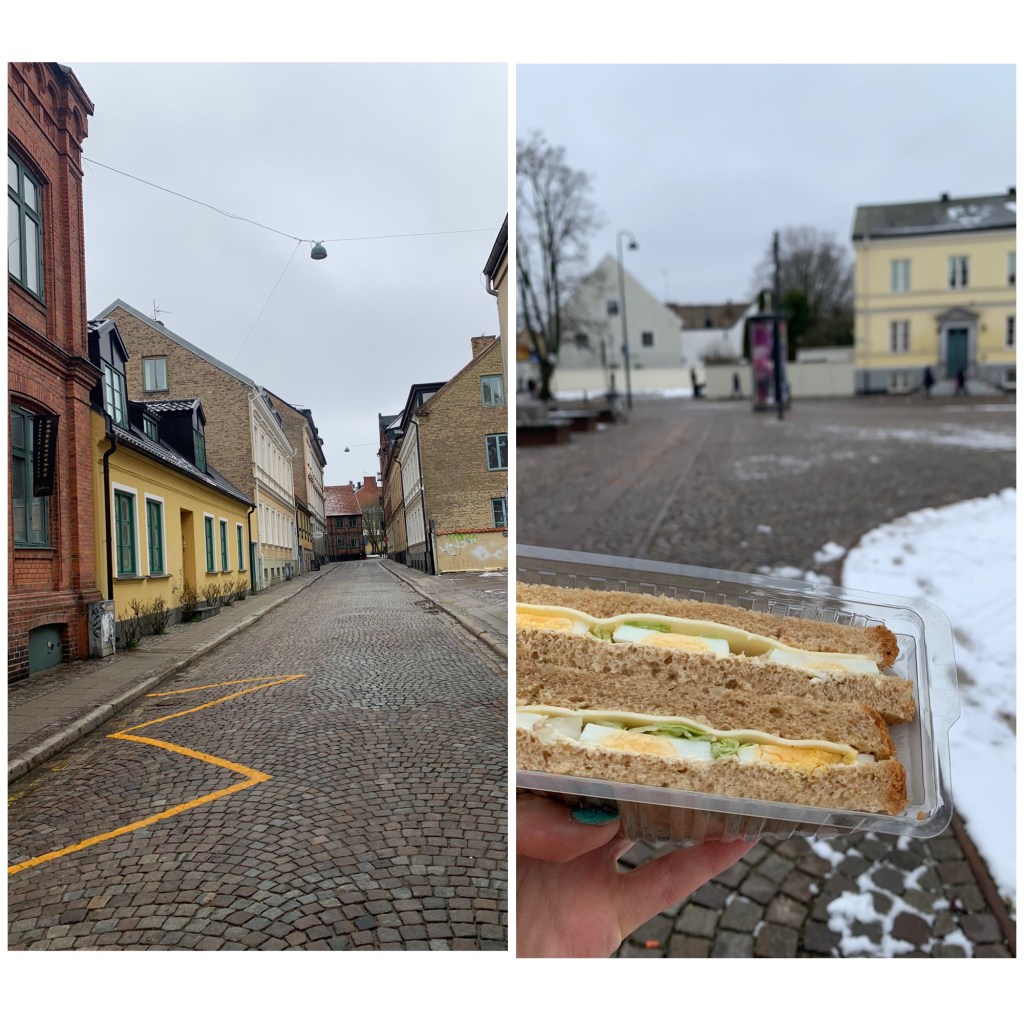
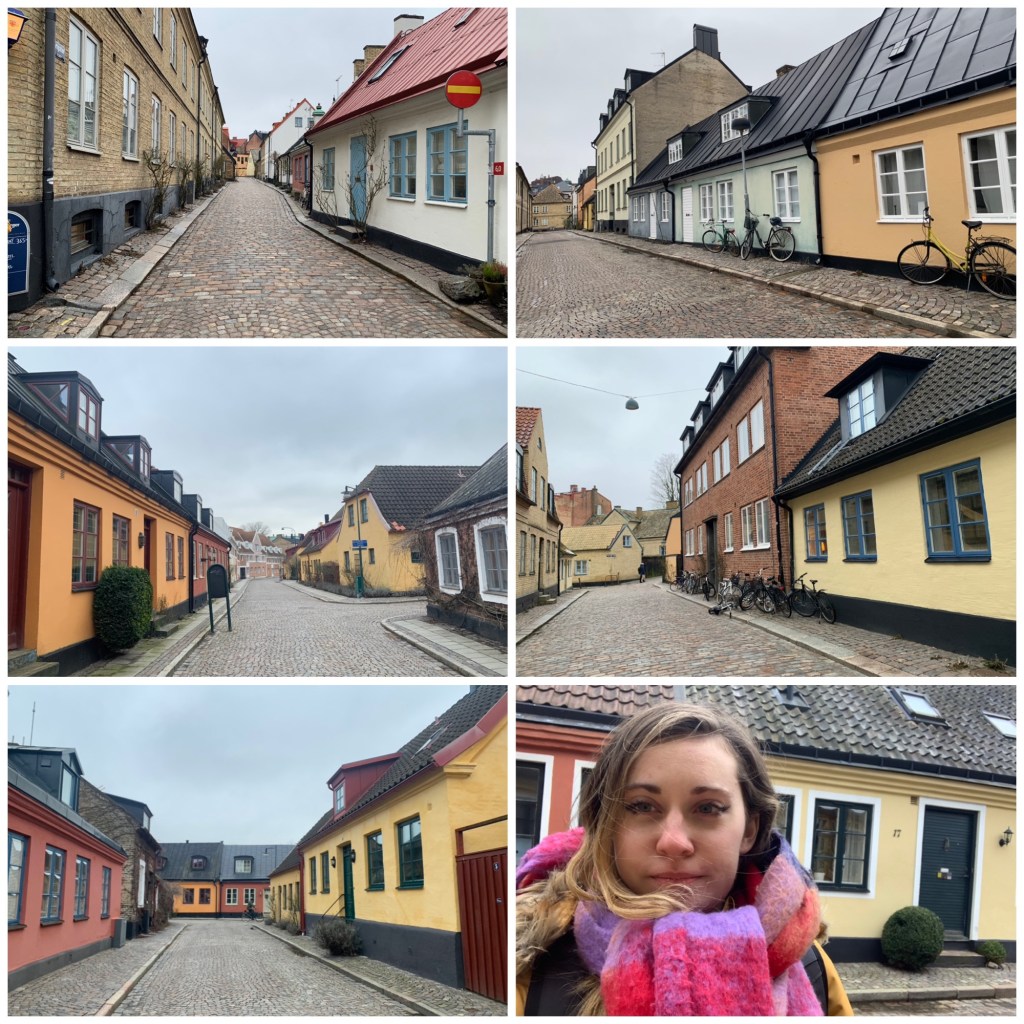
I was supposed to arrive to Lund by train, but In Hamburg all trains to Denmark from Hamburg got cancelled due to some kind of technical problem, possibly ruining my trip. I then thankfully found a flixbus going there. You bet I was the happiest person in the world once I had secured my small holiday. After 6 hours I was in Lund!!! It had snowed a bit that evening and walking to the hostel -luckily at walkable distance from the station as it was past midnight- felt soo magical! I was the only person in town!
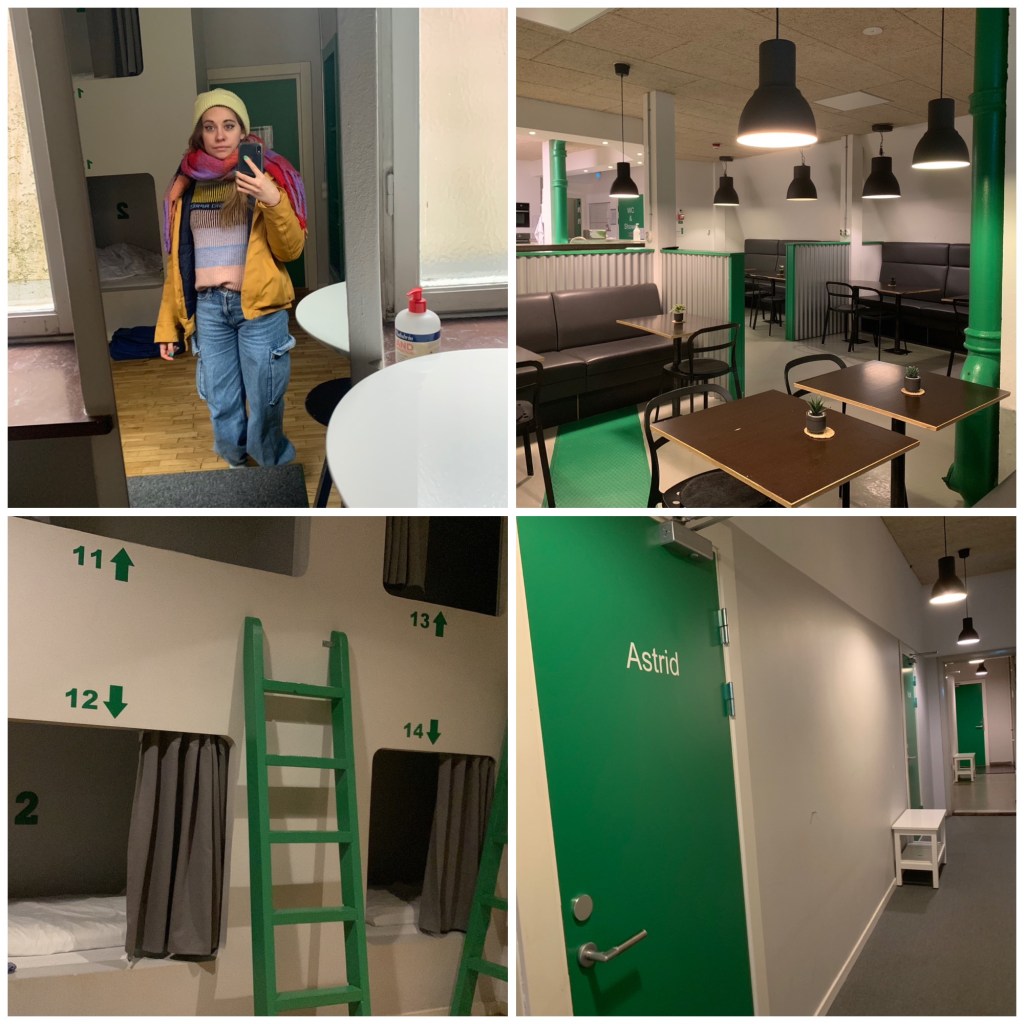
I stayed at Winstrup hostel, located right in the centre, a no-staff hostel, which i do recommend if you don’t feel the need for social activities within it! I had a quick meetup with my friend and that was soo cool!!
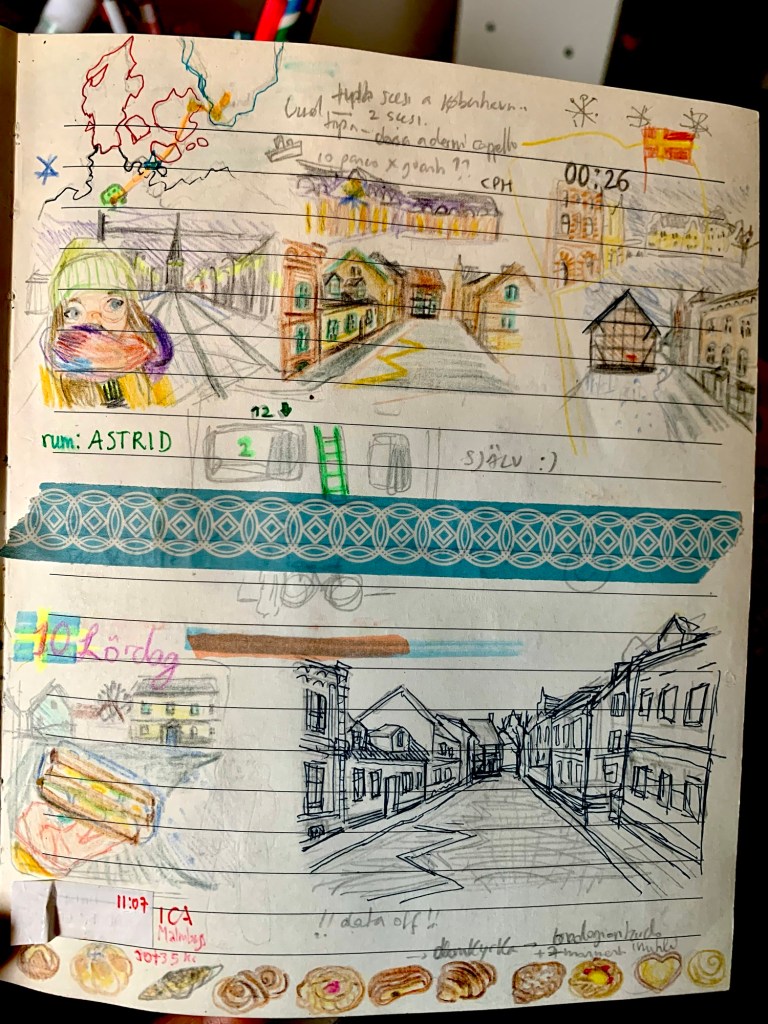
The following day started by thinking about exploring a supermarket for breakfast. I only ended up getting an egg sandwich, but fika was waiting for me..
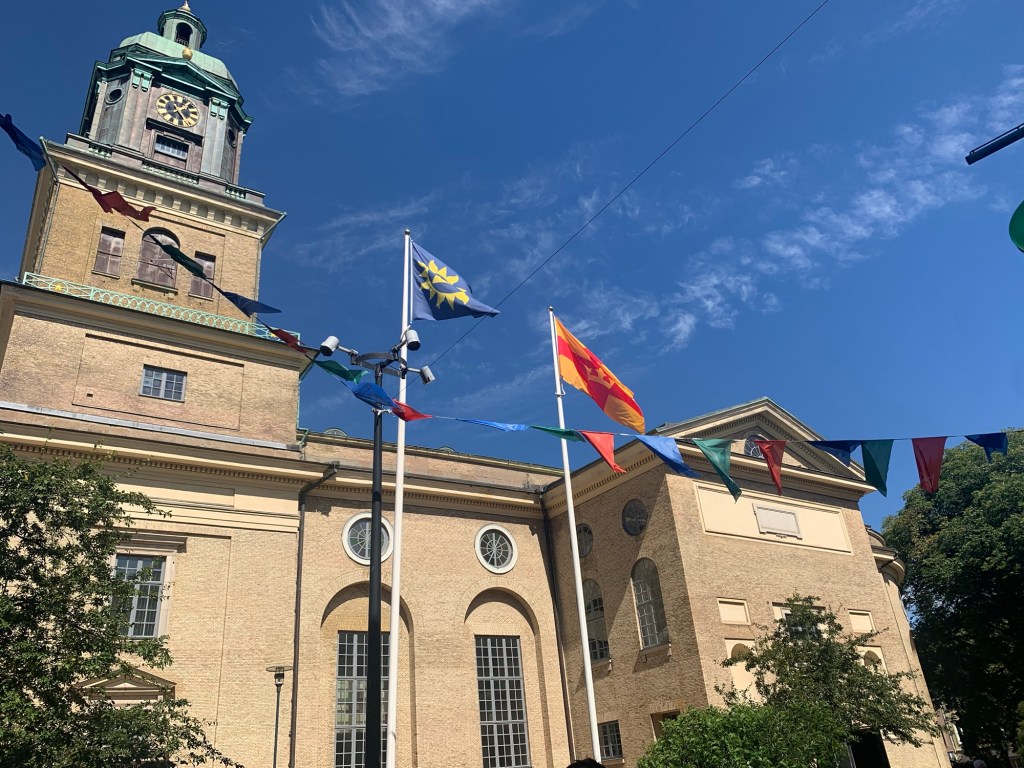
After some miscommunication caused by me turning off data and forgetting to turning it back on, I met up with my friends, and we visited Lund’s cathedral and assisted to an explanation of a clock engine thing inside. The priestess doing that was also late. It was not that interesting, I must confess. I am also not very enthusiastic about visiting churches usually.. We could have visited a museum, but had no time really. And my friends kept saying that in winter there was not much to do anyway..
Fika and books
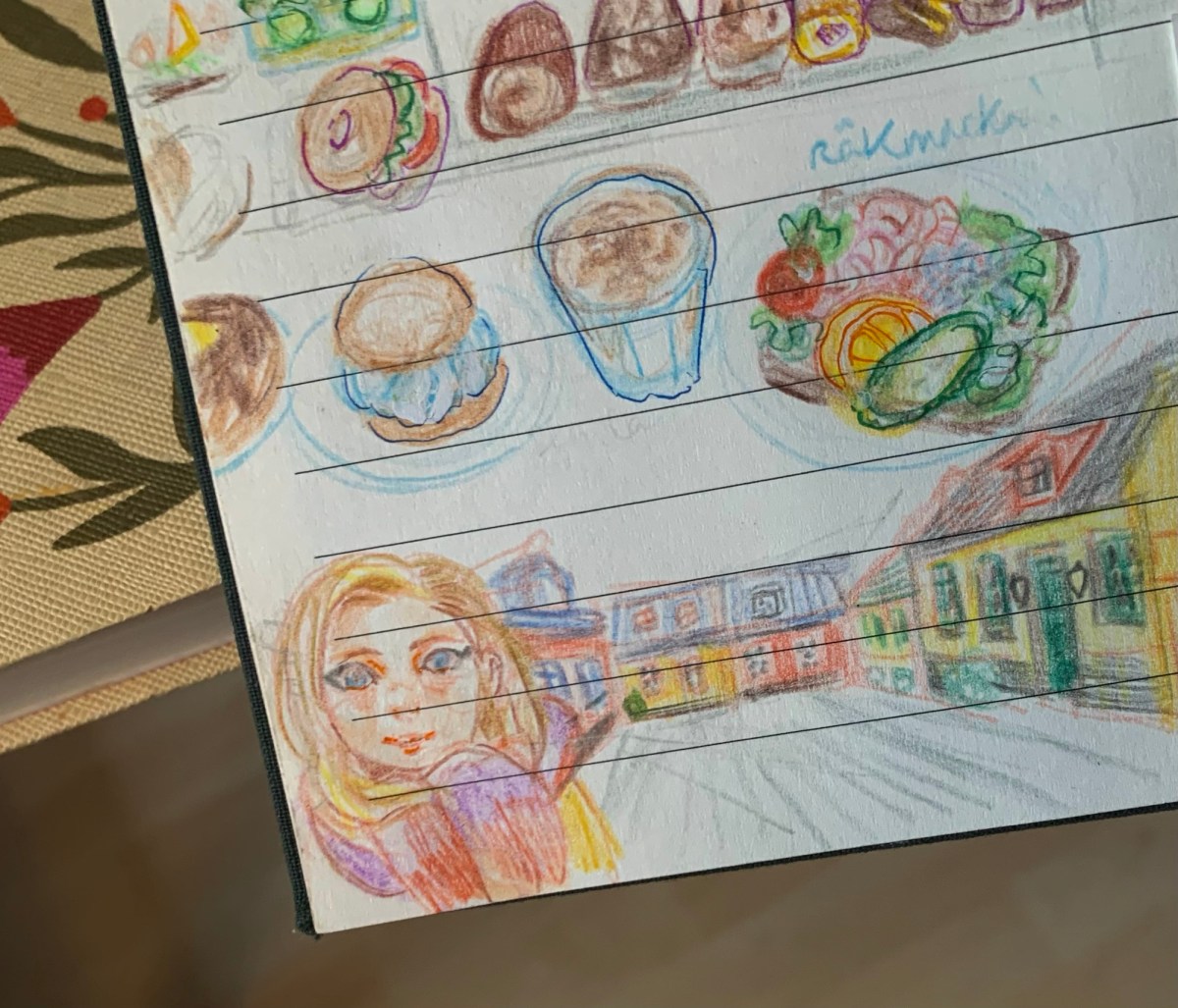
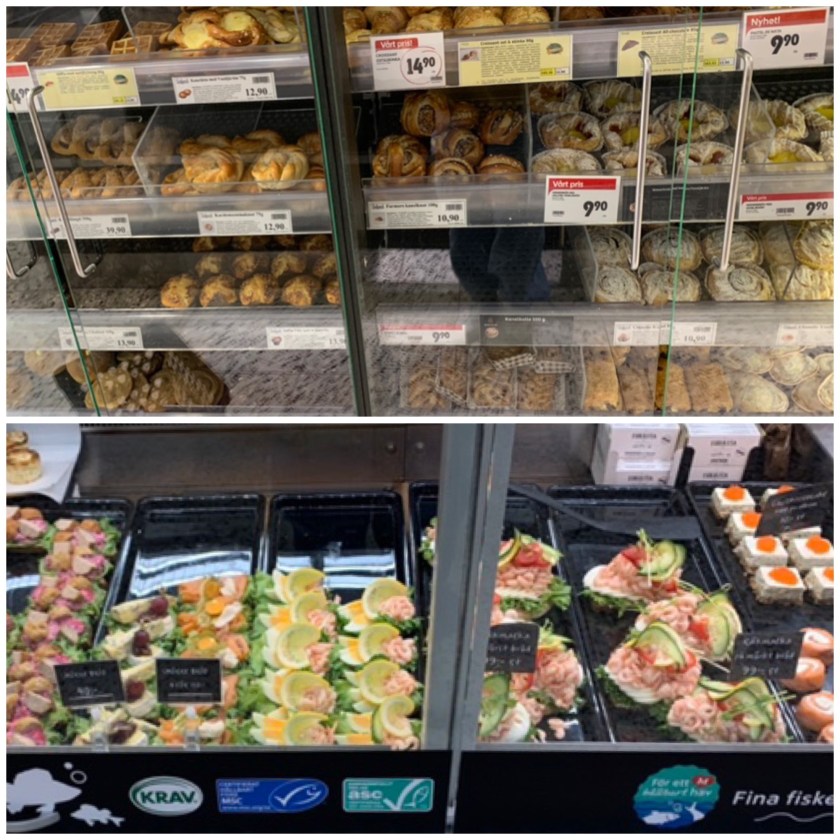
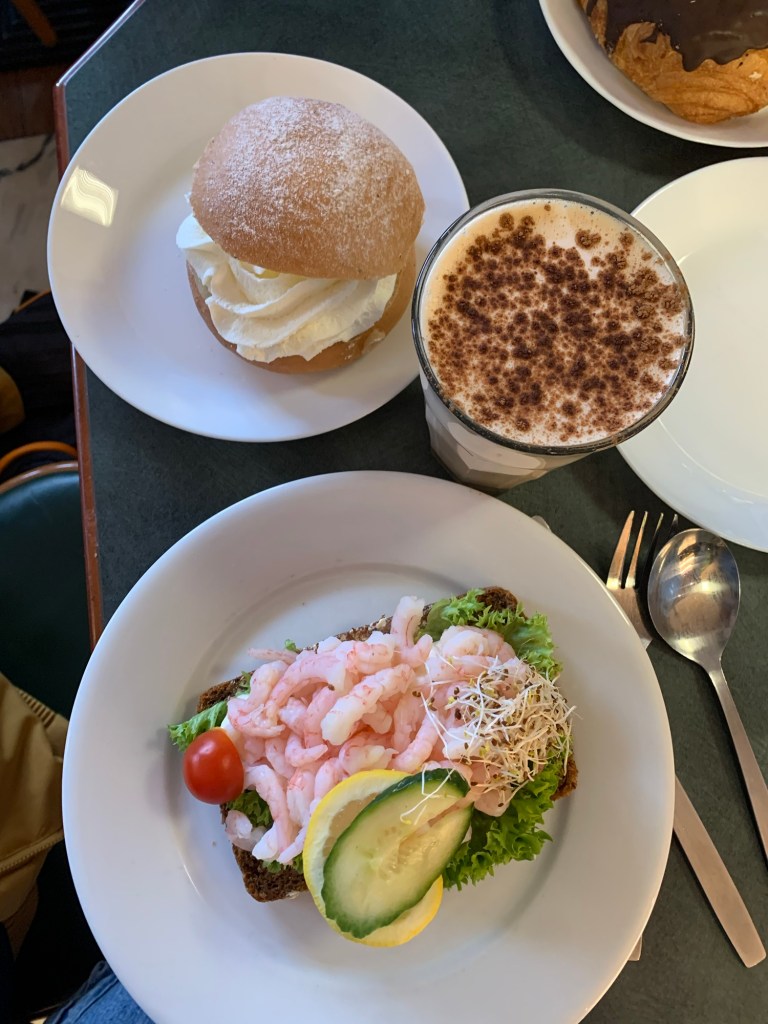
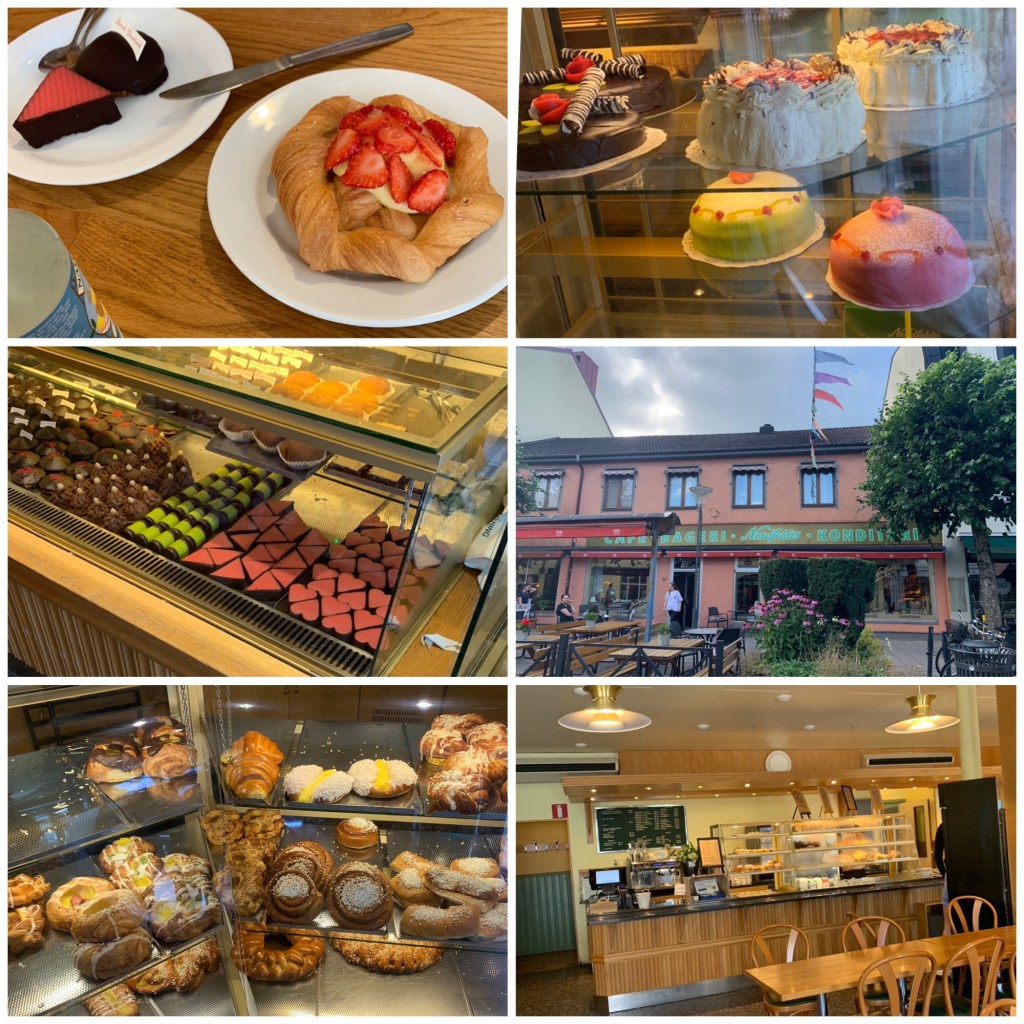
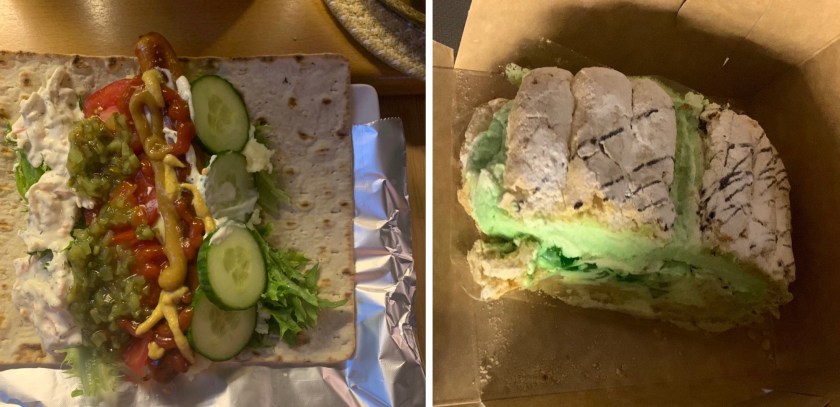
One of the reasons I was excited about visiting Sweden in February was Semlor!! Of course I got one, plus a räkmacka, a shrimp open-face sandwich. So good!! Semlor might not be thaaaat incredible, but it was something I absolutely had to get off my bucket list. I expected it to be harder and that the dough itsself would be almond-based, but it was actually very soft, and the almond thing is like a cream on top of the base of the semla.
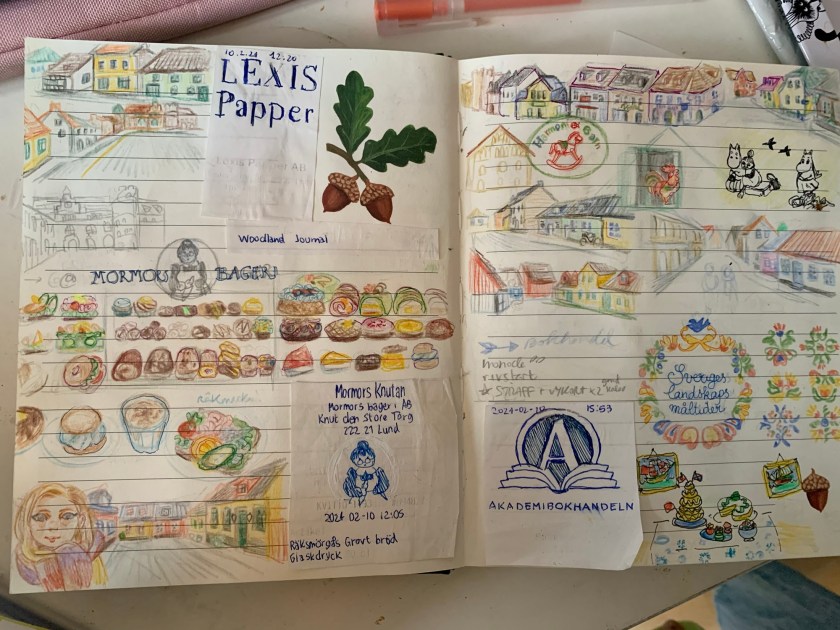
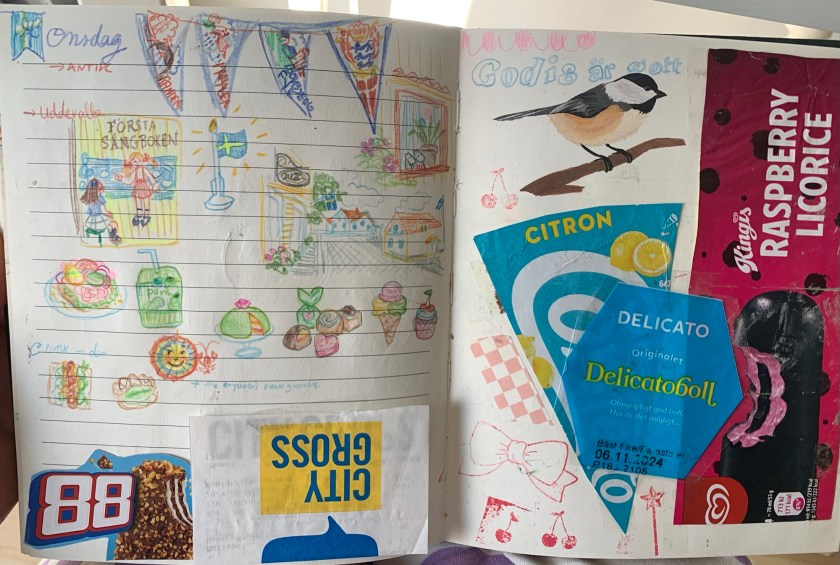
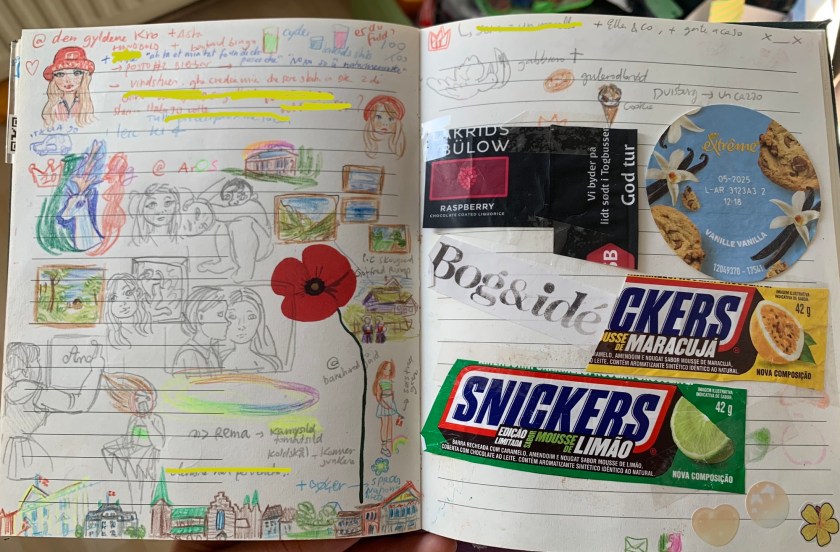
Before and after we had been to a statioenery shop (Lexis Papper) and a book shop (Akademibokhandel). As one of my things from ym bucket list for Sweden, I got a journal there. I also got a book about Sami characters, and Pippi postcards! I loved checking out the bookshop..
Falafelrulle and Lördagsgodis
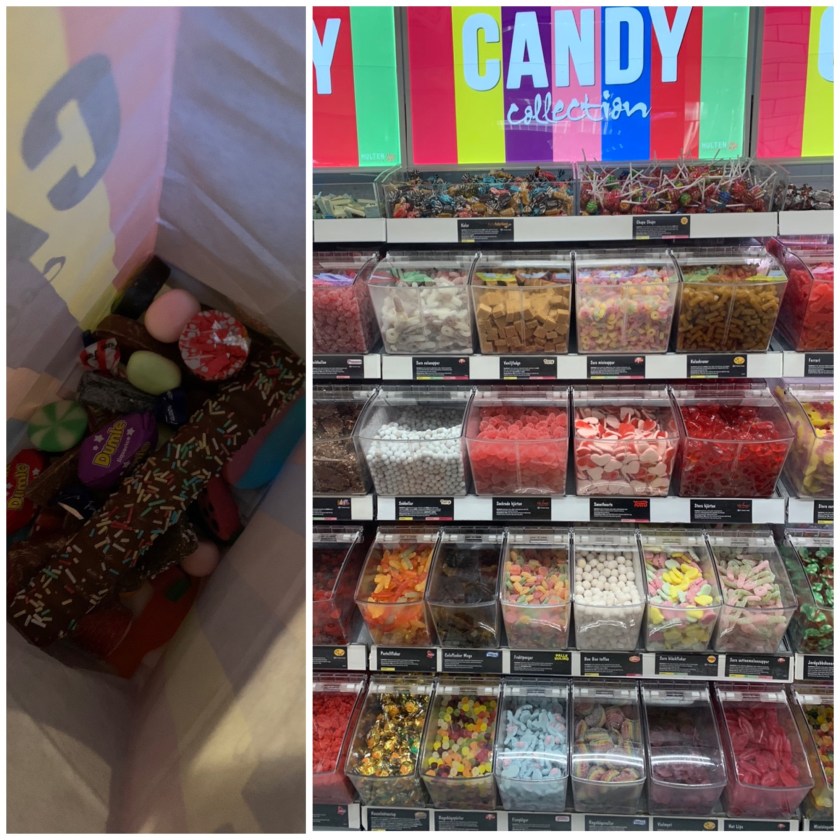
Lös(vikt)godis: bulk candy!
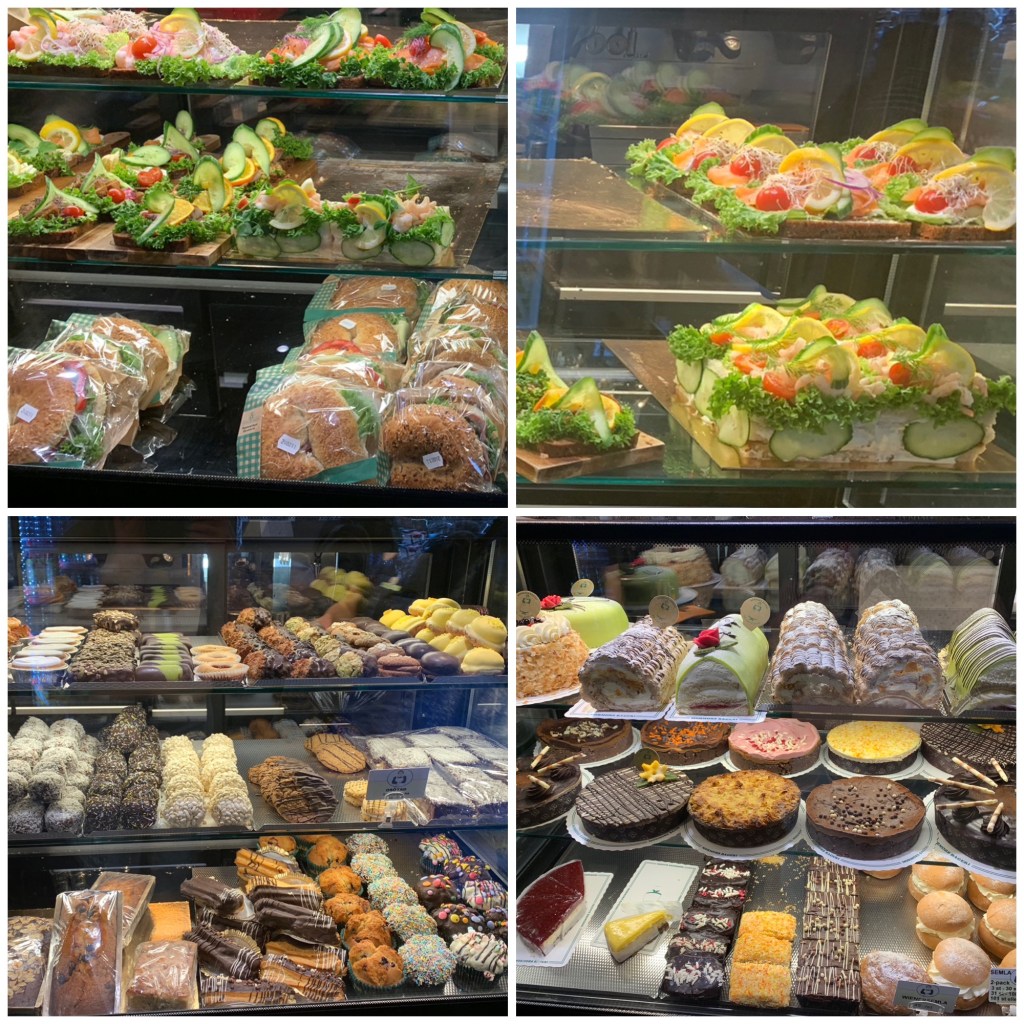
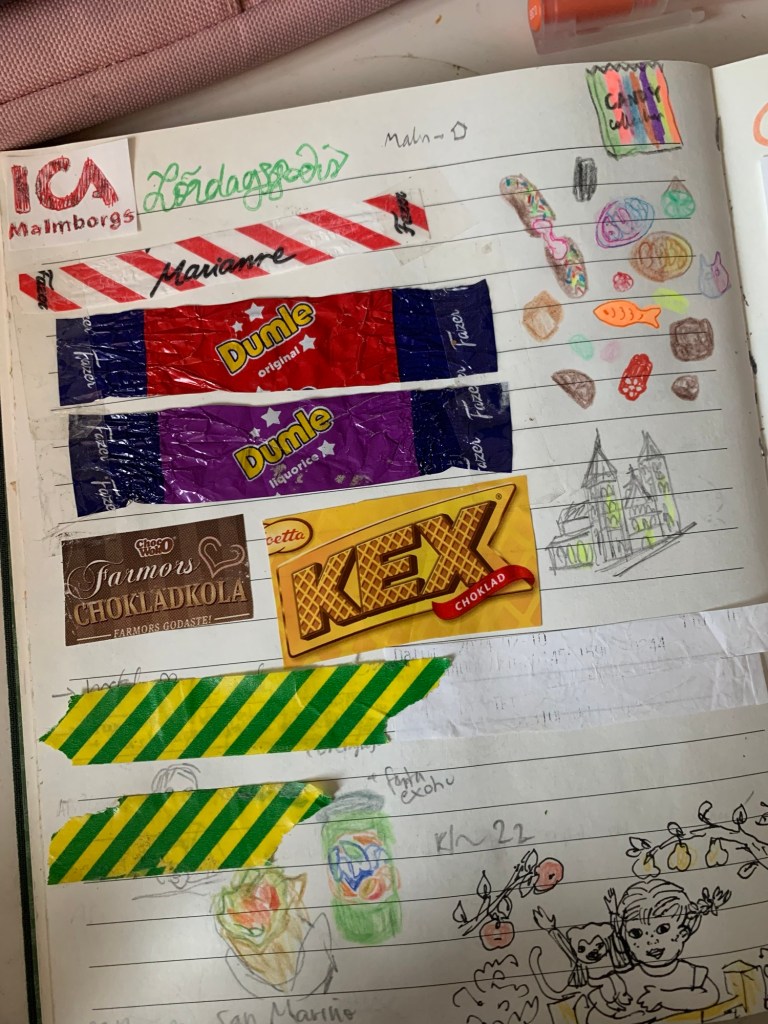
We got to ICA to get Lördagsgodis, the Saturday candy. Swedes are wild for sweets, and you can see that in their supermarkets, with an entire aisle of bulk candy and chocolates… We got them and ate them at the hostel, after having eaten a falafelrulle, 🙂
End of the trip with a Kanelbulle for breakfast
The morning I left, very early, the ICA near the station was luckily already open and I used my last hour in Sweden to get a sacred kanelbulle!! Nothing I cannot eat elsewhere, but had to tell myself I had eaten a Swedish kanelbulle..
Speaking Swedish
I actually apparently got a discount even if I should have been registered because the shop assistant was surprised I spoke Swedish, after I answered that no, I had no personnummer because I had only been in Sweden on day up to that moment in my life, that day..
A cashier at the supermarket was also surprised when I replied in Swedish after she realized I was not a local from my trouble dealing with the self-service cassa..
I did go to Sweden in summer after this trips, so check out my other posts to see the bright side of the Nordics as well!
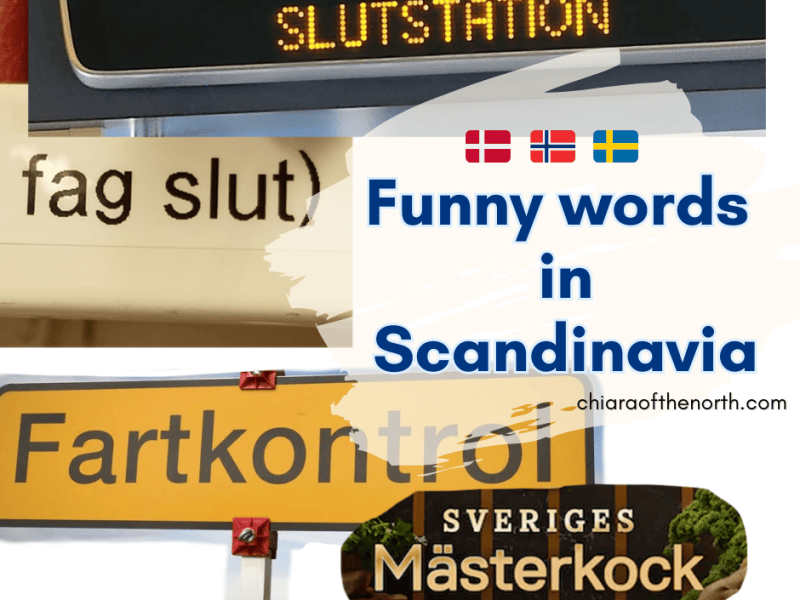
Take a train in Scandinavia to reach a “slutstation” or see”fartkontrol” signs while driving. Kiss and killing also mean something you were not expecting!
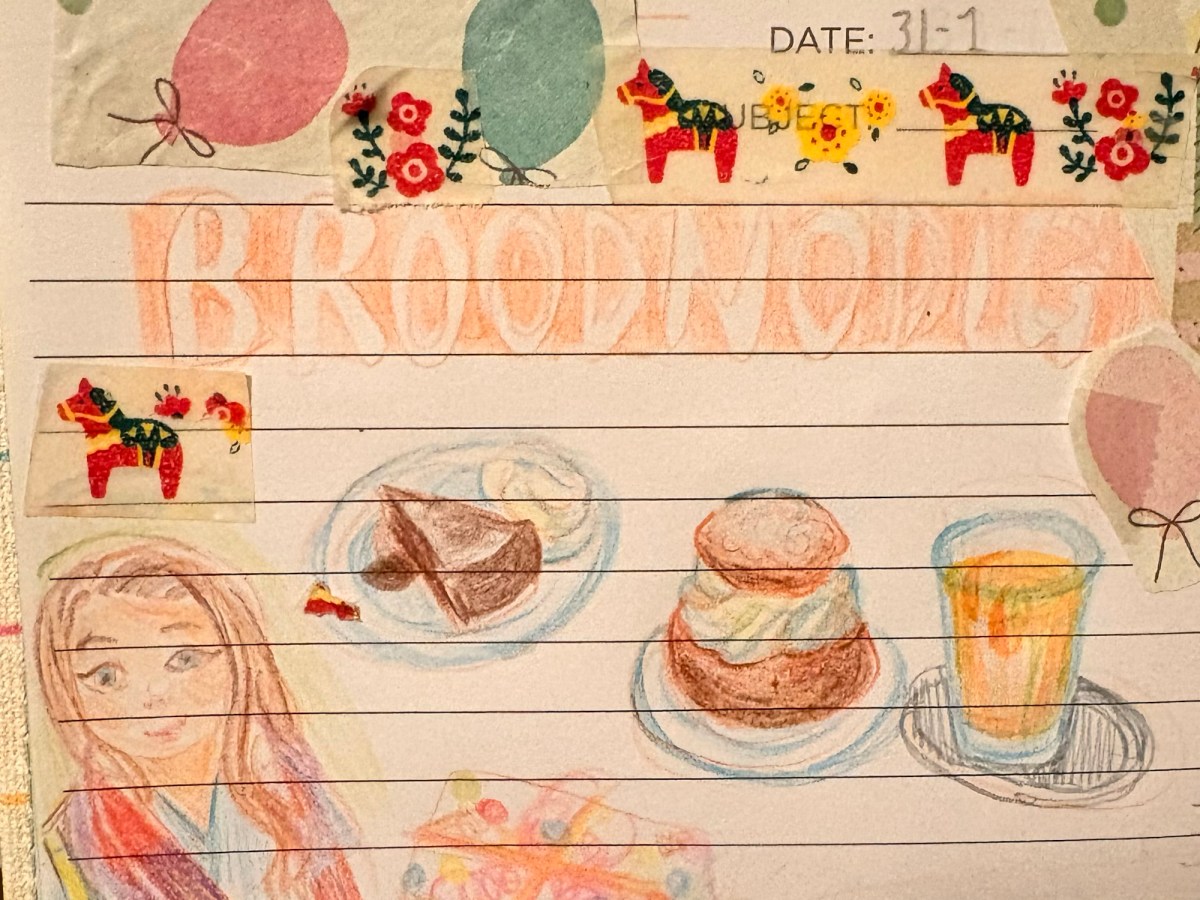
In Utrecht, the cafe Broodnodig serves Swedish pastries and cakes as cinnamon and cardamom buns, kladdkaka, smulpaj and Scandinavian seasonal treats as semlor and saffron buns.
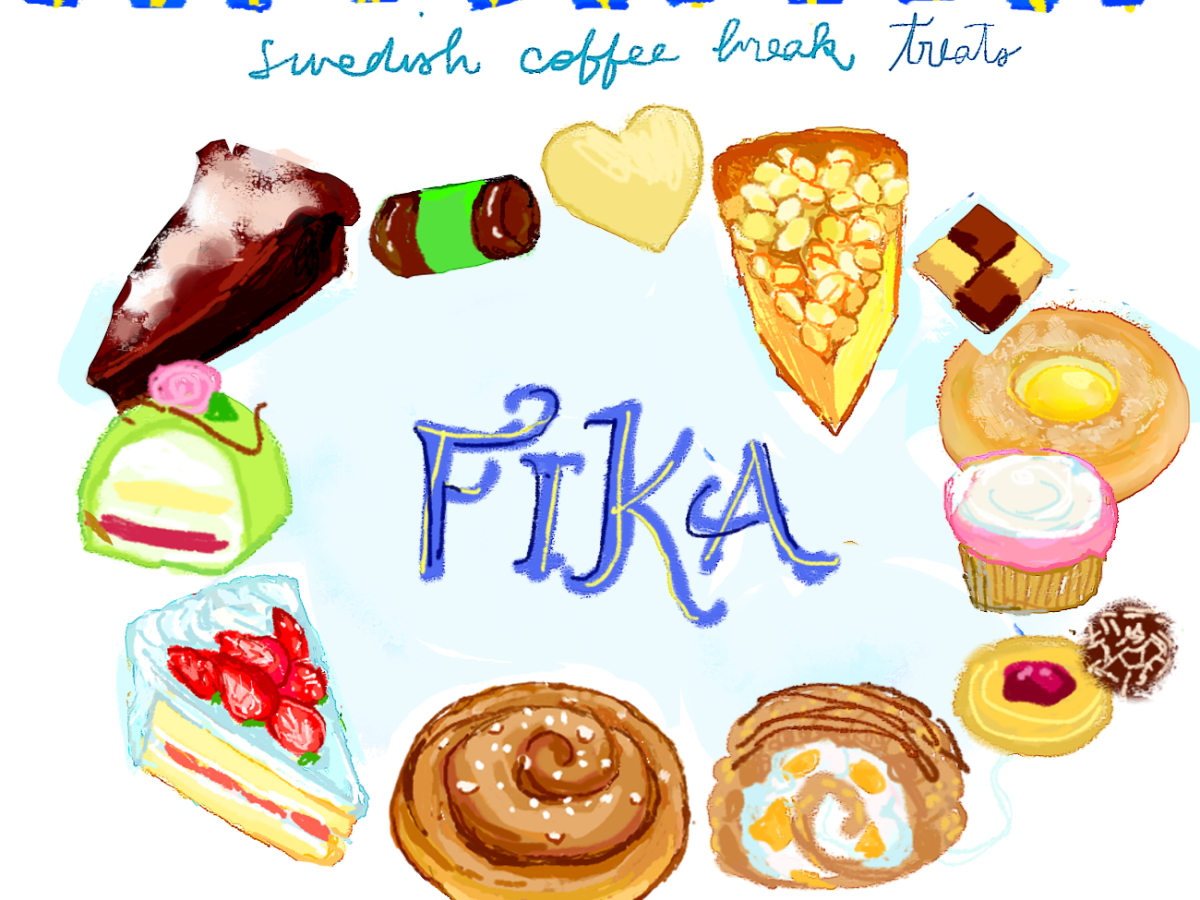
Fika is a cherished Swedish tradition involving a coffee and cake break. Discover various Fika treats, from classic kanelbullar (cinnamon buns), cakes and cookies to savory options.
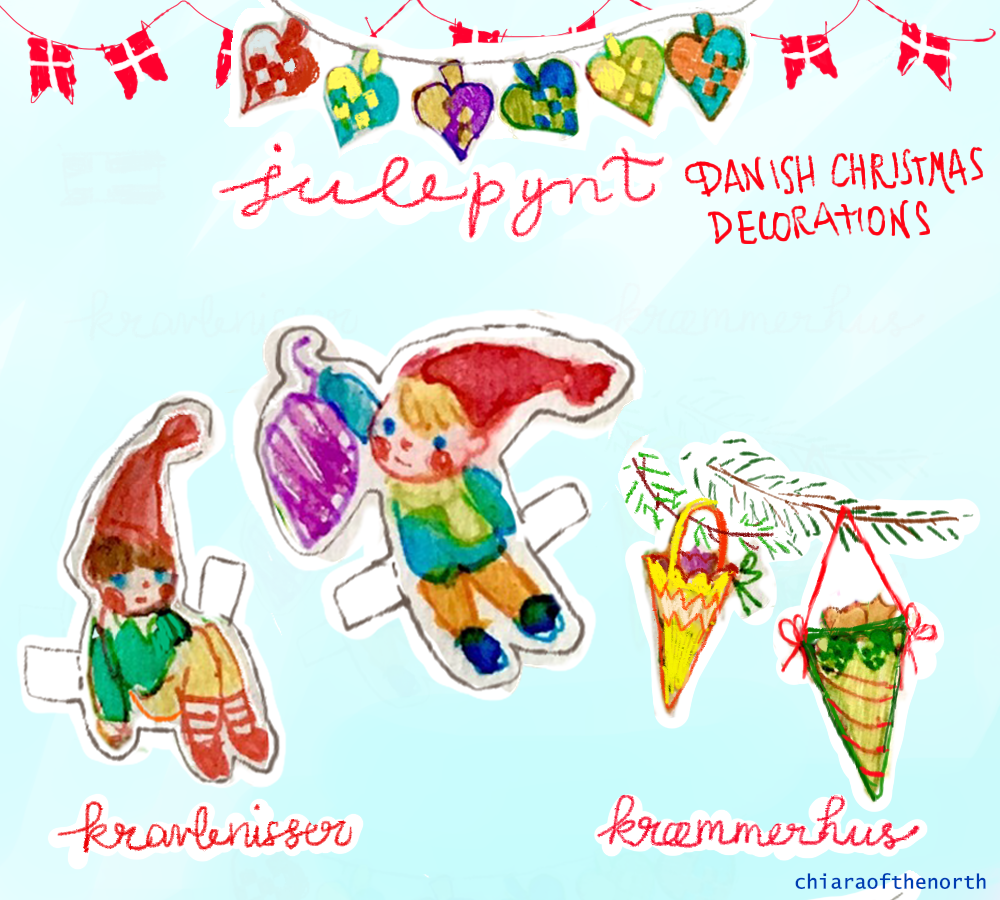
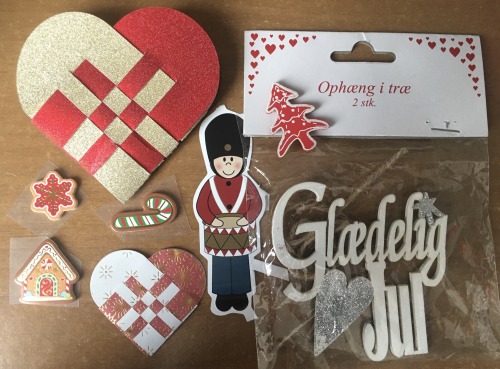
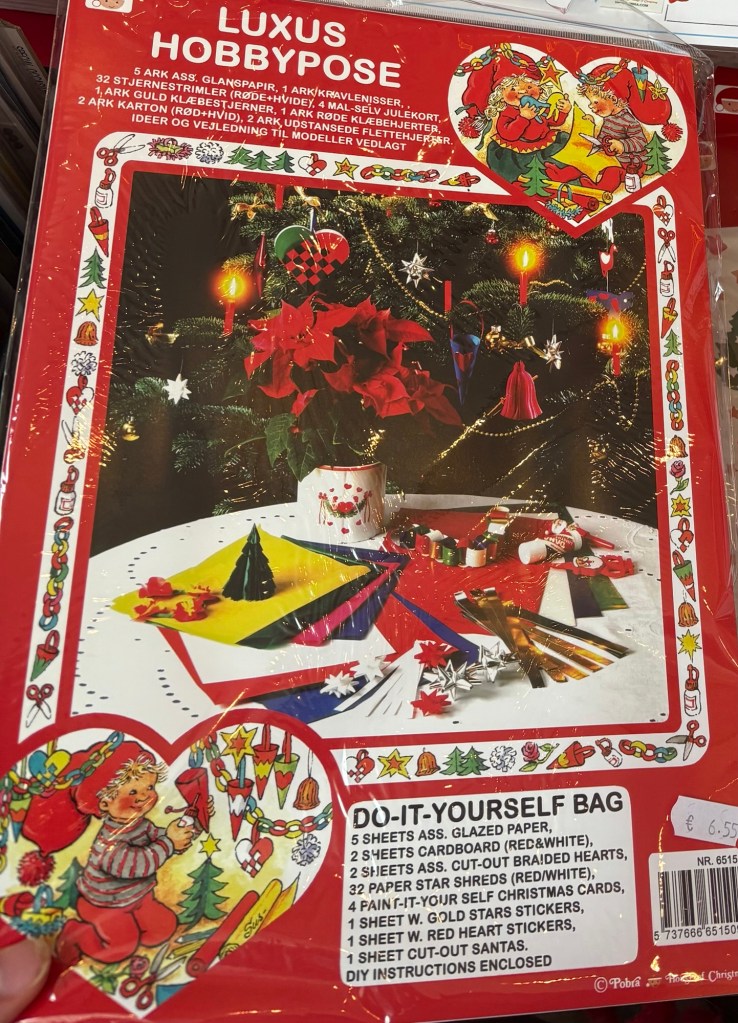
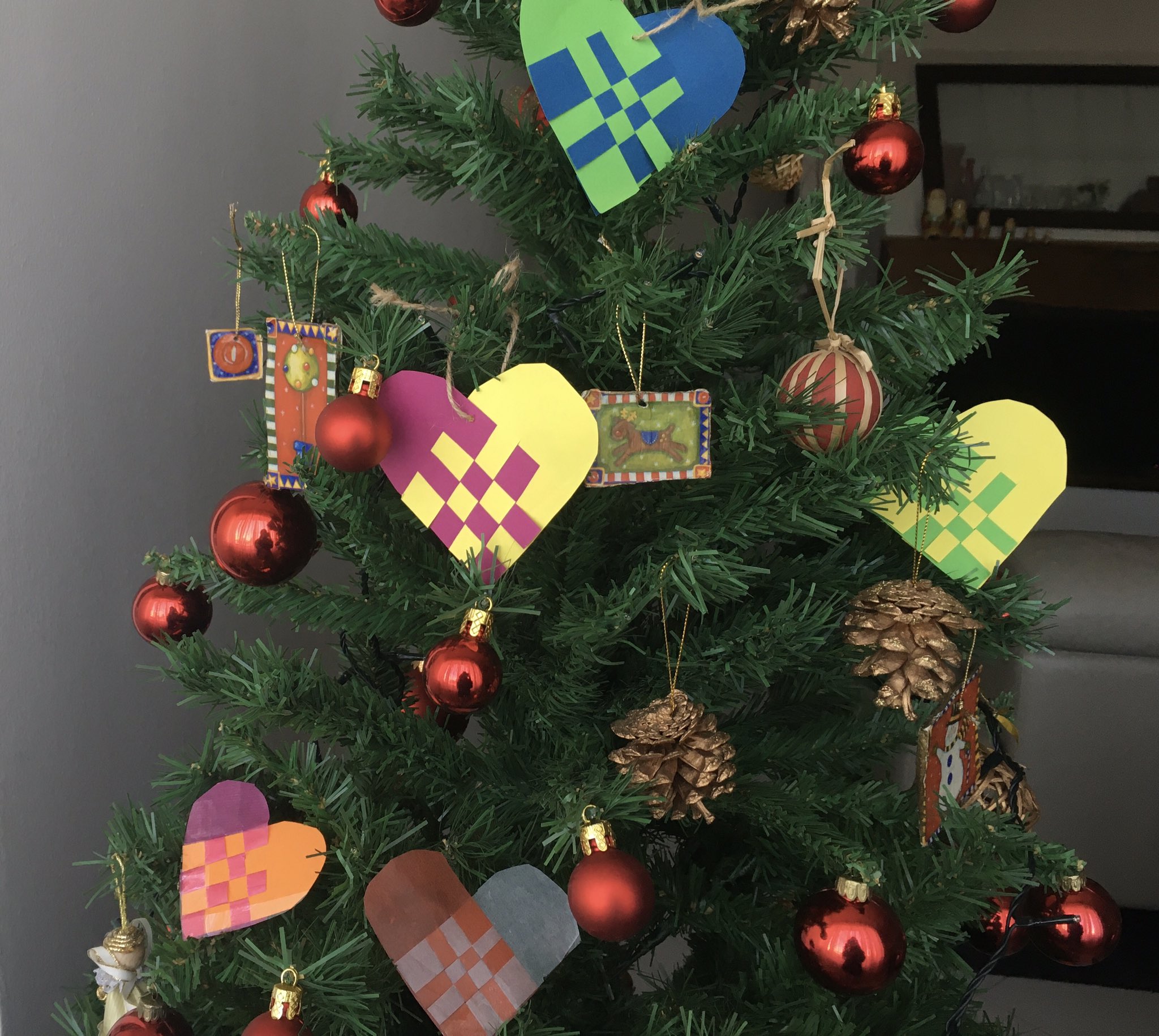
Christmas paper decorations in Denmark: hearts, candy cones and nisser
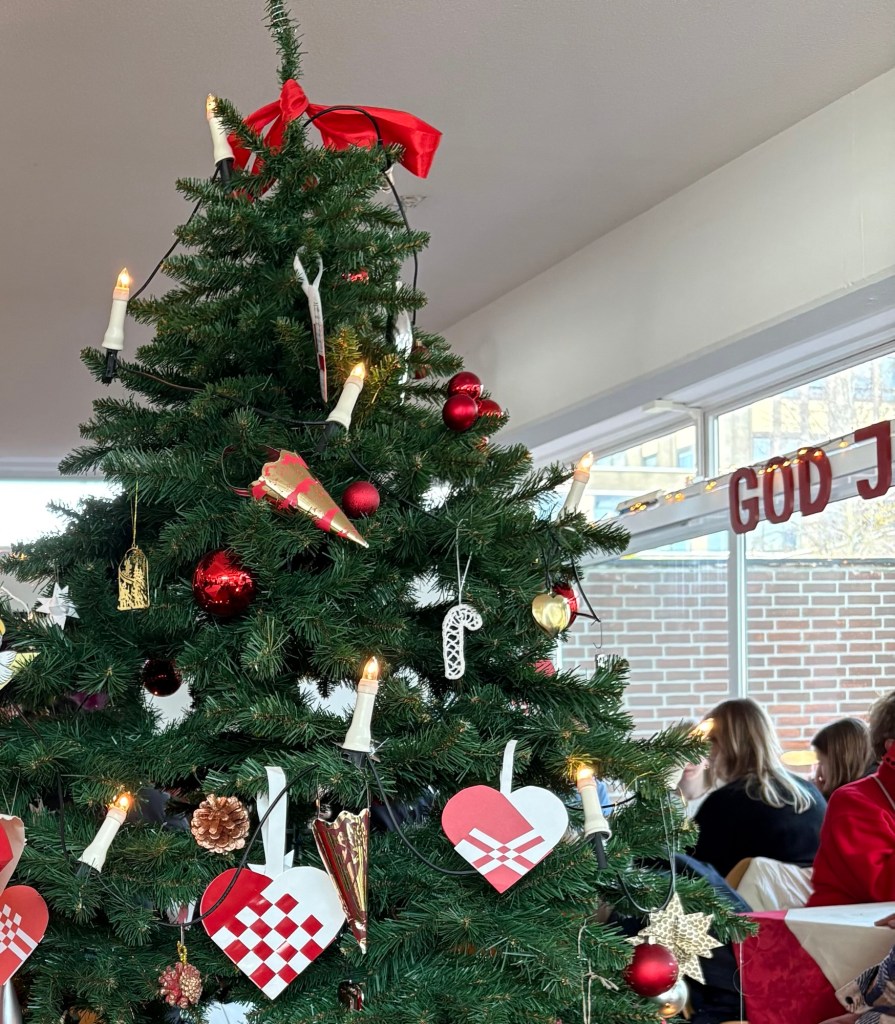
Typical Danish Christmas decorations – Julepynt – are homemade paper ornaments, and have been a tradition since H. C Andersen’s time! Besides the ones I’ll mention below, flags are a typical tree ornament, a more general Scandinavian Christmas tradition.
Julehjerter
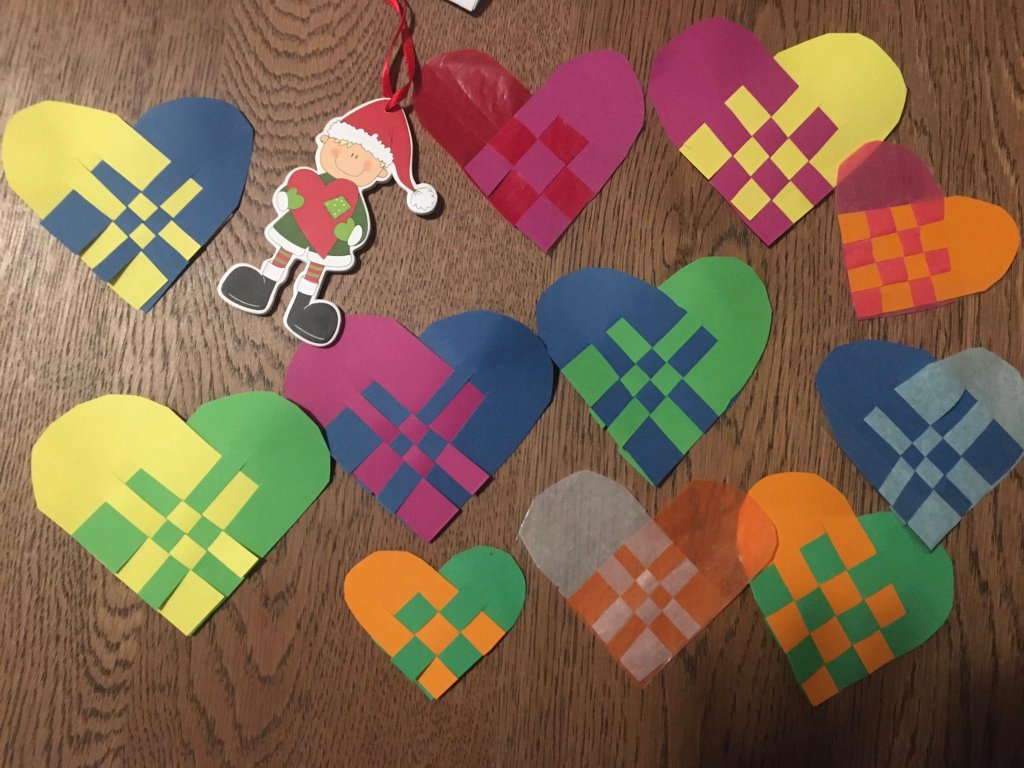
Pleated hearts, Julehjerter, are one of the most iconic Danish and Nordic Christmas symbol. They are most often red and white, and making them is a typical family activity.
Their origin is unknown, but the oldest heart was made by the fairytale author H. C. Andersen in 1860, still to be seen in his house in Odense. They might have become so common since Danish kindergartens started having children make them around 1910. The oldest depiction of a Chistmas tree decorated with pleated hearts dates from 1901 from the Danish manor house Søllestedgaard.
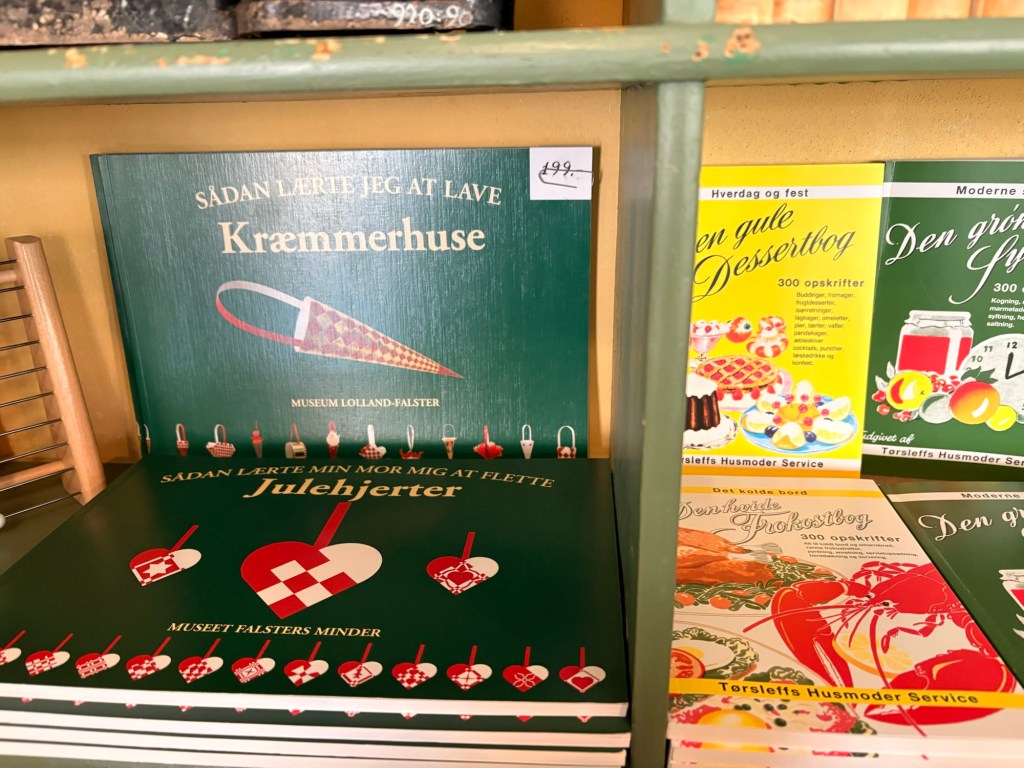
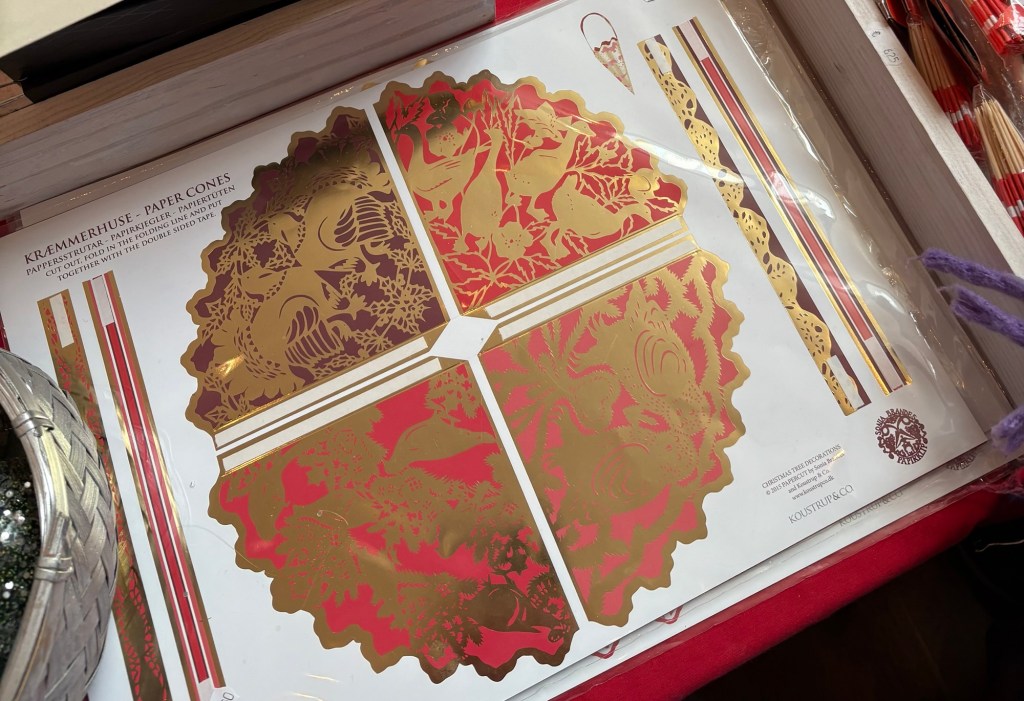
These paper cones, often homemade and decorated, are commonly hung on Christmas trees through an handle and filled with sweets, as hardy candy, bolsjer, or pebernødder – Træet skal spises – The tree has to eat.
Kræmmerhus kits
They are as old as 1860s – their origin comes from how traveling peddlers (kræmmere), would carry food flour, sugar and other food they got from merchants in bulk. Children would also got candy in such paper cones.
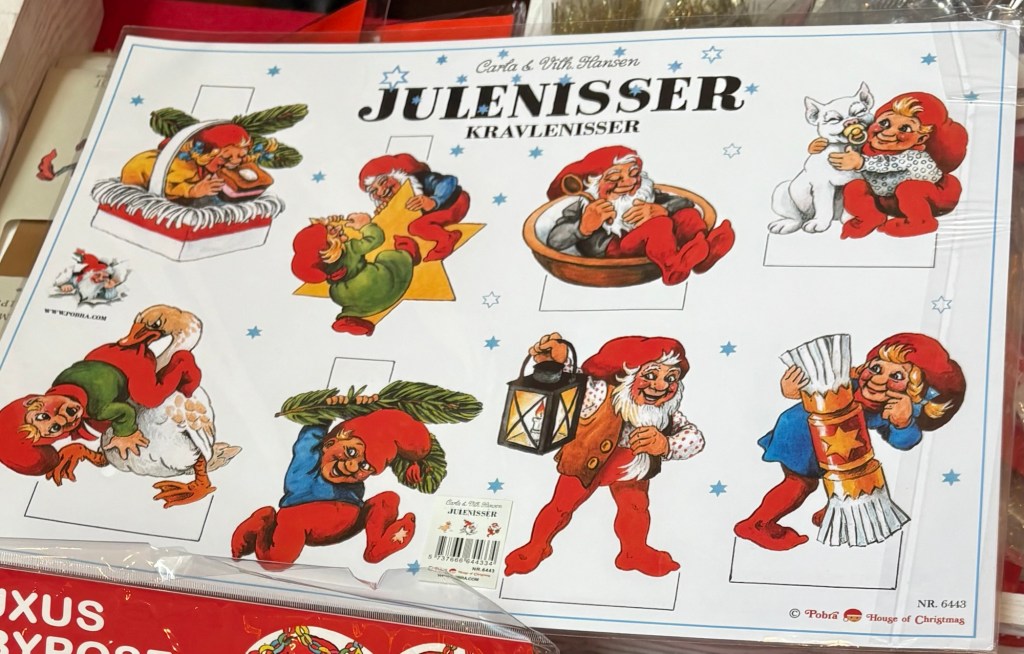
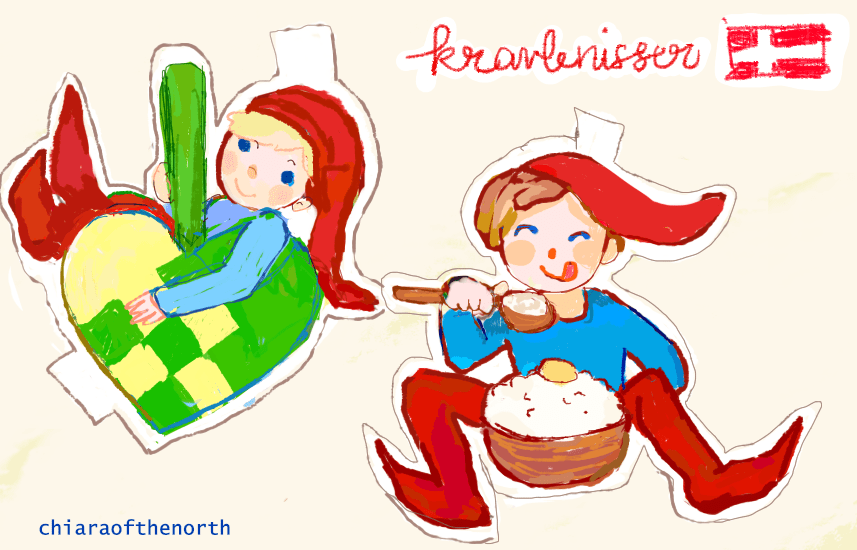
Kravlenisser
“Climbing nisser”, are drawings of nisser, Christmas elves, sometimes hanging from things, and are a more recent but not less typical Danish Christmas decoration. They were invented by the drawer Frederik Bramming, publishing the first group of them in 1947. On top of an ‘ark’ of kravlenisser he wrote “Her er de igen – Julens smaa fornøjelige Hyggespredere‘: Here they are again – Christmas’ small joyful Hygge-spreaders. The idea was then copied by many artists especially in the 50s and 60s, as Aage Dam, Illa Winkelhorn and Iben Clante. I also made my own (see below), inspired by common kravlenisser pictures as a nisse eating rice porridge, risengrød, and hanging from a julehjerte.
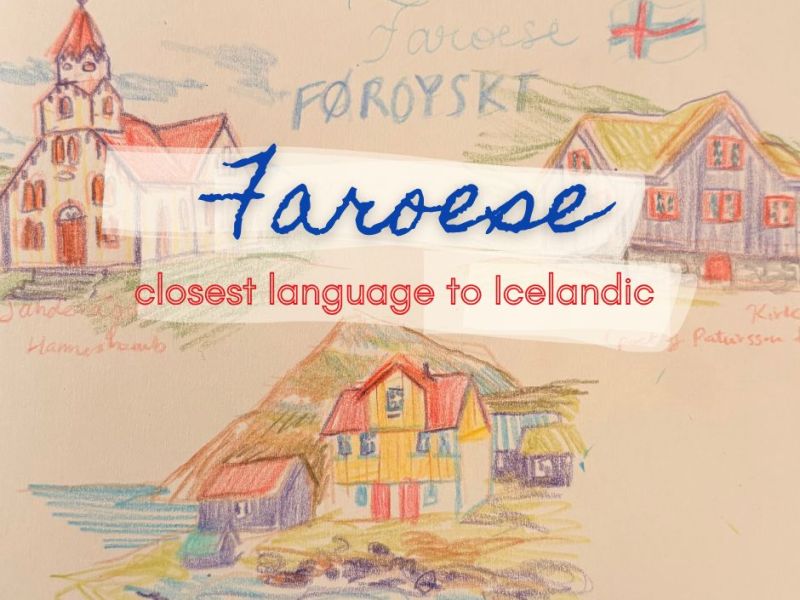
Discover Faroese – today spoken by about 80,000 people in the North Sea archipelago- as Icelandic still has much in common with Old Norse in grammar and vocabulary
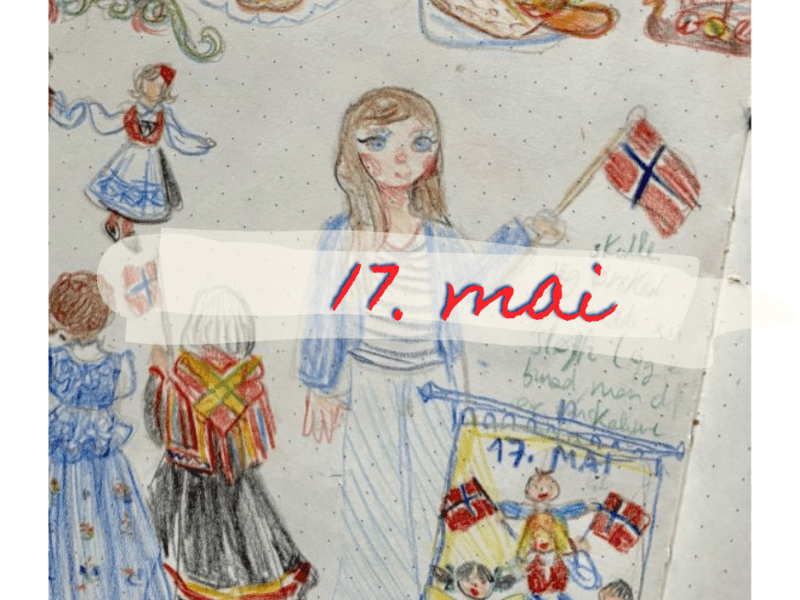
Norwegian Seamen Churches all over the world host 17th May celebrations. I attended the festivities in Rotterdam, joining the parade and eating a pølse i lompe!
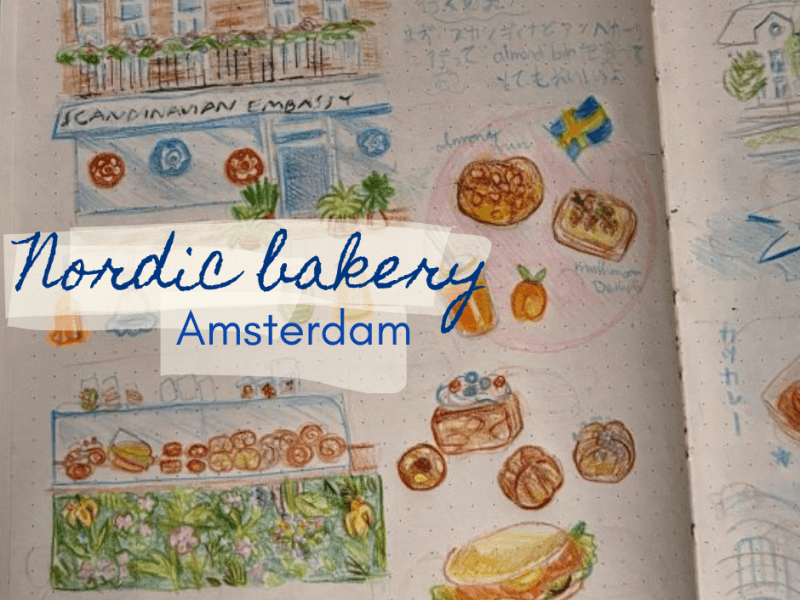
On a trip to Amsterdam, I decided to test Scandinavian Embassy and both of its two locations, starting with the bakery in europaplein. The two locations are in Amsterdam zuid: Saphatipark and Europaplein: in the former, a more central location, you can sit but it has fewer items than the bakery in Europaplein. The bakery,…
my trips to Nordic Christmas markets at the Finnish seamen house in Rotterdam and a Swedish Christmas market in Groningen
I had been looking for a place selling Lussekatter (Lucia post) but ended up finding about Nordic Christmas markets in the Netherlands where I live! The blog post will be in Dutch – English Below
Alle Skandinavische zeemanskerken in Rotterdam organiseren Kerstmarkten in november, en ik ontdekte ze net op tijd om alleen naar de Finse Kerstmarkt te gaan. Een week later ging ik ook naar de ‘Zweedse’ kerstmarkt in Groningen. Twee heel verschillende evenementen! Spoiler- ik vond de gezellige, authentieke Finse markt veel leuker.
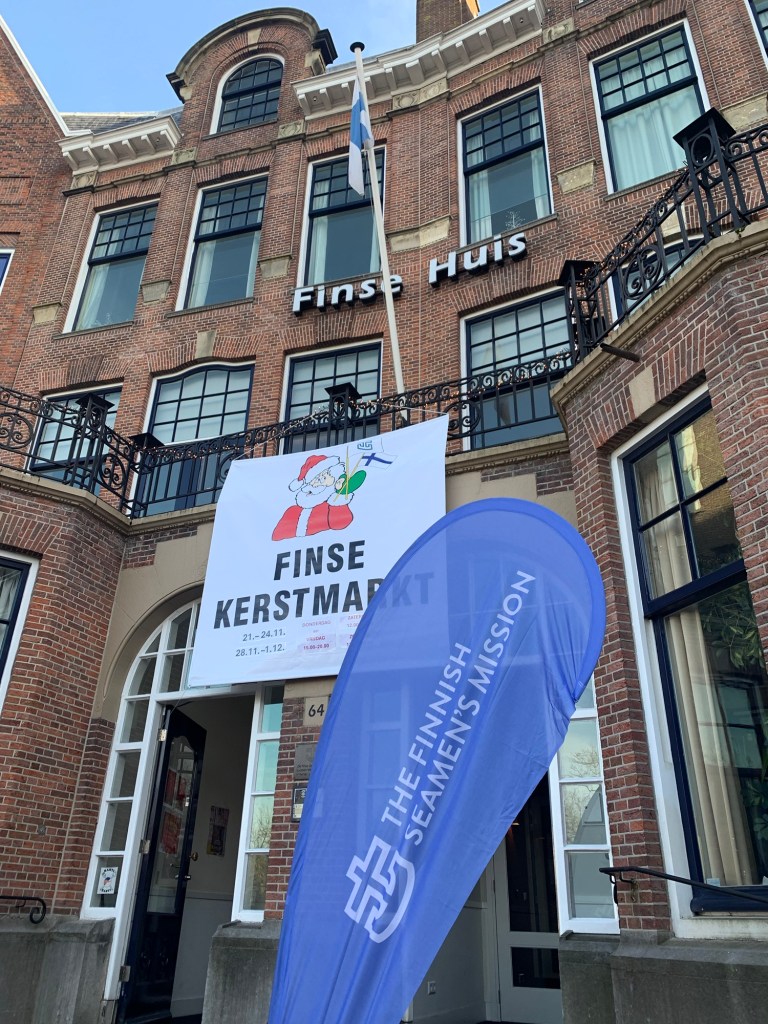
Finnish Christmas Market – Finse Kerstmarkt bij de Suomen Merimieskirkko in Rotterdam
De Finse kerstmarkt werd direct georganiseerd door de Finse zeemanskerk, Suomen Merimieskirkko, twee weekenden in november, en het was gratis toegankelijk. De meeste mensen hadden wel een band met Finland en het was er niet te druk, op zondag tenminste. Ik werd ook een paar keer in het Fins aangesproken en een paar mensen waren benieuwd over waarom ik daar was. Het was dus zeker perfect om wat contact met Finland en het Finse taal te hebben! Ik heb namelijk heel erg zin gekregen om Fins weer te gaan leren.
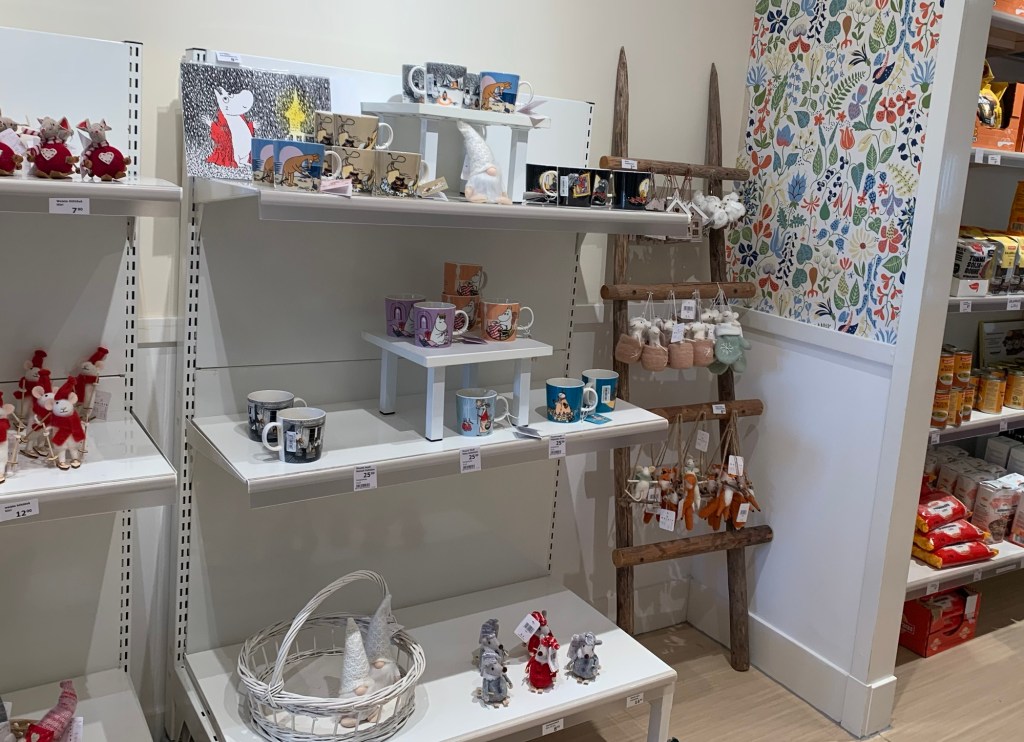
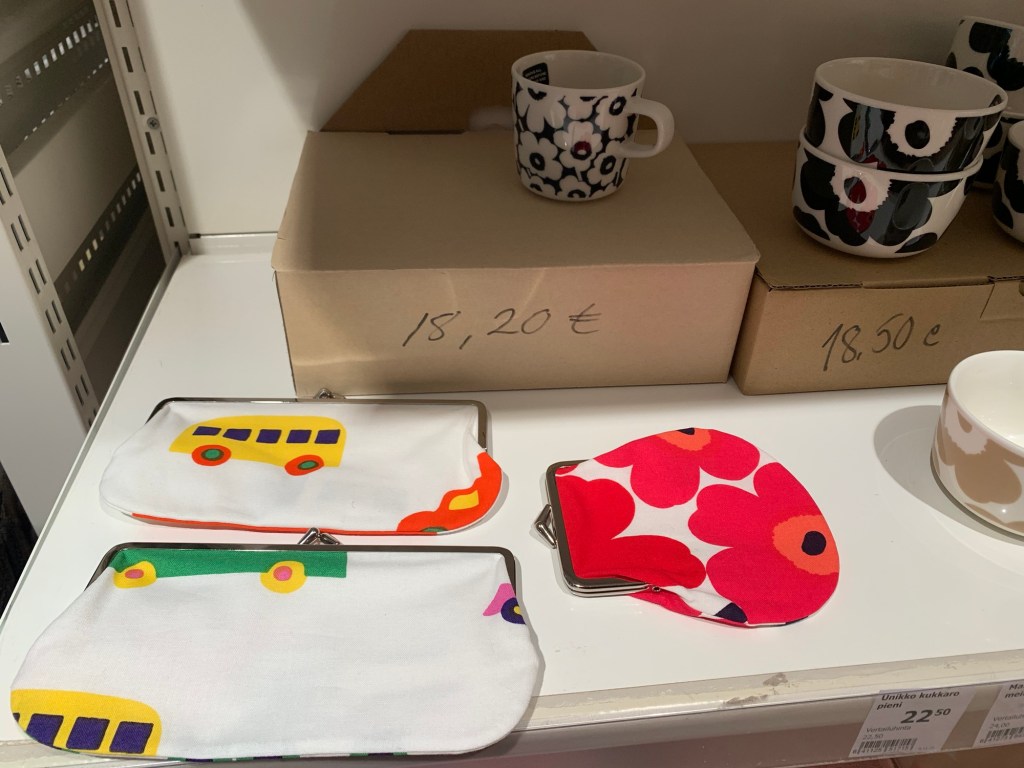
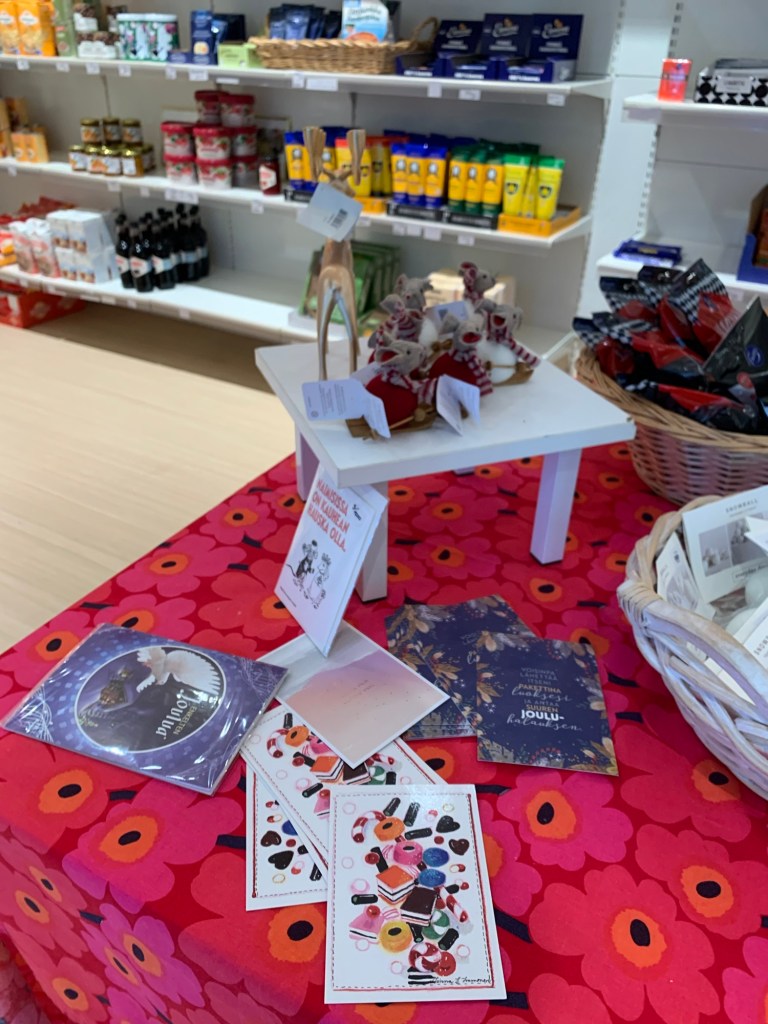
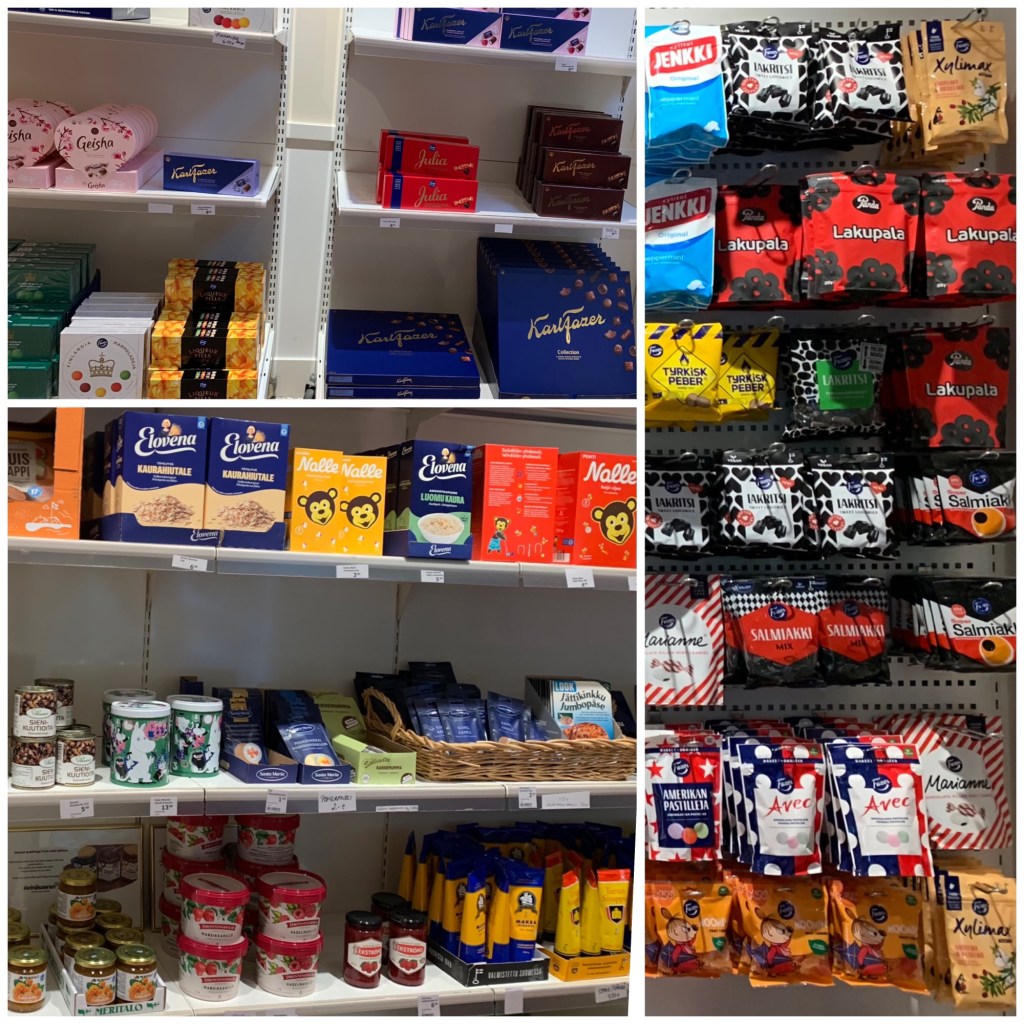
De locatie was het Finse Huis, binnen was er een soort Finse minimarkt, met ook wat andere typisch Finse spullen zoals Marimekko en Moomin merch. Daarnaast was er een café waar je van een authentieke Finse maaltijd en gebak kon genieten. Buiten was een kraam voor gegrilde worst en zelfs een Finse sauna waar je gebruik van kon maken tegen betaling!
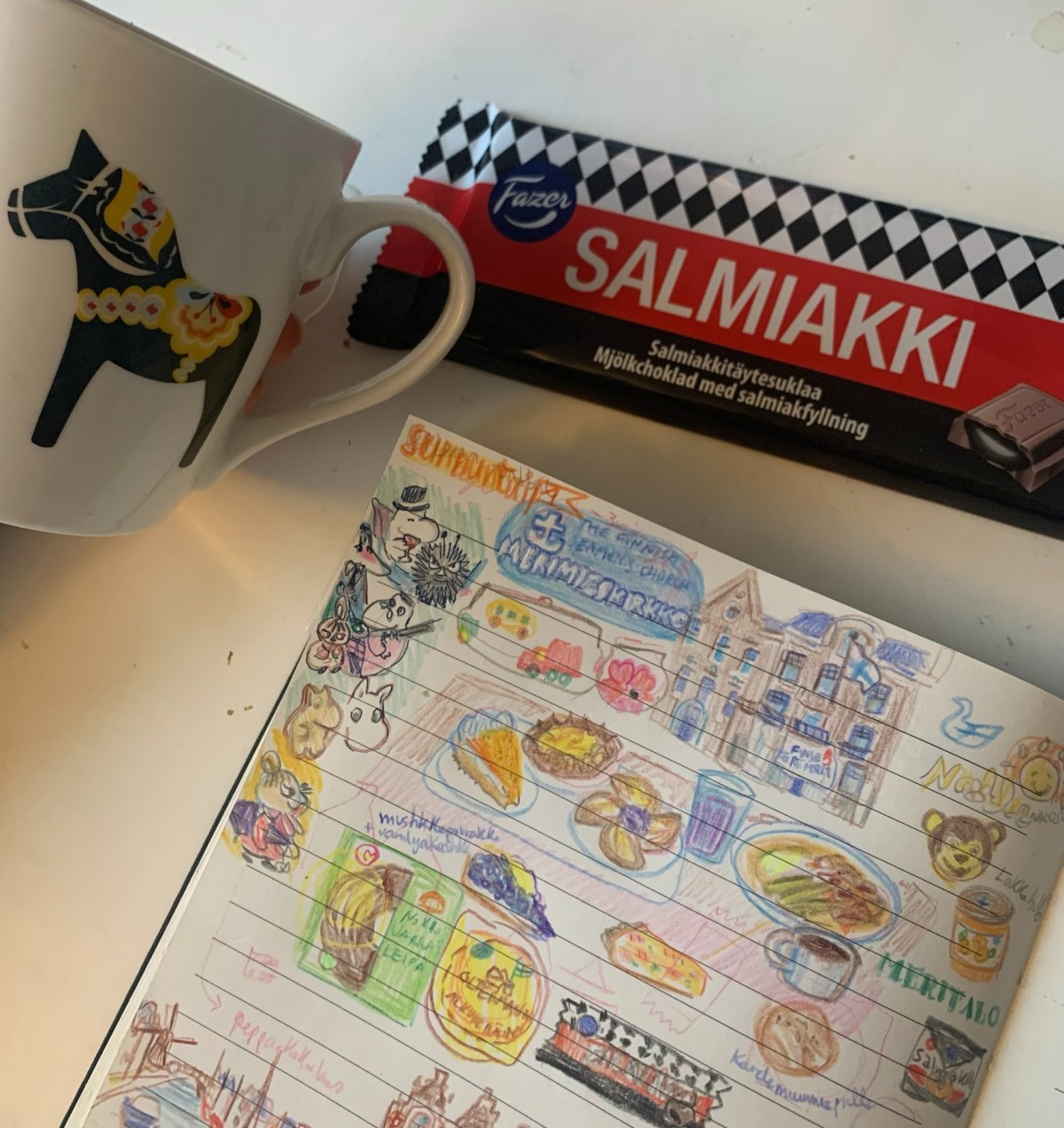
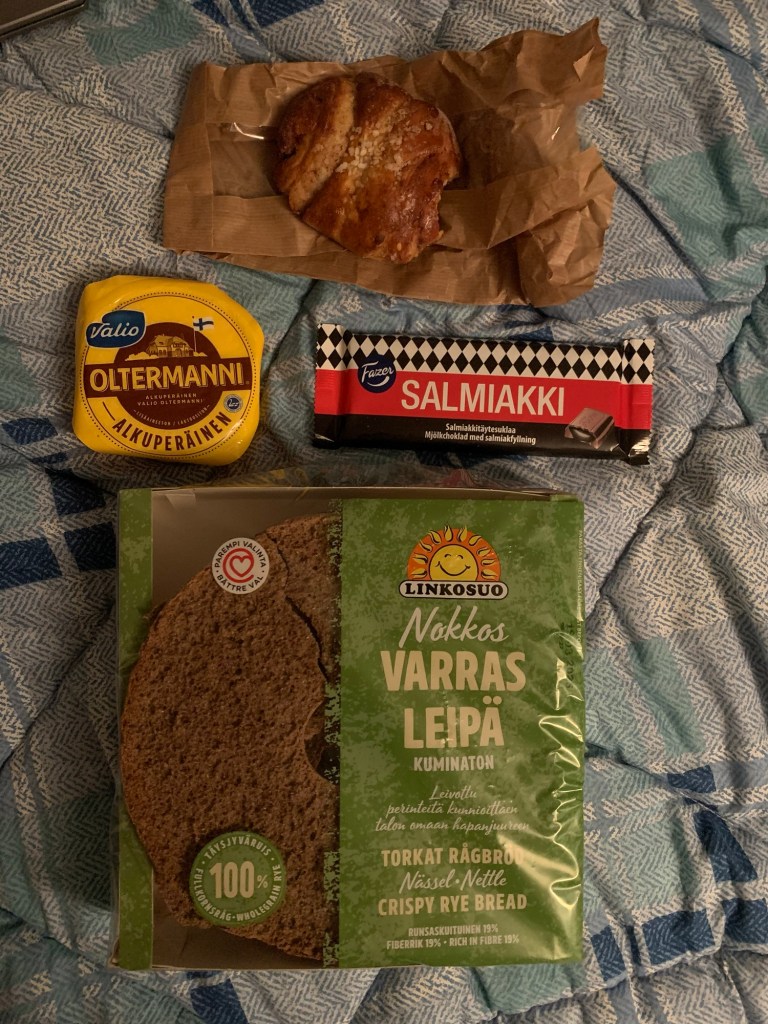
Ik heb gekocht Fins rond gedroogd roggebrood, kaas, Fazer chocolade met salmiakki (drop). Ik was heel onzeker over kruipbraam jam (lakka is de naam van de oranje beer in het Fins – hjortron in het Zweeds, cloudberry in het Engels). Dit alles was vrij prijzig, van € 4 voor de chocoladereep tot € 13 die de jam zou hebben gekost!!! Maar goedkoper dan reizen naar Finland…
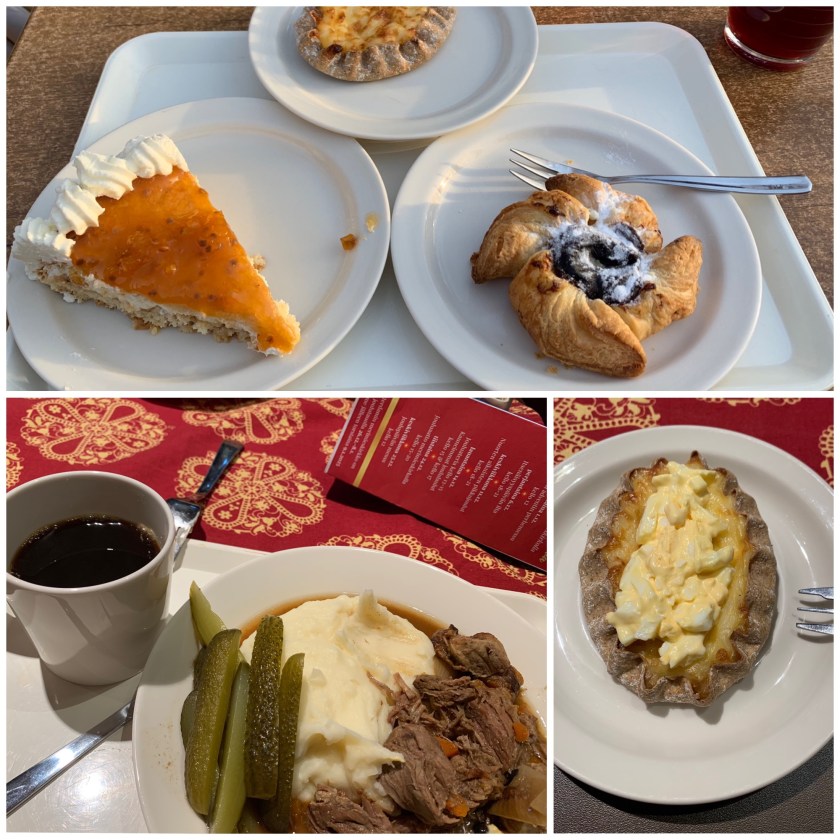
Ik heb van alles geprobeerd in het café, waaronder Joulutorttu (typisch Fins kerstgebak), Karjalanpiirakka (pasteitje met rijst vulling, waar je een ei-botermengsel op smeert), en een cake met kruipbraam jam. écht Noords en iets zuur). Daarna een Karjalan paisti, Karelische stoofvlees met aardappelpuree en augurken, € 15 met koffie erbij. Omdat ze al het overgebleven eten voor de halve prijs weggaven, kreeg ik aan het eind ook nog een broodje kardemom…
The Finnish Christmas market at the Finnish seamen Church there was a sort of Finnish minimarket, including some typical Finnish stuff as Marimekko houseware and Moomin mugs. Next to it you could have an authentic Finnish meal and cakes at the café, and sausages at a kiosk. It was also possible to try the Finnish sauna outside!|•
I bought Finnish round dried rye bread, cheese, Fazer chocolate with salmiakki, liquoricem and almost got also cloudberry jam. All these were quite pricy, from € 4 for the chocolate bar to € 13 which the jam would have costed!! But cheaper than travelling to Finland..
I tried a bit of anything at the café, and that included Joulutorttu, Karjalanpiirakka, a cloudberry jam cake. Then a Karelian stew, Karjalan paistu, with coffee included. There was a egg and butter mix to be added to the Karelian pie, but found it out late, so guess what…I ate it twice. As they were Giving away all food left for half price, i also got a cardemom bun at the end..
Swedish Christmas market – Zweedse Kerstmarkt in Groningen, Suikerfabriek
De ‘Zweedse’ markt in Groningen was in de Suikerfabriek, een voormalige suikerfabriek, dus een vrij grote plek, en er was een kaartje voor € 8-9, dat de ochtend van het evenement op zaterdag al was uitverkocht. Het was een typische kerstmarkt waar van alles werd verkocht, ook spullen, van oorbellen tot houten dingen tot handschoenen.
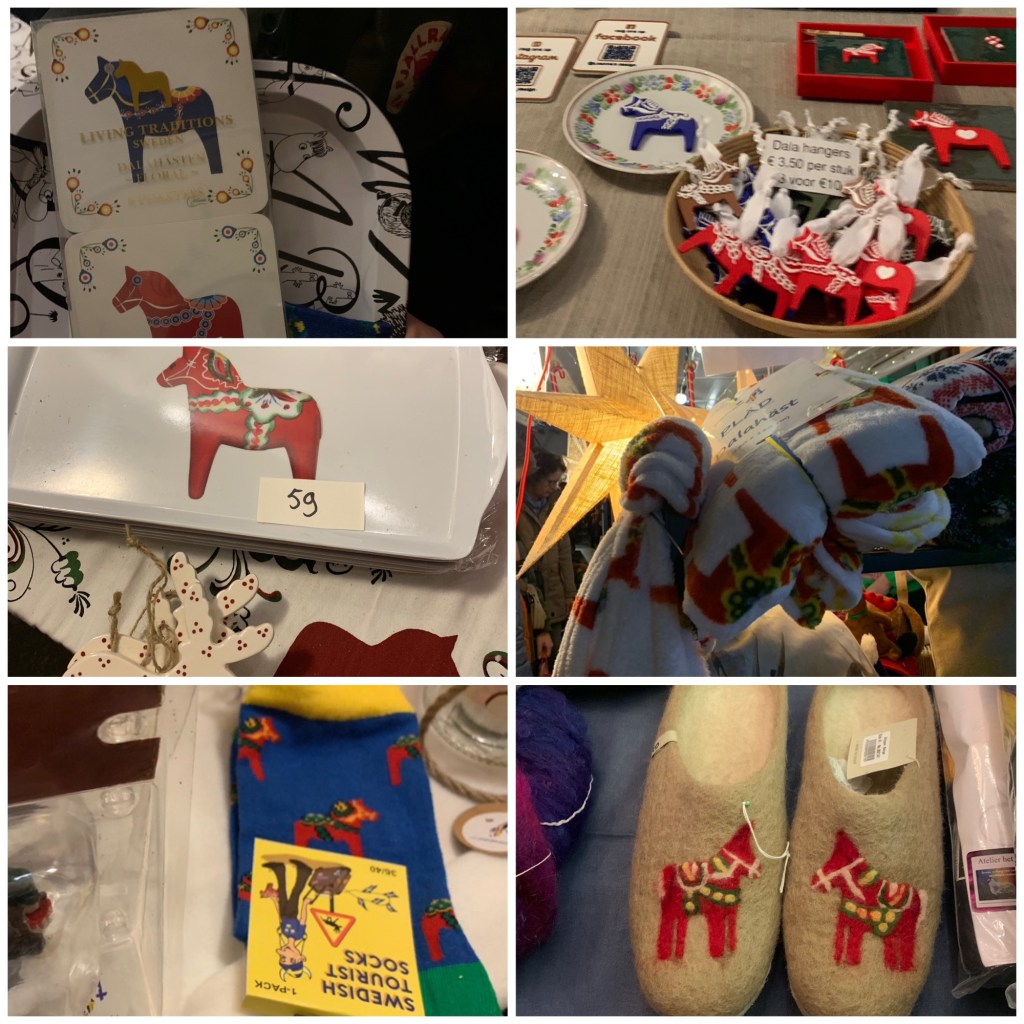
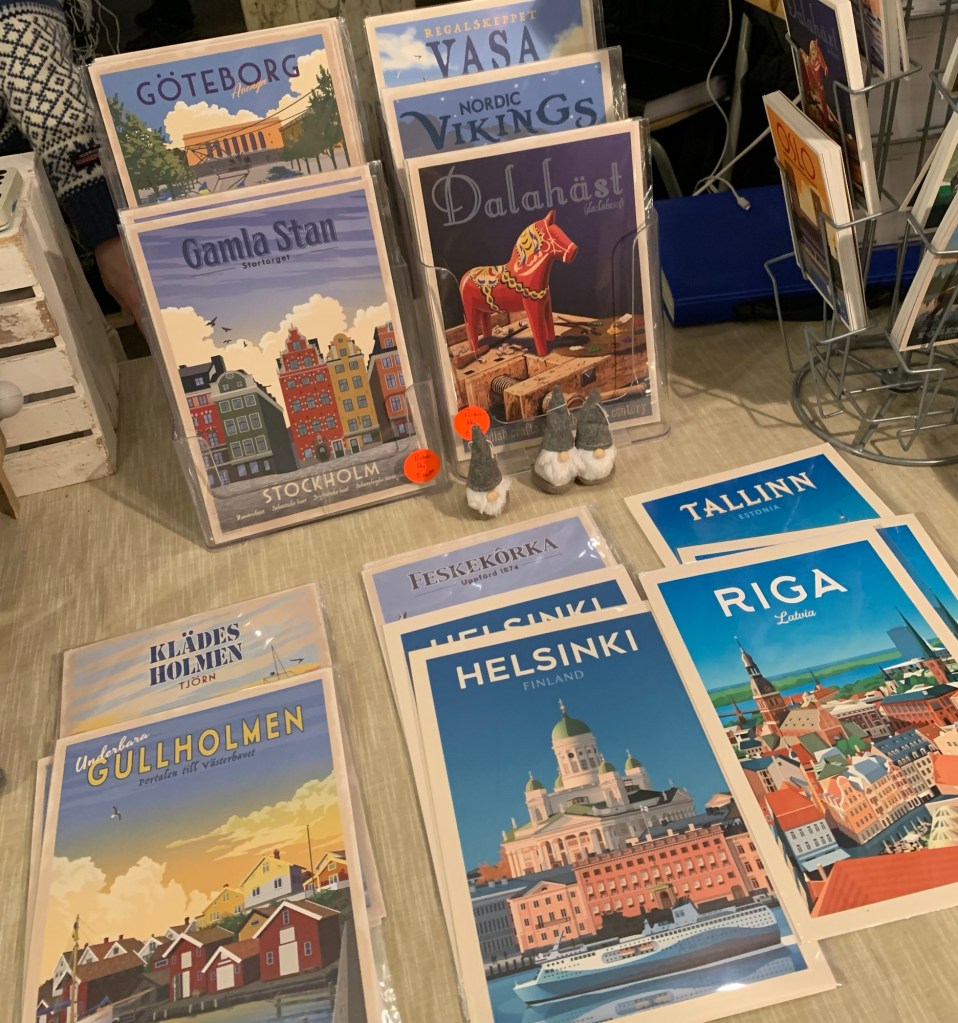
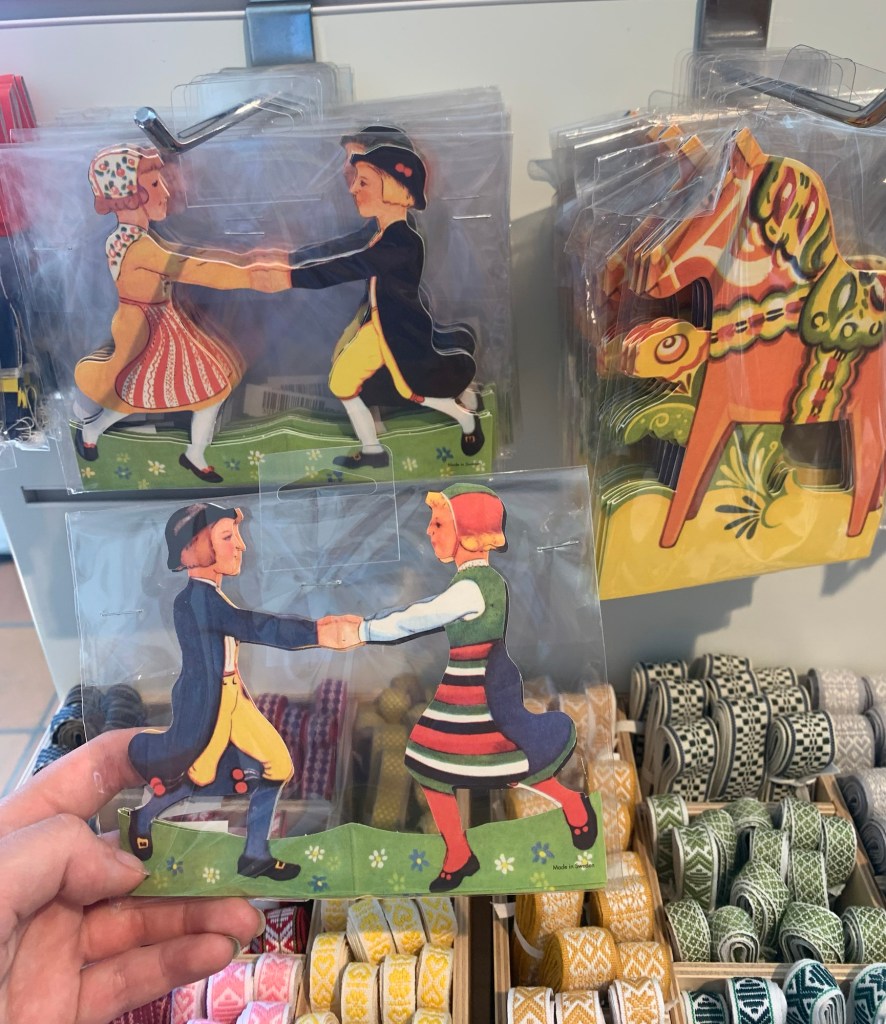
Er waren niet heel veel stands die Scandinavische spullen verkochten, en eigenlijk meer souvenirs in die gevallen, met een heleboel Dala-paardjes. Prenten van Scandinavische steden waren ook bij een paar te koop.
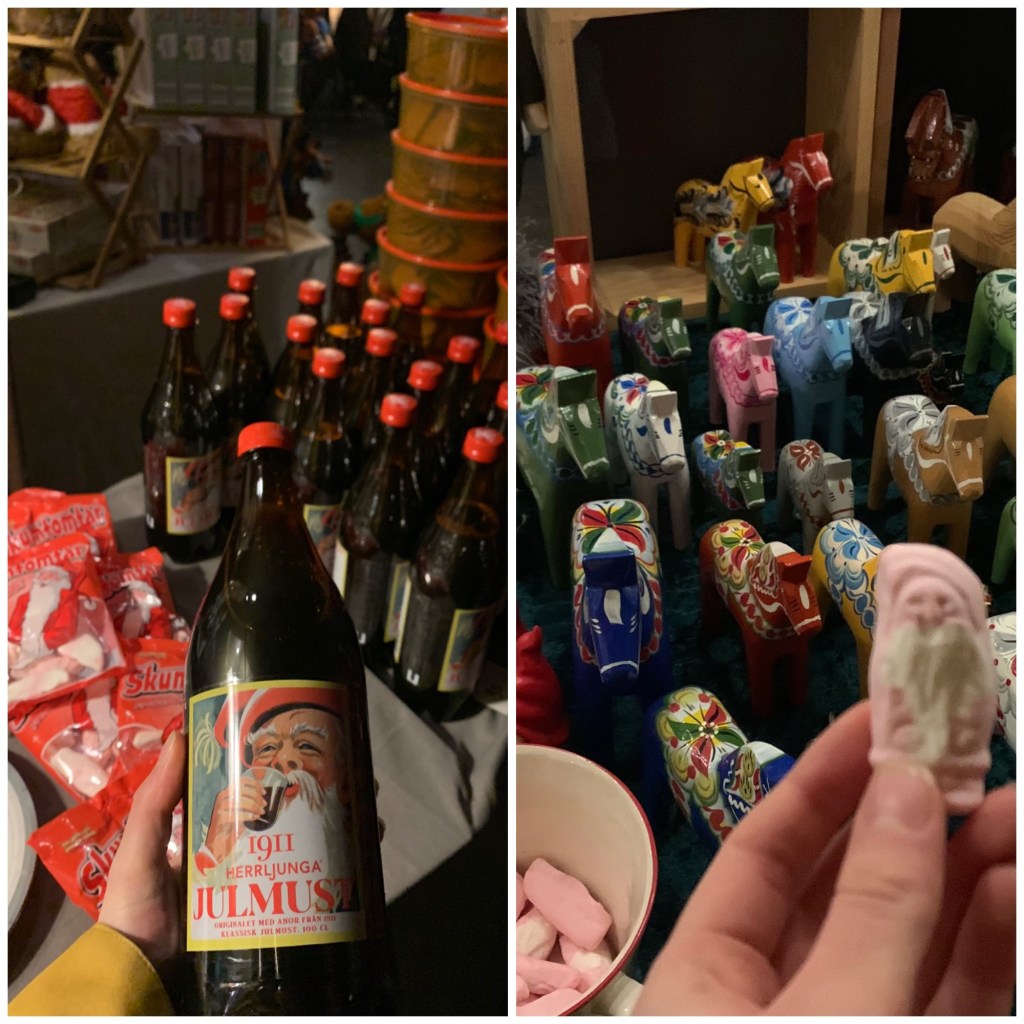
Pas Eén kraam verkocht Moomin-spullen (je zou meer verwachten als je ziet hoe vaak Moomin spullen zijn te vinde in Zweden), en een paar hadden sokken met Zweedse motieven, ook hier te koop bij Svensk Husman, en andere Pepparkakor, snoep en Julmust flessen (specerij-cola). Het eten was een beetje teleurstellend: Kanelbullar (kaneelbroodjes), een kraampje van Noorse zalm, en ‘Zweedse’ gehaktballen met standaard sauzen voor Nederland en niets meer…
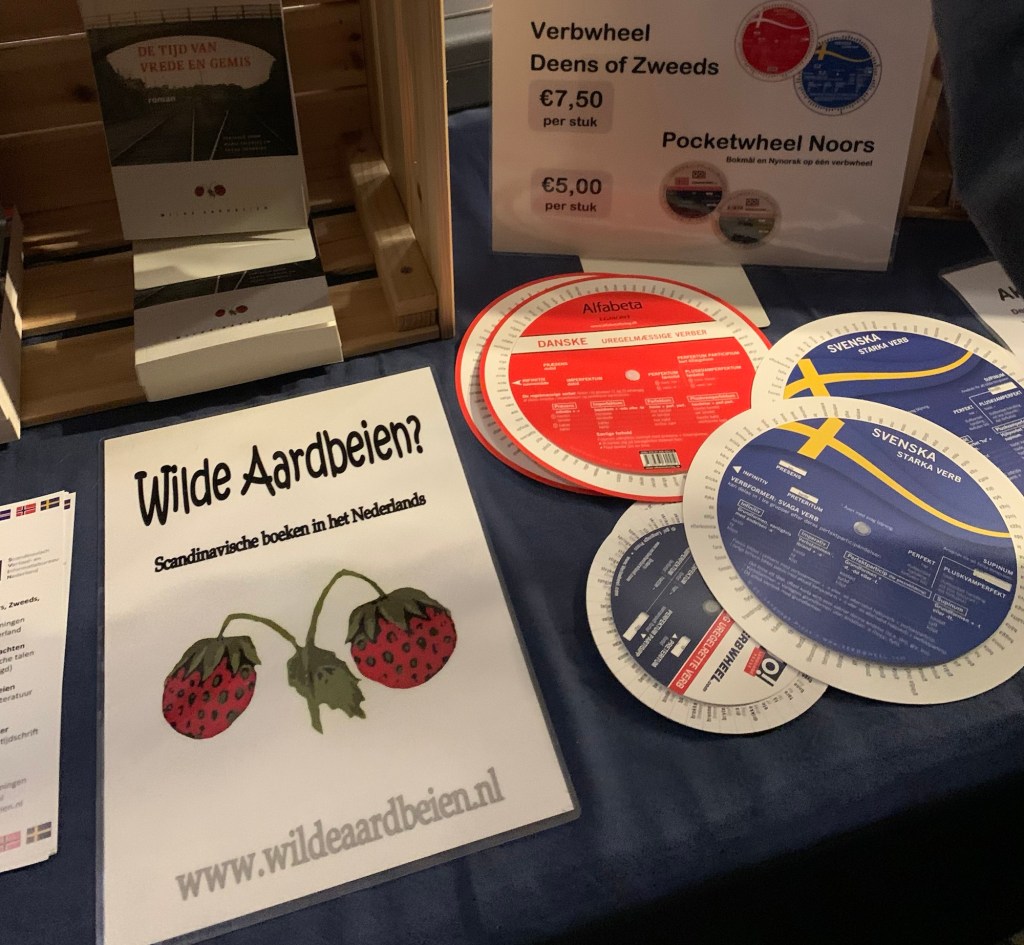
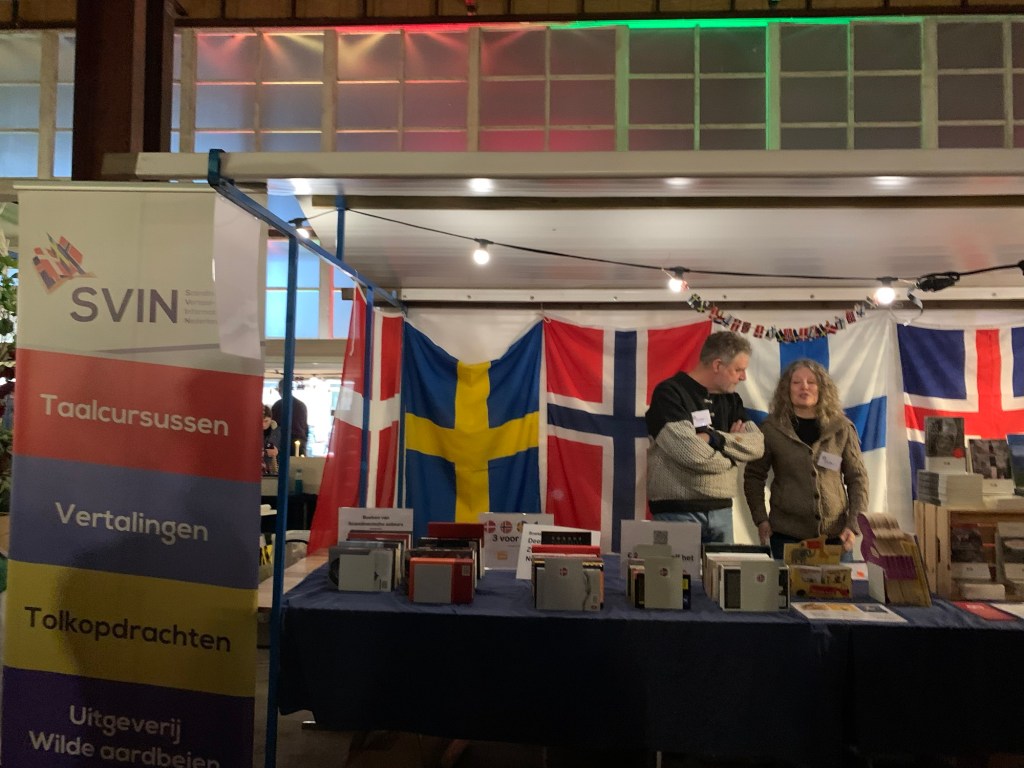
De Skandinavische Vereniging en Informatie bureau in Nederland – SVIN – en culturele associatie van vertalers voor Scandinavische talen en culturen, was erbij. Ik las hardop iets voor mijn vriend daar en kreeg complimentjes voor mijn Deense uitspraak!!!
Conclusie:om Skandinavische/Zweedse (kerst) spullen en eten te vinden kon je beter naar IKEA gaan, en zonder € 8 kaartje.
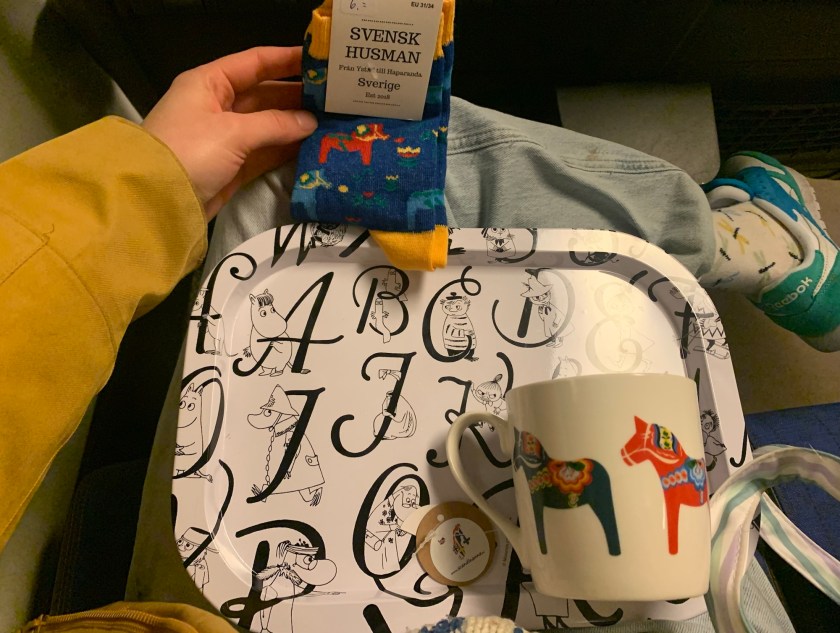
Ik heb ondanks dat wel iets gekocht: een mooie Dalahäst kop en sokken, een Moomin dienblad (ik had eigenlijk een dienblad erg nodig).
Maar ben blij dat ik daar ben geweest om een vriend en Groningen te zien.
The ‘Swedish’ market in Groningen was located at an old factory now serving as a fair location, entry with a € 8-9 ticket. It was for a great part a general Christmas Market with stands selling from earrings to wooden things to gloves.
There were only a which sold legit Nordic stuff, which was actually souvenirs and a lot of Dala horse objects. another couple prints depicting Nordic cities. One was selling Moomin stuff and a couple socks with Swedish things as motifs. The food part was kind of delusional, the only Scandinavian thing to be found was Kanelbullar, and a stand selling Norwegian salmon. And ‘Swedish’ meatballs, without typical Swedish sides as lingonsylt though. The Dutch association of translators from Nordic languages also had a stand, selling some books and verb paradigm round cheat-cheets. I read out loud for my friend something and got praised for my Danish!!
I got Dala horse stuff although there was barely anything else worth being bought (thankfully for my wallet lately): A mug and socks! I already needed a tray and happened to find a Moomin one, so I went for it..
Scandinavian Christmas findings in chain shops
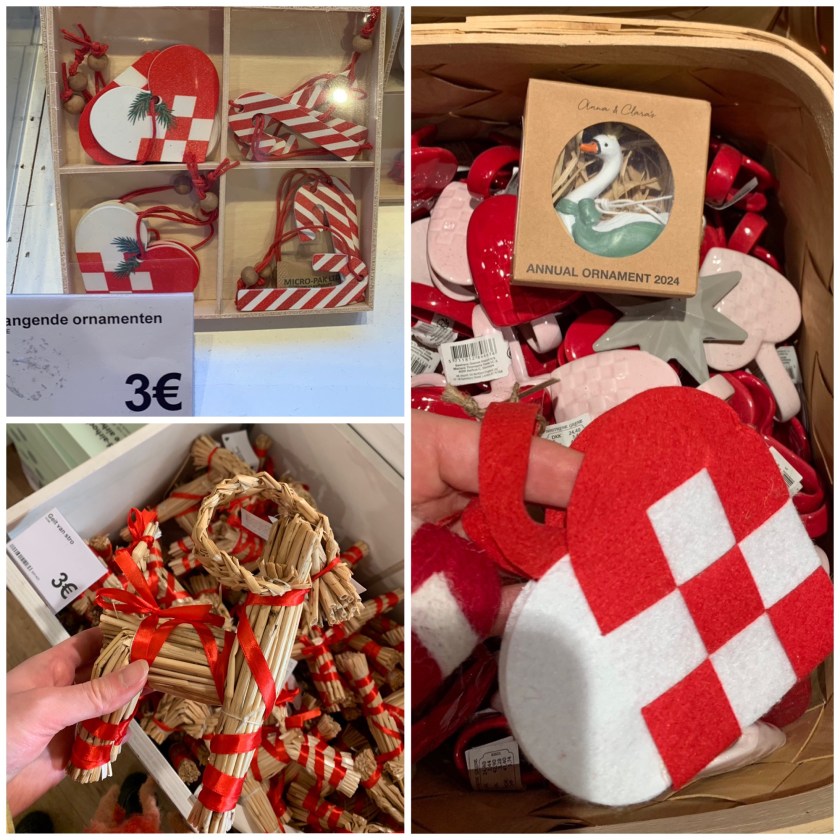
Naast IKEA verkopen Tiger en Søstrene Grene, Deense winkelketens, een paar typisch Scandinavische kerst artikelen met betaalbare prijzen: Julehjerter decoraties, Yule-geiten van stro, Pepparkakor/Brunkager koekjes en zakjes met Deense pepernoten.
Other than IKEA, Tiger and Søstrene Grene, as Danish shop chains, also sell some typical Scandinavian Christmas articles at affordable prices.
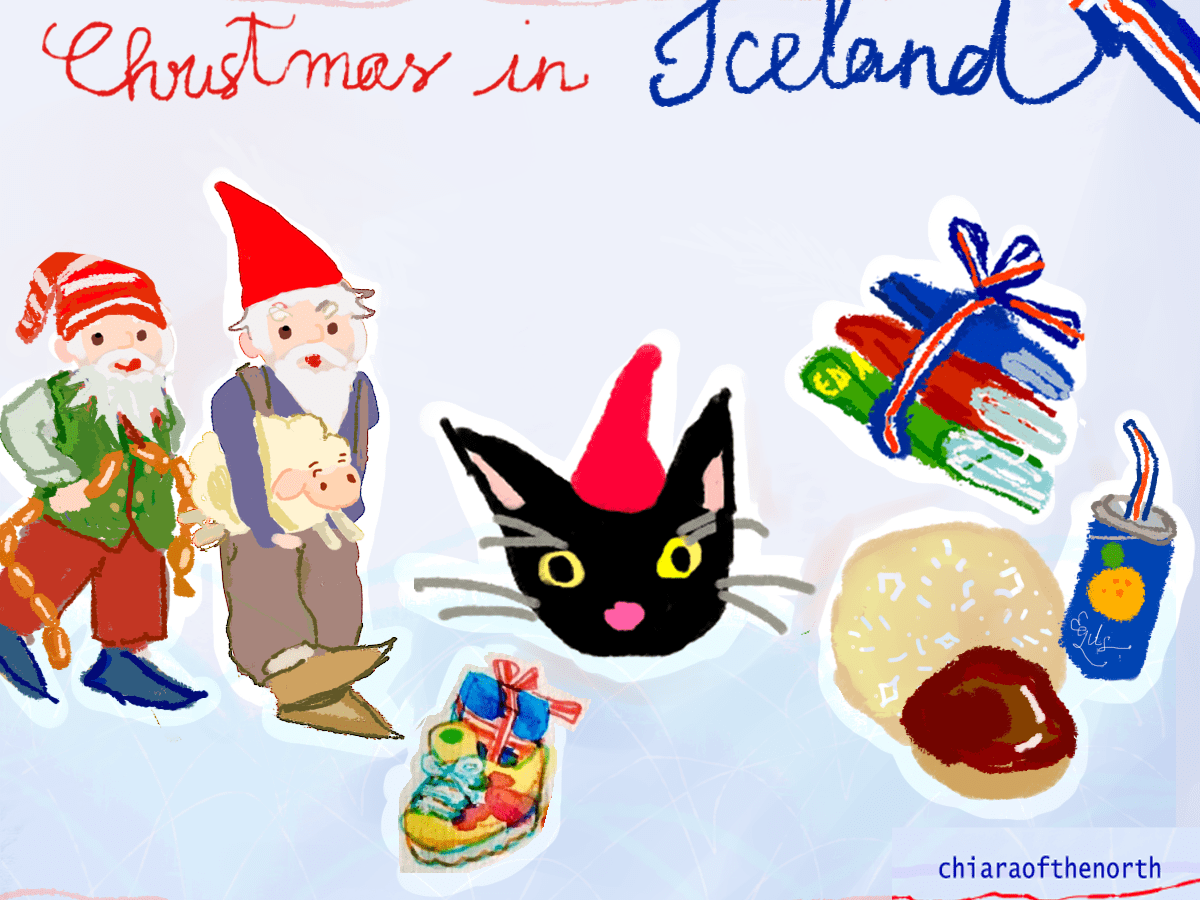
Traditions and popular things to do in Norway around and on Christmas day: from movies to cookies
After Scandinavian Christmas Traditions and Finnish Christmas facts, I am continuing this series with Norway!
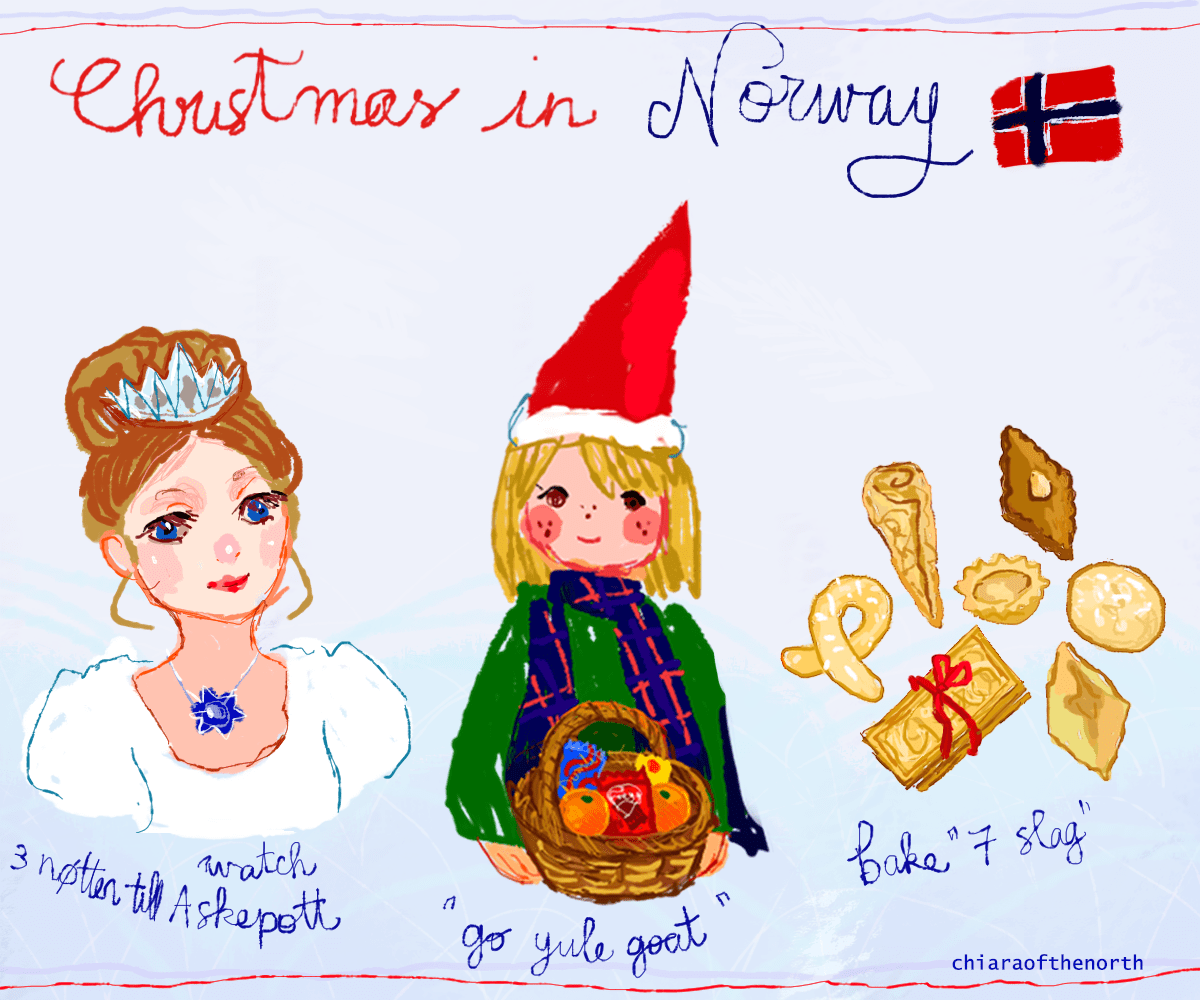
Watching Czech Cinderella
An iconic Christmas movie In Norway is actually Czech, from 1973: 3 nøtter til Askepott (3 wishes for Cinderella), broadcasted on Christmas eve in Norway since 1996 – Norwegians made a remake in 2021 though. Another popular Christmas movie in Norway is Reisen til Julestjernen (journey to the Christmas Star), a Norwegian production from 1976, in which a princess disappears to look for the Christmas Star…
‘Going Yule goat’ or Christmas trick-or-treating
In the period of Romjul, between Christmas and New Year, some Norwegian children go around with a Nisselue (Santa hat), with red cheeks and freckles painted on their face, or as angels, shepherds and other Christmas figures, singing Christmas Carols from door to door, in exchange for sweets. This is called å gå julebukk – to go Yule Goat..a sort of christmasy halloween. According to the Store Norske Leksikon it 14% of interviewed Norwegians or their children was going julebukk in 2017.
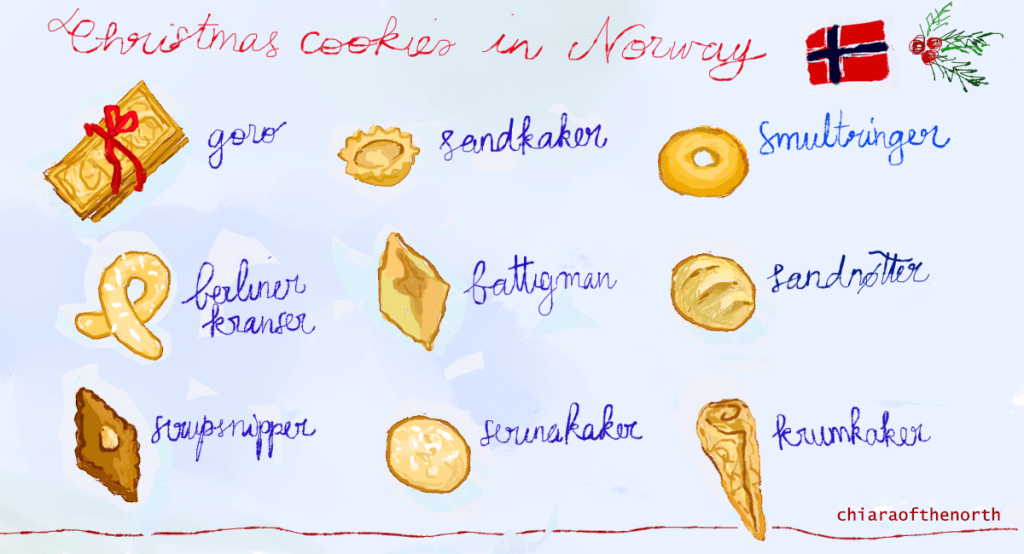
Baking 7 cookies
Some Norwegians bake the ‘Seven types’ – 7 different type of cookies, deSyv slag in Norwegian. Baking seven different types of cookies is a tradition that exists also in Sweden. There is no fixed list, but the classical types are Sandkaker, Pepperkaker (gingerbread cookies), Fattigmann ‘poor man’, Goro from Danish god raad, one of the oldest types from the 1800s- made with an iron press with patterns – Krumkaker, Berlinerkranser, Serinakaker.
Kransekake, kokosmakroner, sirupsnipper, sandnøtter and smultringer are also popular to be included in the syv slag according to godt.no.
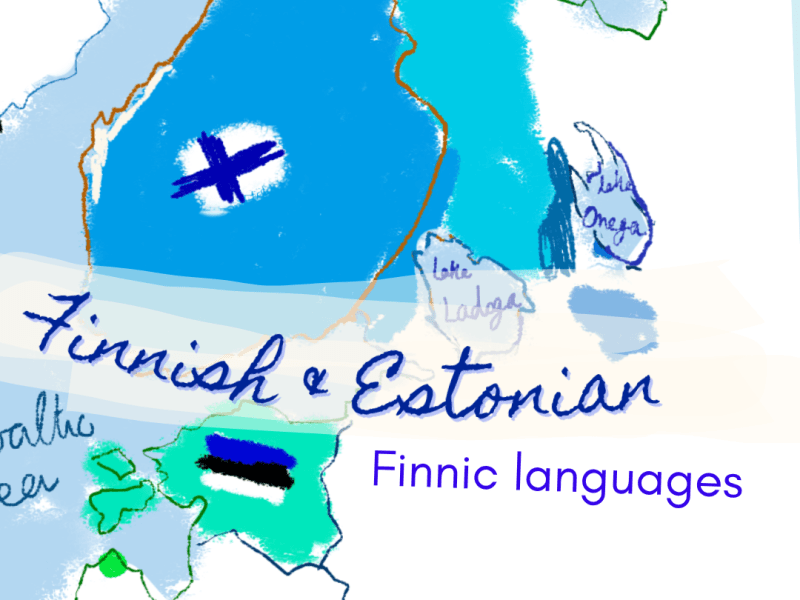
Estonian is a Finnic language, sharing many similarities with its ‘bigger’ sister Finnish, while being unrelated to all their bigger language neighbours
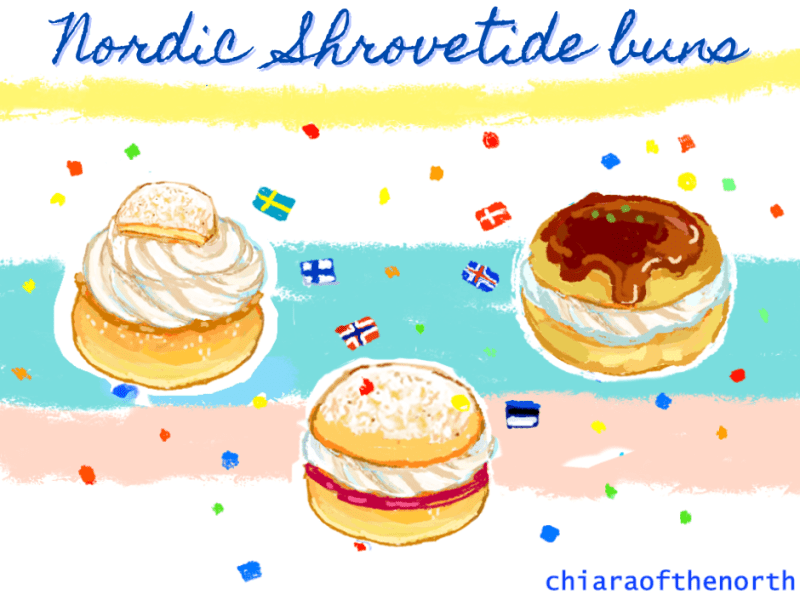
Cream buns are enjoyed in Nordic and Baltic countries during shrovetide, between January and February. Sweden’s classic semla has almond paste, while other countries variations include jam, vanilla cream, and chocolate icing top.
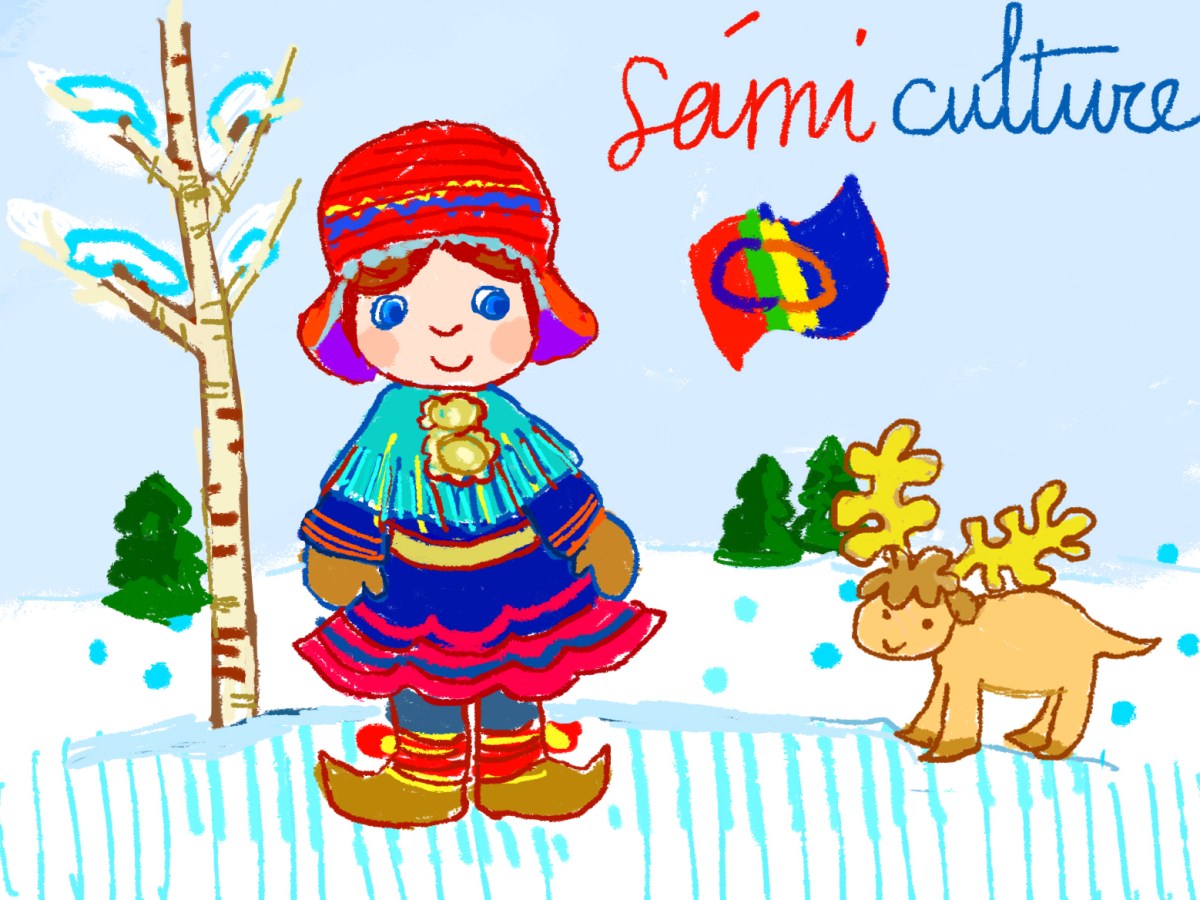
Sámi people, indigenous people of North Scandinavia, have a distinct culture, symbolised by its unique flag and traditional clothing, and part of it are Duodji handicrafts and unique musical expression through yoik.
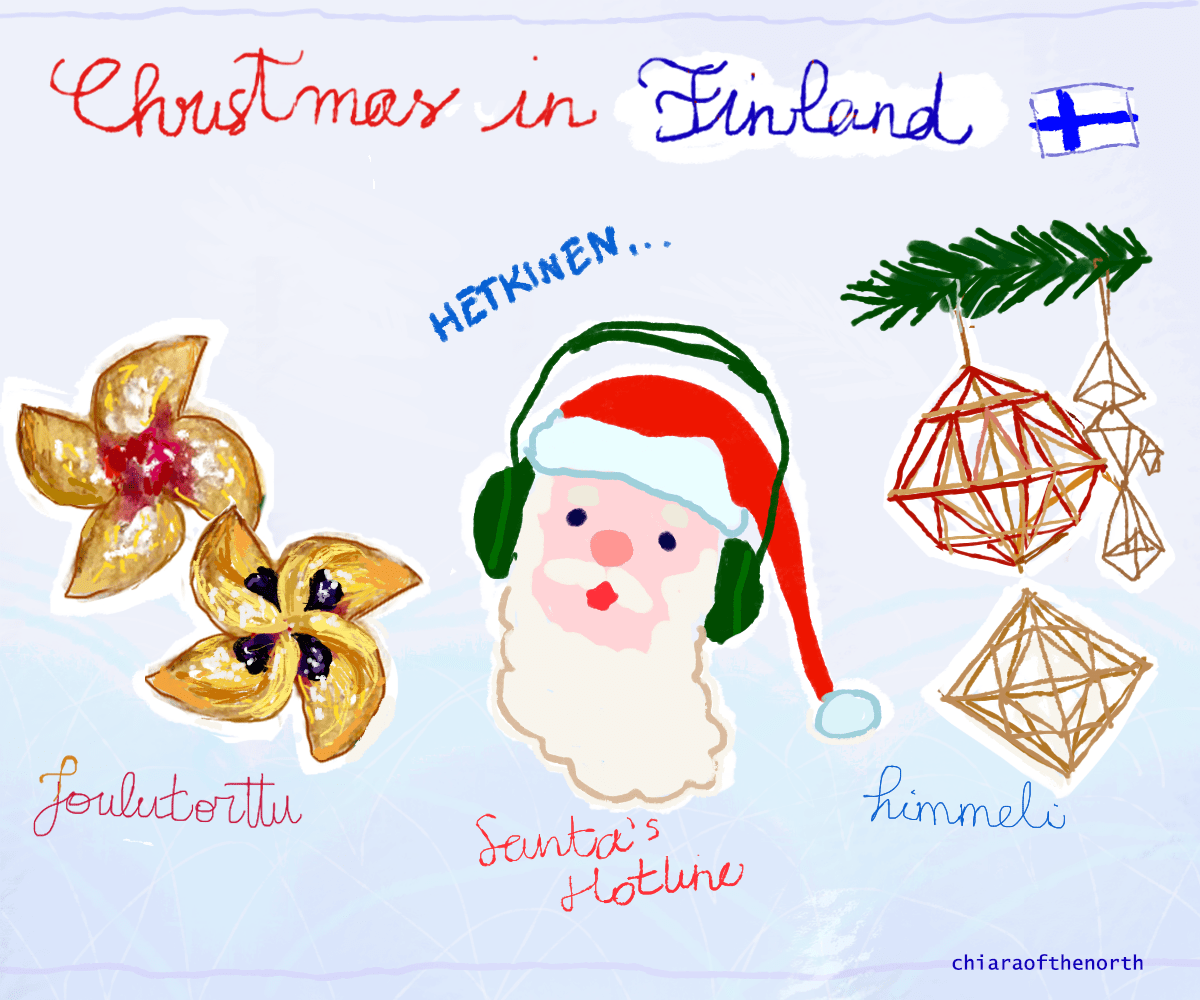
3 typical unique Christmas symbols and traditions in Finland
Here are country-specific facts about how Christmas is celebrated in Nordic countries, after an overview of Scandinavian Christmas I actually keep updating… Next up will be Norway and Iceland, so stay tuned!
Joulutorttu: pinwheel pastry
Also called tähtitorttu “star cake”. it has the shape of a star or pinwheel, with apple or plum filling. It was already mentioned in the 1830s by Zacharias Topelius (Swedish-speaking Finnish writer), and it still is a Christmas classic in Finland, being present on 76% of Finnish tables on Christmas eve.
the Santa Claus Hotline
In Finland they have had the Joulupukin kuumalinja ‘Santa Claus Hotline’ for 33 years on tv. Here is the Finnish tv program for the day in 2024: There are breaks between one Christmas-themed cartoon and the other, where children can call, elves will take the call and some lucky children will be able to talk to Santa..It is also possible to send pictures, and some of these will be shown!
Himmeli Christmas decoration
Himmeli are wooden straw geometrical pendants, of various sizes, decorating Finnish houses. It comes from himmel, sky/heaven in Swedish and Germanic languages. Himmeli traditionally hung above dining tables until summer to ensure a good crop, as Finlandi.fi mentions.
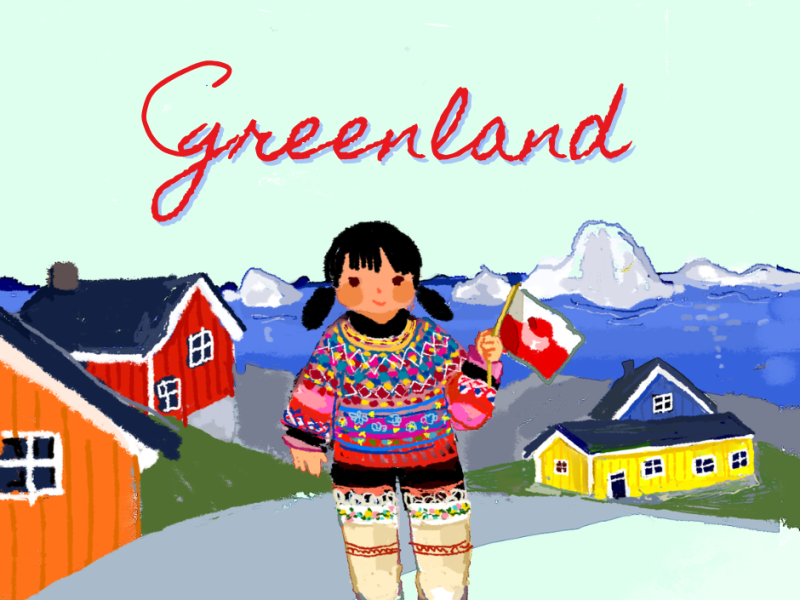
Discover Greenland, home to the Inuit Kalaallit, and its most iconic aspects as its flag, language and folk costumes. The biggest island of the world has a rich history of indigenous culture intertwined with Norse colonization and later Danish rule.
4 tips to practice a language as Swedish and Dutch, where most people are fluent in English and foreigners struggle to improve the local language.
You are learning a language and would be eager to use it when you are in the country where it is spoken. But what if everybody switches to English the second they hear you are not from there?
This is a typical problem in Holland and Scandinavia, where most people speak English well, and the fact that English will simply always work better and be the easiest option prevents you from attempting at speaking anything else.
I have had experiences with Dutch, Swedes, Swedes and Norwegians in various contexts and with the given language being at various levels at different times, and these are a few tips to exercise the language if you are not (or do not feel) fluent yet:
1. important information in English, smalltalk and chitchat in local language
Sometimes you just have to be sure you know what is going on and what you need to do, other times you can miss some parts of a dialogue without causing yourself any damage – in the latter give a go at your target language, you’ll never understand 100% anyway if you never practice.
example: Last time I was in Denmark, I heard a confusing announcement on the train. As i wanted to be 100% sure my train would reach my destination, I first asked that in English to the person sitting next to me, to switch to Danish right after having received that piece of information, (saying that I actually did speak Danish) and had a nice conversation in it.
If your level is still basic, do make sure to (be able to) say small things like hi/thanks/sorry/excuse me/good evening etc. You’ll get those small expression stuck in your head, and give yourself and others the feeling you do speak the language, which is a better start than not using it at all.
3. Prepare what you want to say in advance, or fake it until you make it.
Sometimes you can look up how to properly say something in advance, as in shops and restaurants – things like ‘do you have a free table’ ‘i would like to this and that’, or even look up some extra vocabulary for a conversation of which you already know the topic.
Also: in given contexts like shops the things you get asked tend to be standard, as ‘do you want a bag?/receipt..’ , so you know what words might be pronounced, anticipating what you’ll be asked, and be less scared you will not understand.
example: I had to talk to a Norwegian client on the phone, so I wrote down what I would say, and looked up vocabulary I needed: that means learning new words and getting to practice with them!
3. Find ‘comfort zones’ and people with whom you stick to the language
If your level in a language is not very high, you might not dare making attempts with strangers. I am a quite shy person myself, other than a perfectionist, so I know that feeling well. But you learn a language by practicing it (and making mistakes), and as soon as you have someone or somewhere to freely practice -no matter how off your grammar is, how many gaps you have in your vocabulary, how many times you ask for repetitions – do it. Having active conversations is also important to absorb the language yourself and learn from your language partner.
With strangers you can stick to English if you feel uncomfortable otherwise, but it is good to have a situation in which you’ll always stick to the language (This counts also when chatting online!). Or at least often enough that your default language is Swedish, Finnish, etc. You learn to swim by swimming – but it does not have to be in the open sea from moment one.
Other options if you do not know anybody, you can use find tandem partners on apps such as hellotalk, tandem etc. and give yourself the rule to rather use translators, but never use English. Events as language cafés are also great occasions to practice if you find any!
keypoint: sometimes it is a matter of self-confidence more than language level
The thing with Swedish, Dutch, Danish etc. is, you might be pretty good at them, but if you are a bit insecure, allowing yourself to use them language over English will be hard. In countries where the average level of English is poor, that is of course completely different.
So you’ll just exercise your Italian, Japanese, Spanish, etc. without thinking much about whether you are good enough at it. You might barely know how to order a drink in Italian or Japanese, but still, you’ll do it, because they will understand it better than in English, even with bad pronunciation or grammar. Maybe they will be relieved they can use their language with you, while the Dutch either want to help you by using a language you are more fluent in or just want to have a smooth communication.
It does take some self-confidence to stick to a language if the counterpart easily switches to English! Even if it does not necessarily mean you are bad at it. It is all about finding contexts and people to use the language, broadening them gradually as you get more comfortable or fluent enough to use it for everything.
How I have done it: First I would use Dutch only in written form and with given people, then I got to the point I’d dare using it with strangers, in shops, but not at an airport desk, then I started using it even for formal things like registering at the municipality , but I did not switch back to Dutch if people switched to English. Now i stick to Dutch, always. With Danish I am in the phase where I could use it in formal context but do not always dare due to fear of not understanding. But I did ask for information in Danish at a museum desk, which I did not do one year ago.
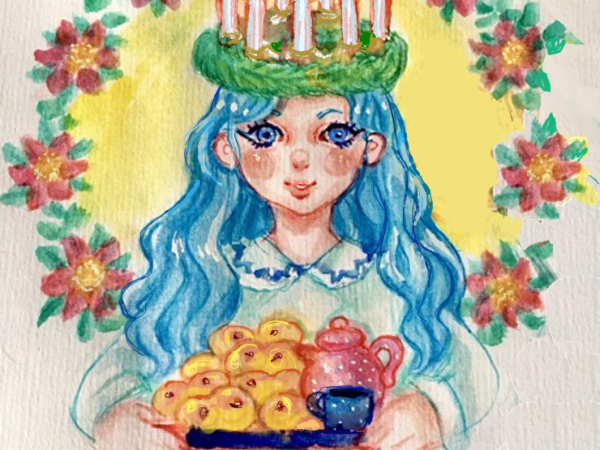
Lucia brings light in the darkest night of the year and is a mix of pagan and christian traditions. It is celebrated in Scandinavia with processions, saffron buns and church concerts.
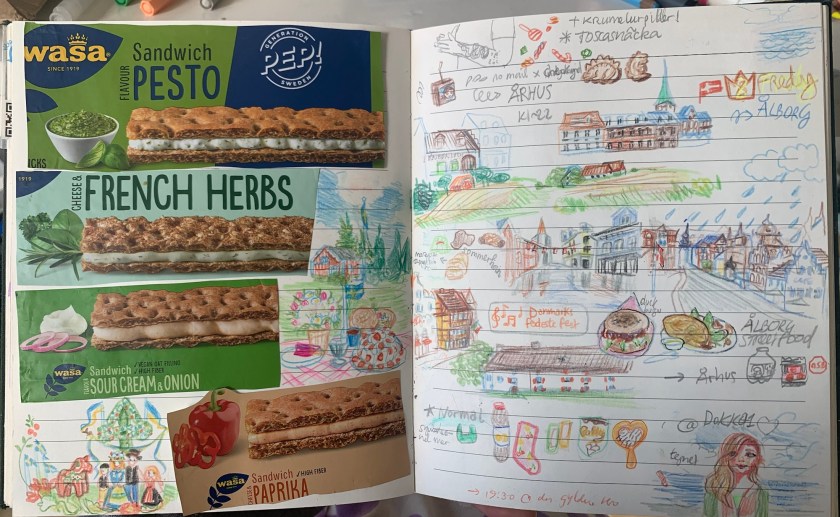
My summer holiday was travelling to Scandinavia by train with interrail, passing by Copenhagen, Gothenburg, lake Vänern, Aalborg and Aarhus
After having canceled my initial plan one year ago, only passing by Denmark last summer, my plan for 2024 was to go to Sweden, and as I happen to have a penpal who lives on the lake of Vänern, visit her! Once again, by train. Which means stopping by somewhere, so I also spent some time in Denmark again, before and after.
Super Quick stay in Copenhagen
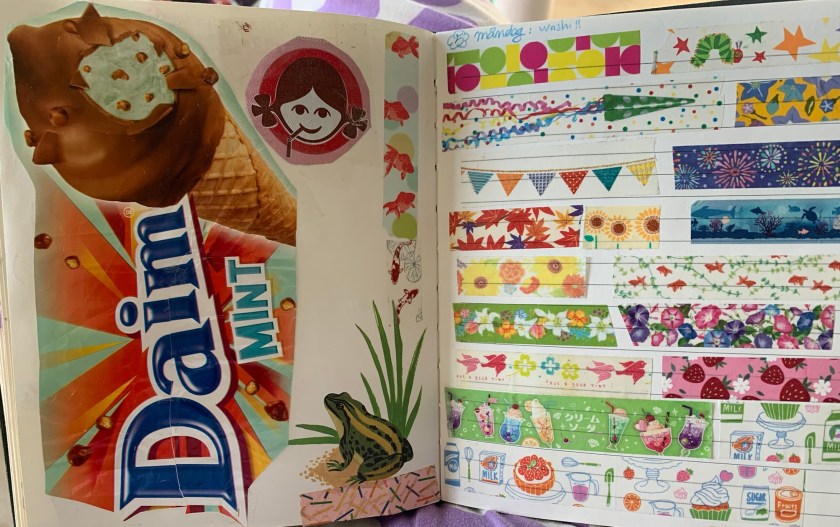
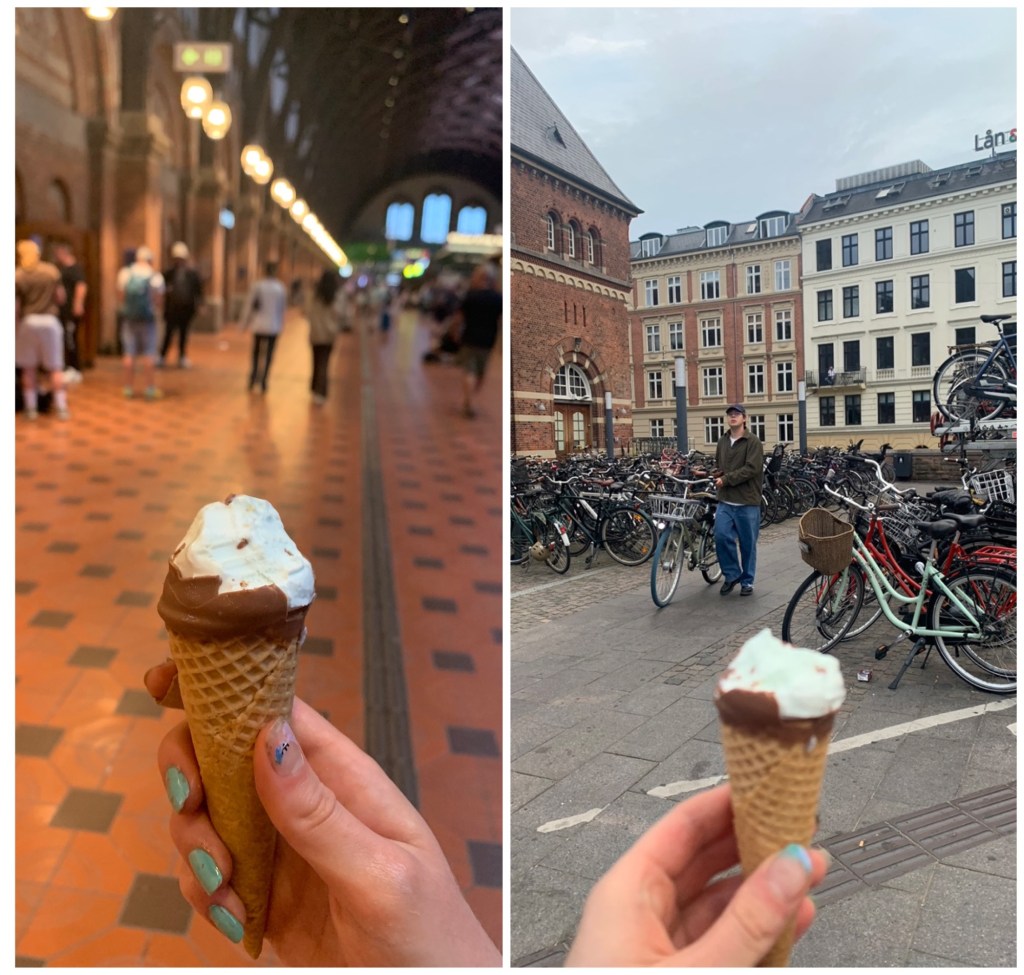
I hoped I’d arrive earlier, but problems with Deutsche Bahn made me arrive a couple hours later to Denmark than what I had hoped for. First thing I got was a classic Scandinavian ice cream i had noticed last year – a Daim mint cone, I love anything chocomint!!
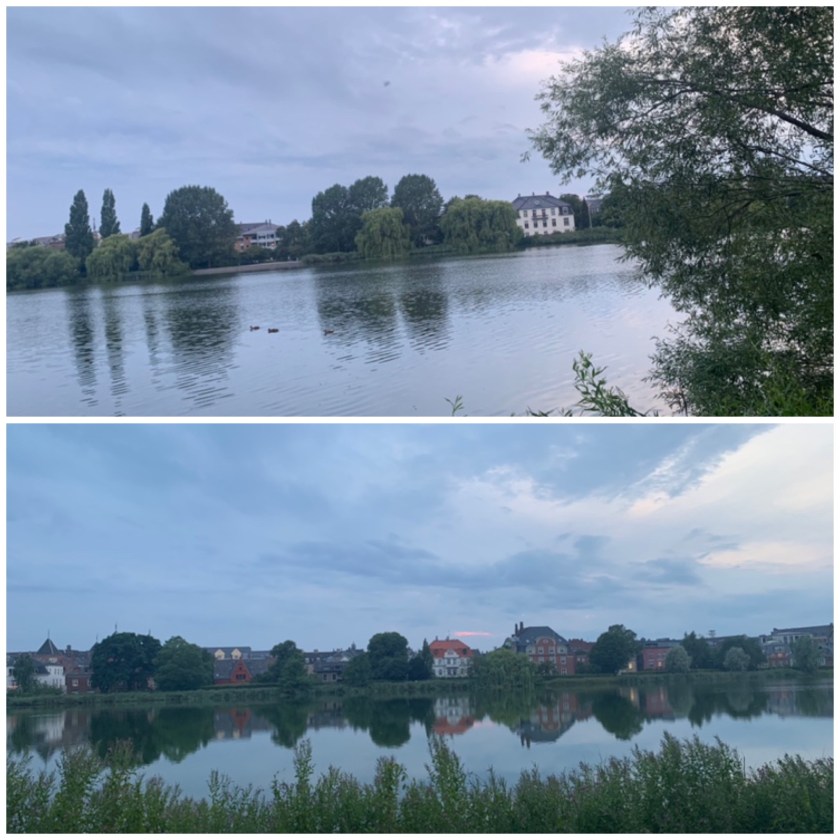
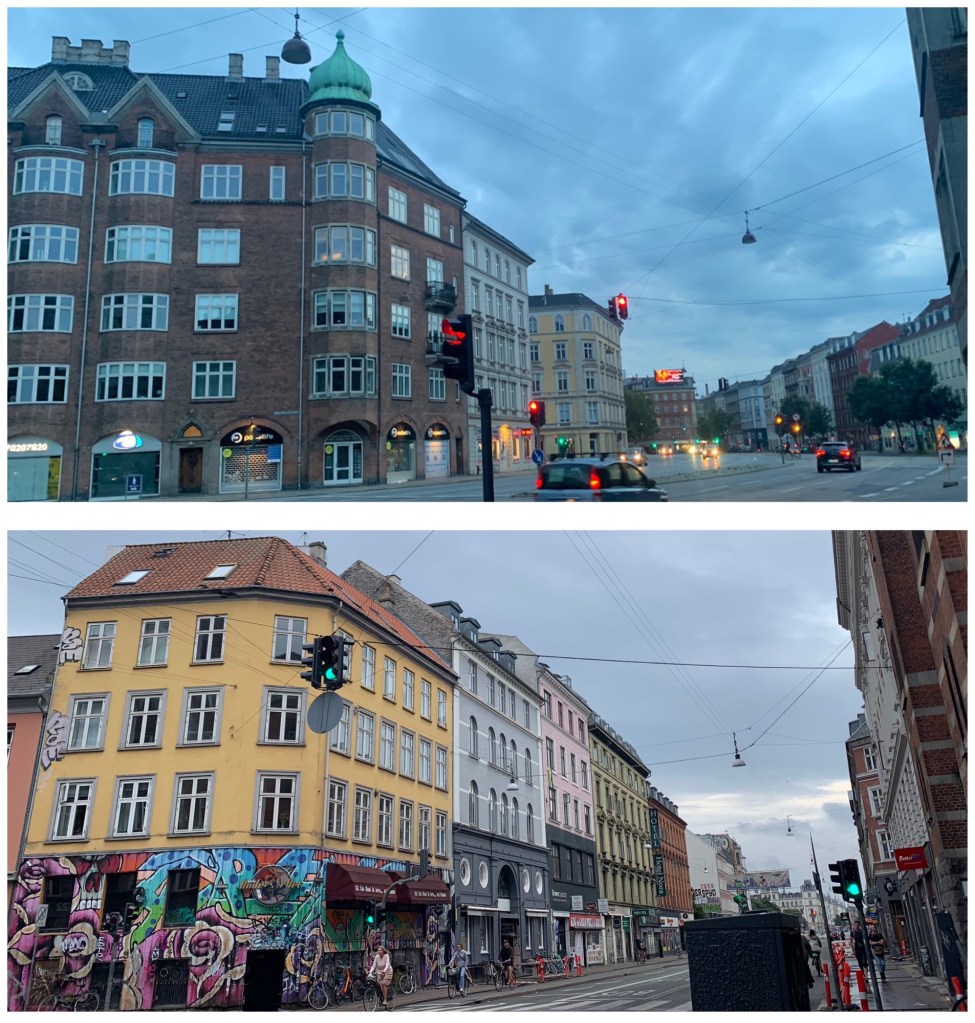
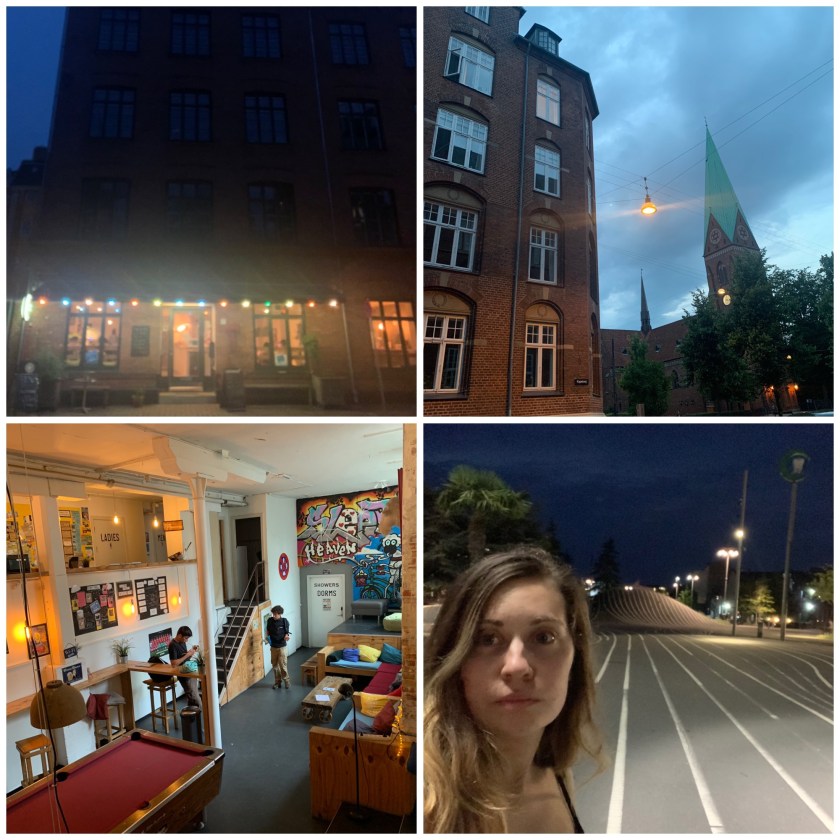
I booked the night at the Sleep in Heaven hostel in the Nørrebro area, so went on a tour of it after checking in. The park Superkilenlooks cooler in pictures, but that did not surprise me. Then I decided I would walk to the centre and I got a Matilde strawberry milkshake, which as probably all stawberry milkshakes tasted like medicine.
I started walking towards Nyhavn but I figured I’d better reduce the damage (it was already past 11pm) and go to sleep asap to wake up earlier and see the centre before my train to Sweden… Could have slept more but no regrets at least…
At some point a studenterkørsel bus drove by, playing ‘Elskovspony’, one of my favourite Danish songs, hehe…
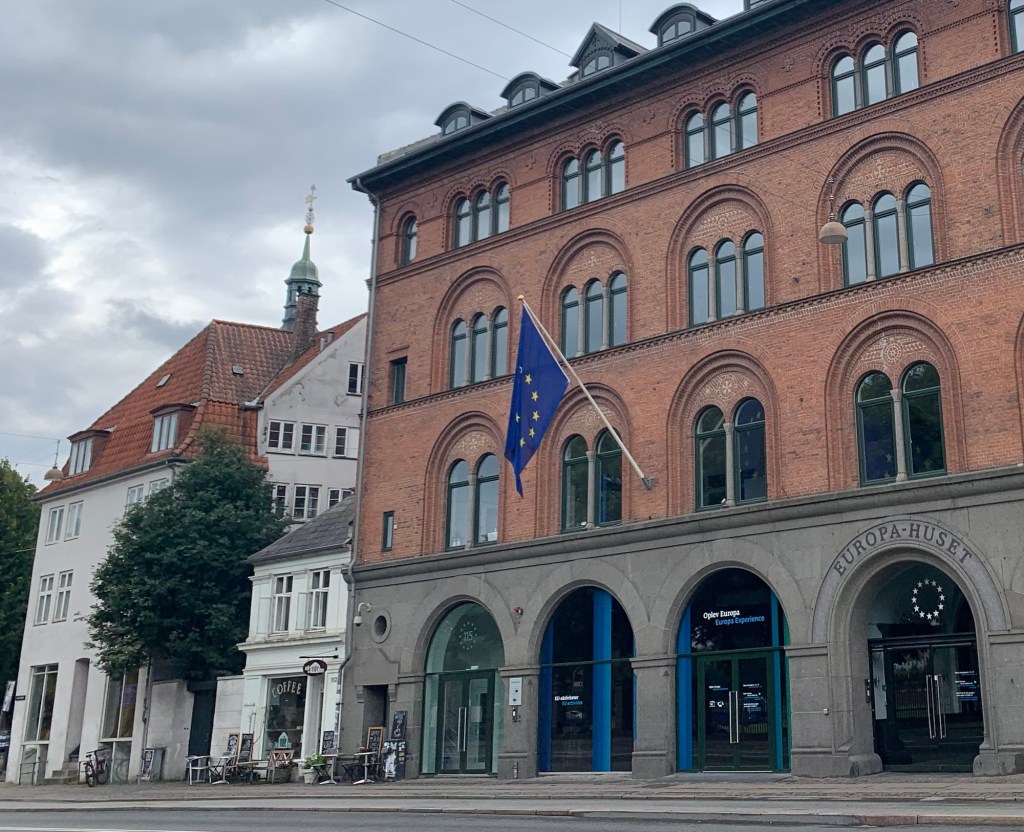
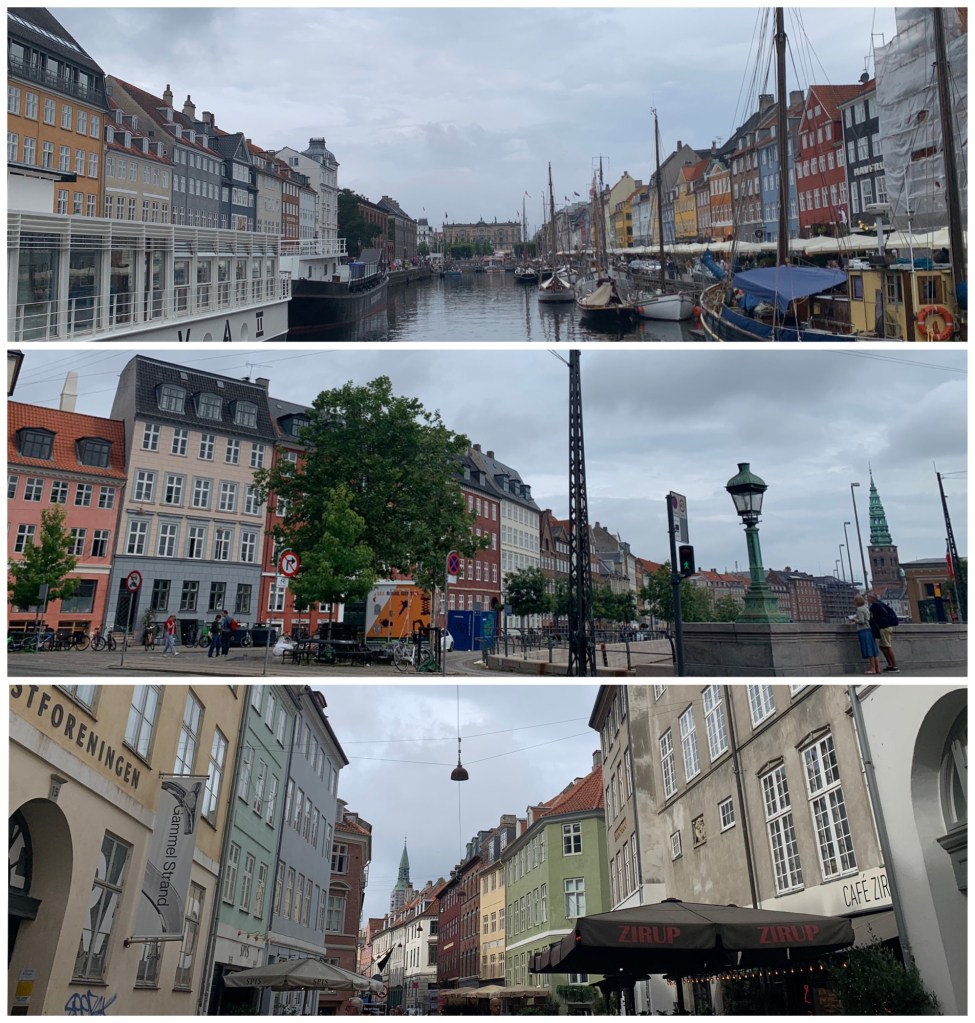
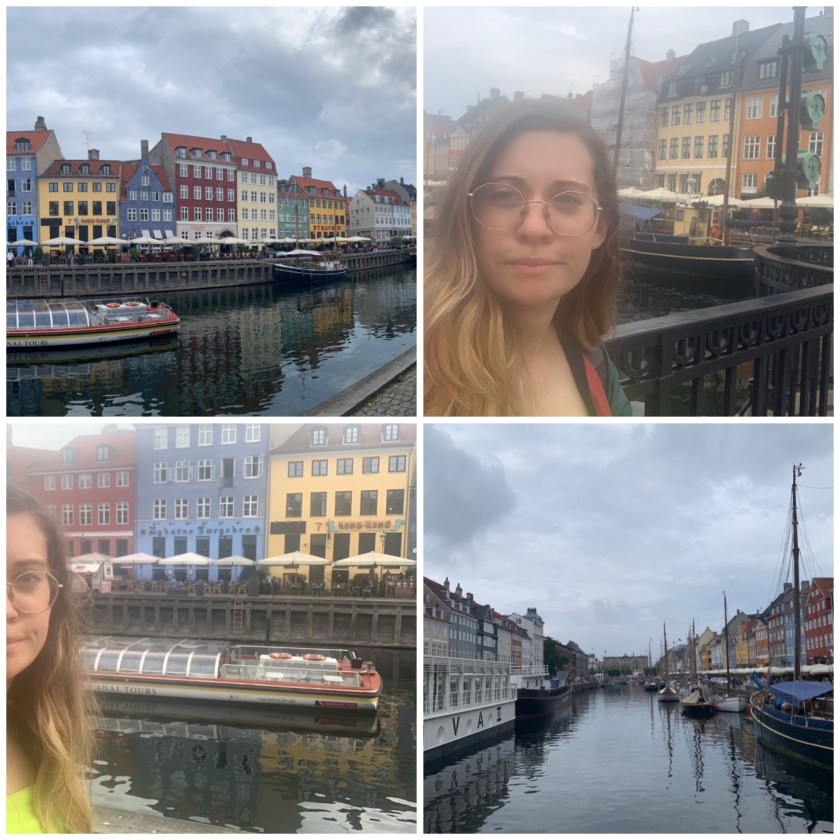
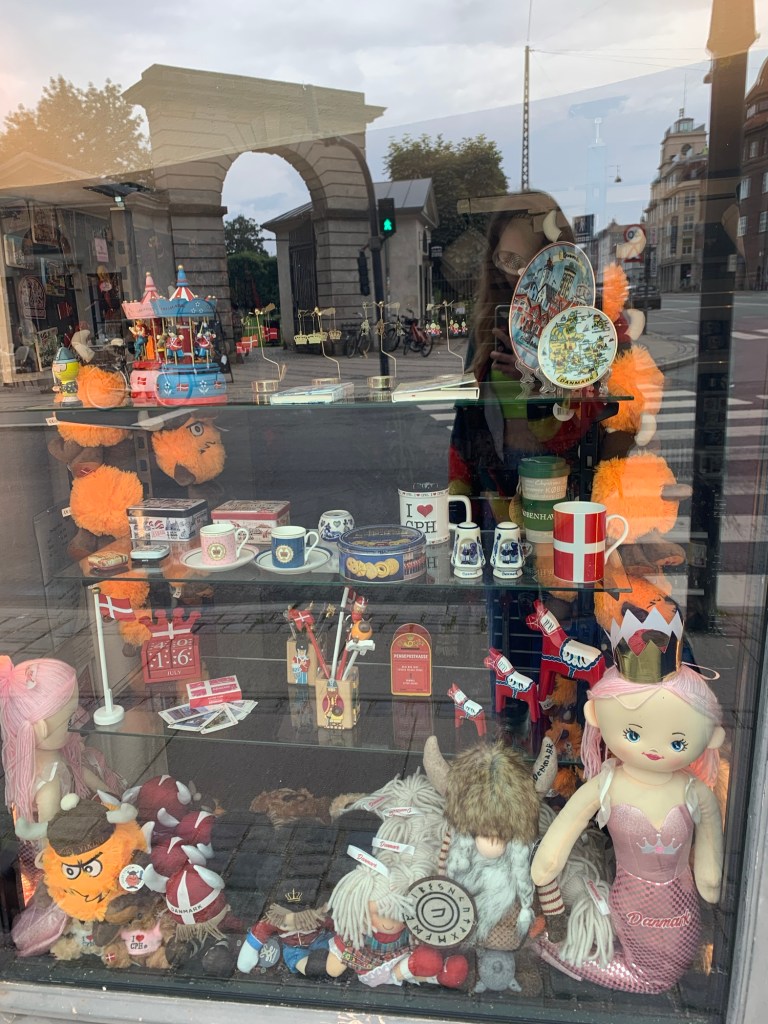
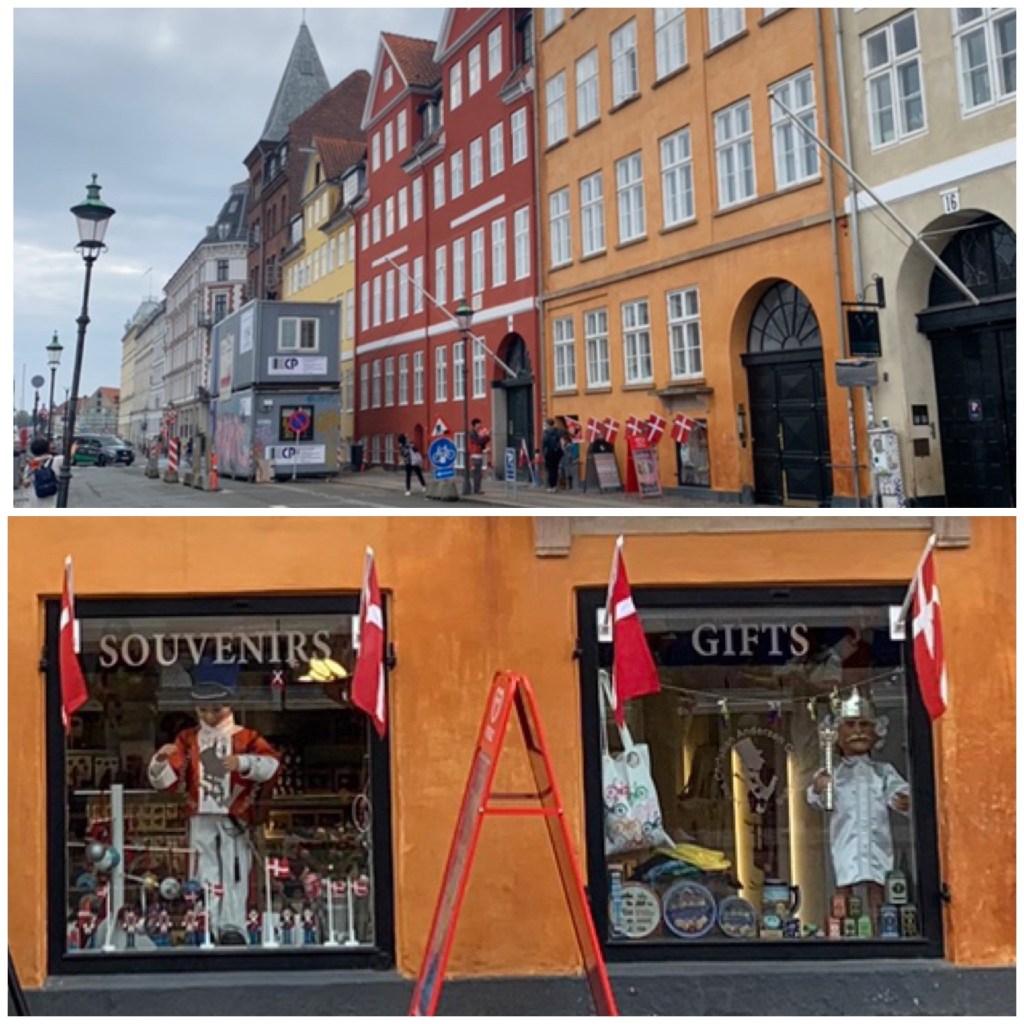
I woke up rather early to see Copenhagen, and walked to Nyhavn, saw Rosenborg from the gate, a super cute souvenir shop and pastel buildings. I wanted to see the Little Mermaid – Den Lille Havfrue– Copenhagen’s icon, but didn’t want to miss my train and turned back (again).
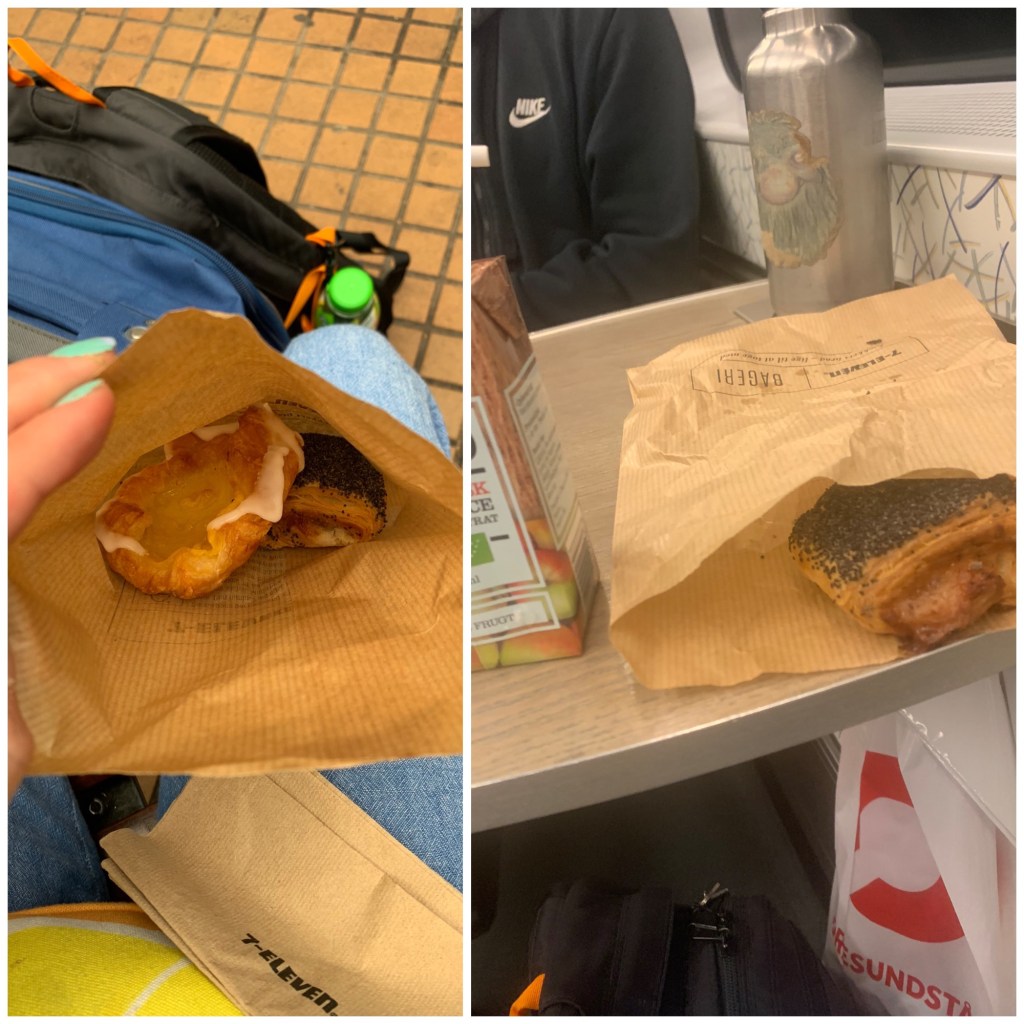
Then at the 7/11 mini Wienerbrød: “minimums” – small versions, which is great for people like me who like to taste everything possibly without overeating… I got a Spandauer and a Tebirkes!
From the Øresund to the Öresund
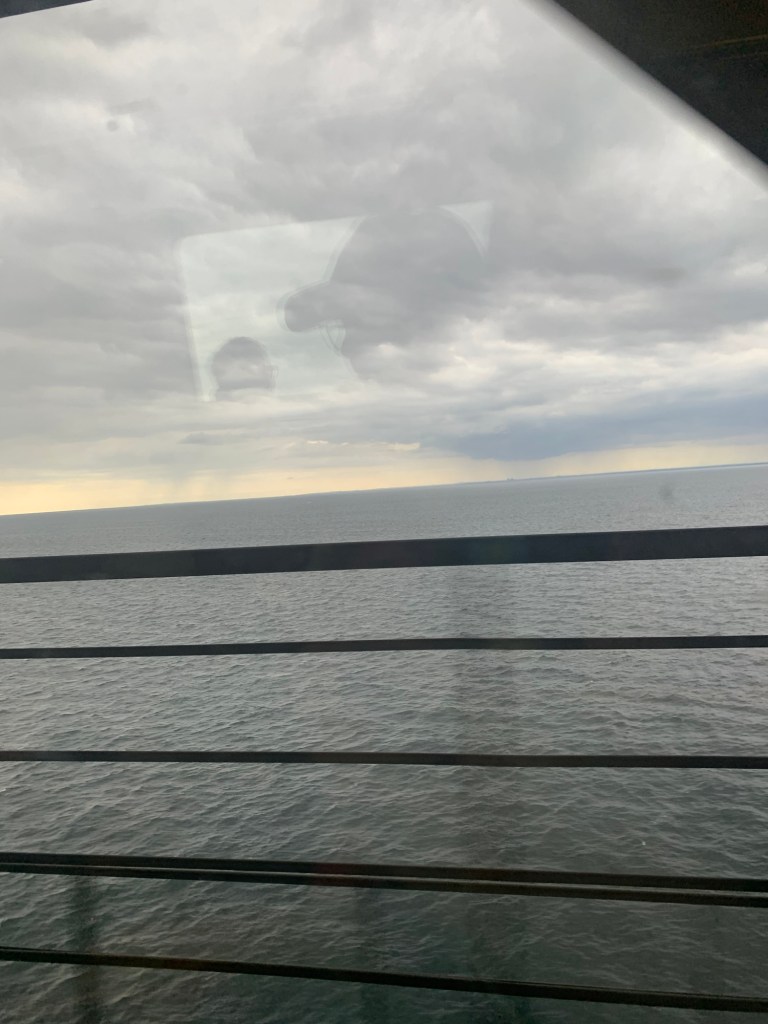
The Öresund snälltåget train from Copenhagen (where it leaves as Øresund) was headed all the way to Gothenburg, quite packed, but I managed to get on early and have a spot. It felt great to see Sweden, after having only seen the southernmost chunk last winter (I will post about that too..).
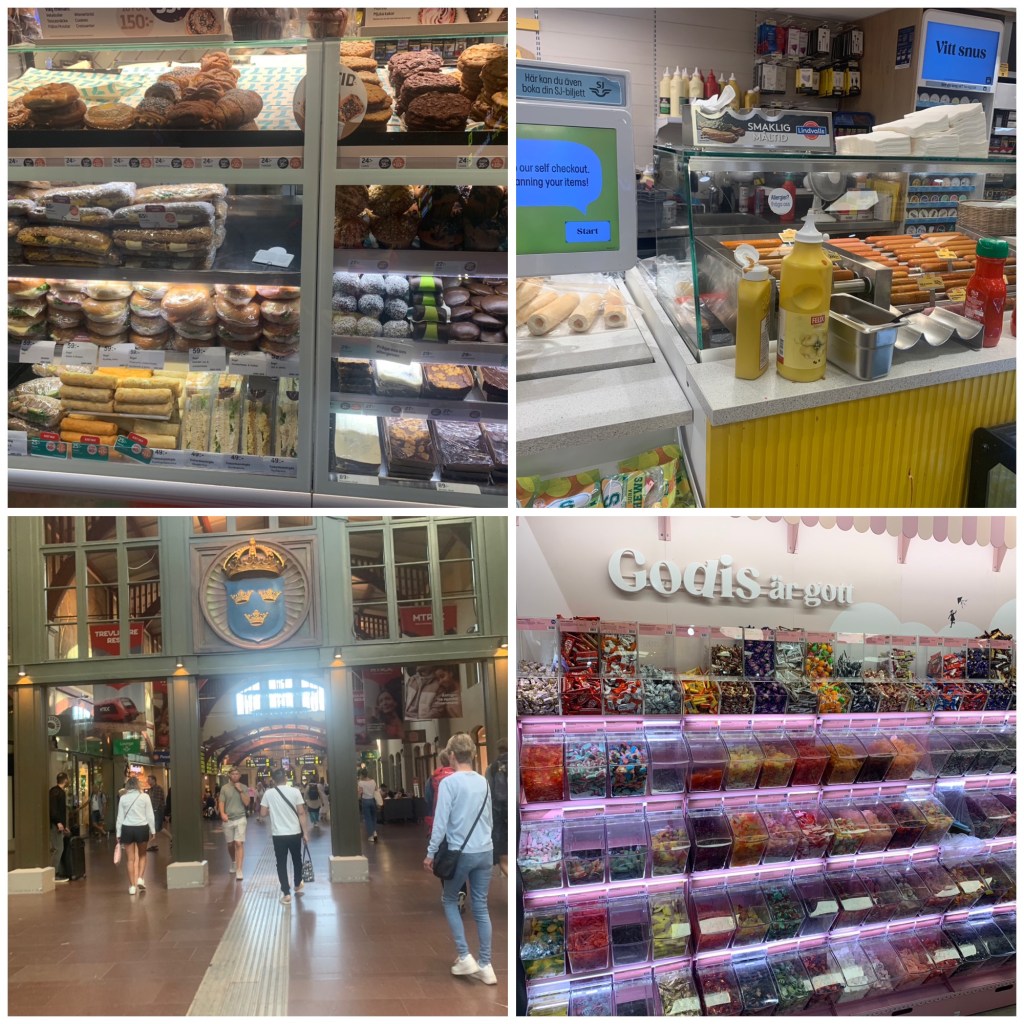
After a few hours I was in Gothenburg, where I’d take the train to Trollhättan. First things first, checking shops at the station. Pressbyrån is the Sweden’s station convenience store, equipped with a bulk candy wall and serving fresh hotdogs and pastries among others.
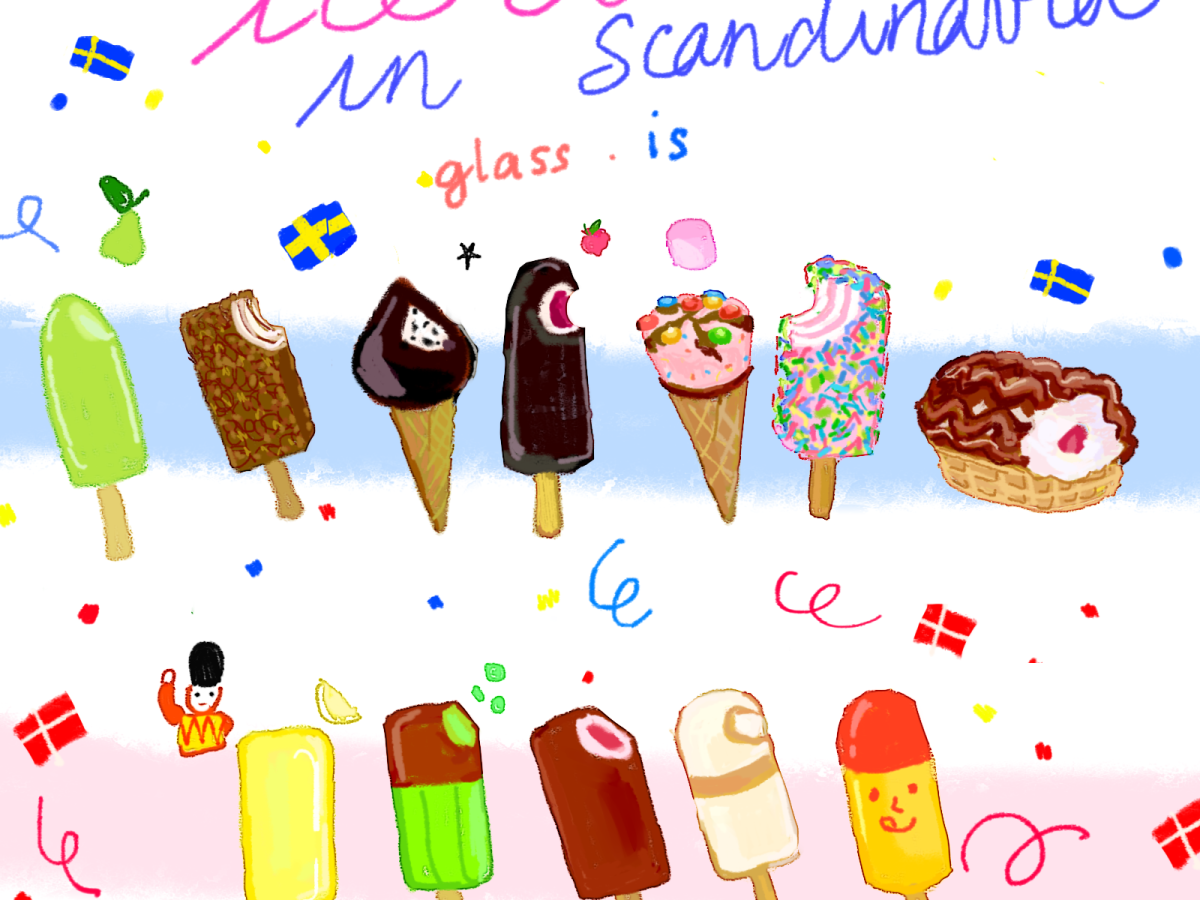
I saw a lot more variety in Swedish ice lollies than in the Danish assortment , though both countries have their own classics (in Denmark Københavner stang, Champagne Brus, Kung Fu etc), and a number of common ones like the Daim cones.
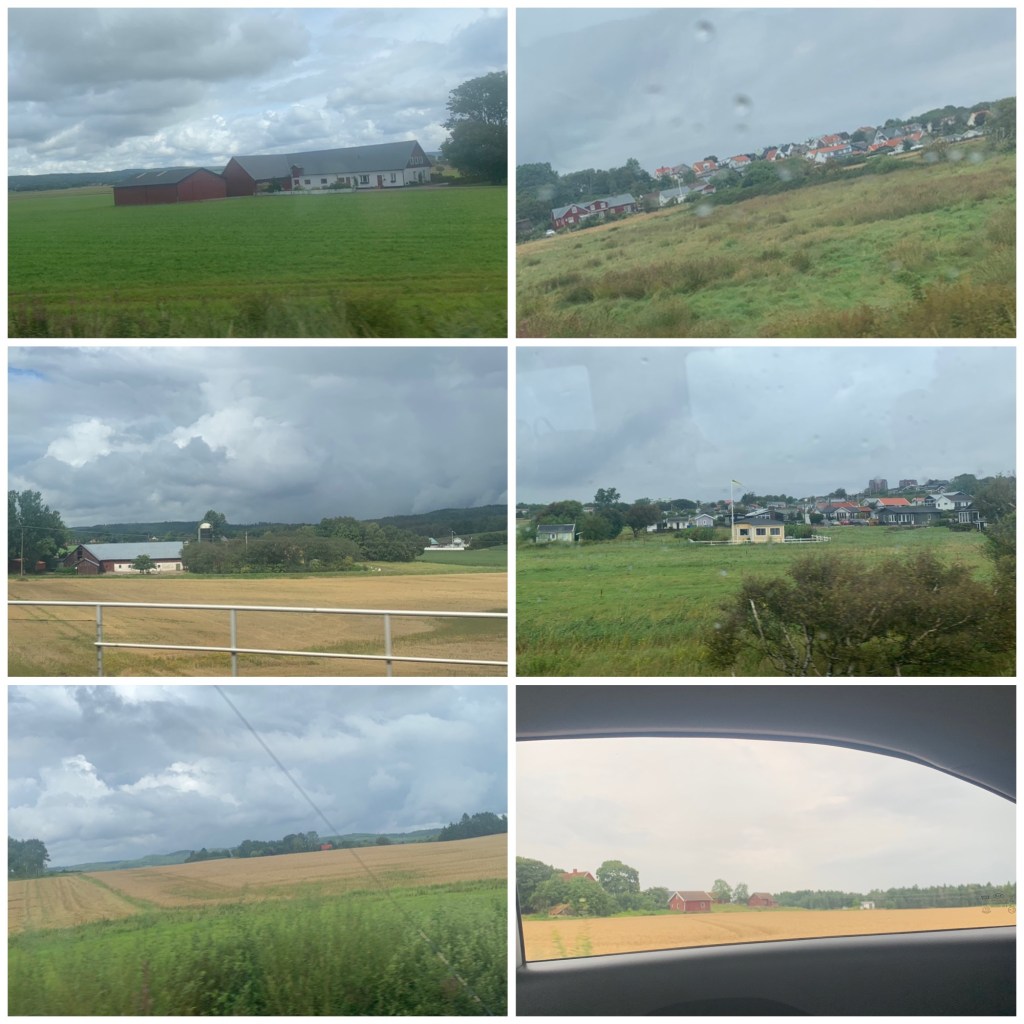
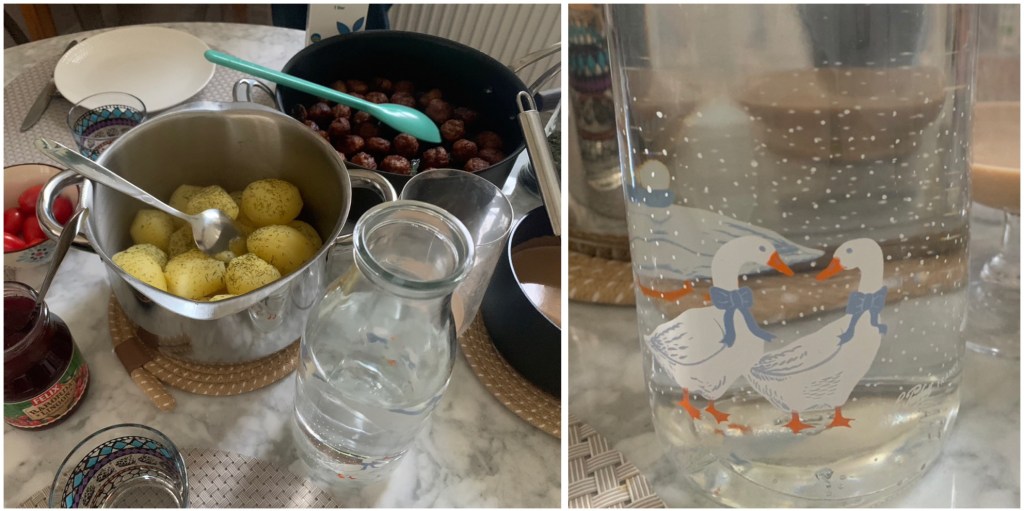
Once in Trollhättan I got picked up and we went to the supermarket, which always feels somewhat exciting, haha. Funny to see walls of Potatismos and Lingonsylt being sold in buckets. And this is kräftskivor (crayfish) season, so there was equipment for it in the supermarket..
The start could not be better with Swedish husmanskost: köttbullar potatoes!!
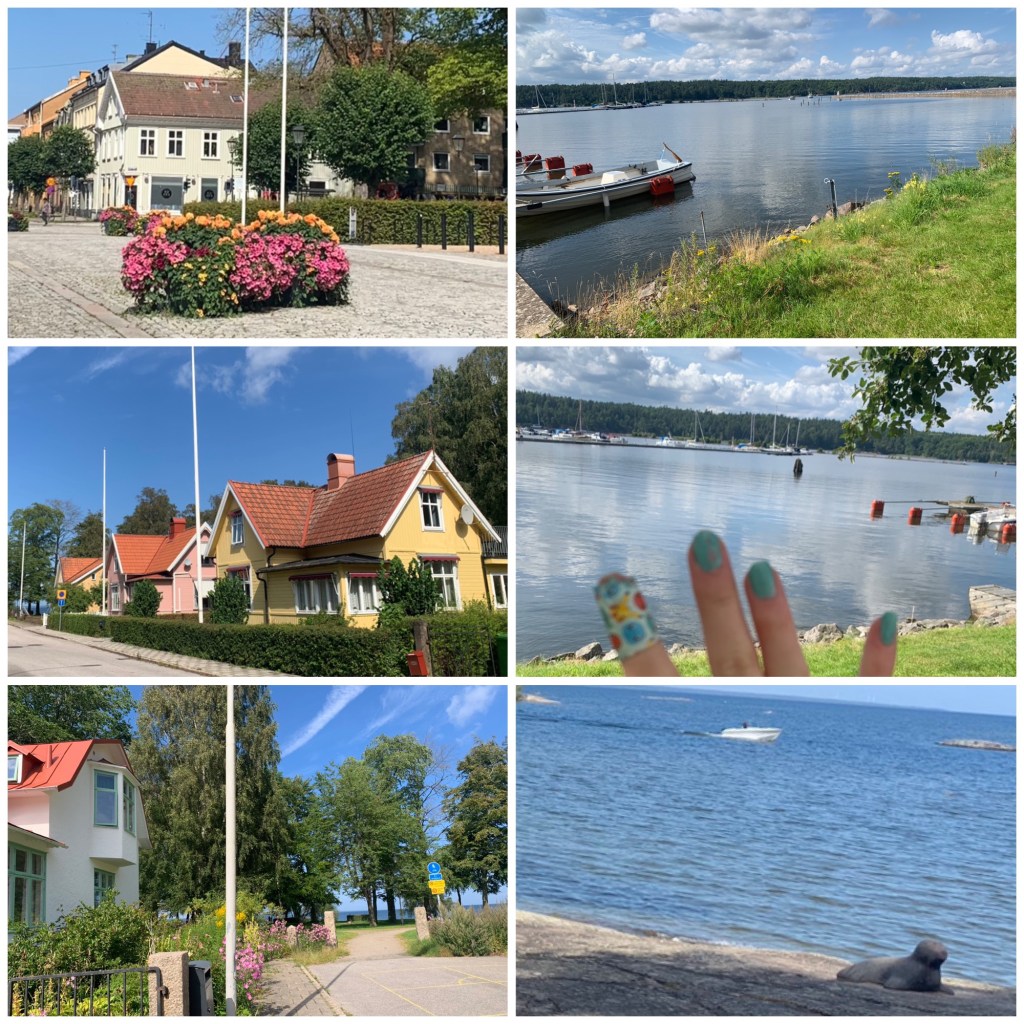
Chill summer day in a Swedish lake town
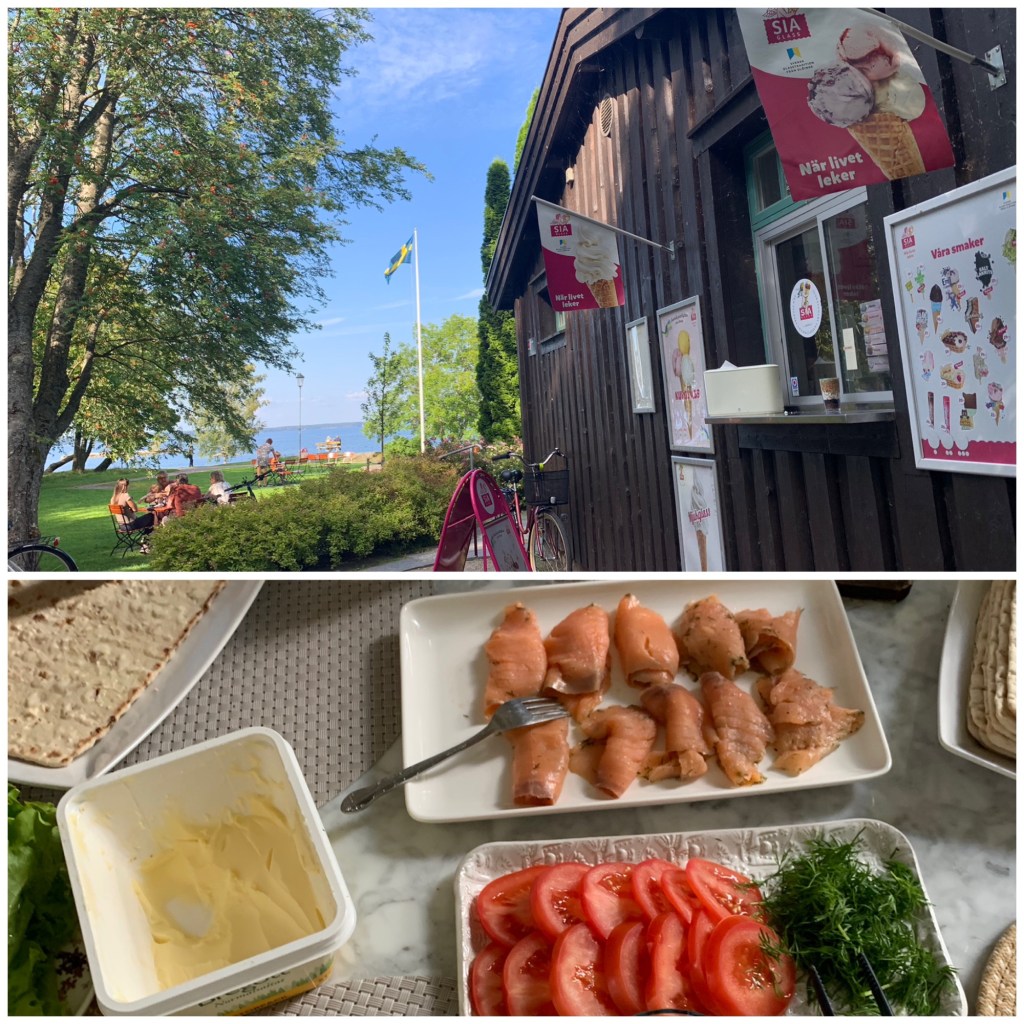
My first Swedish breakfast consisted in bread bread and bread with all possible jams.. And Kalles kaviar! The first full day we went to town and I was so excited to properly fika! Apparently there’s a standard fika pink triangular pastry called Milano.
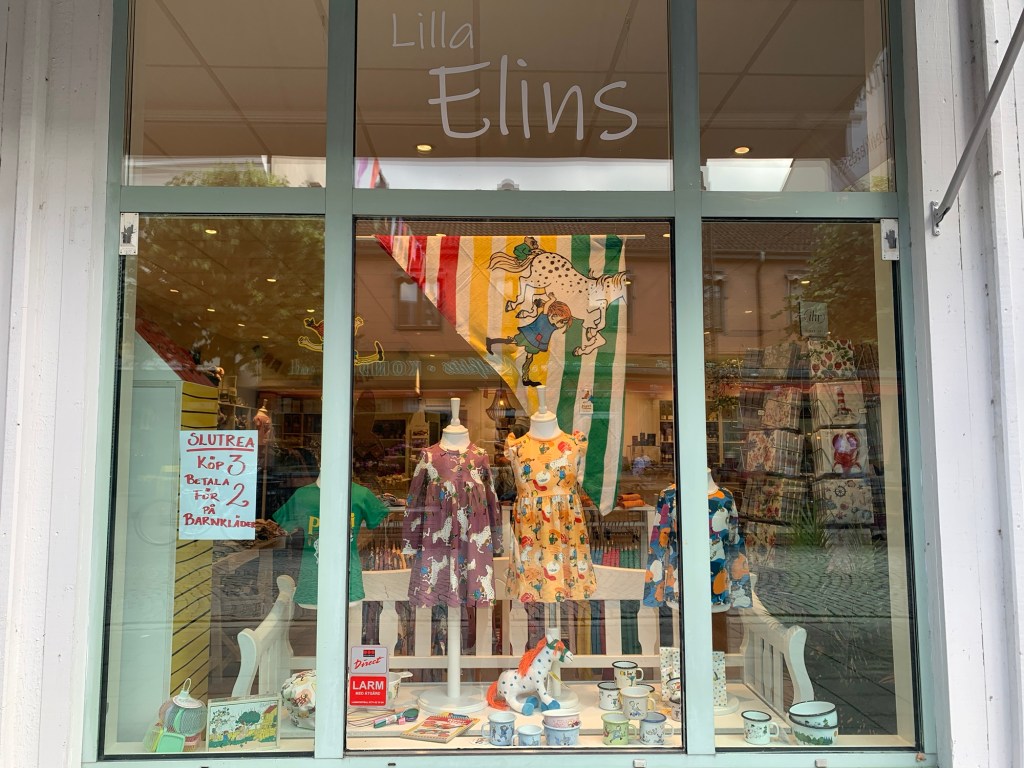
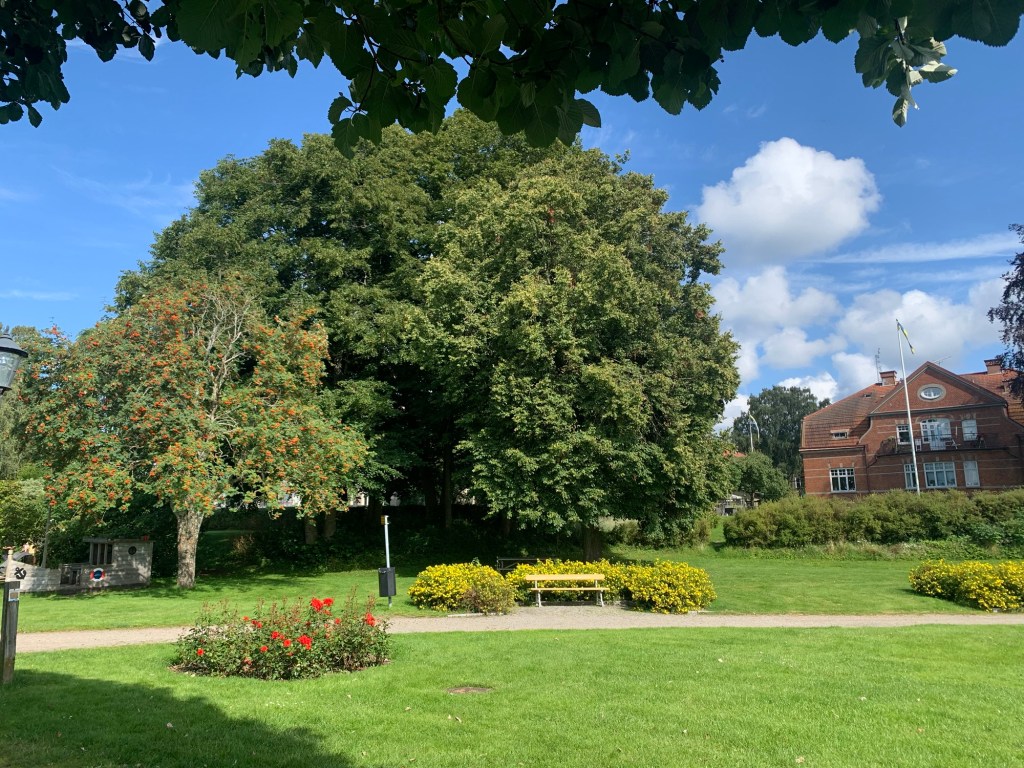
Afterwards, I walked along the lake (Vänern) and in town, it truly felt like I was inside a Pippi Longstocking’s episode, it felt somewhat magical, a truly wonderful Swedish sunny summer day. Actually, there was a shop selling a lot of Pippi stuff in town! And a little Emil too..
Dinner was a ‘Swedish Taco’ as I named it, and then we went to eat ice cream – my friend got an Emil blueberry one from SIA, but I was craving a 88, which we got later at the supermarket.
Trip to Gothenburg
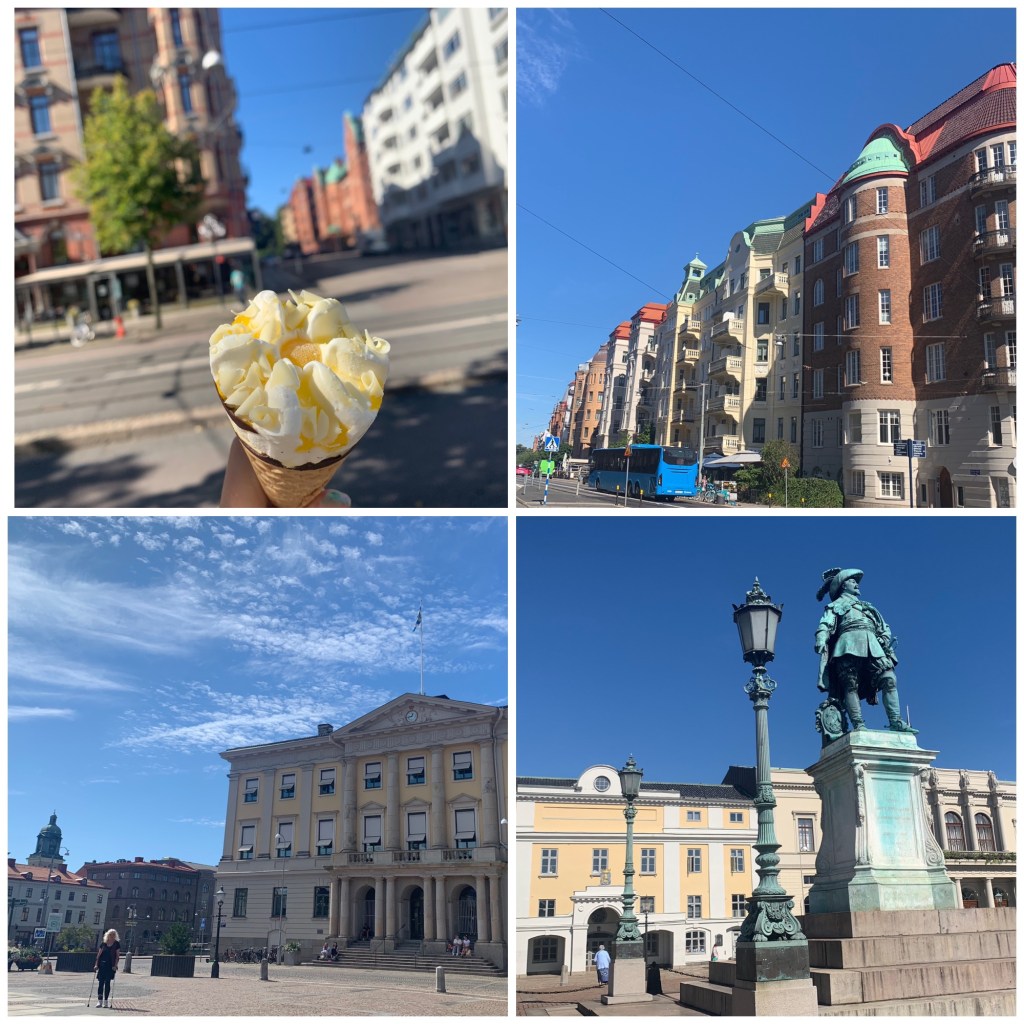
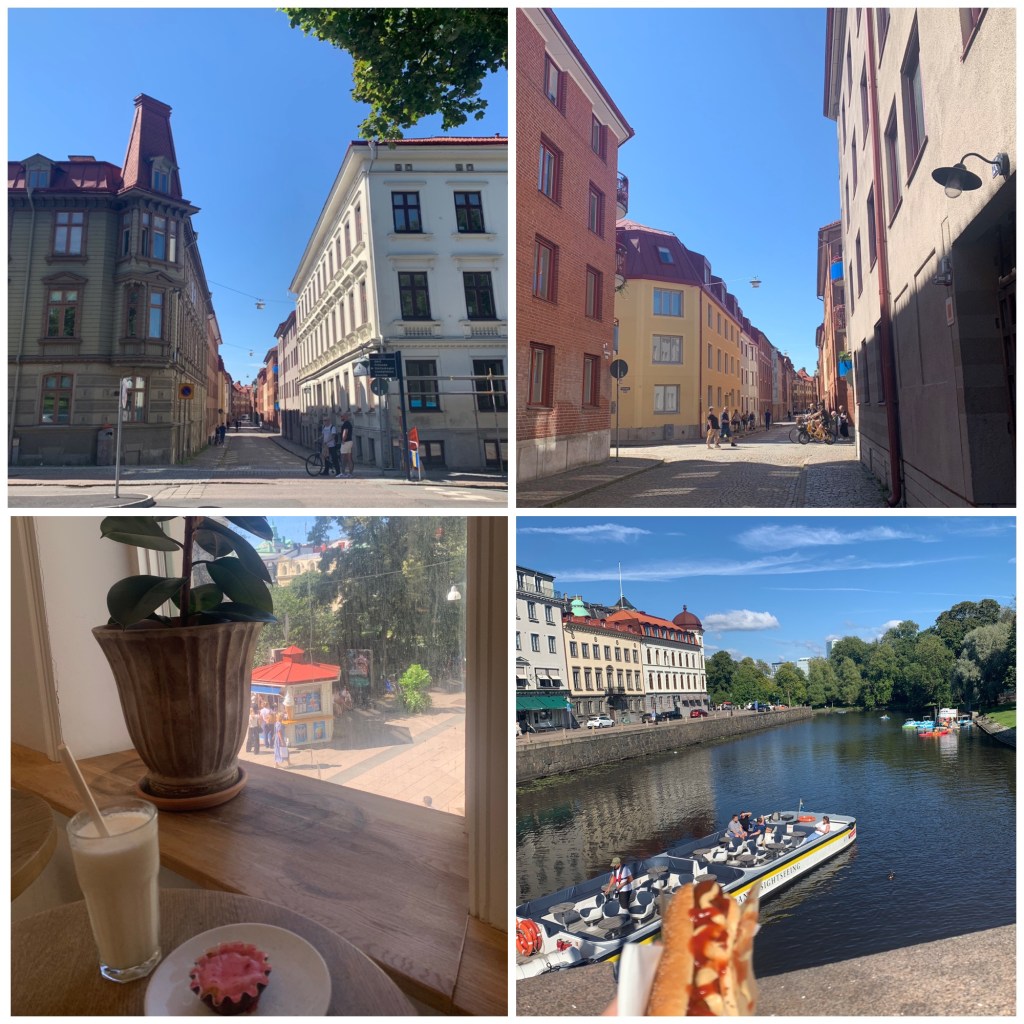
As I was reasonably close to Sweden’s second city, I obviously wanted to visit it. When I arrived to Gothenburg I did not quite understand in what direction I was supposed to go to to see the centre. I just walked somewhere, beginning with another ice cream off my list, a lemon cornetto – I also love lemon-flavored things, by the way…
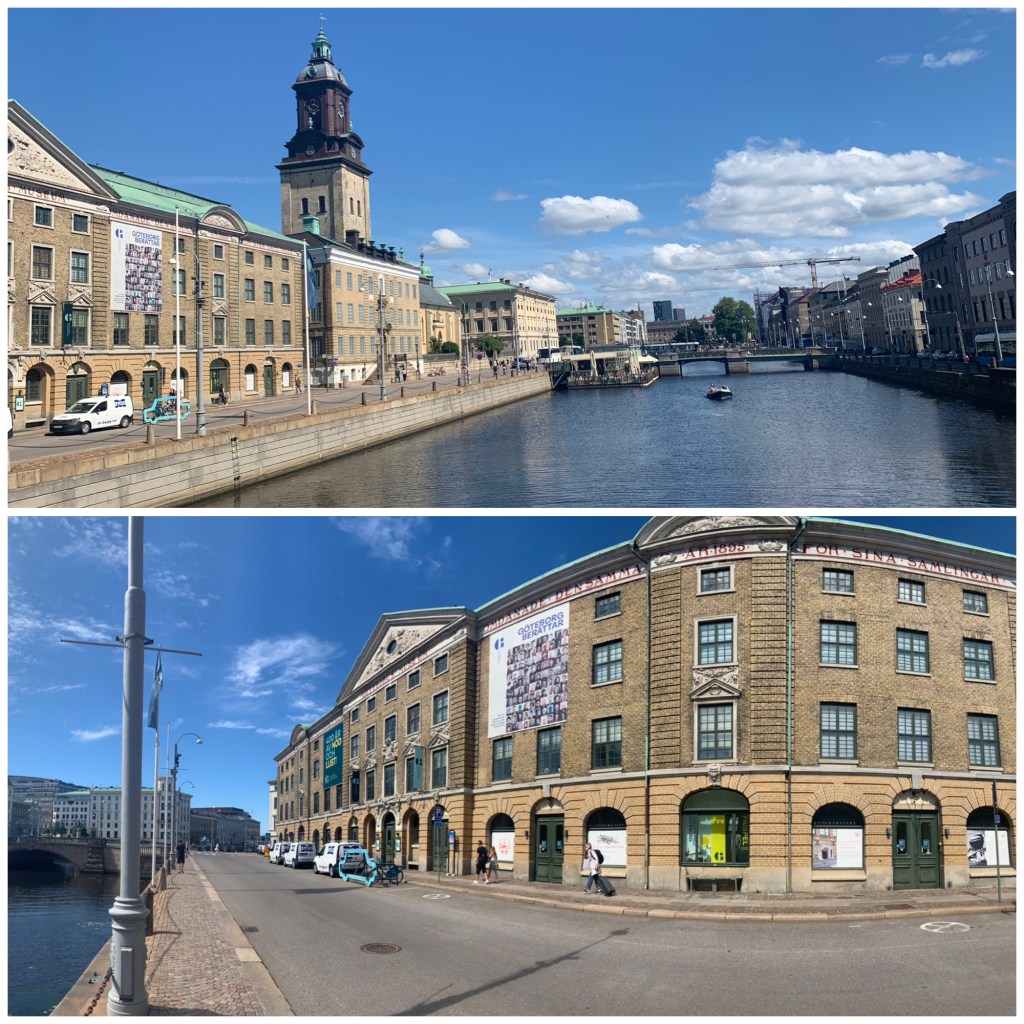
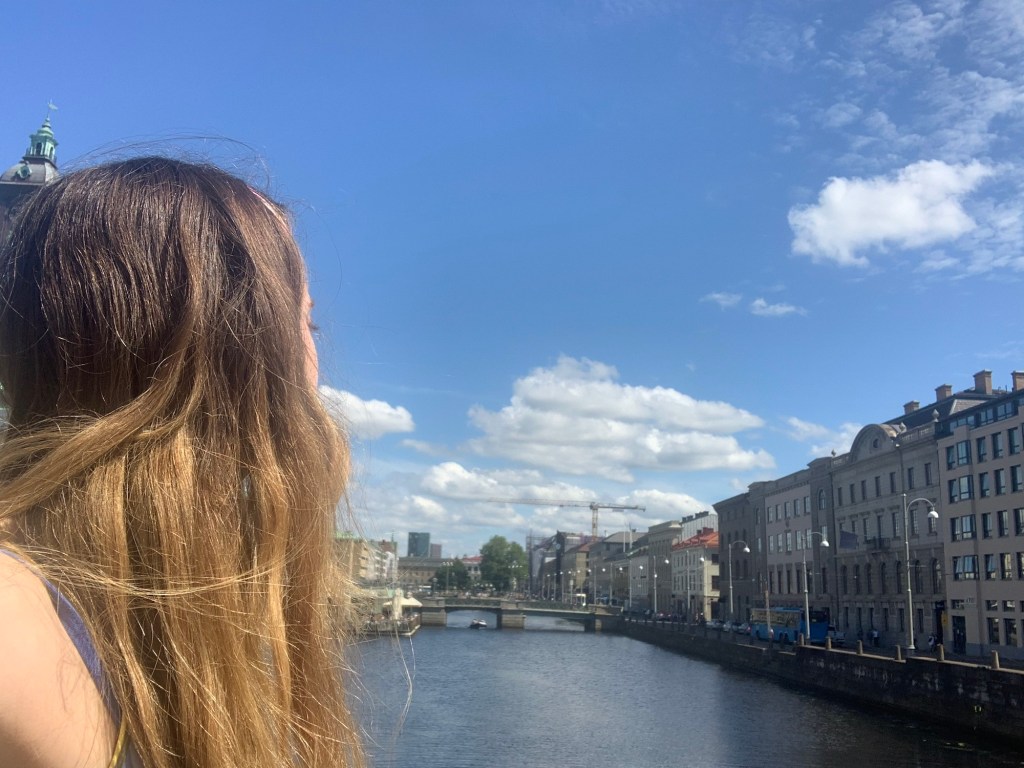
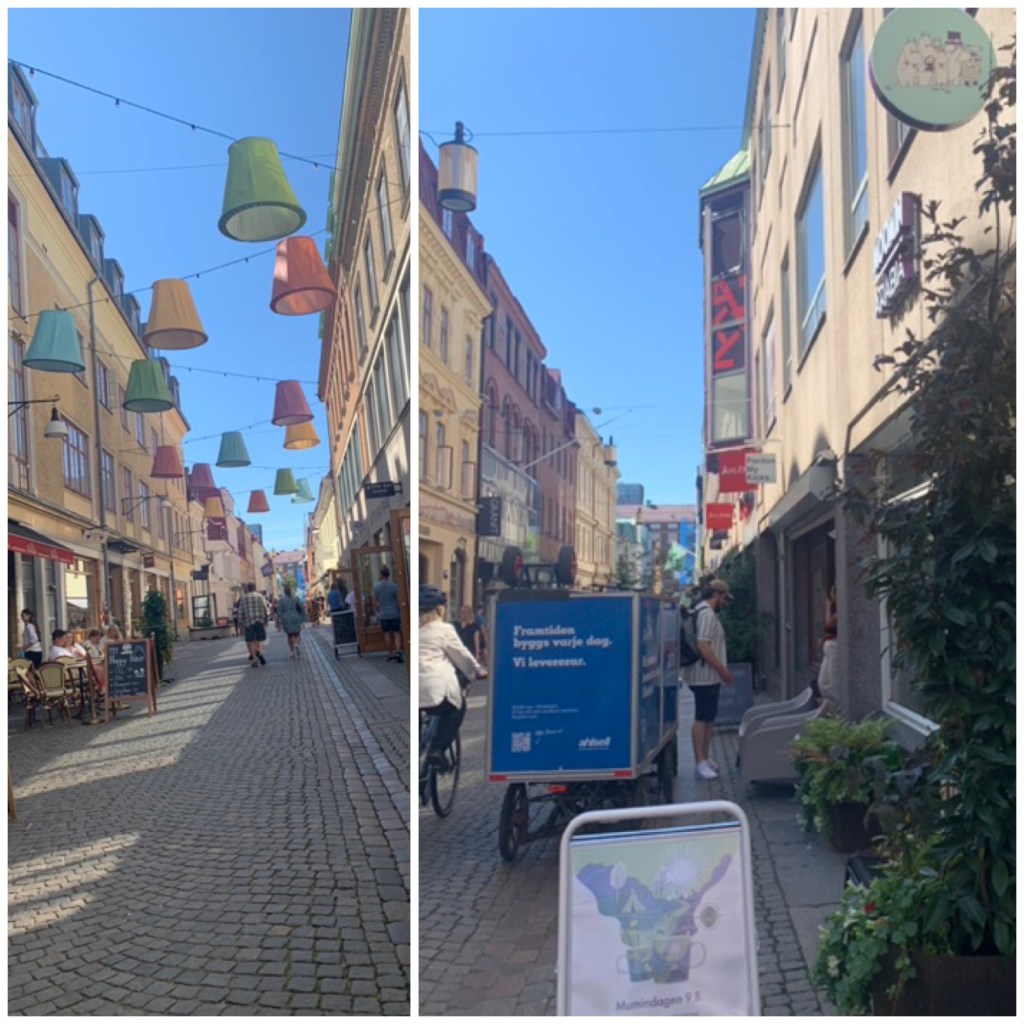
I walked around, ended up in the harbour, then somehow got in the actual city centre, got postcards at a bookshop and I admired bakeries/cafés, posponing a fika break for later…
After some time i stumbled upon a small library, which is always cool, but this was a godsend as it had a WiFi connection and sockets under a table to charge my phone…that probably saved my day.
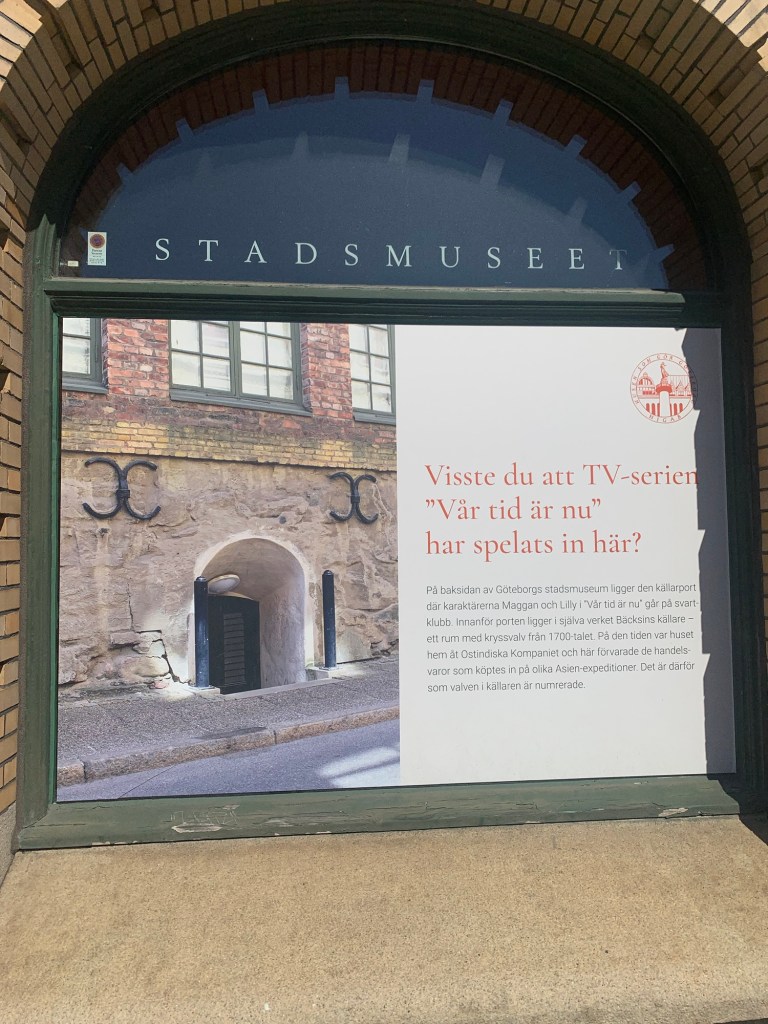
I saw the city’s museum, Göteborgs stadsmuseum, while walking, and decided to head back to it after the library.
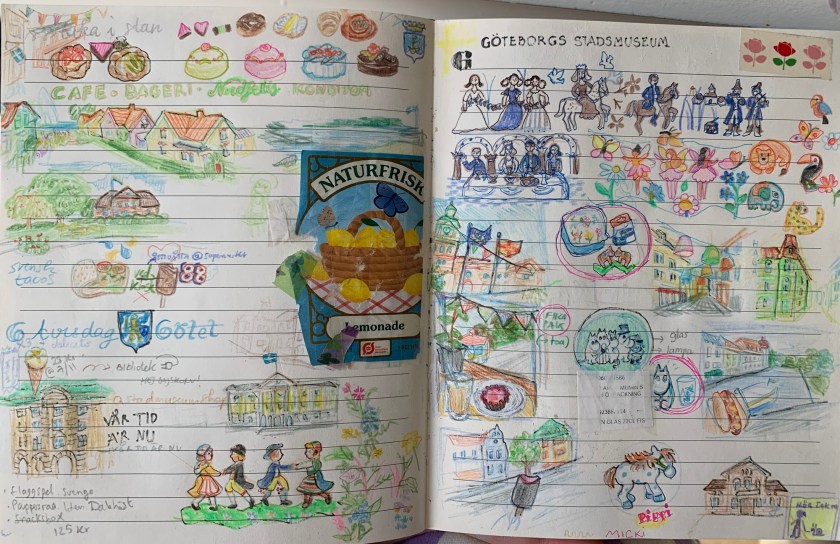
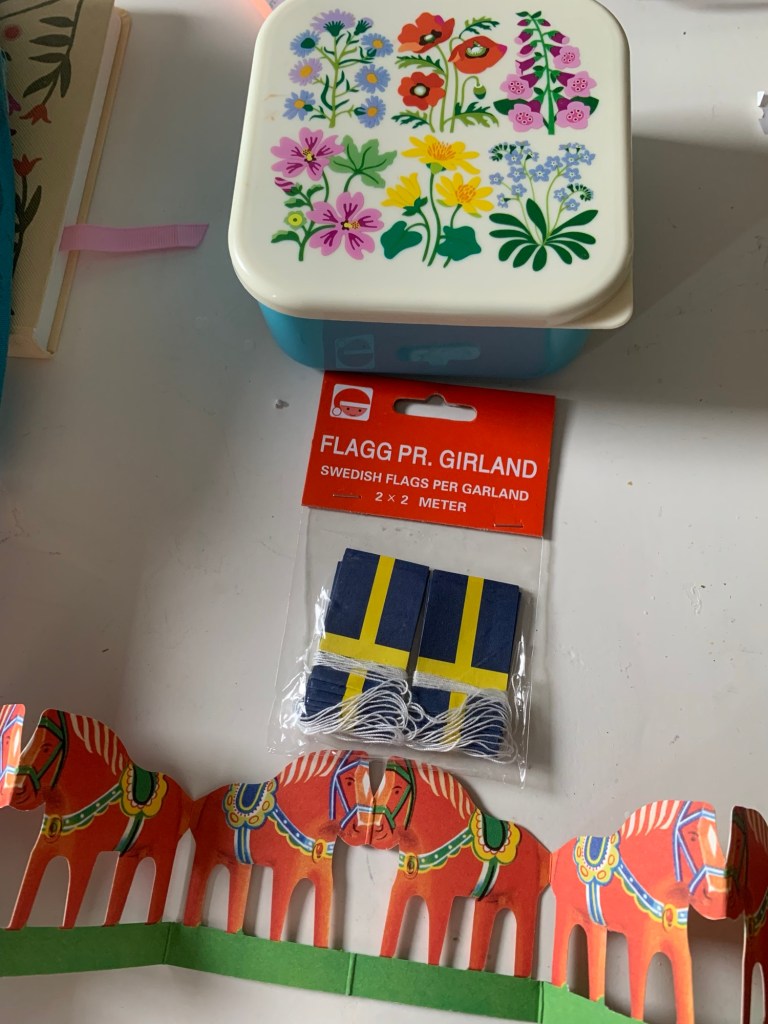
The TV series Vår tid är nu was filmed there! I watched it on Netflix in 2021! I did not have time to visit the museum, but I followed my friend’s advice and went straight to the museum’s shop, which did have nice stuff indeed. Got myself a flower food box, Chritmas tree flag decoration (!) and Dala horse decoration..
..
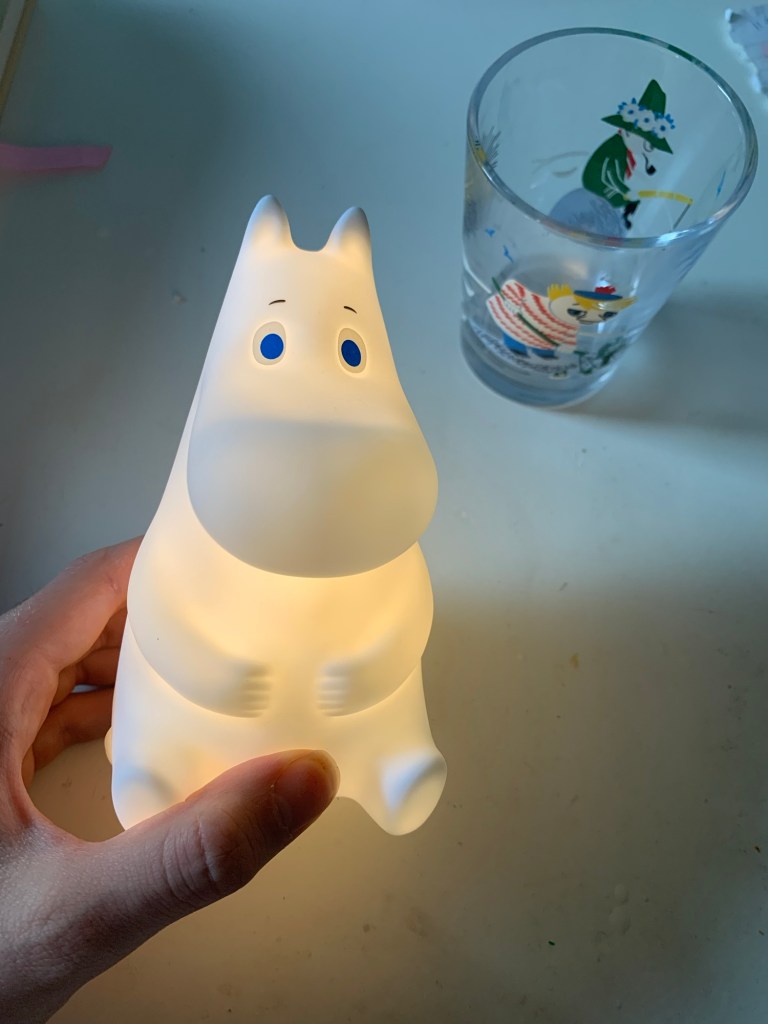
My friend also said there was a Moomin shop, which, whether my wallet liked it or not meant I knew where I wanted to go. I got a lamp and a glass, would have got more but almost € 20 for a glass was enough for this time..
I reaaally needed to go to the toilet, and I first went to the Haga city part, did not really find a café that I felt like sitting in and fika, so I went all the way back to where I came from and ended up getting the smallest pastry – a Mazarin. I also got to charge my phone there, which saved me..
To not have regrets, I got a korv at Pressbyrån…
Liquorice (Lakrits) is king in Sweden, there is liquorice chocolate, liquorice ice cream… And that was the last Ice cream I HAD to try!
Antique and second-hand shops
We went to an antique shop nearby, which had actually quite cool stuff, including old postcards! I ended up not getting anything though.. We went to Uddevalla later to see a second hand shop! I did not see anything I wanted to get there, but at the very end I saw a table flag behind the counter, asked if it was for sale, and I got it for free!!
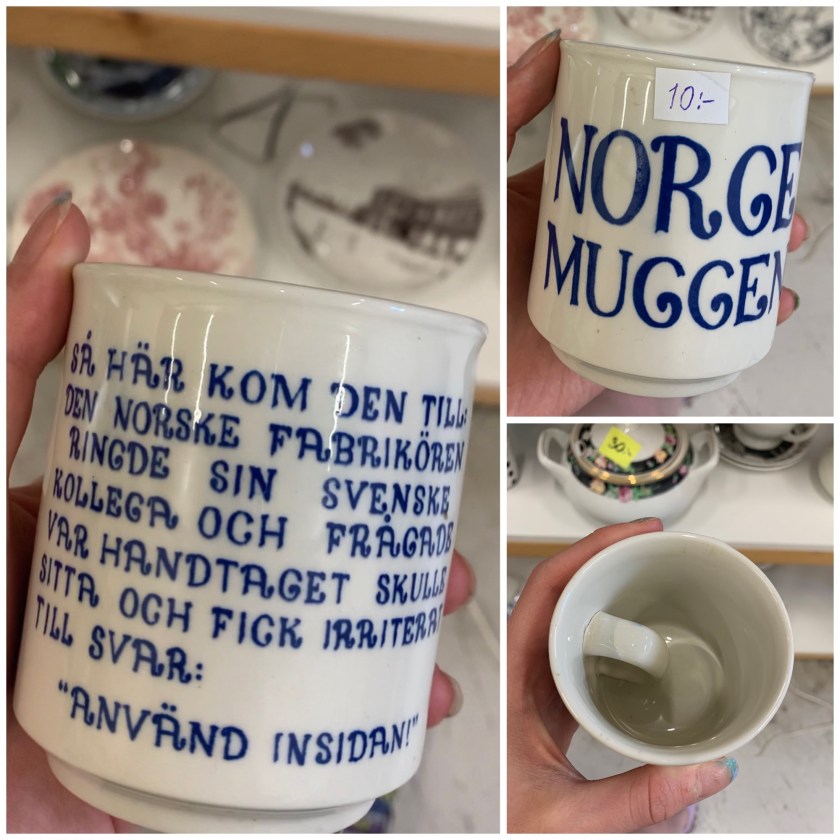
I found among others a wacky mug making fun of Norwegians about using the inside of the mug…
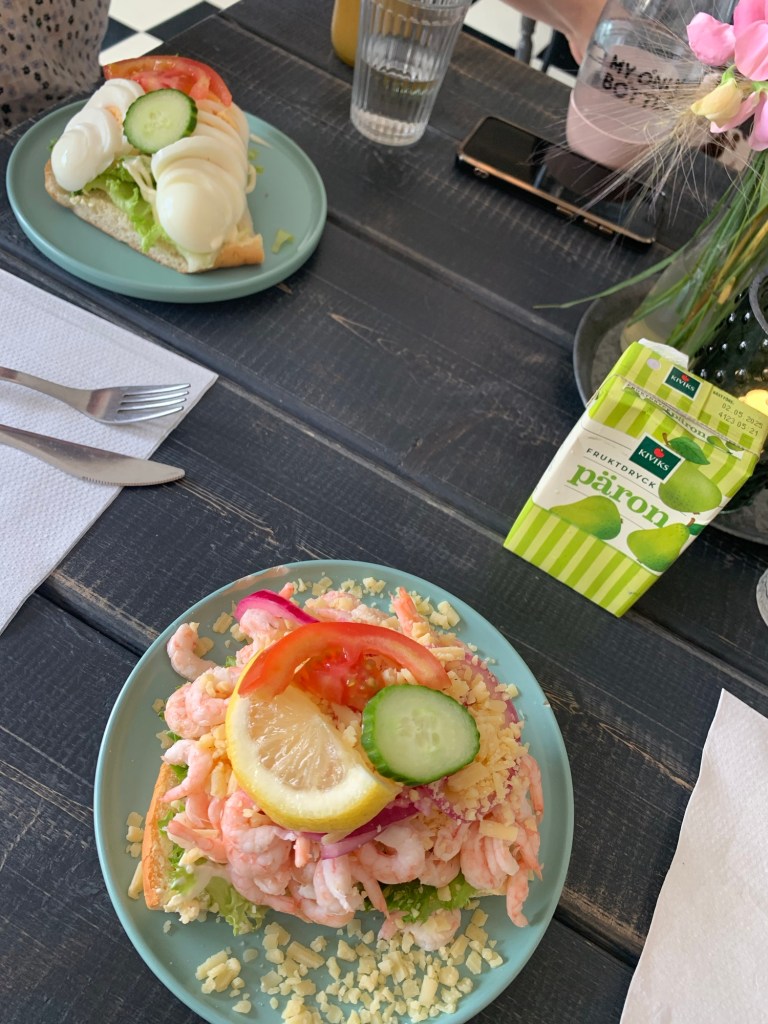
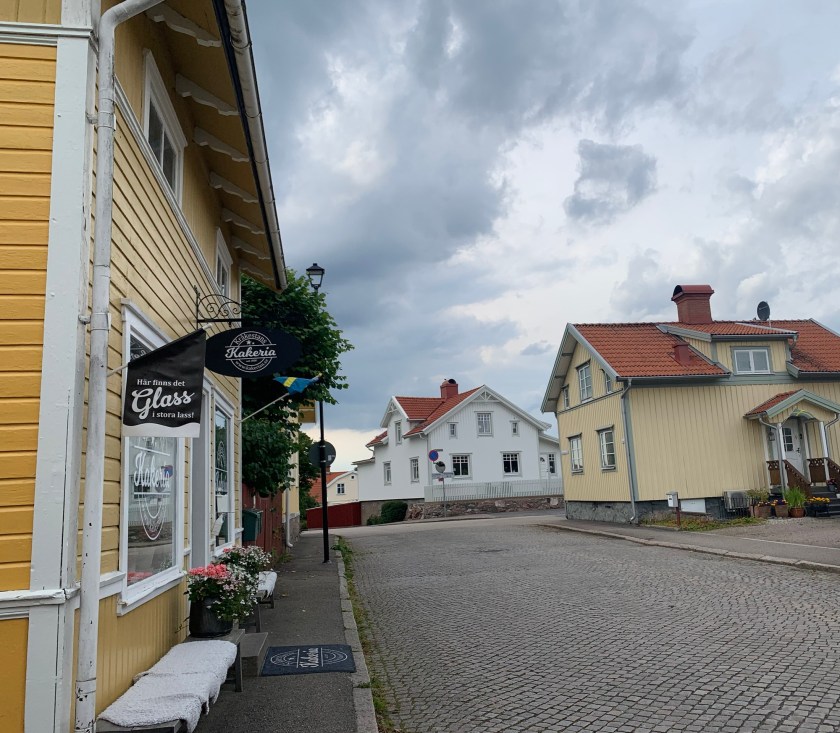
Then it was time for fika again at Kakeria in Kråkestan, and given all the sweet stuff I had been eating, I went for a räkmacka. I do have to say that you can make a macka yourself at home, but pastries and cakes are not quite as easy as placing shrimps and salad on bread…I also happened to go to the toilet in a pizzeria in front of it, which was open but nobody inside. Guess this is possible in the Swedish countryside…
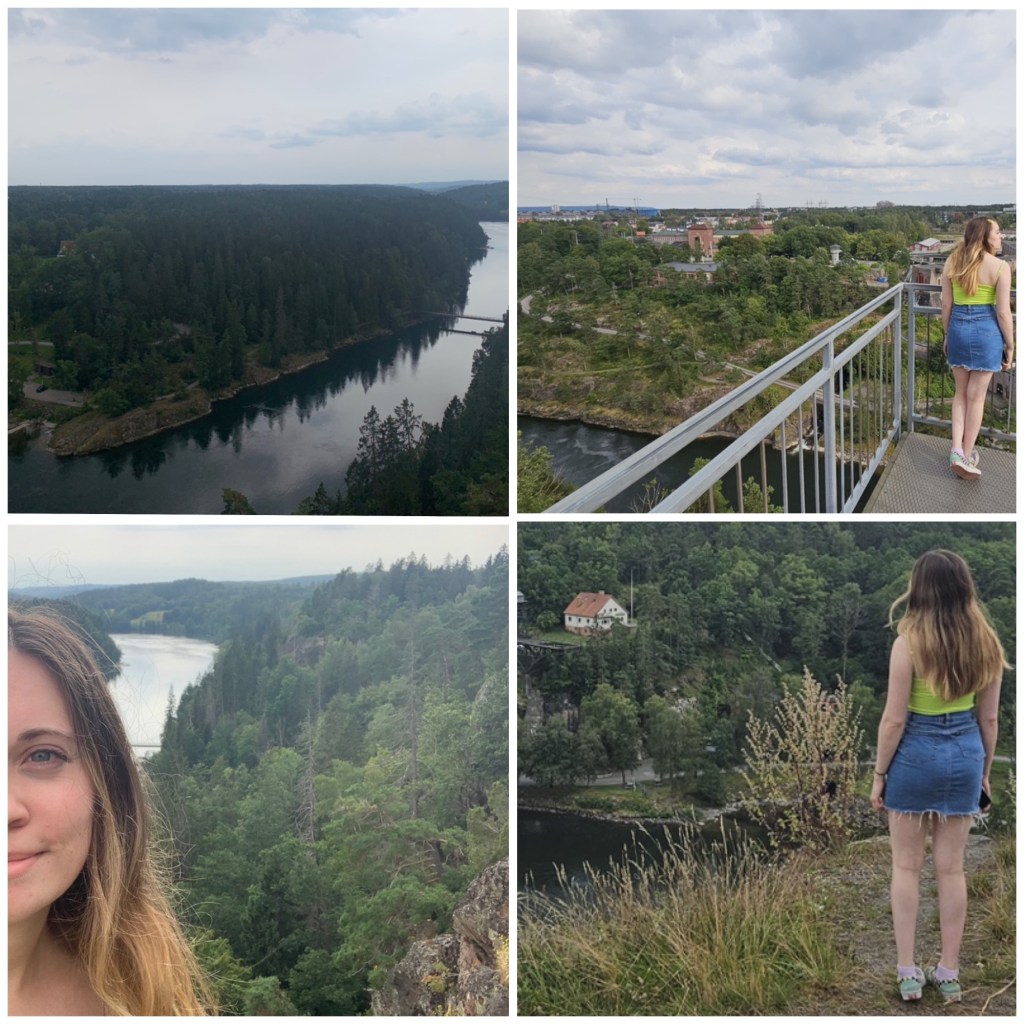
After the fika, we went for a small hike
Then we went to the supermarket, and I got a ‘radioactive’ looking pear Budapest pastry. The classic version was finished, but one of my goals when in Sweden has become to try as much pear-flavored stuff as possible, haha! Another fika classic tried eitherway. The Dinner was korv with potatismos and a billion toppings I added!
Hejdå Pippi, Halløj Danmark
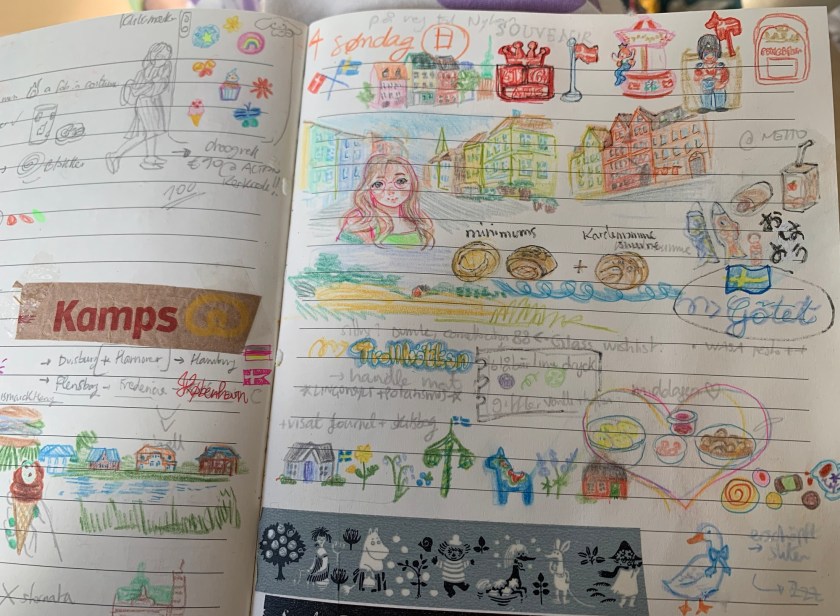
My time in Sweden had come to an end, and being on time at the station, I checked out souvenir shops..Pippi and Moomin souvenirs are as big as Pear and liquorice flavored food in Sweden.. And now I have my own Lilla Gubbe… and got Pippi’s Krumelurpiller candy.
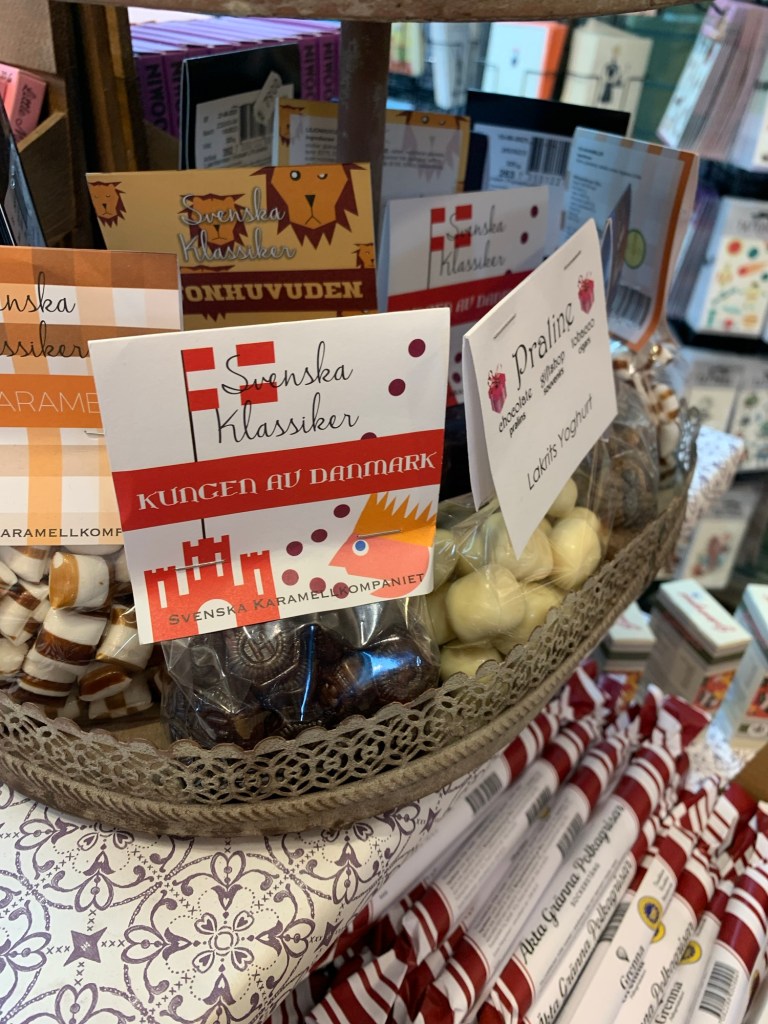
As the Swedes are obsessed with candy, there was also a candy part in the shop, featuring among others the famous polkagris sticks from Gränna, and apparently a Swedish classic called king of Denmark (Kung av Danmark), haha.
Which, brings me to the next part of my holiday, heading back to Denmark.
Arrival and trip to Aalborg
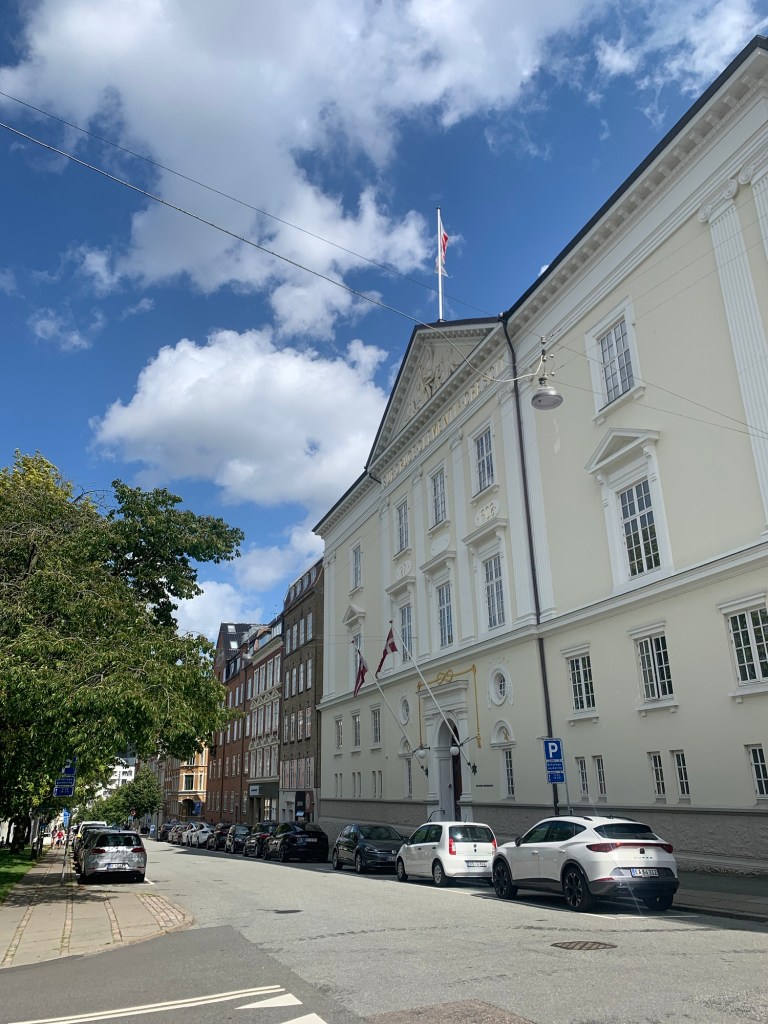
The third and last part of my holiday was 2 full days in Jutland. I took my train in the early afternoon from Gothenburg and got to Aarhus around 22… I already had a trip planned for the following day to Aalborg +meetup with friends in Aarhus
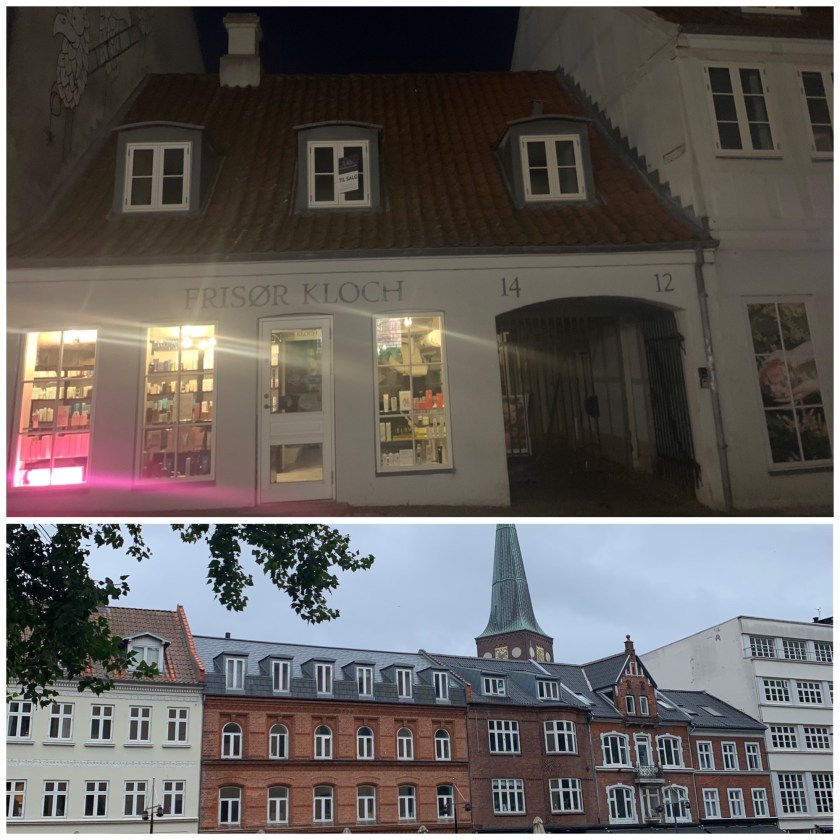
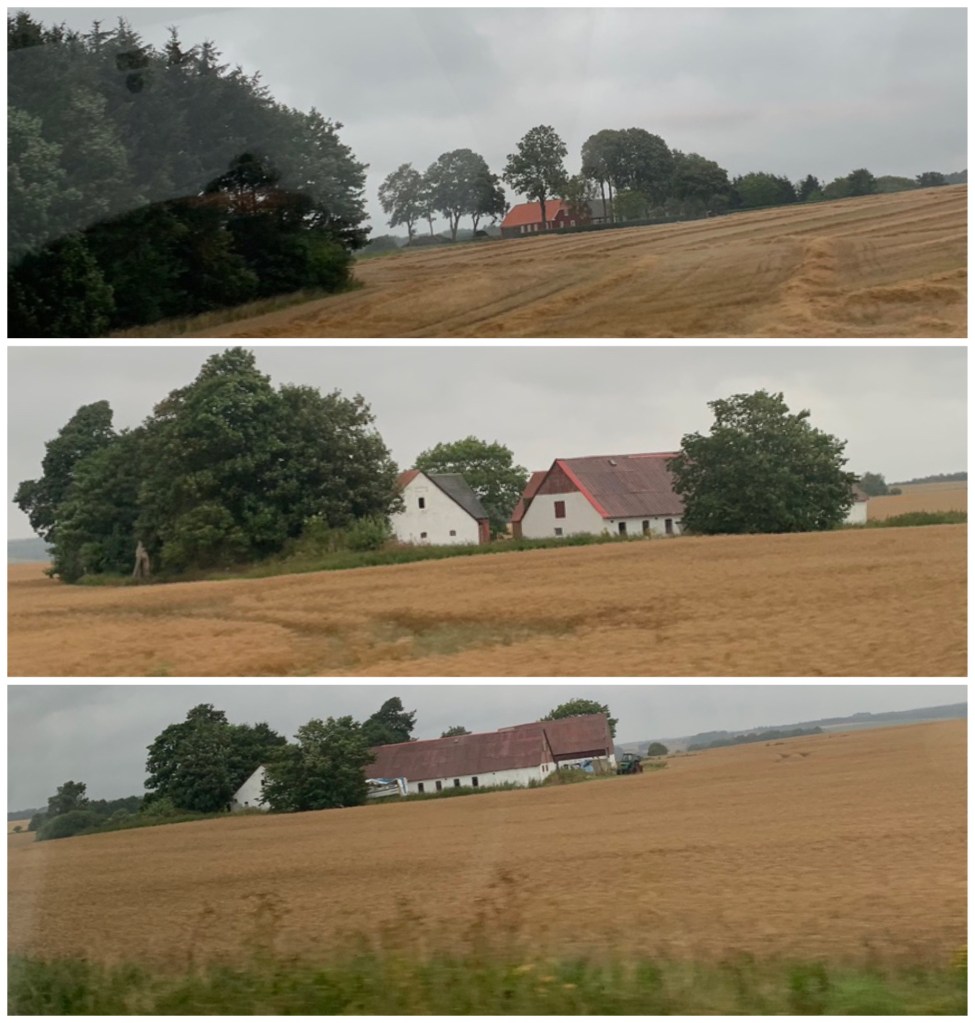
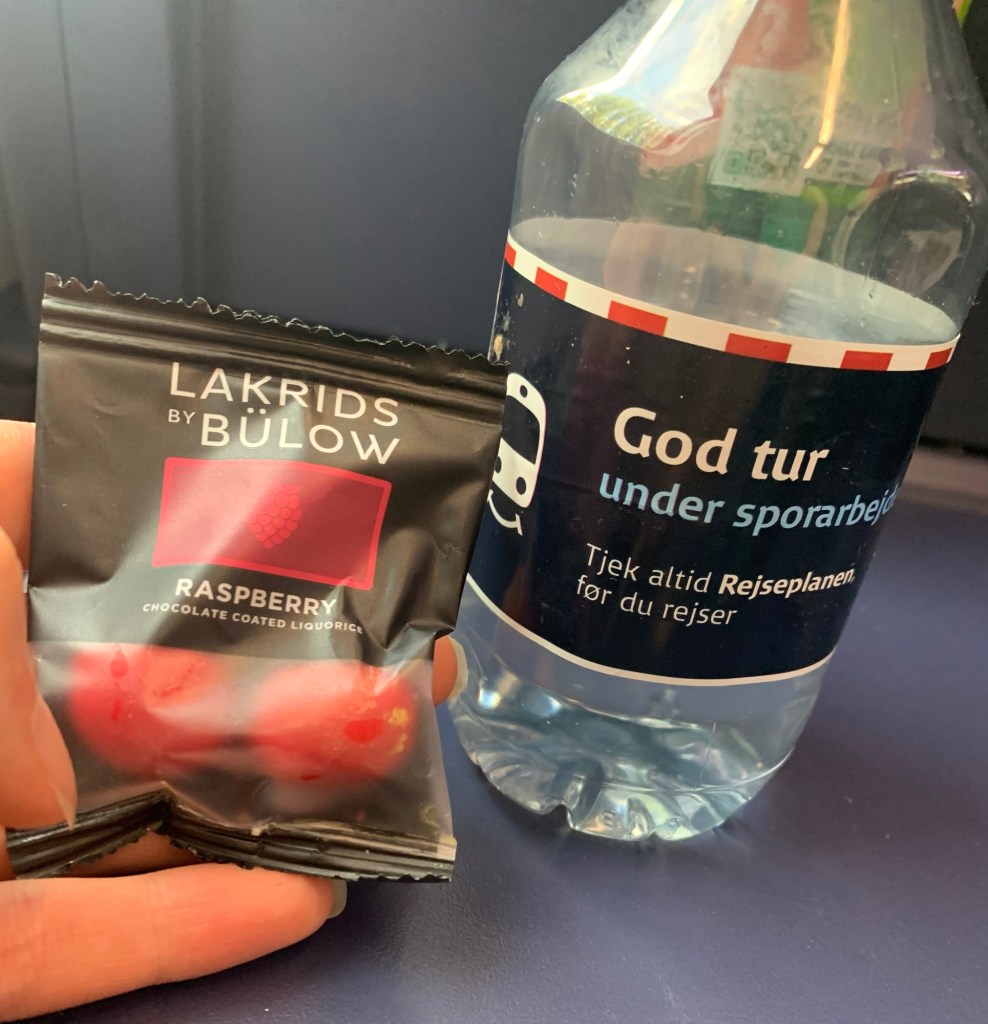
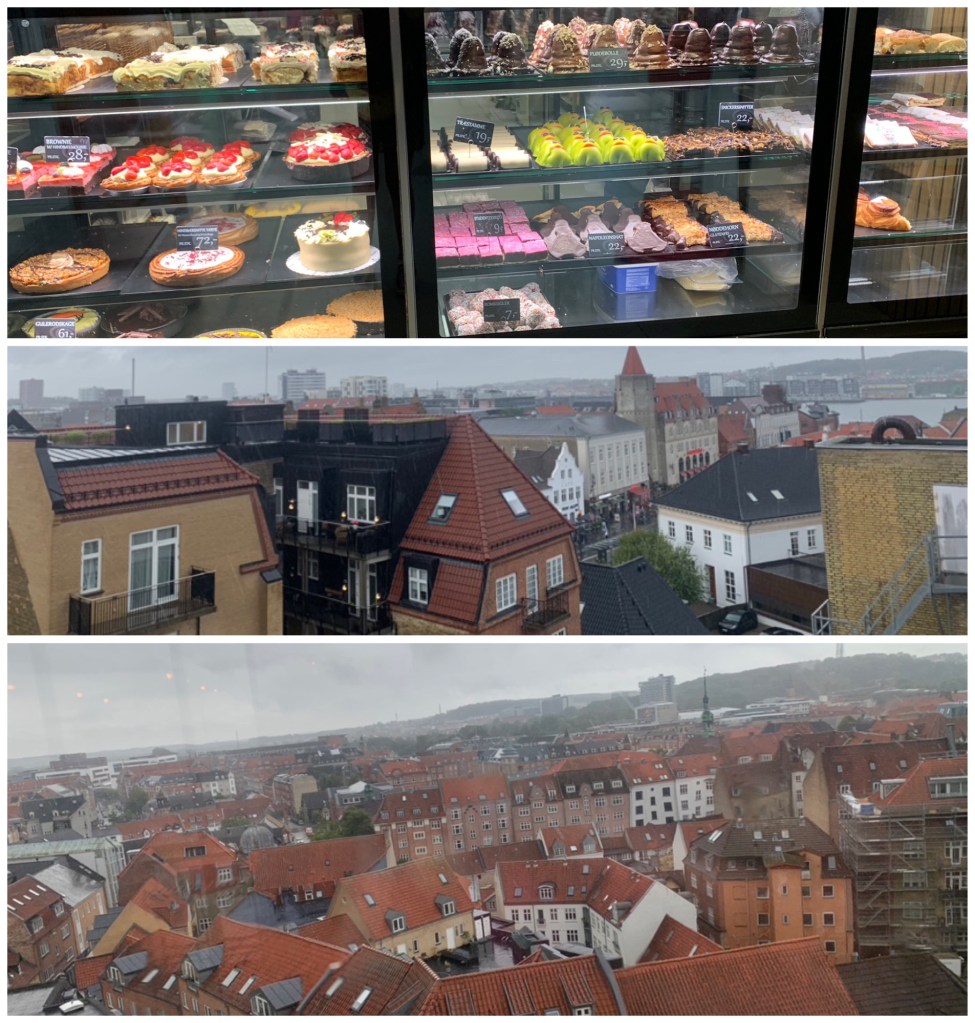
I had never been to North Jutland, so this time I decided to visit Nordjylland’s main city, Aalborg! Instead of train though, I got there with a bus service as there were works going on on the tracks. I got Raspberry/liquorice candy from DSB!
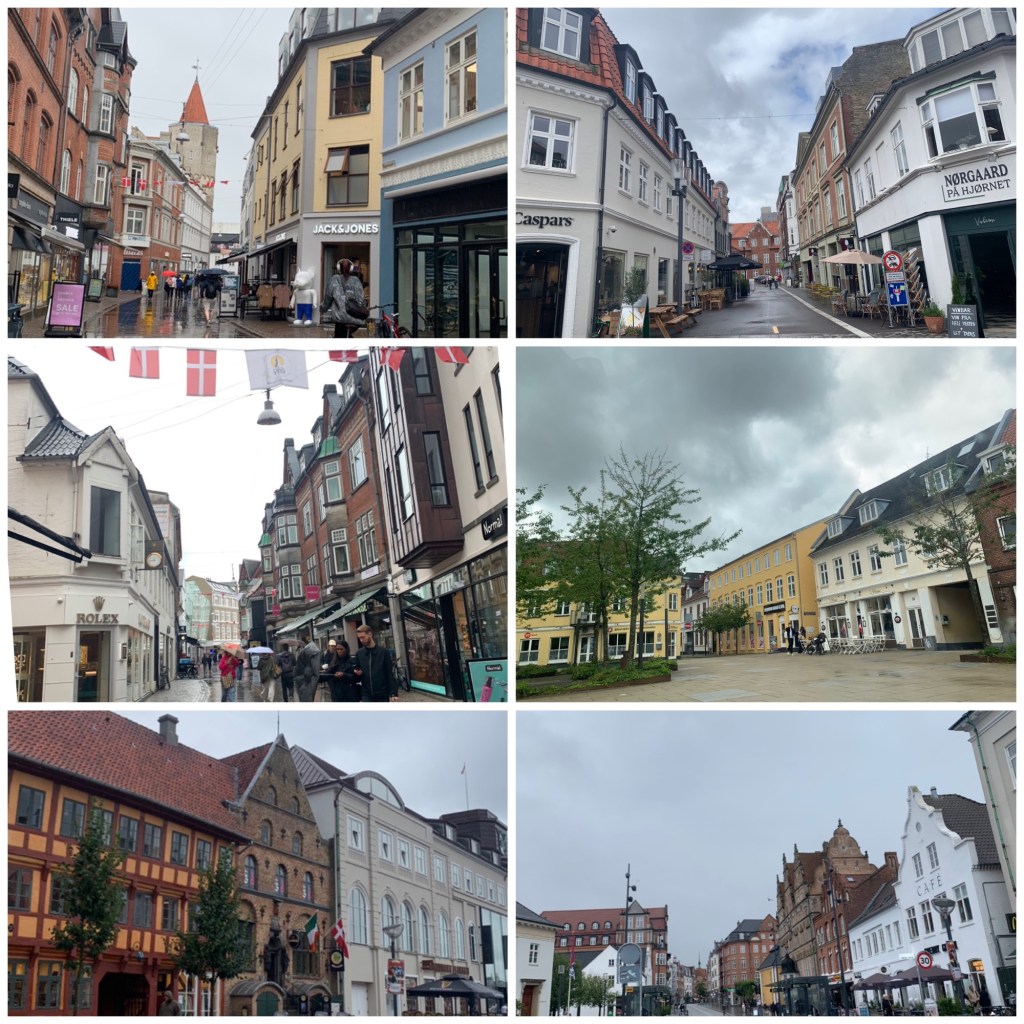
After having been tremendously blessed with the weather in Sweden, in Aalborg it was grey and rainy, I also got a sommerhorn at the shopping centre Salling, which was with marzipan and orange. (Some classic pastries in Denmark are flødebolle, træstamme, marzipan frogs (?), Napoleonshat, nøddehorn, studenterbrød). We went to the rooftop although it was not the best day to enoy it… We had lunch at Aalborg street food. Not Danish food, although I would enjoy that too.
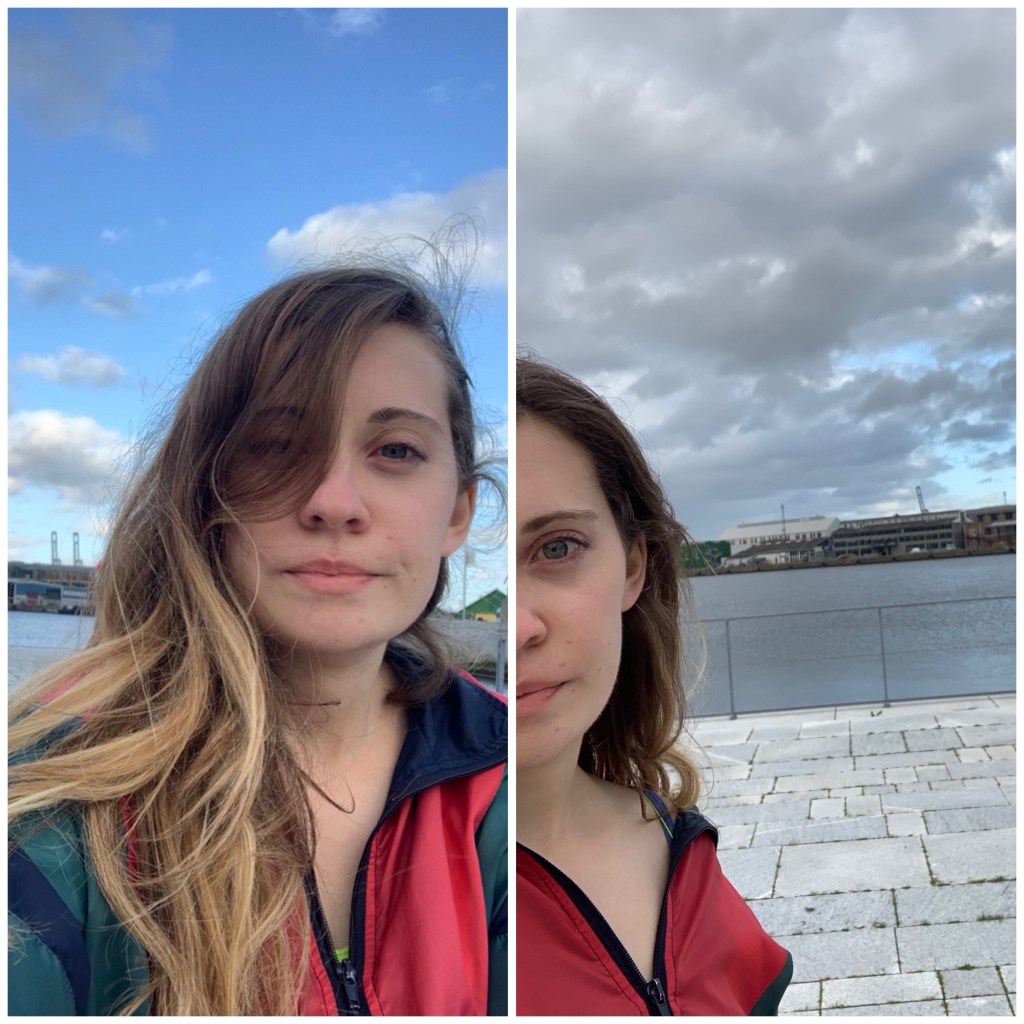
Then I went back to Aarhus and there the sun was shining! So I sat at the dokk1, one of my favourite places!
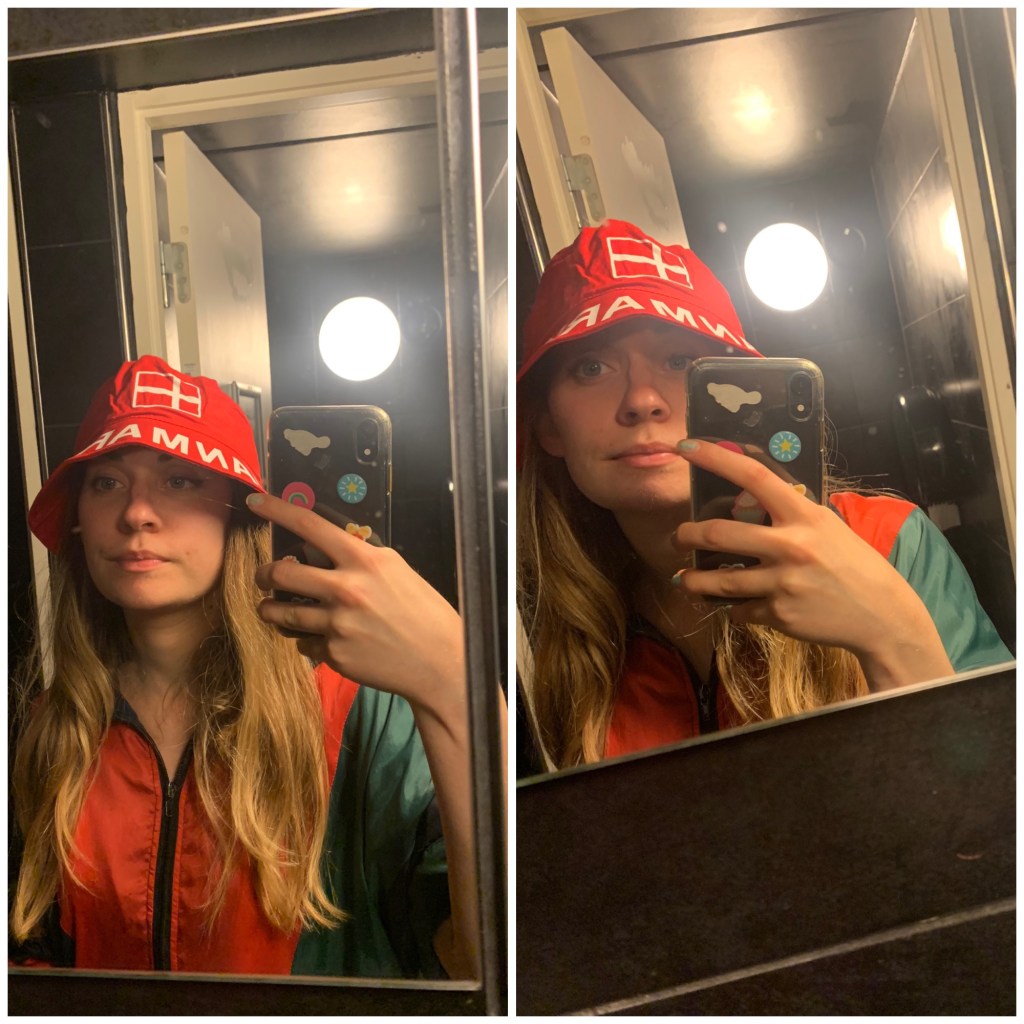
After that, I went to the bar my friend works at and The Danish handball team was playing, so I got a Denmark hat there ❤
ArOS and shopping
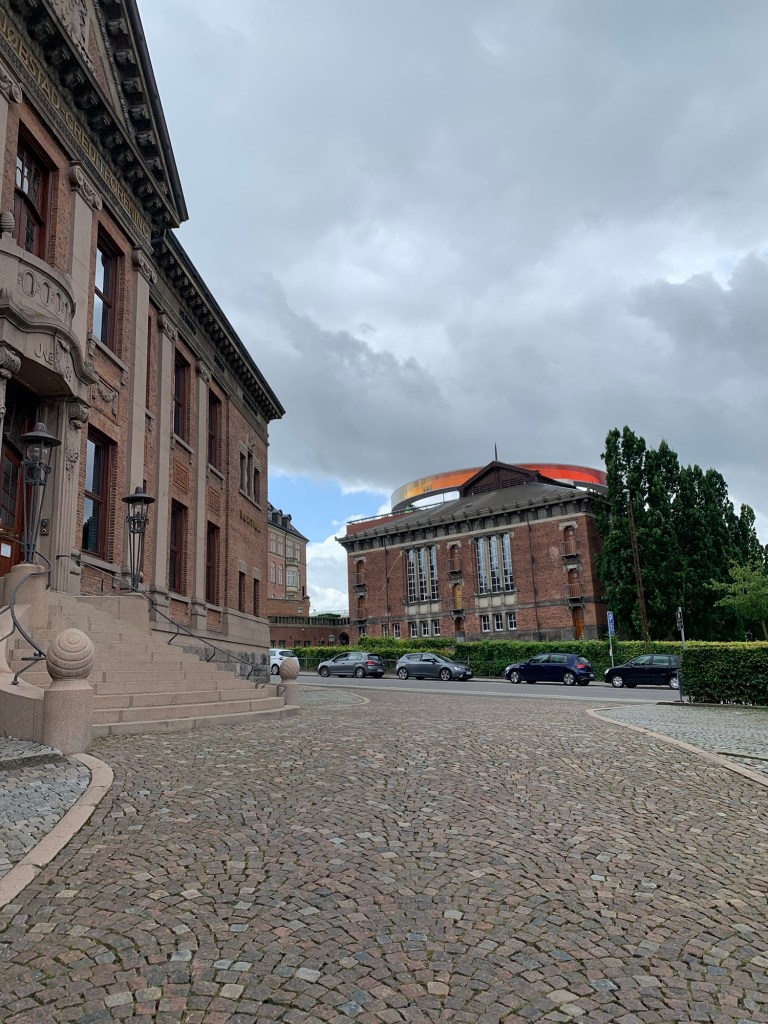
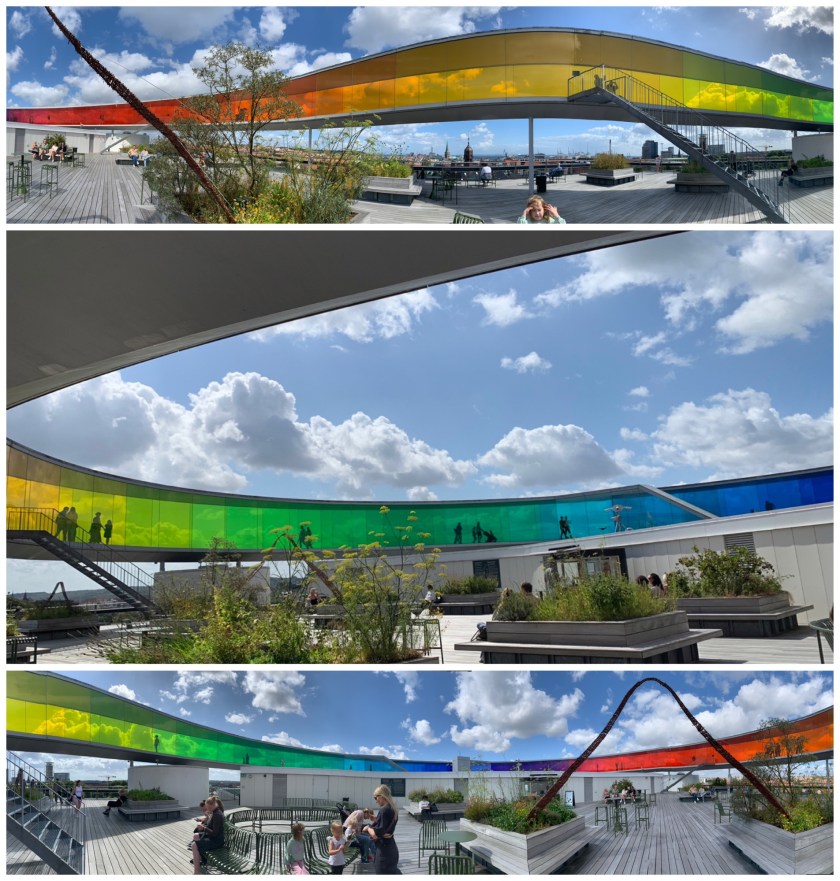
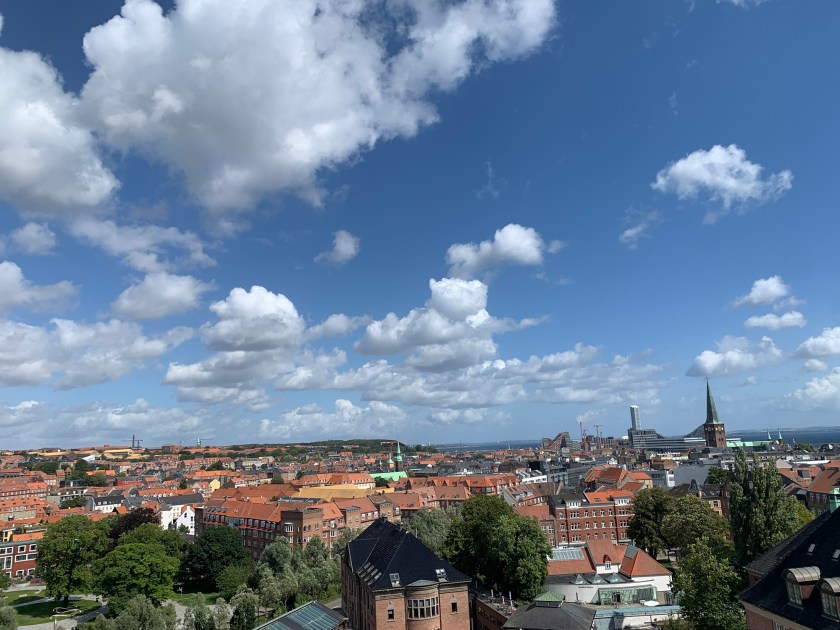
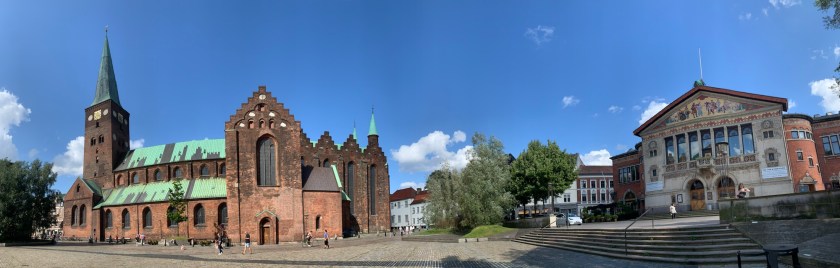
This was the third time in Aarhus, although up until now I’ve barely been there for an entire day, and something I absolutely wanted to visit was the art museum ArOS! Which in other words is the rainbow circle building
The weather was truly perfect, sunny and windy, a blessing
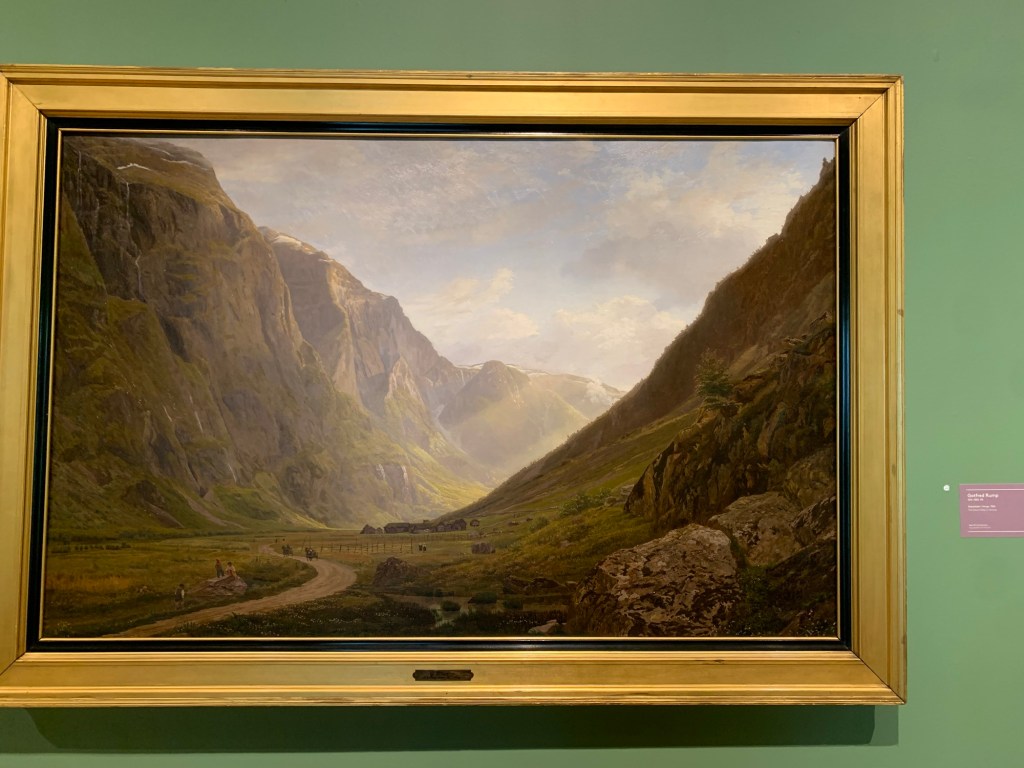
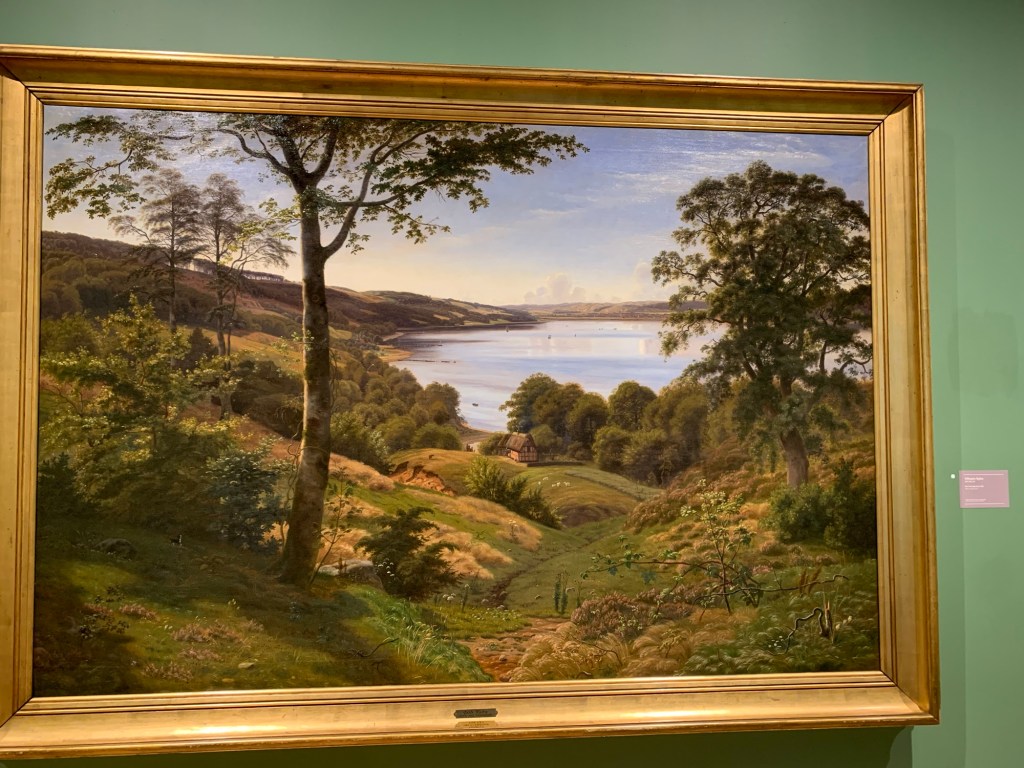
I did not like the modern part that much, but the 1800-ish paintings were the best there, And as follow 2 of my favourites (there were quite a few depicting Italy, but these ones are more relevant to the blog..):
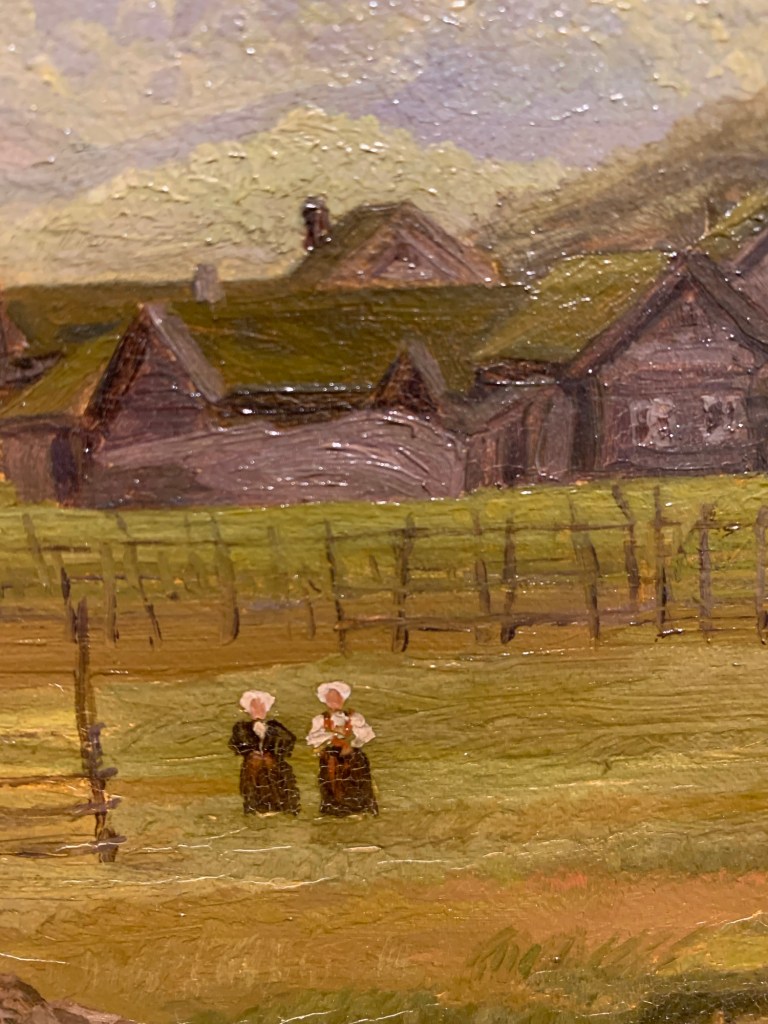
Norway! With tiny women in bunad I spotted. By Gotfred Rump
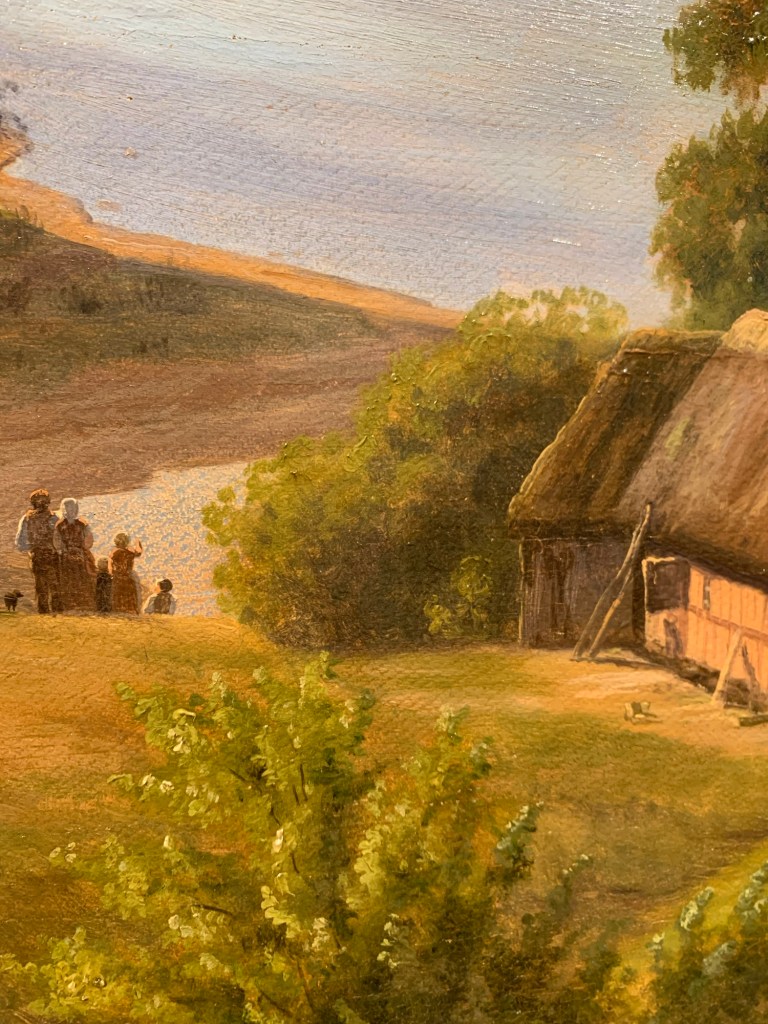
And here’s a Danish hilly coast and half-timbered house by Vilhelm Kyhn.
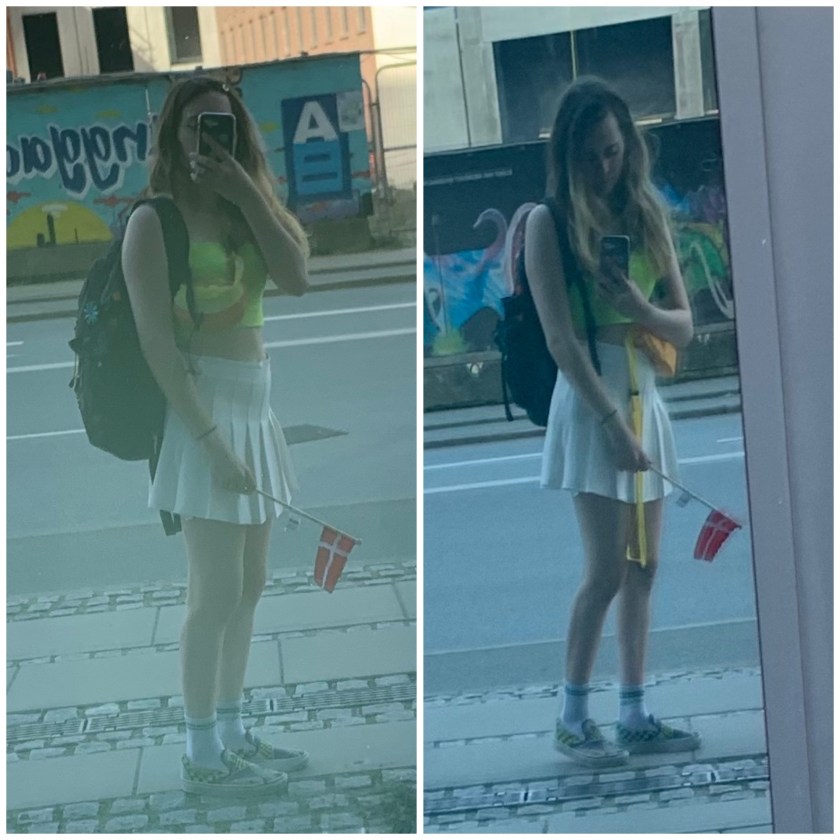
Then I walked here and there in the centre, got 2 books continuing my collection of Tænkepauser booklets by Aarhus University Press; after those about Dreams and Europe I got another two, about Language and Nationality! And then a flag at Søstrene Grene. Oh boy do I like flags…
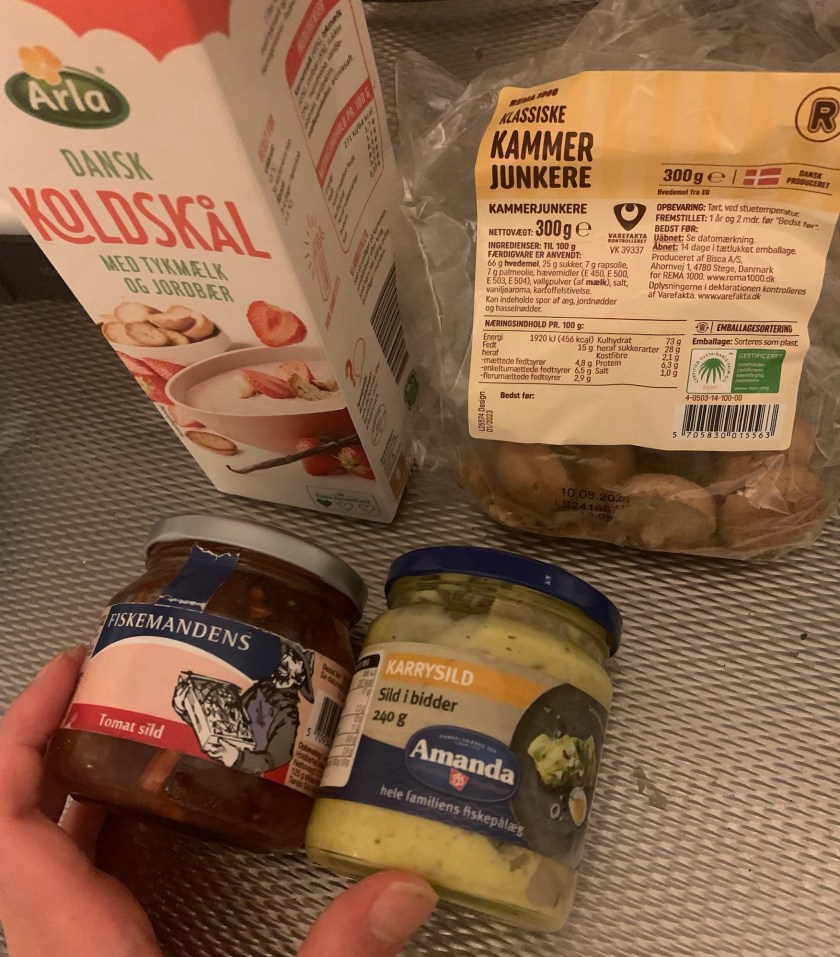
Of course I had on my bucket list getting very Danish grocery stuff: my intention was to just get Karrysild (curry herring) but ended up also buying tomato herring, koldskål and Kammerjunkere, which go together (sour yogurt and cookies?).
I had tried these things in 2021 and despite getting 1L of koldskål one day before taking trains an entire summer day, I had to do this..
After this I had to leave Denmark, and I did not have the best return trip…I also got sick shortly after, probably due to some child I bumped into, but it was fun, I wonder what destination it will be next time!
(Actually, I still have to post about my first time In Sweden last winter, so stay tuned..)!
idioms in Swedish, Finnish, Norwegian and Danish with berries
Berries are a big thing in Nordic countries, and you can hear that in their languages as well! So I have collected a few sayings and idioms involving them in Swedish, Norwegian Finnish and Danish.
Swedish
Smultronstället – Place of wild strawberries – a special place discovered, treasured, returned to for solace and relaxation; a personal idyll free from stress or sadness
Blott Sverige svenska krusbär har – Only Sweden has Swedish gooseberries – There’s no place like home… Originally a quote by writer Carl Jonas Love Almqvist (1793-1866)
Hej hopp i blåbärsskogen! / Hej svejs i lingonskogen tjosan hoppsan hej! – hey hey in the blueberry/lingonberry wood hey hey: a funny surprised expression Swedes may use in a joking way
Norwegian
Det er bare blåbær – It’s just blueberries: it’s not a big deal/it’s a piece of cake
Være på bærtur – To be picking berries: being completely lost/wrong.
Finnish
Oma maa mansikka, muu maa mustikka – our land strawberry, other land blueberry: No place like home, here too 🙂
he ovat kuin kaksi marjaa – they are like two berries: they look very much alike
se maksaa mansikoita – it costs strawberries: very expensive
and last but not least paskanmarjat – sh*t berries: bullsh*t
Danish
stikkelsbærben – gooseberry legs: pale, skinny, and hairy legs
et surt ribs – a sour redcurrant: a grumpy person
at give (eller få) en på bærret: to give (or get) one on the berry: to hit or get hit on the face
The ‘anchor’ language concept allowed me to learn Swedish, Dutch, Danish, Norwegian easily starting from studying properly only one language. This approach helps prevent confusion and builds a solid foundational understanding of language structures.
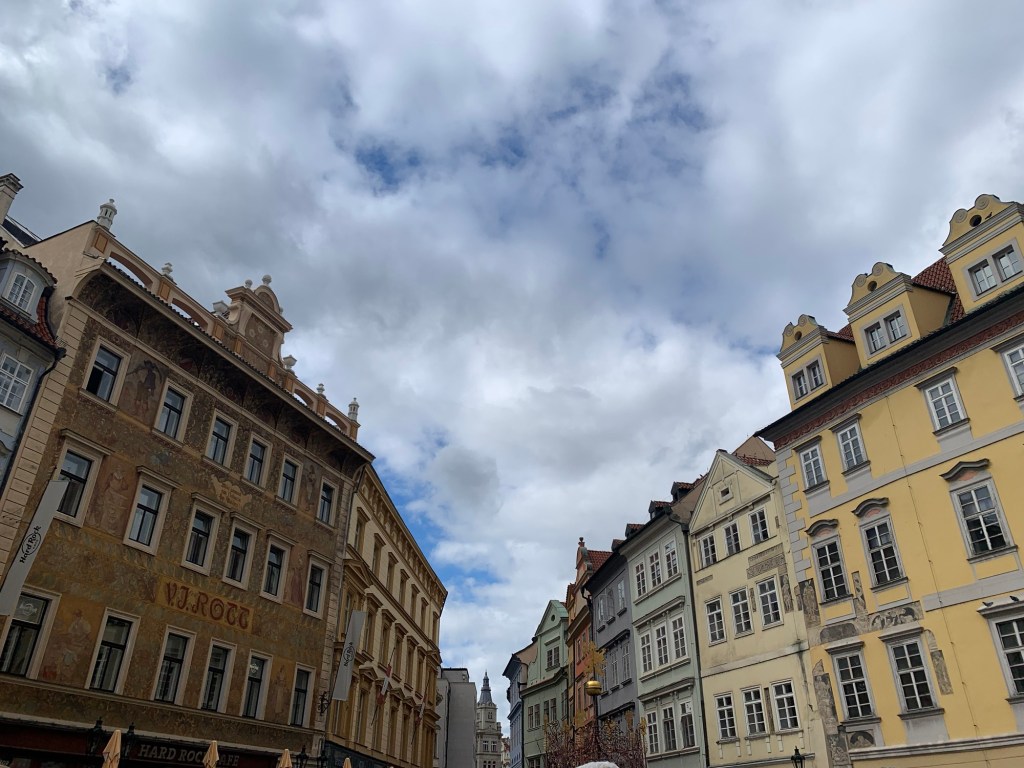
I joined the polyglot gathering in Prague, an event for language lovers with lectures and activities
The Polyglot Gathering is an event for language lovers, which has been taking place in different locations in May each year for about 10 years. By joining you can connect with fellow polyglots (though you do not have to speak multiple languages to join), join talks on the topic and participate to other culture- and language related activities. The last few years, around 800 people participated.
First of all, to be updated about language events you can follow me on instagram at @ chiaraspeaksnordic
I went to the Polyglot Gathering for the first time in 2024, In Prague, for just one day. I liked it enough to also join the 2025 and 2026 Polyglot Gatherings in Brno, still in the Czech Republic, but close to Vienna.
Signing up and info Pre-gathering
You can check out programs of past editions, info and such on the Polyglot Gathering website before you sign up, which will mean among others:
Pick the days you will join and pay depending on that. 5 days might seem a lot, but they passed by so quickly and I did not really feel tired (other do though..) you cannot choose to pay for a half day though.
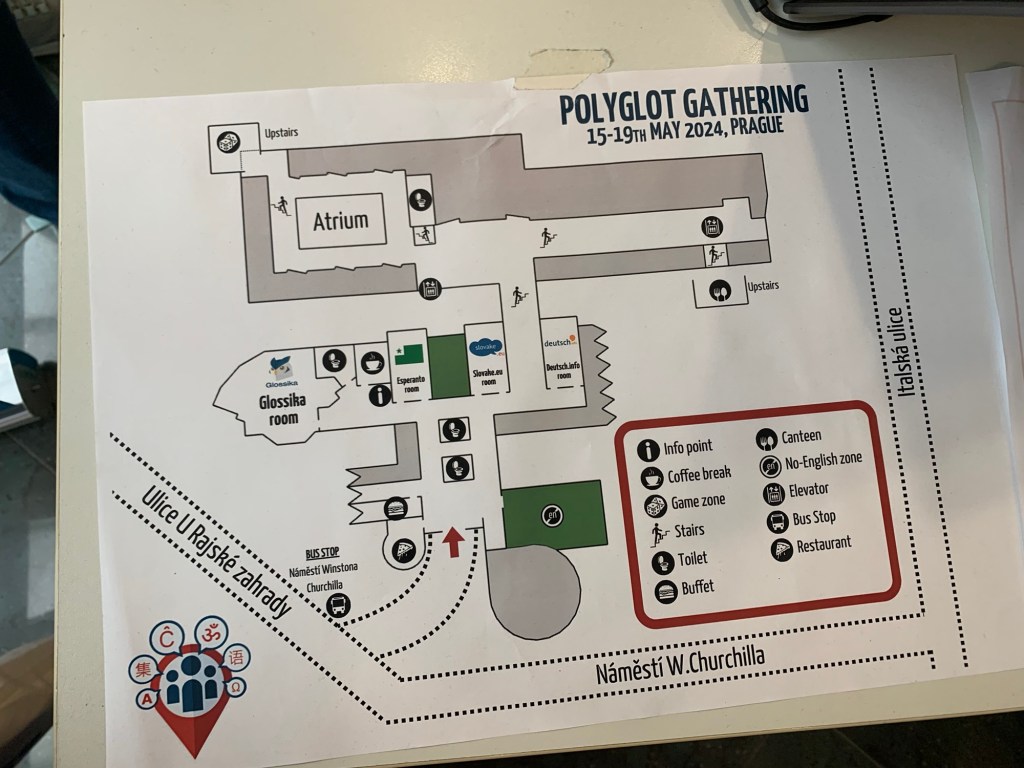
Accomodation: possibility to book via the Polyglot Gathering – either a student dorm or a hotel
meals: In Prague you had to select whether you’d be eating at the venue’s canteen, in Brno you were free to go there or not. You were actually always free, but in Prague you had to pay in advance, so a pity to waste money..
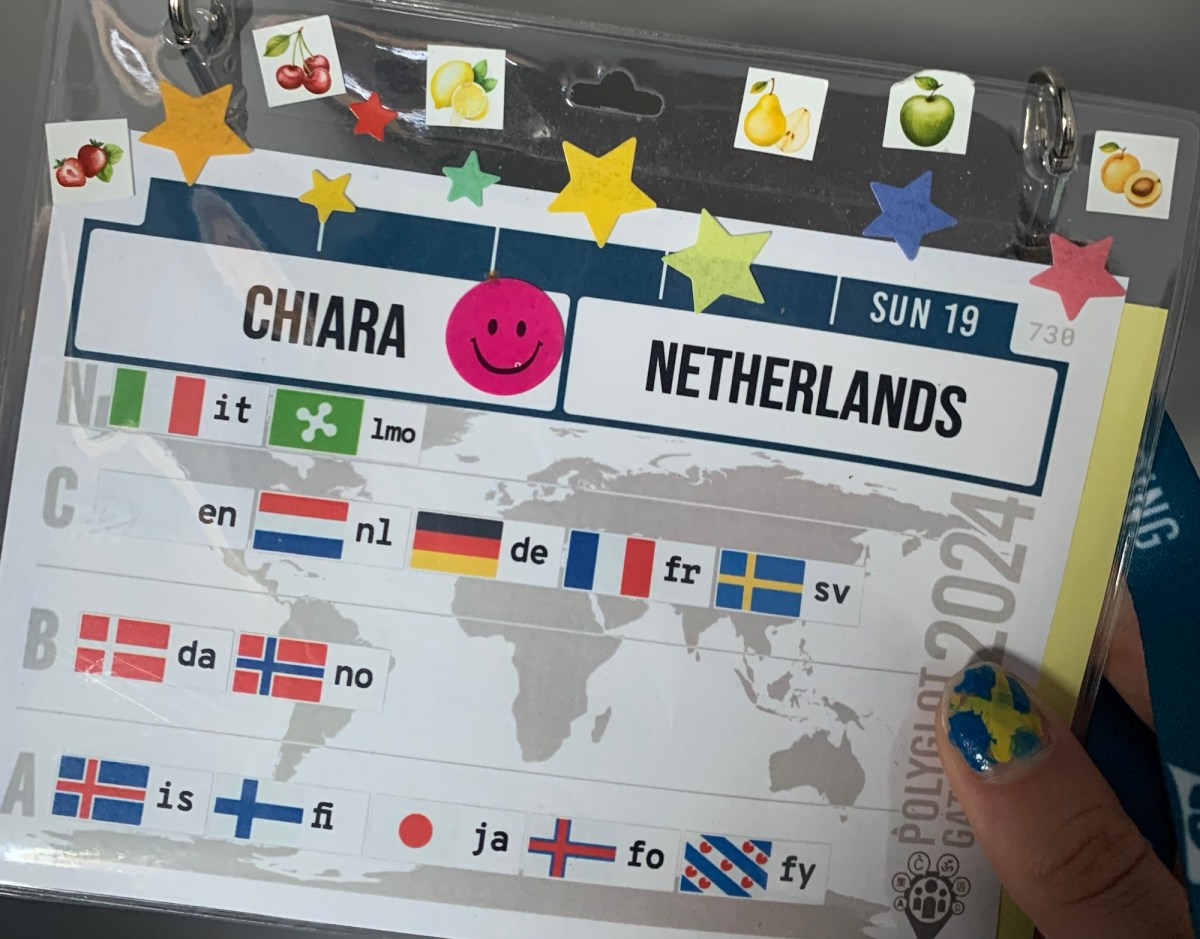
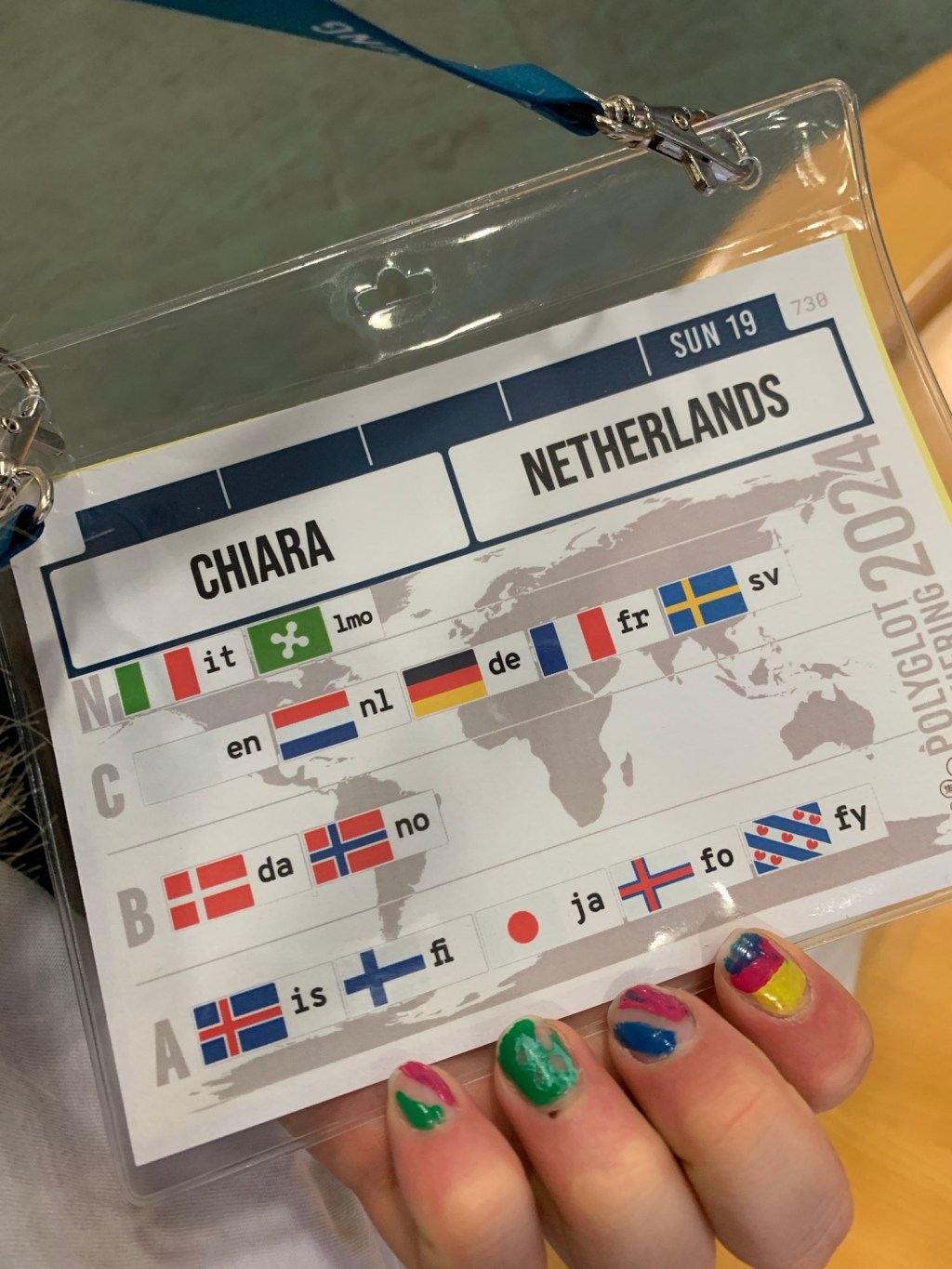
Add languages to your language tag: add the language (and related flag!) you speak with their level.
You also have the option to purchase a polyglot gathering T-shirt
Pros/cons of signing up early (usually possible around 6 months ahead):
advantages
disadvantages
early bird discount
you will not get a (full) refund by cancelling (or full refund -50€ if you are early)
accomodation through the Gathering, close to the venue
more T-shirts of your sizes available
your name appears on top of the registered people page
My first time it was a last-minute decision, I stayed in Prague only 3 days and join the Polyglot Gathering one full day. The second time I joined for 3 days and in 2026 I at last joined for the full week – Booking for 5 days was the same price as for 3 too, so if you’re unsure if you’ll come the whole week you won’t lose money. I booked a hostel everytime because I was too late for the cheap Gathering accomodation (it gets sold out fast)- however I did find a hostel in the city centre for a similar price (and the student dorm was not avaible for all the nights I would need).
Get ready for the Polyglot Gathering before it starts
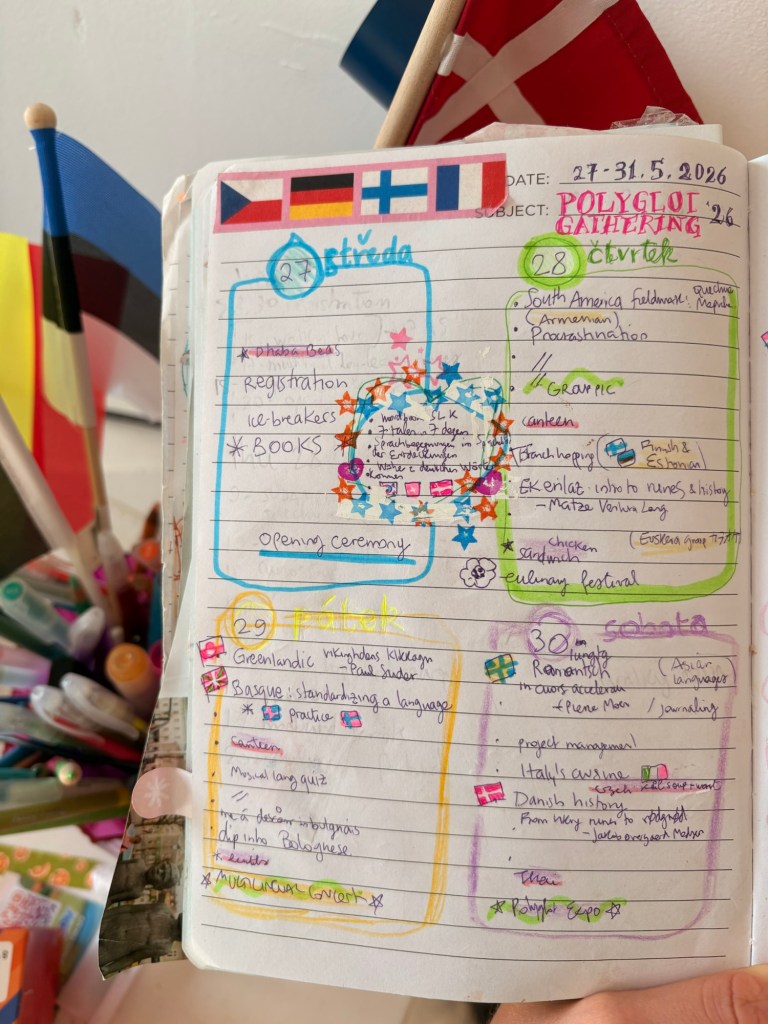
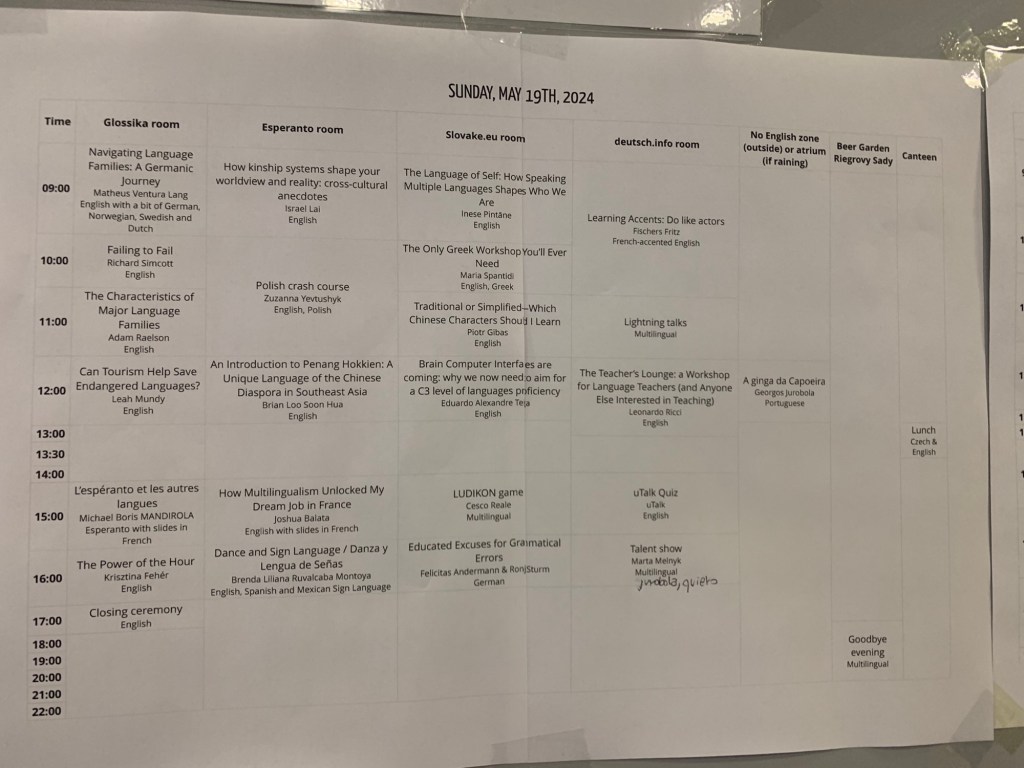
Few months before the event takes place, the program is uploaded along with some extra info about the location. I like to plan in advance what I will do, so I write down the ones I am interested in for each day. It can also be fun to learn a little of the local language.
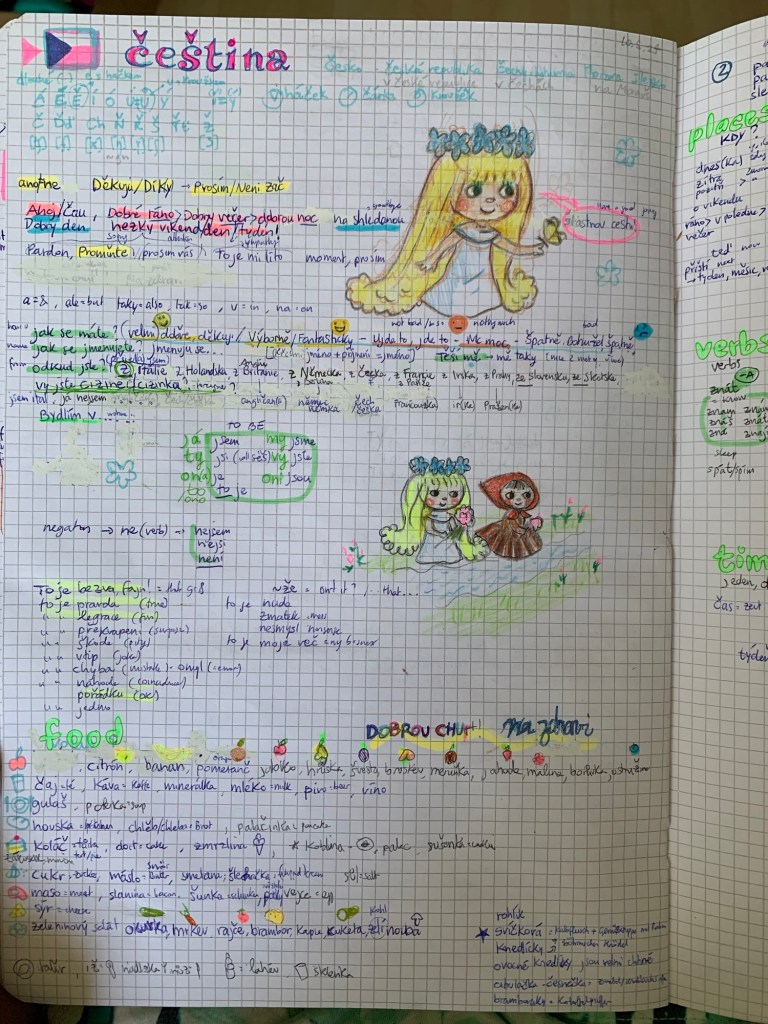
Talks go from mindfulness, language history, linguistics to quizzes and workshops to learn a specific language. You can also do something else and not join any thoughA challenge related to the Gathering was learning Czech. Having to start from scratch, I tried to focus on practical stuff as food vocabulary in the little time I had, and didn’t manage to go much further than memorizing words for apples and potatoes.
Some time slots had multiple interesting courses (choosing one was always difficult), others none I fancied going to, but I almost always went to one, except for a couple times I turned to language tables instead.
The Gathering: first day, talks and activities
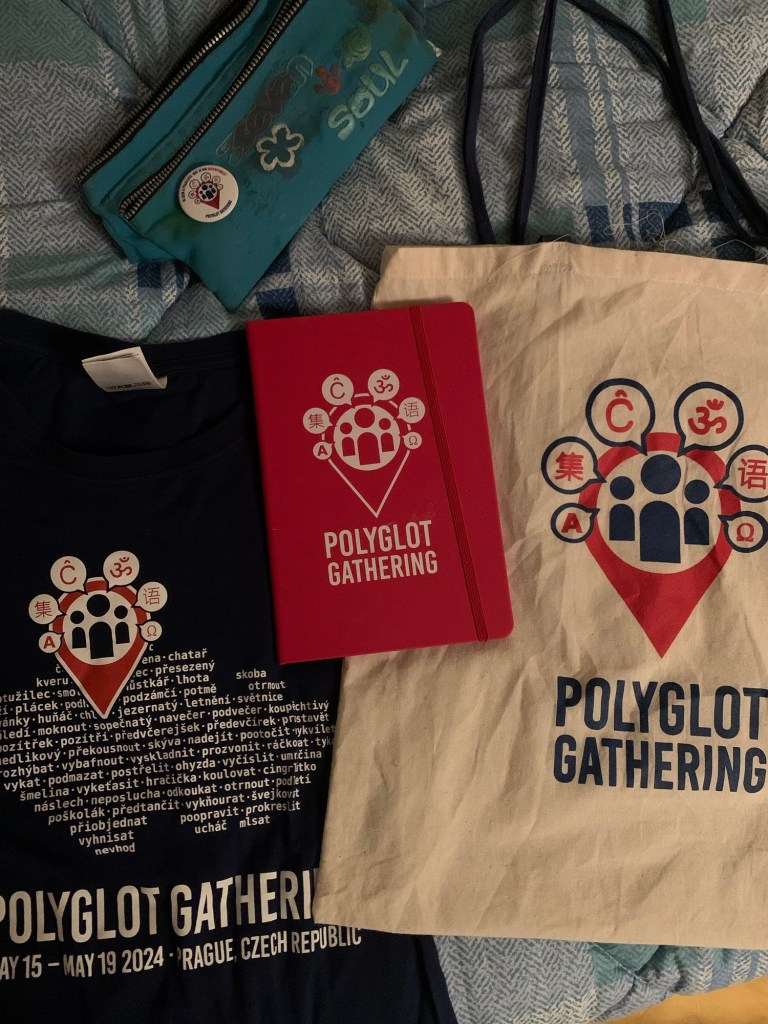
The first time you get to the venue, you can register and get the Gathering kit: a tote bag with a notebook, a pen, few pins, (also a bottle of water the first time) and of course your language tag and if you purchased it, a T-shirt !
tote bag, notebook, pin and tshirtA few people were actually curious about the Lombard and Frisian flags
if you join on the very first day (Wednesday), there are no talks planned – it is mainly a half-day of icebreakers and games to get to know others. The rest of the days you have 5 talks/activity slots per day (with (free) coffee breaks inbetween) and an evening event.
Activities at the Polyglot Gathering include:
talks (from linguistics to language learning strategies to quizzes) and workshops (as language crassh courses) – with breaks to get free te and coffee between them
language tables to practice your target languages, from Spanish to small minority languages, and a “no English Zone”
Evening events as Food Festival, talent shows
At the venue you can also purchase, thrift, exchange and just pick free books – language and linguistics related books as well as miscellaneous books in whatever language;
Sightseeing tours are also organized on several days.
Talks topics at the Polyglot Gathering
And here are the talks/workshops I took part in in the respective domains:
linguistics
culture
study methods
crash courses
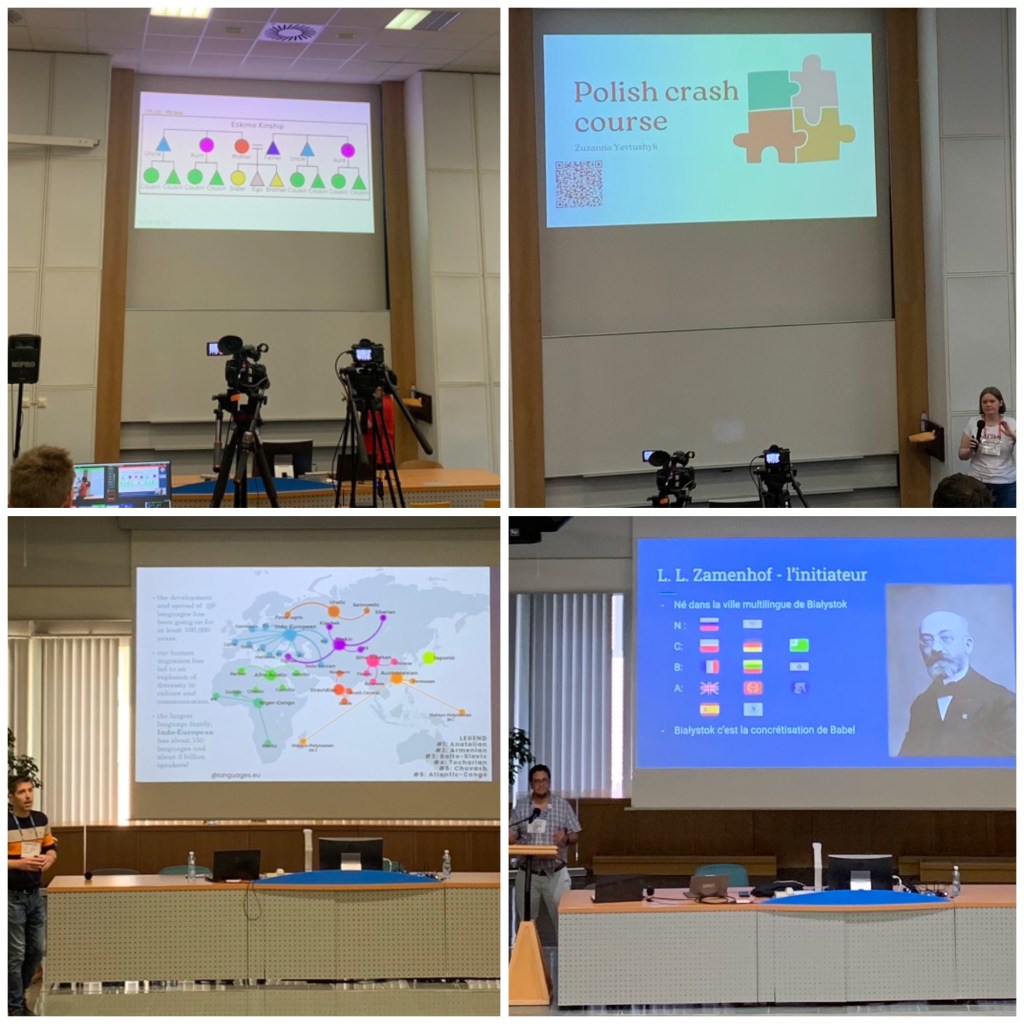
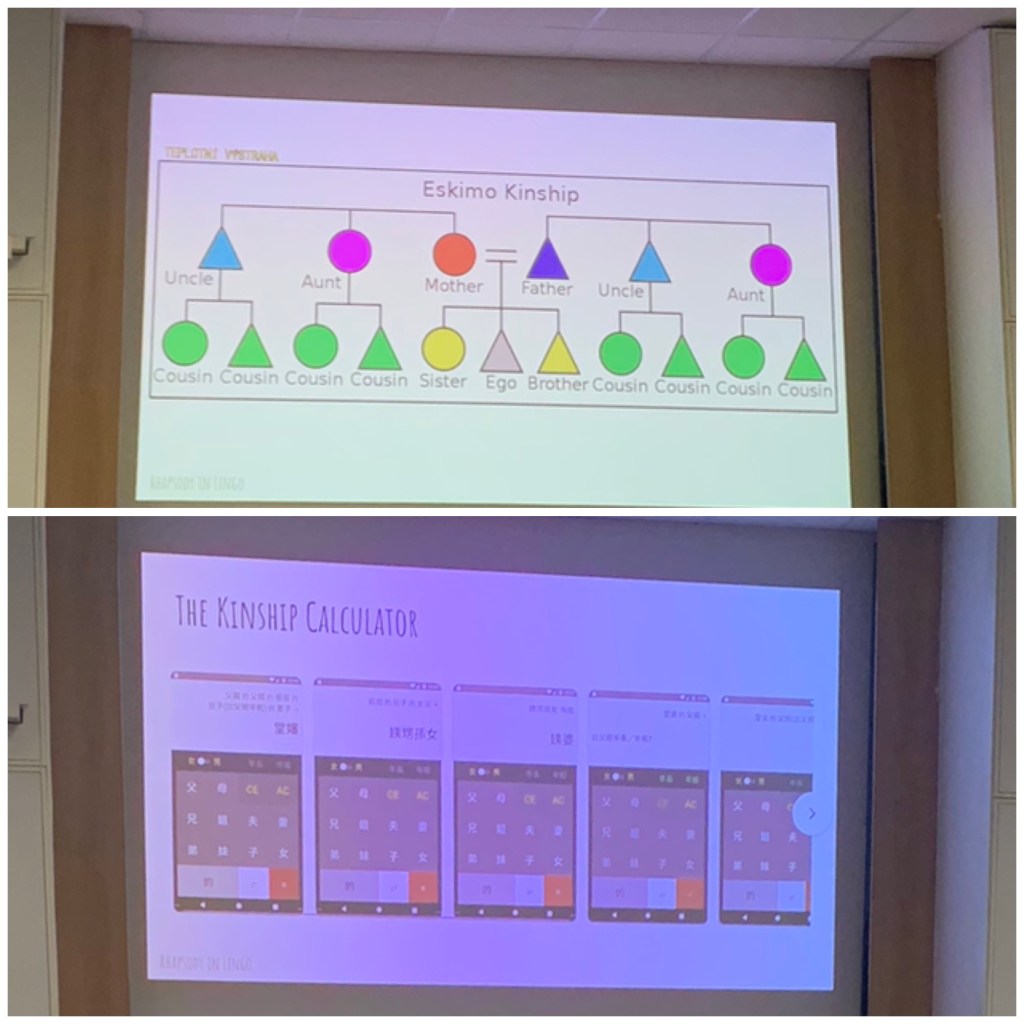
How Kinship systems shape your worldview and reality: cross-cultural anecdotes – Israel Lai
Polish – Zuzanna Yevtushyk
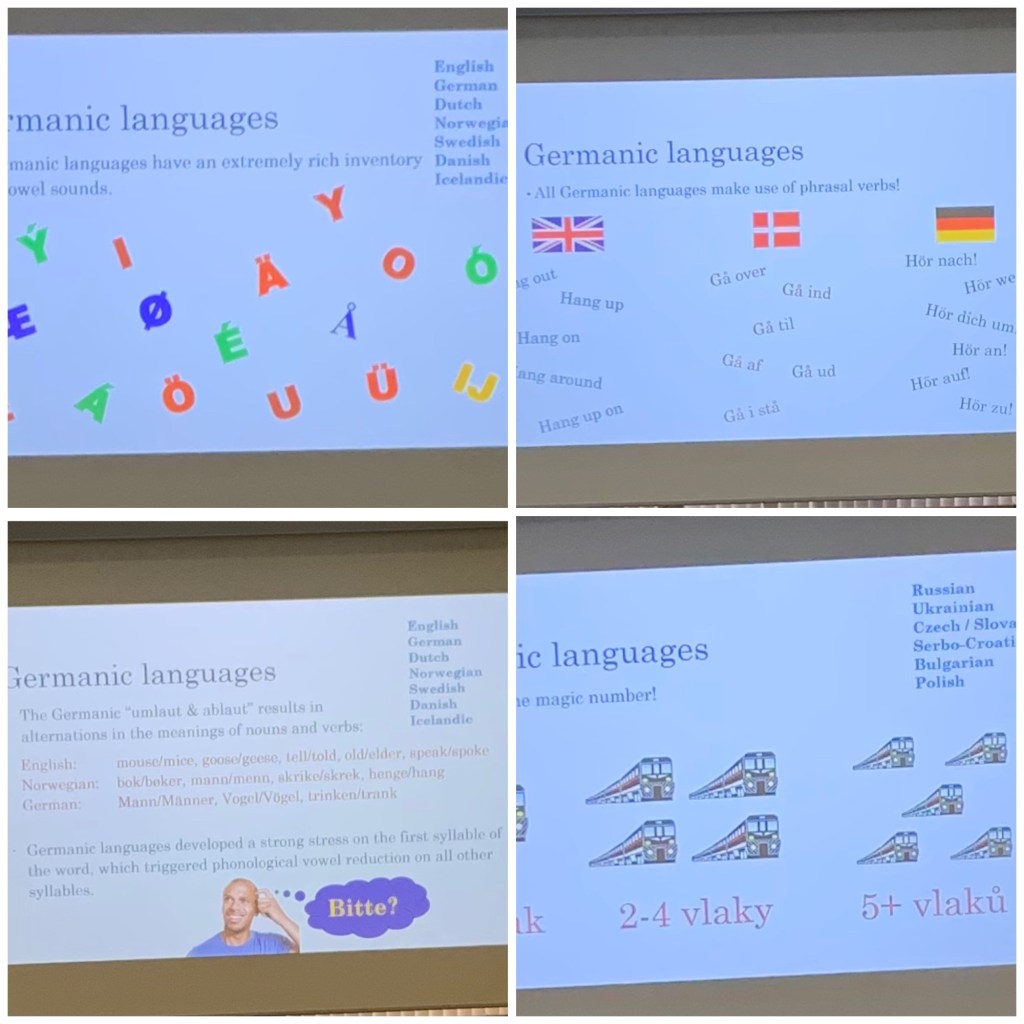
Characteristics of major language families (mainly Romance, Germanic, Slavic and facts about further ones) – Adam Raelson
language politeness in Norwegian & Swedish
Brain computer interfaces are coming- Why we now need to aim to C3 level
Rumantsch
South american indigenous languages
Kebabnorsk: foreign influence on slang in Norwegian
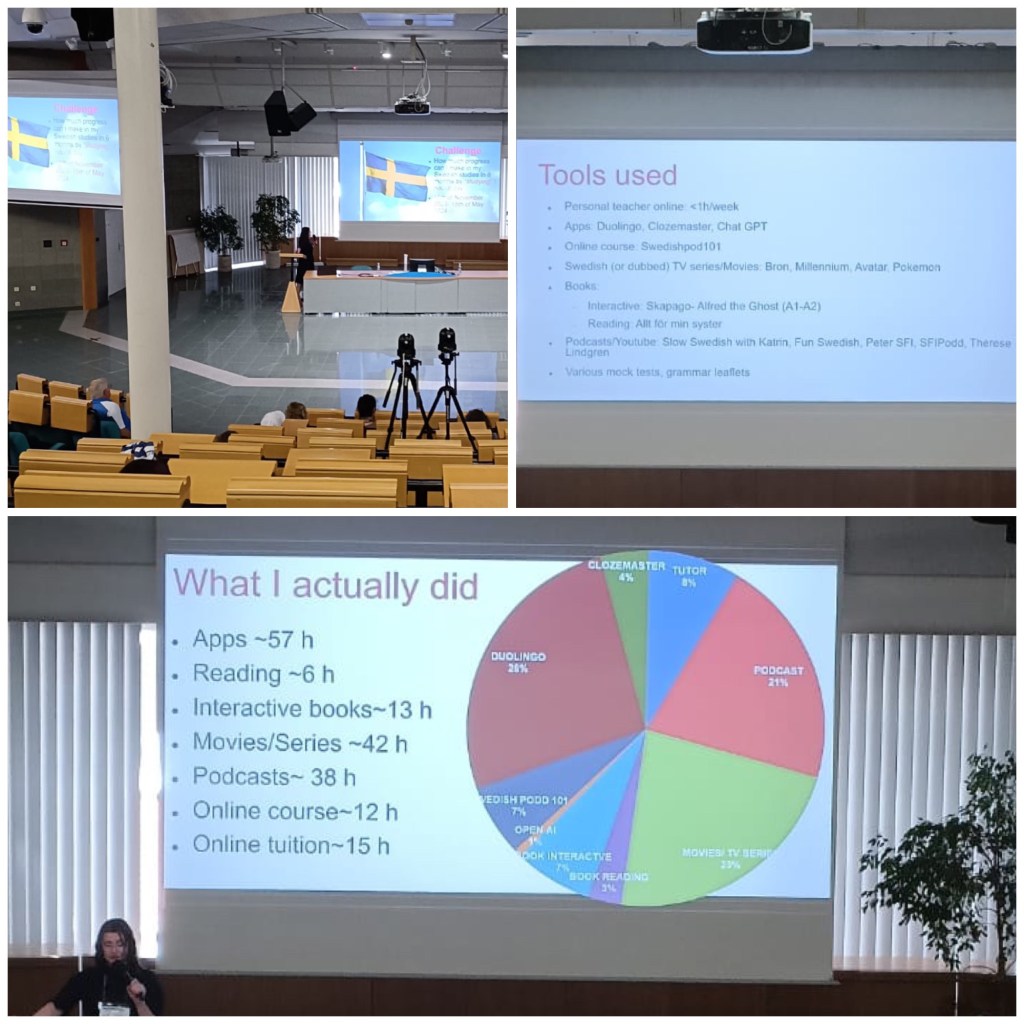
The Power of the Hour – Swedish in 6 months -Krisztina Féher
v
Greenlandic
v
v
v
I’d say my favourites in 2024 were the one about language families and hearing about the strategies used to learn Swedish one hour a day – the way she tracked it was quite inspiring and gave me good insights. Learning about different ways different languages name family members was also pretty cool! See some slides below.
Books
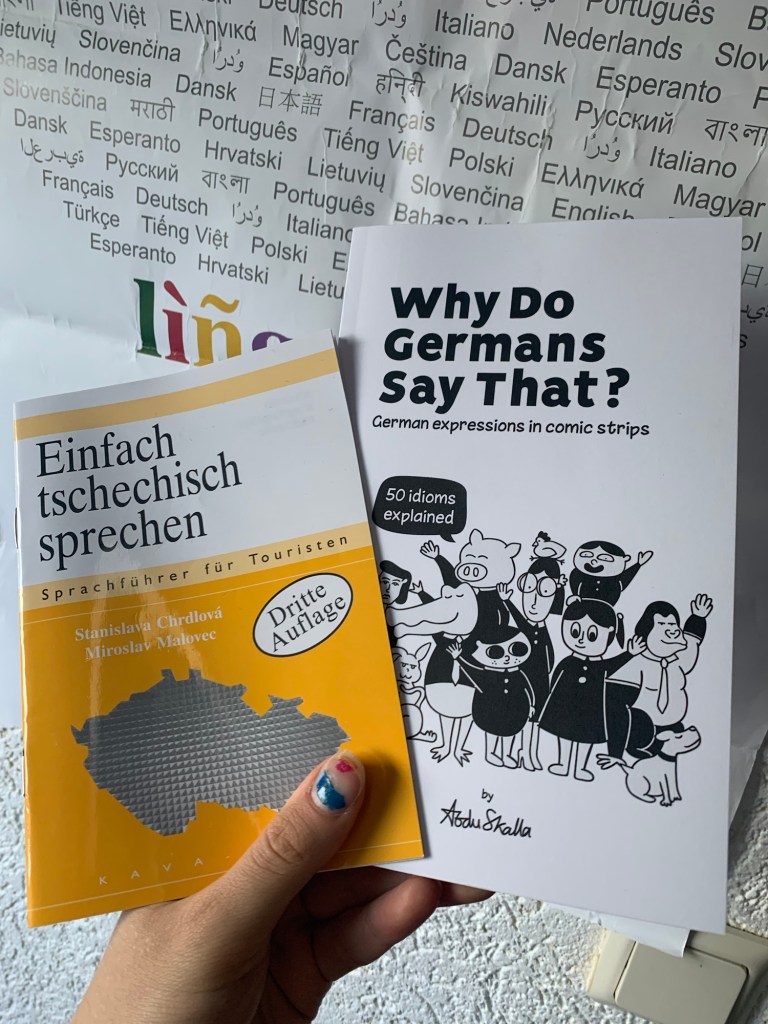
The first time I arrived towards the end of the Gathering, and there was pretty much only Esperanto books left, but I still got a book explaining German idioms, and a tiny tourist phrasebook for Czech. Last time I was there from day 1 and ended up getting a bunch of books at once…
Meals at the Polyglot Gathering
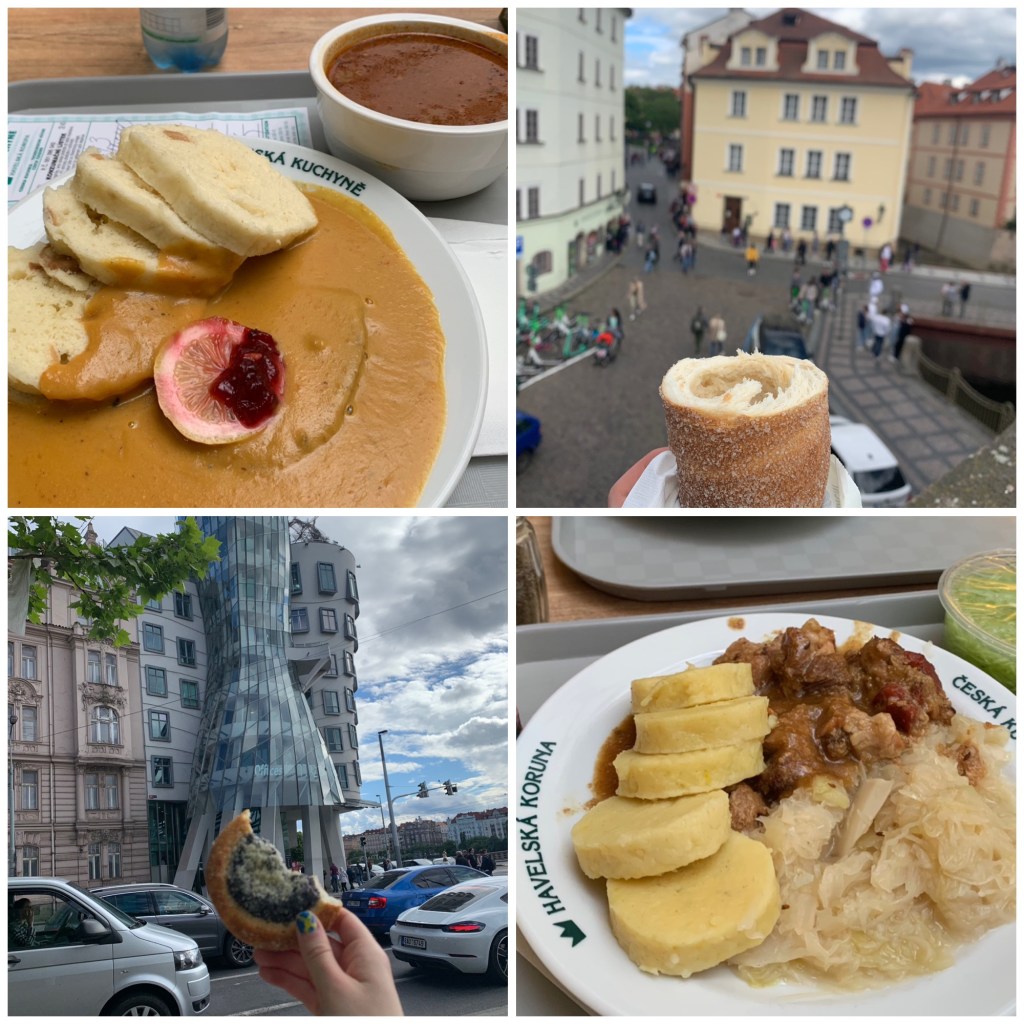
In Prague I had meals at the Havelska Koruna (budget authentic Czech food restaurant) and vegetarian buffet chain Dhaba Beas, where you pay by weight.
The Gathering is an excuse to explore local food too, and that includes the venue’s canteen.
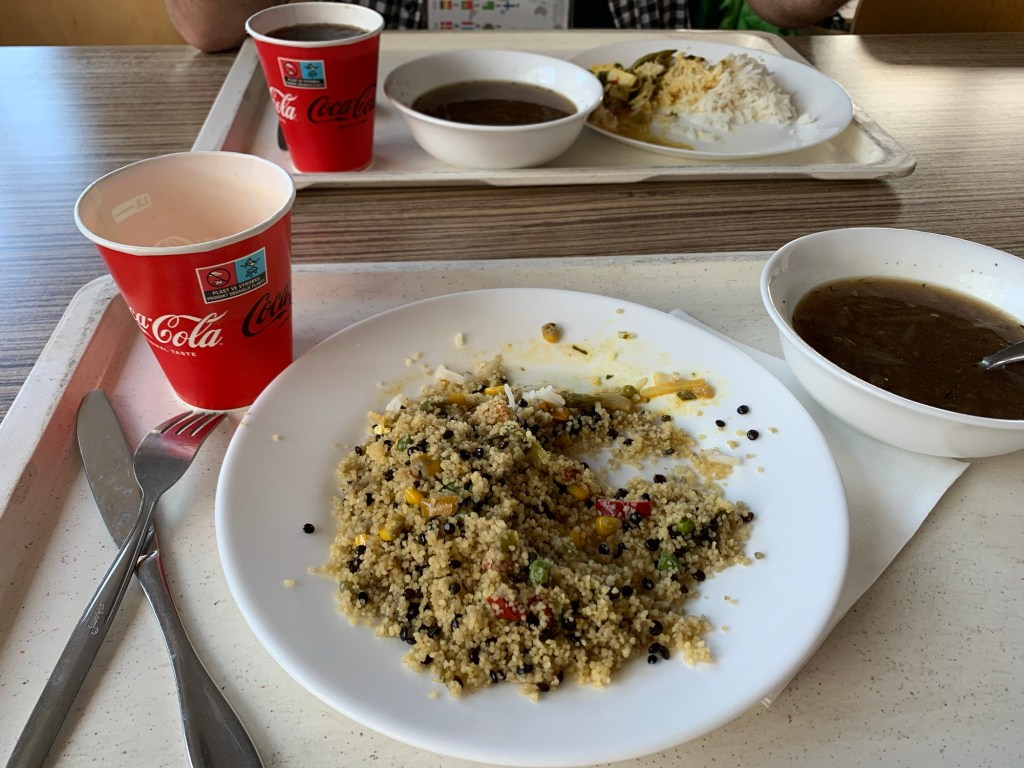
In Brno, the canteen had weight-based price as well. Which is great if you like to try small quantities of everything like I do..
I went to local restaurants either fellow polyglots too (we had a discount for one close to the venue), Thai and Vietnamese restaurants in the centre were also popular options.
The vegetarian lunch at the canteen in Prague was curry rice, the vegan couscous, the meaty schnitzel. And of course I got soup as side dish, typical Czech.
Closing ceremony & Final Evening
As it was the last day, the final ceremony took place at the end of the lectures, and it was a sum up of the event, organisational effort of the team behind it, Slovakian Edukácia@Internet as main party, thanking all partners and sponsors. and insights about where the Gathering will be next here. Which might be Prague again. Or somewhere in central Europe. Sorry, non-Europeans…
Once the Gathering was over, we still had the possibility to meetup with other polyglots at the beer garden in the evening. As I had only been there that day, I had not had the chance to really chat a lot with others yet. It was quite fun and got to talk to quite a few people – notably a person I am a mutual follower of on tiktok, it was quite amazing to see her in real life – unexpectedly!! I also got Polish chocolates :). Afterwards some people went to pubs – I had a bit trouble switching from Swedish to norwegian after a drink, I must say.
Though English stayed in most contexts as the lingua franca, I still got to speak quite a few languages. I look forward to the next time I will be able to join it, hopefully for longer than just one day!
Subscribe to hear more about this kind of events – with a Nordic language focus perspective!