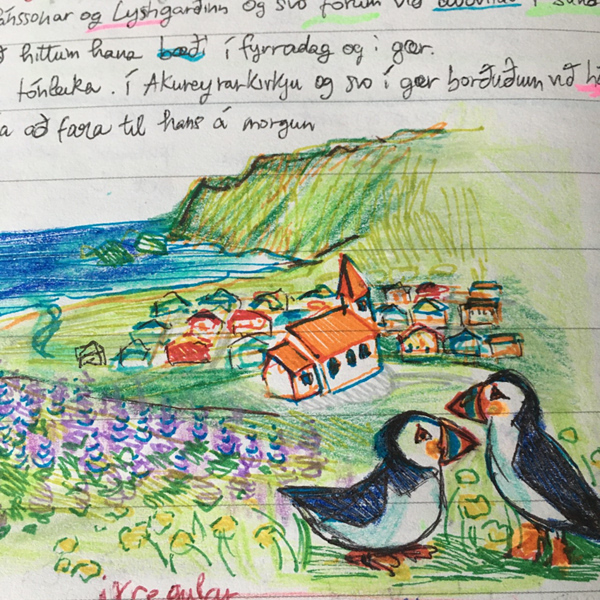
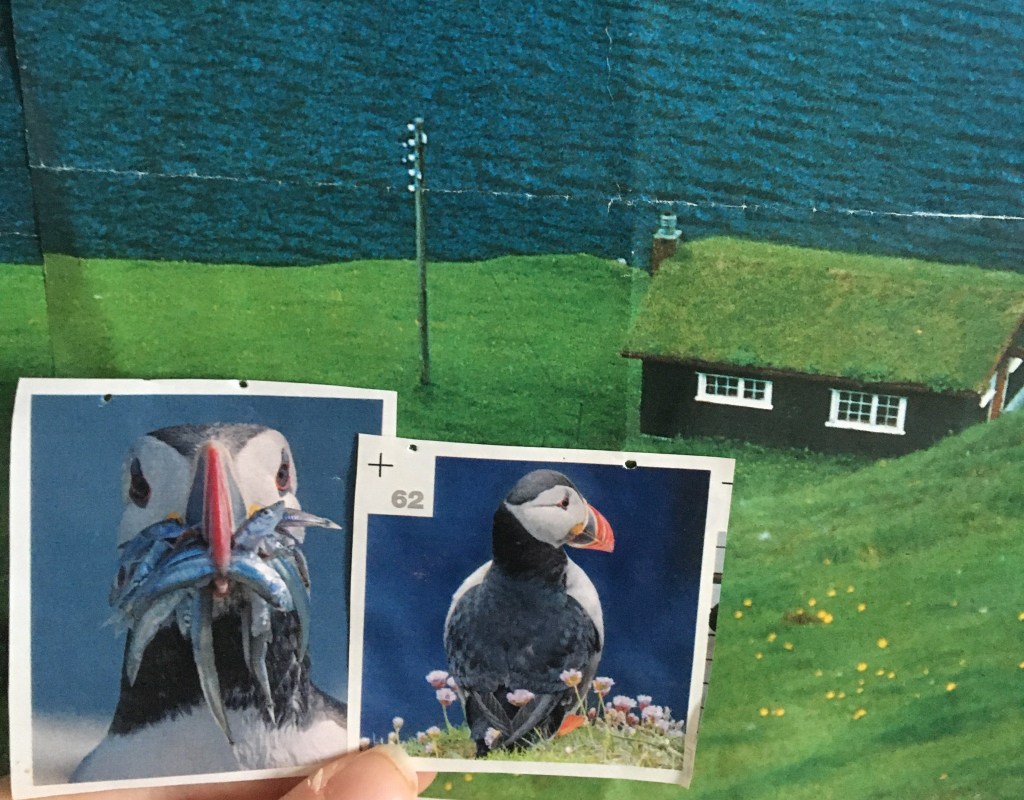
The Atlantic puffin, Lundi in Icelandic and Faroese, is a species of seabird in the auk family.
It populates the North Atlantic coasts of Iceland, the Faroe Islands, the Shetland and Orkney Islands, Norway, Greenland, Canadian coasts of Newfoundland and Labrador. Colonies in Iceland alone are home to 60% of the world’s Atlantic puffins, in particular Westman islands (Vestmannaeyjar).
Atlantic puffins are in danger, threatened by pollution, and the introduction of predators in islands use for nesting, the risk of drowning in fishing nets among others. Based on current trends, the European population will decline an estimated 50–79% between 2000 and 2065.
Name origin of the Puffins
The scientific name Fratercula Artica comes from the Medieval Latin fratercula, “friar”, a reference to the black and white plumage which resembles monastic robes. “Puffin” comes from puffed in the sense of swollen.
The bird’s most distinctive feature, its colorful beak, and its funny appearance have given rise to nicknames associating it to a parrot: for example Danish Søpapegøj “sea parrot” and Dutch papegaaiduiker “parrot diver”.
Puffins in Icelandic and Faroese history
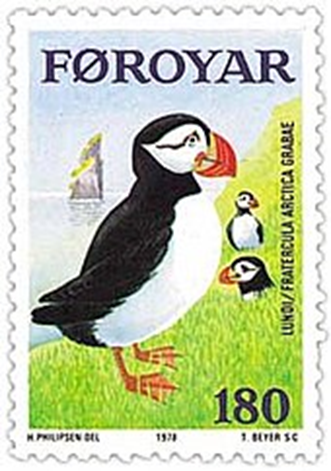
Puffins have been hunted by man since time immemorial, coastal communities and island dwellers with few natural resources at their disposal didn’t have much else to hunt besides fish and seabirds.
They are still caught and eaten in Iceland and the Faroe Islands A typical device used in the Faroes to catch them was a fleyg. This was a long pole with a neton the end. a skilled hunter could gather 200–300 in a day!
Puffins are now protected by legislation, and where hunting is still permitted, strict laws prevent overexploitation.
A tradition exists on the Icelandic island of Heimaey (part of Westman islands) for the children to rescue young puffins, a fact recorded in Bruce McMillan’s photo-illustrated children’s book Nights of the Pufflings (1995). The fledglings emerge from the nest and try to make their way to the sea, but sometimes get confused, perhaps by the street lighting, ending up by landing in the village. The children collect them and liberate them to the safety of the sea.
Puffins as Icelandic and Faroese ambassador in the world
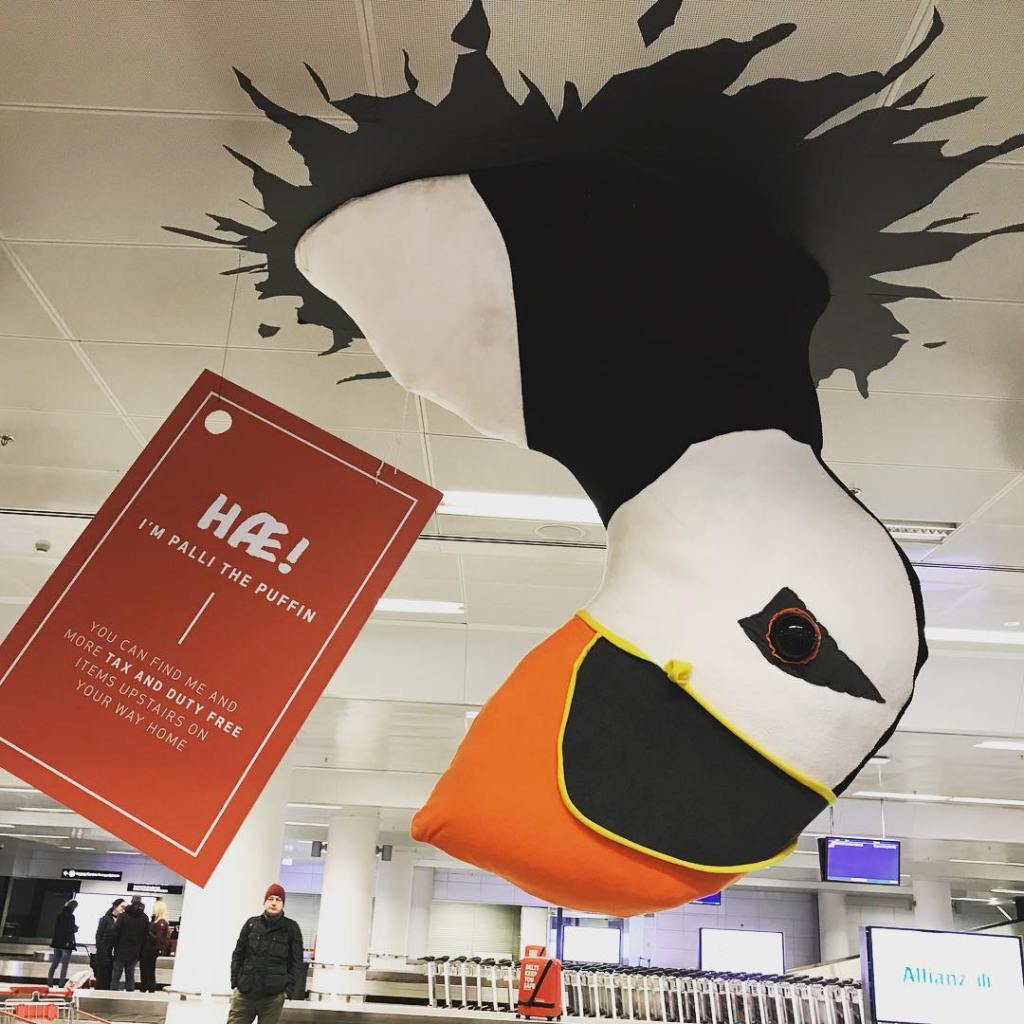
A puffin named Piddi was the mascot for the Island Games in the Faroes in 1989. In 2023 The UK channel island of Guernsey chose a puffin for its island games mascot as well – Jet the Puffin.
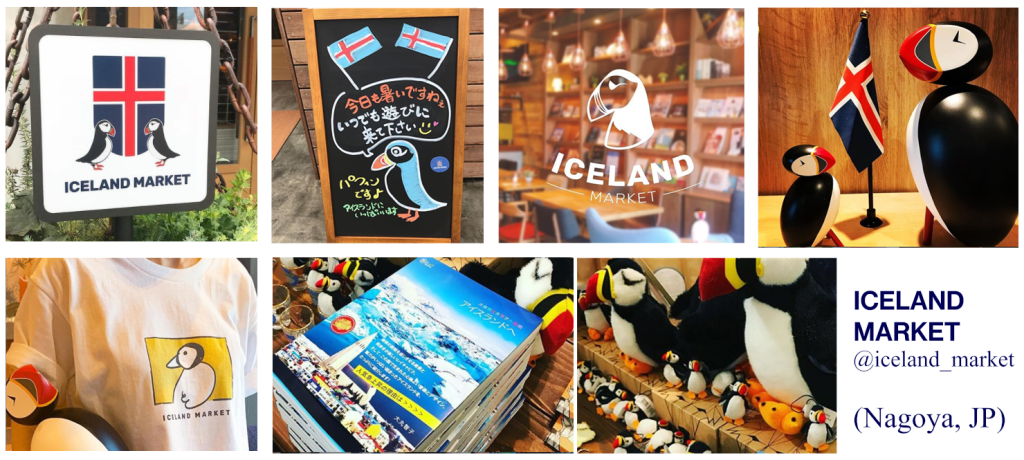
Puffins are often used to promote these Nordic islands, especially where cuteness is highly valued as in East Asia. ICELAND MARKET in Nagoya, Japan, used to be a cafe with puffins in its logo and merch, proudly representing Iceland.
FRAMTAK, a Faroese site, now inactive, promotes the Nordic archipelago and has a section with comics about Ludvík Lundi (“the puffin with glasses”), ideal if you want to practice Faroese!

Puffins in logos, symbols and pop culture elsewhere
Puffins are a bird very typical of Iceland and the Faroe Islands, but they can of course be found on other countries’ North Atlantic shores. Therefore, they appear in logos, stamps and as mascots from the British isles (channel islands particularly), Norway and North America too.
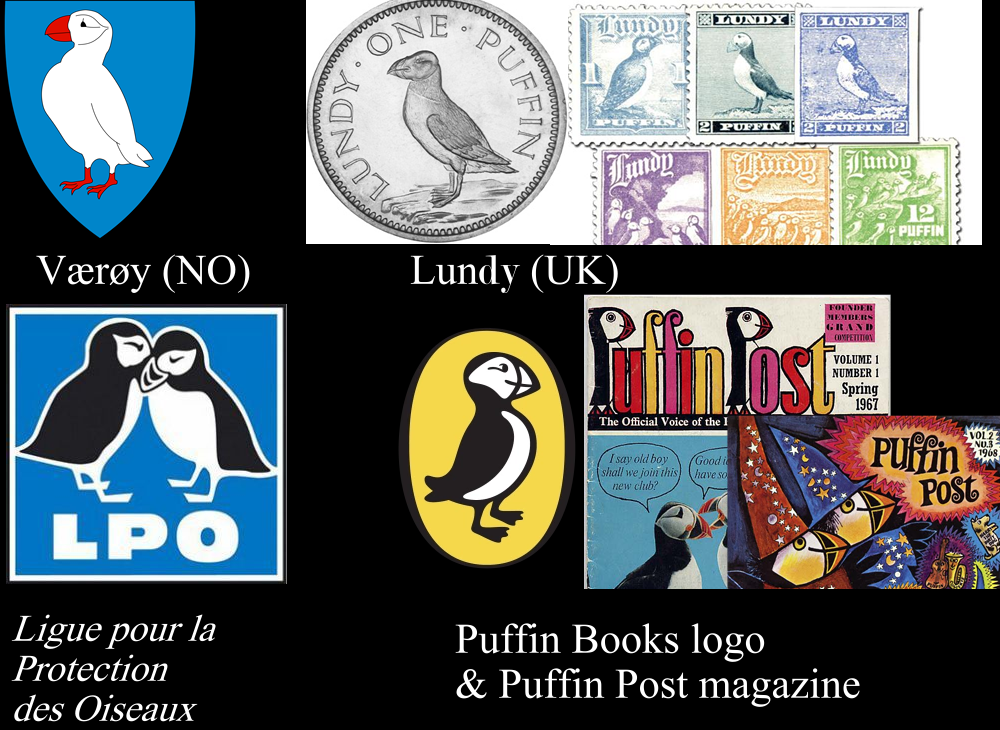
- The Norwegian island municipality of Værøy, part of the Lofoten, has an Atlantic puffin as its civic emblem.
- the name of the island of Lundy (UK) might come from Norse lund-ey or “puffin island”. The Vikings might have found the island a useful refuge and restocking point after their depredations on the mainland . The island issued its own coins, and in 1929, its own stamps with denominations in “puffins”.
- The paperbook publisher Penguin Books introduced a range of books for children under the Puffin Books brand in 1939. The demand was so great that a children’s magazine called Puffin Post was established, Puffin Post. Oscar Puffin was the mascot of the UK Channel Islands broadcast IVT Channel television. the star of the birthday greeting programme Puffin’s pla(i)ce
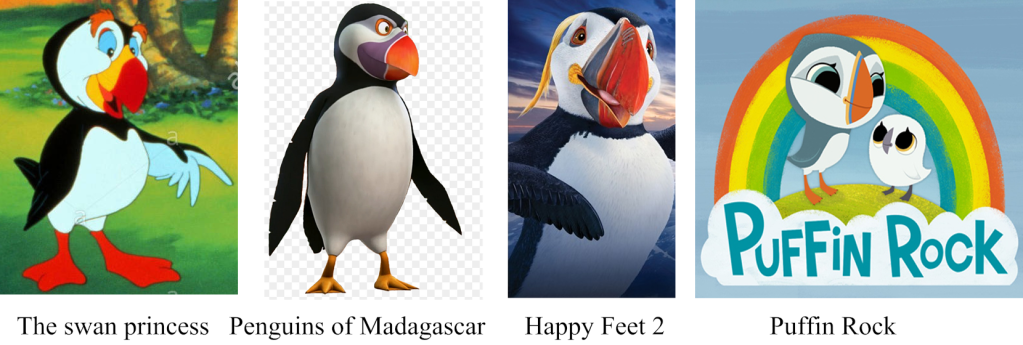
- The Swan Princess -Puffin
- Madagascar – Hans
- Happy Feet 2 – Sven is a puffin who pretends to be a penguin
- Puffin Rock – A Netflix original cartoon about the puffin Oona and her little brother Baba
- Puffins (2020) – spinoff series of Arctic Dogs (2019). A group of puffins working for a walrus.
subscribe for more cutesy stuff from the Nordics:
More articles:
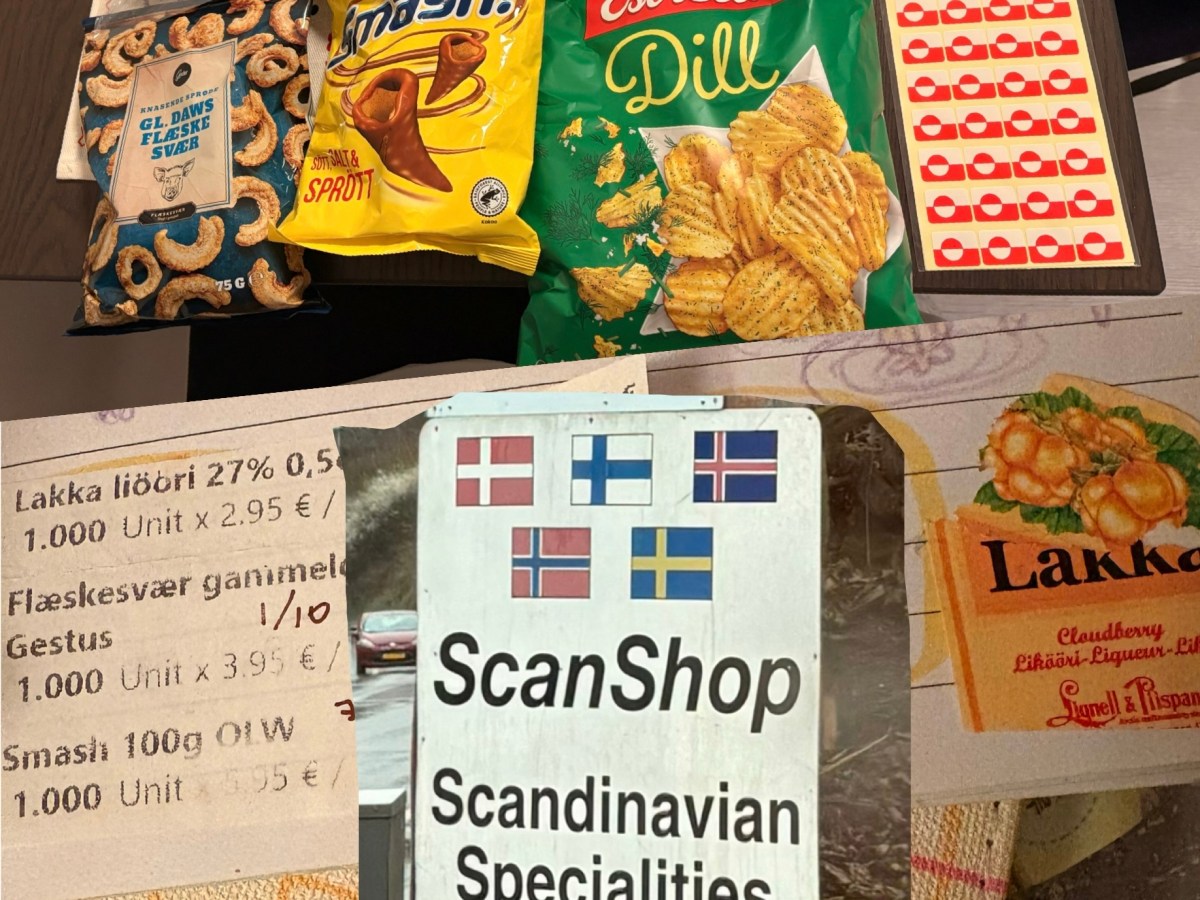
ScanShop: Nordic supermarket in Luxemburg
I visited Scanshop, a supermarket for Nordic expats in Luxembourg and Belgium. It offers a wide range of Scandinavian food products, including rye bread, fish, and sweets, alongside flags and tableware.

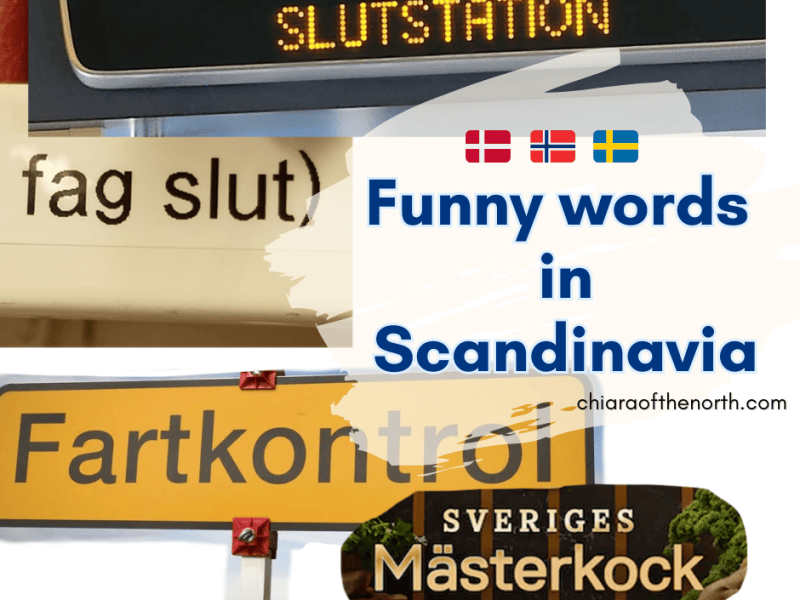
A collection of (unintentionally) Hilarious False Friends in Nordic languages
Take a train in Scandinavia to reach a “slutstation” or see”fartkontrol” signs while driving. Kiss and killing also mean something you were not expecting!
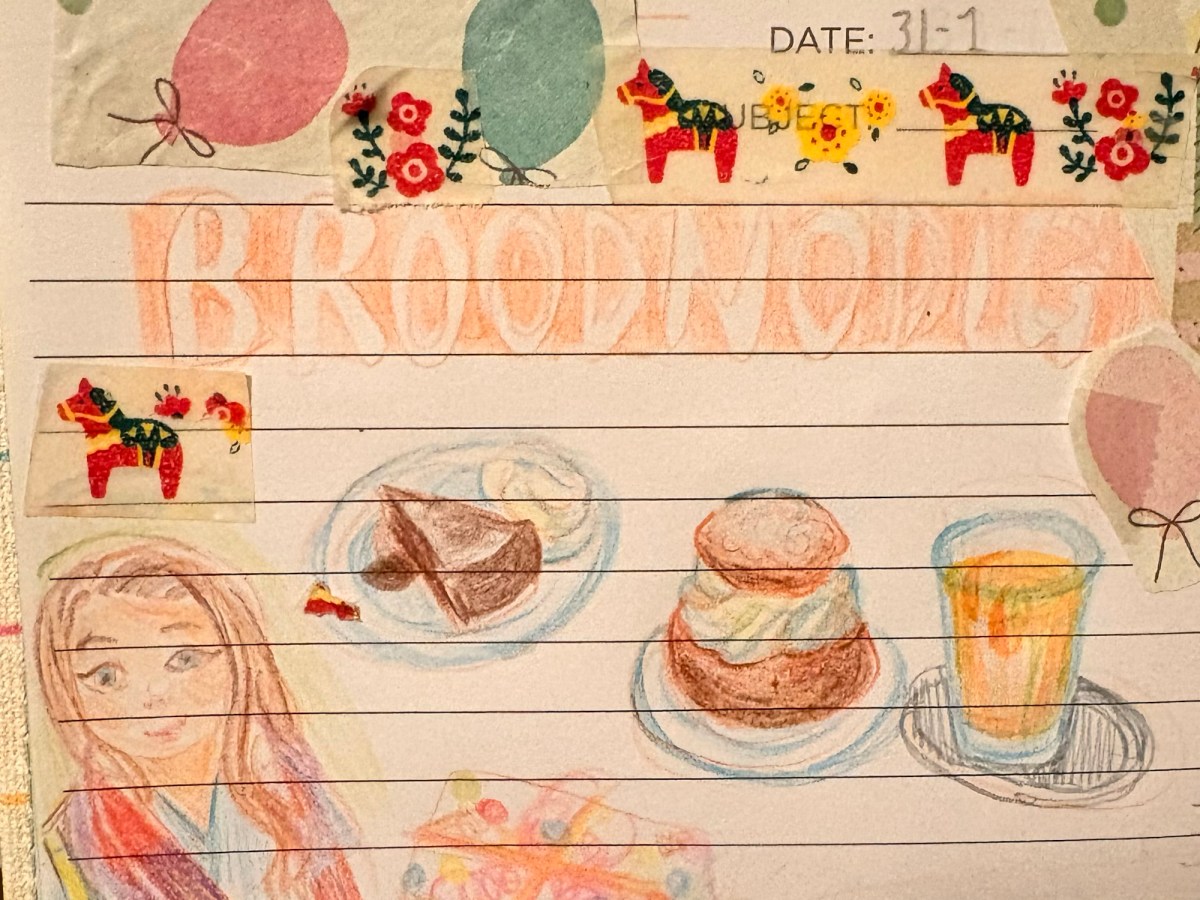
Swedish Café in Utrecht: Broodnodig
In Utrecht, the cafe Broodnodig serves Swedish pastries and cakes as cinnamon and cardamom buns, kladdkaka, smulpaj and Scandinavian seasonal treats as semlor and saffron buns.