Scandinavian graduation traditions

How graduating from high school is like in Sweden, Denmark, Norway!

Hats and buses

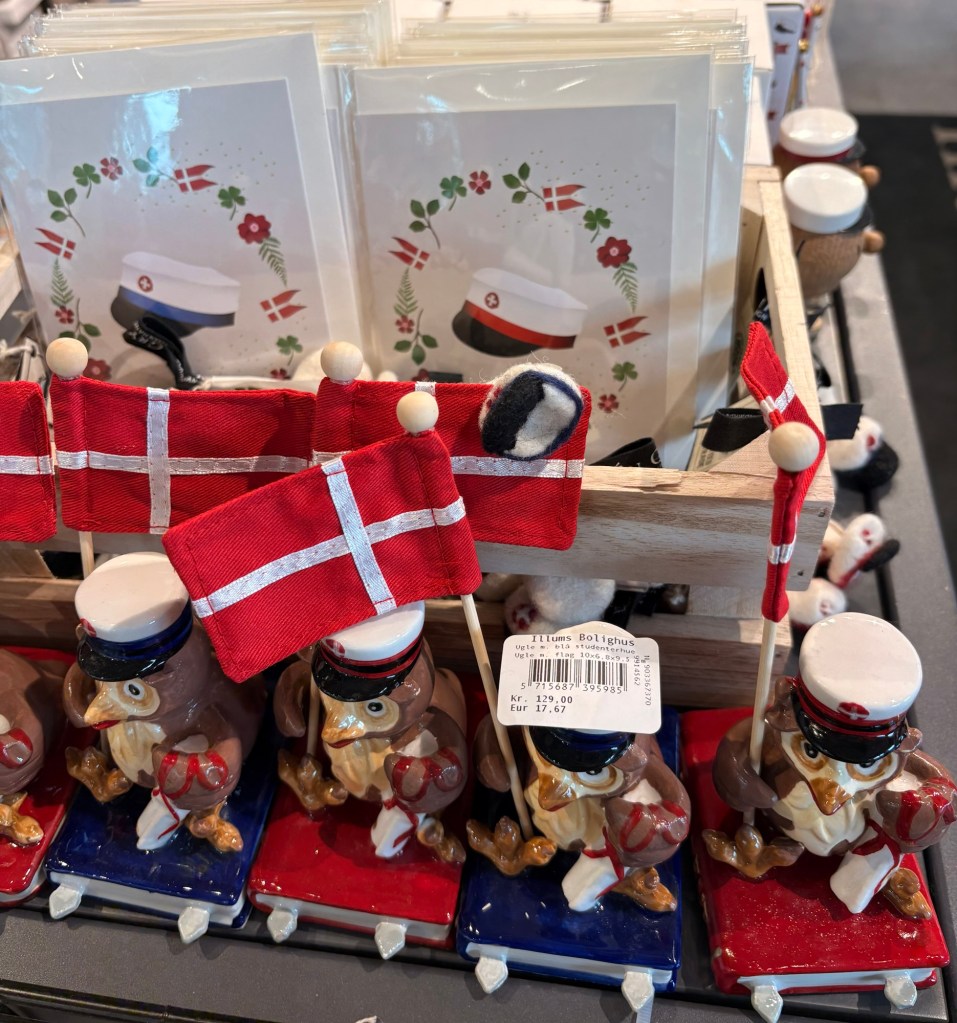
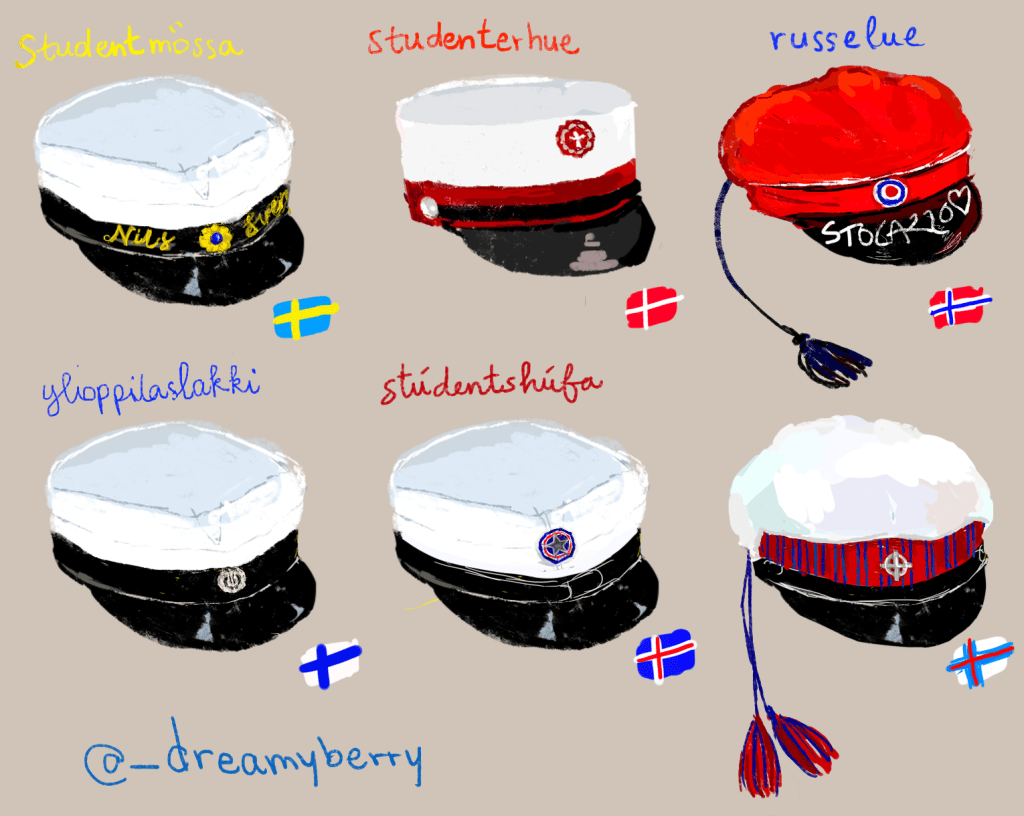
the symbol of High school graduation is a hat resembling a ship’s captain cap, the first time I saw a Swedish graduation celebration picture I was pretty confused about those hats, but it’s actually a tradition inspired by German students, spreading it to Nordic countries in the 19th century.
Another common thing in Scandinavian is that graduates celebrate around town on rented buses or trucks (sometimes saving up years just to rent one), generally playing loud music, drinking and just partying!

Denmark 🇩🇰

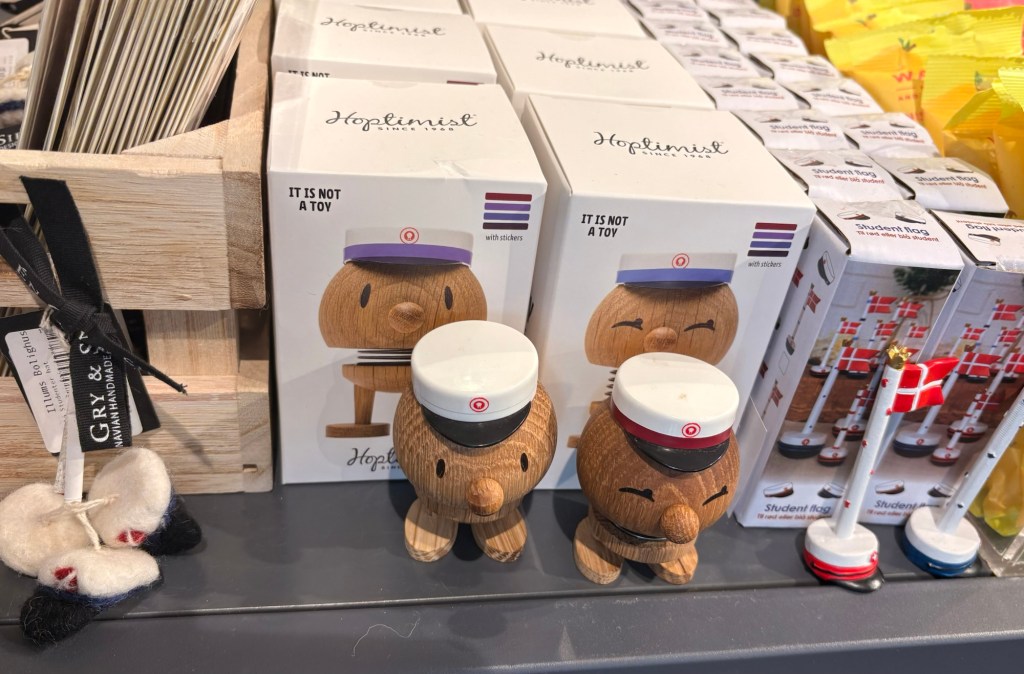
Danes have an oral exam as final. you have to decide who from your family is placing the hat, studenterhue, on your head, when you step out from it. It’s the norm to wear the graduation cap for at least 2 weeks, It is courtesy that people they meet on the street congratulate them, even if they don’t know each other.
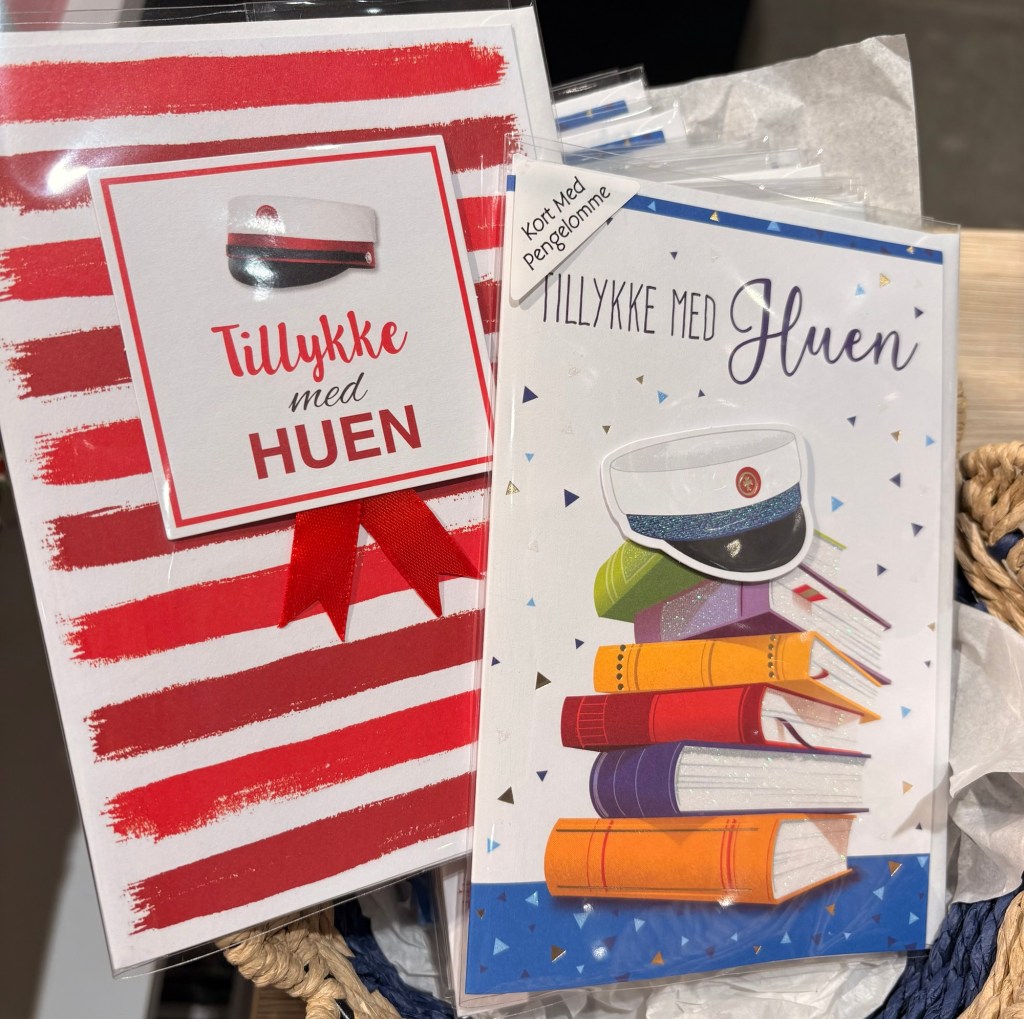
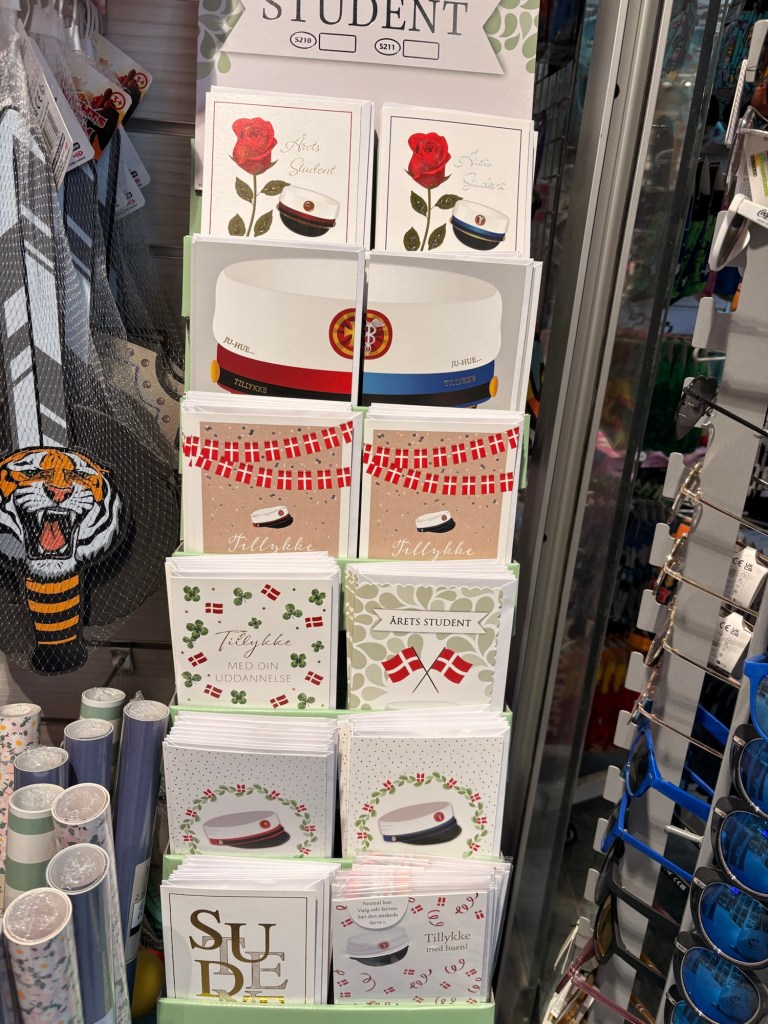
The ribbon on Danish caps was originally only either blue (Mathematics students) or red (Arts students), it now comes in many different colors depending on the length of your education and which school you went to, see all possible variations on Alt.dk.

There are lots of rules involving the studenterhue:

  • You can’t wear your cap before your last exam (it would bring bad luck)
  • your grade has to be written in the center of the hat, and friends and family can leave autographs and short notes in it
  • friends bite in the shadow for good luck.
  • the students with the biggest and smallest hat size, and the ones with the highest and lowest grade average have to buy a box of beers for the class
  • the hat has to be cut in different ways if the student has drunk 24 units within sunrise, if he vomits, and so on to the point a which if the student goes to the hospital because of too much alcohol the whole shade is cut off.
  • more rules are related to having sex (heart on the sweatband if with the partner, lightning on the rim if not in a relation) , kissing someone (if same gender the cross has to be turned), breaking up (metals going off), taking a swim with only the hat on (wave in the rim)
  • If the student has been awake for 24 hours then the hat must be turned around (shadow in the back)
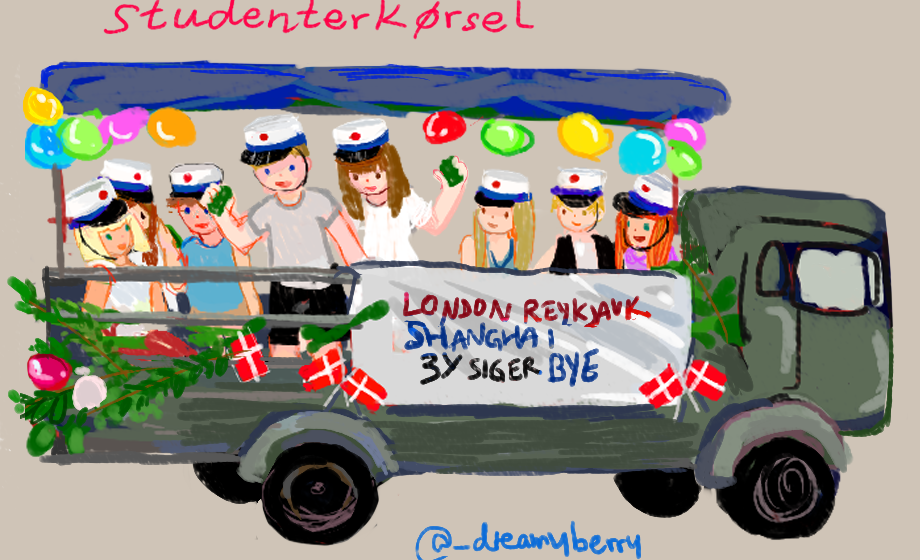
The Studenterkørsel – student drive – is an important part of the celebration, renting a truck decorated with beech branches to party, drink and play loud music on (here‘s a site where the trucks & stuff can be arranged). It drives to each student’s home for around 15 minutes, for a short visit where parents give snacks and drinks before the next destination.

This can last one or two days and of course also the studenterkørsel has its own rules, among which running after the truck if you get an A in your last exam, and learning a battle cry to scream at passing student trucks!

Everyone greets and sends their congratulations when they see these trucks. On my very first day in Denmark Student buses were driving around (slowing down the bus I was on though, haha) and following my friend’s example we waved at them, flying my welcoming flag! It felt quite cool!

Sweden 🇸🇪

In Sweden there’s one big day, Studenten, but the celebration starts around the end of April, where students organize games which will give points deciding who will be the first student running out of the school on the gruaduation day; it can be anything from chill to embarrassing things to do, though maybe not as wild as what you’ll read for Norway. In May, there’s one day called Mösspåtaggning, on which students dress up nicely with their hat Studentmössa on, and with classmates they go to school and then to a restaurant or bar, celebrating that one month is left until the studenten time.

The big day of Studenten may vary depending on the school, but it is usually around 30th May to 15th June, with 6th June (Sweden national day) being the pitch.

  • This day starts with fellow students meeting up very early – between 4 and 7 am for the Champagnefrukost, Champagne breakfast
  • At 8-9 it’s time to leave for school, with some proving they can keep up with the celebration despite being drunk.
  • Around 10 everybody listens to the principal giving a speech, some students get diploma for things as All-A-Student etc.
  • At 11-12: photo shootings of classes!

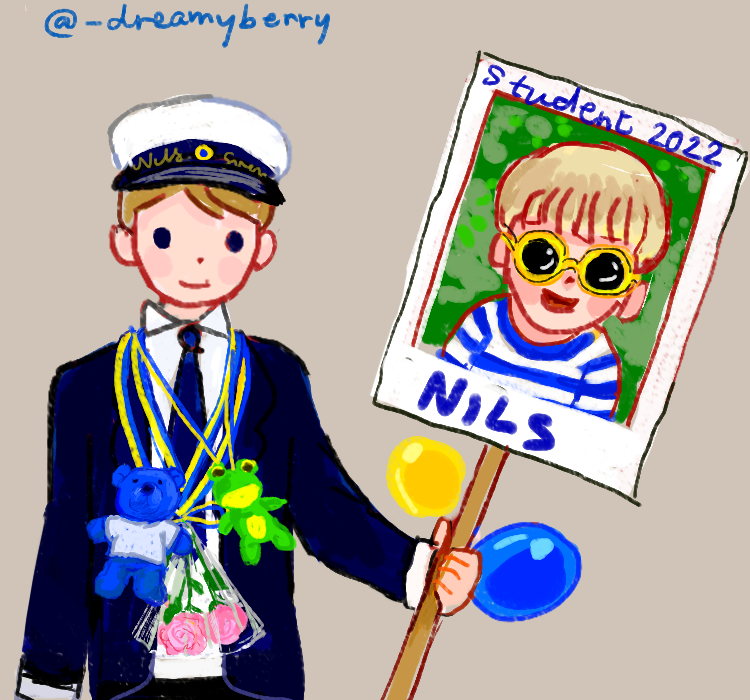
Once they got their diploma, Students run out of school to their families and friends, who are waiting for them holding a picture of the graduate as a baby or small child, and give them blue-yellow chains with flowers and trinkets as plushies!
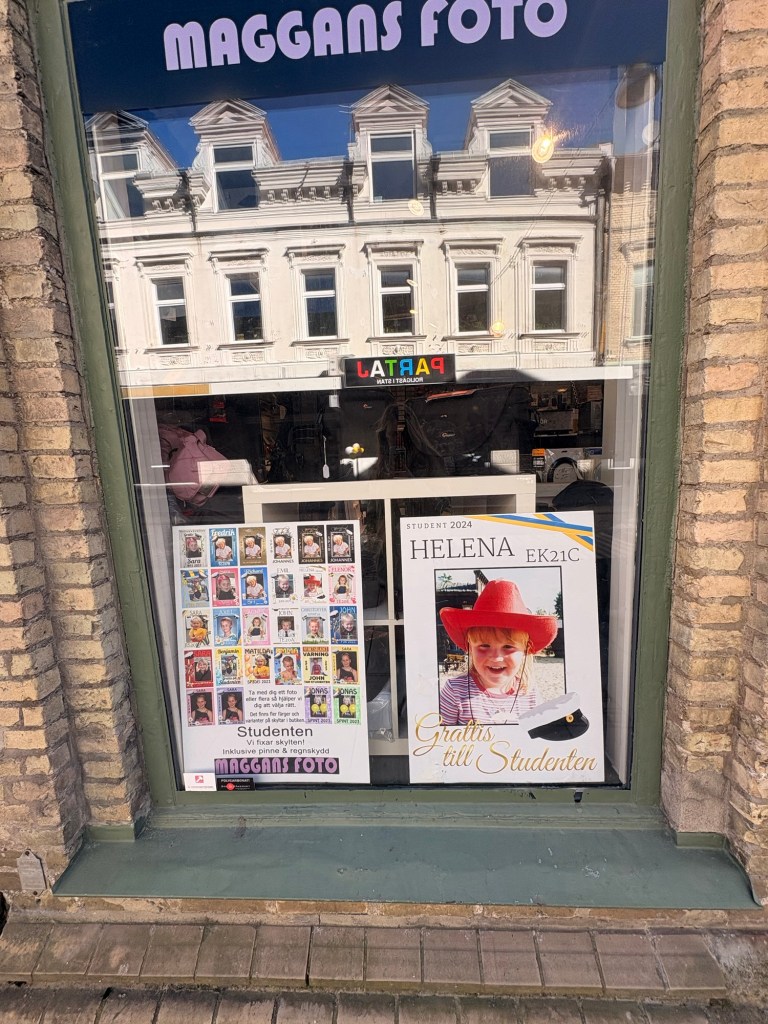
Business making the graduation pictures for you in Uddevalla

The clothing for this day is quite formal, with boys wearing suits, girls usually a white dress. each student has their name and surname embroidered on the hat, which costs around 100 euros

After staying with their families for some time, students get on flatbed buses driving through the city as the Danes do, dancing, drinking and partying. In some cases they just walk around instead, something which has been encouraged by authorities after several accidents involving the flatbuses occured.

Norway 🇳🇴

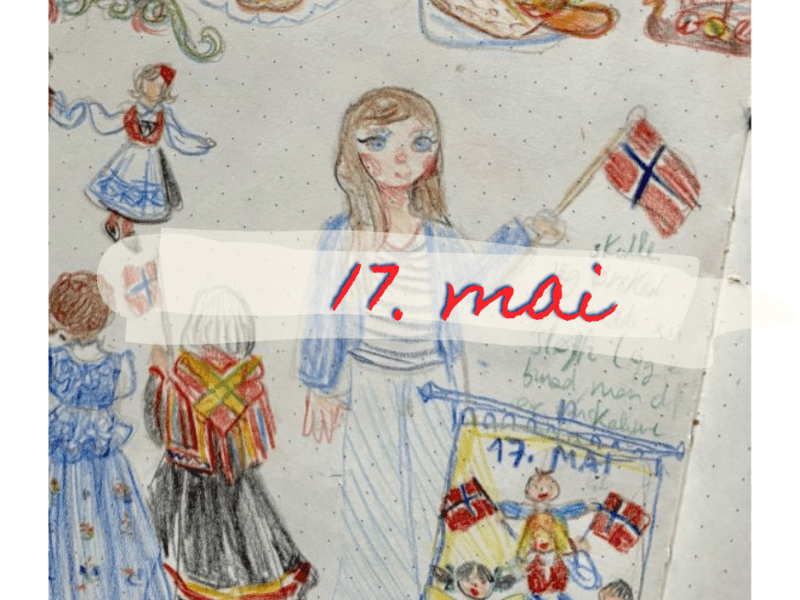
Norwegian graduation celebrations, Russ (short for russefeiring) is a big deal in Norway, with youngsters in overalls roaming cities for almost a month, from the end of April to the Norwegian Constitution Day, (May 17th). On that day, the students are awarded their caps and join the parade in their overalls. The russ period has also become known as “the three-week binge” treukersfylla, continue reading to find out why…

The personalized overalls, russebukse, are usually red, or blue in case of financial and business studies, and personalized with patches. On this website Norwegians can get their russ equipment 😉
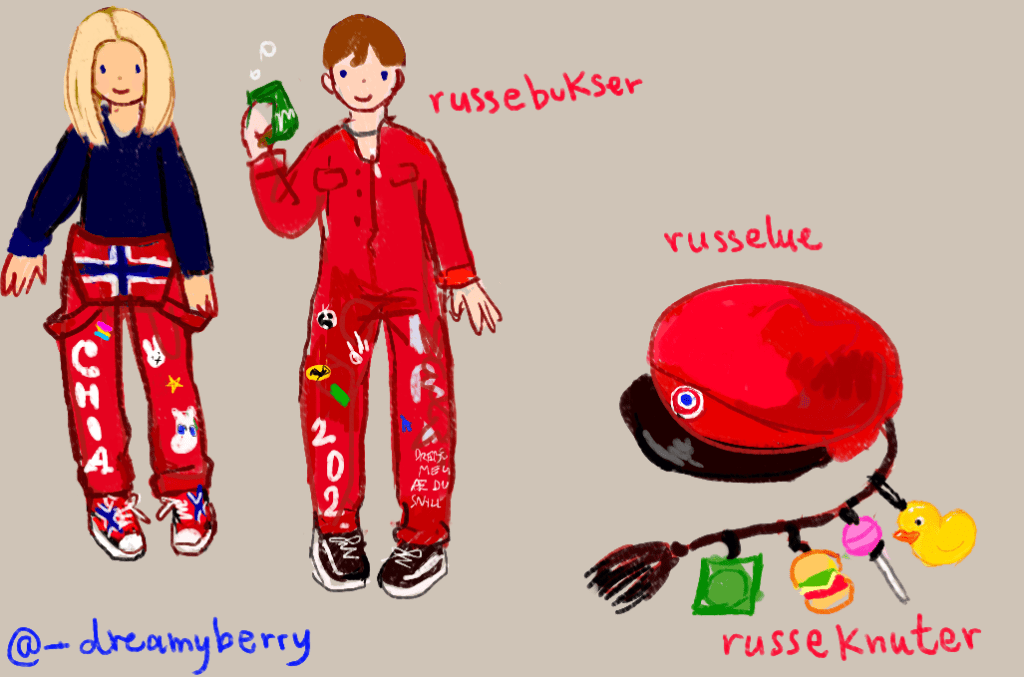
On the caps, Russeluer, Students write the Russ names they’ve been given, but the important part is a long cord, which gets knots (knuter) added for given dares completed before graduation: russeknuter. The tradition was introduced in the 40s, with different lists of around 100 dares for every school. Many dares involve sex and alcohol, and a lot are just hilarious. Classics are wearing loaves of bread on your feet for a whole day, not sleeping for 48 hours and bathing outside before 1st May. After criticism that russ was getting too wild, some new dares were invented to encourage teens to make good choices, such as getting tested for STDs or giving food to a homeless person.

Here are a few recurring ones (trinket – dare associated to it):

  • TAMPON – Put two tampons in your mouth and drink a pint of beer/cider.
  • TWIGS FROM THE GARDEN – Sleep in a tent in a teacher’s garden.
  • CANDY BURGER – Eat a cheeseburger in two bites.
  • “L” – Put an “L” (used for driving practice) on the back of a public transport vehicle.
  • CONDOM PACKAGE – Buy a pack of condoms using only body language.
  • BANKNOTE – Place a 5 minute poledance on a pole on a public transport.
  • RUBBER DUCK – Bathe with someone else in a canopy in front of the school, remember to scrub each other.
  • TOY FIRE TRUCK – Have safe sex during your period/with someone on theirs.

Here is the whole list of Russeknuter of Oslo for 2022 (in Norwegian). Because of what’s happening, this year there is a special Ukraine-knut, which can be gained if the class contacts a refugee centre and brings some fun activities to socially engage the young refugees there.

As the other Scandinavians Norwegians also rent or buy buses – the tradition of buying an old van or bus and painting it started in the 70s – but they do it on the next level, with their Russebuss, large coach buses completely decked out with colors, graphics, retrofitted and customized to become mobile partying units! The average Russbuss is used by 15 to 25 students and costs around $116,000!! Drivers are hired to drive them to Festivals and landstreff (national meetings) to meet Russ from whole Norway and party, party, party.

You may now wonder why students party that wildly in April. That’s because by the early 2000s, the authorities were worried about the impact all this partying and alcohol would have on the students’ grades, so the final exams in public schools were moved to early May. but what ended up happening was simply that the students started the russefeiring earlier.

Bonus: Finland 🇫🇮

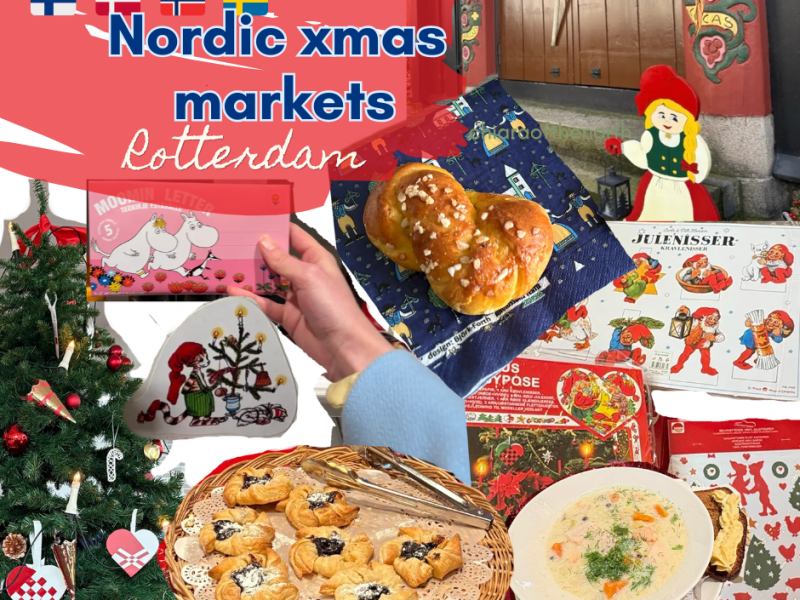
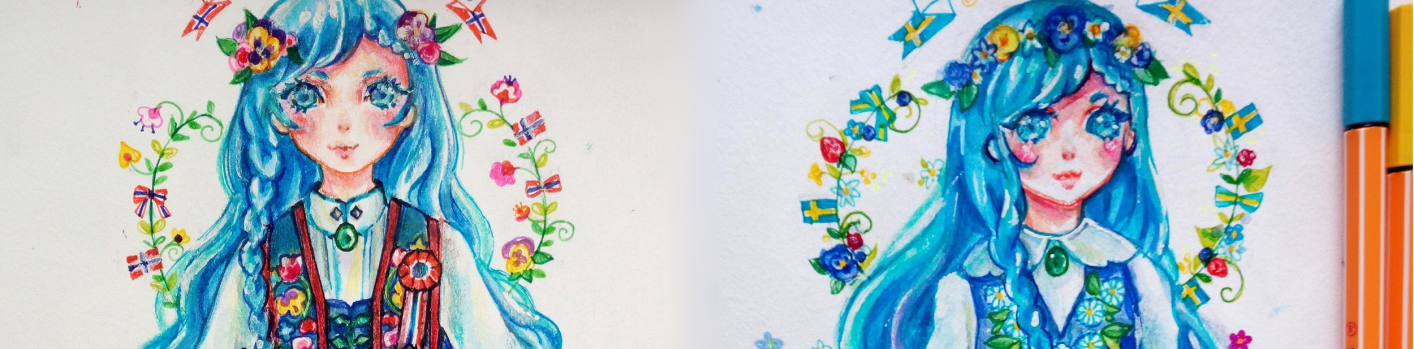
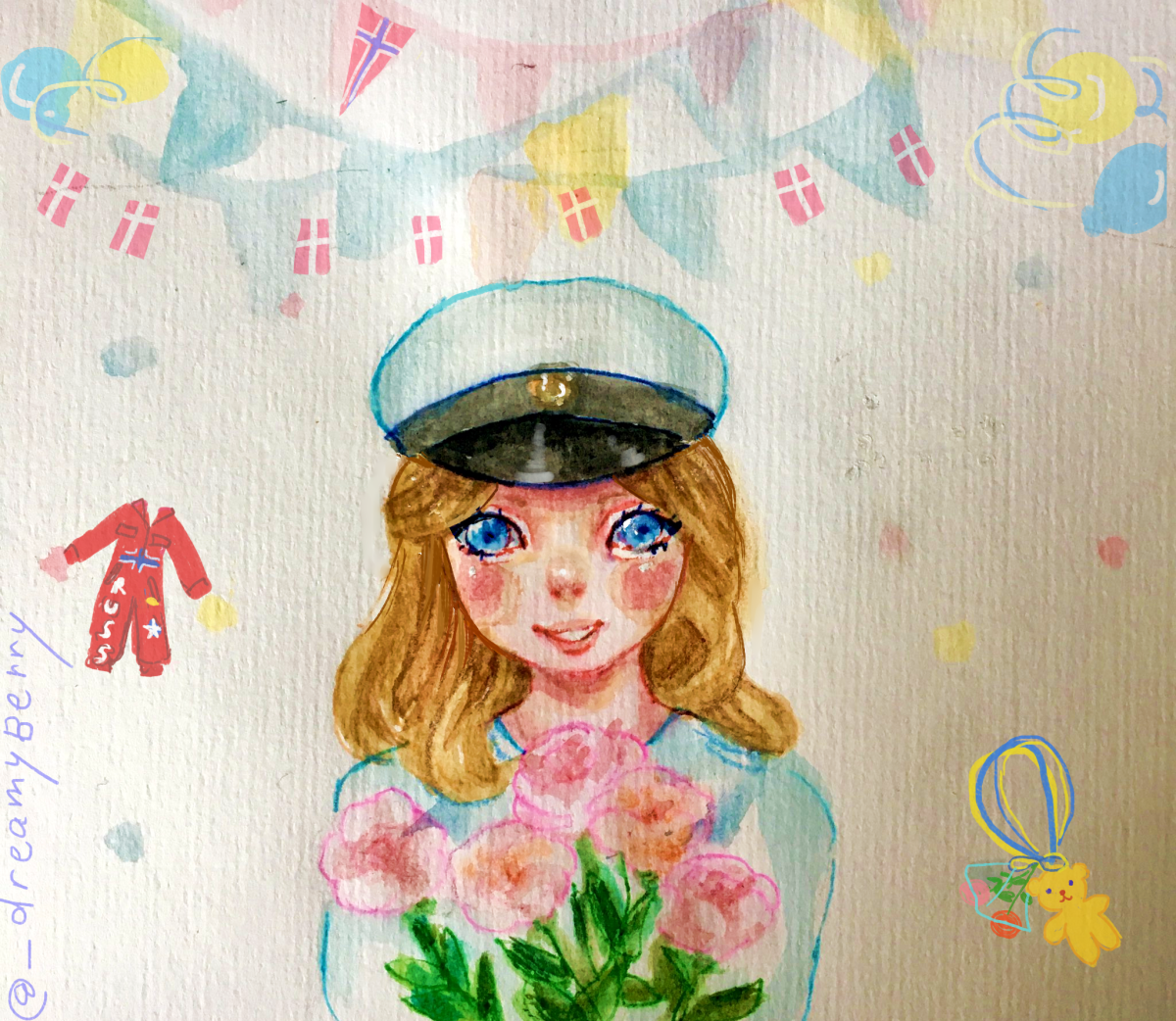
The girl I portrayed on the cover picture of this article is a Finn, (@alwaystimeforbujo on ig, she posts about bullet journaling), so here is something about Finland too:

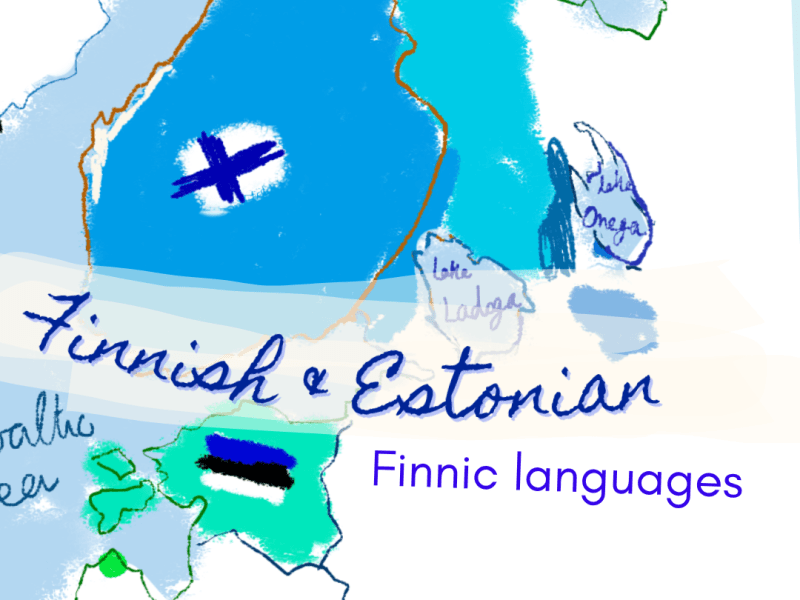
The Finnish cap, Ylioppilaslakki, is similar to the Swedish version, but instead of coloured fabric cockade, it has a metallic, gold-colored cockade depicting the lyre of Apollo, the insignia of the University of Helsinki.

Truck parties are a thing in Finland too, but in February, when students begin preparing for their final exams. A typical thing they do is dressing up in various costumes visiting the town’s school and throwing candy!

Good luck to everybody graduating this year!

Sources

ScanShop: Nordic supermarket in Luxemburg

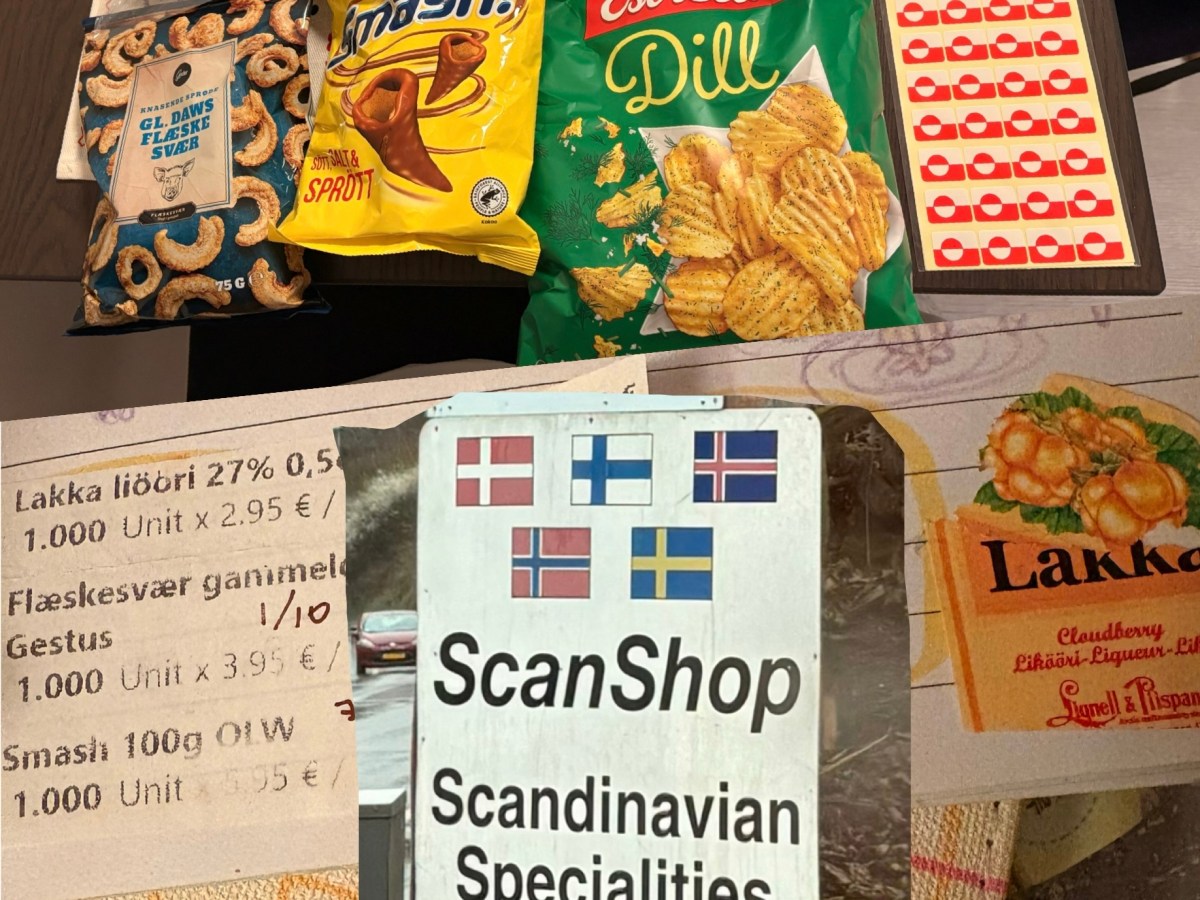
I visited Scanshop, a supermarket for Nordic expats in Luxembourg and Belgium. It offers a wide range of Scandinavian food products, including rye bread, fish, and sweets, alongside flags and tableware.
Swedish folk costumes

From old folk dresses varying for each district to the Sverigedräkt, a national dress for all of Sweden

Swedish folk costumes, Folkdräkter, are an important part of a Swedish cultural heritage, and are symbols for local and national identity. There are 840 different variations (550 female outfits and 290 male ones). Some of them have a rather long history, dating back from the 17th century. Members of the Swedish royal family wears a blue and yellow dress with daisy decorations on some occasions – that dress is much more recent!

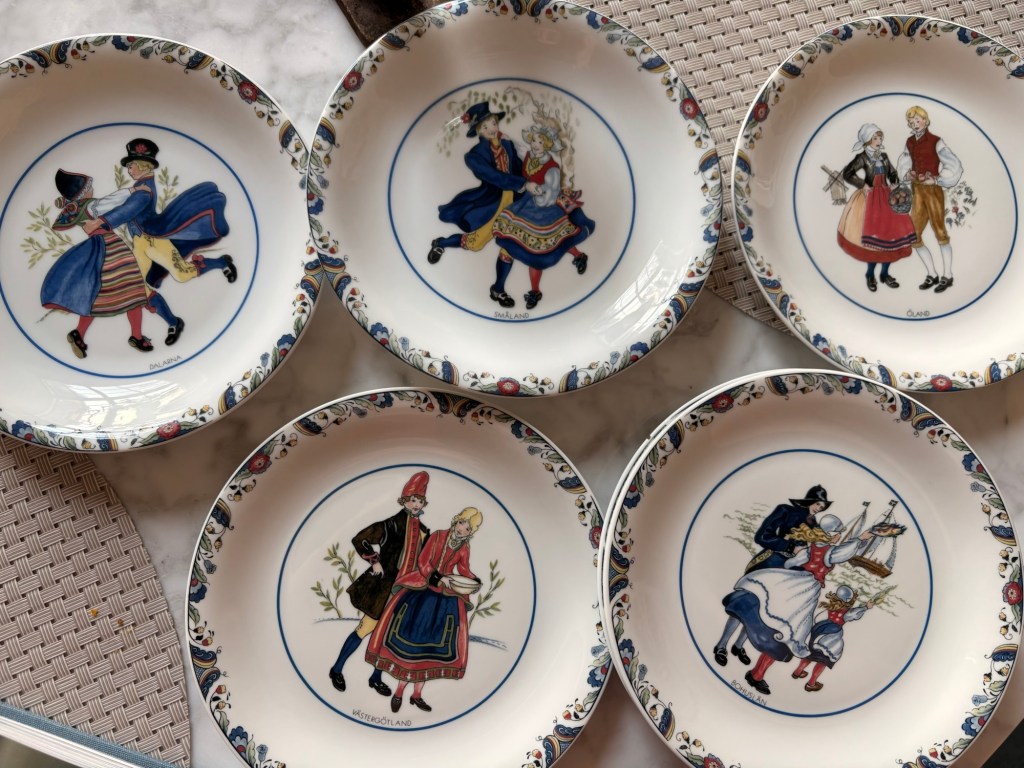
Dishes depicting folk dresses from various Swedish districts: Dalarna, Småland, Öland, Västergötland, Bohuslän

Different types of Swedish folk costume

Swedish folk costumes vary by region of origin, but in some they are more common, Dalarna has a very rich folk costume culture for example.

Some from Dalarna (Leksand, ?, Rättvik), central Sweden; and Norrbotten, northern Sweden

Each district had its own tailor, and some areas with natural boundaries and good communications within the district itself but poorer connections with the outside world would develop their own designs. Among typical features are flower patterns and headgear of all kinds, from bonnets to horn-shaped hats.

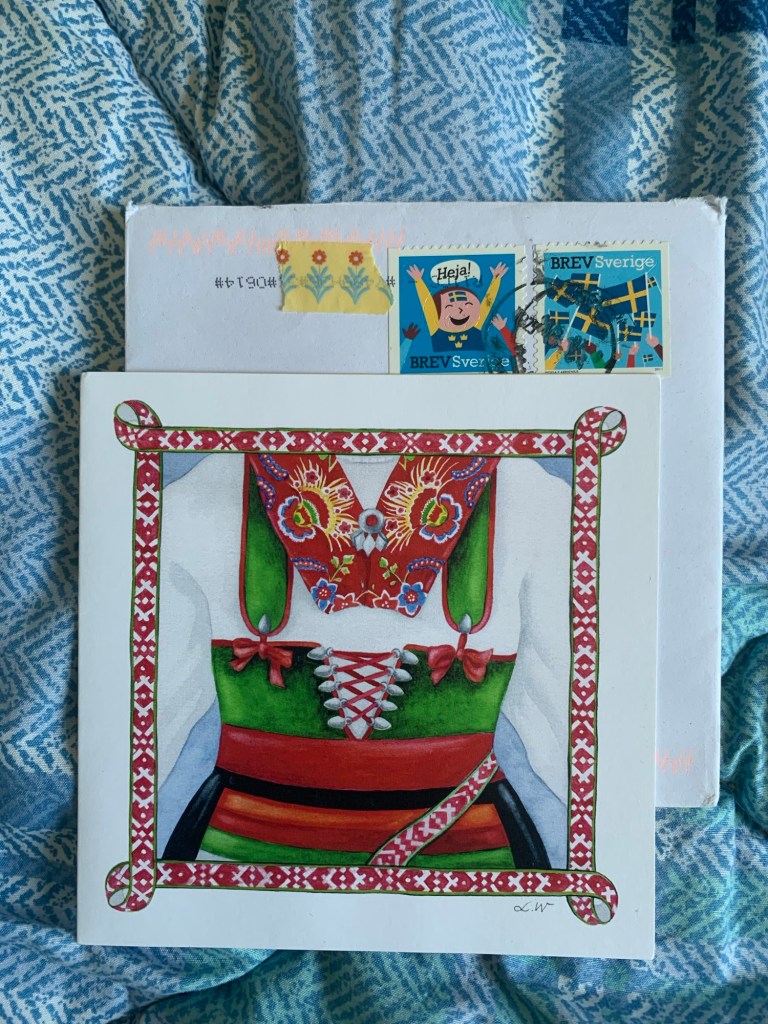
Postcard with a folk costume from Dalarna. Illustration by Lena Wikman,

in the 1850s, with the industrialization of Sweden, folk costumes started to be abandoned – but around 1900, with the National romantic period, upper classes amused themselves by wearing them. Some artists also depicted them, Among others Jenny Nyström and Carl Larsson:

[…] In addition we need the bright colors of the peasant costumes. They have an invigorating effect on our senses that is all too often under-estimated and they are necessary as a contrast to the deep green pine forest and the white snow

Carl Larsson, from ‘Ett hem’ (A Home)

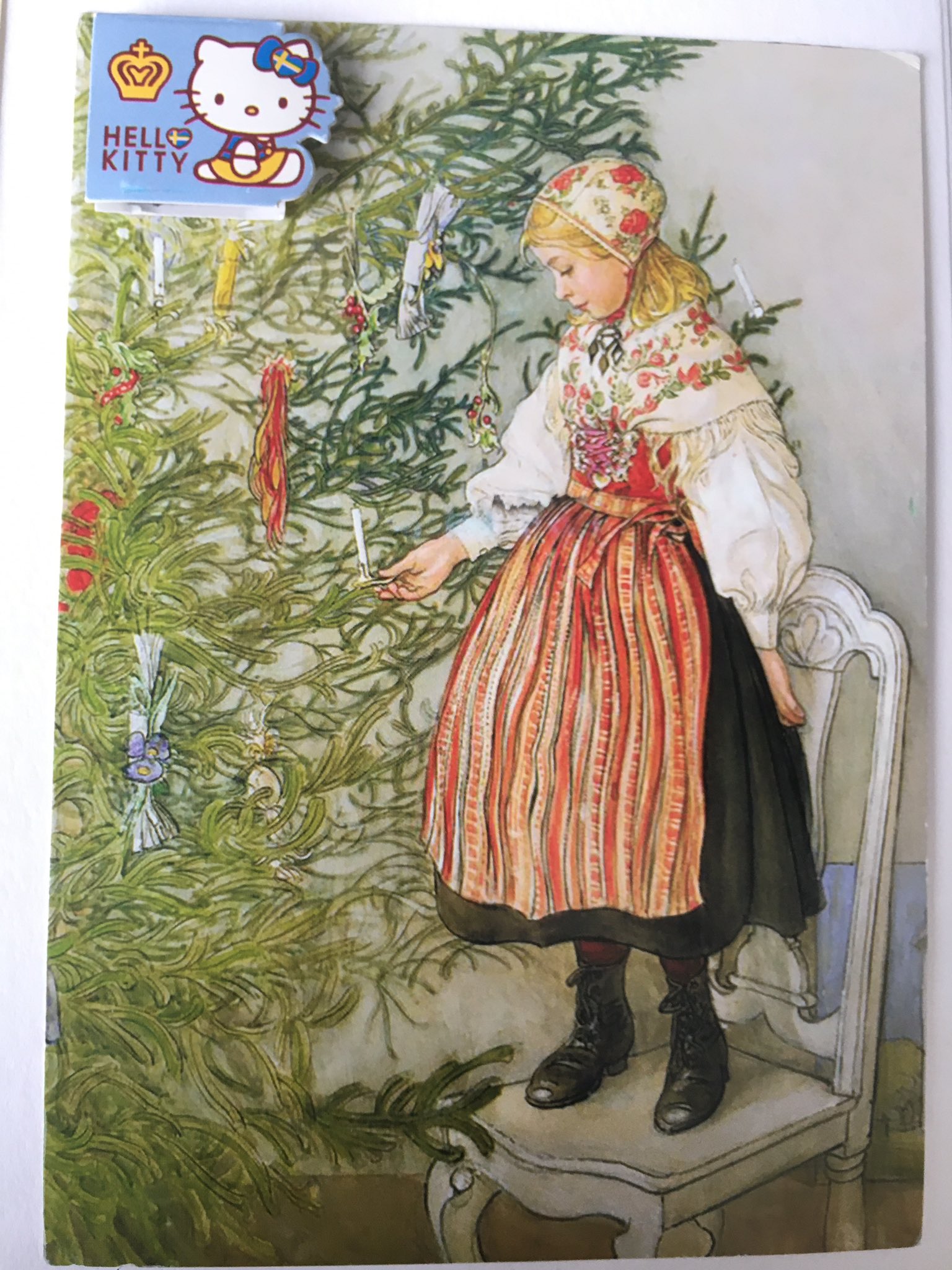
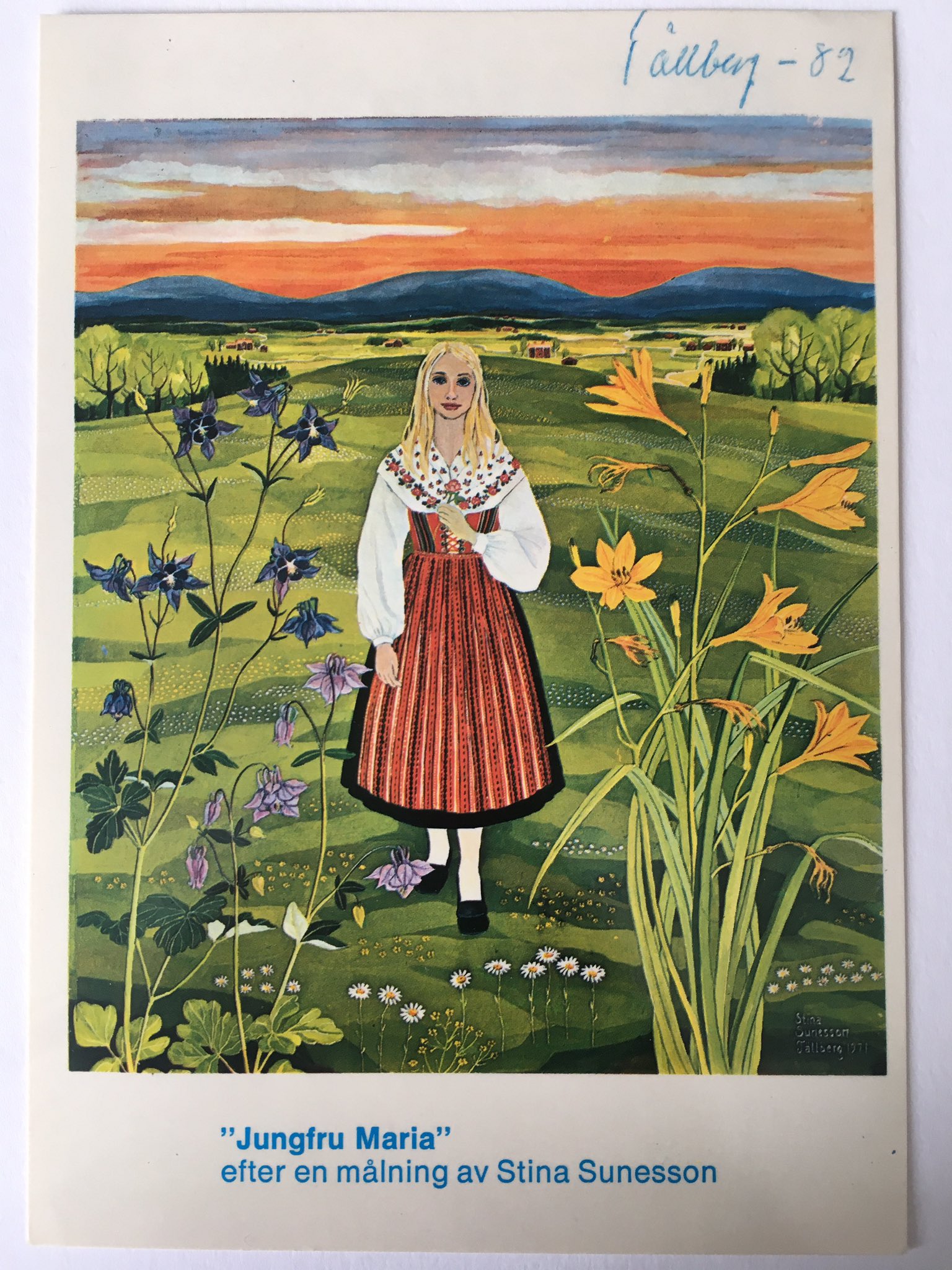
I got a couple postcards from Swedish penpals with paintings featuring folk costumes, by Carl Larsson (and I got a tiny Hello kitty in a svenska dräkten from the same person!) and Stina Sunesson

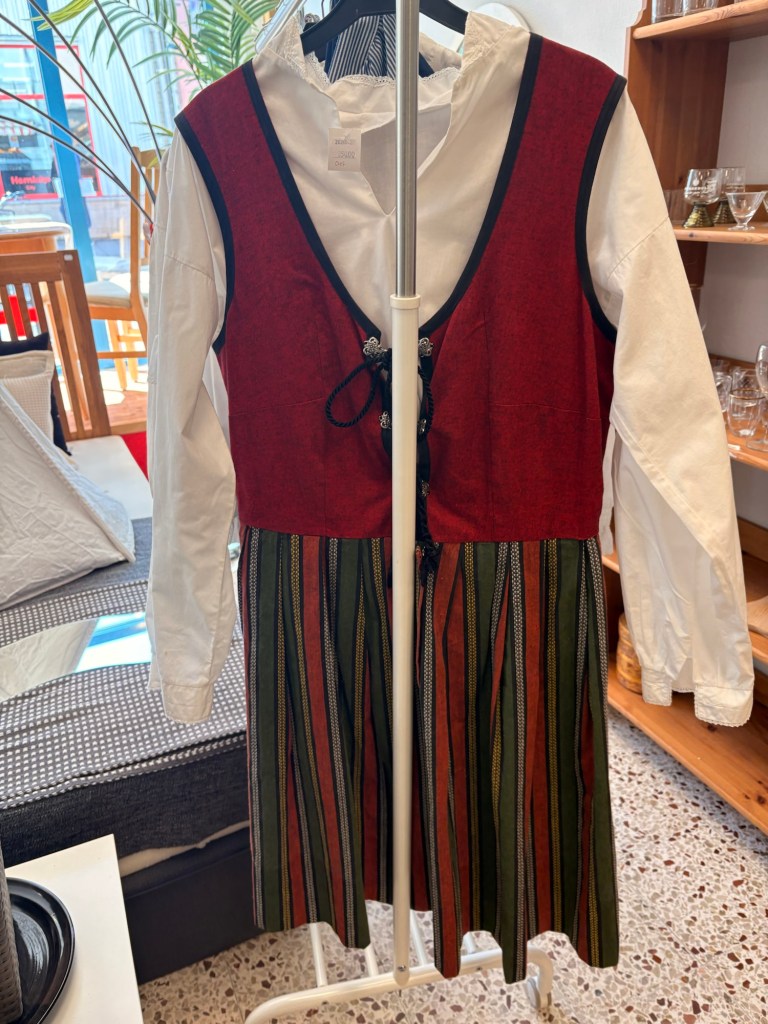
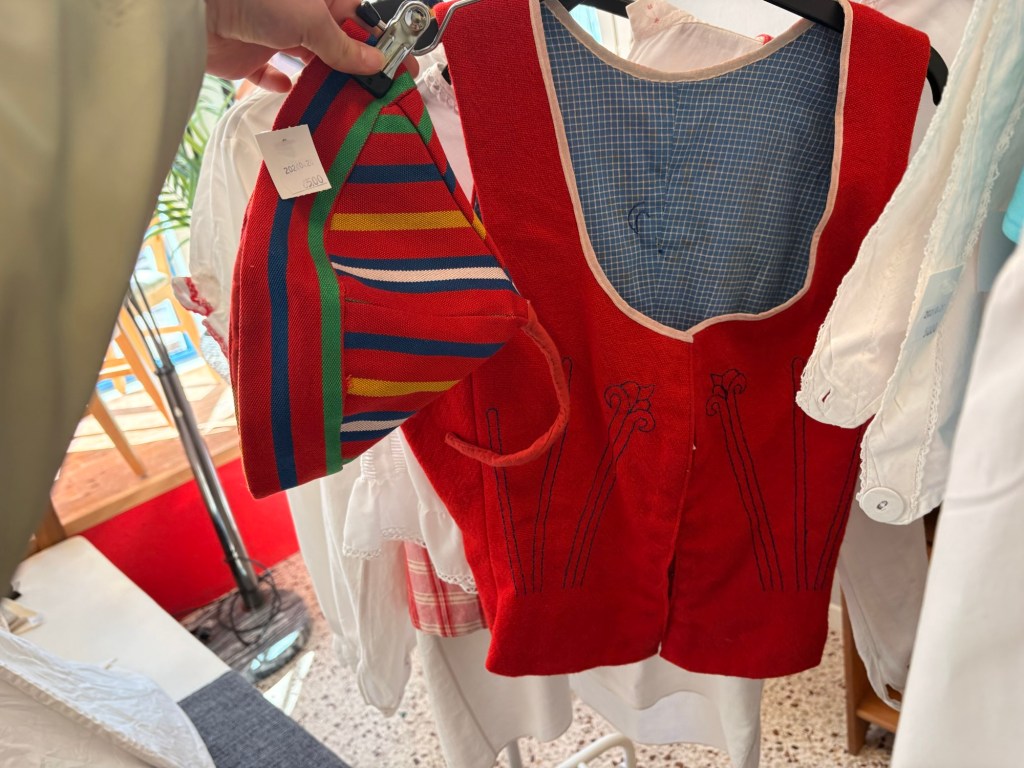
I even found a few folk dresses once at a second hand store, including a hat!

The invention of the Swedish National dress, Almänna svenska nationaldräkten

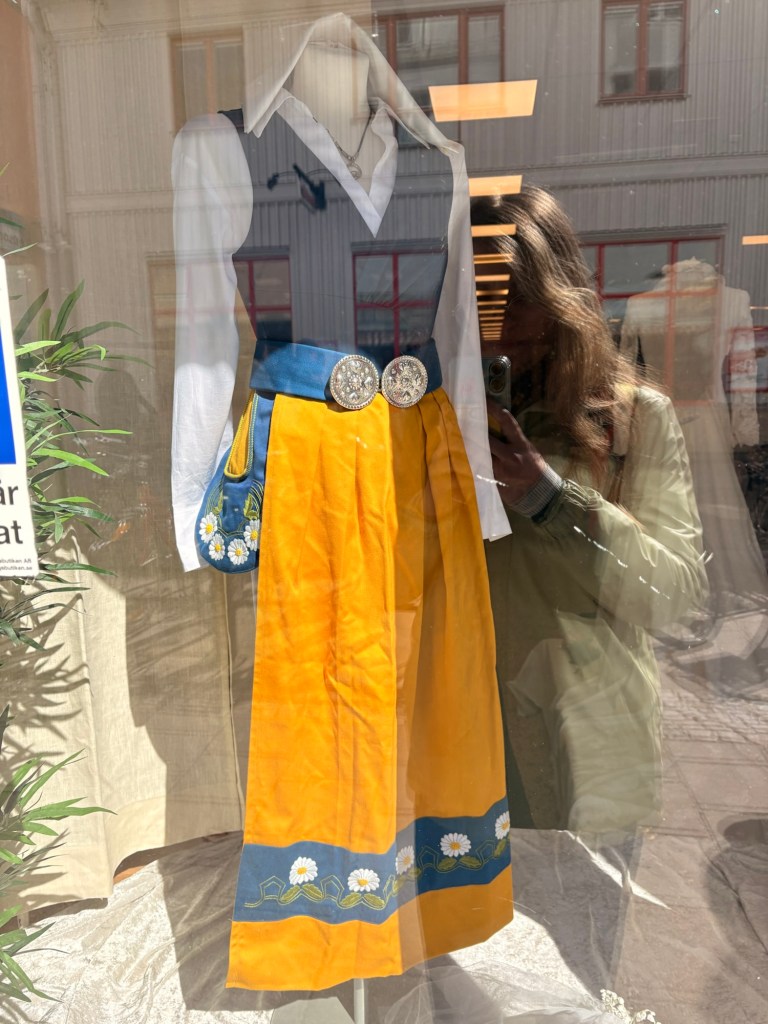
svenska dräkten for sale at the Röda korset second hand charity shop

In 1983 Queen Silvia wore the Svenska dräkten on Sweden’s National Day, 6th June, starting a tradition. The dress she wore was relatively recent, designed by a woman called Märta Jörgensen.

Märta Jörgensen was an apprentice gardener when came to the Royal Castle of Tullgarn, in the province of Södermanland in 1900. There, all female employees wore a costume inspired by a traditional dress from Österåker, by decision of the then queen Victoria.

She then married and moved to Dalarna working as a teacher. In Falun she set up the Swedish Women’s National Costume Society, Svenska Kvinnliga Nationaldräkts-Föreningen in 1902. Her goal was to ‘achieve freedom from the dominant foreign fashion through the introduction of a national dress for Swedish women’, that had to be of a simple cut and design, influenced by national romanticism.

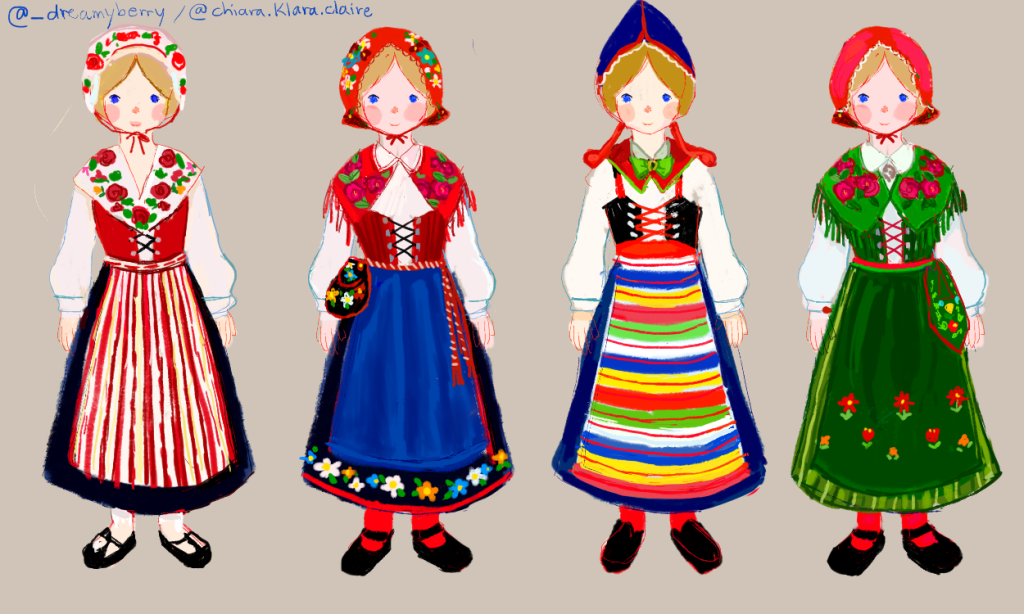
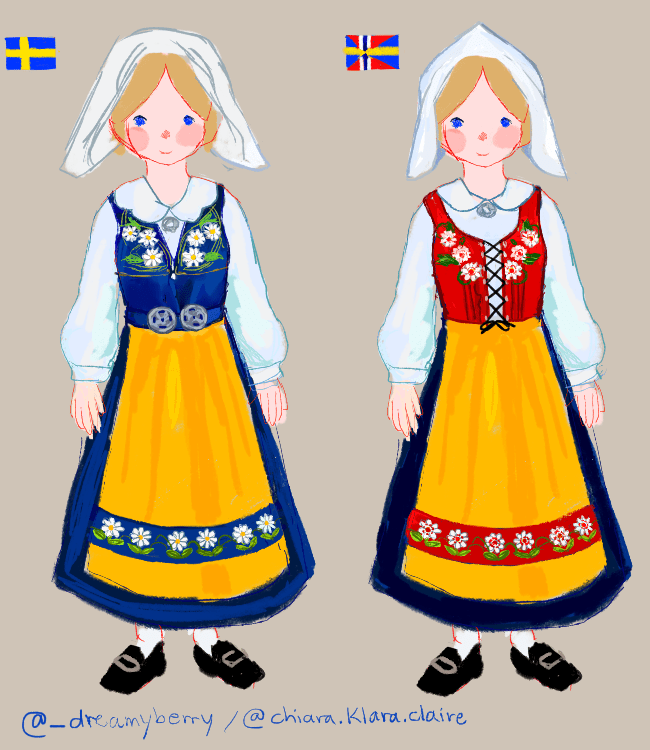
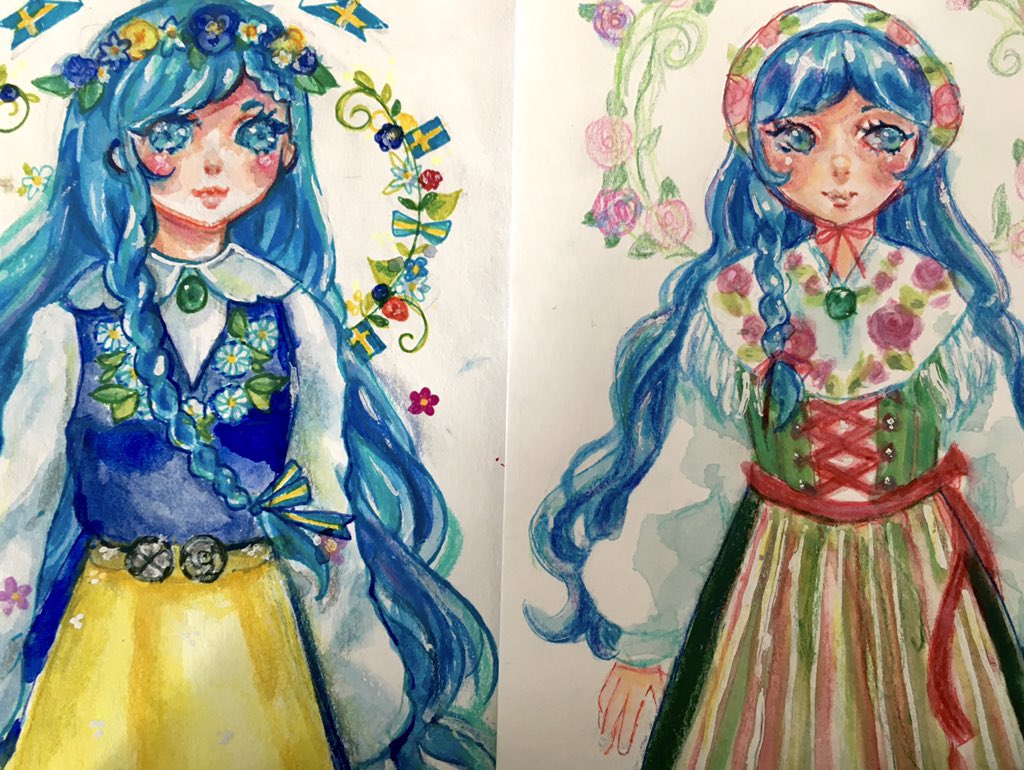
She designed two models, one for everyday wear, Blue with a yellow apron as the Swedish flag; the other for special occasions, with a red bodice, representing the Swedish-Norwegian Union (that lasted until 1905).

left one has been used by the royals, the right one is based on the few pictures I could find online.

The Costume Society had over 200 members in 1910, but interest decreased after WW2. Swedish folk costumes enjoyed however a comeback in the 70s. Queen Silvia wearing it on Sweden’s national day in 1983 made it the official national costume.

Side note – Definitions for Swedish folk costumes

Swedish folk costumes are called in various ways: folk folkdräkt (folk dress), landskapsdräkt (national costume), sockendräkt (provincial costume), bygde- or hembygsdräkt (parish or district costume), härads-dräkt (old jurisdictional county costume). The Swedish Museums have decided that the term folkdräkt can only be used for costumes from areas with a well documented, locally distinctive form of dress.

sources:

  • Skansen museum (Swedish)
  • nationalclothing.com
  • Sverigedrakten.se
  • Märta Jörgensen biography – skbl.se
  • M. Jörgensen, Något om bruket af nationaldräkter ‘On the Use of National Costumes’, 1903

Swedish Café in Utrecht: Broodnodig

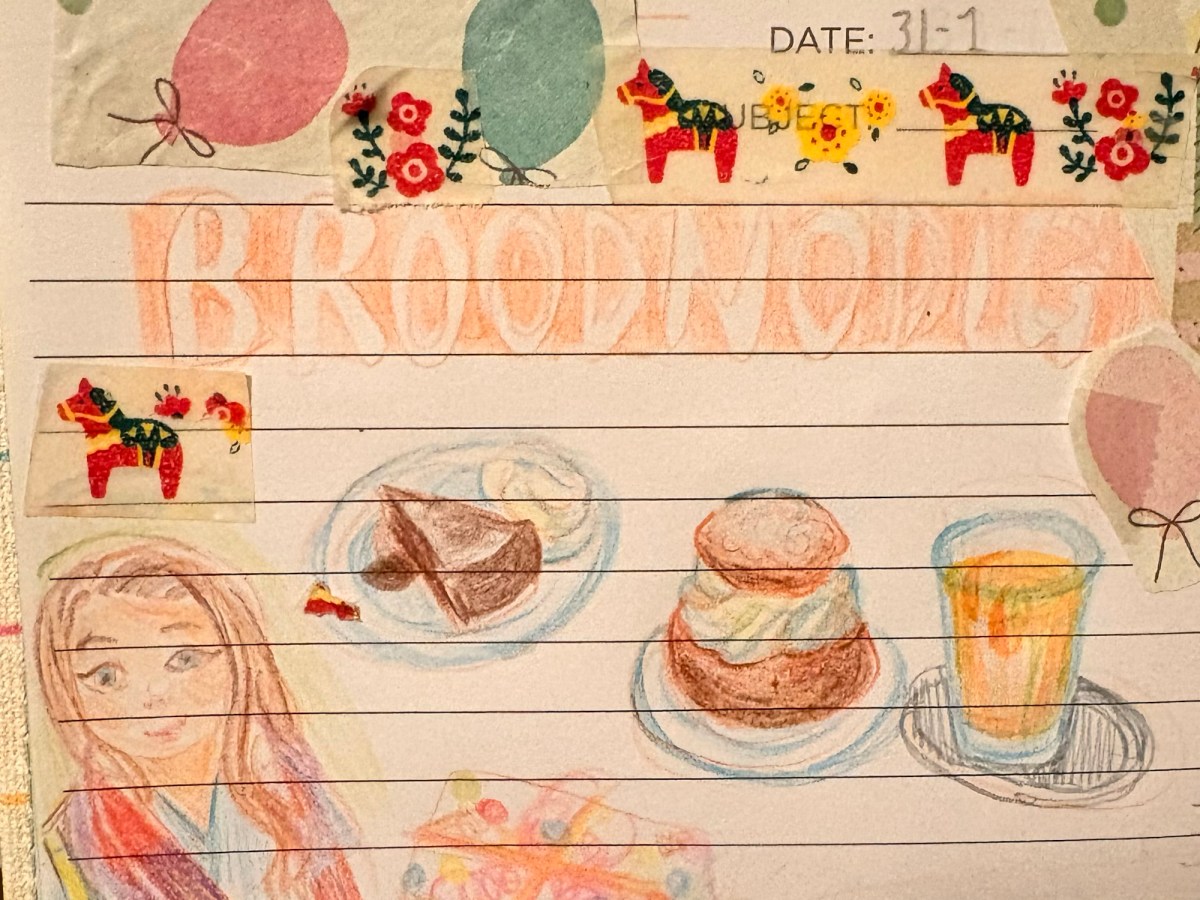
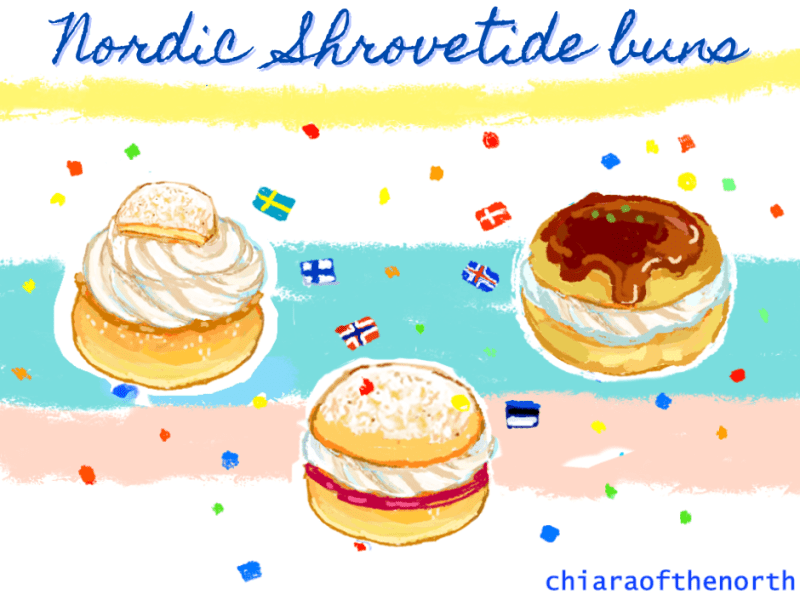
In Utrecht, the cafe Broodnodig serves Swedish pastries and cakes as cinnamon and cardamom buns, kladdkaka, smulpaj and Scandinavian seasonal treats as semlor and saffron buns.

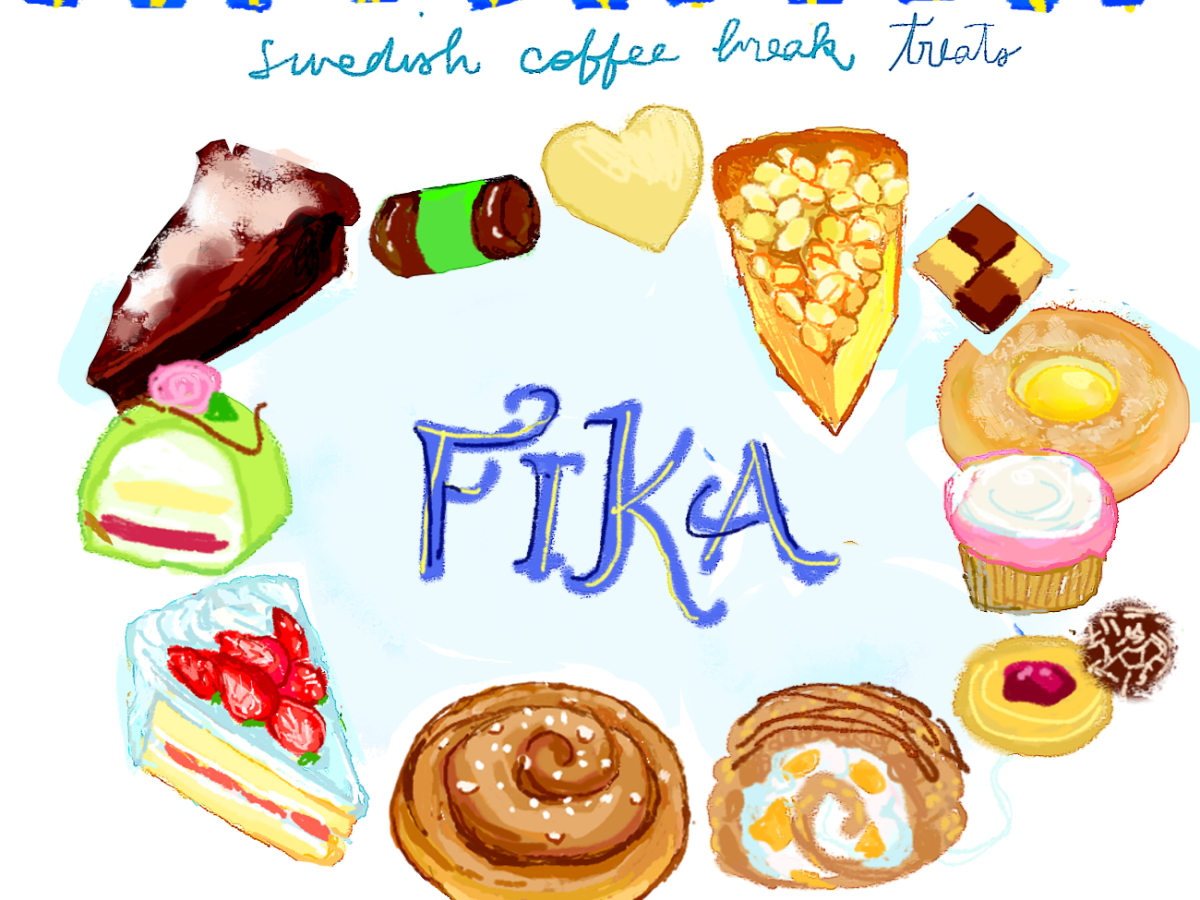
Illustrated Guide to Swedish Fika

Fika is a cherished Swedish tradition involving a coffee and cake break. Discover various Fika treats, from classic kanelbullar (cinnamon buns), cakes and cookies to savory options.

Astrid Lindgren’s places in Småland and beyond

Astrid Lindgren’s homeland and locations of her movies

Astrid Lindgren’s birthday was on 14th November, to celebrate Scandinavia’s and the world’s favourite children author here’s an article about her homeland.

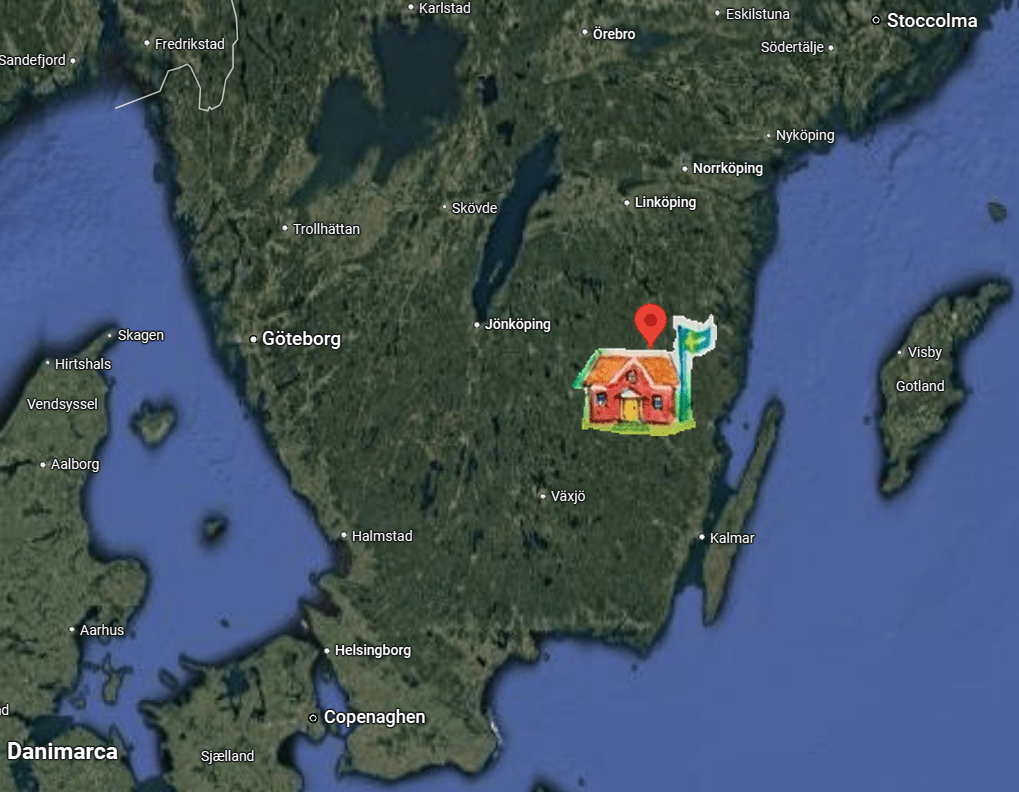
Astrid Lindgren came from Småland, a region in the south of Sweden full of idyllic villages, wild nature (51% of Småland is forests!) and old farms. There you can visit the places from her childhood that were sources of inspiration for books as Emil in Lönneberga, Bullerby/Noisy Village, Pippi Longstocking and so on around the town of Vimmerby.

There were two things that made our childhood what it was – security and freedom.

From the book Mitt Småland (“My Småland”) by Astrid Lindgren and Margareta Strömstedt

Vimmerby and surroundings

Where Astrid Lindgren grew up

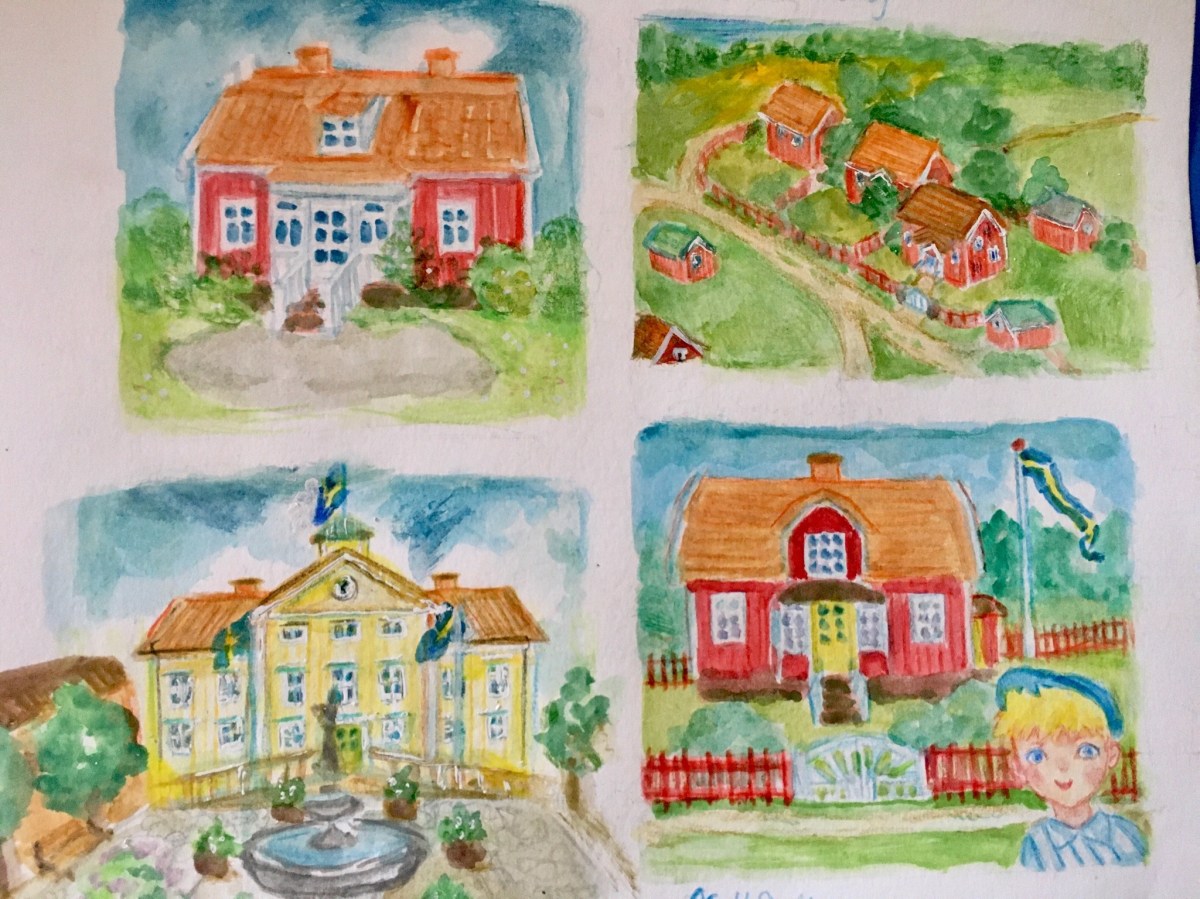
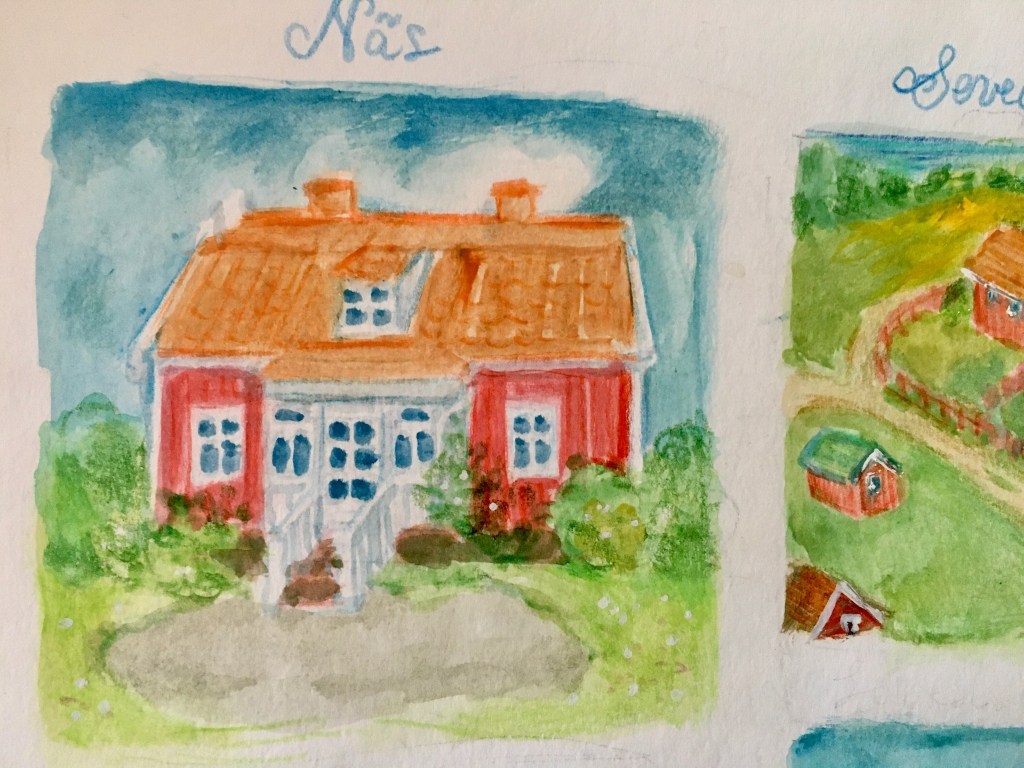
Astrid Lindgren’s family house in Näs

Astrid Lindgren spent her happy childhood on the Näs farm. The hollow elm which was Pippi’s “lemonade tree” (Sockerdricksträdet) is still in the garden. Astrid and her siblings had named it Owl Tree (Uggleträdet).

The farm is still owned by the family and is part of the cultural center, which was opened in 2007 for Astrid Lindgren’s 100th birthday. You can find out more about Astrid Lindgren, her life and work in exhibitions there.

Vimmerby’s Town Hall

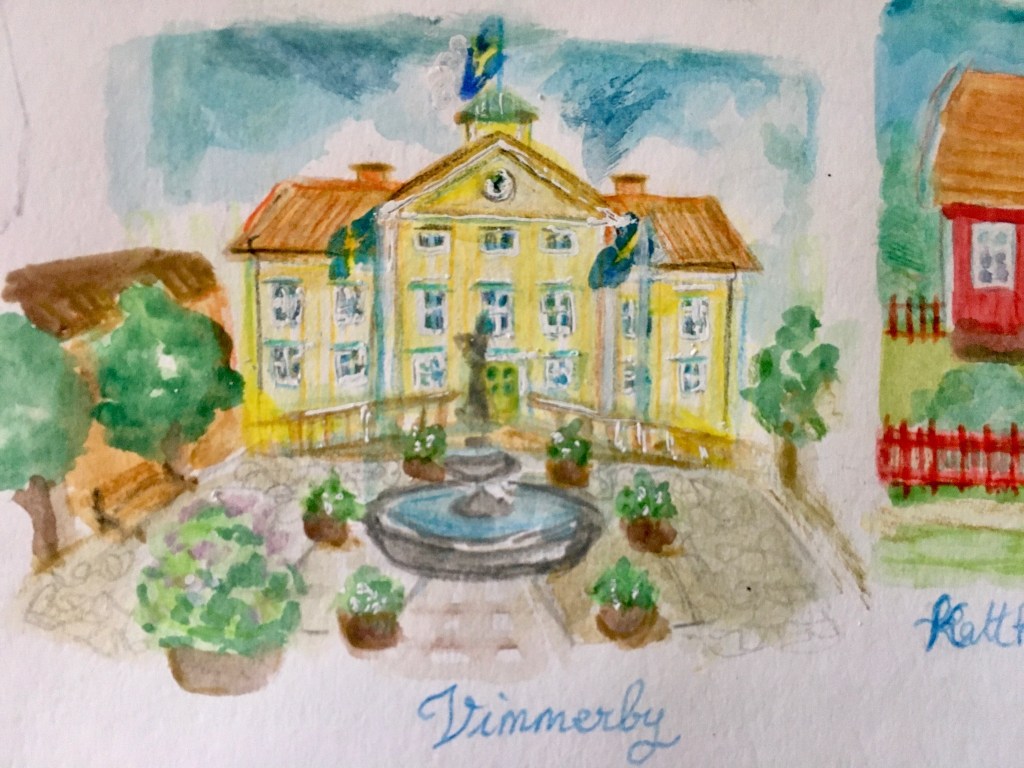
Vimmerby is the town were Astrid Lindgren grew up and went to school. The young Astrid played with her siblings and friends in the alleyways of this small town and in the surrounding woods. Her childhood provided the raw material for her stories. Here are some contained in Pippi Långstrump, her major success:

  • The game “Don’t touch the ground”, that Pippi plays one day with Tommy and Annika was also played Astrid Lindgren.
  • The message in a bottle in Pippi Longstocking Goes Aboard comes from a game Astrid played with her brother Gunnar and her two cousins.
  • Her brother Gunnar also invented the “things-finder” (sakletare) game.
  • Pippi’s freckles and red hair came from a friend of Lindgren’s daughter Karin.
  • in Furusund, where the summer house of the Ericsson family was, there was a girl who had a horse tied to the porch similar to Pippi’s Lilla Gubben.

She was also good at school to the point where she was called “Vimmerby’s Selma Lagerlöf” after her first essay was published in the local newspaper Vimmerby Tidning. She worked two years as a volounteer for it until she got pregnant at 18 and left the town.

Emil’s village and Bullerby

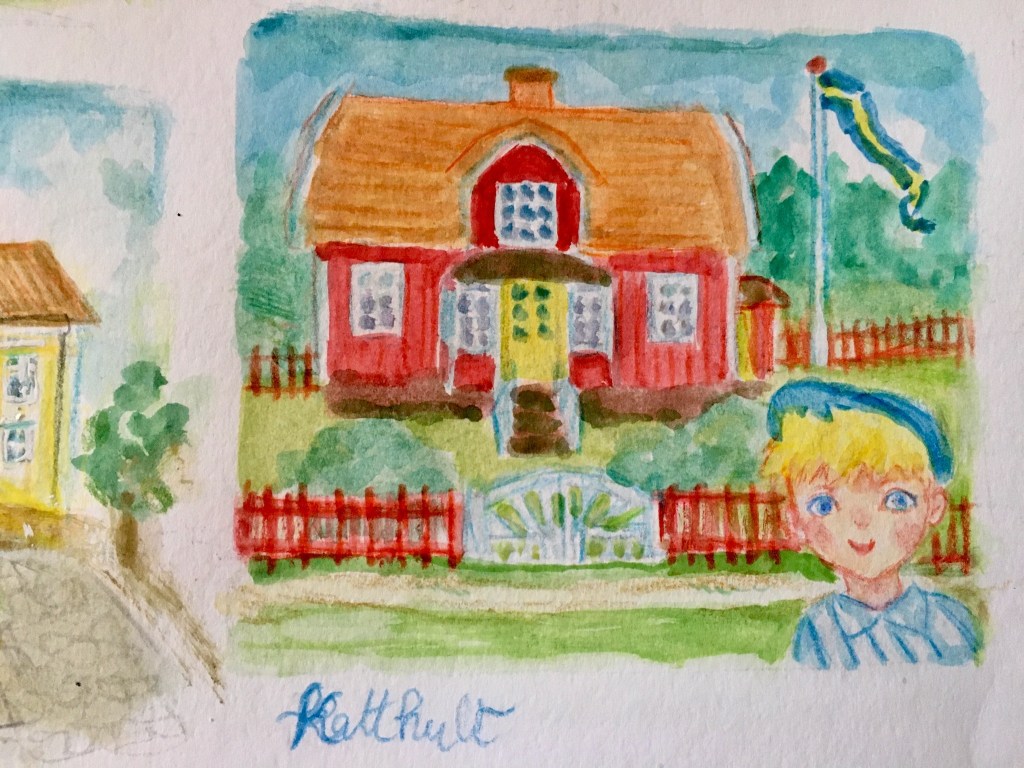
Around Mariannelund, just 20 km south of Vimmerby, is where the Emil of Lönneberga films were made from 1971 to 1874, in the Film village Filmbyn Småland. In this interactive museum you will be able to have a look behind the scenes and see classic film clips, sing along to tracks and check out original props. Emil´s home, Katthult, is actually called Gibberyd, located between Lönneberga and Mariannelund.

Astrid Lindgren found the inspiration for Emil from the stories her father told about his childhood, but the character of Emil came to life when she was taking care of her three-year-old grandson, who was screaming with all his might. Astrid Lindgren asked the boy if he knew what Emil had done one day. Since the boy wanted to know that, he started being quiet to listen. From that moment, she went on telling her grandson about Emil and later wrote the stories down.

Sevedstorp and the surrounding area

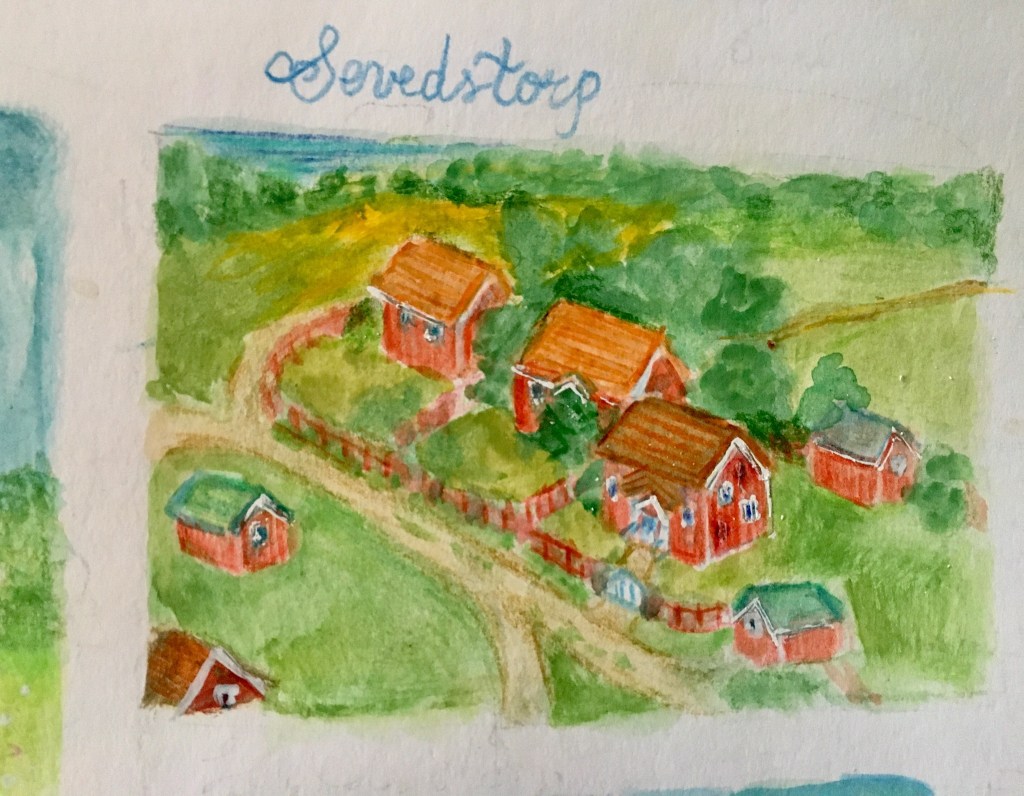
The village of Sevedstorp became Bullerby (Noisy Village) in the films. This hamlet was the childhood home of Astrid Lindgren’s father, and the three farms in Pelarne, 10 km from Vimmerby, were in fact also the model for the Bullerby. Astrid Lindgren‘s father Samuel August Ericsson grew up there with his four brothers and two sisters. Astrid Lindgren’s grandfather was also the model for Bullerby’s grandfather. The farms are however private property now.

I am sorry for all who do not live in Bullerby

Anna in Bara roligt i Bullerbyn

Astrid Lindgren’s Amusement Park: Astrid Lindgrens värld

And if you want to see everything at once, you can visit astrid lindgren’s world. The author’s theatre park, few minutes walking away from Näs, is where the characters and settings from Astrid’s most famous books are brought to life. It lets you truly immerse yourself in the stories of Astrid Lindgren. leap across the Hell’s Gap chasm with Ronja the Robber’s Daughter, meet Katla the dragon with the Brothers Lionheart or watch That Emil hoist little Ida up the flagpole.

Outside Småland

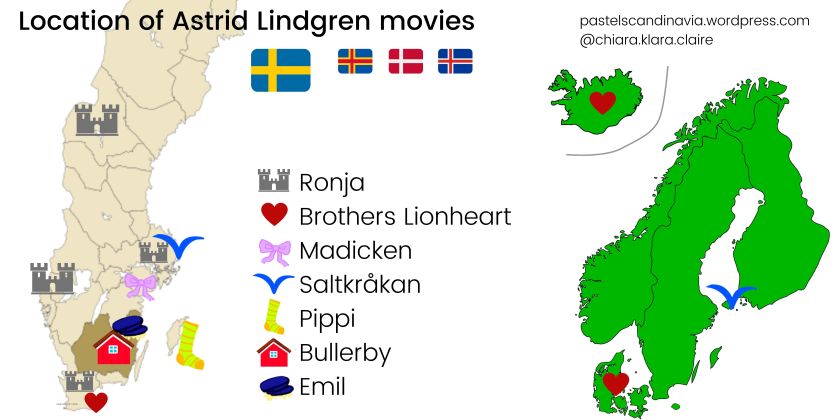
Here you can read (in Swedish) about the locations of the movies. However, not all films inspired by Astrid Lindgren books are located in Småland, in some occasions even outside Sweden!

  • Pippi Longstocking was filmed in the town of Visby in Gotland, the largest island in the Baltic Sea. The shops were located in the St Hansgatan street in the centre. Villa Villekulla is a few kilometres outside Visby, later moved to the south of the town.
  • Brothers Lionheart: Tomelilla and in the hills Brösarps Backar in Österlen, south-east Skåne. The town of Törnosdalen in the movie is in Den Gamle By, an open-air museum in the Danish city of in Aarhus, in Jutland. Much was also in Iceland.
  • Madicken: Söderköping
  • Ronja: most scenes are near the mountain Sörknatten i Dalsland. most scenes by the lake in Jämtland (lake Blåsjön). Other scenes are in the cave Tykarpsgrottan in Ignaberga, Skåne; and in the ruins of the Haga castle in Solna, near Stockholm.
  • Vi på Saltkråkan/ Seacrow island: islands in the Stockholm northern archipelago: most in Norröra, some Söderöra. A lot of scenes were also in Eckerö, in the archipelago of Åland (Finland).

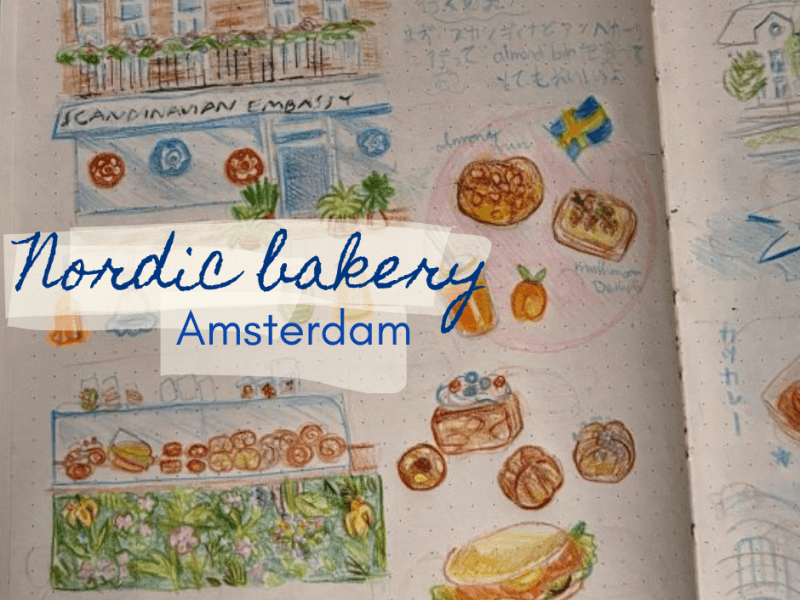
Scandinavian Embassy bakery and cafe in Amsterdam zuid

On a trip to Amsterdam, I decided to test Scandinavian Embassy and both of its two locations, starting with the bakery in europaplein. The two locations are in Amsterdam zuid: Saphatipark and Europaplein: in the former, a more central location, you can sit but it has fewer items than the bakery in Europaplein. The bakery,…

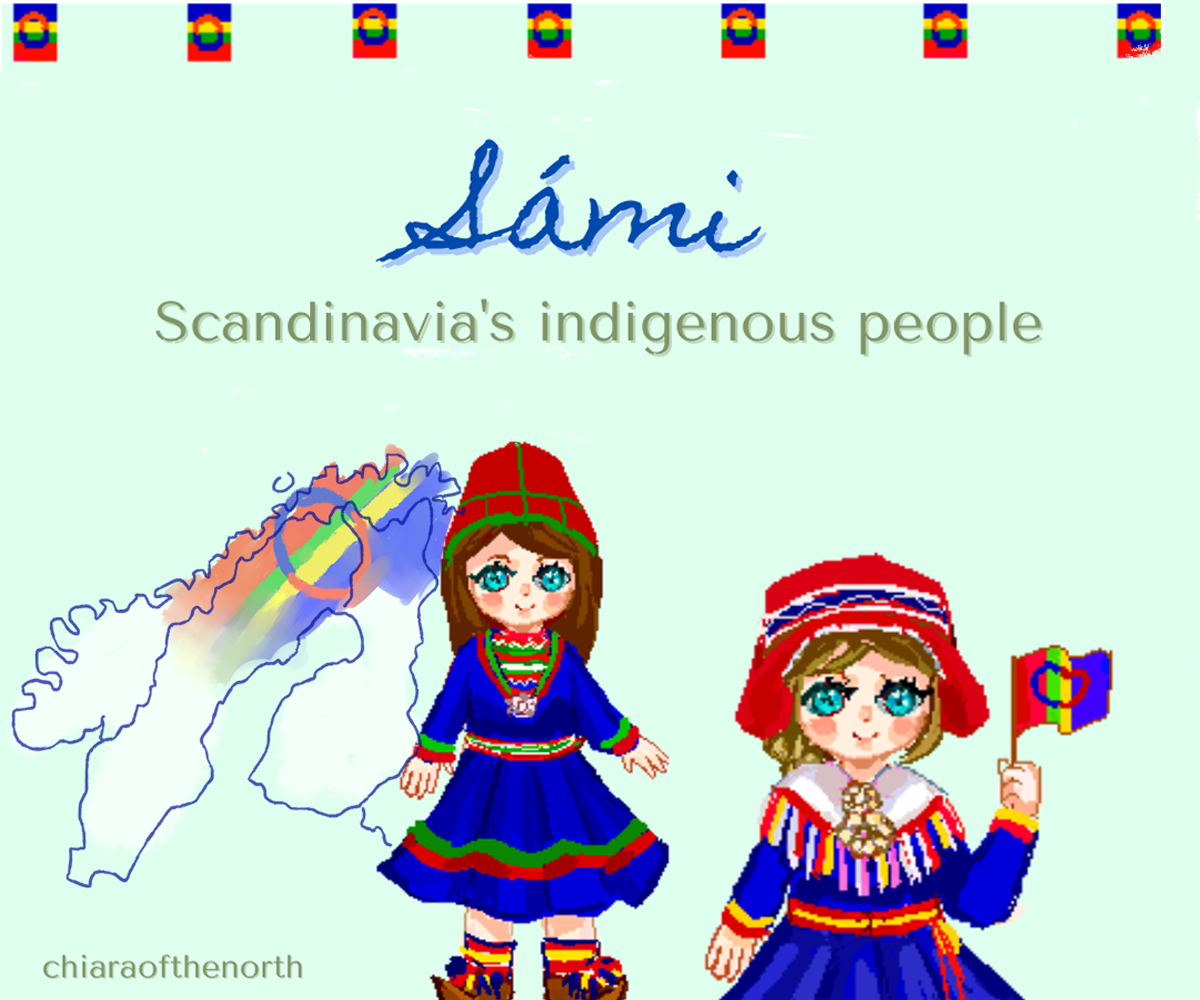
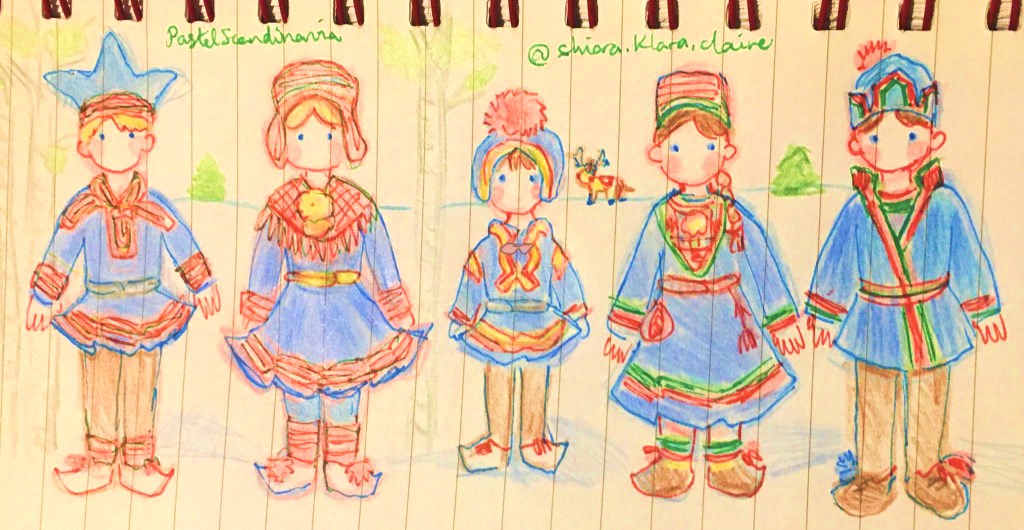
Who are the Sámi? – The indigenous people of Scandinavia and their history

The indigenous people of North Scandinavia & 6th February

February 6th is, other than my birthday, Sámi people’s National Day.

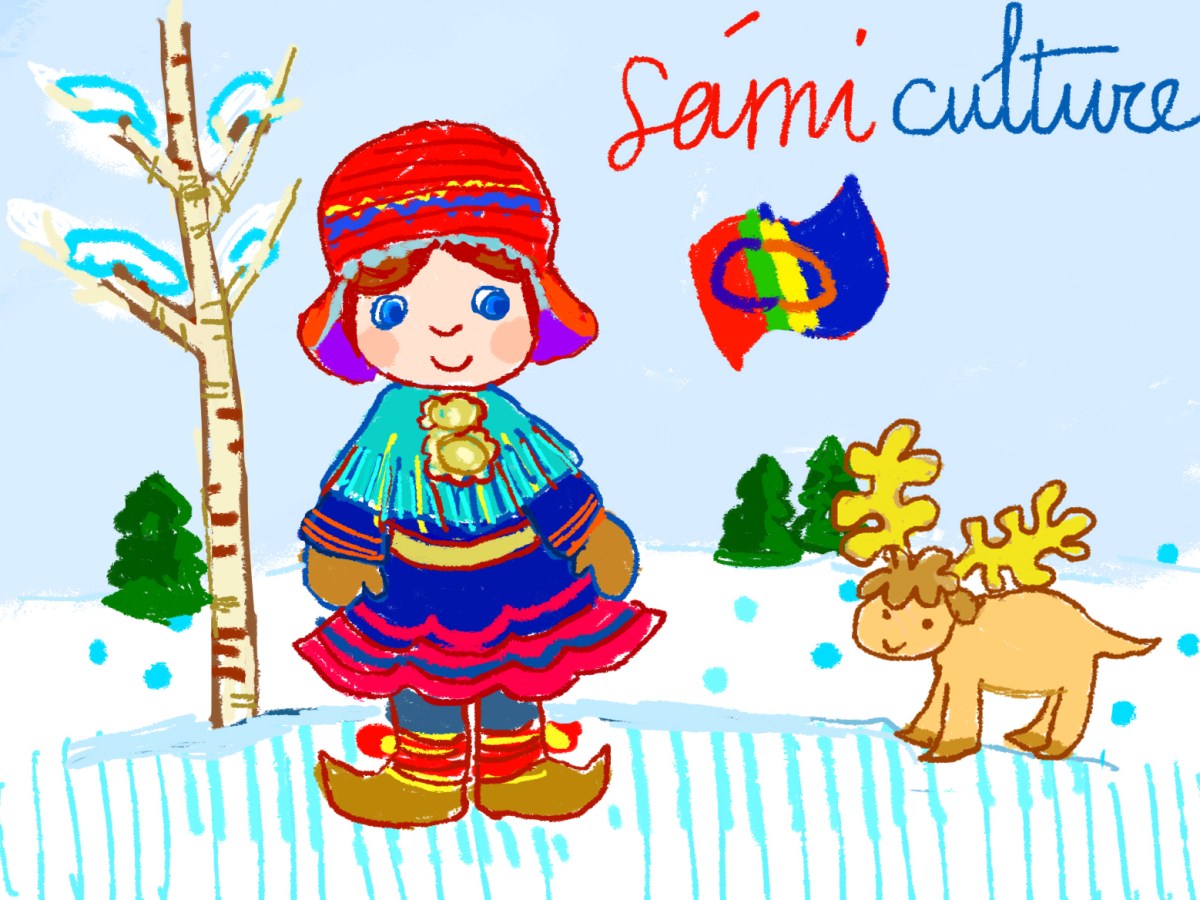
The Sámi – also spelled Saami – are an indigenous people inhabiting Sápmi, which today encompasses large northern parts of Norway, Sweden, Finland and Russia. The Sámi have historically been known as Lapps or Laplanders, but these terms are usually regarded as offensive. There are about 100,000 Sámi people, divided by the borders of 4 states: Norway (ca. 60.000), Sweden (30.000), Finland (8.000) and Russia (2.000).

The Sami are well known for their traditional occupation of reindeer herding: around 10% of Sámi practice reindeer herding nowadays, which in some parts of the Nordic countries can be practiced only by Sámis.

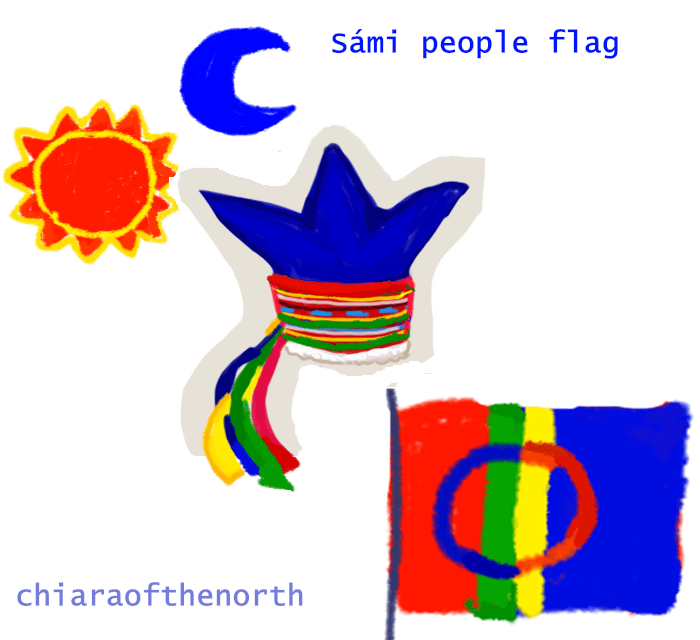
Sami people mantain a strong cultural identity while being citizens of their countries, from languages – which are related to Finnish – to traditional clothing and a Sami flag.

Sami people of Norway, Sweden, and Finland also reunite in Sami parliaments of each country since the late 20th century, and have a joint Saami Council. The first meeting of Sami across borders in 1917 became Sami national Day, on 6th February.

After religious missions and colonisation of Northern Scandinavia, Sami people were subject to discriminization and forced assimilation – from prohibiting them to enter territories to the south in Sweden or buying land in Norway, to the Systematic Norwegianization in the 1860s.

The majority of the Sámi now speak the majority languages of the countries they live in and all Sámi languages are at some degree of endangerment.

Sámi languages had been illegal for centuries in Sweden and Norway, with assimilation policies and special residential schools (similarly to what happened in North America with indigenous people). This left many with traumas, not speaking Sámi languages to children as a way to protect them.

This started to change with laws, the funding of Sami parliaments, and recognization of Sami as indigenous people of Scandinavia, giving them the right to education in their language. Despite this, most Sami languages are endangered

Recommendations

  • the movie Sameblod, or Same Blood in English (2016), directed my Amanda Kernell. It is set in Sweden in the 1930s and concerns a 14-year-old girl who experiences prejudice at a nomad school for Sami children, and decides to escape her town and disavow her Sami heritage. Parts of the story are inspired by Kernell’s own grandmother.
  • books by Ann-Elen Laestadius: Stöld (stolen is the English title- with a Netflix adaption from 2021 as well), Straff (punished in English)
  • Sami singers: Jarnna (their Nilas jojk was my favourite song to calm down in an incredibl stressing period), Jon Henrik, Elin Oskal

Sources :

  • Samiskeveivisere.no – Samer og nordmenn i Norge – Samiske Veivisere
  • Store Norske Leksikon – snl.no/samer
  • sametinget.no
  • samer.se
  • YLE’s Say it in Saami quick guide to Saami culture

Scandinavian Christmas: symbols, sweets and gift bringers

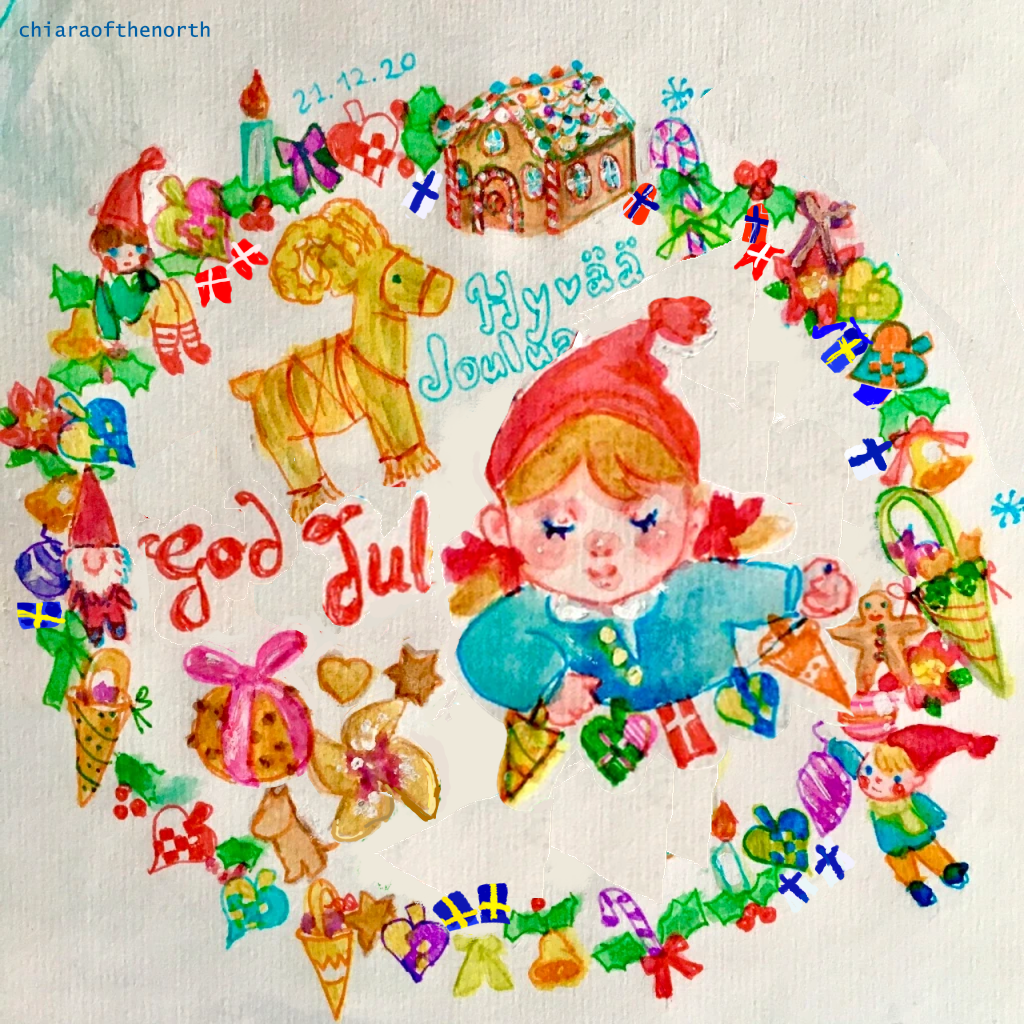
Nordic Christmas, or Yule, means among others flag tree decorations, a pinwheel-shaped pastry, and gnomes.

Nordic countries share quite a lot Christmas customs and symbols, whether it is Christmas tree decorations, gnomes and elves instead of Santa Claus, and of course spiced cookies. Let’s see what a Scandinavian Christmas looks like!

1. Scandinavian Santa Claus: Gnomes and pixies

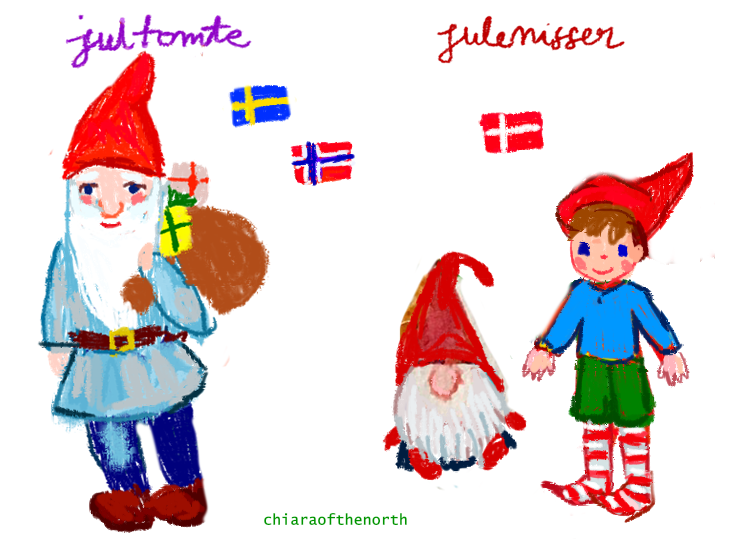
In Scandinavia, the main Christmas figures are a (santa Claus-ish looking) gnome and nisser, pixie-like creatures:

Giftbringerportrayed as
SwedenJultomtegnome
DenmarkJulemanden+Julenissersanta+pixies
FaroesJólamaðurinsanta
NorwayJulenissegnome
FinlandJoulupukkisanta (originally the Yule goat)
Icelandthe 13 Jólasveinarnirold, naughty elves

According to the tradition the Jultomte lives in farms and takes care of the household while the family is sleeping, Bringing presents if the family treated him and the farm animals well. In Norway, an adult disguises himself as Julenisse and gives out presents to children, often greeting them by saying Er det noen snille barn her? (“is there any good child here?”).

In Denmark (Jule)nisser are Christmas pixie/elf-like creatures, believed to live in barns and attics. Children leave rice pudding for the Nisser, who find it delicious accoring to popular belief. Julemanden (literally Christmas man) is more similar to the Santa Claus everybody knows, and arrives on a sleigh with reindeers and nisser as helpers.

Initially the gift bringer was the Julbocken/Julebukk goat mentioned above, so in Finnish Santa Claus is called Joulupukki…

2. Christmas Decorations: straw goats, pleated hearts and flags

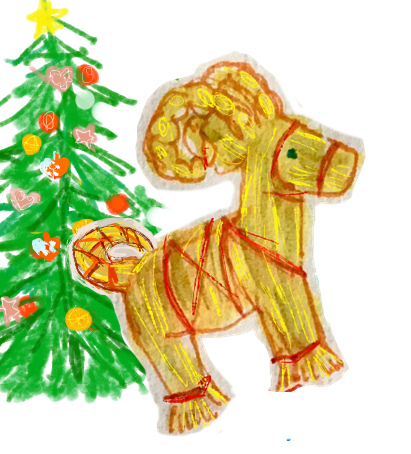
Yule Goat

A common Christmas symbol and decoration is a straw goat, Julbocken/Julebukk, often put under the Christmas tree. It goes back to the Viking times and it was a household protector, representing Thor’s magical goats, who lead him in the night sky. Bigger versions can be found in town centres – this tradition started in the Swedish town of Gävle in the 60s, and every year this traditions is repeated with a Julbock as tall as around 10 metres.

Christmas hearts

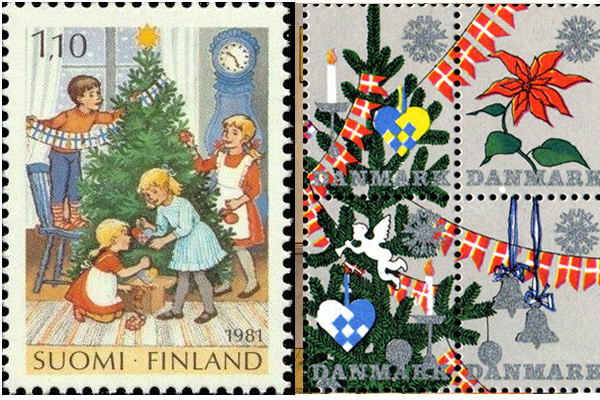
Julehjerter are pleated hearts, very common and in Denmark and Norway (Norwegians call them Juletrekurv “Christmas tree baskets”), but also present in other Nordic countries as a typical Christmas symbol. Children make them with their family with paper of different colours, although they are often red and white.

christmas stamps finland denmark flags

Flag garlands

Decorating Christmas trees with flags originated in Denmark and it can be seen in all Nordic countries, although it was more common in the mid-20th Century. A survey showed that one in three Norwegians thinks flag garlands are suitable Christmas tree decorations, while only 3 % and 5 % is of the same opinion in Sweden and Finland. Nonetheless, I bought a Christmas tree flag ornament in Sweden…

3. Christmas treats

Gingerbread cookies

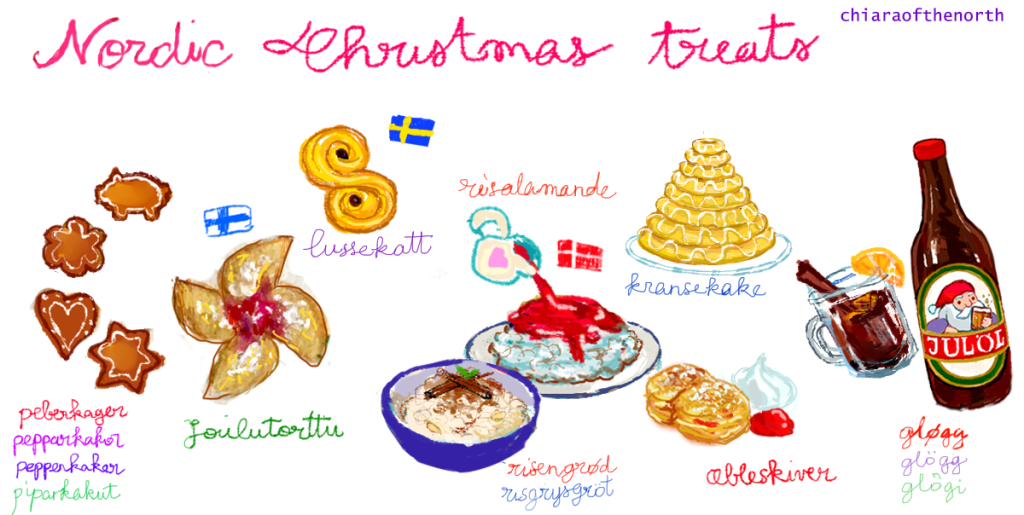
Baking gingerbread cookies is a typical Christmas time family activity: Pepparkakor in Swedish, Pepperkaker in Norwegian and Peberkager in Danish, piparkakut in Finnish are a common and popular Christmas treat all over the Nordics.

Rice porridge

Hiding an almond in rice porridge with a prize for who finds it is a common things in Nordic countries. in Sweden the rice pudding is called risgrysgröt. In Denmark you have the Risalamande (from French ris à l’amande, just because French sounded fancy), It is served cold with a warm cherry sauce, kirsebærsovs. The lucky person who finds the entire almond in it wins a marzipan pig!

National Christmas treats

countryname meaningNorway
SwedenLussekatter‘Lucia cats’saffron S-shaped buns, (supposed to remind a cat shape)
DenmarkÆbleskiver‘apple slices’round pancakes, served with jam and powder sugar. Apples are not an ingredient!
FinlandJoulutorttu or tähtitorttu‘Christmas pastry’ or ‘star pastry’puff pastry filled with plum or apple jam
Iceland (known as Biskvi in Sweden)Sörur (Sarah Bernhardt pastries)chocolate covered cookies, common in the Nordics but typical of Christmas in Iceland

Kransekage/kransekake ‘crown cake’ is an almond cookie rings tower, typical of festive occasions in general in Norway, but especially eaten on New Year’s Eve in Denmark!

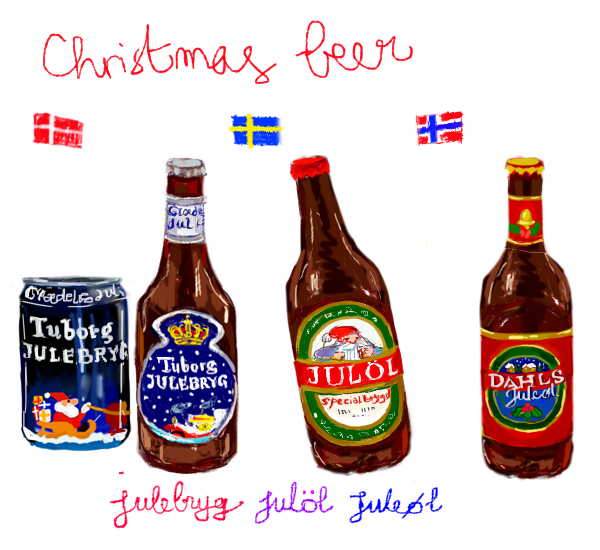
Mulled wine, glögg, is a classic, with spices as cinnamon, cardamom and ginger, but you can also drink Chistmas beer! It is darker and spicier than the usual ones.

God Jul!

more articles

5 symbols of Sami culture

Sámi people, indigenous people of North Scandinavia, have a distinct culture, symbolised by its unique flag and traditional clothing, and part of it are Duodji handicrafts and unique musical expression through yoik.